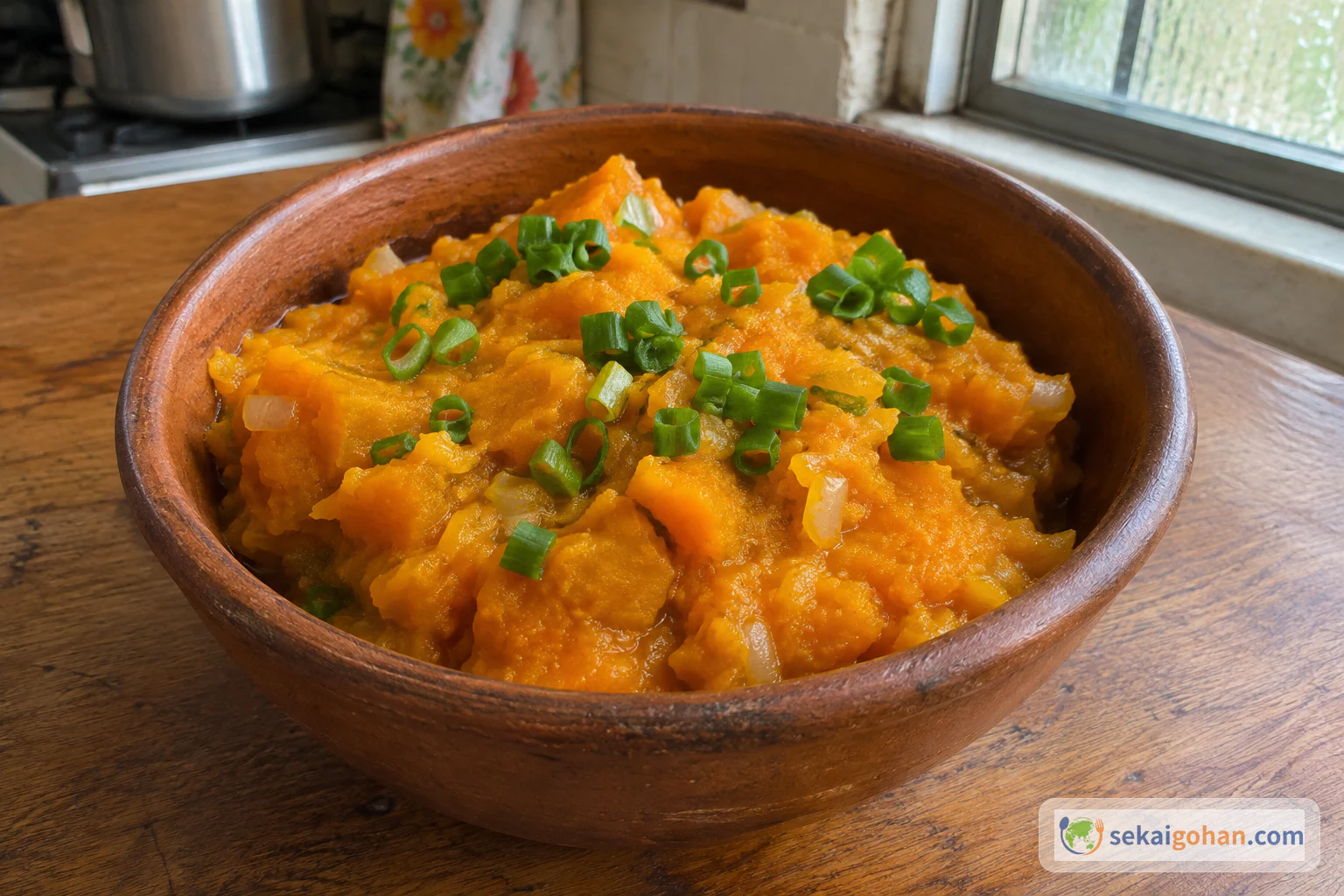
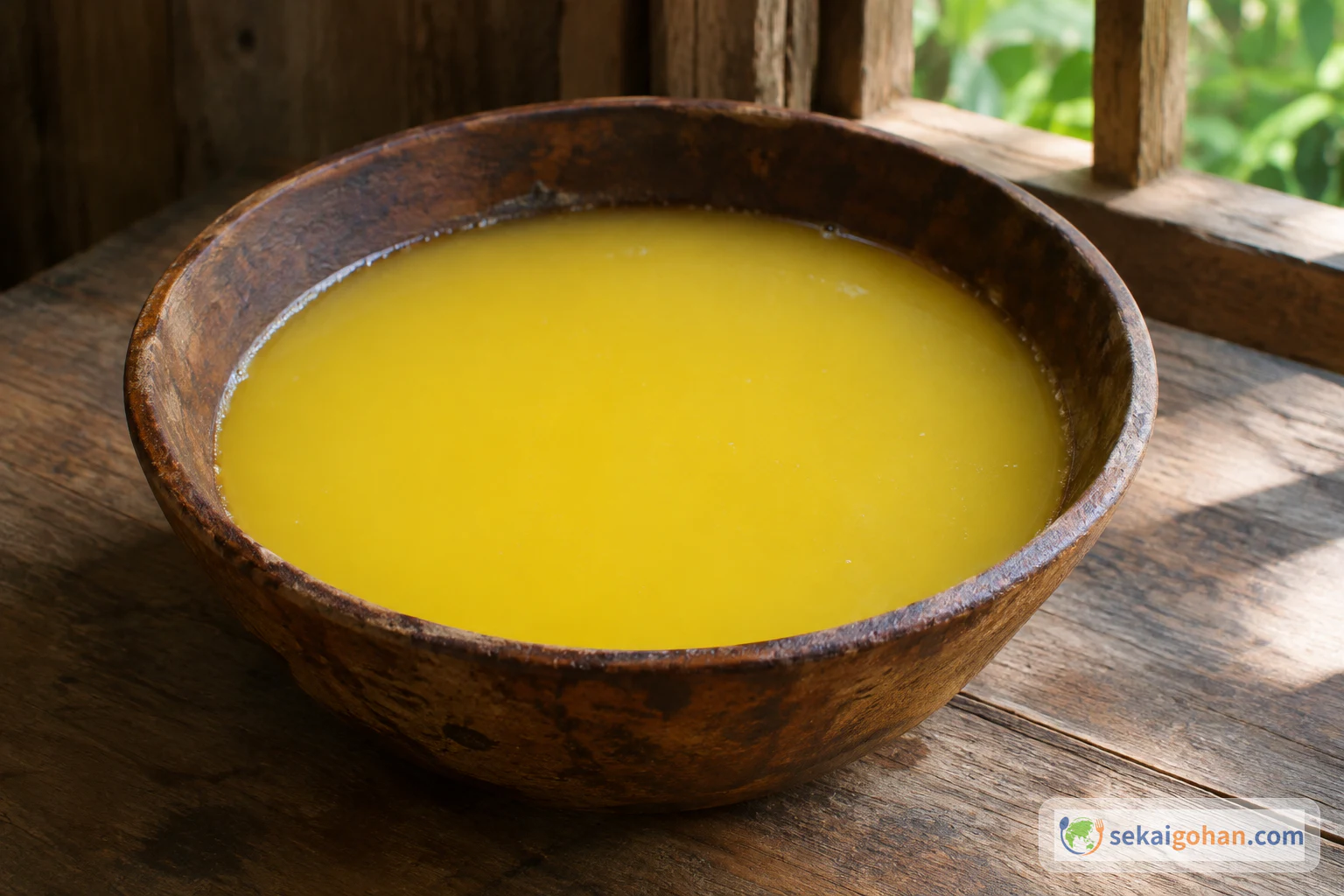
Drop small yellow dumplings into a pot of simmering chicken broth and they sink at first. After a short wait they lift off the bottom and bob to the surface, and that moment is the fun of vori vori. The dumplings are kneaded from corn flour and white cheese, so they swell as they soak up the chicken broth and crumble softly with each bite.

Paraguayans love this corn dumpling soup. The classic version is vori vori de gallina, made with chicken broth. For a home version that holds together without being heavy, use fine cornmeal, a white queso fresco-style cheese, and chicken broth.
Vori Vori in Paraguay

The name vori vori (vorí vorí / vori vori) comes from Guaraní; think of it as "little rolling dumpling soup." It comes to the table in deep bowls on cold days, when the family gathers, or when a meat dish alone would make the meal feel heavy.
At the core of vori vori is harina de maíz, corn flour. White cheese close to queso Paraguay or queso fresco is mixed in, the mixture is moistened with chicken broth, and it is shaped into small dumplings. As they simmer, the dumplings swell slightly and their surfaces turn smooth, while the insides stay grainy and tender.
Home cooks build the soup around chicken, corn flour, queso Paraguay, onion, tomato, a pepper-family vegetable called locote, zapallo (squash), and an herb called kuratu or oregano. The order matters more than the brands. Make the chicken broth first, moisten the corn flour and cheese with that hot broth, and finally simmer the small dumplings over low heat. Follow that order and you have the shape of vori vori.
Vori Vori and Other Paraguayan Flour Dishes
Like Sopa paraguaya and Chipa guasu, vori vori shows off Paraguay's corn culture. The difference is that these dumplings cook in broth instead of being baked, and once you have that in mind, shopping and cooking get much simpler.
| Dish | Main ingredients | Method | Notes for home cooks |
|---|---|---|---|
| Vori vori | Corn flour, white cheese, chicken broth | Dumplings simmered in soup | Add broth gradually, and keep the dumplings from falling apart |
| Sopa paraguaya | Corn flour, eggs, milk, cheese | Baked in an ovenproof dish | Don't substitute cornstarch |
| Chipa guasu | Corn kernels, eggs, milk, cheese | Mashed and baked | Drain the water from frozen corn |
| Mbejú | Cassava starch, cheese | Cooked in a skillet | Don't overwork the dough; cook it so it is tender |
The texture changes a lot depending on whether you bake flour, bake kernels, or simmer in broth. Since vori vori is eaten as a soup, its dumplings need room to take in liquid. Roll them too tight and hard and the broth can't get in, which leaves the center floury.
Ingredients (serves 4)

This amount makes 4 deep bowls as a main dish. It yields about 24 dumplings. To keep the soup light, reduce to about 20 dumplings and flatten the leftover dough and pan-fry it for a simple corn and cheese cake.
This dish uses chicken and dairy. Commercial cornmeal and cheese can be processed on lines that also handle wheat, eggs, and soy. If you have allergies, check the labels. Cook chicken to an internal temperature of 165°F (74°C) or higher, or until the juices near the bone run clear.
Choosing Ingredients
Fine-ground cornmeal is easiest to handle. If you use only coarse polenta flour, the outside of the dumplings can cook while hard grains remain in the center. Pre-cooked corn flour such as Harina P.A.N. also works, but it absorbs water fast, so don't pour in the broth all at once; add it 2 tbsp at a time.
Pizza cheese alone melts into the dumplings and gives no salty accents. Use queso fresco, a little feta, or cottage cheese, with grated hard cheese added. Leave a few white pieces, and each bite tastes clearly of corn and dairy.
What is worth buying extra is fine cornmeal, fresh white cheese, and a thermometer to check that the chicken is cooked through. Chicken, onion, tomato, and squash are easy to find nearby.
Choosing Ingredients for Vori Vori
Fine cornmeal gives the best dumplings. Harina P.A.N. also works, but pre-cooked flour absorbs liquid all at once, so start with ¼ cup (80 ml) of broth and wait 30 seconds before adding more. If all you have is coarse polenta flour, grind it a little finer in a food processor, or use it for only half and make up the rest with fine flour.
You don't need to hunt down a particular cheese brand. If you can't get queso Paraguay, a moist white cheese with a little extra salt comes close. A mix of queso fresco, a little feta, and grated hard cheese also works well.
The vegetables and herbs are just as flexible. Use green bell pepper in place of locote. Kuratu's green aroma is closest to cilantro, and if cilantro isn't popular at your table, flat-leaf parsley or chives work too. Skipping the herb entirely leaves the soup tasting heavy from the chicken broth and cheese, so I recommend a little green of some kind. Squash adds sweetness and color to the soup and is easy to work with.
Method
With vori vori, the key is not to keep the broth at a hard boil. Dumplings dropped into a violently boiling pot tend to break on the surface, and if the heat is too low they sink and stick to the bottom. Aim for a "quiet simmer," with small bubbles rising steadily from the bottom of the pot.
Fixing Vori Vori Dumplings

The dumplings decide whether vori vori works. If the dough is too dry, the center stays raw, and if it is too soft, it falls apart in the pot. Most problems come down to water rather than seasoning, because corn flour absorbs water differently from brand to brand and cheese varies in salt and moisture. For your first batch, stick to the quantities and adjust by how the dough feels.
| Failure | Main cause | Fix |
|---|---|---|
| Dumplings fall apart in the pot | Dough is soft, or stirred too much right after adding | Add 1 tbsp cornmeal, and don't touch for 3 minutes after adding |
| Center is floury | Dumplings are large, or the broth is too weak | Make them about 1 inches (2.5 cm) and simmer 8 minutes or more over medium-low |
| Soup is heavy | Too many dumplings, or reduced too far | Add water or chicken broth 3.5 tbsp (50 ml) at a time |
| Cheese flavor disappears | Only pizza cheese was used | Combine queso fresco, a little feta, and grated hard cheese |
| Aroma is flat | Herbs were simmered too long | Add cilantro or parsley after turning off the heat |
Serving and Storing Vori Vori

A bowl of vori vori is filling enough to be the main course. For a more Paraguayan table, put a small piece of Sopa paraguaya beside it so you can taste corn flour simmered and baked side by side. Chipa guasu adds the sweetness of corn kernels and brightens even a winter table.
If you serve it next to a meat dish, use a smaller bowl. Cassava-flour dishes like Mbejú or Chipa almidón show the other half of Paraguay's staple foods. For a big weekend spread, add meat and bean dishes from the South American cuisine overview.
To store, let the soup cool, put it in an airtight container, and finish it within about 2 days in the refrigerator. The dumplings keep soaking up broth and getting bigger, so the next day add about ½ cup (100 ml) water or chicken broth and warm it over low heat for 6 to 8 minutes. The microwave will heat it too, but the dumpling surfaces tend to crack, and a slow reheat in a pot keeps the texture.
You can freeze vori vori, though the dumplings turn a little more fragile. Freeze it in single portions and use it within about 2 weeks. After thawing, warm it over low heat and move the dumplings by shaking the pot rather than stirring with a wooden spoon.
FAQ
Can I make it with cornstarch instead of cornmeal?
No. Cornstarch is only the starch of the corn, so it can't give the dumplings their grainy texture, and it thickens differently as it simmers. Use fine cornmeal, corn flour, or pre-cooked corn flour.
Can I make it without cheese?
You can shape the dumplings, but they lose some of what makes vori vori itself. Besides flavor, cheese holds the dough together and adds a layer of saltiness. If you need to avoid dairy, skip the substitute cheese and treat the result as a different dish: chicken soup with corn dumplings.
Can I make it with something other than chicken?
Beef broth works. With fatty beef shank or bone-in meat, simmer the meat over low heat for about 1 hour first, and add the dumplings once it is tender. When you want the soup quickly, chicken is less likely to go wrong, and the corn aroma of the dumplings comes through more clearly.
Can I make the dumplings the day before?
If you roll them the day before and refrigerate them, the surfaces dry out and crack easily. It's safer to make only the dough, press plastic wrap against it, and roll the dumplings the next day. The cornmeal keeps absorbing moisture overnight, so knead in 1 to 2 tbsp of chicken broth before shaping.