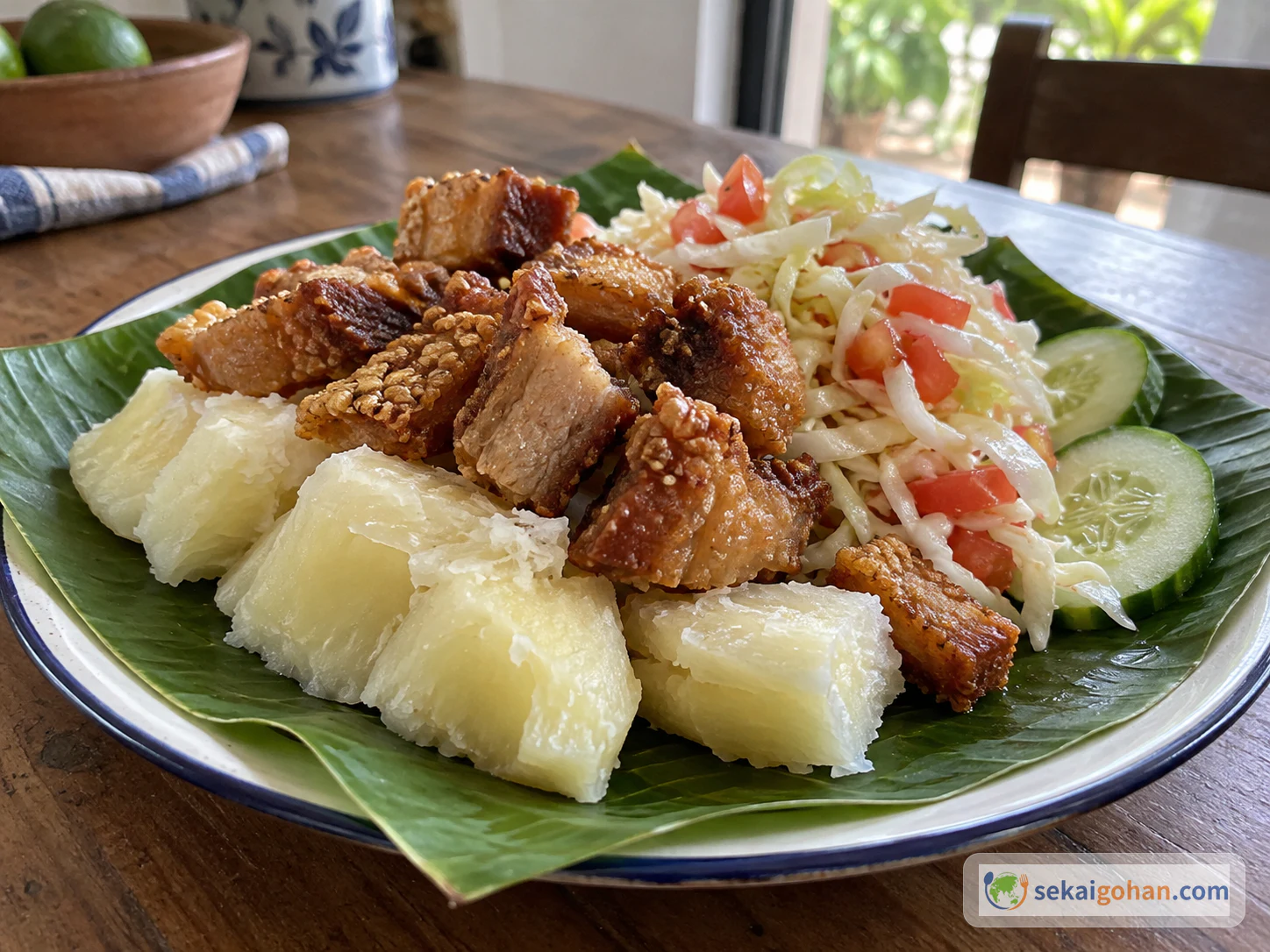
A pot lined with banana leaves smells a little of a southern market before you even lift the lid: beef fat, the starch of yuca, the astringent scent of green plantain, the sweetness of ripe plantain. Top a plateful with a sour cabbage salad and a heavy steamed dish suddenly becomes one you can keep eating. Vaho (also written baho) is Nicaragua's leaf-steamed platter of beef, yuca, and plantains. The beef is marinated in acid, everything is layered over banana leaves in a big pot, and slow steam carries the fat and the green aroma of the leaves into the roots.
Vaho in Nicaragua
Vaho is eaten in many parts of Nicaragua, usually as a weekend dish for family gatherings. Beef short rib or brisket, yuca, green banana or green plantain, ripe plantain, tomato, and onion cook together in the pot, and a cabbage salad goes alongside. It is sometimes served on banana leaves laid on the plate.
In English you will see several spellings, such as Vaho, Baho, Bajo, and Vajo. The Spanish word vaho also means "steam" or "vapor."
The key is steaming in the leaves, not stewing. The water at the bottom of the pot is only there to make steam. The food sits on the leaves and takes up fat and acidity little by little. If the ingredients end up sitting in water, the yuca turns watery and the sweetness of the plantain blurs.
At home, the hard part is the sequence, not the seasoning. You marinate the beef with acidity, line the pot with leaves so water can't get in, steam the roots and plantains without breaking them, and finish with a sour curtido-style cabbage. Local cooks leave the beef in salt and acid for a long time and lay branches from the yard on the bottom of the pot to keep the leaves out of the water. Copied exactly at home, that raises the risk of food poisoning and scorched pots. So marinate the beef briefly in the refrigerator and use a steaming rack or metal rack. With a deep pot and a rack, you get quite close.
Next to other Central American favorites, vaho is very much a big-pot dish. Honduras's baleadas and El Salvador's pupusas are lighter flour and bean dishes. Vaho is closer to Belize's black chicken soup chimole, where fragrant seasonings are carried into meat and roots over a long time.
Ingredients (serves 4)

This home version is easy to make in one deep pot. With the yuca and plantain, it is plenty for 4 people.
Because it uses beef, cook it thoroughly to the center. For large pieces of meat, check at the end that the center is at least 167°F (75°C); for texture, it is easiest to eat when it has risen to around 85 to 90°C and the fibers have loosened.
Ingredients That Cause Confusion, and What Is Worth Looking For

For vaho, you don't need to hunt for the beef or cabbage; buy those nearby. Look for annatto, banana leaves, a steamer, and a core-temperature thermometer. Banana leaves are a key part of the aroma; look for frozen ones at Latin American or Asian groceries.
Annatto is the ingredient that gives the red color and earthy aroma in cooking around Nicaragua. Paprika approaches the color, but the aroma when carried in oil is different. It can be reused beyond vaho, for Belize's chimole and Mexican-style stews.
Vaho is a dish that holds steam in a deep pot. If the rack is too low the ingredients sit in water, so a two-tier steamer or a tall rack makes it easier.
For meat steamed a long time, it is hard to judge doneness by looks. A thermometer for the core temperature of a block of meat helps with both preventing failure and checking safety.
Choosing Ingredients and Substitutes for Vaho
| Point of doubt | Local style | Realistic fix at home | Direction to avoid |
|---|---|---|---|
| Banana leaves | Wrap with large frozen or fresh leaves | Frozen leaves from Asian or Latin American groceries; parchment paper to fill gaps | Giving up all the aroma with aluminum foil alone |
| Yuca | Large cuts of fresh yuca | Frozen yuca for stability | Using only potato, which makes a different dish |
| Green starches | Green plantain, green banana | Greenish cooking bananas or green plantains from specialty stores | Sweetening it with only fully ripe bananas |
| Acidity | Bitter orange | Mix orange, lime, and vinegar | Making it sharp with vinegar alone |
| Meat | Beef brisket or salted meat | Chuck or short rib in a block, cut thick, marinated refrigerated | Leaving it out to dry at room temperature for long |
Banana leaves and yuca are the two things that are nearly irreplaceable. Without the leaves the layers of aroma are thin, and without yuca the dish shifts to a sweet steamed plate of plantain. If you can't gather everything on the first try, secure frozen yuca first, then look for banana leaves at a specialty store. Both green and ripe plantain are ideal, but if you can only get one, choose green. If yuca or plantain run short, you can swap part of the starch for taro.
Naranja agria (bitter orange) is easy to approximate. Orange juice alone is too sweet, so add a little lime and rice vinegar. The acidity is there to freshen the meat and lighten the fat after steaming, so it doesn't need to be very sour. For the other aromas, annatto stands in for achiote, and dried oregano works fine.
How to Make It: Line with Leaves and Let Steam Loosen the Meat and Roots
Vaho is not browned; steam and the aroma of the leaves loosen the meat. Rush it over high heat and the water at the bottom runs out, and the leaves scorch and turn bitter. Keep the steam bubbling and don't pour water directly onto the ingredients.
Common Vaho Problems and Fixes
| Symptom | Cause | Fix |
|---|---|---|
| Yuca is watery | Ingredients sat in water | Next time raise the rack and cover torn leaves with extra layers |
| Meat is tough | Not steamed long enough, heat too low | Add boiling water and steam 15 to 30 minutes more over medium heat |
| Leaves scorch | The water at the bottom ran out | Check the level every 30 minutes and add boiling water along the pot's side |
| Flavor is dull | Salt and acidity are weak, too little salad | After plating, add more curtido and lime |
| Ripe banana sweetness is too strong | Used sweet bananas in place of plantain | Add more green banana or plantain and use the sweet ones sparingly |
Tough meat is the easiest mistake to fix: just steam it longer. Waterlogged yuca and scorched leaves are much harder to undo, so check the water by the clock rather than by feel.
The other common problem is too little curtido, which makes the whole plate feel heavy. Be generous with the salad compared with the meat and yuca; that's closer to how vaho is eaten locally. A little acidic juice seeping across the plate is just enough to cut through the fat and starch.
Storing Vaho and What to Cook Next
Storage and reheating

Store vaho in its parts, not as a finished plate. Cool the meat, yuca, and plantain a little, put them in shallow containers, and eat within about 2 days refrigerated. Keep the curtido separate; it releases water, so use it up within 1 day refrigerated to keep its crunch.
To reheat, spoon the steaming liquid or 2 tbsp water over the meat and roots, cover loosely with plastic wrap, and microwave at 600 W for 2 minutes. On the stove, set the plate in a steamer and steam over medium heat for 8 minutes. If you have leaves left, lay them over the top to bring back some of the aroma.
To prepare the day before, stop at marinating the beef and cutting the vegetables for the curtido. Cut yuca and plantain discolor, so cut them on the day. If you must cut ahead, soak only the yuca in water and leave the plantains in their peel.
What to cook next
To keep exploring Central America, learn to handle corn dough with El Salvador's pupusas, then move toward spice and stews with Guatemala's pepián and kak'ik. For more meat, starch, and acidity in a different shape, try Puerto Rico's pernil or Venezuela's arepas.
Frequently Asked Questions
Q1. Can I make it without banana leaves?
You can, but the aroma changes a lot, because vaho depends heavily on the green scent of the leaves. Parchment paper supported by aluminum foil on the outside still works as a steamed dish. Next time, look for frozen banana leaves and compare.
For another leaf-wrapped platter, New Caledonia's bougna makes parcels of chicken or fish, roots, and coconut milk, a different way to use banana leaves.
Q2. Can I use potato instead of yuca?
In a pinch, but the texture is different. Yuca is mealy and a little fibrous, and it holds up to beef fat; with potato alone, the dish drifts toward a plain meat-and-potato stew. Frozen yuca is easy to find at international groceries, so look for it first.
Q3. What if I can't find plantains?
Use one green cooking banana and a small amount of banana that isn't overripe. Made only with sweet dessert bananas, the whole dish turns sweet, so include at least one green plantain or green banana and use the sweet ones sparingly in place of ripe plantain.
Q4. Can I use thinly sliced beef?
We don't recommend it, since thin slices shrink with long steaming and all but disappear. If you must, shorten the steaming to 60 to 70 minutes: steam the yuca first for 30 minutes, then add the beef. Thick-cut block meat is far more reliable.
Q5. Where should I add heat?
At the table, with the curtido or hot sauce, rather than in the pot. A spicy pot is hard on children and anyone sensitive to heat, and in leftovers the next day the heat is all that stays strong.
- Visit Nicaragua: Nine Nicaraguan meals (accessed 2026-05-24)
- 196 Flavors: Baho (Vaho) - Traditional Nicaraguan Recipe (accessed 2026-05-24)
- Whats4eats: Baho Recipe (accessed 2026-05-24)
- Wikipedia: Vaho (accessed 2026-05-24; used to cross-check the name and basic information)