Drop masa harina into a bowl of warm water and the dry scent of corn comes softly back. You roll the softened dough, press a dent into it with your thumb, and tuck in a little bean and cheese. Get greedy and it won't close; use too little and it feels lonely once cooked. Pupusas are El Salvador's stuffed corn cakes. They're cooked on a griddle until the outside is toasty like a thick tortilla, with beans, cheese, chicharrón or loroco inside. On the plate there is almost always curtido, a lightly pickled cabbage slaw, and a thin red tomato sauce.

Pupusas in El Salvador
Corn runs through El Salvador's food culture, handed down from one generation to the next. Tamales, atol, tortillas, riguas and pupusas all come from it. The pupusa is very much a living dish, though. It's sold at street stalls and diners, made in homes, and served at pupuserías abroad. In Salvadoran communities in the United States, going out for pupusas with family on weekends can be a link to the homeland.
The name is often linked to Nahuatl-family words. At the table, what matters is how the dish is eaten today: thick enough to hold in your hand, cooked on a griddle, with curtido and salsa alongside. Have those three things and you have a pupusa table.
El Salvador has made the pupusa its national dish, and the second Sunday of every November is Pupusa Day. It is street food and home cooking, and for Salvadorans living abroad it is a taste that recalls home.
How Pupusas Differ From Similar Dishes

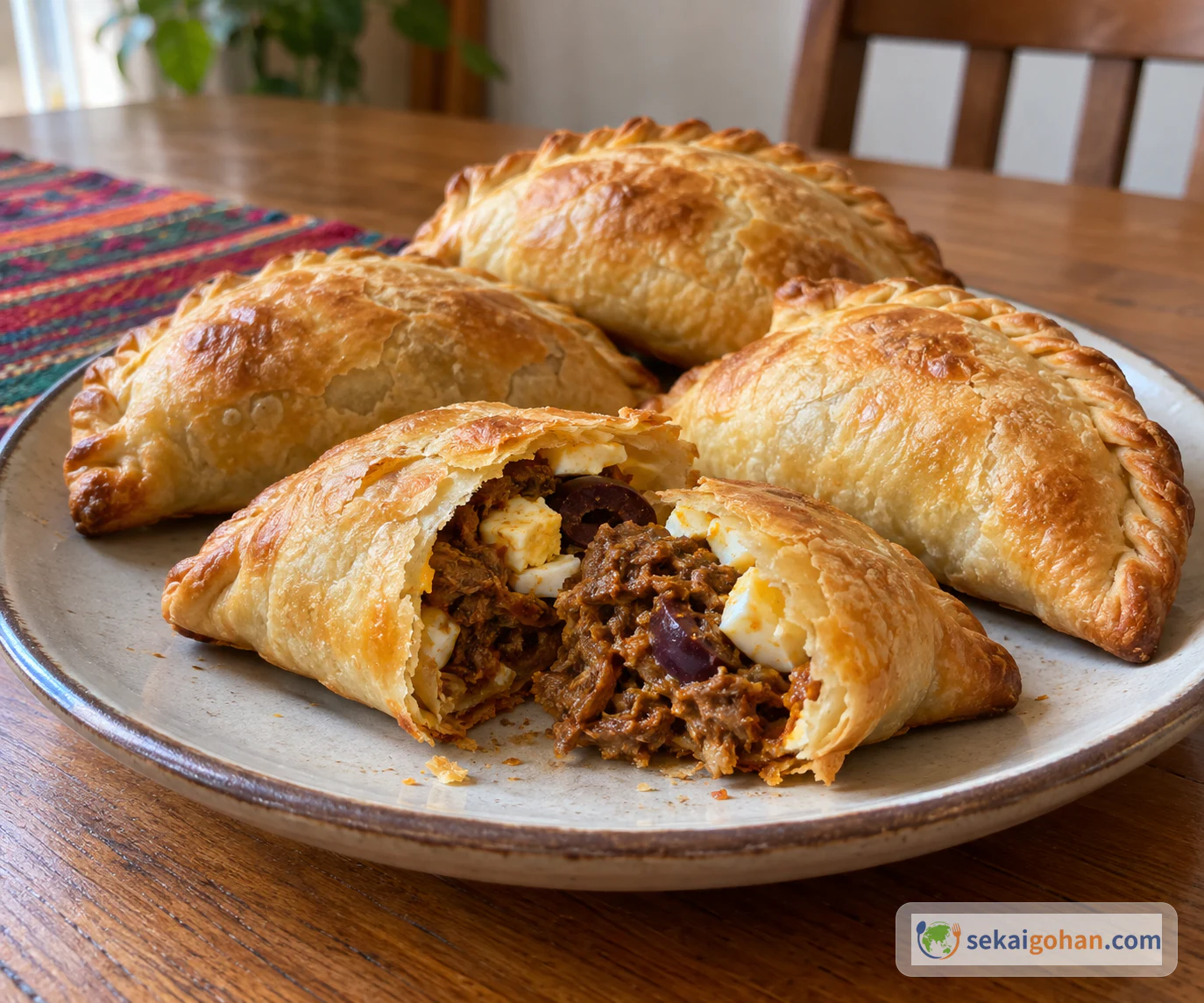
What sets the pupusa apart from its neighbors is that it's stuffed first, then cooked. Honduras's baleada folds beans and dairy into a wheat tortilla, and Venezuela's arepa makes a staple bread from precooked cornmeal. Argentina's empanada is wheat dough baked or fried, and Trinidad's doubles is fried bread sandwiching beans. A pupusa is never deep-fried. The fun of it is the moment the filling warms inside the dough and the cheese oozes out a little at the edge.
| Dish | Country/region | Dough | How the filling goes in |
|---|---|---|---|
| Pupusa | El Salvador | Masa harina | Stuffed inside, then cooked |
| Arepa | Venezuela/Colombia | Precooked cornmeal | Cooked, then split and filled |
| Cachapa | Venezuela | Whole kernel corn | Cooked, with cheese folded in |
| Baleada | Honduras | Wheat flour | Folded in a cooked tortilla |
| Chipa guasu | Paraguay | Whole kernel corn | Baked set in a baking dish |
These differences matter most at the store, where the flours can sit side by side on the same shelf. Pupusas take masa harina, arepas masarepa, cachapa whole kernel corn, baleadas wheat flour, and chipa guasu frozen corn.
Ingredients (serves 4): Bean-and-Cheese Pupusas and Curtido

This makes 8 pupusas about 4.5 inches (12 cm) across for 4 people. Two each gives a satisfying lunch or light dinner. For a light breakfast, make it one each and refrigerate the rest to reheat the next day.
This dish uses dairy. Check the allergen labels of the cheese, canned beans, masa harina, and any processed products used for the salsa. If you add pork, take care with cooking and storing the ground meat or chicharrón.
Flour and cheese are the base of the flavor. The first time, it is easier if you gather the masa harina, a good stretchy cheese, beans, and cabbage first.
Choosing Masa Harina, Fillings, and Curtido

Pupusas at home come down to three things: dough, filling and acidity. Get those right and your first batch will come out well.
| Role | Ingredients needed | Realistic choice | Limits of substitutes |
|---|---|---|---|
| Dough | Masa harina, water, salt | MASECA, PAN masa harina, etc. | Cornmeal does not hold together well |
| Filling | Cheese, beans, loroco, chicharrón | Mozzarella, kidney or black beans, frozen loroco | Melting cheese alone tastes light |
| Acidity | Curtido, salsa roja | Cabbage, carrot, vinegar, canned tomatoes | Mayonnaise or heavy sauces make it something else |
Outside Central America, the flour is the first thing that trips people up. A pupusa needs masa harina, which is flour made from corn treated with lime (nixtamalized). Cornmeal, cornstarch and dry taco tortillas won't do the job. The lime treatment changes how the flour behaves with water: the dough holds together with water alone and cooks up toasty outside and crumbly inside. Baking-grade cornmeal has coarse grains and cracks in your hand. If you try it anyway, think of the result as a different kind of corn bread.
Curtido is cabbage wilted with salt and vinegar and seasoned with plenty of oregano. Freshly cooked pupusas get quite heavy with cheese and beans, and the cold, sour cabbage brings back the lightness that makes you reach for a second one.
Loroco is a bud-like aromatic vegetable used in Central America, and pupusa de queso con loroco, with cheese, is the well-known version. Look for frozen or jarred loroco at Latin American grocers. Without it, add a little scallion and a little green bell pepper for a green aroma. The taste won't be exactly the same.
How to Make Them: Seal Without Overfilling, and Cook Over Not-Too-Weak Medium Heat
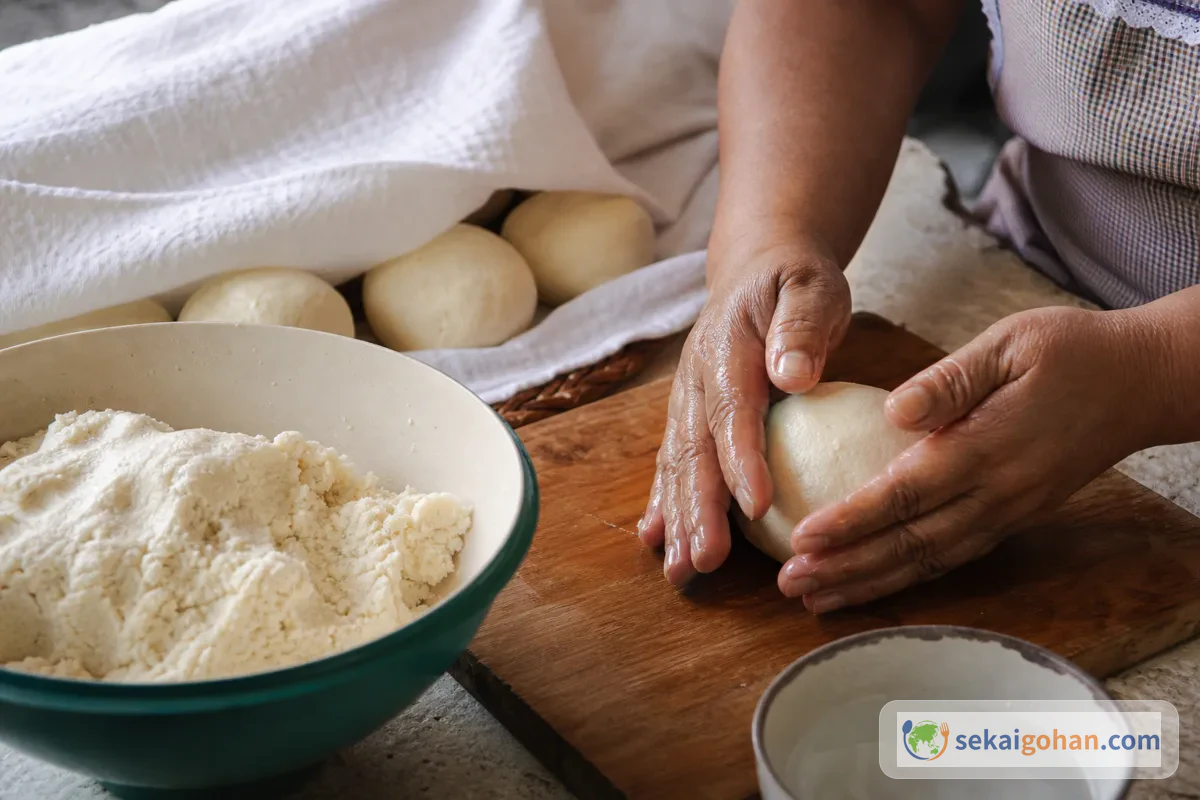
For pupusas, you make the curtido and fillings in the first half and wrap and cook the dough in the second half. If you make the dough first and then prepare the fillings, it dries out, so do not reverse the order.
What You Can Do Ahead
Curtido can be made the day before and the bean filling by the morning of the day. In fact, curtido improves after a few hours, as the acidity settles in. Only the pupusa dough is easier to handle if made right before cooking.
Troubleshooting Pupusas

Pupusas go wrong in three ways: the dough cracks, the filling leaks, or the finished pupusa is hard. Each one has its own cause, and if you mix them up you'll stall at the same spot next time.
The dough cracks
If the edge snaps when you press it, the dough needs water. If it's still stiff after the full amount, wet your hands and work it, then add water to the whole dough 1 tsp at a time. Rest it 2 minutes and feel it again.
If it sticks to your hands and won't hold its shape, there's too much water. Add masa harina 1 tsp at a time; adding it all at once leaves floury layers.
The filling leaks
Leaks come down to quantity, moisture and particle size. Make the beans thick enough that they don't fall off a spatula, and chop the cheese finely. If you add pork or vegetables, drain them and chop them fine.
A little cheese spilling out makes a tasty browned crust. Beans that leak a lot, though, burn and turn bitter in the pan. If filling touches the seam, don't force the seam to stretch over it; leave the seam on the thick side.
They turn out hard
Hardness comes from high heat and overcooking. A pupusa is a thick, filled dough, and rushing it over high heat dries out the outside before the inside warms. Cook over medium heat for 4–5 minutes a side, and don't press down after flipping. If the browning is pale, raise the heat a little for only the last 30 seconds.
Choosing a pan
A griddle or a heavy skillet works best at home. A thin pan swings in temperature, so the first pupusa scorches and the rest stay pale. On an electric griddle, start at 180–190°C (up to 375°F) and turn it up a little if the browning is pale.
A pupusa with a small tear can be closed by gathering the dough with wet fingers. For a large tear, do not force it back neatly; just cook it as is and call it a "tasting piece." Treat the first one as a test pancake for checking heat and moisture, and it feels easier.
Pupusa Fillings and Variations

More filling makes a better-looking pupusa, but it also makes one that's harder to seal. Start with beans and cheese. Once you know how the dough feels when it closes, what heat browns it, and how to fix a crack, it's much easier to move on to loroco or pork.
| Approach | Good for | How to think about the filling |
|---|---|---|
| Basic bean and cheese | First-timers | Refried beans and white cheese. Easy to seal |
| With loroco | Those who want aroma | Mix chopped loroco into the cheese. Do not overdo it |
| Revuelta style | Those who want a more filling meal | Beans, cheese, and pork combined finely |
| Vegetable-leaning | Those who want something lighter | Cook zucchini or mushrooms down to drive off moisture first |
Frijol con queso
Beans and cheese together are the easiest pupusa to make at home, and the flavor goes down easily with children too. Red kidney beans, black beans or pinto beans all work. Skip sugar-sweetened beans, though, or you'll end up somewhere close to dessert.
Queso con loroco
The classic is loroco mixed into cheese. Its aroma can come on strong, so start with 2 tbsp for 8 pupusas. Mozzarella alone tastes flat, and mixing in cottage cheese or a little feta brings it closer to the local white cheese.
Revueltas
Revueltas combine beans, cheese and pork. Chicharrón is hard to find as is, so cook 5.5 oz (150 g) ground pork thoroughly with garlic, salt and a little tomato, and drive off the moisture before using it. Lots of meat juice in the filling means leaks. Meat versions keep for a shorter time in the refrigerator, so it's safer to finish them by the next day.
With ayote or vegetables
Squash, zucchini or mushrooms should be chopped finely and cooked until their moisture is gone. Raw vegetables release water while cooking and tear the dough. For a lighter filling, use fewer beans and bind everything with cheese and vegetables.
Rice flour pupusas
El Salvador also has pupusa de arroz, made with rice flour. It's whiter than the corn version and slightly chewy. Getting that texture from rice flour alone takes some adjusting of oil and water, so make your first batch with masa harina and save this one for later.
Serving and Storing Pupusas

Serving
Curtido and salsa are what make the meal. The cold sourness of the cabbage cuts through the toastiness of griddled corn dough, the weight of melted cheese and the softness of the beans. Two pupusas with curtido and salsa make a light meal.
To widen your table, try seed-sauce pepián from Guatemala or Mexico's red hominy pozole rojo alongside. Making cachapa and chipa guasu next shows how differently corn and wheat are used across Latin America.
Storage

Pupusas are best fresh. The curtido and fillings can be made the day before, though, which makes this an easy dish to pull together for a weekend lunch.
| What to store | How | Guide |
|---|---|---|
| Curtido | Refrigerate in a clean container | 3–5 days |
| Bean filling | Refrigerate in an airtight container | 2–3 days |
| Dough only | Refrigerate sealed, not under a damp cloth | Same day |
| Filled, uncooked pupusas | Wrap one at a time in plastic and refrigerate | Same day |
| Cooked pupusas | Cool slightly, seal, and refrigerate | 2–3 days |
Pupusas contain cheese and beans, so don't leave them at room temperature. Cool leftovers quickly, get them into the refrigerator within 2 hours of cooking, and reheat them until they're hot all the way through.
Pupusas with pork or chicken spoil more easily than bean-and-cheese ones. Avoid leaving them at room temperature, and finish them by the next day to be safe. If you freeze a meat version, reheat it until it is hot at the center.
Reheating and freezing
A skillet reheats pupusas best. Give them 2–3 minutes per side over medium-low heat, then cover for 1 minute to steam. The microwave alone leaves the dough limp, so if you use one, heat for 20–30 seconds and then crisp the surface in a skillet.
To freeze, wrap cooked pupusas one at a time in plastic and put them in a storage bag. Thaw them in the refrigerator for half a day and warm them in a skillet. Curtido doesn't freeze well: it releases water and the cabbage loses its texture.
FAQ

Q1. Is shredded pizza cheese enough?
You can make pupusas with it, but the flavor is a little monotonous. Mix pizza cheese or mozzarella with cottage cheese, a little feta, or a little grated hard cheese for more saltiness and dairy flavor. Feta is very salty, so cut back on salt overall.
Q2. Can I make curtido the day before?
Yes. Made the day before, the cabbage softens and the acidity settles in. There's an authentic fermented version, but at home the vinegar-pickled one is easier to handle. Refrigerate it in a clean container and finish it within 3–5 days.
Q3. Are pupusas eaten by hand?
In El Salvador they often are. Straight off the griddle the cheese inside is very hot, so wait a moment, then top with curtido and eat. A knife and fork are fine, but when you break one open by hand you get the steam and the stretch of the cheese.
Q4. What should I serve with them to make dinner?
Avocado, tomatoes and bean soup round out the vegetables. For a Central American menu, pair them with baleadas; for a South American direction, pick corn dishes from the South American cuisine overview (in Japanese).