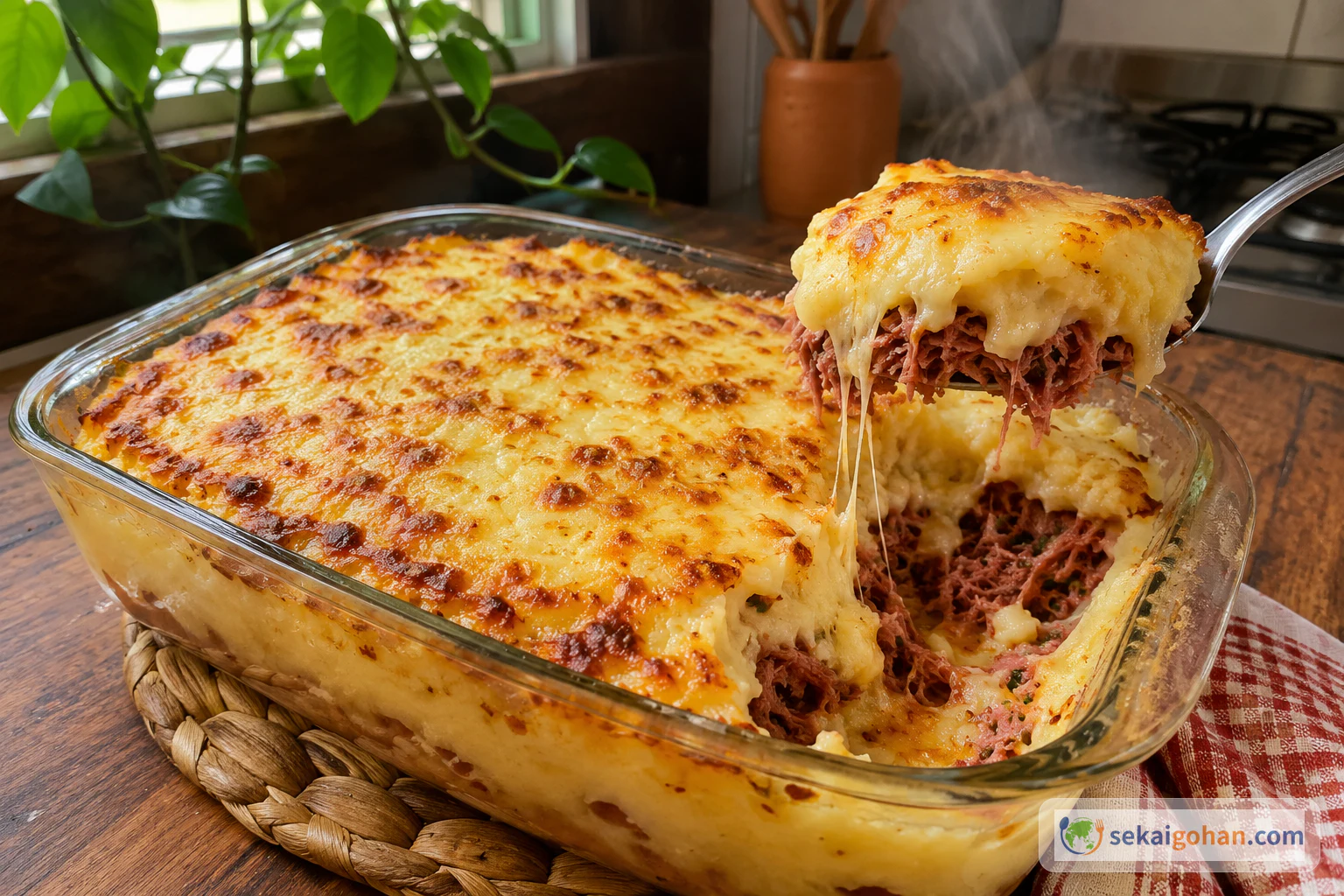
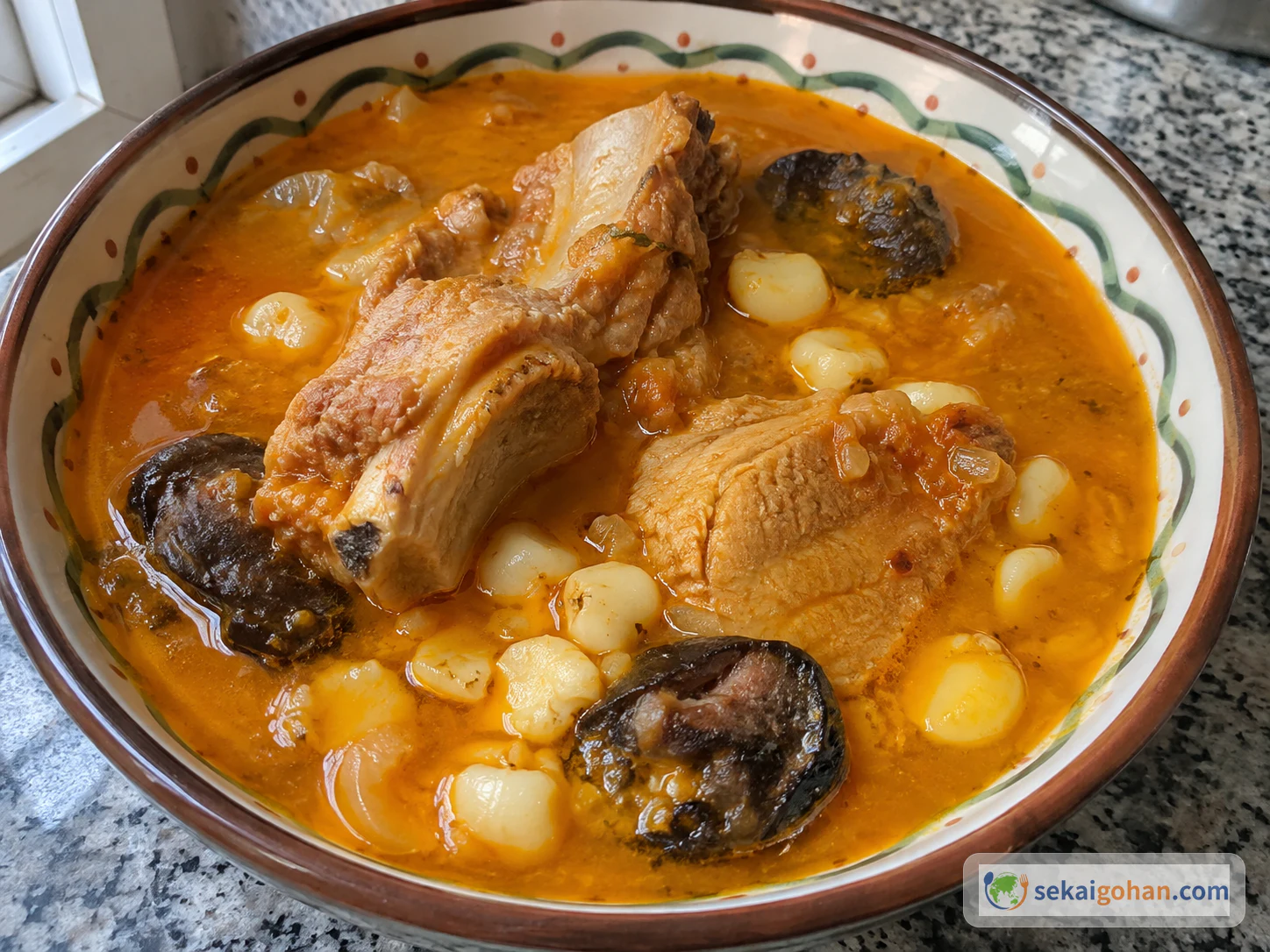
Step into a small eatery on a cobblestone lane in Guatemala City's old quarter and the air is thick with the smell of toasted spices. In an iron pot, a reddish-brown sauce bubbles slowly, with pumpkin-seed oil glistening on top and chunks of chicken and vegetables underneath. This is pepián, Guatemala's national dish. The chicken and vegetables simmer in a thick sauce of pumpkin seeds (pepitas) and sesame, ground with tomatoes, chiles, cinnamon and cloves that have all been toasted first. You taste the richness of the seeds and the complexity of the spice together, and once you've had it, you won't forget it.
Pepián, a stew with Maya roots
Among South and Central American dishes (in Japanese), pepián carries Maya tradition more strongly than almost any other. Guatemala is the country in Central America where Maya culture remains most visible. Pepián grew out of the meeting between Maya foodways and ingredients that arrived with the Spanish. Squash, chiles and corn fed this region long before the conquest.
The name comes from the Spanish pepita (pumpkin seed). It is a festive Guatemalan dish, made for weddings, baptisms, saints' days and other special occasions. Chicken (or turkey) and vegetables are simmered in a reddish-brown sauce based on pumpkin seeds, sesame, chiles and tomatoes. It belongs to the same "seed-based sauce" family as Mexico's mole poblano, but the flavor is entirely different.
History of pepián
Pepián is one of Guatemala's oldest dishes. The Maya grew squash long before the Common Era as one leg of the milpa, the "three sisters" system of planting corn, beans and squash together. They ate the seeds as well as the flesh.

In 1524 the Spanish conquistador Pedro de Alvarado conquered Guatemala, and the Spanish brought pork, beef, cinnamon, cloves, black pepper and more. When those spices went into a Maya seed sauce, the result was a flavor that belongs wholly to neither side. That is why pepián is seen as a symbol of mestizo culture, the mixed Indigenous and Spanish heritage.
In colonial Guatemala, pepián was a special dish for Catholic feast days. The Maya were forced to convert, but their food culture held on, and Indigenous ingredients and techniques lived on in the dishes cooked for Catholic celebrations. Guatemala won independence from Spain in 1821, yet Indigenous people stayed politically and economically marginalized, and the civil war of 1960–1996 hit the Maya devastatingly hard.
In 2007, Guatemala's Ministry of Culture and Sports issued a ministerial decree (Acuerdo Ministerial 801-2007) declaring pepián part of the nation's intangible cultural heritage (Patrimonio Cultural Intangible de la Nación). Pepián festivals are also held in the provinces. Guatemalan restaurants in the United States often present it as a dish of Maya origin. In Guatemala itself, it is mostly cooked in home kitchens and neighborhood eateries.
Mexico's mole poblano is a complex dish made with a long list of spices and chocolate. Pepián puts pumpkin seeds and sesame front and center and uses no chocolate. Mole blends sweet, spicy and bitter into one, while pepián centers on nutty richness, smokiness and gentle heat. Both come from Mesoamerica's seed-sauce tradition, but they are separate lines of cooking.
Pepián at celebrations and everyday meals
For weddings, baptisms and other family occasions, pepián is sometimes made in a huge pot and served to a crowd of guests. Toasting the seeds, charring the tomatoes and grinding the sauce all take work, which is why it counts as a feast dish. Holy Week (Semana Santa), when grand processions wind through the streets before Easter, is another time when families gather over a slow-cooked stew. Semana Santa in Antigua is famous worldwide for its alfombras, elaborate carpets of flower petals and colored sawdust laid over the cobblestones.
On All Saints' Day (November 1), though, the dish on Guatemalan tables is not pepián. It is fiambre, a cold dish that combines dozens of meats, vegetables, sausages, cheeses and more. Families bring flowers to the cemeteries, and in some areas they fly giant kites.

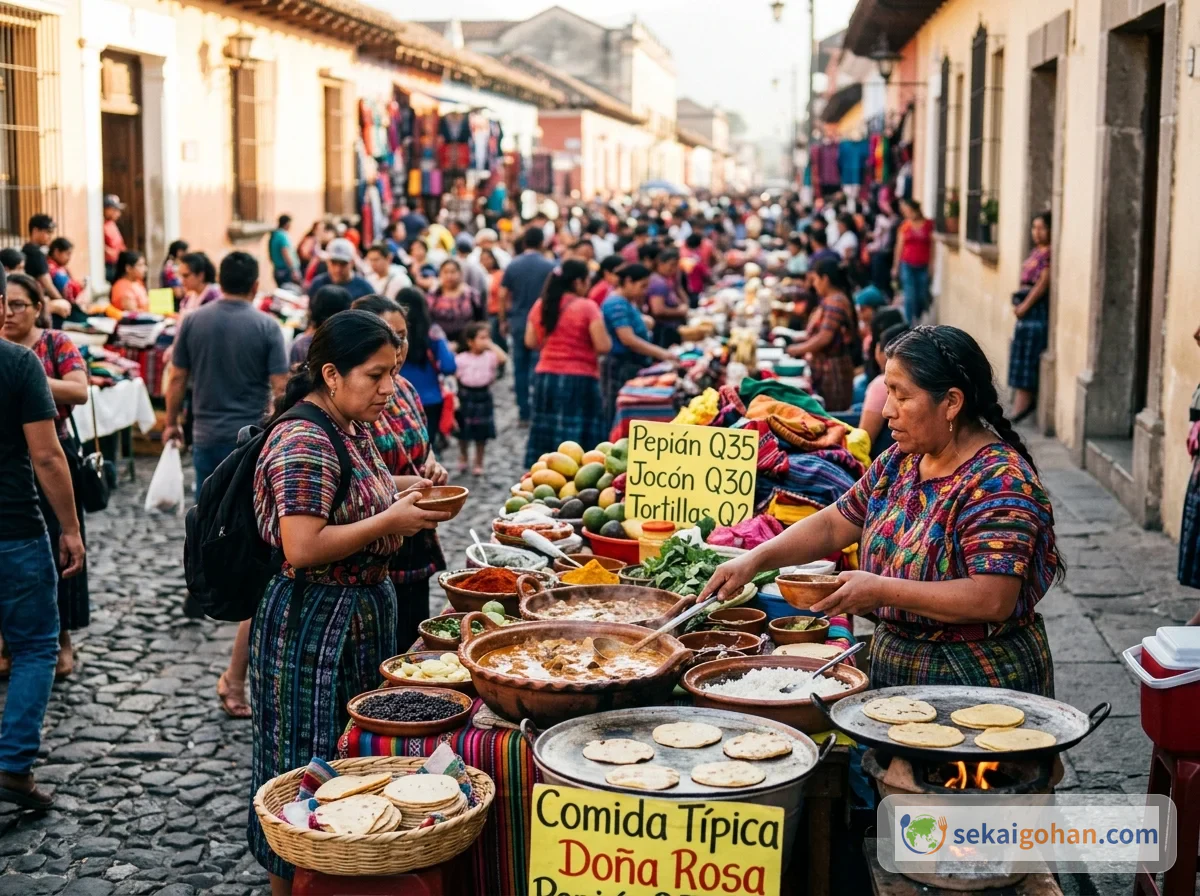
Maya peoples make up a large share of Guatemala's population, and many Mayan languages are spoken there. In rural homes, seeds and chiles are still sometimes ground on a grinding stone (metate), which leaves the sauce slightly coarse on the tongue. Pepián is also everyday food at eateries and street stalls in Guatemalan towns, where it comes with white rice and corn tortillas on the side.
In Guatemala, pepián is often made with beef as well as chicken, and some families use turkey (chompipe). The turkey is a bird native to Mesoamerica. This recipe uses chicken, but if you have turkey on hand, around the holidays for example, give it a try.
Ingredients (serves 4)
Hulled pumpkin seeds (pepitas) are sold at Latin grocery stores, natural food stores and online. Raw, unroasted seeds are ideal, but roasted seeds work fine too. Baking-aisle packets tend to be small, so look for larger bags in the nuts and seeds section.

Choosing pepián ingredients and substitutes

A regular supermarket covers most of the list, but pumpkin seeds and dried chiles take a bit of searching. Chayote is the vegetable Guatemalan pepián can't do without. Look for it at Latin and Asian grocery stores.
| Ingredient | Where to buy | What to look for |
|---|---|---|
| Pumpkin seeds (hulled) | Latin grocery stores, natural food stores, online | Unsalted |
| White sesame seeds | Supermarkets | Toasted sesame is fine |
| Dried chiles (guajillo) | Latin grocery stores, online | Whole dried chiles |
| Cinnamon sticks | Supermarkets | — |
If you swap in Korean dried red chiles, use whole chiles rather than flakes or powder. They are milder, so use 5.
| Ingredient | Substitute | How the result differs |
|---|---|---|
| Guajillo chiles | Korean dried red chiles (5) | A slightly sweeter result. A perfectly good stand-in |
| Chayote | Zucchini | Similar texture, slightly different flavor |
| Cinnamon stick | 1/4 tsp ground cinnamon | The aroma comes through a little differently |
| Grinding stone (metate) | Food processor or blender | A difference in texture. A blender makes a smoother sauce |
Method
Toast the sauce ingredients
Making pepián sauce starts with toasting every ingredient. Toasting creates the roasted aroma that decides how deep the sauce will taste.
Pepián sauce is rich in oil, so oil sometimes separates and rises to the surface during simmering. This is normal, not a mistake. If it bothers you, stir gently to bring it back together.
Pepián cooking tips and common mistakes

Toasting
The flavor of pepián changes a great deal in the toasting stage. The pumpkin seeds, sesame, chiles, tomatoes, onion and garlic are all toasted or charred before use. That step adds aroma and color and gives the sauce far more depth than raw ingredients would.
The pumpkin seeds need the closest watching. Nothing happens for about 2 minutes, and then they start popping in the pan as the moisture inside them evaporates. Wait 20 seconds after the popping starts, then turn off the heat and take them out. Golden seeds mean you're set. Burned seeds turn bitter, and there's no undoing it.
Frying the sauce
Fry the blended sauce in oil for 10 minutes before you add any water. A common mistake is to pour it straight into the pot and thin it. Frying drives off moisture and concentrates the flavor. It's done when the sauce turns a dark reddish brown and oil rises to the surface. Mole poblano has the same frying step, for the same reason.
Cutting the chayote
Chayote cooks quickly, so cut it into large pieces to keep it from falling apart. Leave the fine dicing for something like the filling of an empanada.
Serving pepián and Guatemala's other sauce dishes
Pepián is often served with both white rice and warm corn tortillas. Tortillas are the classic partner, though: you scoop up the sauce and chicken with a torn piece, and the corn aroma suits the seed sauce perfectly. Store-bought tortillas are perfectly fine. In corn-centered Guatemala, tortillas are the everyday staple, while rice arrived with the Spanish.

Pepián is one of Guatemala's recados, a family of spiced sauces.
| Name | Main sauce ingredients | Character |
|---|---|---|
| Pepián | Pumpkin seeds, sesame | The most traditional |
| Hilachas | Tomato, miltomate, beef | A home-style dish of shredded beef simmered in a red recado |
| Jocón | Tomatillo, cilantro | A green sauce with a fresh tang |
| Kaq'ik | Tomato, chiles | A red turkey soup of the Q'eqchi' people |
| Plátanos en mole | Chocolate, chiles | A sweet-spicy sauce close to Mexican mole |
Recados and Mexico's moles share a root. Across Mesoamerica, the region of the Indigenous civilizations of Central America, people have long ground seeds, chiles and tomatoes on a stone to make sauces. Mexico took mole toward great complexity, while Guatemalan pepián went the other way, keeping the ingredient list short so each flavor stands out.
Jocón, pepián's sister dish, simmers chicken in a green sauce of blended tomatillos, cilantro and green chiles. If you can't find tomatillos, green (unripe) tomatoes or tart tomatoes with a squeeze of lemon juice can stand in. Make both pepián and jocón, and you have a Guatemalan table.
FAQ

Q1. Can I use nuts instead of pumpkin seeds?
Cashews or pine nuts can stand in, but the flavor changes a lot. The slightly green taste of pumpkin seeds is the heart of pepián. With nuts you get something tasty, but it isn't really pepián, so use pumpkin seeds whenever you can.
Q2. Can I adjust the heat?
Yes. Remove the seeds from the dried chiles, or use fewer chiles. Guatemalan pepián is known for gentle heat anyway. In mole poblano the heat is buried under layers of spice, while in pepián it sits quietly behind the richness of the seeds.
Q3. Is it better the next day?
Yes, pepián is at its best the day after, once the seed sauce has soaked into the chicken overnight. It keeps for 3 days in the refrigerator. Reheat it over low heat, adding water if it has thickened.
Q4. What should I drink with pepián?
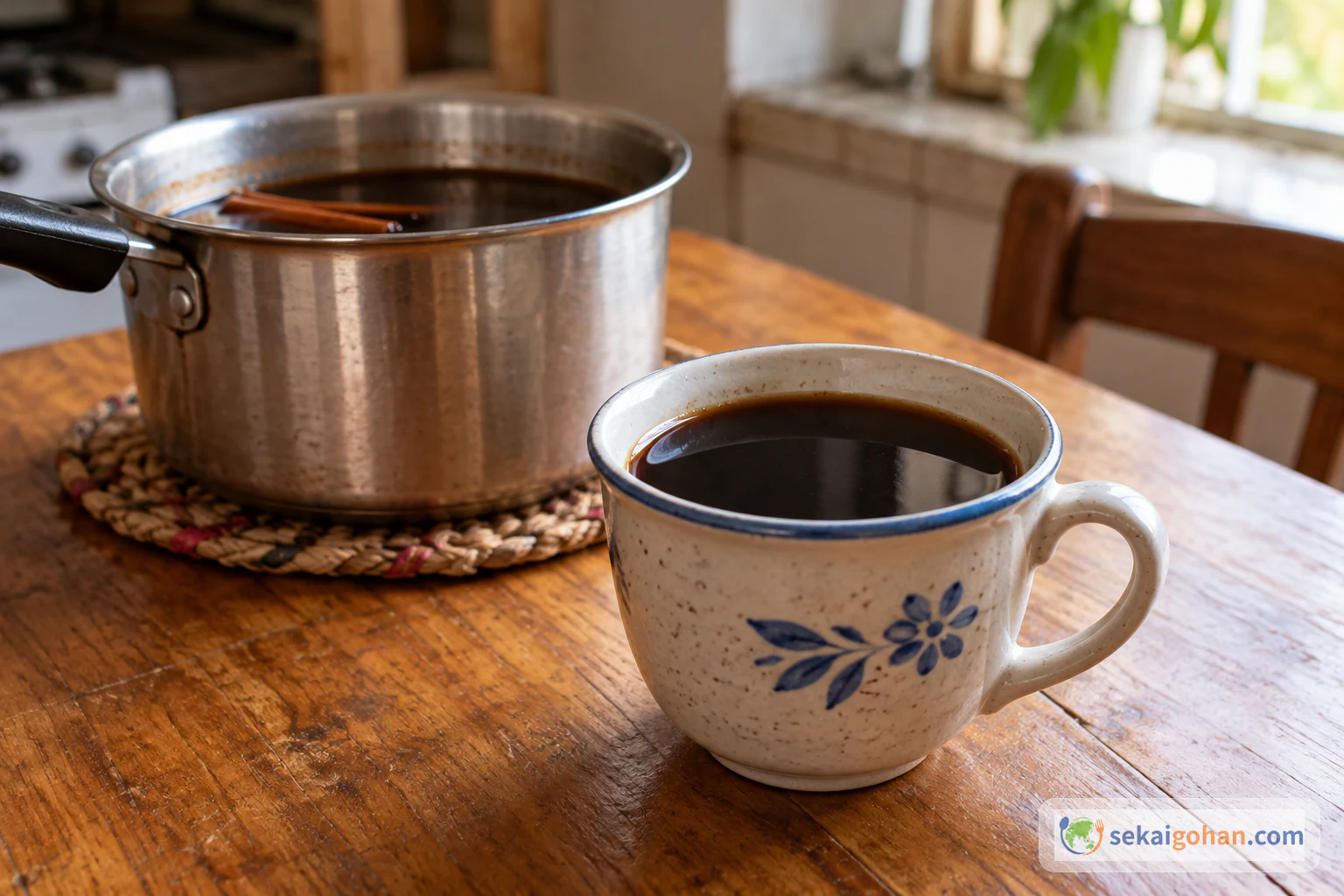
Horchata, a drink of rice, sugar and cinnamon, is the traditional choice with the meal. For something alcoholic, Guatemala's Ron Zacapa rum with soda goes well. Afterward, nothing beats a Guatemalan coffee from Antigua or Huehuetenango.
Q5. I want to learn more about Guatemalan food
Jocón (chicken in green sauce) and kaq'ik (turkey and tomato soup) usually come up alongside pepián as Guatemala's signature stews. Across the wider region you'll find a rich family of dishes that blend Indigenous, African and Spanish cultures, such as mole poblano (Mexico), mofongo (Puerto Rico) and jerk chicken (Jamaica), all in Japanese.
Sources
This article draws mainly on the following English- and Spanish-language sources.
- Pepián - Wikipedia (English) — A broad overview of pepián's history, variations and cultural context
- Preparan Segundo Festival Departamental del Pepián - Agencia Guatemalteca de Noticias (August 26, 2022) — The designation as intangible cultural heritage under Ministry of Culture and Sports decree 801-2007 (accessed October 22, 2026)
- Fiambre: platillo guatemalteco que celebra una tradición - Revista E&N (October 31, 2024) — Fiambre, the cold dish eaten on All Saints' Day, November 1 (accessed October 22, 2026)
- Coe, S. D. (1994). America's First Cuisines. University of Texas Press. — A history of Mesoamerican food culture
- Pilcher, J. M. (2012). Planet Taco: A Global History of Mexican Food. Oxford University Press. — Comparative context on seed-sauce cooking
Related recipes: spiced stews of Latin America
Mesoamerican seed sauces: Mole poblano is Mexico's signature dish, a highly complex sauce made with many spices and chocolate. It comes from the same seed-sauce lineage as pepián, but tastes entirely different. Cooking both side by side shows the range of Mesoamerican food culture.
Caribbean and Central American dishes: Jerk chicken is Jamaica's spiced grill. Mofongo is Puerto Rico's mashed plantain dish. Empanadas are Argentina's filled pastries, a dish that spread across Latin America by way of Spain.
Traditional South American dishes: Ceviche is Peru's marinated seafood. Lomo saltado is a Peruvian beef stir-fry. Feijoada is Brazil's black bean stew. Pastel de choclo is Chile's corn pie, a dish from the same corn-based food culture as pepián.
Wrap-up: a toasted, ground seed sauce in your own kitchen
Pepián is a one-of-a-kind stew born from pumpkin seeds and sesame. Indigenous crops and spices that arrived in the colonial era came together in it, and through the Spanish conquest, civil war and into the present, Guatemalans have kept on making pepián.
When you dry-toast pumpkin seeds in a skillet, they pop and crackle. In Guatemalan kitchens, that same sound is the cue. Toast the pumpkin seeds, char the tomatoes, toast the chiles, then grind everything into a sauce. Those simple steps hold the culinary wisdom of Mesoamerican civilization. With ingredients from an ordinary grocery store, you can recreate at home a seed-sauce tradition that reaches back to the Maya. That's what makes pepián so rewarding.