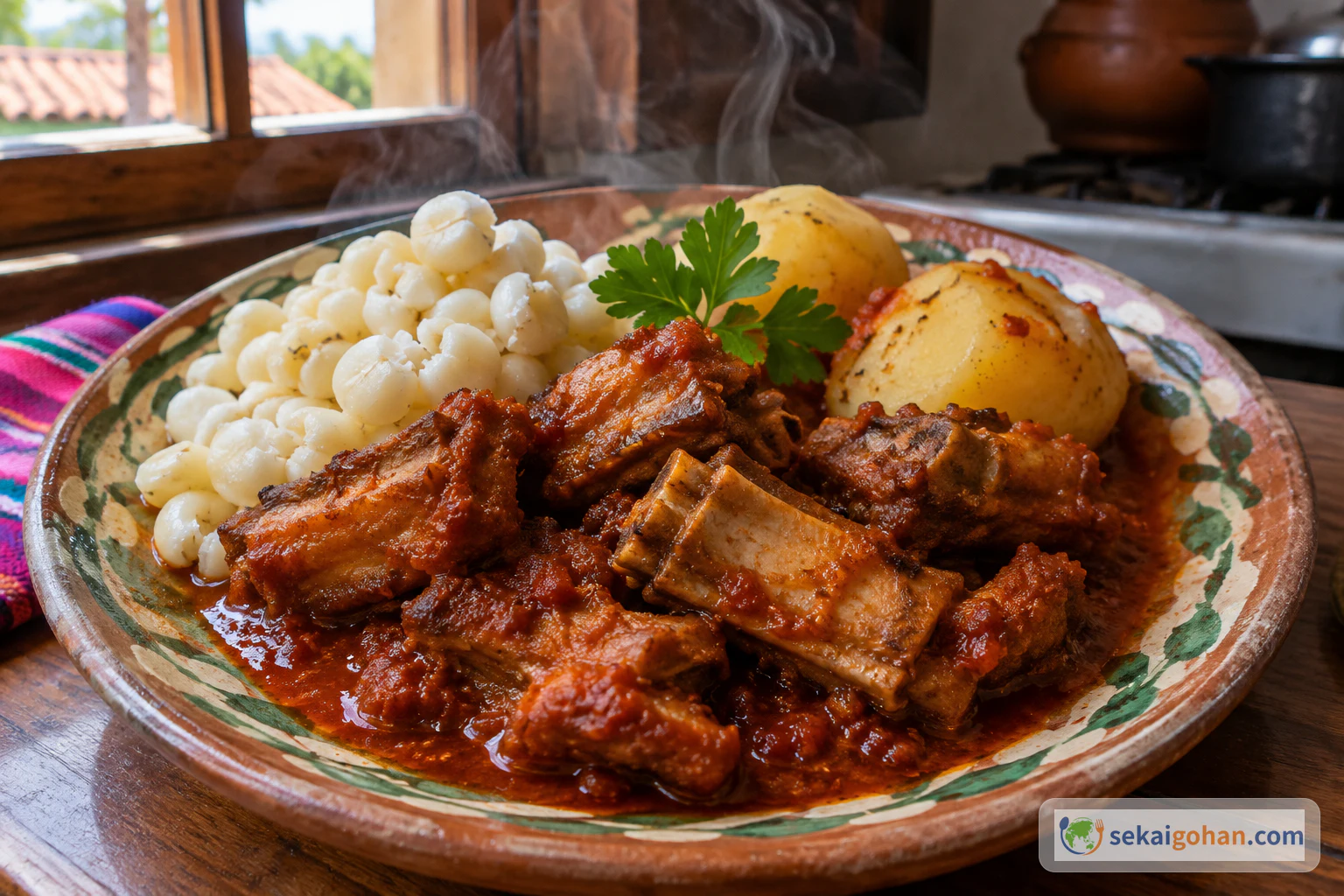
Lift the lid on a pot of simmering beef and the steam of bay leaf and onion fills the kitchen. Press the meat with a fork and the fibers loosen into threads, which is quite a pleasure even before you know the dish's name. Hilachas is a Guatemalan home stew built around that shredded beef and a red recado sauce. The sauce has the toasty depth of charred tomato and chilies, and it simmers with potatoes until they soak up the thickened sauce but keep their corners.

Hilachas and the Guatemalan recado
Hilachas is a Spanish word meaning "threads" or "torn cloth." On the plate it means thinly shredded beef returned to a recado sauce made from tomato, miltomate, chilies, aromatics, and bread or tortilla, then simmered with potatoes and carrots. It looks a lot like the beef in Cuban ropa vieja and Venezuelan pabellón criollo, but its flavor comes from Guatemala's recado tradition.
Hilachas is a Spanish plural, and the h is silent, so locally it sounds close to "ilachas."
Recado is a word that keeps coming up in Guatemalan cooking. It means charring tomato, miltomate, chilies, seeds, and aromatics, grinding them, and turning them into the sauce for a stew; pepián shares the same base. Hilachas leans less on seeds than pepián does, and its Guatemalan character shows in the way a thick red sauce of charred vegetables clings to the beef.
Local recipes often use chile guaque, chile pasa, miltomate, red pepper, tomato, onion, garlic, and bread or tortilla. The pattern is the same almost everywhere: boil and shred the beef, char the vegetables and chilies into a sauce, and simmer everything with potatoes. Households differ on whether to add carrots or green beans, how much heat to show, and whether to serve it with rice.
Three things matter most when you make it at home. Use a cut that shreds along the fiber, give the sauce the toasty depth and body of charred vegetables, and let the potatoes keep their shape on the plate. Get those right and you'll have real hilachas even without every special ingredient.
Ingredients: gathered from an ordinary supermarket
Basic ingredients (serves 4)
This recipe uses beef, wheat (bread), and sesame. If avoiding bread, thicken with a corn tortilla. Cook the beef through to the center, do not leave the finished stew at room temperature for long, and refrigerate early once the heat has dissipated.
Decision table for substitutes
| More authentic ingredient | A realistic choice elsewhere | What it keeps |
|---|---|---|
| Flank, skirt-type beef | Beef shank, chuck, rump block | Long fibers that shred. Thin slices make a different dish |
| Miltomate | Canned tomatillo, green tomatoes, tomato plus lemon | A light sourness that remains in the red sauce |
| Chile guaque | Guajillo, ancho, red bell pepper | Not heat but the sweet aroma of dried chili |
| Comal | Cast-iron skillet, fish grill, oven toaster | Light char and toastiness on the vegetable surfaces |
Hilachas is a dish of beef and sauce, so the shopping priority is the meat, tomatoes, potatoes, and the seeds or bread that add toastiness. Chili is used not to make it hot but to add a red aroma. For a first time, use less dried chili and add chili sauce at the table, which is less likely to fail.
What is worth sourcing
Cut of beef for the meat, blending for the sauce, and toastiness for the recado are the keys. If you cannot find dried guajillo, keeping paprika, which supplies a sweet aroma and red color, on hand makes adjustment easier. Pumpkin seeds and a blender can also be reused for pepián and other Latin American stews.
Choosing beef and substitutes for hilachas

The cut of beef decides whether you get threads at all. Stir-frying thin-sliced beef and simmering it with canned tomatoes won't give you the shredded texture, so use a block of beef shank or chuck.
Authentic chile guaque and miltomate are hard to gather outside Guatemala. Tomatoes, canned tomatillo or green tomatoes, red bell pepper, and a small amount of dried chili get you close without straining a home kitchen.
Guatemalan miltomate is a small green tomato, called tomatillo in English. Fresh tomatillos are hard to find in some places, so approximate with canned tomatillo, green tomatoes, or ripe tomatoes with 2 tsp of lemon juice added. A little sourness keeps the red sauce from feeling heavy.
How to make it: shred the beef and return it to the recado
With hilachas, once you make the beef tender at the start, the second half goes calmly. Do not throw away the meat's cooking liquid while making the sauce; use it as the stock to thin the recado.
For parboiling the beef in a pressure cooker, use 25 minutes under pressure and 10 minutes of natural release. If you open it before the meat is fully tender it is hard to shred, so check that it loosens with a fork, and if it is firm add 5 minutes under pressure. Doing the recado simmer in the second half in a regular pot makes it easier to avoid breaking down the potatoes.
Common hilachas problems and fixes

The beef doesn't turn to threads
Either the cut or the cooking time is to blame. Thin slices or barbecue cuts break into short pieces instead of threads. If block meat still won't shred, it's undercooked: add cooking liquid and give it another 20 to 30 minutes over low heat.
The sauce is watery
This comes from too little bread or tortilla, too much cooking liquid, or not enough reducing. Trace the bottom of the pot with a spatula; if the sauce rushes back like water, it's still thin. Take the lid off and reduce 3 to 6 minutes at a time over medium-low, turning the heat down if it threatens to scorch.
The sauce is bitter
The dried chili or seeds were overtoasted. The chili is only there for aroma, so 10 seconds per side is enough, and any chili that has gone black should be replaced. Pull pumpkin seeds and sesame off the heat as soon as they start to color.
The potatoes fall apart
A hard boil breaks the corners of the potatoes quickly. Once the vegetables go in, drop the heat from medium-low to low and stir less often. Waxy potatoes hold their shape more easily.
Serving and storing hilachas
What to serve with it
Hilachas works with both rice and tortillas. For a weeknight dinner, white rice and a salad are plenty. On the weekend, set out black beans, avocado, lime, and warm corn tortillas for a Central American table.
For a Guatemalan menu, pepián is a good partner, since you can compare it with the richness of a seed sauce. Add Salvadoran pupusas and Honduran baleadas and you'll see how each country uses corn, beans, beef, and sourness differently.
Leftovers, storage, and reheating
Leftovers make a good lunch. Warm the hilachas over low heat for about 5 minutes, until the sauce thickens a little and the meat fibers hold together, then pile it on a tortilla (a loose sauce spills easily). Lettuce, onion, and avocado turn a heavy stew into something lighter.
Once it has cooled, transfer it to a storage container and eat within about 3 days refrigerated. Potatoes lose their texture in the freezer, so freeze only the meat and sauce; frozen, it keeps about 2–3 weeks. After thawing, move it to a pot, add 2–3 tbsp of water, and warm over low heat for 10 minutes.
The bottom of the pot scorches easily, and blasting it in the microwave dries out the meat and sets the edges of the sauce. Use low heat on the stove, or microwave at 600 W in 2-minute rounds, stirring in between. If the red sauce tastes heavy, 1 tsp of lemon juice at the end brings back the aroma.
Frequently asked questions
Q1. I have no tomatillo. What can I substitute?
Add 1 more tomato and 2 tsp of lemon juice; the lemon cuts the heaviness of the sauce. If you can get green tomatoes, use 2.
Q2. Does it stray from the original if I don't make it hot?
Hilachas isn't a very spicy dish. Dried chili is there for aroma and color rather than heat. If children or people who dislike heat are eating, leave out the chili and bring out the color with red bell pepper and paprika.
Q3. Do I have to add bread?
Bread or tortilla gives the sauce body. To avoid wheat, grill 1 corn tortilla and use it instead. If you leave it out entirely, reduce longer at the end to build thickness.