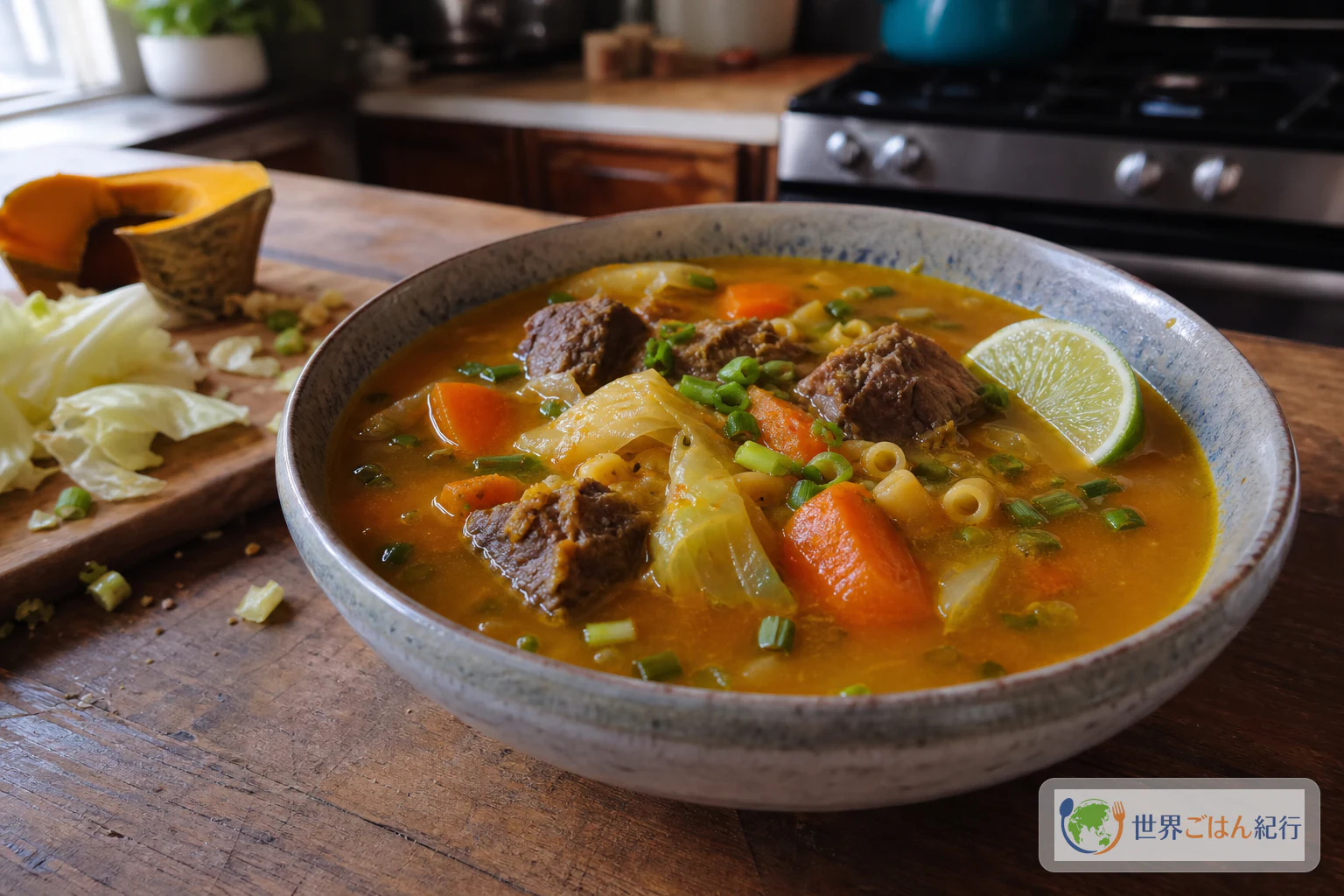
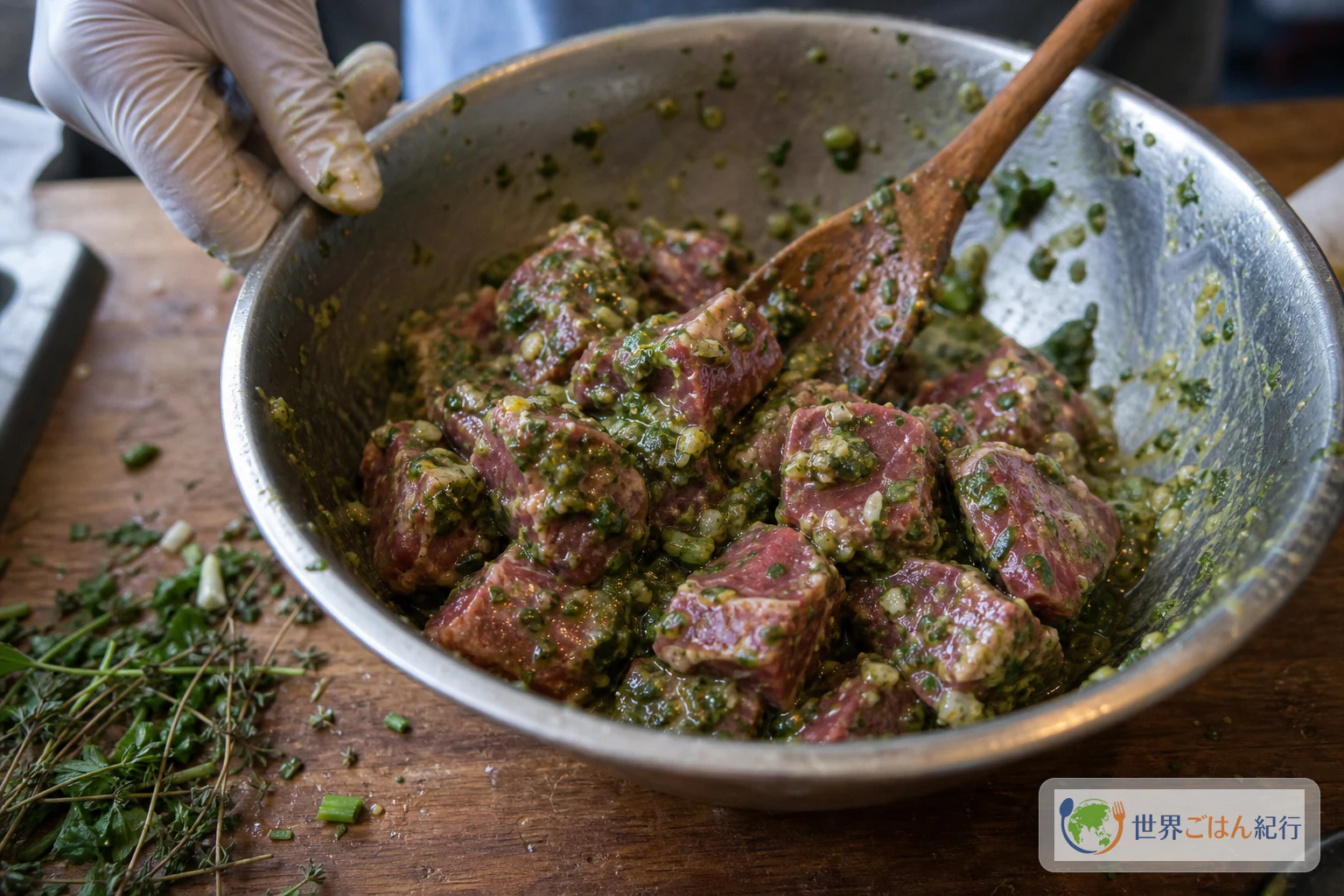
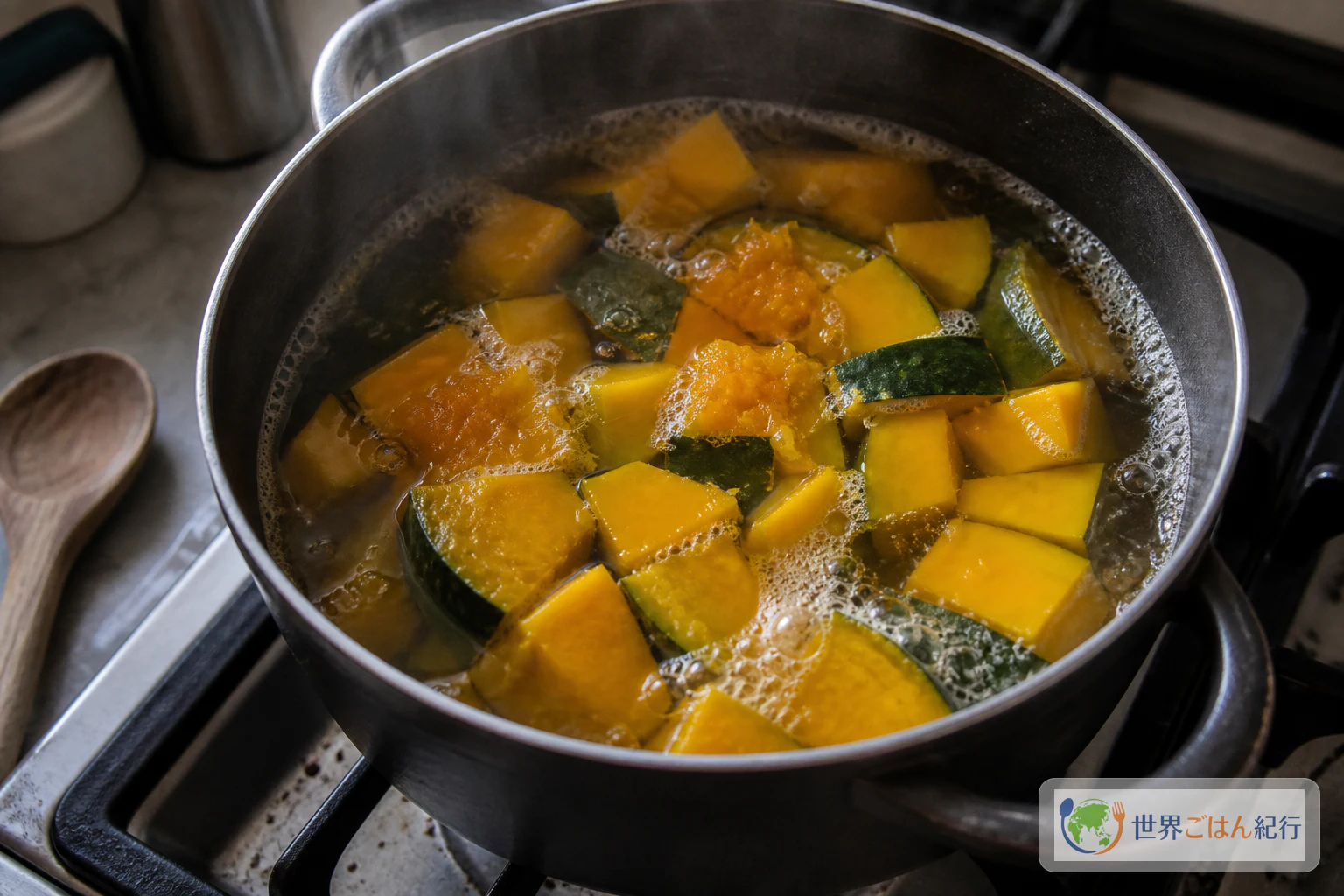
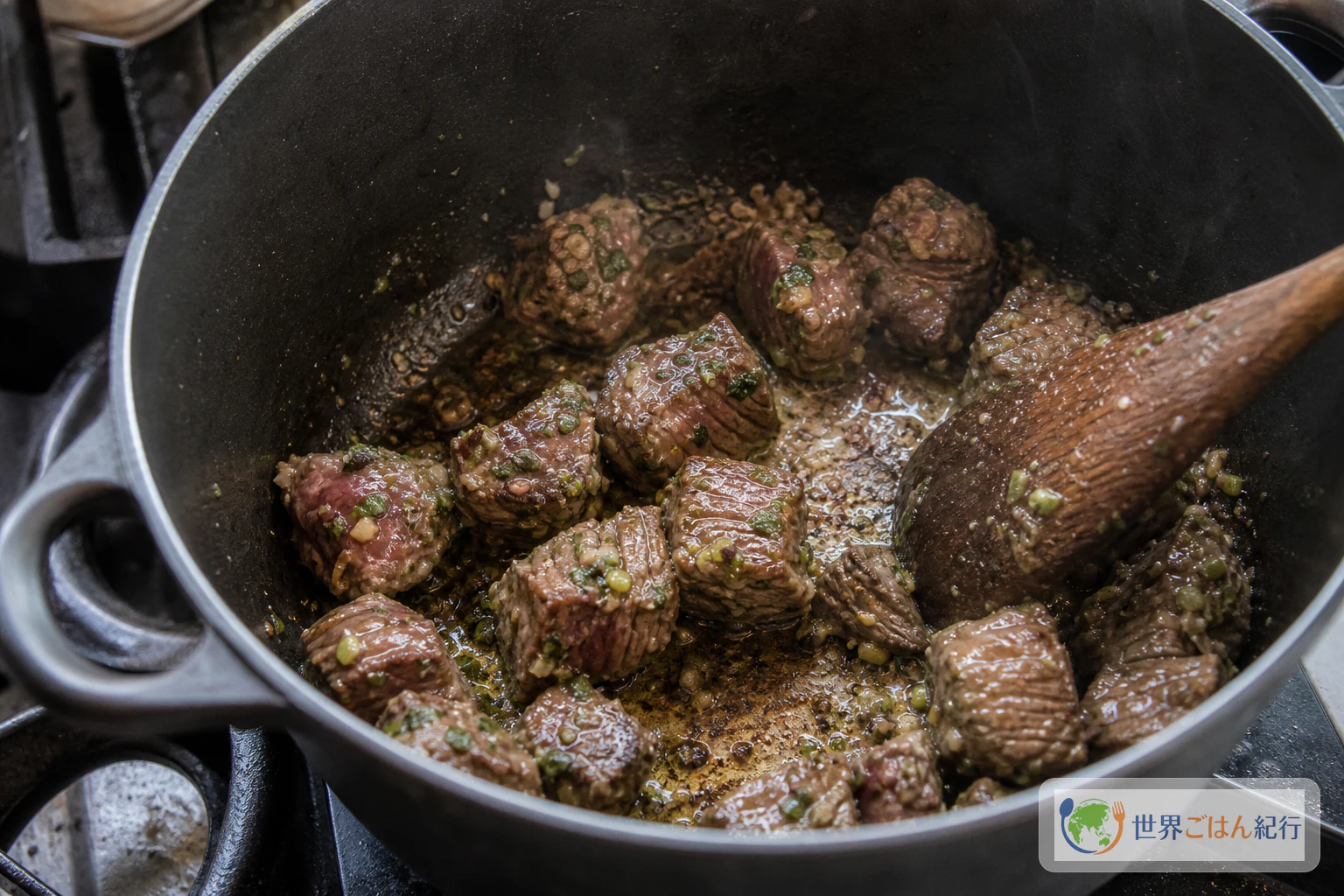
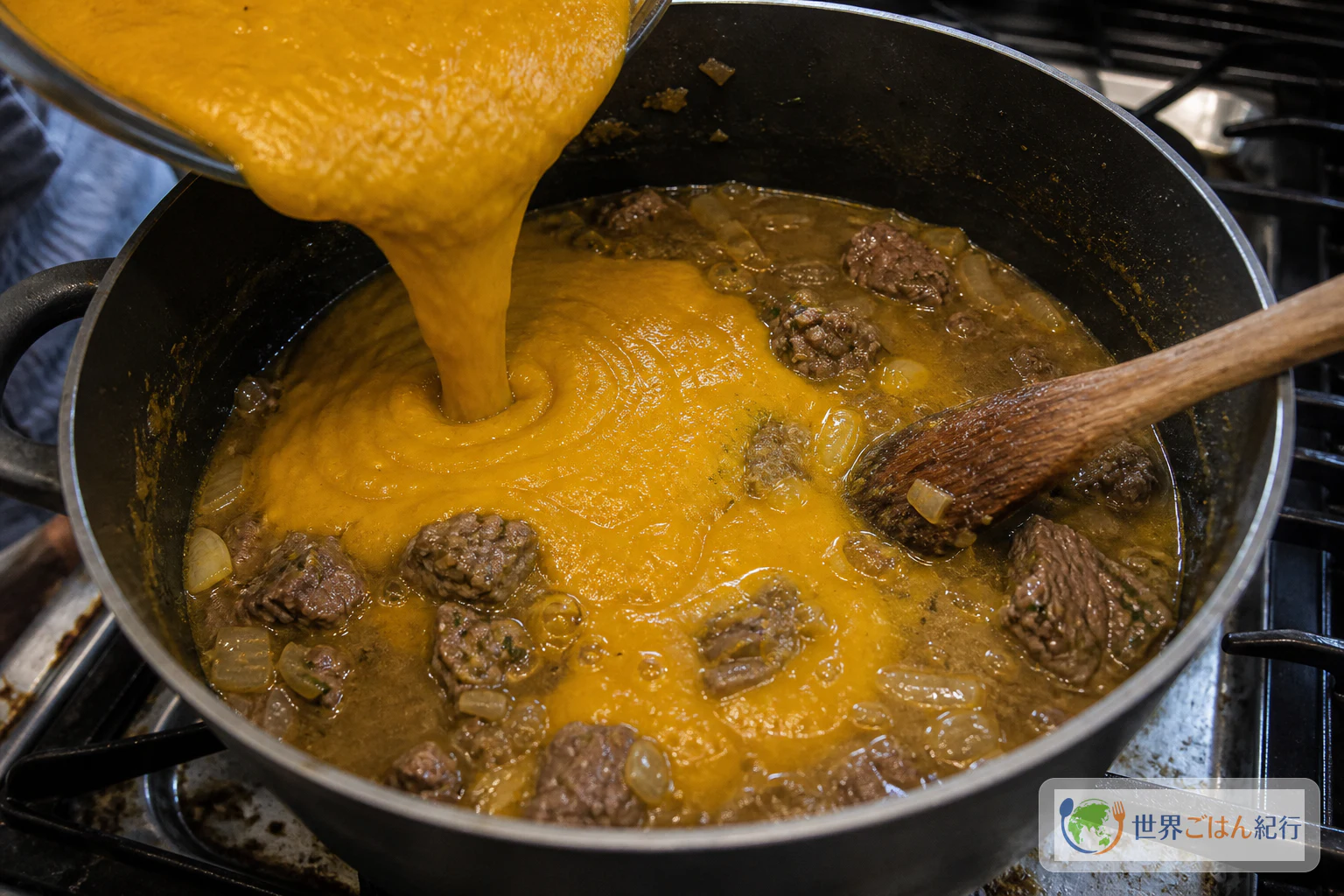
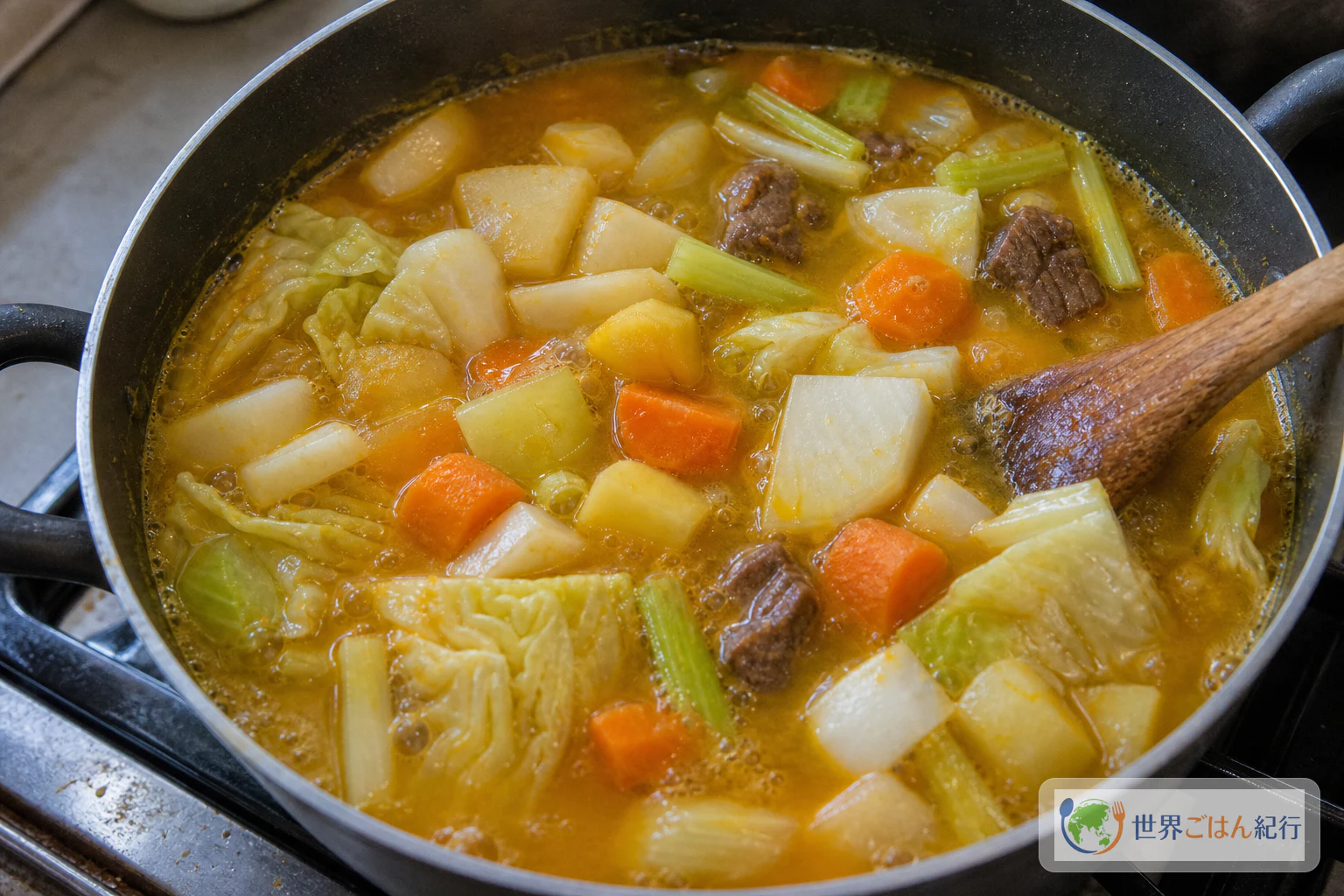
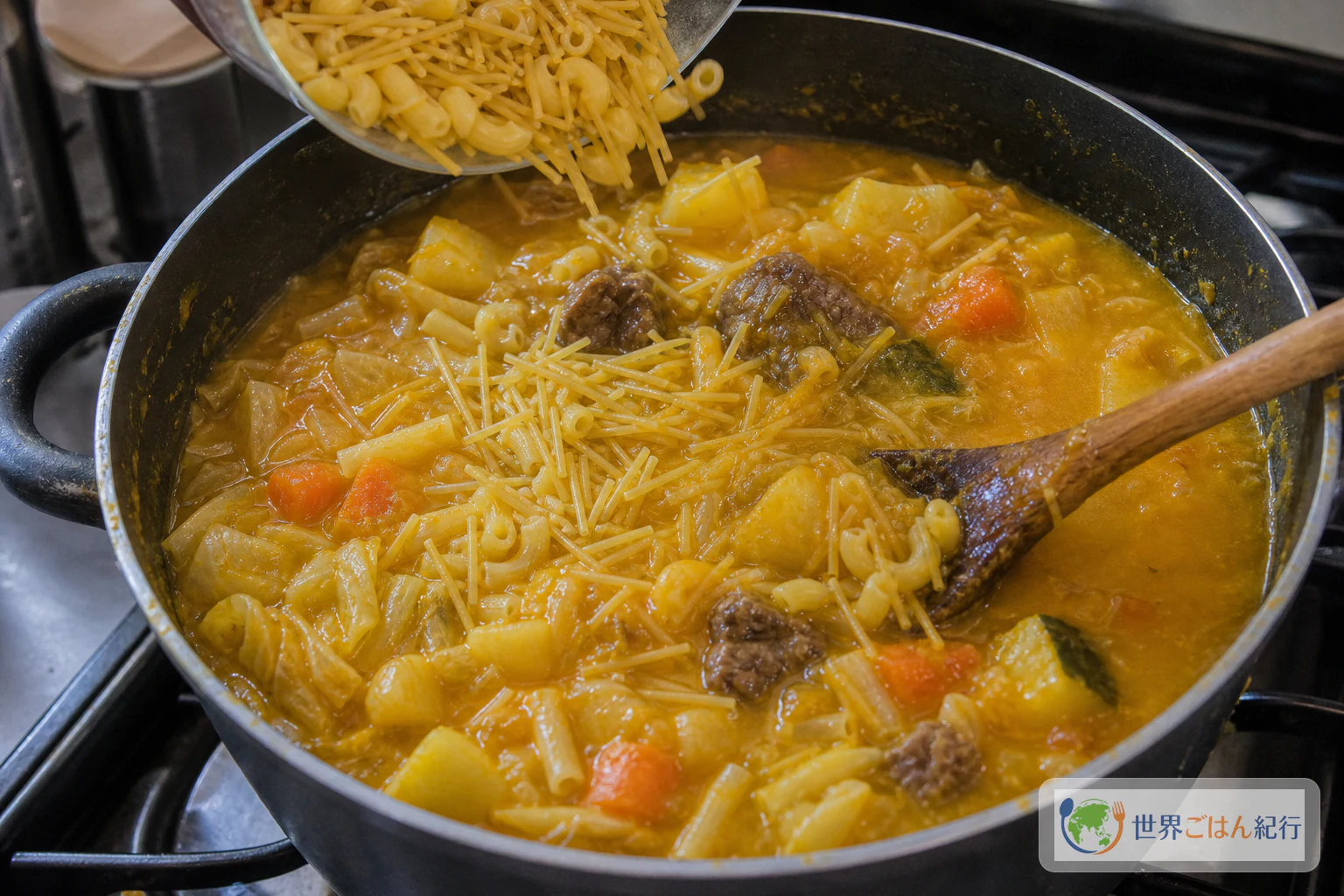
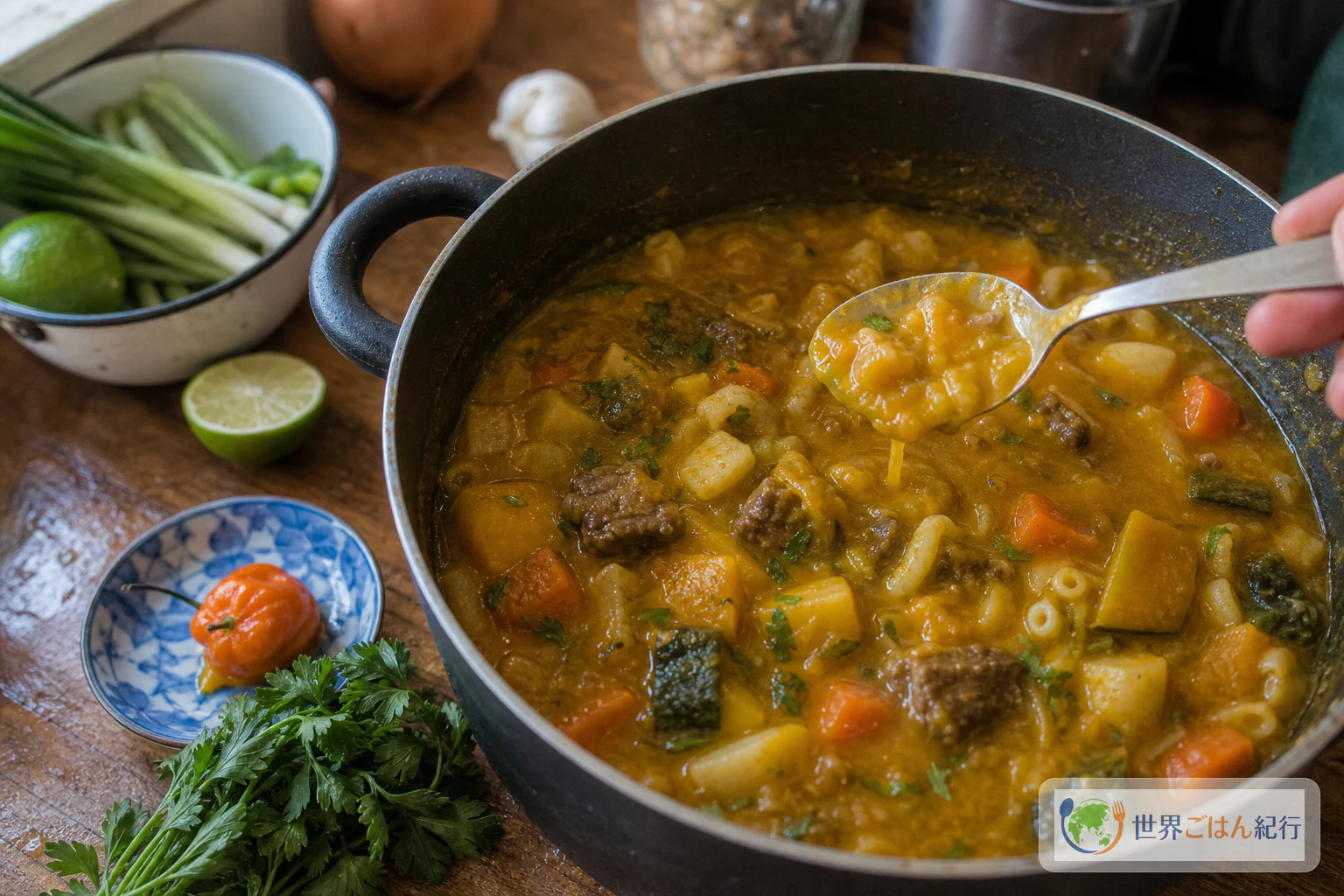
Chop onion, garlic, scallions, and thyme, add a little lime for sourness, and a green, earthy aroma rises in the kitchen. Then come beef, root vegetables, cabbage, and short pasta, all simmered into a sweet squash base. Soup joumou is Haiti's New Year's Day soup, eaten on January 1, Independence Day. It isn't a smooth Western-style purée. It's sweet from the squash, sharpened with lime and epis, and holds more ingredients than you might expect.
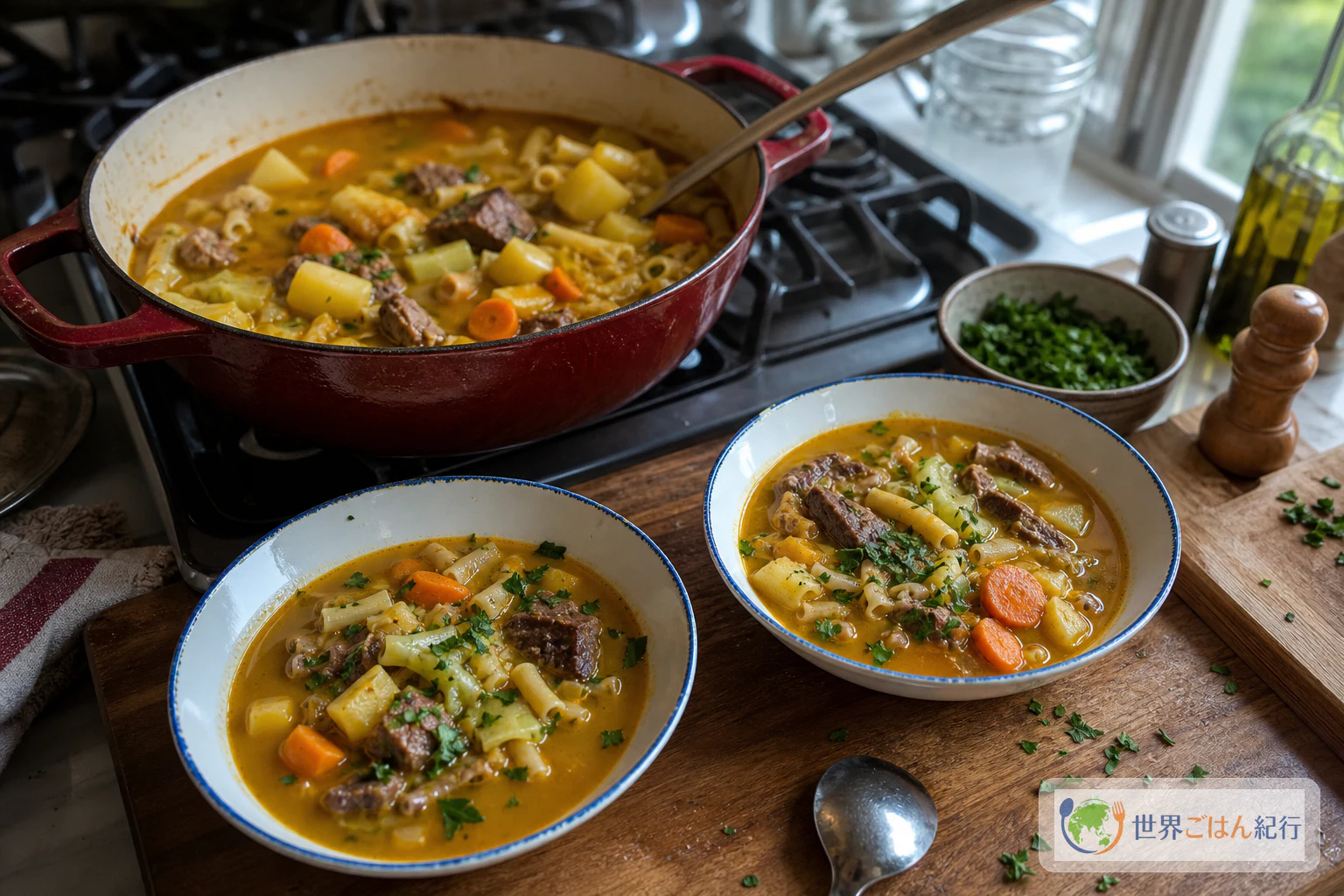
About Soup Joumou

Soup joumou belongs to January 1, the day Haiti marks its independence of January 1, 1804. During the colonial period, only enslavers were allowed to eat this soup. After independence, the Haitian people took it back as their own dish. In 2021, "Joumou soup" was inscribed on the Representative List of the Intangible Cultural Heritage as a dish passed down in families and communities.
It is still eaten as the first meal of January 1 and for Sunday breakfast. Every household makes it a little differently. Families and regions vary the ingredients and whether to include meat, and the pasta and stewing time differ too. "Joumou" refers to a West Indian pumpkin or squash, but any squash with good color and sweetness will work. Lime, thyme, and epis give the soup its character.
| Local pillar | Role | What to keep in a home kitchen |
|---|---|---|
| Joumou / squash | Color, sweetness, and body of the soup | Simmer a sweet pumpkin or squash, then purée it |
| Epis | The base of aroma in the meat and the soup | Combine garlic, scallions, parsley, thyme, and vinegar |
| Beef | A sense of feast and savor | Shank, shoulder, or stew-cut cubes, simmered at small bubbles |
| Root vegetables and cabbage | Substance as a meal | Potato, carrot, and daikon or turnip, added at staggered times |
| Pasta | Each household's heartiness | Add at the end and finish on residual heat |
Ingredients (serves 4)
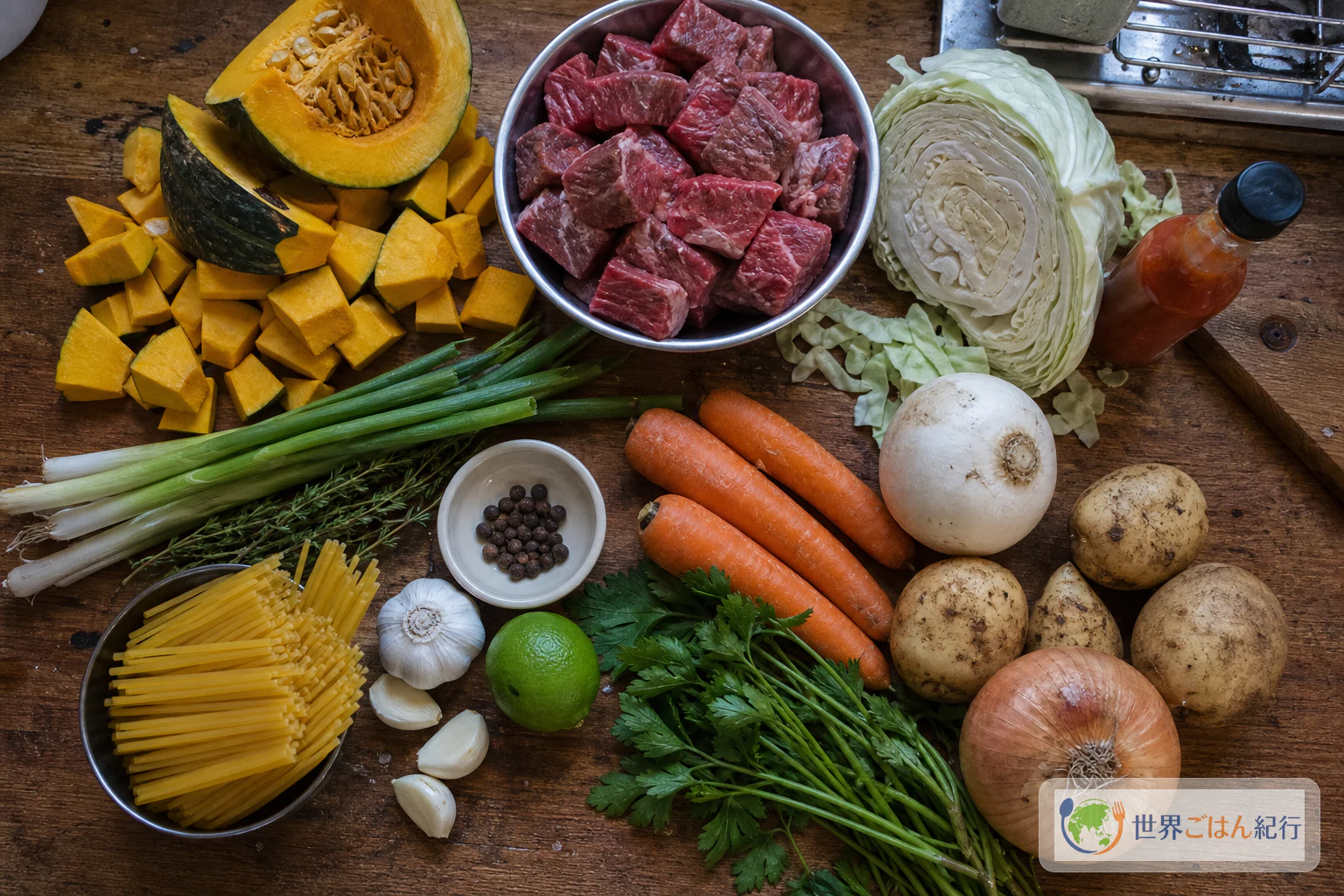
This amount is for four people eating the soup as the main dish. On days you serve rice or griot alongside, portion each bowl a little smaller. Too much pasta will absorb liquid the next day, so stop at 2.75 oz (80 g) the first time.
This recipe uses beef and wheat. Short pasta and spaghetti are wheat products, so swap in rice-flour pasta if needed. The heat of Scotch bonnet-type pepper is strong, so at a table with children or people who do not like heat, it is safer to leave it out of the pot and let only the adults add it at the table.
Choosing Ingredients and Substitutes for Soup Joumou
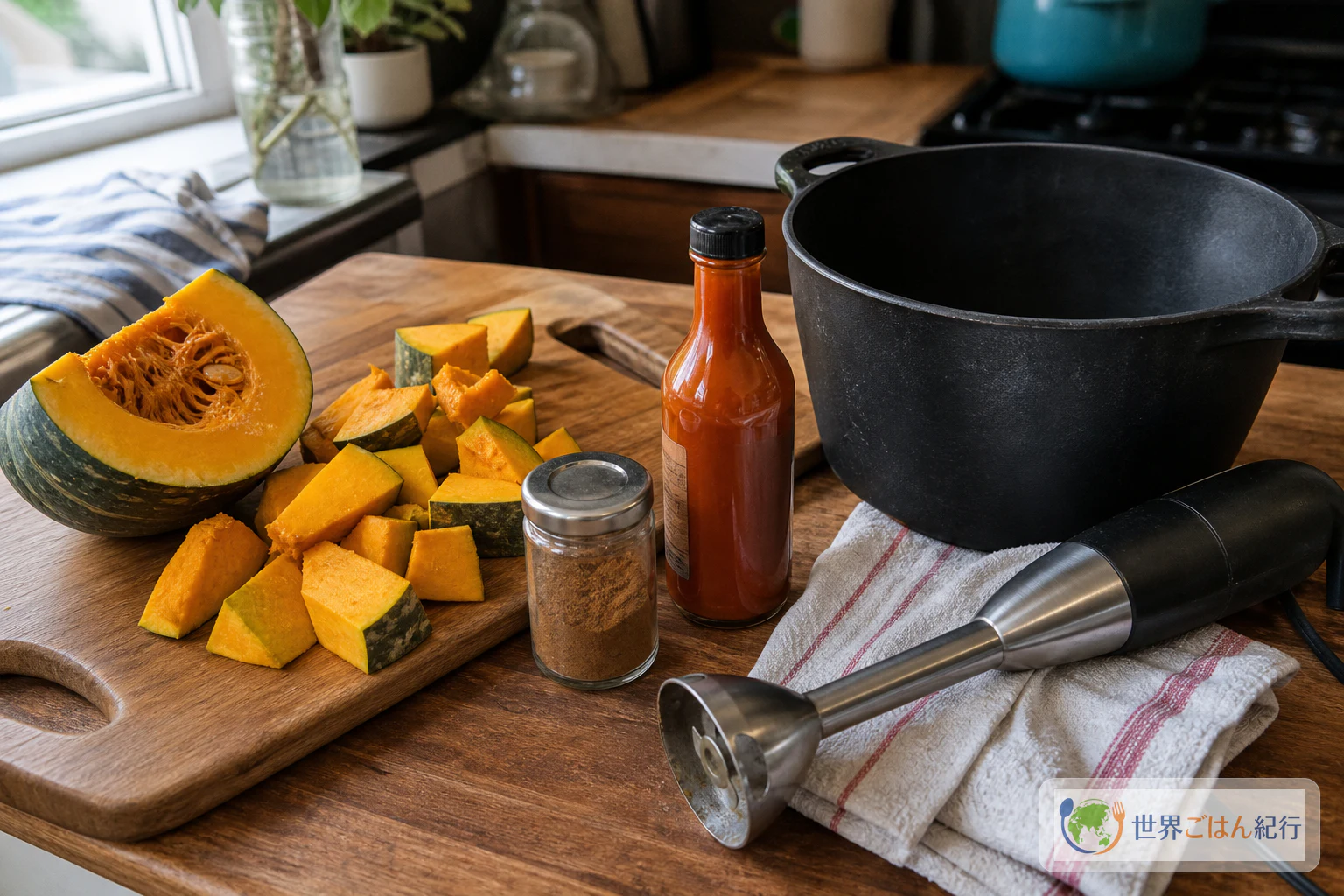
Squash, beef, potatoes, carrots, cabbage, and pasta are all at an ordinary supermarket. The things worth seeking out are the aroma of Scotch bonnet, a warm spice used in small amounts, and a pot that holds steady heat over a long simmer.
| What to look for | Priority | Reason | Substitute |
|---|---|---|---|
| Scotch bonnet-style sauce | High | Lets you adjust the Haitian-style aroma and heat at the table | A little fresh habanero, or no heat at all |
| Allspice | Medium | Adds a small amount of warm aroma in place of cloves | 1 clove, or leave out |
| Heavy cast-iron pot | Medium | Less likely to scorch the squash purée and beef | A heavy pot of 4.25 quarts (4 L) or more |
| Blender | Low | Makes the squash smooth more easily | Coarsely mash with a masher |
Heat and spices
Scotch bonnet brings a fruit-like aroma along with its heat. The first time, skip the fresh chile and let each person add bottled hot sauce at the table, so the whole pot doesn't end up too hot. Allspice is optional: 1/8 tsp is enough, and if you already have cloves, use those instead. Any heavy pot of 4.25 quarts (4 L) or more will handle the long, low simmer of the beef and the squash purée.
Squash and other substitutes
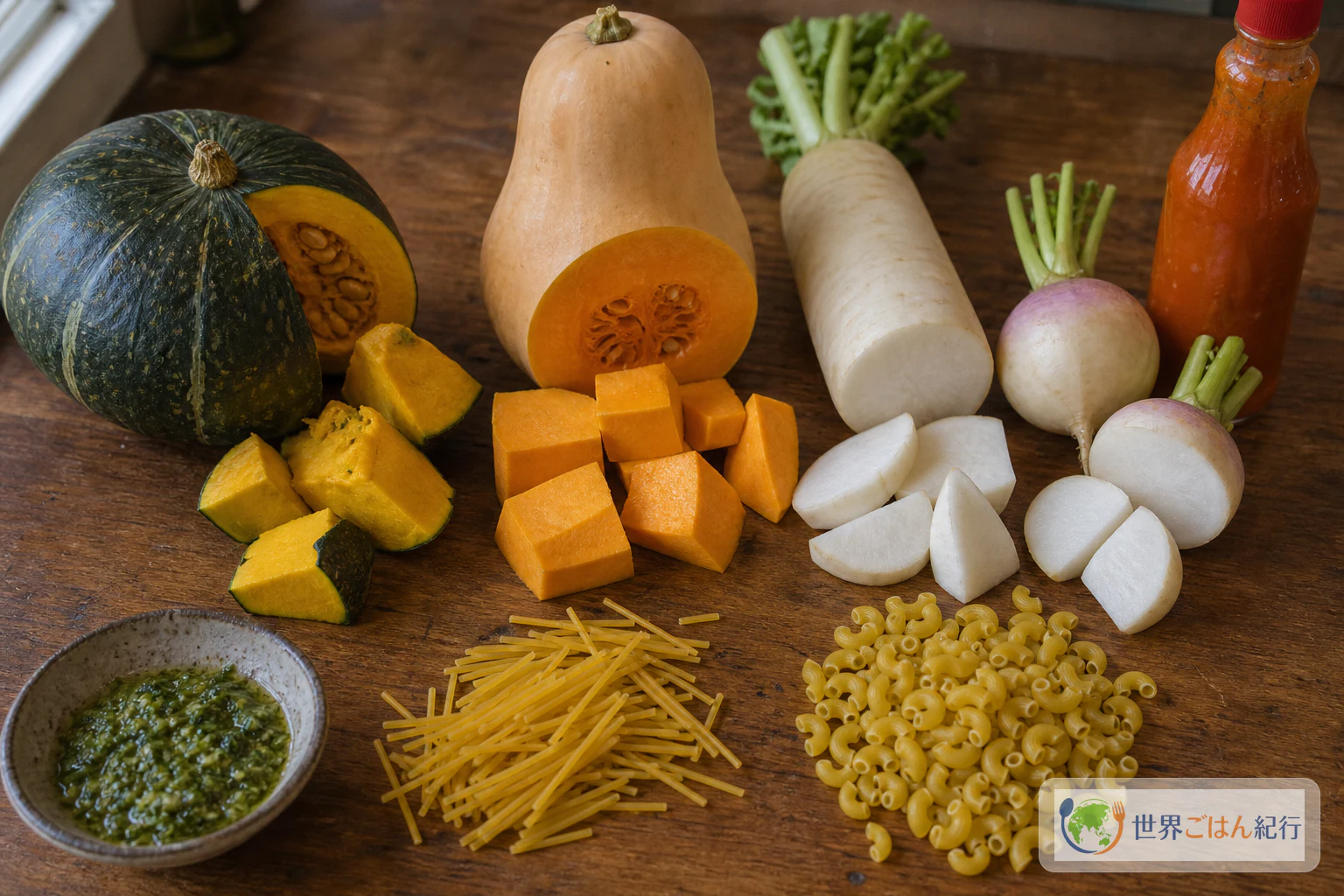
When substituting, protect the core of the dish in this order: color and sweetness, aromatics, the savor of the meat, and the ingredients you eat. Get those right and the flavor holds together.
| Ingredient in doubt | Closer to the original | Realistic answer | How to think about substituting |
|---|---|---|---|
| Joumou / squash | West Indian pumpkin types | Kabocha, butternut | Prioritize color and sweetness. If it is watery, remove the lid and reduce |
| Turnip | White root vegetable | Daikon, turnip | Add in cubes to bring earthiness to the sweet squash |
| Scotch bonnet | The fresh pepper used for aroma | A few drops of hot sauce at the table | Let each person decide the heat |
| Pasta | Spaghetti, macaroni, and others | 2.75 oz (80 g) short pasta | Add at the end, and boil separately for the portion you will store |
| Epis | An aromatic paste | Made from parsley, scallion, garlic, and thyme | Add a little vinegar and lime to keep the green aroma |
Kabocha is sweet enough that no sugar is needed. Butternut gives a pretty color but is watery and makes a lighter soup; remove the lid in step 4 and reduce 5 minutes at a time over medium-low heat.
Method: Melt the Squash, Then Layer the Meat and Vegetables
This order lets you judge the squash's thickness and the beef's tenderness separately. Cook the squash first, and it won't scorch the bottom of the pot while you wait for the beef to soften. For the beef, don't fix a set time. Go by how far a skewer goes in.
Common Soup Joumou Mistakes and Fixes
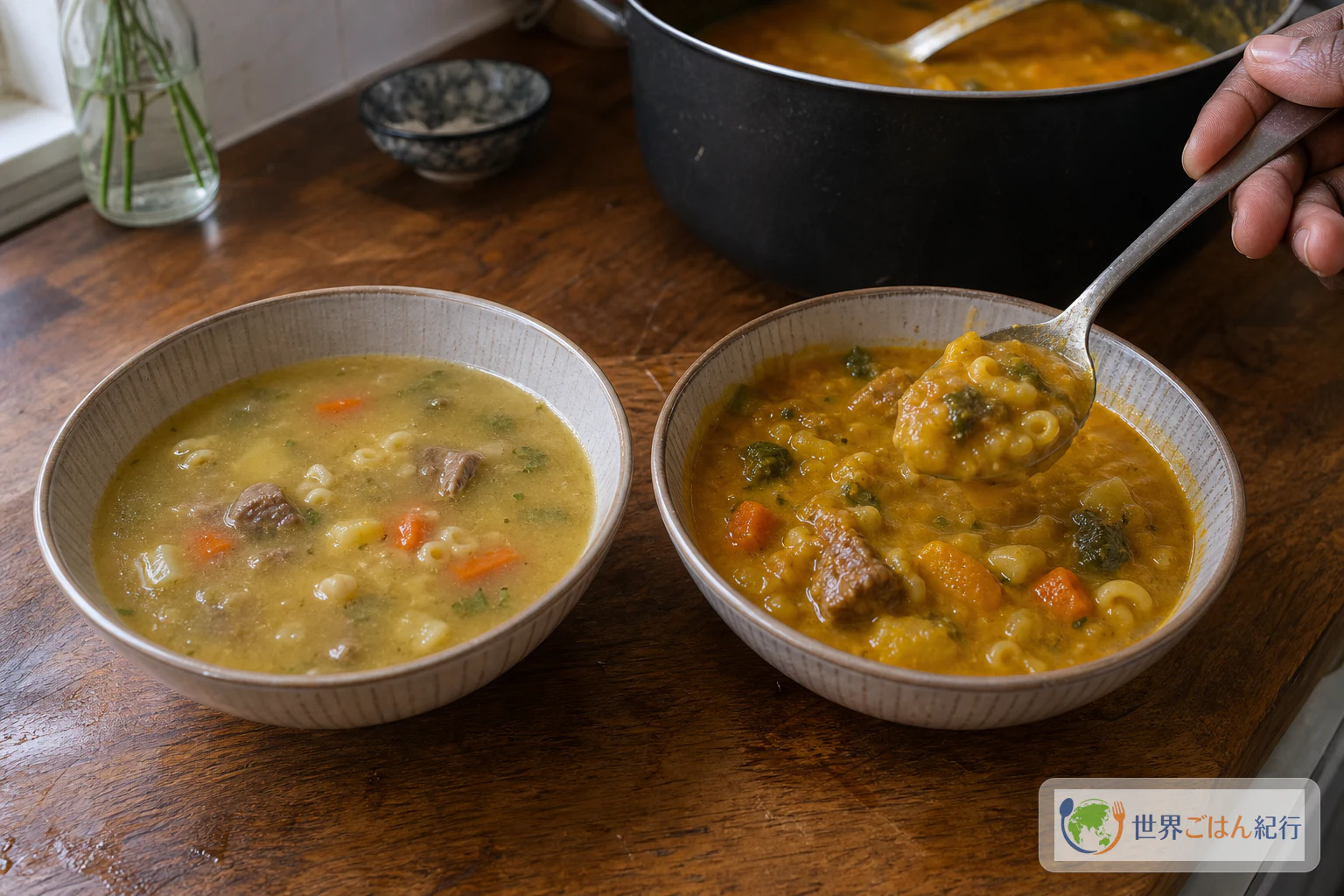
With so many ingredients, it can be hard to see where things went wrong. Settle three things before you start: whether the heat goes into the pot or is added at the table, whether the squash is smooth or keeps some texture, and when the pasta goes in. Leave them vague and the pasta swells while the beef is still tough, and the bottom of the sweet soup scorches easily. Most problems come down to liquid, heat, and pasta timing.
| Symptom | Cause | How to fix |
|---|---|---|
| Watery | The squash held too much water, not reduced enough | Remove the lid and reduce 5 minutes at a time over medium-low heat |
| Scorched bottom | High heat after adding the squash purée | Medium-low or lower, and sweep the bottom every minute |
| Tough meat | Not simmered long enough, boiled hard | Extend 10 minutes at a time over low heat and check that a skewer goes to the center |
| Pasta overcooked | Added too early, absorbed liquid in storage | Add right before eating. Use less pasta in the portion you store |
| Sweetness feels heavy | Kabocha is sweet | Add lime juice 1 tsp at a time, and adjust heat on the plate |
Don't try to settle the seasoning in one go. Squash varies in sweetness and water content, and the saltiness of the beef depends on its cut and seasoning. Rest the soup for 5 minutes, then adjust salt, lime, and heat, in that order. If the meat is still tough when you taste, keep simmering before you season.
Serving and Storing Soup Joumou
Serving and menu ideas

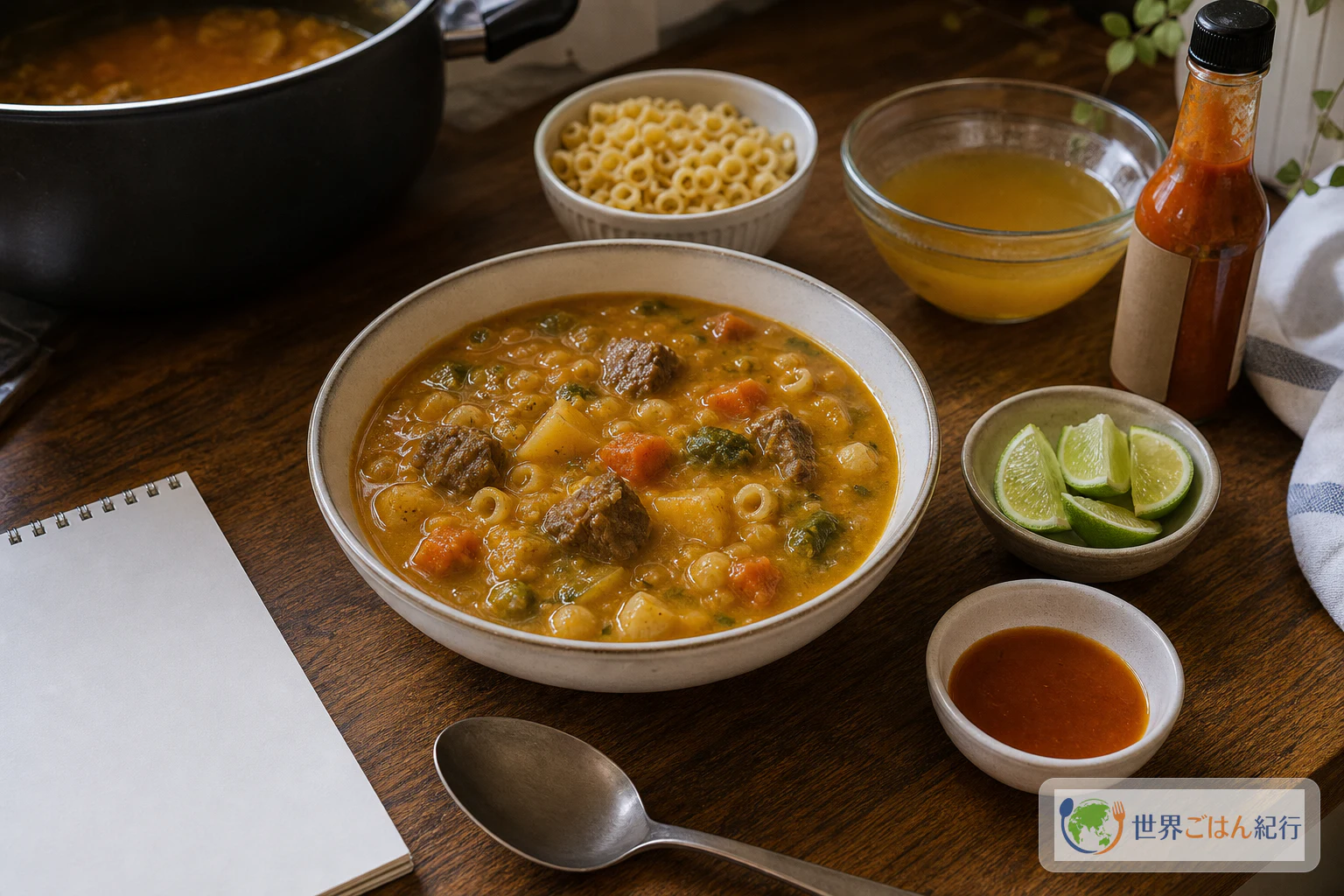
In Haiti, soup joumou is a January 1 dish. At home, serve it on New Year's Day while talking about where it comes from, or make it the main dish of a cold weekend. Once it's in bowls, anyone who wants heat adds a few drops of pepper sauce, and anyone who wants to cut the richness adds a little lime.
For a holiday table, pair it with griot, pork finished with citrus and epis. The soup already has pasta, so a small portion of rice is plenty: Jamaica's rice and peas or Trinidad's pelau. For sides, lightly pickled cabbage, a lime-forward salad, or fried plantain is enough. Keeping the menu small leaves the yellow soup and the aroma of epis at the center of the table.
Storage and reheating
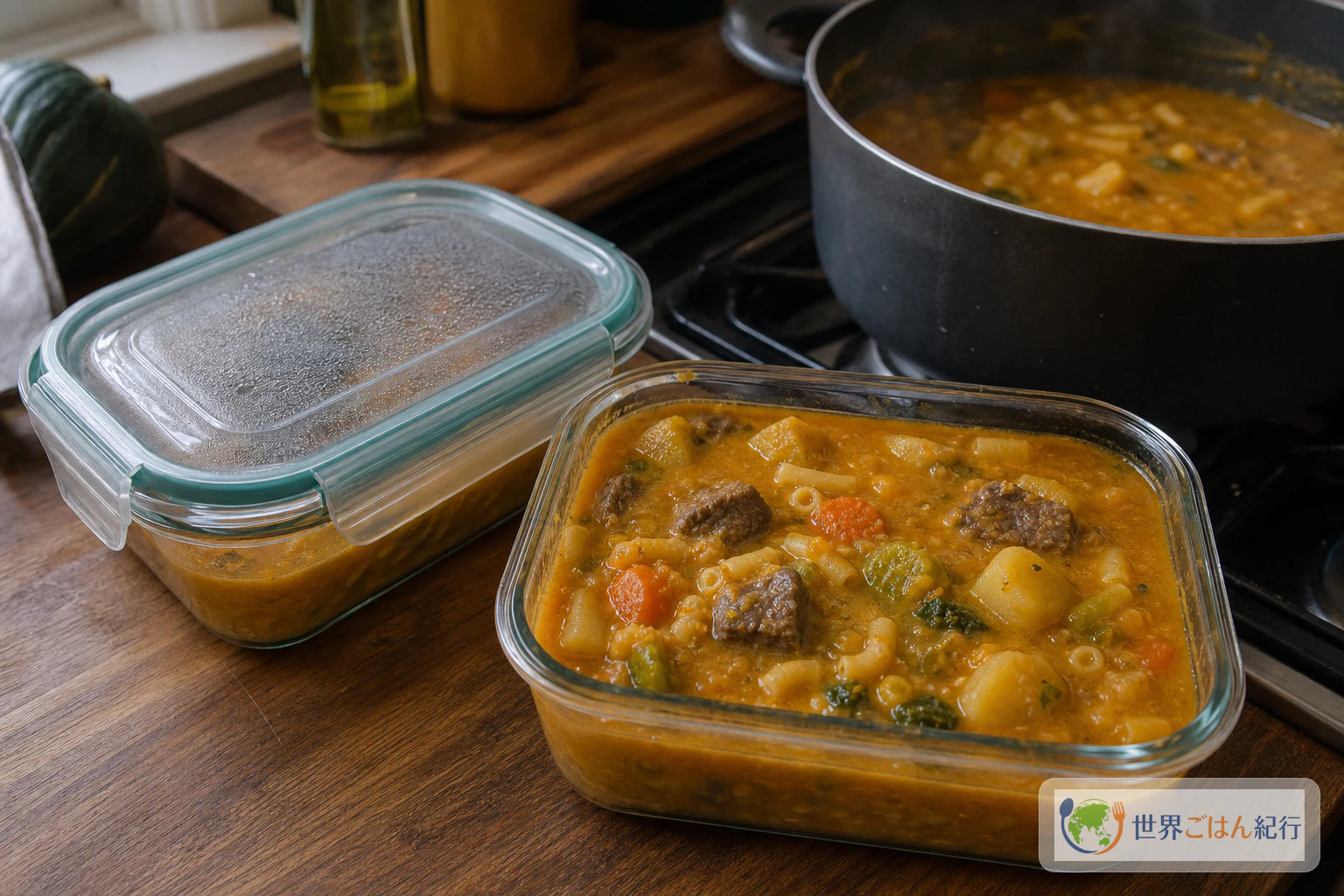
Within 2 hours of turning off the heat, divide the soup into shallow containers to cool, and keep it in the refrigerator for no more than 3–4 days. For more, see the storage guide. Pasta absorbs liquid, so set aside the portion you'll store at the end of step 5 and add pasta on the day you eat it.
When reheating, stir from the bottom so it heats through to the center, and bring the whole pot to 165°F (74°C). If it has thickened, add 2–4 tbsp of hot water per serving and warm it slowly over low heat. To freeze, portion the soup shallowly before the pasta goes in. Soup frozen with pasta comes back with softer noodles, closer to a stew.
Frequently Asked Questions
Can I use the squash with the skin on?
You can, but the color and mouthfeel become a little heavier. For a smooth soup, peel it. If you leave the skin on, wash it well, cook it until tender, and blend thoroughly; the green flecks that remain give it a home-style look.
Which cut of beef should I choose?
Choose a stewing cut such as shank, shoulder, or stew-cut cubes. Very lean meat tends to stay tough even after long cooking, so cubes with a little sinew and fat are easier. In steps 3 and 4, check that a skewer goes to the center and extend the time as needed. If you rush the meat and add the vegetables early, the root vegetables fall apart while the beef is still tough.
Can I make it without meat?
You can, though you lose the savor of the beef. Replace part of the water with vegetable stock and add mushrooms or chickpeas to give it main-dish substance. The amounts and times here are based on the beef version, so without meat, move on to step 5 when a skewer goes easily into the root vegetables.
Do I have to add pasta?
It works as a soup without pasta. Add 1.75 oz (50 g) more potato, or serve it with rice, and it will still be filling. If you plan to store some, boil the pasta separately and combine it right before eating so it doesn't overcook.
Can I make it in a pressure cooker?
Yes, if you pressure cook only the beef, water, and bay leaf. Once the beef is tender, add the squash purée and vegetables as you would in an ordinary pot. Pressure time depends on the model and on the size and cut of the meat, so use the stew setting in the manual and check with a skewer after releasing pressure. Pressure cooking the squash, cabbage, and pasta along with it tends to break down their texture.
Sources
These are the materials against which the cultural background, the structure of the dish, and the storage guidelines were checked. Each source was checked on 21 July 2026. Historical dates and the year of a source's registration are given as facts separate from the date checked.
- UNESCO, Joumou soup (checked 21 July 2026; inscribed 2021)
- Smithsonian Magazine, Haiti's Beloved Soup Joumou Serves Up Freedom in Every Bowl (checked 21 July 2026)
- Super C, Soup Joumou (checked 21 July 2026)
- University of Rhode Island Community Nutrition Education, Soup Joumou (checked 21 July 2026)
- FoodSafety.gov, Prevent Illness Caused by Clostridium perfringens (checked 21 July 2026)