In a small restaurant in San Juan's old town, among streets of colorful buildings, a golden dome arrives at the table piled in a wooden mortar. The smell of garlic reaches you before the plate does. This is mofongo, Puerto Rico's best-loved dish and the Caribbean branch of Latin American cooking (in Japanese). It is made from fried green plantains mashed in a wooden mortar with garlic and chicharron (fried pork skin), then molded into a dome. The outside is crisp, the inside chewy, and every bite carries garlic and the crunch of pork skin.

What Mofongo Is and Where It Comes From
Puerto Ricans eat mofongo in several ways. It can come plain, as "mofongo relleno" with chicken soup poured over, or dressed up with a garlic shrimp sauce. Its closest relative on the island is tostones, but mofongo is a main dish rather than a snack.
From West African fufu to the Caribbean
The most common explanation is that the name, and the dish, come from fufu, the pounded dishes of West Africa. Ghanaian fufu is cassava or yam pounded in a mortar, and African people brought to Spanish-ruled Puerto Rico in the 16th century applied that method to Caribbean plantains. Mofongo is, in effect, fufu's Caribbean version.
Two more cultures went into the mortar. The Taino, the indigenous people of the Caribbean, cultivated plantain and cassava, and those crops survived the Spanish conquest to meet African cooking methods. The Spanish added their love of garlic. Like Mexican mole poblano, mofongo is a blend of the Old and New Worlds from the Spanish colonial period, just as Brazilian feijoada grew out of Portuguese colonial culture. Today it ranks with Jamaican jerk chicken as one of the pillars of Caribbean cooking.
The pilon
You can't talk about mofongo without the pilon, a hollowed-out wooden mortar and pestle. The more it is used, the more the aroma of garlic soaks into the wood, and the deeper the taste it gives.
Mofongo beyond Puerto Rico
Mashed plantain dishes turn up across the region, each with its own character, and Puerto Rican immigrants carried mofongo itself to New York.
| Region | Variation |
|---|---|
| Dominican Republic | Mangu. Boiled plantains mashed with butter |
| Cuba | Fufu de platano. Mashed more smoothly |
| Colombia | Patacon pisao. Fried plantains fried a second time |
| New York | Spread by Puerto Rican immigrants. A specialty of the Bronx |
For the Puerto Rican diaspora, mofongo has become a symbol of the food of home.
Ingredients (serves 4)
Main ingredients
Plantains are the hardest step to source. Look in Latin, Caribbean, and Asian grocery stores, where they are sometimes sold frozen. If you cannot find them at all, substitute green bananas. Ripe (yellow) bananas are too sweet and not suited to mofongo.
This recipe contains pork (when using chicharron). If you want to avoid pork, omit the chicharron or substitute fried chicken skin for the crisp bacon. For a fully meat-free version, finish with only garlic and olive oil as "mofongo vegetariano."

Choosing Plantains and Chicharron
Ripe yellow bananas won't work here; they are too sweet to make mofongo. Green bananas are a workable stand-in, because they are starchy and close to plantains in texture, and even ordinary supermarket bananas will do if you pick ones that are completely green. For the true Puerto Rican flavor, though, you need plantains.
If you can't find chicharron, the easiest substitute is crisp-fried bacon: fry sliced bacon in a pan until crisp and chop it coarsely. Packaged pork rind chips also work. The flavor shifts slightly, but either one gives you the crunch.
Serving and Eating Mofongo
Mofongo is at its best freshly made and piping hot, and it turns hard as it sits, so bring it to the table right away. The way to eat it is to break into the dome with a fork, work through it little by little, and mix each bite with the sauce. Besides the shrimp sauce, it goes well with:
- Sopa de pollo: pour chicken soup over for "mofongo relleno"
- Mojo criollo: a sauce of garlic, vinegar, and olive oil
- Salsa roja: a tomato-based salsa
On a Puerto Rican table, mofongo usually has company:
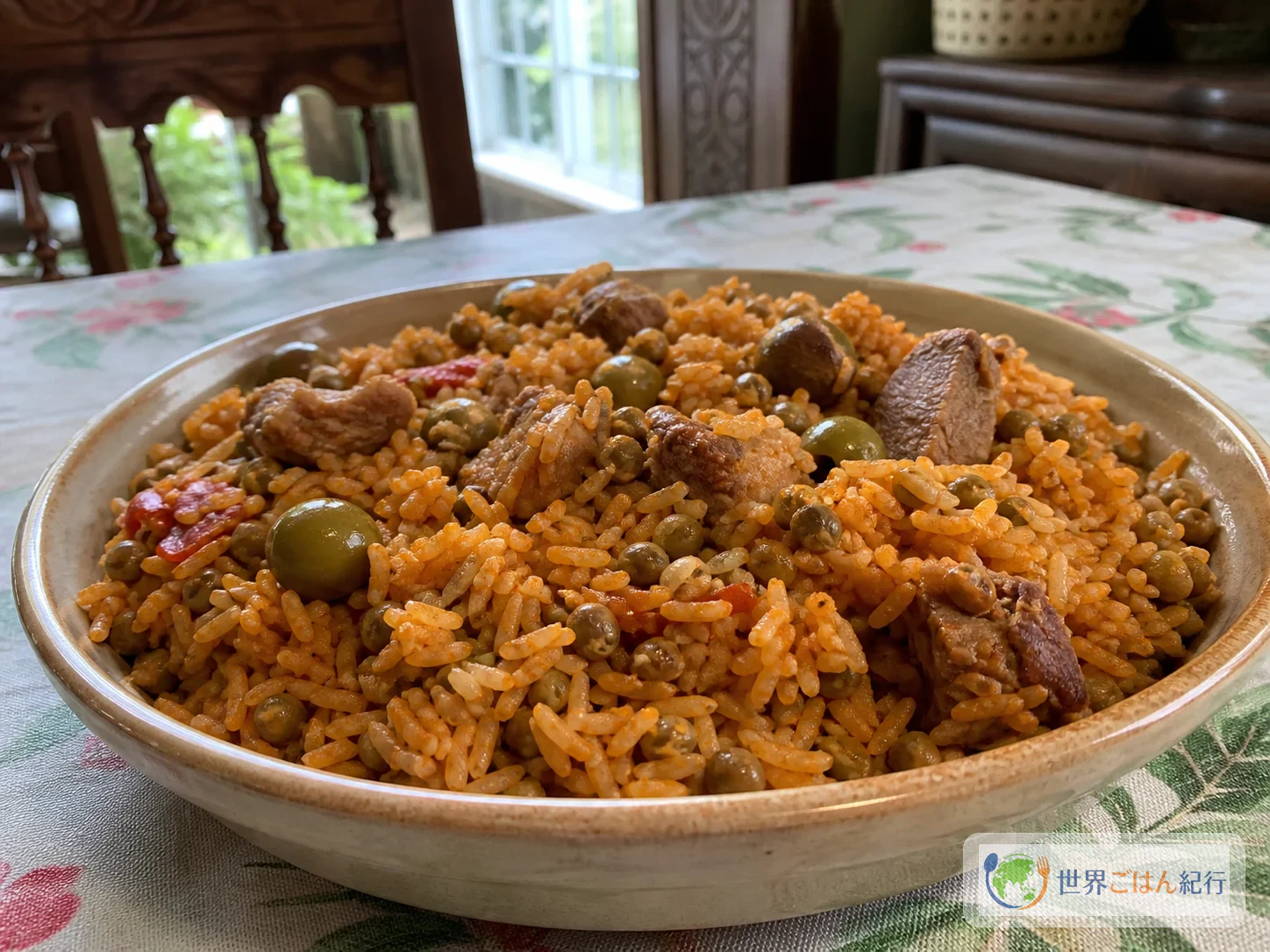
- Arroz con gandules: rice with pigeon peas. A Puerto Rican staple
- Ensalada de aguacate: avocado salad with lemon and olive oil
- Tostones: twice-fried plantain chips. A relative of mofongo
- Mabi: a traditional fermented drink made from tree bark
To round out the meal, try pernil from the same Puerto Rican table, or chimichurri, which reuses ingredients and aromas from the region.
Mofongo Variations
Mofongo relleno (soup-style)
Make a hollow in the center of the dome and pour in plenty of chicken soup. The mofongo softens into something like rice porridge. It is a classic for cold nights in Puerto Rico (though "cold" there means around 20 degrees C).
Mofongo de mariscos (seafood)
Use a mix of squid, mussels, and white fish in place of the shrimp. A little saffron in the tomato sauce gives it a bright Mediterranean finish. It sits alongside Peruvian ceviche among the region's seafood dishes.
Vegetarian mofongo
Leave out the chicharron and finish with only garlic and olive oil, then serve it with a tomato stew of roasted vegetables (zucchini, bell pepper, eggplant). The plantain has enough savoriness and texture on its own that you won't miss the meat.
Frequently Asked Questions
Q1. Can I make it ahead?
It's best eaten fresh, since it hardens and loses texture as time passes. If you must make it ahead, cover the mashed mixture with plastic wrap and warm it in a 600 W microwave for 1–2 minutes just before eating. A little garlic oil spooned on top brings back the softness.
Q2. Can children eat it?
Yes. The plantain has no spice, and if you reduce the garlic, it comes out mild. Ketchup on the side instead of the shrimp sauce is popular with children, and it's a favorite with kids in Puerto Rico too.
Q3. What is the difference between mofongo and tostones?
Both are fried green plantain dishes, but the cooking differs. Tostones are chips: rounds fried, flattened, and fried a second time, served as an appetizer or snack. Mofongo is fried plantain mashed with garlic and chicharron and shaped, and it is a main dish.