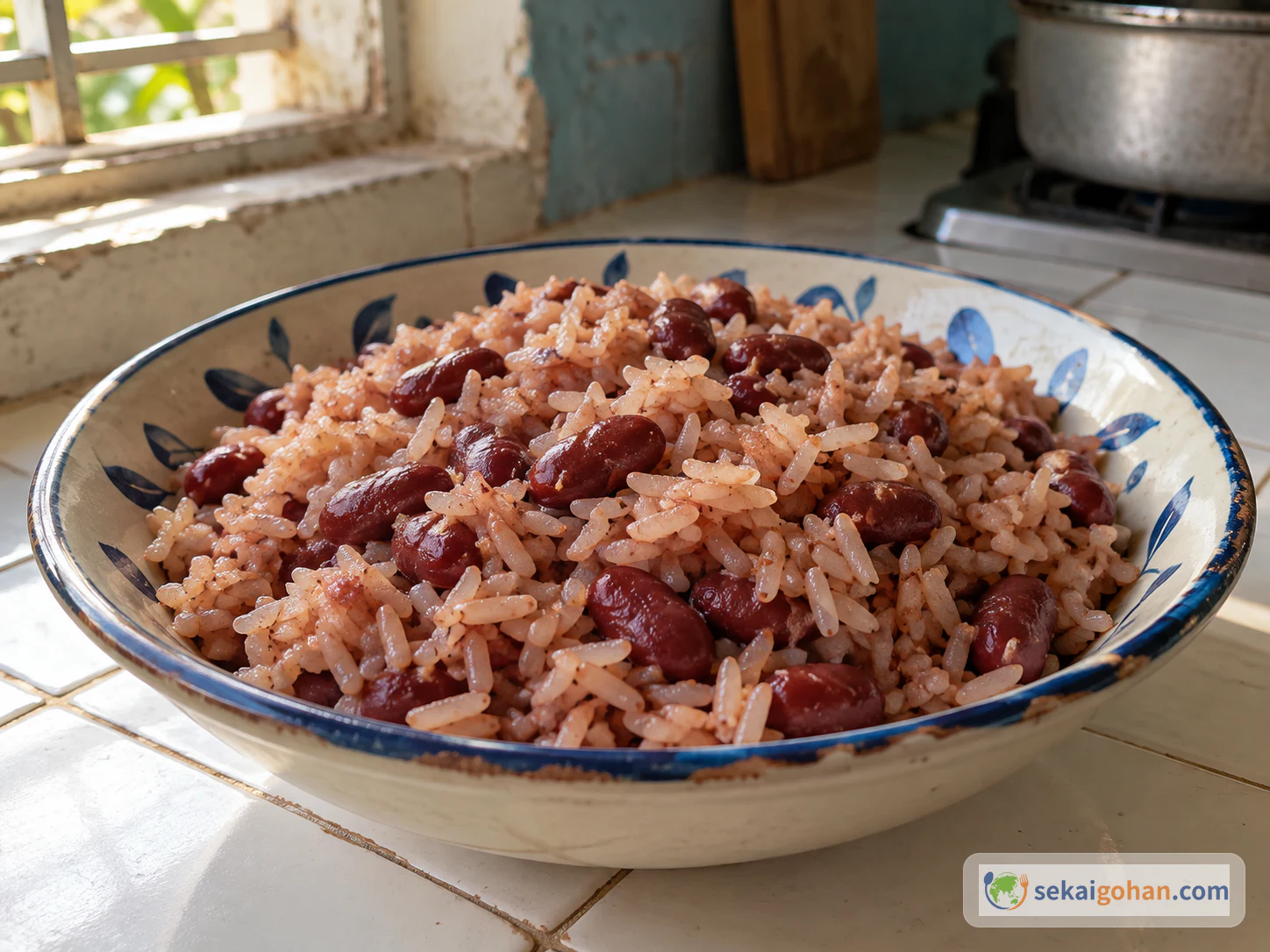
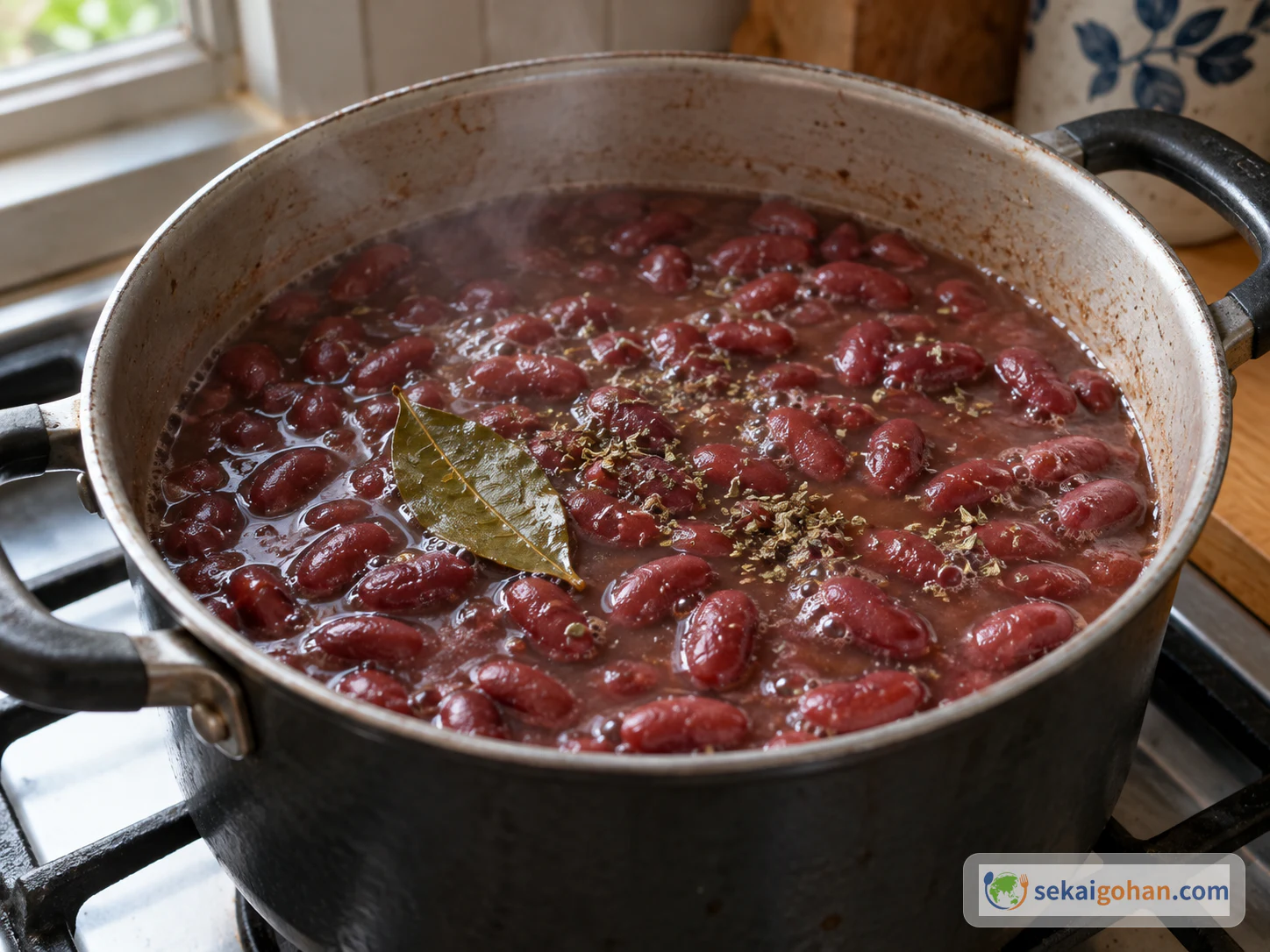
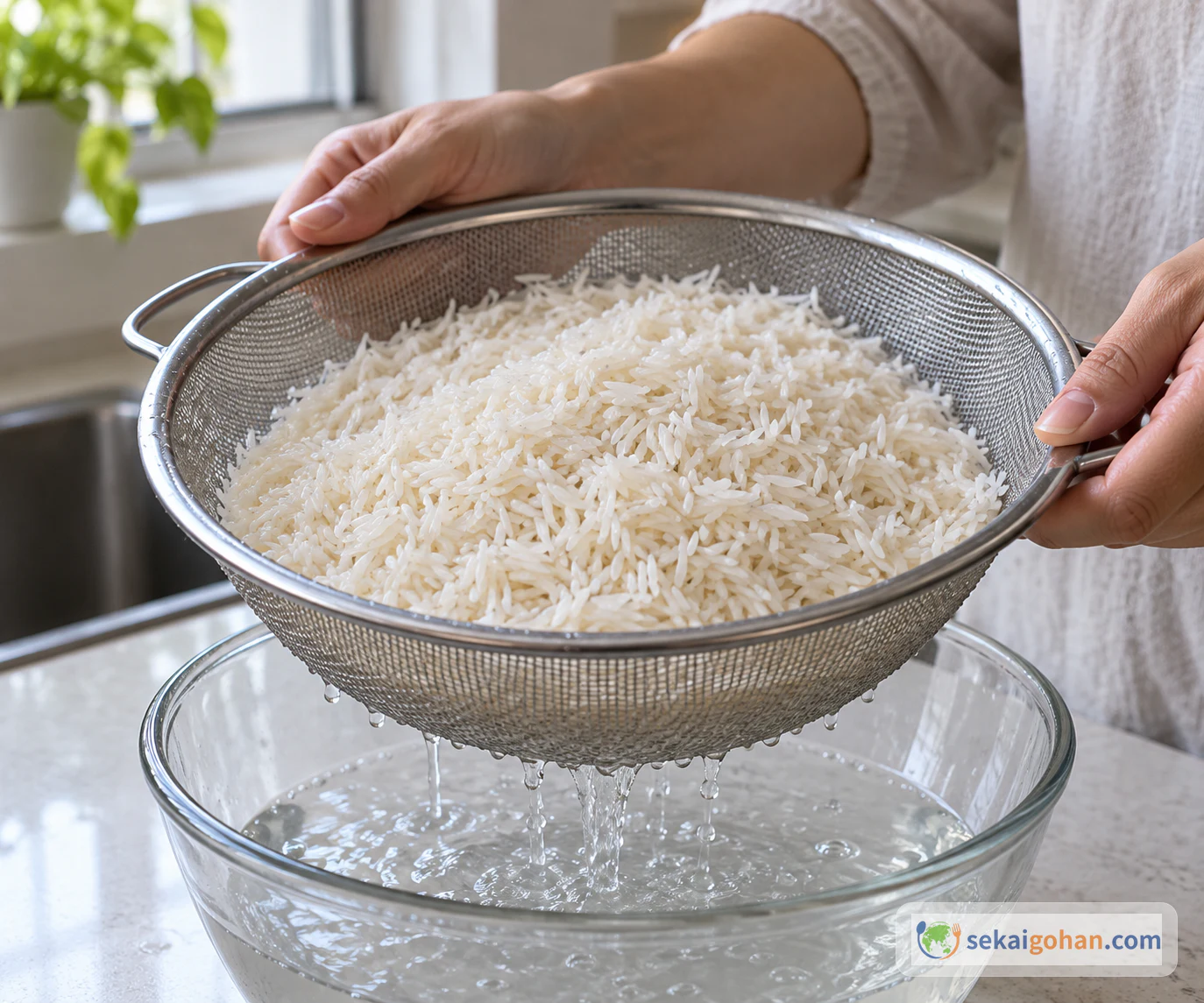
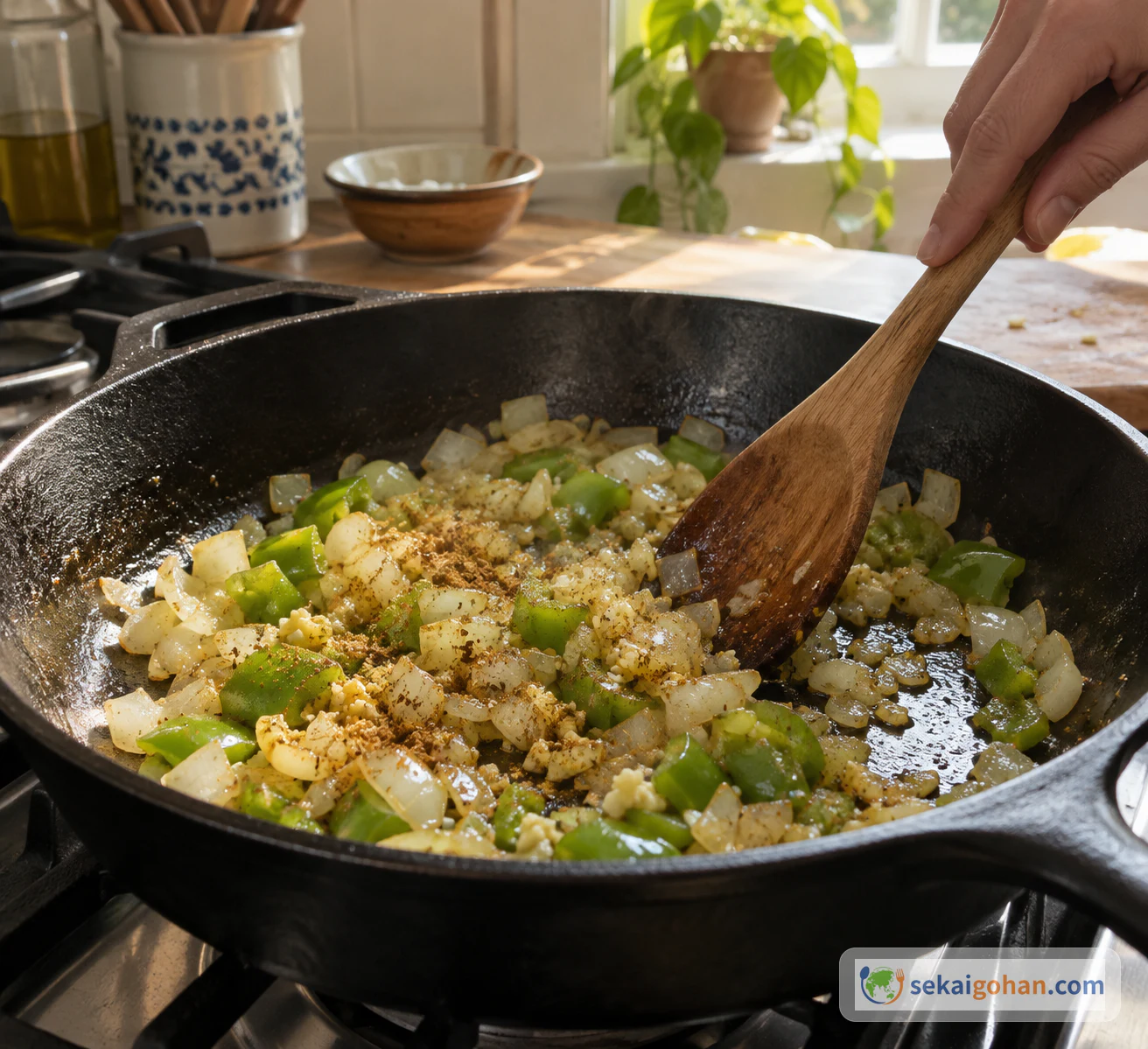
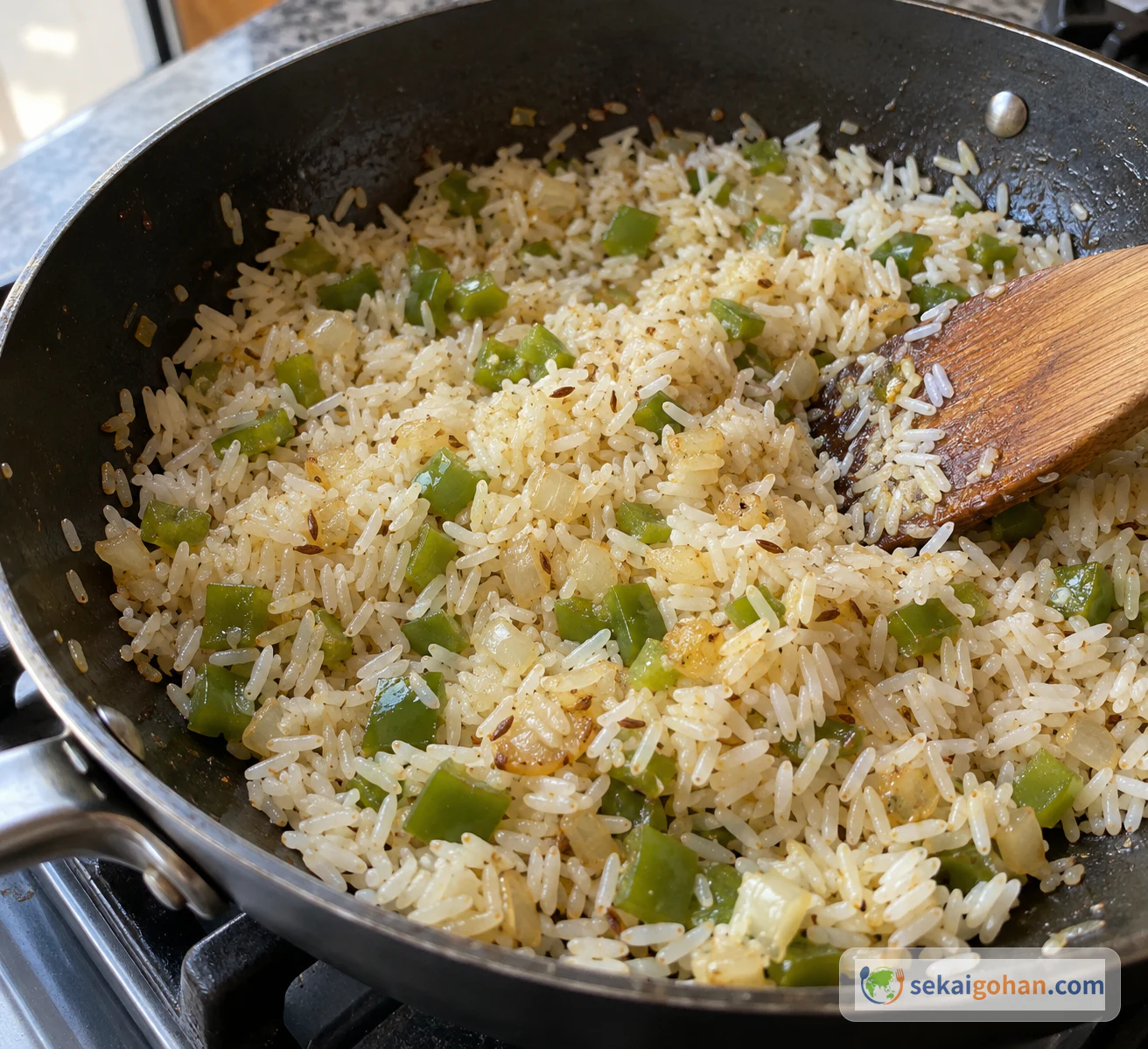
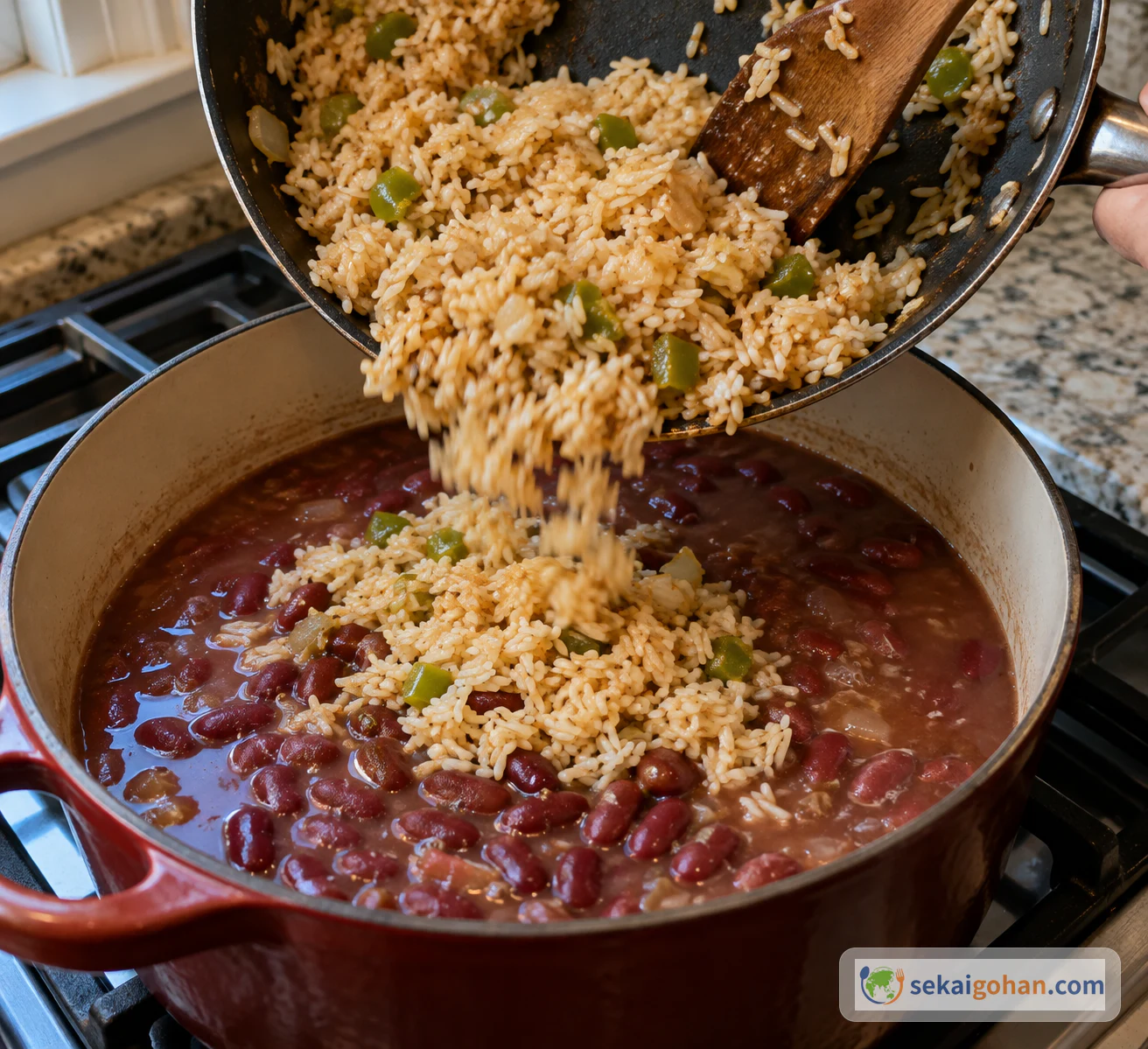
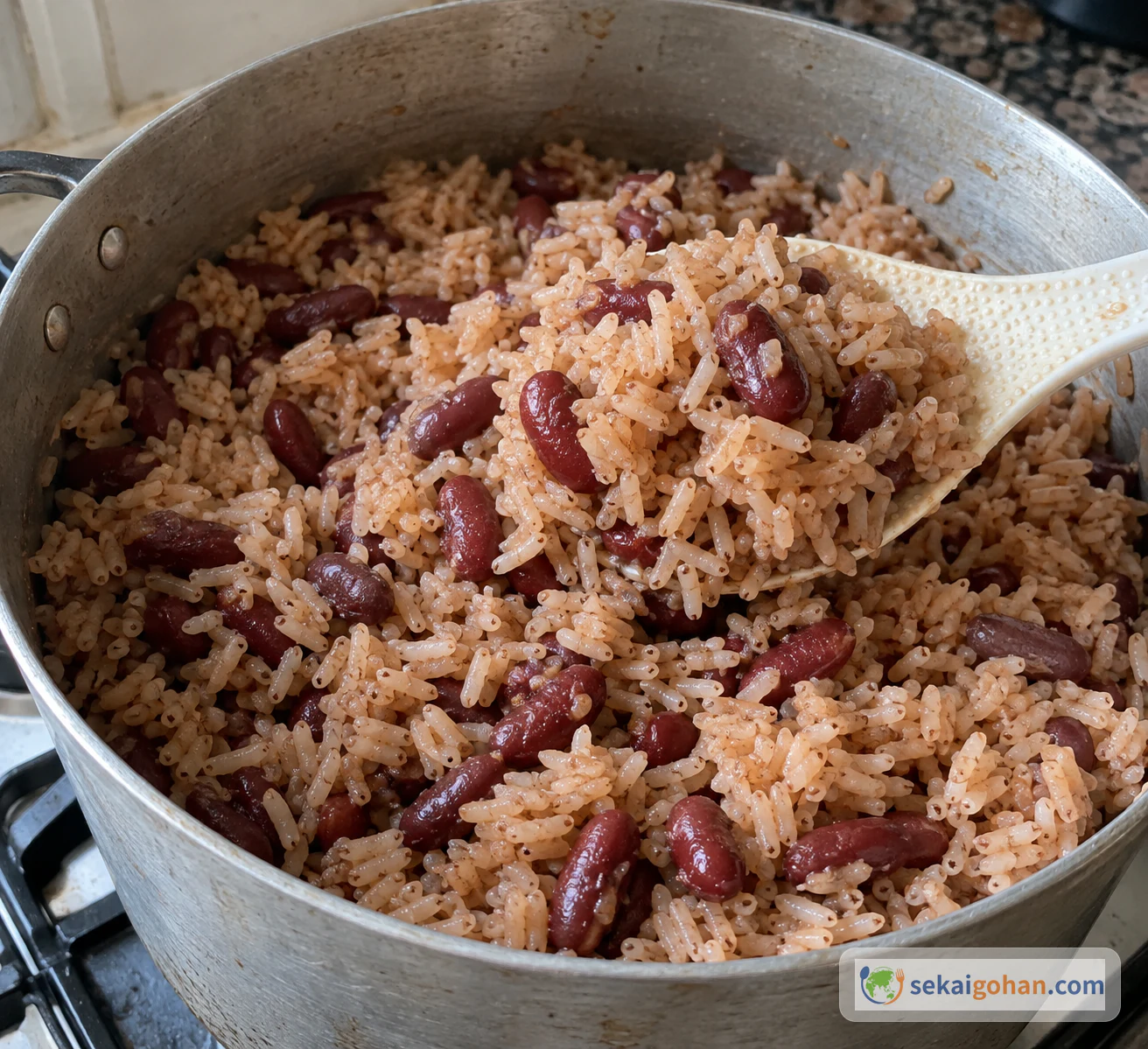
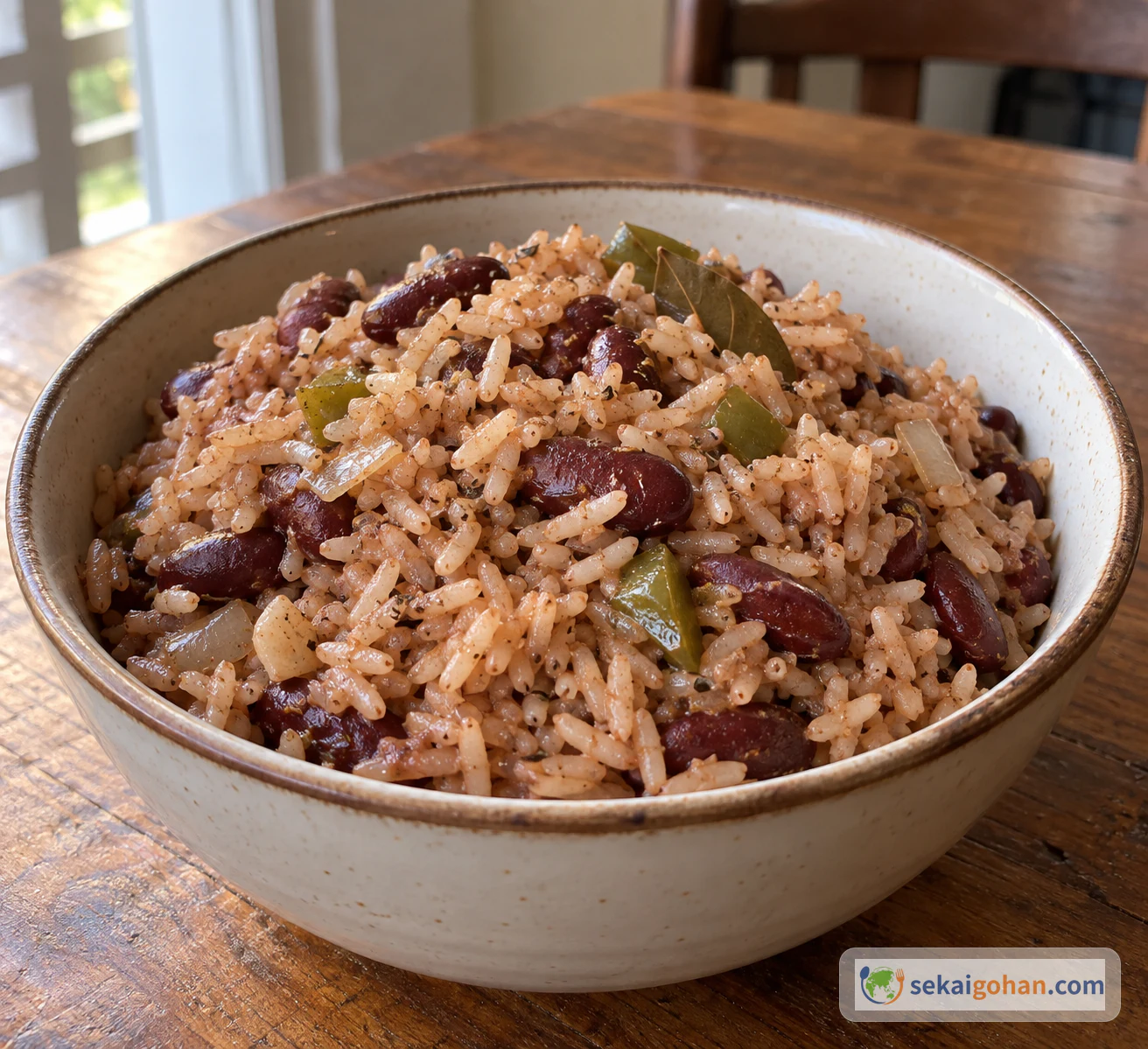
Red beans simmer with a bay leaf and a little oregano until the water around them turns into a dark broth. Rice, already coated in oil with garlic, onion, pepper and cumin, goes into that broth, and everything cooks together until the beans have tinted every grain. Congrí is one of the typical dishes of Cuba, and this is the eastern Cuban style, made with red beans (frijoles colorados) and 2 cups of rice. The beans should stay whole and tender, and their broth becomes the rice's only cooking liquid. That's where the color and flavor come from.
Congrí in Cuba
Cuban cooking draws on Spanish, African, aboriginal, Yucatecan and Asian traditions, and congrí belongs to a family of rice-and-bean pots found across the island. Names and beans don't line up neatly. Red-bean congrí is the eastern version. The black-bean version belongs to Havana, where it's known as Moros y Cristianos.
The origin isn't settled either. There are several ideas about the dish and its name: a 19th-century preparation, word origins linked to Haitian French and African languages, and the notion that cooking rice with the beans shortened the cooking time. Researchers don't agree on which is right, so it's best to read these as possibilities rather than established history.
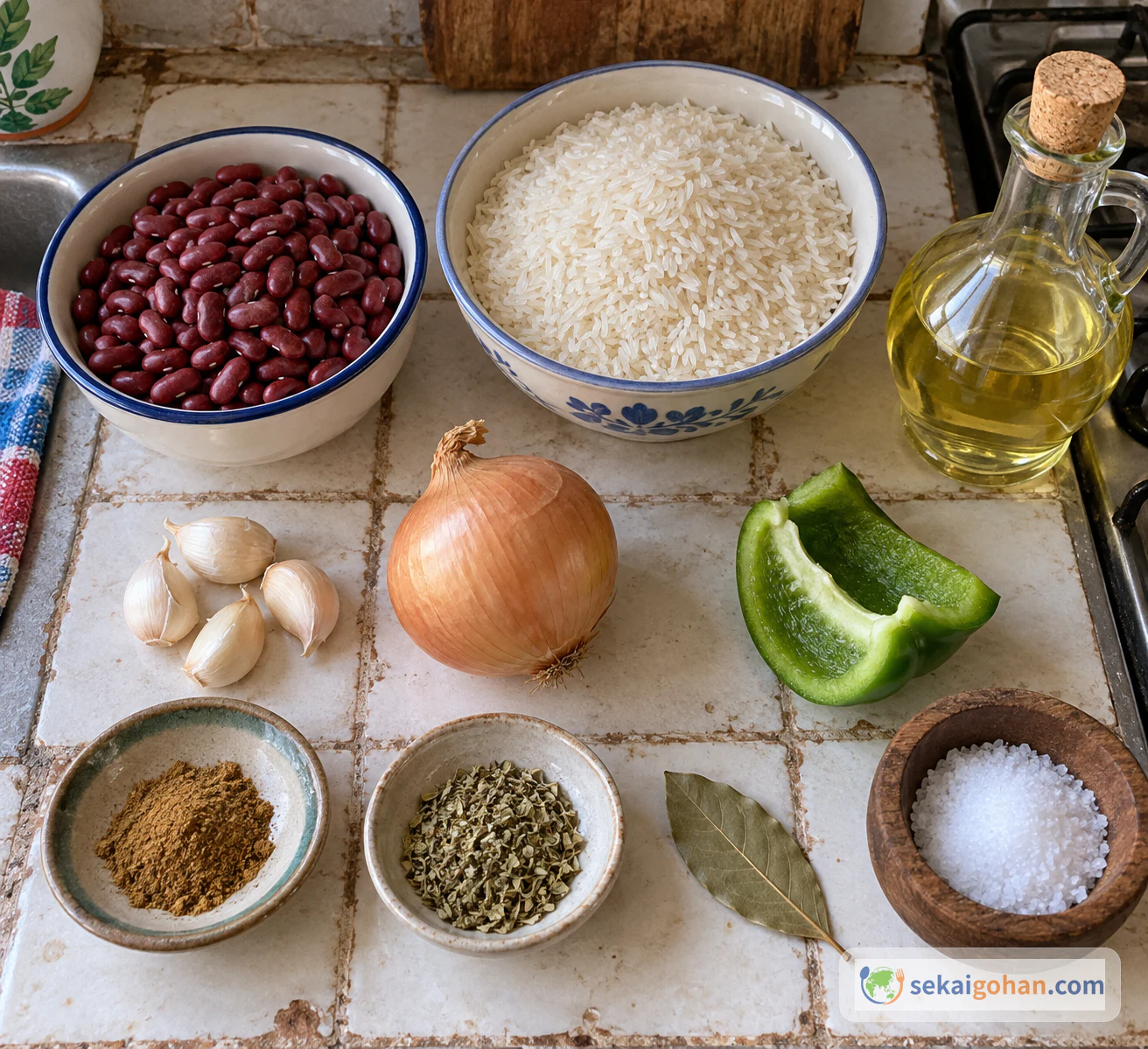
Ingredients for Eastern-Style Red Bean Congrí
Equipment
- Measuring cup
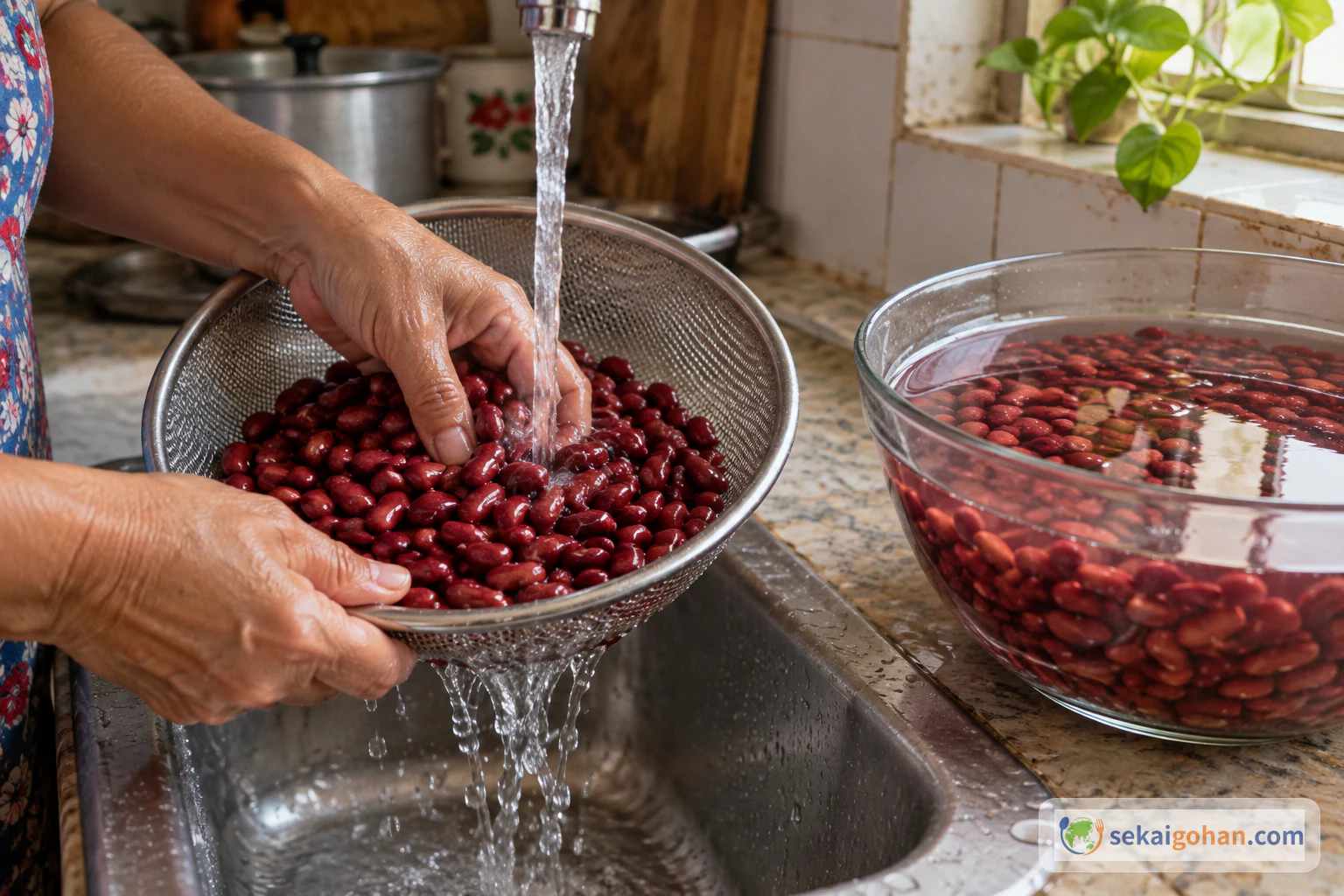
- Bowl for soaking the beans
- Sieve or strainer
- Pot for cooking the beans
- Skillet for the sofrito
- Rice cooker
- Spoon or rice paddle
Choosing Ingredients for Congrí
- Dried beans, not cooked beans. The 1 cup of beans means dried beans. A cup of cooked or canned beans would throw off the balance of beans to rice, and you'd have no broth to cook the rice in.
- One cup for everything. Measure the rice and the water with the same cup.
- Long-grain white rice. You're after loose, fluffy rice. Different kinds of rice need different amounts of water, so stick with long-grain white rice for this amount of liquid.
- Red or green pepper. Either color works.
Method: Beans First, Then Rice in Their Broth
Cook dried red kidney beans until they are soft all the way through. Don't eat them while they are hard. Follow the package directions for cooking time. Don't rely on the rice cooker to finish beans that are still hard.
Fixing Common Problems with Congrí
| What you see | What to consider | What to do |
|---|---|---|
| The beans are still hard after a long cook | The pot and heat set the pace | Keep cooking before moving on to the rice. Judge by the texture of the beans |
| The pot runs low before the beans are tender | Whatever is left in the pot becomes the rice's cooking liquid | Add only as much water as the beans need |
| The beans are breaking apart | They cooked past the target | Next time, stop as soon as they're soft all the way through but still whole |
| The rice is softer or firmer than you wanted | Rice type affects water needs, and rice cookers differ | Note your rice, your cooker and how much broth remained, and use that as your guide next time |
| The flavor seems flat | Salt is left to taste | Taste and add a little salt before serving |
Serving Congrí and Variations
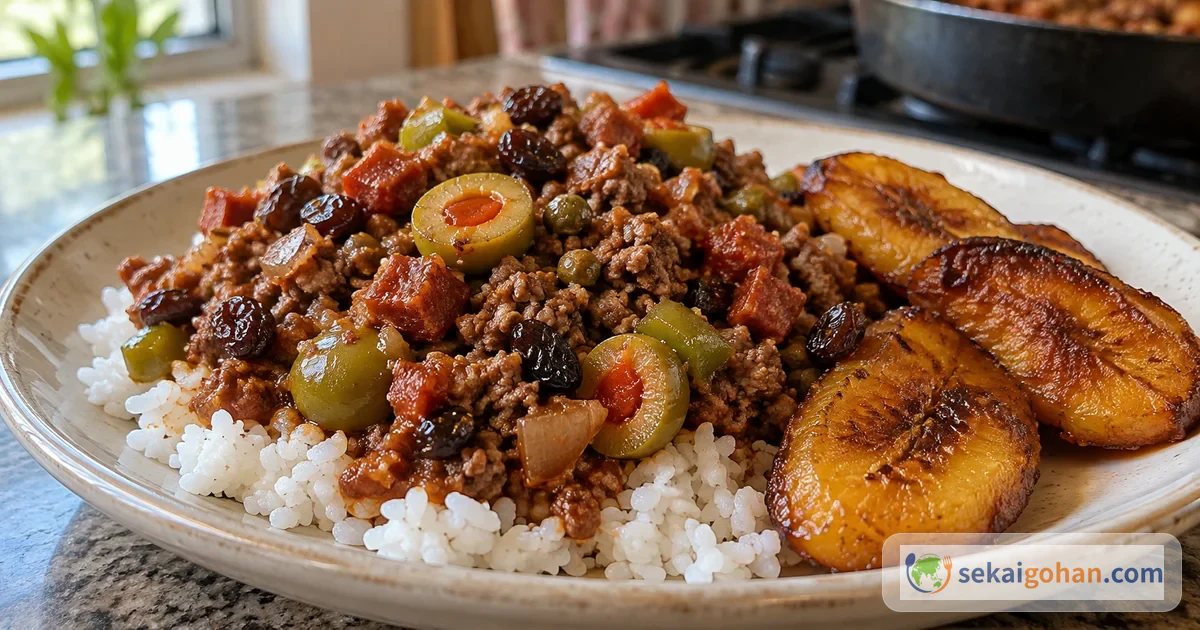
Congrí goes well alongside meat dishes or vegetables. A typical Cuban meal pairs rice and black beans with seasonal salad, roast or sauced pork, and fried plantains, and the same spread makes a good serving idea for this red-bean version.
Cooks also change the pot in a few common ways:
| Variation | What changes | What to know |
|---|---|---|
| Added pork | Chicharrones (4–5 pieces), small pieces of tocino (a bacon-like cured pork) and chorizo, sautéed with the sofrito | There's no set piece size for the chicharrones and no set amount for the tocino and chorizo |
| Black beans | Black beans replace the red ones | This style is associated with Havana |
| Cilantro | Chopped cilantro added at the end | An optional finish |
Frequently Asked Questions
Is congrí the same as Moros y Cristianos?
It depends on who you ask. Many cooks separate them by bean color: red for congrí and black for Moros y Cristianos. Others call both congrí, and some regions use the name congrí specifically for the red-bean version.
Should I add extra water to the rice cooker?
No. The bean broth is the only liquid the rice cooks in.
Why use all the bean broth?
By the time the beans are done, the broth has taken on their color along with the flavor of the bay leaf and oregano. Cooking the rice in it is what tints the grains and sets congrí apart from plain rice served with beans.