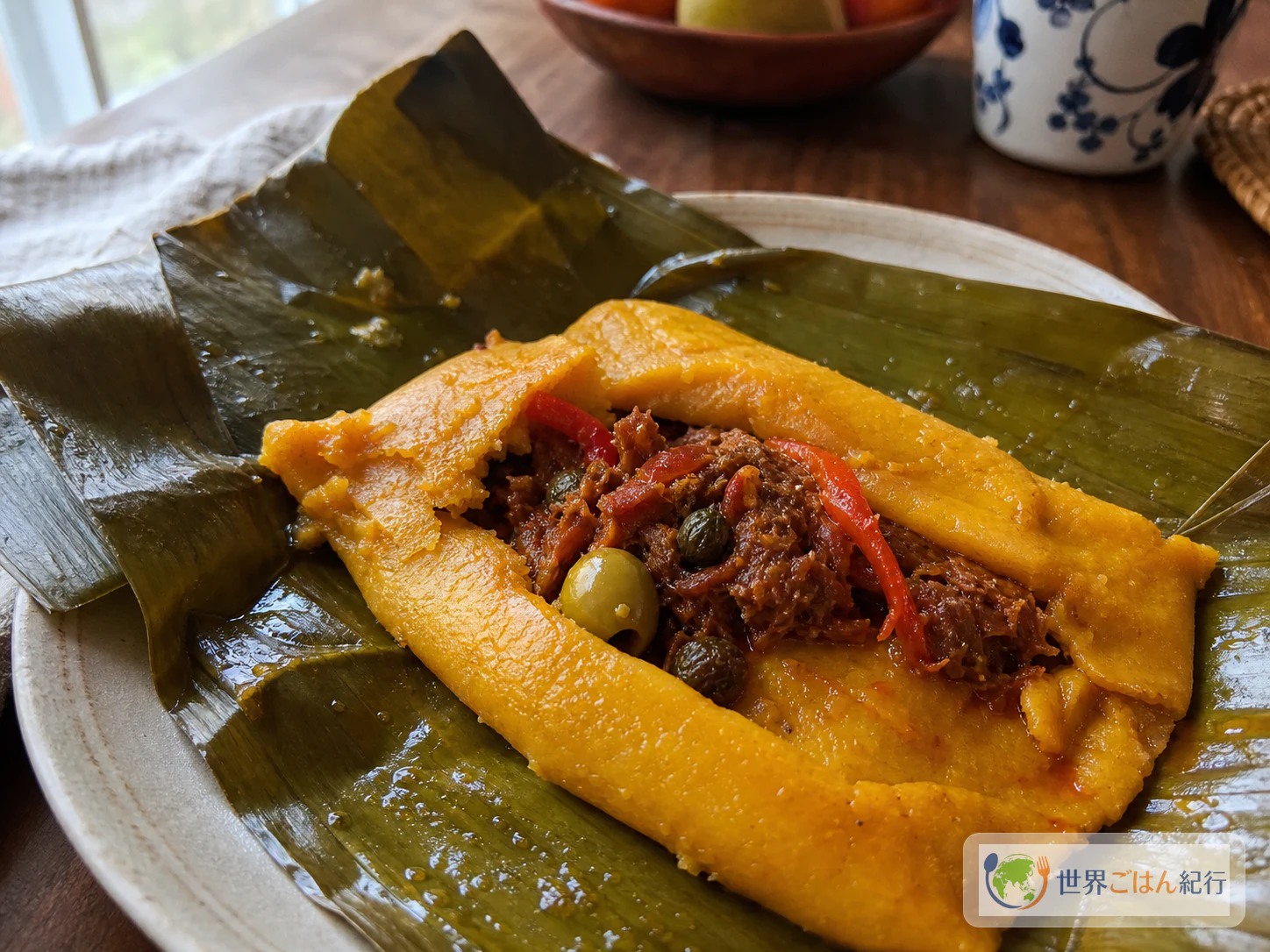
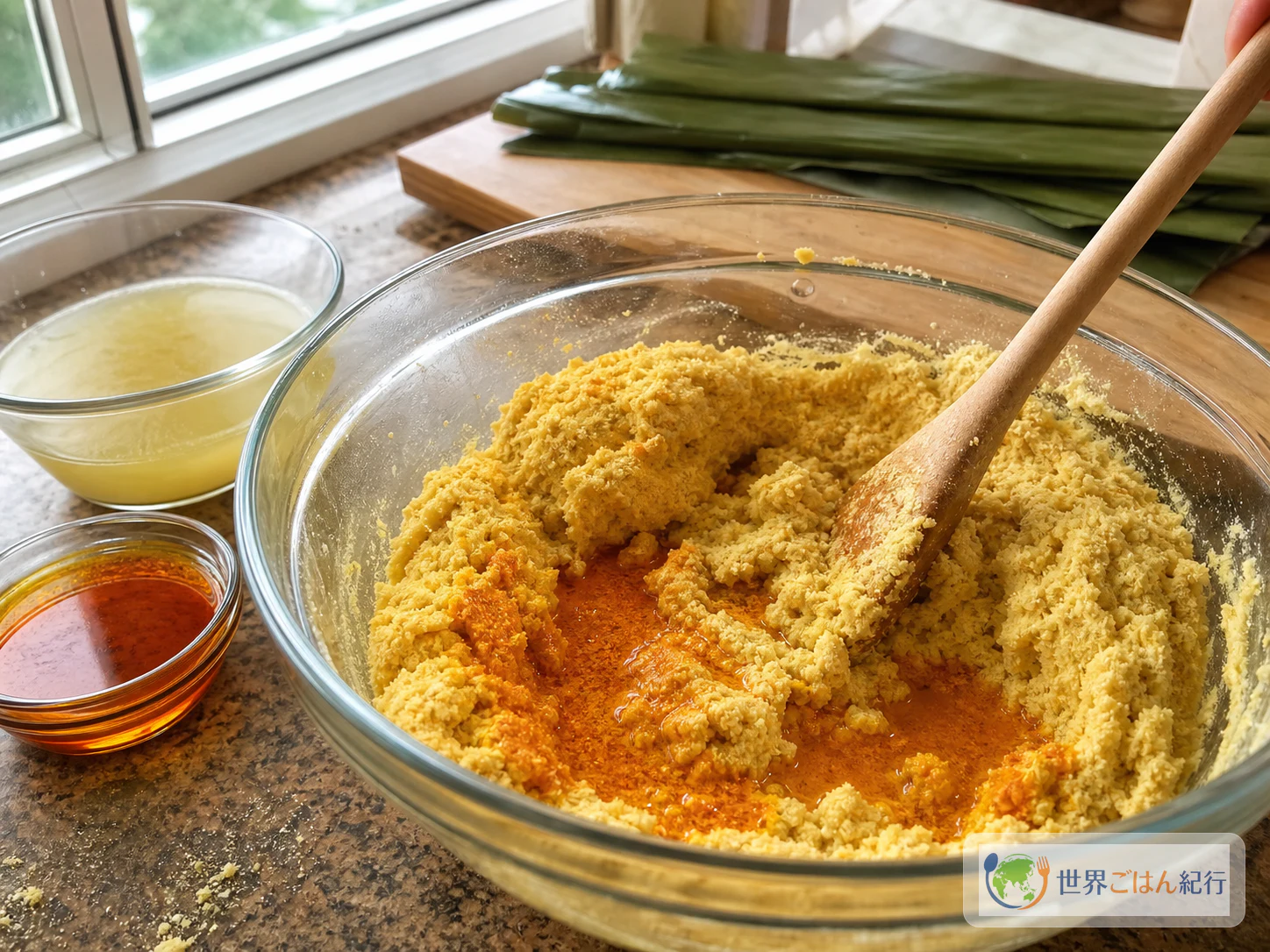
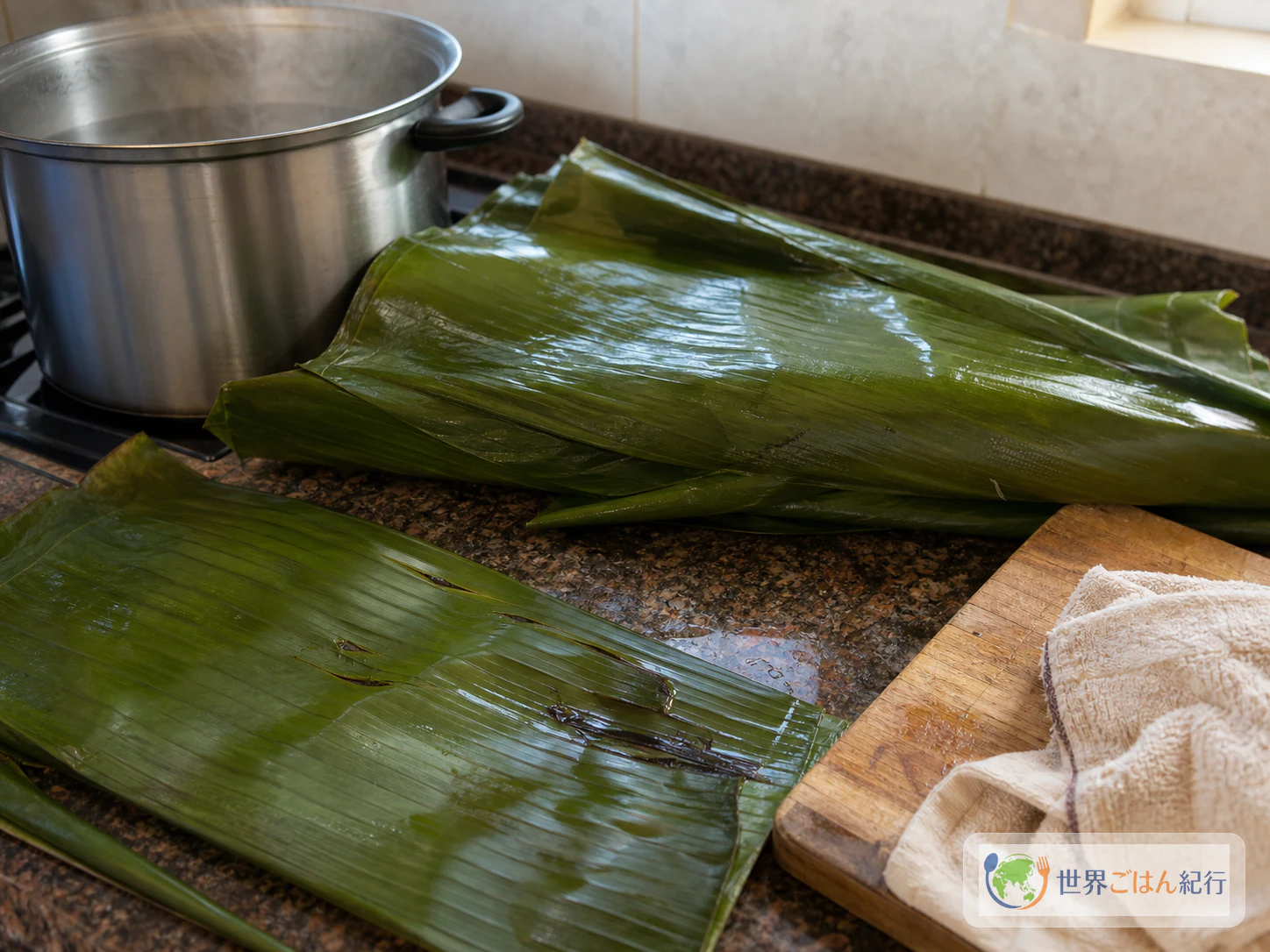
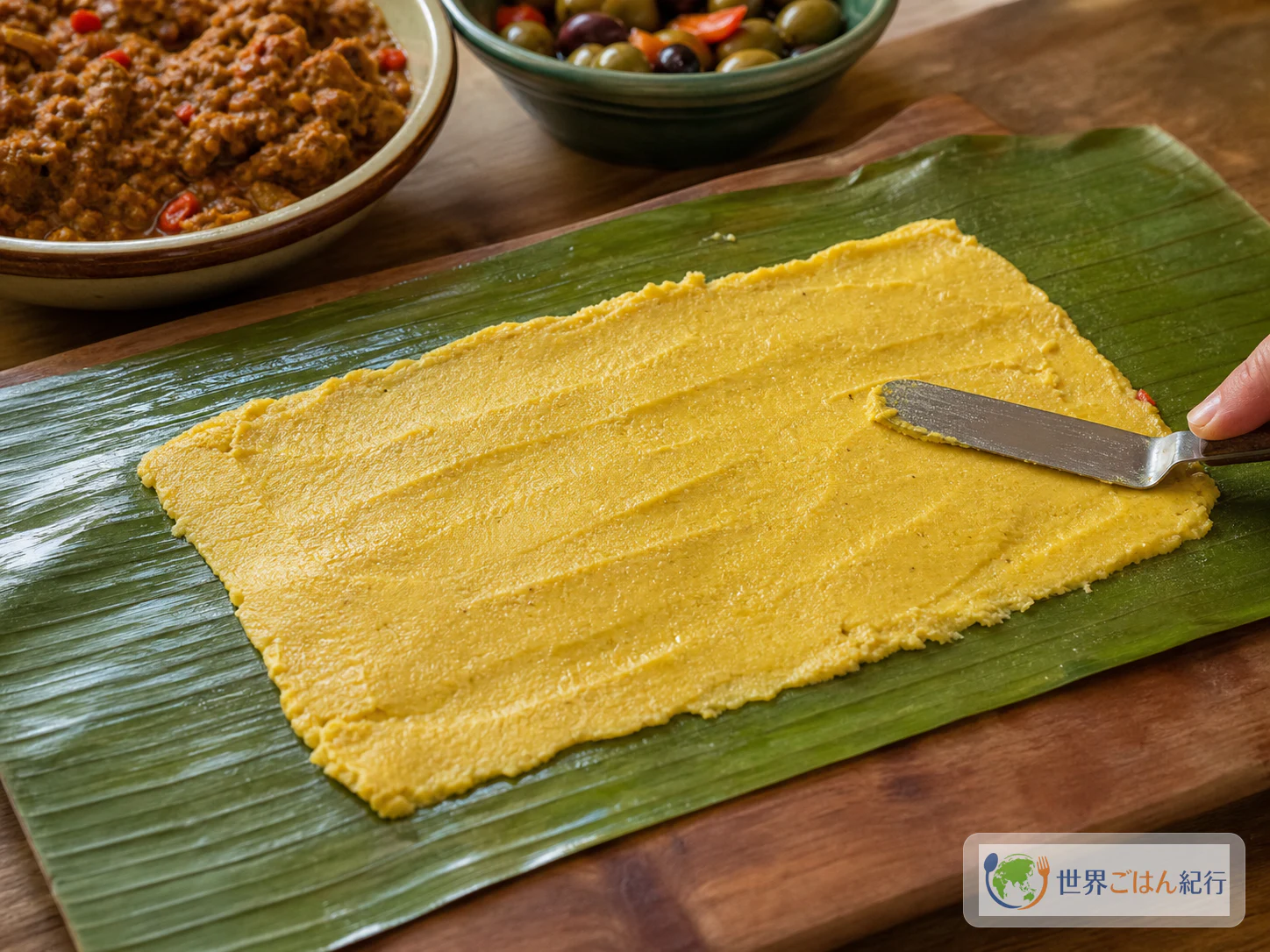
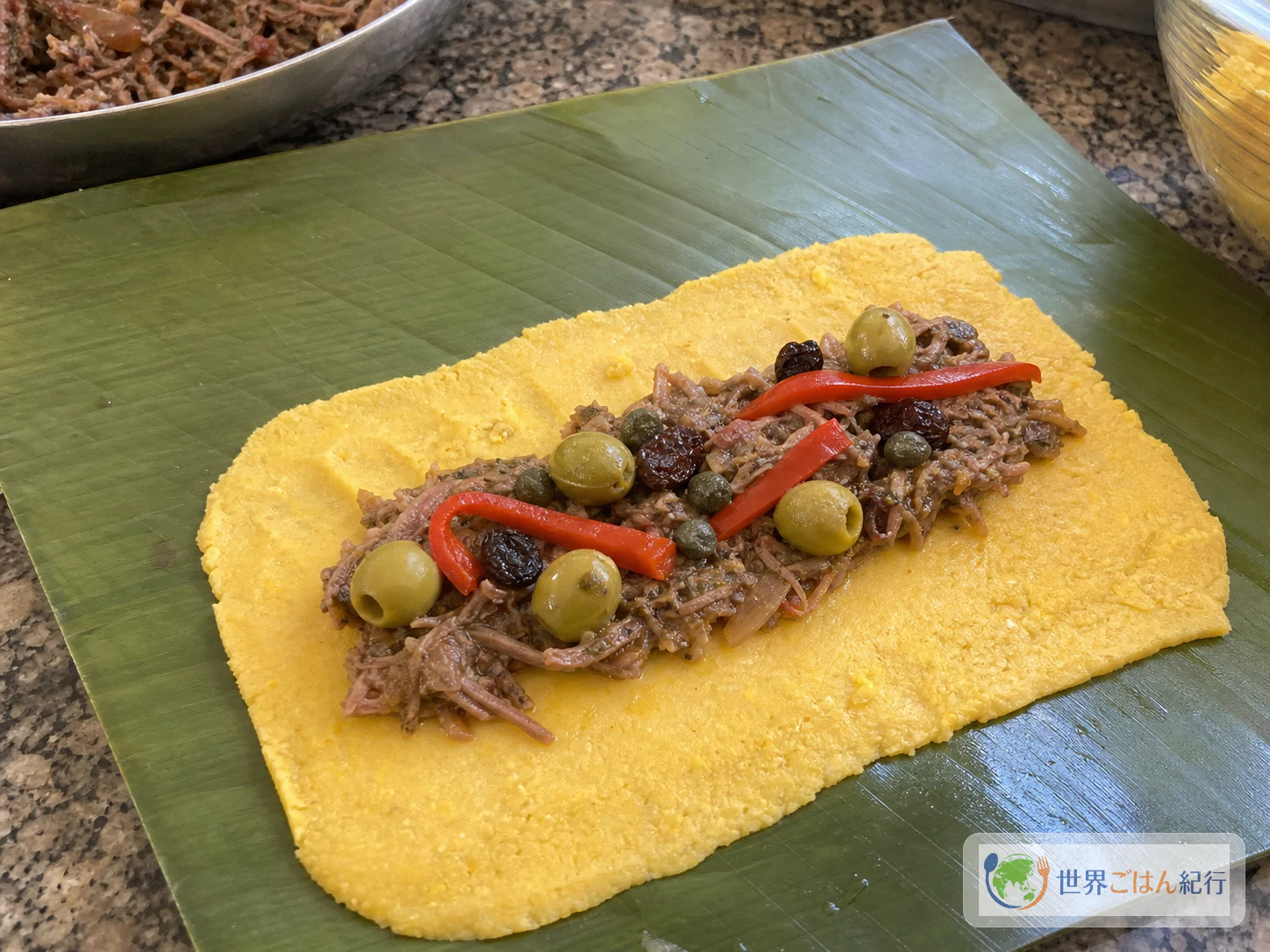
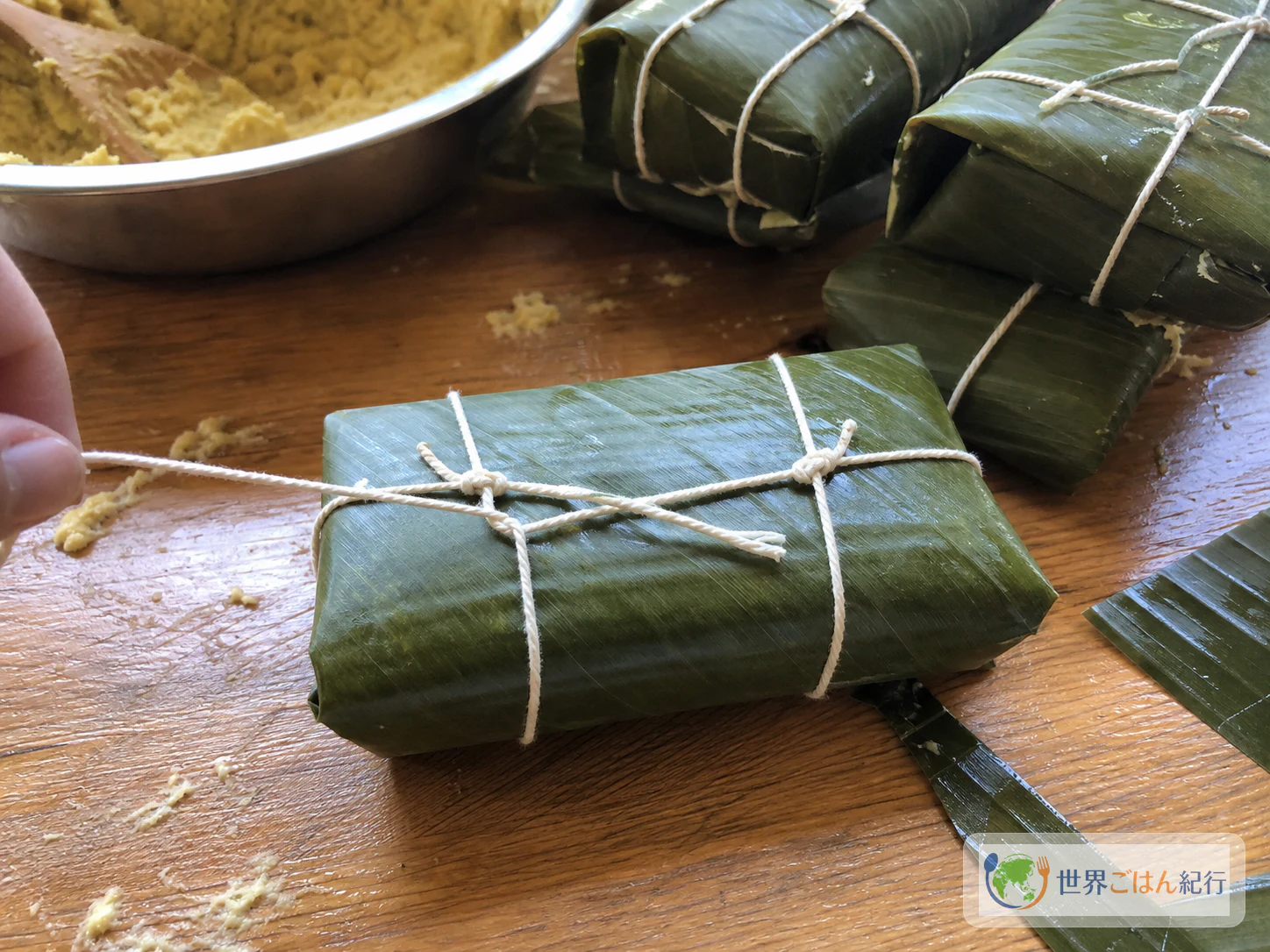
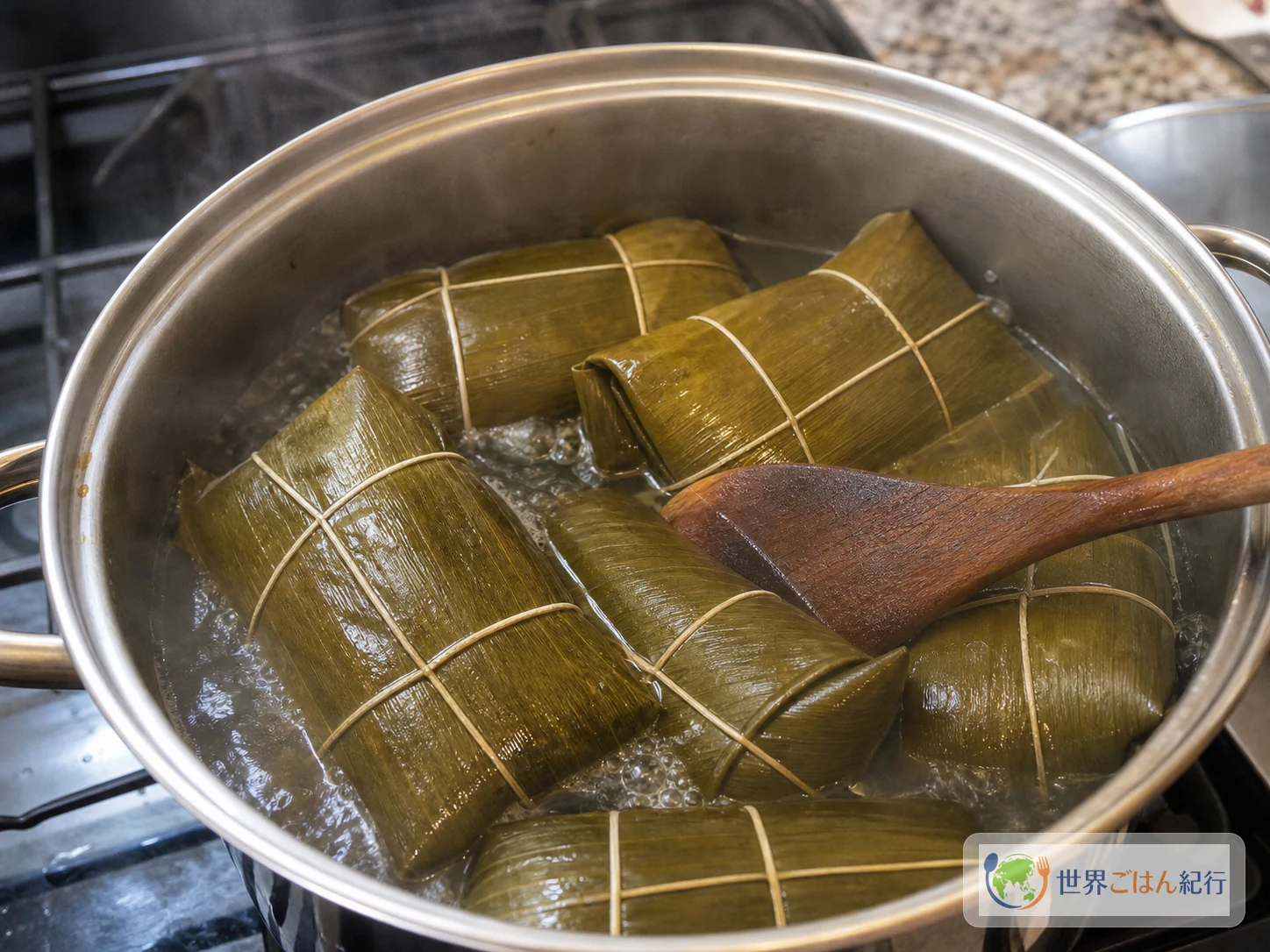
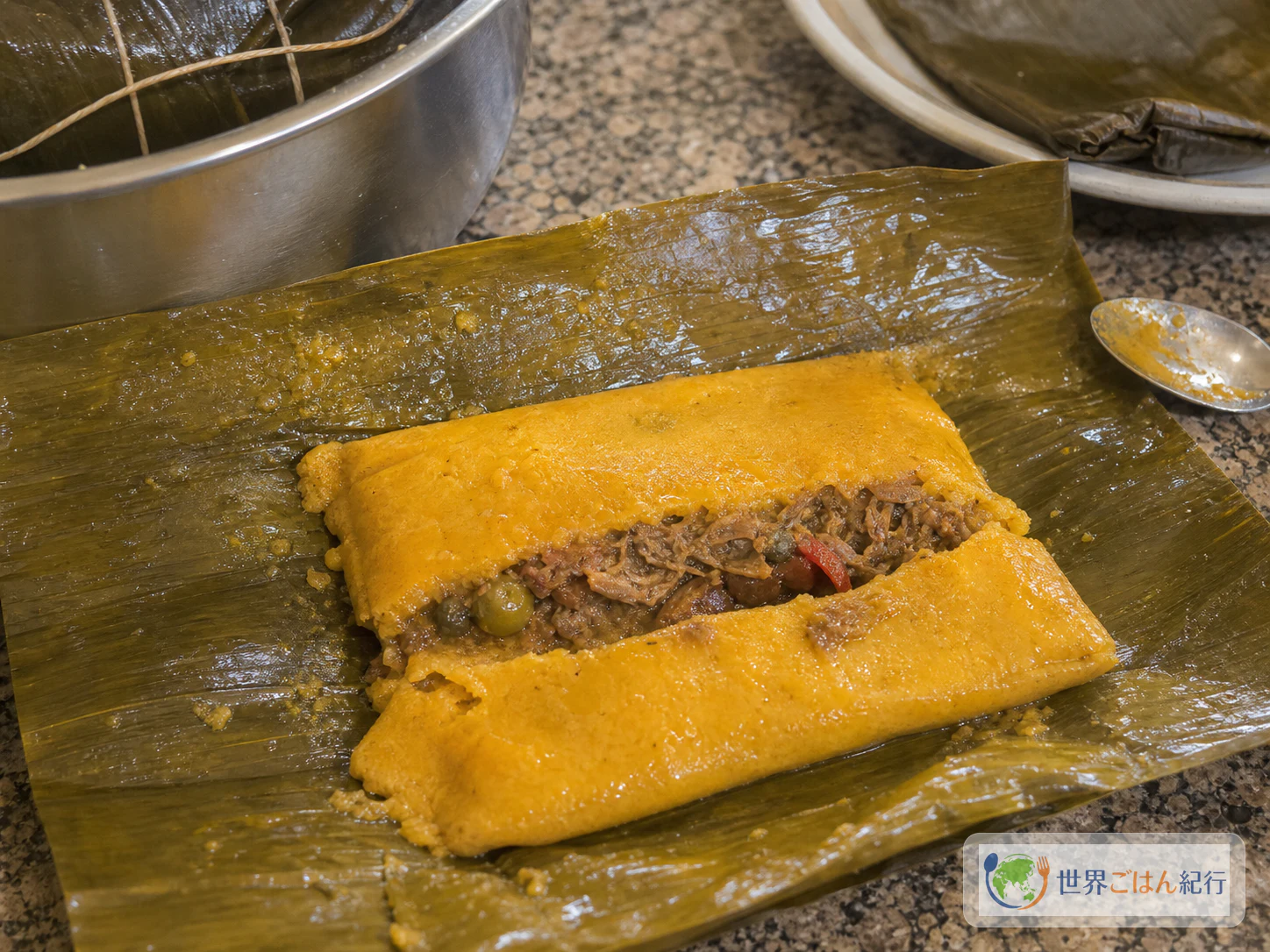
Set the green parcel from the pot on a plate and untie the string. As you peel back the banana leaf, steam carries up the scent of corn, stewed meat, olives, and sweet raisins. This is hallaca, the dish of the Venezuelan holiday table from Christmas through New Year. It looks like a Latin American tamal, but it eats quite differently. Meat guiso, olives, capers, raisins, and red pepper are layered inside yellow masa, so each bite brings saltiness, sweetness, acidity, and the savoriness of fat in turn.
Hallaca at the Venezuelan Holiday Table
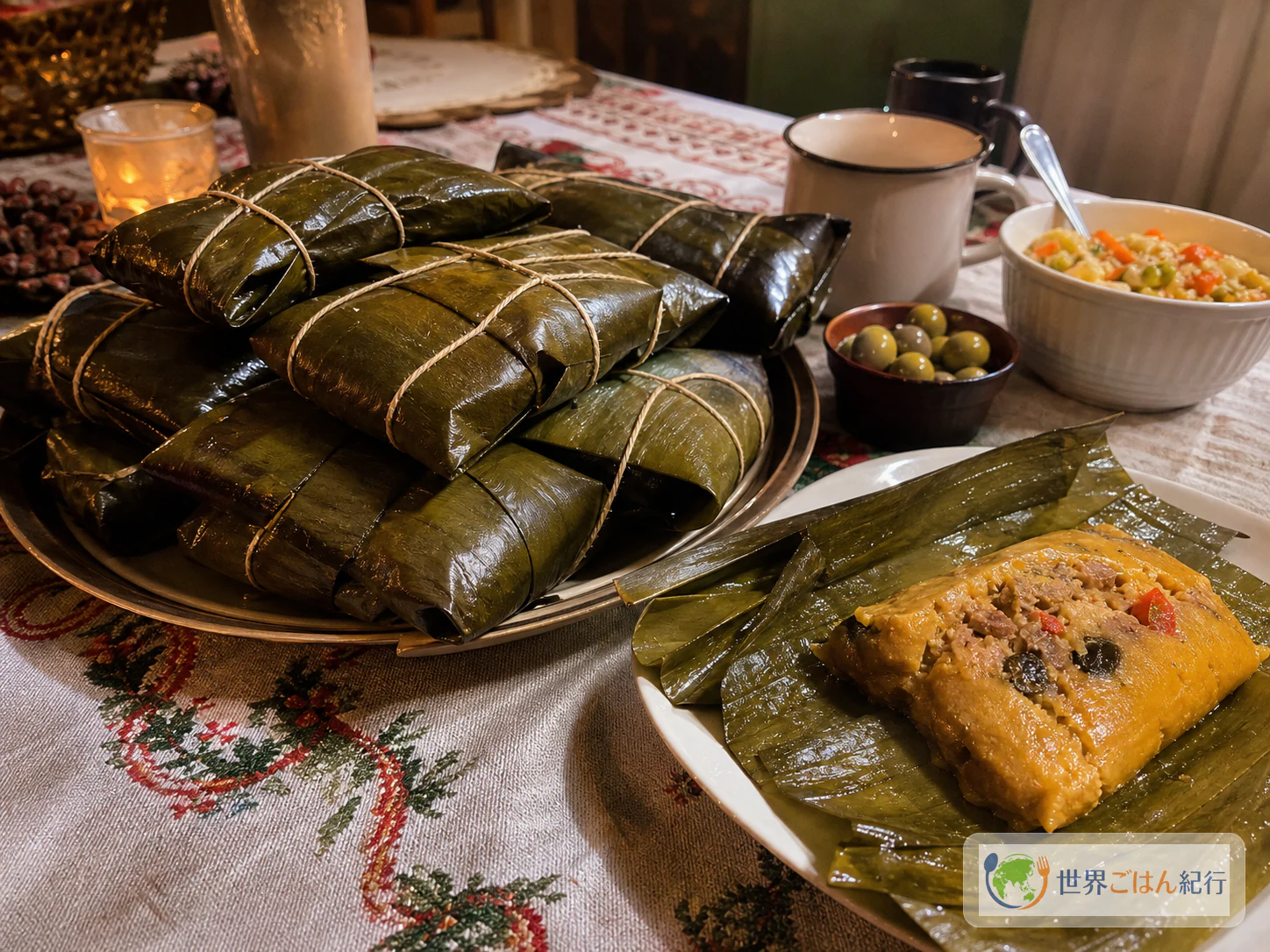
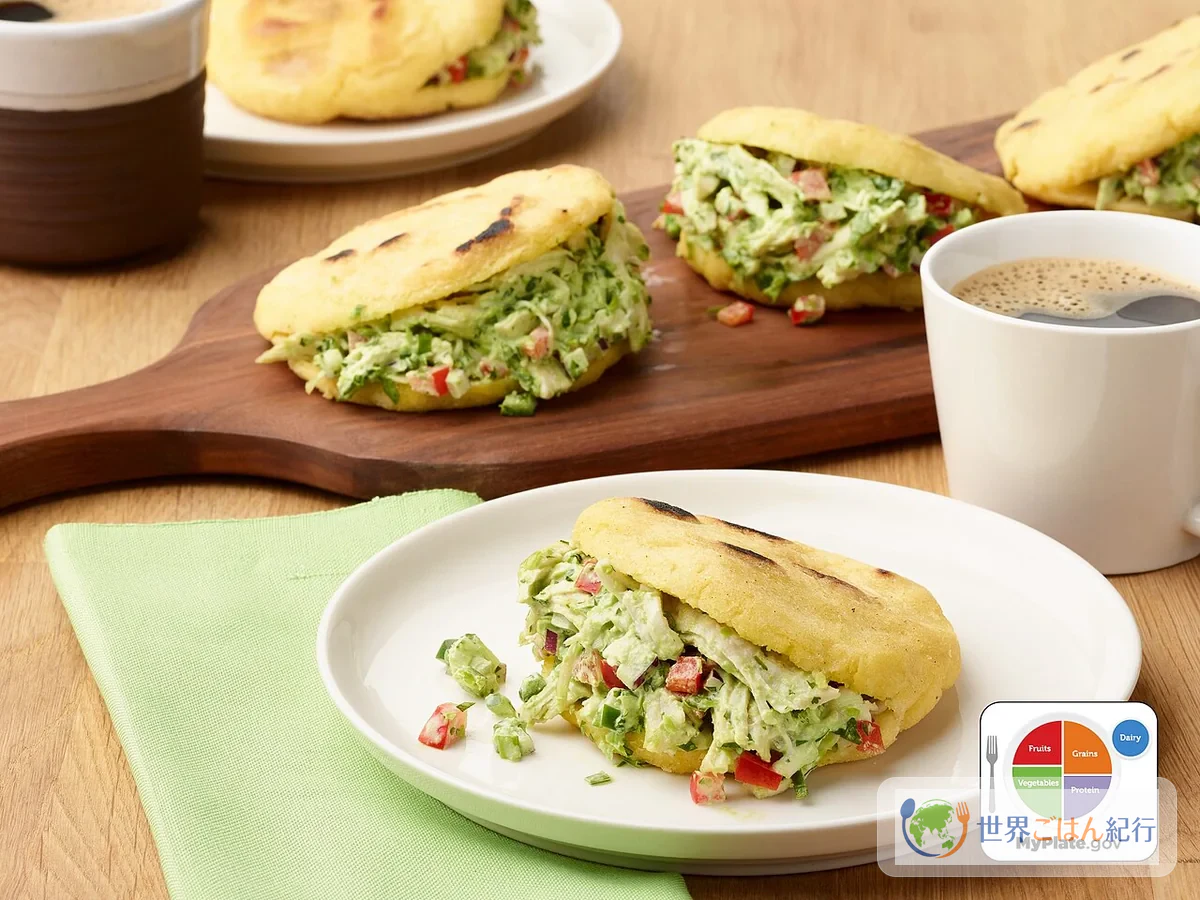
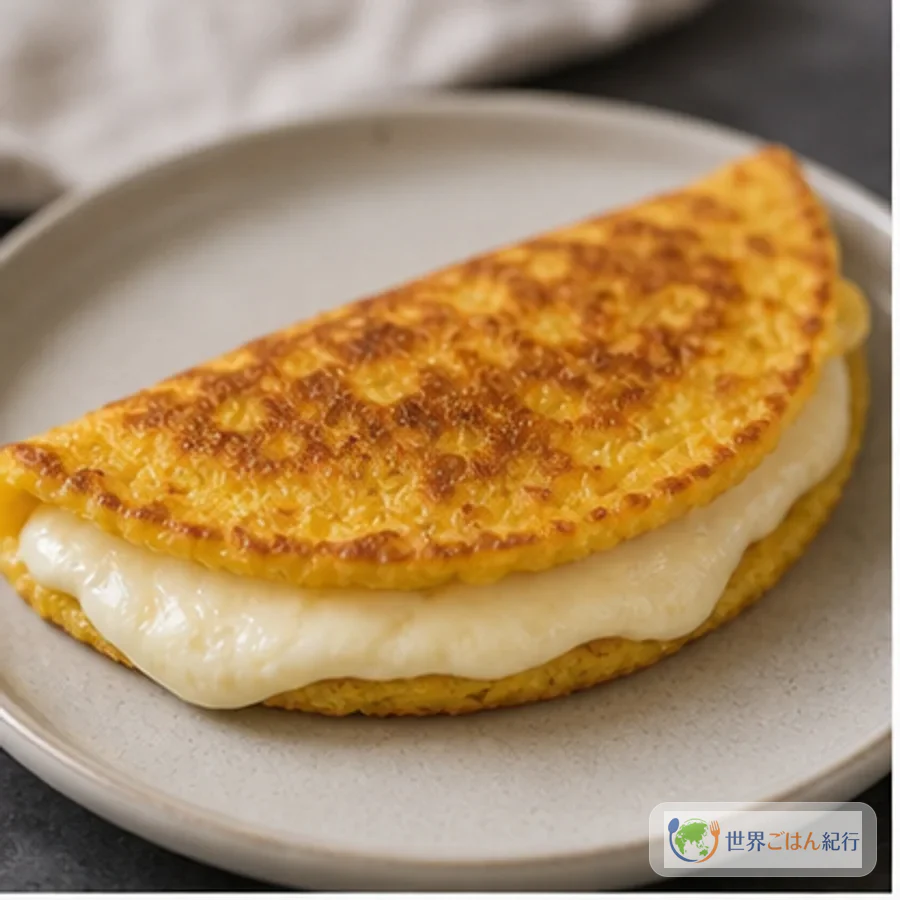
Hallaca is a feast dish the whole family prepares together, and Venezuelan families often wrap dozens at once. It sits apart from the everyday staple arepa and the sweet griddled corn cachapa, both in effort and in occasion.
You can read its history right in the dish. The corn dough and leaf wrapping connect to indigenous food culture, while the stewed meat, olives, capers, and raisins recall Spanish and Mediterranean ingredients. That sweet-and-salty character and the layering of fillings are what set it apart from a tamal.
The structure never changes: banana leaf, corn flour, meat guiso, olives, and raisins. The fillings do vary from home to home. Some use three meats, beef, pork, and chicken, while others use just chicken and beef.
Ingredients (makes 8)
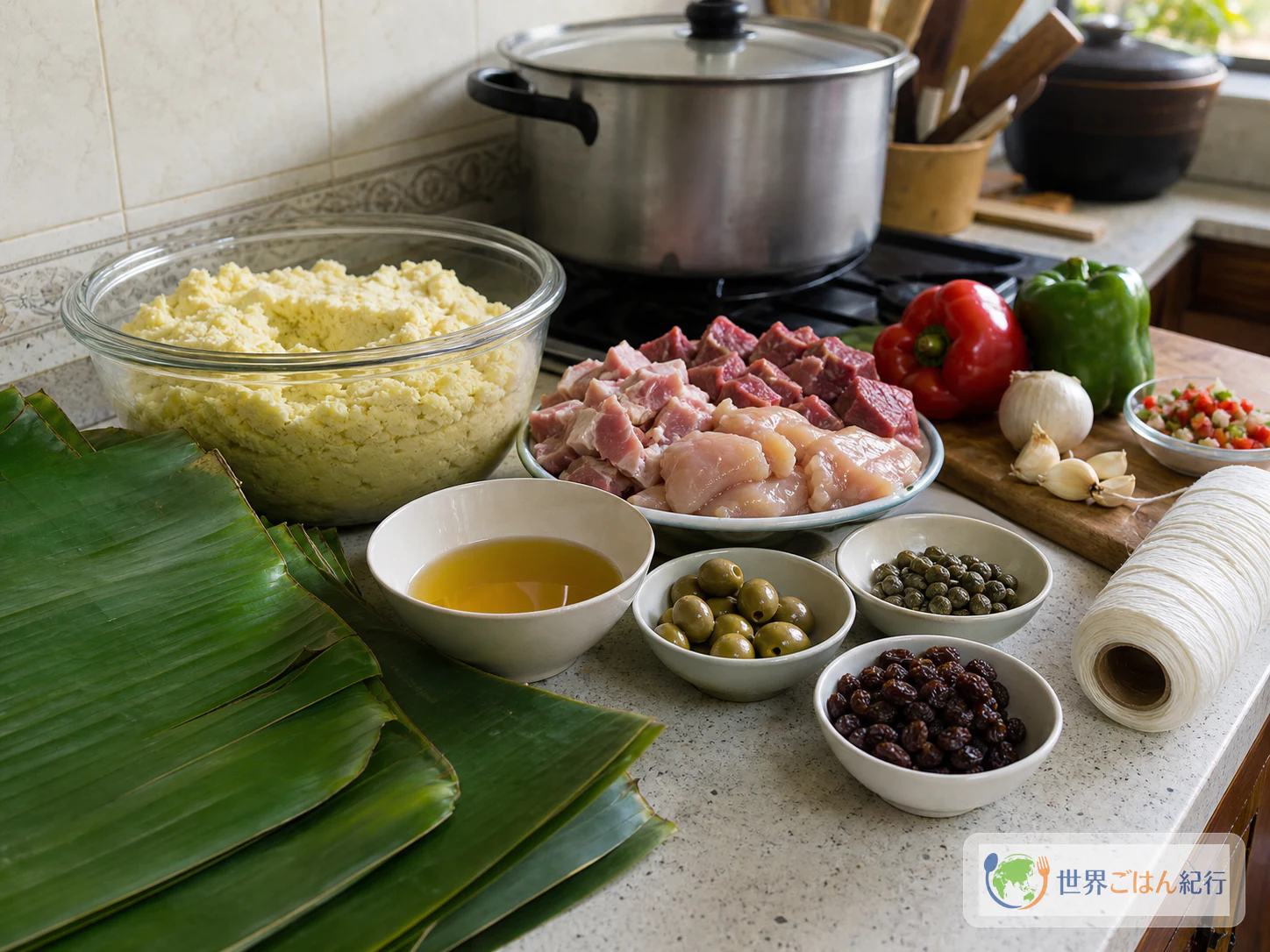
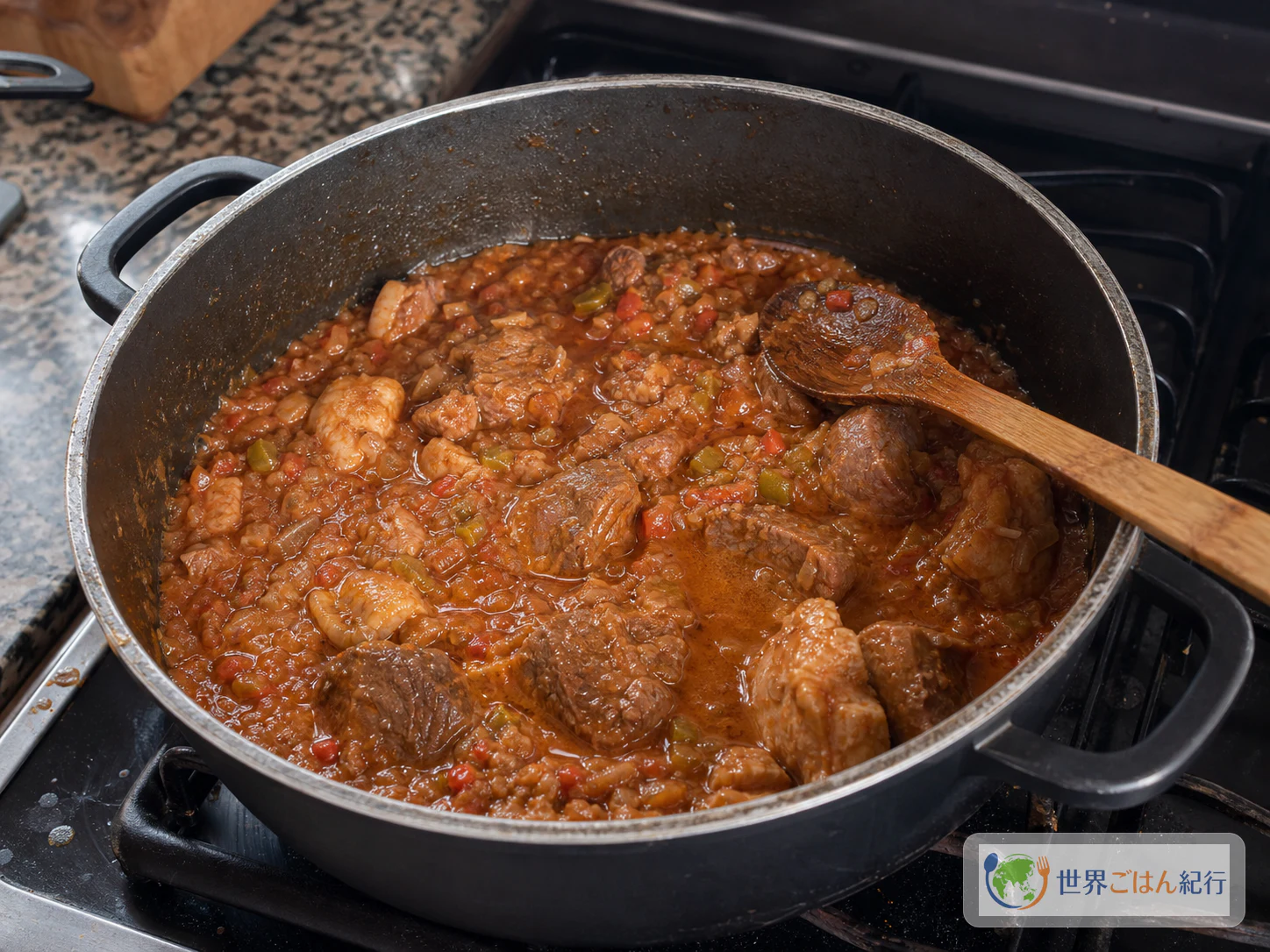
Hallaca can be made in one day, but to lighten the load in the kitchen, make the guiso the day before and do the dough and wrapping on the day. The amounts below make 8. The fillings include a little extra so that practicing the wrapping is easy.
This recipe uses beef, pork, and chicken. Check the labels on broth, olives, capers, and imported seasonings, since they can contain wheat, dairy, chicken, pork, or gelatin. The banana leaf is for aroma and wrapping; do not eat it.
Choosing Hallaca Ingredients and Substitutes
Masarepa, annatto, banana leaves: the names can look daunting, but the shopping priorities are clear. The meat, onion, bell pepper, tomato, olives, and raisins are easy to get at a regular grocery store. What's worth seeking out online or at a specialty store is masarepa, imported adobo seasoning, and a deep pot that can hold large leaf parcels submerged. Banana leaves are easiest to find in the freezer section of Asian, Filipino, Thai, or Vietnamese grocery stores.
Masarepa and banana leaves
The texture of hallaca is almost entirely decided by the masarepa, so this is the one ingredient to order rather than swap. Even a supermarket product labeled "corn flour" may be milled differently, which changes how it holds together after absorbing water. Since hallaca is a wrapped dish, cracking dough means time lost on repairs. If you also plan to make arepas or cachapa, one bag will keep you going.
For banana leaves, practicing with parchment paper the first time is fine, but the aroma of the leaf makes it taste like hallaca in an instant. Frozen leaves have some tear-prone spots; layering small patch leaves inside takes care of them.
| Element | What to protect | How to think about substituting |
|---|---|---|
| Masarepa | Precooked corn flour | Cornmeal, polenta, or cornstarch make something different. Order this |
| Annatto oil | Orange color and an earthy aroma | Without annatto, get the color from 2 tsp paprika and 1/4 tsp turmeric |
| Banana leaves | Green aroma and the shape of the parcel | The aroma is weaker, but parchment and foil let you practice |
| Combination of meats | Layers of beef, pork, and chicken | For a first try, beef and chicken alone work. Without pork, add 1 tbsp more oil |
| Olives and raisins | Contrast of saltiness and sweetness | Keep a small amount even if you dislike them. Without them it leans toward a plain meat bun |
Seasoning and the pot
Season the guiso with salt, garlic, cumin, and paprika. If you find Goya adobo at a specialty grocer, use up to 1 tsp of it as part of the salt and cut back a little on the salt in the ingredient list; it helps pull the seasoning of the meat together.
Even 8 hallacas take up room in a pot. Without a deep stockpot, the lower pot of a two-tier steamer works well, so the parcels aren't packed too tightly, and the upper tier comes in handy for reheating.
Method: Guiso the Day Before, Wrap on the Day
Hallaca has many steps. But the hard parts can be separated. Cook the guiso down and cool it. Make the dough soft enough, but firm enough to spread thin on a leaf. Don't tie the parcels too tightly, and don't let the pot boil wildly. Keep to these three points and even the first attempt will come out presentable.
Common Hallaca Problems and Fixes
With so many steps, it's easy to see where things went wrong. A slightly misshapen parcel the first time will still be good to eat, and what to fix next time usually comes down to one of three things: the dough's moisture, the guiso's liquid, or the suppleness of the leaf.
| Problem | Cause | Fix |
|---|---|---|
| Dough cracks | Not enough moisture, edges too thin | Add 1 tbsp broth and re-knead, and make the edges thicker |
| Liquid leaks from the parcel | Guiso is watery | Cook down until about 4 tbsp of liquid remains on the pot bottom |
| Leaf tears | Leaf not warmed, midrib thick | Soften over steam and layer a small leaf over the tear |
| Comes undone while boiling | String loose, water boils hard | Tie with one finger of slack and lower to small bubbles at 90–95 degrees C |
| Too salty | Salt from olives, capers, adobo, and broth adds up | Hold back some salt in the guiso, then taste and add salt at the end |
| Dries out on reheating | Heated in the microwave alone | Steam in the leaf in a steamer for 8–10 minutes |
Serving and Storing Hallaca
What to serve with it
One hallaca is quite filling, so balance it with a light salad, a bean stew, white cheese, and a sour pickle. To explore more Venezuelan corn dishes, the everyday arepa, the sweet griddled cachapa, and reina pepiada, stuffed with chicken and avocado, show the differences clearly.
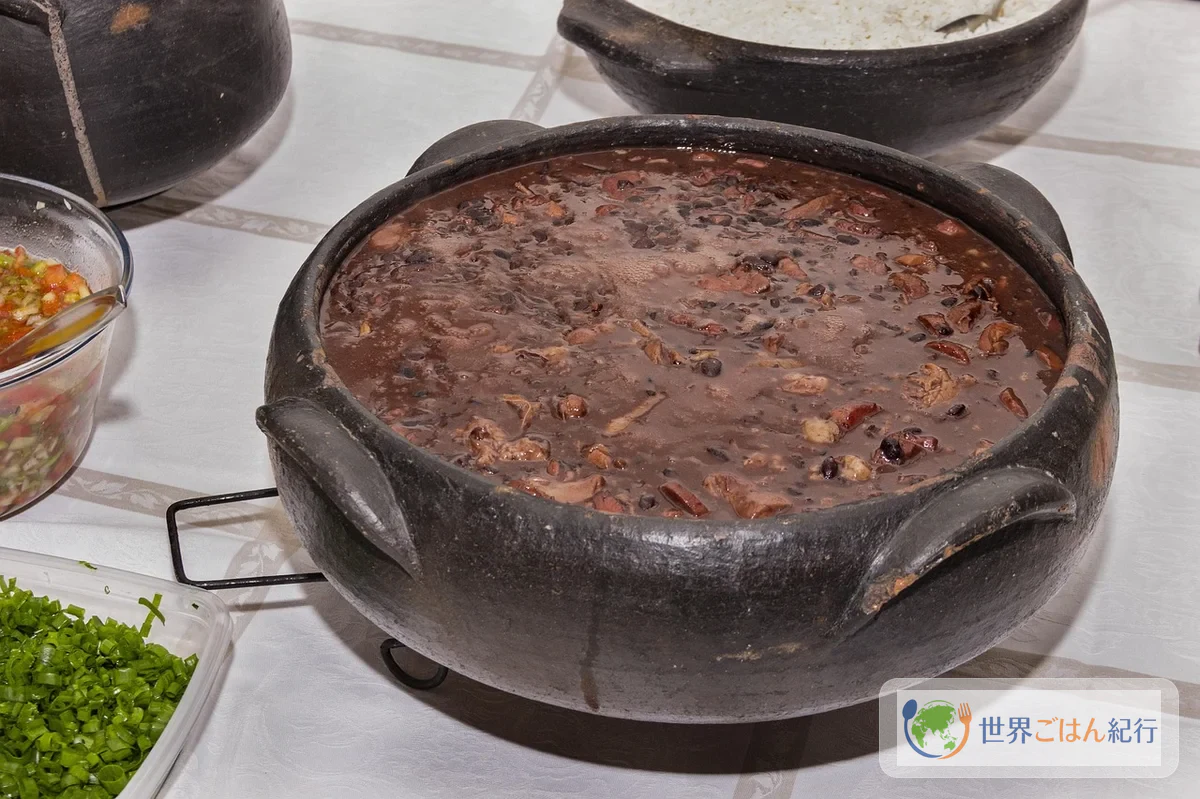
If you like meat stews, Venezuela's pabellón criollo is a natural next dish. For other leaf-wrapped cooking, New Caledonia's bougna and the Central African Republic's maboke use banana leaves the same way, to hold in aroma.
Storage
Cool boiled hallacas completely and store them in their leaves. Refrigerate up to 3 days, or freeze up to 1 month. Before freezing, wipe the outside of the leaf well, since water left on the surface seeps back in on thawing and loosens the edges of the dough. Wrap each one in plastic wrap, put them in a storage bag, and press out the air.
Reheating
Steaming in the leaf is the most reliable method: 8–10 minutes from the refrigerator, or 18–22 minutes over medium-low heat from frozen. Moving frozen hallacas to the refrigerator the day before makes reheating more even. If you reheat in water, check that the parcels haven't come undone and lower to medium-low once it boils. The microwave alone dries out the edges of the dough.
Afterward, press the center slightly to see whether steam rises and the masa has softened again; if the guiso is still cold, steam another 5 minutes. Once reheated, flavor and safety both decline quickly, so don't refreeze it. Eat it the same day.
FAQ
Q1. Can I make it without banana leaves?
Yes. Wrap in parchment and then in foil, and you can practice the boiling, though the green aroma of the leaf won't be there. Treat the first time as practice, then look for frozen banana leaves the second time to taste the difference.
Q2. Can I use cornmeal instead of masarepa?
I don't recommend it. Masarepa is precooked corn flour that becomes a wrappable dough after absorbing water. Cornmeal and polenta are coarse-grained and crack easily at the same moisture, and cornstarch is only starch.
Q3. How much can I make the day before?
Make the guiso the day before: cook it down, cool it, and keep it in the refrigerator. The next day, make the dough, soften the leaves, wrap, and boil. Dough made ahead dries out quickly, so knead it on the day.
Q4. I don't like raisins. Can I leave them out?
You can, but the sweet-and-salty outline of hallaca weakens. Start by cutting them to half, about 1.25 oz (35 g), and scatter them near the edges rather than the center. If you reduce the olives and capers as well, the saltiness and acidity fade too.
Q5. Can I boil frozen hallacas directly?
You can, but the center takes a while to warm. On a day when you're in a hurry, warm them frozen over medium-low heat for about 20 minutes and confirm that the center is hot.