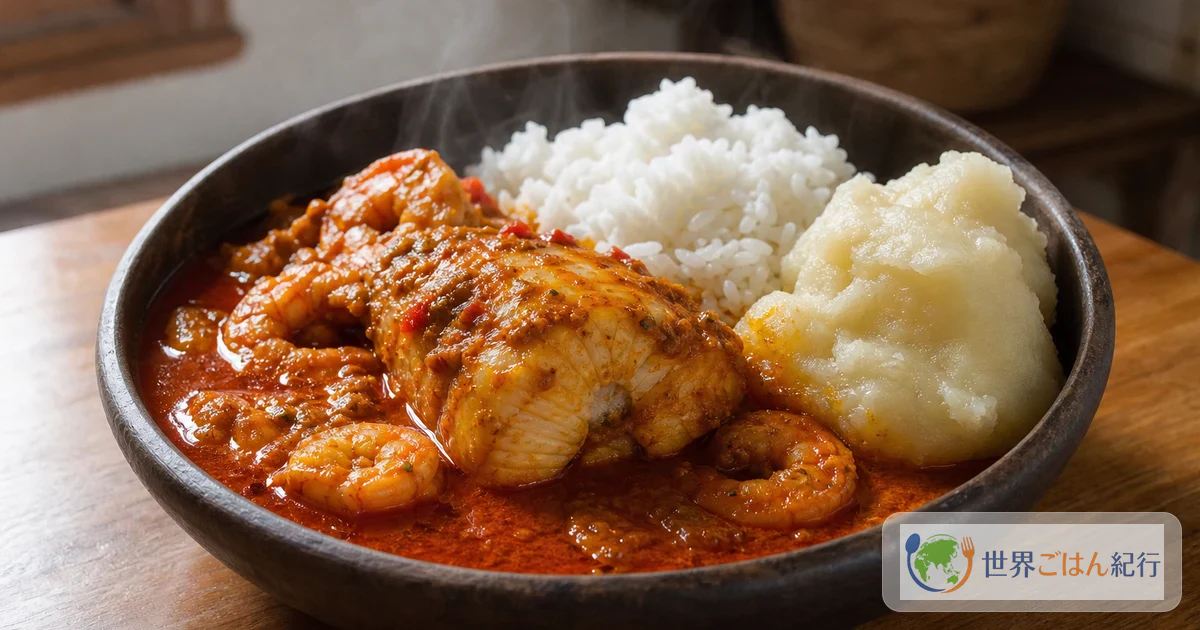
The moment you open the leaf, the smell of river fish and red oil rises with the steam. Maboké (Maboké / Maboke) comes from the Central African Republic: fish and aromatics wrapped in banana leaf or another large leaf, then cooked until tender. Inside the packet, the fish turns soft and moist, the tomato sauce is tinted red with palm oil, and everything carries the green scent of the leaf.
Maboké in the Central African Republic

Locally, maboké is steamed, grilled, or cooked slowly over charcoal. In a home kitchen a steamer does the job instead. It keeps the leaf's aroma in and won't toughen the fish. The fish is broken up at the table and its sauce is pressed into fufu or rice.
If you like the red palm aroma, try Congolese poulet moambé or Ghanaian groundnut soup. Leaf-wrapped cooking paired with a starchy staple also shows up in Cameroonian sanga and Papua New Guinean mumu.
Ingredients (serves 4)

Maboké has few ingredients. The stars are fish, leaf, red oil, and aromatics. You don't need river fish. Choose a white fish with few bones that holds together when steamed. Cod breaks up easily, so the first time, pick sea bream, sea bass, swordfish, tilapia, or thick flounder fillets.
Boneless fillets are easier, but bone-in has a deeper aroma. If you make it bone-in, remove the bones at the table so you don't break up the flesh inside the leaf while eating. If eating with children or elderly family members, choose boneless fillets.
| Ingredient that causes hesitation | Closer to local | Realistic in a home kitchen | Direction to avoid |
|---|---|---|---|
| Leaf | Banana leaf or large edible leaves | Frozen banana leaf. Reinforce torn parts inside with parchment paper | Wrapping directly in only aluminum foil |
| Fish | River fish, freshwater fish, whole fish | Sea bream, sea bass, tilapia, swordfish, thick flounder | Steaming thin fillets for a long time |
| Oil | Unrefined red palm oil | Use only 2 tbsp. If you dislike it, replace half with rice bran oil | Heating until it smokes over high heat |
| Heat | Fresh chili | Red chili, green chili, a little cayenne | Skipping the aromatics and using only a hot seasoning |
| Staple | Fufu, cassava-based staples | Fufu mix, white rice, steamed taro | Bread only, which can't catch the sauce well |
Choosing ingredients and tools for maboké

Fish, onion, tomato, garlic, and ginger are best bought fresh close to home. Three things are worth seeking out: red palm oil for the red aroma of Central Africa, a steamer that keeps the leaf wraps stable, and an instant-read thermometer for checking the fish. Banana leaf shapes the aroma of the dish, so look for it at Asian or African grocery stores or in the frozen imported-food section.
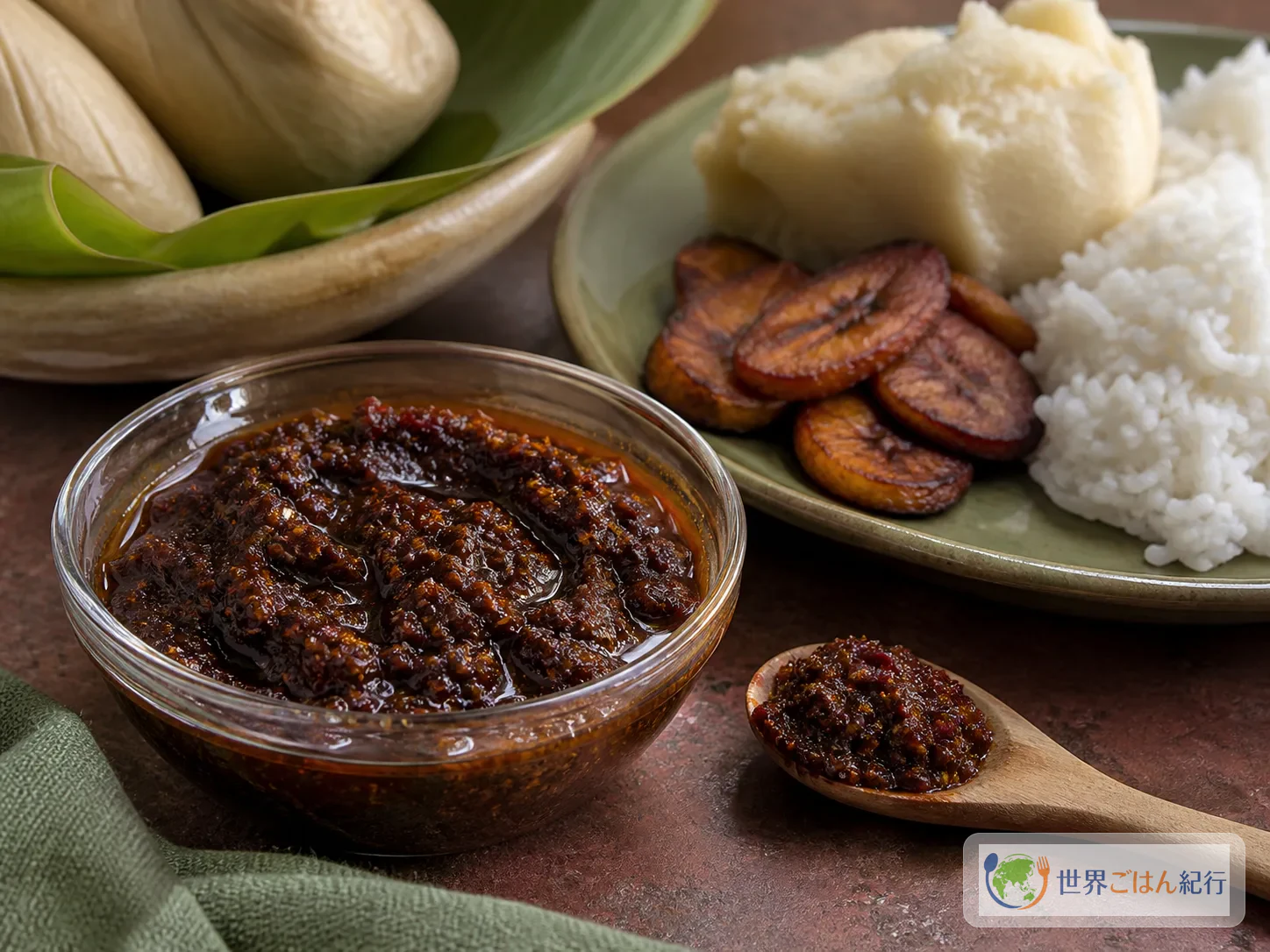
Red palm oil gives the fish color and an earthy, nutty aroma. A small bottle is plenty the first time, since 2 tbsp is enough for color. Use up the rest in sanga or poulet moambé.
Charring the leaf adds aroma, but at home a steamer is far more forgiving. Choose one deep enough that the wraps cook by steam alone, sitting above the water, so the fish stays firm rather than watery.
White fish is hard to judge by eye, and opening the leaf too often lets the aroma escape. Instead, check with a thermometer at one spot at the end. This helps most with thick fillets or bone-in fish.
If you can't find leaves, parchment paper still makes a steamed fish packet, though the leaf aroma that defines maboké will be missing. Practice with parchment the first time, then look for frozen banana leaf. Once you have leaves, the same steamer handles other wrapped dishes like mumu, so nothing goes to waste.
Method: seal in steam with the leaf
Maboké is not simmered. Steam and sauce circulate inside the leaf. If water touches the fish, it turns watery and the leaf loses its purpose. Put water only under the steaming rack. Inside the wrap, the fish's moisture, tomato, and red palm oil should form a small sauce.
Common maboké mistakes and fixes

Three things tend to go wrong. Banana leaf tears if you fold it straight from the package, red palm oil turns bitter when heated too hard, and white fish tightens with long cooking while the packet loses its moisture. The answer is to soften the leaf, cook the red palm oil sauce briefly, and stop the fish based on its core temperature and how it flakes.
| Symptom | Cause | Fix |
|---|---|---|
| Fish is tough | Seasoned too long, steamed too long | Next time season 10 minutes and check once at 18 minutes of steaming. For now add sauce and coat the staple |
| Leaf tears and leaks | Folded without softening the leaf | Soften with boiling water or steam, and reinforce tears inside with parchment |
| Sauce is watery | Tomato not cooked enough, water got into the packet | Cook the tomato until the oil seeps and raise the steaming rack |
| Bitter smell | Red palm oil heated too hard | Keep small bubbles over medium-low heat, and start over if it smokes |
| Fishy smell remains | Not enough acidity and salt in the seasoning | Tighten with lime and salt for just 10 minutes and wipe off excess liquid before steaming |
Burnt red palm oil is the hardest mistake to undo. Underdone fish can go back in the steamer, but bitterness from scorched oil runs through the whole sauce. Think of the oil as something you warm to pass its aroma to the tomato, not something you fry in, and it stays well-behaved.
Serving and storing maboké
Maboké is at its best the moment you open a freshly steamed leaf. Break the fish up a little and press the sauce into fufu or rice. With the leaf aroma, the savory fish, and the weight of red palm oil, sides with acidity or green freshness work well: a simple cucumber and lime salad, salt-boiled greens, or chopped tomato keeps the red oil from lingering too heavily.
| Menu | How to pair | Good for |
|---|---|---|
| Maboké, fufu, greens | Coat the staple with the sauce | A holiday menu leaning Central African |
| Maboké, white rice, cucumber salad | Easy to make in a home kitchen | A weekday dinner |
| Maboké, groundnut soup, a little rice | Compare the aromas of red palm and peanuts | A day to line up African dishes |
| Maboké, fufu, lime | Try the local way of eating the staple | The day you first make fufu |
To store leftovers, take the fish out of the leaf and move it with the sauce to a clean container. Once it has cooled, refrigerate and finish it by the next day. Reheat in a microwave at 600 W for 1 minute 30 seconds to 2 minutes, or on a heatproof plate in a steamer for 5 minutes. Stop as soon as it's bubbling warm, because overheating toughens the fish.
FAQ
Can I make it without banana leaf?
You can, though the dish changes. Wrap the fish in parchment and lightly cover the outside with aluminum foil for a stable steamed packet. The green aroma of the leaf won't come through, so treat it as practice for the seasoning, the red sauce, and the steaming time.
Is red palm oil required?
Yes, if you want the local flavor. Red palm oil adds color and an earthy aroma between the tomato and chili. For a lighter result, use 1 tbsp red palm oil and 1 tbsp rice bran oil. With all rice bran oil, add 1 tsp of paprika for color, but the aroma will be different.
What fish should I choose?
Thick white fish suits it best. Sea bream, sea bass, tilapia, swordfish, and thick flounder are easy to handle. Thin cod fillets break easily and dry out with long steaming, so if you use cod, check it once at 15 minutes.
Can I make a version that is not spicy?
Yes. Use one red chili with the seeds removed. For zero heat, leave out the chili and keep only 1/4 tsp of white pepper. The aroma weakens, so add 5 g more ginger to help keep down the fishy smell.
Can I make it ahead?
Wrap the packets on the day you cook. Salt and acid tighten the fish overnight, and it turns hard when steamed. The day before, you can thaw and wipe the leaves, cut the vegetables, and set up the steamer. On the day, season the fish for 10 minutes, cook the sauce, wrap, and steam right away for the moistest result.