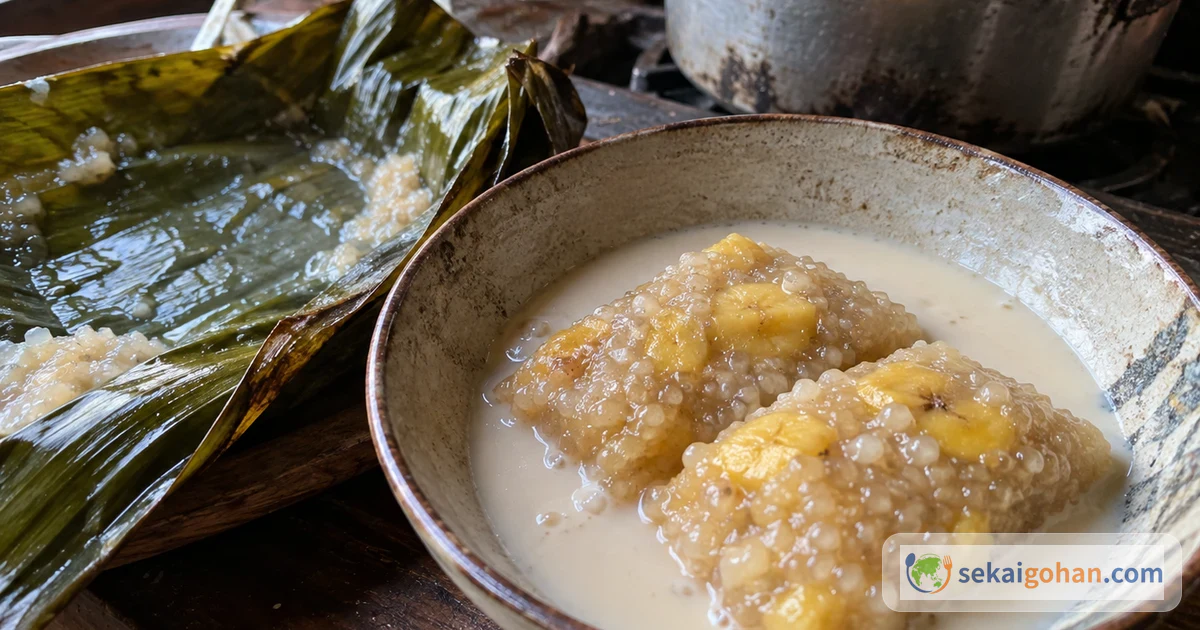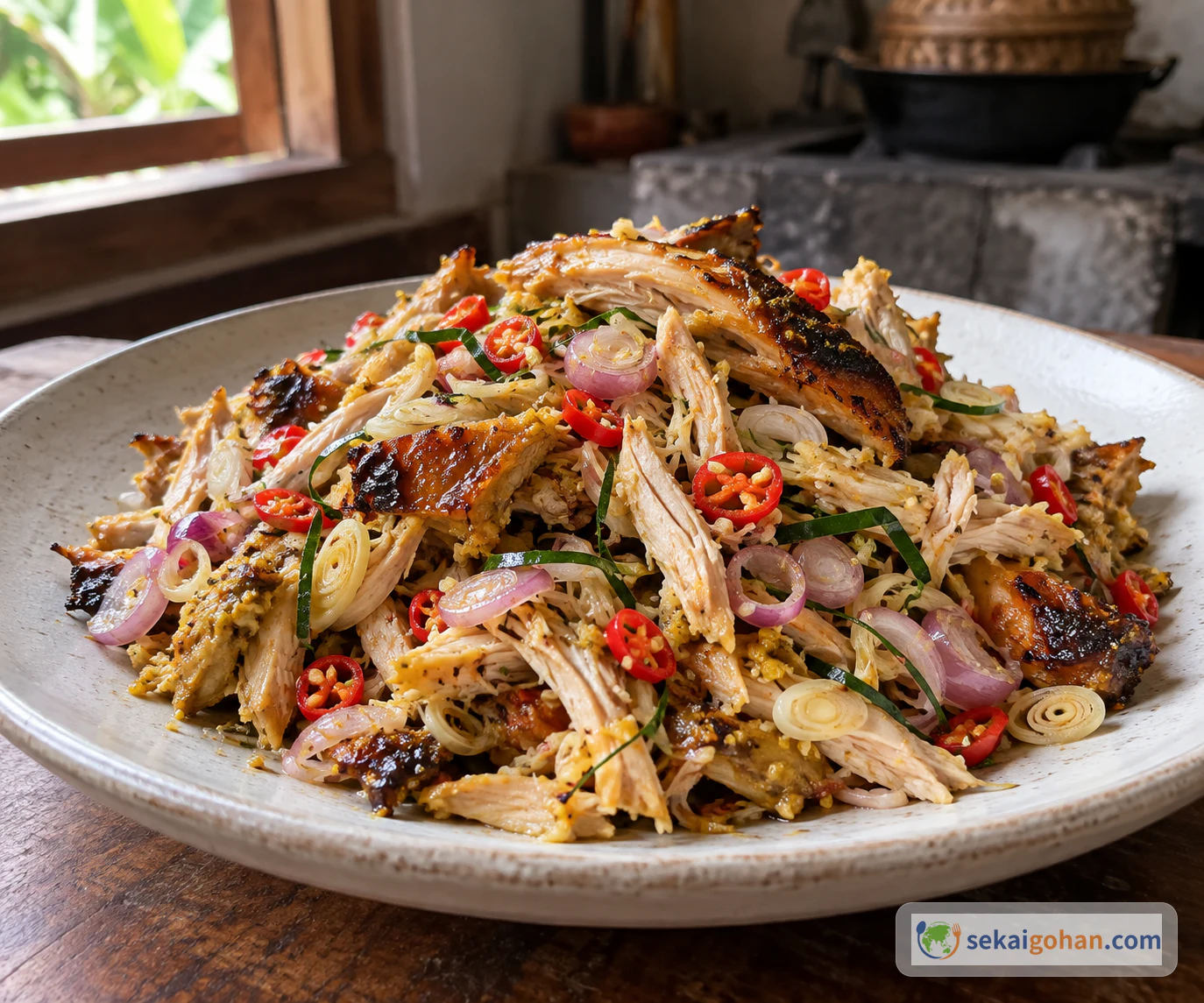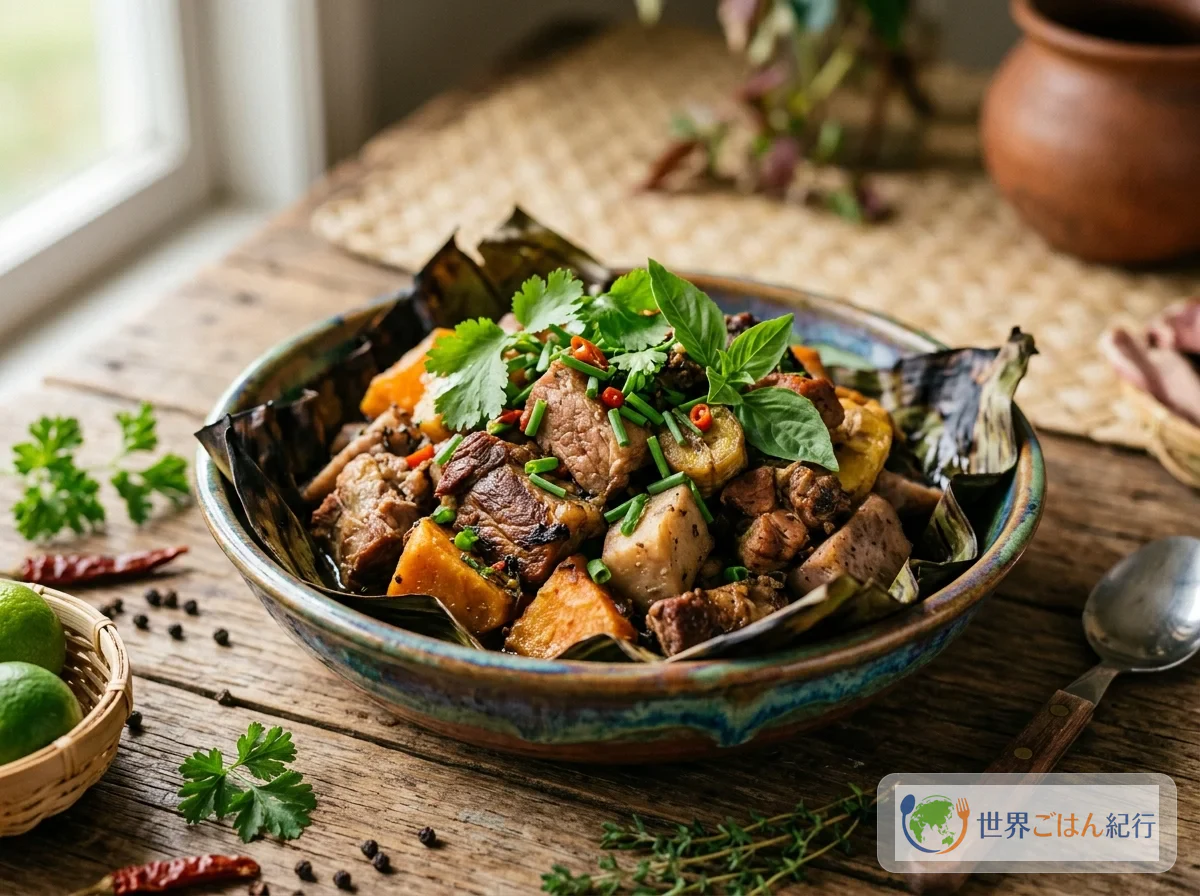
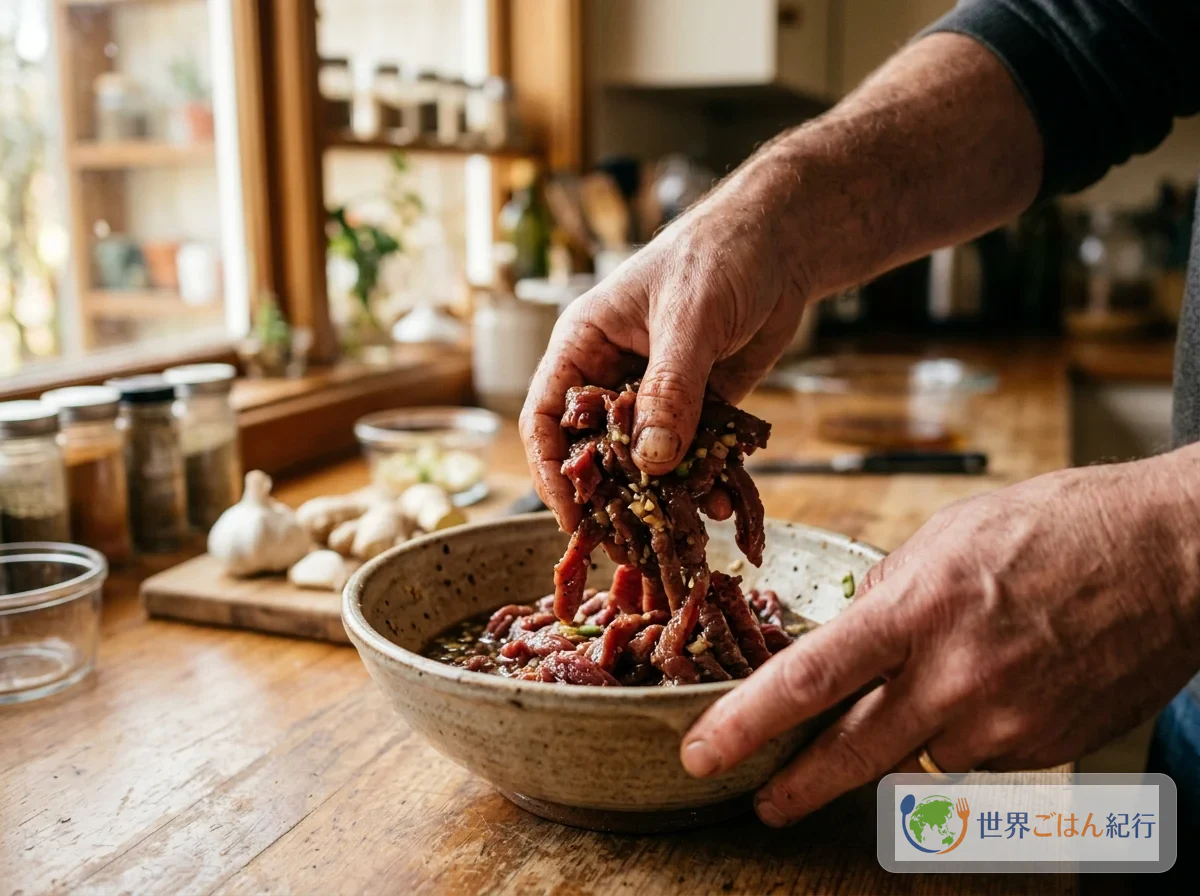
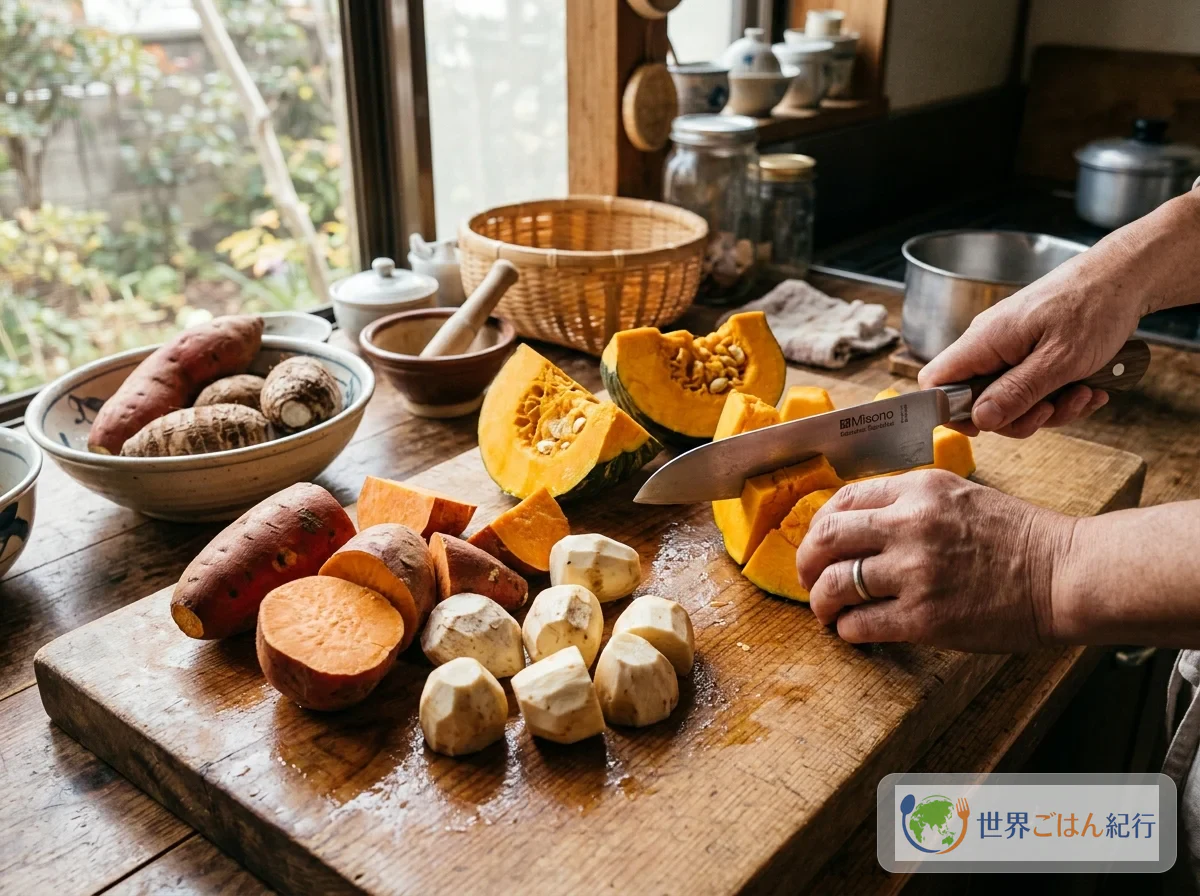
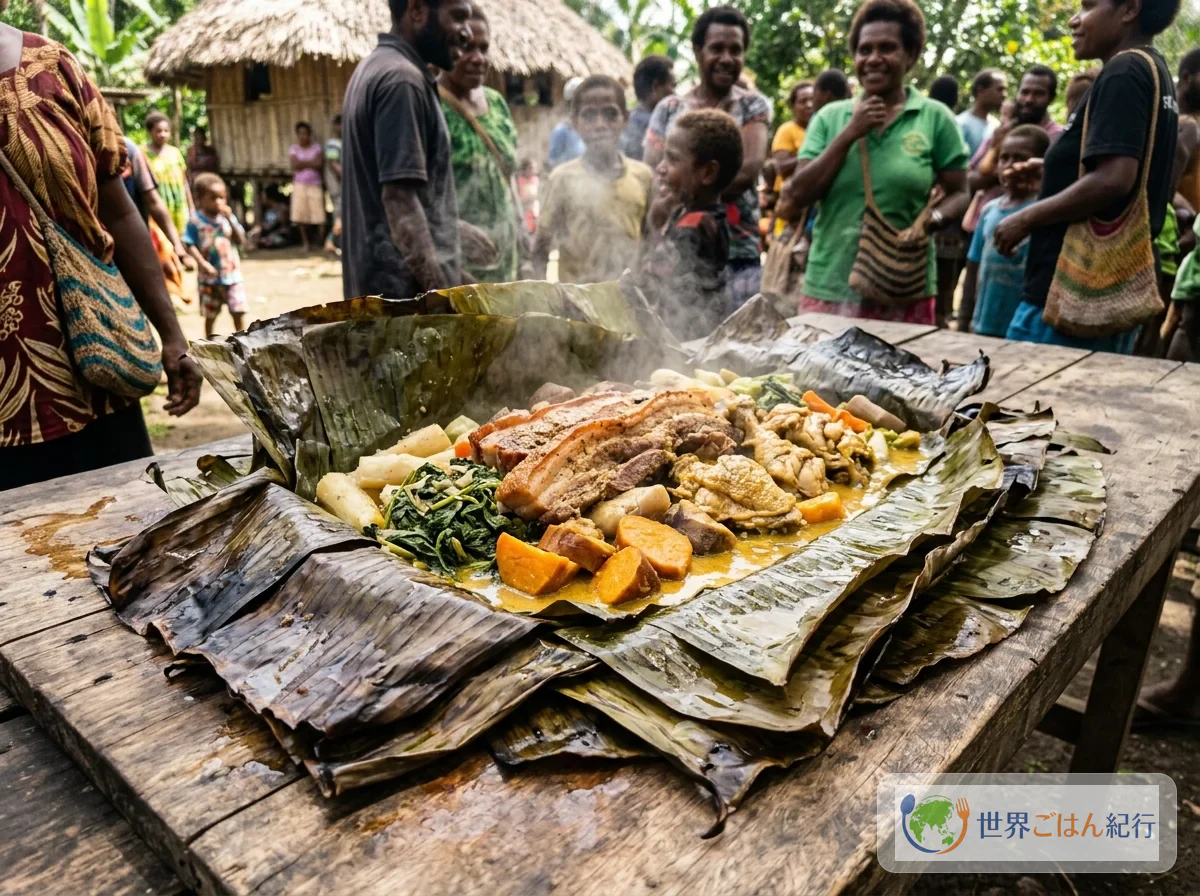
In the highlands of Papua New Guinea, as the morning mist begins to clear, the village men dig a pit, stack firewood, and set stones carried up from the riverbed into the fire. The women spread out banana leaves, cut the pork, brush the soil from the sweet potatoes, and squeeze coconut milk. Hours later, when the leaves are opened amid the steam rising from the stones, out comes a plain, powerful feast cooked only by the heat of the earth. This is mumu, Papua New Guinea's national way of cooking and the country's dish itself: pork and root vegetables wrapped in banana leaves and steam-roasted over hot stones, rich with coconut milk and meat juices.
About Mumu
The word is Tok Pisin, the language of Papua New Guinea, for "earth-oven steaming." Heated stones are laid in a pit, and pork, chicken, and root vegetables wrapped in banana leaves are steam-roasted with coconut milk. Mumu is cooked throughout the country, especially in the Highlands region, and it belongs to a culture of steaming with stones rather than the charcoal grilling of something like Kenya's nyama choma.
What sets mumu apart from other Pacific earth ovens is its generous use of coconut milk and the starring role of highland root vegetables: the sweet potato called kumara, taro, and yam. It is also a ritual of communal cooking, indispensable at weddings, harvest festivals, celebrations of birth, and the welcoming of guests.
A shared dish in a country of 800 languages
Papua New Guinea is one of the most culturally diverse countries in the world, with more than 800 languages spoken. Mumu is one of the few food languages the whole country shares. Around Mount Hagen in the highlands, in coastal Rabaul, and in the capital Port Moresby, mumu means a meal for a special day.
The earth oven across the Pacific
Digging a pit and steaming food with heated stones is a technique found across the Pacific islands. It is called "imu" in Hawaii, "hangi" among the Maori of New Zealand, "lovo" in Fiji, and "umu" in Samoa, and it spread across the Pacific with the expansion of the Austronesian-speaking peoples from about 5,000 years ago. Steaming food with the heat of the earth is also something humanity has invented independently many times.
Cooking mumu together
Mumu cannot be made alone. Someone digs the pit, someone heats the stones, someone prepares the ingredients, someone cuts the leaves, someone tends the fire. Everyone in the village has a role, and the meal comes together only after hours of shared work.
In Papua New Guinea the pig is called a "walking savings account." Pigs are used for paying bride price, settling disputes, and forming alliances, and the number and size of pigs served at a mumu are an index of the importance of the occasion and the wealth of the host. In rural Papua New Guinea this "pig economy" still operates in parallel with the cash economy.
Ingredients (serves 6)
Taro is often sold frozen at Asian and halal grocers. Banana leaves are sometimes found in the frozen section of Asian grocers. Plantains (cooking bananas) are available at African and Caribbean grocers. If you cannot find them, increase the sweet potato to substitute. Coconut milk can be bought in the canned goods aisle of an ordinary supermarket.
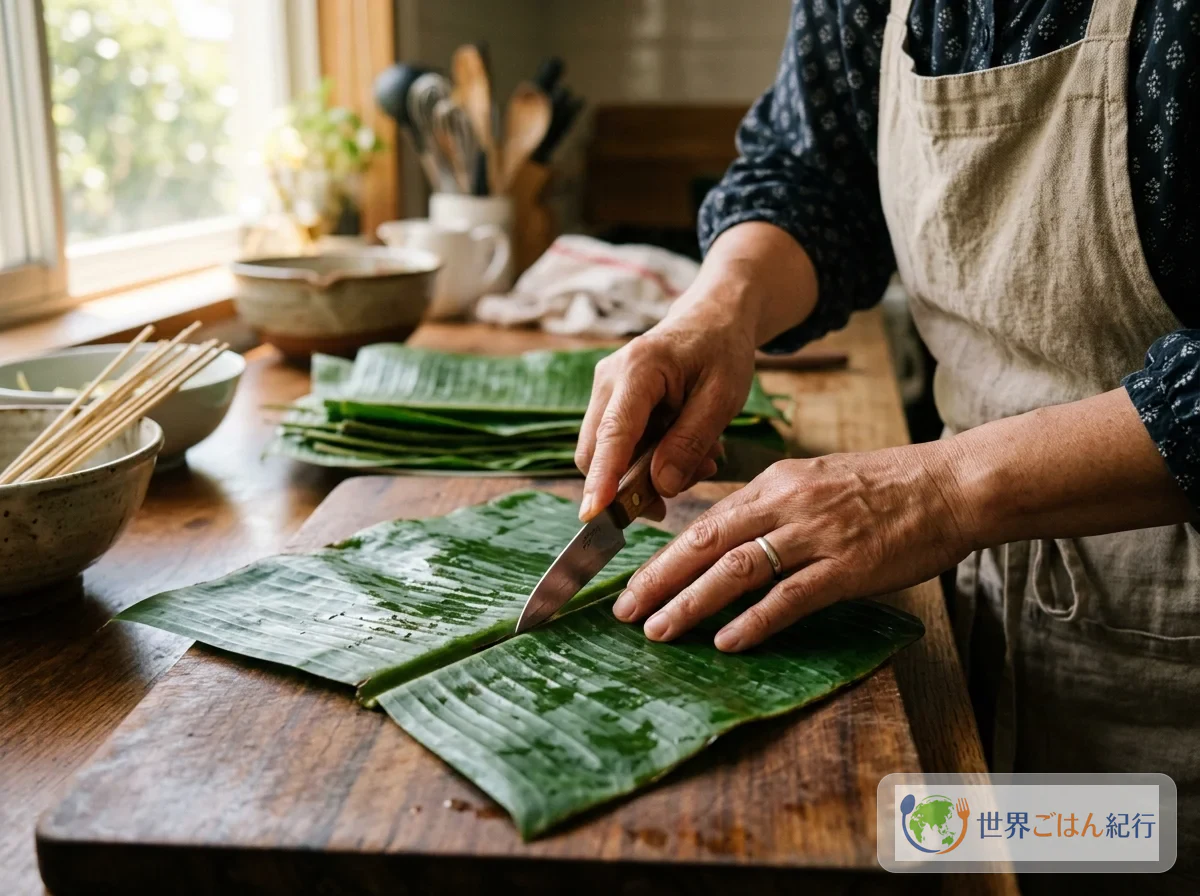
Choosing Banana Leaves for Mumu
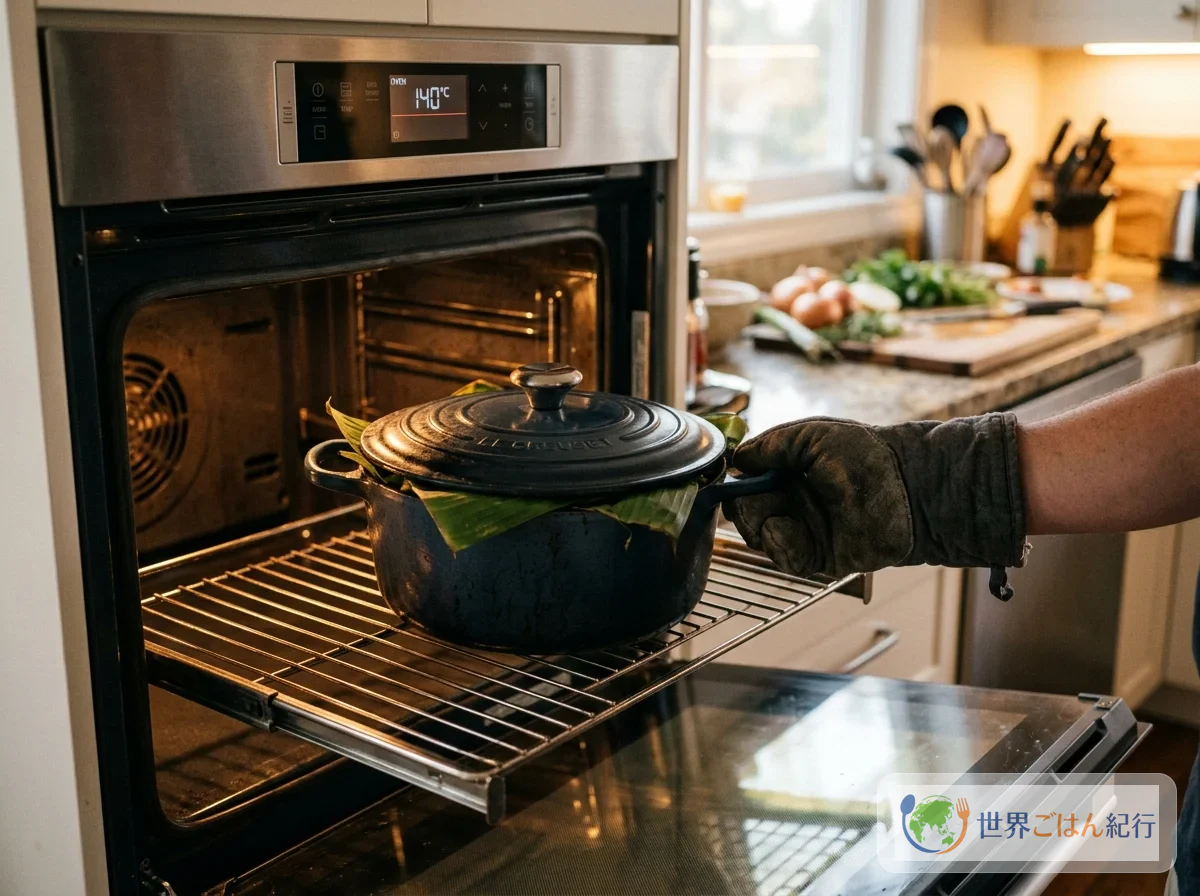
Banana leaves do more than hold everything together. They give the ingredients a faint green, grassy fragrance and sweetness, so use them whenever you can; frozen ones work well and can be bought online. If you have to, you can wrap the ingredients doubly in aluminum foil and cook them in the Dutch oven at the same temperature and for the same time, but that fragrance is lost entirely.
Getting Mumu Right
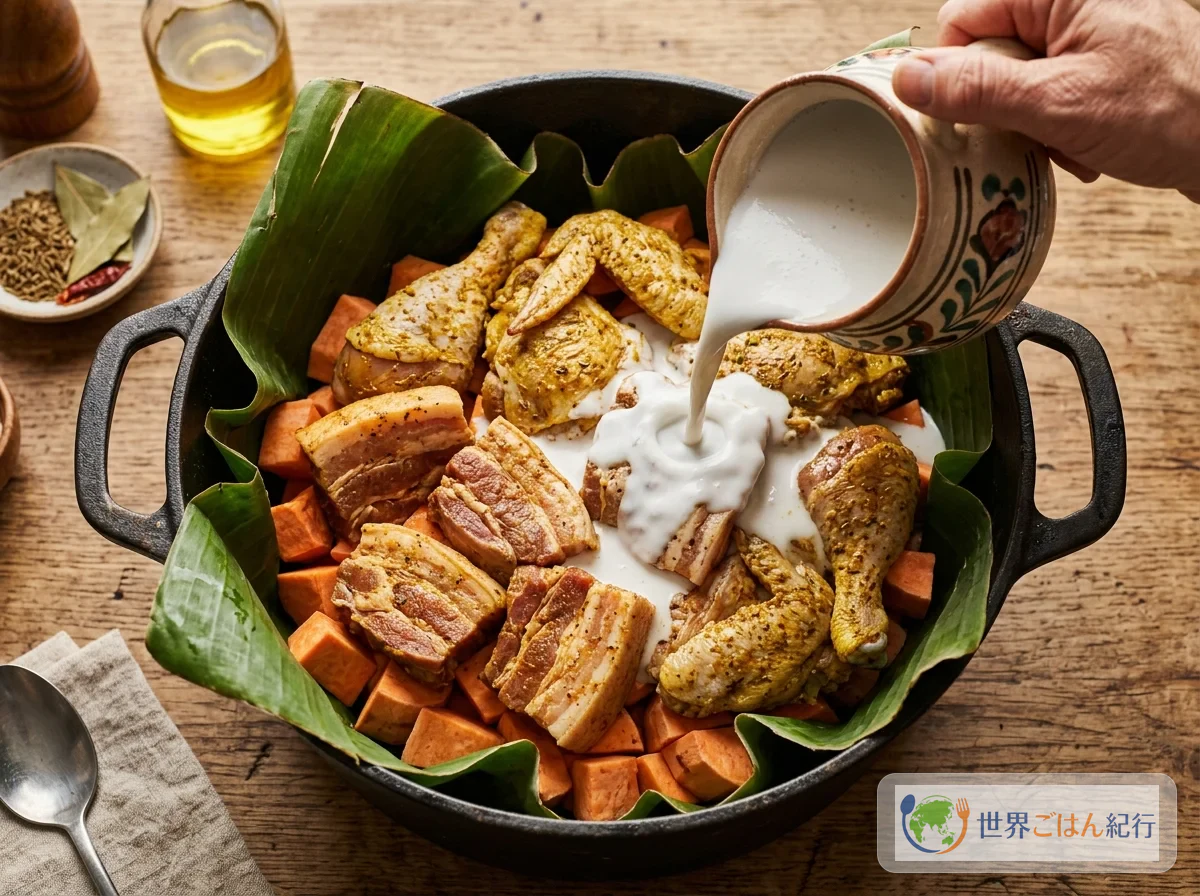
Canned coconut milk often separates into a solid cream layer on top and a watery layer below. Shake it well before opening so the milk is evenly thick all through the mumu; pour it in separated and only the top ingredients come out rich while those below turn watery.
Lay the sweet potato on the bottom. There it soaks up the fat dripping from the meat and the coconut milk, so it ends up naturally soaked in gravy, which is why sweet potato tastes better in mumu than cooked any other way. In Papua New Guinea quite a few people make mumu just to eat the kumara.
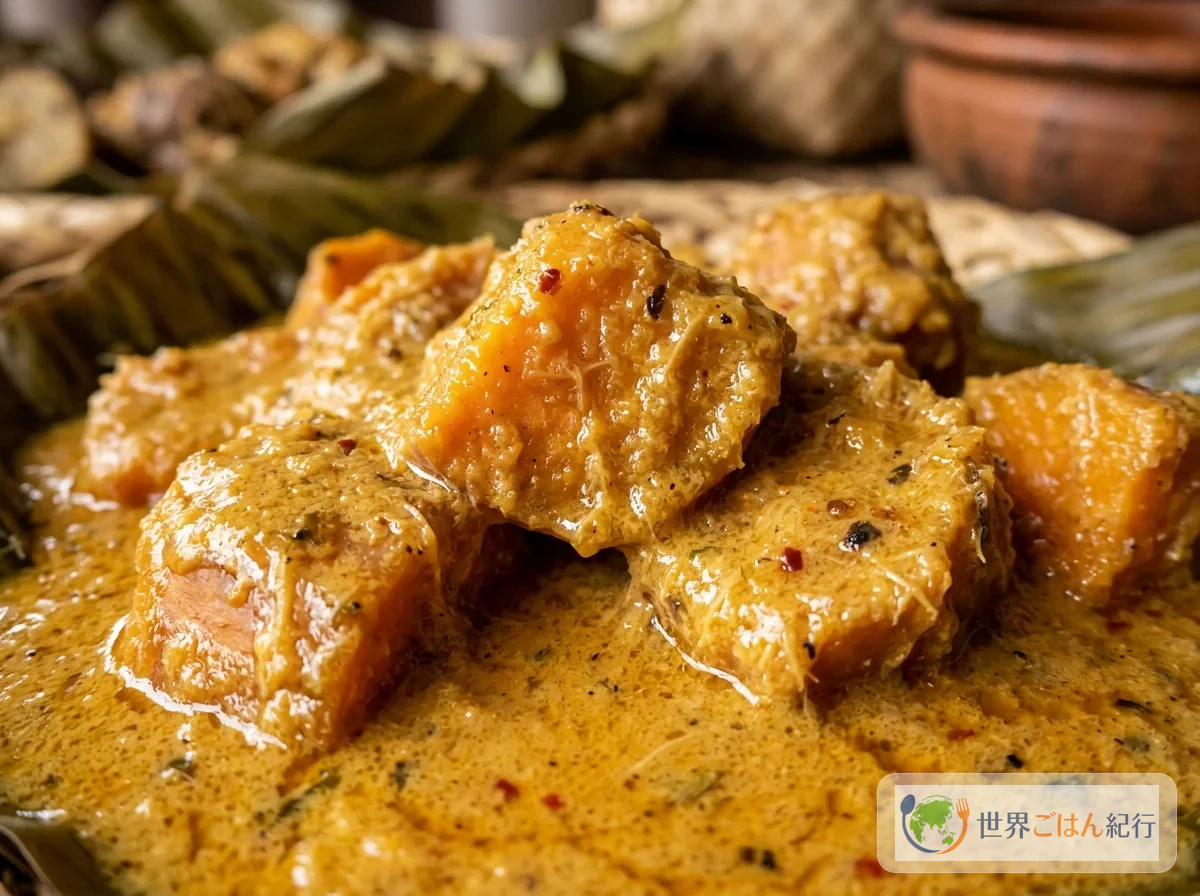
During the steam roast you will be tempted to lift the lid and turn the meat. Resist. Breaking the circulation of steam in the sealed space lengthens the cooking time and makes the result uneven, and leaving it alone is what gets you meltingly tender meat.
Mumu Variations and Nutrition
Fish mumu (coastal style)
On the coast and on the island of New Britain, fish mumu, in which white fish such as sea bream or tuna is wrapped in banana leaves and steamed, is common. Season 1.25 lb (600 g) fillets with lime juice and salt, wrap them in banana leaves with coconut milk, and steam in the oven for an hour and a half; sea bream or cod fillets are good substitutes. A squeeze of lime at the finish tastes like a South Pacific seaside eatery, the same lime-and-seafood pairing as Peruvian ceviche.
Vegetarian mumu
Leave out the meat and increase the root vegetables (5 sweet potatoes, 1 lb (500 g) taro, 1/2 pumpkin). Increase the coconut milk to 1.5 cans, and add 3.5 oz (100 g) dried lentils for protein. In the highlands, mumu of only root vegetables and greens is the everyday meal, and the version with meat is the special edition for festival days. India's khichdi likewise gets its nutrition from beans and grain alone.
BBQ grill version (outdoor cooking)
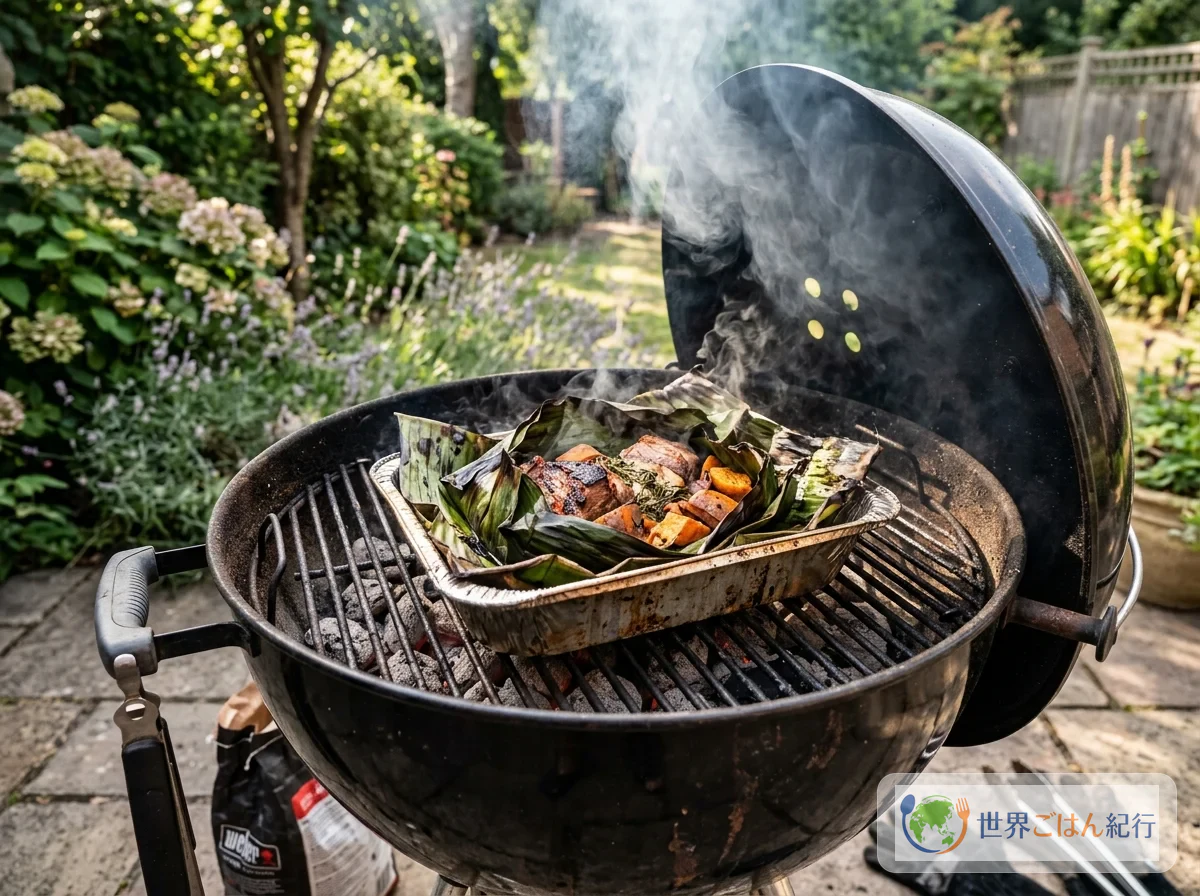
A barbecue grill gets you closest to the tradition. Light charcoal, line a large aluminum tray with banana leaves, layer the ingredients, seal completely with aluminum foil, and close the grill lid. Cook 2 to 3 hours with indirect heat (charcoal pushed to the sides, tray in the center); the smoke brings it much closer to traditional mumu.
Japanese-style mumu with miso and soy sauce
Add 2 tbsp miso, 1 tbsp soy sauce, and 1 tbsp mirin to the pork belly marinade. The sweetness of coconut milk and the fermented flavor of miso go together surprisingly well, and Japanese sweet potatoes suit it too.
Mumu nutrition (one serving of six)
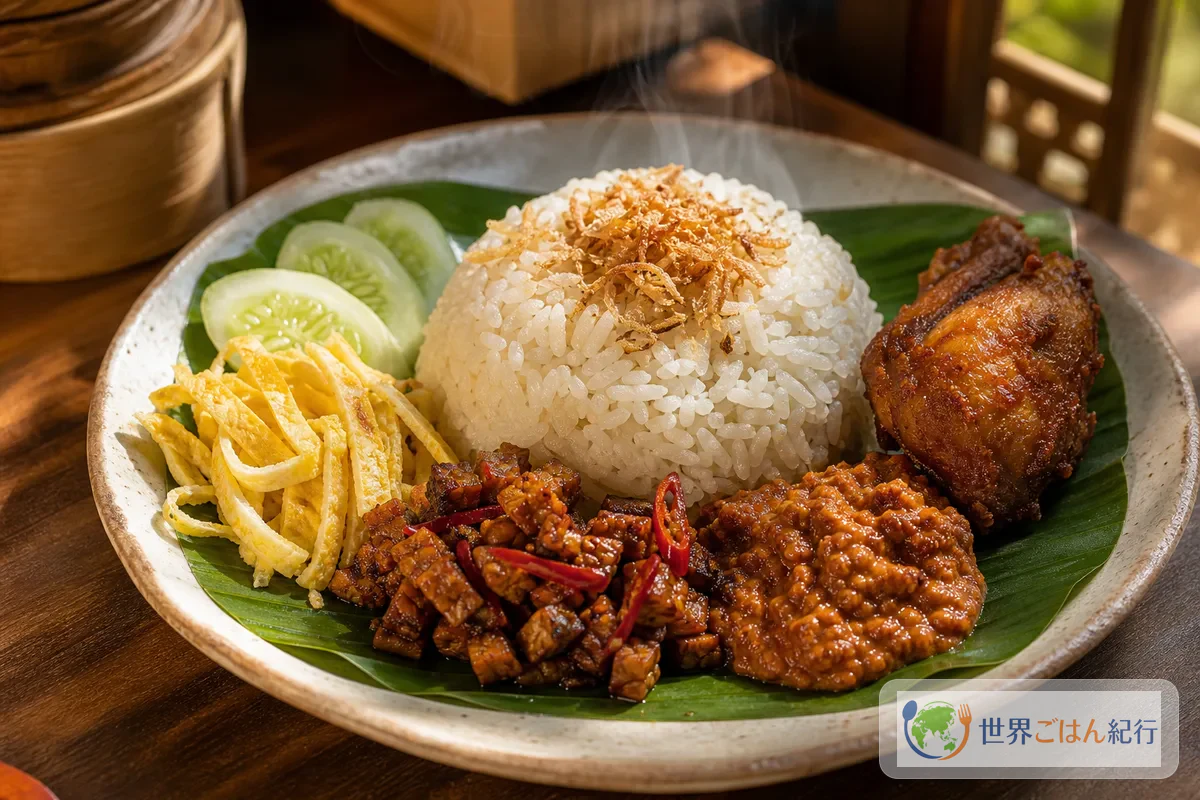
Mumu is a high-energy dish, with fat from coconut milk and carbohydrate from sweet potatoes, which makes sense for a meal that replenishes the calories spent on highland farm work. As in nasi lemak, coconut milk is the main source of fat.
| Nutrient | Amount |
|---|---|
| Energy | 520 kcal |
| Protein | 1.25 oz (32 g) |
| Fat | 24 g |
| Carbohydrate | 1.75 oz (48 g) |
| Fiber | 6 g |
| Sodium | 620 mg |
| Potassium | 890 mg |
| Vitamin C | 35 mg |
More dishes from Asia, the Pacific, and Africa
- Nasi goreng (Indonesia): Indonesia's national dish, fried rice
- Nasi lemak (Malaysia): rice cooked in coconut milk
- Rendang (Indonesia): a coconut milk stew
- Adobo (Philippines): stewed in vinegar and soy sauce
- Nyama choma (Kenya): East African charcoal grilling
- Fufu (Ghana): a pounded root-vegetable staple
- Mafé (Mali): a peanut butter stew
These use many of the same regional ingredients and aromas:
- How to make amok
- Overview of Indonesian cuisine (in Japanese)
- How to make mie goreng
- How to make seblak
FAQ
How do I make it the traditional way (digging a pit in the ground)?
If you have a yard, you can try. Dig a hole 12 inches (30 cm) square and 15.5 inches (40 cm) deep, lay river stones in it, and heat them with firewood for more than 2 hours. When the stones turn white, remove the ash, lay banana leaves, layer the ingredients, cover with more banana leaves and a damp cloth, and finally cover with soil and wait 3 to 4 hours. Choosing the stones matters most for safety: stones that contain water can explode when heated, so use river stones dried for more than a week.
How do I store leftover mumu?
It keeps 3 days in the refrigerator and about 1 month in the freezer. To reheat, skip the microwave: transfer it to a pot, add 2 tbsp coconut milk, and warm it slowly over low heat to bring the flavor back. In Papua New Guinea, "mumu fry-up," leftover meat and root vegetables stir-fried in a skillet the next morning, is a standard breakfast.