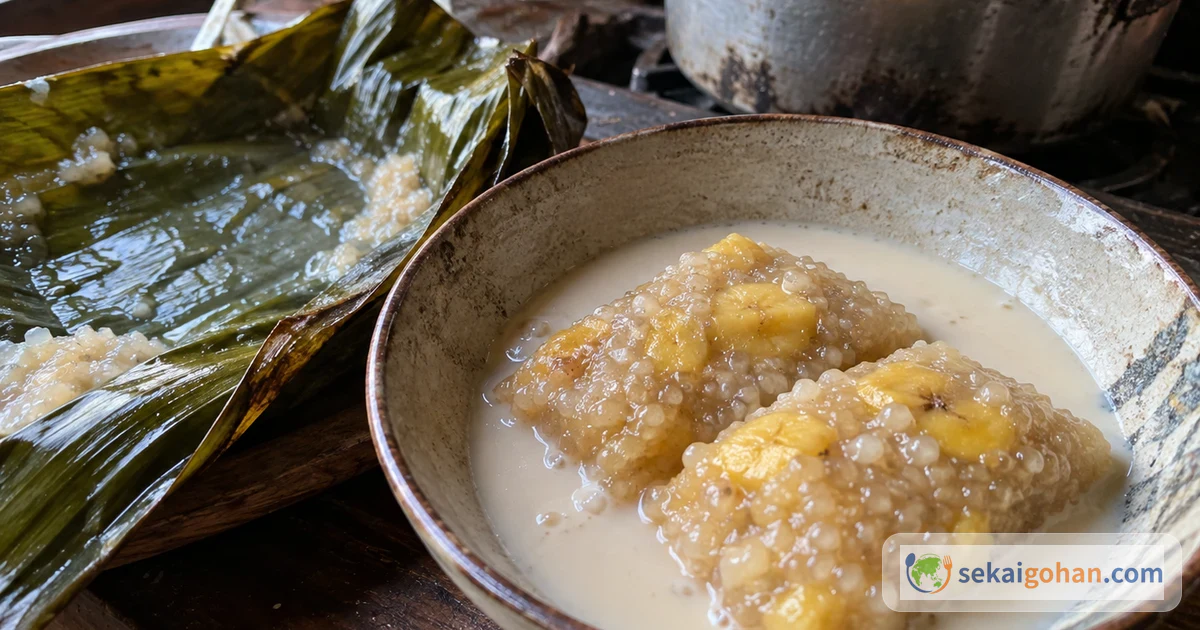
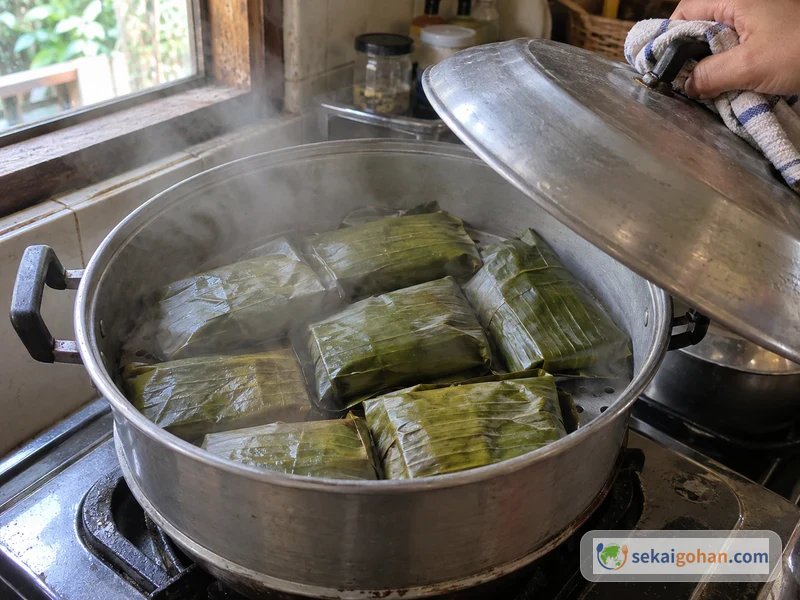
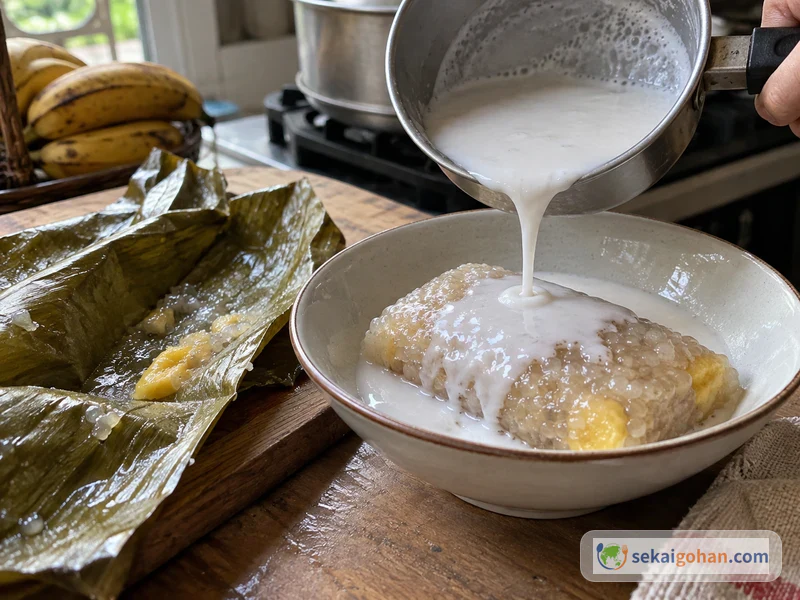
Open a green banana leaf and you'll find a cluster of small, wobbly, translucent pearls, with pieces of yellow banana tucked in here and there. Press it with a finger and it springs back with a chew. Slide it into a bowl, pour warmed coconut milk over it, and a sweet aroma rises from the plate. In Papua New Guinea, which covers the eastern half of the island of New Guinea and the islands around it, these steamed sago dumplings, saksak, have long been eaten for breakfast and as a snack.
Saksak, sago and banana leaves
Saksak is built on sago, the starch taken from the trunk of the sago palm. In Papua New Guinea it is one of the important staples, alongside taro and sweet potato. As a powder it becomes dumplings, pancakes and porridge, both sweet and savory, and its texture is similar to cassava or tapioca pearls.
The Papua New Guinean diet centers on fruit and tubers, and plant foods rather than meat are the stars. Fish, seafood and chicken are eaten often, but pork is kept for special celebrations. Saksak, made only from sago, banana and coconut, has long been loved there as an everyday sweet treat.
The same sago starch turns up across the region in very different forms. In Brunei's ambuyat it is stirred with boiling water, and the range of ways one ingredient gets used is surprising.
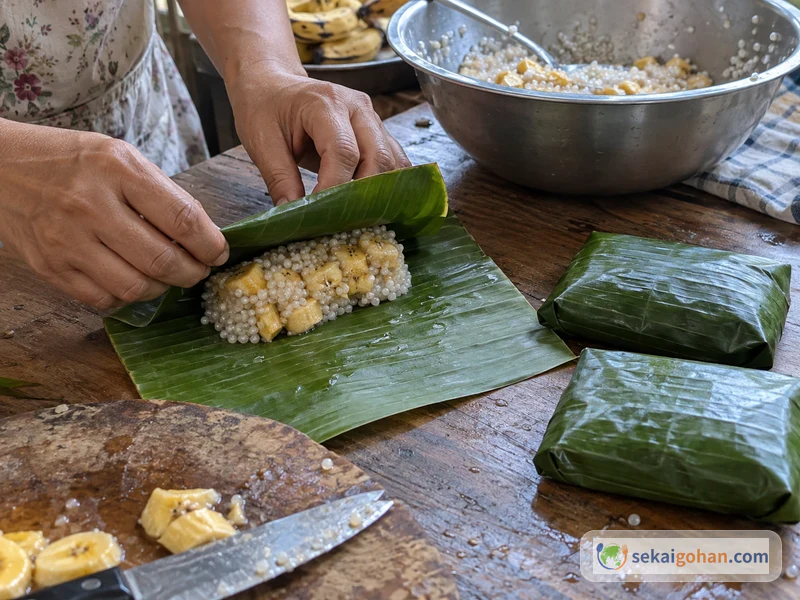
The traditional Papua New Guinean cooking method called mumu wraps meat, tubers and vegetables in banana leaves and steams them in a pit in the ground lined with heated stones. Saksak is likewise wrapped in banana leaves and steamed, so a faint green scent from the leaf passes into it.
If you'd like to know more, read about mumu, steamed in banana leaves over hot stones.
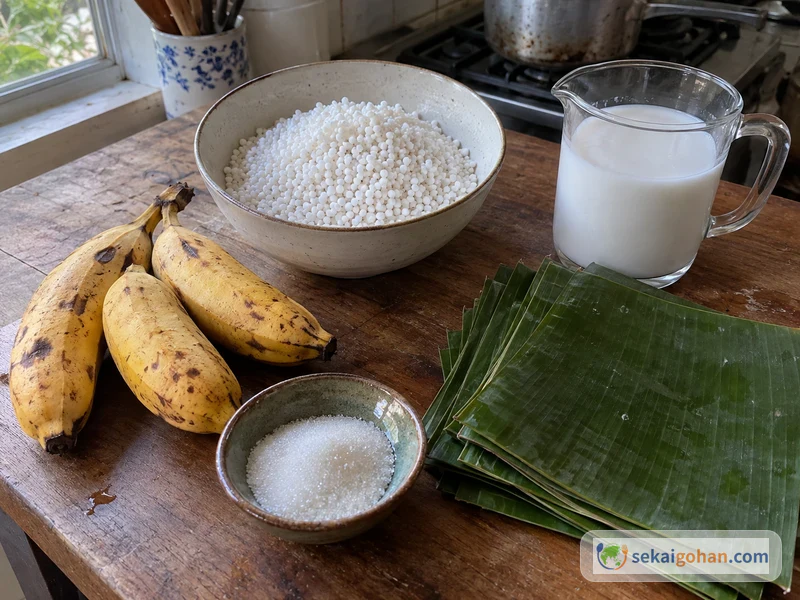
Ingredients (serves 4)
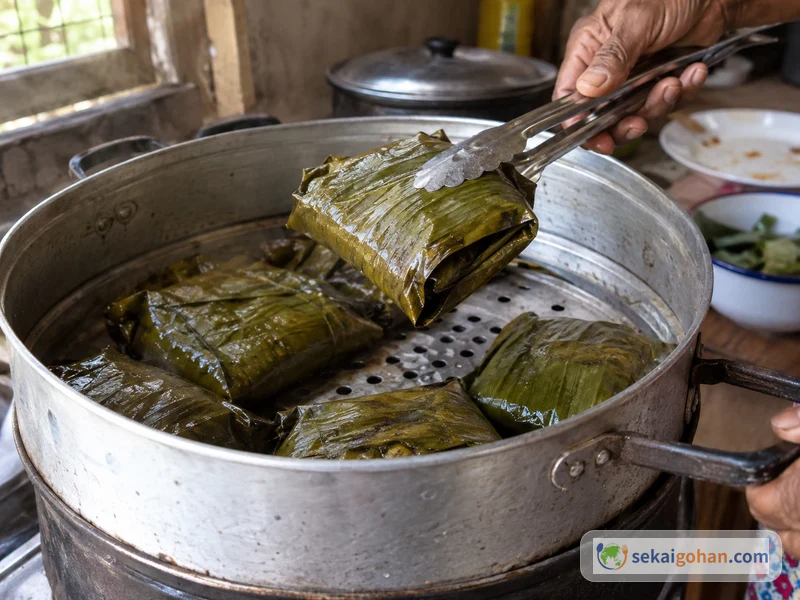
Freshly steamed packets are very hot, and steam bursts out when you open them. Use tongs to take them out of the steamer, and open the packets after they have cooled a little. The dumplings are chewy, so when serving small children or older adults, cut them into small pieces.
Choosing sago, banana leaves and coconut milk for saksak
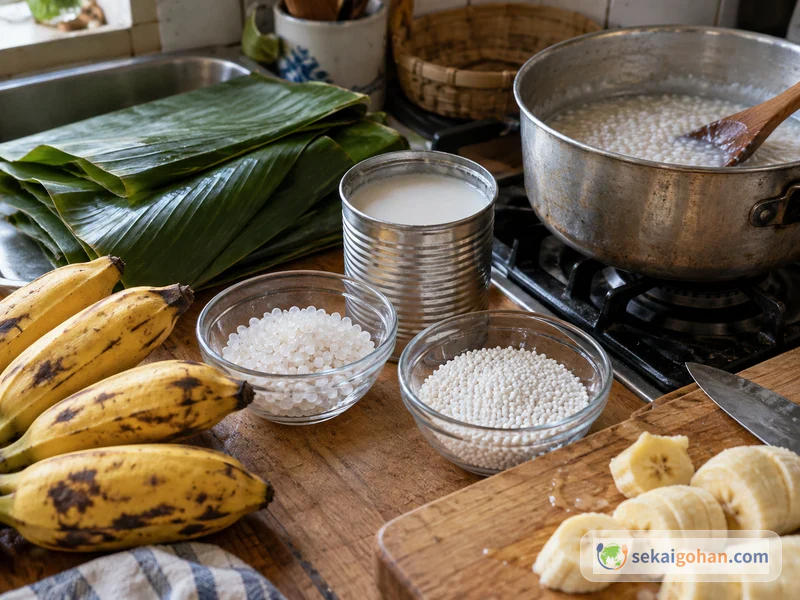
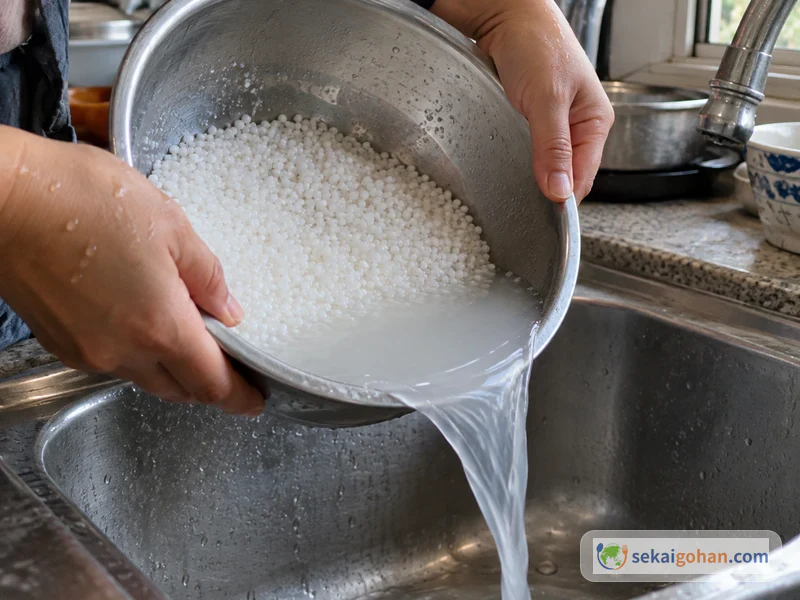
Use sago pearls, which are sago palm starch rolled into beads, or small tapioca pearls made from cassava starch. Both are sold at Asian grocers, baking-supply shops and online. Choose small pearls about 2 to 3 mm in diameter: the large tapioca pearls used for drinks won't turn translucent to the center with this method, even after soaking and steaming.
Frozen banana leaves are also available at Asian grocers and online. Wrapping in them passes on the green scent of the leaf and makes the dish look much more like the local one. If you can't get them, aluminum foil works too.
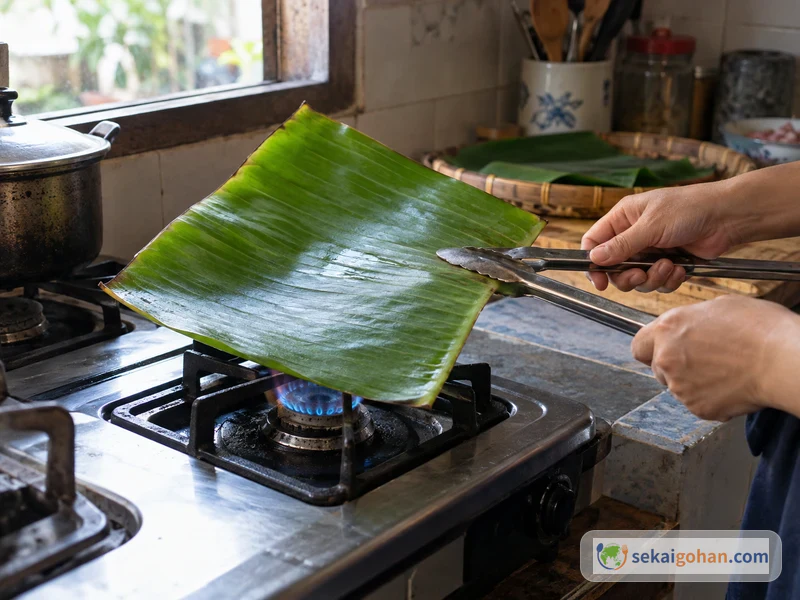
Thaw frozen banana leaves at room temperature before use and wipe the surface with a damp cloth. Folded as they are, they tend to split along the veins, so pass them over a gas flame for a few seconds at a time, until the color turns a vivid green and they gain a sheen; then they become pliable and won't crack when folded.
For the coconut milk, canned is fine. Since it's warmed and poured over at the end, a rich one gives a creamier sweetness. Local cooks make saksak by eye and by feel rather than to fixed amounts, so adjust the sweetness and the amount of banana to your taste.
How to make saksak
You open the packets after steaming and chilling, so the whole process takes about 1 hour 10 minutes. If you prepare the coconut milk while they chill, you can bring it to the table right away.
If coconut milk is brought to a rolling boil, it separates and the texture turns grainy. Warm it over low heat and turn it off as soon as small bubbles begin to appear at the edge.
When passing banana leaves over the flame, take care that your sleeves and hair do not come near it. A dry leaf scorches in an instant, so it is safer to pass it over the flame while it is still slightly moist, right after wiping with a damp cloth.
Serving saksak and variations
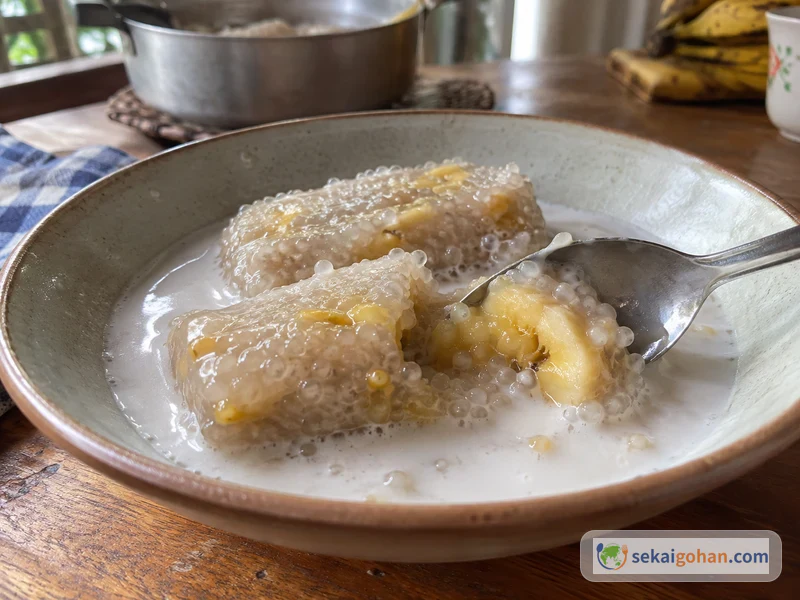
Saksak has a chewy, slippery texture and a very mild flavor of its own, so the sweetness of the banana comes forward most. Pour warm coconut milk over a chilled dumpling and it softens slowly from the outside, and the temperature and texture change with each bite. For breakfast, add tropical fruit such as papaya or pineapple and it starts to feel like a Papua New Guinean breakfast table.
Papua New Guinea has many dishes that use coconut. They include kaukau, in which the flesh of a baked sweet potato is mixed with coconut cream, onion and ginger and returned to the skin to bake; talautu, served in the shell with grated coconut flesh and coconut milk; and chicken pot, simmered in coconut milk soup.
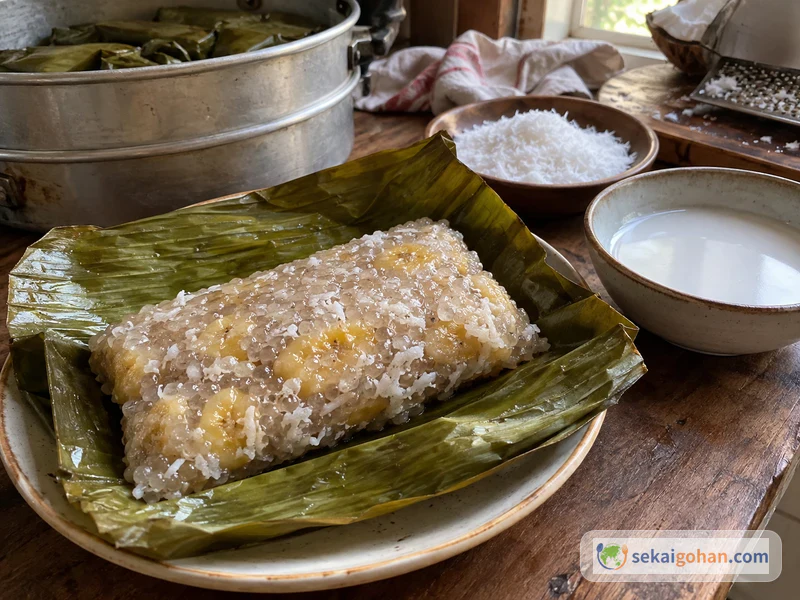
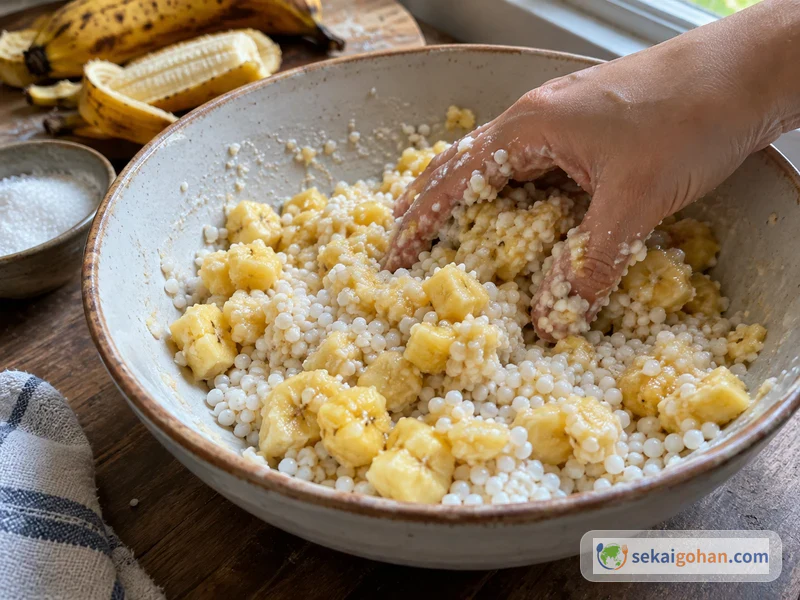
For coconut aroma in the dumpling itself, mix about 1.75 oz (50 g) of desiccated coconut (fine) into the mixture before steaming. The coconut absorbs water, so after draining the water in step 1, add 2 tbsp water before mixing.
You can also swap the banana for 0.5 inches (1 cm) cubes of pumpkin or sweet potato softened in the microwave, which gives saksak a different, fluffy sweetness. Ripe mango makes a brightly colored dessert.
Frequently asked questions
Can I make it ahead?
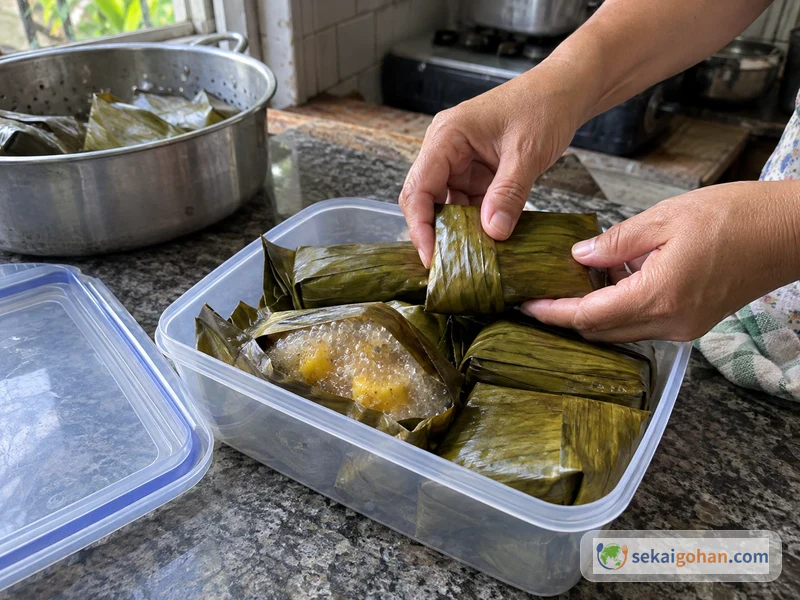
Yes. Refrigerate it still in the packets and finish it by the next day. The dumplings harden over time, but steaming the packets again for about 5 minutes before eating brings back the chewy texture.
Can I eat it freshly steamed, without chilling?
You can, though fresh from the steamer the dumplings are soft and tend to stick to the leaf. Chill it once if you want it to peel off cleanly; if you eat it fresh, just scoop it out of the leaf with a spoon.
Can I make it without sugar?
Yes. With very ripe bananas it comes out faintly sweet even without sugar, and you can dissolve a little honey in the finishing coconut milk for extra sweetness. Do not give honey to children under 1 year old.