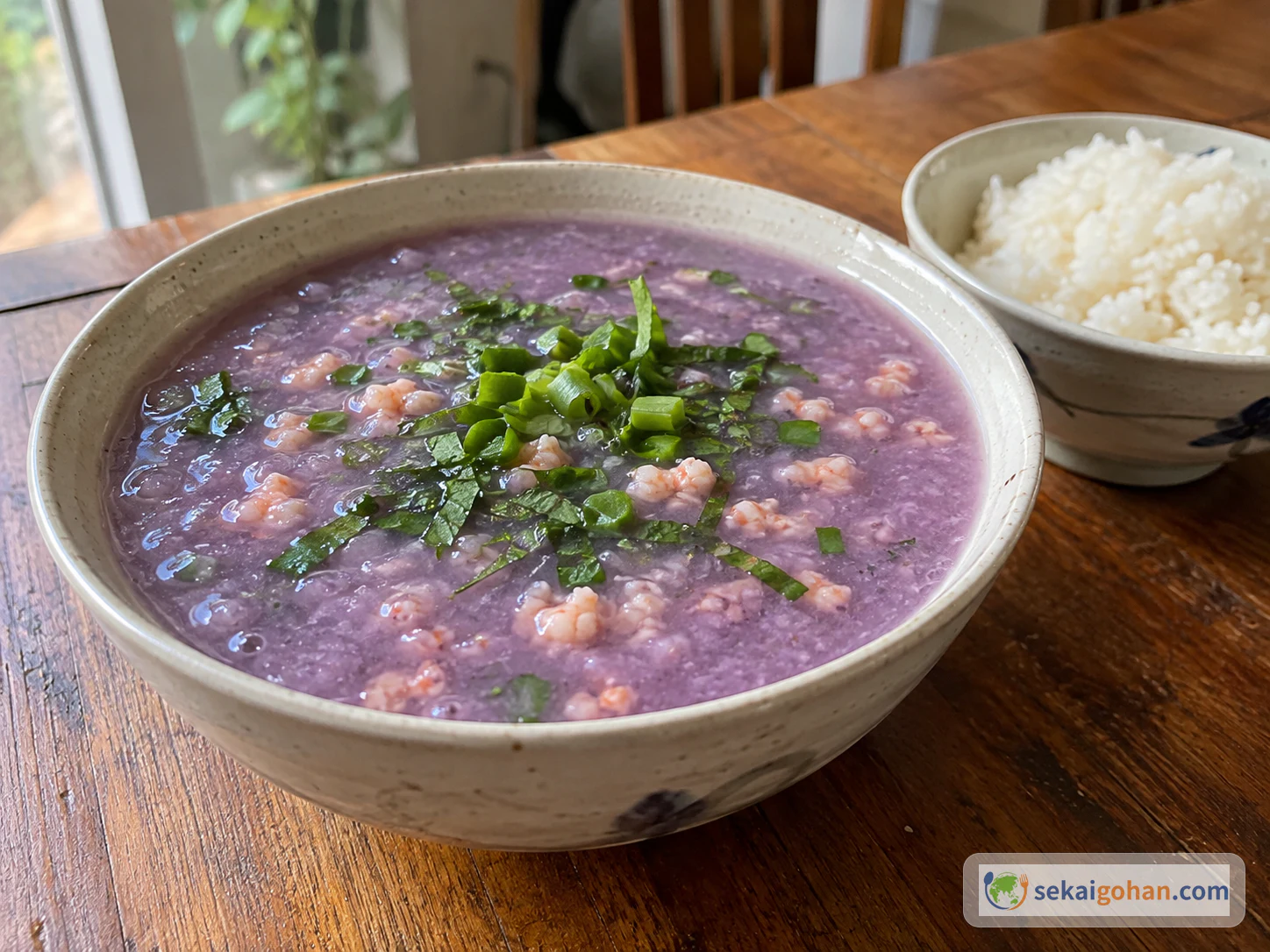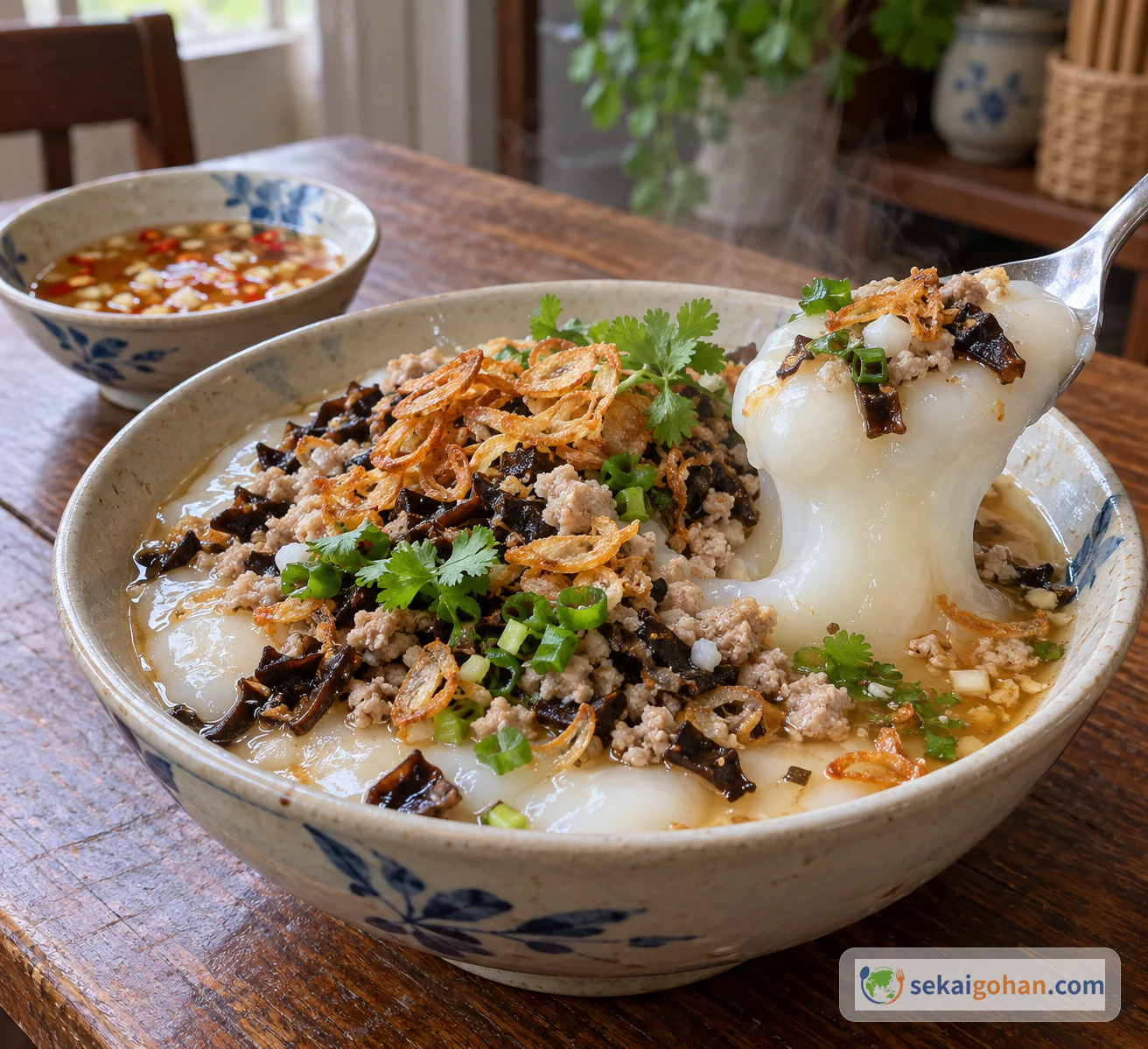
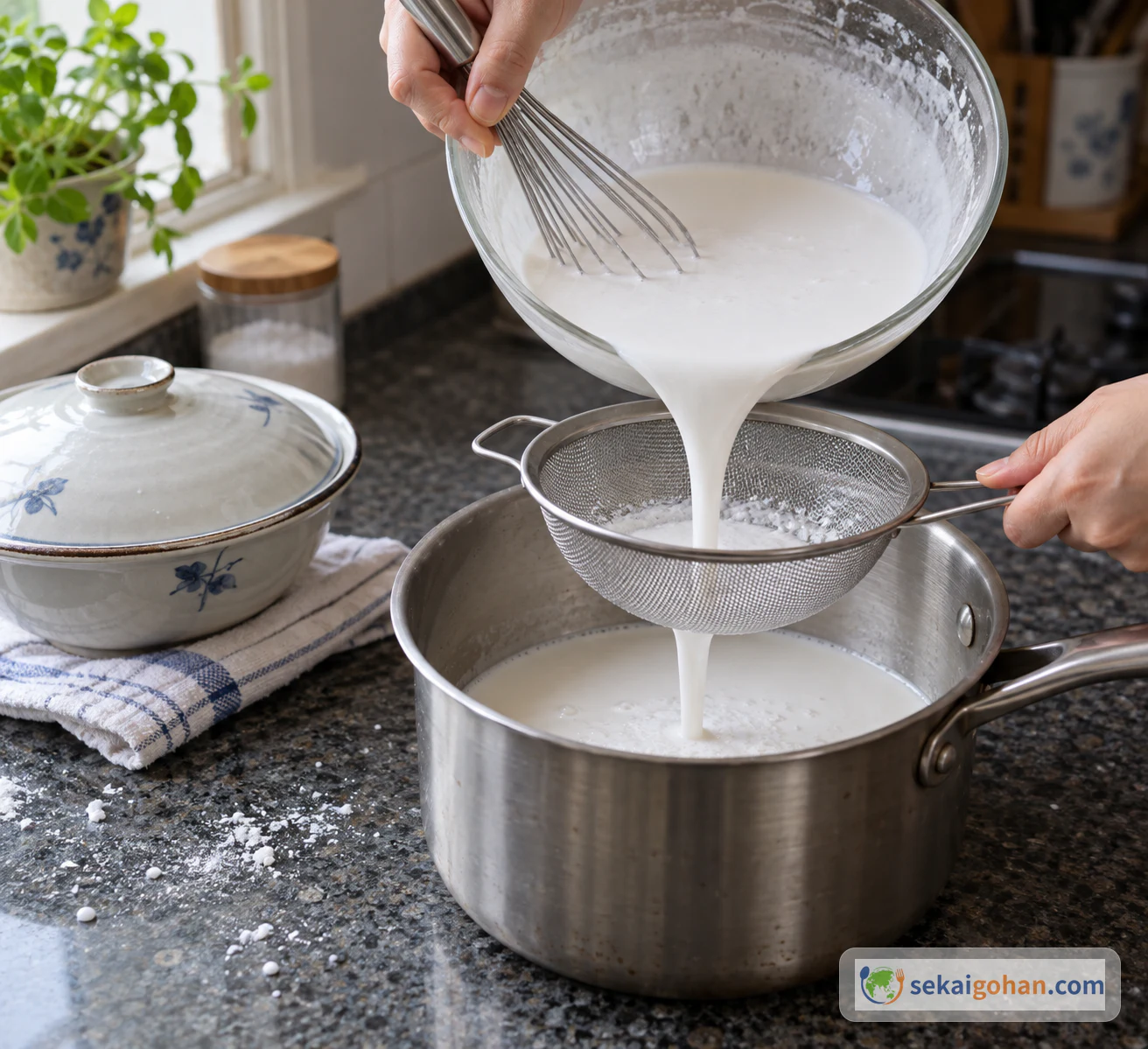
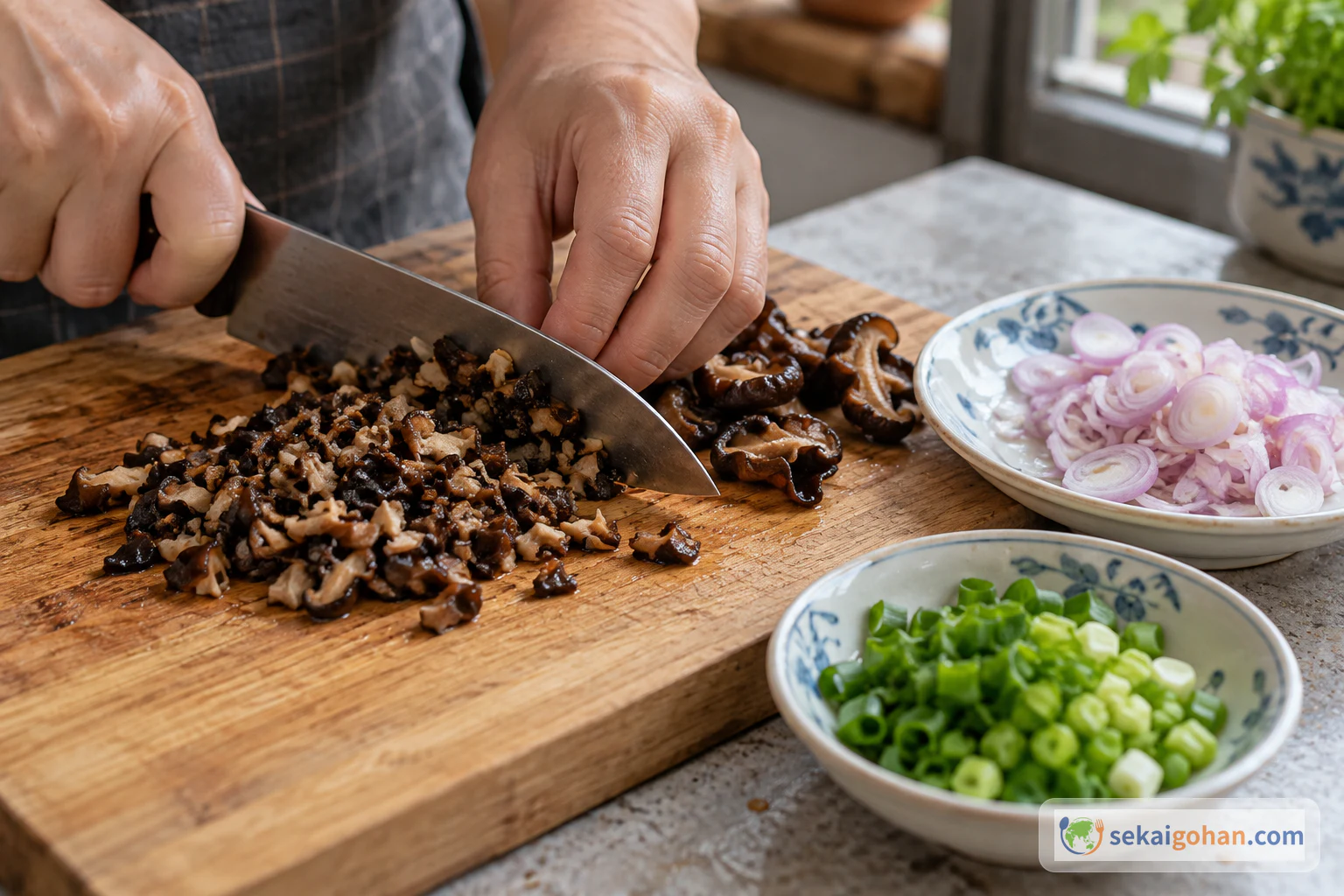
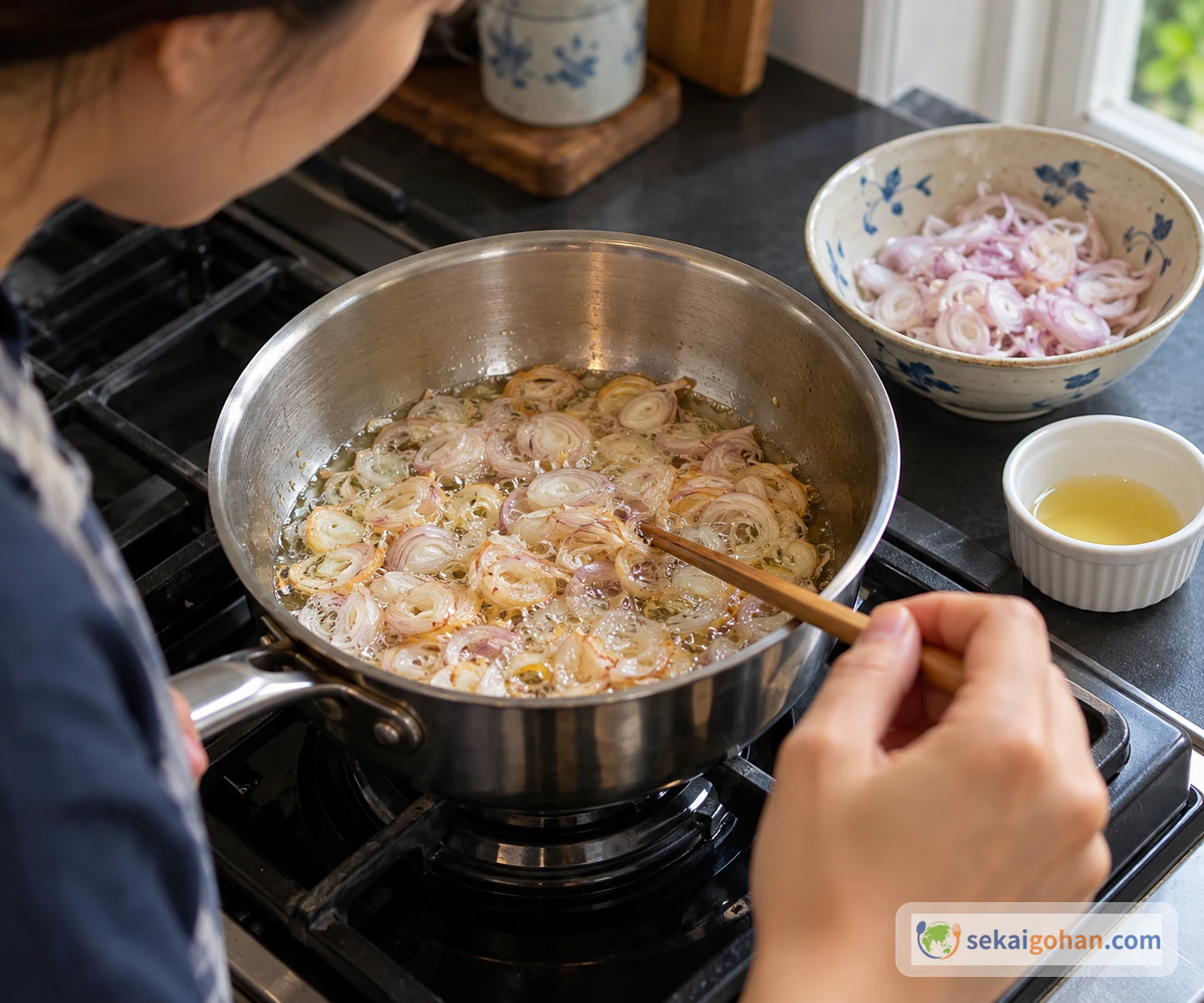
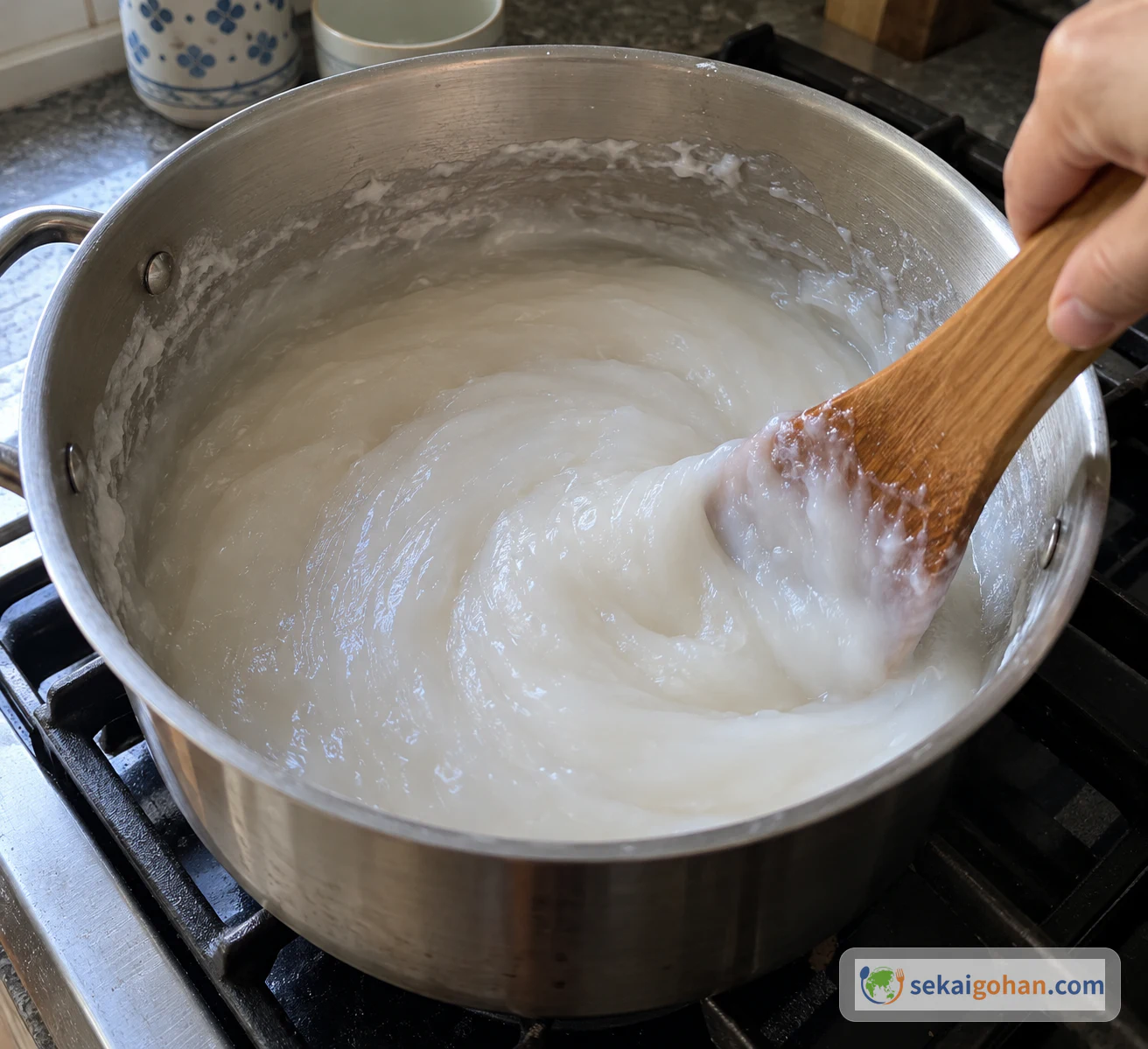
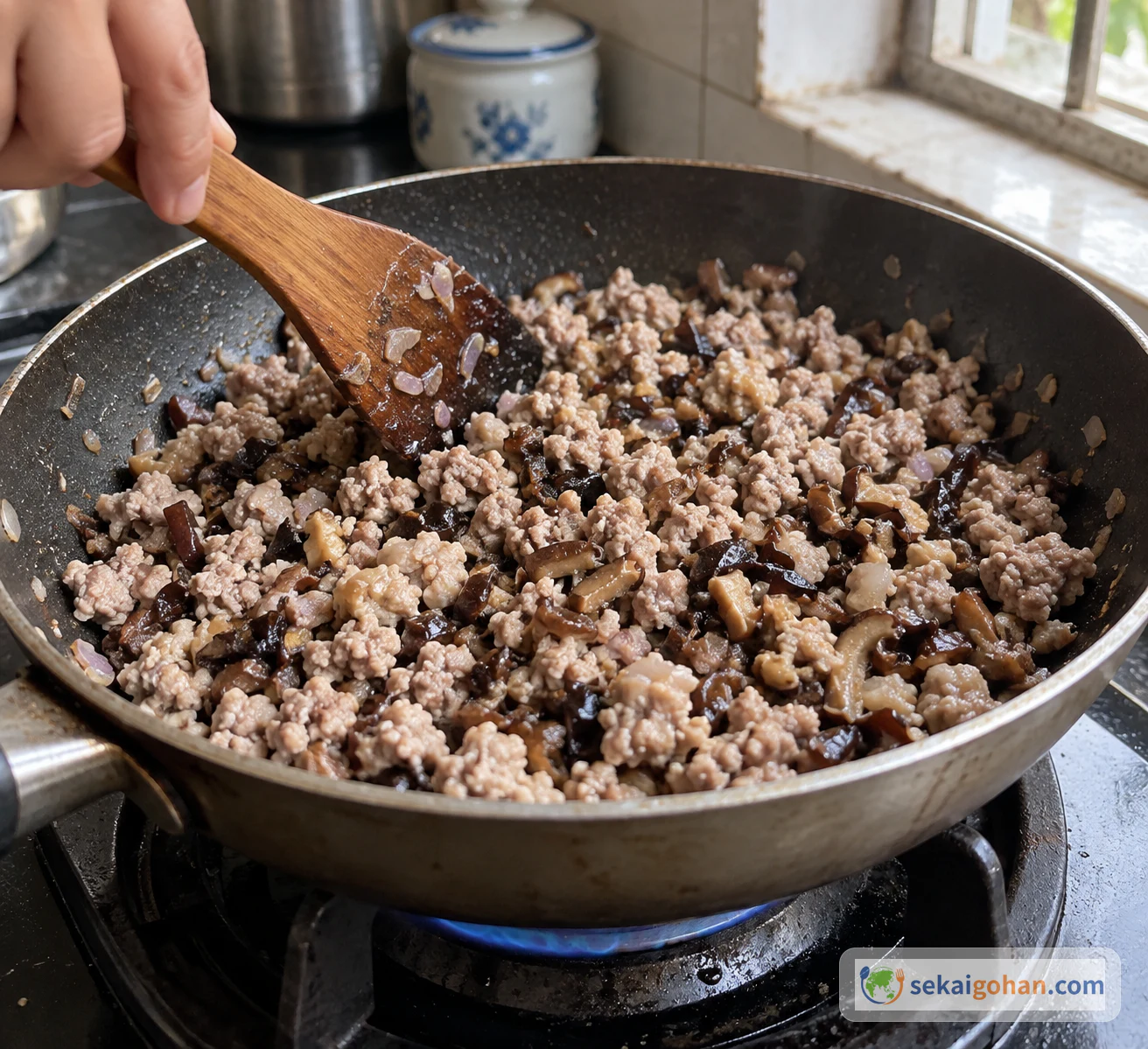
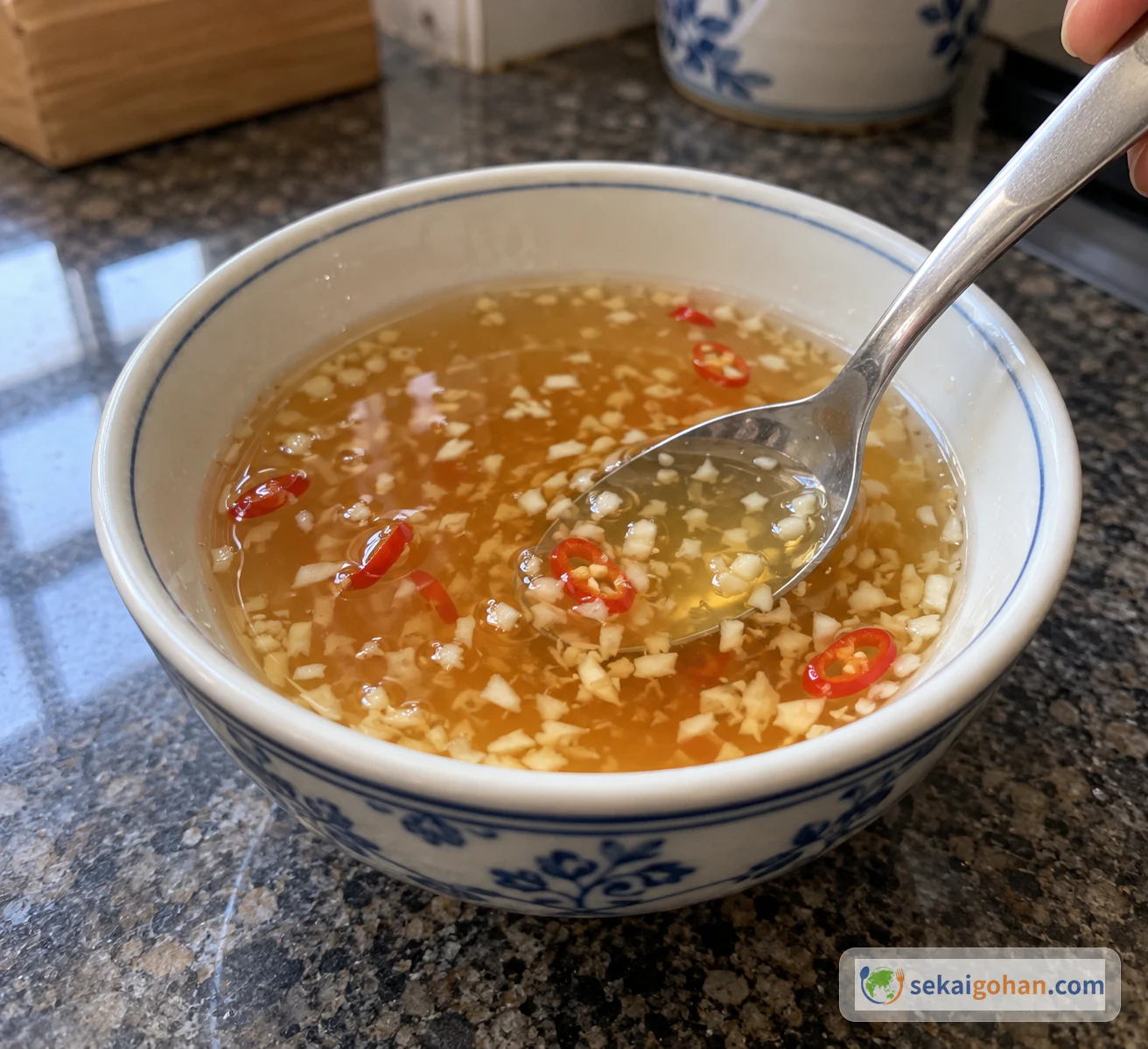
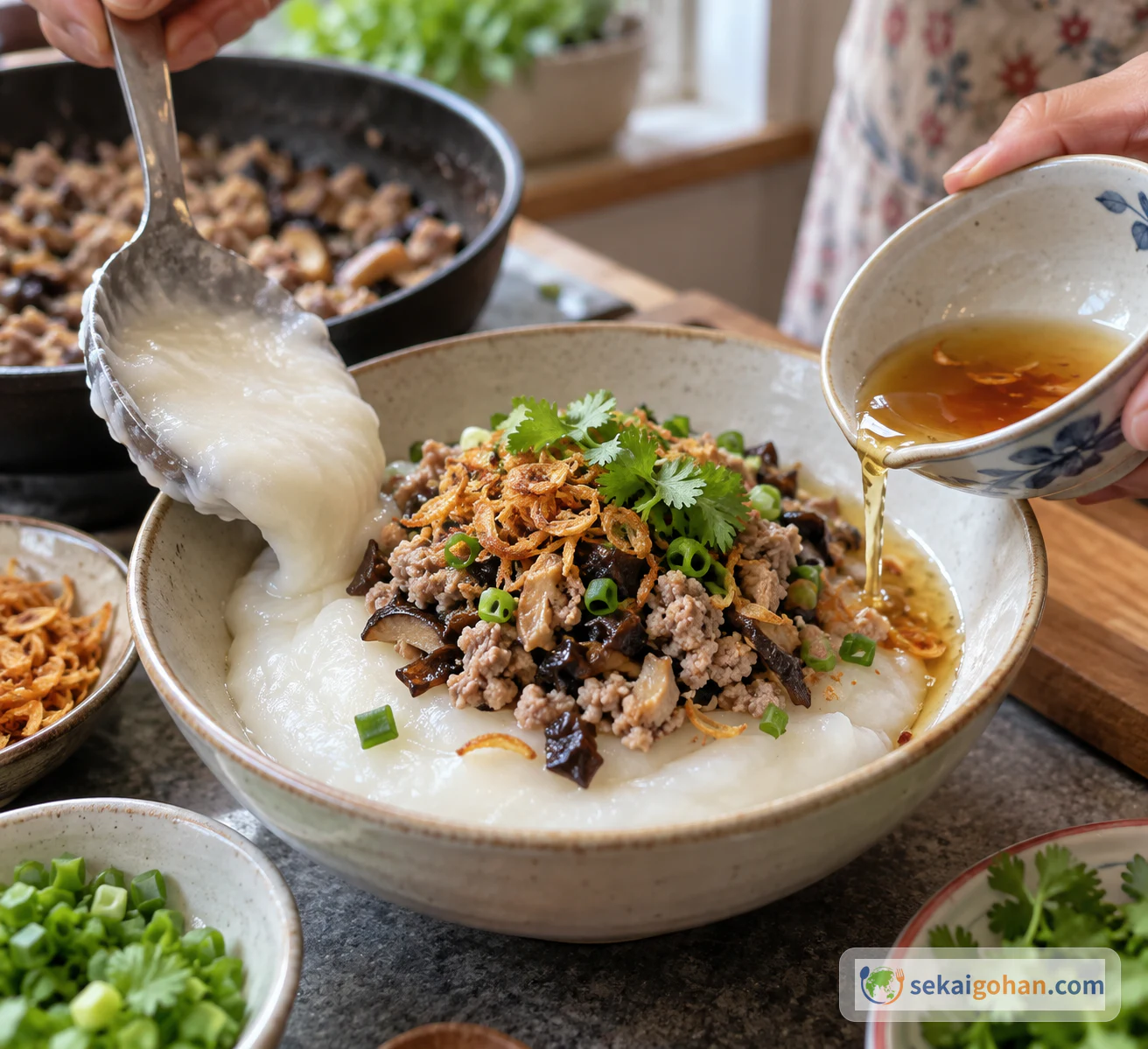
A chilly day in Hanoi calls for a bowl of soft white rice batter, served hot enough to steam. Over it go ground pork, wood-ear mushroom, green onion and fried shallot, with a fish sauce that is both sweet and sour. This is bánh đúc nóng, a hot, savory snack from Hanoi. The hard part at home is the batter. It starts as a thin, milky liquid, rests, and then thickens quickly on the stove while you stir without stopping. Once its edge turns translucent and the oils go in, the rest is mostly assembly.
Bánh Đúc Nóng and Its Cousins
Nóng means "hot," and the word matters. Bánh đúc alone covers a whole family of dishes that changes from region to region, so searching the name can turn up very different recipes. Bánh đúc lạc is cooled, sliced and made with peanuts, while bánh đúc nộm is served with vegetables. The sweet southern versions, some flavored with pandan, are separate again. Peanuts, pandan and coconut belong to those other styles, and you won't find any of them here.
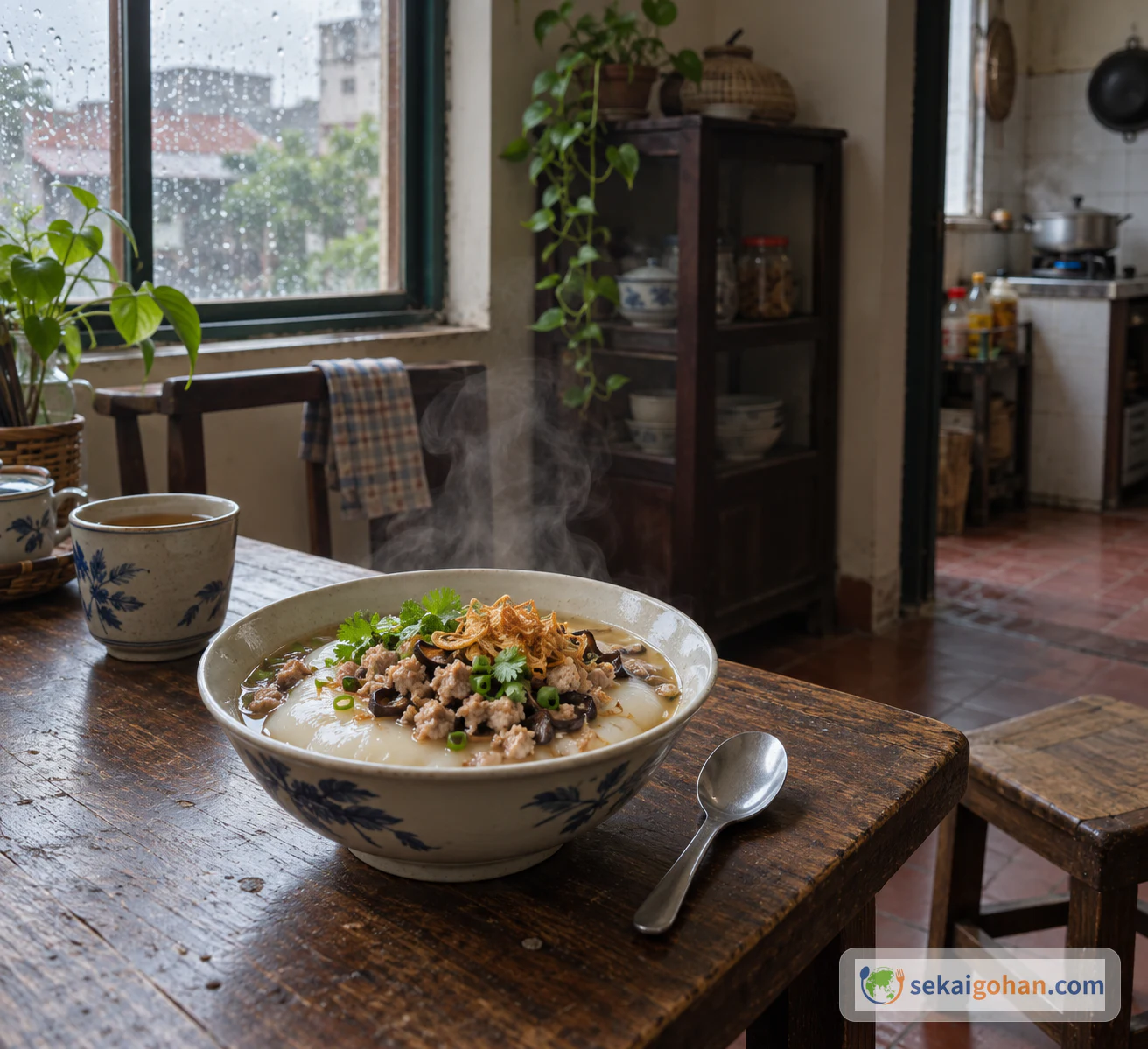
The Hanoi bowl is all about contrast: hot, soft batter under pork, wood-ear mushroom, herbs, fried shallot and sweet-sour fish sauce. Locals eat it as a snack on cold days and in the afternoon. It's just as good in cool, rainy weather or at midday.
If you like Vietnam's rice-flour and tapioca dishes, compare this bowl with others in our Vietnamese recipes. Bánh cuốn is a steamed rice roll, bánh bèo is a steamed dish from Huế served in small dishes, and bánh bột lọc is a translucent tapioca-flour dish. They share some ingredients with this bowl, but each has its own method and regional style.
Ingredients for 4 Servings
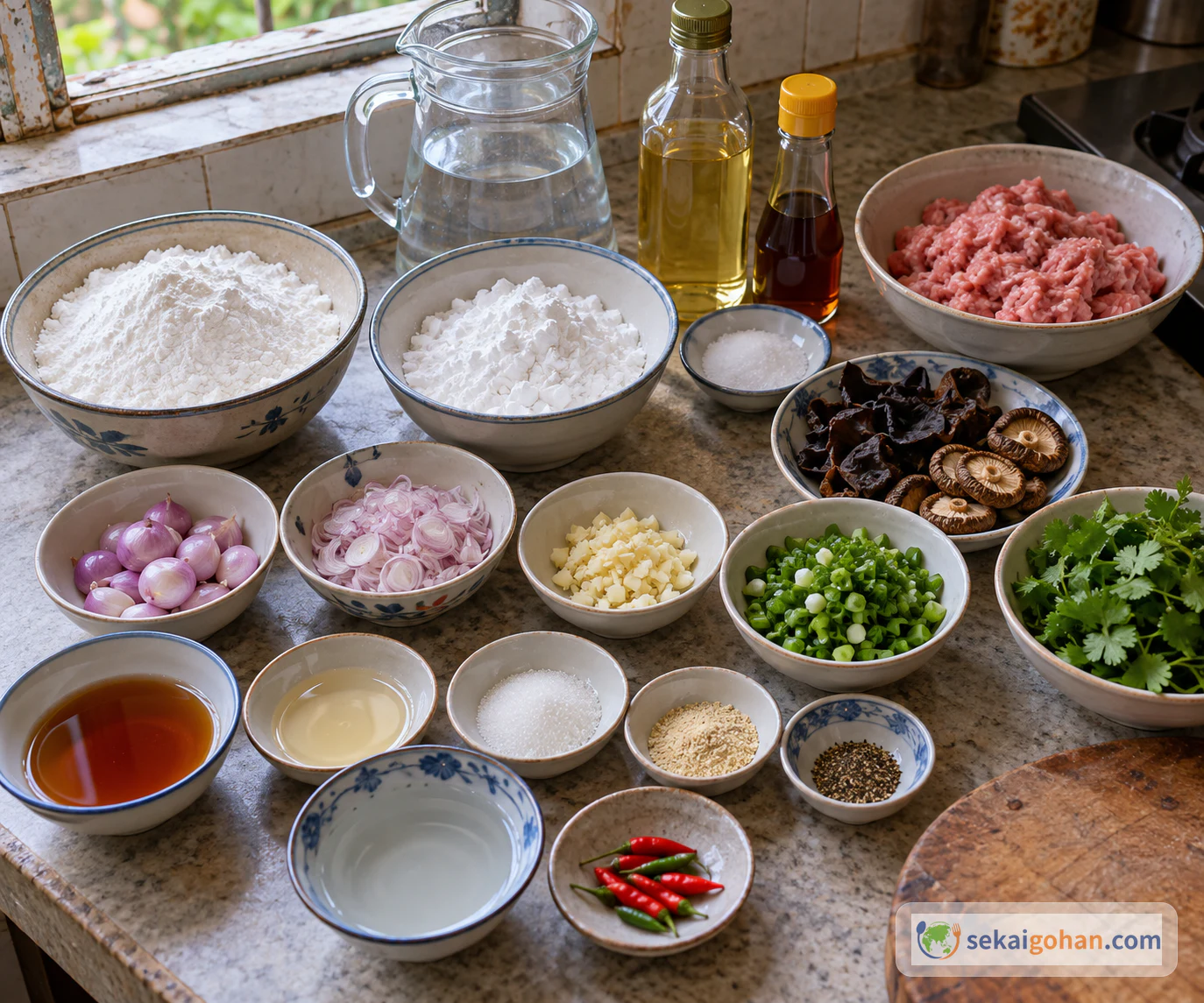
Vegetable oil and fish sauce each appear twice because each measure goes to a different part of the dish. Weigh the mushrooms while they are still dry.
Equipment
- Heavy-bottomed pot, to help prevent scorching
- Fine-mesh strainer
- Whisk and mixing bowl
- Wooden spatula
- Small saucepan for frying the shallots
- Frying pan with a lid
- Heatproof plate for spreading the fried shallots
- Food thermometer
- Separate cutting board and knife for raw pork, if you need to cut it
- Small bowl for the sauce
- 4 serving bowls
Choosing Ingredients for Bánh Đúc Nóng
Tapioca flour. This gives the batter its stretch, and 3.5 oz (100 g) is a large share of the recipe. Look for "tapioca flour" or "tapioca starch" at Asian grocers or online. Potato starch, cornstarch and glutinous rice flour won't work as substitutes.
Fish sauce. It seasons both the topping and the sauce, so it shapes the flavor of the whole bowl. Vietnamese fish sauce (nước mắm) is sold at Vietnamese groceries and in the Asian aisle. Brands vary in saltiness and fermented aroma, so taste yours before you make the sauce.
Dried mushrooms. Both amounts are dry weights, and the mushrooms get heavier as they soak. Keep the soaking water separate from the measured water in the batter and sauce.
Pork and bouillon. Pick ground pork that isn't extremely lean; no specific fat percentage is needed. The bouillon measure assumes granules, so go carefully if yours is a fine powder.
Pot. A regular pot will do, but a heavy bottom is better for this batter. It's only worth buying one if a thin pot keeps scorching.
Fish sauce contains fish, and toasted sesame oil contains sesame. Check the labels on bouillon and sriracha, since their ingredients vary by product. Keep raw pork away from ready-to-eat herbs and serving utensils.
Method: Rest the Batter, Then Stir Until the Edge Turns Translucent
Stove settings aren't the same from one kitchen to the next, so go by what you see in the pot. The batter is ready when it has thickened and its edge is translucent. It should not brown.
Fixing Lumps, Scorching and Texture
Straining, resting, a heavy pot and constant stirring all work together here, and preventing a problem is much easier than fixing one. Go by the visual cues in each step as well as the times.
| What you want to avoid | What to do | What to look for |
|---|---|---|
| Lumps | Whisk well, strain before resting, and stir constantly once the pot is on the heat | Smooth, flowing batter with no dry flour |
| Scorching | Use a heavy-bottomed pot, keep the spatula moving along the bottom, and lower the heat once the batter begins to thicken | A pale batter with no browning |
| Undercooked or floury batter | Keep stirring over low heat after it thickens | A translucent edge |
| Dark or burnt shallots | Lower the heat when the first edges color, and lift them out at pale gold | Mostly pale gold pieces, with none dark |
| A flat-tasting bowl | Use the full topping and sauce, because the batter itself is mild | Mild batter, savory topping and sweet-sour sauce in each spoonful |
The batter should stay pale. A browned bottom is a warning sign, so don't count it as extra flavor. The sauce is yours to adjust to taste.
Serving and Storing Bánh Đúc Nóng
Spice, shallots and extras
- Heat: Bird's-eye chili, chili oil and sriracha are all optional. Leave some bowls mild and put the spice on the table.
- Store-bought fried shallots: They save work, but they change the flavor and oil, and you lose the shallot oil for the pork. Home-fried is the way to go here.
- Fried tofu: It's sometimes served alongside, as an extra.
Storage and reheating
The batter keeps its texture best when you store it on its own. Put it in a lightly oiled container with the surface covered closely, and refrigerate for up to 3 days. Reheat it in a pot while stirring, or in the microwave in 1-minute bursts, stirring in between. Still, this bowl is best eaten hot, right after you put it together.
For all cooked leftovers:
- Divide leftovers into shallow containers and refrigerate within 2 hours, or within 1 hour if it is above 32°C (90°F).
- Keep the refrigerator at 4°C (40°F) or below.
- Use refrigerated cooked leftovers within 3–4 days.
- Reheat leftovers to 74°C (165°F), checked with a food thermometer.
Frequently Asked Questions
Is bánh đúc nóng the same as cold bánh đúc with peanuts?
No. They share the bánh đúc name, but the hot Hanoi bowl is served soft and topped with pork, mushrooms and fish sauce. Bánh đúc lạc is cooled and sliced, with peanuts. This recipe has no peanuts.
How long should I cook the pork?
About 5 minutes, but time isn't the safety check. Ground pork should reach 71°C (160°F) on a food thermometer.
Do I need an extra tablespoon of oil for the pork?
No. The 6 tbsp of oil goes to frying the shallots, and the pork uses 1 tbsp of that strained oil.
What do the heat levels mean?
They're stove settings, not temperatures: fairly high (8/10), medium (5/10) and low (2/10). The same setting won't give the same heat on every stove, so watch the pot. Frying the shallots over low heat has no set time; go by color.