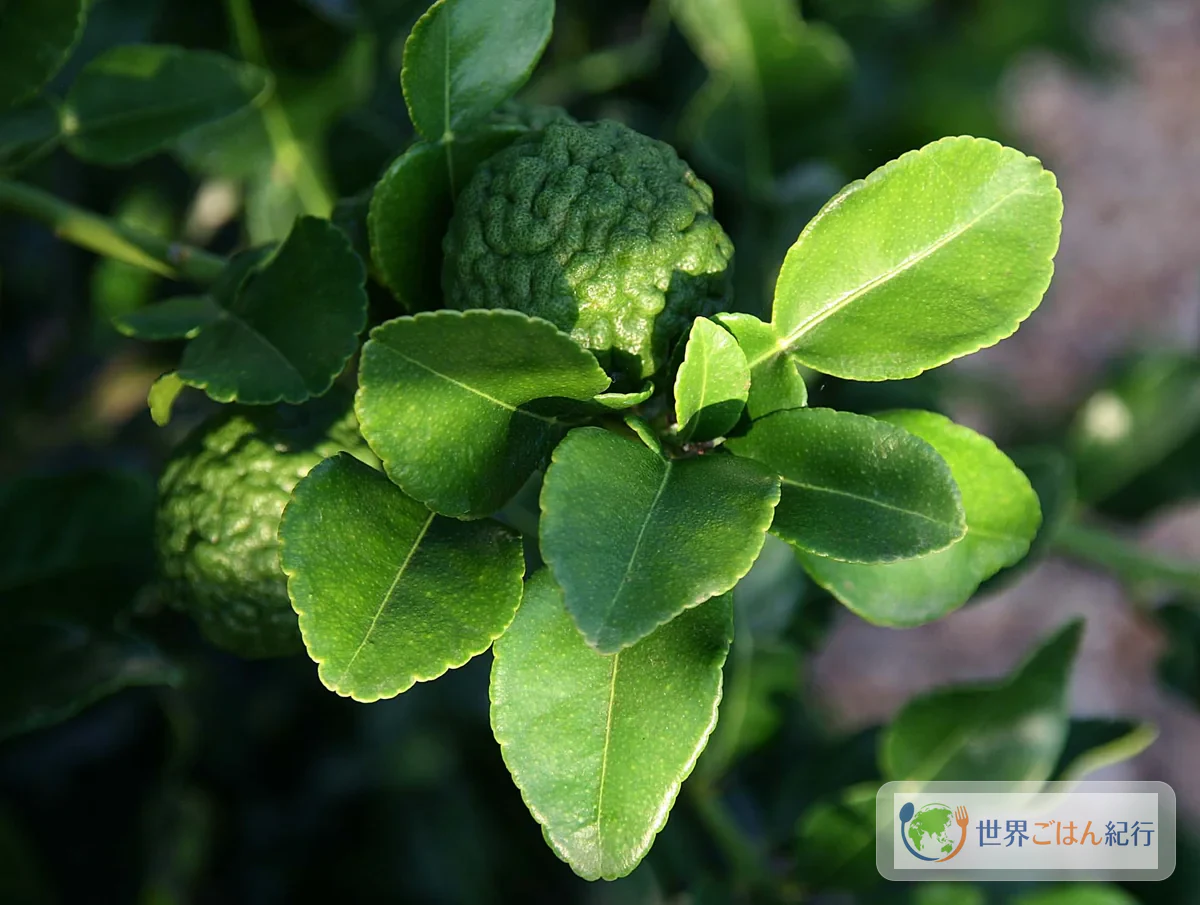
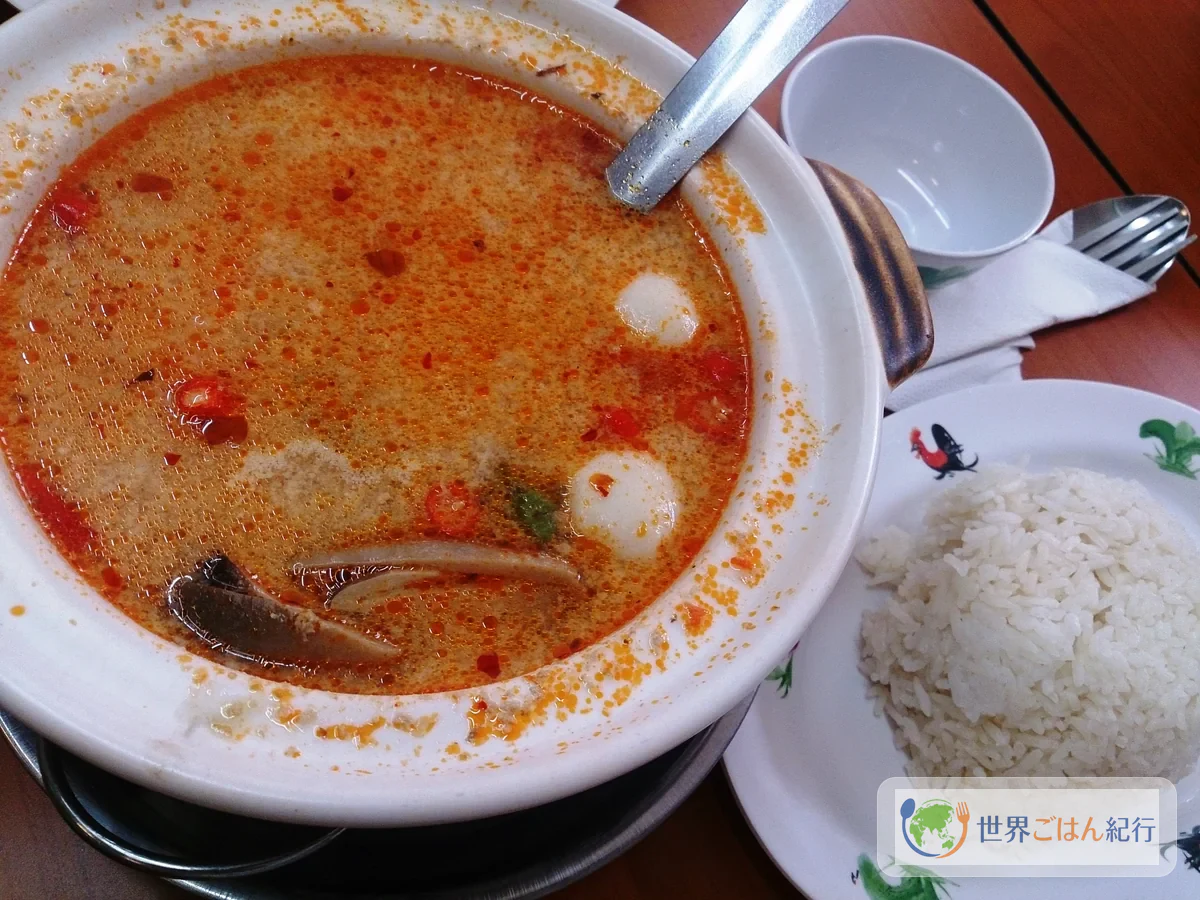
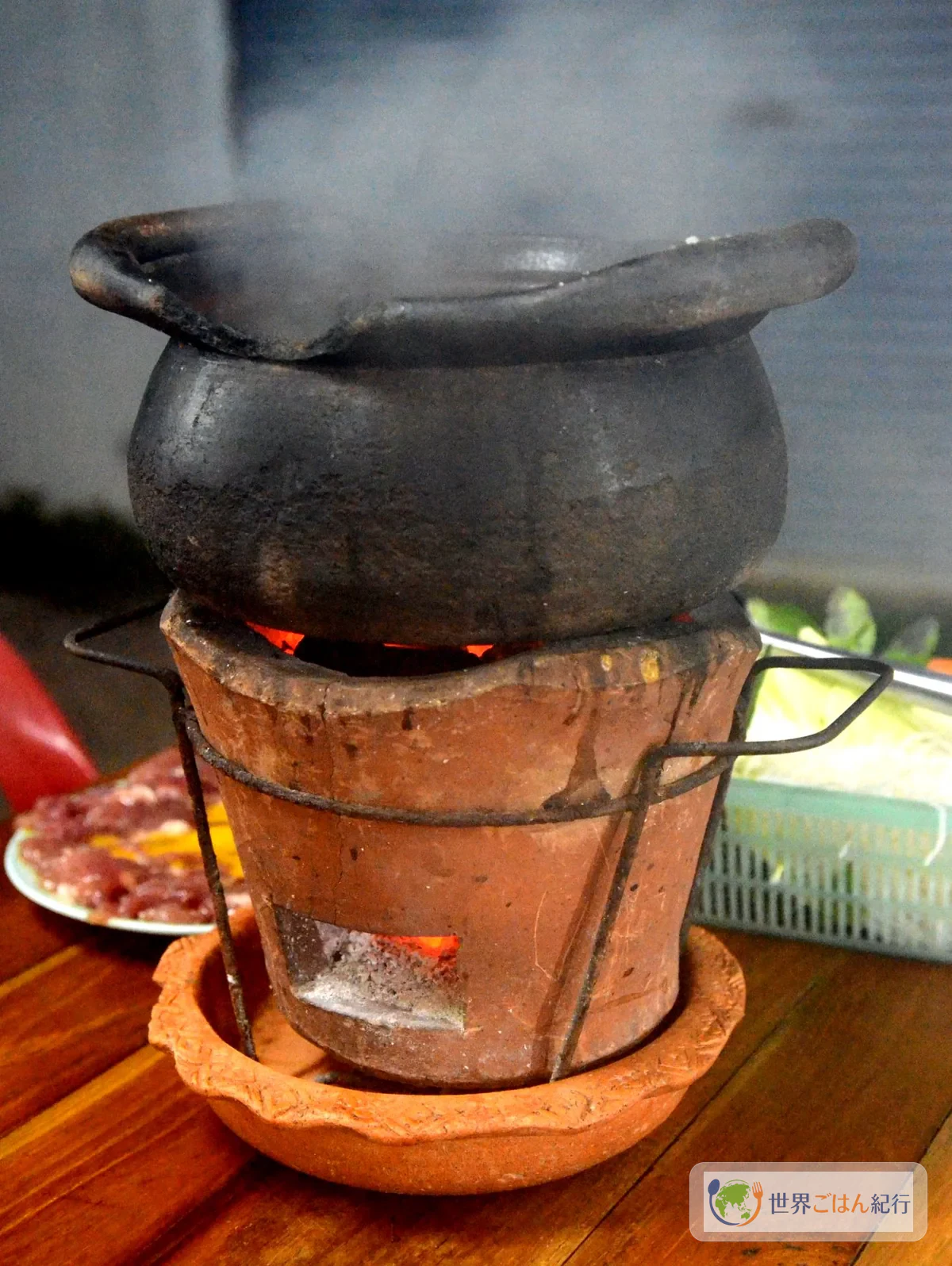
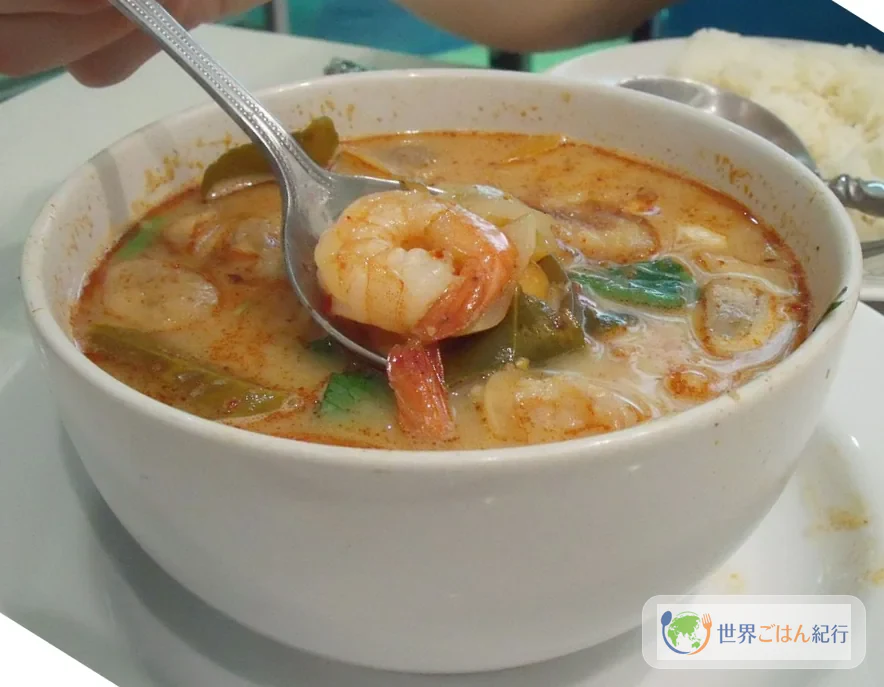
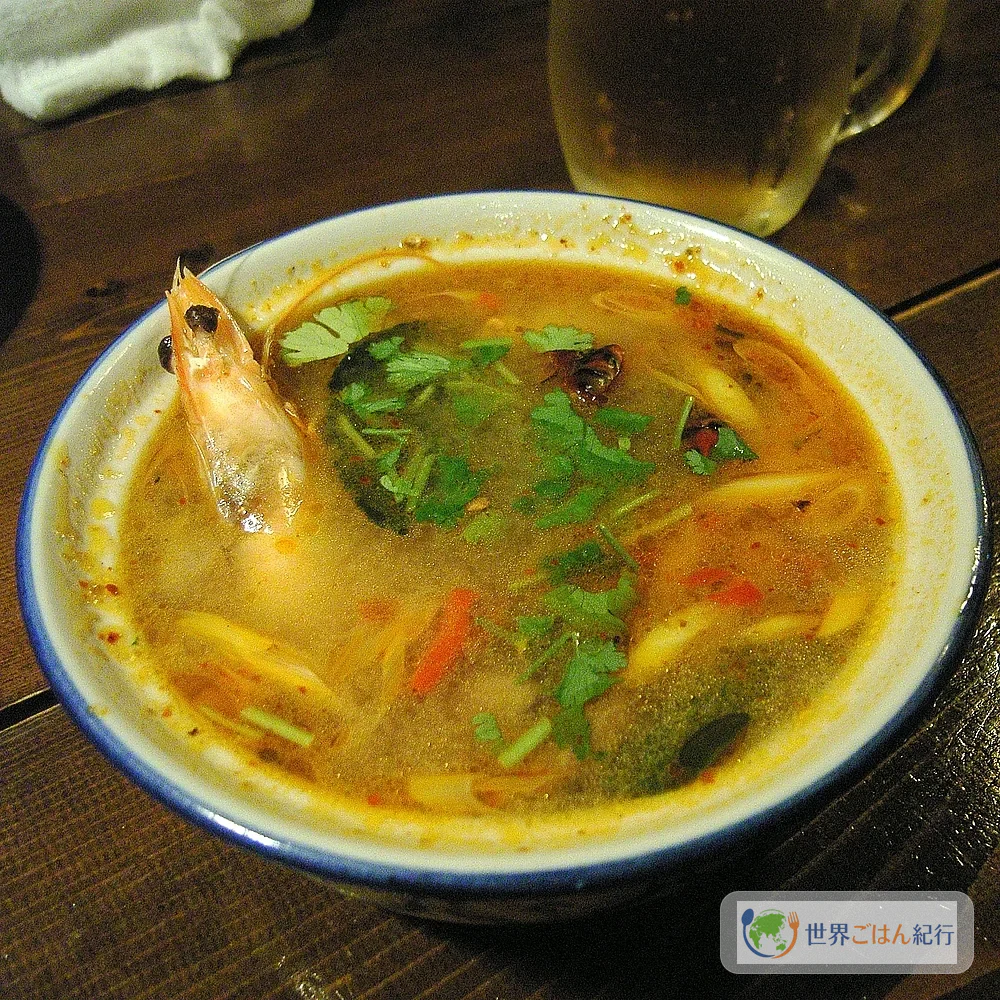
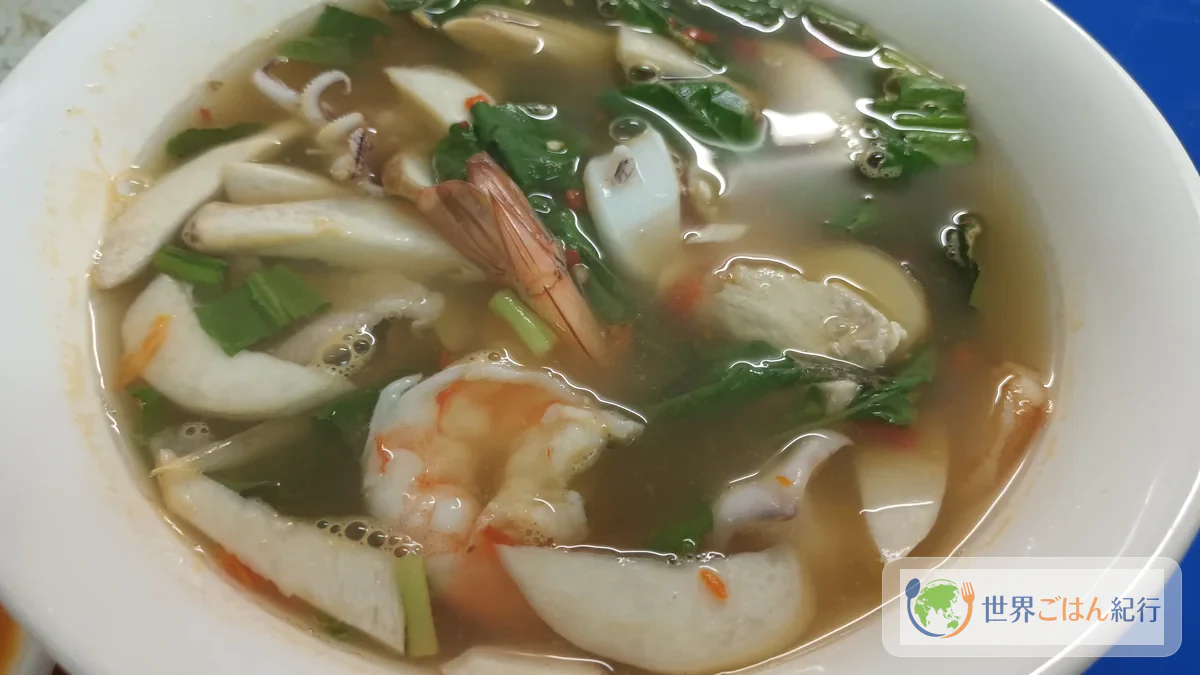
Strike the base of a lemongrass stalk with the back of a knife and a green scent rises that smells nothing like lemon. Drop in sliced galangal, torn makrut lime leaves and chilies, and set the pot to boil. The shrimp and lime aren't even in yet, and you already feel like you're standing at the door of a Thai restaurant. Tom yum goong (ต้มยำกุ้ง) is Thailand's hot and sour shrimp soup. Tom means to boil, yam is a dish built by balancing sour and hot flavors, and goong means shrimp, so the name tells you the method, the taste and the star. Heat is the easy part, since you can cut it with fewer chilies. What makes the soup taste Thai is protecting the aroma of the herbs and adding the shrimp at the right moment.
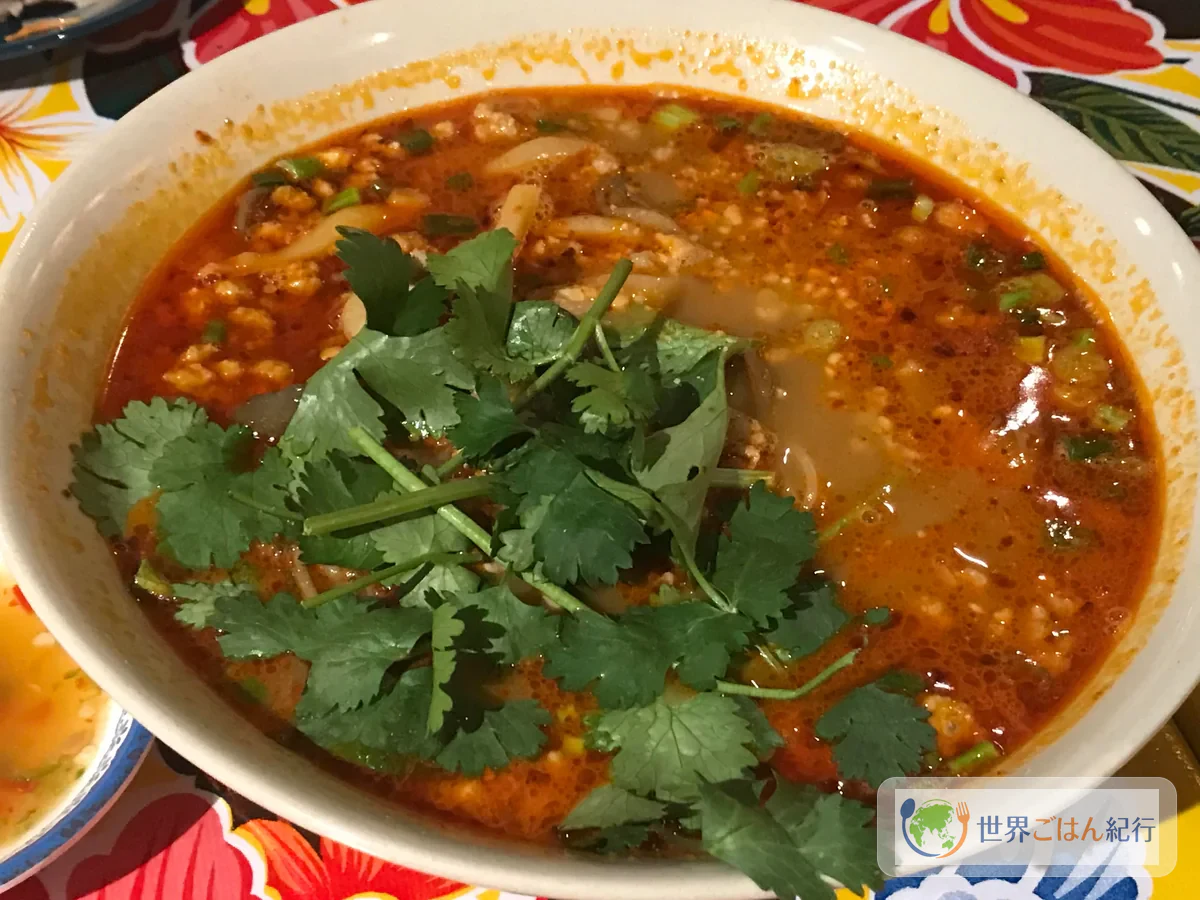
Tom yum goong in Thailand
Origin and regional differences
Tom yum goong grew out of the habit of simmering river shrimp with familiar herbs. That knowledge was shared among Buddhist communities along the rivers of the Central Plain, and families and communities passed down which ingredients to use and how to cook them at home tables and gatherings. It is a signature dish of the central region, where meals are easily built around jasmine rice and what the rivers provide.
Other regions take hot-and-sour in their own direction. In the south, the sourness of tamarind and strong heat come forward. In the northeast, the saltiness of fermented seasonings and a sticky-rice food culture stand out. Unlike som tam, where the five flavors are pounded together, tom yum goong simmers the herbs and lets lime close the dish at the end. Keep what you simmer separate from what you add later, and you get close to the original.
Nam sai and nam khon
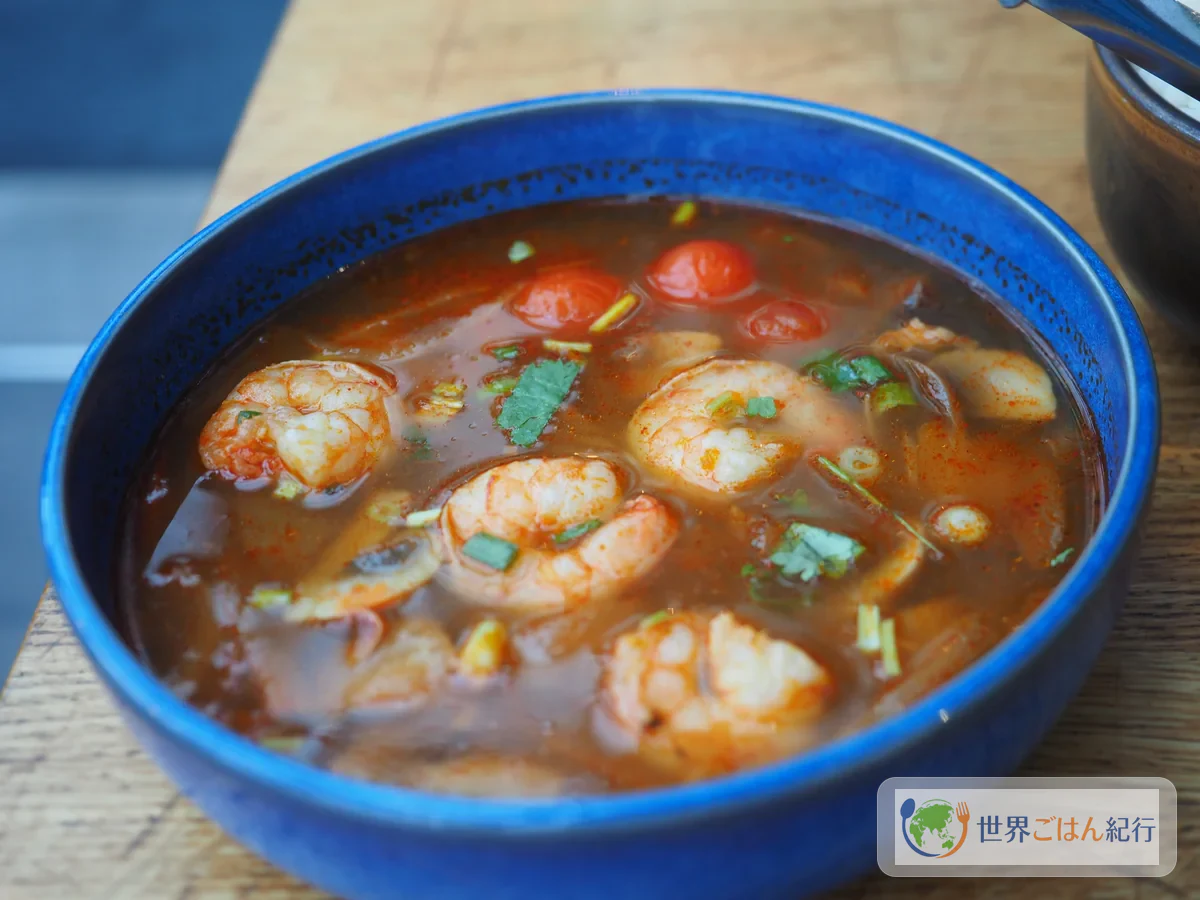
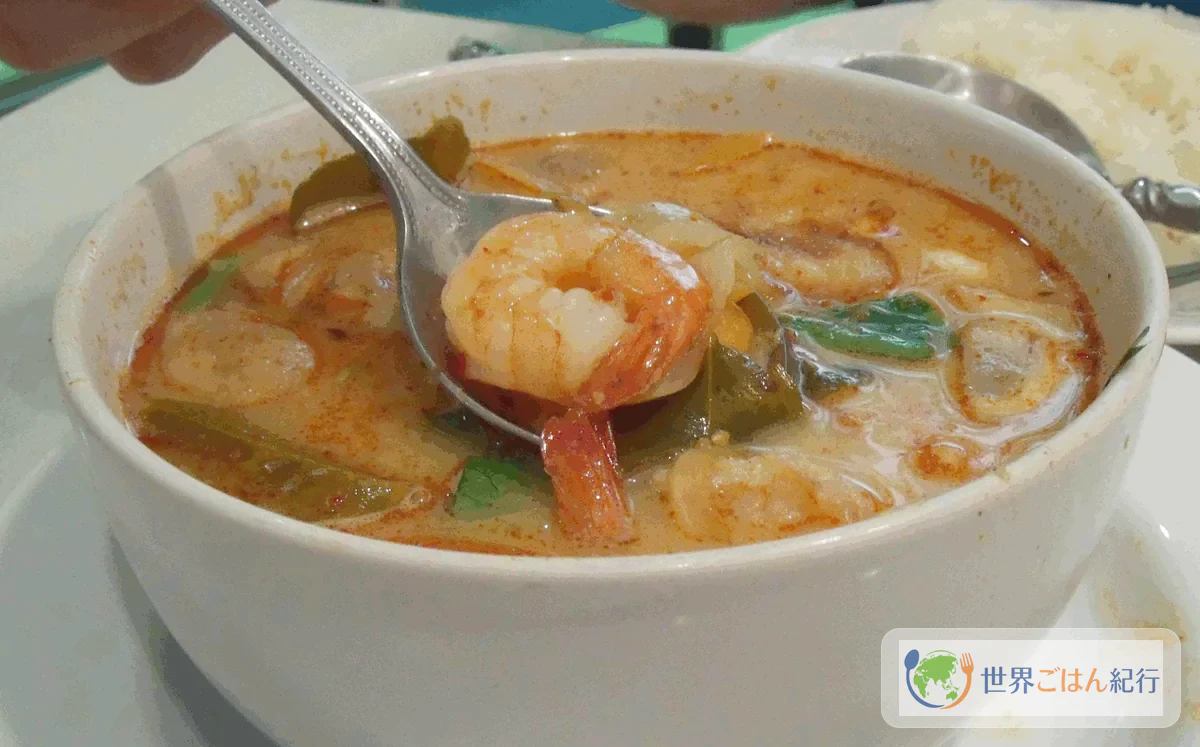
Order tom yum goong at different Thai restaurants and the color of the soup varies quite a lot. Some bowls are a nearly clear reddish orange, and others are cloudy white, as if milk had gone in. That is a difference in style.
| Style | Thai | Direction of taste | When it suits at home |
|---|---|---|---|
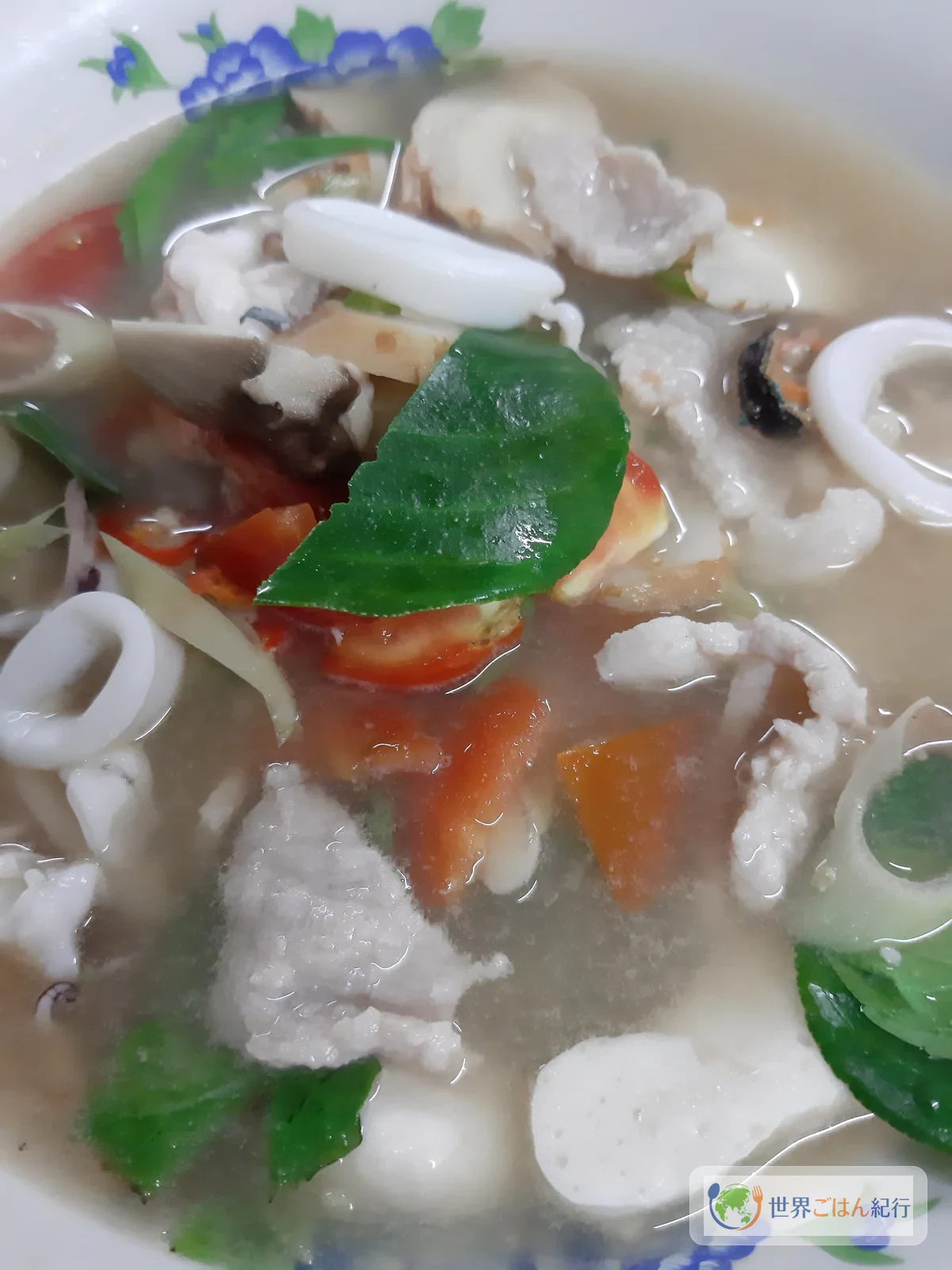
| Clear tom yum | nam sai | Lime, chili and herbs come forward. Light and sharp | Hot days, beside a greasy main, days you want a hot-and-sour soup |
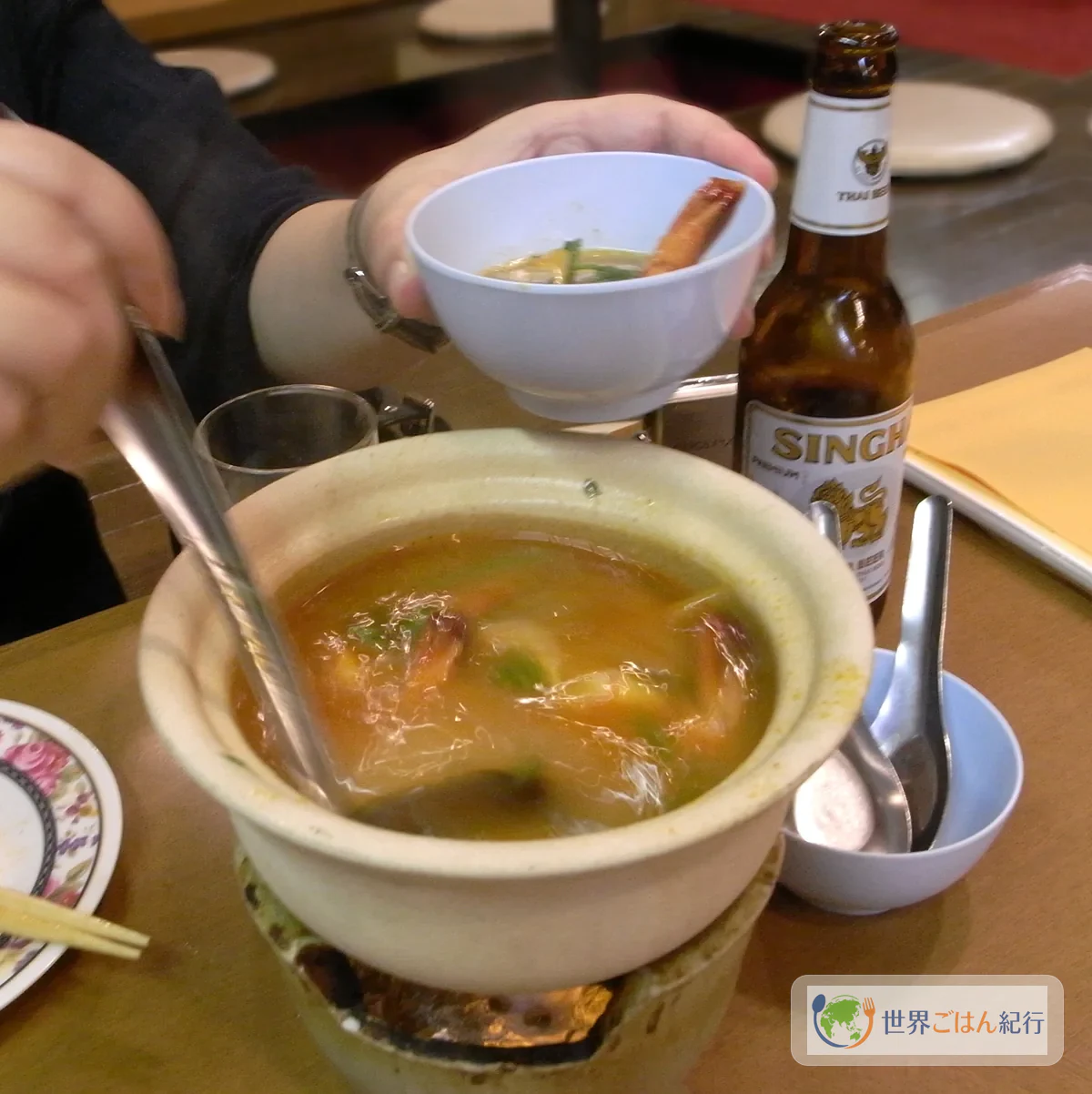
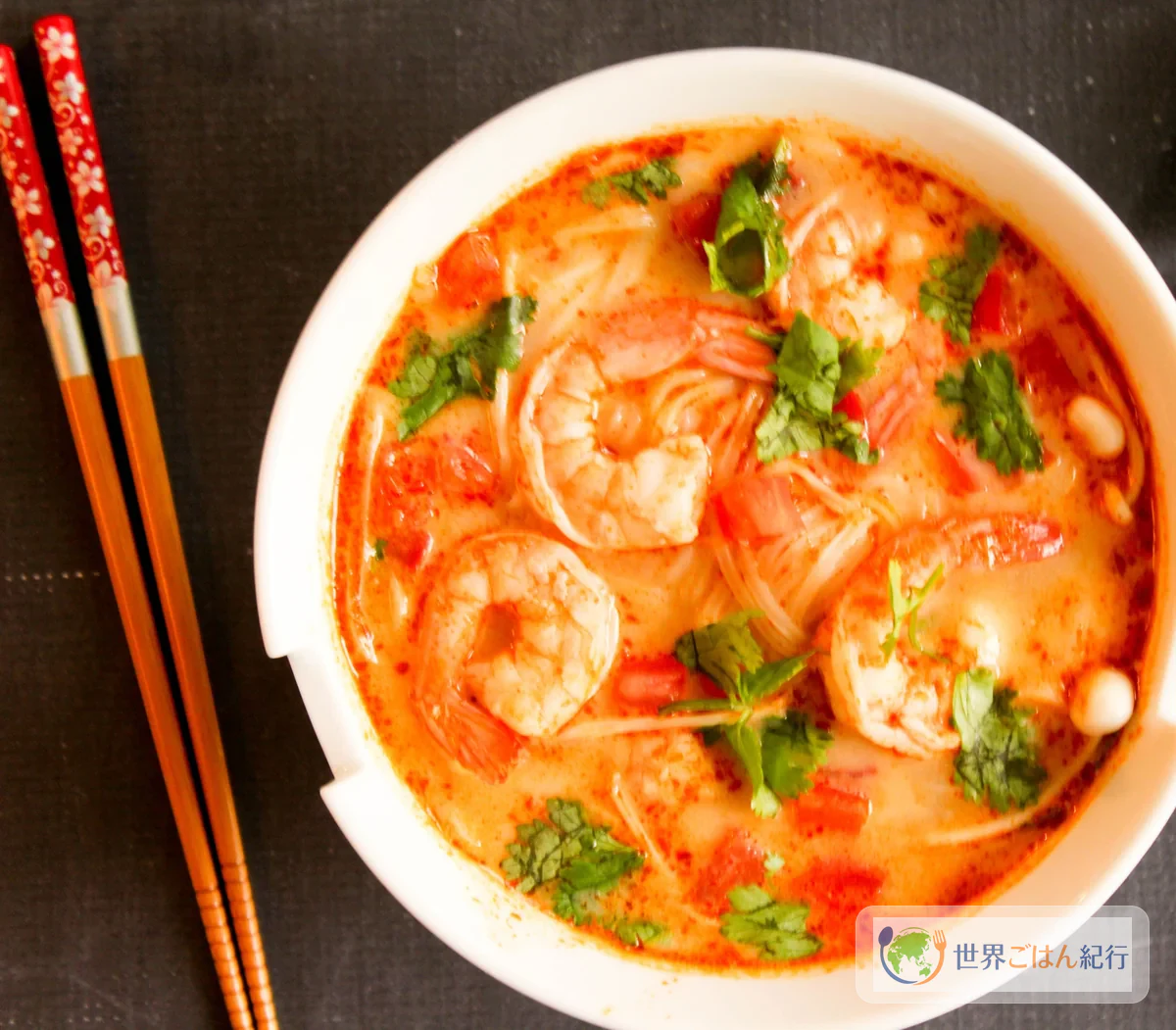
| Creamy tom yum | nam khon | Round and rich with nam prik pao, shrimp umami and unsweetened condensed milk | Dinner with rice, days with children or family who want less heat |
At home, nam khon is the easier style to bring close to what you've eaten at a Thai restaurant. Stop before adding the unsweetened condensed milk or milk and you have nam sai. To split one pot by preference, make the base as nam sai and add nam prik pao and unsweetened condensed milk to the adults' bowls. The first time, it's worth doing exactly that and tasting both. You'll know which way to go next.
The core of aroma is lemongrass, galangal and makrut lime leaves. The core of umami is the shrimp shells and fish sauce. The core of sourness is the lime added at the end. Even on days you use only store-bought paste, keeping these three layers in mind stops the flavor from blurring.
How it is eaten in Thailand
At a Thai eatery, tom yum goong isn't seasoned once and for all in the pot. The cook makes stock with herbs, sets the saltiness with fish sauce, and settles the outline with lime and chili just before it's eaten. Follow that order at home and one pot can serve a family whose heat preferences differ.
The herbs are there for their aroma, not to be eaten. Leave the lemongrass, galangal and makrut lime leaves in large pieces and eat around them in the bowl. Cut small, they blend in visually but are hard to chew and tend to turn bitter, so think of breaking them open to release their aroma, not chopping them.
Ingredients (serves 4): what can be substituted and what shouldn't
For tom yum goong shopping, think in the order shrimp first, herbs next, seasonings last, and you won't hesitate. Shrimp with the shell on is ideal, but peeled shrimp works too. All the herbs together are strong, but you don't need to aim for perfection the first time.
This recipe contains shrimp and fish sauce. Some nam prik pao products also contain shrimp, seafood and soy. Cook the shrimp through to the center and don't leave it at room temperature for long after cooking. Soup simmered from shells spoils easily, so if you store it, chill it quickly the same day.
Ingredients and tools for this dish
Frozen lemongrass and makrut lime leaves are easy to use, and leftovers can go into the next gapao rice or pad thai day. If you can't find them at a nearby store, look for the smallest packages so they don't crowd the freezer.
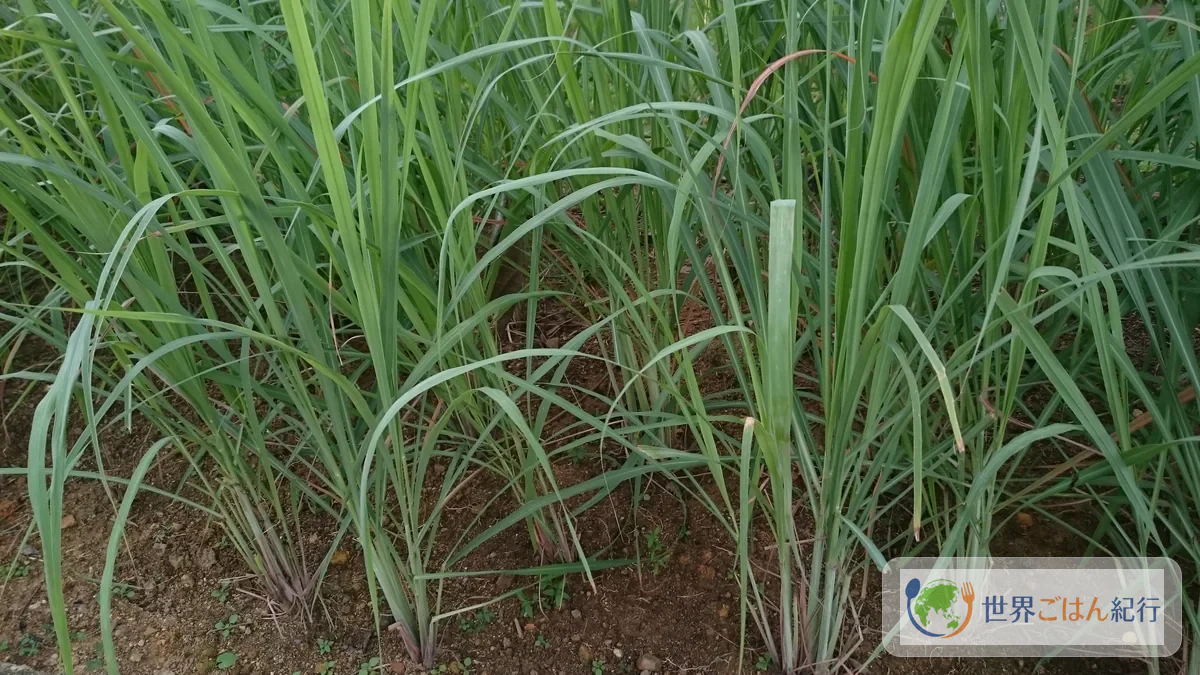
Fresh or frozen stalks are the first choice for lemongrass. Powder has weak aroma and leaves fine grains in the soup, so if you buy it, choose a form where you can see the stalk. If you can only find powder, don't force it; prioritize makrut lime leaves and nam prik pao and make up the aroma with lime zest, which raises satisfaction more.
Makrut lime leaves keep their aroma well even frozen. They also go into the aroma of tom kha gai, green curry and laab, so if you plan to cook Thai food a few times, they are worth finding.
Nam prik pao is useful beyond tom yum goong, in stir-fries and fried rice. If you think of it not as heat but as a seasoning that adds roasted chili, garlic and shrimp umami, it is easier to use up.
Thai fish sauce is the first choice for fish sauce. A small bottle is enough. If Asian grocery stores carry only large bottles labeled fish sauce, buy one of those. After opening, store it in a cool dark place or the refrigerator and use it up before the aroma gets too strong.
Choosing ingredients for tom yum goong
At first glance the ingredient list looks impossible. Galangal, makrut lime leaves, nam prik pao and straw mushrooms rarely line up on a regular supermarket shelf. Decide what to protect and what to replace, and the taste still comes quite close.
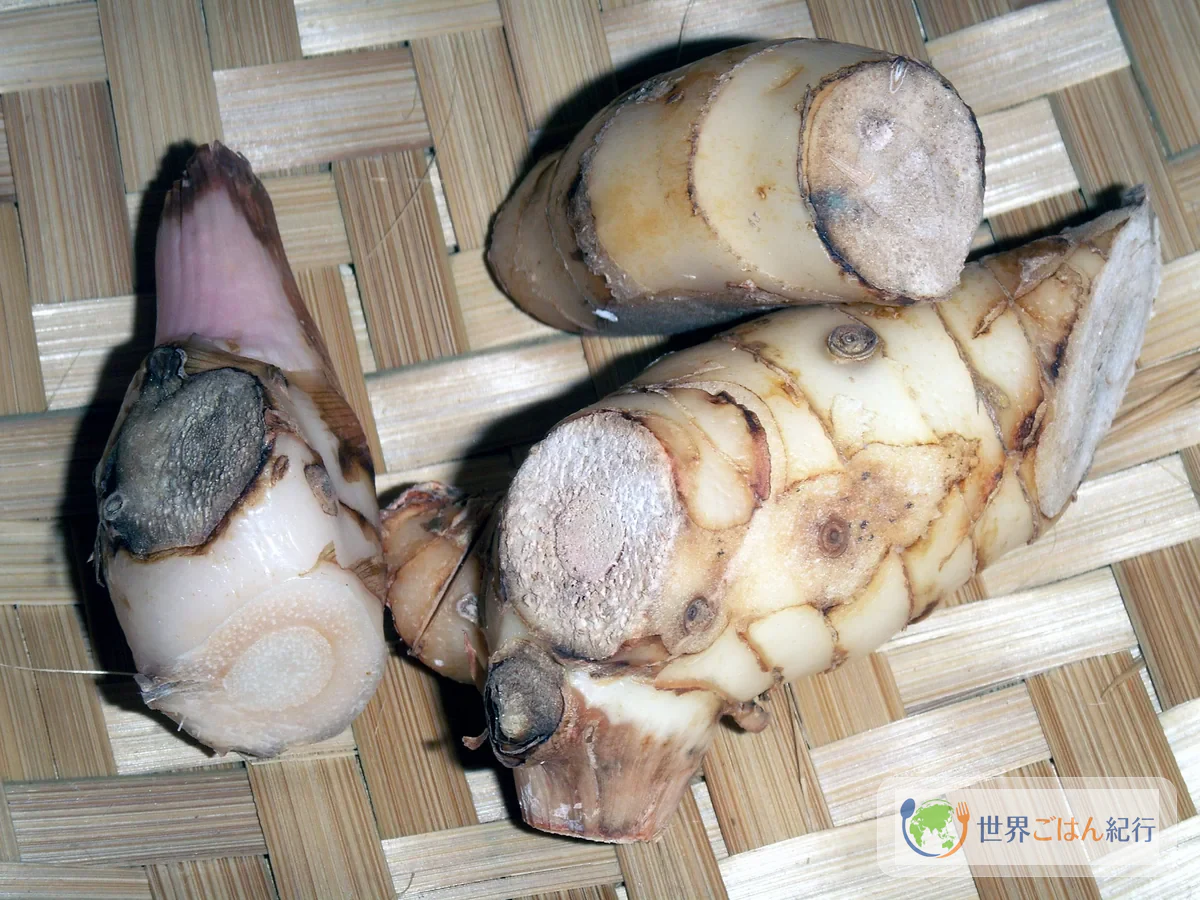
| Ingredient | Can it be replaced? | Practical choice |
|---|---|---|
| Lemongrass | Preferably not | Buy frozen stalks. Powder has weak aroma and settles |
| Galangal | Ginger is acceptable | Ginger's heat is different. Prefer frozen galangal if you find it |
| Makrut lime leaves | Yes, but aroma differs | A little lime zest. Lemon zest has a rounder aroma |
| Straw mushrooms | Easy to replace | Shimeji, king oyster or button mushrooms work |
| Nam prik pao | Important for nam khon | Emergency substitute: sambal + sugar + a little dried shrimp |
| Lime | Lemon works | With lemon, use a bit less and add a little zest |
Don't try to solve everything with ginger. Swapping it in for galangal is sometimes unavoidable, but if you drop the lemongrass too, the soup drifts toward a ginger shrimp soup. If you're buying for the first time, prioritize lemongrass, makrut lime leaves and nam prik pao, in that order. Once you have frozen lemongrass and makrut lime leaves on hand, Thai cooking suddenly gets much easier.
Straw mushrooms are the easy one to let go. Shimeji have a gentle aroma and soak up the soup, king oyster mushrooms bring good texture, and button mushrooms work without making the soup taste Western. Your bowl won't be any less satisfying without them.
At home, creamy tom yum goong is sometimes made with coconut milk. But in recipes from Thai cooking schools, unsweetened condensed milk or evaporated milk is common, and not adding too much of coconut's sweet aroma lets the shrimp and lime come forward. If you have none, 3 tbsp milk is enough.
Store-bought paste is convenient, but the flavor is strong from the start and the room to adjust sourness and saltiness is narrow. If you use it, start with 1 tbsp, use less fish sauce and lime, and add them at the end. Rather than finishing with the paste alone, adding lemongrass and makrut lime leaves lifts the aroma.
Method: shrimp last, lime after the heat is off
Tom yum goong is not a stewed dish. The herbs are simmered, but the shrimp is brief and the lime comes last. Keep the order and the shrimp doesn't toughen and the lime's aroma isn't lost.
If you boil after adding lime juice, the aroma escapes and bitterness tends to show. The simplest tip is to turn off the heat and add it just before eating. When you make ahead, don't put lime in the soup you store; squeeze it in after reheating.
Tom yum goong troubleshooting
The soup comes together quickly, so mistakes show clearly. At home, the usual problems are blurry sourness, bitterness, tough shrimp and milk that separates. Most of them come down to timing.
Tasting and adjusting
Taste in this order: saltiness, then sourness, then heat. Too much lime added early can't be undone, so add it 1 tsp at a time after turning off the heat and make the final adjustments in the bowl.
| Taste to fix | Add in the pot | Add in the bowl | Caution |
|---|---|---|---|
| Thin, shrimp flavor weak | 1 tsp fish sauce, a little shrimp-shell stock | None | Set the saltiness before adding lime |
| Not sour enough | None | Lime juice, 1 tsp at a time | Boiling drives off the aroma |
| Not hot enough | Add 1 chili and simmer briefly | Chopped chili, chili oil | Split off children's portions in the bowl |
| Lacks sweetness and body | 1 tsp nam prik pao | None | Too much turns sweet and cloudy |
| Weak aroma | Add 1 makrut lime leaf | A little lime zest | Don't chop makrut lime leaves finely |
Not sour
Lime juice added too early loses its aroma. Put lime on the side so people can add more at the table. Lemon juice gives sourness but a rounder aroma, so make up for it with lime zest or makrut lime leaves.
Bitter
The likely causes are too many of the hard outer lemongrass leaves, makrut lime leaves cut too fine, or shrimp shells simmered too long. Keep the herbs in large pieces.
Tough shrimp
Shrimp boiled along with the herbs from the start will toughen. Make the shell stock first and cook the meat separately at the end. Once the meat changes color, let the residual heat finish it. Thaw frozen peeled shrimp completely and pat them dry so the soup doesn't turn watery.
Milk separates
Unsweetened condensed milk or milk separates if the soup boils hard after it goes in. Add it after turning off the heat, and don't let the soup boil when you reheat it. Separated soup is still fine to eat but looks rough, so when you have guests, serve nam sai and add nam prik pao in the bowl.
Serving and storing tom yum goong
At the table
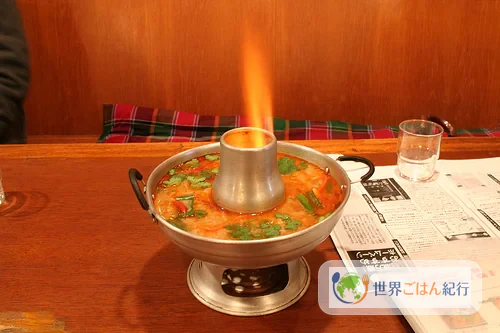
Outside Thailand, tom yum goong is often served on its own as a soup, but at a Thai table it usually comes with rice and other dishes. Plain jasmine rice settles its strong sourness and heat. For a weeknight, tom yum goong, white rice and stir-fried greens are plenty. Spoon a little soup over the rice and eat it with the shrimp and mushrooms, and the soup becomes the main dish.
If you want noodles, boil rice noodles separately, put them in the bowl and pour the soup over them. Noodles simmered in the pot cloud the soup and soak up its sourness.
For a Thai menu, pick dishes whose heat goes in a different direction. Pad thai is sweet-sour noodles, som tam is a hot-and-sour green papaya salad, and gapao rice is a stir-fry of basil and fish sauce. When you'd rather have the mellow aroma of coconut milk and galangal, tom kha gai makes a good contrast. A table where everything is hot gets tiring, so lean on pad thai or plain rice as the base.
| Occasion | Combination | Why |
|---|---|---|
| Weeknight dinner | Tom yum goong + plain rice + cucumber | Rice takes the sourness and heat. Light to prepare |
| Weekend Thai meal | Tom yum goong + pad thai + som tam | Sweet-sour noodles, spicy salad and herb soup separate the flavors |
| A day with drinks | Tom yum goong + fried spring rolls + raw vegetables | The hot-and-sour soup cuts the oil |
| A day you want to warm up | Tom yum goong + jasmine rice | The aroma of chili and herbs is satisfying |
When you're ready for more Thai cooking, som tam uses the same fish sauce and lime, and pad thai and gapao rice are natural next steps.
Making ahead and storage
Tom yum goong is best fresh, and a finished soup keeps only until the next day. Over time the shrimp toughens, the lime's aroma dulls, and soup with milk separates easily. The soup base, on the other hand, can be made ahead.
To make it ahead, cook the soup through the herb-simmering stage, leave out the shrimp, lime and unsweetened condensed milk, and refrigerate. The next day, warm it, cook the shrimp through in it, and add the lime and milk last. You lose less aroma that way, and the shrimp stay tender.
For leftover finished soup, cool it quickly, refrigerate it in a clean container and finish it the next day. Reheat over low heat without boiling. If you take the shrimp out first, warm the soup and then return them, they keep a little more of their texture.
Freezing dulls the herbs and hurts the texture of the shrimp and mushrooms, so it isn't recommended. If you want to freeze something, freeze only the herb stock, before any shrimp, nam prik pao or lime goes in. It keeps for about 1–2 weeks in the freezer.
Finished soup with shrimp keeps until the next day refrigerated. Avoid leaving it at room temperature. In summer or on days you make a big pot, set the bottom of the pot in ice water to cool quickly before putting it in the refrigerator.
FAQ
Q1. I can't get galangal. Can I use ginger?
You can, but the aroma is different. Ginger's aroma is warm and hot, while galangal's is hard and fresh. If you use ginger, limit it to 2–3 thin slices and lean on the lemongrass and makrut lime leaves so the soup doesn't tip too far toward ginger.
Q2. How do I make it for children or people who avoid heat?
Leave the chilies out of the pot and let the adults add them in the bowl. Nam prik pao is also hot, so start with 1 tbsp. Keep the lime, though. Cutting the sourness too far blurs the taste, and holding back only the heat keeps the soup recognizably tom yum.
Q3. What can I make for someone with a shrimp allergy?
Made with chicken it becomes tom yum gai, and with only mushrooms it's tom yum hed. You can't use shrimp-shell stock, so use chicken stock and more mushrooms, and be sure to check that your nam prik pao contains no shrimp. If fish sauce is off the table too, you can season with salt and a little soy sauce, but at that point it's easier to enjoy it as a different dish.