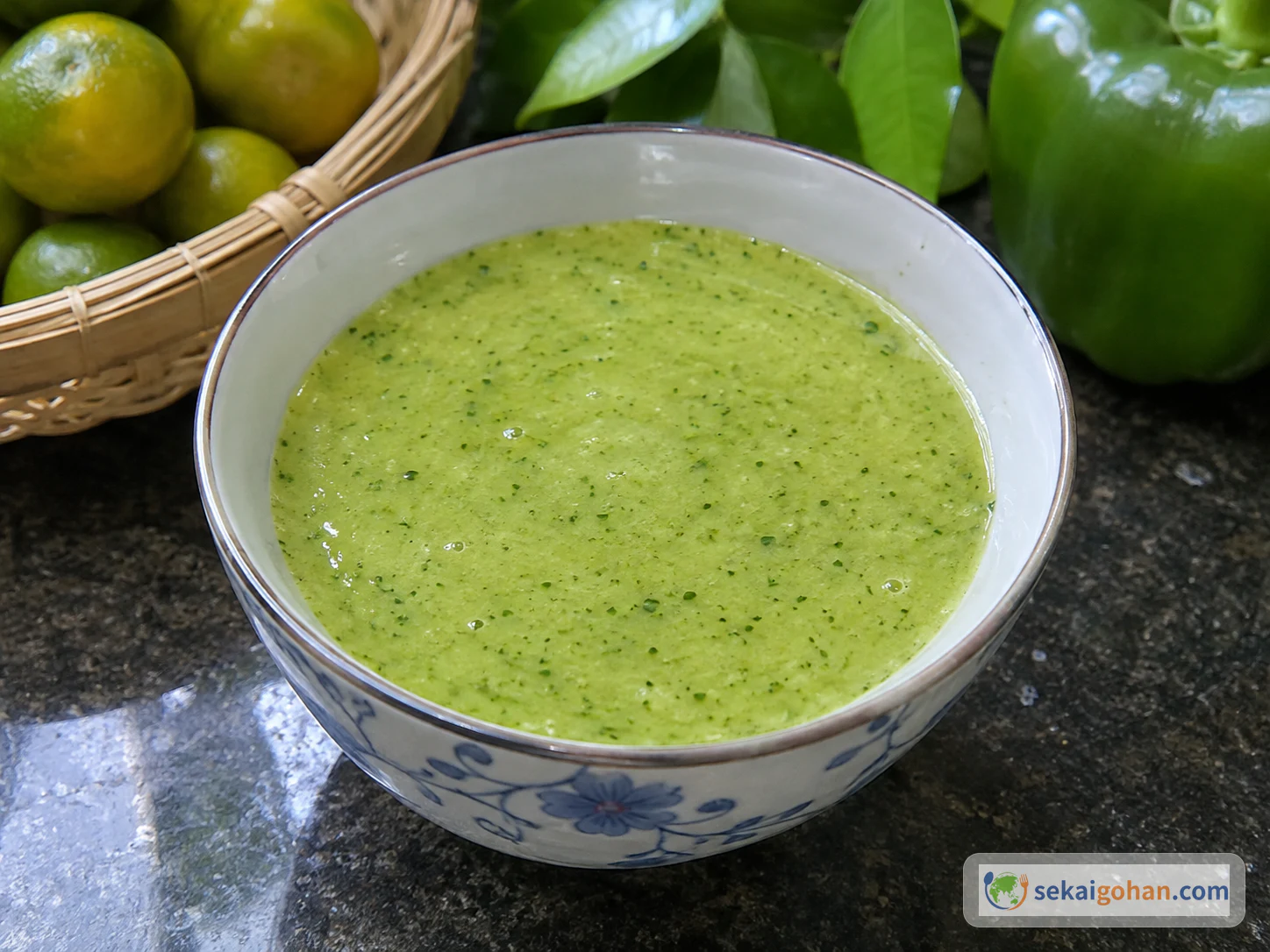
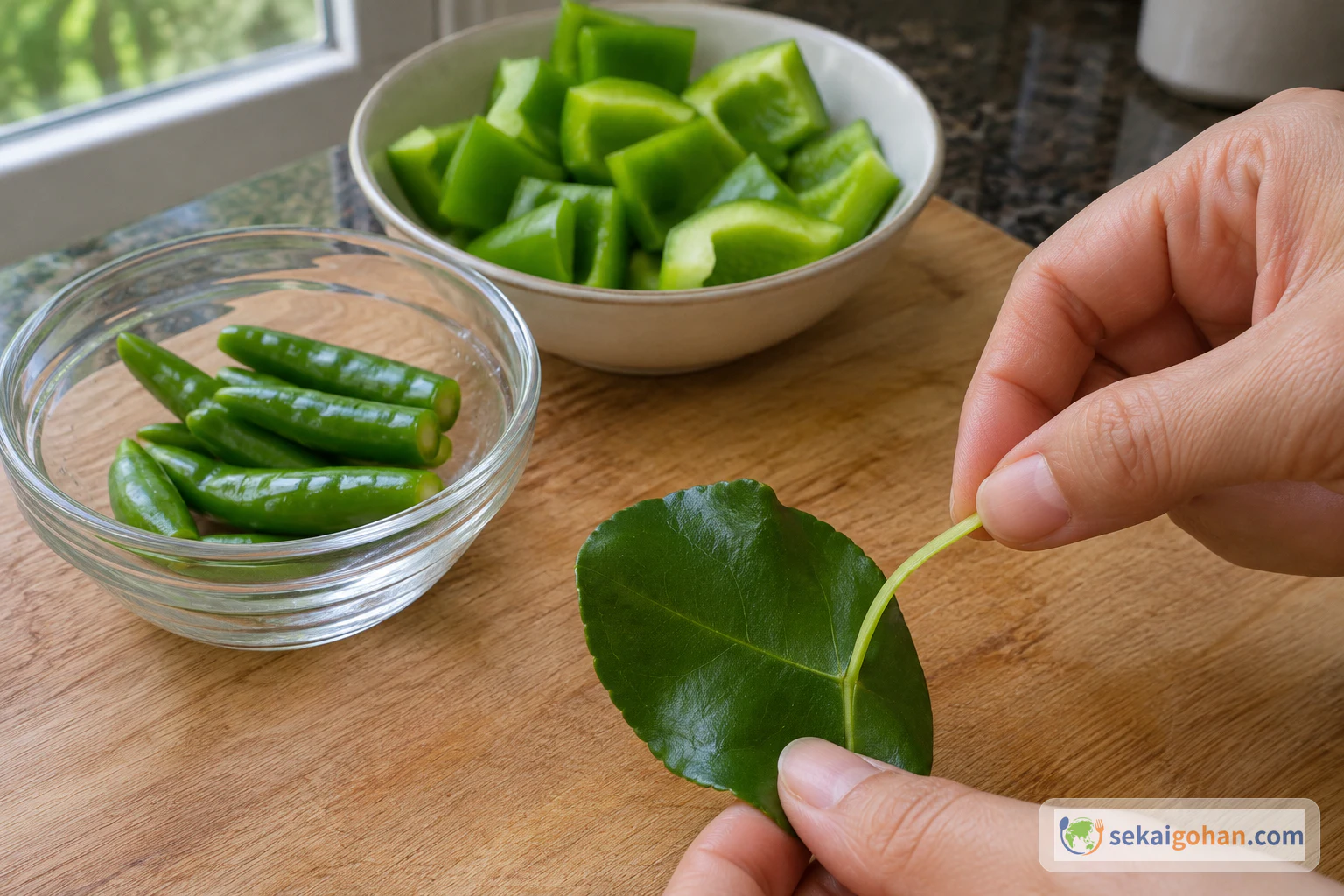
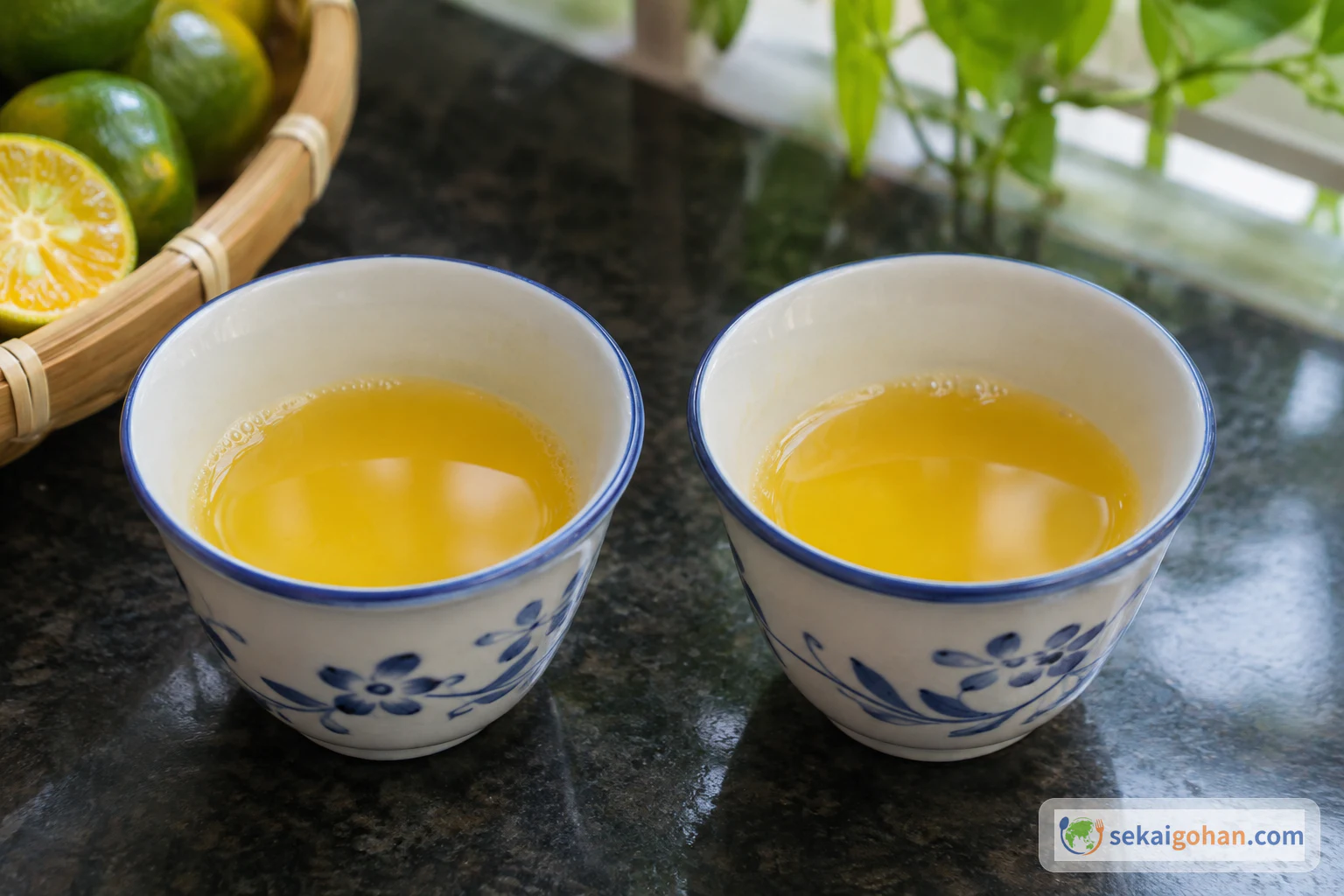
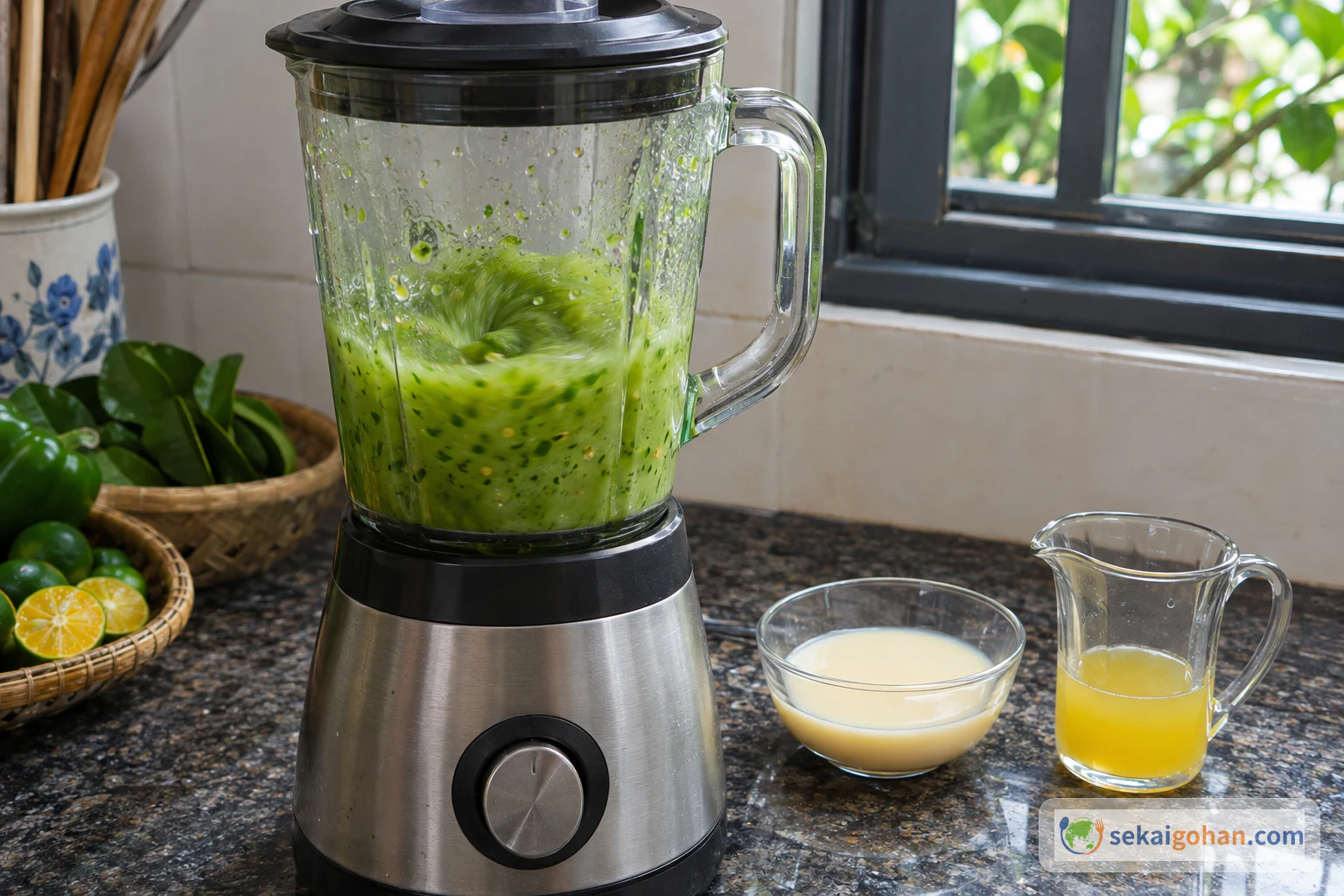
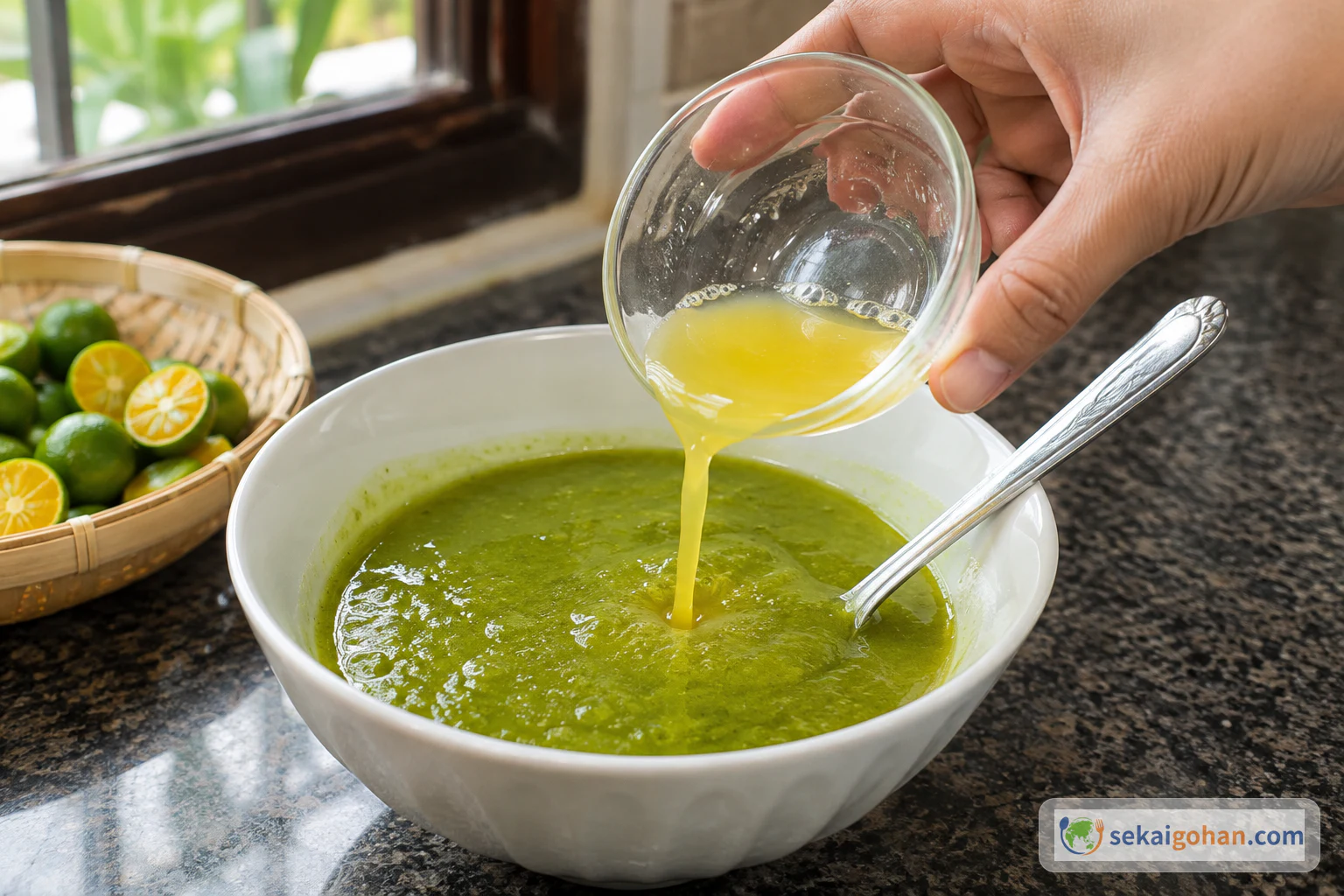
The name says salt, but what comes to the table is a smooth, pale-green dip in a small bowl. Muối ớt xanh from Vietnam is made in a blender from hot green chilies, green bell pepper, citrus leaves, tắc juice, sugar, salt, MSG and sweetened condensed milk. One taste brings sweet, sour, salty and hot together at once. Nothing is cooked, so it comes together quickly, and it needs a clean kitchen and a cold fridge.
About Muối Ớt Xanh
Muối means salt, yet this is a wet sauce, not a dry seasoning. Recipes under the name vary quite a bit, as the two other versions below show. They are separate recipes, so don't swap amounts between them. The table shows the range, not which one is more authentic.
| Recipe | Chilies and pepper | Citrus and leaves | Salt and sugar | Other |
|---|---|---|---|---|
| This recipe | 1.25 oz (35 g) ớt hiểm, 3.5 oz (100 g) green bell pepper | 1 cups (250 ml) tắc juice, 5 lá chanh | 2 oz (60 g) salt, 7 oz (200 g) sugar | 1.25 oz (35 g) MSG, 7 oz (200 g) condensed milk added after blending |
| Version 1 | 3.5 oz (100 g) green bird's-eye chili | 1 chanh, 5 lá chanh | 10 g salt, 20 g sugar | Blended |
| Version 2 | 3.5 oz (100 g) green chili | 1 chanh, 10 lá chanh | 20 g salt, 1.75 oz (50 g) sugar | 3.5 tbsp (50 ml) condensed milk, blended in stages |
Several other products carry similar names and are different things: dry chili salt, red-chili muối ớt đỏ, muối ớt rau răm built around rau răm, and retail muối ớt chanh.
Ingredients for One Batch
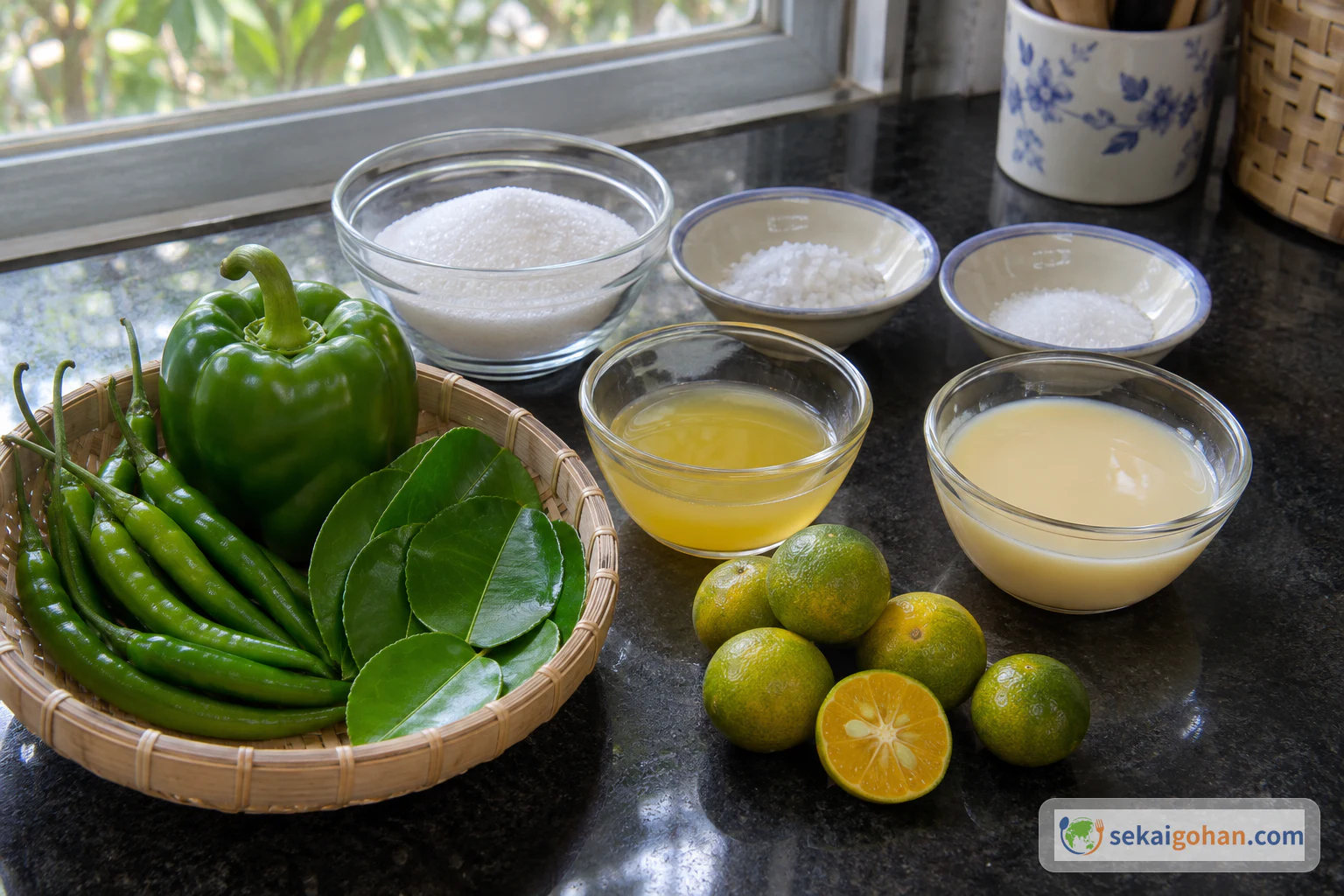
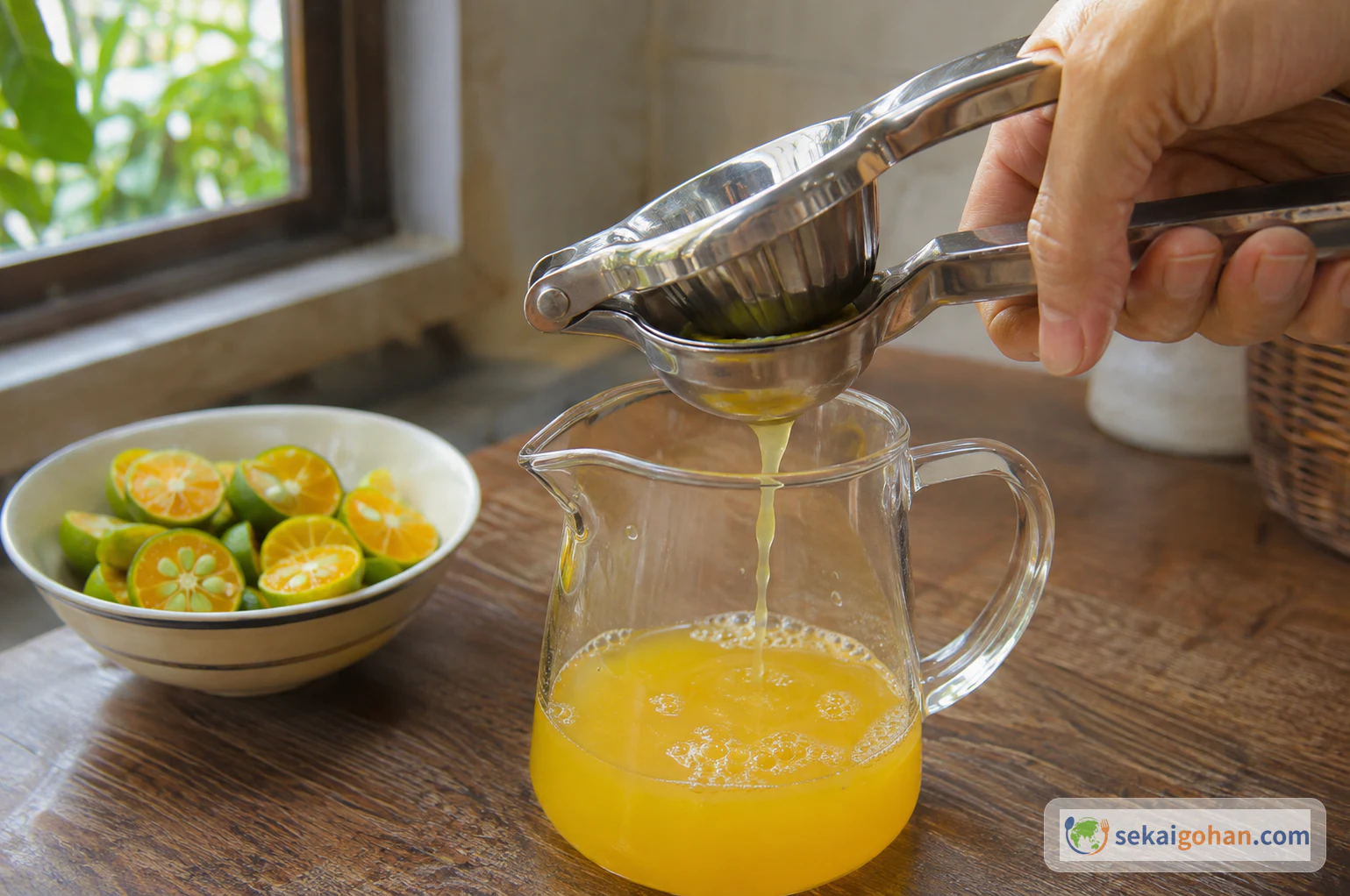
Measure the tắc juice by volume. Plan on 700–800 g whole tắc, and squeeze until you have 1 cups (250 ml), since fruit varies.
Use produce with no damage, and use commercial pasteurized condensed milk. Water is for washing the produce only; none goes into the sauce.
This sauce contains milk. Do not serve it to anyone who avoids dairy or has a food allergy.
Equipment
- Kitchen scale
- Measuring cup
- Knife and cutting board, kept separate from those used for raw meat, poultry or seafood
- Citrus press or juicer
- Two small cups for the divided juice
- Blender or small mixer
- Mixing bowl and spoon
- Clean cloth or paper towels
- Clean storage container with a lid
- Small clean bowl for serving
Choosing Tắc, Lá Chanh and Substitutes
Tắc is a small citrus. Fruits sold under other names in other languages may not be the same species, so check what you're buying. Chanh, a Vietnamese citrus term, and passion fruit can also supply the sourness, though both change the sauce's aroma and flavor.
Lá chanh are edible citrus leaves. Make sure the leaves you buy are sold for eating. Swapping them for another herb, or leaving them out, gives you a different aroma and a different sauce.
Whatever kind of sugar and salt you use, stick to the listed weights. Any blender that purees finely will do the job.
Every change below makes a different sauce, so make it on purpose and taste as you go.
| Change | What shifts | Keep in mind |
|---|---|---|
| Use fewer chilies, or remove the seeds | Less heat | The recipe does not call for seeding the chilies |
| Leave out the green bell pepper | Weaker green color and less mildness, with the chili heat more forward | The pepper adds part of the green color |
| Use chanh or passion fruit instead of tắc | Different aroma and sourness | Start with 1 cups (250 ml) and taste |
| Leave out the MSG | Less savory depth and a different overall flavor | Not the same sauce |
| Reduce or omit the condensed milk | Less sweetness, dairy richness and body | Equipment contact can still be a concern for anyone avoiding dairy |
Method: Half the Juice First, Condensed Milk Last
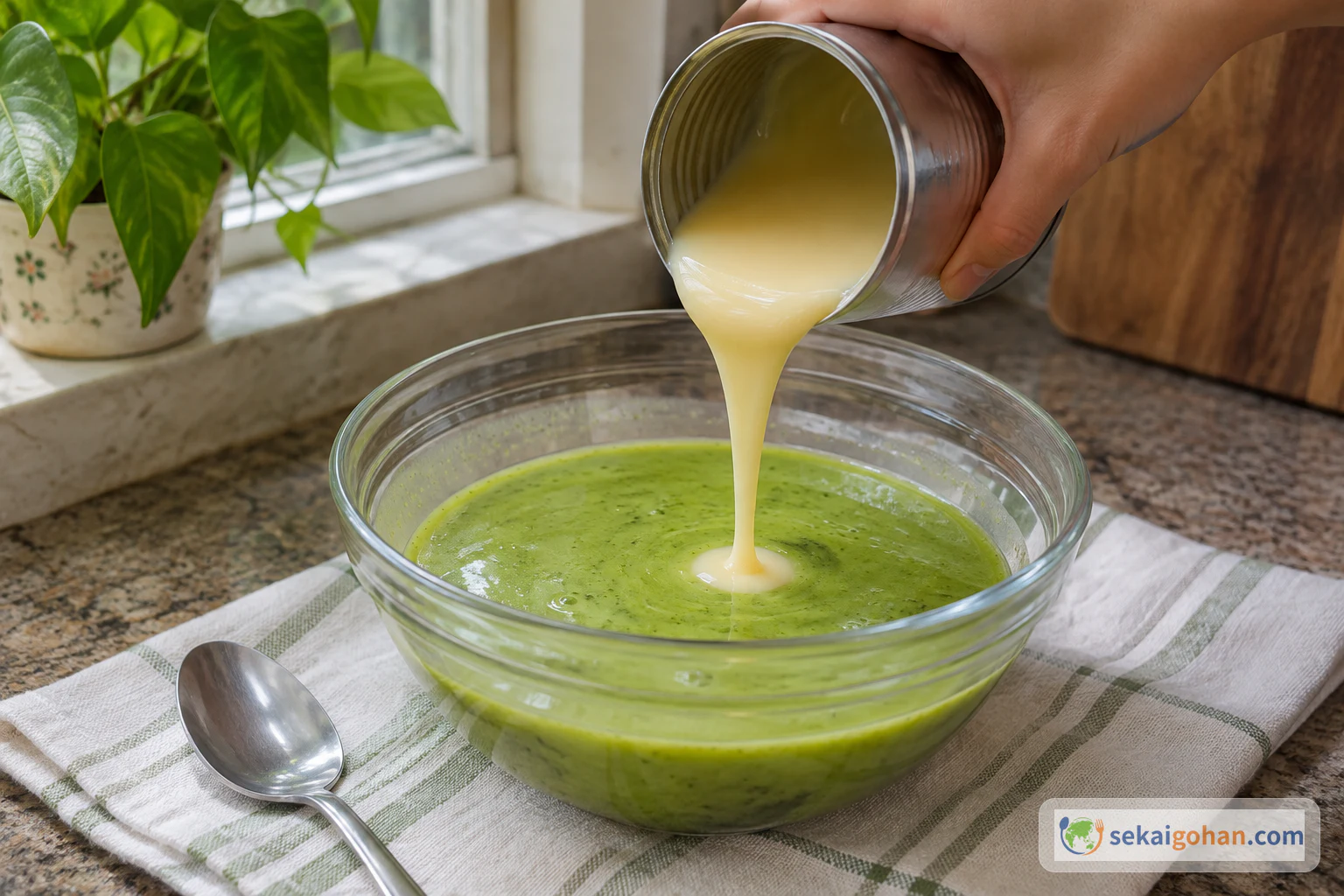
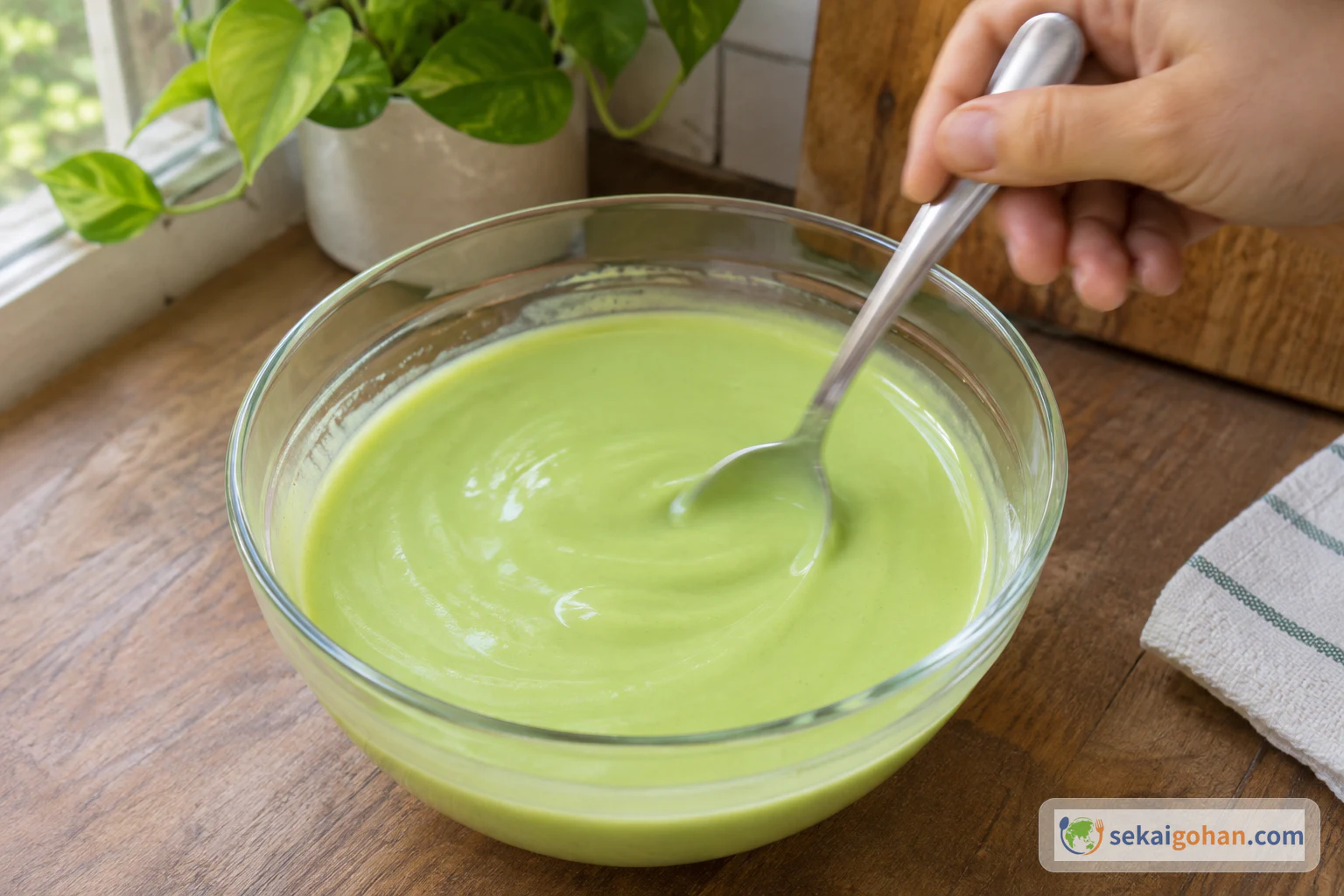
The blender gets everything except the condensed milk and the reserved juice. Those two go into the bowl afterward, juice first and milk second.
Common Problems with Muối Ớt Xanh
Some cooks start blending with one-third of the juice instead of half. Either way, the condensed milk always goes in last, after blending.
| What happened | What it likely means | What to do |
|---|---|---|
| Too little juice from your fruit | Fruit varies, so weight alone won't give you 250 ml | Squeeze more tắc until you reach the full amount. Do not top it up with water |
| The sauce is too hot | Chili heat varies | Dip more lightly this time, and use fewer chilies next batch |
| The green looks weak | The bell pepper may have been reduced or left out | Keep the full 100 g next time, because it contributes to the color |
| The flavor seems very strong | The batch has large amounts of sugar, salt and MSG | Use a small amount as a dip. Do not thin it with water |
| The condensed milk went into the blender | The order has changed | Hold the milk back next time |
| The sauce sat out too long | It went past the limit of 2 hours, or 1 hour above 32°C (90°F) | Throw it away |
Serving and Storing Muối Ớt Xanh
How to Serve It
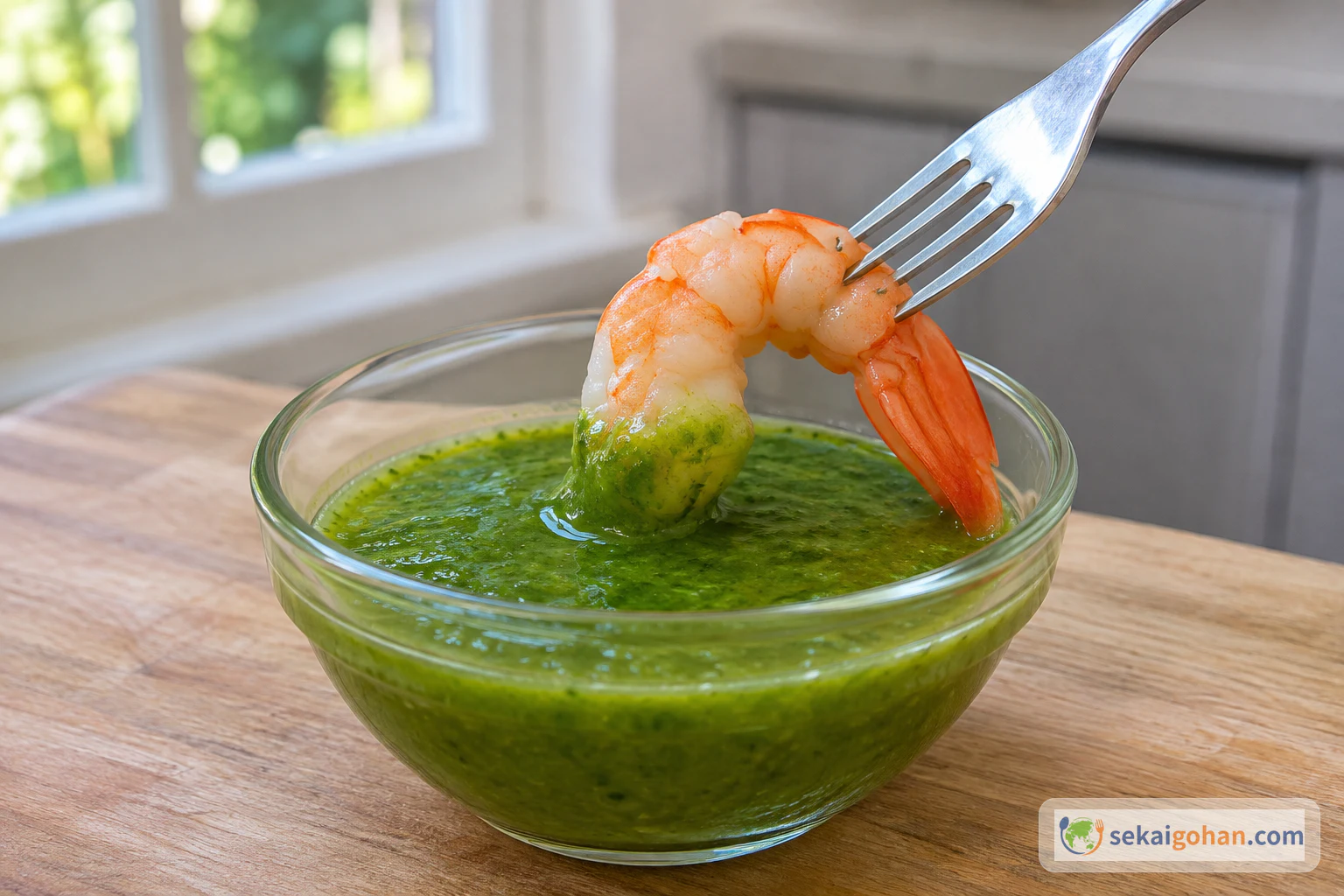
Set it out as a dip for chicken, snails and seafood, or next to boiled and grilled foods. Plain cooked shrimp is the easiest place to start, with the sweet-sour heat right up against the sweetness of the shrimp. A little goes a long way.
Keeping It Safe
Because the chilies, bell pepper and leaves are blended raw and nothing is cooked, clean handling and cold storage do all the safety work here.
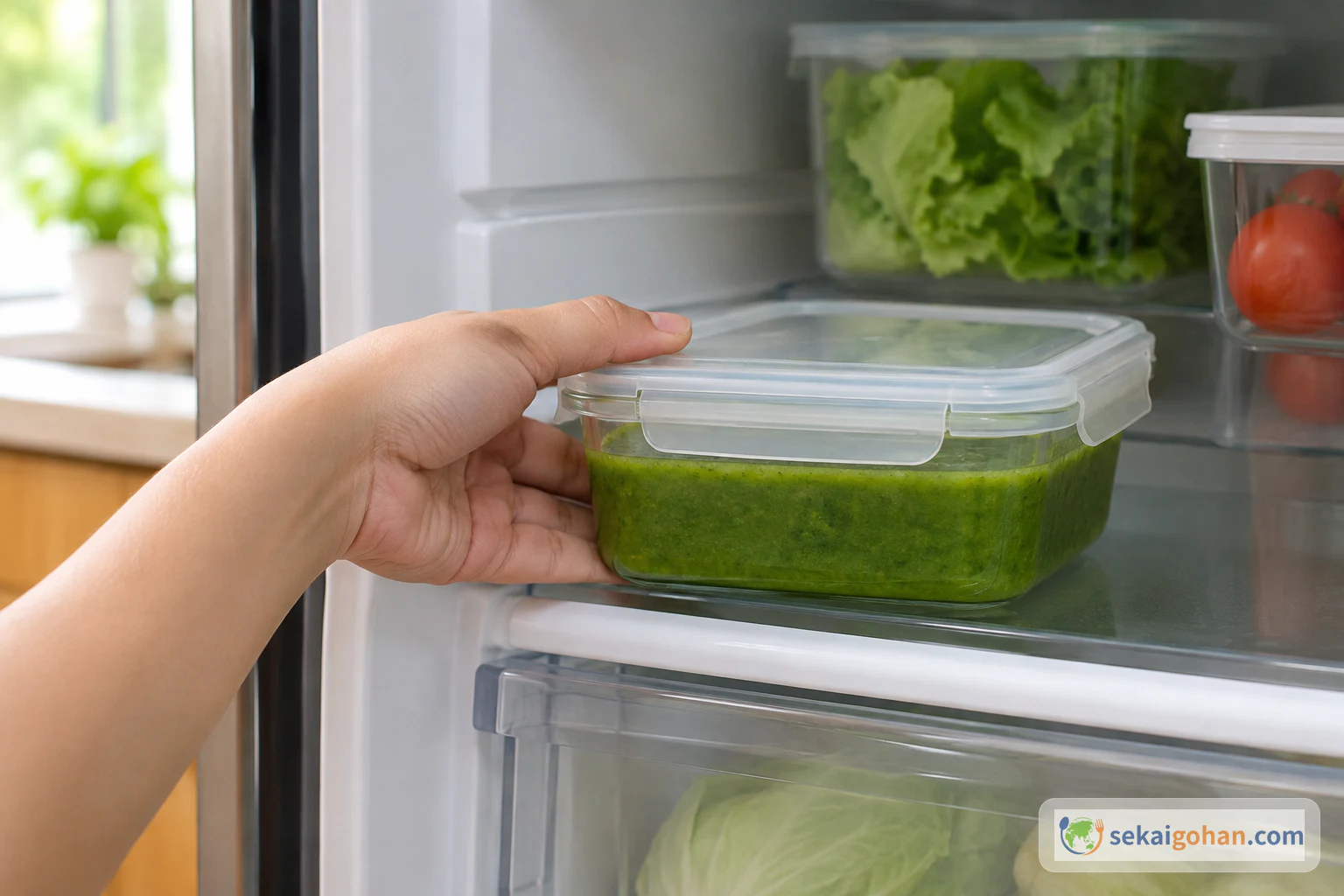
The sauce contains uncooked fresh produce and dairy. Refrigerate it right away, and follow the storage and handling steps below.
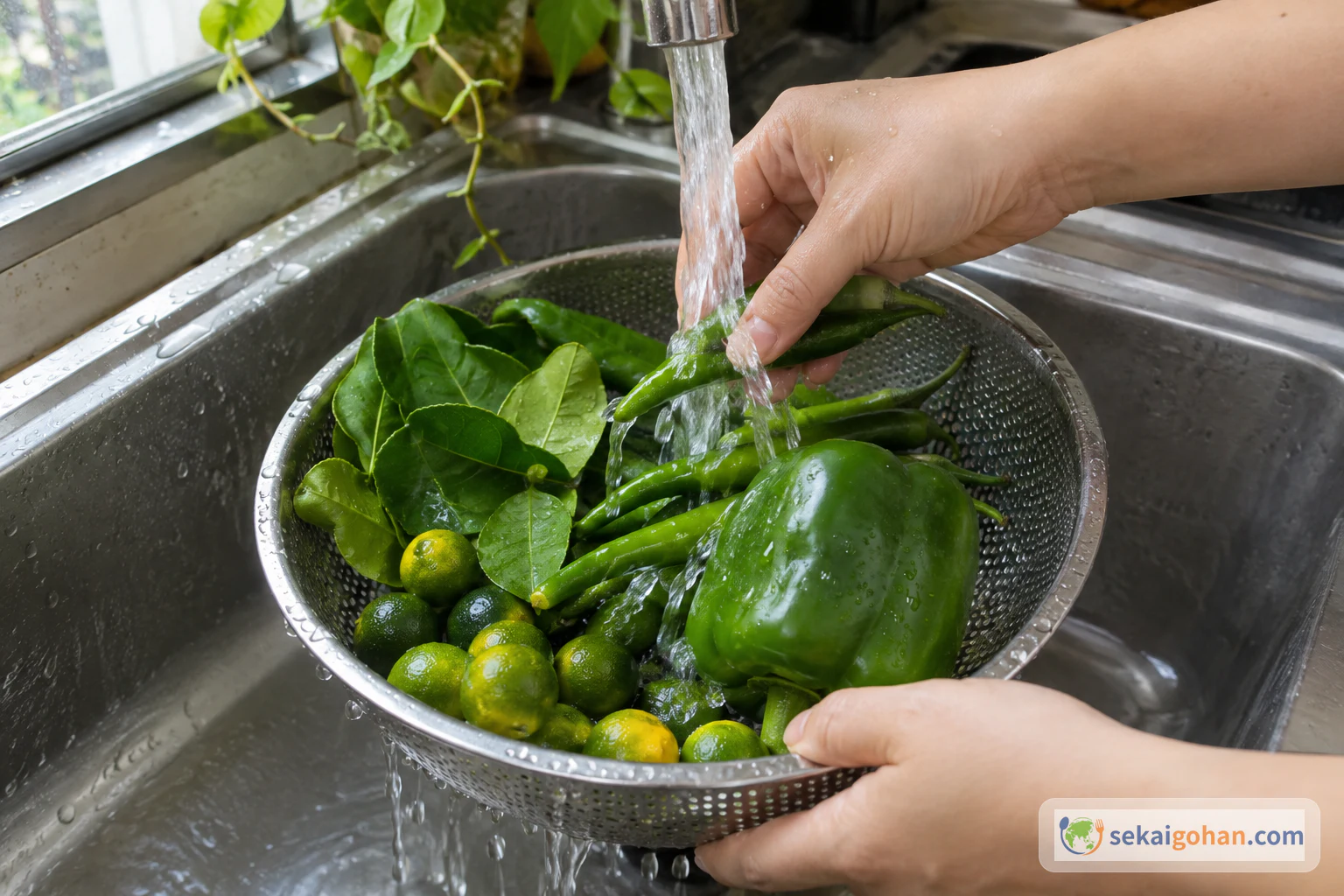
- Produce: Use undamaged chilies, bell pepper, lá chanh and citrus. Rinse produce under plain running water, without soap or produce wash, and dry it with a clean cloth or paper towel. Wash citrus rinds well before juicing.
- Condensed milk: Use a commercial pasteurized product.
- Hands and tools: Wash hands with warm water and soap for at least 20 seconds before and after handling food. Wash boards, utensils and other equipment with hot soapy water, and keep tools for produce separate from those used for raw meat, poultry or seafood. Keep chili away from your eyes.
- Temperature: Refrigerate the sauce right away in a clean covered container, at 40°F (4°C) or below. Do not leave it out for more than 2 hours, or more than 1 hour above 90°F (32°C).
- Storage: Keep it in the fridge, never at room temperature. The sauce is not pasteurized, sealed for the shelf or fermented.
- Judging it: Appearance and smell won't tell you it's safe. If in doubt, throw it out.
- Who should take extra care: Pregnant women, young children, older adults and people with weakened immune systems are at higher risk. They should be especially careful with uncooked fresh ingredients and dairy, and can skip this sauce.
Frequently Asked Questions
Can I replace tắc juice with lemon?
Chanh can supply the sourness, but it changes the aroma, and lemon will change it too. Start with 1 cups (250 ml) and taste as you go.
What if I can't find lá chanh?
Another herb won't stand in for it. Without the leaves, the aroma changes and you end up with a different sauce.
Does it contain dairy?
Yes, it contains sweetened condensed milk. Using less, or leaving it out, does not make the sauce safe for anyone avoiding milk.