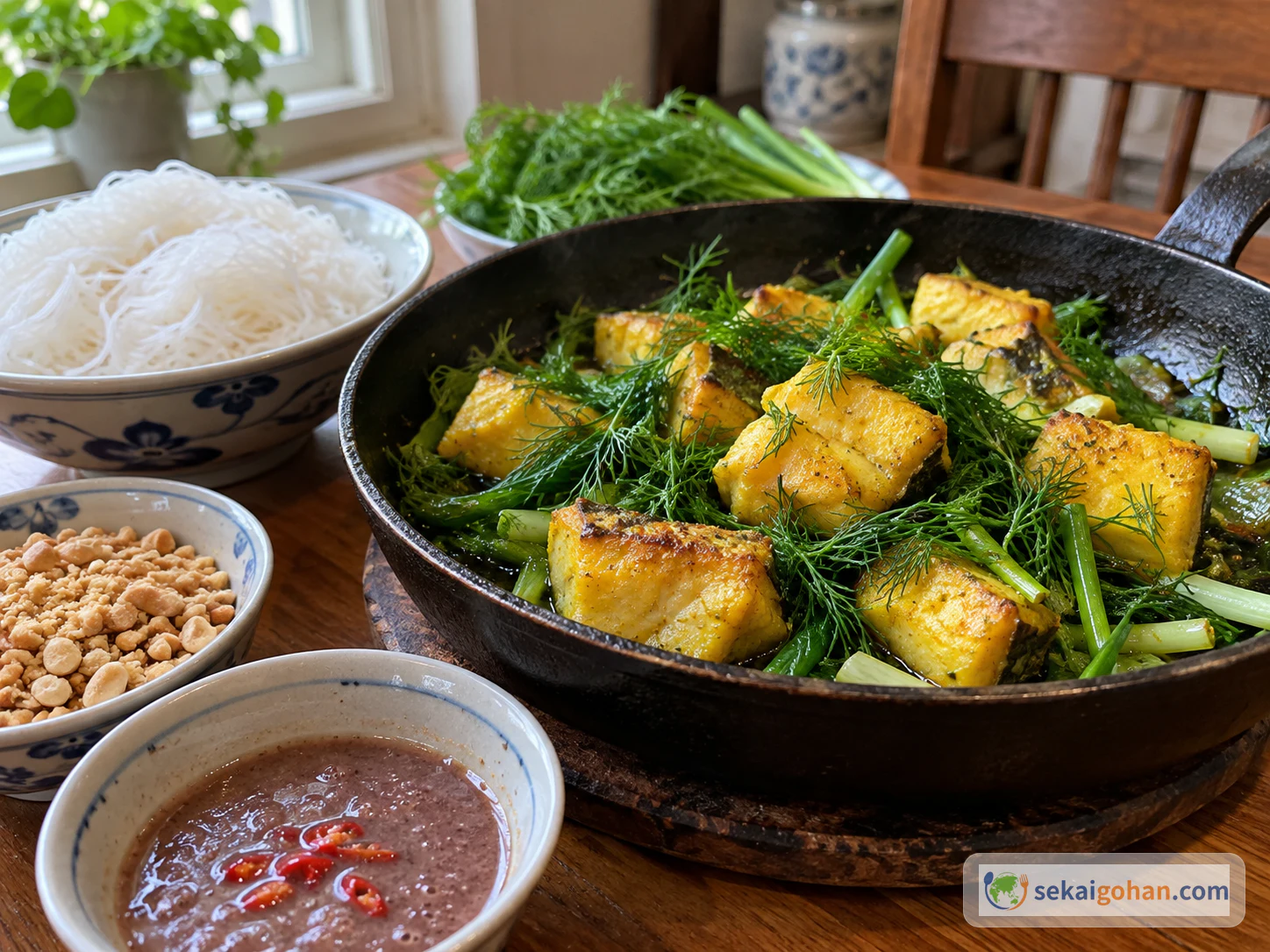
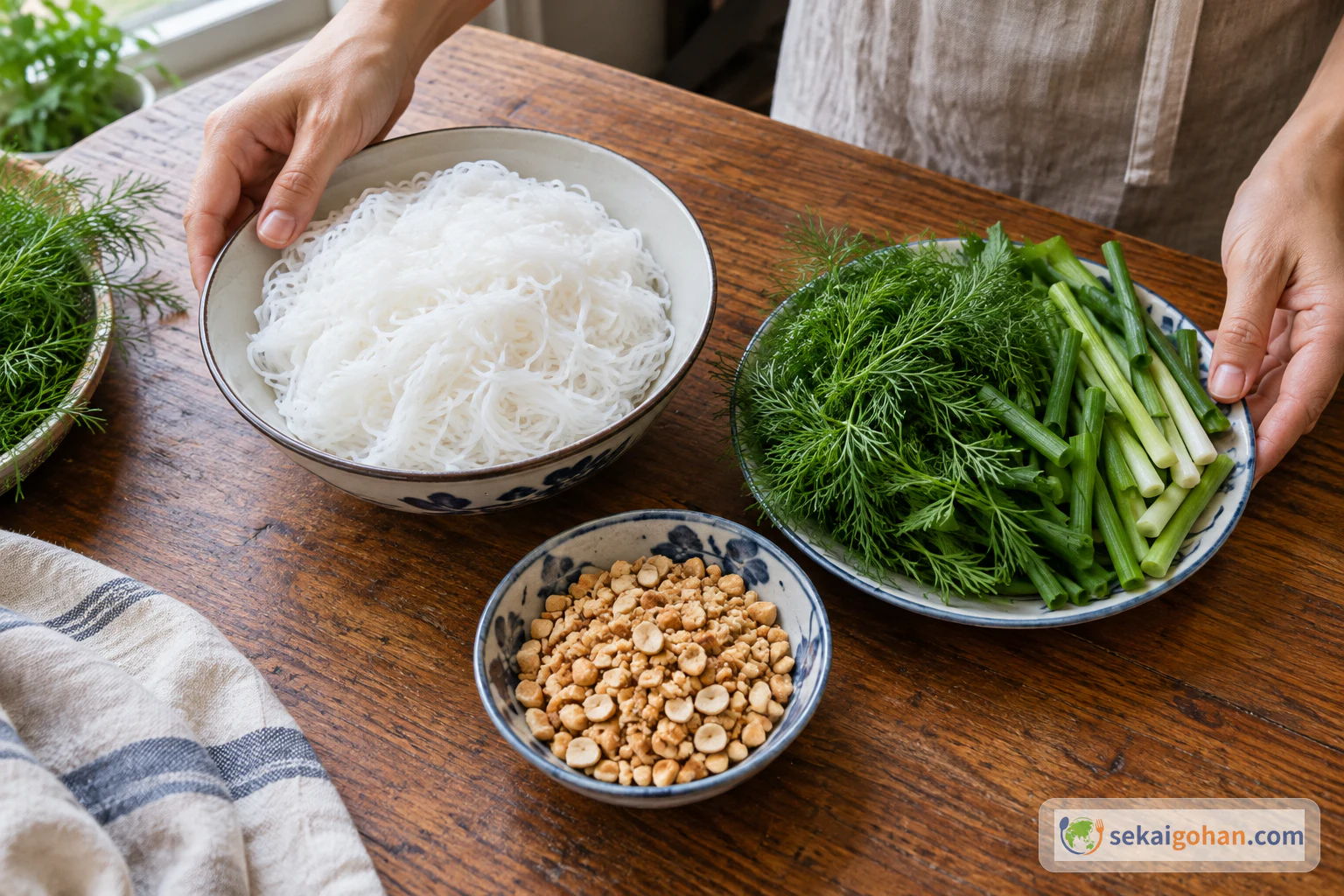
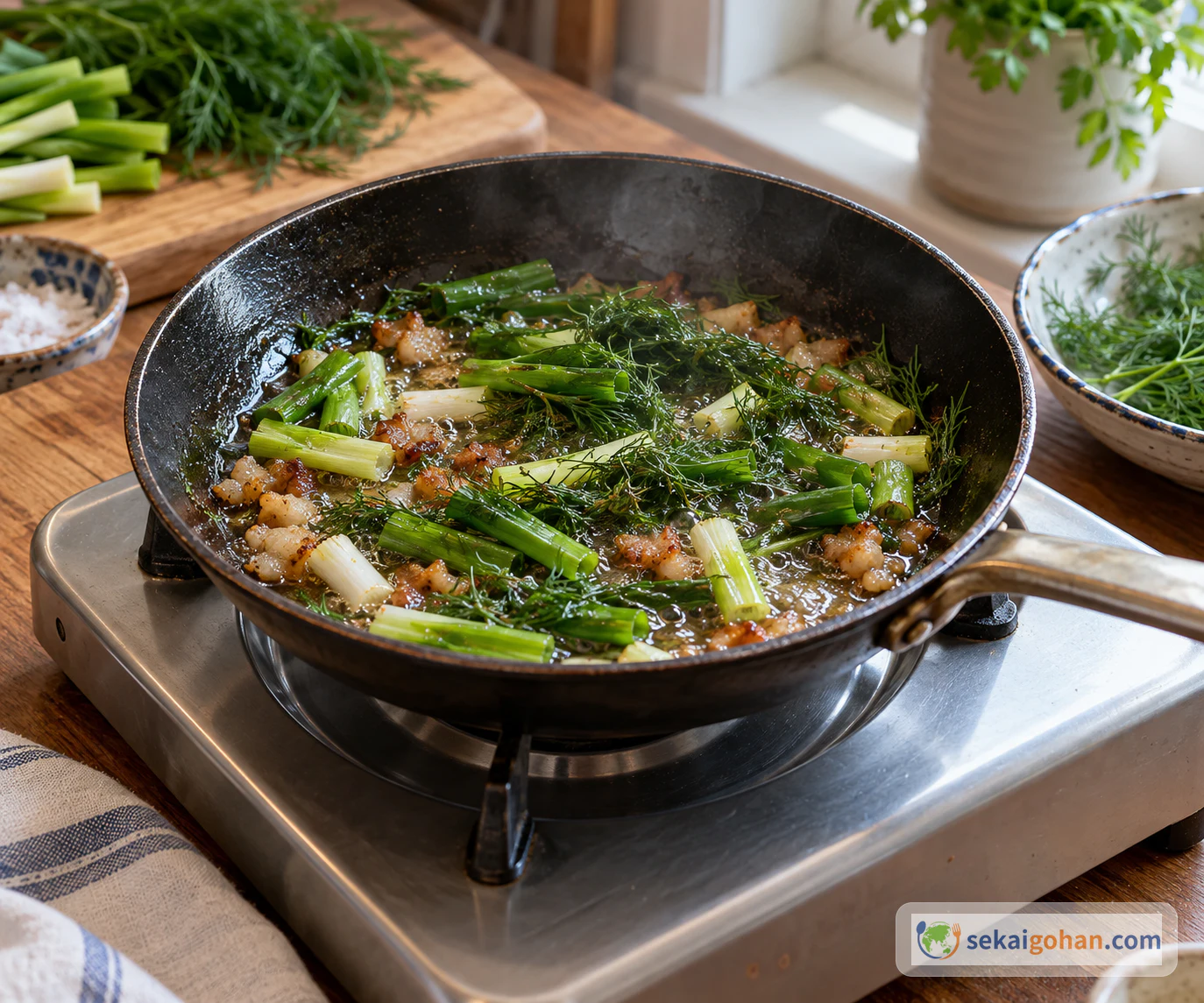
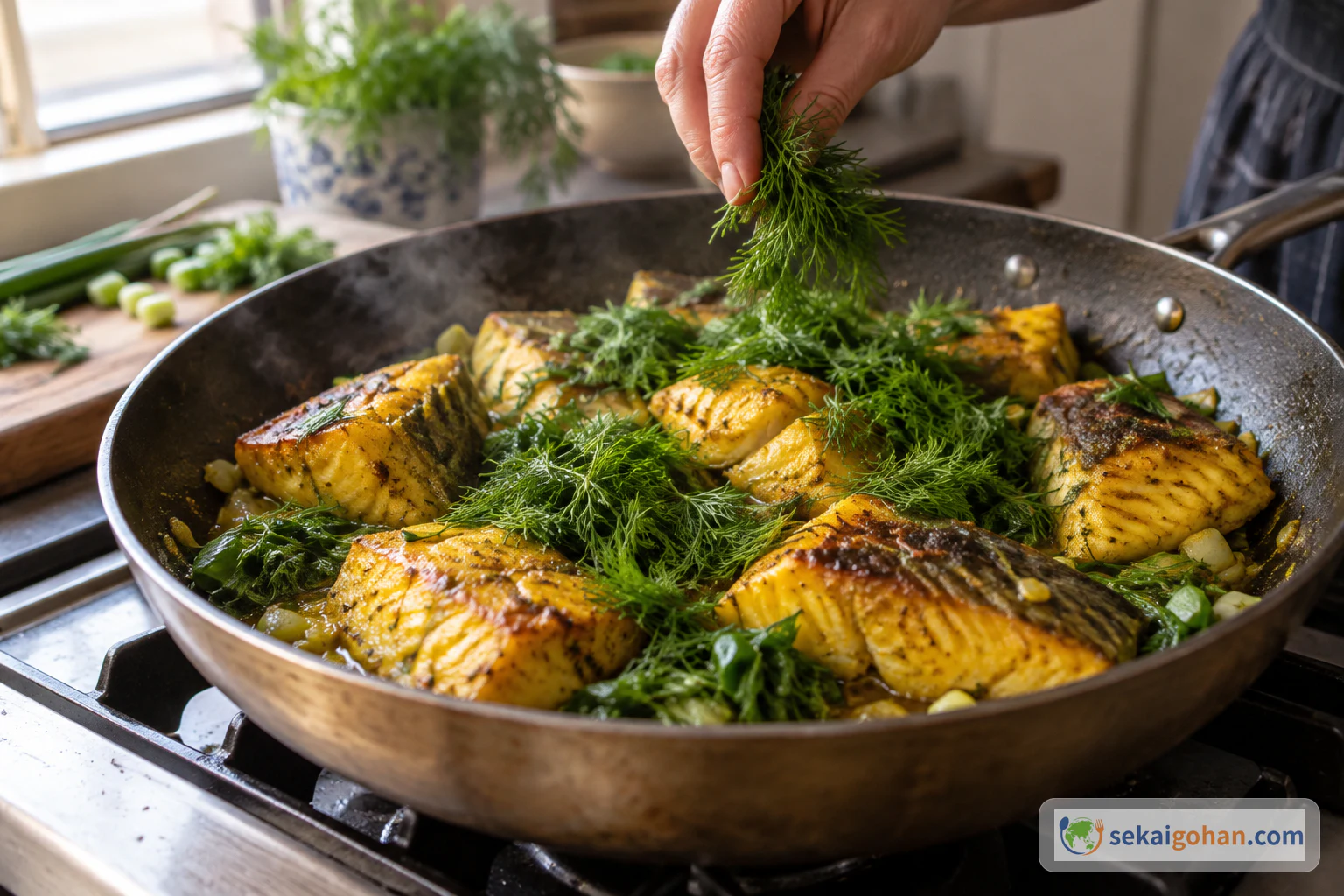
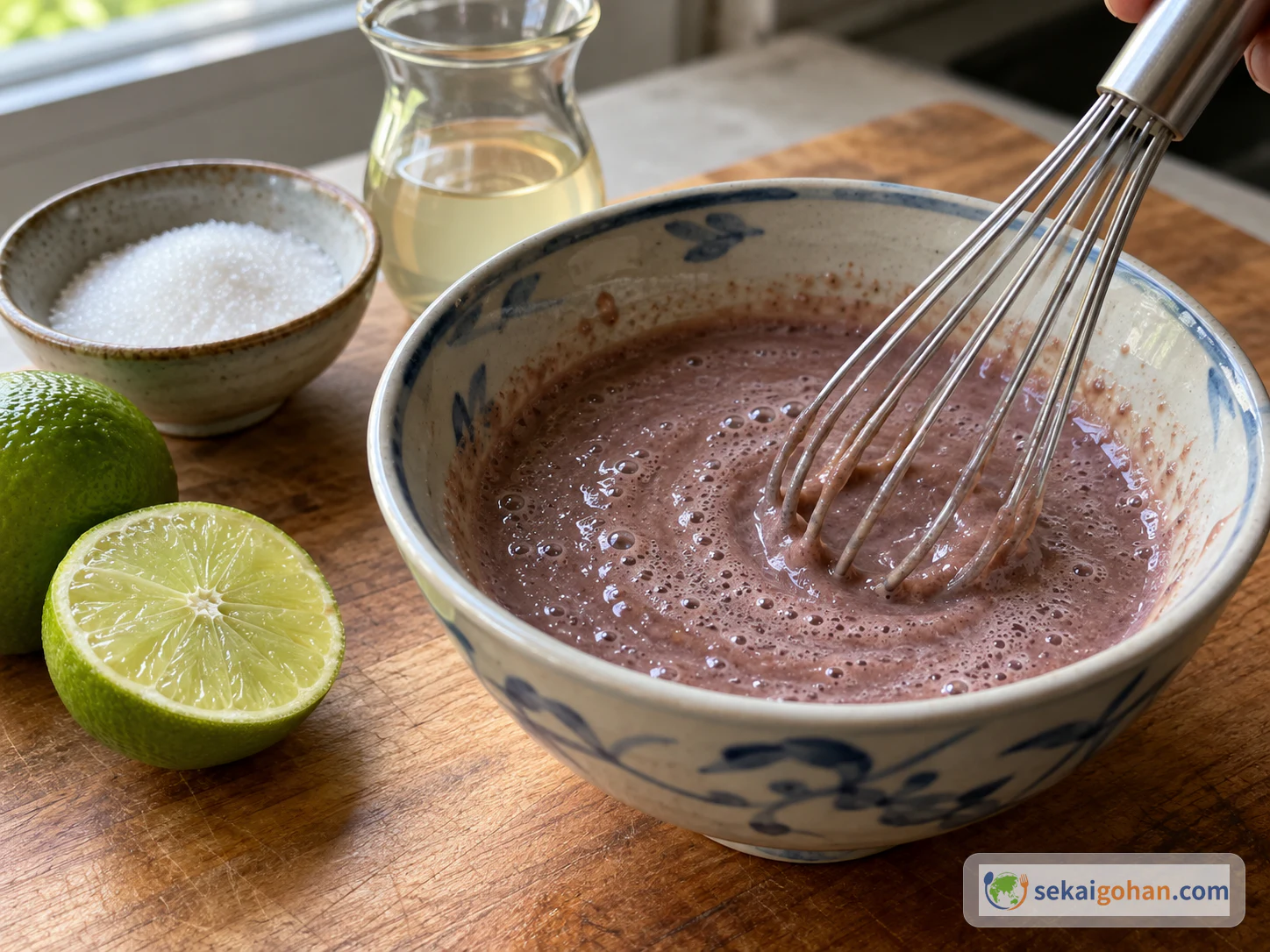
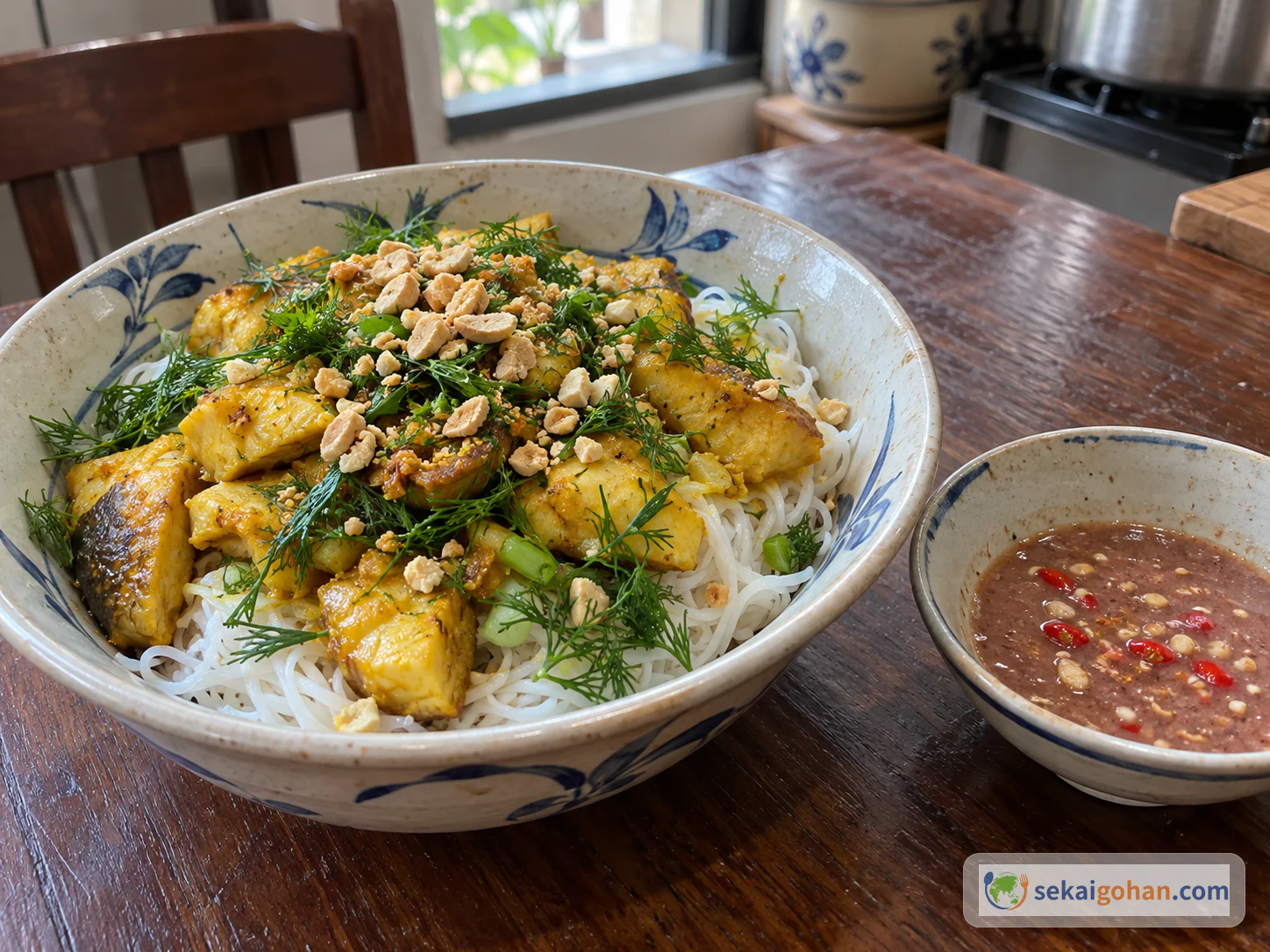
A small pan of hot fat sits on the table. Scallions and dill go in first and begin to soften, then chunks of fish, already grilled and stained gold with turmeric, are laid over them with more dill on top, and the smell of the herbs rises straight off the pan. Around it wait rice noodles, roasted peanuts and a bowl of mắm tôm, a pungent fermented shrimp paste sauce. This is chả cá Lã Vọng, Hanoi's famous turmeric fish from Vietnam. It is grilled first, then finished with dill, and every bite plays fresh, bright herbs against a deep, funky dipping sauce. Getting it right at home comes down to two things: grilling the fish so it survives the second heating, and handling the fermented seasonings, mẻ and mắm tôm, that give the dish its depth.
Chả Cá Lã Vọng in Hanoi
Chả cá Lã Vọng is tied to one street in Hanoi's Old Quarter. The Đoàn family has sold this fish dish on Chả Cá Street since 1871, and it has become one of the symbols of the city. It is a city dish with an address. The "Lã Vọng" in the name comes from a statue of Lã Vọng, a fisherman figure, kept at the restaurant.

The way it is eaten matters as much as the fish. The fish is grilled, finished with herbs in a pan, and then each person combines it with noodles, peanuts and the fermented shrimp sauce. The pleasure is in the contrast between the fresh herbs and that deep, fermented sauce.
What builds the flavor
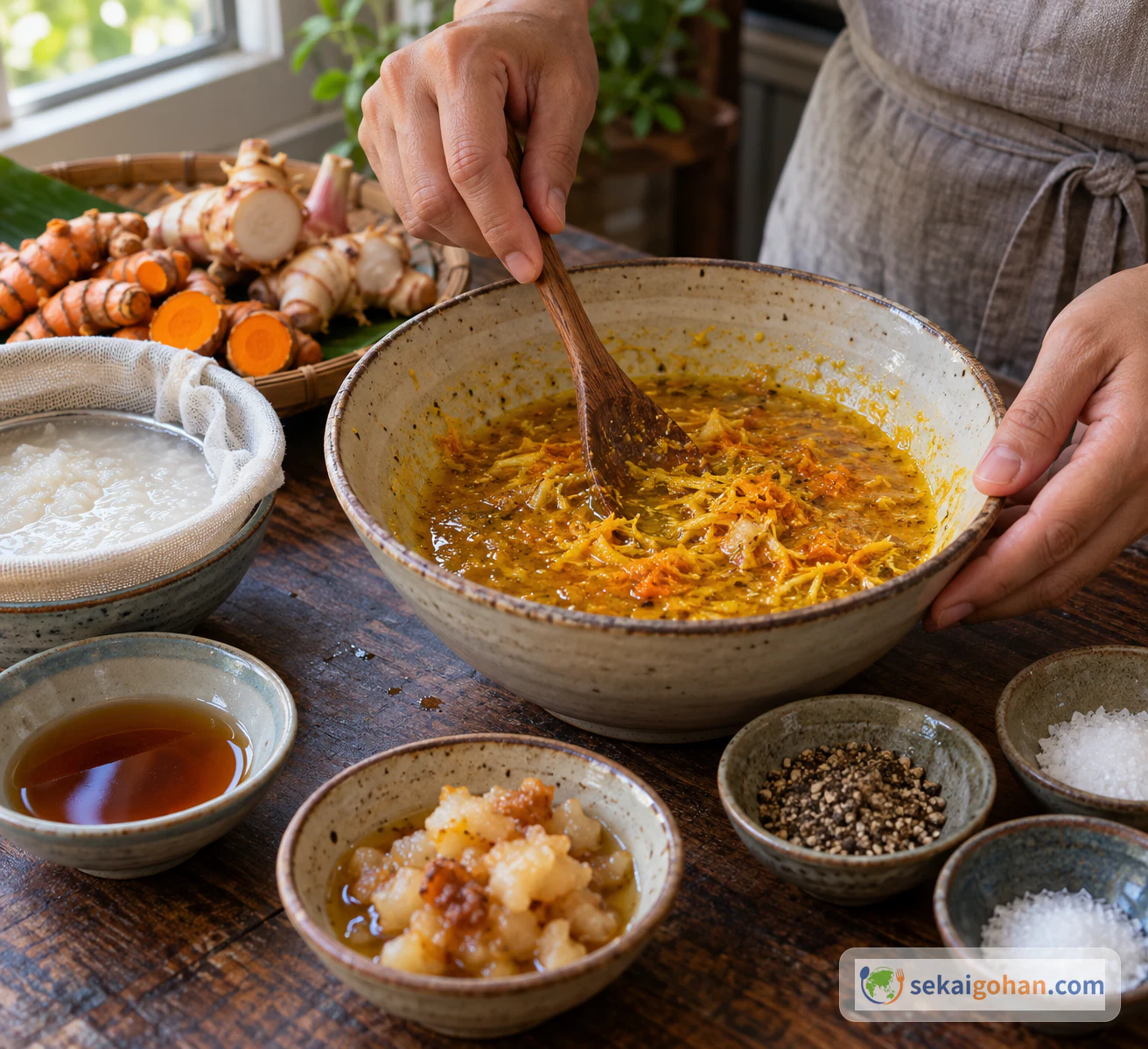
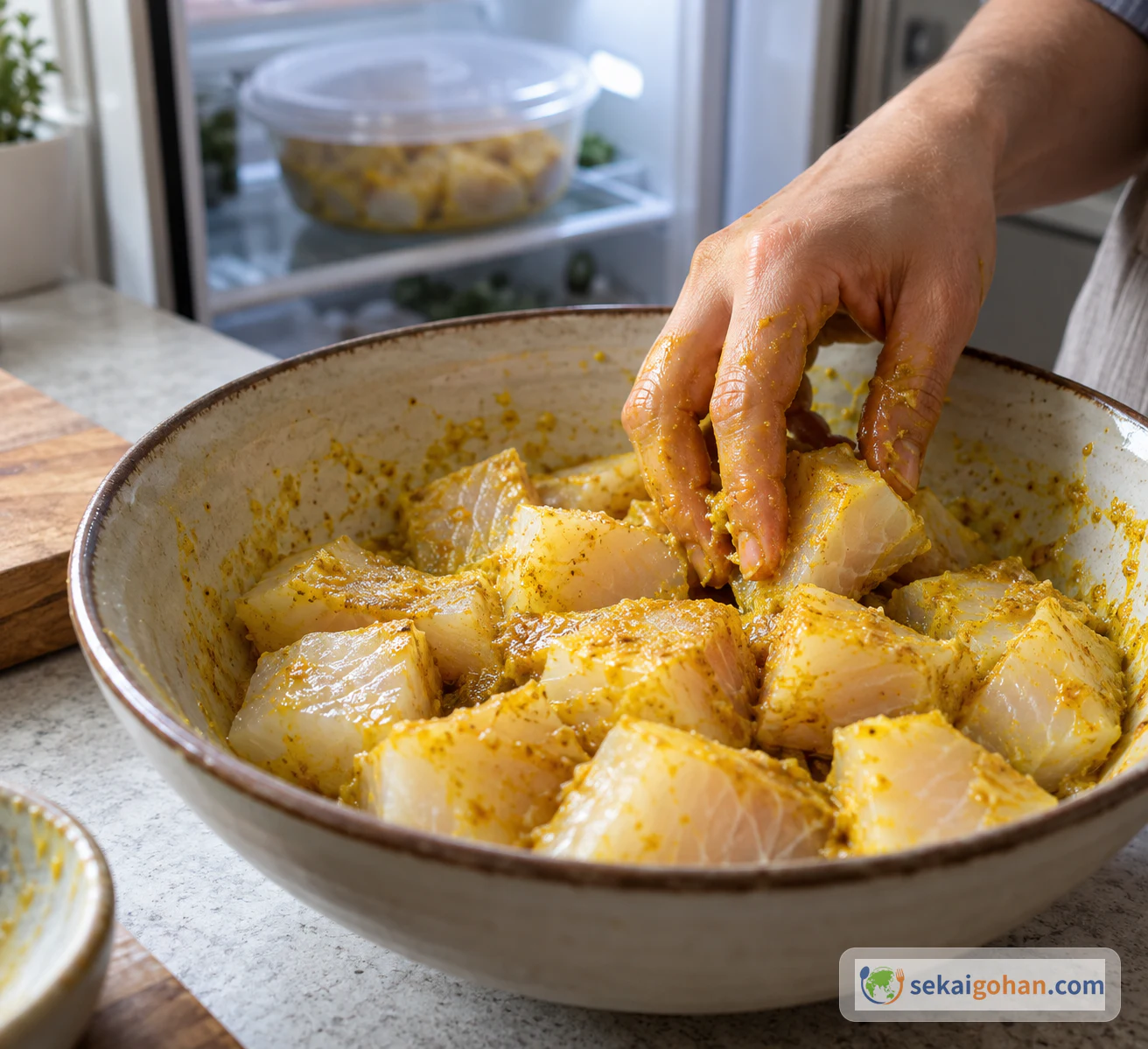
The marinade carries the color and the depth. Fresh turmeric and galangal give an earthy, bright aroma, mẻ (fermented rice) adds sourness and savoriness, fish sauce brings salt, and a spoonful of mắm tôm adds fermented intensity. Shallot and garlic stay out of it. Dill and scallions go in last, in the pan, which keeps their aroma alive.
If you like Vietnamese tables built around noodles and herbs, try bún thịt nướng and phở gà; for another way Vietnamese cooks treat fish, see canh chua cá.
Ingredients: 2.25 lb (1kg) of Fish for 4–6 People
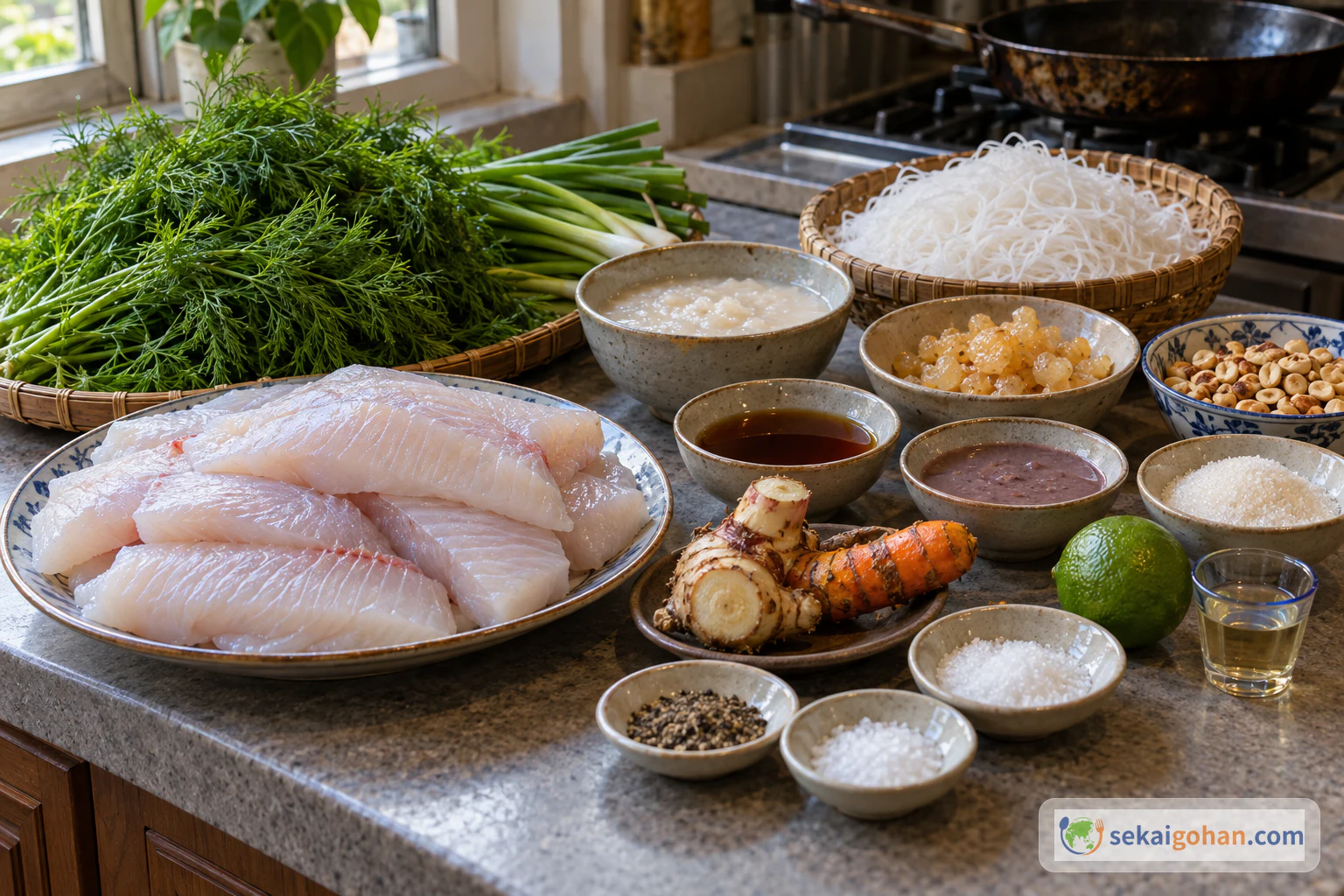
This recipe is for 2.25 lb (1kg) of fish serving 4–6. The roots are listed by the piece. The marinade and the dipping sauce both contain mắm tôm, in different amounts; keep them separate.
This dish contains fish, fish sauce, fermented shrimp paste and peanuts. Watch for cross-contact from shared tools and boards. If someone has a shrimp allergy, leaving out the mắm tôm is not enough: check the ingredient labels of the fish sauce and other condiments as well.
Choosing Fish, Roots and Fermented Seasonings for Chả Cá
Fish. You want a white-fleshed fish firm enough to be cooked twice without breaking, bought as boneless fillets. Snakehead or cá lăng (a Vietnamese catfish) is ideal. Sea bream, sea bass, tilapia, catfish or basa also work, though each holds a different amount of water and breaks apart more or less easily, so the texture won't be quite the same as with cá lăng. Thaw frozen fish in the refrigerator.
Galangal and turmeric. Galangal has a cooling, resinous aroma. Ginger can stand in if you truly can't find it, but it smells different. Without fresh turmeric, use ground turmeric a little at a time and keep the coating thin.
Mẻ and mắm tôm. Mẻ is rice fermented into a sour paste. Rice vinegar or lemon can supply the sourness but not its fermented aroma, so the marinade will taste different. Mắm tôm, fermented shrimp paste, carries the strong aroma that sets this dish apart, and fish sauce doesn't reproduce it.
Herbs. Dill and scallions are the core herbs, and water mint is warmed with them at the end; ordinary spearmint smells different. Rau răm, sometimes called Vietnamese coriander, is a separate plant altogether, Persicaria odorata of the knotweed family, rather than a mint.
Noodles. Fresh bún is ready to use. Dried rice noodles gain weight when soaked or boiled, so the dry weight on the package is less than what ends up in the bowl.
Equipment
- Fine grater
- Mixing bowls, including one for the raw fish
- Separate cutting board and knife for raw fish
- Wire rack set over a tray, plus an oven, or a charcoal grill
- Instant-read thermometer
- Small shallow skillet or pan
- Portable tabletop burner, if you want to finish the dish at the table
Method: Marinate, Grill, Then Finish with Herbs
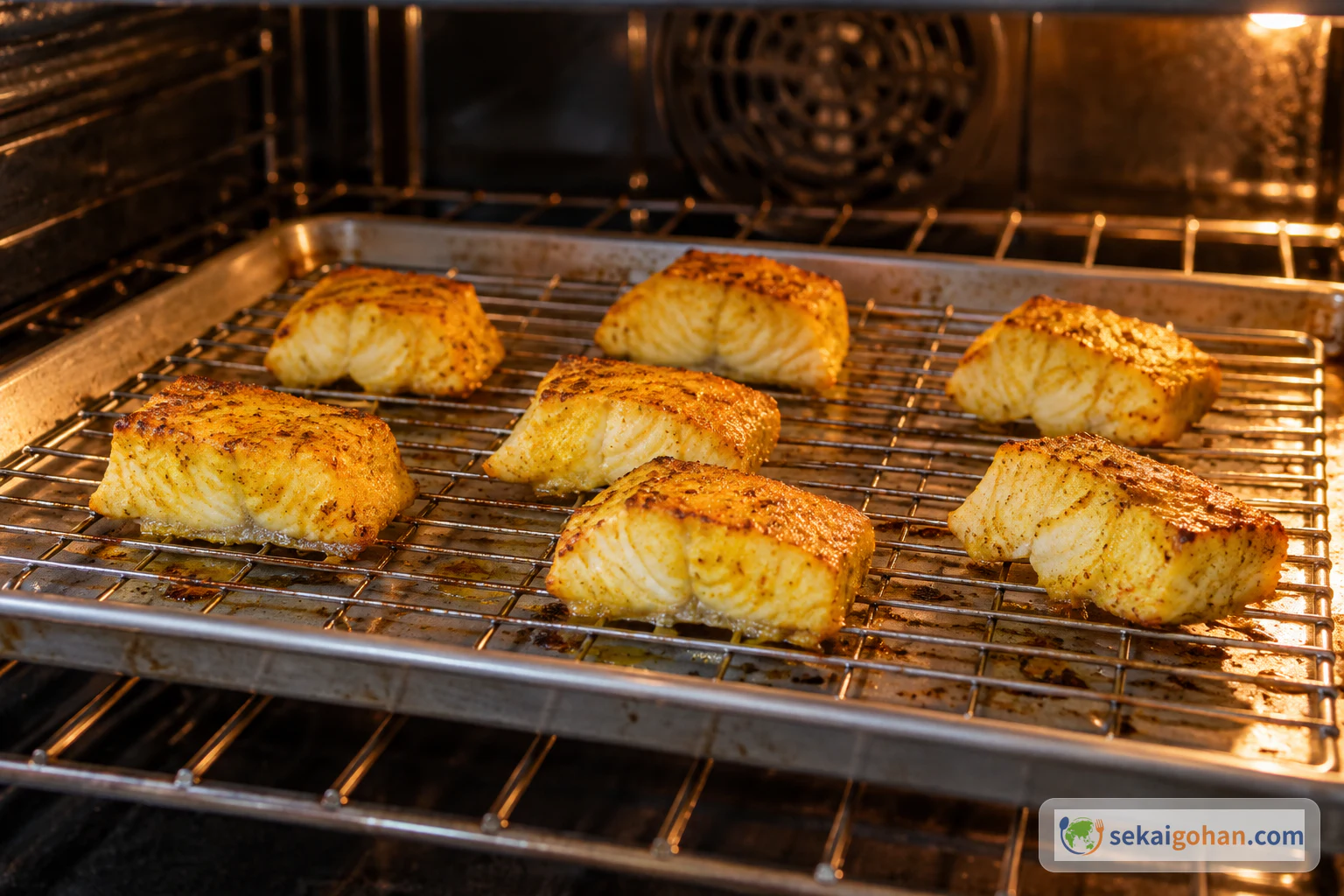
The fish must be cooked through in the first grilling: 63°C (145°F) at the center, or opaque and flaking easily with a fork. The pan at the end only reheats the fish and wilts the herbs.
Fixing Chả Cá Mistakes
| Problem | Likely cause | What to do |
|---|---|---|
| The fish falls apart | Pieces too small, too much marinade left on, stirred in the pan | Cut larger chunks, let excess marinade drip off before grilling, let the first grilling firm the surface, and leave the fish unstirred in the pan |
| The fish is sticky and won't color | Pieces crowded on the tray | Grill in a single layer on a rack with space between the pieces |
| The center isn't done | Pieces thick or heat uneven | Return to the grill or oven until the center reaches 63°C (145°F) or the flesh is opaque and flakes |
| Turmeric tastes earthy or harsh | Too much turmeric, especially ground | Keep to the marinade amounts |
| The shrimp sauce smells too strong | Strong paste for your taste | Use less paste and balance with lime and sugar, knowing the aroma also weakens |
| The herbs turn dark | Heated too long | Add the last herbs at the end and stop as soon as the fish is hot |
Serving, Variations and Storing Chả Cá
Serving and variations
Bring the pan straight to the table with the rice noodles, peanuts and shrimp paste sauce on the side, and let everyone pile fish and herbs onto their own noodles. That's half the fun.
There's room to adjust. Sea bass and tilapia both work if you pick by the texture you want. A milder sauce with less mắm tôm is fine too, though the dish's characteristic aroma softens with it. The fish can marinate for as little as 30 minutes in a pinch. And without a charcoal grill, an oven works: set the fish on a wire rack over a tray so fat and moisture drip away.
Leftovers and safety
Leave cooked fish at room temperature for no more than 2 hours, or 1 hour when it is hot (above about 90°F (32°C)). Move leftovers into a clean, shallow container and refrigerate them promptly, keeping the herbs and noodles separate from the fish. Reheat the fish until it is hot all the way through.
Frequently Asked Questions
Can I make it without mắm tôm?
Yes, but the dish changes. If you leave the paste out of the marinade and serve a fish-sauce dip instead, the aroma and saltiness shift noticeably, so think of it as a lighter, different version rather than the same dish.
Can I make it ahead?
You can marinate the fish in the refrigerator for at least 2 hours, or overnight. The finishing step with herbs is best done just before eating.
My fish broke apart. What now?
It still tastes good over noodles. Next time, cut larger pieces, let the excess marinade drip off, grill until the surface is firm, and handle the fish gently in the pan.