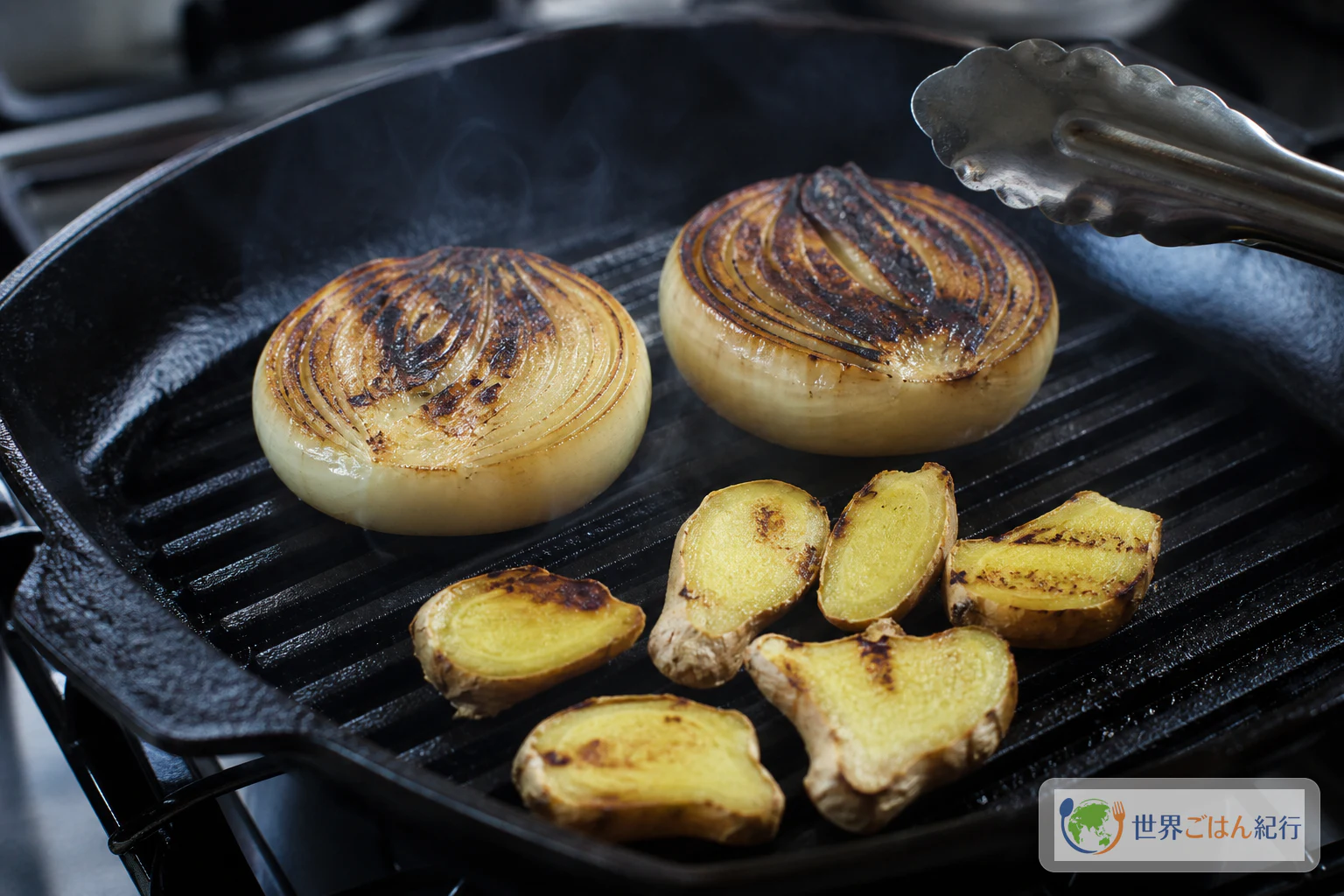
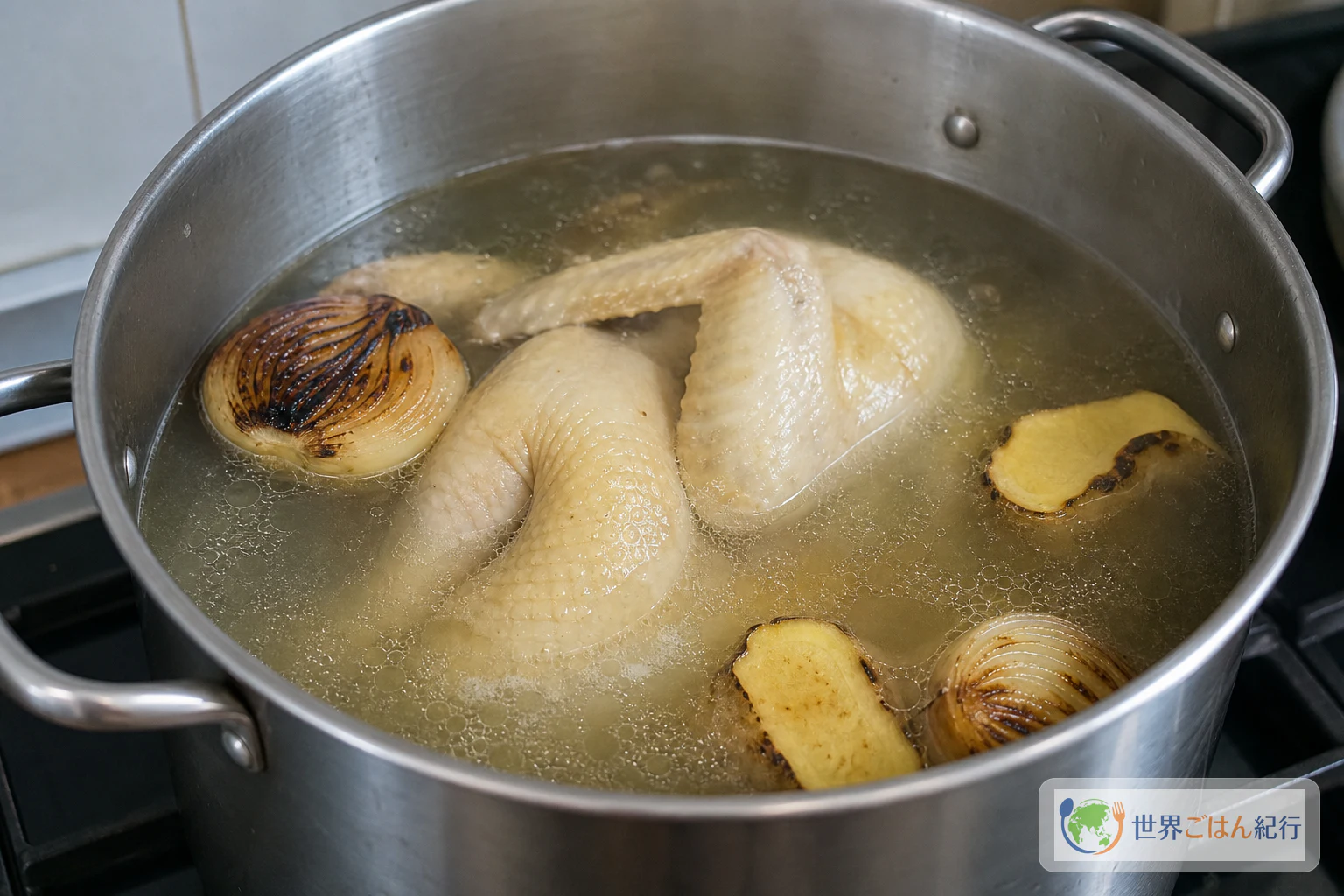
Halve an onion, cut the ginger thick, and set them on the grill rack. The skins slowly blacken, and a sweet smell rises before any meat has gone into the pot. The hour that follows takes patience, but half of phở gà is decided right here.
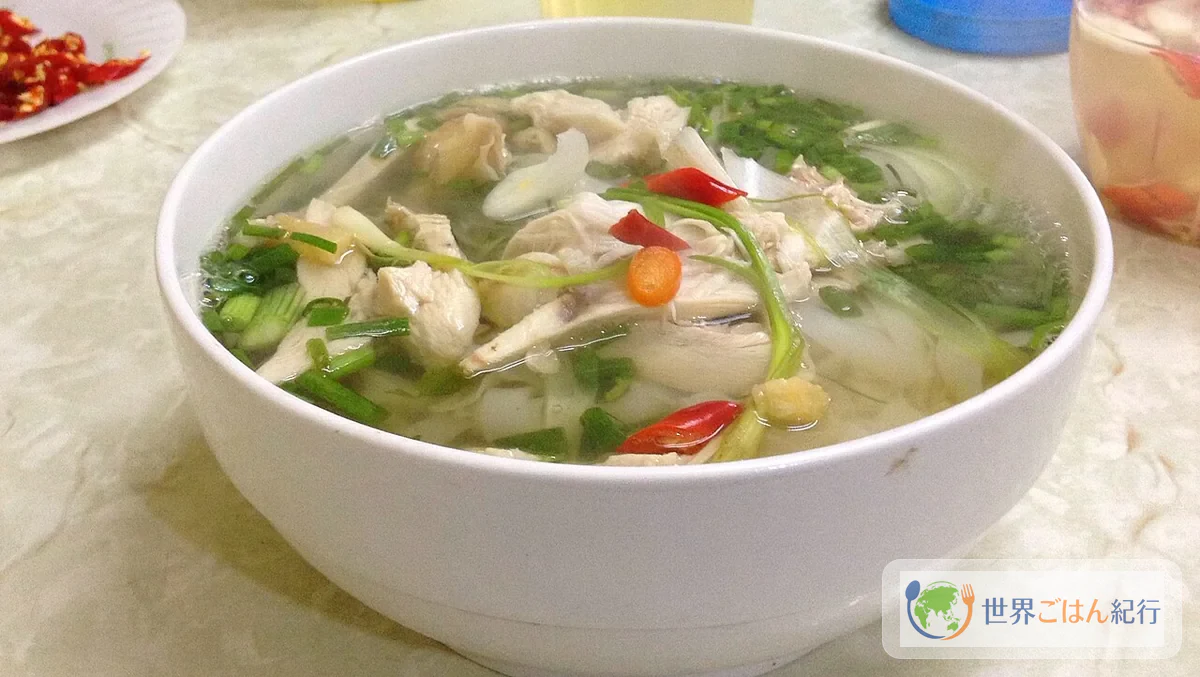
This Vietnamese rice-noodle soup is built on chicken broth. It is lighter than beef phở bò, but it is not a mild chicken soup. Chicken fat, charred aromatics, salty fish sauce and the roundness of sugar layer together, and at the end lime and herbs sharpen the outline. The broth stays light, so there is room for aroma and no off-flavors.
Where Phở Gà Comes From
Phở's birthplace is usually given as Nam Định, and the dish took root in Hanoi as part of city food culture. In the late 19th century, during the French colonial period, beef became easier to get, and broths made from bones developed. Phở spread because it was sold on the street, and it changed as it traveled. In 1930s Hanoi, mobile vendors carried a small kitchen on a shoulder pole. For more, read a history of phở.
Chicken phở appeared in 1939 and became a bowl of its own, separate from beef phở. Every home has its own way of simmering the chicken and its own choice of spices. No single shop perfected the dish and handed it out to the whole country. It took shape in the towns of the north and moved with people.
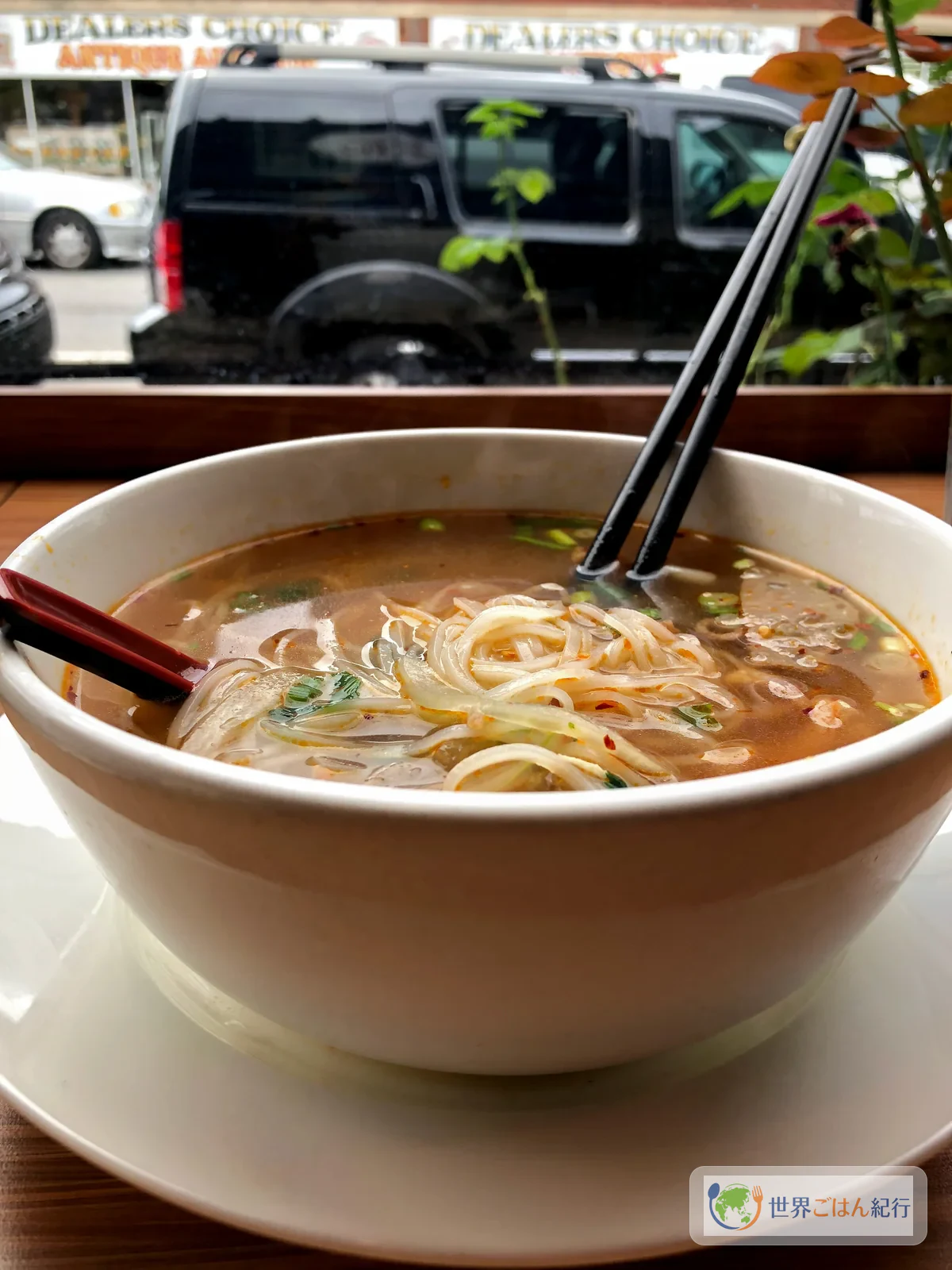
After the country was divided in 1954, phở traveled from north to south with the people who moved. In the south the broth became sweeter, and more herbs and condiments came to the table. Today Vietnamese communities abroad make it too.
Ingredients: Local Substitutes and What Is Worth Seeking Out
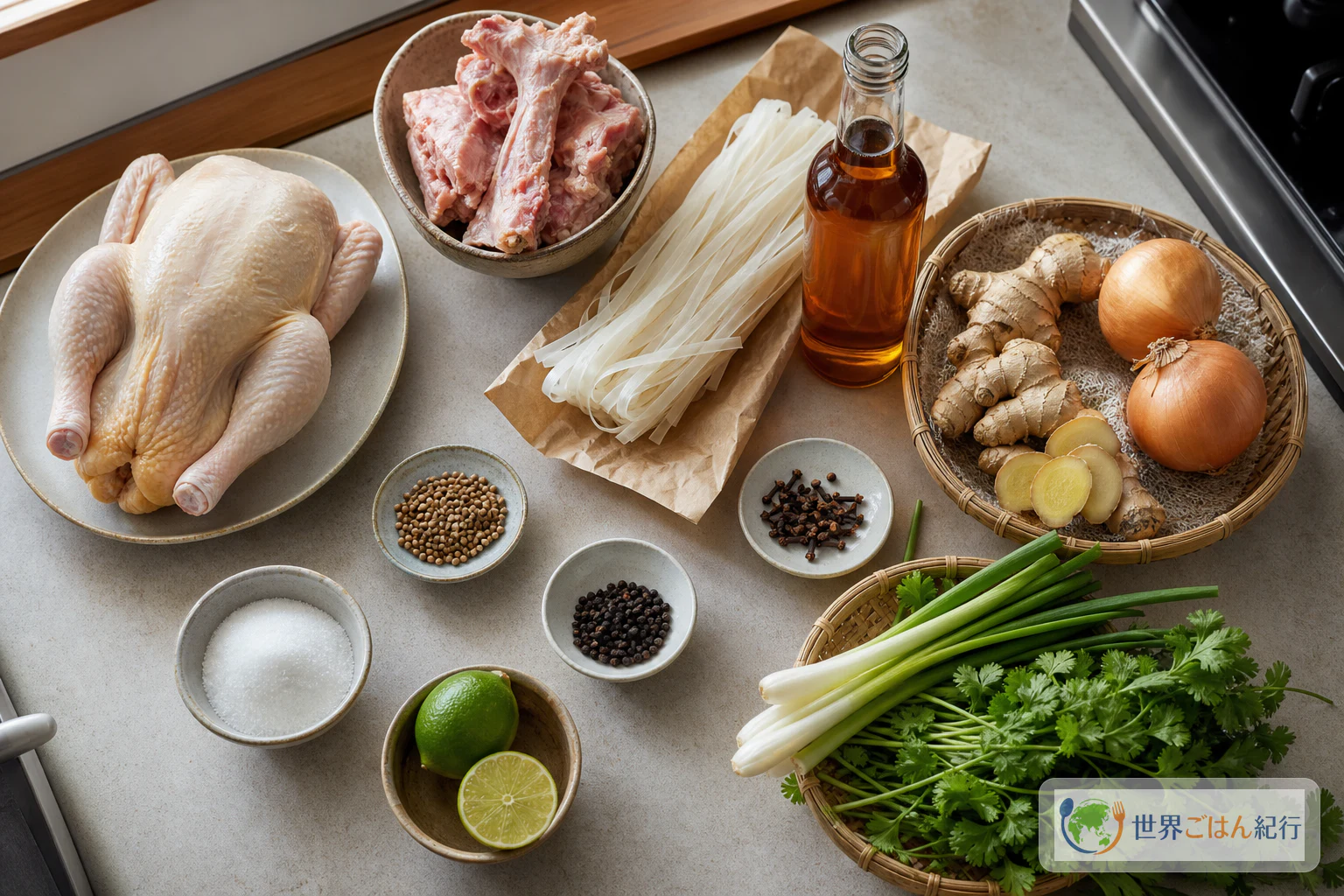
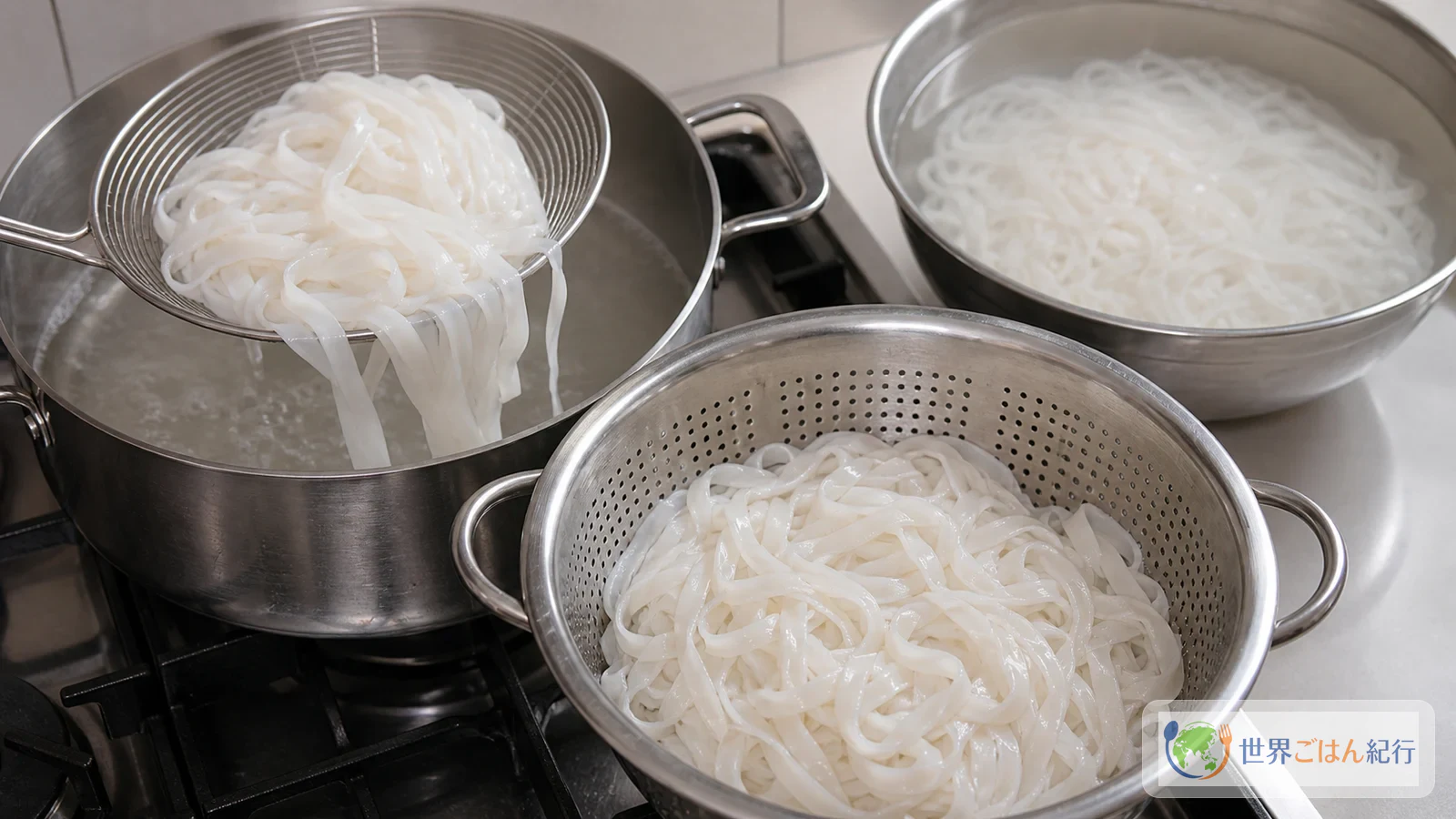
More ingredients do not make phở gà more authentic. Start with bone-in chicken parts for savor, flat rice noodles, and fish sauce. Without a whole chicken, you can make it with drumettes and thighs. But if you swap the flat phở noodles for thin rice vermicelli, the texture becomes much lighter.
Fish sauce and phở noodles are not one-time purchases; you can use them up. Fish sauce also goes into stir-fries and Thai dishes, and rice noodles into pad Thai and Vietnamese dry noodle dishes. Conversely, if flat rice noodles and fish sauce are already at a nearby store, there is no need to order more online.
The condition for buying rice noodles for phở is that the bag says "phở," "bánh phở," or "flat rice noodles," and that you can check the quantity and ingredients. If you substitute thin rice vermicelli, the amount of soup absorbed changes, so follow the package for the boiling time. Check whether the pack is 14 oz (400 g), the noodle width, and the ingredient list. Skip buying if you can substitute flat rice noodles you already have at home.
Fish sauce is made by fermenting fish, so if you have a seafood allergy, use light soy sauce and salt instead, and check the product label. For the chicken, check the thickest part with a food thermometer. It must reach 74°C (165°F) or higher. Do not wash raw chicken under running water, since it splashes juices around. Handle it unwashed, and use separate cutting boards and tongs before and after cooking.
Choosing Ingredients for Phở Gà
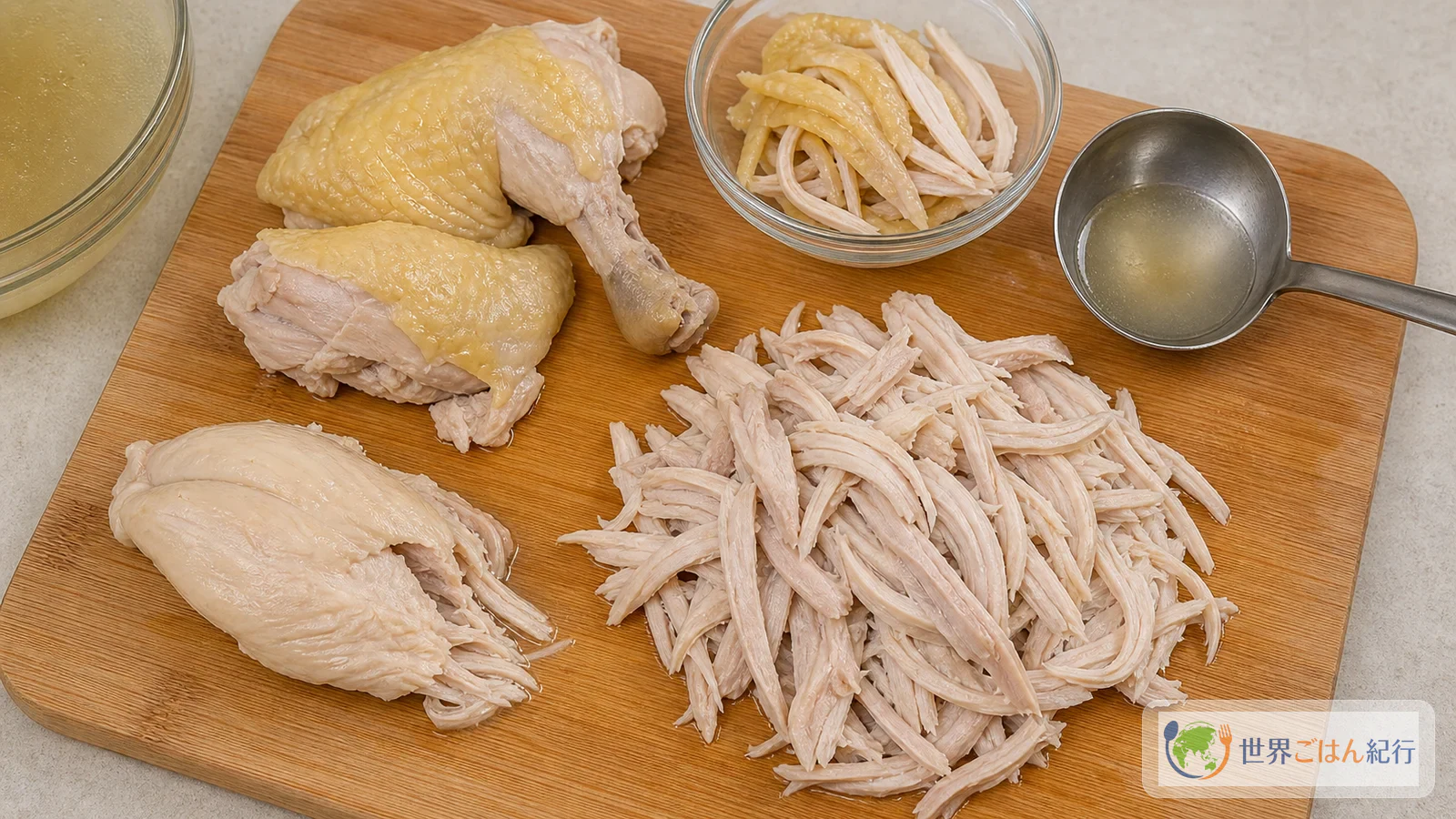
This recipe makes the broth with a whole chicken and chicken carcasses, and it keeps star anise and cinnamon in the background. If you can find only one specialty ingredient, make it flat rice noodles for phở. The width of the noodle and the way it slips as you slurp shape the bowl more than any substitute for the chicken or onion.
If you buy one thing for authenticity, flat phở noodles. If you buy one for depth of flavor, fish sauce. Add coriander seeds only if you want the aroma another step brighter.
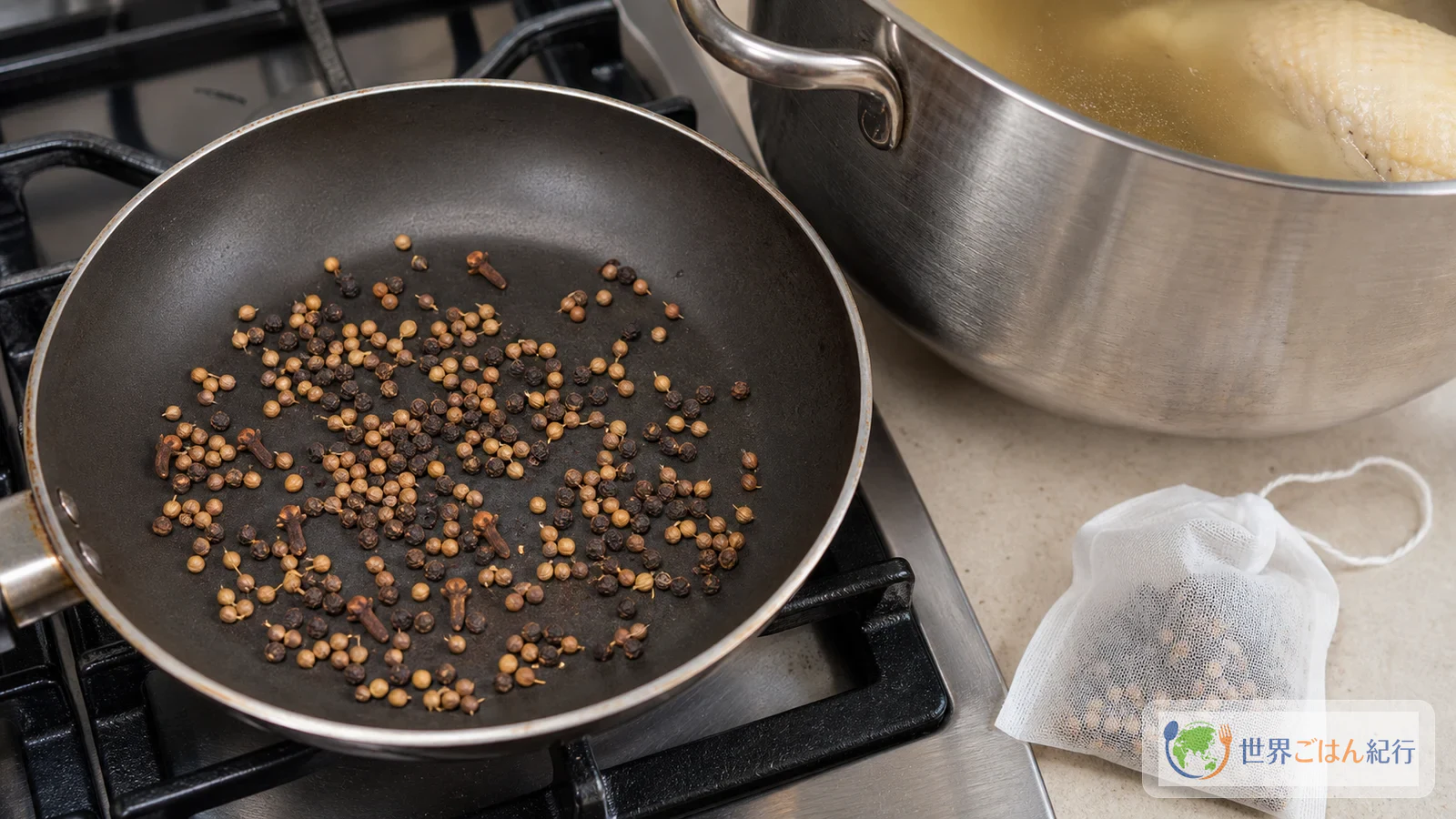
Coriander seeds are hard to justify buying for phở gà alone, but they earn their place. Toast the seeds for only a minute and lift them out after a short simmer, and the broth picks up a citrus-like brightness. Use whole seeds: powder releases its aroma differently and can't be lifted out.
When you buy them, check that they are whole and look at the quantity and expiry date. They are worth it if you'll make phở gà two or more times, or if you also use whole spices in curries and pickles. Otherwise, use the black pepper you already have. The aroma will be lighter, and nothing goes to waste.
Fish sauce adds a fermented savor you can't get from salt water. Buy it if you make phở or stir-fries several times a month and don't mind the smell. If you need to avoid seafood, or if you like the taste you get from light soy sauce, skip it. Check the volume and ingredient list on the label, and follow the product's storage directions once it's open.
Instructions: Eight Steps That Keep the Broth Clear
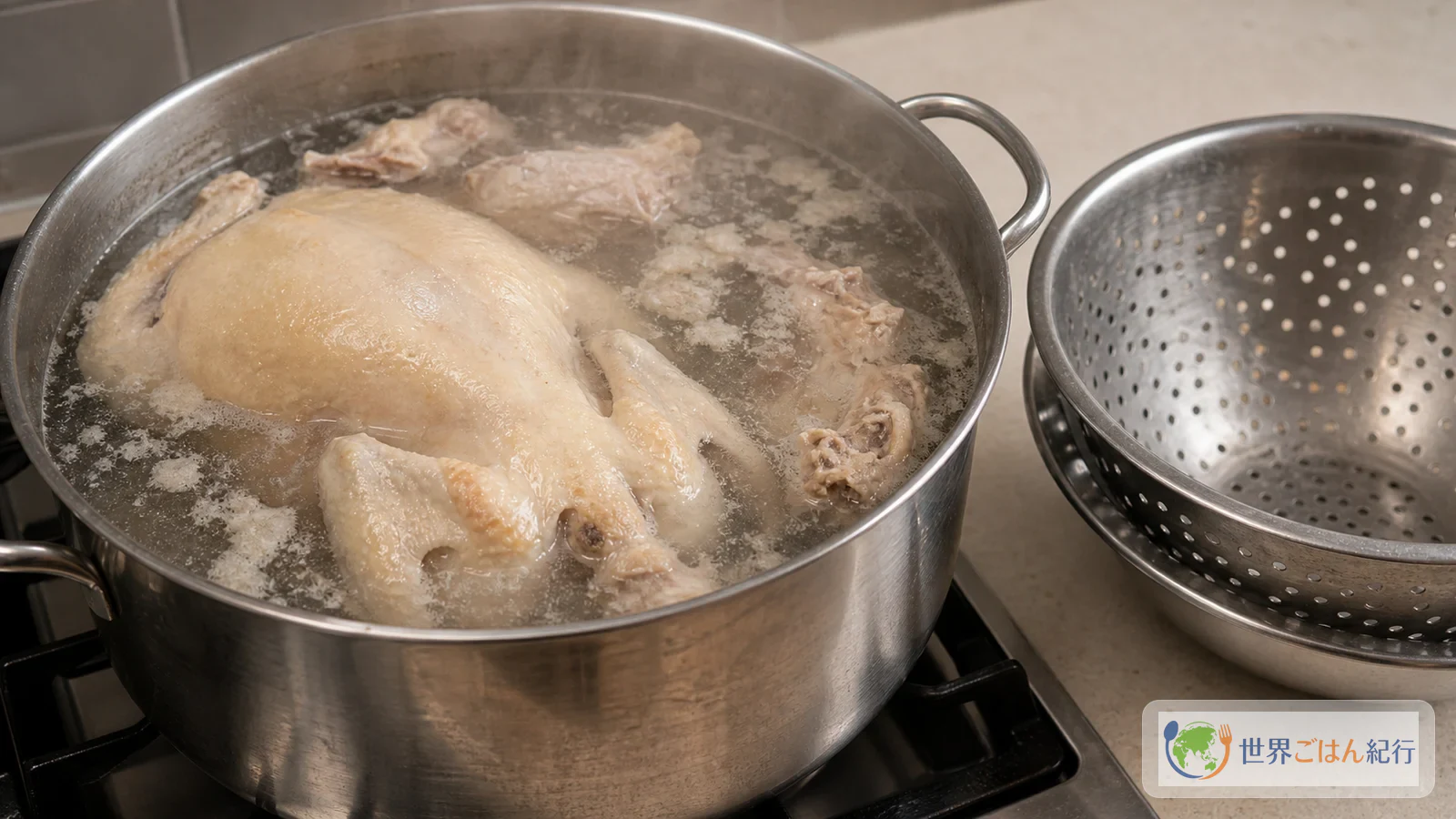
Phở gà is less about simmering long than about not disturbing the pot. Boil it hard, and fat and fine bits of meat scatter through the broth, and the clarity is lost. Keep the surface trembling gently, and watch that the aroma does not lean too much toward char.
If the broth has turned white and cloudy from too strong a heat, the flavor is not ruined. Take out the chicken and aromatics once and skim the fine foam with a strainer. Return to low heat and keep the broth quiet. Even if it does not return to complete clarity, as long as there is no burnt bitterness, lime and scallions make it perfectly eatable.
Why keep the broth light
The recipe serves four, and the herbs are added at the table. If you want to keep the chicken aroma, skip the star anise and cinnamon.
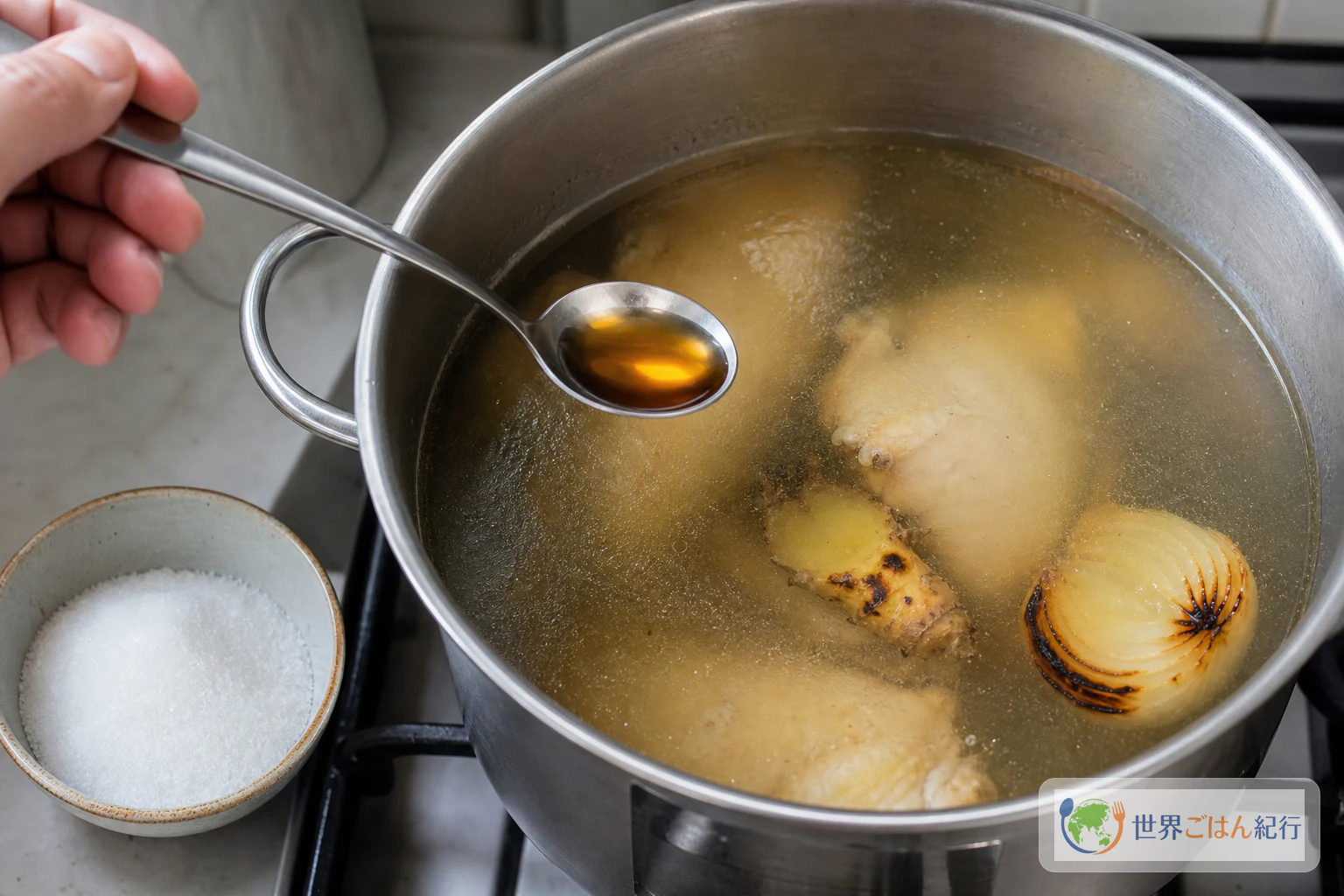
Add the fish sauce last. If it simmers long from the start, its aroma weakens and only the saltiness comes forward. Set a small dish on the side for those who want more, and it is easier to serve even people who do not like fish sauce.
Keys to a Clear Phở Gà Broth
The order of the work matters more than having every local ingredient. First, char the onion and ginger to build sweet, toasty notes. Next, keep the chicken from boiling hard so the broth stays clear. Last, add the fish sauce, sugar, lime and herbs one at a time. Follow that order and you can swap cilantro for mitsuba, or the whole chicken for drumettes, and still have phở gà.
Serving and Storing Phở Gà
Setting the table, north and south
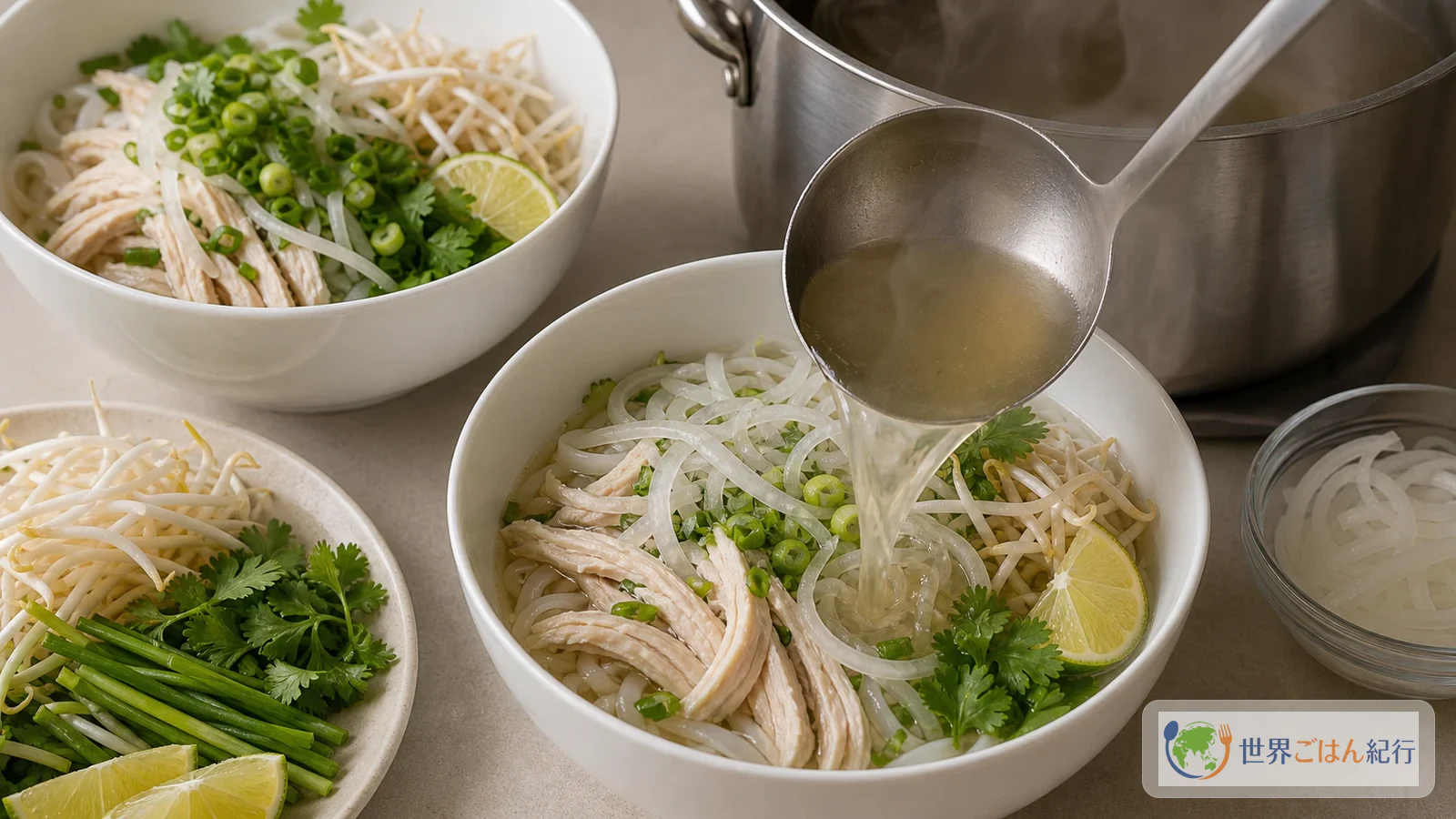
Say it's a weekday evening, and one person dislikes cilantro while another wants heat. Instead of settling the flavor in the pot, put scallion, lime and chili on separate plates, which is more like a phở table anyway. Take the first sip of clear broth on its own, add sourness for the second and heat for the third, and the bowl changes as you eat.
In the north, you taste the broth first and then add a little scallion, cilantro, lemon and chili. In the south, a separate plate of bean sprouts, basil, mint and the like comes to the table, and diners add sweetness, hoisin sauce and chili sauce to build their own bowl. At home, keep your first pot clear and northern-leaning. Then put out more plates to move toward the southern style, and you can compare the two side by side.
After a clear noodle soup, you can explore more of the Vietnamese table. Try bánh mì, where pickled vegetables cut through the bread, or bánh xèo, made from rice-flour batter. Both use fish sauce and herbs in a different way. For another gentle chicken-broth noodle soup, try Laos's khao piak sen.
Storing leftovers
Once the heat is off, move the broth and chicken into separate clean containers and refrigerate them. Use both within 2 days, and boil fresh rice noodles each time. To freeze, freeze only the broth, in single portions without toppings, so the noodles don't go soft. After thawing, reheat the broth until the center reaches 165°F (74°C) or higher, then return the chicken. Store toppings and seasonings separately, since the flavor shifts quickly once fish sauce and herbs go in. Don't leave the dish at room temperature for long.
Frequently Asked Questions
Q1. Is it still phở gà without a whole chicken?
Yes. You can make it with 8 drumettes and 2 chicken thighs, or 1 lb (500 g) chicken wings and 2 chicken thighs. Bone-in parts give the broth body. If you use only breast meat, add carcasses or wings, and take the meat out partway so it doesn't overcook.
Q2. Is it lacking without star anise and cinnamon?
Not at all. Phở bò's aroma can tempt you to add them, but phở gà comes together with only coriander seeds, black pepper and charred ginger. If you do add them, start with 1 star anise and a piece of cinnamon no longer than 2 inches (5 cm). Check the aroma at about 15 minutes and take them out.
Q3. I don't like cilantro. What should I serve instead?
Try mitsuba, water dropwort, shiso or scallion, roughly in that order. The aroma will be different, but you still get a green fragrance over the chicken broth. If you skip herbs entirely, use a bit more lime and black pepper so the flavor doesn't go flat.
Q4. Can I swap the phở noodles for vermicelli?
You can, but vermicelli is thin and holds less of the soup. When you buy flat noodles, look past the product name and check the noodle width and boiling time on the package. Follow the package for soaking and boiling.
Q5. The broth turned cloudy. Can I eat it?
If it doesn't taste burnt and bitter and doesn't smell off, you can eat it. Lower the heat, skim the foam from the surface and taste, then adjust the fish sauce and lime. Next time, clean the pot well after parboiling, and don't let big bubbles rise during the simmer.