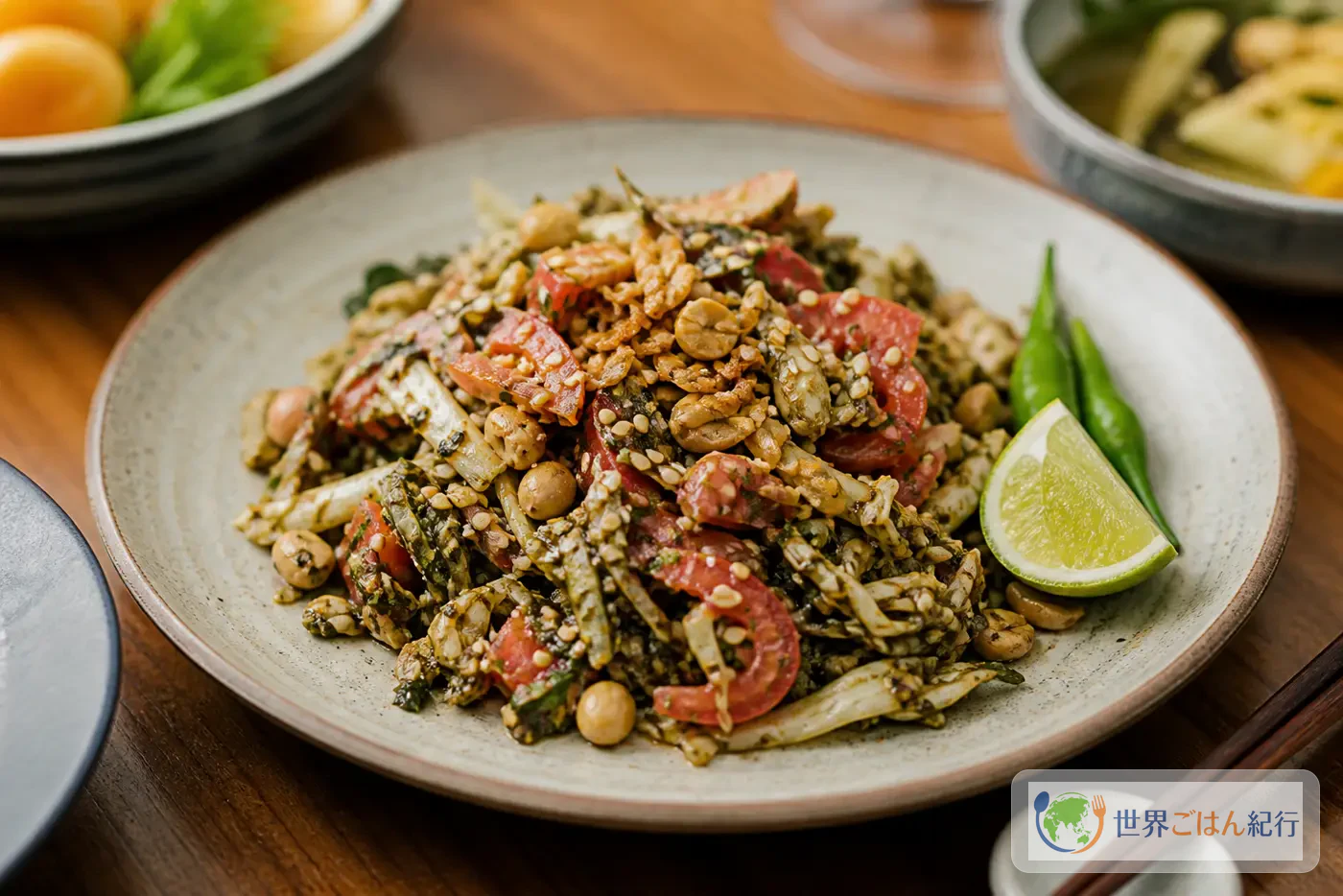
Open a bag of green tea to make lahpet thoke and you get the scent you would normally brew into a pot. In Myanmar, that leaf gets eaten. Lahpet thoke (lahpet thoke / လက်ဖက်သုပ်) is a Burmese salad of fermented tea leaves, where sourness, bitterness, oil, and the toastiness of beans meet on one plate. You toss it with a spoon, and it crunches as you go. Lahpet means tea leaves, and thoke means a tossed dish or salad.
Lahpet thoke and the Burmese habit of eating tea
In Myanmar, lahpet thoke is often served after meals, at tea time, and whenever people gather. It's the plate that sits in the middle of the table and keeps the conversation going. In Burmese food, tea is something you drink and also something you eat: the leaves are fermented, then dressed with oil, garlic, beans, and seeds.
Southeast Asian tables often build savoriness from fermented and dried foods, such as fish sauce, fermented soybeans, and dried shrimp. Lahpet thoke adds the bitterness of tea leaves to that mix, which gives it an aftertaste unlike other salads in the region. Next to laab or som tam, which push with sourness and heat, it leans on bitterness instead.
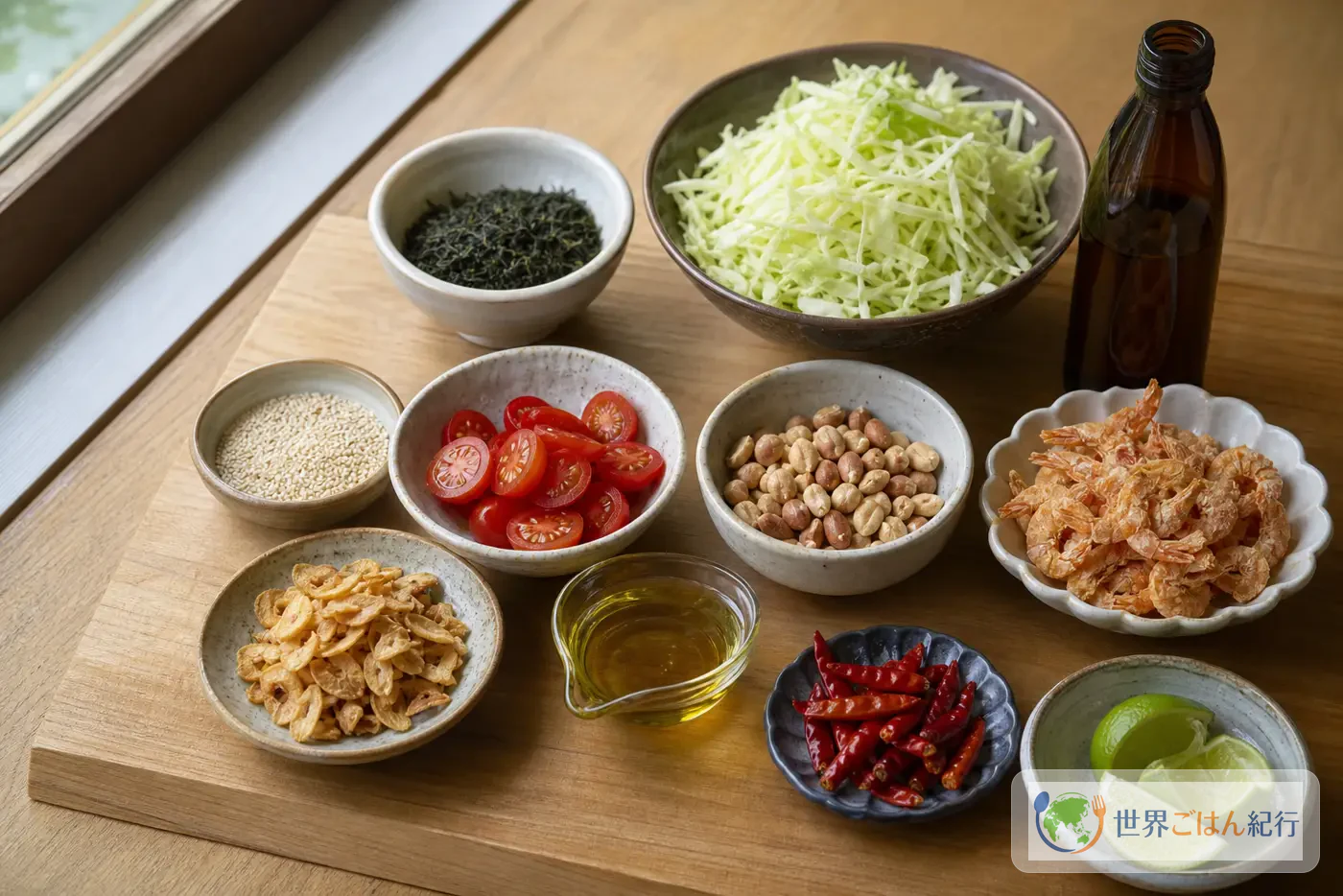
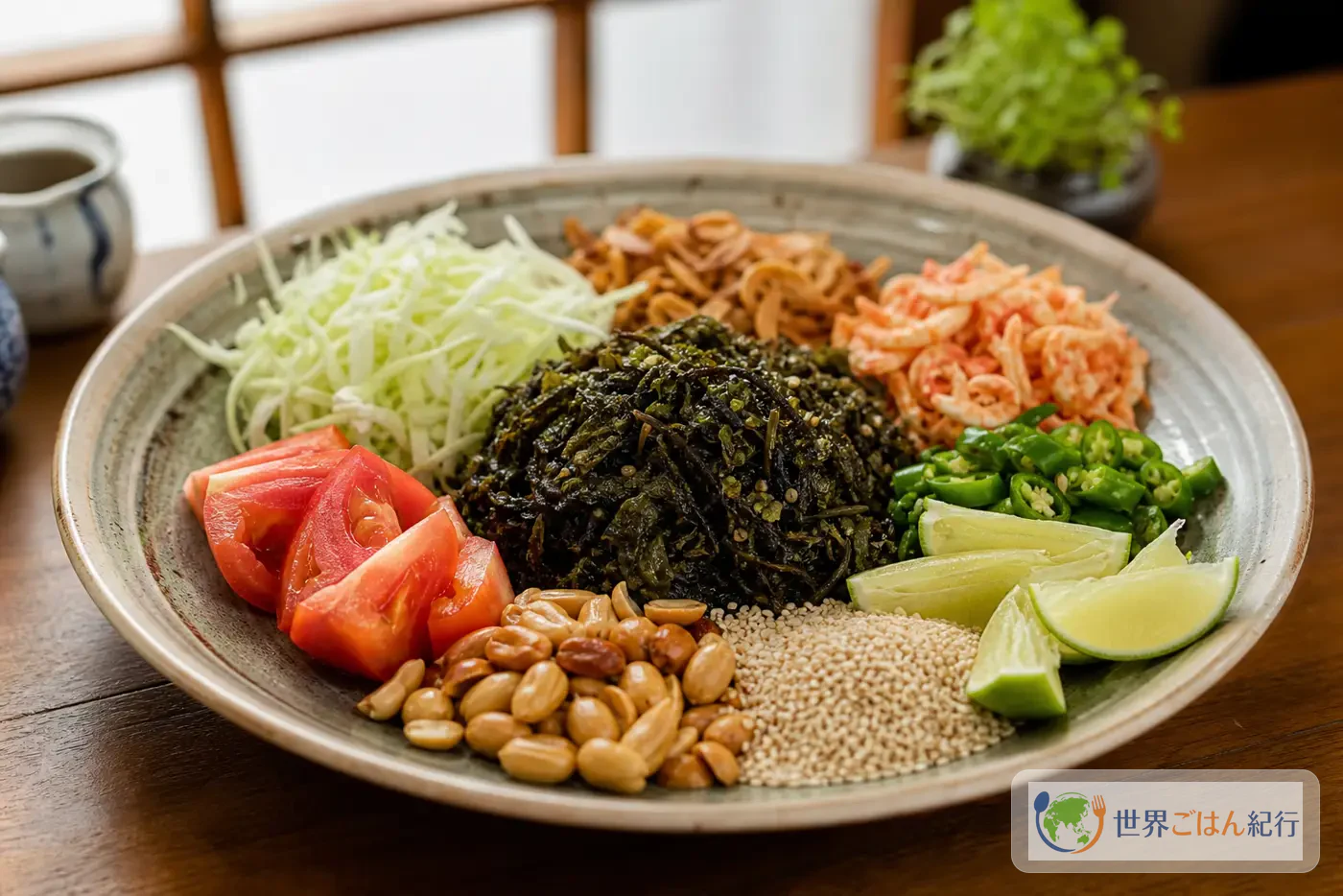
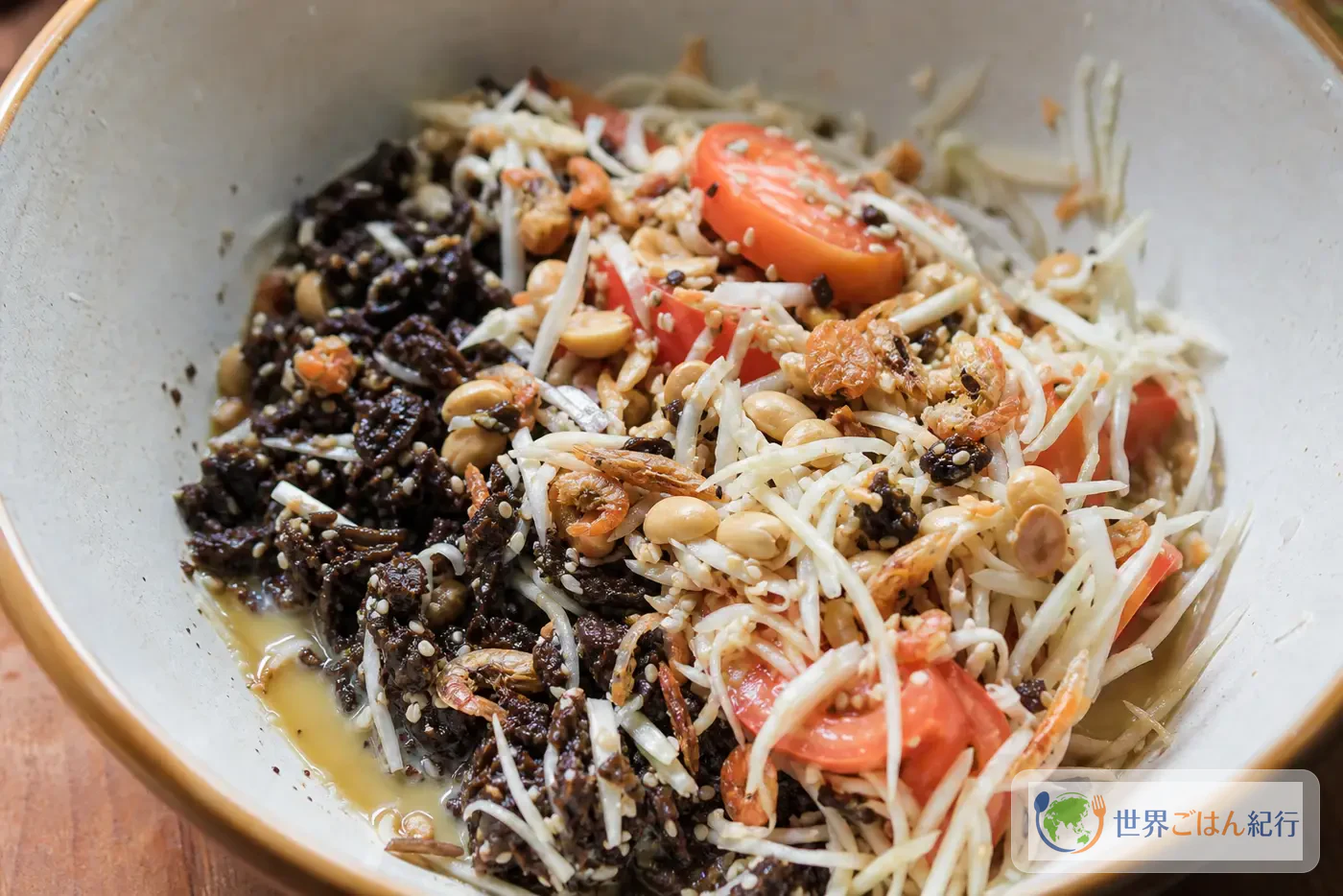
A local plate includes fermented tea leaves, fried beans, fried garlic, sesame, peanuts, tomato, cabbage, chili, and dried shrimp. Some versions put the tea leaves forward; others carry more beans and vegetables, which makes them easier to eat.
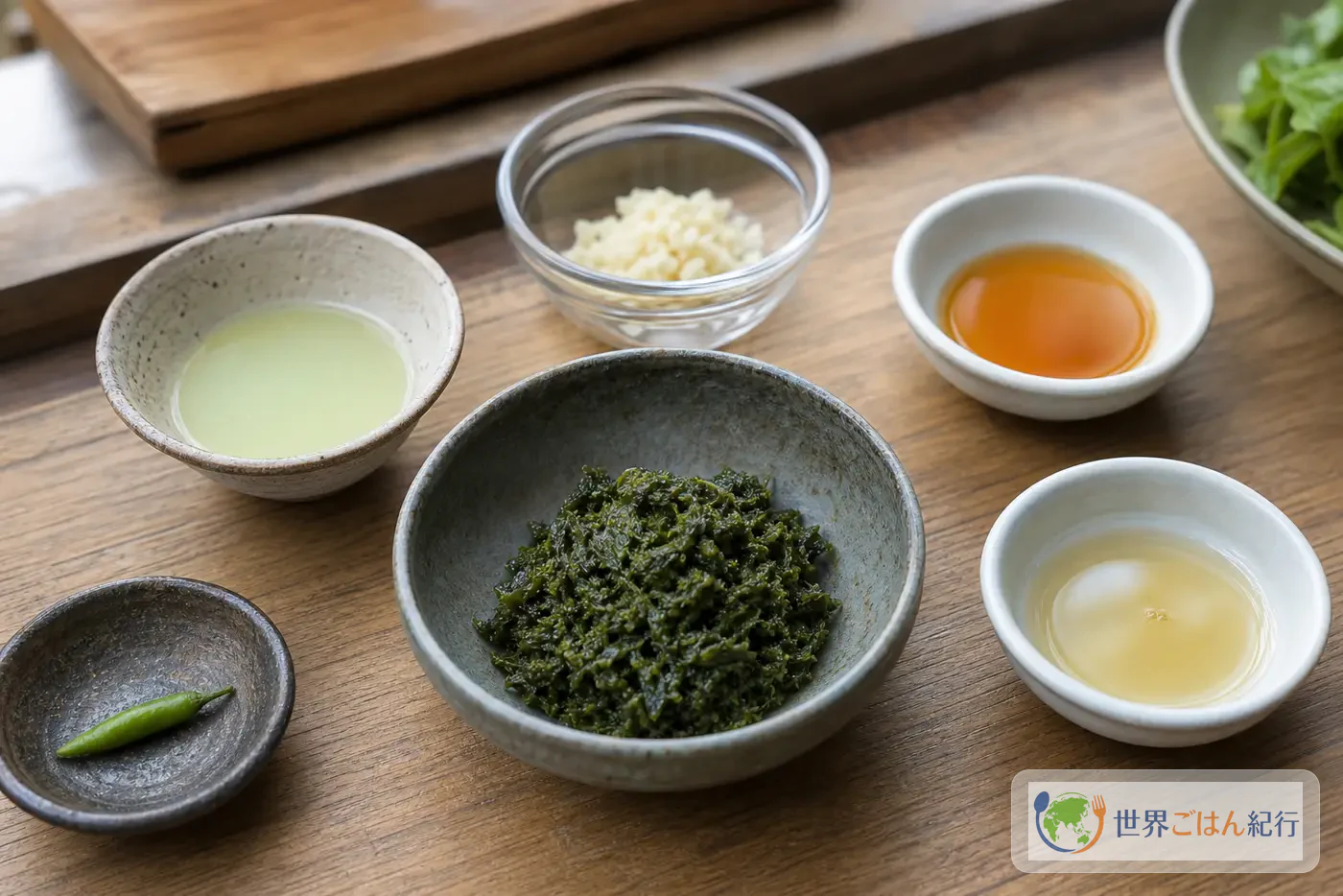
Ingredients (serves 4): keep the outline of tea leaves even without fermented ones
For 4 people, that is four small bowls as a side, or one large plate beside a main. Since the bitterness of tea leaves is the star, don't overdo the leaves the first time, and make it easy to eat with beans and vegetables.
| Ingredient | Amount | Substitutes & notes |
|---|---|---|
| Fermented tea leaves | 2.75 oz (80 g) | If you can get them. If very salty, rinse in water for 1 minute |
| Green tea leaves | 20 g | Substitute if you have no fermented leaves. Regularly steamed is easier to handle than deep-steamed |
| 176°F (80°C) water | 1¼ cups (300 ml) | To soak the green tea. Boiling water brings out bitterness |
| Sesame oil or peanut oil | 1 1/2 tbsp | A mild-scented oil also works |
| Garlic | 1 clove (6 g) | Grated |
| Lime or lemon juice | 2 tbsp | About one fruit's juice |
| Fish sauce | 2 tsp | For a vegetarian version, 2 tsp soy sauce |
| Sugar | 1 tsp | Rounds the edges of the tea leaves |
| Salt | 1/4 tsp | Reduce to 1/8 tsp if the fermented leaves are salty |
Salad add-ins
| Ingredient | Amount | Substitutes & notes |
|---|---|---|
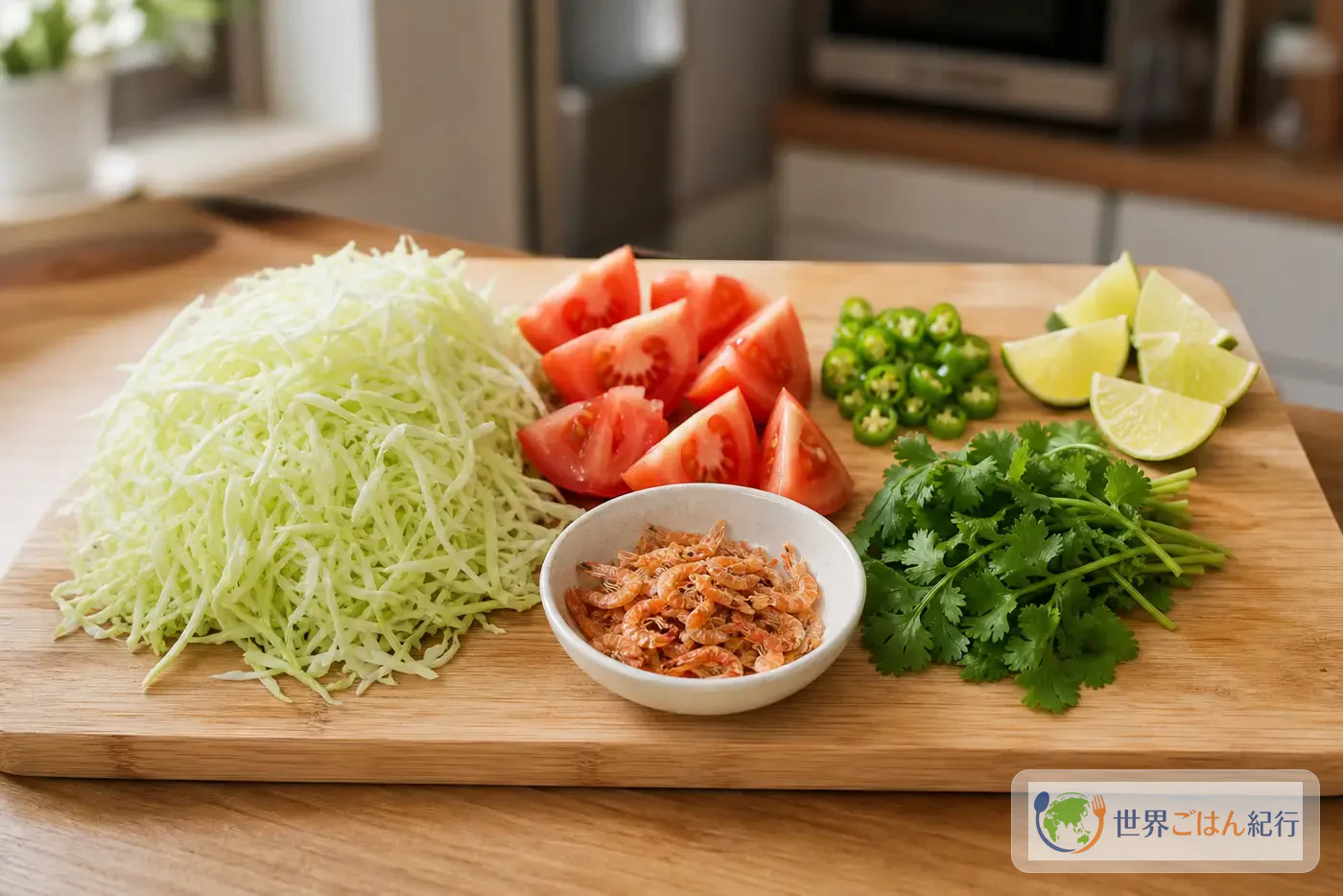
| Cabbage | 6.5 oz (180 g) | Shredded 0–0.125 inch (1–2 mm) |
| Tomato | 1 (5.5 oz (150 g)) | 0.5 inches (1.5 cm) dice |
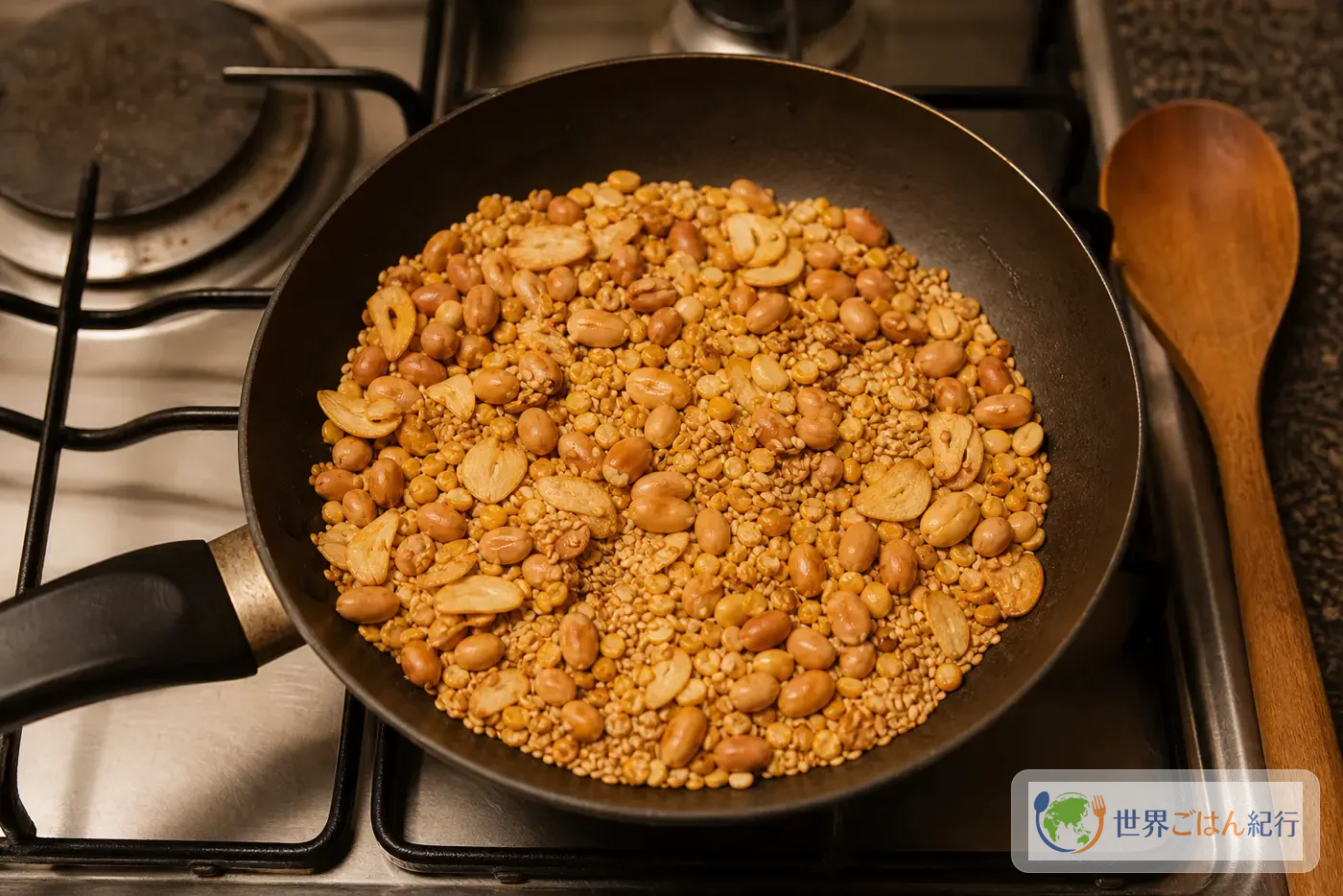
| Roasted peanuts | 2 oz (60 g) | Use unsalted, coarsely crushed |
| White toasted sesame seeds | 2 tbsp | White suits the color of tea leaves better than black |
| Fried garlic | 15 g | Store-bought fried garlic works |
| Dried shrimp | 20 g | Soak in 2 tbsp warm water and chop |
| Green chile | 1/2 (4 g) | Seeded and sliced thin. To drop the heat, don't omit; use 10 g bell pepper |
| Cilantro | 15 g | If you dislike it, 20 g scallions |
Sourcing the ingredients
You don't need everything from a neighborhood supermarket. Gather the beans, dried shrimp, fish sauce, and sesame first, because lahpet thoke goes best with them. The toastiness of beans and dried foods supports the bitterness of the tea leaves.
Dried shrimp give aroma even in a small amount. For a plate that would otherwise be too green from tea leaves alone, they add a faint savoriness of the sea.
You only need it by the teaspoon, but keep a bottle on hand. It raises how well you can cook Southeast Asian food, and it also goes into som tam.
White sesame seems like a supporting player, but it is an important ingredient that holds up the bitterness of the leaves. Sesame from a freshly opened bag, lightly toasted, brightens the whole plate more than old seeds whose aroma has gone.
Choosing tea leaves and substitutes for lahpet thoke
Outside Myanmar, you can't reliably buy fermented tea leaves, and green tea won't taste exactly the same. What matters is keeping four things: the pleasant bitterness of tea leaves, the aroma of garlic oil, the crunch of beans and sesame, and a squeeze of citrus to finish. Hold onto those and an ordinary supermarket plus a little online shopping will get you there.
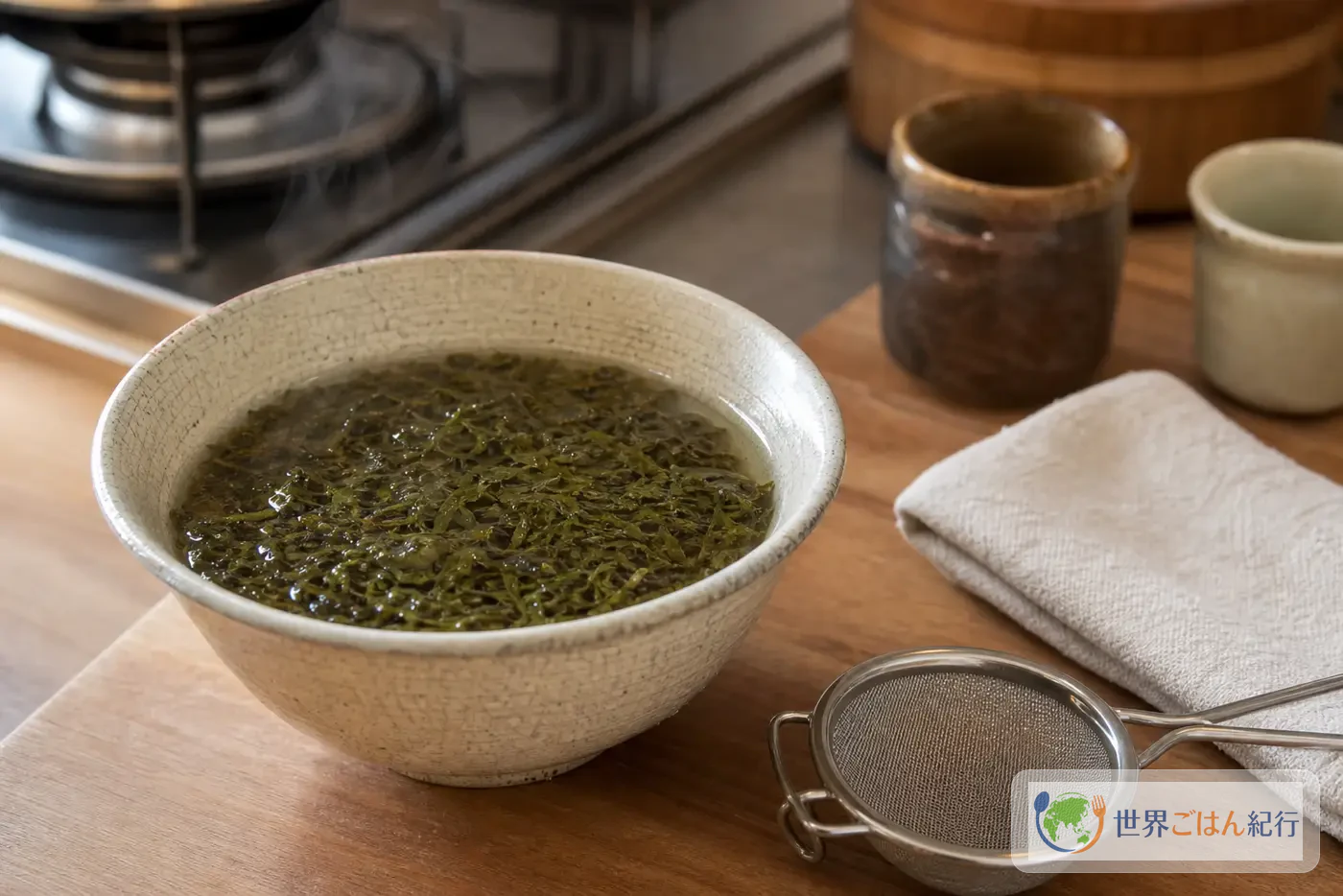
Green tea mixed in straight is too bitter, so it needs some handling. Soak it in water that's well below boiling (cooler than you'd use for drinking, since you're eating the leaf), rinse lightly, and round it out with oil, garlic, citrus, and sugar. That one extra step is what turns the leaves into an ingredient rather than spent leaves left in the pot.
| Ingredient in doubt | Closer to local | Realistic substitute | Decision |
|---|---|---|---|
| Tea leaves | Fermented tea leaves, lahpet | Green tea, roasted green tea, pan-fired tea | 20 g green tea the first time. Don't soak in boiling water |
| Oil | Peanut oil, garlic oil | Neutral sesame oil, a little toasted sesame oil | Strongly scented oil up to 1 tbsp |
| Beans | Fried beans, peanuts | Unsalted roasted peanuts, roasted soybeans | The crunch is key; don't omit |
| Seafood savoriness | Dried shrimp, fish sauce | Dried shrimp, fish sauce | For vegetarian, increase soy sauce and sesame |
| Acidity | Lime | Lemon, other sour citrus | Always add at the end |
| Heat | Green chile | Green chile, bell pepper, a little red chili | Keep the green aroma over the heat |
Roasted tea brings a toasty note but a darker color. Green tea gives a fresh green scent, though it turns astringent if the soaking water is too hot.
How to make it: round out the bitterness and finish toasty
Whether you use fermented tea leaves or substitute green tea, the end goal is the same. Don't chop the leaves so fine they turn to mud; make a paste that thinly coats the beans and vegetables. Heat is used only to warm the beans and sesame again.
Common problems with lahpet thoke
| Problem | Cause | Fix |
|---|---|---|
| Tea leaves too bitter | Soaked in boiling water, or not rinsed enough | Soak in 176°F (80°C) water, rinse 10 seconds, then squeeze |
| Everything is watery | Too much moisture in the cabbage and leaves | Press with paper towels before tossing |
| Heavy with oil | Too much sesame oil | Add 1 tsp lemon juice and 1 oz (30 g) cabbage |
| Beans go soft | Tossed too early and left standing | Add the beans and fried garlic just before eating |
| Shrimp smell | Added dried shrimp with their soaking liquid | Don't use the liquid; warm only the shrimp briefly |
| Flat flavor | Salt only, not enough acidity | Add citrus 1 tsp at a time at the end |
If it tastes bitter, more acid alone won't fix it. Add a little more oil, beans, and sesame along with the citrus, so the whole thing feels rounder in the mouth.
Timing matters too. Lahpet thoke has its best crunch right after tossing, and the cabbage gives up water the longer it sits. For guests, keep the tea leaf paste, cut vegetables, and rewarmed beans apart, and toss them 10 minutes before eating.
Serving and storing lahpet thoke
At the table
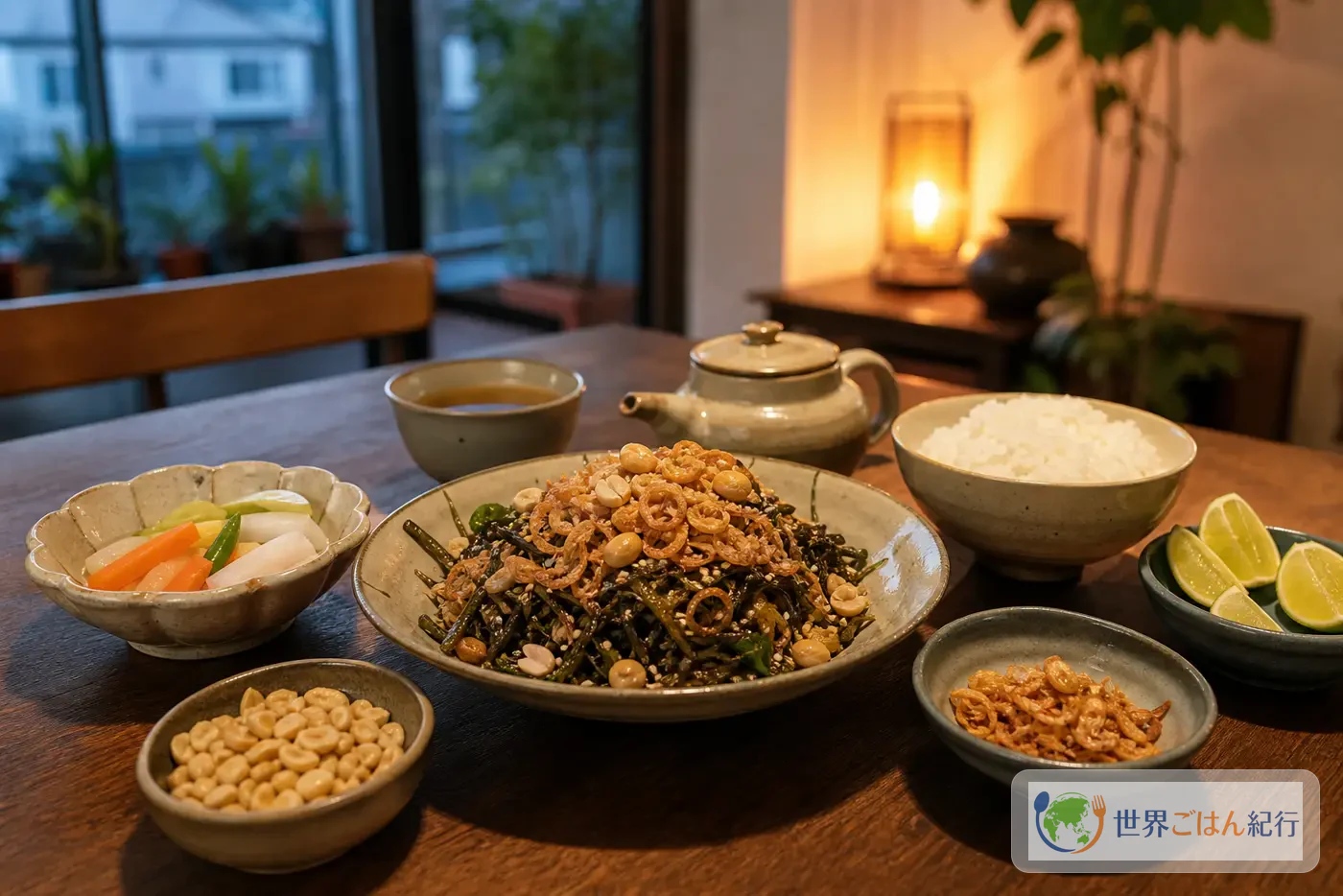
For a Burmese meal, mohinga as the main, lahpet thoke beside it, and a little fruit or a sweet drink is enough. The warm fish stock and rice noodles, followed by bitter tea leaves and toasty beans, leave the meal feeling lighter. After a noodle dish, skip the heavy dessert and pick at a little of this bitter, sour salad instead. On a rice day, set it next to htamin gyaw, cold rice fried with fish sauce and dried shrimp, where the tea's bitterness meets the toastiness of the fried rice.
It also sits comfortably with other Southeast Asian dishes: green papaya som tam, herb-and-meat laab, or Vietnamese banh mi. Beside a sweet-salty noodle dish such as Philippine pancit canton, a few bites of the leaves work as a palate cleanser.
Serve it from one large plate, starting with two spoonfuls each, rather than in individual bowls. The flavor depends on the ratio of leaves, beans, and vegetables, so let everyone take more beans or fewer leaves as they like. If someone dislikes heat, keep the full amount of green chile and set it at the edge of the plate; you keep the aroma without forcing the heat on anyone.
Sweet milk tea or cold green tea goes well with it. Tea with a tea leaf dish sounds odd, but with the oil and garlic in the salad, the two play different roles. Scale the portion to the rest of the table: keep it small beside an oily grilled dish, and serve a little more with a soup noodle like mohinga.
Storage and making ahead
The tea leaf paste alone keeps about 2 days refrigerated in a clean container, with a thin film of oil on the surface to stop it drying out. Fermented tea leaves vary in salt from product to product, so use an opened pack soon.
Finished lahpet thoke keeps until the next day in the refrigerator, but the beans and fried garlic go soft and the cabbage releases water. To bring the texture back, add 10 g more peanuts and 1 tsp sesame, and tighten it with 1/2 tsp lemon juice. Better still, store the paste, cut cabbage, and dry-toasted beans separately and combine them just before eating; that way even a weeknight dinner can have a small dish beside the mohinga.
FAQ
Does the caffeine remain?
It does. Since you eat the leaves themselves, be more careful about caffeine than with brewed tea. If eating at night or if you are sensitive to caffeine, make half a small bowl or use roasted tea.
Can I make it without peanuts?
Yes, but you need something else for the crunch. Use 1.5 oz (40 g) roasted soybeans, 1.5 oz (40 g) cashews, or 1 oz (30 g) pumpkin seeds to keep the toastiness that holds up the bitterness of the leaves. If you have a nut allergy, choose the roasted soybeans.
Is it lacking without dried shrimp or fish sauce?
The seafood aroma is weaker, but it can lean vegetarian. Omit the dried shrimp, replace the fish sauce with 2 tsp soy sauce, and add 1 tbsp more white sesame. If it still lacks savoriness, mix 1/4 tsp of kombu tea powder into the tea leaf paste to pull the flavor together.