Roti Canai: Malaysia's Flaky Flatbread with Dal Curry

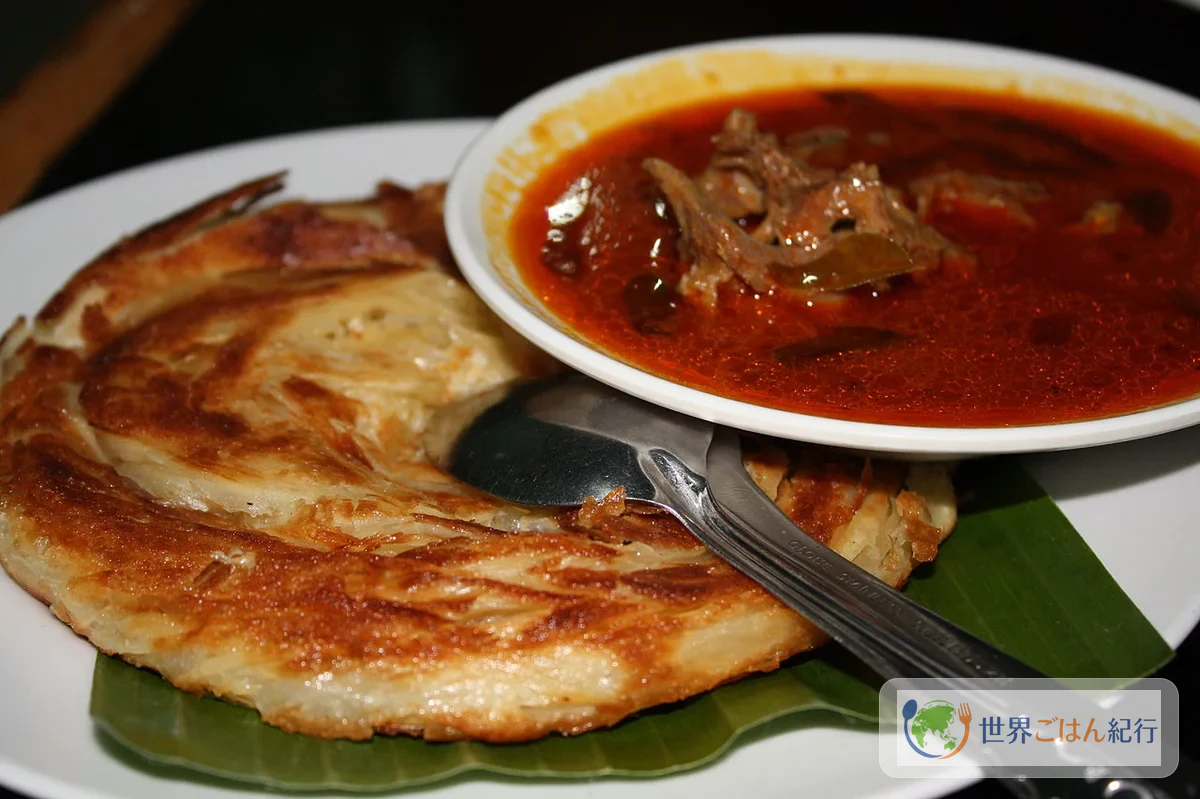
Malaysian roti canai: a golden, layered flatbread served on a plate with curry sauce
Prep
2 hr
Cook
20 min
Total
2 hr 20 min
Serves
4 servings
Level
Intermediate
Cuisine
Malaysian

How to make Malaysian roti canai at home: a stretchy dough rested in oil, folded with ghee into dozens of crisp layers, cooked on a hot skillet and served with a lentil dal curry.

Cooking flow

Cooking steps

STEP11 / 10

Knead the dough

10 min

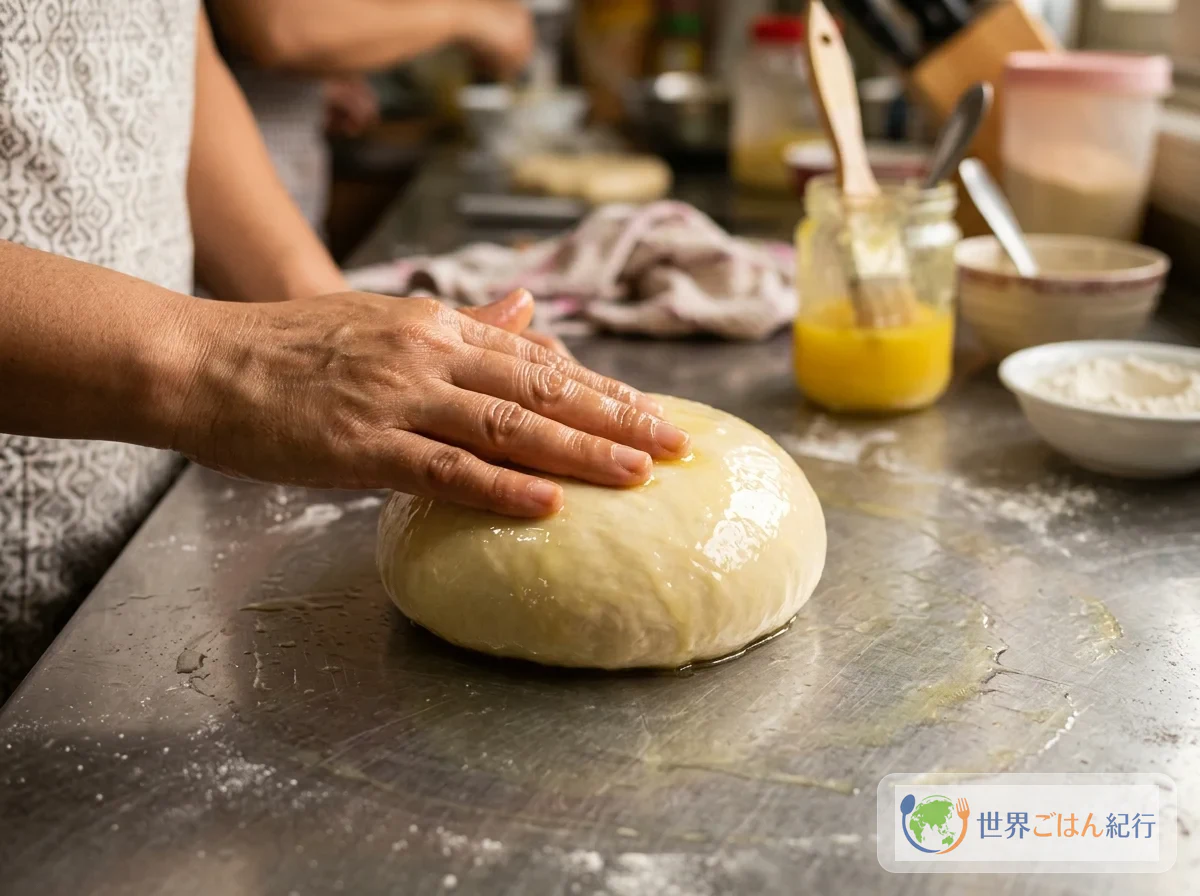
Smooth roti dough brushed with ghee, a glossy, springy ball
Brush well-kneaded dough with ghee. Ideally the surface is glossy and springy, and the dough is soft and smooth at this stage

Put 10.5 oz (300 g) bread flour and 1 tsp salt in a large bowl and mix well. Make a well in the center and pour in ¾ cup (180 ml) lukewarm water, 2 tbsp melted ghee and 1 tbsp condensed milk. Mix roughly with chopsticks or a spoon, then knead firmly by hand for 5 minutes. It's ready when the dough is smooth and pulls away from the bowl's sides.

Guide: if the dough springs back when pressed with a finger, enough gluten has formed. If it's sticky, add flour 1 tsp at a time. If it's too stiff, add lukewarm water 1 tsp at a time.

STEP22 / 10

Divide the dough and rest it

at least 2 hours

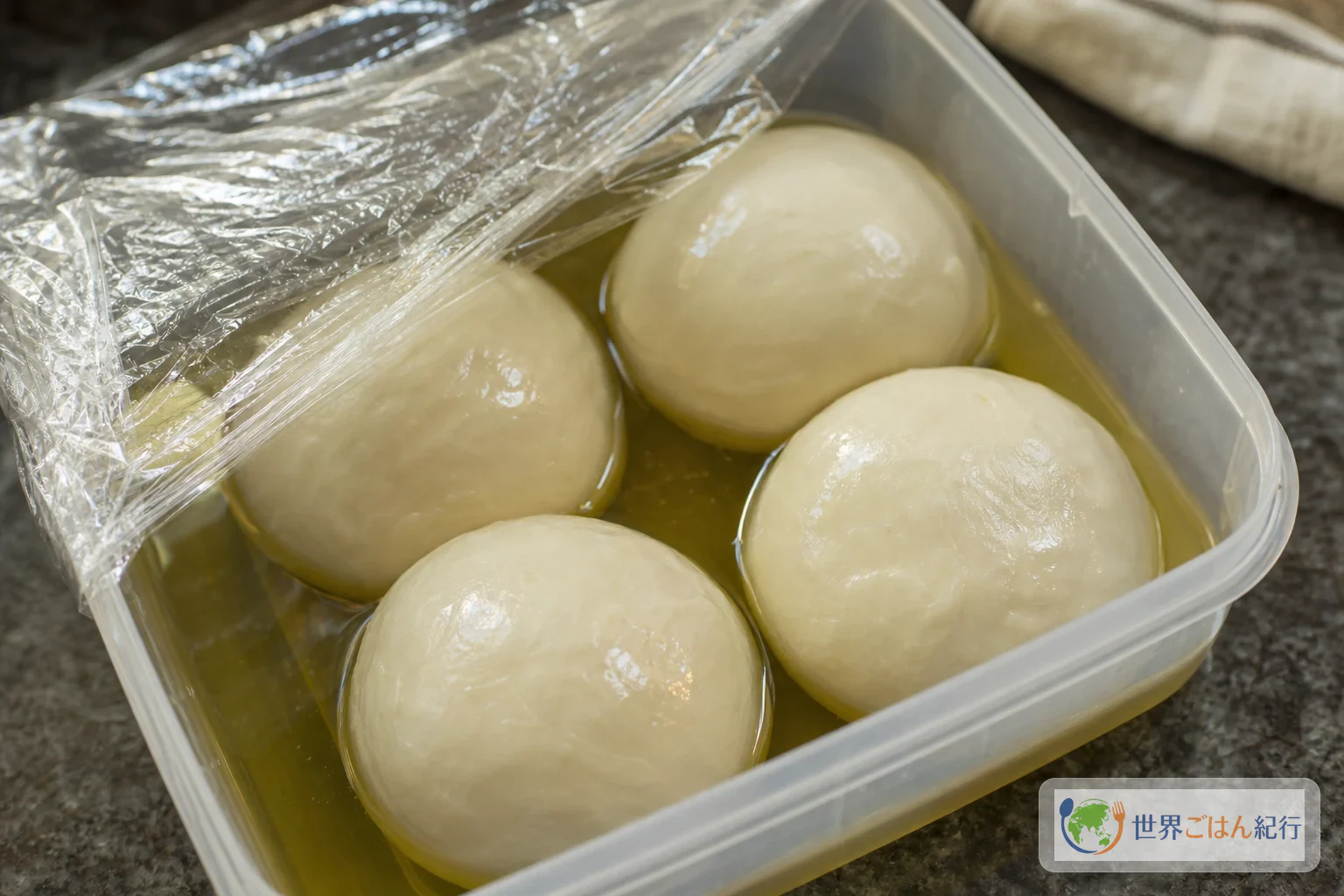
Roti canai dough balls resting in oil
Rest for at least 2 hours with oil coating each dough ball so the surface doesn't dry

Divide the dough into 4 equal pieces and shape each into a ball. No heat here; the goal is a smooth, taut surface. Pour 4 tbsp oil into a deep container and arrange the dough balls so they sit in the oil. Cover with plastic wrap and rest at room temperature for at least 2 hours. During this rest the gluten relaxes and the dough becomes remarkably easy to stretch.

Making it the day before is best

Professional mamak cooks prepare the dough the night before and let it rest overnight. Dough rested for 12–24 hours stretches far more easily than dough rested for 2 hours, and the layers come out cleaner. If you want freshly cooked roti for breakfast, make the dough the night before and refrigerate it. Bring it back to room temperature 30 minutes before using.

STEP33 / 10

Stretch the dough thin

3 min per piece

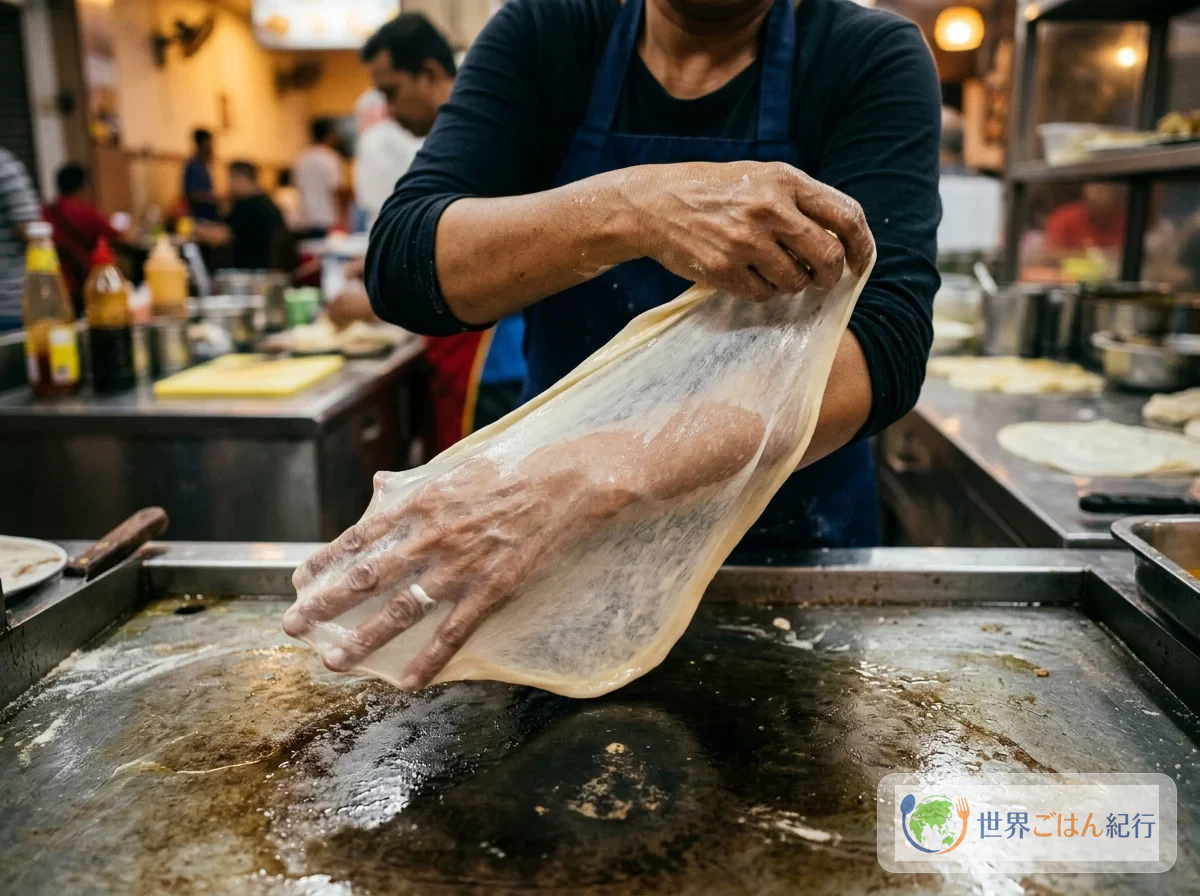
Stretching roti dough thin, as translucent as paper
Pull the dough paper thin. If light shows through, you've succeeded. This is the basic technique that creates the layers of roti canai

This is the highlight of making roti canai. Spread a thin layer of oil on the work surface (no dusting flour; use oil). Take out a dough ball and press it flat with your palm.

Pinch the edge of the dough with both hands and slowly pull it outward. Once you're used to it, you can toss it into the air and spin it like a mamak cook, letting centrifugal force thin it out. The goal is thin enough to see through to the other side. Don't worry if a few holes appear, or if it isn't a perfect circle.

STEP44 / 10

Fold the dough

2 min per piece

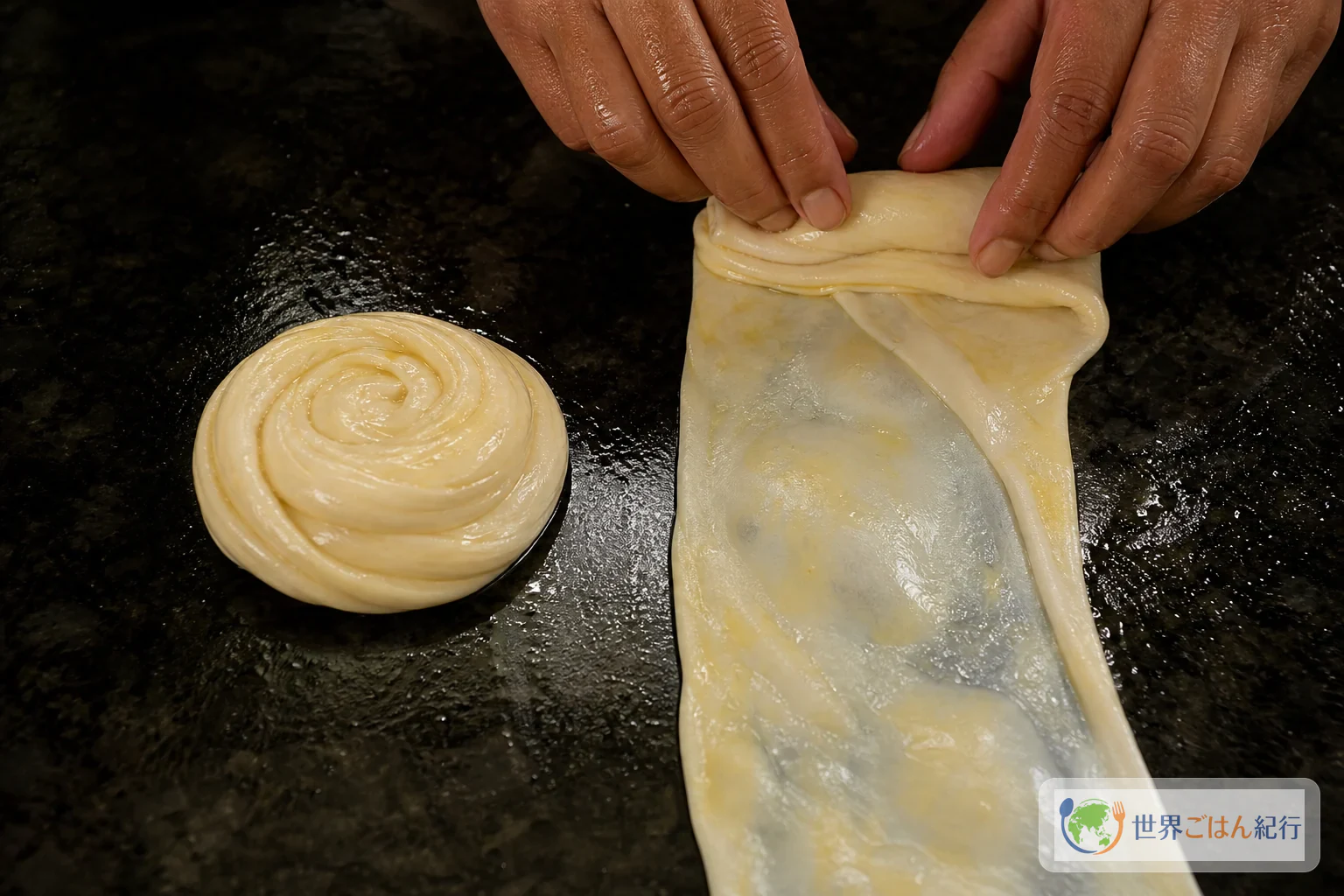
Folding thin dough brushed with ghee and rolling it into a spiral
Spiral the folded strip to trap layers of ghee inside

Spread 1 tsp ghee over the surface of the thin dough. Fold the left and right sides toward the center to make a long, narrow strip. Then roll the strip up into a spiral from the near end to the far end, and press lightly from above to flatten it into a disc.

This cycle of "stretch, brush with ghee, fold, roll" is what produces the many thin layers of roti canai. Make the finished spiral about 6–7 cm in diameter, soft enough that the layers shift slightly with ghee when pressed. Then stretch it lightly once more to a circle 18–20 cm across (don't make it too thin or the layers will collapse, so this time keep it thicker).

STEP55 / 10

Cook on the griddle

4 min per piece

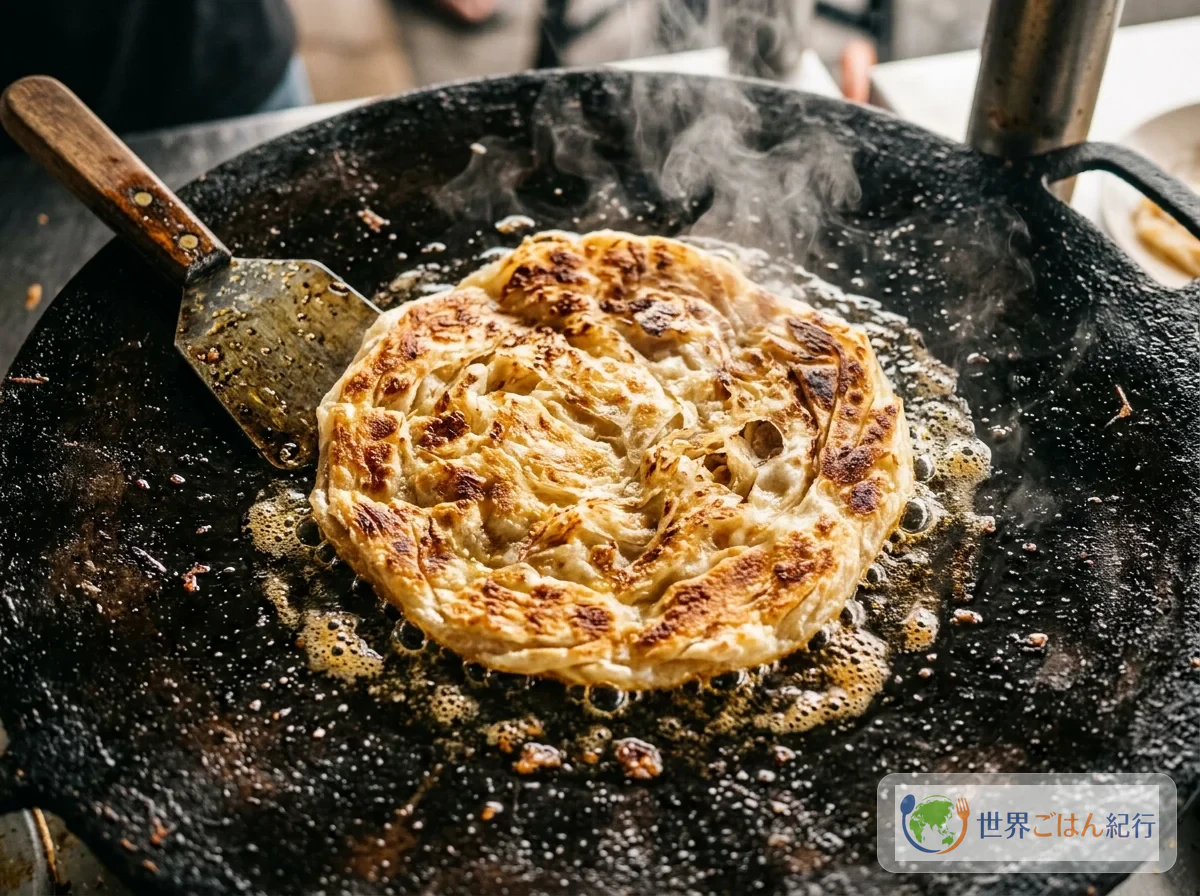
Roti canai cooking golden on a griddle, the layers visible
Roti canai in a skillet. The ghee sizzles and the surface turns crisp and golden. Edges of the layers lifting is a good sign

Preheat a skillet (cast iron if possible) over medium heat for 2 minutes. Brush it with 1 tsp ghee and lay the shaped dough in the pan. Cook 2 minutes over medium heat, until the bottom is golden, then flip and cook another 2 minutes.

Doneness guide: mottled patches of golden and brown are ideal. If some areas remain evenly white the heat is too low; if the whole surface is dark brown the heat is too high.

STEP66 / 10

"Clap" the roti to finish

30 sec

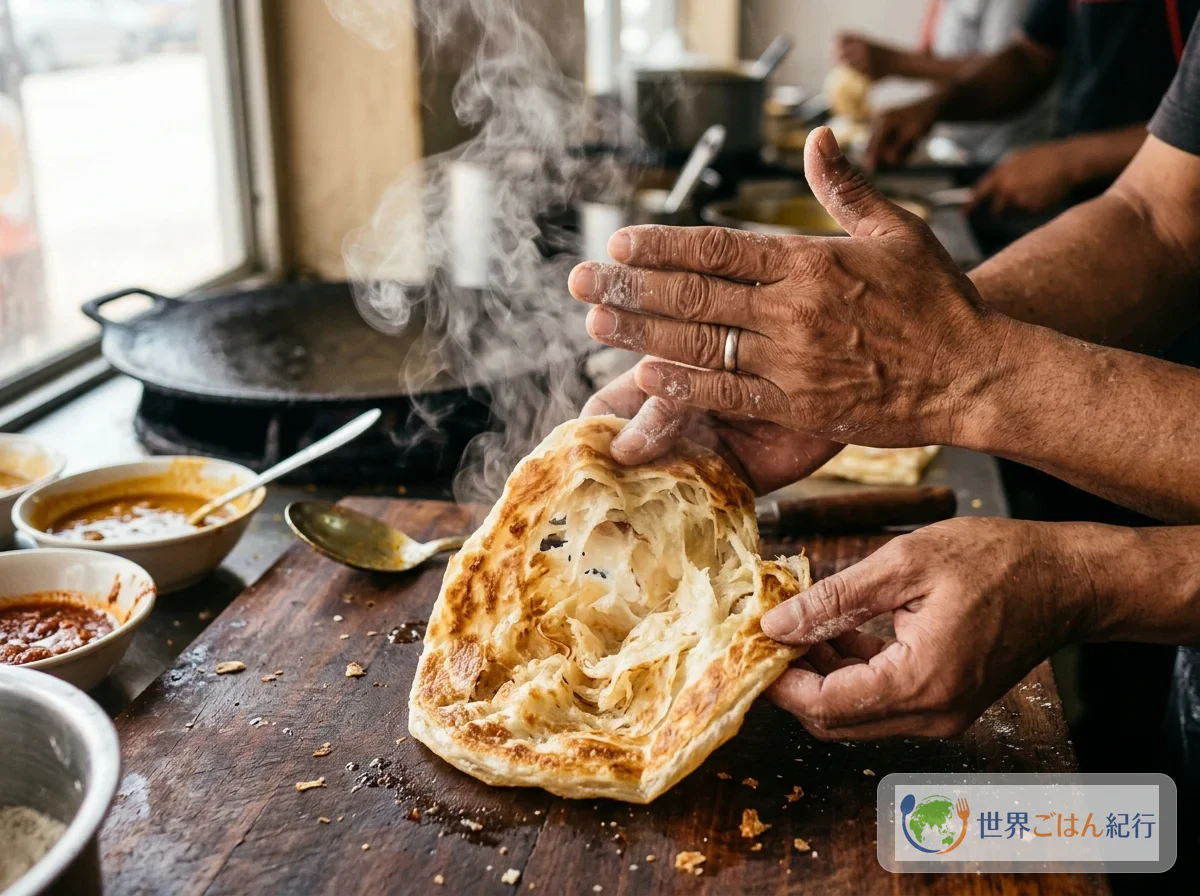
Clapping freshly cooked roti canai to separate its layers
Clapping the cooked roti. This one extra step loosens the inner layers for a crisp, fluffy texture

Take the roti off the heat when it is golden on the surface and clap it between both hands for about 30 seconds. If the layers fluff open, you've succeeded. This "clapping" step is the biggest secret of roti canai. Clapping separates the inner layers and creates the crisp, airy texture. Without it the layers stay stuck together and you end up with a plain thin bread.

STEP77 / 10

Simmer the lentils

20 min

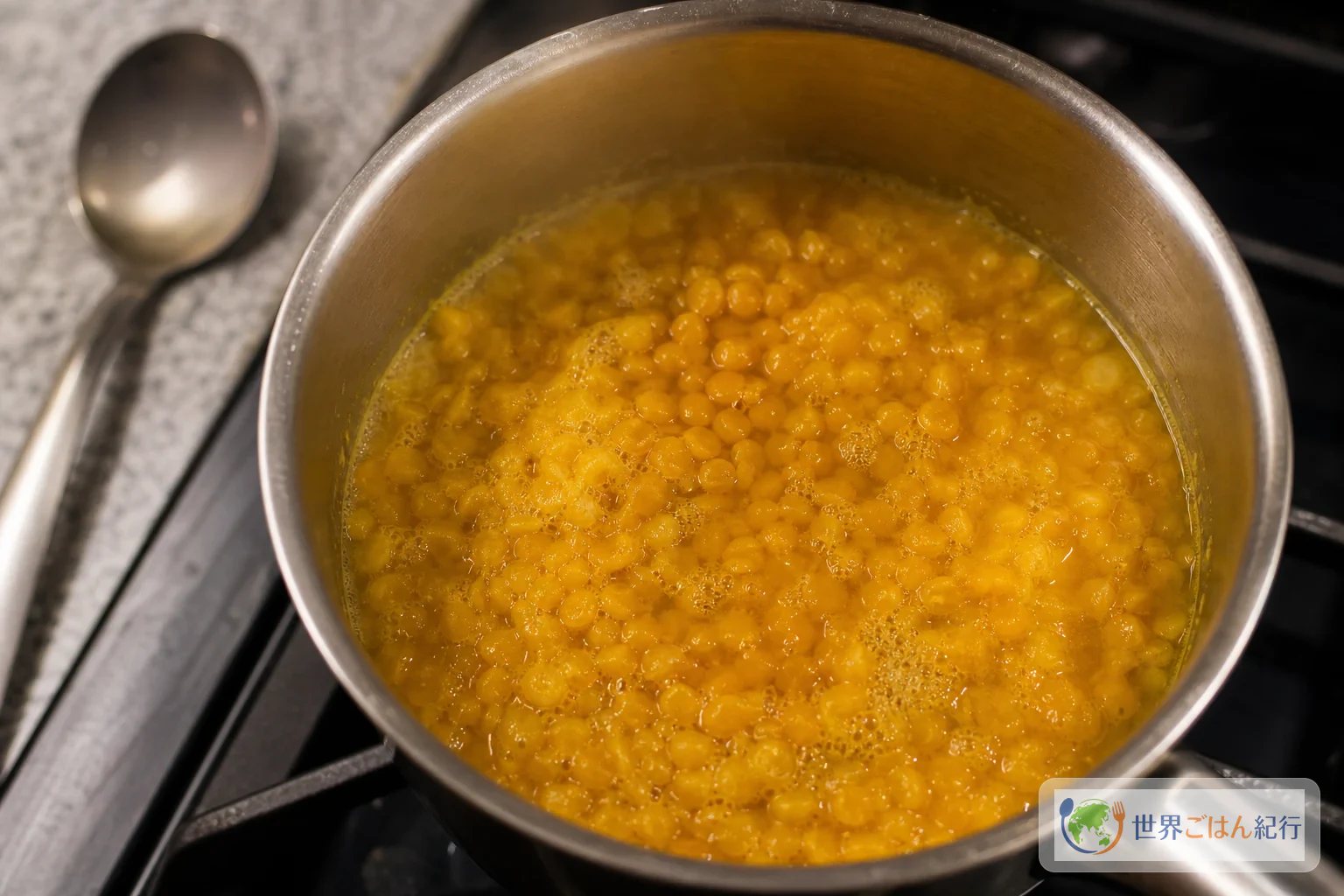
A pot of lentils simmering with turmeric
Turn off the heat when about half the lentils have broken down and some grains remain

Rinse 5.5 oz (150 g) lentils lightly in water and put them in a pot with 2 cups (500 ml) water. Add 1 tsp turmeric and simmer over medium heat for 20 minutes. The ideal is lentils that are soft and about half broken down. Turn off the heat and leave them in the pot.

STEP88 / 10

Fry the aromatics

5 min

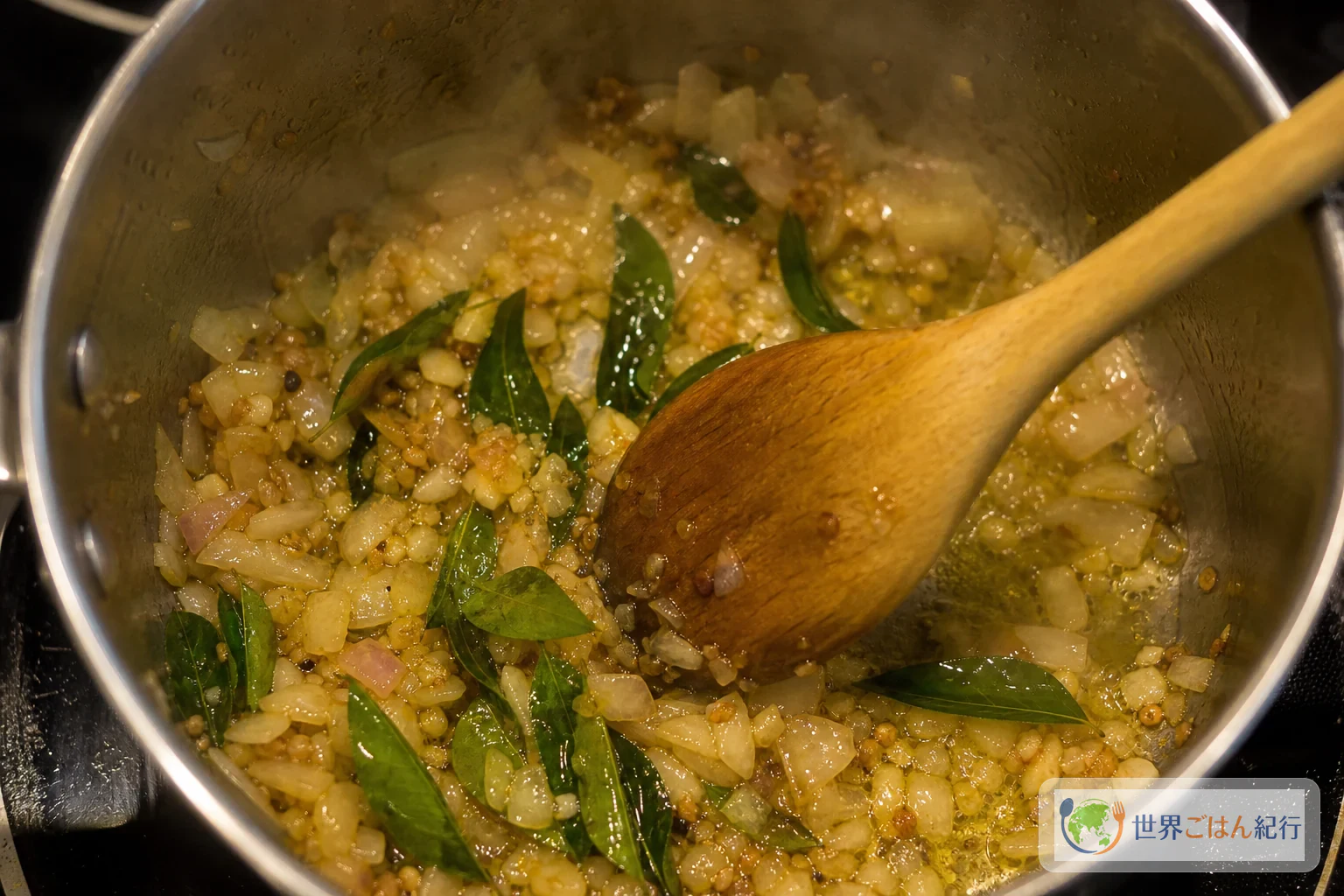
Frying curry leaves, onion, garlic and ginger in oil
The onion is translucent and the curry leaf aroma has gone into the oil

Put 2 tbsp oil in a separate pot and heat over medium heat. If you have them, add 5 curry leaves (or 2 bay leaves if not); they will crackle (watch for splatter). Add the garlic and ginger and fry for 1 minute, then add the chopped onion and fry for 3 minutes, until translucent.

STEP99 / 10

Add the tomato and spices

5 min

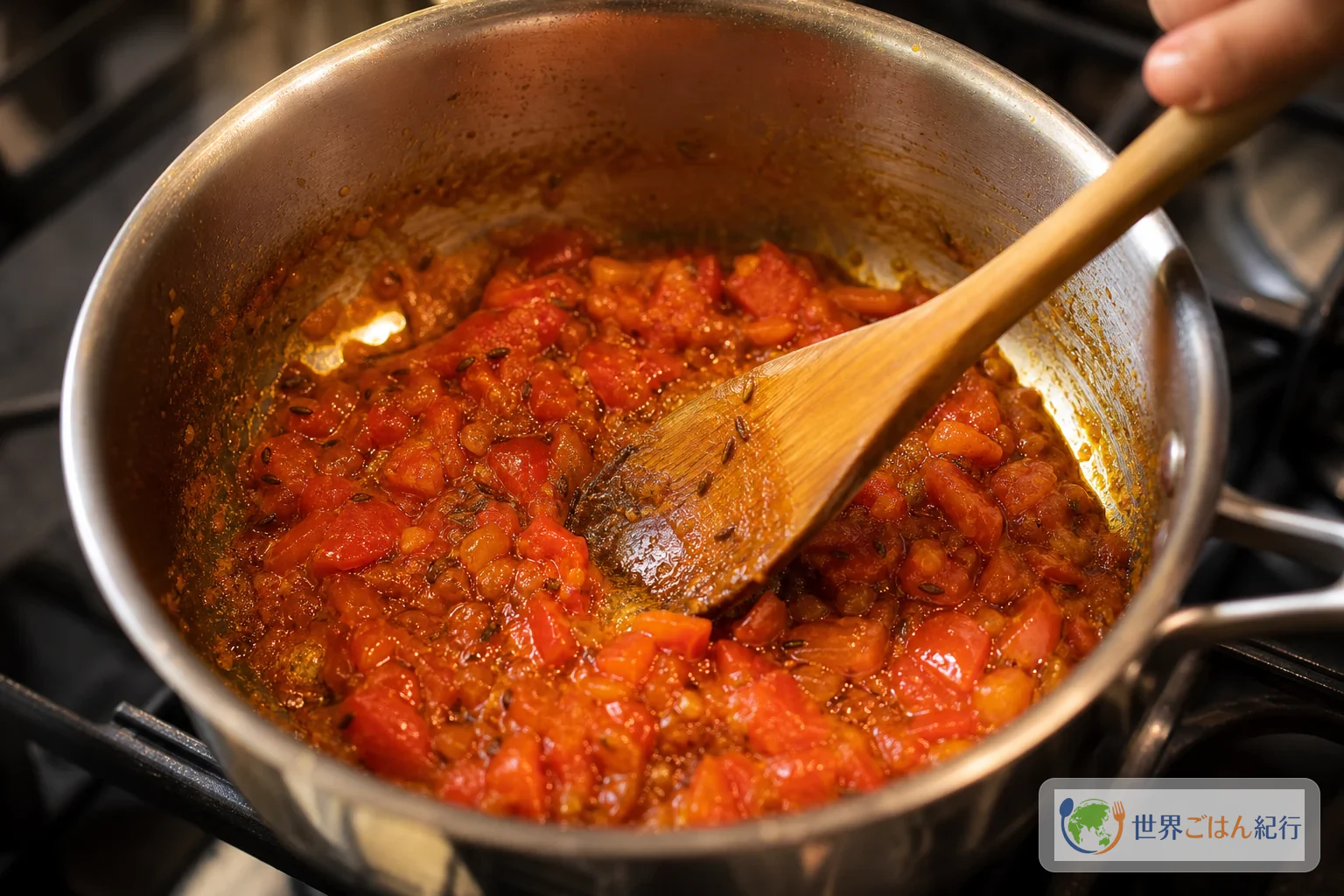
Tomato and spices cooked down into a red sauce
Cook until the tomato's edges collapse and a wooden spoon leaves a trail on the pot bottom

Add 1 tsp ground cumin and 1/2 tsp chili powder and fry for 30 seconds, then add the chopped tomato. Cook over medium heat for 3 minutes, until the tomato breaks down and softens and the sauce thickens lightly.

STEP1010 / 10

Combine with the lentils

10 min

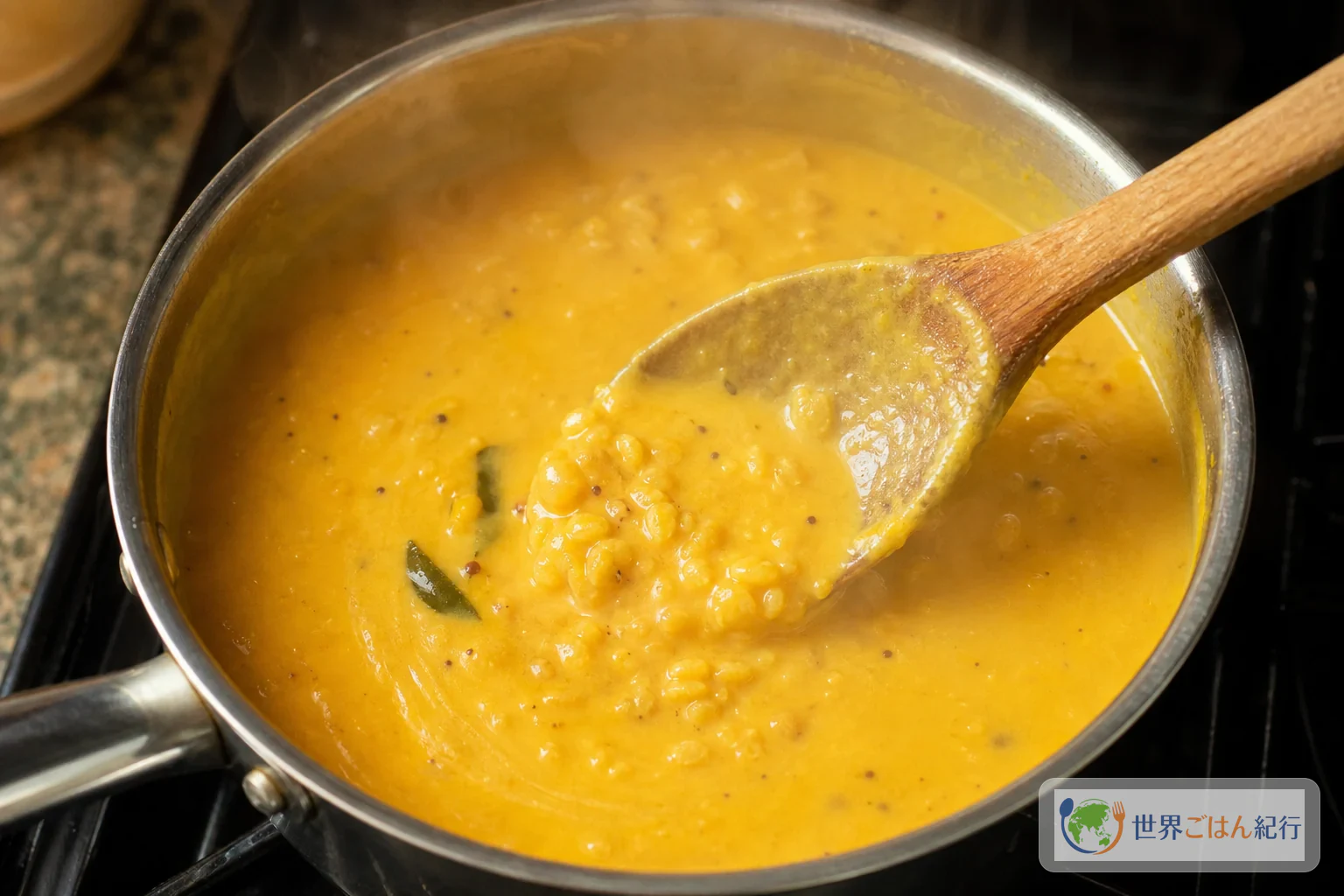
The finished dal curry of lentils and coconut milk
When scooped with a spoon it should flow slowly and cling to the roti

Add the cooked lentils with their cooking liquid to the spice pot and pour in ½ cup (100 ml) coconut milk. Simmer over low heat for 10 minutes and season with 1 tsp salt. The ideal consistency is a thick soup. If it's too thin, simmer to reduce; if too thick, add hot water.

0 / 0
Ingredients

Ingredients

1 / 2

Roti dough

Ingredient Amount Substitutes & notes
Bread flour 300 g All-purpose flour works. The more gluten, the easier it stretches
Water (lukewarm) 180 ml 35–40°C (95–104°F). Adjust to the season
Ghee (clarified butter) 4 and 2/3 tbsp 2 tbsp for the dough, 4 tsp for brushing and 4 tsp for cooking. Melted unsalted butter works as a substitute
Sweetened condensed milk 1 tbsp Optional. Adds a faint sweetness and softness to the dough
Salt 1 tsp None
Neutral oil (for resting the dough) 4 tbsp Brushed on the dough's surface to prevent drying
2 / 2

Dal curry (accompaniment)

Ingredient Amount Substitutes & notes
Lentils (red or yellow) 5.5 oz (150 g) Red lentils break down faster
Onion 1 (finely chopped) None
Tomato 1 (roughly chopped) 3.5 oz (100 g) canned chopped tomatoes works
Garlic 2 cloves (finely chopped) None
Ginger 1 knob (grated) None
Turmeric 1 tsp None
Ground cumin 1 tsp None
Chili powder 1/2 tsp Adjust for heat
Coconut milk ½ cup (100 ml) Optional, but adds an authentic taste
Neutral oil 2 tbsp None
Salt 1 tsp Adjust to taste
Water 2 cups (500 ml) None
0 / 0

It's 4 a.m. in Kuala Lumpur, still dark. In a back alley, smoke rises from a griddle and a rhythmic slapping rings out as the cook tosses thin dough into the air, spins it out paper-thin, folds it and lays it on the hot plate. That one piece is roti canai: a flatbread made by folding wheat dough in layers with ghee (clarified butter) and cooking it on a griddle. It's crisp outside and chewy inside, and when you tear it by hand it peels into many thin layers, ready to be dipped generously into dal curry (a lentil curry). In Malaysia it's a breakfast staple, a late-night snack and a national dish, though outside the country it's still less well known than nasi lemak or laksa.


Roti canai: origin and mamak culture

From Indian paratha to roti canai

In Malay, "roti" means bread. The origin of "canai" is debated: one theory derives it from the Malay "canai," meaning to roll out dough thin, and another from eating the bread with chickpea stew, "channa." Its ancestor is the South Indian paratha. In the 19th century, under British colonial rule, large numbers of immigrants from Tamil Nadu and Kerala came to the Malay Peninsula to work in tin mines and rubber plantations, and the Indian Muslims among them adapted their paratha to local ingredients and food culture.

The biggest difference from Indian paratha is how it's made. In India, paratha is typically cooked fairly thick on a tawa (flat griddle). Malaysian roti canai relies on tossing the dough into the air and spinning it, stretching it as thin as possible before folding, which creates more air layers and its distinctive crispness.

The mamak: Malaysia's "second living room"

Roti canai belongs to the mamak, the eateries run by Indian Muslims all over Malaysia, many of them open late into the night or around the clock. They're known for roti canai and teh tarik (milk tea made with condensed milk, poured from a height to froth it), and Malaysians often call them their "second living room."

People gather at a mamak regardless of ethnicity or religion. Malay, Chinese and Indian Malaysians sitting at the same tables over roti canai has become a symbol of harmony in multiethnic Malaysia.
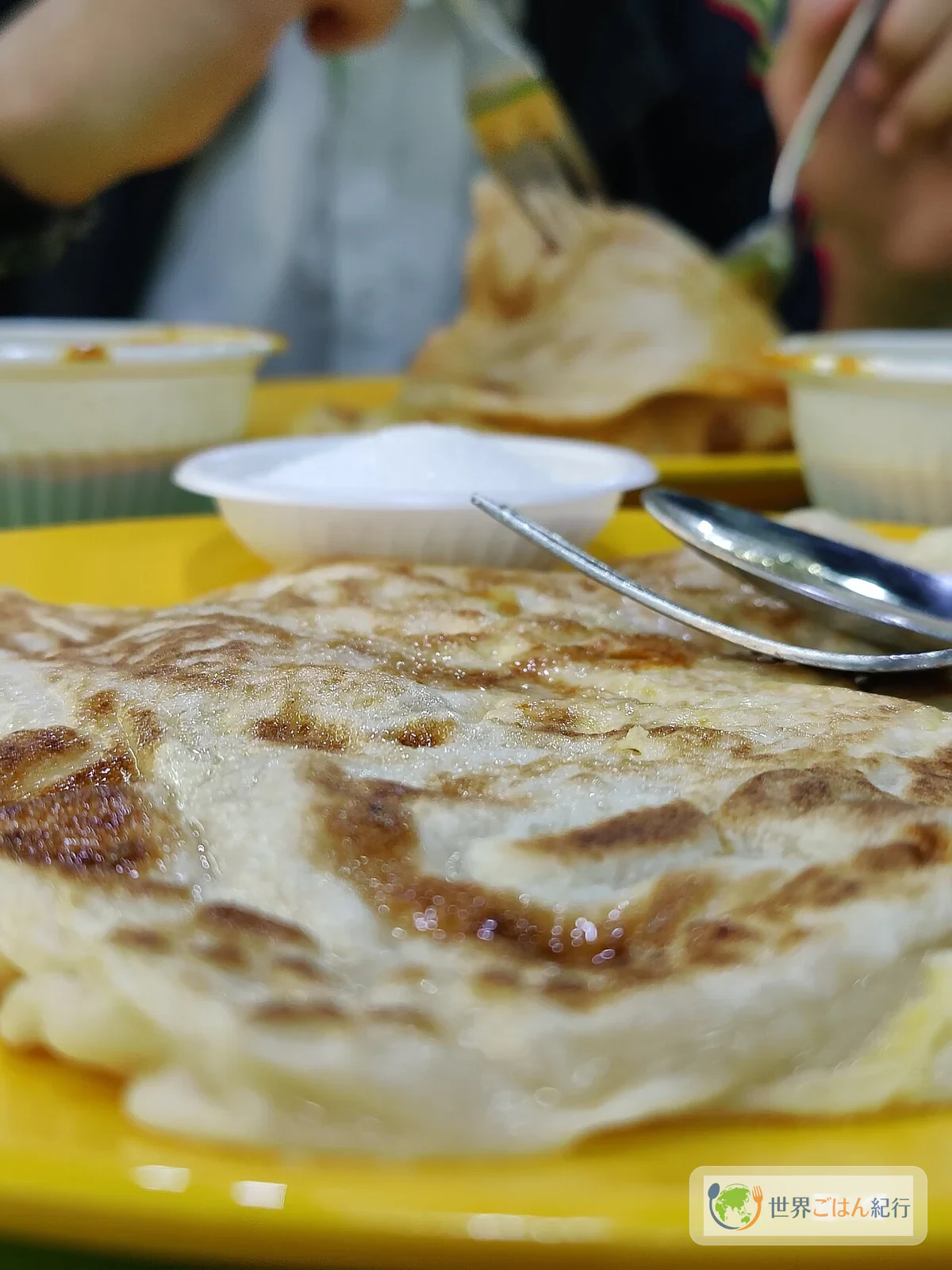
People eating roti canai at a food court in Malaysia
People eating roti prata at a food court in Malaysia. Mamak restaurants are deeply rooted in daily Malaysian life

Roti canai and roti prata

In Singapore the same dish is called "roti prata." Thickness and texture vary from shop to shop on both sides of the causeway: some are thin with many layers, others a little thicker and chewy.


Ingredients (makes 4 pieces)

Sourcing and substituting ghee

Ghee is sold at Indian grocery stores and online. If you can't find it, melt unsalted butter and use only the clear top layer for a similar flavor.

About curry leaves

Malaysian dal curry needs curry leaves (Murraya koenigii). They are not the source of "curry powder" but fresh leaves with a distinctive citrus-like aroma. Look for them at Indian grocery stores or online, fresh, frozen or dried. Dried curry leaves have a weak aroma, so frozen leaves are recommended. If you truly can't find them, substitute 2 bay leaves, though the flavor will differ.
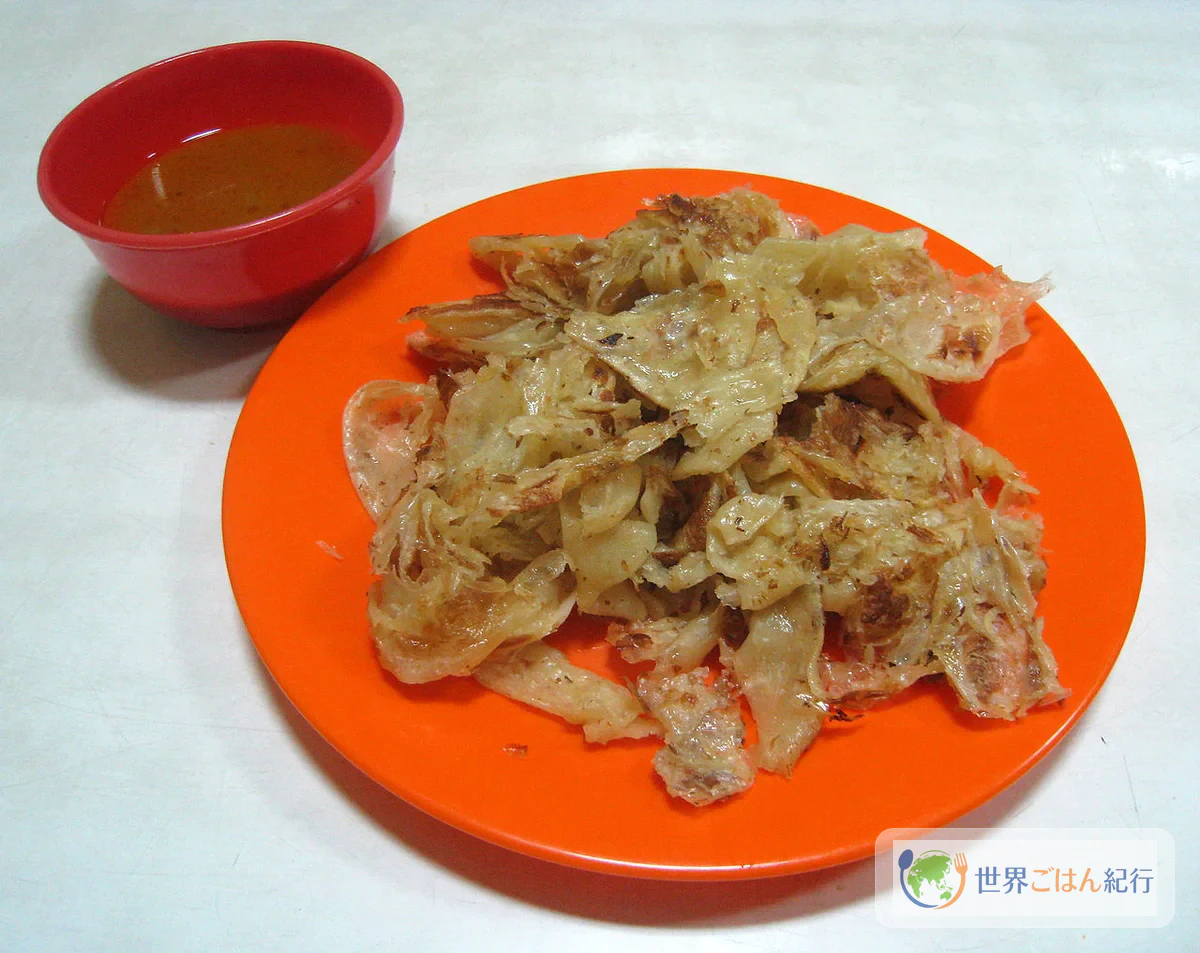
An orange plate of roti canai with curry sauce, the roti's layers broken apart
The typical way roti canai is served: tear it by hand and dip it in curry. The orange plate is a mamak restaurant classic

Choosing a pan for roti canai

A cast-iron skillet is best. A nonstick pan will cook roti canai, but cast iron holds high heat better and gives a nicer color. A tawa like those used in Indian restaurants is ideal; otherwise a cast-iron skillet of 10 inches (26 cm) or larger is fine.


Instructions

Part 1: Roti dough

Part 2: Dal curry


Roti canai tips and fixes

A wetter dough is the right dough

By bread-baking standards, the right roti canai dough is quite sticky and soft. If you think "this is a bit too sticky," that's exactly the state that stretches thin. Too much flour makes the dough stiff and impossible to stretch, so aim for something softer even than an earlobe.

At home, start by pulling and stretching the dough by hand to build the layers, and work toward thinner dough as you get the feel for it. You'll have far fewer failures that way.

Don't be afraid of the clapping

Some people hesitate to clap hot roti, but without it the roti canai isn't finished. A kitchen towel protects your hands if you worry about burns. Clap within about 5 seconds of cooking; as it cools, the layers set and are harder to separate.

Adjusting the dal's thickness

The dal curry at a mamak is somewhere between a soup and a sauce: thick like a potage but fluid enough to coat the roti when you dip it. Simmer longer to thicken it or add hot water to thin it.


Serving roti canai and variations
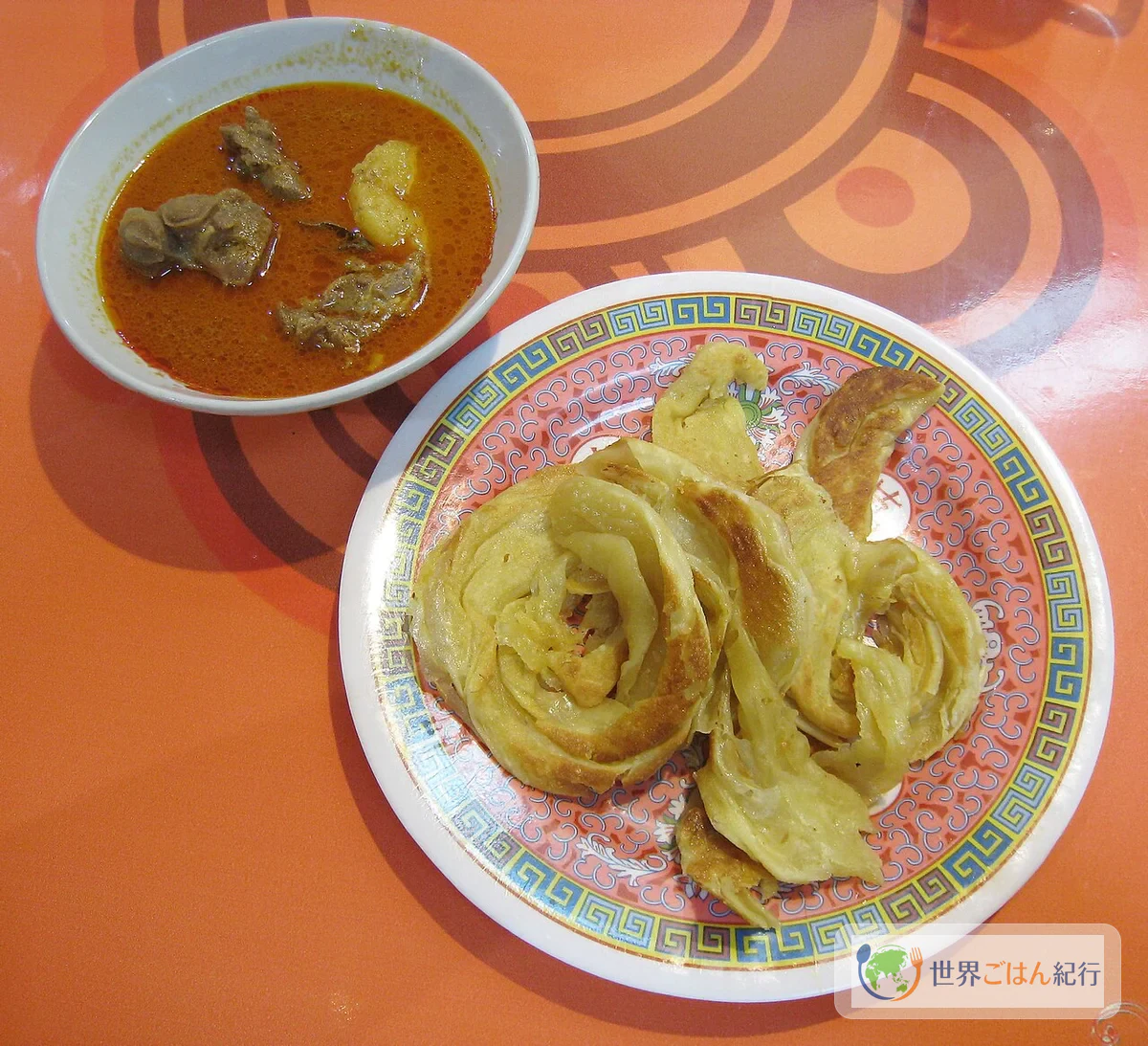
Roti canai-style bread and kari kambing arranged on a table, Aceh Indonesia style
Roti cane and kari kambing (goat curry) from Aceh, Indonesia. A relative of Malaysian roti canai, showing how deeply flatbread culture is rooted across Southeast Asia

Roti telur (with egg)

The most popular variation in Malaysia. Pour 1 beaten egg onto the stretched dough, then fold and cook. The egg adds richness and makes it much more filling, and on a mamak breakfast menu it's the most ordered after plain roti canai.

Roti tisu (tissue roti)

Here the dough is stretched to the extreme and cooked into a giant cone, then eaten as a dessert drizzled with condensed milk and sugar. Watching that huge cone being made in front of you is quite a sight, and some shops put it on as a showpiece.

Roti pisang (with banana)

Lay 1 thinly sliced banana over the stretched dough, sprinkle with 2 tsp sugar, then fold and cook. The banana's sweetness blends with the ghee, which makes it ideal as a snack or dessert. A drizzle of chocolate sauce makes it even more indulgent.

Roti bom (the dense version)

Plenty of ghee and sugar are tucked into the middle of the dough, which is shaped into a thick round and cooked. It's much heavier than ordinary roti canai, crisp outside and moist inside, and a popular Malaysian snack that pairs perfectly with teh tarik.

Miso dal curry roti (a fusion twist)

Add 2 tbsp white miso to the dal curry and use 5 shiso leaves in place of the curry leaves. The fermented richness of miso suits the savory depth of the lentils. You can also knead 1 tbsp ground sesame into the roti dough.

Nutrition (per piece of 4)

Calories vary greatly with the amount of ghee

Mamak-restaurant roti canai uses plenty of ghee, so one piece can come to around 500 kcal. At home you can control the calories by adjusting the amount of ghee.

Nutrient Amount
Calories 420 kcal
Protein 9 g
Fat 18 g
Carbohydrates 2 oz (56 g)
Fiber 2 g
Sodium 480 mg

On its own, roti canai is mostly carbohydrate and fat, but paired with dal curry it gains a good deal of protein and fiber from the lentils. As with South Asian biryani, it's a natural balance of staple and protein.

More Malaysian and Southeast Asian dishes

  • How to make nasi lemak - Rice cooked in coconut milk and served with sambal, Malaysia's other national dish and a breakfast staple.
  • How to make laksa - A spicy coconut curry noodle soup.
  • How to make bak kut teh - Bone-in pork simmered with white pepper and garlic in a soup.
  • Nasi goreng (in Japanese) - Indonesian fried rice, a leading Southeast Asian street dish.
  • Som tam (in Japanese) - Thai green papaya salad, a great introduction to the bold seasoning of Southeast Asia.

FAQ

Q1. My dough won't stretch thin. What should I do?

The most common cause is not resting the dough long enough. Rest it at least 2 hours, ideally overnight; with a short rest the gluten stays tense and the dough shrinks back when you stretch it. The other usual cause is too little water, so aim for a softer, stickier dough than you'd make for ordinary bread.

Q2. I'm cooking it in a skillet but the layers don't show. Why?

There are three likely causes. (1) The dough isn't stretched thin enough; it should be thin enough to see through. (2) Not enough ghee; brushing on plenty before folding is what lets the layers separate. (3) Skipping the "clapping" after cooking, which loosens the inner layers.

Q3. Can roti canai be frozen?

Yes. Freezing the shaped, uncooked dough works best. Stack the pieces with parchment between them, put them in a freezer bag and freeze for up to 1 month, then thaw overnight in the refrigerator before cooking. Cooked roti loses its texture in the freezer, so eat it fresh.

Q4. What goes well besides dal curry?

In Malaysia, fish curry, chicken curry and sambal (chili paste) are standard. For sweet versions, condensed milk plus sugar and kaya, a jam made from coconut milk and eggs, are popular. A curry made with store-bought butter chicken sauce also works, and Indonesian rendang makes a superb dipping sauce.

Q5. Can I make it with a wheat allergy?

Replacing the wheat flour is difficult, but rice flour plus tapioca starch (7:3) gives a similar texture. Without gluten, though, the dough is hard to stretch thin and the crisp layers can't be reproduced. Treat it as a gluten-free flatbread: cook it thicker and enjoy the chewy texture.

Q6. How do I make teh tarik (Malaysian condensed-milk tea)?

Brew strong black tea (Ceylon), add 2–3 tbsp condensed milk, and pour it back and forth between two mugs from a height 3–4 times to froth it. This "pulling" (tarik) works air in and makes a creamy foam. Roti canai and teh tarik are the golden pair of the Malaysian breakfast.
Sources

  • Yi Jun Loh, "The Indian Roti That Became Malaysia's National Bread," TASTE (22 May 2019; Tamil immigrants and mamak, the technique of stretching in the air; accessed 22 October 2026)
  • Wikipedia, "Roti canai" (theories on the name's origin, Singapore's roti prata; accessed 22 October 2026)
  • Dictionary.com, "roti canai" (etymology; accessed 22 October 2026)
  • Gourmet Traveller, "Roti canai" (home recipe; accessed 22 October 2026)
  • Hutton, Wendy. The Food of Malaysia. Tuttle Publishing. (A general guide to Malaysian cooking)