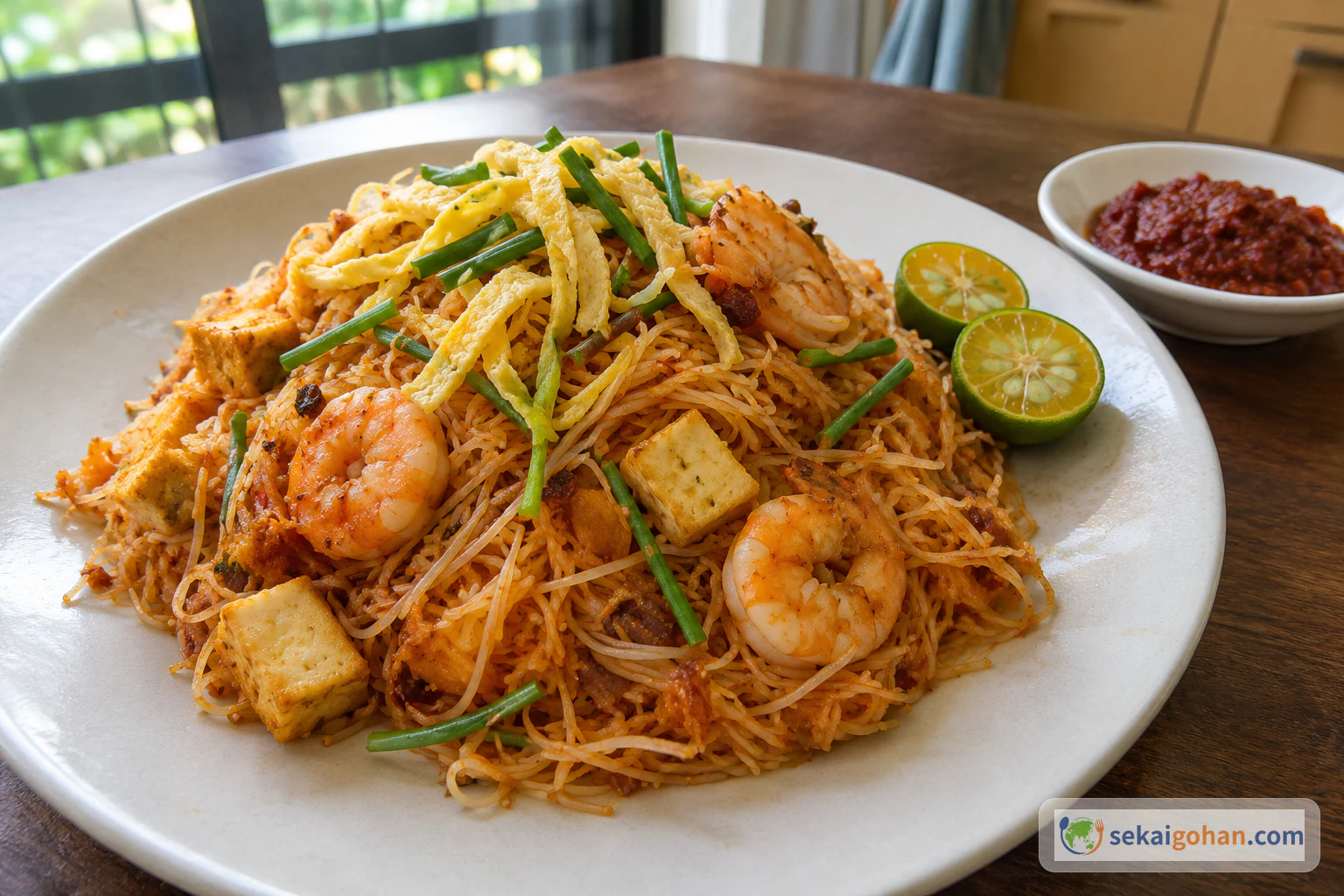
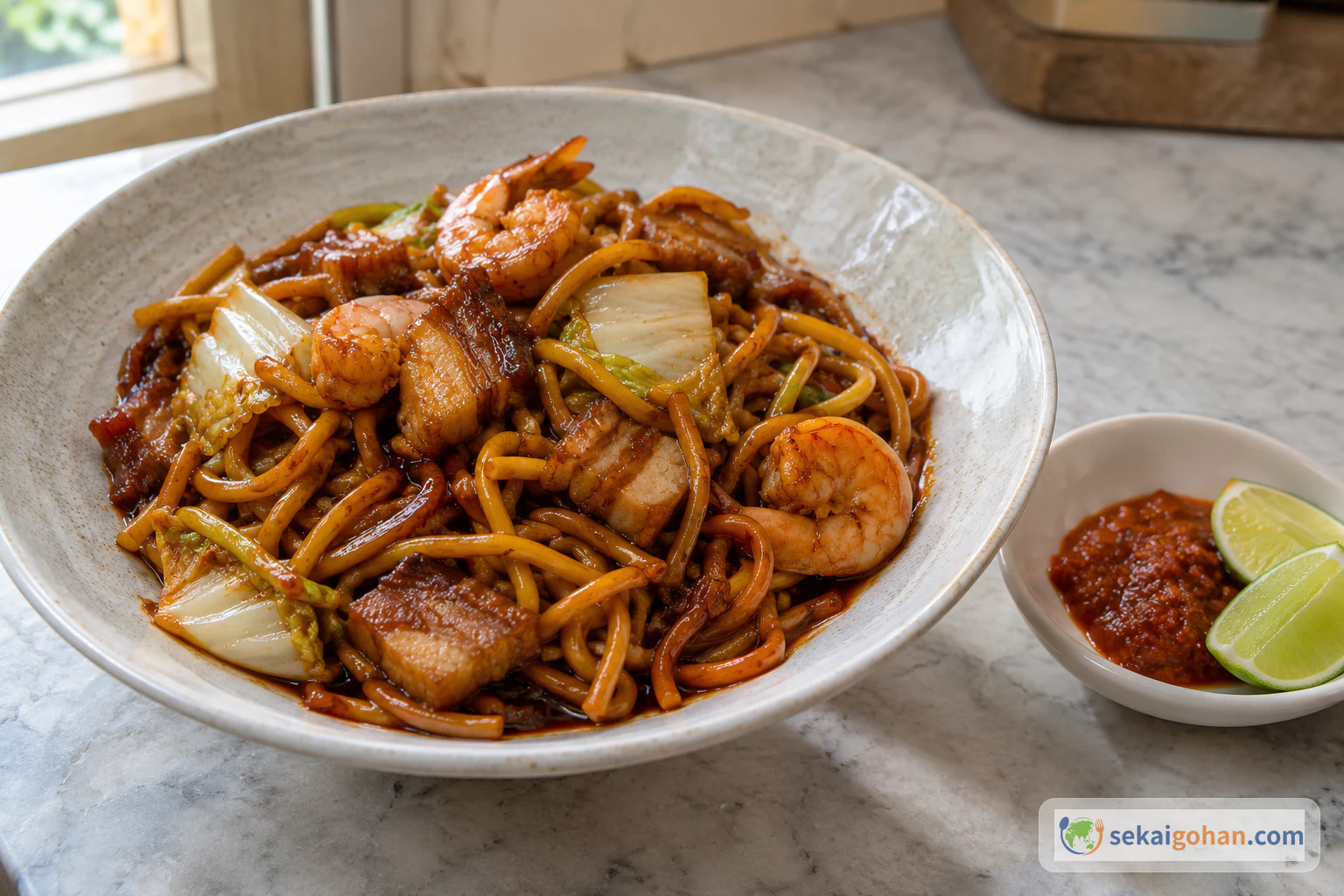
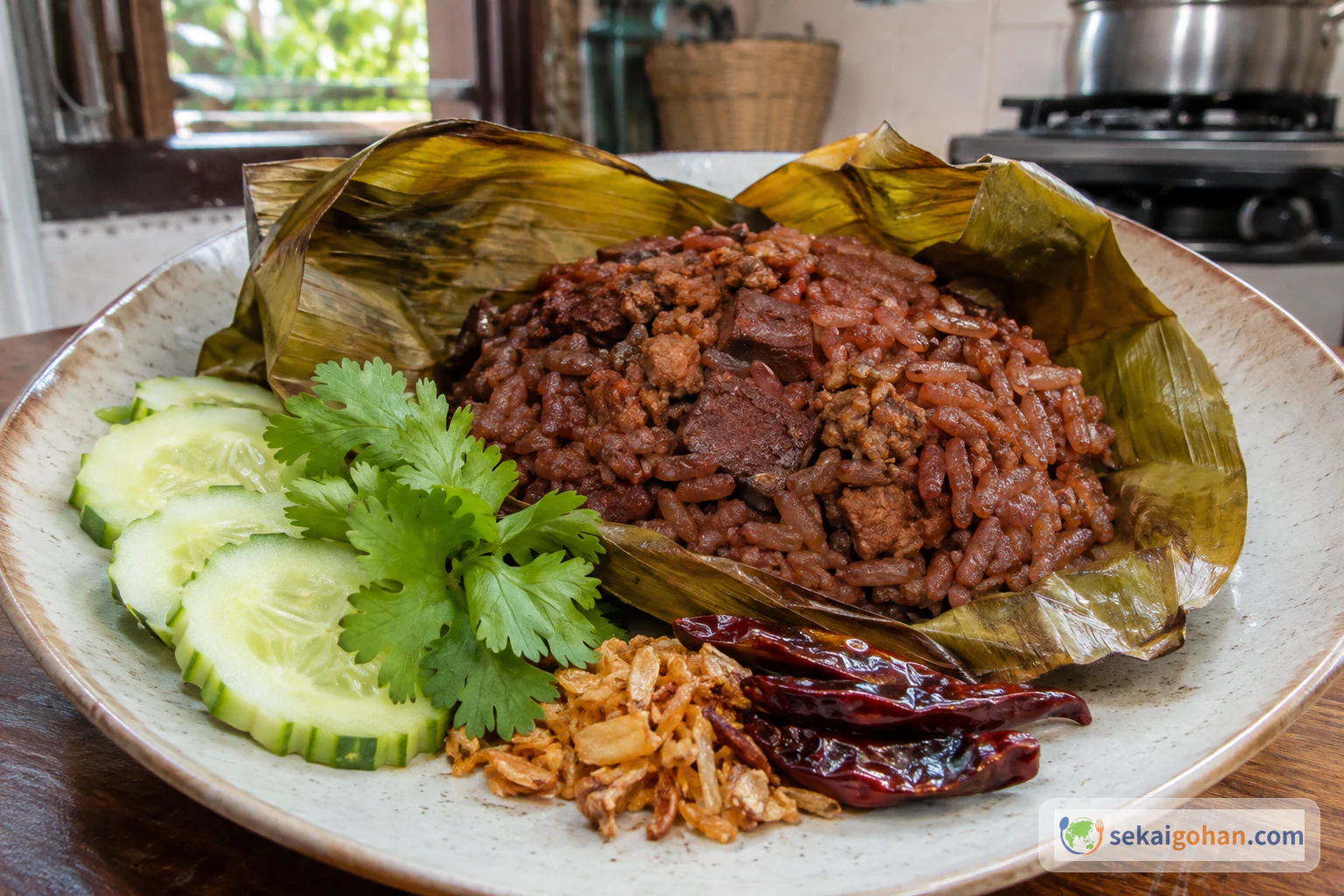
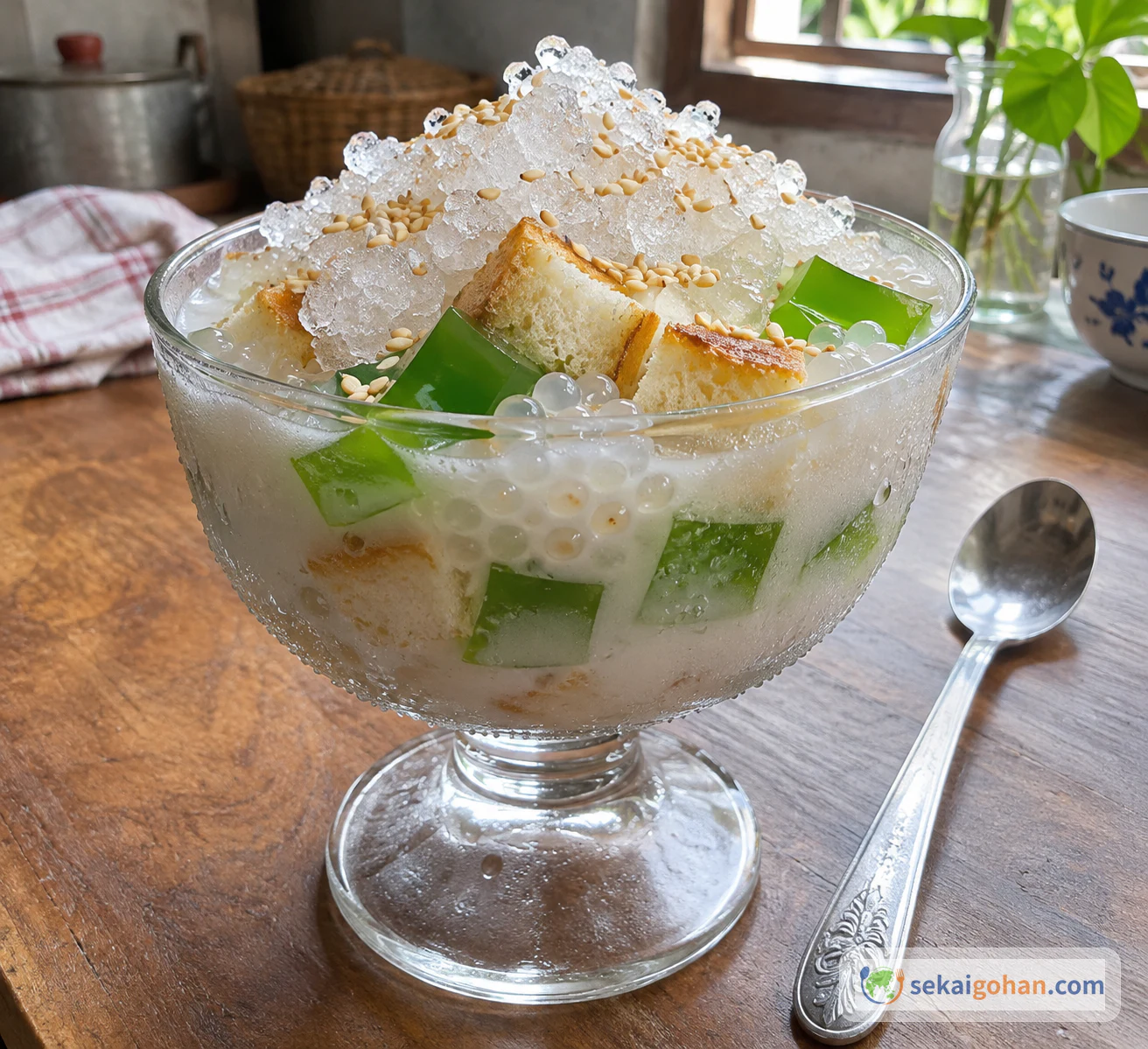
When a wok gets hot, there's a moment when the oil sends up a thin wisp of smoke. Throw in garlic, chili, shrimp and flat rice noodles right then, and the smell of sweet soy sauce rises with the toasty char of the noodles. That is char kway teow, the stir-fried flat rice noodles of Malaysia and Singapore. The name comes from Hokkien and Teochew and simply means "fried kway teow." At the stall it's finished over fierce heat with lard, shrimp, egg, bean sprouts, garlic chives, Chinese sausage and dark, strong soy sauce, and its flavor is decided in those few dozen seconds.
Char Kway Teow at the Hawker Stall

Char kway teow is closely tied to the street-stall culture of Chinese immigrants in the Straits region. Flat rice noodles came with the noodle culture that crossed from southern China into Southeast Asia. On the Malay Peninsula and in Singapore, they spread as a cheap, filling lunch that could be served quickly from a single wok. The dish is defined by its combination of rice noodles, dark soy sauce, egg, bean sprouts and seafood.
Unlike laksa, whose soup is built slowly, char kway teow is won in a short time in front of the flame, much like nasi goreng and pad thai.
Penang Style and Singapore Style
The two main styles differ in how strong and sweet they are, whether shellfish go in, and how moist the noodles end up. In Penang, shrimp, cockles, egg, bean sprouts and garlic chives are stir-fried briefly over very high heat, with restrained sweetness and the aroma of cockles and chives up front. The Singapore style leans on the sweet blackness of dark soy sauce, sometimes adds Chinese sausage or fish cake, and can have a slightly moister finish. It's the same dish, grown in slightly different directions in each port town.
| Element | Toward Penang style | Toward Singapore style | Practical answer at home |
|---|---|---|---|
| Color | Somewhat lighter | Black and sweet from dark soy | Start with 1 tbsp dark soy |
| Toppings | Shrimp, cockles, egg, chives | Shrimp, egg, sausage, fish cake | Center it on shrimp, egg, bean sprouts, chives |
| Fat | Plenty of lard | Lard or oil | Vegetable oil with a little lard added |
| Heat | Clear chili paste | Round, sweet and spicy | Also serve sambal on the side |
| Noodles | Loosened flat noodles | Moist and richer | Briefly rehydrate wide pho noodles |
In Malaysia you often see Penang Char Koay Teow, and in Singapore Char Kway Teow.
Ingredients: What to Protect in a Home Kitchen

Think of the ingredients in three groups: noodles, toppings, and sauce. Flat rice noodles and dark soy sauce change the result the most. Shrimp, egg, bean sprouts, and garlic chives are easy to find at an ordinary supermarket, and the recipe is designed so you do not need to chase Chinese sausage or cockles.
This recipe contains shrimp, egg, soy sauce (soy and wheat), and oyster sauce (oysters). Cook the shrimp until the center is white and opaque and the surface is plump and firm. Do not handle raw cockles at home; if you use shellfish, use only a small amount of already cooked shellfish.
Ingredients Worth Looking For
What is hard to buy at a nearby supermarket are wide rice noodles, dark soy sauce, sambal, and a wok that suits high-heat stir-frying. You do not need to collect everything for the first time, but rice noodles and dark soy sauce alone change the direction of the result greatly.
Choosing Char Kway Teow Ingredients and Substitutes
The essentials are the flat rice noodles, the charred aroma, the black gloss of soy sauce, and egg and bean sprouts cooked only briefly. Get those right and the dish still comes through when you swap the rest for what's easy to buy.
The one thing you can't substitute is the flat rice noodle. Yakisoba noodles or udon make a sweet soy stir-fry, but you won't get the charred edges from the wok wall or the slippery surface. Dried pho noodles work, since they're also flat rice noodles.
Cockles are authentic, but there's no need to force them in a home kitchen. Already cooked clams, baby scallops, or simply leaving them out is enough. Don't handle raw shellfish at home; in a stir-fry this short, use only shellfish that is already cooked. Chinese sausage adds sweet fat and aroma, and you can leave it out or use a little bacon. Honestly, draining the noodles well does more for the taste than hunting for shellfish.
Dark soy sauce adds color and a sweet aroma more than saltiness, and too much makes the dish black and heavy. Let light soy sauce and oyster sauce handle the salt and savoriness, and use dark soy for that street-stall gloss. One bottle also goes into the sauce for Hainanese chicken rice and the black sauce of khao man gai, so it's easy to use up if you keep cooking Southeast Asian food.
Method: Driving Off Moisture with Home Heat
Char kway teow is not a dish where you think for long in the pan. Cut all the ingredients, mix the sauce, set out the plates, and only then light the fire. The high-heat window is short, so if you start unprepared the noodles break or the shrimp turns tough.
Common Char Kway Teow Problems and Fixes

The hard part at home is the heat, not the ingredients. A stall's wok has flames licking up its sides and drives the moisture off the noodles instantly. On a home stove, what matters most is keeping the pan from cooling down. Cold noodles, wet bean sprouts and a pile of toppings all at once drop the temperature of the pan surface no matter how high the flame, and you end up with steamed noodles instead of a stir-fry.
So cook 2 servings at a time. With 10.5 oz (300 g) of noodles, you can still toss them in a 26–30 cm home frying pan. Put in 1.25 lb (600 g) at once and you spend ages pushing with the spatula: the noodles break, and the soy sauce burns on the bottom.
Noodles that break and clump come down to one of three things: over-rehydrating, poor draining, or over-stir-frying. Rehydrate dried noodles a little firm and drain them thoroughly in a colander. In the wok, toss in big sweeps instead of chopping at them with the spatula, and pour the sauce around the noodles rather than all at once.
Bean sprouts and garlic chives go in last. Added early, they release water and the charred aroma disappears. Move everything to the plate while they still have some crispness, because they keep softening in the residual heat.
If you have no wok, an iron frying pan gets you quite close; a heavy frying pan also works. The surface area is smaller, so stir-fry one serving at a time. Once the noodles are in, leave them untouched for 30 seconds to sear, and you get a bit of toastiness even on home heat. Nonstick pans shouldn't be heated empty at high temperature, so skip heating the pan until it smokes, finish quickly over medium-high heat, and put moisture control ahead of char.
Serving and Storing Char Kway Teow
Serving
Char kway teow is best freshly made, while the noodles are hot and the bean sprouts still crisp. Even at a hawker stall, it's finished in the wok one plate at a time, never served from a big pre-made platter. Locally, people break into it from the edge of the plate while it's hot, mixing noodles coated in egg with shrimp and bean sprouts bite by bite. At home, piling it on one large platter makes the noodles overlap and steam, so plate each portion on a shallow plate as it's done and eat it right away.
Lime, sambal and thin slices of cucumber at the table take off the heaviness. If you want a soup, pick a clear chicken soup or a light broth like pho ga; coconut-based laksa is a bit heavy alongside. Cucumber with a little vinegar and cold oolong tea also cut the oily aftertaste.
To split the heat for a household, put half the sambal in the wok and serve the rest at the table. Or take out the portions for children and anyone who dislikes heat first, then add sambal to the adults' portion in the last 30 seconds before tossing. The same ingredients end up tasting different.
Storage and Making Ahead
Because it contains shrimp and egg, don't leave it at room temperature. Put it in an airtight container once cooked and refrigerate for up to the next day. To reheat, microwave at 600 W for about 1 1/2 minutes, then toss in a frying pan over medium heat for 1 minute with 1 tsp added oil, and some of the aroma comes back.
To prepare ahead, prep the ingredients rather than cooking everything through. Rehydrate the noodles and coat them with oil, put the sauce in a small bottle, pat the shrimp dry and refrigerate them, and wash and dry the chives and bean sprouts well. Stir-fry right before eating and a plate is ready in about 10 minutes.
Frequently Asked Questions
Q1. I cannot find fresh flat rice noodles. Can I use dried pho noodles?
Yes. Use dried pho noodles 8–10 mm wide or more and rehydrate them a bit shorter than the package says; fully softened noodles break in the wok. After rehydrating, drain them in a colander for 10 minutes and coat lightly with oil, and they're much easier to handle.
Q2. Can I make it less spicy?
Yes. Reduce the sambal from 2 tbsp to 1 tbsp and serve the rest on the side. Leaving out the chili entirely weakens the street-stall aroma, so sear the garlic and dark soy a little more carefully and add white pepper to make up for it.