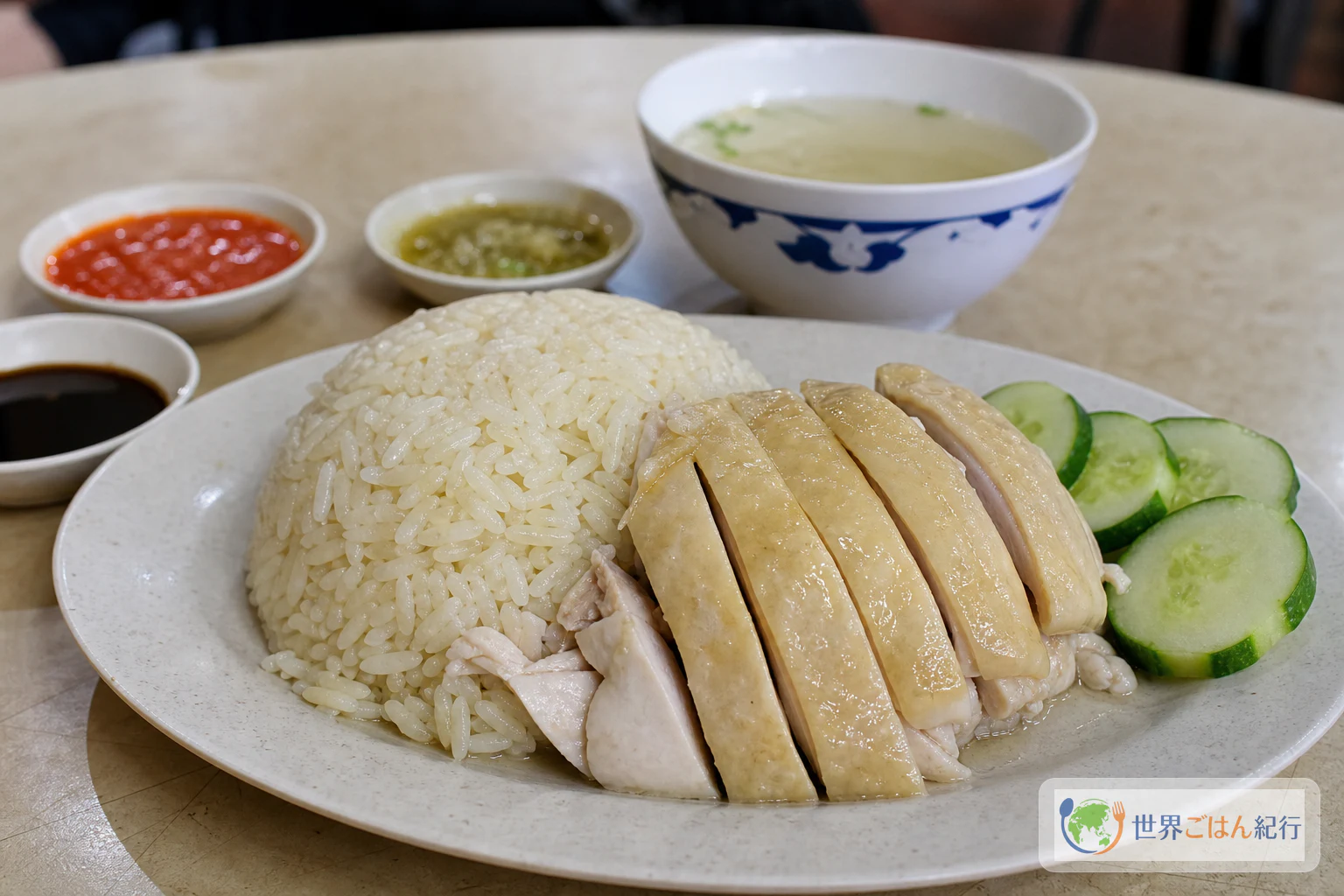
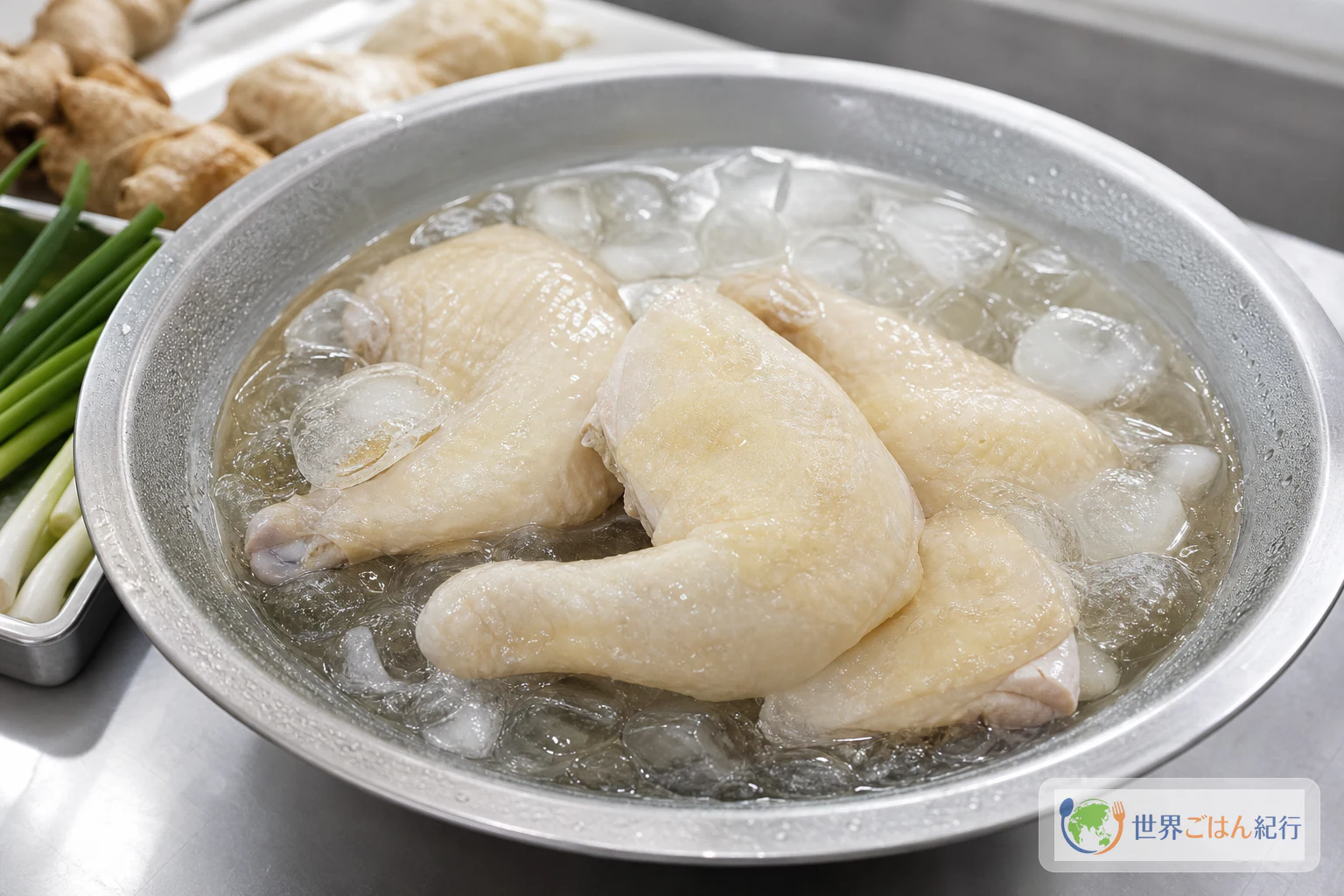
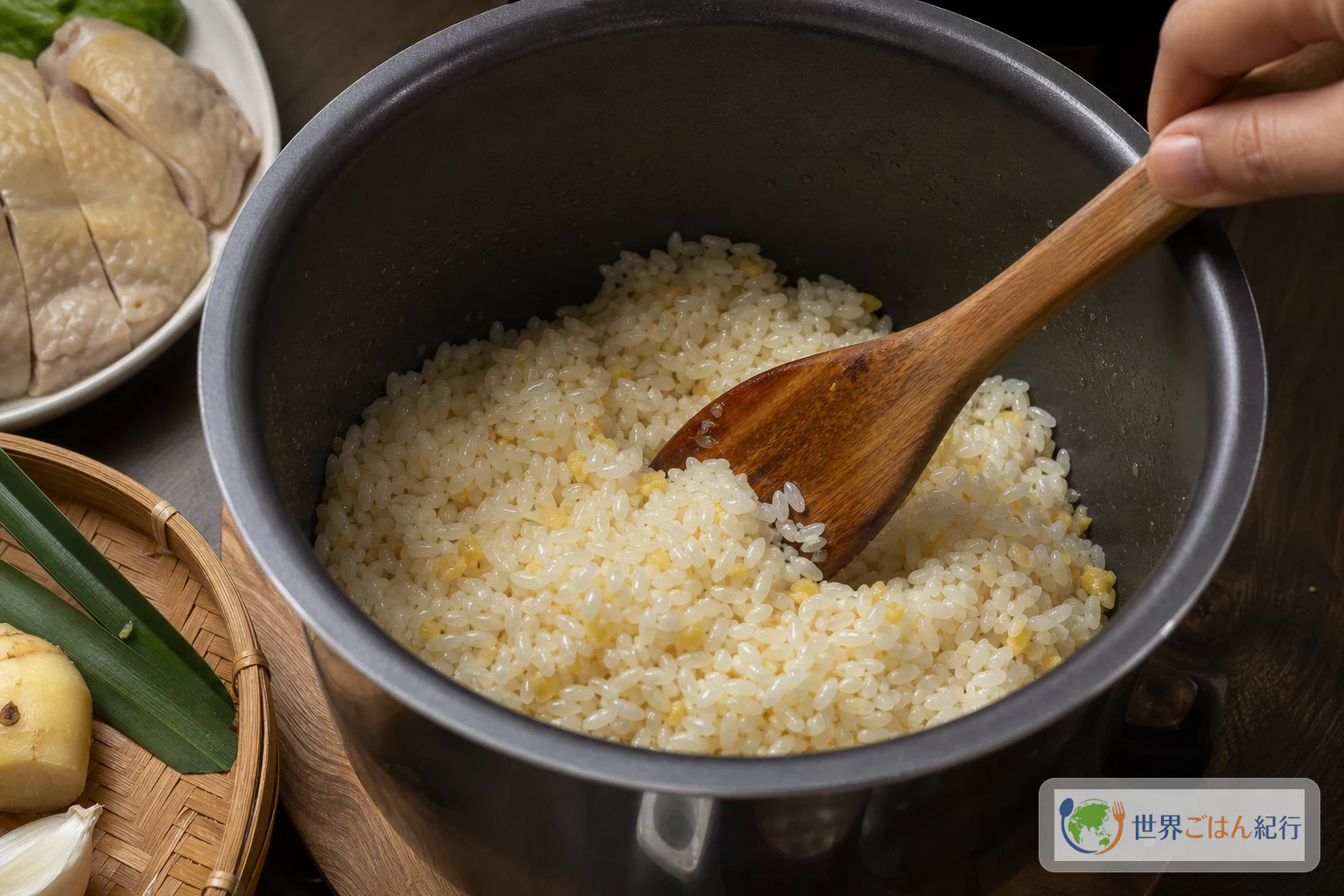
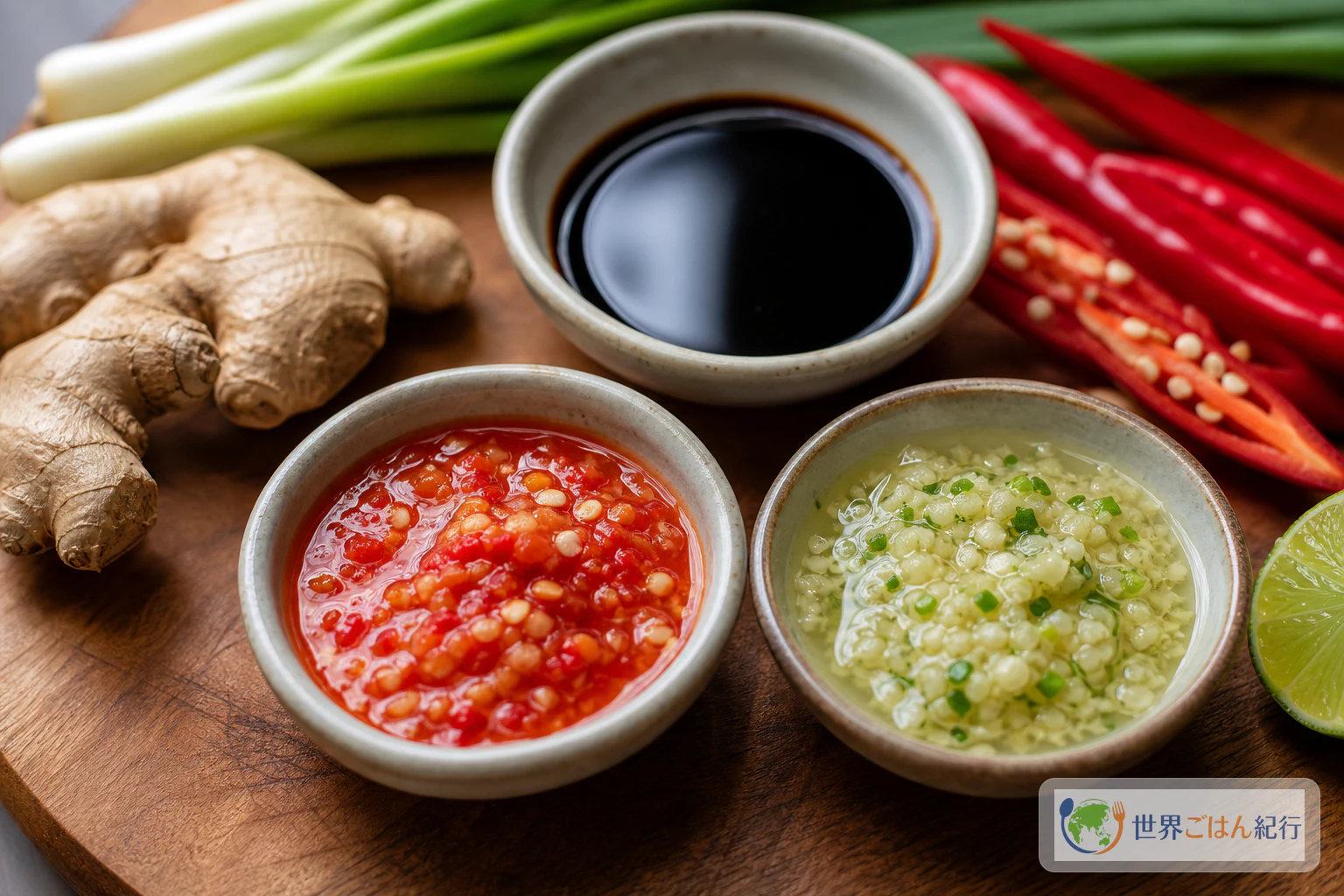
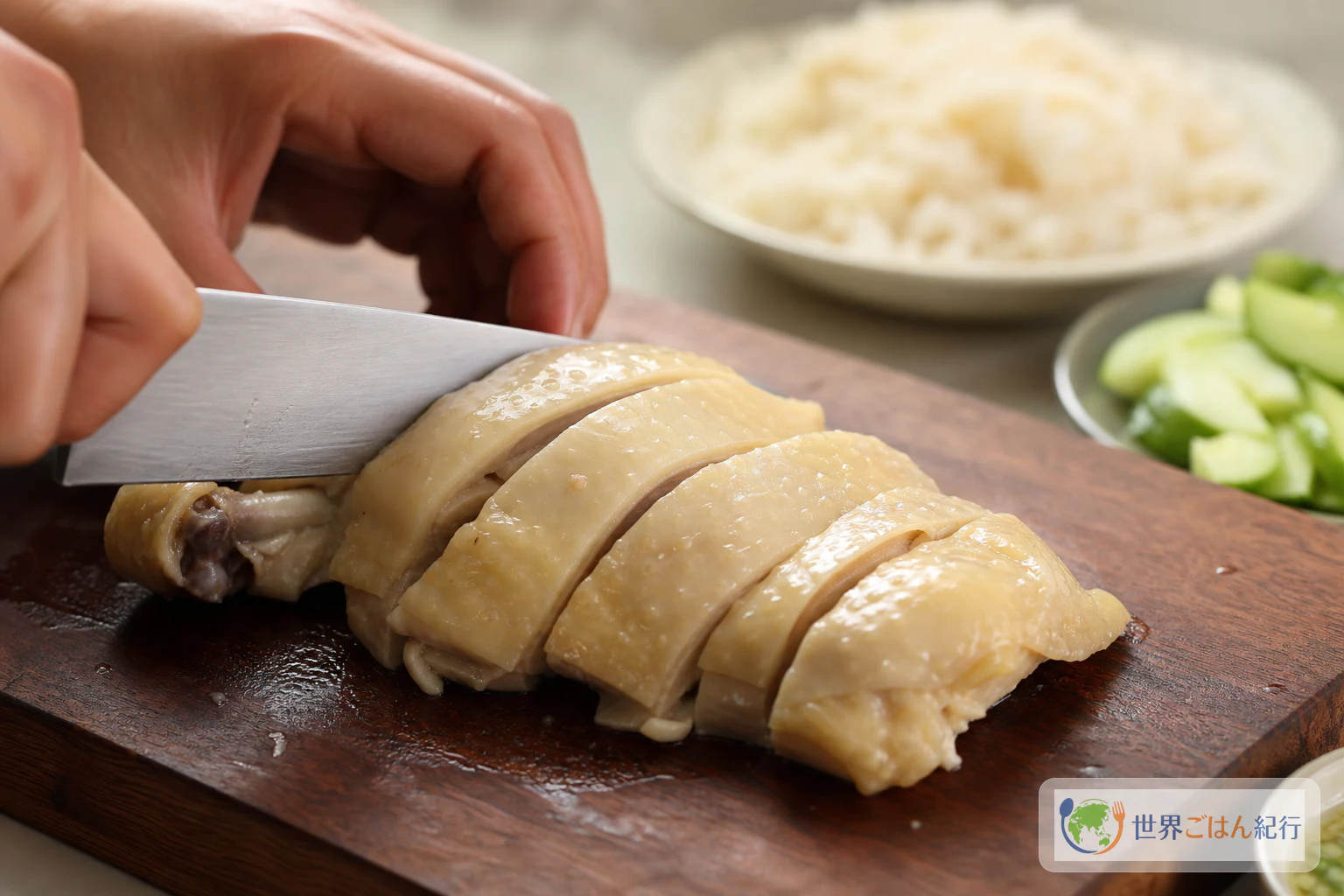
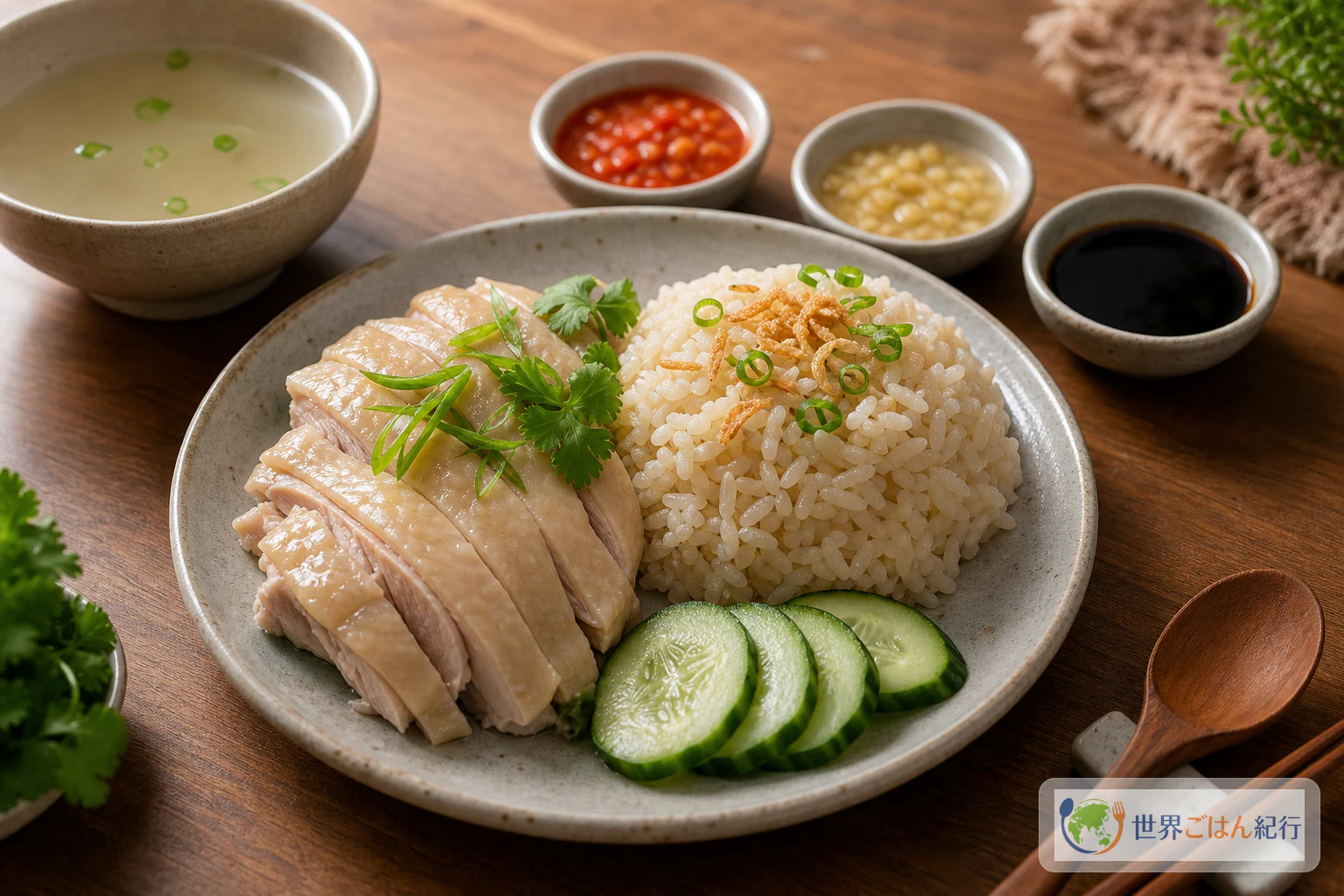
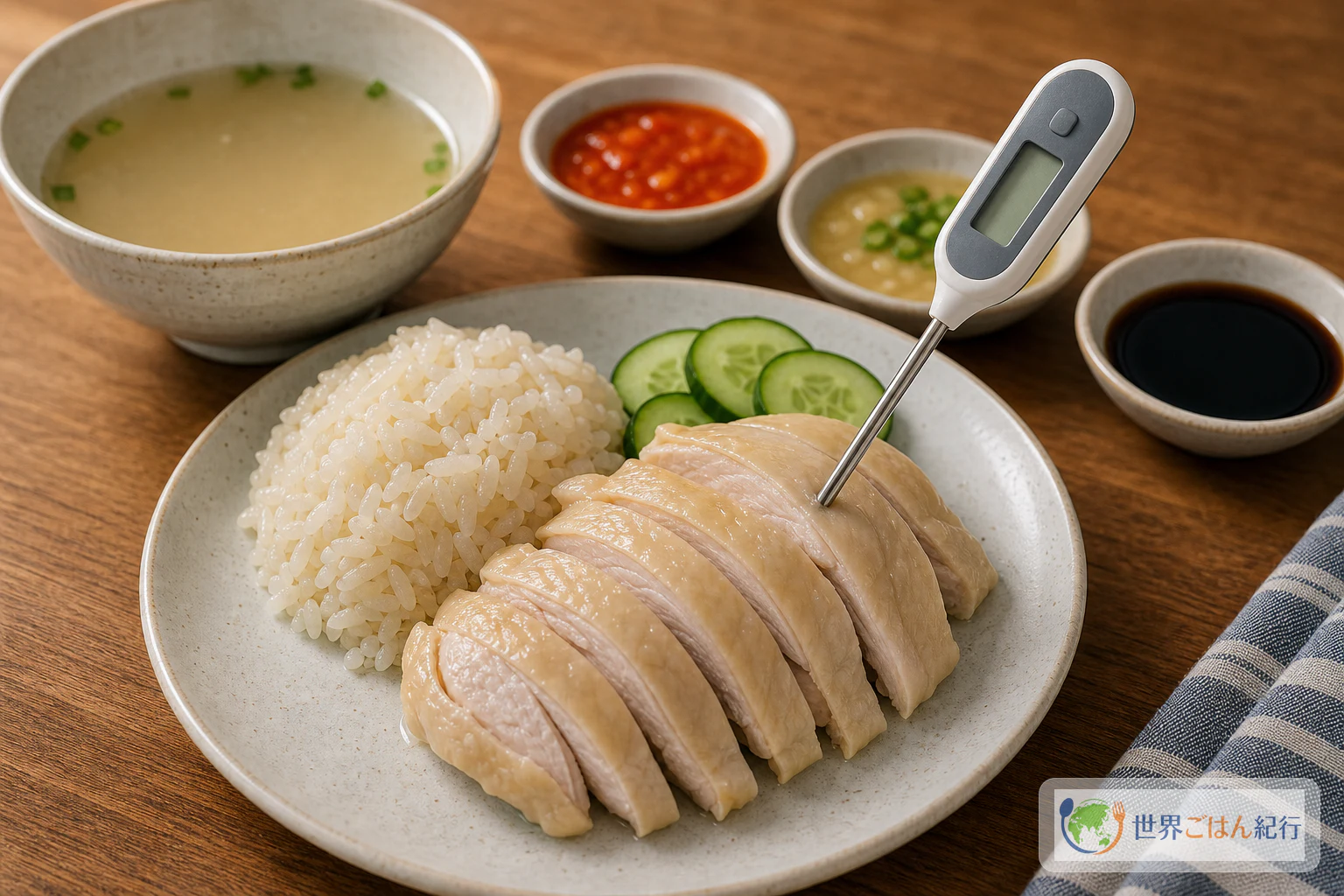
Lift the lid of the rice cooker and the smell of ginger, garlic and chicken fat comes up through the steam. Next to the rice go thin slices of chilled poached chicken, some cucumber, a red chili sauce, a pale ginger sauce and a dark, sweet-salty soy. The plate looks quiet, but the chicken's flavor runs all the way through the rice. Hainanese chicken rice comes from China's Hainan Island and grew up in Singapore's hawker centers, where people eat it almost as a national dish. The surprise is that the rice is the real star. The chicken only has to be cooked through, but when the rice is fragrant, the whole plate comes alive.
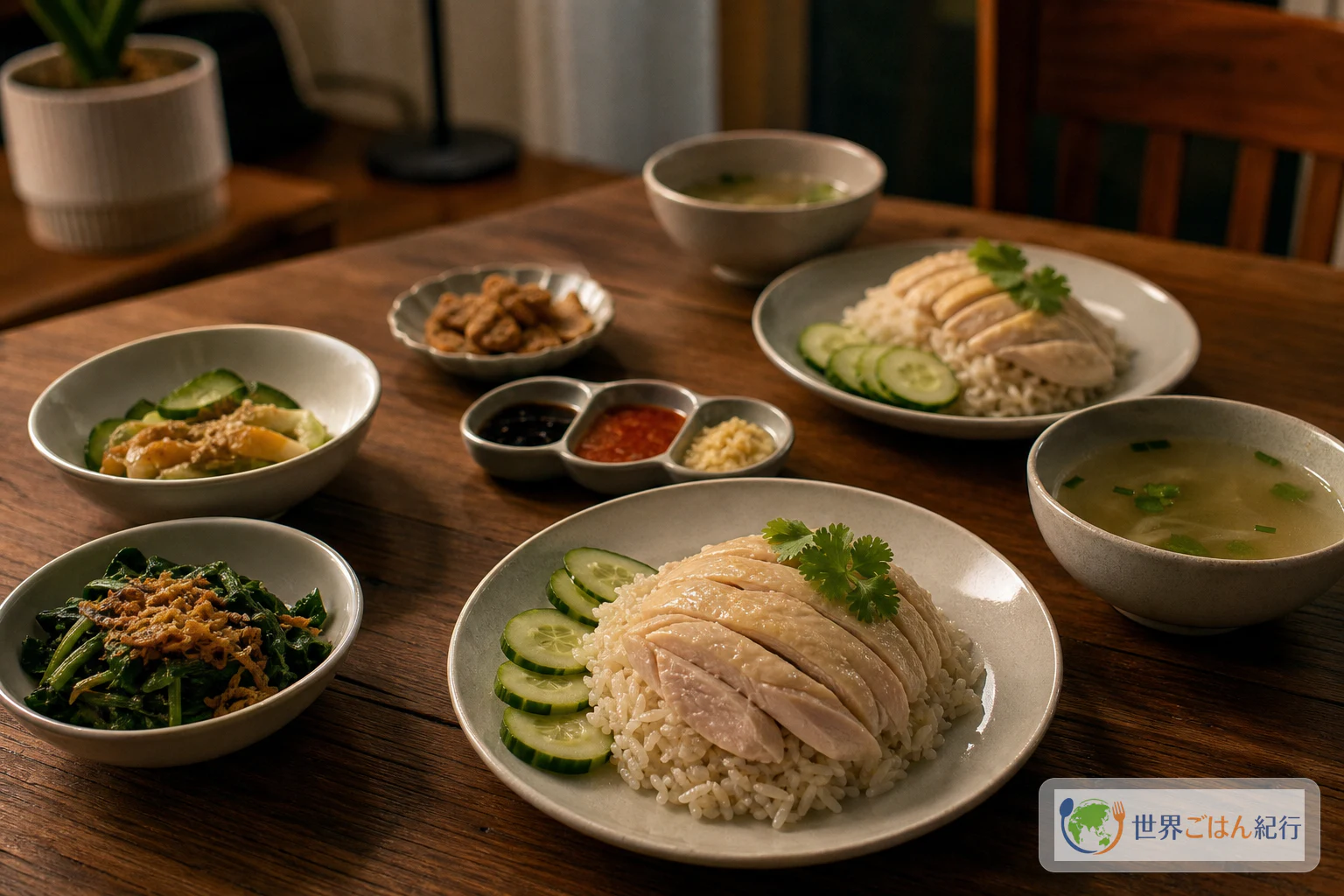
Hainanese Chicken Rice from Hainan to the Hawker Center
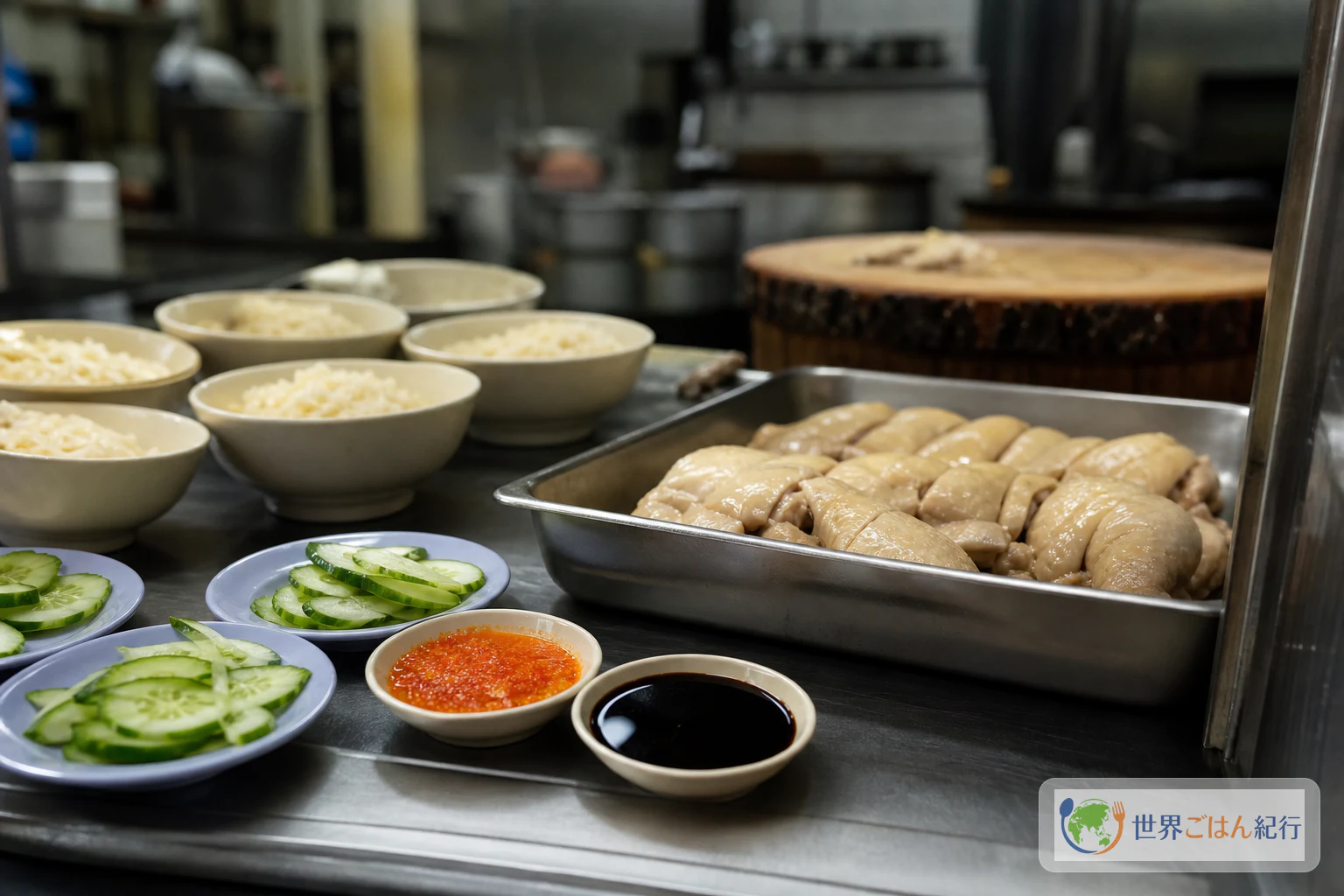
Origin
The dish goes back to Wenchang chicken on Hainan Island. People who left Hainan for Southeast Asia cooked with the chicken, rice and seasonings they found there, and poached chicken with chicken-broth rice turned into street food. In Singapore it took its own shape: rice cooked in the broth left from poaching the chicken, served with chili, ginger and dark soy.
In some places it is also called "Singapore chicken rice," but "Hainanese chicken rice" is the common name in English. Think of it as a dish from Hainan Island that Singapore's street-food culture refined, and the point of treating the chicken, rice, sauces and broth as separate parts becomes clear.
How It Is Eaten in Singapore
It looks like one complete plate, but each part is made on its own. The chicken is poached and chilled, the rice is cooked in chicken fat and broth, the soup comes on the side and each sauce gets its own little dish. It works like a small set meal built around chicken.
Every hawker stall does it a little differently. You'll find roast versions, steamed versions and silky ones close to white-cut chicken. Some stalls show off glassy skin, and others go heavy on the garlic in the rice. People pick a stall by whether they care most about the rice, the chicken or the chili.
At home, three things make it Hainanese chicken rice: cook the chicken gently, cook the rice in the broth, and put out the ginger sauce and dark soy alongside the chili sauce.
Hainanese chicken rice is a busy city lunch more than a fancy dish. At home, keep the chicken, rice, cucumber, sauces and soup neatly separate instead of piling the plate high. It is a dish of arrangement, not addition.
Compared with Other Chicken and Rice Dishes
Malaysian nasi lemak gets its fragrance from coconut milk, while Hainanese chicken rice gets it from chicken broth and fat. Thailand's street version, khao man gai, comes with a fermented soybean sauce, which shows how much a sauce can shift the same idea. Pho ga and soto ayam also make a lot of their chicken broth. Here the broth plays a quieter part: most of it soaks into the rice, and the rest comes in a small bowl.
Ingredients: Gather the Chicken, Rice and Sauces Separately
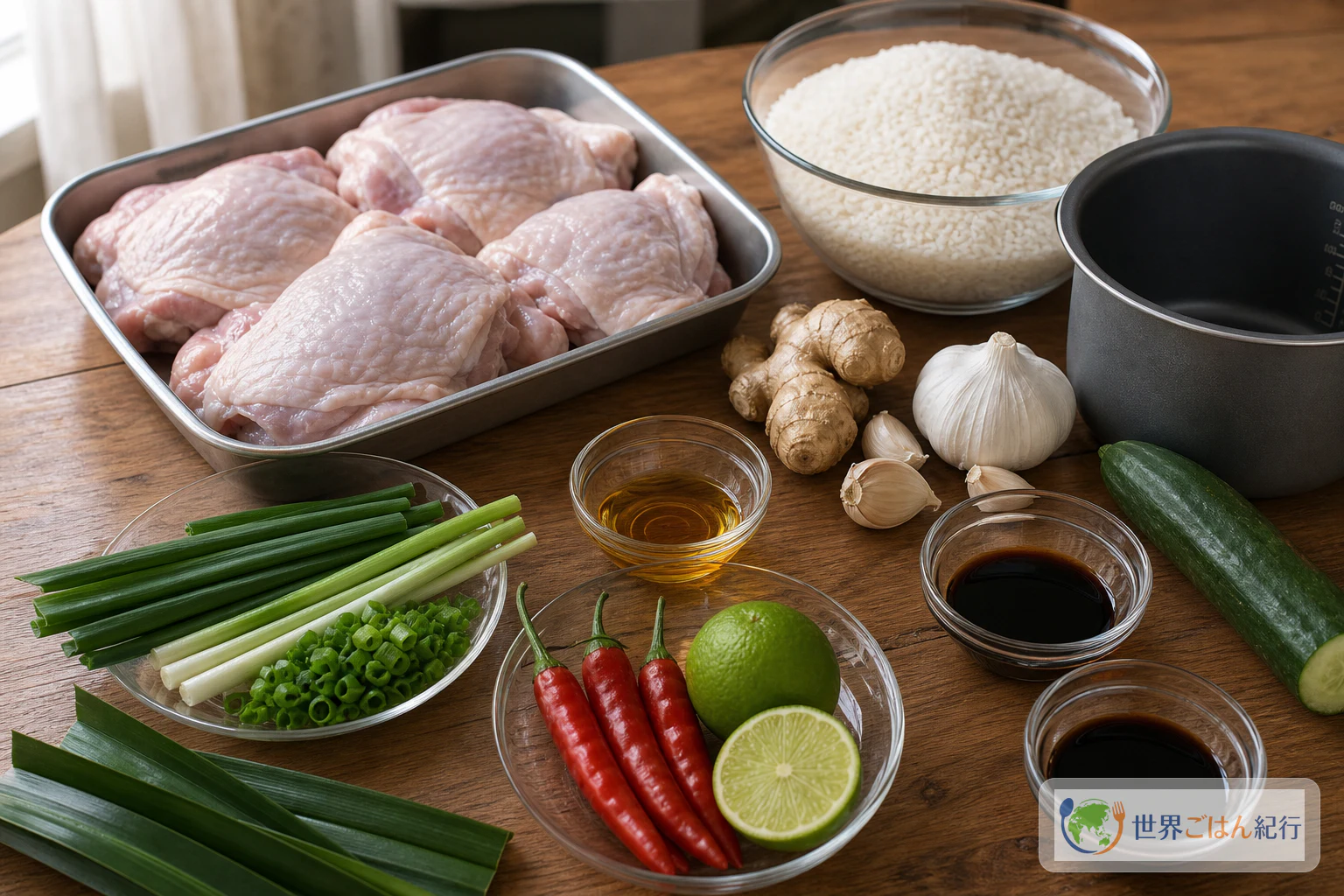
The list looks long, but the idea is simple. Split it into the ingredients for poaching the chicken, for cooking the rice, and for the sauces, and shopping gets easier.
This recipe contains chicken, soy, wheat and sesame. Cook the chicken all the way through. Heat the center of the meat to 167°F (75°C) for at least 1 minute to prevent food poisoning. Even though it is poached gently over low heat, check the internal temperature at home first.
Ingredients and tools for this dish
Hainanese chicken rice depends on fragrant rice and temperature control. You do not need to buy everything as imported ingredients the first time, but having jasmine rice and a thermometer raises your odds of success.
Buy chicken thighs, ginger, scallions, cucumber and lemon at an ordinary grocery store, and switch only the rice to jasmine rice, and you get most of the way there. Pandan leaf and dark soy are nice to have, but you do not have to hunt for them the first time.
Choosing Ingredients and Substitutes for Hainanese Chicken Rice
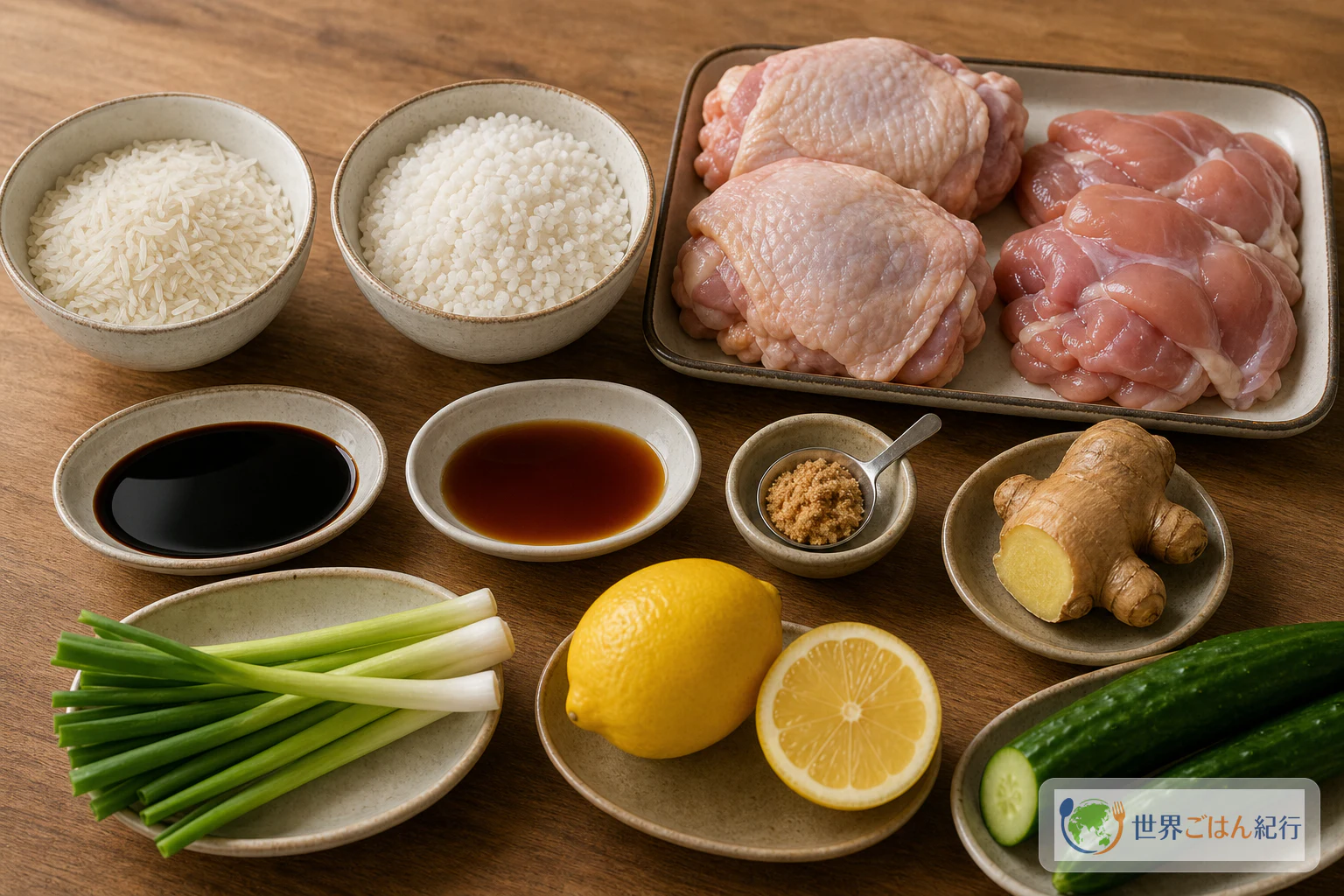
Swapping in every authentic ingredient won't automatically make a better plate. At home it makes more sense to decide what to protect and what to substitute.
| Element | What to protect | Realistic substitute |
|---|---|---|
| Chicken | Skin-on, and take the poaching broth | Bone-in thighs. Otherwise skin-on thighs |
| Rice | Light aroma, distinct grains | Jasmine rice. For short-grain rice, use less water |
| Chicken fat | Carries aroma into the rice | Leftover chicken skin, rice bran oil, a little sesame oil |
| Pandan | Sweet green aroma | Optional. Leaving it out is more natural than forcing it |
| Chili | Sourness and heat that tighten the chicken | Red chili plus lemon. If too hot, mix in bell pepper |
| Ginger sauce | Adds aroma to the mild chicken | More ginger, scallions, hot oil |
| Dark soy | Dark, sweet-salty finish | Regular soy sauce plus a little brown sugar |
The Poaching Broth
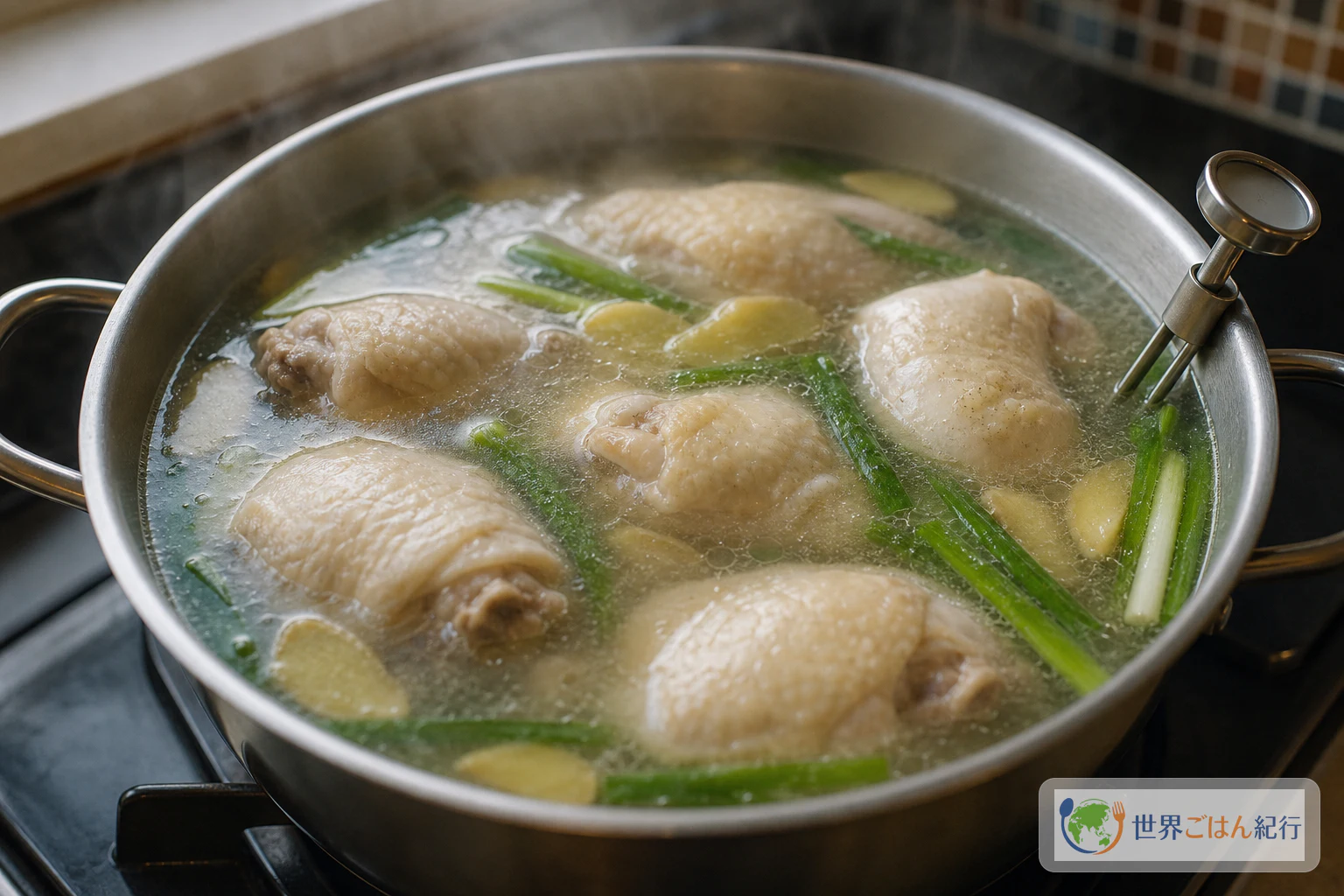
The broth is the one thing to keep. Rice cooked only in store-bought chicken stock makes decent Chinese-style rice, but it doesn't tie back to the poached chicken. Poach the chicken, cook the rice in the broth and serve what's left as soup. That loop is the heart of the dish.
Chicken
Bone-in thighs are the easiest choice your first time, and they're easy to find. The bones give you broth, the skin gives you fat, and the sliced plate doesn't look sparse. Boneless thighs save time but make a lighter broth. Breast comes out elegant but doesn't have much fat to carry into the rice, so cook it for less time and check the center temperature as you go. You can make up for the aroma with a little extra chicken skin, some thigh meat mixed in, or rice bran oil and sesame oil.
Rice
Jasmine rice is the easiest to work with. It's long-grain, so it stays light even after soaking up chicken broth, and its aroma suits chicken. Short-grain rice turns out stickier with the same amount of liquid, so use a little less broth. Let it steam a bit longer after cooking, then open the lid to let some steam escape before you fluff it.
Aromatics and Pandan
Pandan leaf adds a sweet green fragrance, but it's optional. The core of the dish is chicken broth, chicken fat, ginger and garlic, and too much pandan pushes the sweet scent to the front. Leaving it out the first time also helps you learn what the chicken and rice smell like on their own. Unlike bak kut teh, which leans on herbal spices, this dish has a delicate aroma, and doubling the ginger won't make it more authentic. Use aromatics that frame the chicken without covering it up.
Method: Poach the Chicken and Cook the Rice Together
Making the chicken, rice and sauces separately can look busy. In practice, start the rice and sauces while the chicken poaches, and the work flows cleanly.
For a whole bird, remove the innards, wash away the blood around the neck, and rub the surface with salt before poaching. A home pot is often too small, so bone-in thighs are the safer choice the first time. Even if you try a whole chicken, do not skip the internal temperature check.
Hainanese Chicken Rice Troubleshooting
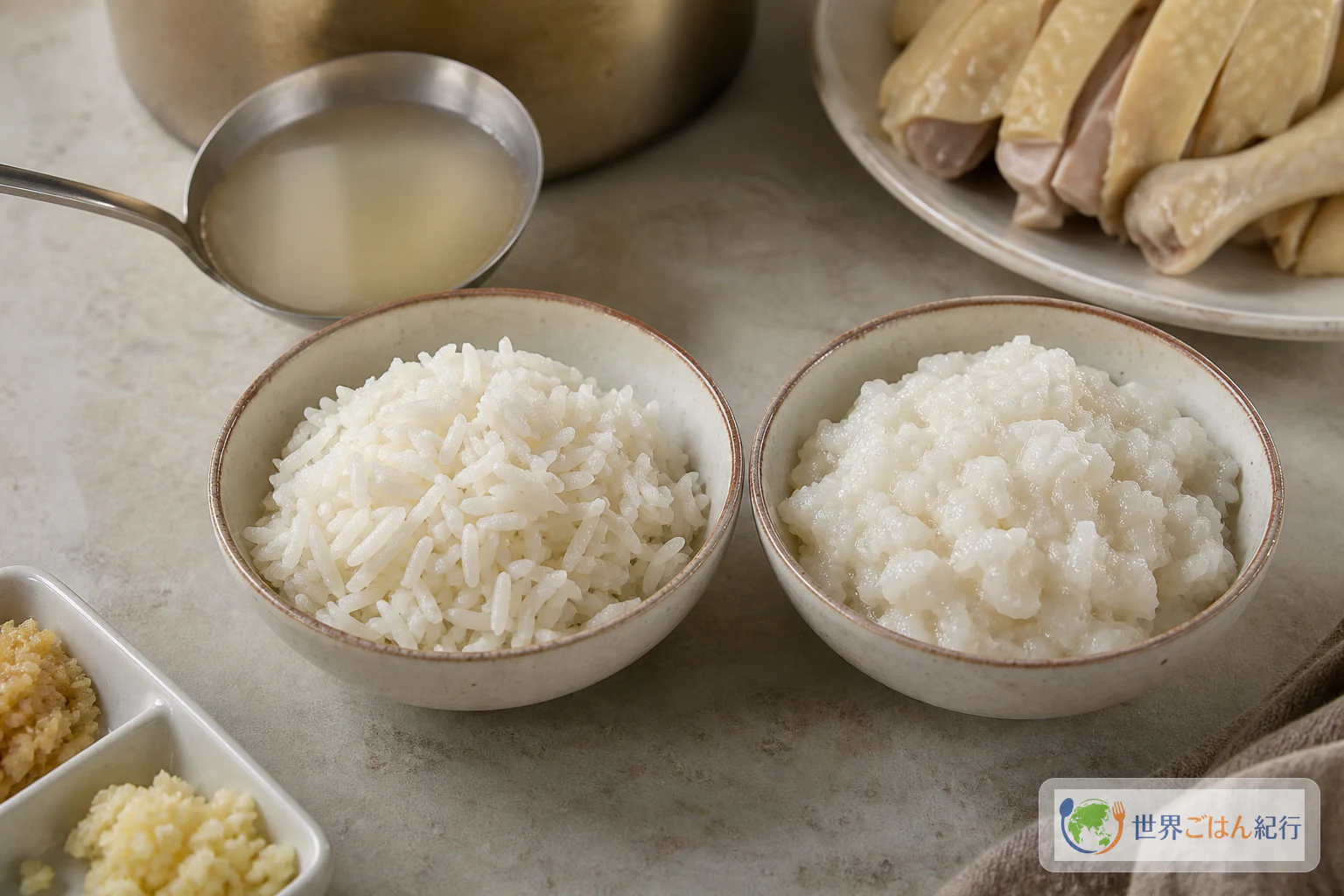
This dish rarely burns or falls apart. When it goes wrong, it drifts quietly: it turns into a plain poached-chicken plate, the rice feels heavy, or the sauces taste vague.
Tough Chicken or Slack Skin
Tough chicken means the water stayed at a hard boil for too long. The fibers shrink and the juices run out when you slice. Cook over low heat, let the residual heat finish the job, and check the internal temperature at the end. With breast, keep the cooking time especially short.
Slumping skin means the ice bath was too short or the chicken wasn't wiped dry. The ice water firms the skin, and about 5 minutes is enough. Wipe the chicken dry as soon as it comes out, then brush on a thin coat of oil to keep it from drying out and give it a little gloss.
If the chicken smells strong to you, rub the skin lightly with salt before poaching, rinse it and wipe it dry. Clean out any blood and dirt around the bones too. Careful prep does more than extra ginger and scallions.
Sticky or Hard Rice
Sticky rice comes from rinsing too hard and breaking the grains, or from too much broth. Rinse jasmine rice gently and drain it in a sieve. Even in a rice cooker, use 1½ cups (360 ml) of broth for 10.5 oz (300 g) of rice rather than the usual short-grain markings. If it still comes out soft, open the lid, leave it for 5 minutes, then fluff it with broad strokes of a paddle.
Rice that stays slightly hard often comes from the quick cycle, which cuts the soaking and steaming that rice coated in chicken fat needs. Use the normal cycle instead. In a pot, aim for 12 minutes on low after it boils, then 10 minutes of resting. Keep the lid on the whole time, because escaping steam takes the fragrance with it.
Flat Sauces
Sauces that taste flat need more acid and salt. The chili sauce brings lemon or lime acid to cut the chicken fat as well as heat, the ginger sauce gets its aroma from hot oil, and the dark soy adds the sweet-salty finish. When each of the three does its own job, mild chicken stays interesting to the last bite.
The area around the bone can look pale pink, so do not judge by color alone. Put safety first: check the center temperature and heat further if in doubt. Be especially careful when serving children, older adults or pregnant people.
Serving and Storing Hainanese Chicken Rice
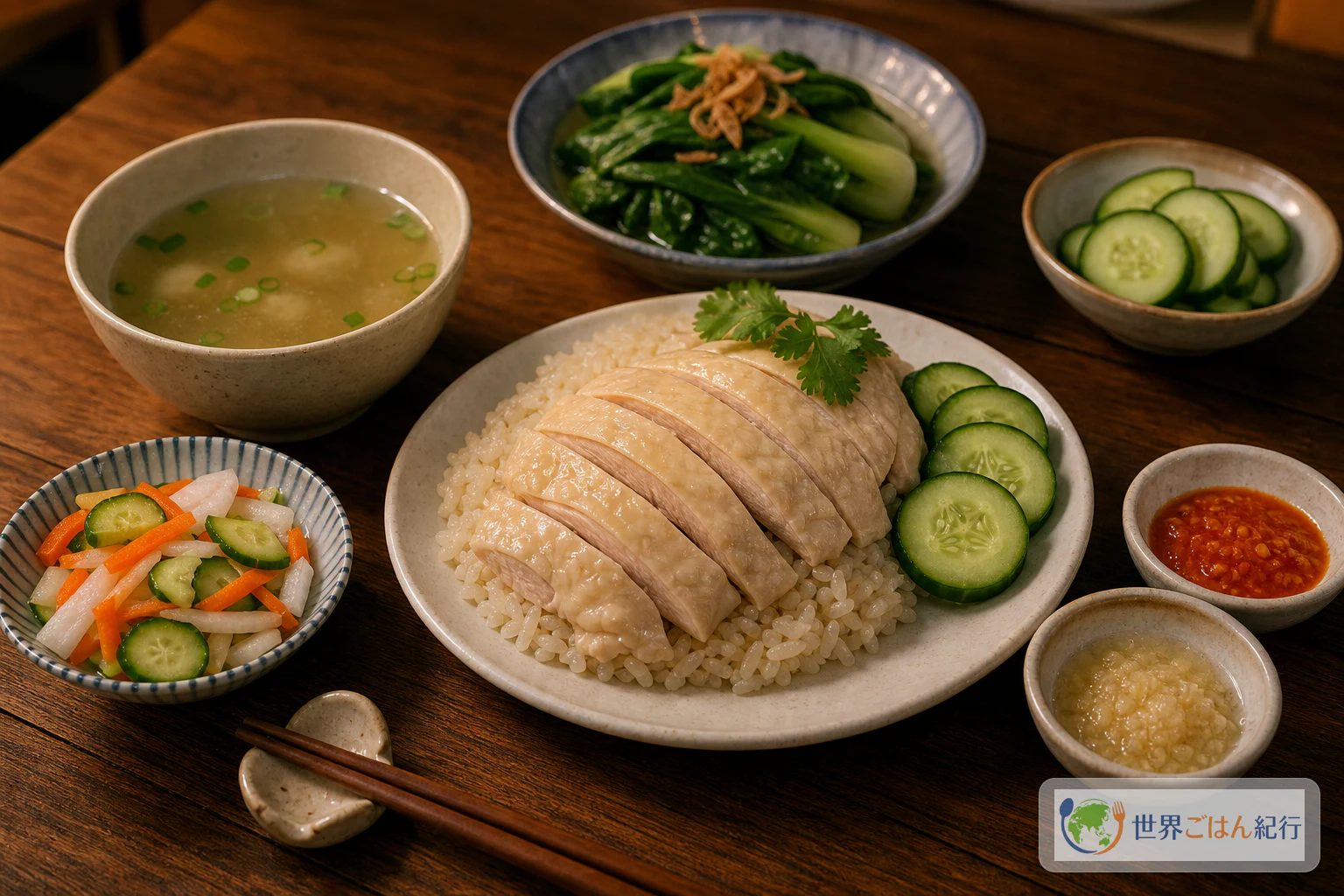
Eating It Sauce by Sauce
Try the sauces one at a time instead of mixing them all at once. Start with a bite of plain rice and notice the chicken broth and fat. Then put a little dark soy on the chicken, add chili partway through, and finish with the ginger sauce. The flavor keeps changing as you go.
Side Dishes and Pairings
At a hawker center, cucumber and soup are often all you get. For dinner at home, a little more vegetable rounds out the meal: greens stir-fried with garlic, blanched bean sprouts or extra cucumber. The dish is rich with oil and rice, so light sides suit it best.
To widen the table, a small serving of sour-hot tom yum goong takes the flavor in a clearly different direction. Other rice and noodle dishes make good contrasts too: coconut nasi lemak, stir-fried pancit canton and chicken noodle soup pho ga. For other ways of drawing aroma from chicken, try clear-broth pho ga, turmeric-and-aromatics soto ayam and sour sinigang.
To serve it with drinks, use less rice, slice the chicken as a cold dish and make the chili sauce stronger. It goes with beer, cold white wine or a clean sake. Go easy on sesame oil, which narrows your drink choices, and let the chicken fat and ginger carry the aroma.
For children, shred the chicken finely and plate it with rice and cucumber so it's easier to eat. Served as a fragrant chicken rice rather than a spicy dish, it fits right in at a family table.
Storing and Reheating
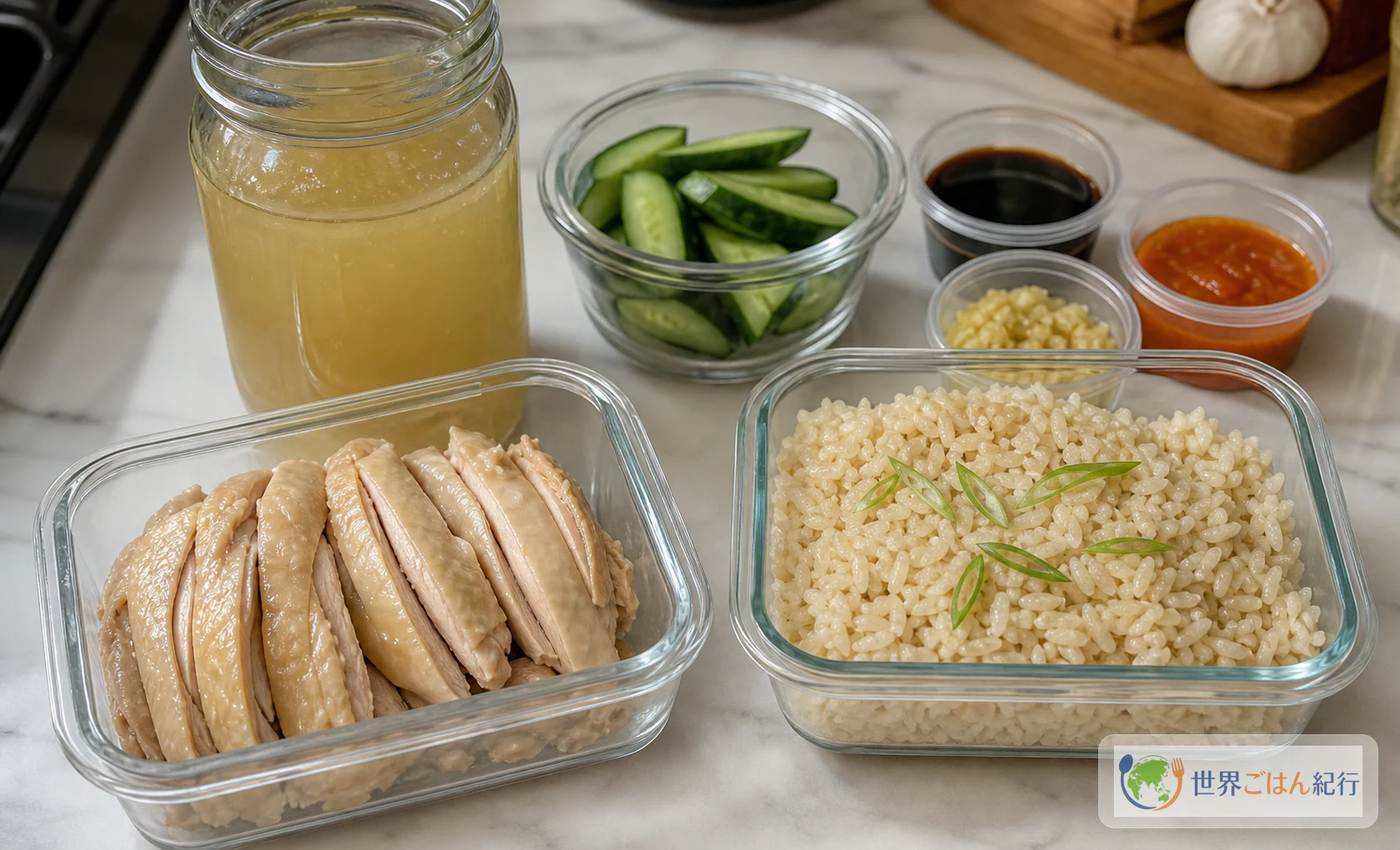
It's best fresh, but if you store the chicken, rice, soup and sauces separately, it keeps until the next day. Keep the chicken away from warm rice. Otherwise the rice soaks up the chicken's moisture, the chicken dries out, and both suffer.
Let the chicken cool completely, then refrigerate it in a shallow container and eat it by the next day. To reheat, spoon a little broth over it, cover with plastic wrap and warm it on low so it stays moist. It's also good sliced cold with ginger sauce and cucumber.
Refrigerate the rice in its own container until the next day. Sprinkle about 2 tsp of broth over it, microwave it and fluff. If it's sticky, a quick toss in a frying pan brings the aroma back, but stop before it turns into fried rice. Skip the oil and let the broth do the reviving.
Keep the broth in the refrigerator for about 2 days and bring it to a full boil every time you use it. The fat that sets on top can go back into the rice or soup for aroma. Use 1–2 tsp, because adding all of it makes things heavy.
Keep the chili sauce and ginger sauce in clean containers in the refrigerator and use them within 2 days. The oil in the ginger sauce firms up in the cold, so let it warm toward room temperature before serving. Slice cucumber just before eating so it doesn't get watery.
Leftover chicken makes a good next-day lunch in mie goreng or on top of laksa. To eat it again as chicken rice, though, keep the rice and soup with it.
Frequently Asked Questions
Q1. Is there a way to make the chili sauce less hot?
Use fewer red chilies and mix in a little red bell pepper. Keep the sourness from the lemon or lime and lower only the heat, and the sauce still cuts the richness the way it should. For children, serve the chili in a separate dish and let them eat with ginger sauce and dark soy.
Q2. Can I make everything in the rice cooker alone?
Some versions cook the chicken and rice together in the rice cooker. You'll get a more reliable texture by handling the chicken, broth and rice separately. Poach the chicken in a pot and save the rice cooker for the rice, and it's much less likely to go wrong.