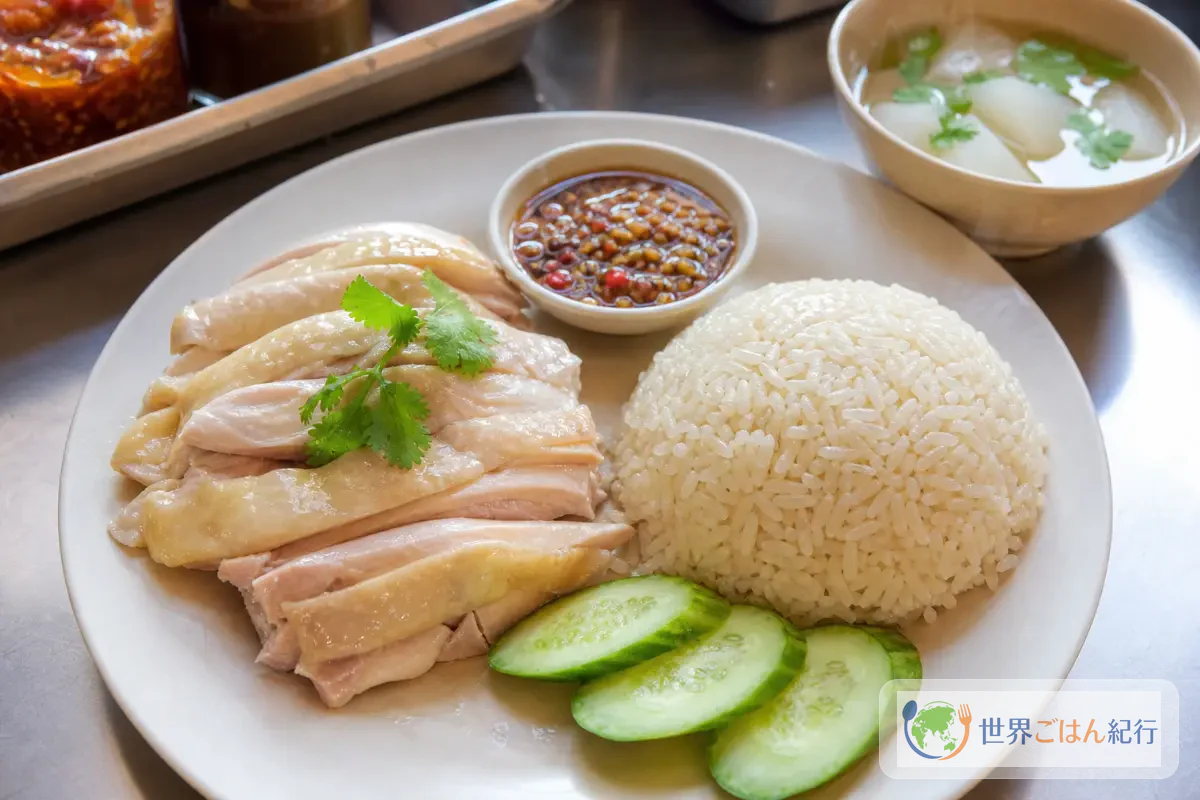
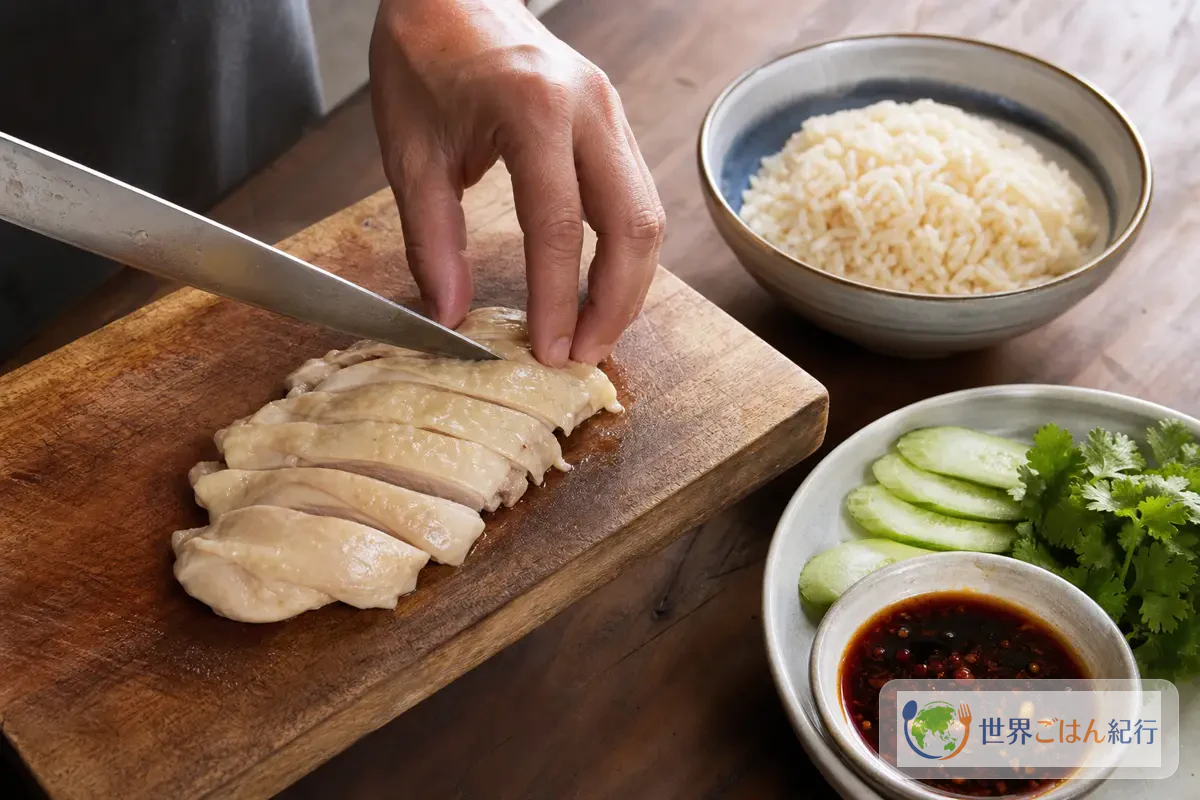
At a Thai street stall, the cook cuts the poached chicken with a few chops of a big cleaver and lines it up neatly beside the white rice. The plate is plain, with no red curry and no heap of herbs. Then your spoon goes in, the smell of chicken fat and ginger rises, and the strong ginger sauce on the side changes the whole plate at once. Khao man gai (ข้าวมันไก่ / khao man gai) is the chicken and rice Thais eat every day. The rice is cooked with the chicken's fat and poaching liquid, and a bold sauce of fermented soybeans, ginger, chili and vinegar wakes everything up.
Khao man gai and Hainanese chicken rice
The name and its cousin
The name tells you what's on the plate: khao is rice, man is fat, gai is chicken. Put together, it means "chicken fat rice." Khao man gai is a cousin of the look-alike Hainanese chicken rice. The simplest way to think of it is as the Thai version of the chicken rice culture that spread from Hainan Island across Southeast Asia.
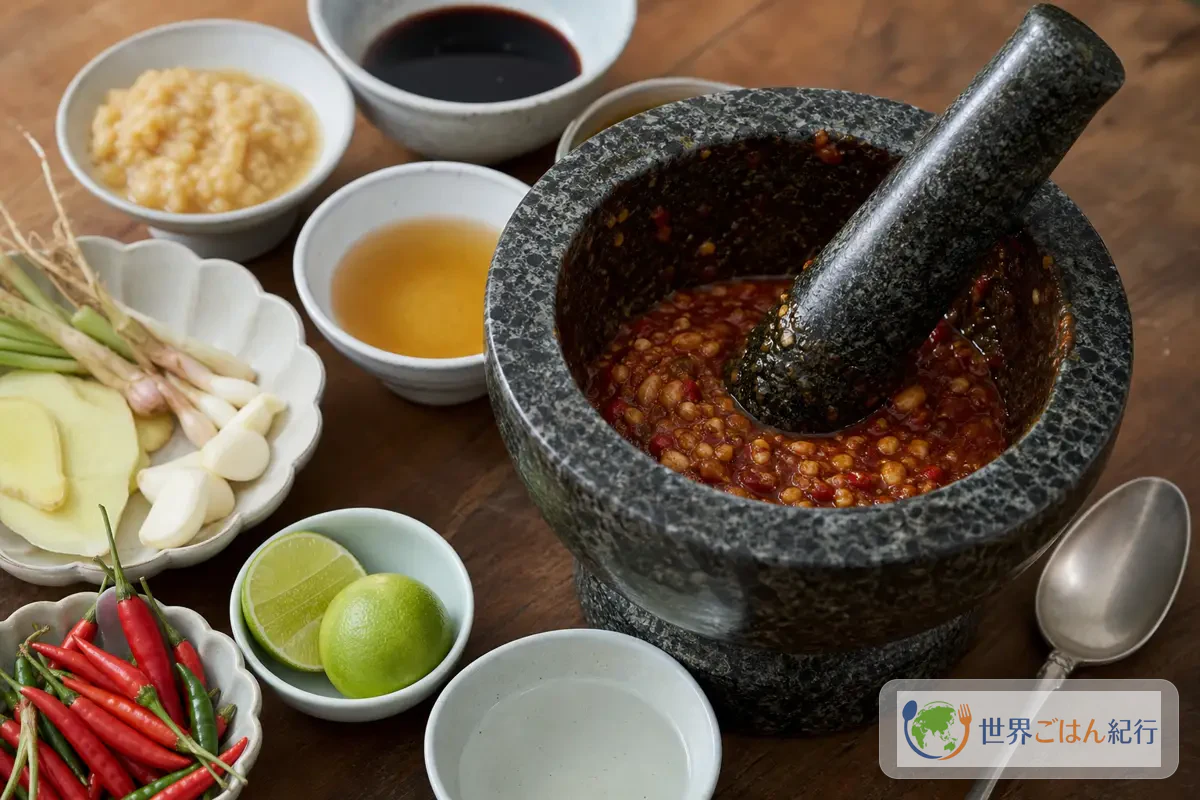
The biggest difference is the sauce. In Singapore and Malaysia, chili, ginger and thick soy sauce often come in separate dishes. Thai street stalls combine ginger, chili, tao jiew (a fermented soybean seasoning), soy sauce, vinegar and sugar into one strong sauce, and that sauce is the star of the Thai version.
How it is eaten
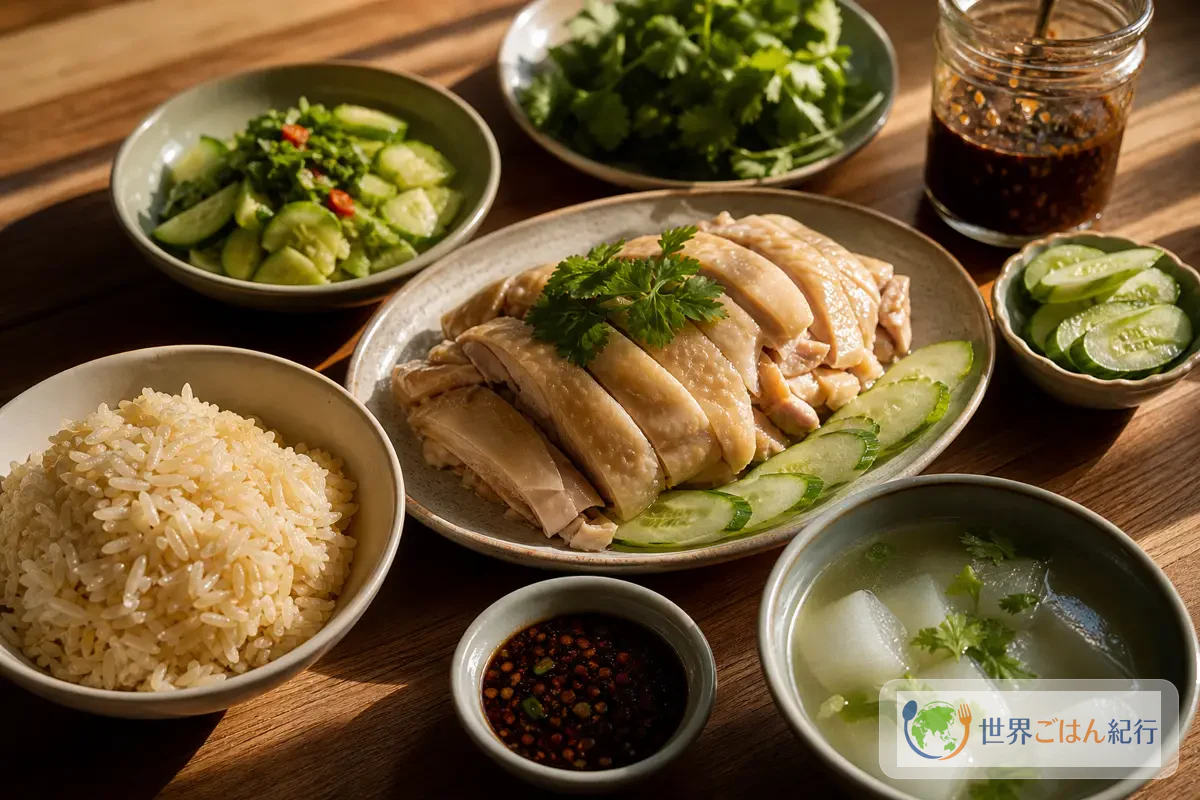
The two dishes are eaten differently, too. With Hainanese chicken rice, each bite gets a different touch: a little chili, a little ginger, a little dark soy. With khao man gai, you spoon the strong sauce onto the chicken and rice a little at a time, so its acidity and heat wake up the mild chicken. The plate looks white, but wherever the sauce goes, it suddenly tastes of the street stall.
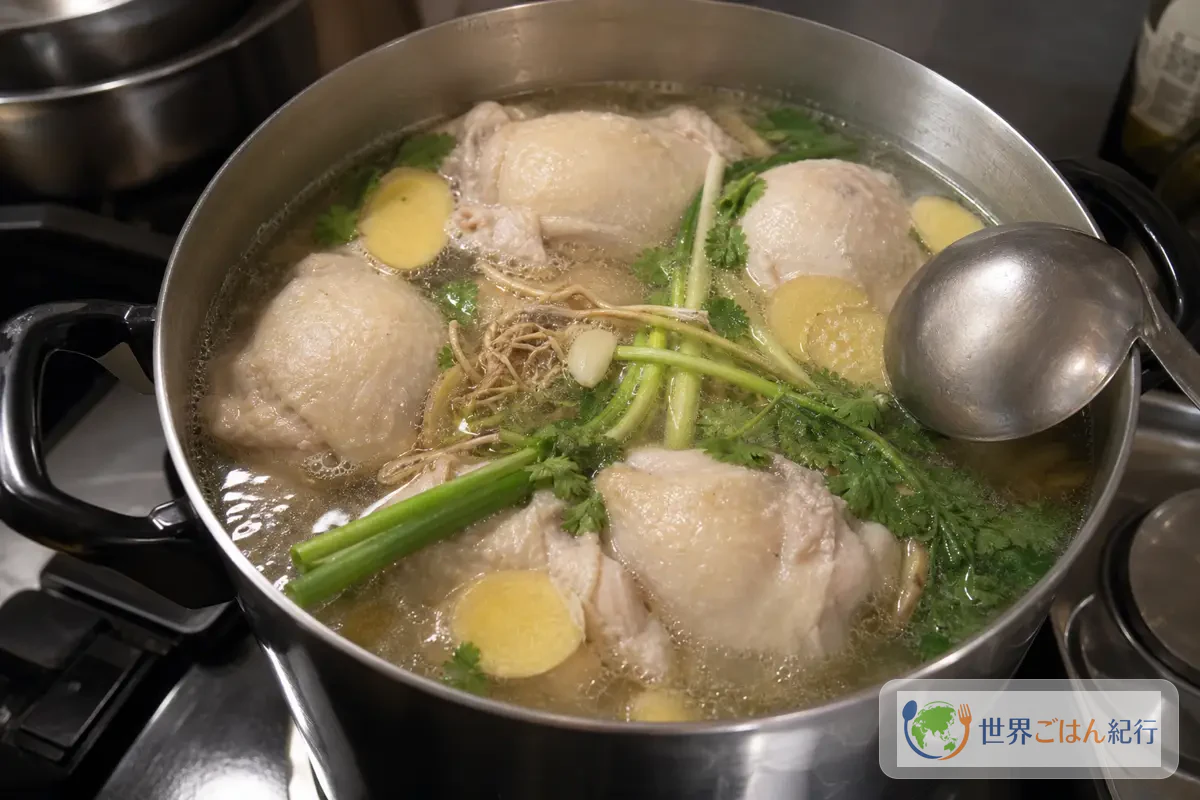
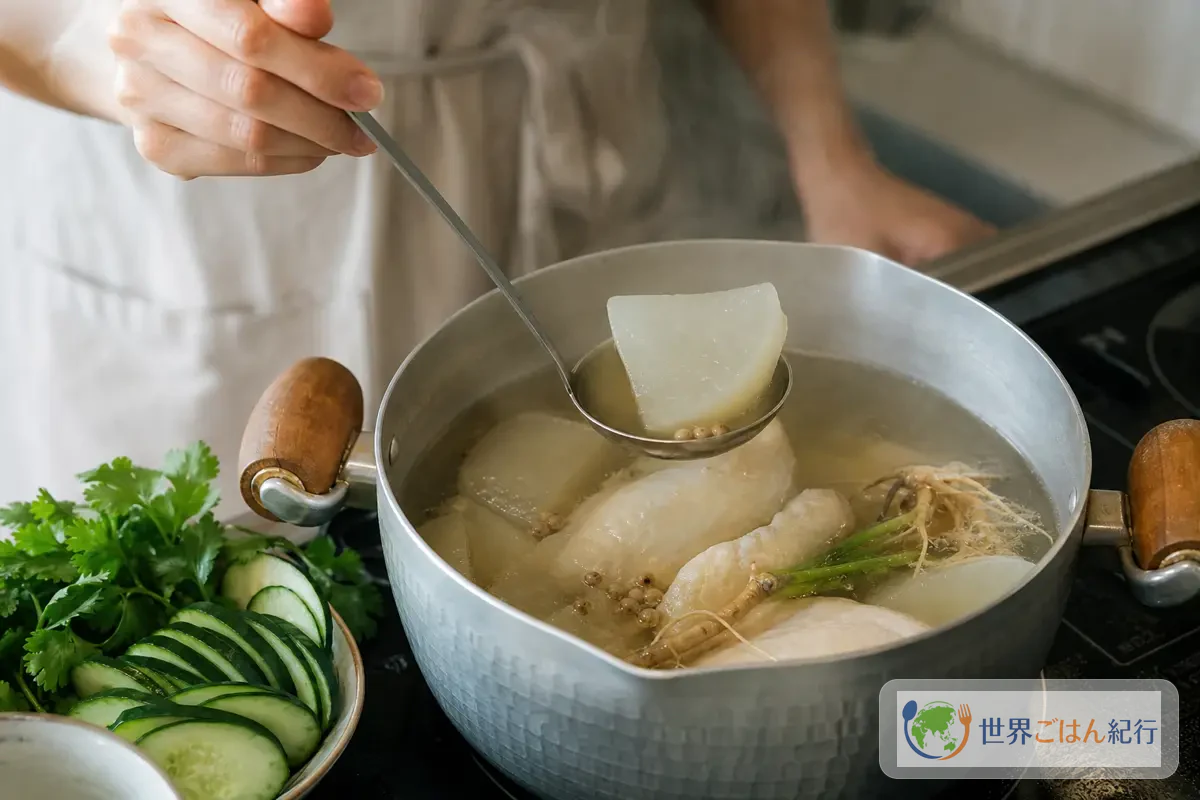
Next to bold Thai dishes like pad kra pao and pad thai, khao man gai is a quiet dish. That's why small differences in the chicken, rice, sauce and soup show so clearly in the flavor. The poaching liquid does triple duty: it goes into the rice, the soup and the sauce. A bowl of clear radish soup sits beside the plate.
Like khao soi, a rich coconut curry noodle whose toppings cut its heaviness, khao man gai depends on what comes with it. It looks mild, but it's meant to be eaten with the sauce, cucumber and soup. A good sauce and a good soup will satisfy you more than extra chicken.
If you'd like another Thai street-stall rice dish, this time with a sweet-savory braising liquid, khao kha moo is a close neighbor. Khao man gai moves the chicken's aroma into the rice. Khao kha moo is pork trotters braised with star anise and dark soy, eaten with pickled mustard greens and chili vinegar to cut the richness.
Khao man gai at home
This version uses bone-in chicken thighs, which are easy to buy, instead of a whole chicken, and it's built for a home pot and a rice cooker. Four things matter more than a whole bird or an authentic breed: cook the rice in the poaching liquid, get the chicken fat into the rice, serve a strong fermented-soybean sauce on the side, and add a clear radish soup.
Ingredients: separate the chicken, rice, sauce and soup
This recipe serves 4. Bone-in thighs give the poaching liquid more flavor. If you cannot find bone-in, use 2 lb (900 g) of skin-on boneless thighs. Then shorten the poaching time and always check the internal temperature.
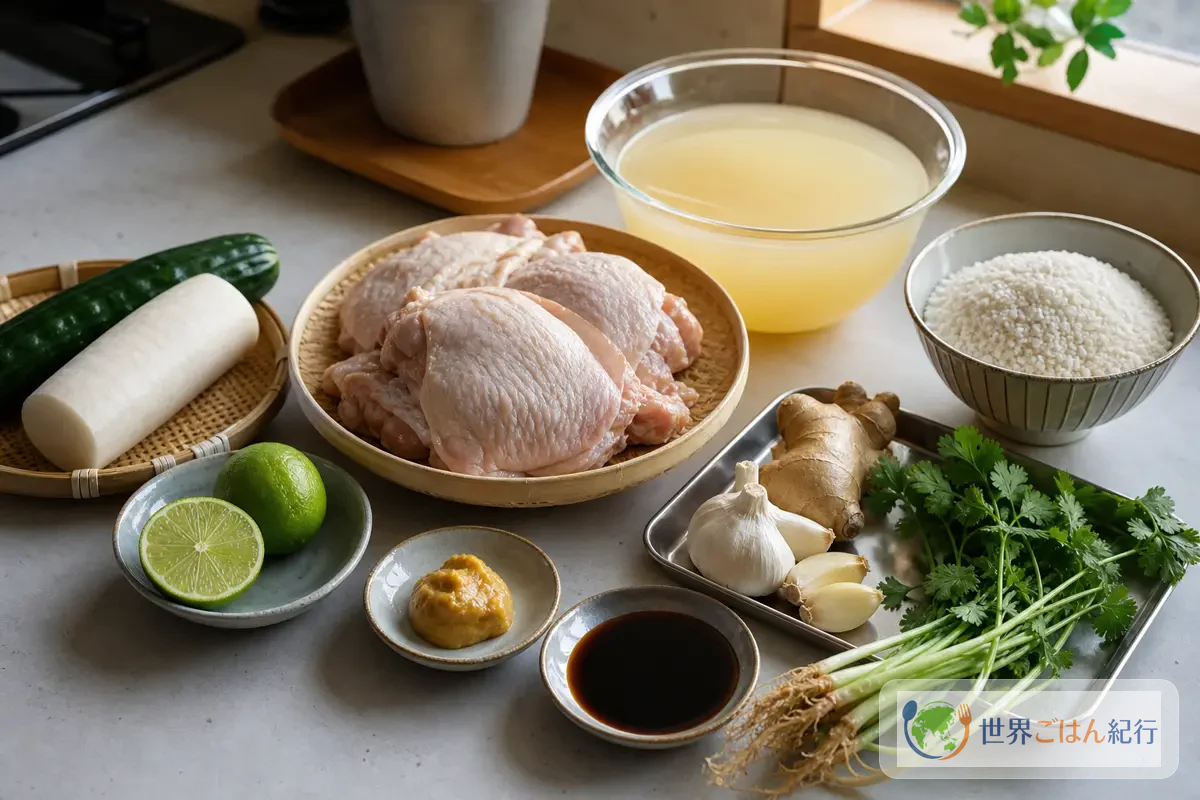
This recipe contains chicken, soybeans, and soy sauce that may contain wheat. Cook the chicken thoroughly through the center. Heat the center of the meat to 167°F (75°C) for at least 1 minute to prevent food poisoning. Bone-in meat cooks unevenly, so check the thick part with a thermometer.
Ingredients worth looking for when shopping
You can make khao man gai with just chicken and ginger from the local shop. Jasmine rice, dark soy sauce and a probe thermometer make the result more reliable. Use tao jiew if you find it. For a first try, miso is fine.
Choosing ingredients and substitutes for khao man gai
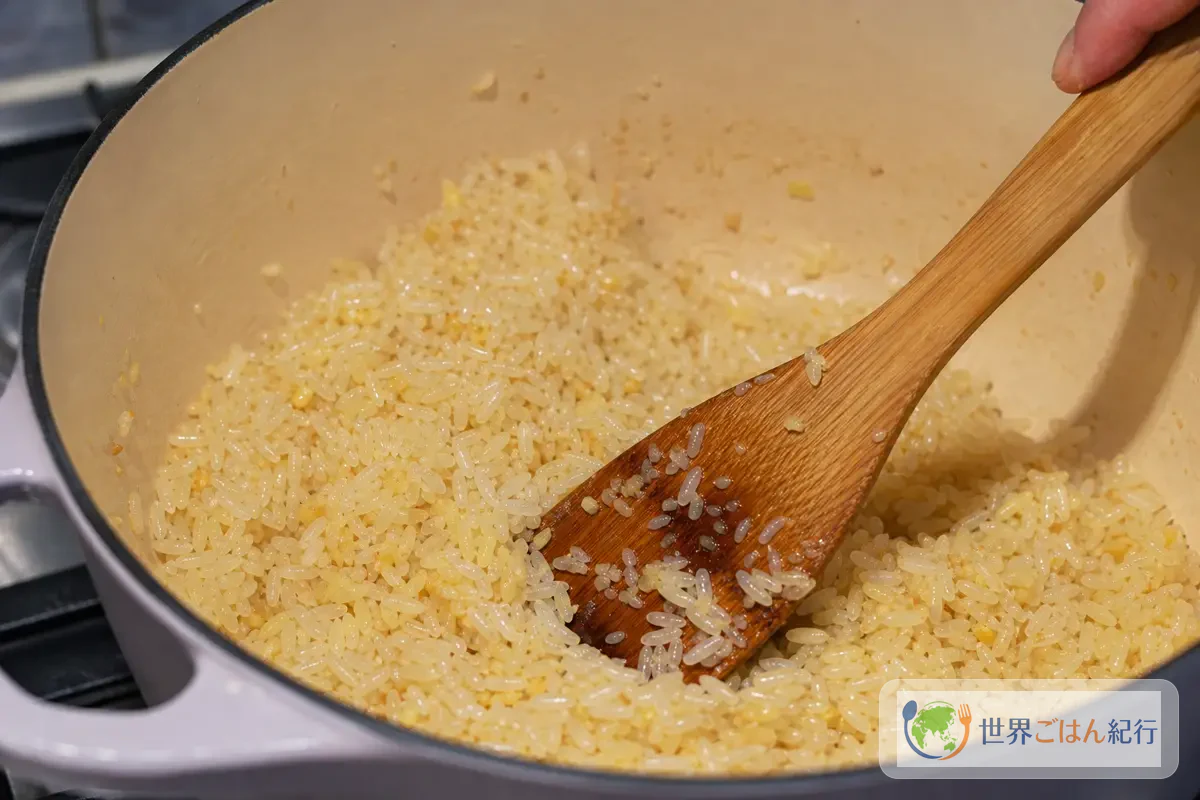
Khao man gai is simple, so it's easy to see which substitutes will work. Don't chase unusual ingredients. Get the rice and the sauce right, and you'll get closer to the real thing. The hard part at home isn't poaching the chicken until plump. It's keeping the rice from turning sticky. Jasmine rice is best, and frying it lightly in chicken fat, ginger and garlic before cooking helps the grains stand up, which moves the whole plate firmly toward a Thai street stall.
For the soup, daikon, white pepper and cilantro roots keep it clear and light, so it rests your palate between bites of the rich chicken. Cucumber, cilantro and scallion greens on the side add texture and coolness.
| Ingredient or step | Can it be substituted? | A judgment that is hard to get wrong |
|---|---|---|
| Jasmine rice | Yes | With short-grain rice, reduce the water by 3 tbsp and fluff right after cooking |
| Bone-in chicken thighs | Yes | Use skin-on thighs. Breast alone gives a weak poaching liquid |
| Tao jiew | Yes | Light miso and light soy sauce. Red miso is too assertive |
| Dark soy sauce | Yes | Regular soy sauce and dark brown sugar get close |
| Chicken fat | Hard to substitute | Render it from the chicken skin. Rice bran oil alone lacks aroma |
| Daikon soup | Yes | Winter melon or turnip also works. Avoid sweet vegetables |
If you can't find tao jiew nearby, substitute 1 tbsp light-colored miso, 2 tsp light soy sauce and 1/2 tsp sugar. The aroma is close but not identical. With ginger, garlic, vinegar and chili, it works well as a khao man gai sauce.
Method: do not boil the chicken hard, and move the aroma into the rice
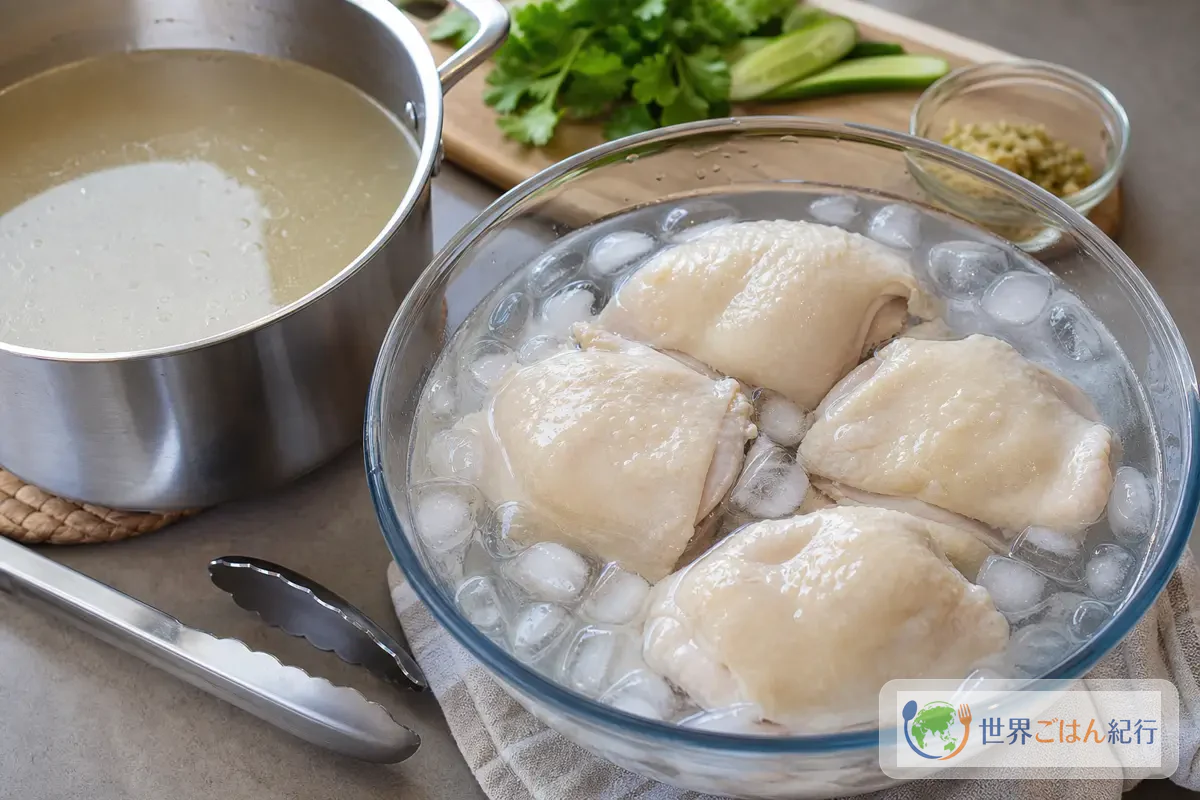
Making the chicken, rice, sauce and soup separately makes the steps look like a lot. In practice, work on the rice and sauce while the chicken poaches quietly, and you can be at the table in about an hour and a half. Set out the ice water, a colander and a storage bowl first, and you will not be flustered.
The khao man gai sauce is strong, so pouring it over the whole plate at once hides the aroma of the rice. First a little on the chicken, then a little at the edge of the rice. Drinking the soup last releases the lingering chicken fat.
Common khao man gai problems and fixes
The rice is sticky
Either the poaching liquid added too much water or the rice wasn't drained well enough. After rinsing the jasmine rice, leave it in a colander for 10 minutes to drain, then fry it. If you're using short-grain rice, use less liquid than you normally would and fluff it from the bottom as soon as it's done.
The chicken is tough
Usually it was boiled too hard. Khao man gai chicken cooks over low heat and in residual heat, not at the vigorous boil you'd use for stock. Check the internal temperature and give it more time over low heat if it needs it. That's much safer than boiling it hard from the start.
The sauce tastes Japanese
The miso substitute pulls the sauce toward Japanese flavors. Keep the ginger strong, add the vinegar and lime juice, and put in at least a little chili. Sweetness is the other trap: make the sauce like teriyaki and you end up closer to a chicken rice bowl than khao man gai, so stop the sugar at 2 tsp.
The soup is cloudy
Either the chicken boiled hard or the daikon cooked too long. A cloudy soup is still fine to eat, but you lose the lightness of a small stall bowl. Next time, poach the chicken over low heat, and turn off the heat under the daikon while its edges are still sharp.
The whole plate tastes mild
Check the salt before you add more sauce. If the rice is underseasoned, the sauce just sits on top. Taste the poaching liquid before cooking the rice and salt it until you could drink it as a light soup. Then the whole plate comes together.
Serving and storing khao man gai
Serving and variations
Thai eateries also serve khao man gai tod, topped with fried chicken, plus plates of half poached and half fried chicken, and plates with congealed chicken blood or liver. For your first time at home, poached chicken alone is plenty. For a street-stall touch, cut the cucumber thick, serve the soup in small bowls and put the sauce on the table so everyone can add their own. The dish works best as a simple plate that each person seasons with sauce and soup, not as a lavish one.
What to serve with khao man gai
Skip heavy stir-fries. A small dish with some acidity or vegetables keeps the meal from getting heavy. Som tam brings acidity and crunch, and tom yum goong heads in a different aromatic direction. Together they make a weekend Thai menu. For a quieter meal, salted cucumber, a boiled egg and a cold tomato are enough.
| Occasion | Dishes to pair | Reason |
|---|---|---|
| Weeknight dinner | Salted cucumber, cold tomato | Little extra shopping, and the vegetables rest the chicken fat |
| Weekend Thai menu | Som tam, tom yum goong, cold beer | Heat, acidity and herbs go in different directions, so the plates don't feel monotonous |
| A day to compare Southeast Asian chicken dishes | Hainanese chicken rice, pho ga, soto ayam | Shows the different ways of using chicken broth |
| A day for a lunch box | Cool chicken and rice separately and put the sauce in a small container | The rice stays loose and the sauce keeps its aroma |
Storage
Khao man gai can be made ahead, as long as you store each part separately. Packed into one container, the rice soaks up moisture and turns heavy, and the chicken skin goes limp.
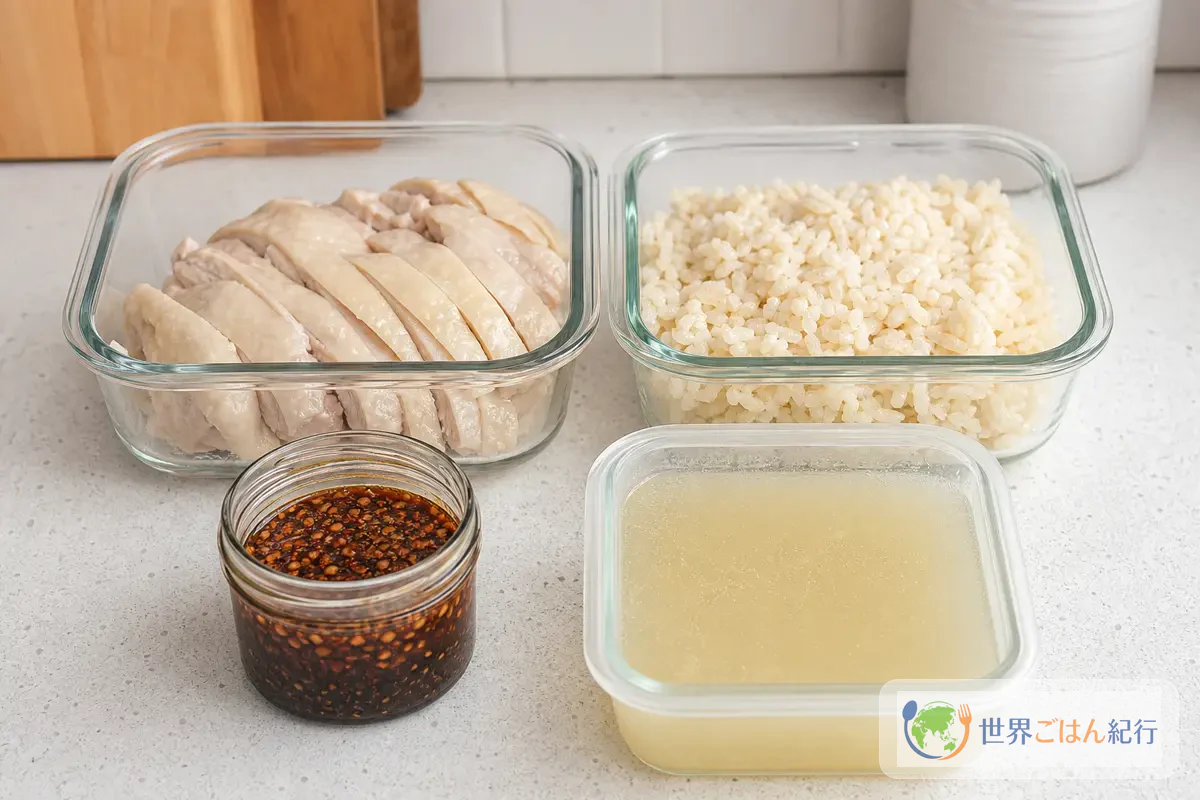
Let the chicken cool a little, put it in an airtight container and eat it within 2 days from the refrigerator. To reheat, spoon 2 tbsp poaching liquid over it, cover with plastic wrap and microwave at 600 W, starting with 1 minute 30 seconds and checking as you go. Make sure it's hot all the way through. You can also slice it cold and eat it like a salad with the sauce over it.
The rice keeps 2 days in the refrigerator and 2 weeks in the freezer. To freeze it, wrap each portion flat, then reheat at 600 W for about 2 minutes 30 seconds. A light mist of water is enough, since more will dilute the chicken-fat aroma.
The sauce keeps about 3 days in the refrigerator. It contains ginger and garlic, so use a clean spoon each time. Leftover sauce is good with boiled pork, steamed eggplant and chilled tofu. It's strong, so start with a little.
Frequently asked questions
Q1. Can I make it in a rice cooker alone?
Yes. After poaching the chicken, you can skip lightly frying the chicken skin, ginger, garlic and rice in the inner pot, though the aroma will be weaker. Either way, cook the rice in the poaching liquid and add 1/2 tsp salt.
Q2. Can I make it with chicken breast?
You can, but the poaching liquid and skin will have less flavor. Choose skin-on breast, poach it 12 minutes over low heat, turn off the heat and leave it 10 minutes, then check the internal temperature. Breast dries out if overcooked, so use a thermometer.
Q3. Is it eaten with cold chicken?
Thai street stalls sometimes serve the chicken close to room temperature. At home, put food safety first: eat it right after cooking, or reheat refrigerated leftovers until hot through the center. Don't leave it out on the table for long.