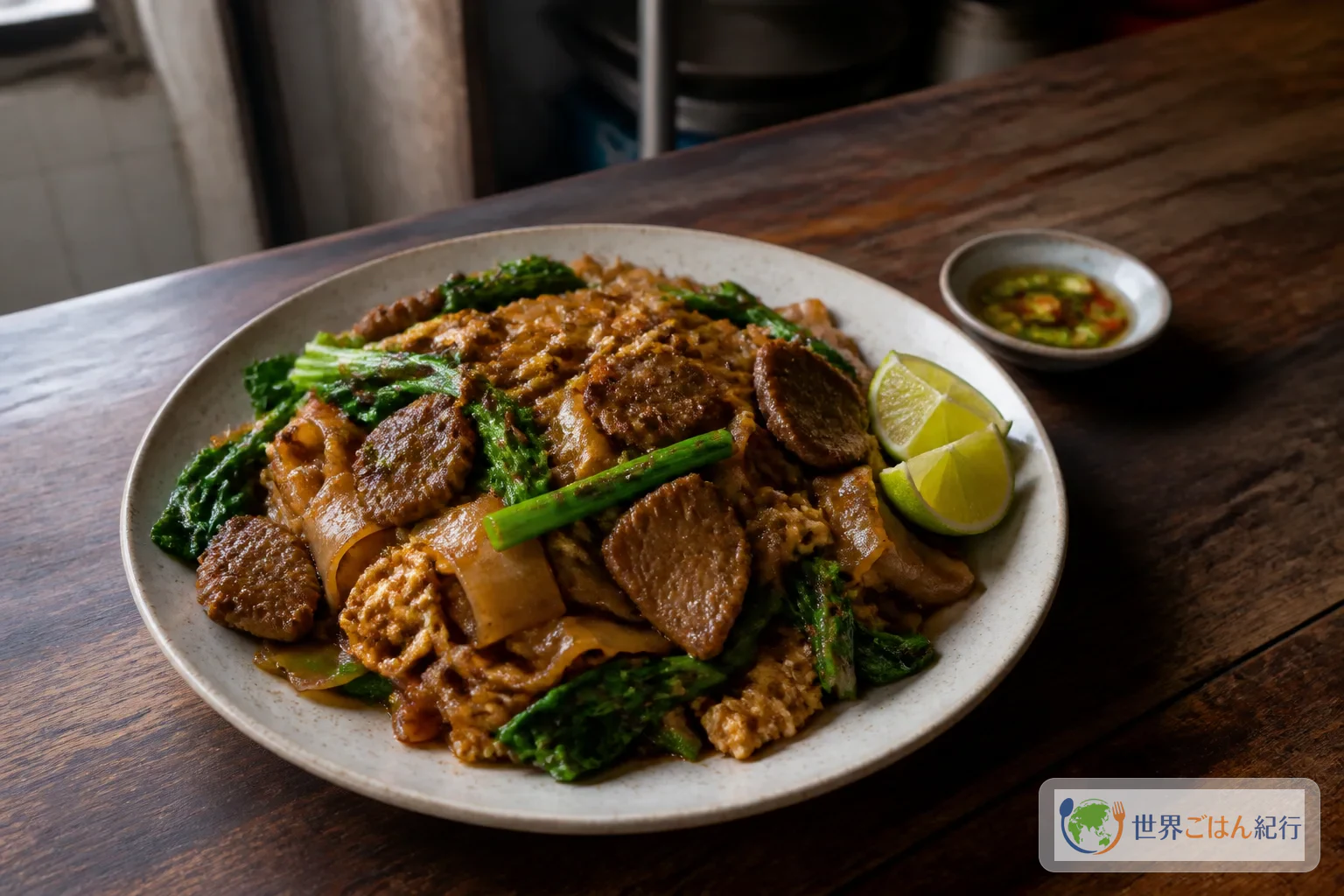
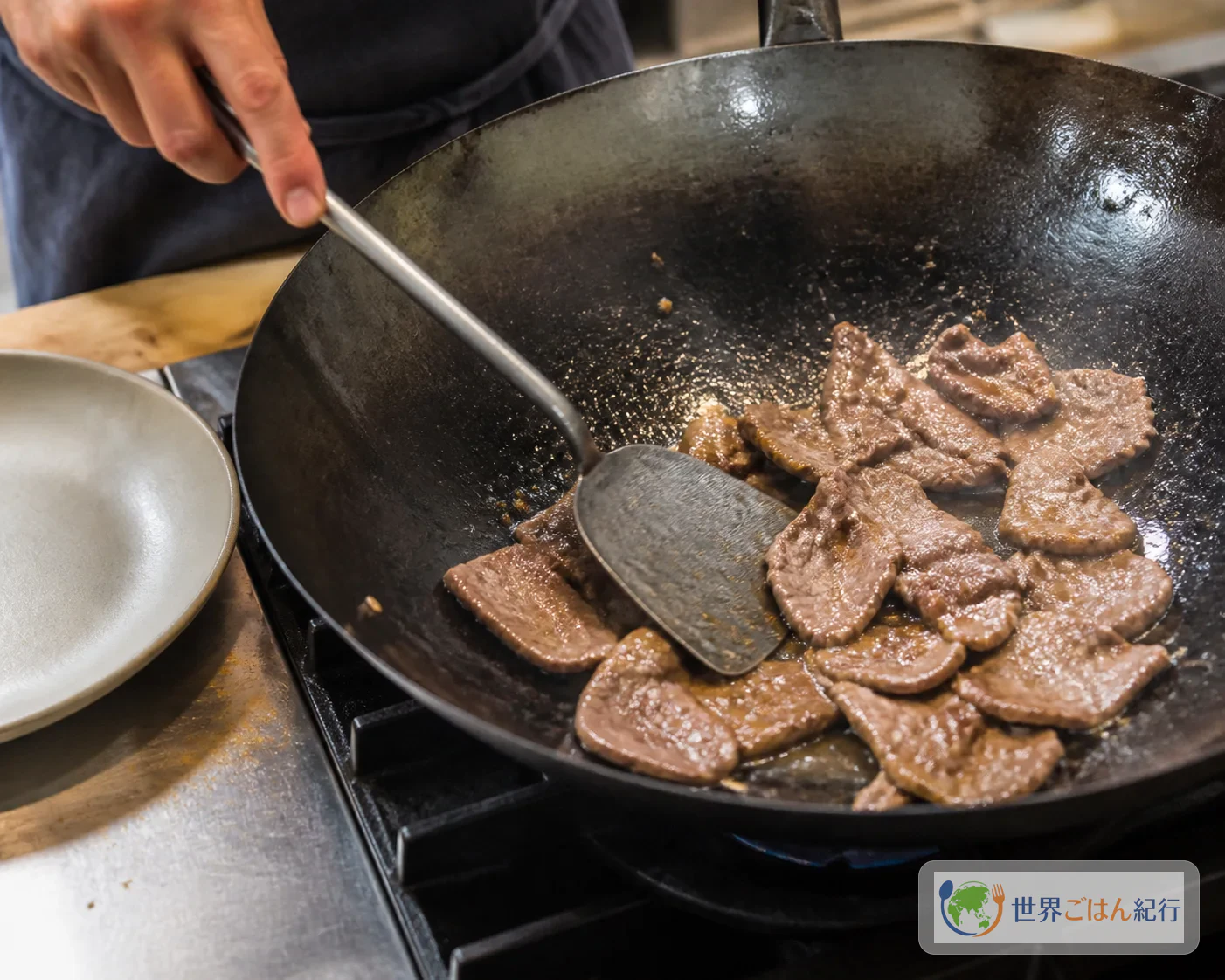
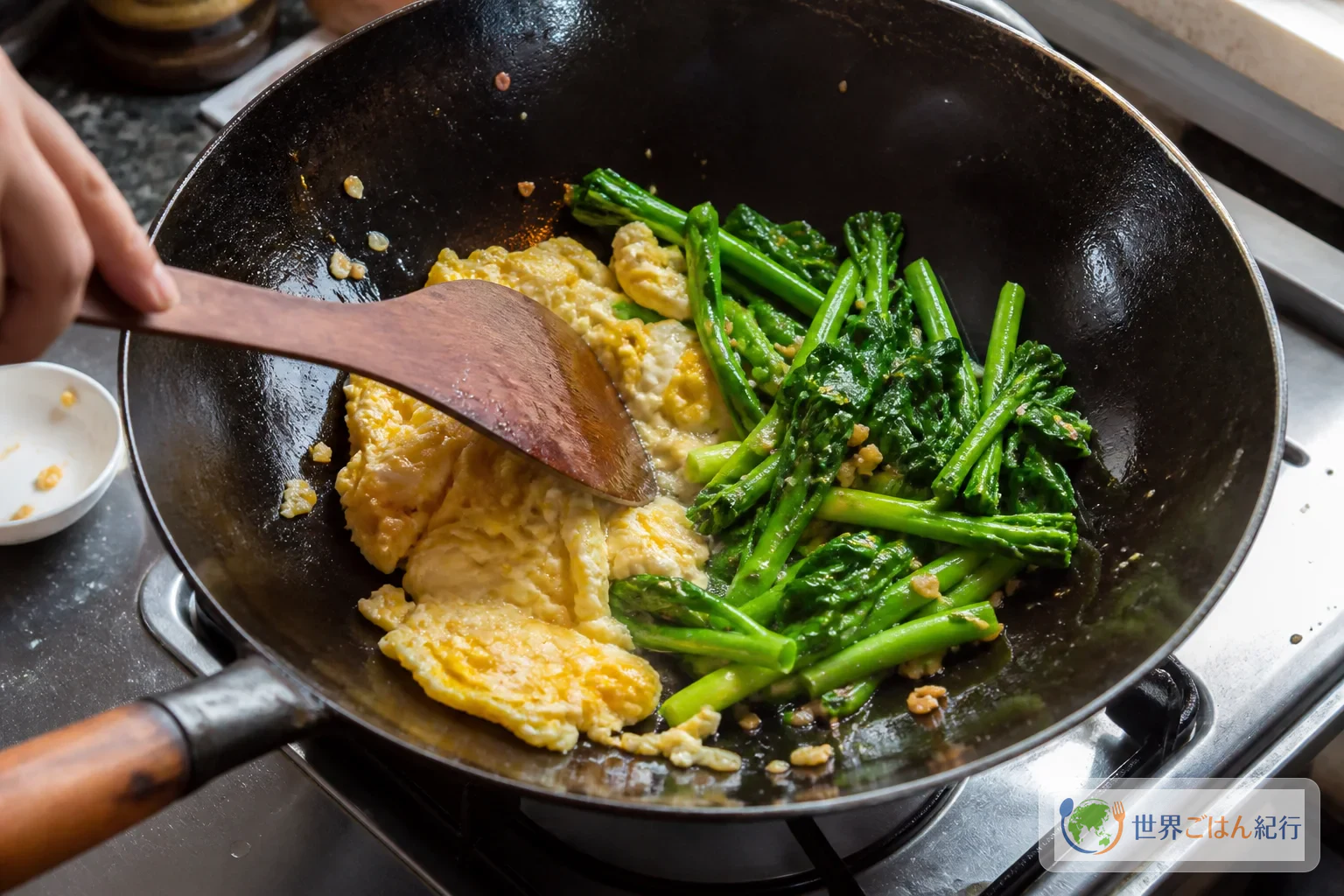
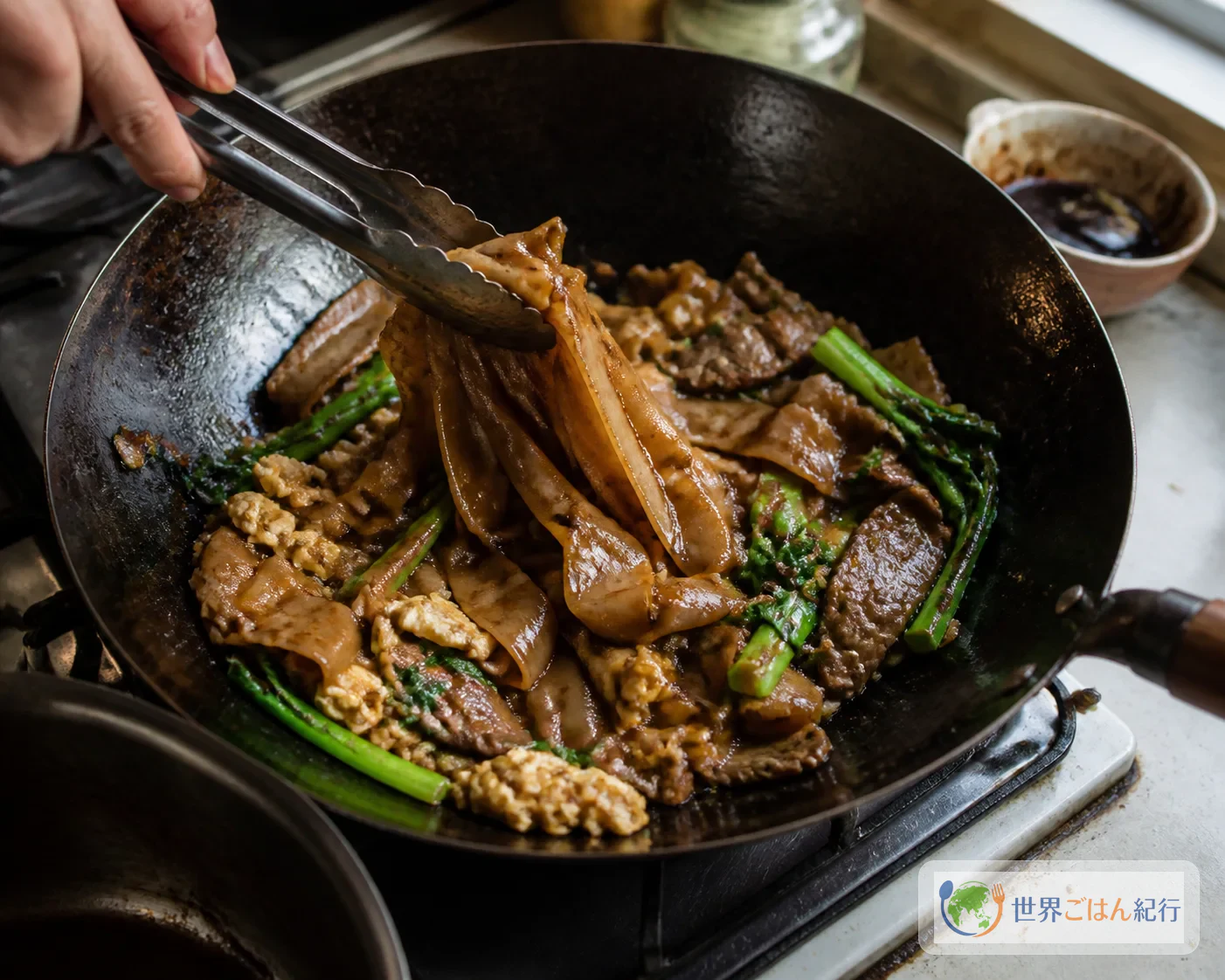
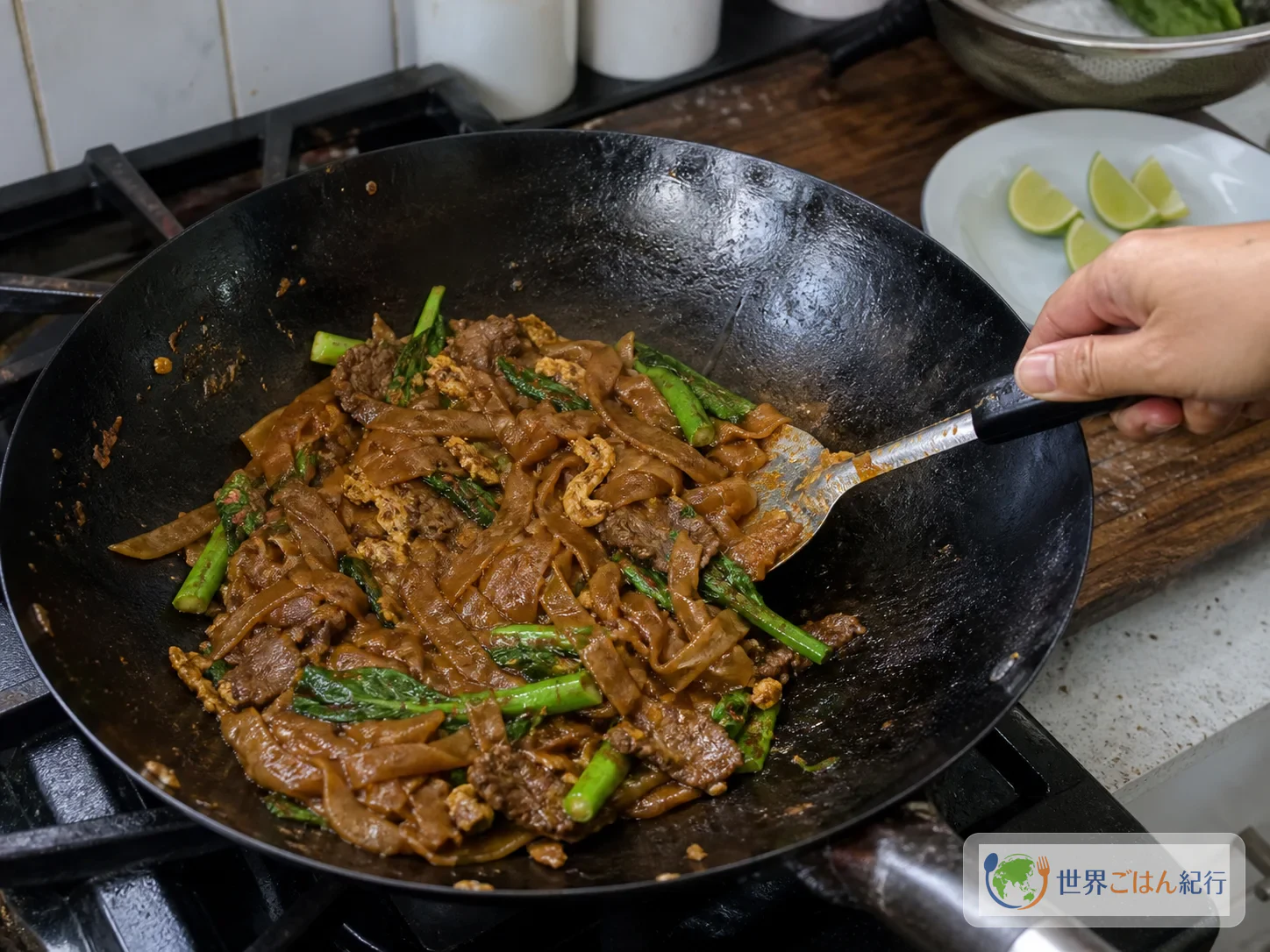
Heat the skillet, and before the garlic even gives off its aroma you can hear the dry rice noodles rubbing against each other on the plate. The egg goes into the pan where the beef was seared, then the Chinese broccoli stems, then the wide noodles. When the dark soy sauce turns into a thin gloss, you turn everything over broadly, just once, and the smell of toasted rice settles over a sweet-salty aroma.
That's pad see ew (ผัดซีอิ๊ว in Thai), a stir-fried noodle dish where wide rice noodles, greens, egg and meat are brought together quickly with fish sauce and soy-based seasonings. Unlike pad thai, there's no tamarind sourness at the center. Instead, pickled chilies or lime go on the side of the plate, and they make these strongly flavored noodles easy to keep eating.
What pad see ew is
Pad see ew at Thai street stalls
Pad see ew is street food, made to be eaten quickly. Picture the sound of woks being tossed at a Thai stall: the dish isn't simmered but assembled fast once an order comes in. The wide rice noodles are prepared first, the meat, egg, greens and sauce are lined up within reach, and everything is combined before the pan loses heat. That routine is also the most useful thing to copy at home.
Local markets sometimes sell sen yai as fresh noodles by weight, and the dish is paired with pak kana, a green close to Chinese broccoli. The protein varies from stall to stall, with beef, chicken and pork all common, and so do the ratios of light soy sauce, dark soy sauce, oyster sauce and fish sauce. A street-stall dish like this is never one fixed mix; it moves with the ingredients on hand and with the order.
Pad see ew, beef ho fun and char kway teow
Thai cooking changed through long exchange with Chinese immigrants, and stir-frying and wok techniques joined Thai aromatics. Teochew influence shows in pad see ew's dark soy sauce and the texture of its noodles. The dish can't be pinned to one people or one era; migration, seasonings and cooking techniques overlapped on city tables.
Set it beside beef ho fun, the Chinese stir-fry of wide rice noodles and beef, and the differences are clear: egg and Chinese broccoli in place of bean sprouts and scallions, plus the aroma of fish sauce. Char kway teow, another flat rice noodle dish, combines the noodles with egg, seafood and vegetables, and gets its flavor from sweet dark soy sauce, garlic, lard and the smoky aroma of a very hot wok. It spread through the same Chinese migration and street-stall culture.
Regional methods differ, too. Penang's char kway teow sometimes skips dark soy sauce for a lighter color, while Thai pad see ew uses wider flat noodles and mustard greens. Calling every dark-colored flat noodle "Southeast Asian stir-fried noodles" misses the real differences in greens, oil, sweetness and accompaniments.
Method: do not overcook the noodles, and spread them against the pan at the end
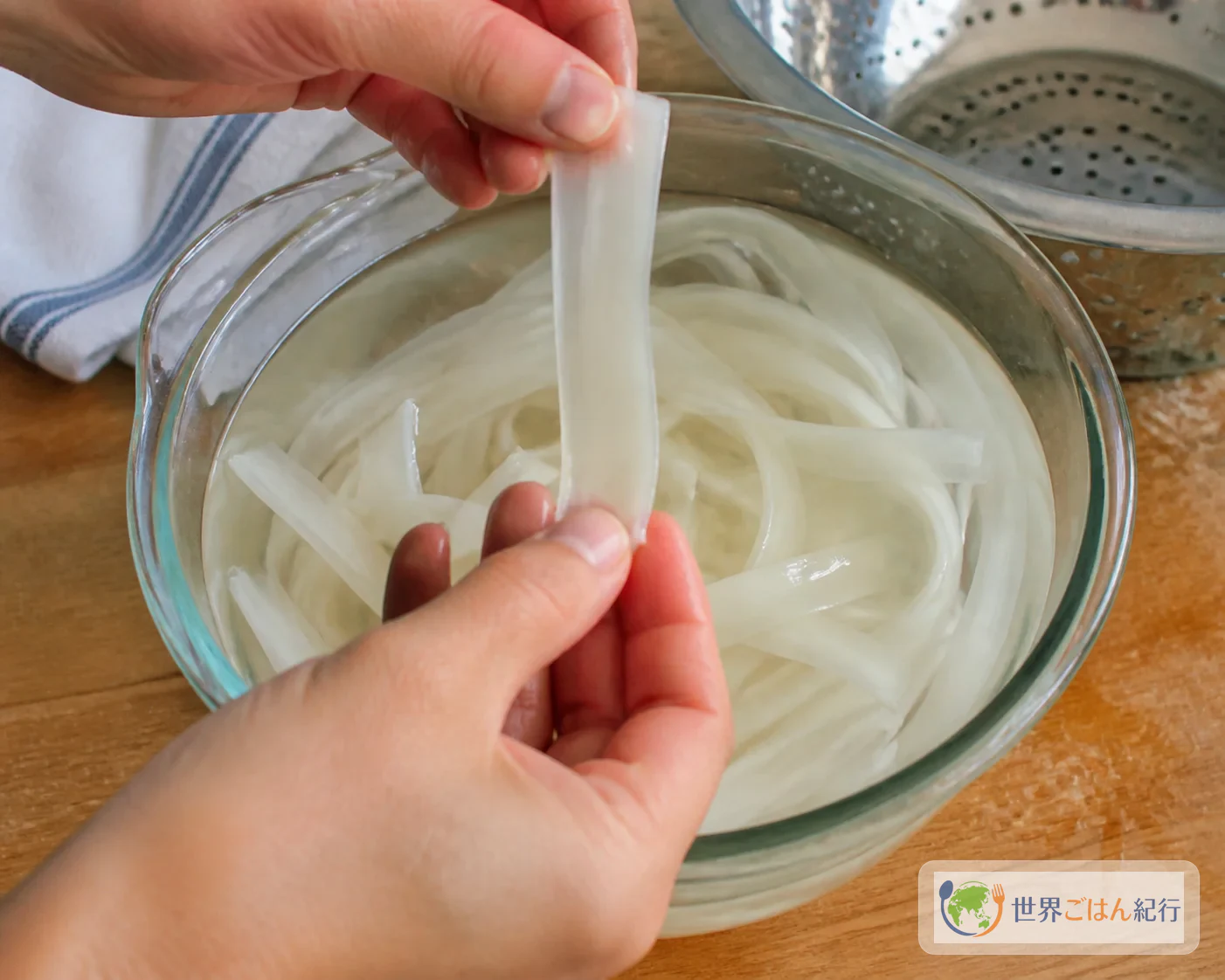
Most of the cooking time is preparation before you light the fire. Line up the sauce, beef, egg and greens within reach before you start frying. Use fresh wide noodles for sen yai, or substitute dried. Stop dried noodles a little before the time on the bag, leaving time for them to take up the sauce in the pan.
Ingredients (serves 2)
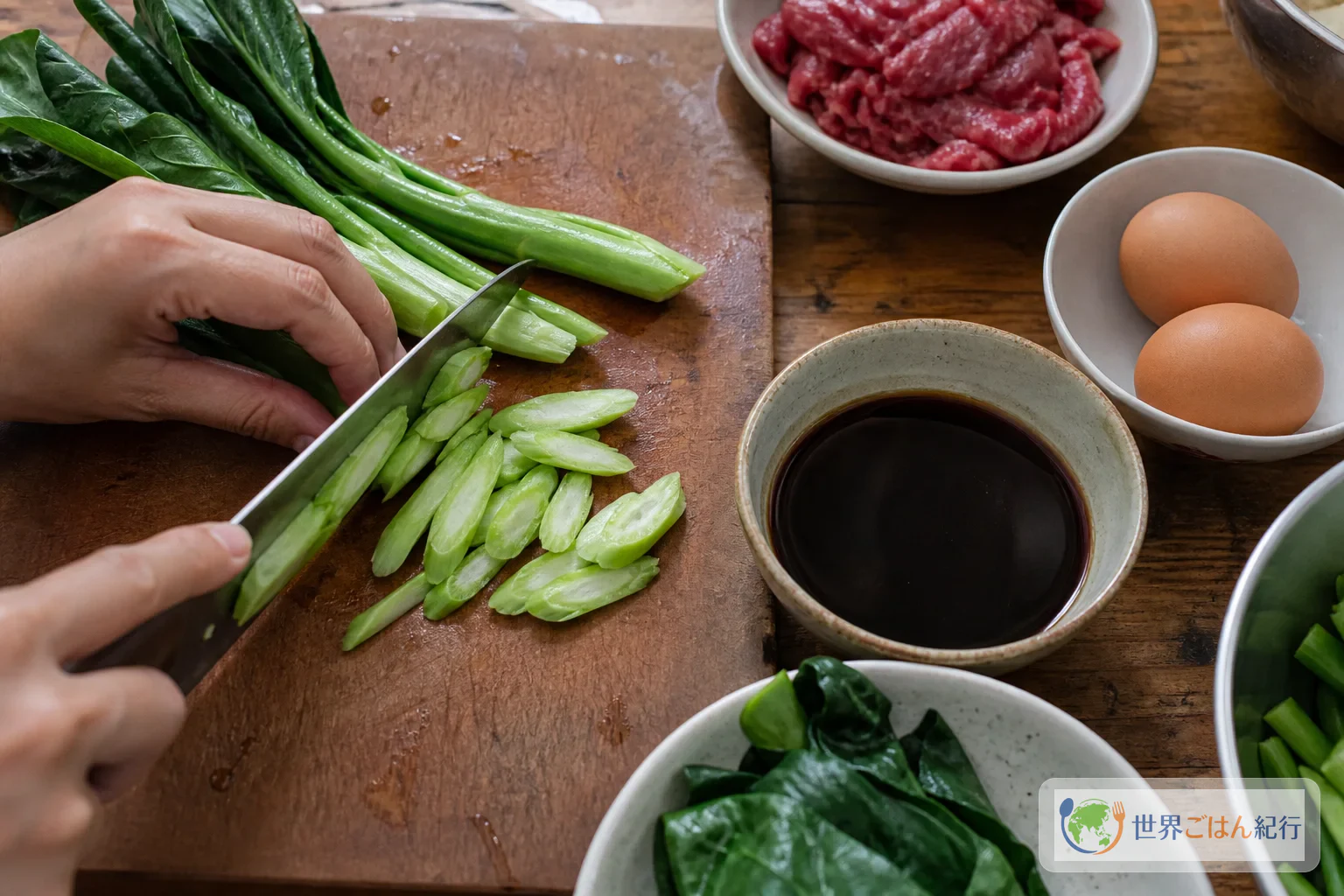
Dried noodles gain weight when rehydrated, so the amounts below are for 2 servings made with dried noodles. For fresh sen yai, use 14 oz (400 g) and loosen them without soaking in water. If you cannot find Chinese broccoli, use komatsuna. Cut the stems to an even thickness so you can finish the noodles before the leaves overcook.
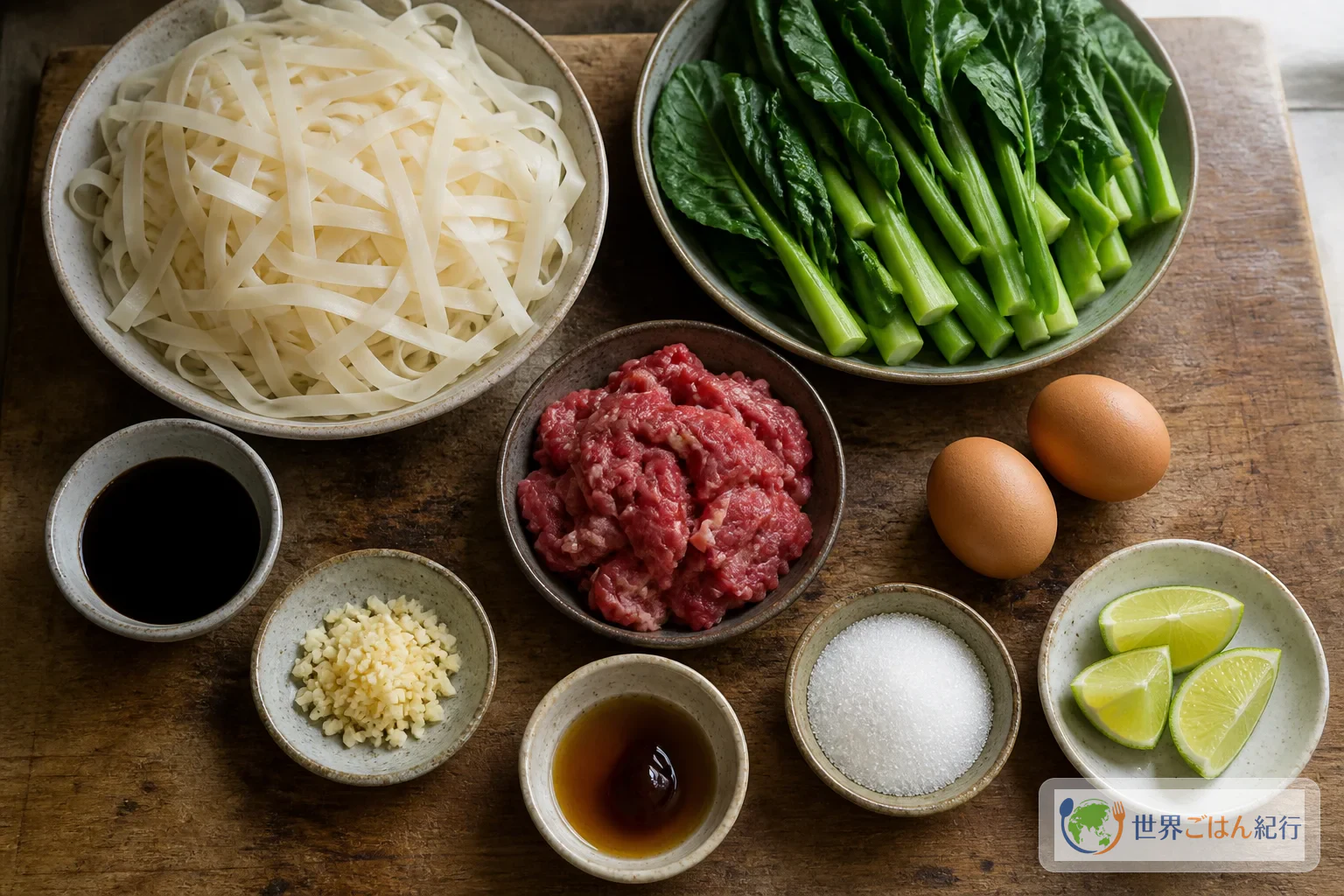
Oyster sauce, fish sauce and soy sauce contain shellfish, wheat and soybeans depending on the product. Including the ingredients of the egg, beef and potato starch, people with food allergies should check the label of each product. Some fish sauces are made from fish caught by methods that mix them with shrimp and crab.
Choosing ingredients for pad see ew
Noodles for pad see ew
Beef, eggs, komatsuna and garlic are sold at any neighborhood store. The two things worth looking for are sen yai that keeps its width when dried and a fish sauce with real fermented aroma. Neither is essential for one batch, but the difference shows more the more often you make Thai stir-fried noodles. If you can get fresh sen yai, use it; fresh noodles or wide pho noodles you already have are fine to start with.
When buying dried noodles, check the package for a width of 0.375 inch (10 mm) and an amount such as 14 oz (400 g). If the bag lists a 45–60 minute cold-water soak or a hot-water soaking time, compare it with the steps here. Noodles of about 0.375 inch (10 mm), or fresh sen yai, can be spread against the pan and charred. Because fresh noodles aren't always available, shorten the rehydration time of dried ones and add just a little water in the pan.
Thin sen lek has more surface to take up the sauce, but the wide chew typical of pad see ew is weaker. With thin noodles, a sour sauce like pad thai suits them better. With thin rice vermicelli, shorten the time they spend taking up the sauce; they're less likely to break even if you skip the final searing.
Dark soy sauce, fish sauce and oyster sauce
The flavor rests on three things: the color and rounded sweetness of dark soy sauce, the fermented saltiness of fish sauce, and the body of oyster sauce. Dark soy sauce isn't a thicker regular soy sauce to pour freely. A small amount gives the noodles a deep color and a molasses-like roundness. With Thai see ew dam, start with 2 tsp for two servings and adjust while watching the color of the noodles. Without it, use 1 tsp regular soy sauce and 1/2 tsp dark brown sugar, though the thickness and aroma will differ. Regular soy sauce alone brings the saltiness forward, so resist matching the color by adding more.
Fish sauce shapes the saltiness and fish aroma that stay after you swallow, more than the first taste. Choose a bottle that shows its volume (such as 3 cups (700 ml)), lists fish, salt and sugar as ingredients, and gives Thailand as the country of origin. A big bottle goes a long way, so plan to use it in pad kee mao and khao man gai too. If this is your first dish with fish sauce, keep to 2 tsp and add no more at the table.
If you dislike fish sauce or avoid seafood, make it with light soy sauce and salt. It's easier to eat but loses the fermented aroma. If you also omit the oyster sauce, build the body with a mushroom-based alternative or a little sugar.
Sourness belongs on the plate, not in the sauce. Pickled chilies and lime brighten strongly flavored noodles, and you can leave the chili off for anyone who dislikes heat. Add chili and basil and you're moving toward pad kee mao, a different dish even with the same wide noodles.
Greens and pan
Komatsuna has softer leaves than Chinese broccoli, so add it stems first and keep the leaves brief to stop water from building up.
A wok helps, but a deep skillet of 10 inches (26 cm) or more lets you spread the noodles half at a time. The priority is not stir-frying both servings at once. If you want to cook both together, or you often make stir-fried noodles such as Malaysian char kway teow, consider cookware with a wide pan surface. If you make this only once a year, the pan you have will do.
Fixing common pad see ew problems
The two classic mistakes at home are stir-frying fully rehydrated noodles and stirring the pan constantly. Pack soft noodles into a small skillet and they steam more than they sear. So rehydrate dried noodles with a little firmness left at the center, prepare the ingredients and sauce separately, and cook one serving at a time. Keeping the amount to what you can spread in the pan matters more for flavor than adding ingredients to look authentic.
The noodles broke or stuck to the pan
Noodles break when they're over-rehydrated, or when they go into the pan dry with no water added. Fully softened noodles won't regain their spring, so plate them early with the other ingredients and balance the heavy flavor with pickled chilies and lime. If they stick, don't force them off. Drop 1 tsp water at the edge of the pan, wait 10 seconds, and peel them from the softened parts.
The flavor is weak but the noodles are firm
This is a lack of water, not sauce; more sauce only adds salt. Add 1 tsp water, wait 10–15 seconds over strong medium-high heat, and bite one strand. If the center is still firm, add the same amount again. If the surface is already dark brown, add only water.
The flavor is strong and liquid is left in the pan
The greens or fresh noodles can hold a lot of water. Push the ingredients to one side, spread the noodles and cook off the moisture for 20–30 seconds over high heat. When the liquid is gone, turn off the heat and serve with lime. Keep stir-frying to dry it out and the noodles break, so stop once it's good to eat.
Only the burnt smell comes through
The pan is too hot, or the sauce went in first and pooled at the bottom. Don't mix in the scorched parts; move only the noodles and ingredients on top to another plate. Next time, thin the sauce with 2 tbsp water, add the noodles half at a time and pour the sauce around them. If the heat rises suddenly on an induction stove, keep the time on high heat to 60 seconds.
Serving, storing and varying pad see ew
Serving pad see ew
Pad see ew is best eaten right after charring, while the noodles have a fragrant surface and the Chinese broccoli stems still hold up. In Thailand, sourness and chili are added to the dark noodles at the table, and each eater moves the flavor on their own plate. That works well for a family with different heat tolerances: keep the heat out of the pan, add only lime for someone who wants the sweet-salty noodles as they are, and pickled chilies plus lime for someone who wants a brighter aroma.
Storing leftovers
If you make it ahead, cool it within 30 minutes, put it in a clean, shallow airtight container, refrigerate, and finish it by the next day. Because it contains beef, egg and greens, don't leave it at room temperature for long, and don't eat anything that has been, or that smells off or turns slimy. Freezing cracks rice noodles and releases water on thawing, so skip the freezer.
For a lunch box, stop the noodles a little firm and spread them in a shallow container to cool. Reheat in the microwave until hot at the center; they'll be softer than when charred in a pan. Keep the pickled chilies and lime in a separate container and add them just before eating, so the acidity doesn't make the noodles watery.
Nutrition
These figures are for the full recipe of 7 oz (200 g) dried rice noodles, 6.5 oz (180 g) beef, 2 eggs, Chinese broccoli, sauce and oil, shared between 2 people. Per serving: about 720 kcal, 1.25 oz (34 g) protein, 25 g fat, 3.25 oz (91 g) carbohydrate, 4 g fiber, and about 2,100 mg sodium (about 5.3 g salt equivalent). The numbers change with the noodle product, the cut of beef, and the saltiness of the fish sauce and oyster sauce.
Cutting fish sauce and soy sauce lowers the salt, but also the aroma and color. If you want less salt, stir-fry with half the sauce, then taste. The sourness of pickled chilies or lime builds flavor without adding salt.
Six variations
- Lighten it with chicken: Slice 6.5 oz (180 g) chicken thighs thinly and sear first until white through the center. It brings more sweetness of fat than beef, so it comes together even if you reduce the sugar in the sauce to 1 1/2 tsp.
- Bring out street-stall fat with pork: Use 6.5 oz (180 g) pork shoulder and sear until the edges are white. If there is a lot of fat, reduce the flavored oil to 1 tsp and sear the noodles in the fat left in the pan.
- Move toward plant-based with tofu: Cut 8 oz (220 g) firm tofu into 0.5-inch (1.5 cm) cubes, blot the moisture with paper and coat thinly with 2 tsp potato starch. Skip the meat seasoning, and switch the fish sauce and oyster sauce to products labeled plant-based.
- Add heat later: Leave dried chilies out of the pan and put pickled chilies and chili flakes on the table. Everyone can eat the same noodles, and the sweetness of the dark soy sauce is easier to taste.
- Reduce sweetness: Reduce the sugar to 1 tsp and finish with 1/2 lime. The color of the dark soy sauce stays, but the sauce loses some roundness, so chicken or tofu suits it better than beef.
- Make it with thin noodles: With 5.5 oz (150 g) of sen lek, 2–3 mm wide, shorten the soak to 20–30 minutes and start with 1 tbsp of water for stir-frying. Stir-fried as long as wide noodles, they soften easily and the texture comes close to pad thai.
Frequently asked questions
Q1. I have no fresh sen yai. Can I make it with dried noodles alone?
Yes. Soak 7 oz (200 g) dried wide noodles in water for 45–60 minutes, and drain them while a thin core remains at the center. Rehydration differs by product, so bend one strand to check that it doesn't break. Fully soft noodles break easily in the pan, so lift them earlier than the time on the label.
Q2. It turns watery when I use komatsuna.
The leaves release water easily if they go in first. Cut the stems 0.125 inch (3–4 mm), stir-fry them 40 seconds, add the leaves and stir-fry 20 seconds, then add the noodles before the leaves wilt. If the greens are very wet after washing, blot them with paper before cutting.
Q3. I dislike the smell of fish sauce.
Replace the fish sauce with 1 tsp light soy sauce and a pinch of salt. The aroma specific to fish sauce is gone, but with the dark soy sauce, oyster sauce and garlic it still stands as a stir-fried noodle. If you avoid seafood, check the ingredients of the oyster sauce too.
Q4. May I stir-fry both servings at once?
If the pan is big enough to spread the noodles over the bottom, yes. In a home skillet of around 10 inches (26 cm), cooking half at a time is steadier. Cram in the ingredients and noodles and the sizzle dies, so the noodles steam before the sauce reduces. For the charred aroma, finish one serving at a time.
Q5. Can I get the smoky aroma without a wok?
Yes. Preheat a deep skillet over medium-high heat, cook the noodles half at a time, and touch them less during the last 60–90 seconds. Home stoves rarely match a restaurant's smoky aroma, but three habits get you close: keep the noodles uncrowded, keep the sauce from pooling first, and sear at the end. That gives the surface its fragrance.