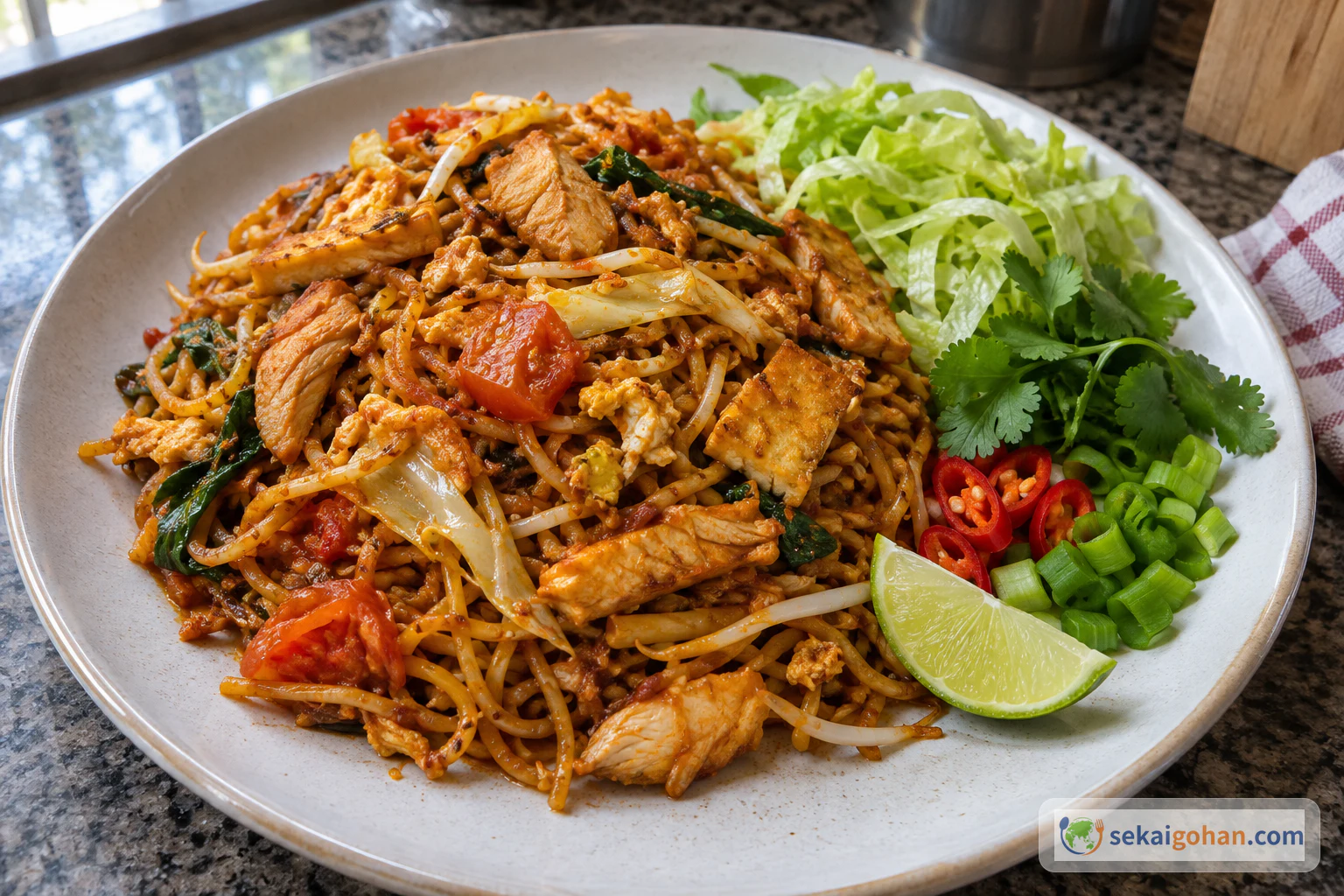
Snap a steaming green bean and it still resists with a clean crack. The cabbage is sweet, the bean sprouts hold on to their water, and when you scatter over coconut fried until its shreds loosen, the heat of chili and the green aroma of citrus rise up from between the vegetables. That is Indonesian urap (also urap-urap): boiled or steamed vegetables served with grated coconut seasoned with aromatics. Nothing is soaked in a wet dressing. The coconut shreds cling to the surface of the vegetables, and that dry, clinging texture carries the flavor.

Urap in Bali and Java: Regional Tables and History
Urap is sometimes translated as "salad," but don't picture a cold plate of raw vegetables. The vegetables are cooked, the coconut is cooked, and the two come together at the end. One version uses grated coconut, kencur, lime leaves and toasted shrimp paste, and finishes the vegetables by steaming them. Boiling, used here, keeps moisture in check without making the vegetables too soft.
Jukut urab and Urap Gudhangan
In Bali, jukut urab tosses boiled yardlong beans, bean sprouts, spinach, water spinach and other vegetables with seasoned grated coconut. It is served beside nasi campur Bali and ayam betutu, where it links the main dish and the rice. This guide lists several vegetable combinations, so the mix is never fixed. Urap Gudhangan from Yogyakarta is a "vegetable sambal": young coconut steamed with garlic, kencur, terasi and other ingredients, served with boiled or raw vegetables.
| Name / region | Aromatics and vegetables | Role at the table |
|---|---|---|
| Jukut urab (Bali) | Yardlong beans, bean sprouts, spinach, water spinach and others, tossed with seasoned coconut | Side dish for nasi campur Bali and ayam betutu |
| Urap Gudhangan (Yogyakarta) | Young coconut, garlic, kencur, terasi and others; steamed aromatics | A "vegetable sambal" served with boiled or raw vegetables |
| The dish made in a home kitchen here | Green beans, cabbage, komatsuna, bean sprouts, tossed with dry fragrant coconut | Adds vegetables and acidity beside rice, grilled fish or chicken |
Households differ in method too. One recipe fries the aromatics, adds the coconut and liquid, cooks off the water, and then combines it with boiled vegetables. Some cooks use tamarind, so the acidity doesn't have to come from lime alone. Here, no extra water goes in and the lime juice is squeezed in last, which keeps the coconut light after tossing.
A long history on Javanese tables
Javanese inscriptions from the 10th century record meals and feasts served at ceremonies and at events on tax-exempt land. They don't describe today's urap directly, but they show a food culture that put vegetables, coconut and aromatics on the hospitality table, so urap belongs to a regional tradition rather than a single origin. Urap Gudhangan and a museum article on Javanese food history fill in the regional and historical picture.
Urap and gado-gado
Both are Indonesian vegetable dishes, but gado-gado comes with a separate sweet-and-spicy peanut sauce that coats the vegetables, while urap wraps them in aromatic coconut. Reach for gado-gado when you want plenty of sauce, and urap when you want to keep the crunch of the vegetables and that toasty fragrance.
Ingredients (serves 4): Fit the Vegetables to Your Region, Keep the Aromas Fixed

Use about 1.25 lb (520 g) of vegetables in total. The mix combines the bite of green beans, the sweetness of cabbage, the lightness of bean sprouts and the green scent of leafy greens. Water spinach or yardlong beans bring it closer to the local version, but you don't need to hunt for imported vegetables. What matters more is boiling fresh, familiar vegetables for a different number of seconds each.
Shrimp paste contains shellfish (shrimp), and white miso contains soy. Desiccated coconut, sambal oelek and frozen herbs differ by product in ingredients and production lines, so if you have a food allergy, check the labels before buying. If you avoid shrimp, wash anything that touched the paste so no residue stays on the same utensils.
Choose Aromatics You Can Use Up
Kencur is a ginger-family spice, but it is not the same as galangal. Crush it coarsely and mix it into the coconut, where it leaves an earthy depth behind the sweetness. If you cannot find it, use 3 g galangal instead, and don't add more to compensate. The aroma shifts, but the vegetables cook the same way.
Makrut lime leaves are used not for the acidity of the juice but to pass a green citrus fragrance into the heated coconut. If you cook Southeast Asian food often, including this dish, frozen leaves are worth buying. For a single try, a very small amount of grated lemon zest is fine. When buying frozen leaves, choose a product page that clearly states they are frozen, what they contain and how to store them, and check price and stock each time.
Equipment: Decide by Whether You Will Use It for Other Things
You can make the spice paste in a mortar, with a knife, or in a small hand mill you already own. The reason to buy a new tool is not this one dish but whether you will repeat the same job for curries and nut pastes. A large food processor with a 3.75 quarts (3.6 L) bowl is too big for just the aromatics in this recipe. If you buy one, check whether it can gather a small quantity of ingredients onto the blade, and whether you have the space and a use for it; if this is only a first try, skip it.
Choosing Ingredients and Substitutes for Urap

Making good urap at home means tuning three things separately: the green freshness of the vegetables, the toasty roundness of the coconut, and the heat and acidity of the aromatics. More imported ingredients won't get you there on their own. Drain the vegetables, toast the coconut dry and fragrant, and only then add makrut lime leaves and kencur; keep that order and the flavor holds up even with substitutes. Because the regional versions already differ, swapping fresh coconut for unsweetened desiccated coconut, or water spinach for komatsuna, is perfectly in keeping with the dish.
| What you are unsure about | Buy if | Skip if | Substitute and the difference |
|---|---|---|---|
| Makrut lime leaves | You cook Indonesian or Thai food twice a month or more | You only want to try this one dish | Lemon zest adds brightness but is different from the leaf's green scent |
| Kencur | You want to compare aromas and can get to an import grocer | You cannot find it nearby and this is your first dish | A little galangal substitutes, but the direction of the aroma changes |
| Shrimp paste | You want to keep the umami of the sea | Shellfish allergy, vegan | White miso supplies saltiness and fermented depth but not the sea aroma |
| Sambal oelek | You also use it for nasi goreng and stir-fries | You can use up fresh chilies | The green heat of fresh chili is slightly reduced |
For a first try, komatsuna, green beans and cabbage with coconut, garlic, chili and lemon zest will do nicely. Add makrut lime leaves the next time, and you'll notice a green fragrance quite different from the brightness of the peel. Bring in kencur after that; adding two new aromas at once makes it hard to tell what changed.
Sambal oelek helps on days when you have no time to chop red chilies or want to adjust the heat little by little. If you cook only with fresh chilies, there's no need for it, but if you also make nasi goreng or rawon (both in Japanese), keep a jar in the refrigerator. Check the ingredients and storage after opening on the label, and if the product contains sweetener or garlic, reduce the palm sugar.
Instructions: Cook the Aromatics, Toss the Vegetables Last
Make the spiced coconut first and boil the vegetables afterward. If you finish the vegetables first and set them aside, water returns to them in the colander and the coconut shreds sink to the bottom. The spiced coconut can cool a little, but toss the vegetables as soon as they are drained, without making them wait.
If you see water at the bottom of the plate, add the fragrant coconut you set aside to absorb it, and add 1 tbsp of unsweetened desiccated coconut warmed in a pan for just 1 minute. If you try to fix it with salt or sugar, only the liquid gets stronger. It is easier to recover by first absorbing the water.
Common Urap Problems and Fixes
The most common letdown is a dish where only the chili comes through. Add more chili without the leaves or the root, and you get a spicy coconut salad in which the green notes of the vegetables are hard to pick out. Decide in advance which aromas you'll substitute and which you'll keep, so the heat has company.
Burnt coconut is the other one. If there are only a few black bits, move the lighter-colored part to another bowl and add 2 tbsp unsweetened desiccated coconut. If the whole batch smells burnt, remake it before mixing in the vegetables; sugar won't hide the bitterness. Next time lower the heat, keep the wooden spatula moving, and turn off the heat when pale golden brown shreds are mixed with the white ones.
Serving and Storing Urap
Serve urap beside rice, grilled fish or chicken, where it brings vegetables and acidity to the plate. Toss everything just before eating, so the green beans stay crisp and the coconut keeps its shreds. You can make the fragrant coconut ahead and keep it in a clean container in the refrigerator, then boil the vegetables and toss on the day.

Move any leftovers into a shallow container, let the steam escape, and refrigerate them within 2 hours. Cooked leftovers keep 3 to 4 days in the refrigerator, but the vegetables soften, so they're best finished the next day; this storage guide has more on storage times. When reheating, follow this home heating guide (in Japanese) and heat the food thoroughly to the center: 167°F (75°C) for at least 1 minute. Throw out anything left at room temperature for a long time, or anything whose safety you could judge only by smell or color.
Urap FAQ
I cannot buy fresh coconut. Can I use desiccated coconut?
Yes. Pour ¼ cup (70 ml) of boiling water over 2.5 oz (70 g) of fine unsweetened desiccated coconut and leave it for 10 minutes before using. It won't have the oily roundness of fresh coconut, but fried with the spice paste until the water is gone, it gives you the grainy texture that clings to the vegetables. Avoid sweetened baking coconut, which throws the flavor off. If water remains at the bottom after soaking, use 2 tsp (10 ml) less boiling water next time.
Is there a way to make it without heat?
Leave out the red chili and the sambal oelek and keep the palm sugar at 2 tsp. Keep the makrut lime leaves or lemon zest, so the dish doesn't taste only of sweet coconut. If you're eating with small children, set aside some spiced coconut before it gets spicy, and add sambal only to the adults' plates.
Does the flavor change a lot without shrimp paste?
It changes, but you can still make it. Use 1/2 tsp white miso in the same amount and reduce the salt by a pinch to make up for the fermented roundness. For a vegan dish, keep the utensils and labels separate from the shrimp paste. Fish sauce is a poor substitute in these proportions: enough to supply the sea aroma makes the coconut damp.