Babi Guling: Balinese-Style Rolled Pork Belly for a Home Oven

Balinese-style rolled pork belly, roasted around a spice paste until the skin is crisp
Serves
6 servings
Cuisine
Indonesian (Balinese)

A home-oven babi guling made with a 1.5 kg rolled skin-on pork belly. Learn how it differs from Bali's whole spit-roasted pig, how to make the spice paste, dry the skin overnight, and check the center temperature.

Cooking flow

Cooking steps

STEP11 / 8

Make and fry the paste

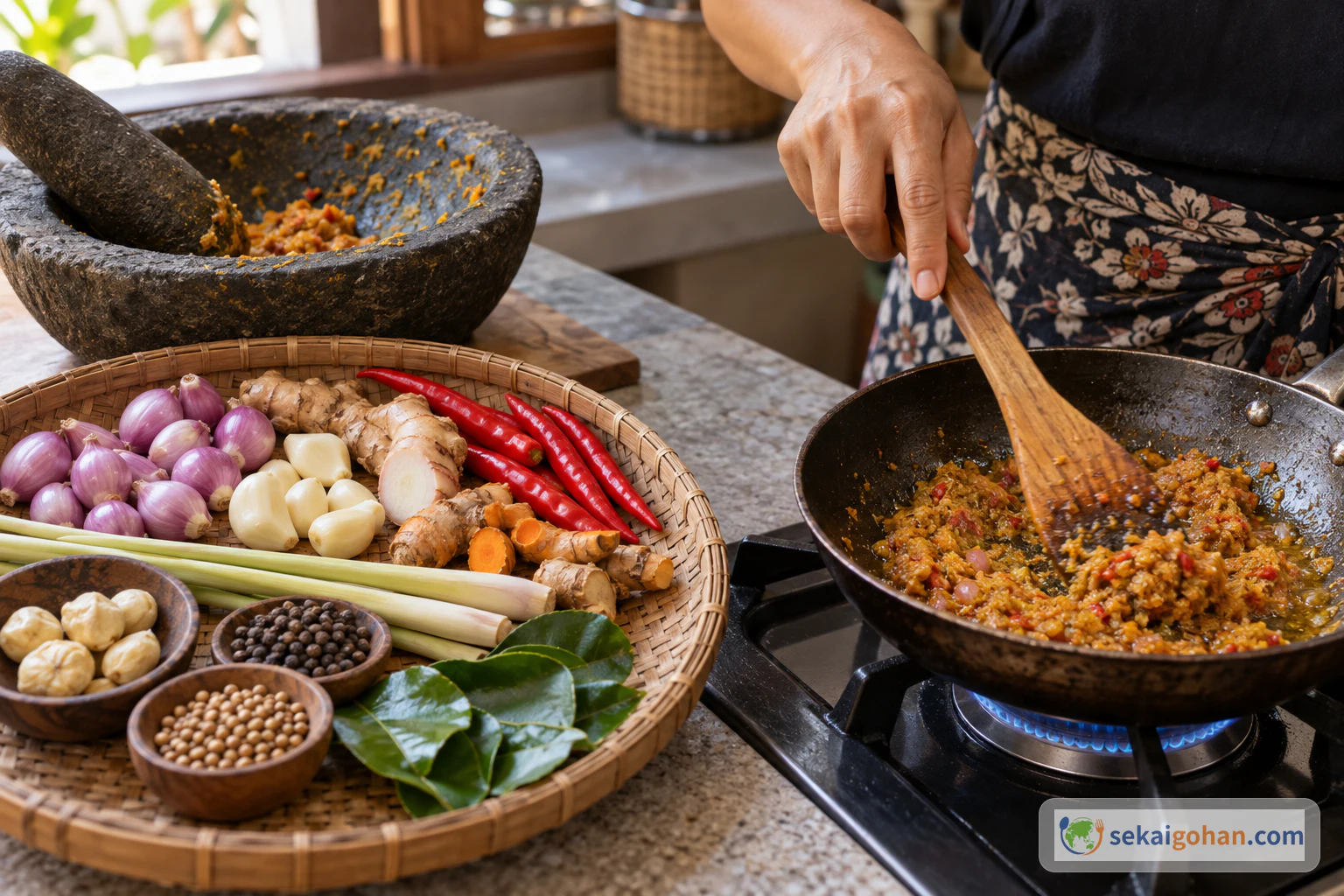
Chopped aromatics ground to a coarse paste and fried in a pan
Grind the aromatics coarsely, then fry the paste without burning it

Finely chop the lemongrass. Grind the shallots, garlic, fresh turmeric, ginger, galangal, chillies, lemongrass, candlenuts, peppercorns and coriander seeds with 1/2 tsp salt to a coarse paste. Fry the paste in 2 tbsp oil for 5 minutes, taking care not to let it burn.

STEP22 / 8

Score the meat and press in the paste

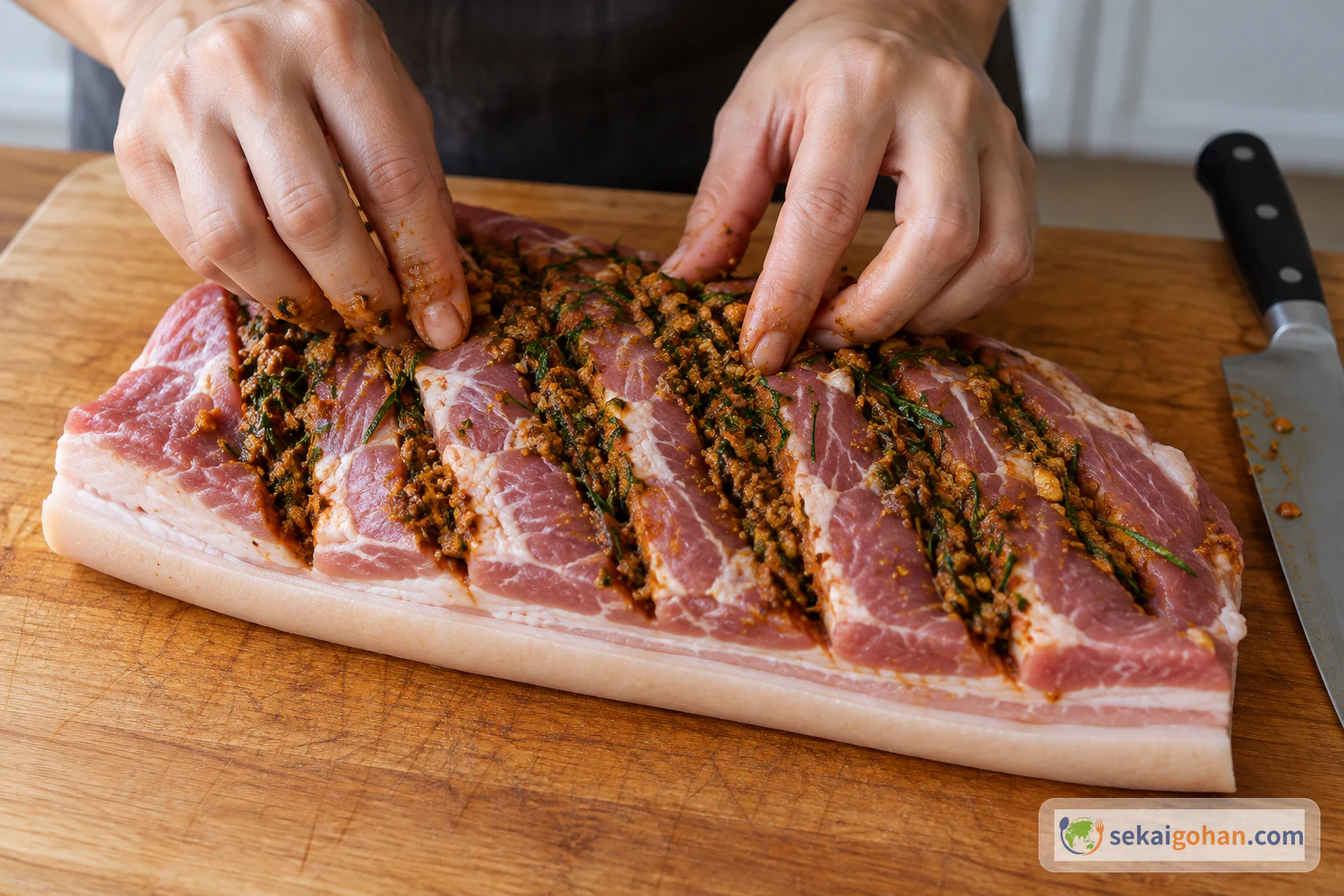
Pork belly scored on the meat side, with spice paste and shredded makrut lime leaves in the cuts
The paste and lime leaves go on the meat side only

Lay the pork skin side down and cut deeply into the meat side only. Shred the makrut lime leaves finely, then press them and the paste into the cuts. Keep the paste off the skin.

Wash the knife and cutting board, then pour boiling water over them before using them again. Wash your hands after touching the raw pork. Don't let raw meat juices touch cooked food or anything eaten raw.

STEP33 / 8

Roll and tie

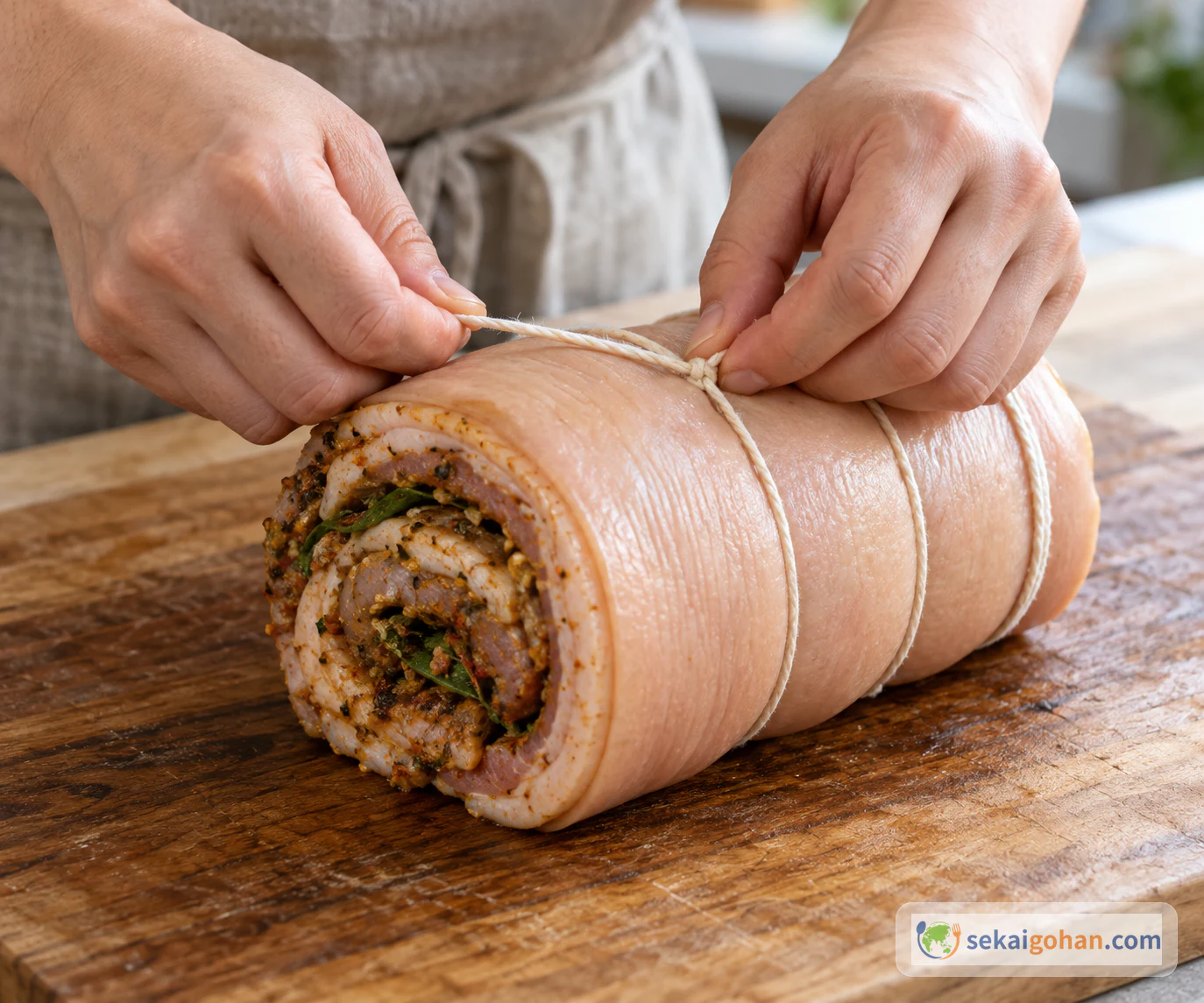
Pork belly rolled with the spice paste enclosed and the skin on the outside, being tied with twine
Roll with the skin outward and tie with kitchen twine

Roll the belly with the skin on the outside and the paste enclosed inside. Tie it securely with kitchen twine.

STEP44 / 8

Salt the skin and dry it overnight

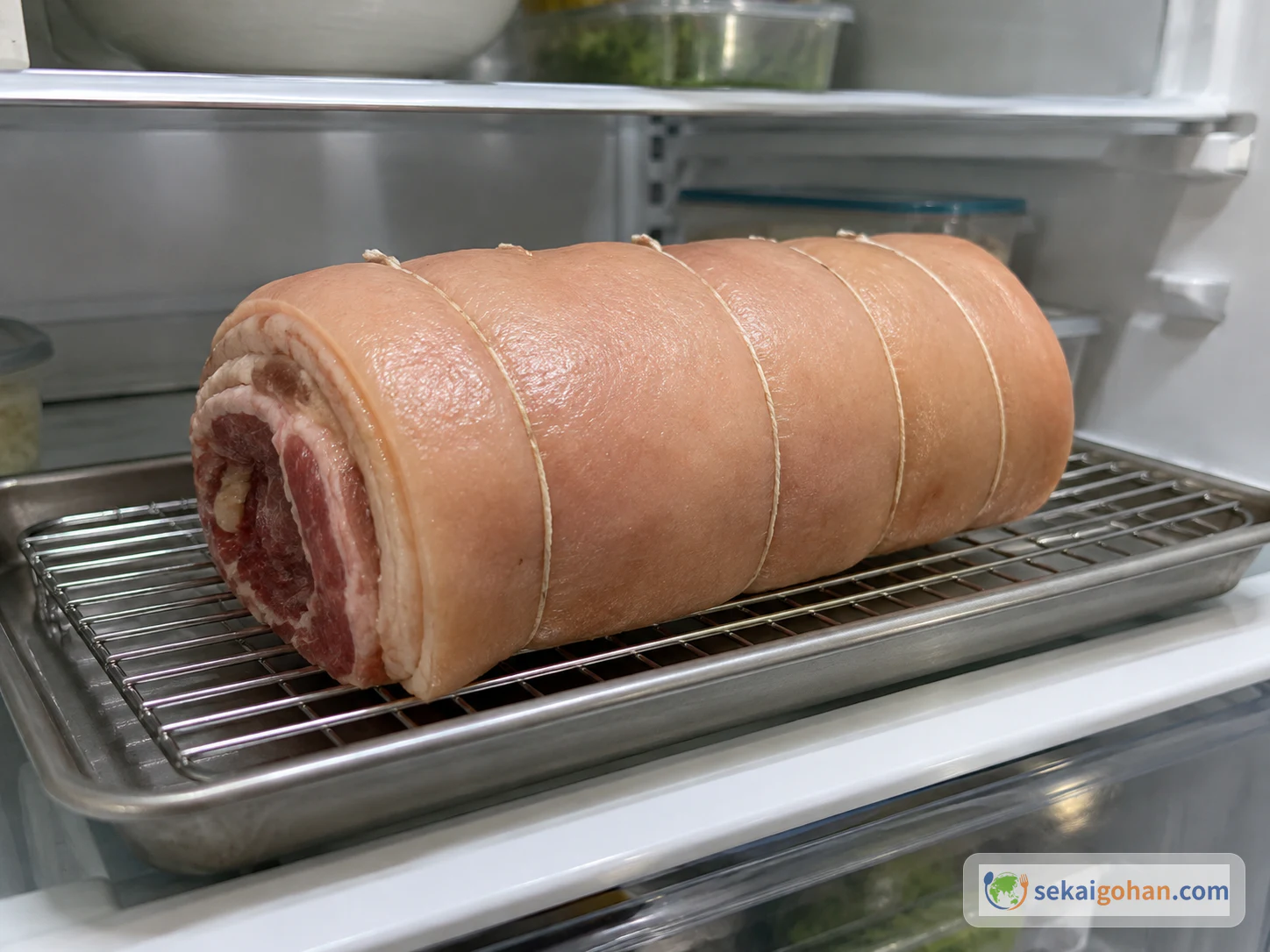
Rolled pork belly on a rack, drying uncovered in the refrigerator
Dry the roll uncovered in the refrigerator, not on the counter

Rub the remaining 2 1/2 tsp salt into the skin. Set the roll on a wire rack over a tray to catch any juices so they don't reach other food. Leave it uncovered overnight in a refrigerator at 50°F (10°C) or below. Don't leave it out at room temperature.

STEP55 / 8

Wipe the skin and brush it

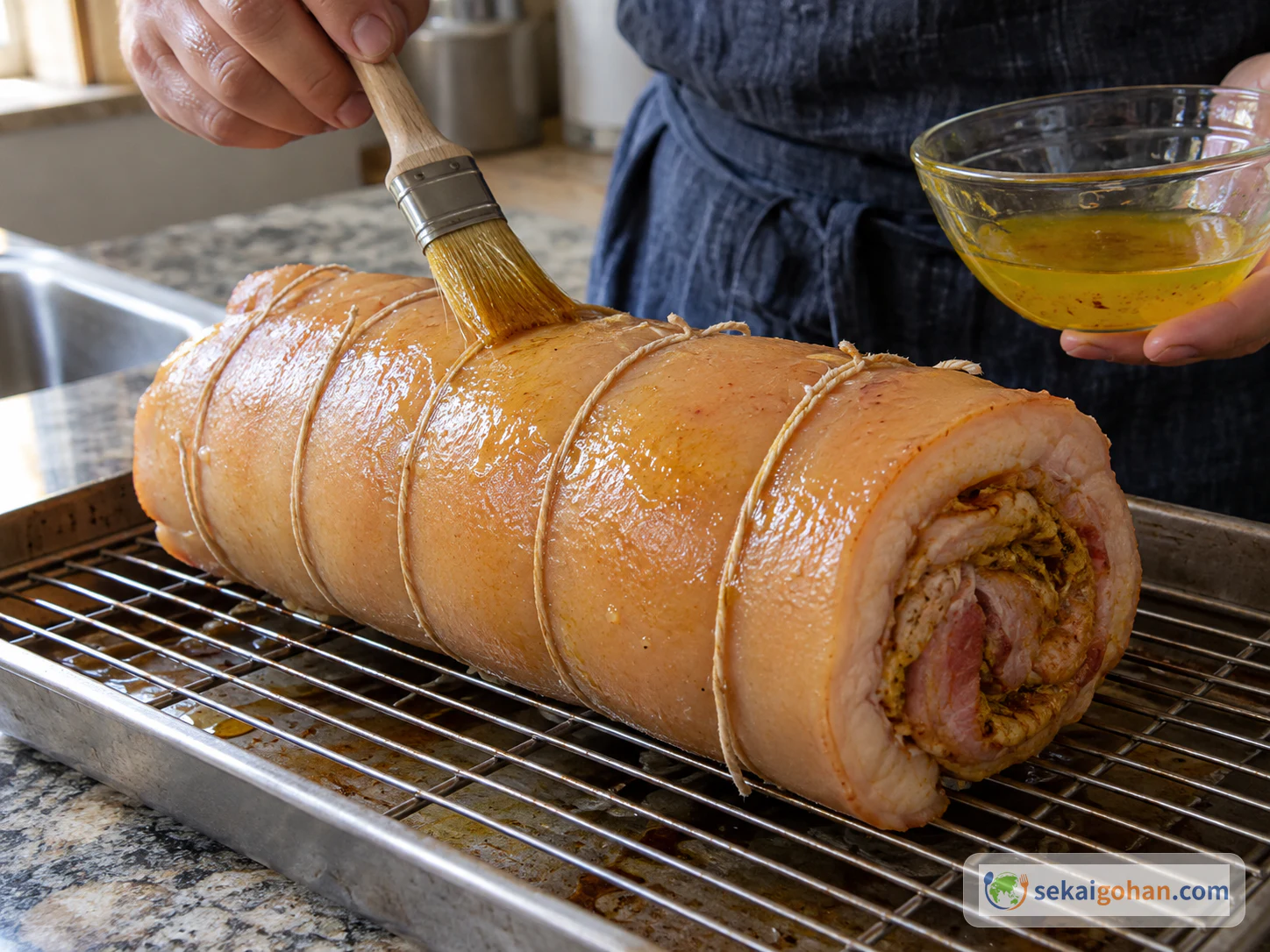
Turmeric coconut water being brushed onto the skin of the pork belly roll on a rack
Brush the turmeric coconut water onto the outer skin

Wipe the moisture and any remaining salt grains off the skin with paper towels. Don't add more salt. Set the roll on a rack. Mix 1 tsp ground turmeric with 3.5 tbsp (50 ml) coconut water and brush it over the skin.

STEP66 / 8

Roast at 325°F (160°C)

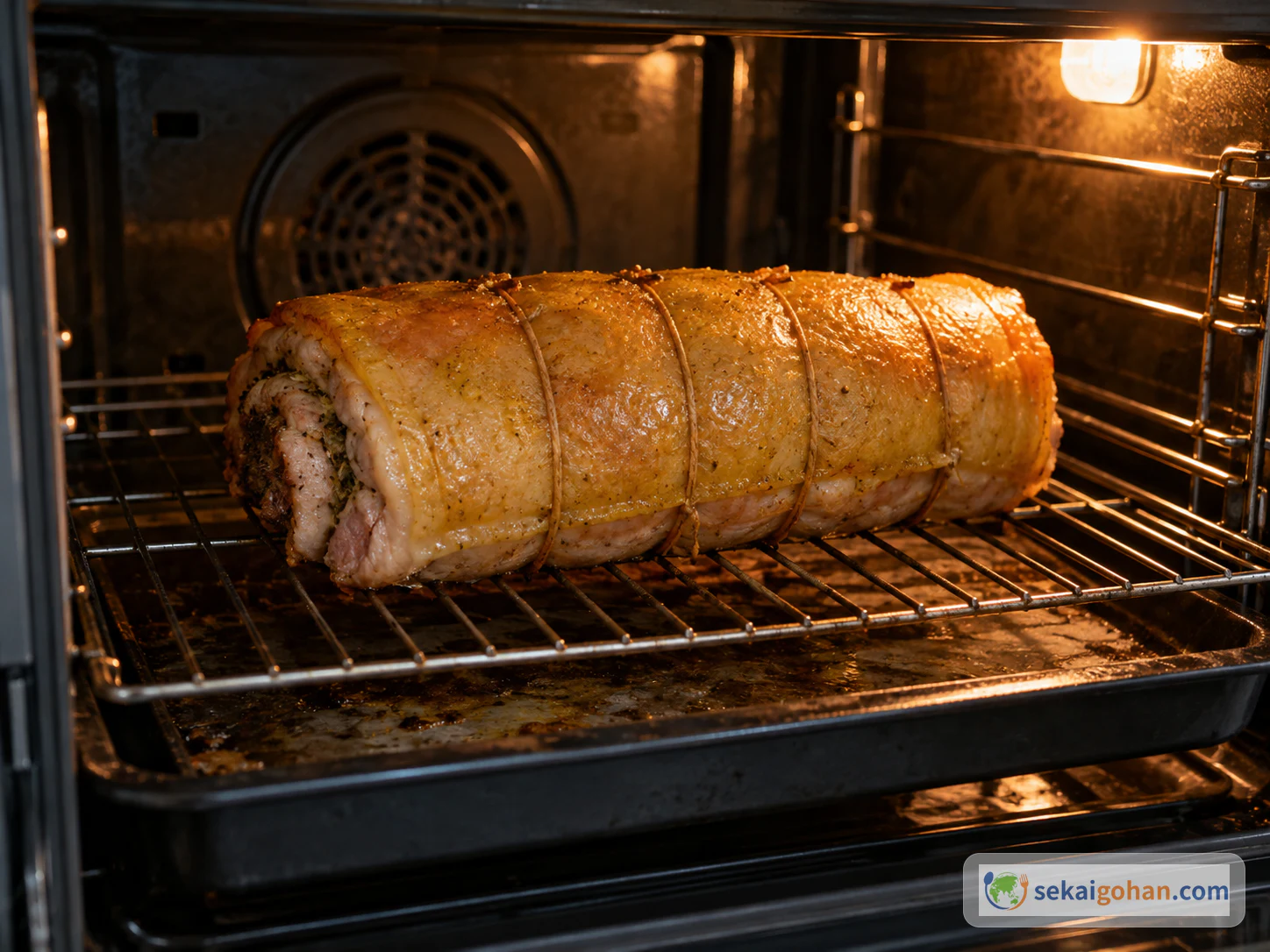
Pork belly roll on a rack, roasting in the oven at low temperature
The long, lower-temperature stage comes first

Roast the roll on the rack at 325°F (160°C) for 2.5 hours.

STEP77 / 8

Crisp the skin at 450°F (230°C) and check the center

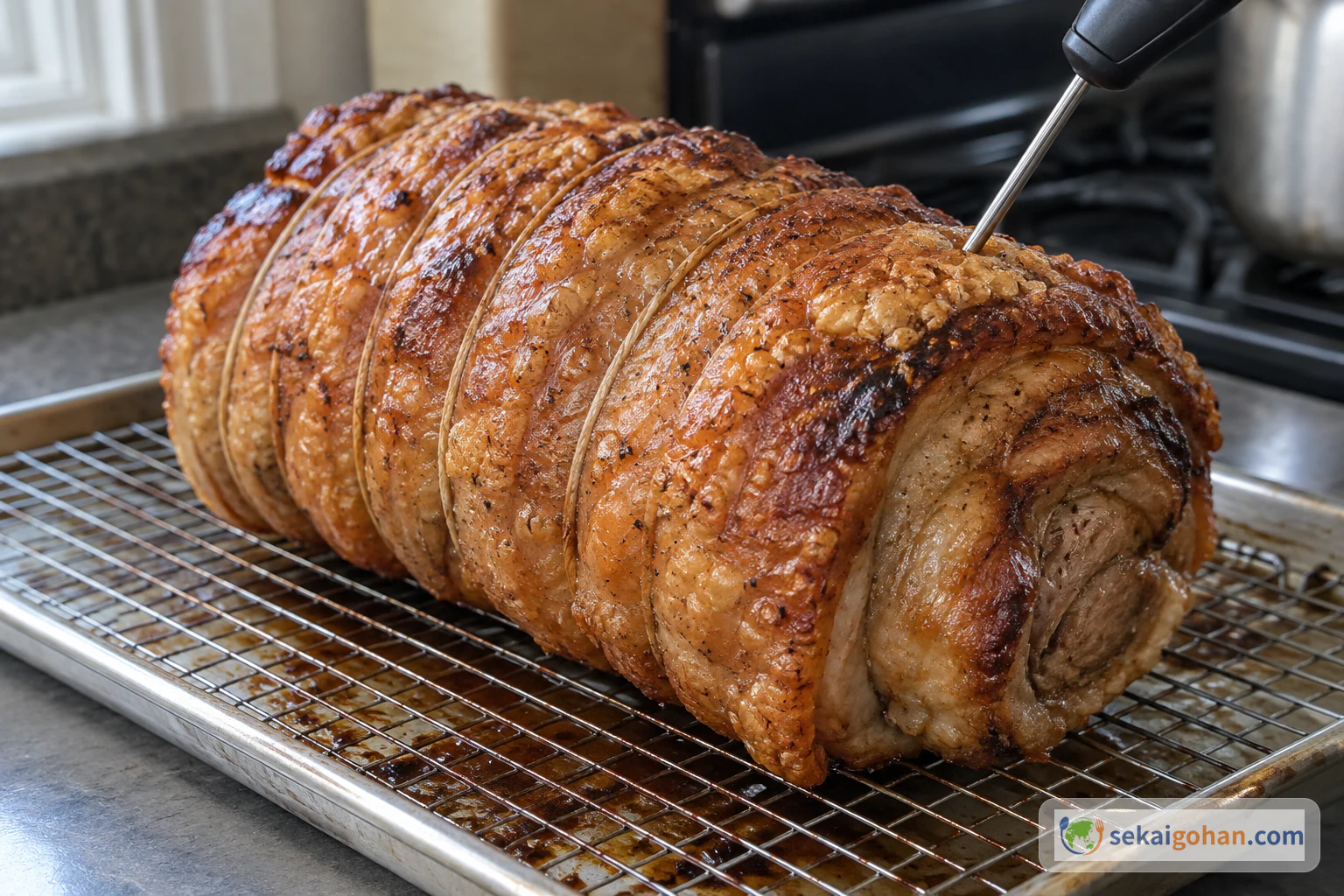
Thermometer checking the center of the pork belly roll, its skin puffed and crisp after high-heat finishing
Measure at the center of the thickest part, whatever the clock says

Raise the oven to 450°F (230°C) and roast for 20–30 minutes, until the skin puffs and turns glassy and crisp. Judge doneness by the thermometer, not the clock.

Insert a probe thermometer into the center of the thickest part. Keep the tip away from the area just under the skin, any hollow spots and the paste layer. The center should reach 167°F (75°C) and stay there for at least 1 minute. If it falls short, return the roll to the oven and check again.

STEP88 / 8

Rest and slice

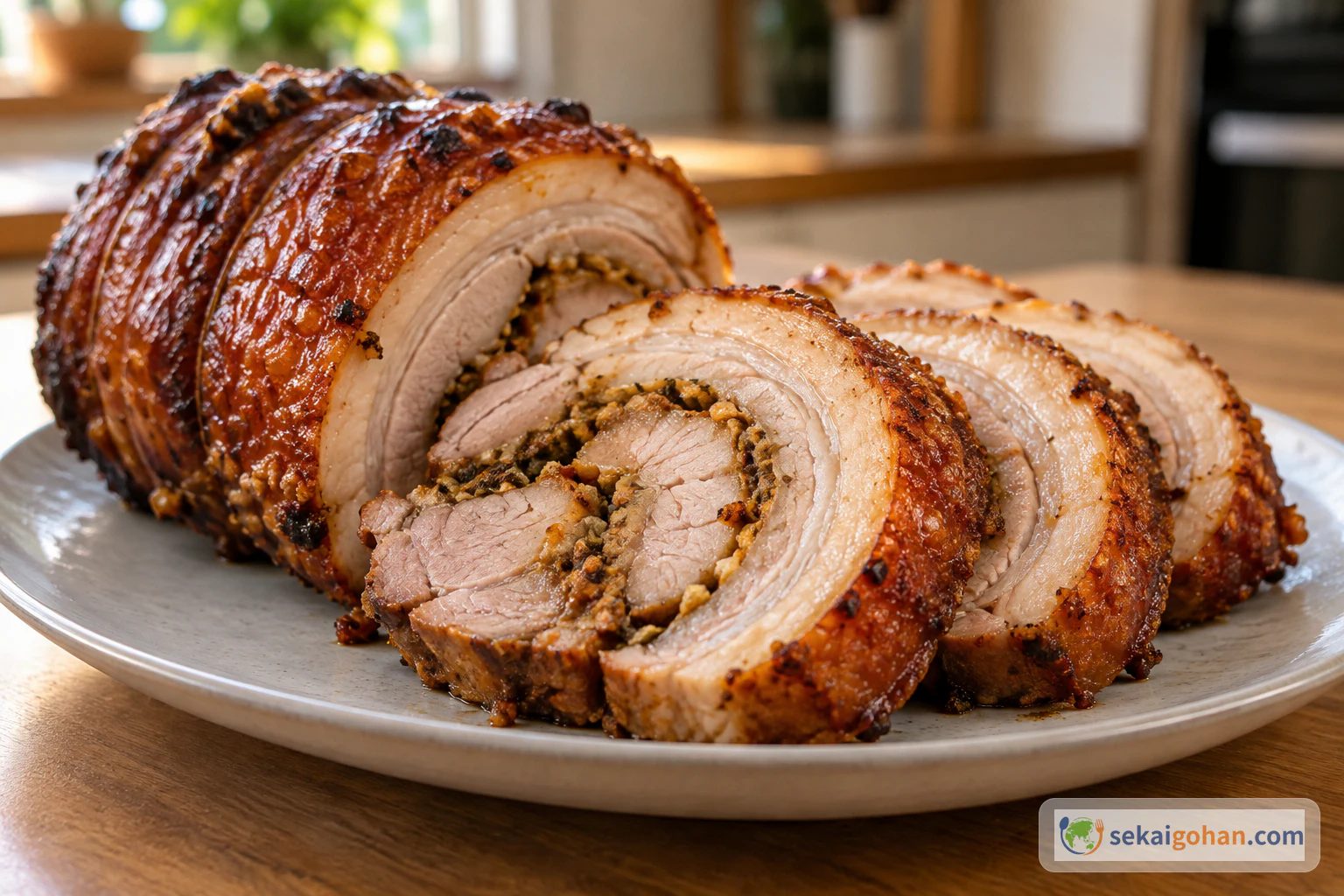
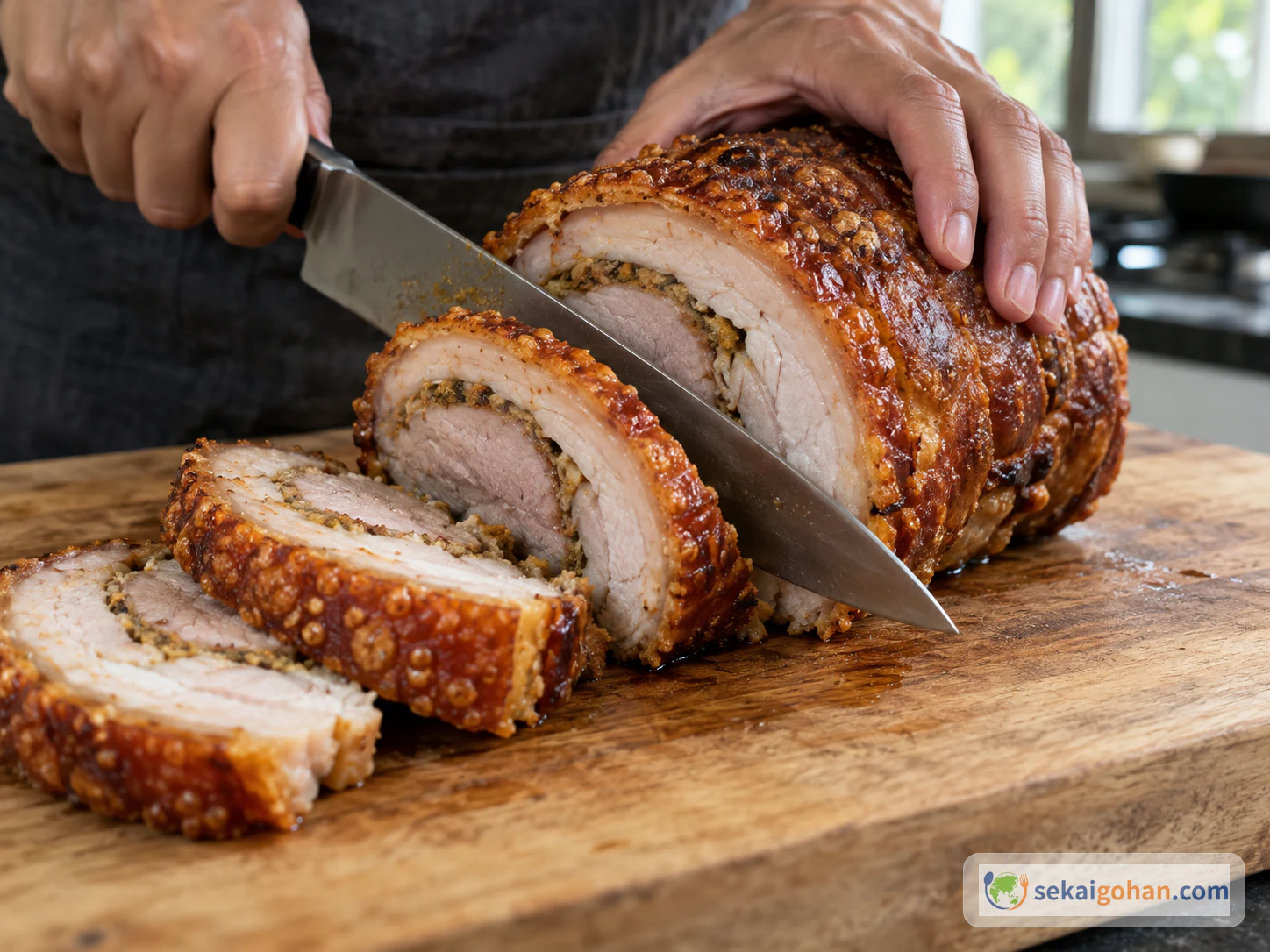
Rested pork belly roll cut into thick slices, showing the spice paste inside and the roasted skin
Thick slices show the spice layer inside and the crisp skin outside

Let the roll rest for 15 minutes. Remove the twine and cut the roll into thick slices.

0 / 0
Ingredients

Ingredients

1 / 1

Ingredients

Ingredient Amount Role
Pork belly, skin on 3.25 lb (1.5 kg) The body of the roll and the source of the crisp skin
Shallots 8 Spice paste
Garlic 6 cloves Aroma in the paste
Fresh turmeric 2 inches (5 cm) Earthy aroma and color in the paste
Ginger 1.5 inches (4 cm) Aroma in the paste
Galangal 1.5 inches (4 cm) Citrus-and-pine aroma in the paste
Red chillies 5–6 Heat
Lemongrass 3 stalks Aroma in the paste; finely chopped
Candlenuts (kemiri) 4 Body in the paste
Black peppercorns 1 tsp Peppery aroma in the paste
Coriander seeds 1 tsp Citrusy aroma in the paste
Makrut lime leaves 6 Citrus aroma on the meat side; finely shredded
Salt 1 tbsp (1/2 tsp for the paste, 2 1/2 tsp for the skin) Seasons the paste and is rubbed onto the skin
Neutral oil 2 tbsp For frying the paste
Ground turmeric 1 tsp Mixed with coconut water for the skin
Coconut water 3.5 tbsp (50 ml) Brushed onto the skin
0 / 0

Picture a Balinese celebration table. A whole pig, stuffed with spices and roasted as it turns, is carved for everyone gathered around it, and the skin and spice-scented meat go onto plates beside rice. This is babi guling, also written be guling. The name comes from the turning of the pig as it roasts. A whole pig over a fire is a job for a whole community, so this home version uses skin-on pork belly instead, rolled around the spice paste and roasted in the oven. It keeps the pork fat and skin, the aromas of turmeric, ginger, galangal and lemongrass, and the heat of chillies.

Babi Guling in Bali

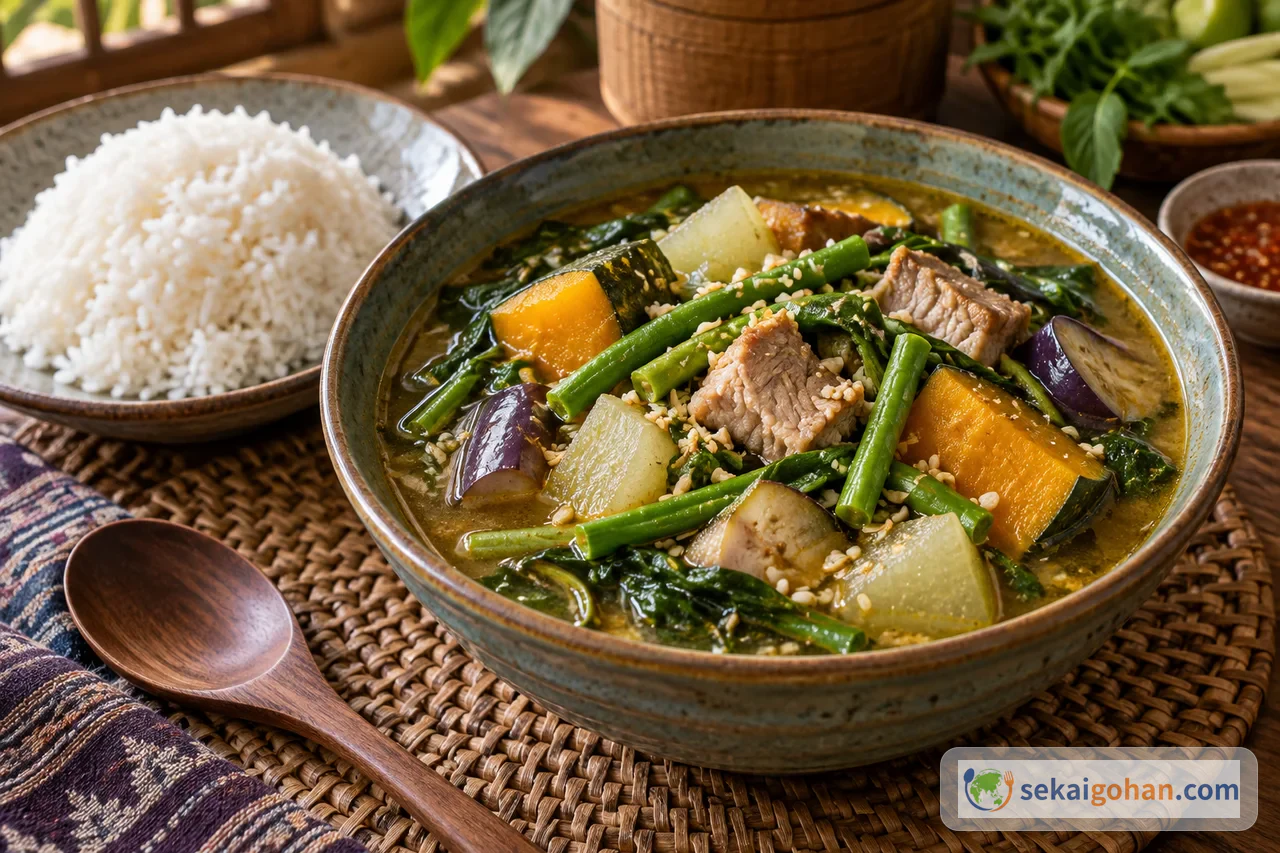
In Bali, babi guling is a whole pig stuffed with spices and spit-roasted. It's served at ceremonies and feasts. It's also sold at warungs, the small eateries where it comes as a single plate: rice, skin, lawar and urutan, a sausage of blood and spices. Lawar is a Balinese dish in its own right.

Not every crispy pork dish from Bali is babi guling. Babi panggang garing is a separate dish, with its own ingredients, a parboiling step and a sweet soy finish. To explore further, browse more dishes from Indonesia.

Ingredients for One 3.25 lb (1.5 kg) Roll
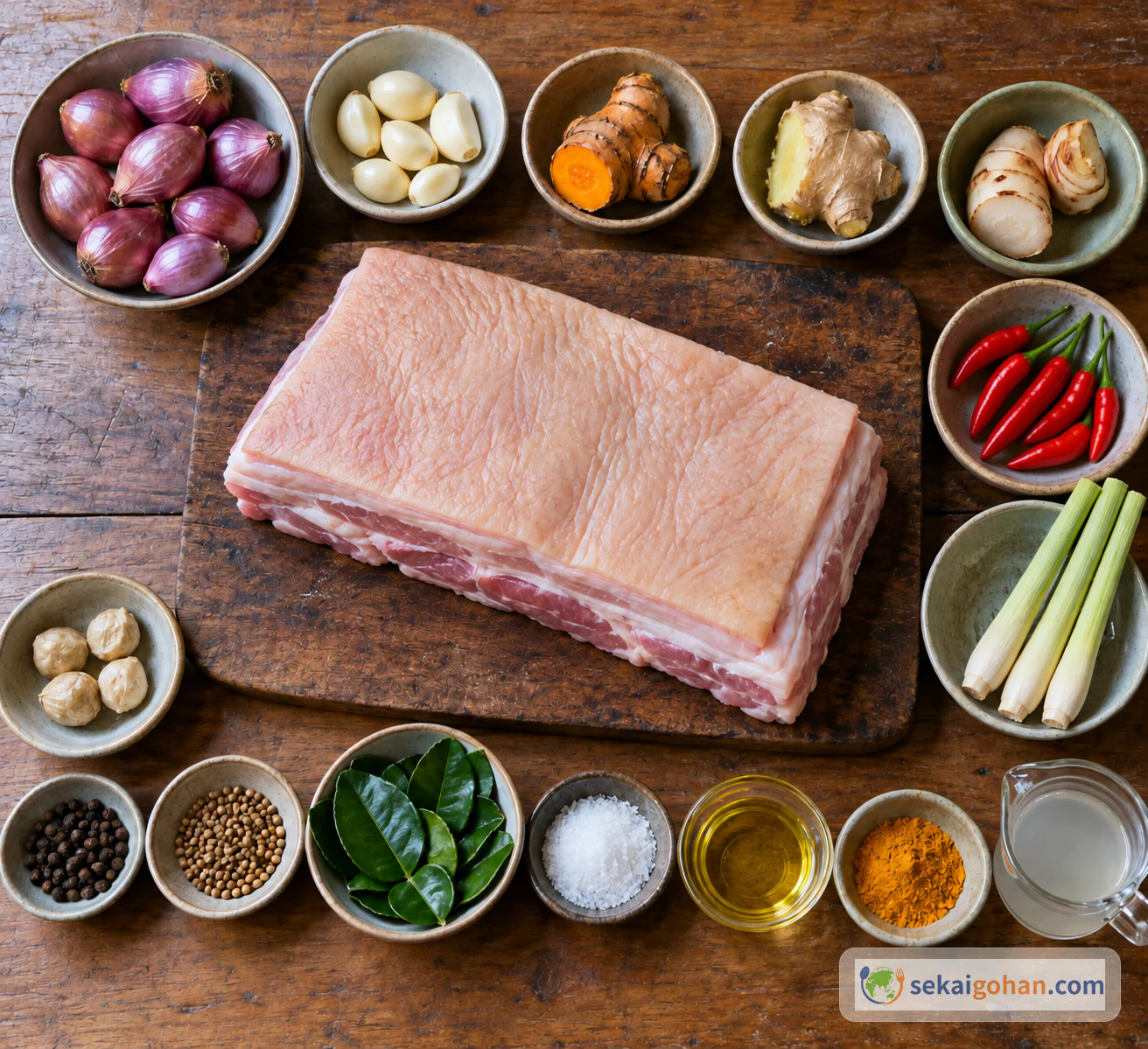
Skin-on pork belly with aromatics including turmeric, ginger, galangal and lemongrass
Pork belly surrounded by the aromatics for the paste and the seasonings for the skin

Equipment

  • Mortar and pestle
  • Small pan
  • Sharp knife and cutting board
  • Kitchen twine
  • Wire rack and tray
  • Paper towels
  • Pastry brush
  • Probe thermometer for the center of the roll
  • Oven thermometer, to check your oven against 325°F (160°C) and 450°F (230°C)

Choosing Ingredients for Babi Guling

The pork matters most. The belly needs its skin, because the skin is what turns crisp and makes this roast. You can swap some of the aromatics, but each swap changes the flavor:

  • Shallots: small red onions can stand in, but the aroma and moisture will change.
  • Galangal: ginger can stand in, but it won't taste the same, even if you use more. Galangal is worth seeking out.
  • Fresh turmeric: there's no ground-turmeric equivalent for the paste. The 1 tsp of ground turmeric in the table is a separate ingredient for the skin.
  • Candlenuts and makrut lime leaves: no substitute is recommended for either one.
  • Coconut water: be careful not to grab coconut milk by mistake.

Kencur, an aromatic often found in Balinese base genep, isn't used in this paste, so you don't need to go looking for it.

Allergens and food safety

This dish is built on pork. It contains candlenuts, so check the product label for how they are classified, and it contains coconut water and chillies. Watch for cross-contact when you prepare the paste ingredients. Roasting time doesn't prove the pork is safe, so check the center with a thermometer.

Method: Dry the Skin Overnight, Roast Low, Then Finish High

Start the day before you plan to eat, because the roll needs a night uncovered in the refrigerator. Wash your hands often while you work.

Fixing Soft Skin and Undercooked Pork

What this roll should keep

Keep the spice paste inside on the meat side, dry the skin uncovered overnight in the refrigerator, and judge doneness with a thermometer rather than the clock.

Problem Likely reason What to do
The skin stays soft Moisture is left on the skin Dry the roll uncovered in the refrigerator overnight, and wipe the skin with paper towels before roasting
The skin doesn't puff where the paste touched it Paste got onto the skin Keep the paste on the meat side only
The center is undercooked The roast was judged by time Return the roll to the oven and measure again, until the center reaches 167°F (75°C) for at least 1 minute. Tender meat doesn't tell you it's safe
Part of the skin browns too early Heat varies between ovens Move the roll to a different rack position, or turn it a little if needed

Serving, Variations and Leftovers

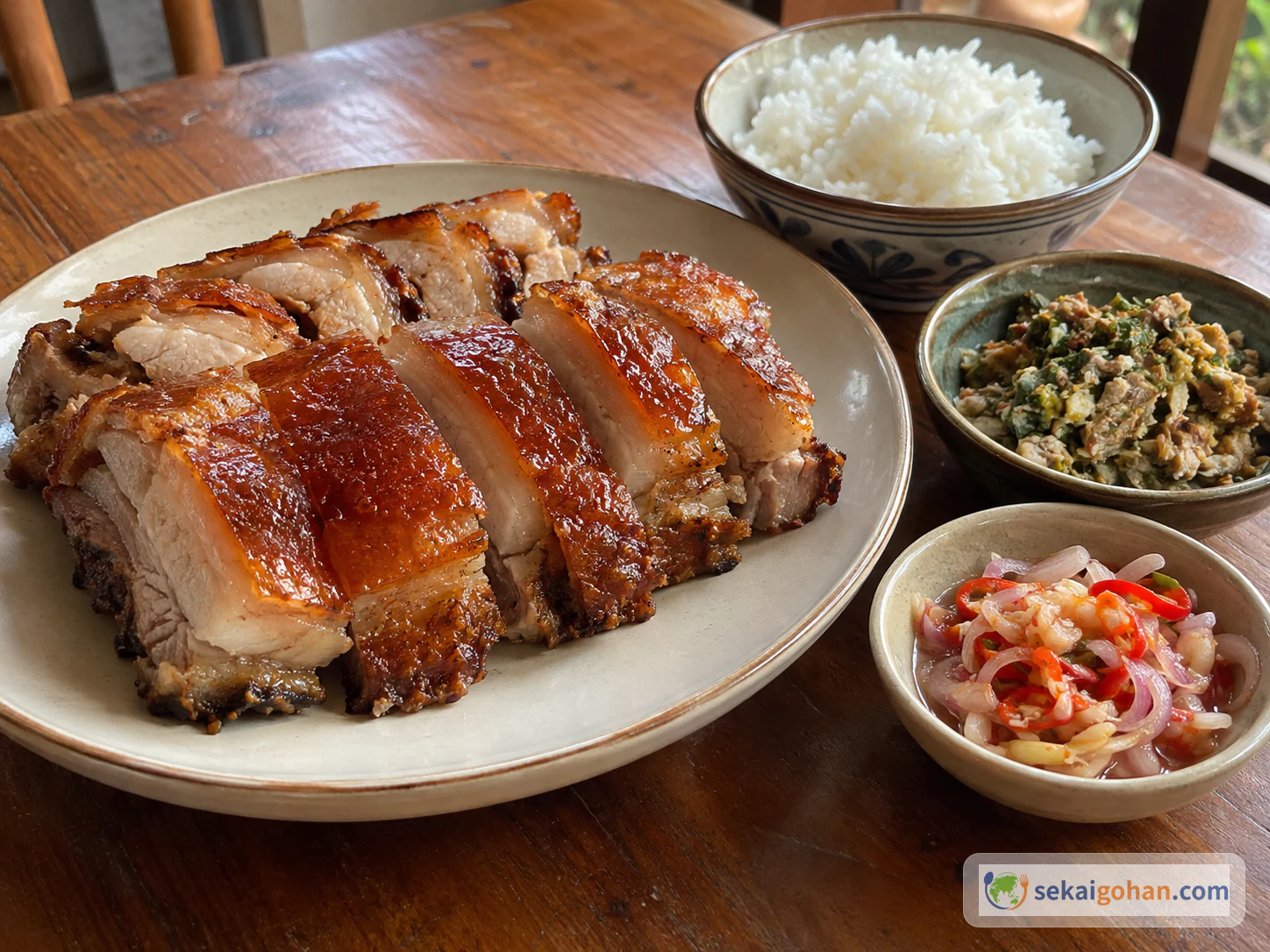
Thick slices of Balinese-style pork belly roll with white rice and separate dishes of lawar and sambal matah
Rice, lawar and sambal matah are optional and served separately

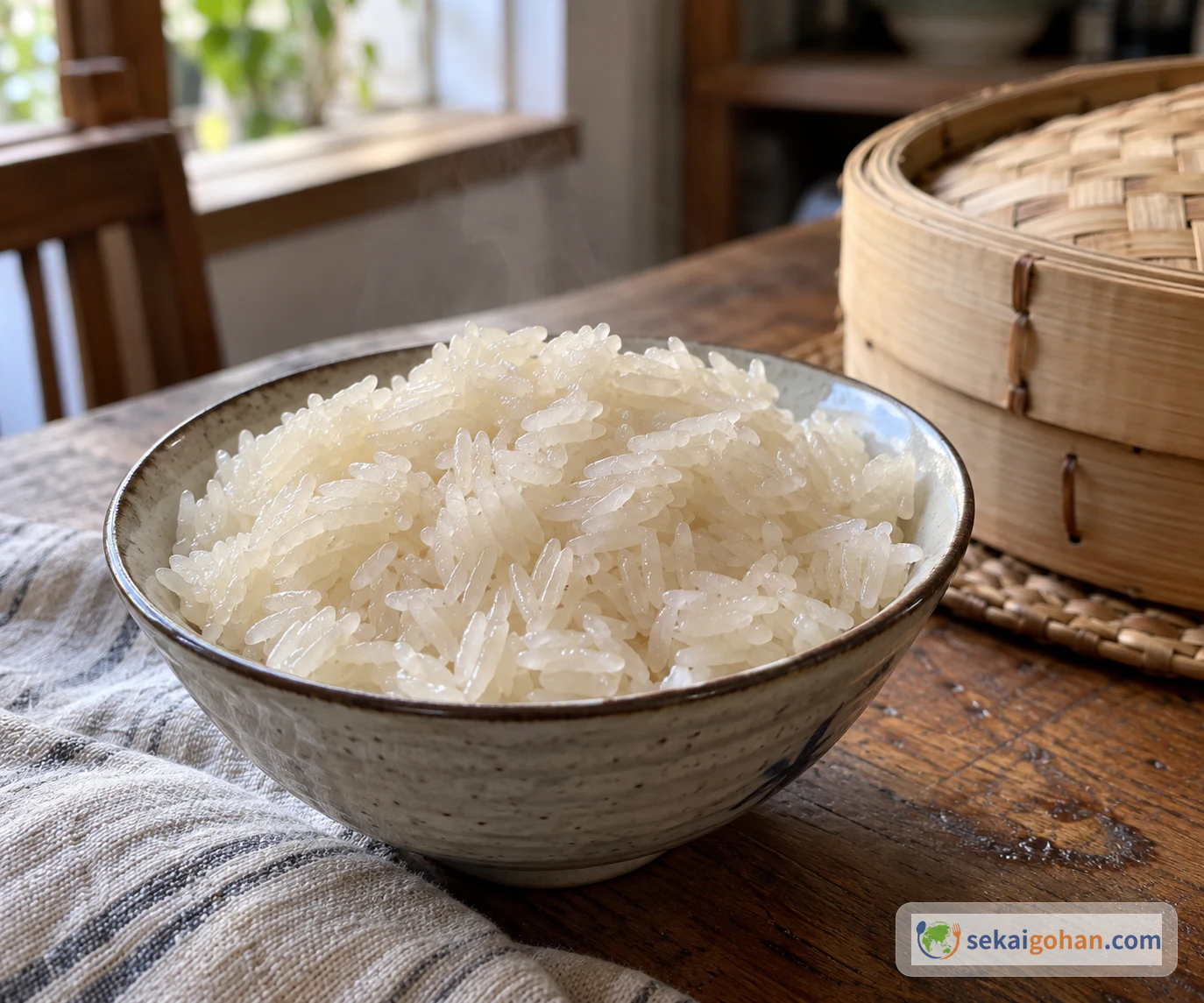
The roll makes a full meal by itself. For a bigger plate, serve it with white rice, lawar and sambal matah in separate dishes, store-bought or made separately. For milder heat, use fewer than 5–6 chillies. The paste will taste less hot and a little less bold.

Divide leftovers into small portions in shallow containers so they cool quickly, then refrigerate them at 50°F (10°C) or below. Throw away anything kept too long. Reheat leftovers thoroughly, to at least 167°F (75°C).

Frequently Asked Questions

Can I use ginger instead of galangal?

You can, but the result won't taste the same. Galangal has a citrus-and-pine aroma that ginger lacks.

What temperature should the center reach?

The center should reach 167°F (75°C) for at least 1 minute. That is higher than the 145°F (63°C) with a 3-minute rest often given for pork roasts. Scoring and rolling the belly moves what used to be the surface into the middle of the roast, so the center needs the higher temperature.
Sources