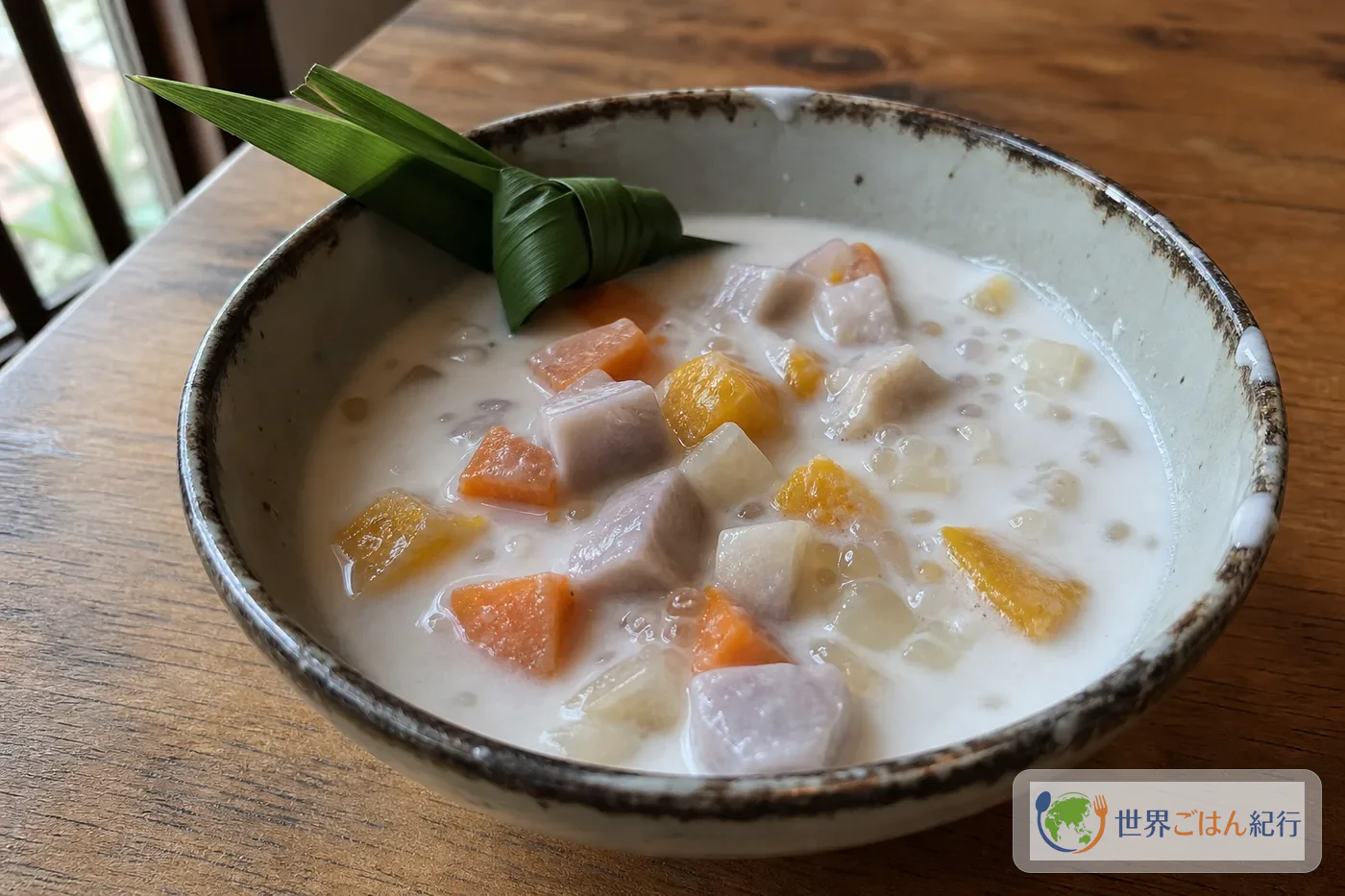
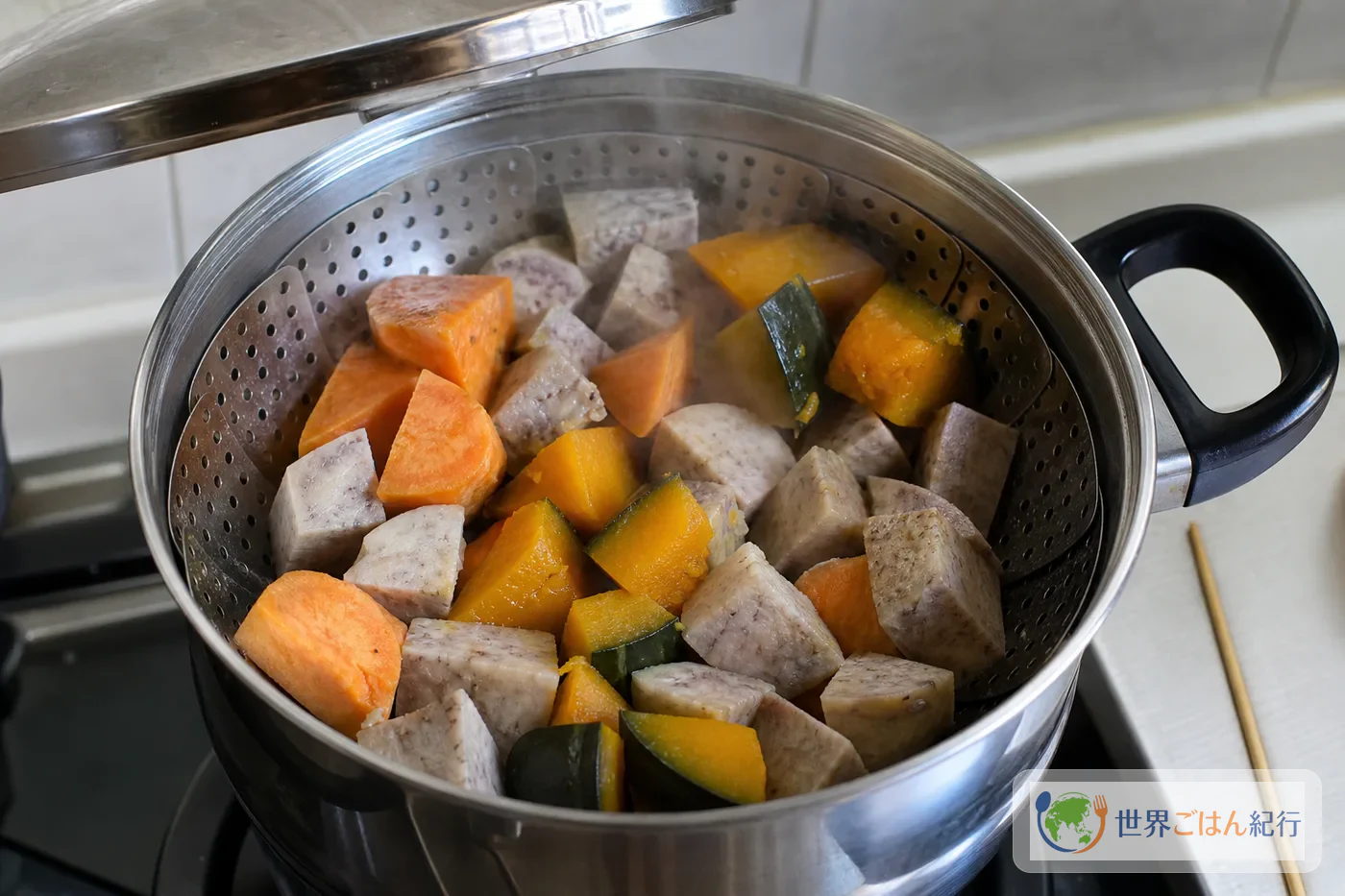
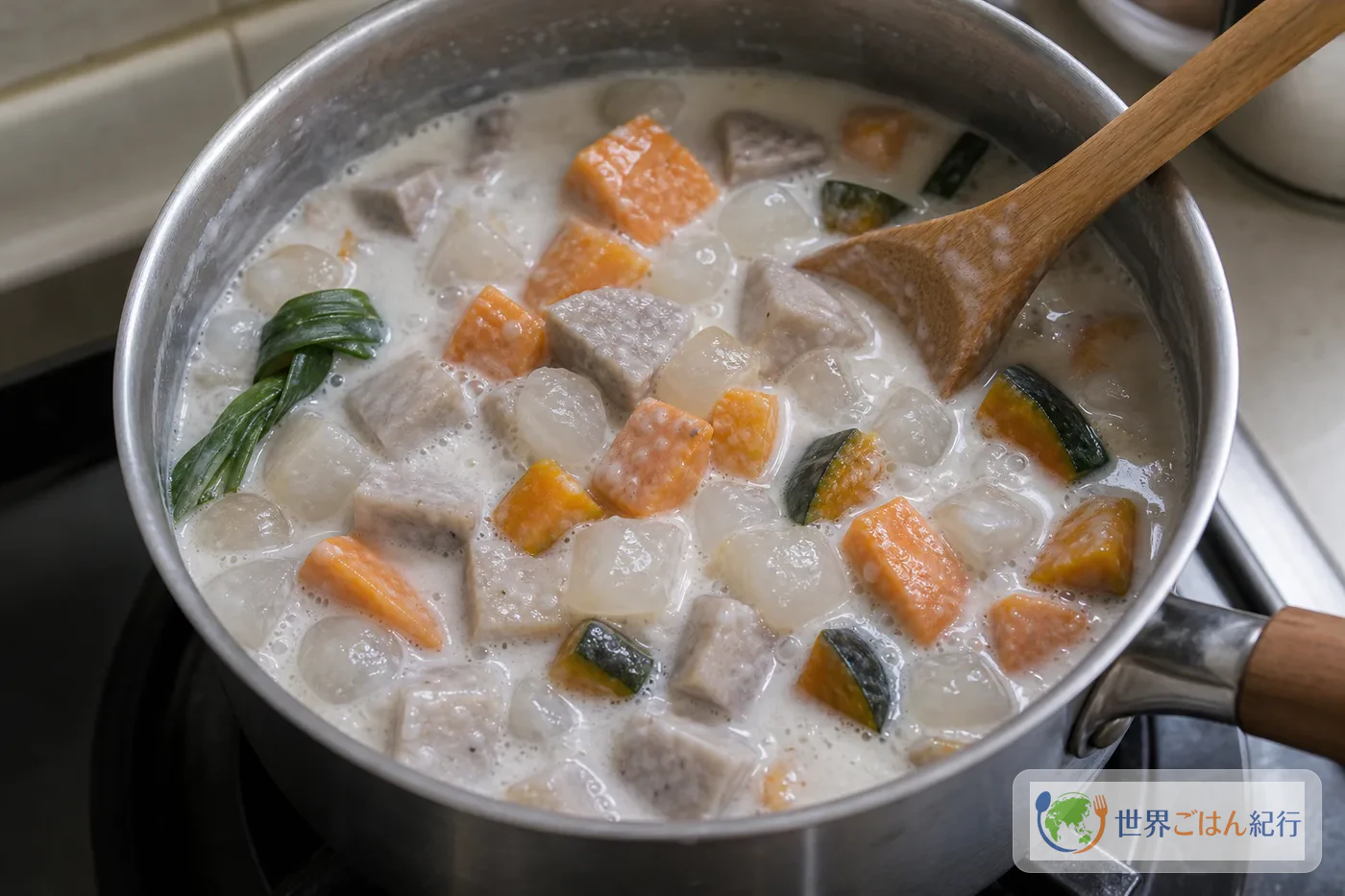
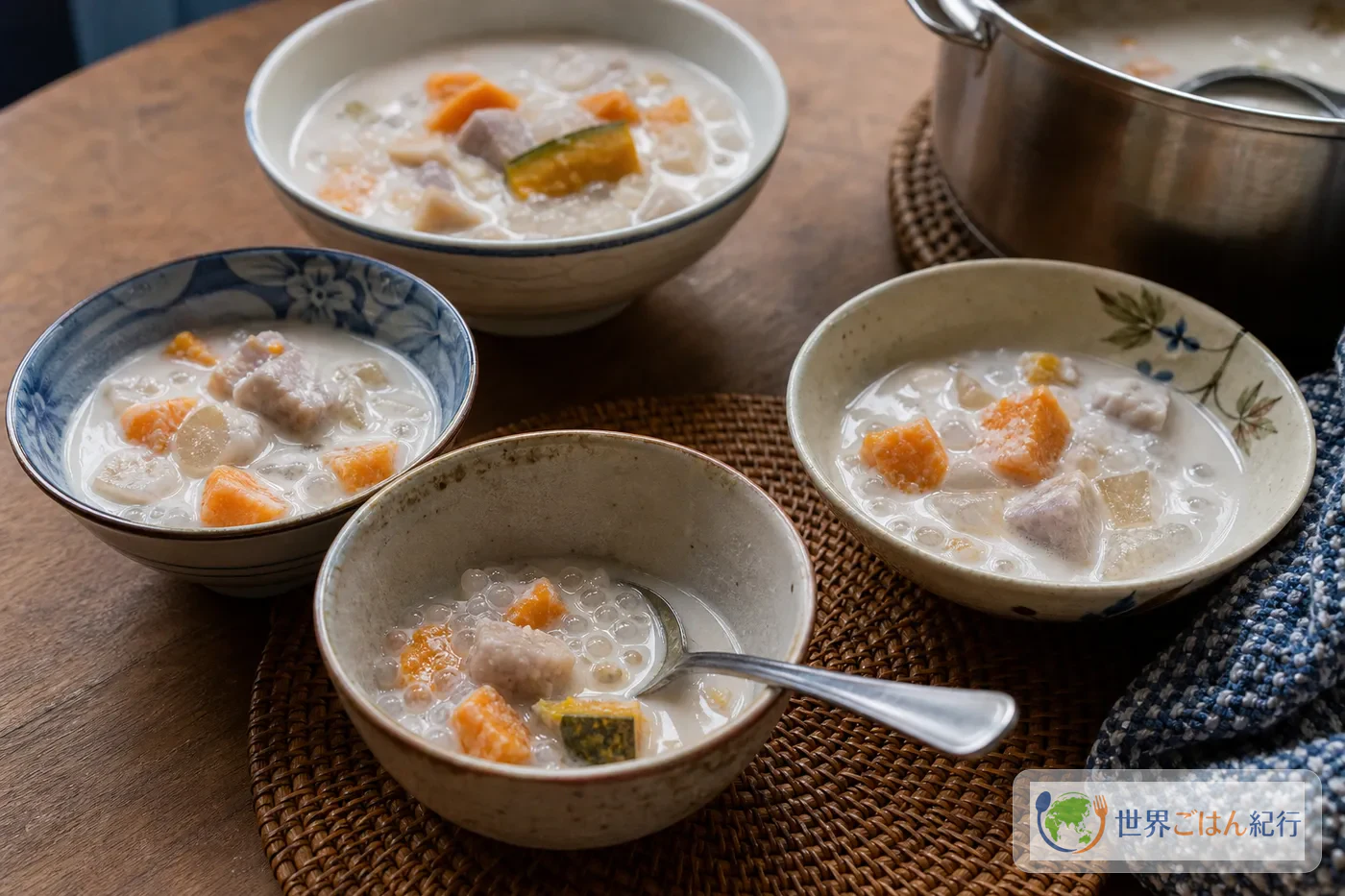
Warm coconut milk in a pot and the kitchen suddenly smells like Southeast Asia. Steamed taro, sweet potato and pumpkin go in, orange and pale purple sinking into the white liquid with little translucent bits of tapioca between them. It looks a lot like sweet red bean soup, but the fragrance goes somewhere else entirely. This is bubur cha cha, a warm coconut-milk dessert from Malaysia and Singapore. It's mellow and gently sweet, and the root vegetables do most of the work.
About bubur cha cha
In Malay, bubur means porridge. Here it doesn't mean rice porridge. It means a bowl of root vegetables and tapioca held together by sweet coconut liquid. Malaysians eat it at home and buy it from street stalls, warm or chilled. It's less an after-dinner dessert than an afternoon snack that takes the edge off hunger. What goes in changes a little by region and household: taro, purple sweet potato, sweet potato, pumpkin, sago, tapioca jelly and sometimes beans.
At home, you only need to get three things right.
| Element | What it means in the local style | Realistic version at home |
|---|---|---|
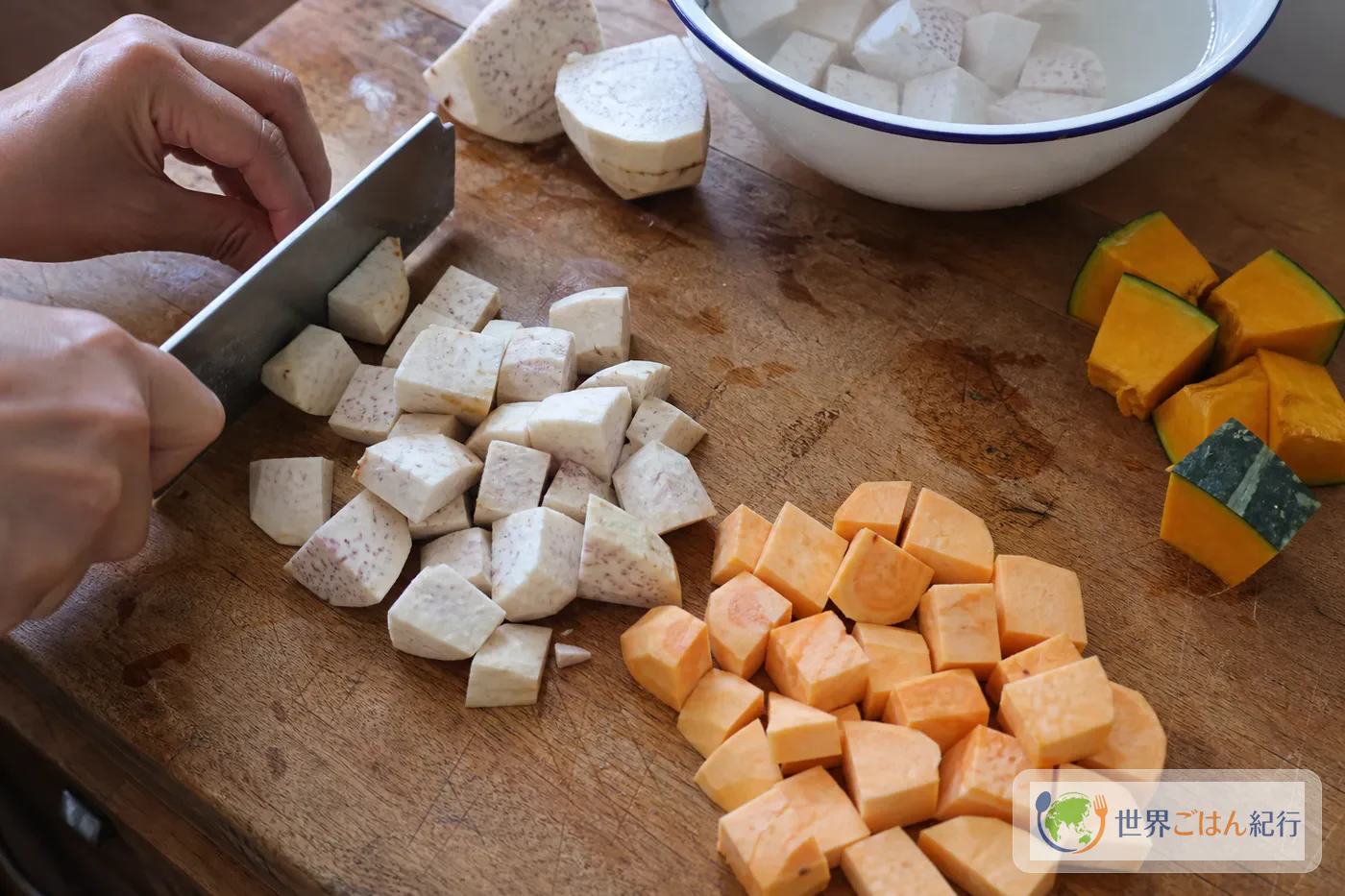
| Diced root vegetables | Color and texture change with every spoonful | Cut taro, sweet potato and pumpkin into 1.5–2 cm cubes |
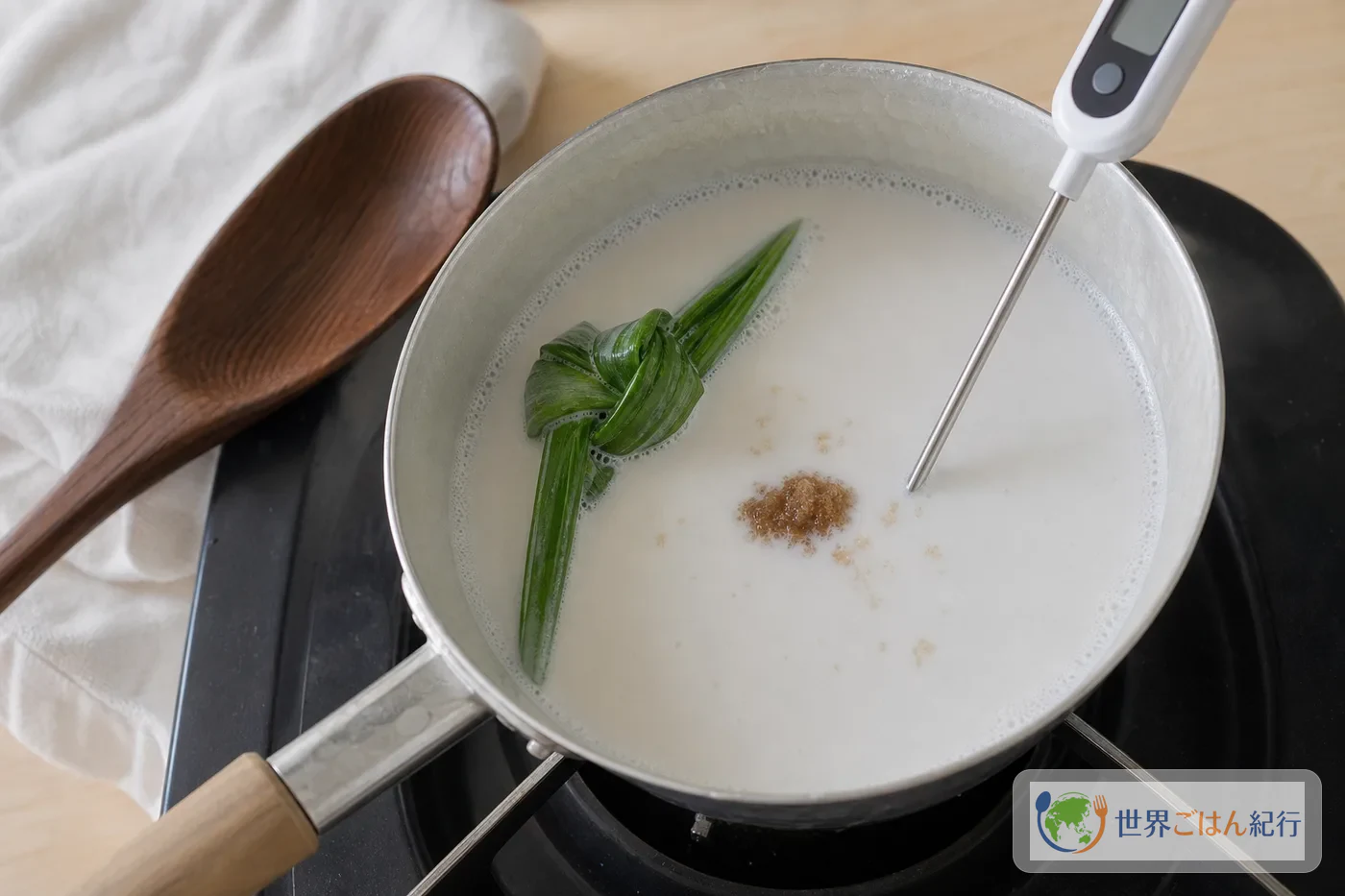
| Coconut milk | Gives the liquid its aroma and roundness | Dilute canned coconut milk and do not let it boil |
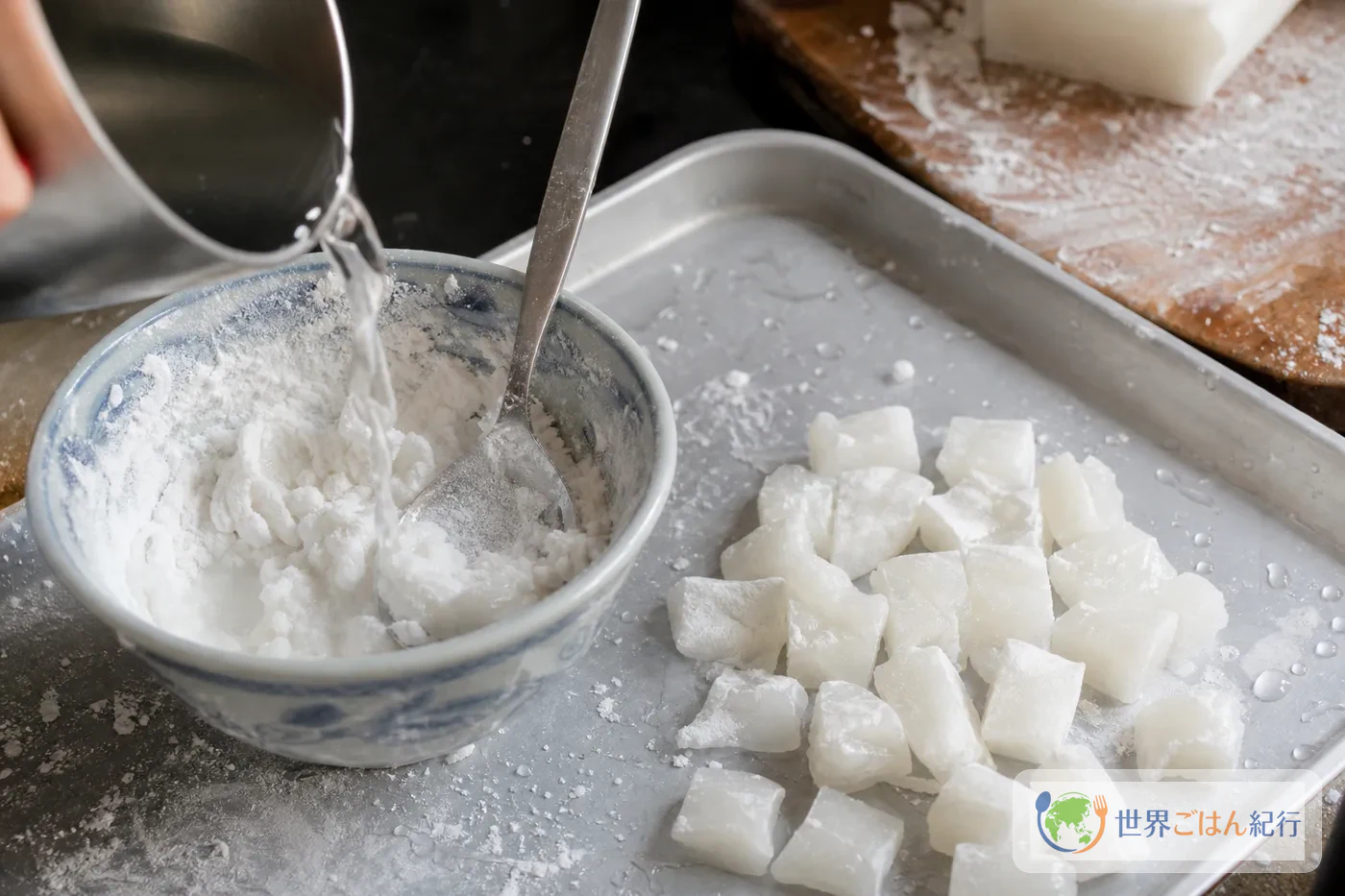
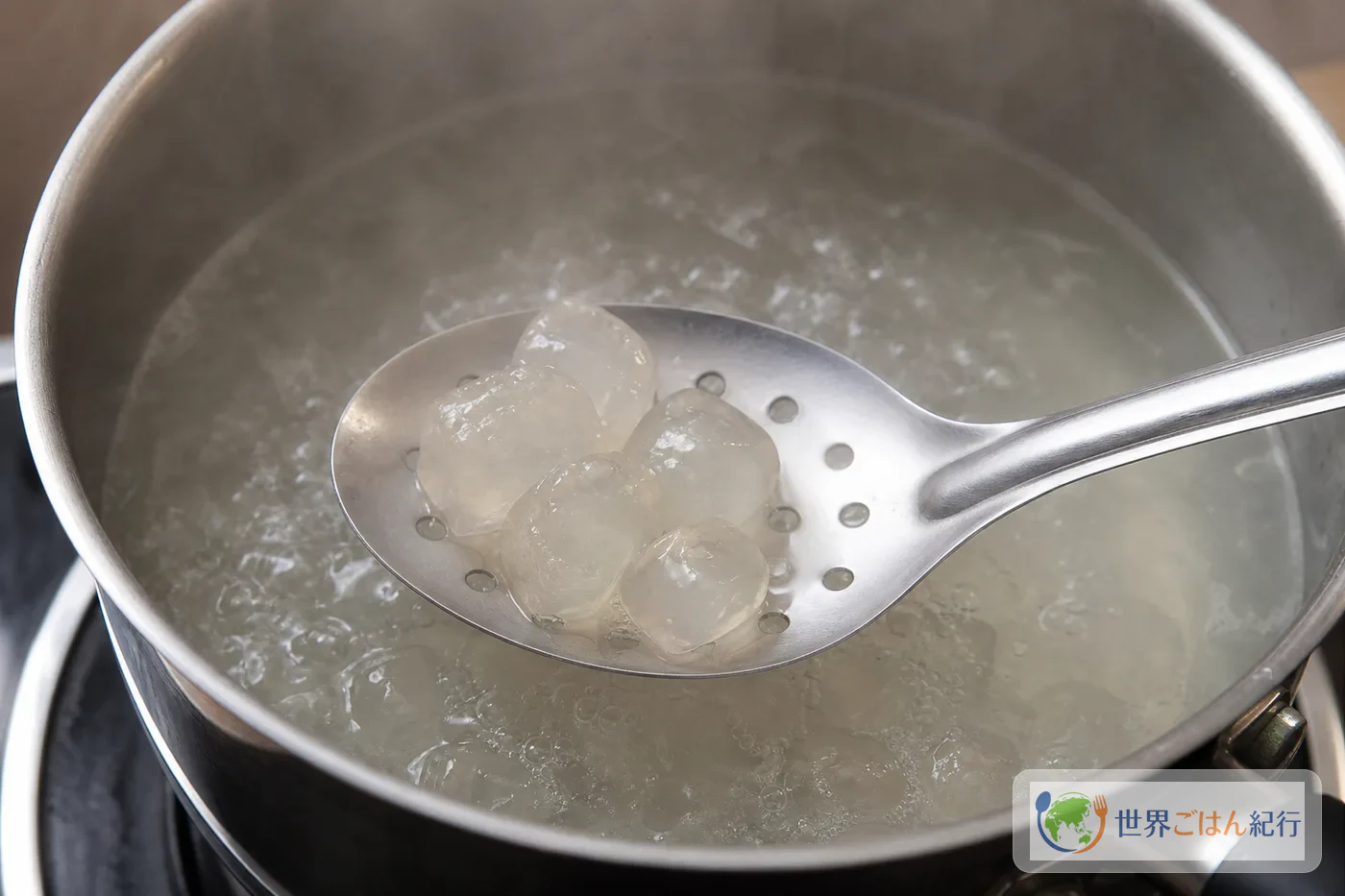
| Springy tapioca | Adds a small chewy interval | Make small dumplings from tapioca starch, or boil small tapioca pearls |
The Philippines' sapin-sapin heads in a similar sweet direction, and Malaysia's own nasi lemak is built on coconut too. Bubur cha cha is neither a steamed cake nor a staple, though. Think of it as a bowl where you eat the sweet root vegetables together with their liquid.
Ingredients (serves 4)
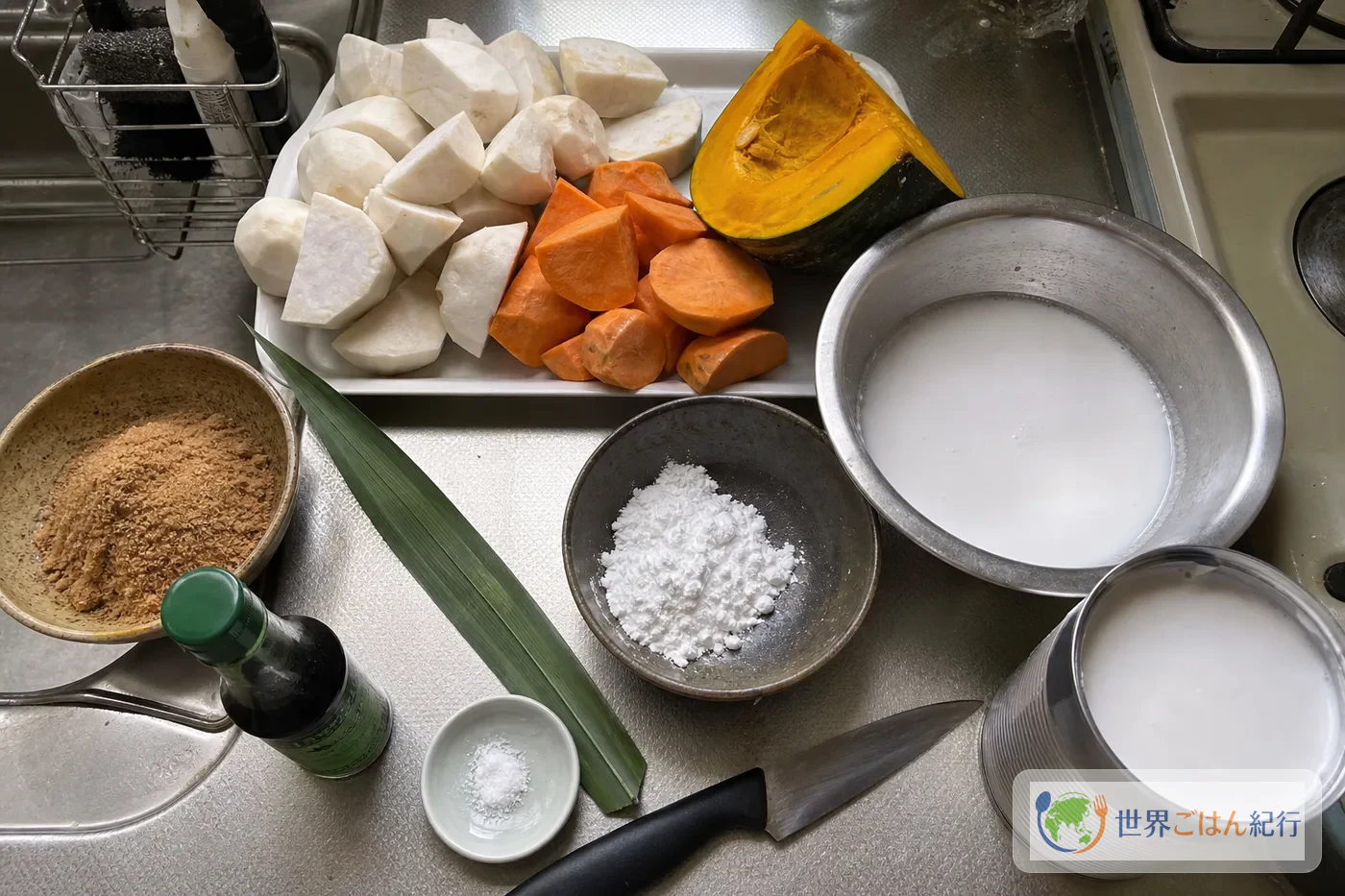
| Ingredient | Amount | Shopping and substitutes |
|---|---|---|
| Taro | 9 oz (250 g) (peeled weight) | Frozen taro also works. Halve large pieces |
| Sweet potato | 8 oz (220 g) (peeled weight) | A very sweet variety gives more sweetness; a firmer one holds its shape better |
| Pumpkin (kabocha) | 6.5 oz (180 g) (peeled weight) | Leave a thin layer of skin on for color |
| Tapioca starch | 2.5 oz (70 g) | Look for "tapioca starch" or "cassava starch" on the label |
| Boiling water | 3.5 tbsp (55 ml) | About 203°F (95°C). Add a little at a time and check the stiffness |
| Raw cane sugar | 5 g | For the tapioca dough |
| Water | 1 quarts (1 L) | For boiling the tapioca |
Coconut liquid
| Ingredient | Amount | Shopping and substitutes |
|---|---|---|
| Coconut milk | 1¾ cups (400 ml) | Shake the can well. If it has separated, stir it in a bowl before using |
| Water | 1¼ cups (300 ml) | If it is too rich, add only 3.5 tbsp (50 ml) more |
| Raw cane sugar | 2 oz (60 g) | If you have palm sugar, replace with 1.75 oz (50 g) |
| Salt | 1/4 tsp | Tightens the sweetness. Too much and only the liquid stands out |
| Pandan leaf | 1 leaf | Frozen is fine. If unavailable, 2 drops of vanilla extract shifts the aroma in a different direction |
Choosing ingredients for bubur cha cha
Taro, sweet potato and pumpkin are sold at any grocery store, and they'll get you quite close to the real thing. Use regular taro for the Asian taro, orange sweet potato for the orange yam, and pumpkin for extra color and sweetness. A few things are worth hunting down online or at an Asian grocery: good coconut milk, since it carries the flavor; tapioca starch, which is easy to mix up with other starches; and a thermometer, so you don't overheat the coconut milk.
Taro, sago and pandan are the ingredients people hesitate over. Here's what you can swap and where a swap starts to change the dish.
| Ingredient in doubt | Acceptable substitute | What happens if you go too far |
|---|---|---|
| Taro | Regular taro, frozen taro | Potato alone weakens the unity with the sweet liquid |
| Purple yam | Sweet potato, purple sweet potato | Pumpkin alone tends to cloud the liquid yellow |
| Sago | Small tapioca pearls, tapioca-starch dumplings | Potato-starch dumplings are less translucent and heavy when chilled |
| Pandan | Frozen pandan, pandan essence, 2 drops of vanilla | Too much and the impression of confectionery flavoring wins |
| Palm sugar | Raw cane sugar, with only 20 g of dark brown sugar mixed in | With dark brown sugar alone the liquid goes toward a traditional brown-sugar-sweets taste |
For a first try, taro, sweet potato, pumpkin, coconut milk and tapioca starch are enough. If you can find pandan leaf, check the freezer section of an Asian grocery. It adds a layer of aroma, but only once the vegetables are cooked right and the coconut liquid is kept off the boil. Get those wrong and the pandan just floats on top.
Common bubur cha cha problems and fixes
| Condition | Cause | Fix |
|---|---|---|
| The coconut liquid separates | Boiled over high heat | Turn off the heat, add 3.5 tbsp (50 ml) lukewarm water and stir lightly. It will not fully come back but the mouthfeel is lighter |
| The pumpkin melts | Cooked in the liquid from the start, or stirred too much | Add the pumpkin last. Next time cut the steaming time by 3 minutes |
| The tapioca is powdery | Boiled too briefly, white center | Boil another 2 minutes in boiling water and check translucence before putting it back |
| The sweetness is blurry | Too little salt, or the vegetables are watery | Use 1/4 tsp salt rather than a pinch. Look at the outline with salt before adding more sweetness |
| It is heavy when chilled | The coconut milk set while still rich | Loosen it with 2–3 tbsp water just before eating, not milk |
Serving and storing bubur cha cha
The dish changes with temperature. Warm, the sticky taro leads and the root vegetables taste sweeter. Chilled, the coconut milk and tapioca come forward and it eats more like a classic coconut dessert. To serve it cold, leave it in the refrigerator for about 3 hours so the flavors meld. If you're making it ahead, cut the vegetables a little larger, at 1 inch (2 cm), so they keep their shape in the fridge.
Each spoonful should have about the same amount of solids and liquid. Too much liquid and it turns into coconut soup. Too many solids and it drifts toward a simmered dish. Put the solids in the bowl first, then pour the liquid over them.
It keeps up to 2 days refrigerated. The tapioca firms up as it sits, so move the next day's portion to a small pot, add 2 tbsp water and reheat over low heat for 4 minutes. In a microwave, heat at 600 W for 1 minute 30 seconds and stir once halfway. Coconut milk separates easily under sudden high heat, so keep the reheating gentle.
For a Malaysian meal, serve a sweet, cold bubur cha cha after a spicy noodle dish like laksa. For breakfast or a snack, roti jala and roti canai show what Malaysian cooks do with flour and coconut.
FAQ
Are sago and tapioca the same?
No, they're treated as different ingredients. Outside Southeast Asia, though, small tapioca pearls or tapioca starch are a realistic stand-in for sago. This recipe makes small dumplings from the starch, which turn translucent and springy.
Can I use potato instead of taro?
Potato on its own tends to taste powdery in the sweet liquid. If you use it, swap only part of the taro, say 5.5 oz (150 g) taro and 3.5 oz (100 g) potato, and keep the sweet potato and pumpkin for sweetness.
Can I dilute the coconut milk with milk?
Milk pushes it toward a milk-simmered dish rather than a Southeast Asian sweet. For a lighter bowl that still tastes like bubur cha cha, dilute with water so the coconut aroma stays.
How much can I reduce the sugar?
You can go from 2 oz (60 g) down to 1.5 oz (45 g) of raw cane sugar. Keep the 1/4 tsp salt, though. Without it, the flavor blurs when you cut the sugar and all you notice is how heavy the coconut milk is.