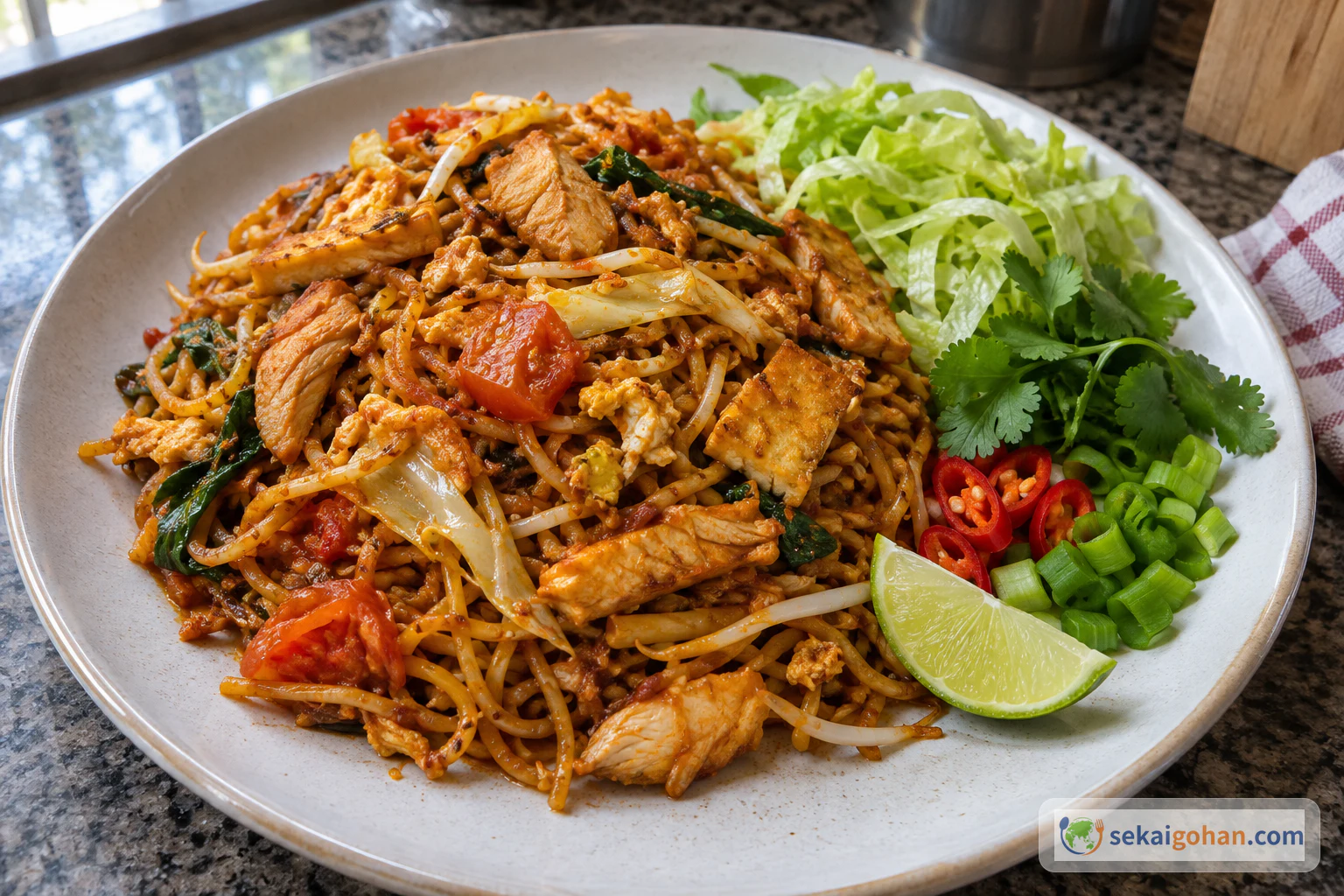
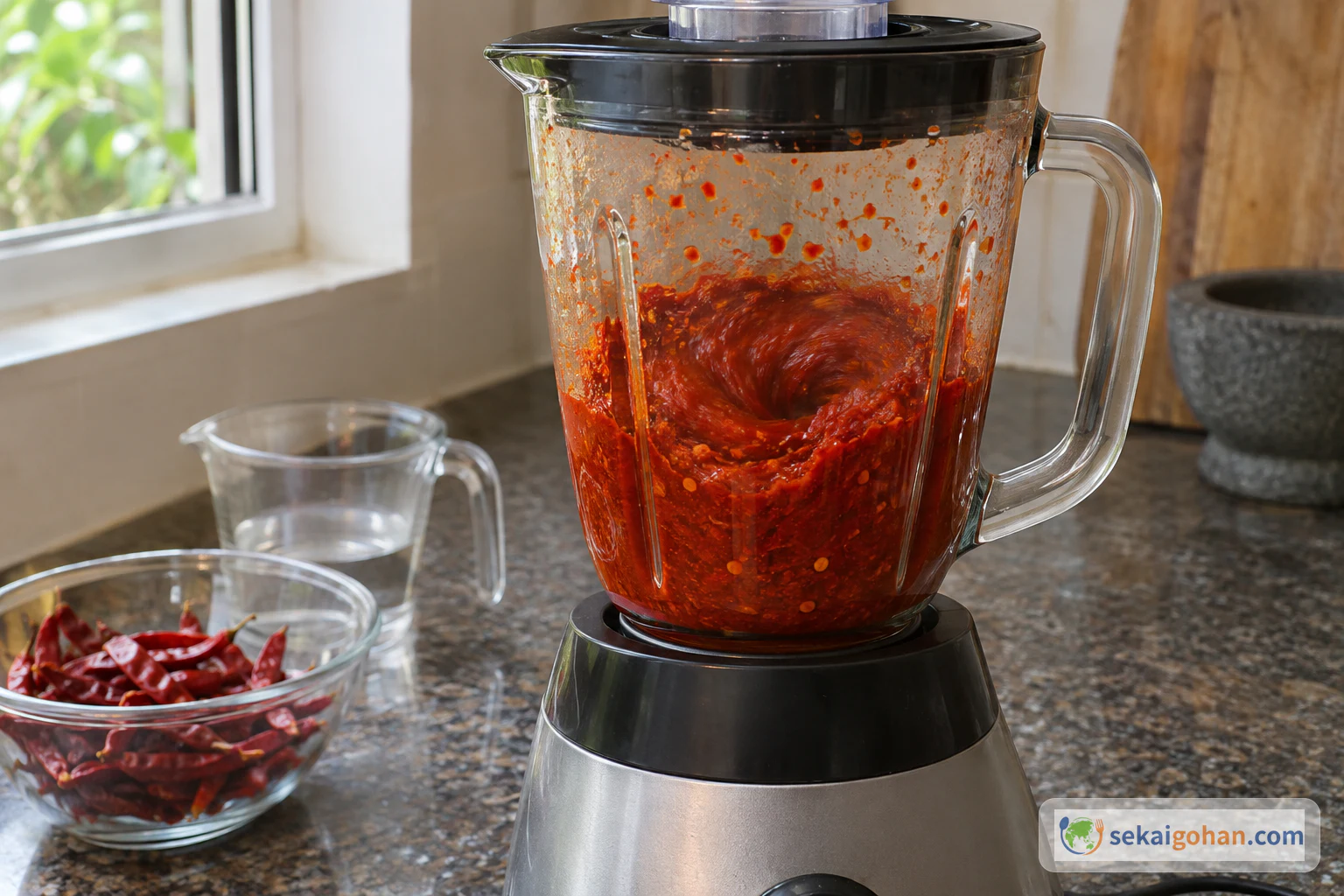
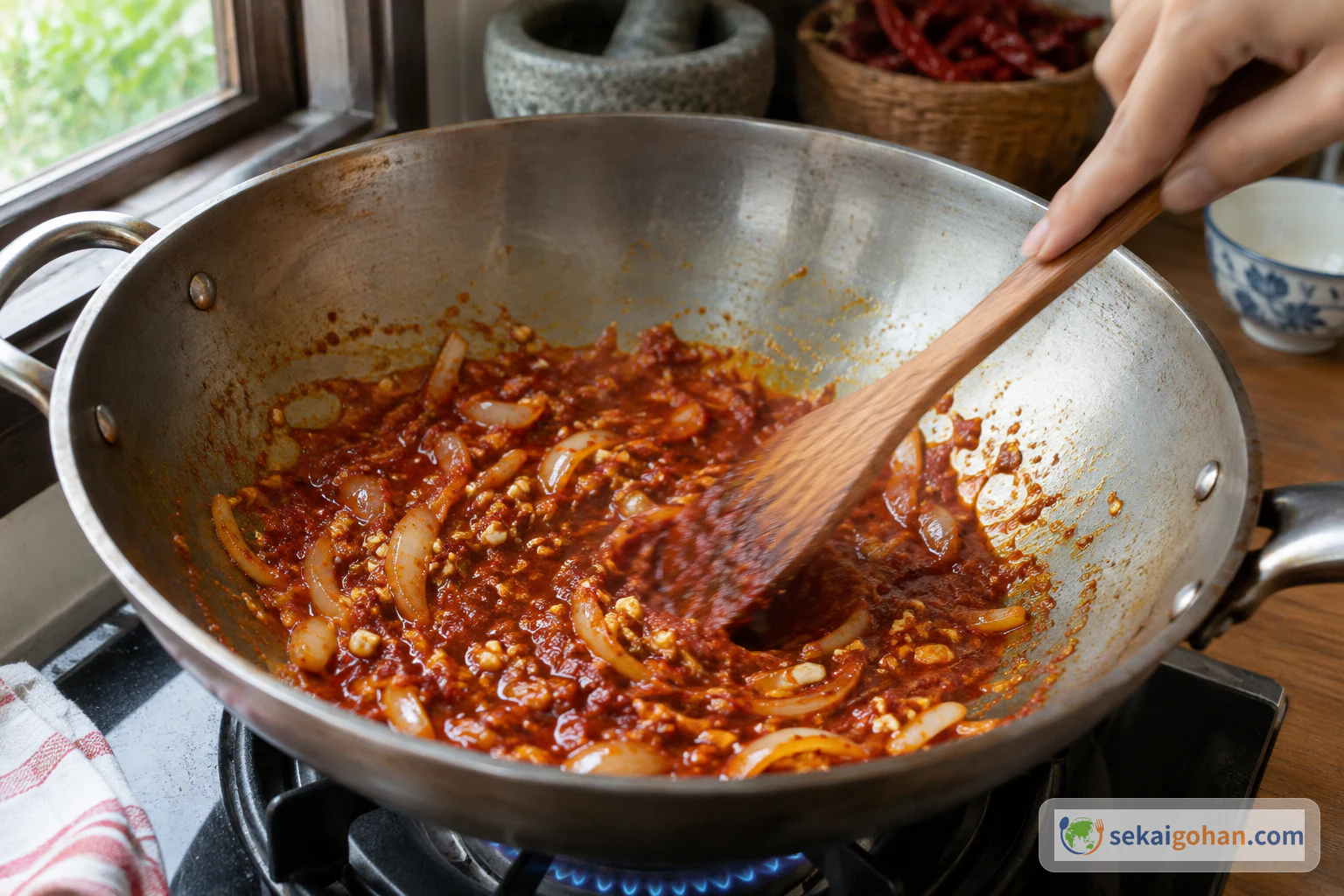
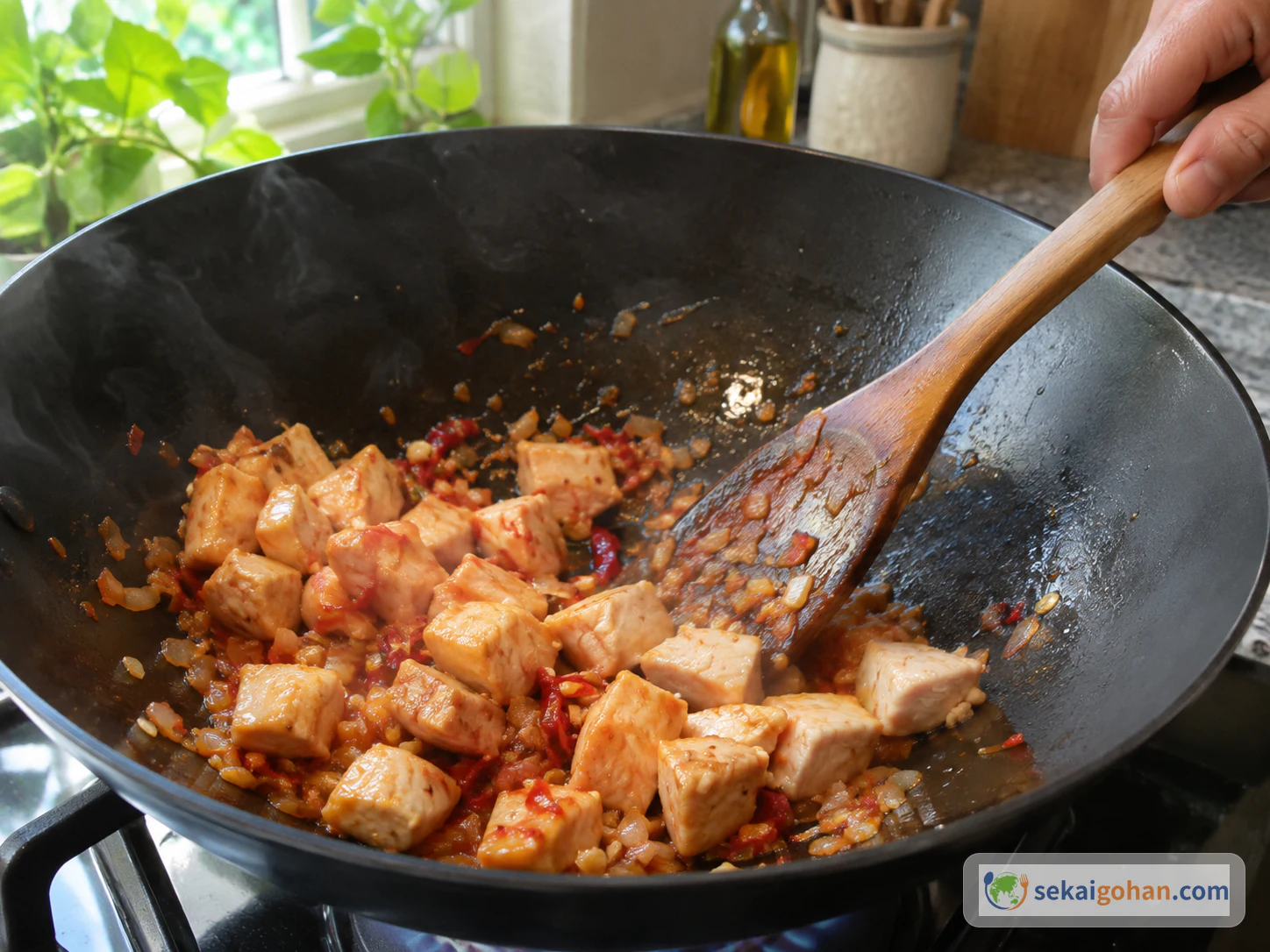
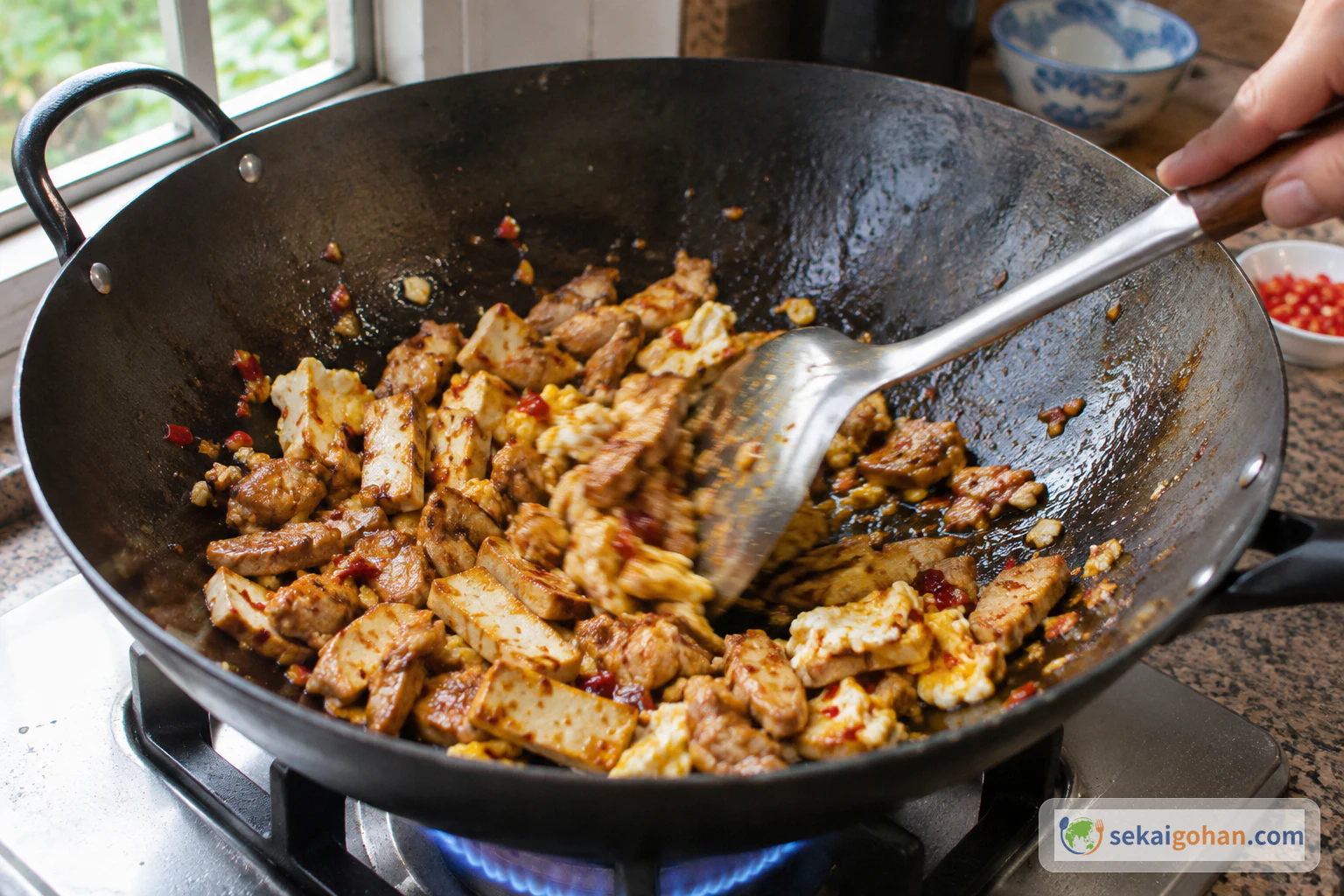
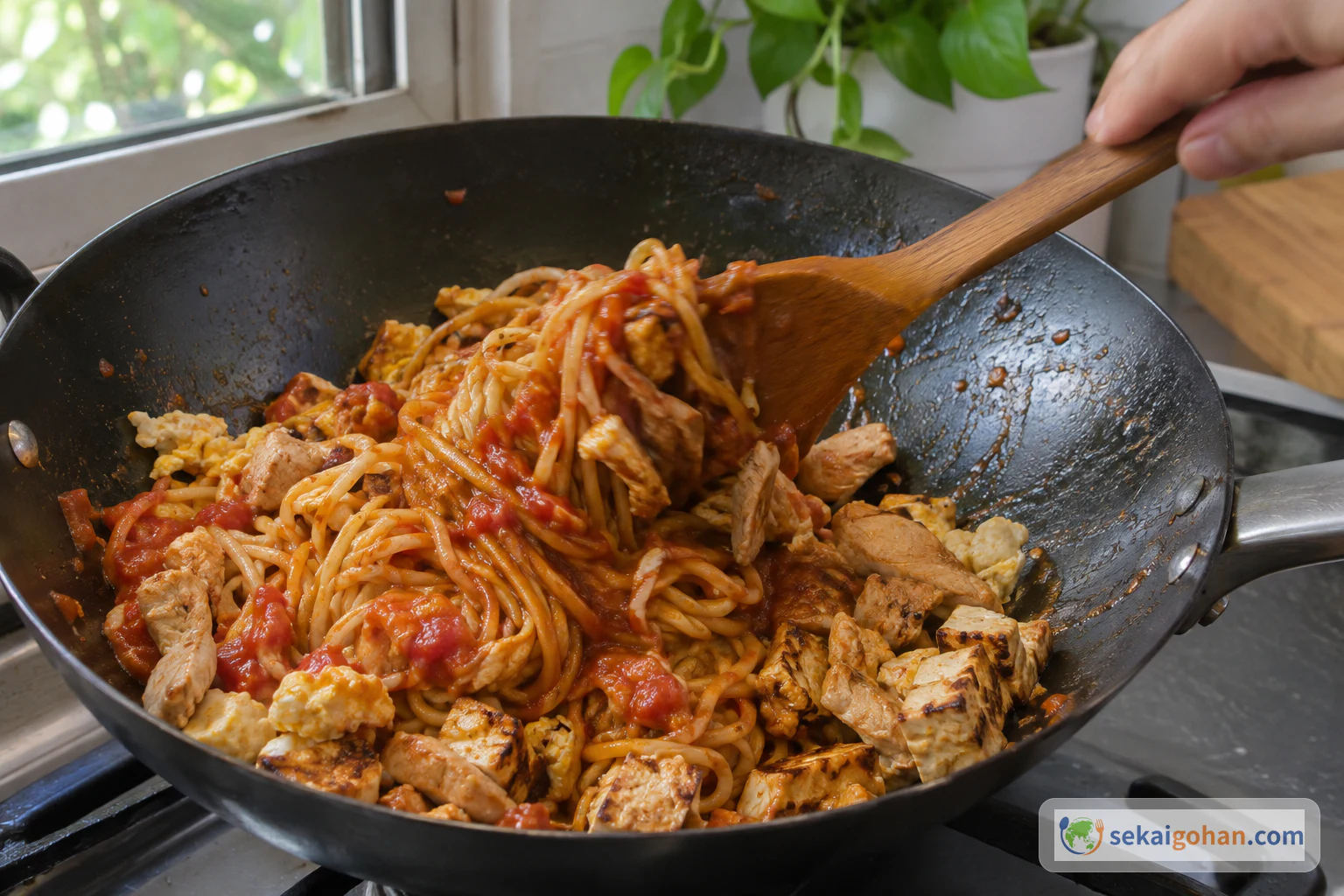
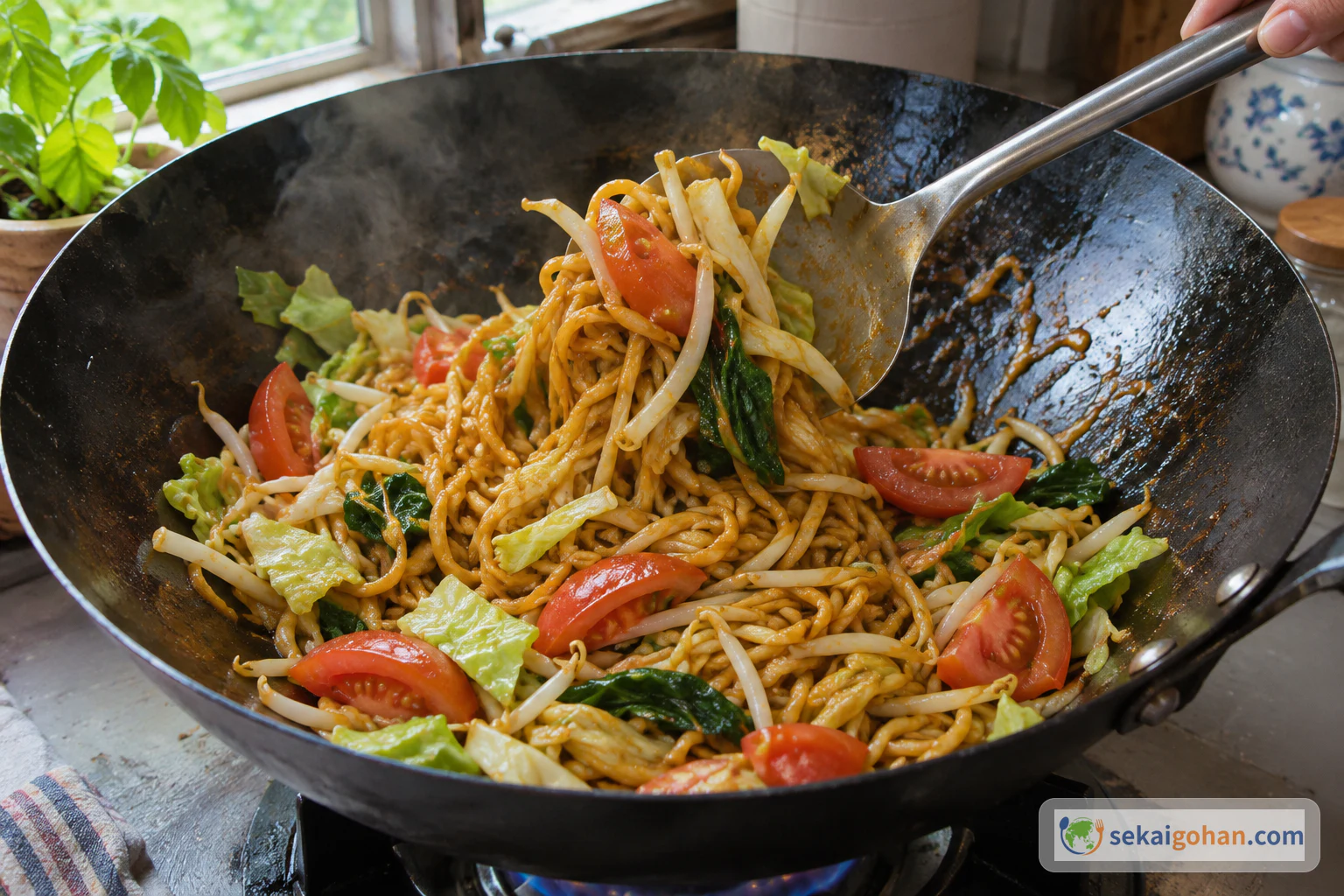
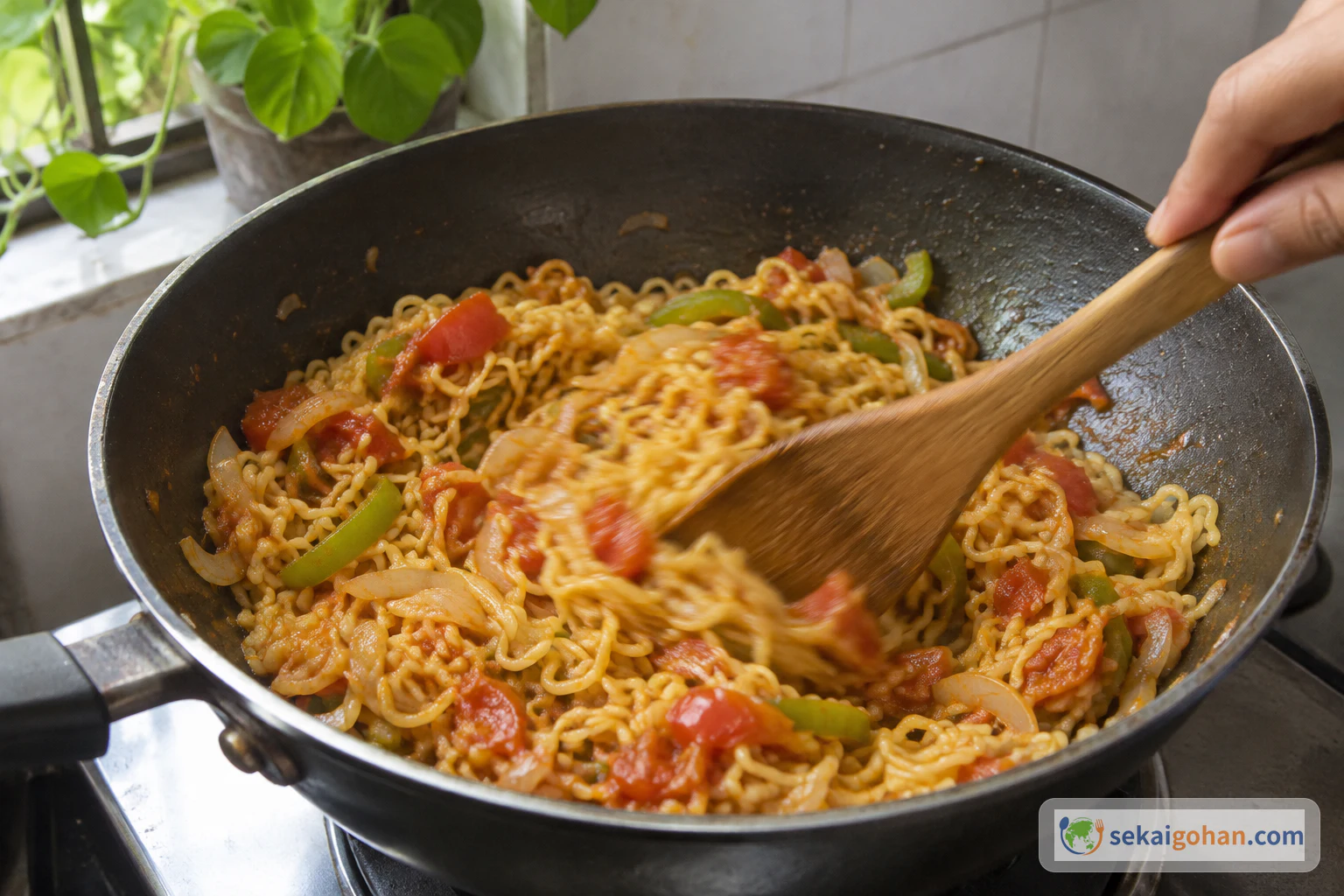
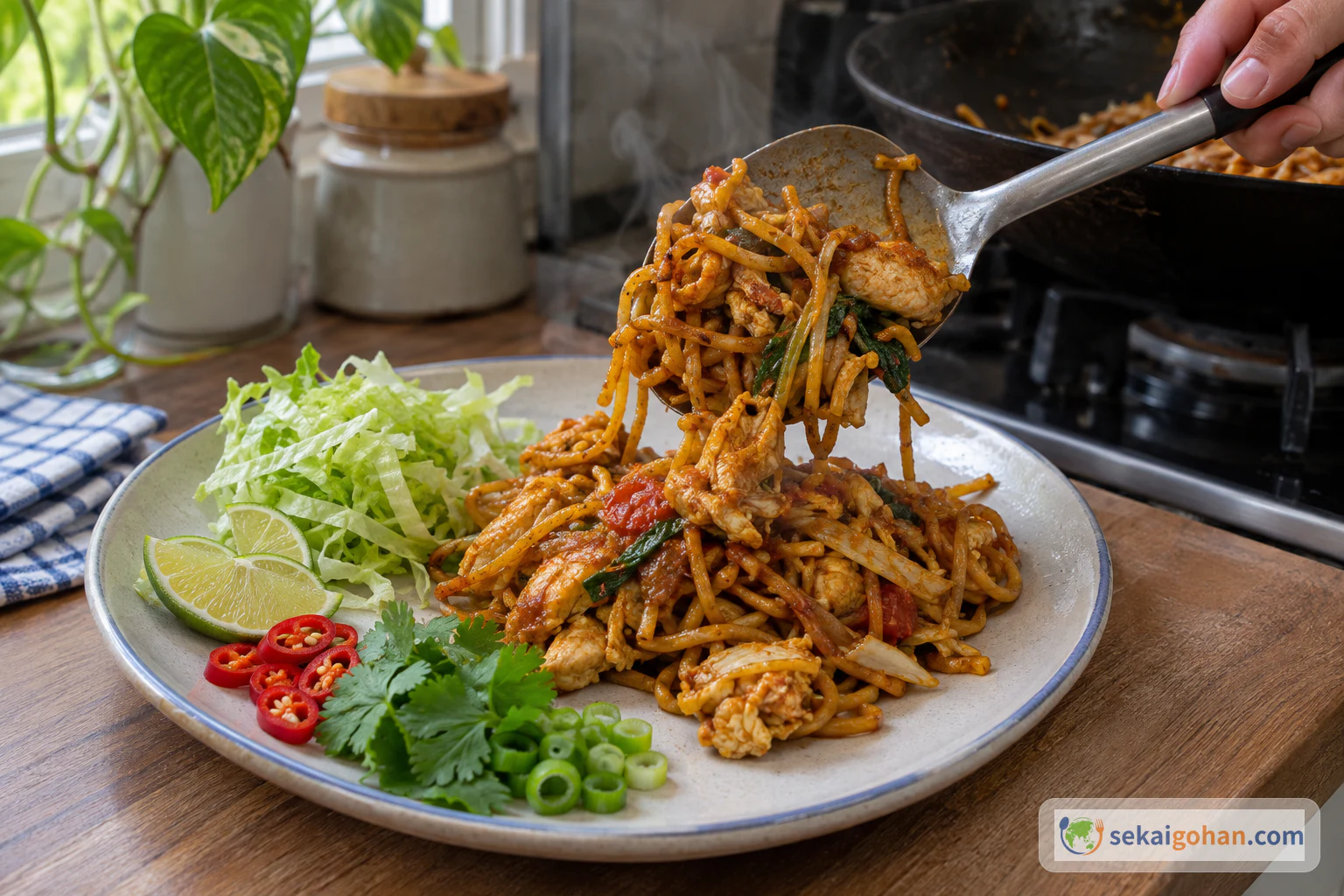
Mee Goreng Mamak is Malaysian fried noodles. This home-kitchen version is built on yellow noodles, chicken breast, grilled beancurd and egg. Mustard greens, cabbage, bean sprouts and tomato go in at the end. A dried-chilli paste with soy sauce and tomato sauce coats everything, and you can turn the heat up or down. It's quieter than many versions you'll meet, and more specific.
Mee Goreng Mamak in Penang and Beyond
Penang has its own story of where mee goreng began. Indian Muslim vendors at Weld Quay cooked fried noodles for harbour workers. Their plate held Chinese yellow noodles, tofu, bean sprouts, cooked squid, flour fritters, fried shallots, ketchup, spices and local lime.
Today mee goreng is cooked very differently from one kitchen to the next, and vendors vary too. A Penang home version is wetter, built on a pasembur-style sauce with potato, firm tofu, squid fritters, squid, sweet soy, tomato ketchup, sprouts, lettuce and lime. Another version uses a separately prepared sauce with a mix of noodles, seafood, fishcake, tofu, potato, tomato and vegetables. A Singapore version is red and sweet-savoury, with prawns, sambal, ketchup, light and dark soy, egg and chye sim. Indonesian mie goreng is a separate dish again. For more dishes from the same country, see the Malaysia page.
Ingredients: Yellow Noodles, Chicken, Grilled Tofu and Vegetables
Choosing Noodles, Tofu, Greens and Sauces
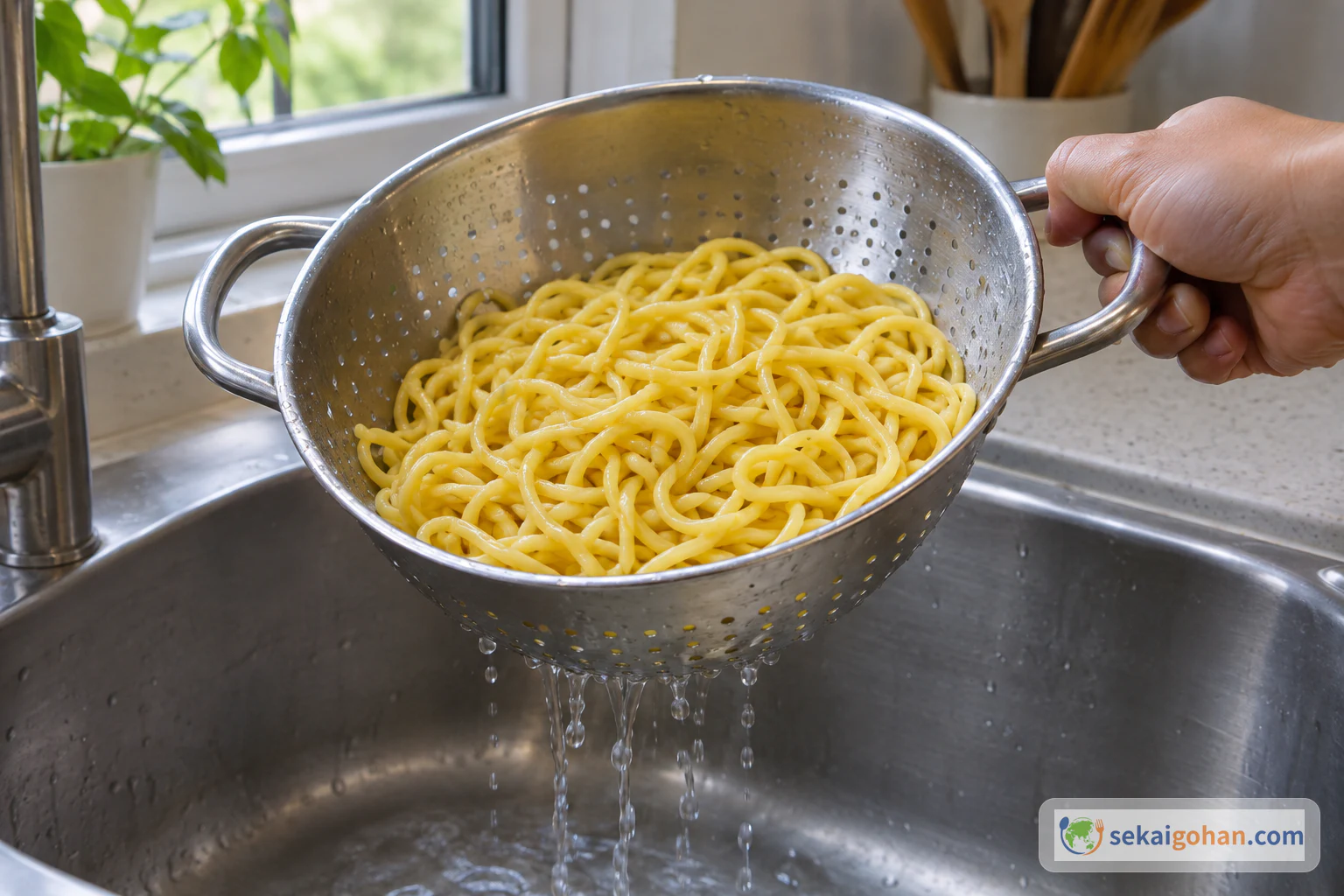
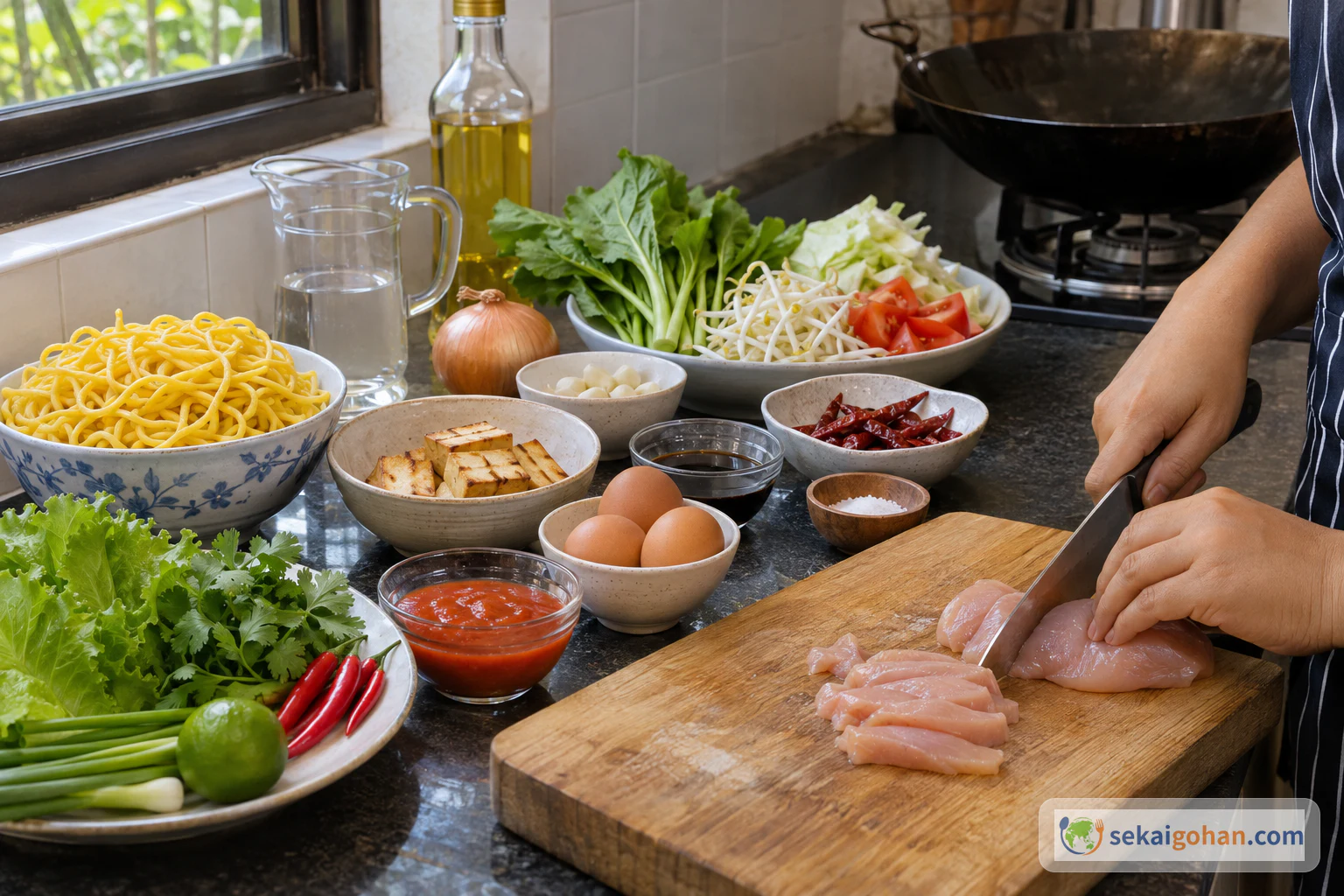
Noodles. Look for yellow wheat noodles sold already cooked and ready to stir-fry, then wash and drain them. Read the pack first. If it tells you to boil, soak or otherwise prepare the noodles, do that before step 2. Uncooked fresh noodles won't soften in the short time they spend in the wok.
Tofu. Taukwa is a firm tofu. Use firm tofu that has been grilled or browned on the outside, and slice it thinly. Grilled tofu products vary in firmness and moisture, so check yours before slicing.
Greens. The recipe uses mustard leaves (sawi hijau). Other leafy greens such as komatsuna can stand in, but the texture and bitterness will change.
Soy sauce and tomato sauce. Use an ordinary soy sauce. Light, dark and sweet soy sauces each taste different, so the result shifts with whichever you use. Products sold as "tomato sauce" range from sweet, ketchup-like bottled sauces to unsweetened cooking sauces. Check the label, and expect the sweetness and saltiness of the noodles to follow your choice.
Allergens. Noodles, tofu, soy sauce, tomato sauce and eggs can contain or be made with wheat, egg and soy. Check every product label for allergens and shared-facility statements.
Equipment
- Blender, for the chilli paste
- Colander
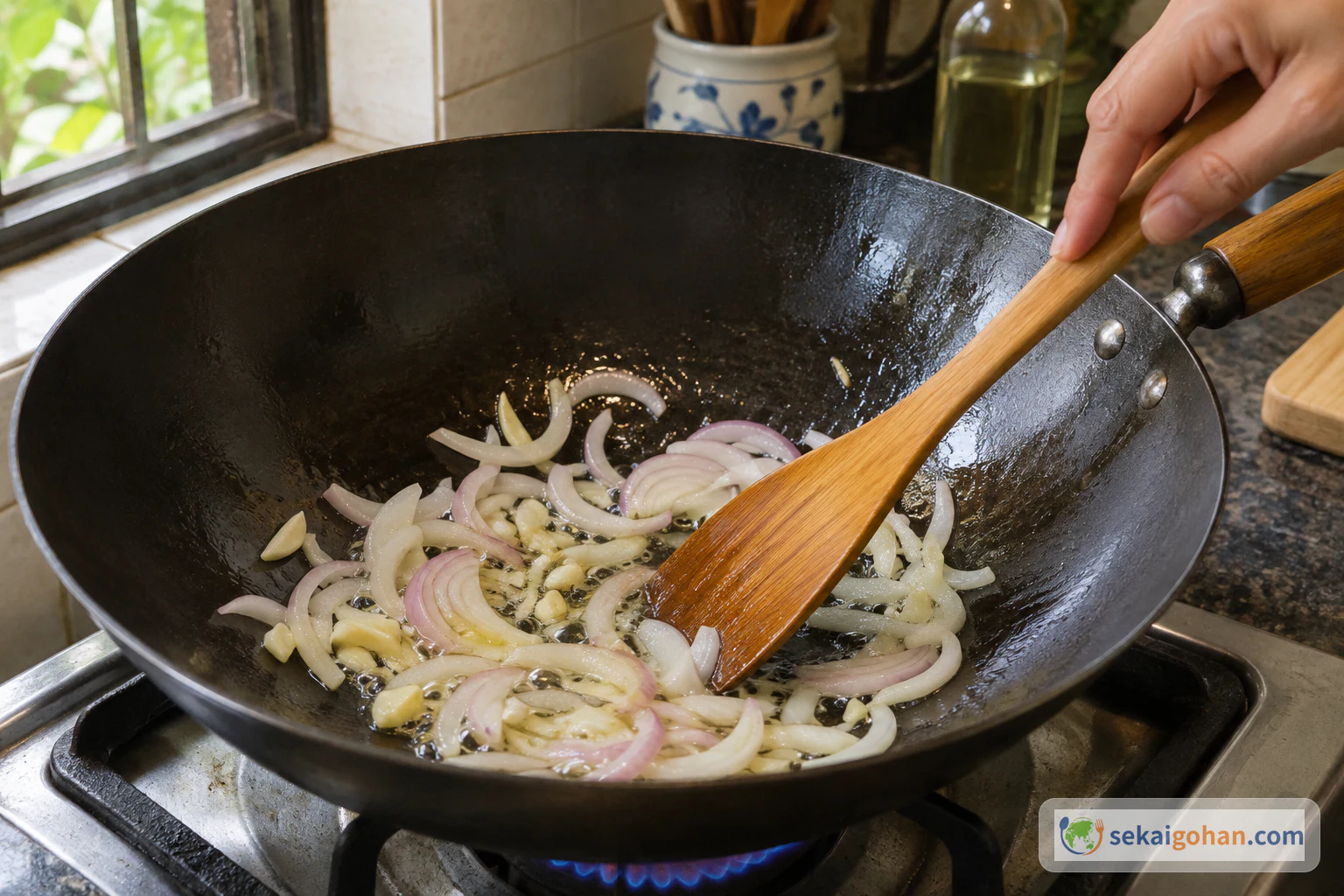
- Wok or wide frying pan
- Food thermometer
- Separate cutting board, knife and utensils for raw chicken
Cook the chicken until a food thermometer reads 165°F (74°C) in the thickest piece; color alone does not tell you it is safe. Cook the eggs until fully set. Keep raw chicken away from the lime, chilli, coriander, spring onion and lettuce served alongside, using separate boards and utensils, and wash your hands and any tools after handling raw chicken or eggs. Don't taste the mixture while the chicken or egg is still raw.
Fixing Common Mee Goreng Problems
Chicken cooked all the way through, egg fully set, and yellow noodles coated in a light tomato–soy–chilli seasoning, with the greens, sprouts and tomato tossed in at the end.
| Problem | Likely cause | What to do |
|---|---|---|
| The chicken hasn't reached 165°F (74°C) | The chicken needs further cooking | Keep cooking and stirring before adding the tofu and eggs, and check again with the thermometer |
| The noodles stay hard or stiff | The noodles were not the ready-to-stir-fry kind | Check the pack; next time, prepare them as the pack directs before washing and draining |
| The egg is still runny | Moved on to the noodles too soon | Keep stirring until the egg is fully set before adding the sauces |
| The noodles taste too salty or too sweet | Soy sauce and tomato sauce products differ widely | Taste before adding all the salt in step 9; next time compare labels when you shop |
| Too spicy | The chilli level is too high for your taste | Next time use fewer chillies (see Variations) |
Variations and Leftovers
Milder chilli. Using fewer dried chillies lowers the heat. Just reduce the chillies and leave the rest of the seasoning as it is.
Leftovers. Refrigerate leftovers within 2 hours of cooking, or within 1 hour if the room is above 90°F (32°C). Cool them in shallow containers and keep your refrigerator at or below 40°F (4°C).
Frequently Asked Questions
Why does the tomato go into the wok instead of on the side?
The ingredient list puts the 12.5 oz (350 g) of tomatoes under the garnishes, but the method adds them with the vegetables. Add all of them in step 8 with the cabbage, greens and sprouts. That way none are left over for the plate and they aren't counted twice.
Why use grams instead of the spoon measures?
For the oil (20 g, shown as 1 tbsp) and the soy sauce (1 oz (30 g), shown as 3 tbsp), the spoon measures don't match the weights. Use the gram weights and the egg count as your working amounts.
Why is chicken cooked to 165°F (74°C)?
That is the safe minimum internal temperature for poultry. Check it with a thermometer before adding the tofu and eggs. Use separate utensils for raw chicken, and wash up after handling raw chicken and eggs.