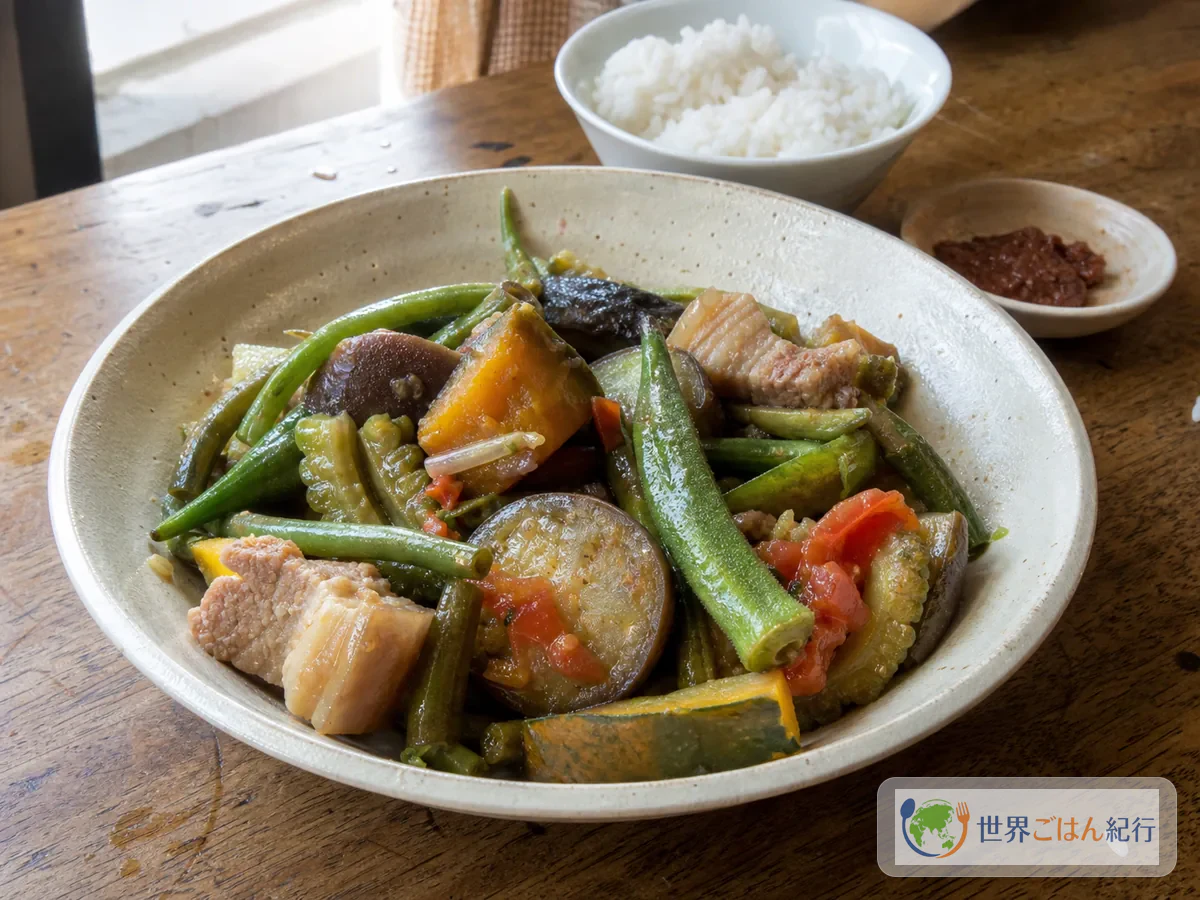
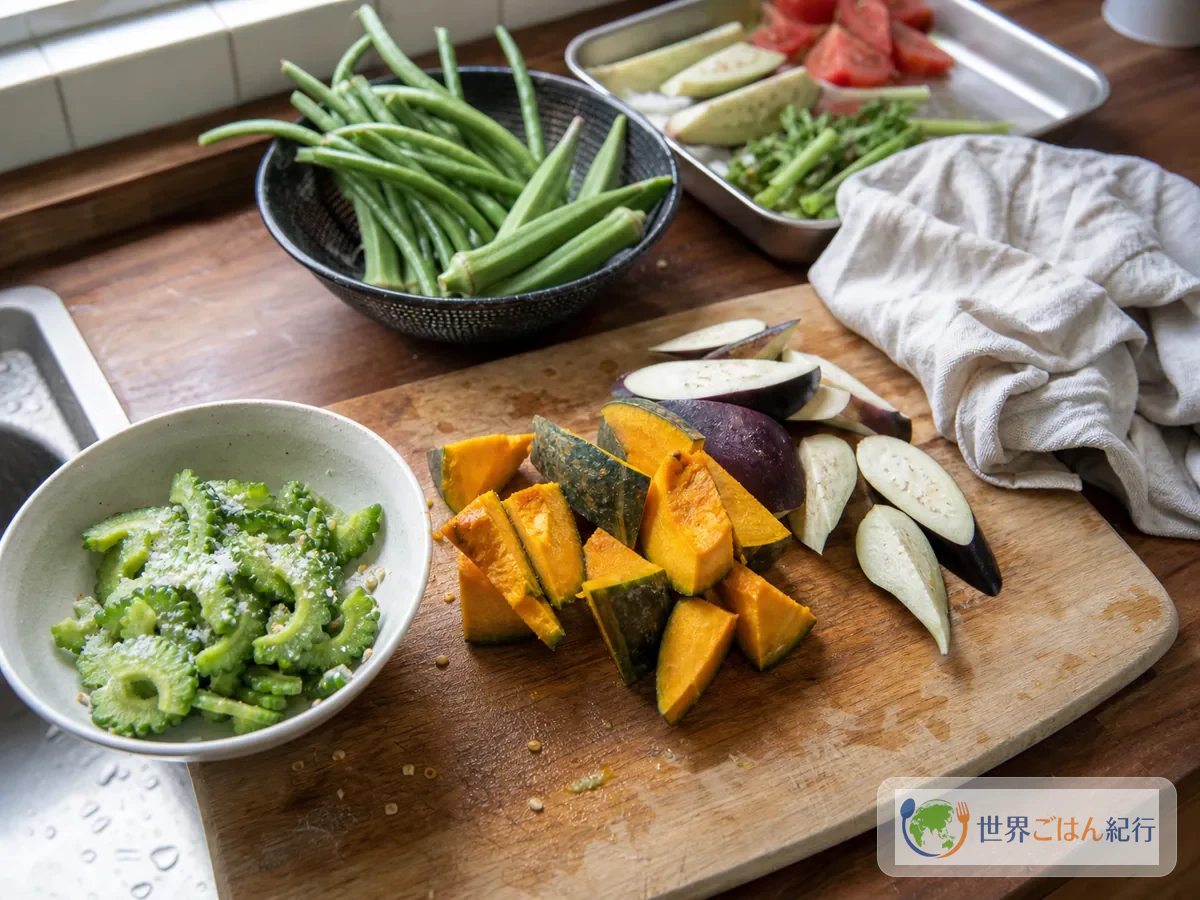
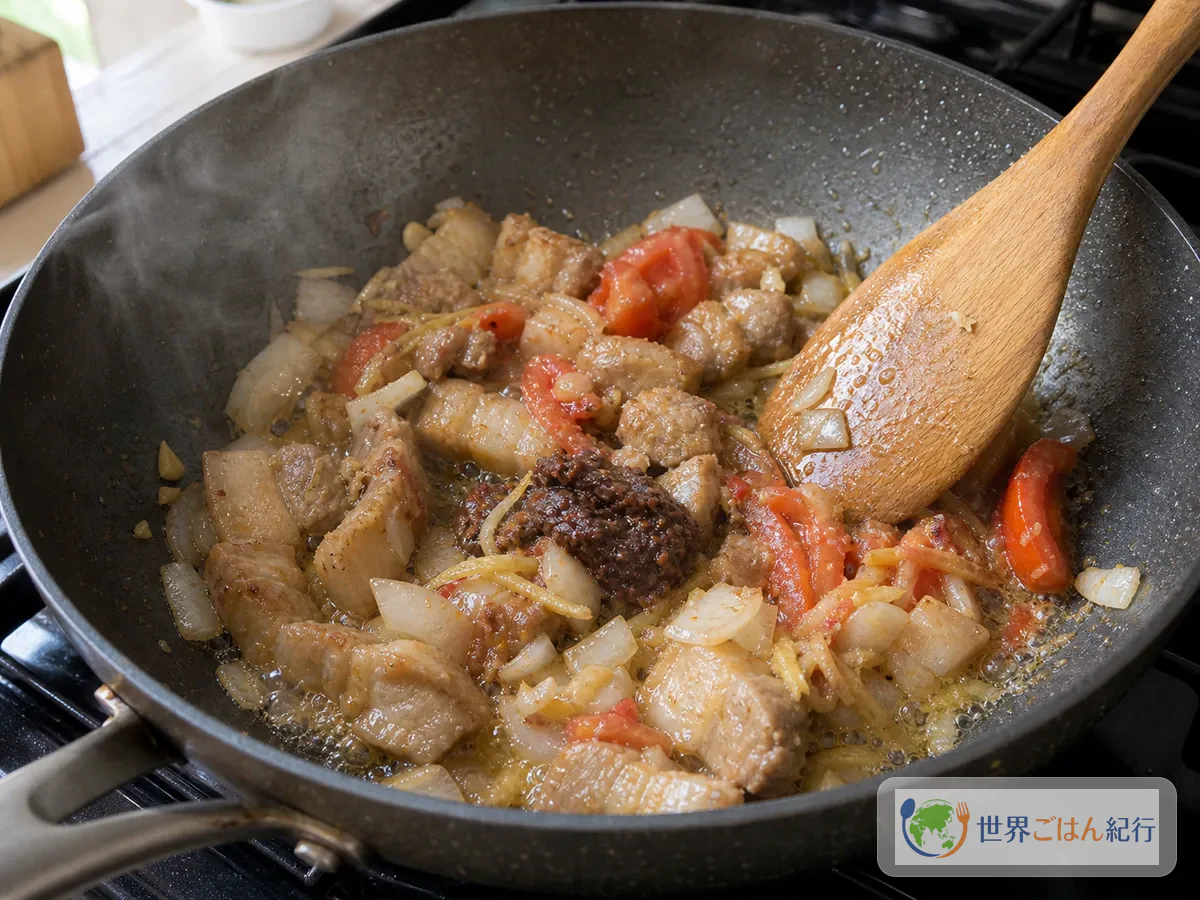
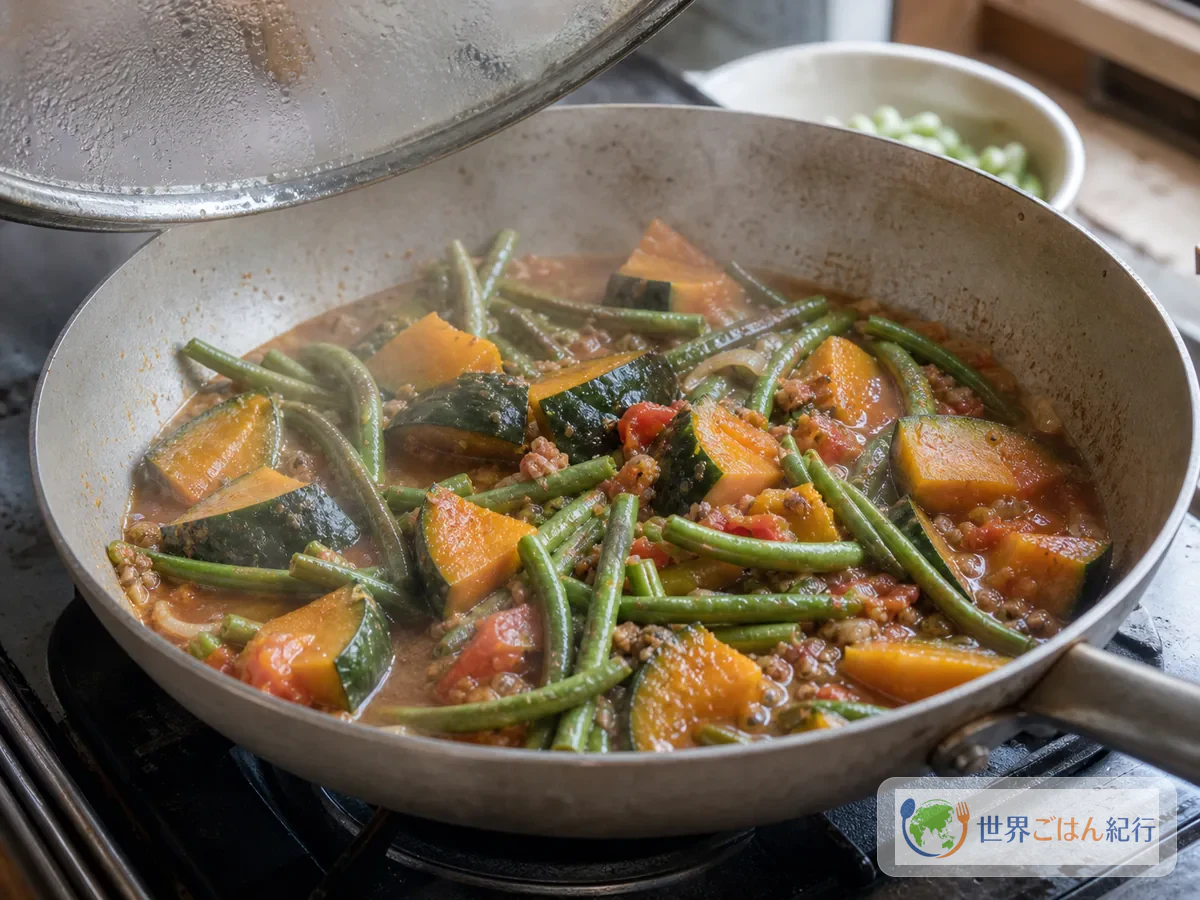
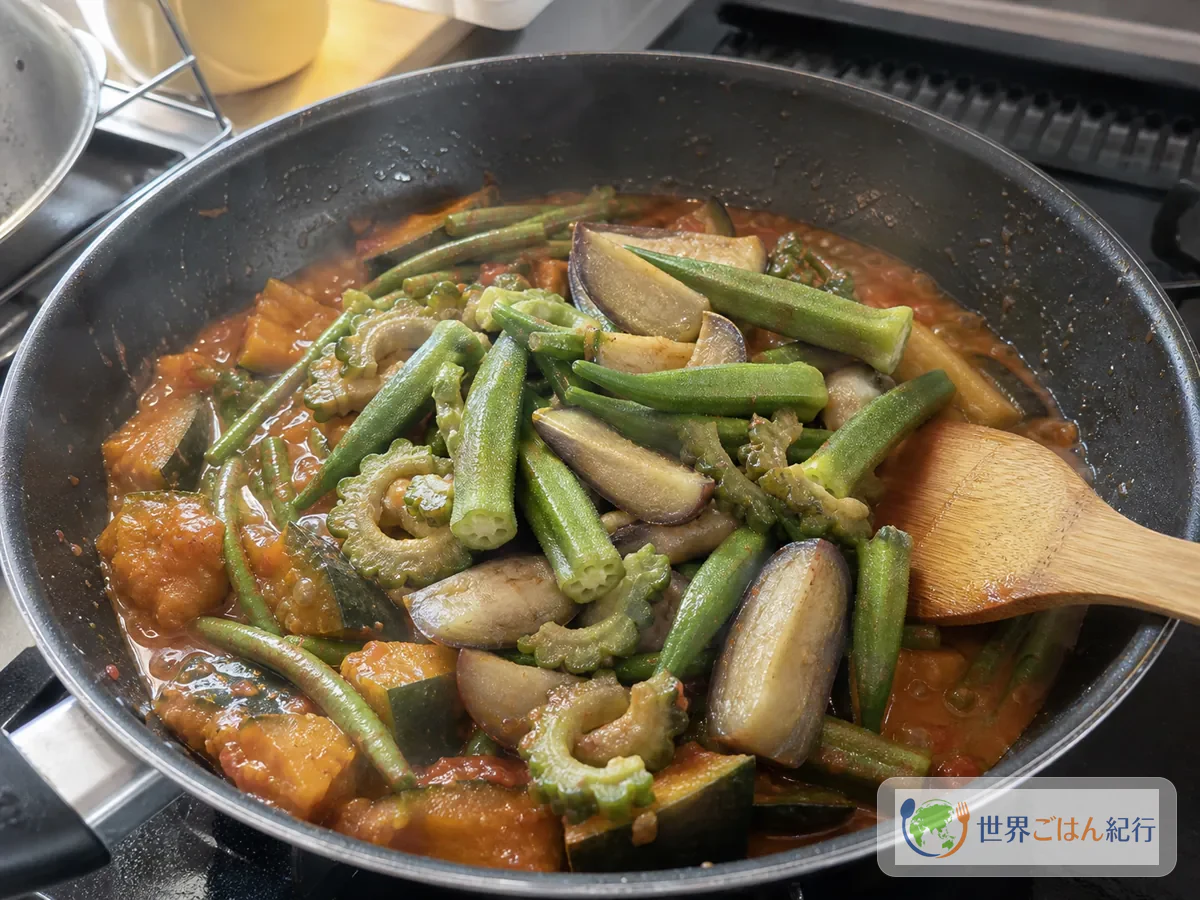
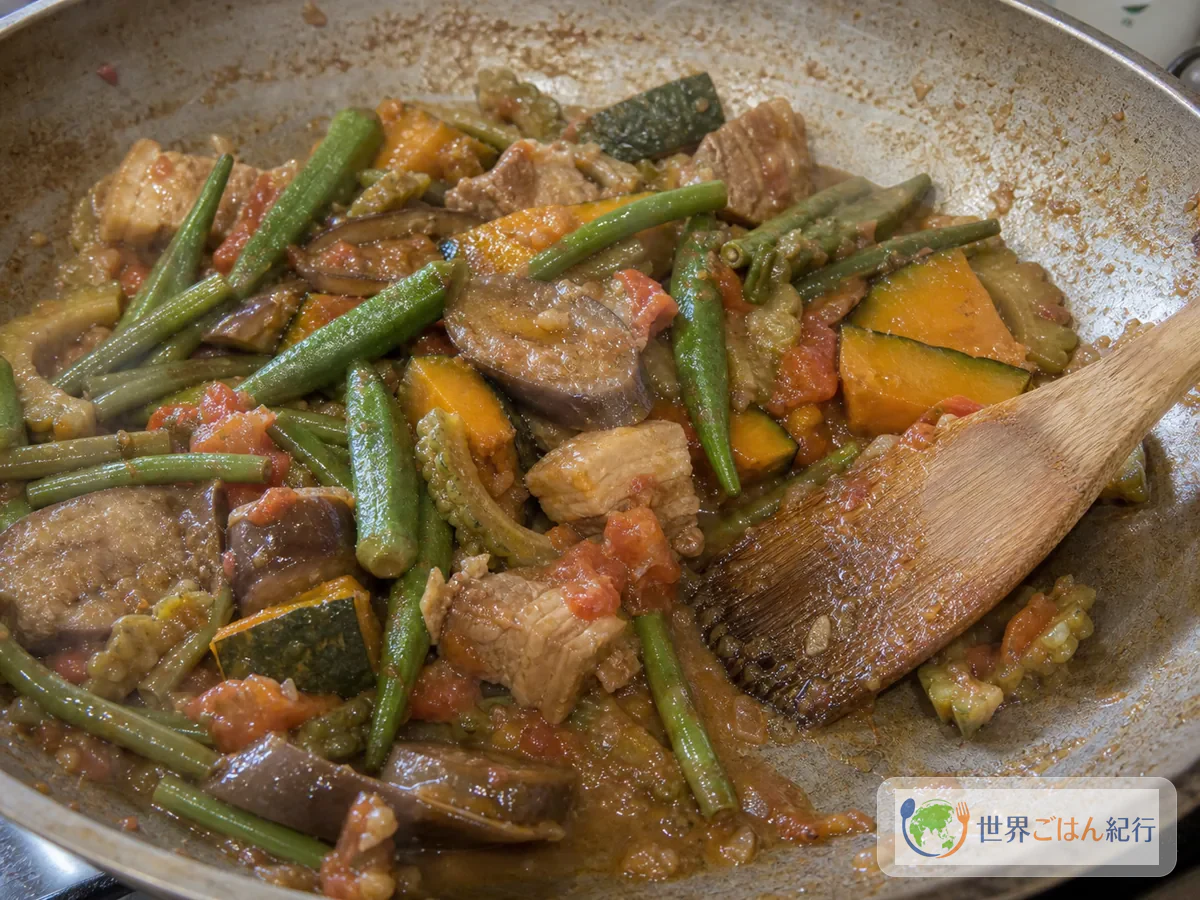
Sauté tomatoes until they collapse, stir in a spoonful of bagoong, and the kitchen suddenly smells like the Philippines: a fermented, briny aroma of the sea, unlike miso and unlike fish sauce. Squash, eggplant, okra, bitter melon and green beans go on top, and the whole thing steams in very little liquid. This is pinakbet, the vegetable stew of the Ilocos region in the north of the Philippines. It's salty and savory, and it's meant to be eaten with plenty of rice.
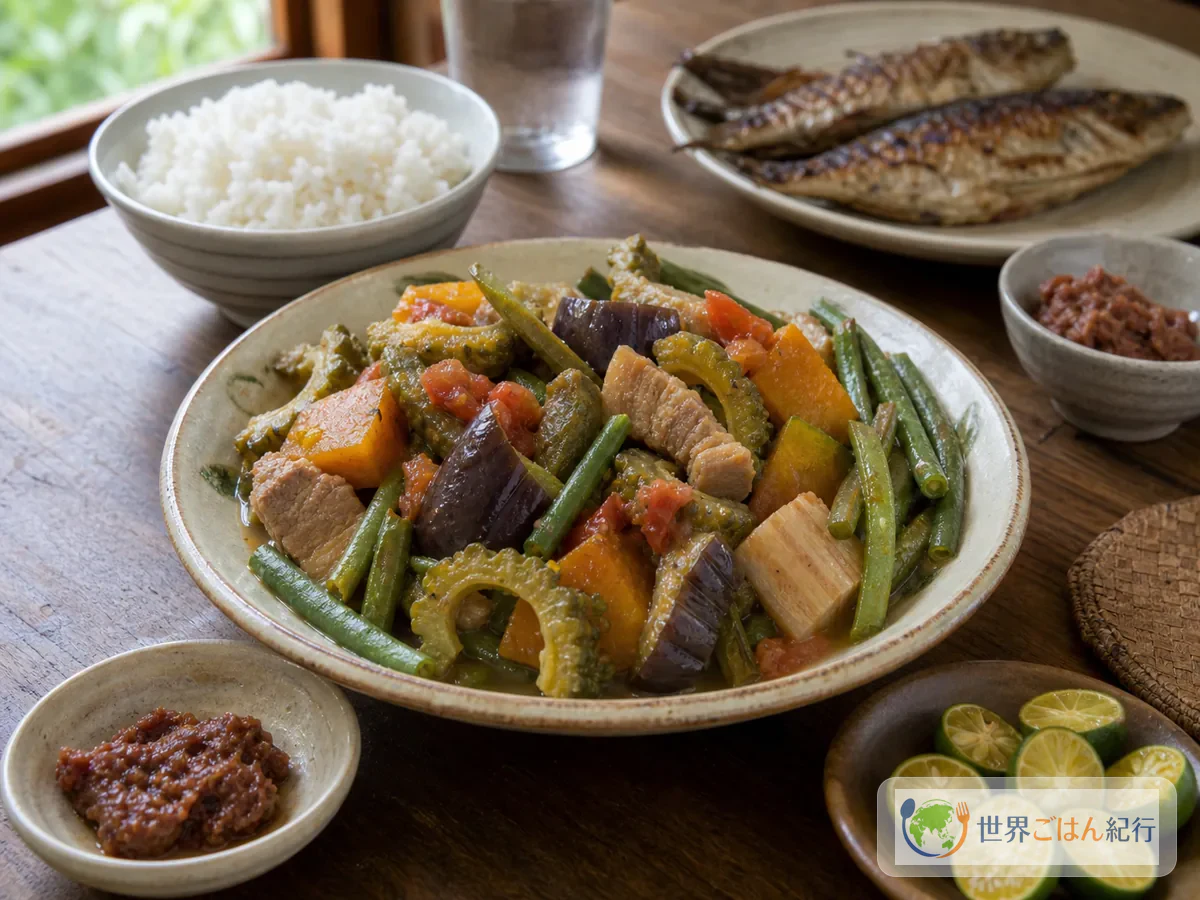
Pinakbet, the Vegetable Stew of Ilocos
The name (you'll also see pakbet) comes from an Ilocano word connected to "shriveling" or "shrinking," and that describes the cooking well. The vegetables steam in a small amount of liquid until their edges just start to slump. Bright, crisp vegetables move you away from what makes pinakbet pinakbet.
It isn't cooked to mush either. The squash should only round off at the corners, the eggplant should turn silky, the okra should stay green, and the bitter melon should keep just a little of its bite. Coat all of that in salty bagoong and you have something that keeps sending you back for more rice. If adobo and sinigang are the way into Filipino sourness and braising, pinakbet is the way into how Filipinos cook vegetables.
The usual vegetables are bitter gourd, squash, eggplant, string beans and okra, but every home in the Philippines adjusts the amount of pork, dried shrimp, fish, bagnet and tomato. The fermented seasoning changes with the region too. In Ilocos it is often made with fermented fish, while around Manila, in the Tagalog region, shrimp bagoong is more common. At home, fish sauce shows up as well. An Ilocos-style table sometimes pairs pinakbet with deep-fried pork such as bagnet.
In English you will see both pinakbet and pakbet. "Pinakbet" is the spelling that is easiest to search for.
Ingredients (serves 4)
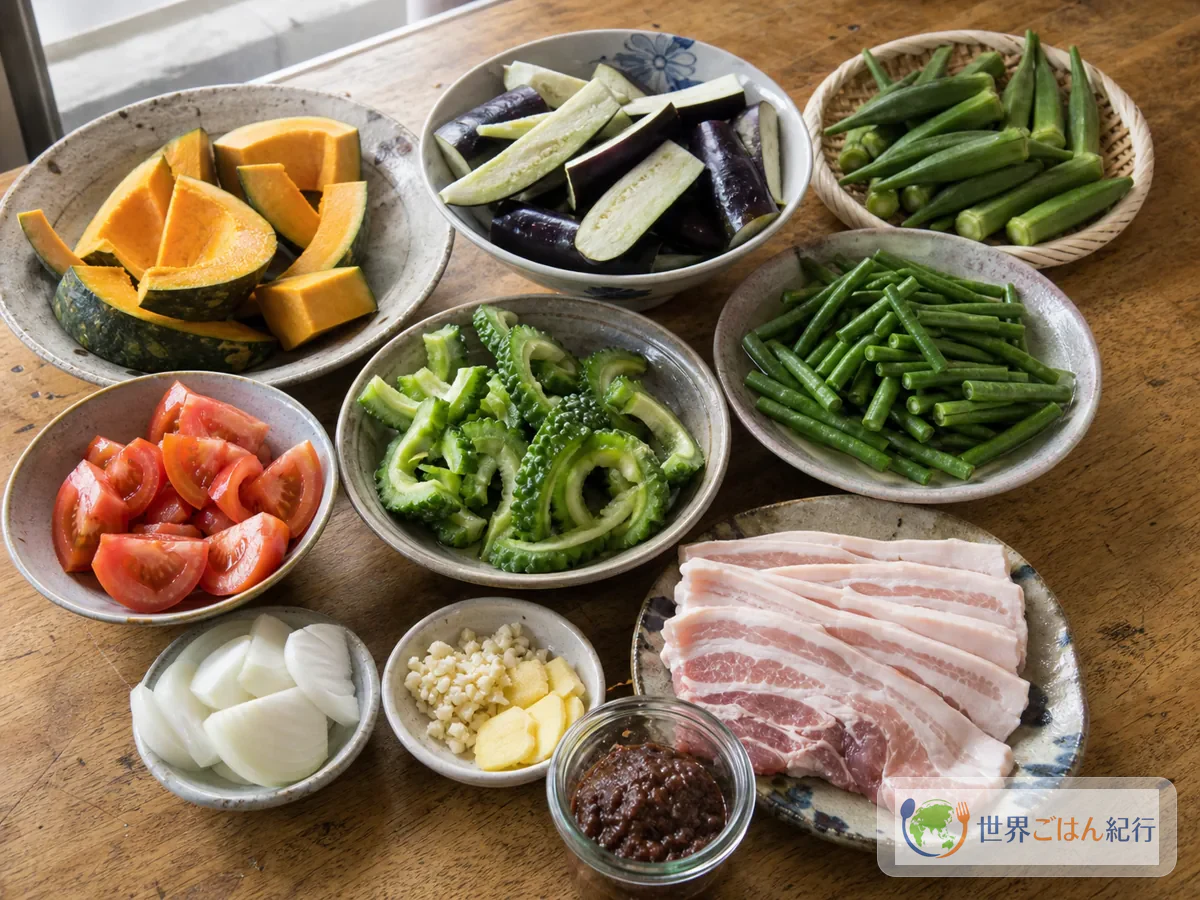
This serves 4 as a main-leaning dish eaten with white rice. The pork belly is there to add a little aroma and fat, so it shouldn't overshadow the vegetables. Adjustments for a meatless version are in the FAQ below.
This dish involves pork, fish and crustaceans. Most bagoong alamang is made from shrimp, so do not use it if anyone has a shellfish allergy. Fish sauce is also made from seafood depending on the product, so check the ingredients before serving.
Choosing Ingredients and Substitutes for Pinakbet
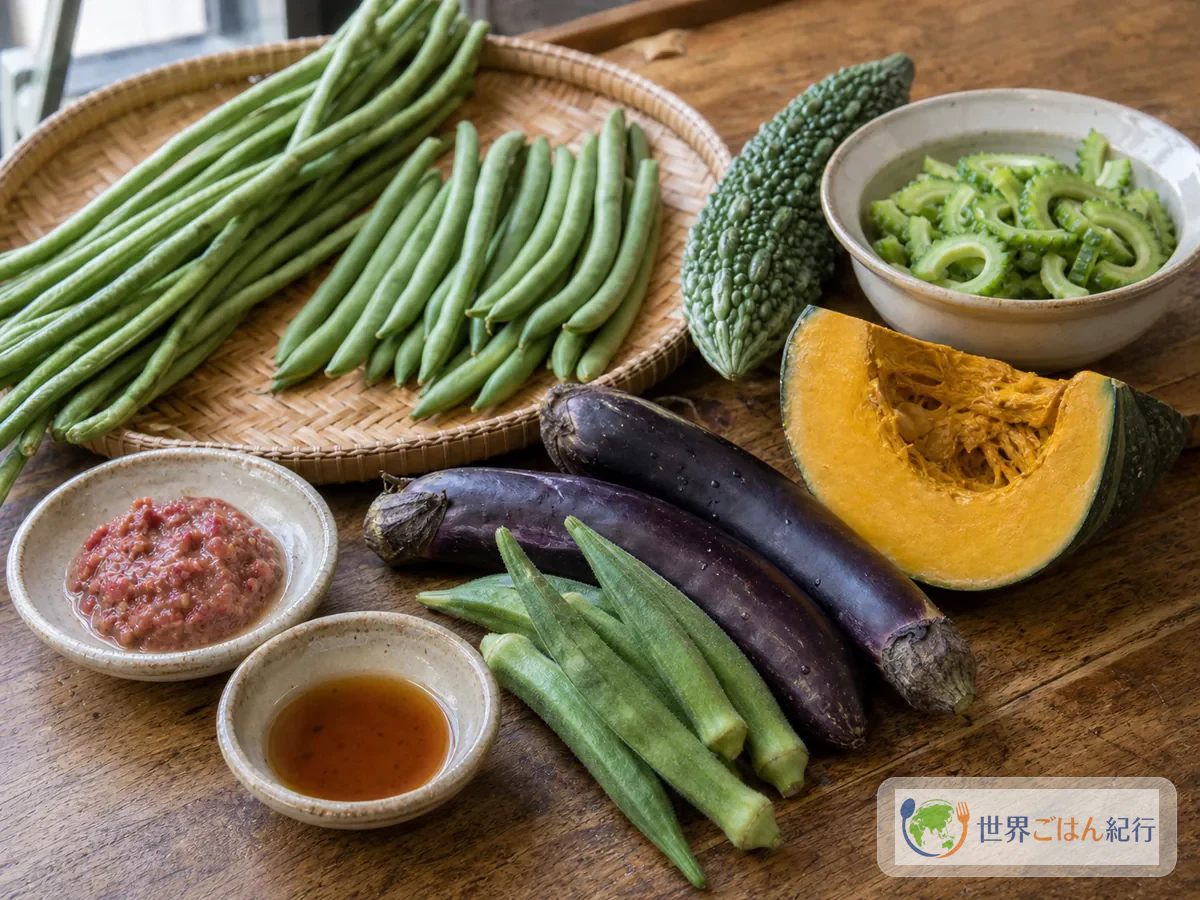
The fermented seasoning makes more difference than the vegetables. Squash, eggplant, okra, green beans and bitter melon are easy to find at a regular supermarket or an Asian grocery, and if long sitaw beans, calabaza and ampalaya are hard to track down, regular green beans, kabocha or another firm winter squash, and bitter melon work fine. The one thing worth seeking out is bagoong, from a Filipino or Asian grocery or online. Miso or soy sauce alone won't give you that fermented aroma of the sea.
| Shopping priority | Ingredient worth seeking out | Role in the dish | What a regular store can cover |
|---|---|---|---|
| Top | Bagoong alamang | Builds the saltiness, savoriness and fermented aroma | Miso alone drifts toward a different dish |
| High | Patis, fish sauce | Final seasoning | Nam pla is an easy substitute |
| Medium | Dried shrimp powder | Adds a little sea savoriness on days without meat or fish | Dried shiitake powder takes the aroma in another direction |
| Low | Long beans | Long beans closer to the original | Regular green beans are fine |
| Low | Bagnet | Deep-fried pork, very Ilocano | Pork belly is fine the first time |
For an Ilocos-style version, fish-based bagoong isda is the usual choice, but bagoong alamang, the shrimp paste, is easier to find, so this recipe uses it. It's also the condiment served on the side with kare-kare, so one jar opens up a lot of Filipino cooking. It is strongly flavored: keep it to 1 1/2 tbsp at first and let people add more at the table.
Patis is the fish sauce used to set the final saltiness. Nam pla stands in well, but if you keep cooking Filipino food, a small bottle of patis comes in handy for sinigang and arroz caldo.
On meatless days, or when you want to go easy on the bagoong, just 1 tsp of dried shrimp powder brings out the sweetness of the vegetables. If you are avoiding crustaceans, skip it and use 1 tsp dried shiitake powder instead.
Method
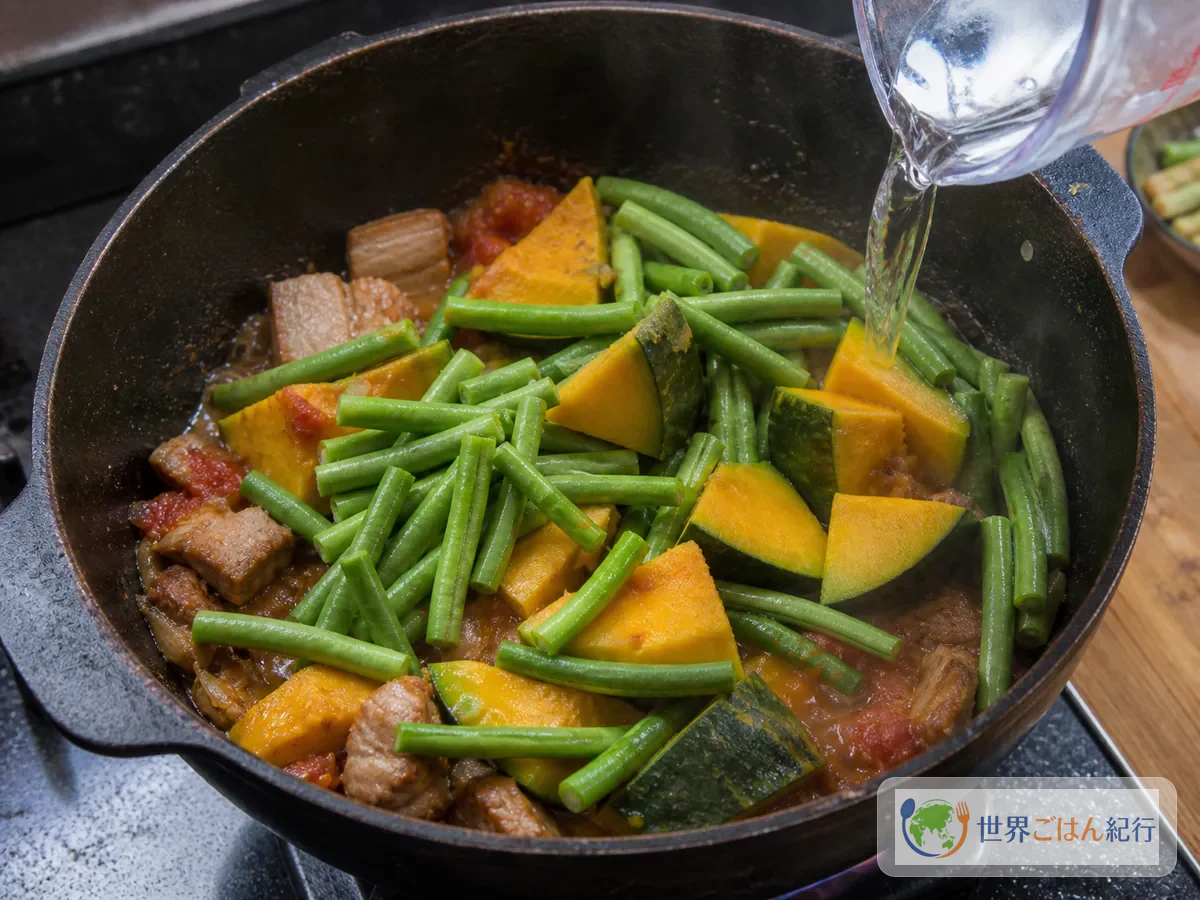
Pinakbet is not a stir-fry; it is layered and steamed. The slow-cooking squash and green beans go in first, and the fragile eggplant, okra and bitter melon are saved for the second half. Stir the pot over and over and the squash breaks down until everything turns thick and muddy.
Put the slow-cooking vegetables like squash and green beans on the bottom and layer the eggplant, okra and bitter melon on top. The less you stir, the better the vegetables keep their shape and color.
Common Pinakbet Mistakes and Fixes
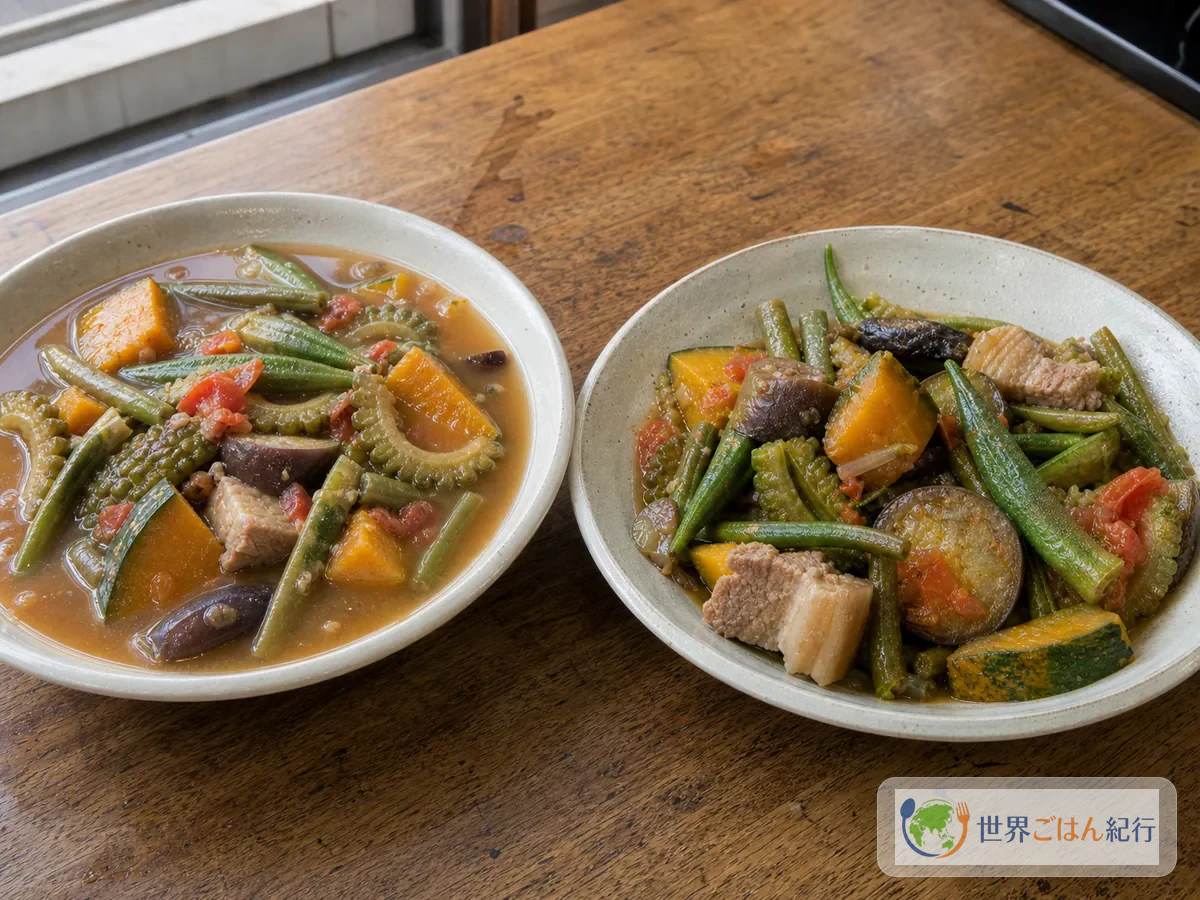
Most pinakbet failures come down to water and stirring. Add a lot of water out of fear of scorching and it turns into a soup, with the bagoong aroma watered down. Try to drive off the liquid over high heat instead, and the bottom burns while the squash stays hard. The sauce should cling to the vegetables, not pool.
| Problem | Cause | Fix |
|---|---|---|
| Watery | Too much water, lid on too long | Uncover and reduce over low heat for 5 more minutes |
| Squash falls apart | Too much stirring, pieces cut too small | Cut 1 inches (2.5 cm) pieces and turn them less often |
| Bitter melon too bitter | Cut thick, not salted | 0.25 inch (5 mm) slices, 1/2 tsp salt, blot dry after 10 minutes |
| Too salty | Bagoong added without allowing for differences in saltiness | Add 3.5 tbsp (50 ml) water and 1/2 tomato and simmer over low heat for 5 minutes |
| Vegetables taste raw and grassy | Steaming time too short | Add 3 minutes over medium-low, keeping the heat where droplets fall from the lid |
| Greasy | Fatty pork belly | In step 2, blot off about 2 tsp fat before adding the vegetables |
Salting the bitter melon leaves some bitterness behind, which keeps the dish's character while making it easier to serve to kids or anyone new to bitter melon. Bagoong, meanwhile, differs a lot from product to product: the same 1 tbsp can taste sweet, very salty or strongly shrimpy. With a new jar, add just 1 tbsp in step 2, then add 1 tsp at a time after the rest in step 6.
Serving and Storing Pinakbet
What to serve with pinakbet
A little pork belly in the pot, or grilled fish on the side, is enough to make a complete meal. If you're building a Filipino menu, pinakbet sits more comfortably next to chicken inasal or tortang talong than next to sour sinigang on the same day. Pinakbet brings vegetables and fermented saltiness, inasal brings tang and charcoal smoke, and tortang talong brings the softness of egg and eggplant.
| Menu | Good for | How to pair |
|---|---|---|
| Pinakbet, rice, grilled fish | Weeknight dinner | Go easy on the bagoong and adjust for the saltiness of the fish |
| Pinakbet, chicken inasal, rice | Exploring more Filipino food | Keep the pinakbet on the dry side, separate from the chicken's tang |
| Pinakbet, tortang talong, rice | A vegetable-heavy day | Eggplant appears in both, so cut the eggplant in the pinakbet to 1 |
| Pinakbet, kare-kare, rice | Using up the bagoong | For both, let people add salt at the table |
At the table, eat it a bite at a time rather than mixing everything on the plate. Take a little rice, top it with squash or eggplant, and add bagoong from the small dish in amounts no bigger than a few grains of rice. It's very salty, and going slowly keeps it from getting tiresome.
Storage and reheating
Pinakbet holds a lot of moisture from the vegetables and contains bagoong and pork, so keep it in the refrigerator until the next day at most. Cool it within 30 minutes, spread it in a shallow container and refrigerate. Packing it into a deep container and pressing down breaks the squash.
To reheat on the stove, add 1 tbsp water per serving and warm over low heat for 5 minutes. In the microwave, spread it on a heatproof plate, heat at 600 W for 1 minute 30 seconds, turn it over and heat for another 40 seconds. Skip the freezer: the eggplant and okra turn watery and the bitterness of the bitter melon stands out.
FAQ
Can I make it without bagoong?
You can, but it won't taste the same. Mixing 2 tsp fish sauce, 1 tsp miso and 1 tsp soy sauce and adding it in step 2 gives you saltiness and savoriness, though the fermented shrimp or fish aroma will be weaker. If you want it to taste like pinakbet, a small jar of bagoong is worth getting.
Someone in my family doesn't like bitter melon
Salt it as described in the troubleshooting table. If it's still too strong, cut the bitter melon to 2.75 oz (80 g) and increase the squash by 1.75 oz (50 g). Leaving it out entirely makes the dish lose its edge and taste too sweet, so keep a little the first time.
How do I make it without meat?
Leave out the pork belly and increase the oil to 1 tbsp. In step 2, sauté the onion, garlic, ginger, tomato and bagoong over medium heat for 5 minutes, then add 1 tsp dried shiitake powder or 3.5 tbsp (50 ml) kombu dashi. If you're avoiding seafood, skip the bagoong too; you'll be making a different vegetable stew, seasoned with miso and soy sauce.
My squash falls apart
Smaller than 1 inches (2.5 cm), the corners break down in step 4 before the center is cooked. Once it's in the pot, turn it from the bottom only twice in step 3 and once in step 6. When you want to coat everything in the juices, gently shaking the pot keeps the shape better.
What should I change to make it kid-friendly?
Cut the bagoong to 1 tbsp and the bitter melon to 2.75 oz (80 g). There's no chili in this recipe, so adults who want heat can add lime or chili at the table. If it needs more salt, add a little bagoong to the adults' plates rather than to the whole pot.