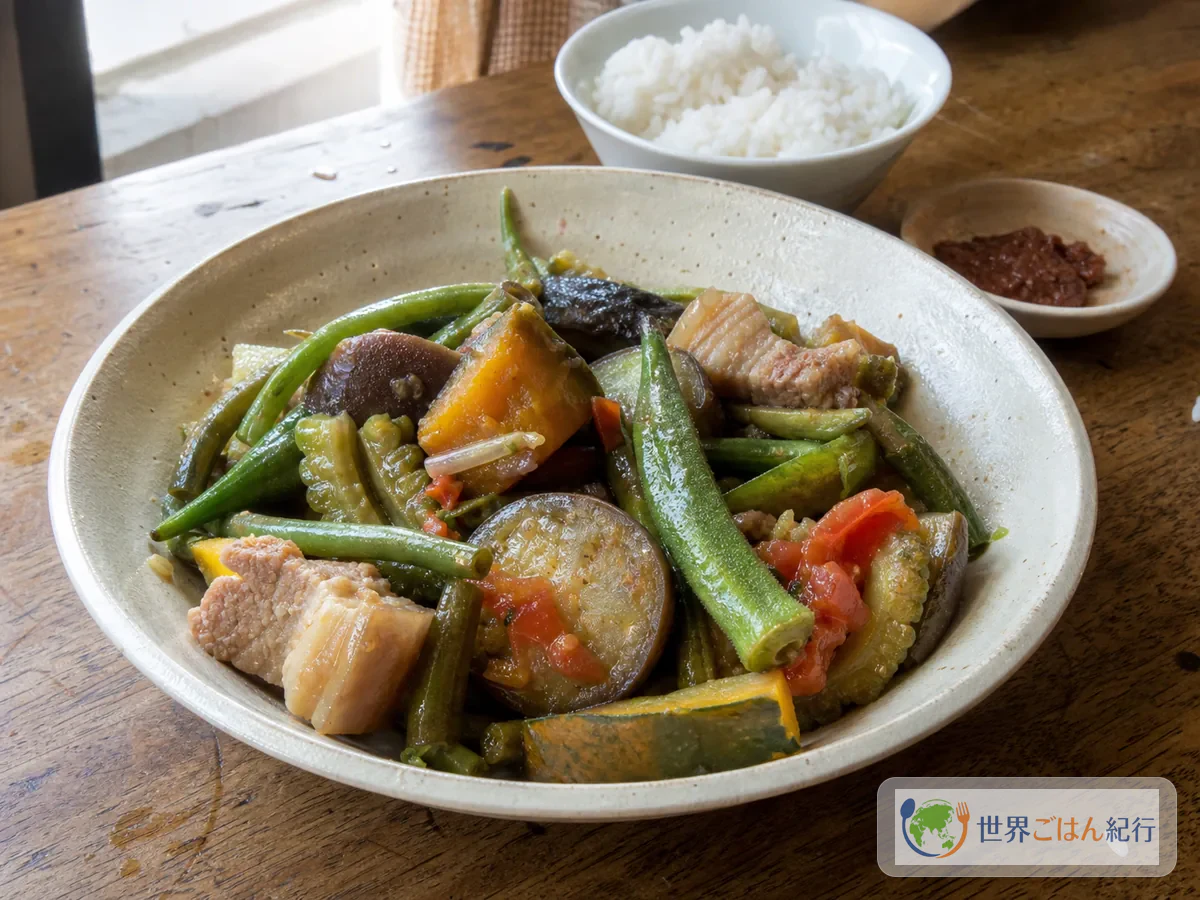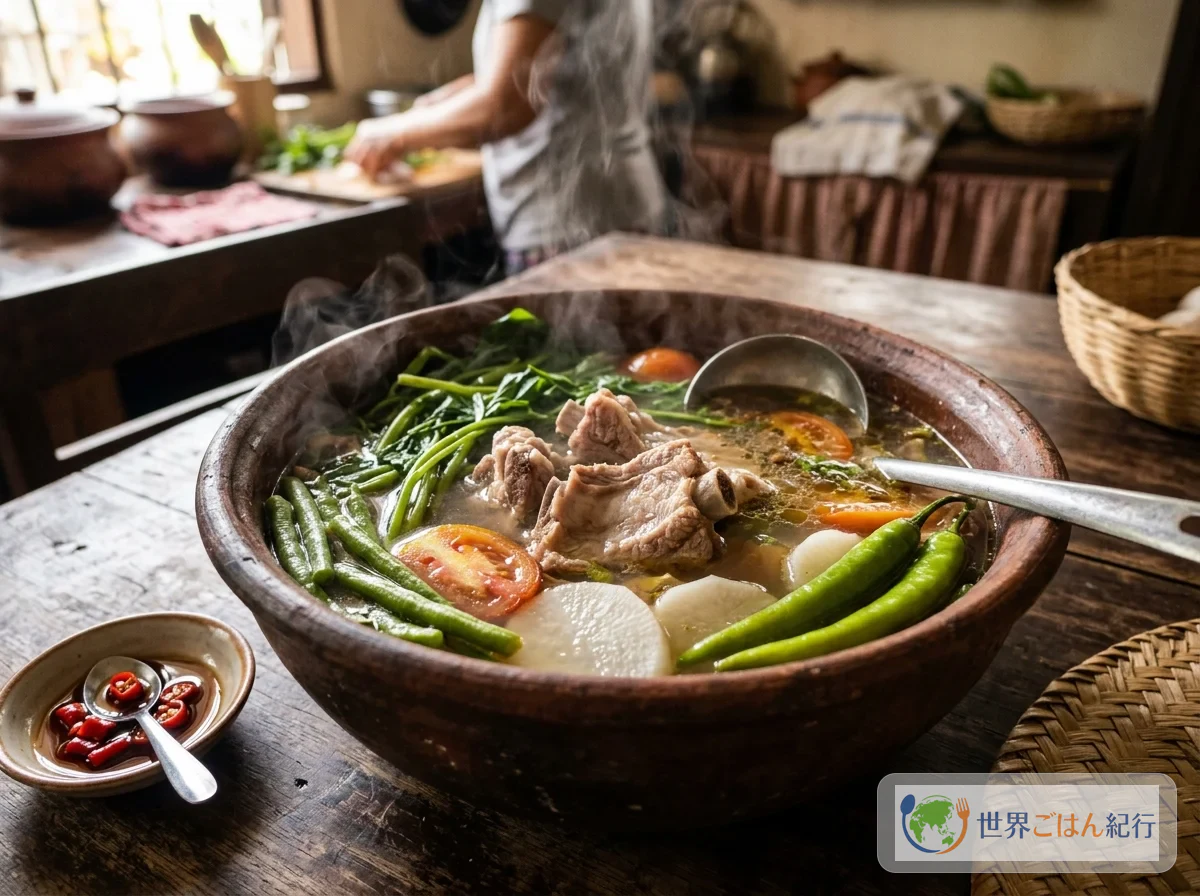
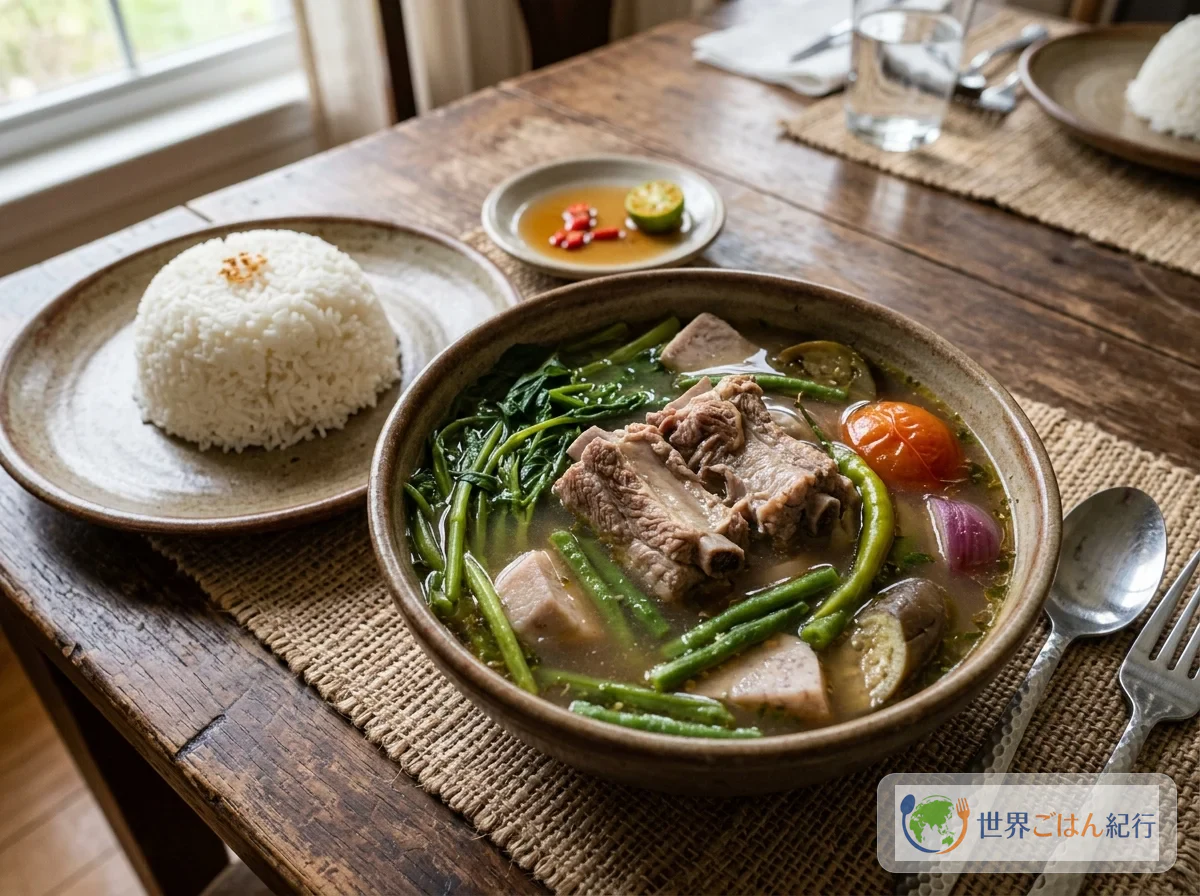
Take a sip of sinigang and the bright sourness of tamarind fills your mouth. Then comes the sweetness of the pork fat, and after that the gentle depth of the vegetables. This Filipino soup gets its flavor from sourness and savory depth and almost nothing else. It isn't spicy, and it uses very few herbs. Adobo may be the Filipino dish the world knows best, but ask Filipinos for their favorite and many will say sinigang.
Sinigang in Filipino cooking
Sinigang is a soup of pork and vegetables simmered with the sourness of tamarind. The name comes from the Tagalog word "sigang" (to stew). The meat changes from pot to pot and can be pork, shrimp, fish or beef. Outside the Philippines it's still little known. Say "sour soup" and most people think of tom yum, but sinigang tastes completely different. It's a Southeast Asian classic that deserves a place next to Thai som tam and Vietnamese bánh xèo.
A cuisine built on sourness
If you had to sum up Filipino food in one phrase, "a cuisine of sourness" would do it. Think of the vinegar in adobo, the tamarind in sinigang and the calamansi in kinilaw. The reason is the climate. The Philippines is tropical, with an average annual temperature of 27°C (81°F), and in that heat and humidity food spoils quickly. Before refrigerators, sourness worked as a natural preservative, and people learned to keep food with vinegar and tamarind. Of all the dishes that came out of this, sinigang shows it best.
Tamarind itself probably came from tropical Africa. It reached India and Southeast Asia long ago and has been grown there ever since. In Filipino it's called "sampalok."
The "best soup in the world"
In 2021, sinigang won the soup category of a global food award and was named the best soup in the world. The whole country celebrated, and the Philippine media covered it widely. Some reports called the winner "sinigang" and others "sinigang na baboy" (pork sinigang). That suits a dish whose name changes with its filling and its souring agent.
The taste of home
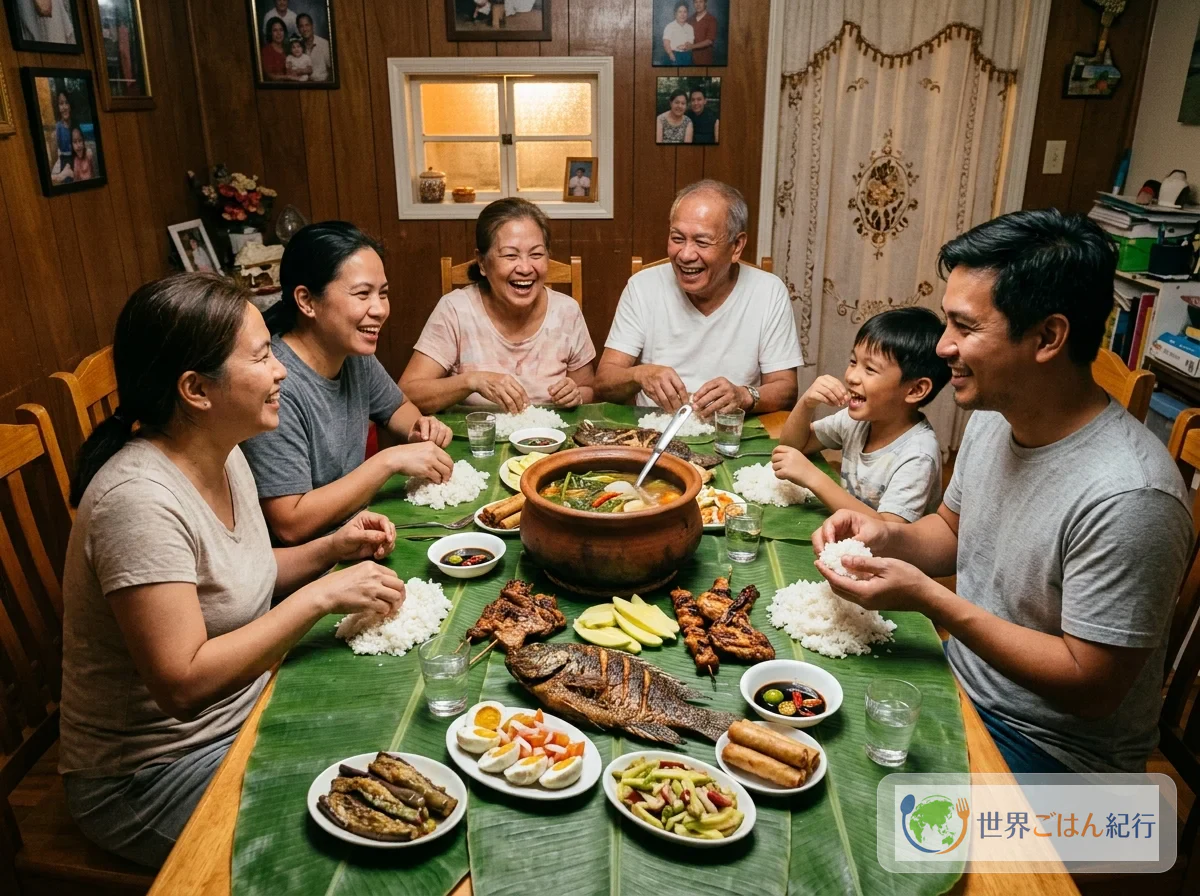
For Filipinos living abroad, sinigang is the taste of home. Many families overseas make it the easy way, with a tamarind soup base mix. Like Cameroonian ndolé and Congolese moambe, it's a dish closely tied to national identity.
Ingredients (serves 4)
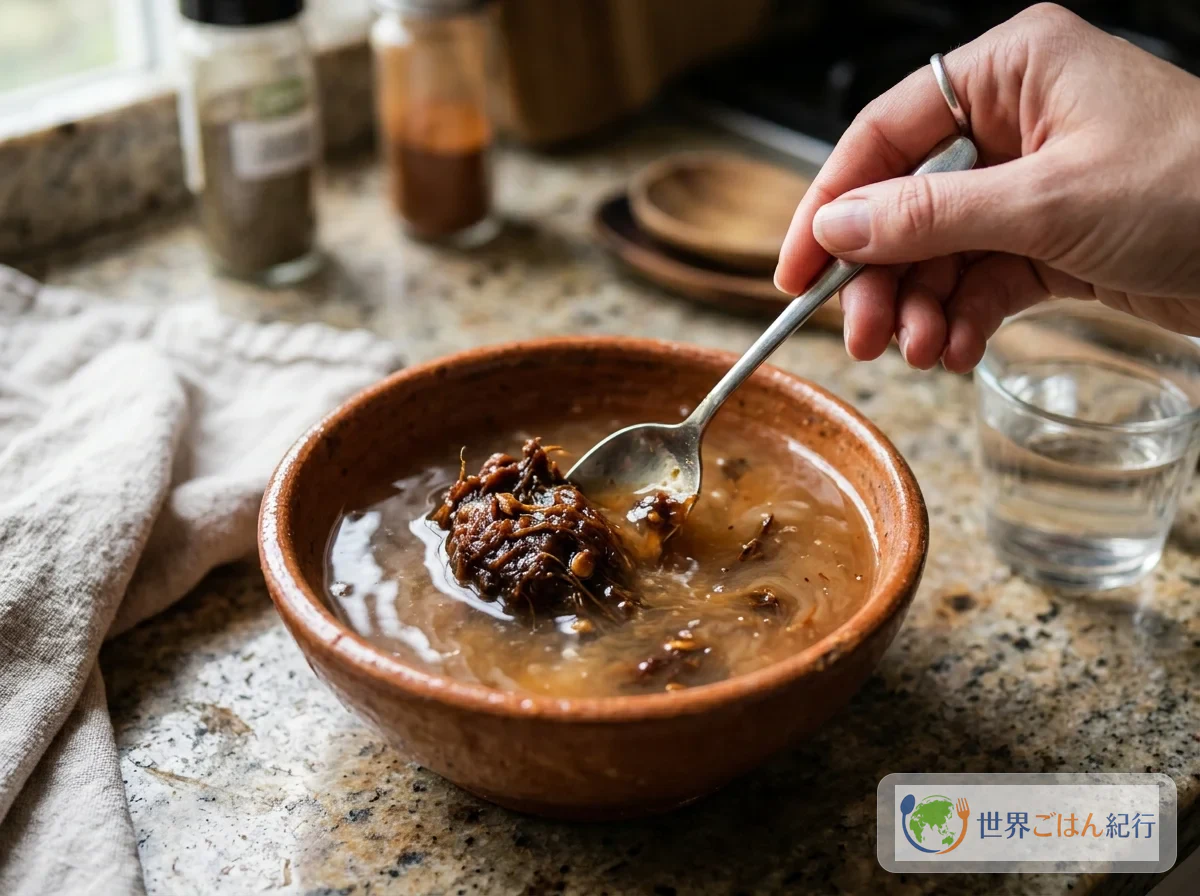
Filipino grocery stores and online retailers sell "Knorr Sinigang Mix." It makes the flavor easy to get right. However, it contains flavor enhancers and artificial acidulants, so if you want an authentic taste, we recommend starting from tamarind paste. If you use sinigang mix, you don't need the tamarind paste or fish sauce.
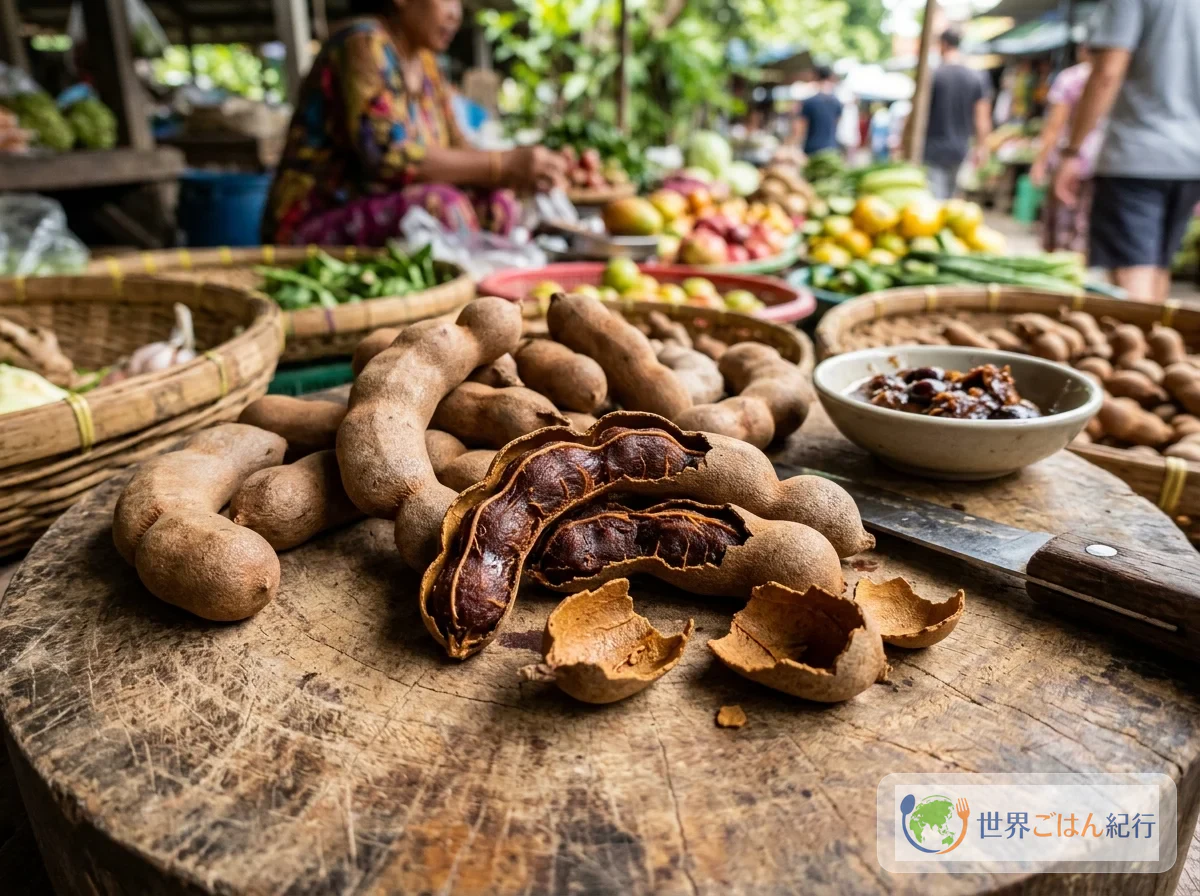
Choosing the souring agent
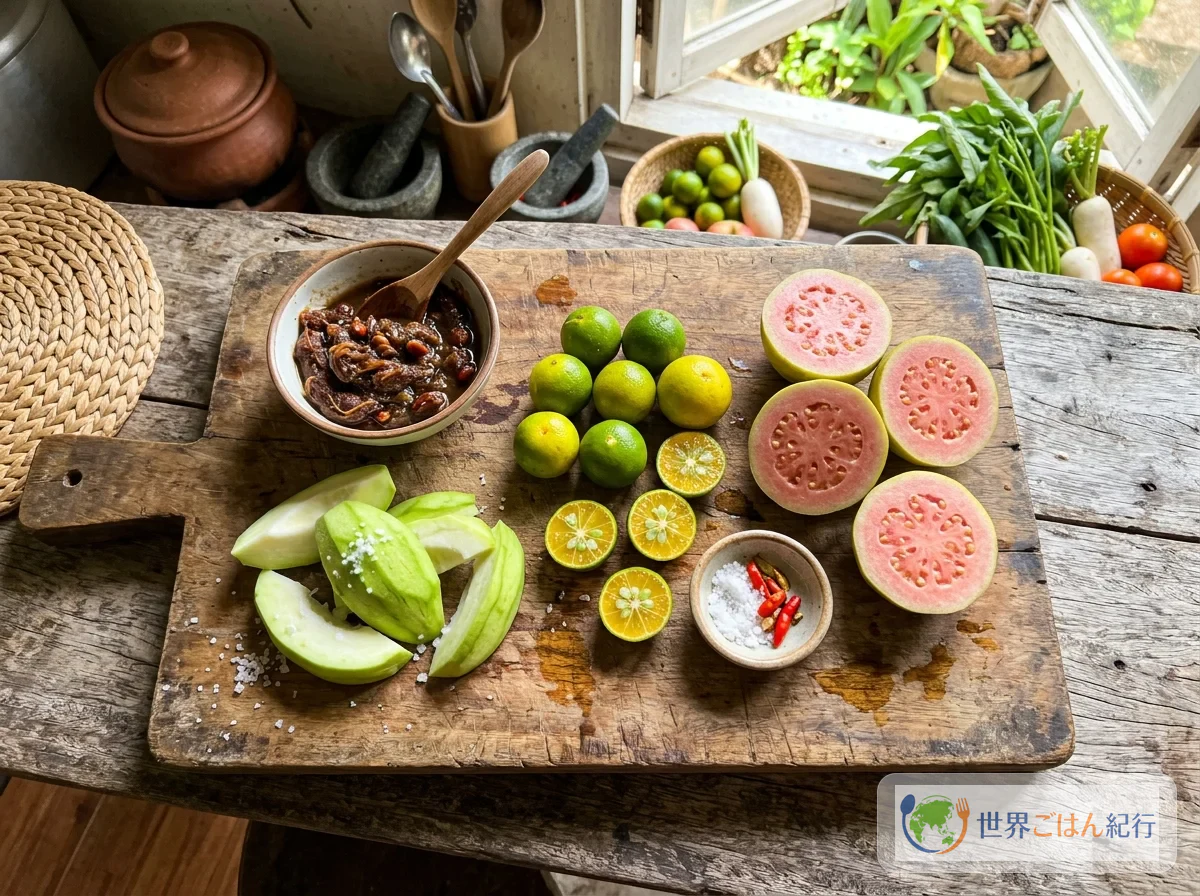
Tamarind is the most common souring agent, but it isn't the only one. Depending on the region, the season and the household, cooks also use guava, calamansi, unripe mango or kamias (bilimbi). Each gives a different kind of sourness. Everything else in this version comes from a regular supermarket.
Getting sinigang right
Sinigang should be sour enough to make you wince a little at the first sip. If it isn't sour enough, it tastes flat. Rice softens the sourness, so aim for a soup that's slightly too sour on its own.
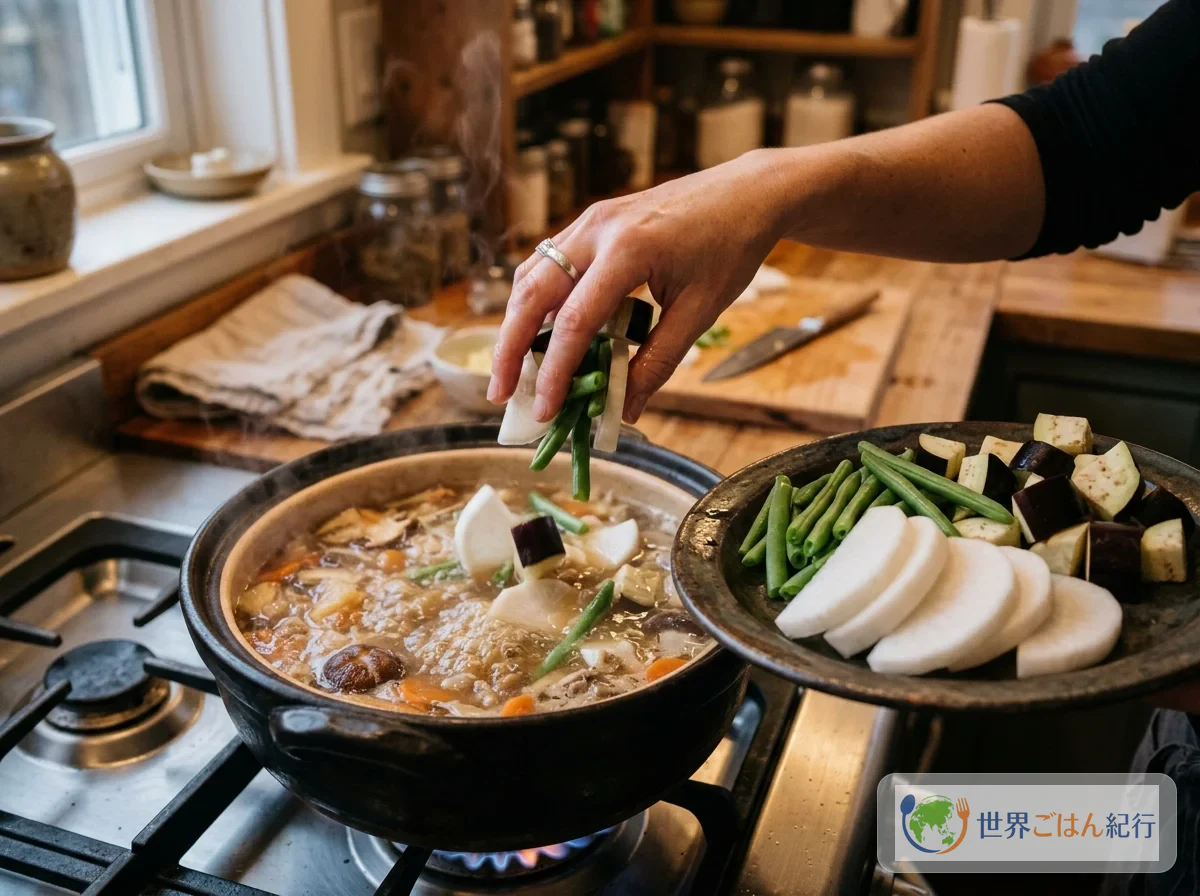
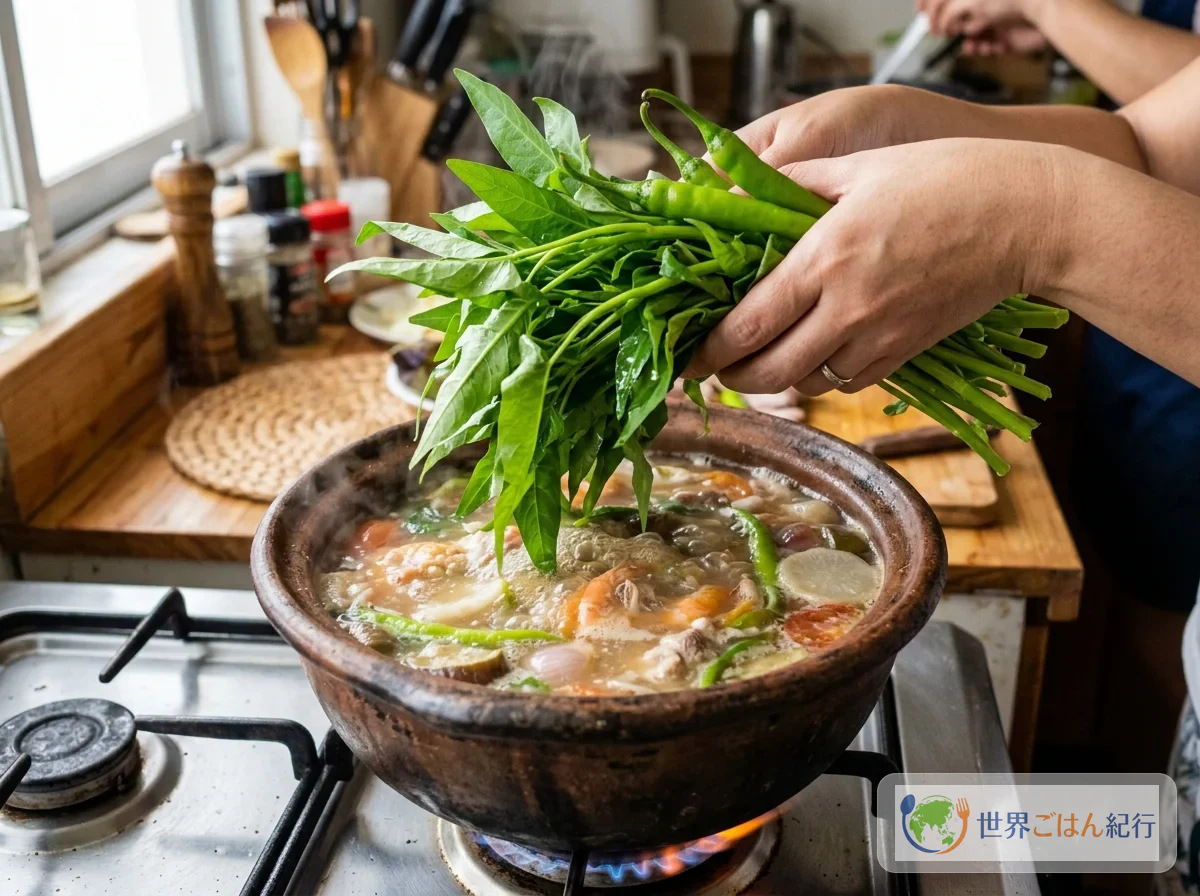
Adding the vegetables in the right order matters most. Start with the daikon and eggplant, then add the green beans, then the water spinach stems, and put the leaves in last. If you add everything at once, the daikon stays hard while the water spinach turns to mush. As with Thai pad thai, the order of cooking decides how the dish turns out.
Sinigang variations
Shrimp sinigang (sinigang na hipon)
Use 8–10 head-on, shell-on shrimp instead of pork. This version is a favorite in coastal areas of the Philippines. Shrimp turns tough if overcooked, so add it last, once all the vegetables are done, and it will be ready in 3 minutes. The shells release their flavor into the soup. Like Lao khao piak sen, this is a dish for enjoying a delicate broth.
Fish sinigang (sinigang na isda)
Use 14 oz (400 g) of milkfish (bangus) or tilapia fillets. Cod fillets are the best substitute. Fish falls apart easily, so add it in the last 5 minutes. Many Filipino homes make this version every day.
Guava sinigang (sinigang sa bayabas)
Use 4 guavas (halved) instead of tamarind, or ¾ cup (200 ml) of 100% guava juice. The sweet-sour guava goes surprisingly well with pork, and the soup comes out gentler and fruitier than with tamarind.
Miso sinigang (sinigang sa miso)
Add 2 tbsp white miso along with the tamarind paste. The sourness blends with the richness of the miso, and the flavor will feel familiar to anyone who knows Japanese food.
Serving, storing and nutrition
Second-day sinigang
Filipino families often say sinigang is best the next day. The sourness mellows and loses its sharp edge, and the pork becomes even more tender. Water spinach discolors, though, so store tomorrow's portion without it and add fresh water spinach when you reheat. Sinigang keeps for 3 days in the refrigerator.
Nutrition (per serving, of 4)
Sinigang has more vegetables than most Southeast Asian soups. With daikon, eggplant, green beans and water spinach in the pot, a serving provides 6 g of fiber.
| Nutrient | Amount |
|---|---|
| Calories | 420 kcal |
| Protein | 1.25 oz (32 g) |
| Fat | 18 g |
| Carbohydrates | 1.25 oz (35 g) |
| Fiber | 6 g |
| Sodium | 650 mg |
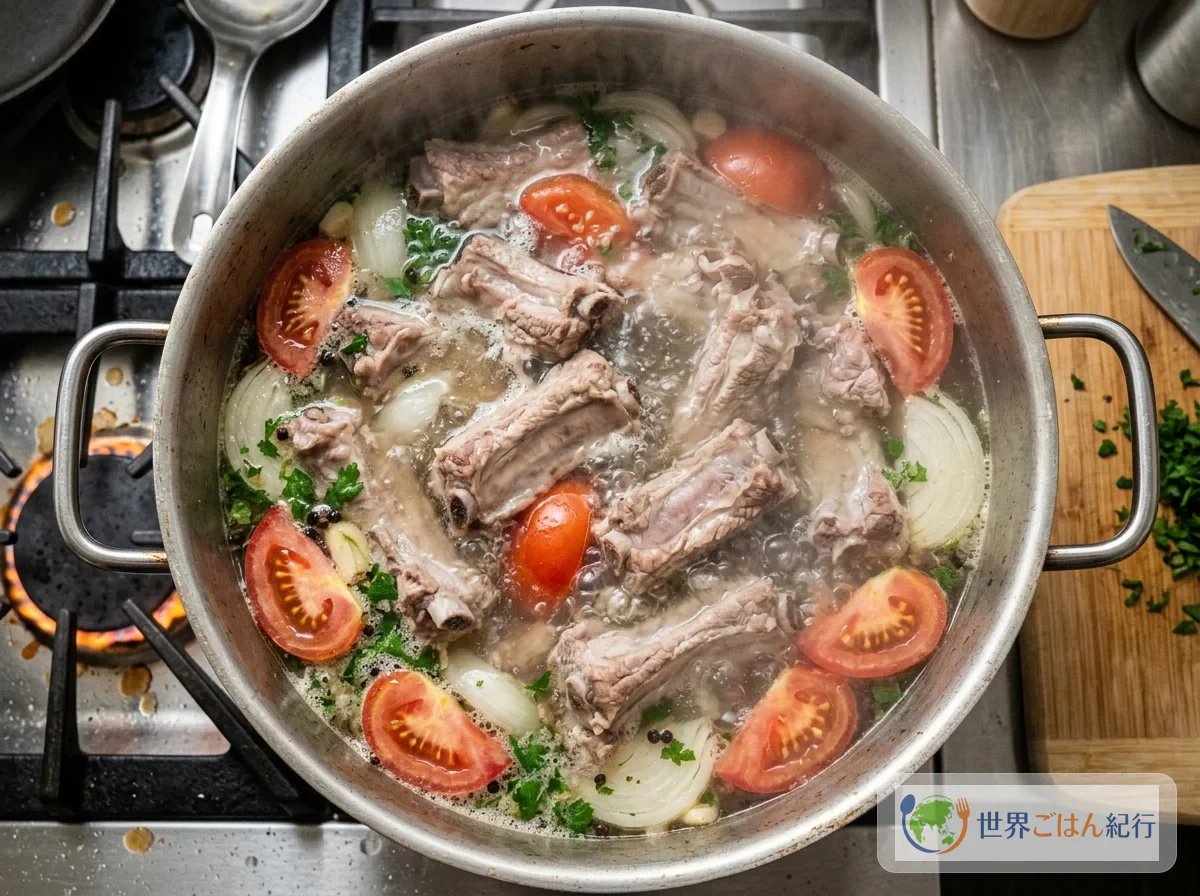
Fat from the spare ribs melts into the soup as it simmers. If that bothers you, chill the soup and lift off the fat that sets on top. Tamarind contains B vitamins, iron and potassium, and it helps replace electrolytes in hot weather.
More dishes to explore
- Adobo: the Philippines' other national dish, meat braised in vinegar and soy sauce
- Bicol express: another dish from the Filipino table
- Chicken inasal: another dish from the Filipino table
- Pochero: a stew rounded out with bananas and beans, a good contrast to sour sinigang
- Kutsinta: a chewy rice cake for after the meal, one of the sweet snacks served in Filipino homes
- Sop saudara: ingredients and aromas from the same region
- Laksa: Malaysia's spicy noodle soup with a rich coconut-milk base
- Mohinga: Myanmar's national dish, a breakfast soup made with catfish broth
- Khao piak sen: Laos's rice noodle soup, loved for its gentle flavor
Frequently asked questions
Q1. What should I do if the tamarind paste makes it too sour?
Add sugar 1 tsp at a time until it tastes right. Filipino families often balance an overly sour soup this way. You can also dilute it with ½ cup (100 ml) of water. If it isn't sour enough, add 1 tbsp tamarind paste or 1 tbsp lemon juice.
Q2. Can I change the ingredients freely?
Yes. As long as it stays a sour soup, the ingredients are up to you. Filipino families often use whatever is left in the fridge, such as okra, long eggplant, sweet potato leaves or moringa. As with Malaysian laksa, every family's version tastes a little different, and that's part of the appeal.
Q3. Besides spare ribs, which cuts of pork do you recommend?
A single piece of skin-on pork belly is the next best choice, because its fat makes the soup richer. Pork shoulder also works. For leaner cuts, simmer 5 minutes longer. In the Philippines, cooks sometimes add pork ears or tails, which are rich in collagen and give the soup body.
Q4. Can children eat sinigang?
Yes. The green chiles (siling haba) are simmered whole, so they don't make the soup very hot, but it's safest to leave them out for children. If the sourness worries you, halve the tamarind paste and let the adults add more at the table.
Q5. What drinks go well with sinigang?
In the Philippines, San Miguel beer is the classic choice, and its crispness is lovely with the sour soup. For something without alcohol, calamansi juice is best. A dry highball or cold green tea also brings out sinigang's sourness.