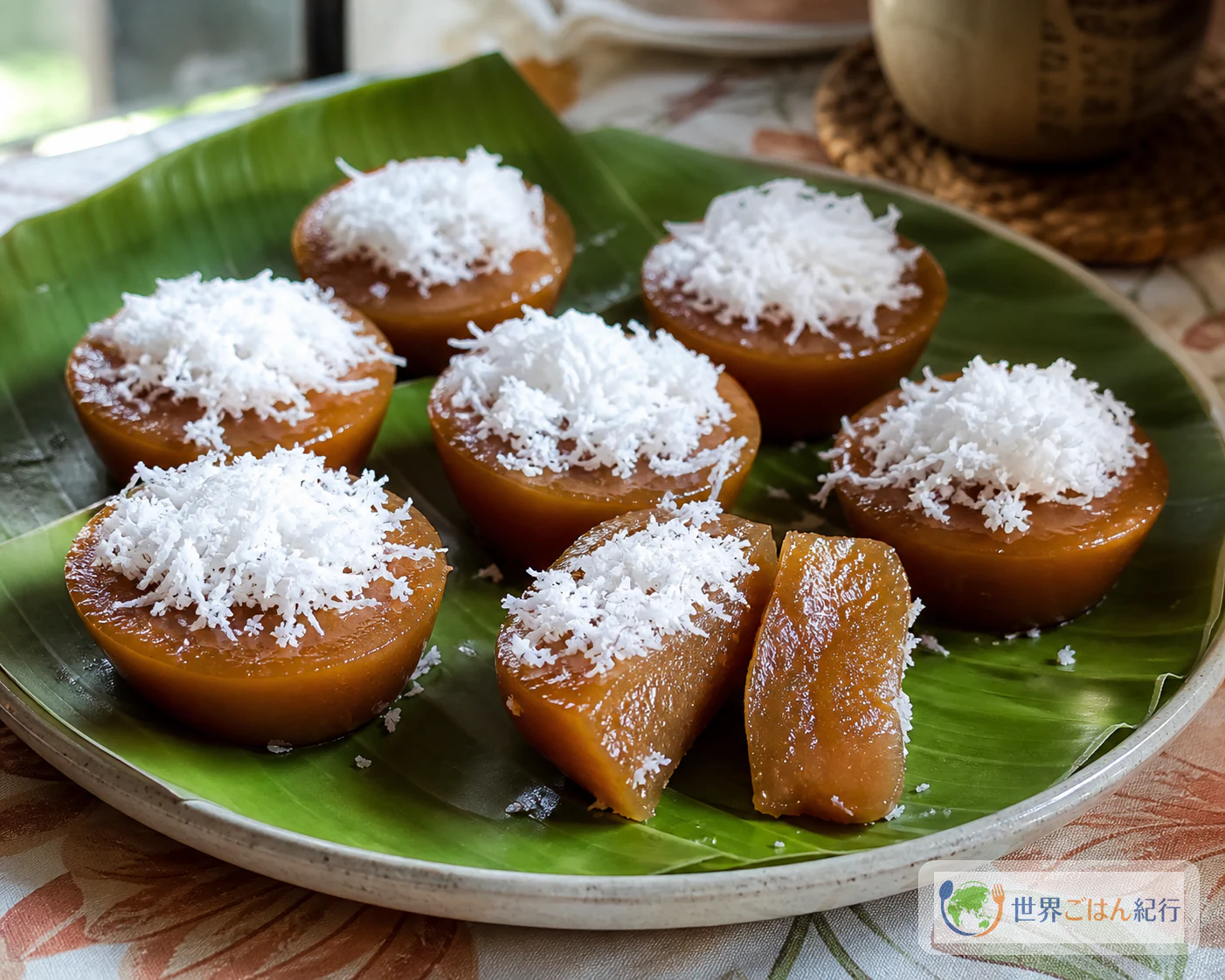
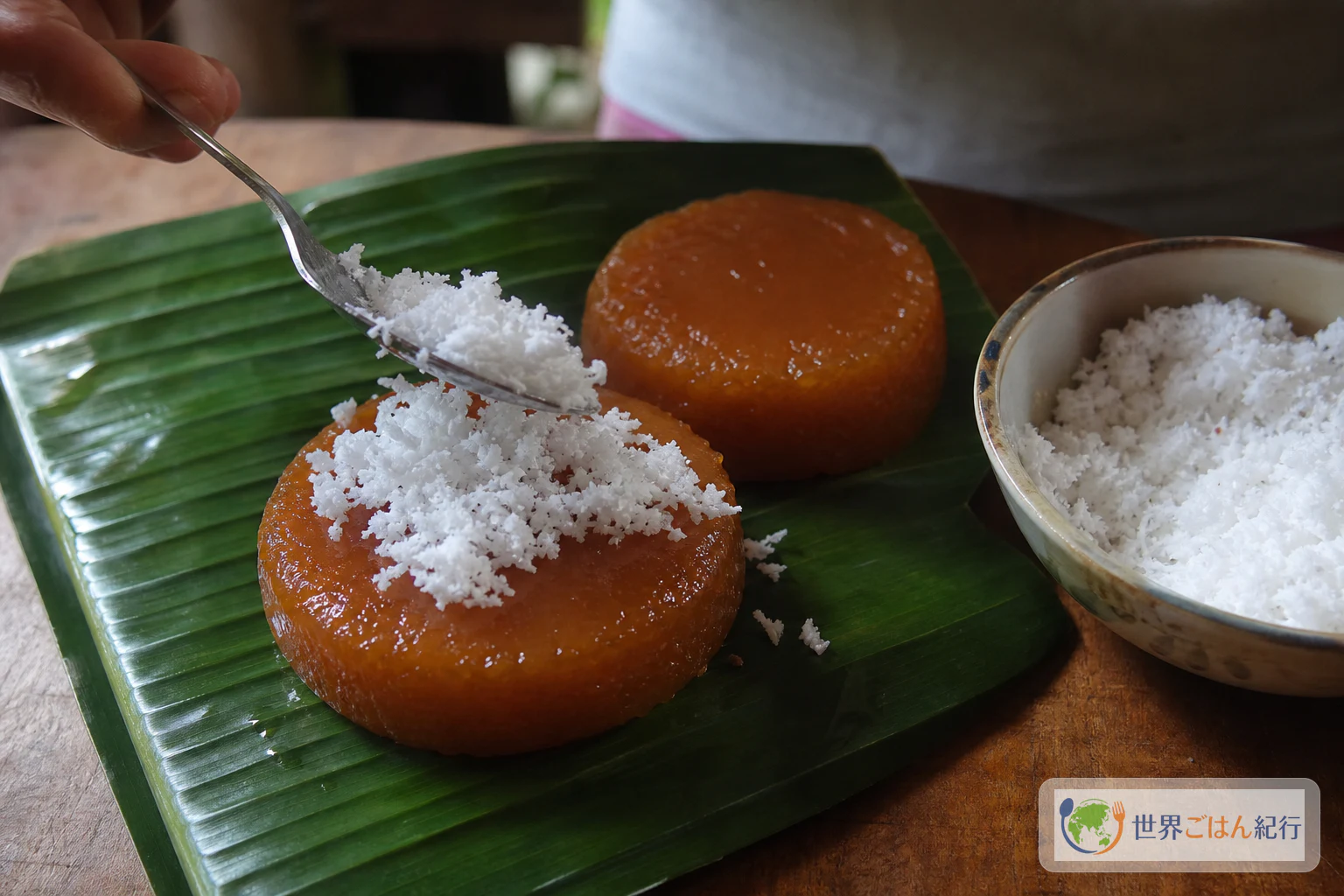
Lift the steamer lid a little, and through the steam you'll see round, amber cakes. The tops are glossy, yet press one with a finger and it gives a little, then slowly springs back. Kutsinta looks like a small, plain steamed sweet. Take a bite, though, and you get deep brown sugar, the chewy body of rice flour and the dry fragrance of grated coconut, all at once. It's a Filipino afternoon snack, and it's an easy one to make at home with coffee or hot tea.
Kutsinta, a Filipino merienda sweet
Kutsinta is one of the Filipino rice sweets known as kakanin. You mix rice flour, tapioca starch, brown sugar and lye water (lihiya, food-grade lye water), tint the batter orange with annatto and steam it in small molds. It's less work than sapin-sapin, another Filipino rice cake that's built in layers.
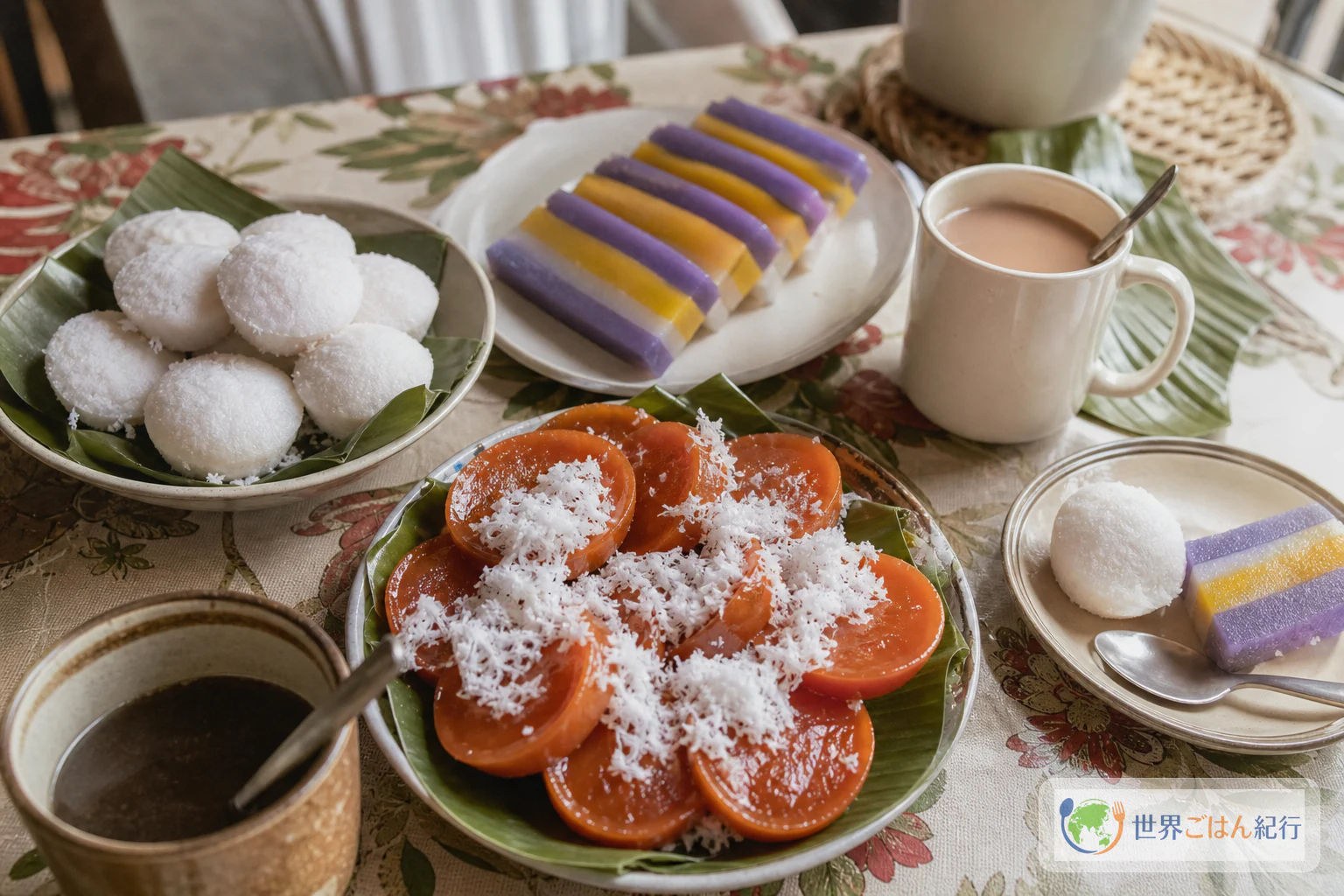
Kutsinta is more of an afternoon snack than a breakfast food. In the Philippines it comes out at merienda time, after school, on a work break or when the family gets together, next to rice sweets like puto and sapin-sapin. You'll find it at markets and snack stalls all over the country, and people make it at home too. It's a simple steamed sweet of rice and brown sugar that spread from region to region, so the depth of color, the size and the way the coconut is served vary a little by region and by vendor.
The fun of kutsinta is in the texture, not some showy aroma. Bite in and you feel a little resistance, and as you chew, the brown sugar sweetness comes a beat later. Serve the coconut on the side so everyone can add their own, and that snowy white topping becomes part of the fun.
Kutsinta is also written cuchinta, or called cuchinta rice cake. In English it's sometimes described simply as a Filipino brown sugar rice cake.
Ingredients (12 small cakes): measure the brown sugar and lye water
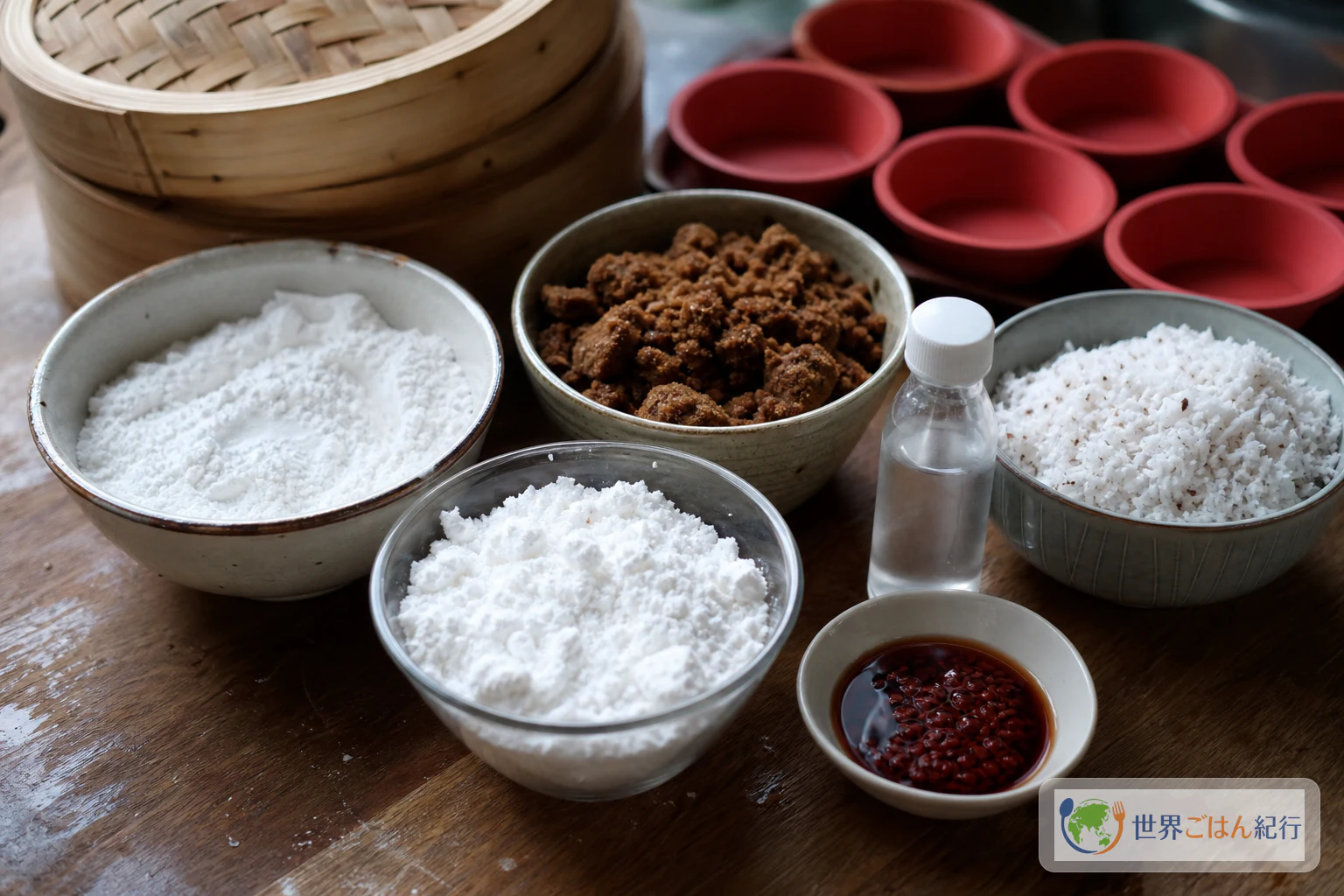
These amounts make 12 small metal or silicone molds about 6 cm (2 1/2 inches) across. The shallower the mold, the more evenly it cooks. If you use deep pudding molds, fill each only halfway and steam 3–5 minutes longer.
Use only lye water that is clearly labeled food-grade. Never taste it straight, and don't add more by eye. More than 1 tsp easily turns bitter and makes the texture unnaturally firm. Alkaline cleaning solutions, baking soda water and caustic soda are not substitutes.
What you can swap, and what's hard to replace
Kutsinta has few ingredients, so changing one shifts the texture a lot. Thinking in this order makes it hard to go wrong in a home kitchen.
| Role | Ingredient to keep | Possible substitute | What changes |
|---|---|---|---|
| Color and aroma | Brown sugar, annatto | Replace half the brown sugar with light brown sugar | Paler color and a weaker earthy aroma |
| Springiness | Tapioca starch, lye water | Replace part of the tapioca starch with potato starch | Less translucency and less bounce |
| Rice body | Rice flour, glutinous rice flour | Use rice flour only | Lighter, but the chewy finish is shorter |
| Finishing | Grated coconut | Lightly moistened desiccated coconut | Quite different from the aroma of fresh coconut |
Kutsinta has better texture steamed thin in small molds than made large. Molds 5–7 cm (2–2 3/4 inches) across and about 2 cm (3/4 inch) deep are easy to work with, and once steam is circulating they cook through in 15–20 minutes. Pour the batter thick into deep molds and the center tends to stay whitish.
Ingredients and tools worth seeking out
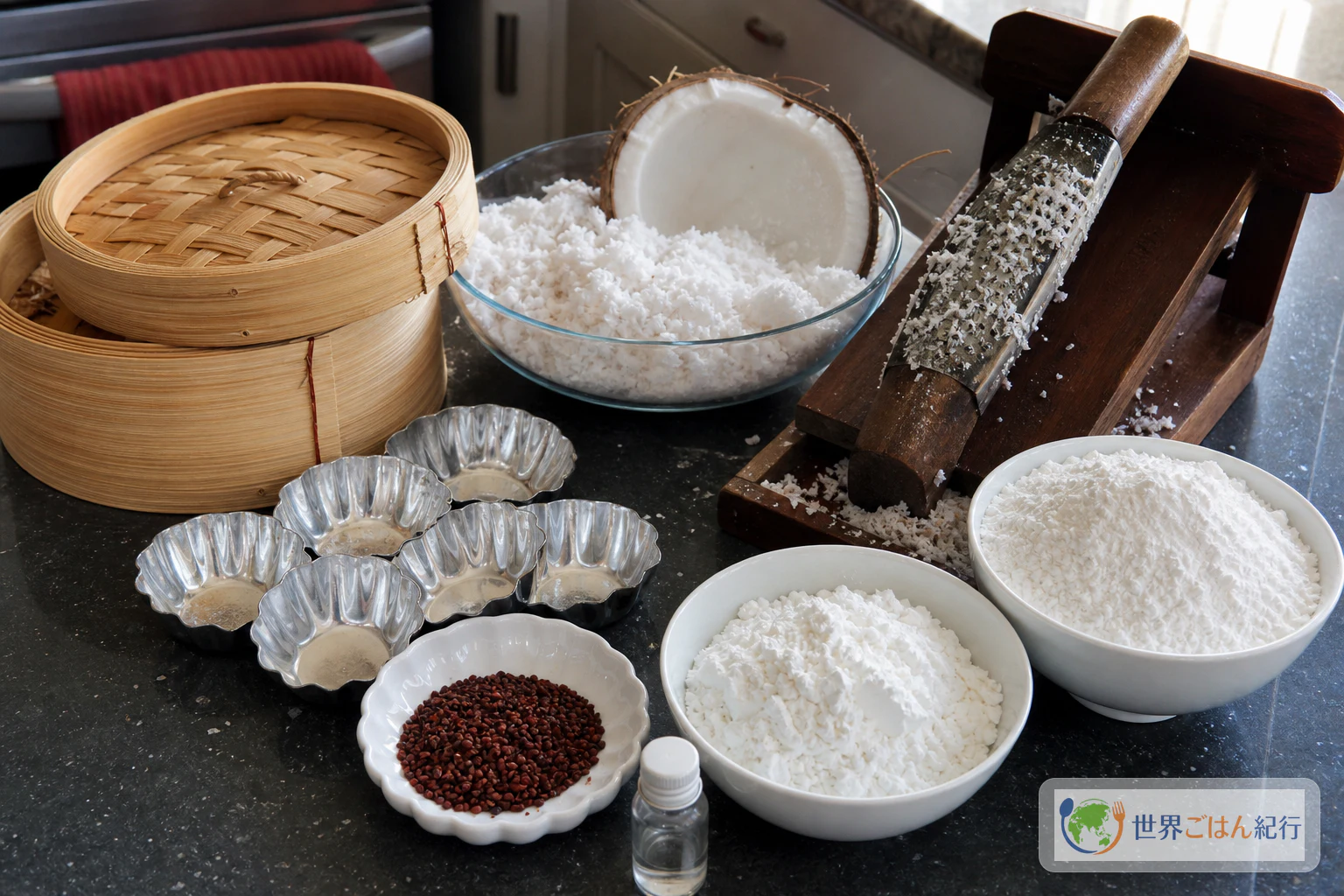
From a regular supermarket, brown sugar, rice flour and oil are enough. Annatto, tapioca starch and a steamer that holds steady heat are worth looking for at Asian grocery stores or online. For lye water, choose a food-grade product from a Filipino grocery store or baking-supply store, one clearly labeled "food-grade lye water."
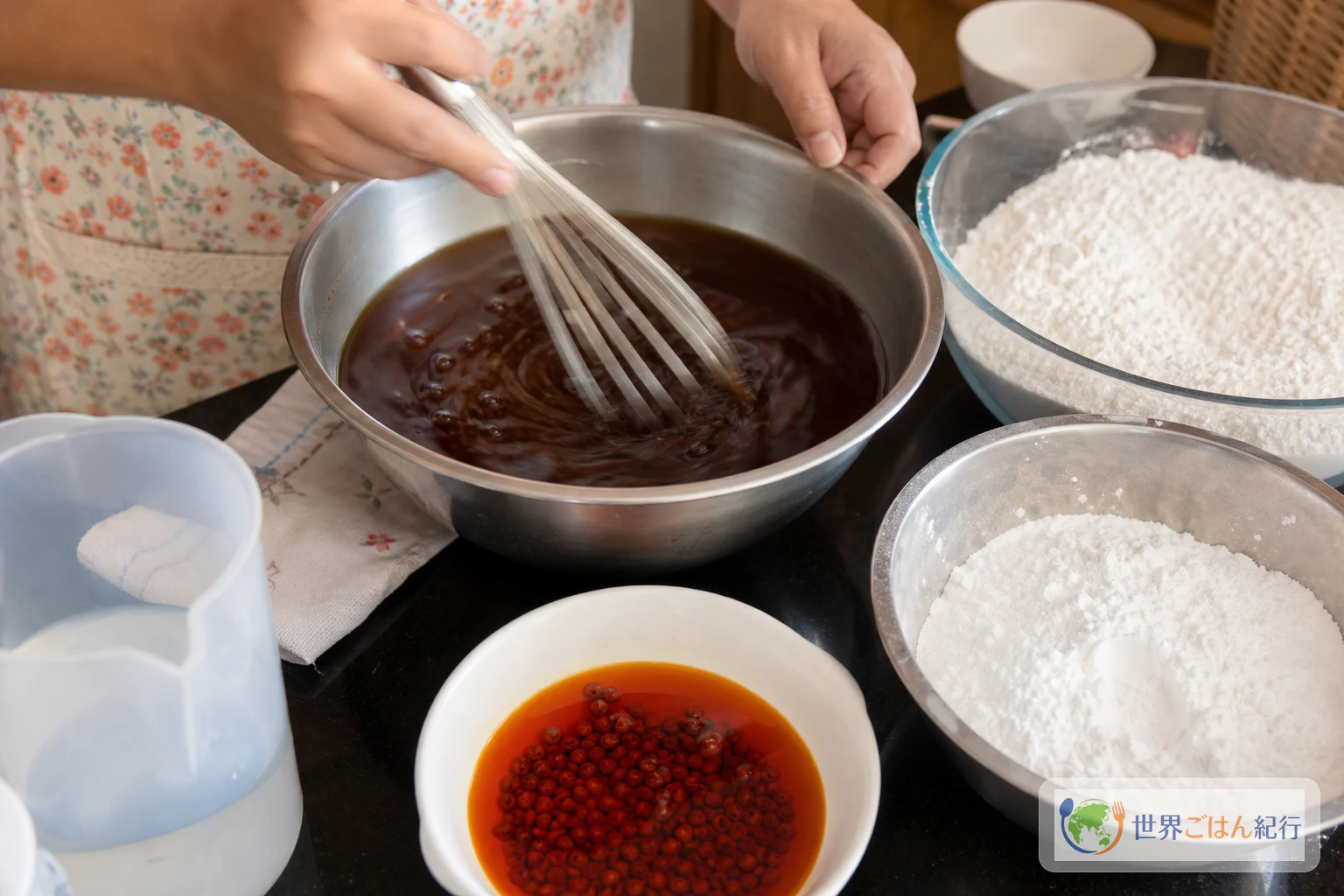
Annatto gives kutsinta its orange color. Both powder and seeds work, but steeping the seeds in hot water to draw out the color gives a natural shade with only a little. In Filipino cooking it plays a similar role in the oil for chicken inasal.
Tapioca starch gives a translucency and bounce that potato starch struggles to match. Besides kutsinta, it also goes into Indonesian pempek and Malaysian bubur cha cha, so a bag is worth keeping on hand.
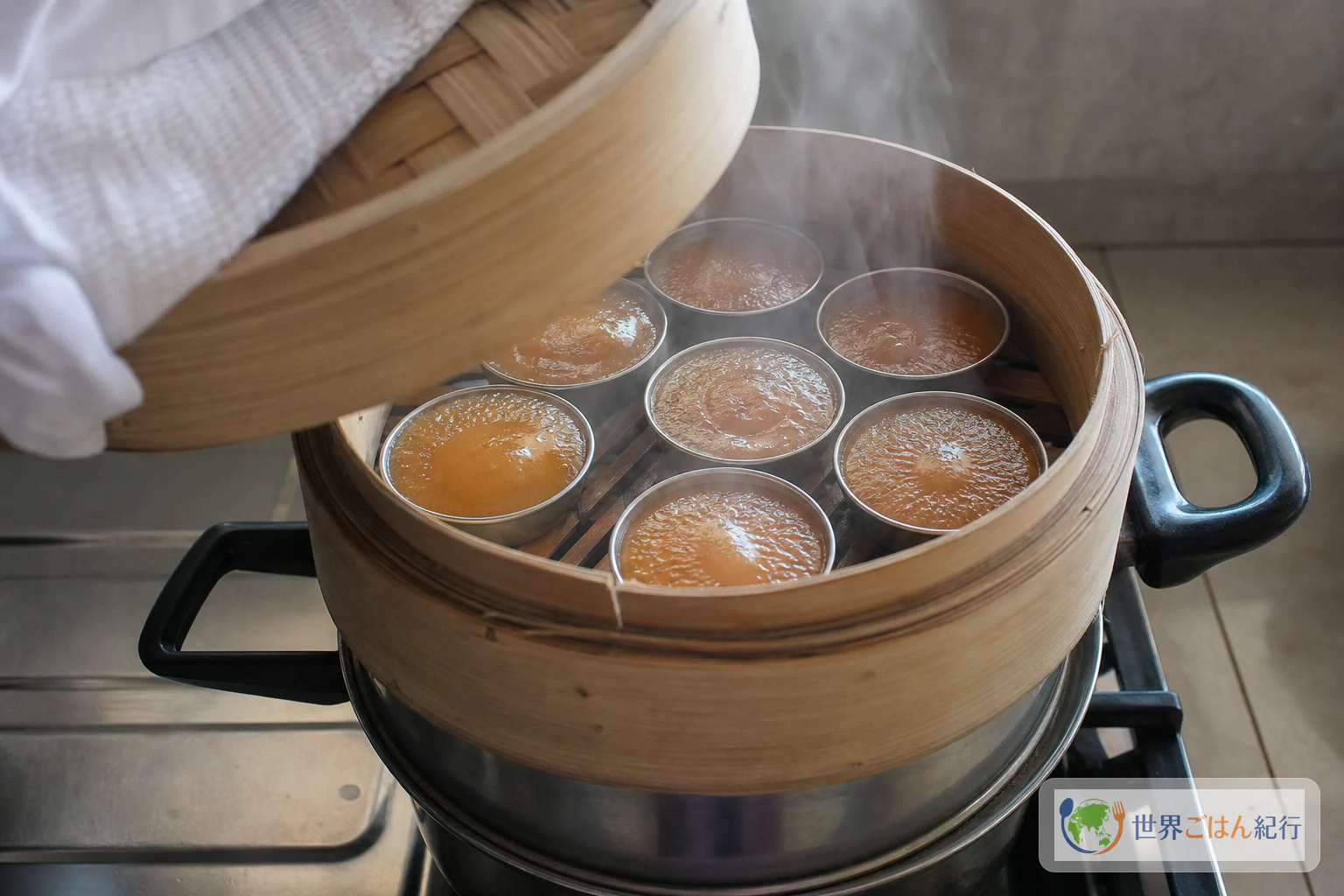
If the steam is too weak, kutsinta turns out whitish; if it's too strong and condensation drips, the tops get dimpled. A bamboo steamer is less prone to dripping from the lid, so the surface stays smoother than in a metal pot. With the steamer you already own, wrapping the lid in a kitchen towel gets you close to the same result.
Handling lye water and tapioca starch
At home, the brown sugar is rarely the problem. The lye water and the tapioca starch are what trip people up. A little lye water helps the color and the springiness, but too much makes the cakes bitter and gives them a soapy smell. Tapioca starch gives the chewy bounce, but too much makes them tough and rubbery.
Lye water works behind the scenes, helping the color and springiness. If you want a deeper flavor, change the sugar and leave the lye water alone. Muscovado or a darker brown sugar gives you the deep kutsinta color even with only a little lye water.
Method: pour thin and keep the steam steady
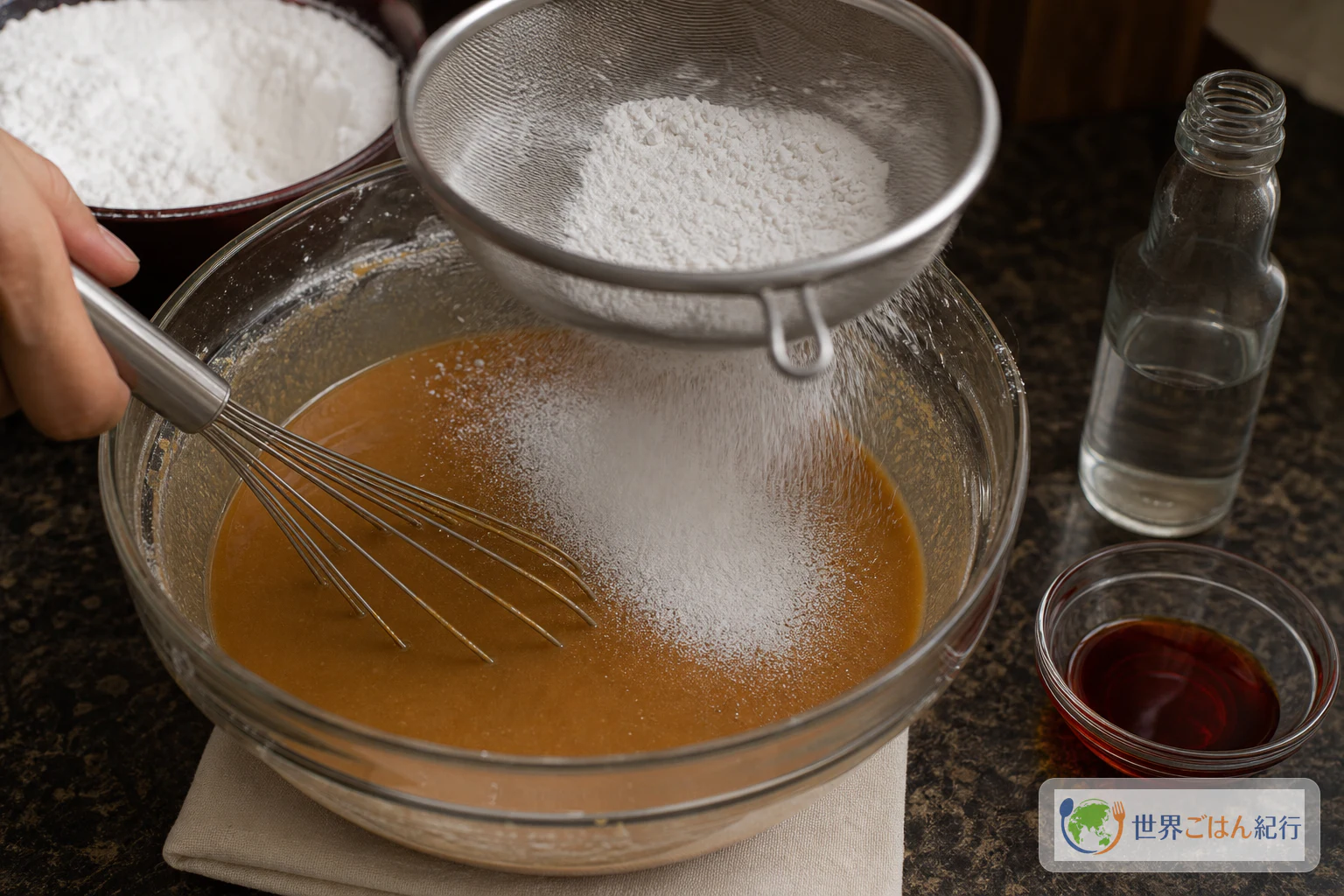
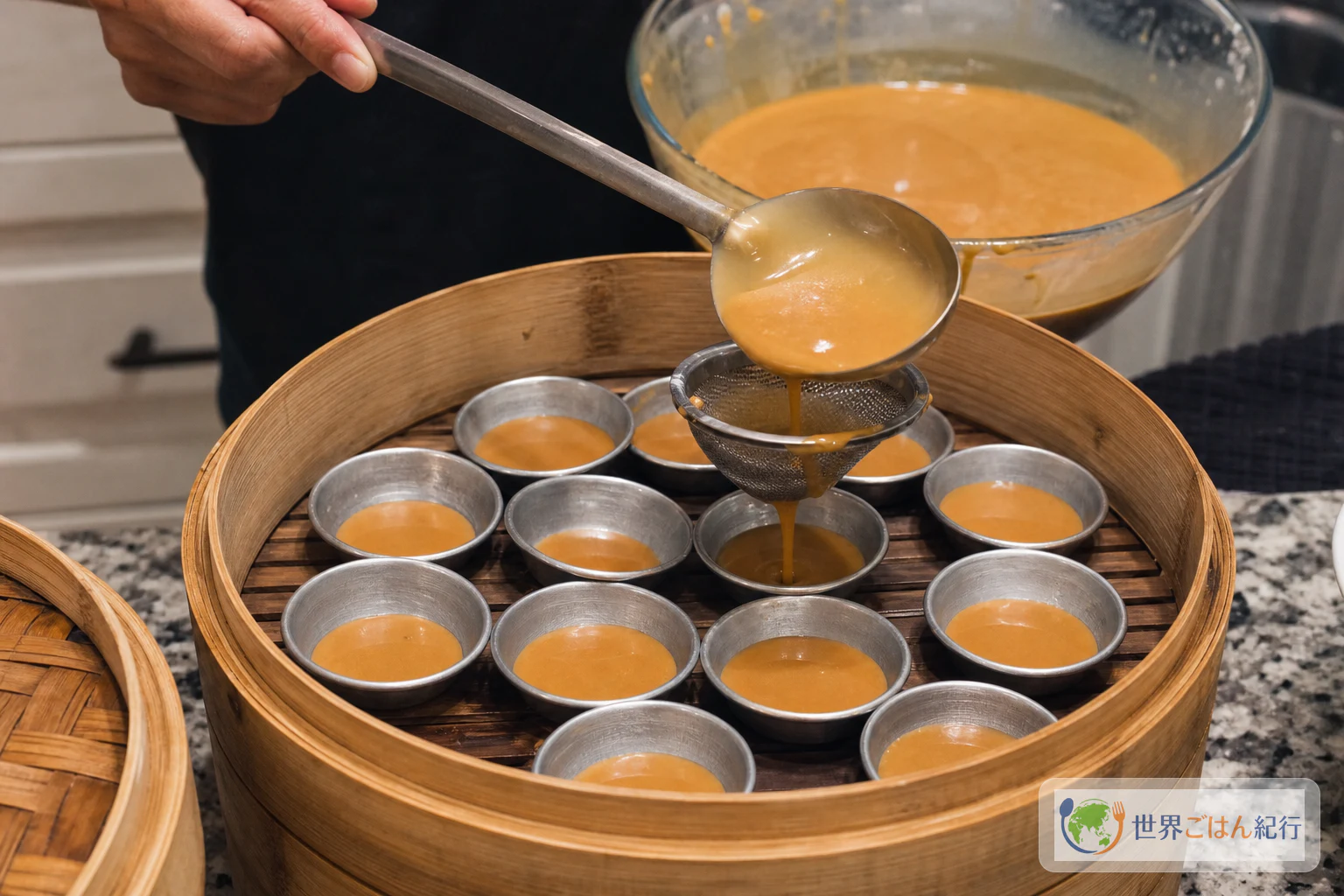
Before you start, wash the molds, wipe them dry and check how many fit in your steamer. The flour settles easily in the batter, so always stir it up from the bottom right before pouring it into the molds.
Common kutsinta problems and fixes
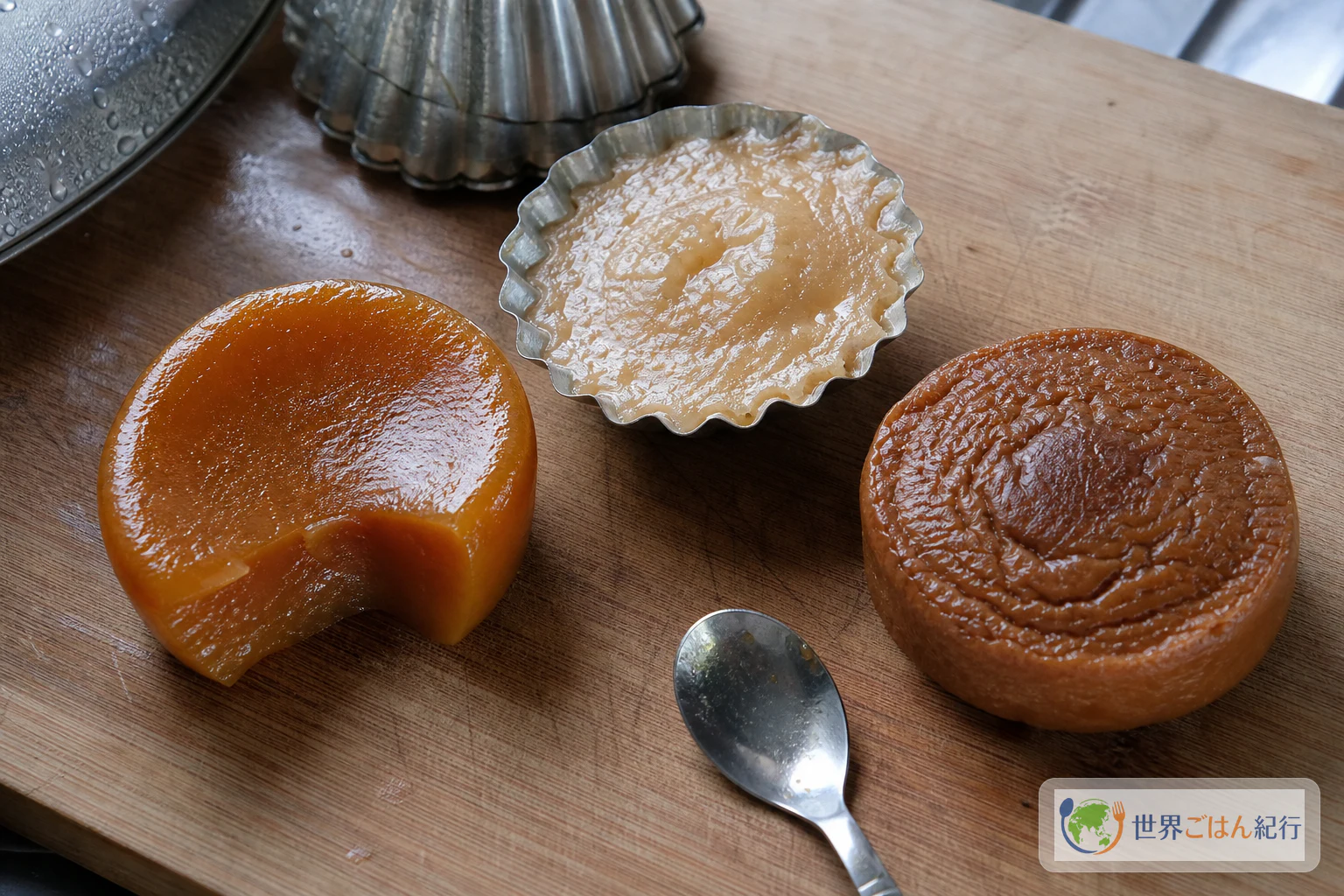
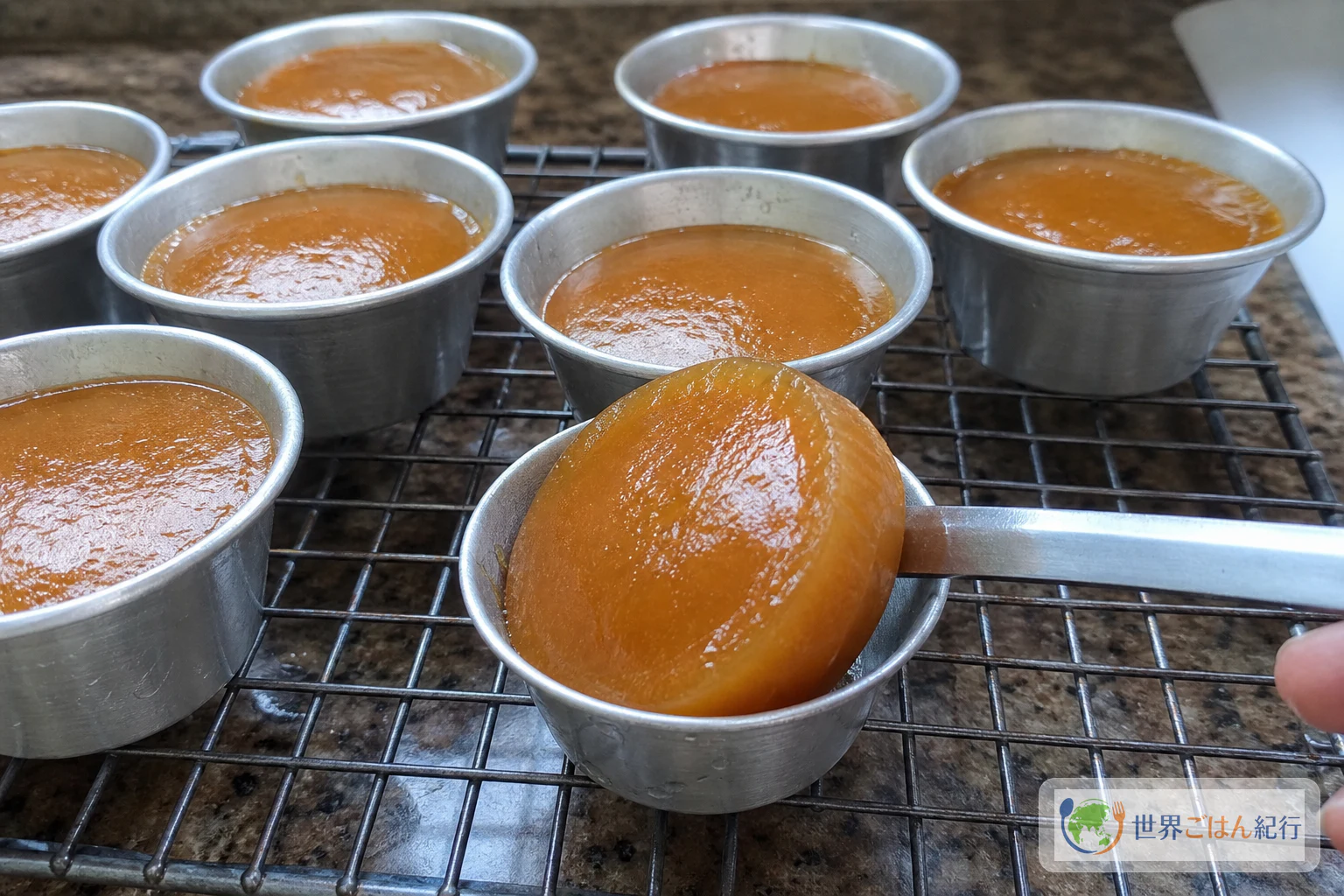
Kutsinta doesn't brown, so you can't judge it by color. Look at the gloss on top, the spring in the center and the sides once you unmold it. If something goes wrong, the cause is probably one of these.
| Problem | Cause | Fix |
|---|---|---|
| Only the bottom is white | Flour settled; batter poured without restirring | Stir from the bottom just before pouring and strain through a sieve |
| Bitter or soapy smell | Too much lye water | Cap it at 1 tsp and use a measuring spoon |
| Watery surface | Steam too weak, condensation dripped | Keep the water boiling over medium heat and wrap the lid in a towel |
| Tough and rubbery | Too much tapioca starch, oversteamed | Cut the tapioca starch to 2 oz (60 g) and start checking at 15 minutes |
| Won't come out of the mold | Too little oil, not cooled long enough | Brush the molds thinly with oil and cool at least 15 minutes |
Serving and storing kutsinta
Serving and pairing
Kutsinta isn't very sweet, and the fat and salt in the grated coconut make it great with hot coffee or tea. At home it's more natural as a weekend-afternoon project than as a small bite after dinner. Steam it thin in small molds and put the coconut on the side. That's the easiest way to get the feel of a Filipino snack. If you do want it with savory food, it makes a sweet finish to a Filipino meal after adobo or sinigang.
Storage and making ahead
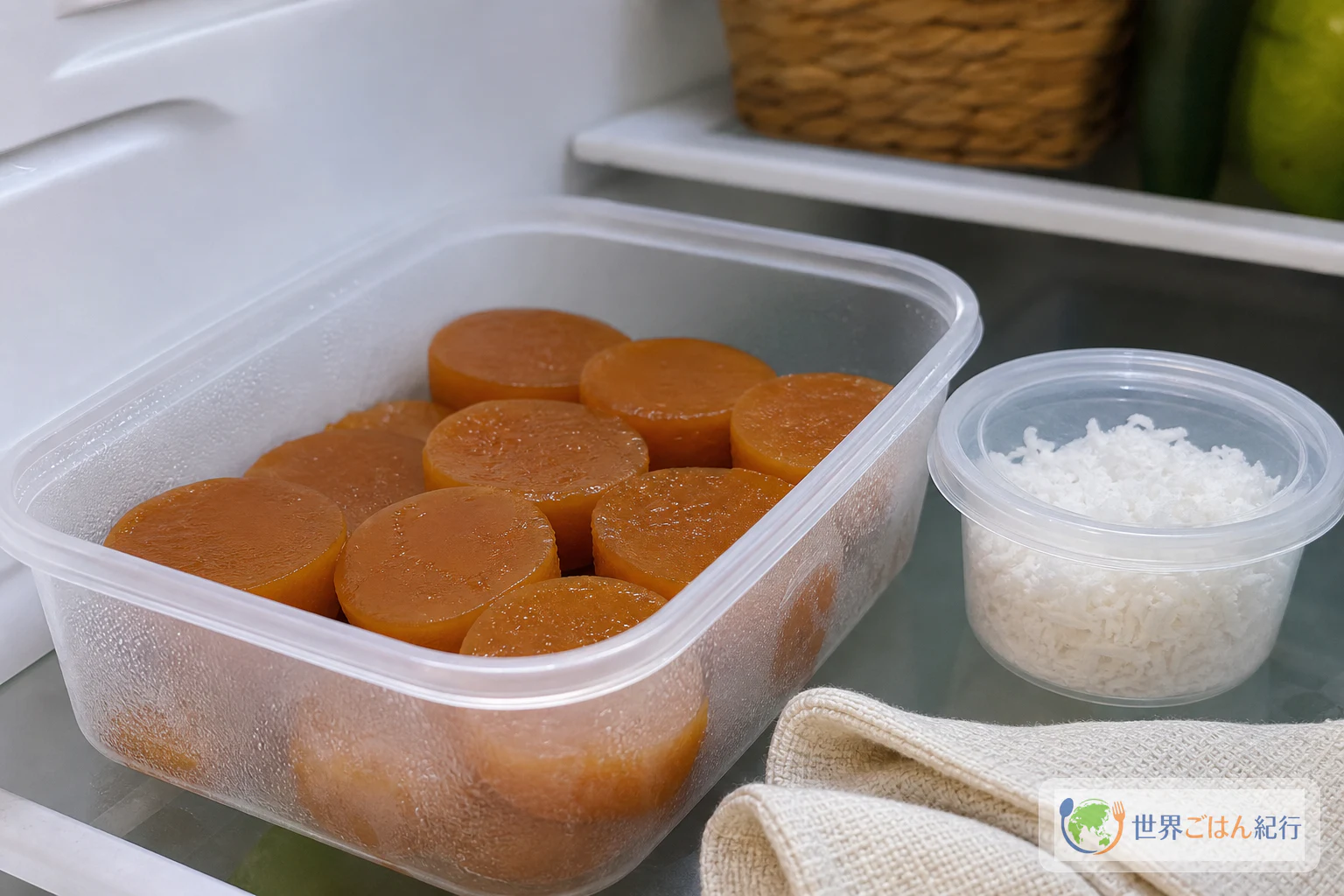
Before the coconut goes on, kutsinta keeps 2 days in the refrigerator. Let the cakes cool completely, then put them in a shallow container with a lid so they don't dry out. Skip the plastic wrap, because pressing it onto the tops leaves marks. Keep the grated coconut in a separate container in the fridge and add it just before eating.
A steamer is the most natural way to reheat them: 3 minutes over medium heat. In the microwave, arrange them on a microwave-safe plate, sprinkle with 1 tsp water, cover loosely with plastic wrap and heat at 600 W for 20–30 seconds. Stop as soon as the chill is gone, since overheating makes them hard.
You can freeze them, though the tops lose a little gloss after thawing. Wrap each one separately, without coconut, and use within 2 weeks. Steaming them straight from frozen over medium heat for 6–8 minutes brings back more chew than thawing them in the microwave.
More recipes to try
- Sapin-sapin - A layered Filipino rice cake that also uses rice flour and coconut.
- Chicken inasal - Annatto again, this time flavoring grilled chicken.
- Bánh bèo - A Vietnamese rice flour batter steamed in small saucers, close to kutsinta in spirit.
FAQ
Q. Can I make it without lye water?
Yes, but the color and springiness will be different. Increase the tapioca starch to 2.75 oz (80 g) and reduce the glutinous rice flour to 20 g. The cakes come out a bit softer, so think of them as a kutsinta-style brown sugar steamed rice cake. Don't use baking soda or alkaline cleaning solutions in place of lye water.
Q. What if I don't have annatto?
If it's only for color, leave it out. With a dark brown sugar you'll get a light brown kutsinta. Turmeric pushes the color too far toward yellow, so if you use it, keep it to a tiny pinch. For the classic kutsinta orange, annatto is the surest way.
Q. Can I use silicone molds?
Yes, but they heat more slowly than metal molds, so steam 3–5 minutes longer. Deep silicone cups tend to stay white in the center, so fill them only halfway. The first time, steam one as a test and check the spring in the center before you steam the rest.
Q. Can I use desiccated coconut instead?
You can, but on its own it's too dry. Mix 6 tbsp desiccated coconut with 2 tbsp hot water, let it stand 5 minutes, then mix in a pinch of salt. You won't get the aroma of freshly grated coconut, but you'll get the white look and a light richness.
Q. Can I make it with rice flour only?
Rice flour alone will set, but the chewy spring is weaker and the cakes tend to harden as they cool. For real kutsinta texture, use rice flour together with tapioca starch. If you swap potato starch for the tapioca starch, use only 20 g, not the full amount.