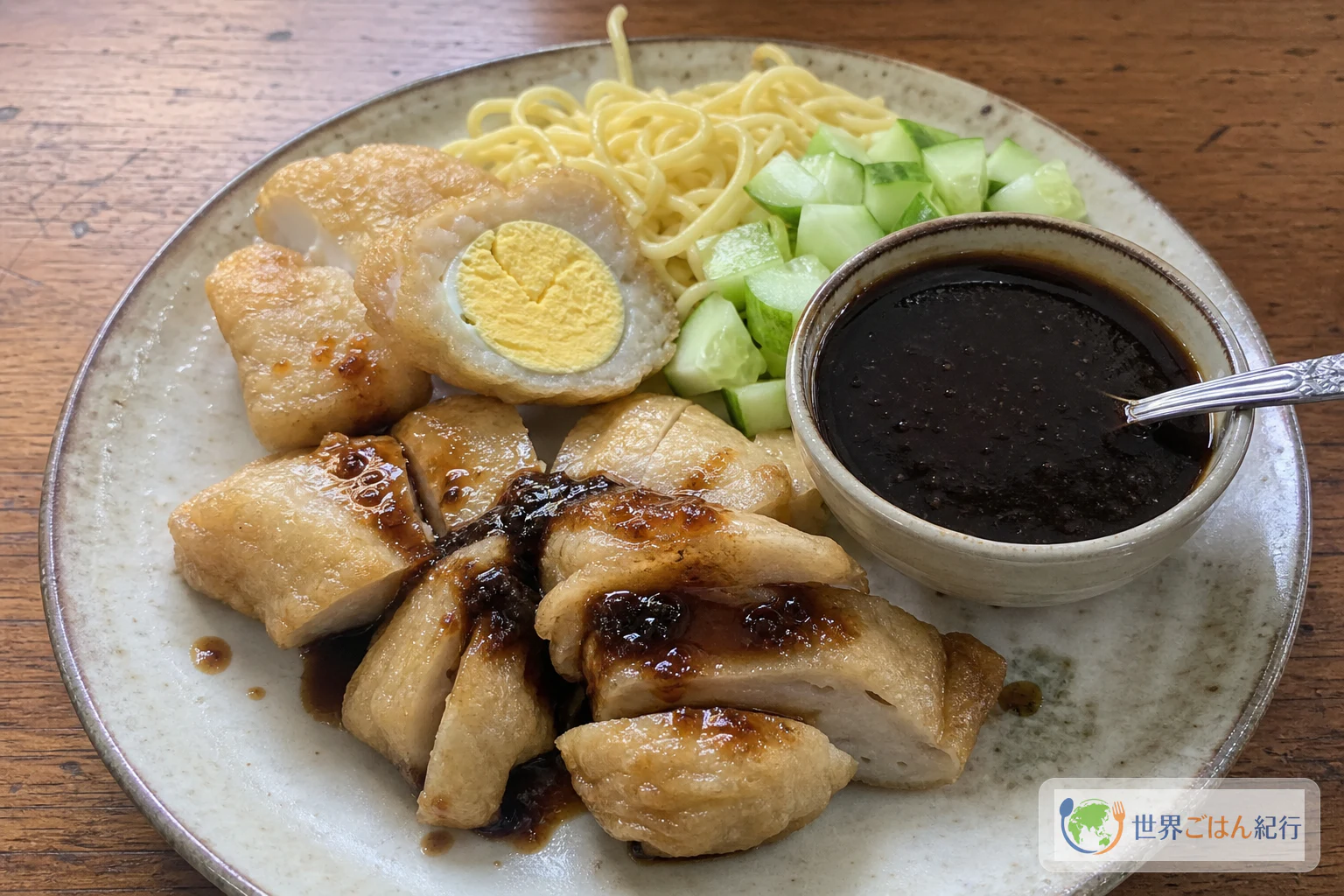
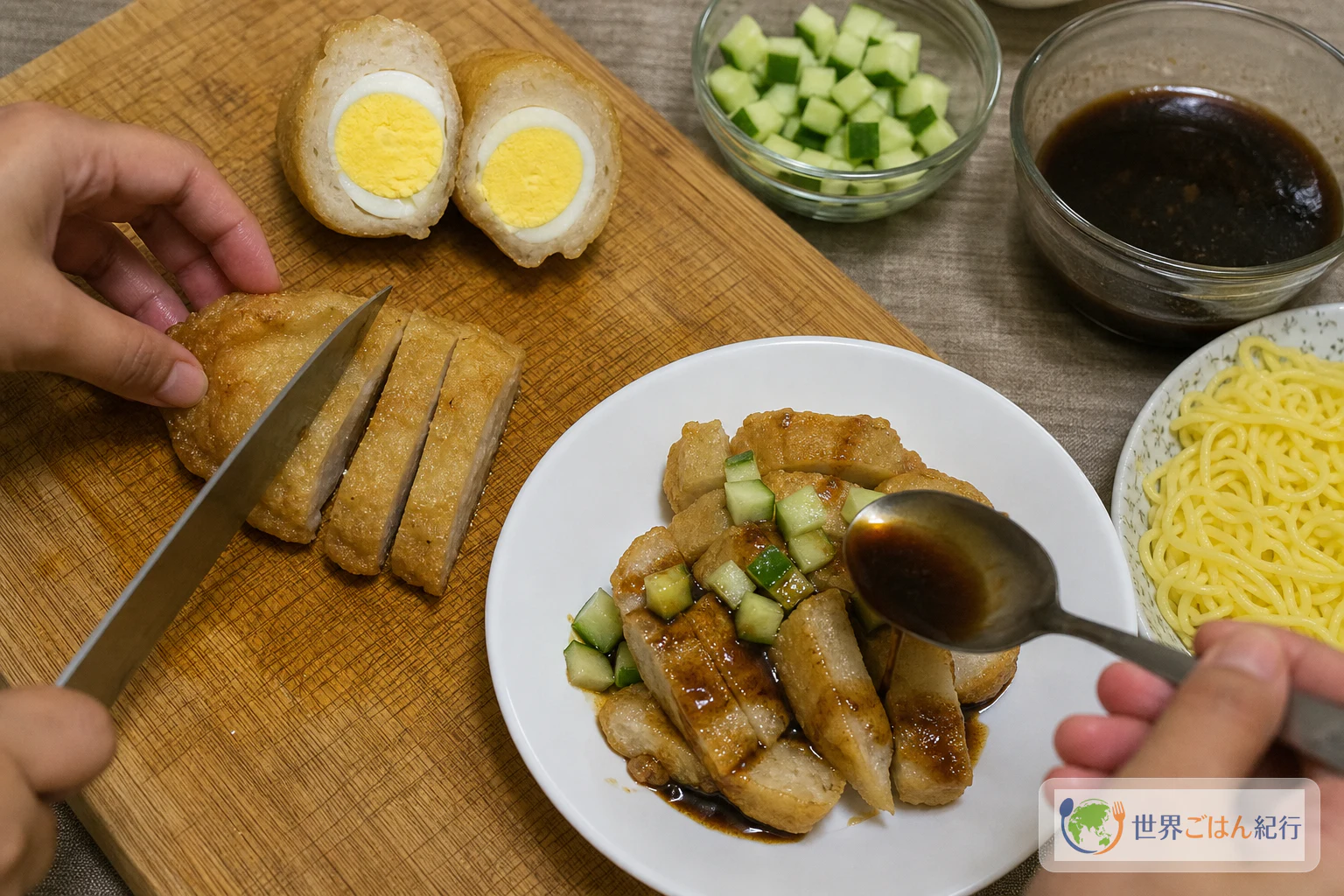
Cut a freshly fried fish cake open and only the outside is thinly crisp, while the inside is white and chewy. Pour over a sweet-sour sauce so dark it is nearly black, and tamarind, garlic, chili and palm sugar rise with the steam. This is pempek, the fish cake of Palembang in South Sumatra, Indonesia: ground fish and a sago or tapioca dough, boiled, fried just before serving and eaten with a sweet, sour, spicy sauce called cuko. The cucumber and little tangle of yellow noodles beside it make sense from the first bite, because the fish's savor, the springy starch and the sharp sauce all need something fresh to catch them.
Pempek in Palembang
Pempek is South Sumatra's signature dish of fish, tapioca starch and cuko, shaped by Palembang's history and geography, its supply of fish and the trade in sago and palm sugar. It comes in many shapes, from kapal selam with an egg inside to long lenjer and round adaan, and you meet it at street stalls and in souvenir boxes. Locally, cooks use fish with springy flesh such as tenggiri.
Pempek is the Indonesian spelling. Around Palembang it is also called mpek-mpek or empek-empek. Cuko is spelled close to the local pronunciation.
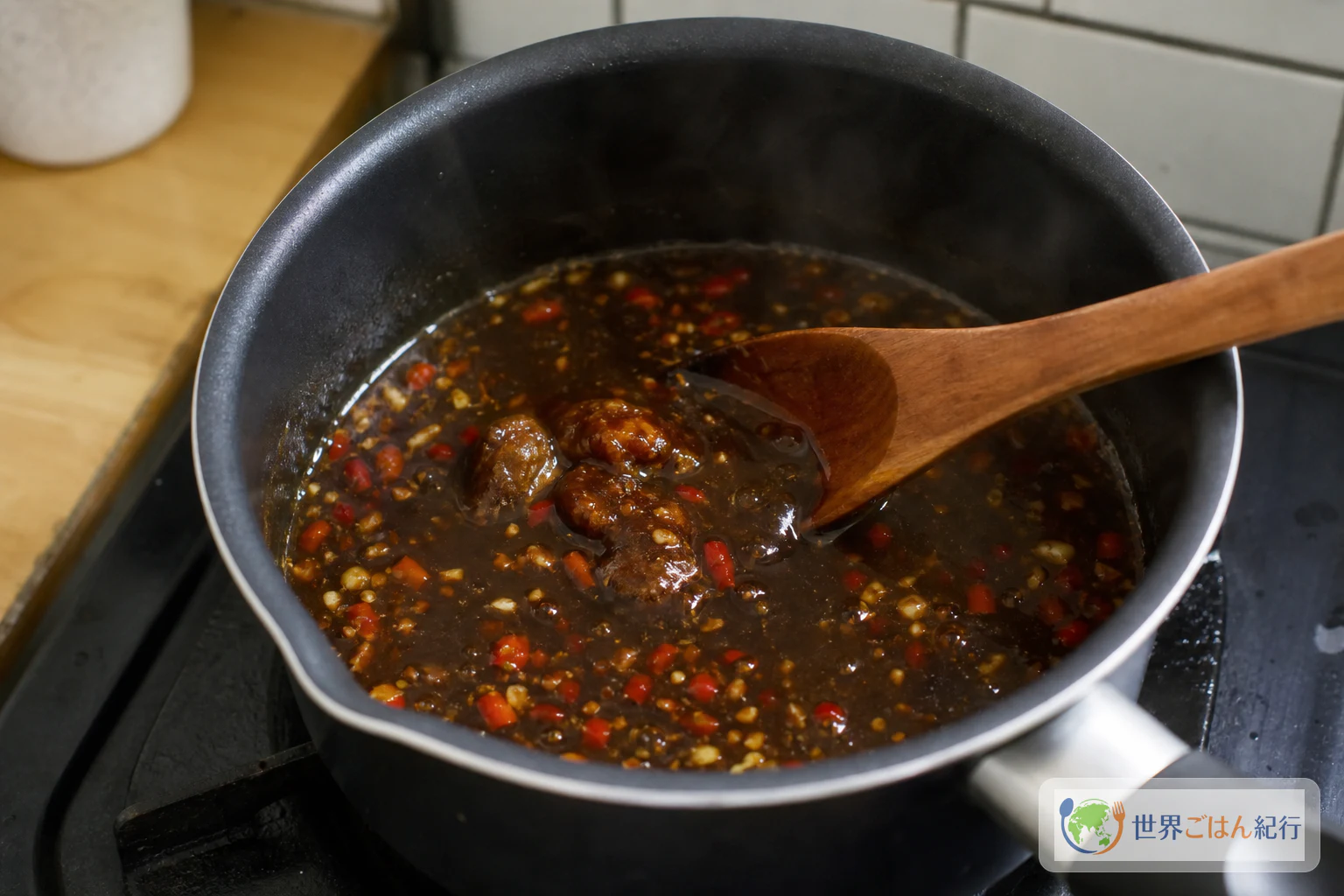
Cuko is what makes pempek pempek. Palm sugar, water, tamarind, garlic and chili simmer together until sweet, sour, spicy and the bite of garlic come together, and locally the plate also gets cucumber, yellow noodles and dried shrimp powder. Unlike a rich meat dish such as sate Padang, pempek centers on fish and a light acidity, and its use of sago or tapioca starch links it to eastern Indonesia's papeda.
| Local element | Role | Practical home choice |
|---|---|---|
| White fish such as tenggiri | Savor and springiness | Fresh cod, pollock, swordfish, frozen surimi |
| Sago, tapioca | Chewy dough | Tapioca starch as the base; don't overdo it |
| Cuko | Sweet-sour, spicy sauce | Tamarind, palm sugar, garlic, chili |
| Kapal selam | A large shape with egg inside | Wrap a small amount of beaten egg, not a whole boiled egg |
| Lenjer | Long shape | Good for a first try. Holds its shape |
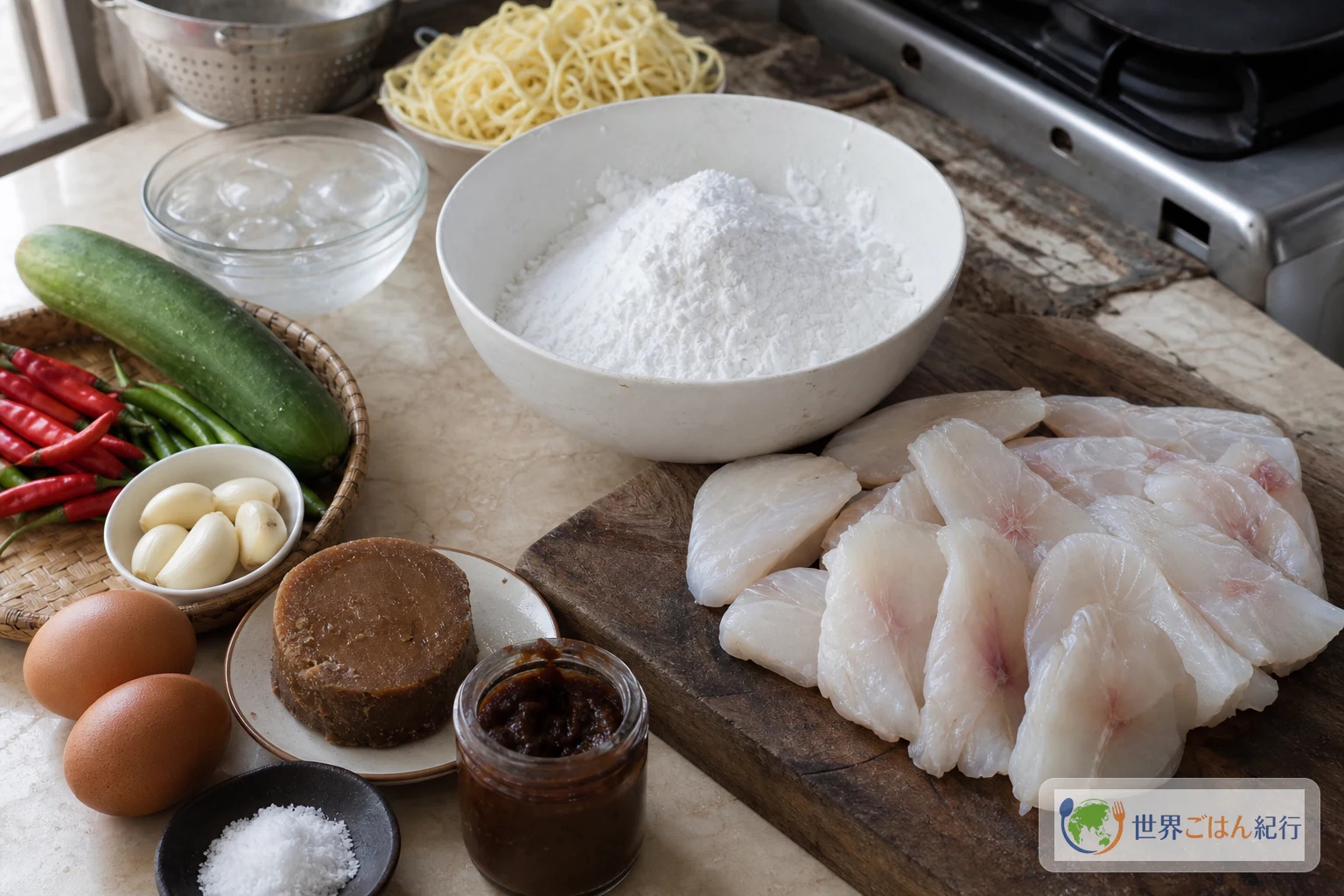
Ingredients: Fish Cakes, Cuko and Accompaniments, Measured Separately
Serves 4 as a main dish, or six as a snack. Wet white fish makes the dough slump. If you use fillets, press them well with paper towels before weighing.
This dish contains fish and eggs. Depending on the product, it can also contain wheat, soy and shrimp. Check the ingredient labels for dried shrimp powder and commercial surimi. Because it is made from fish paste, cook it through to the center by boiling and frying.
Choosing Fish, Starch and Tamarind for Pempek
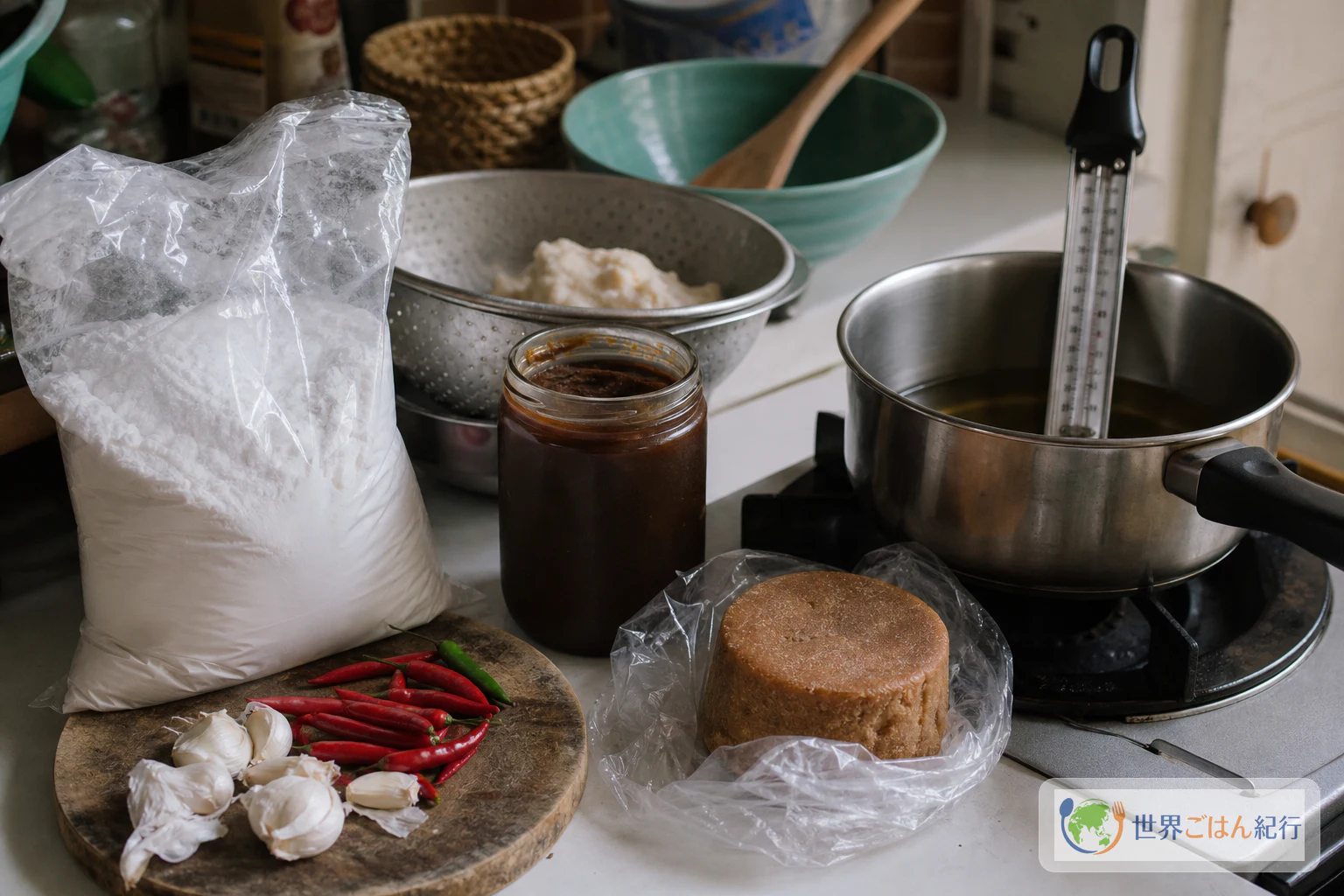
White fish from an ordinary supermarket is fine; skip the pricey fish. Pressing out moisture, mixing cold and keeping the tapioca starch in check matter far more. Tapioca starch, tamarind paste and a thermometer (which keeps the frying oil steady) are easiest to find at a specialty or online shop.
Tapioca starch decides pempek's springiness, and tamarind is the core of cuko's acidity. Cuko made with dark sugar alone is just a sweet sauce; once tamarind's sourness goes in, the fried fish cake suddenly moves toward Palembang. Pickled plum and lemon add sourness too, but the aroma is different.
In general, you get closer to the original by protecting the amount of fish, the amount of starch and the acidity of the cuko than by hunting down the same fish used locally. Let the dough get too hard and it becomes a different food.
| Where you hesitate | Direction to protect | Practical home choice | Direction to avoid |
|---|---|---|---|
| Fish | Mild white fish with springiness | Fresh cod, pollock, swordfish, frozen surimi | Using only a strongly fatty fish |
| Starch | Chewy but not too hard | Adjust from 8 oz (220 g) tapioca starch | Adding starch only to shape more easily |
| Moisture | Develop stickiness while cold | Add ice water in portions | Rescuing a slumped lukewarm dough with starch |
| Acidity | Tamarind's dark sourness | Use tamarind paste | Making it shallow with vinegar alone |
| How to eat | Lighten it with cuko and cucumber | Yellow noodles, cucumber, a small bowl of cuko | Serving fish cakes without sauce |
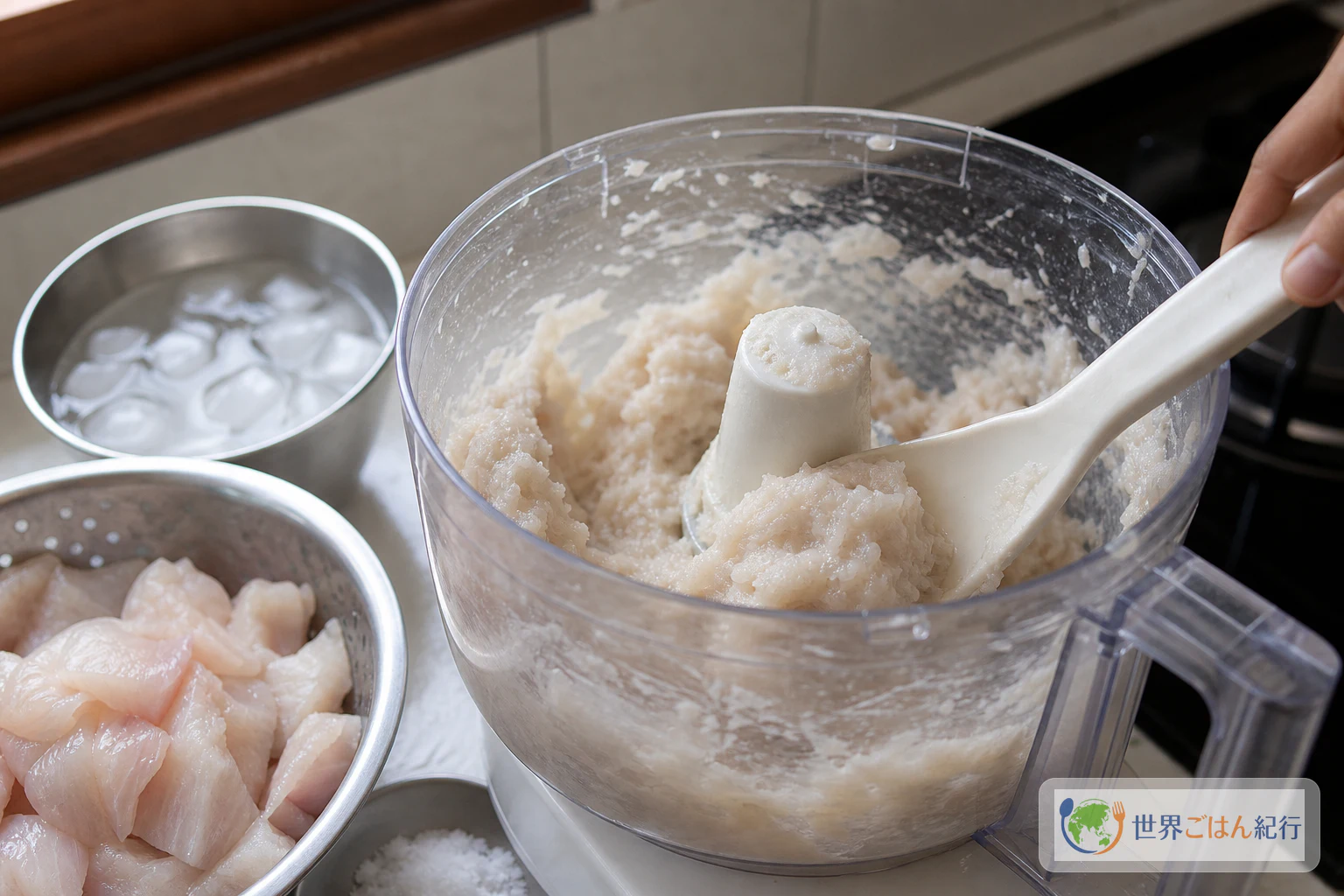
Frozen surimi works well, but salt and moisture vary by product. Read the label, and if it seems salty, reduce the salt to up to 1 tsp; it also releases water as it thaws, so pat it with paper towels. If the surimi is soft, add the ice water gradually, watching for a firmness you can shape. With fish fillets, remove the skin, blood line and small bones, and process the fish straight from the refrigerator to keep the smell down.
Method: Mix Cold Fish, Boil, Then Fry
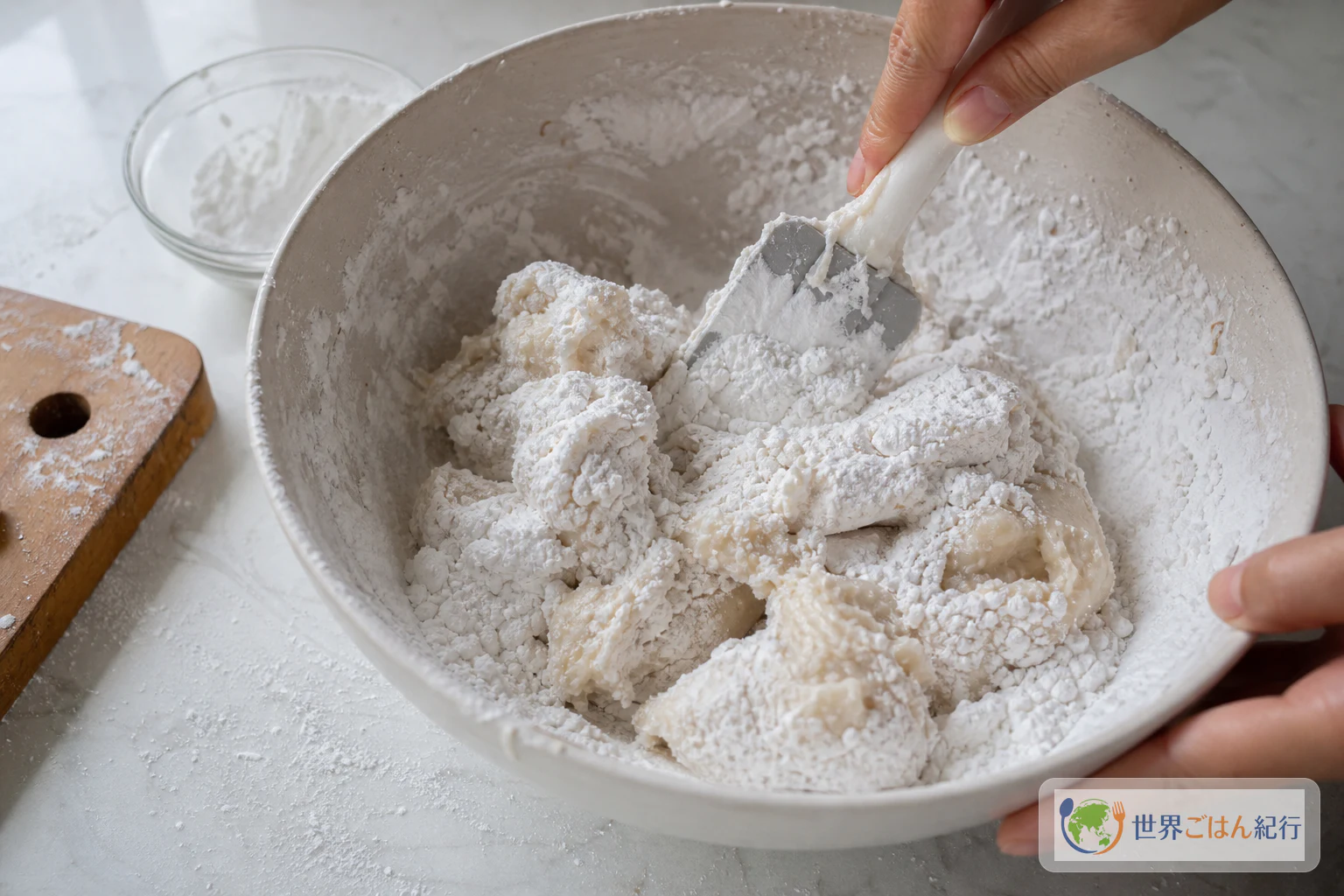
Fish dough is not better the more you knead it. Develop stickiness with salt, and fold in the tapioca starch only at the end. Kneading long after the starch goes in gives a hard, packed texture.
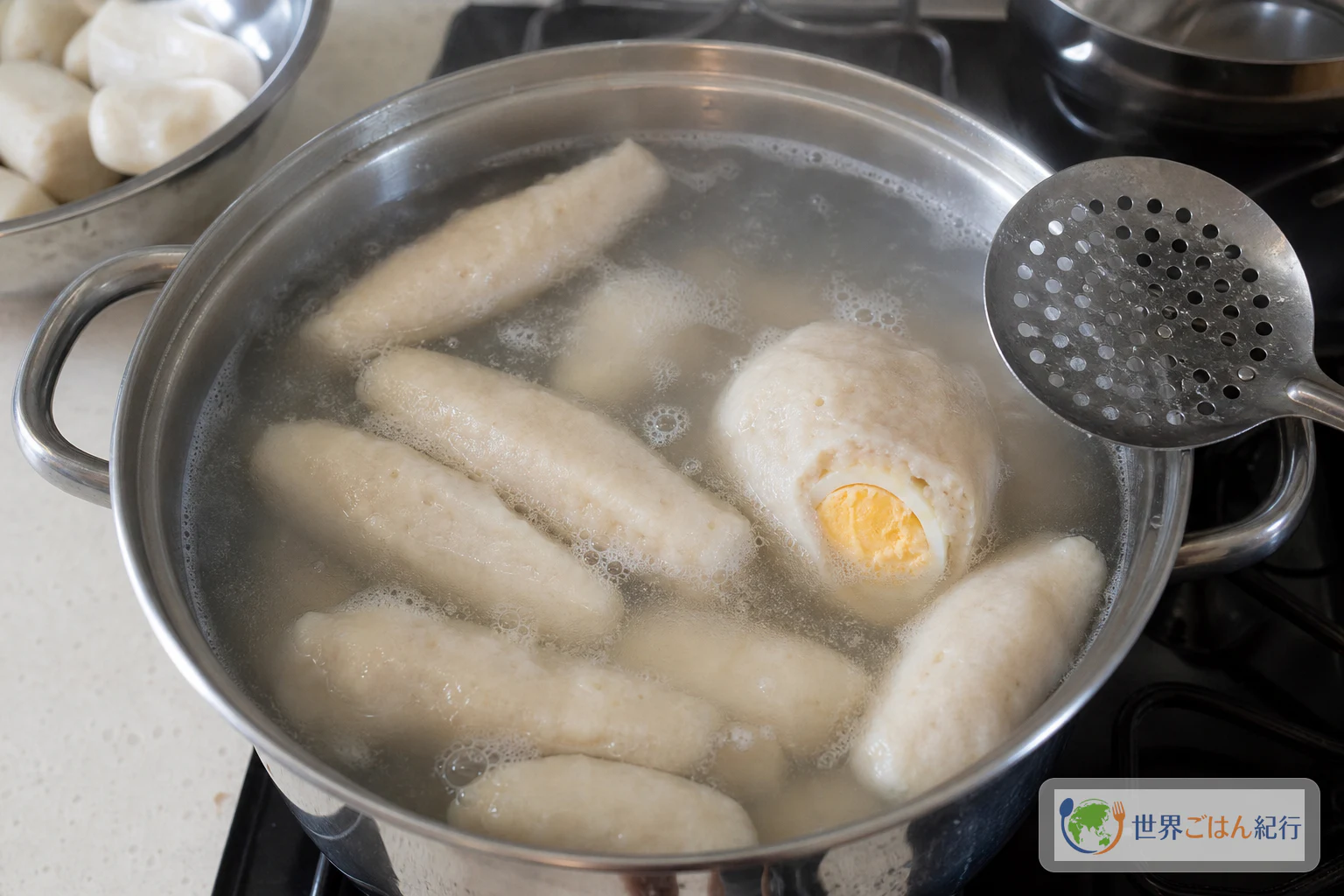
Kapal selam holds an egg, so if the water dances vigorously the seam splits. Bring the water to a boil, then lower it and keep the heat at a level where the pempek floats quietly. If one splits, don't force it closed: boil it through as is, fry it, slice it and pour on extra cuko, and it still comes together at the table.
Pempek Troubleshooting: Hard, Splitting, Greasy, Heavy Cuko
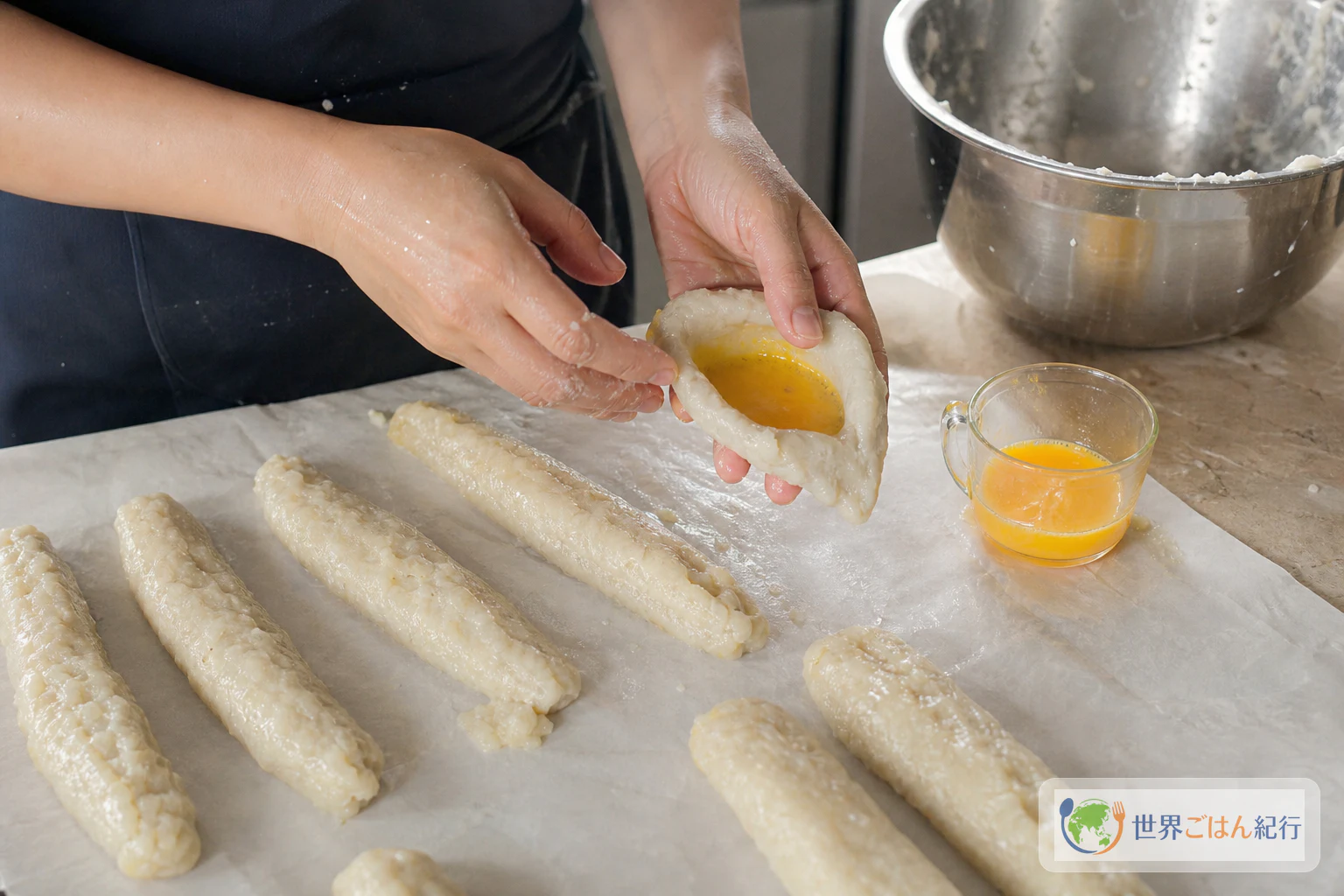
Egg-filled kapal selam is a fun shape, but making every piece with egg from the start makes them burst. For a first batch, make 70 percent of the dough into long lenjer and use the rest for two egg-filled pieces, so the table works even if those fail.
Dough and shaping
Lenjer is the forgiving shape: being simply long, its boiling time is predictable and the cut face takes the cuko easily. Kapal selam draws cheers at the table, but you have to watch the amount of egg, the seam and the heat of the water all at once. When egg-filled pieces split during boiling, there was too much egg, the seam was thin or the water was too vigorous. Stop the beaten egg at 2 tbsp and, after closing, pinch the dough lightly to build thickness.
If the dough is sticky, resist adding starch all at once. Oil your hands and chill the dough for 10 minutes before touching it again; only if it still slumps, add tapioca starch 1 tbsp at a time, remembering that each addition tightens the texture a little.
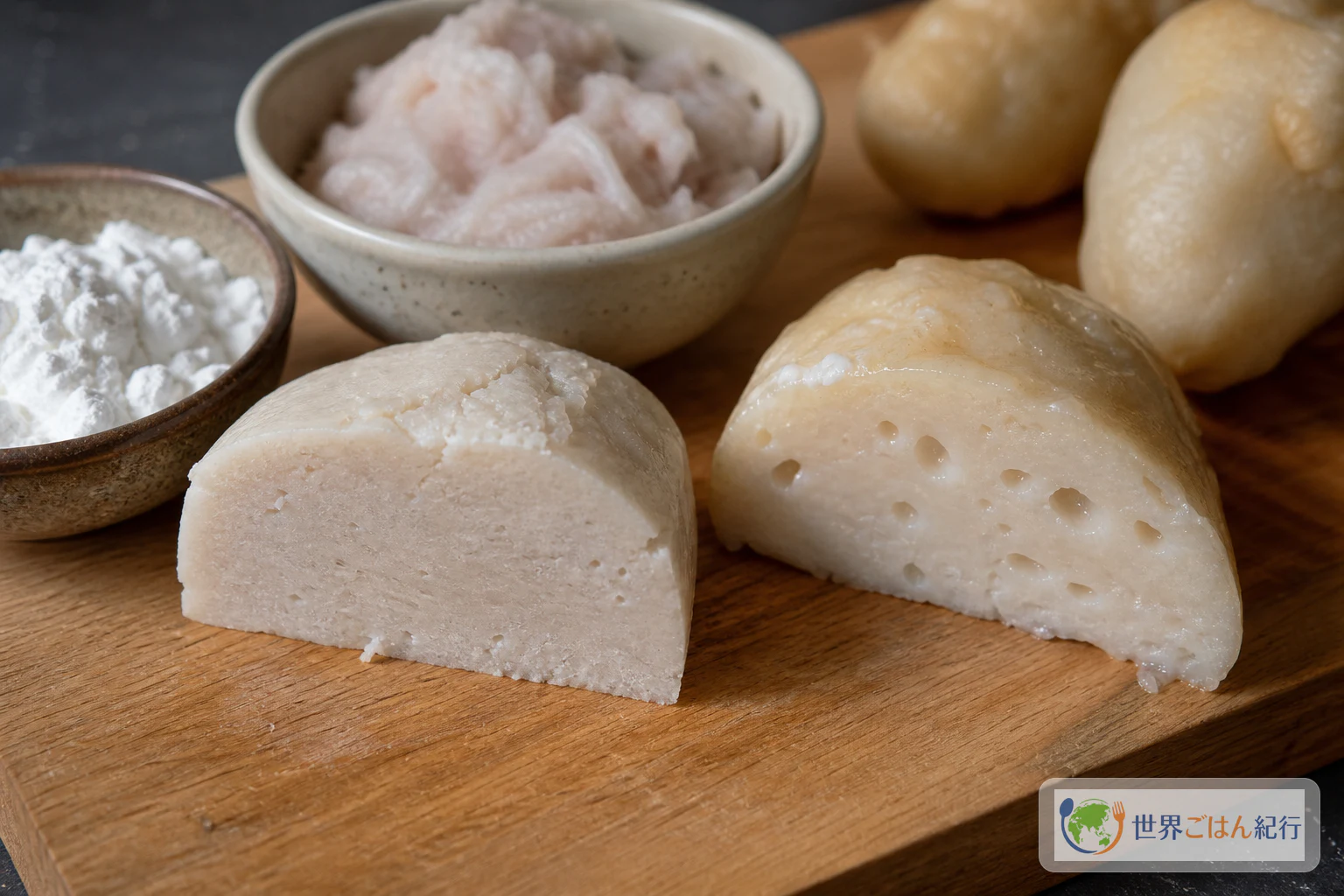
Hard pempek means too much starch, or kneading too long after the starch went in. Next time, reduce the tapioca starch to 7 oz (200 g) and make the fish paste while it is cold. Pieces that have already turned hard are best sliced thin before frying and given extra cuko, since more cut surfaces hold more sauce.
Frying
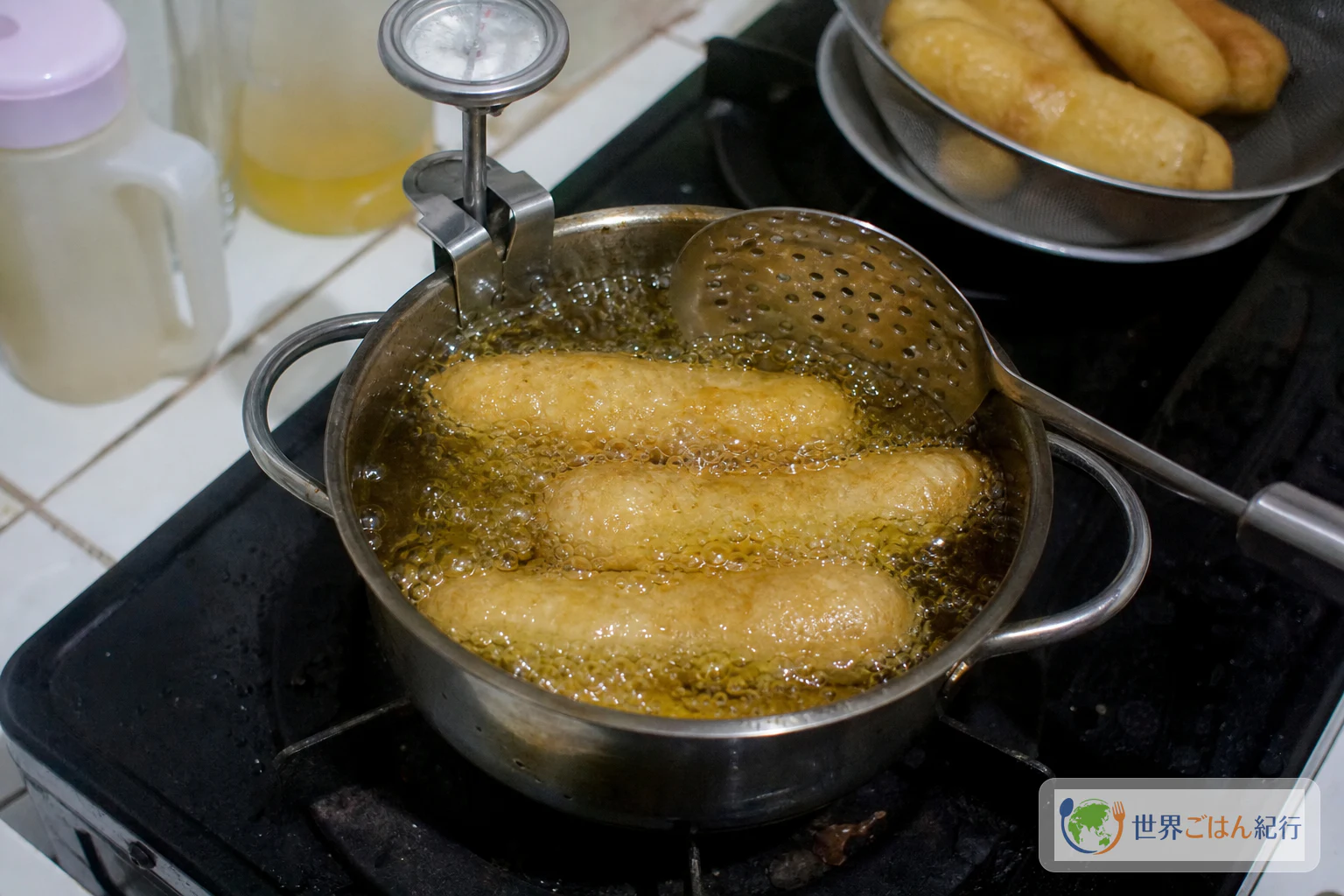
The boiled pempek is already cooked through, so frying is all about the surface. Oil that is too cool leaves it greasy, and oil that is too hot burns only the outside. A thermometer makes it easier to find the point around 350°F (170°C) where the surface lightly colors and the springiness returns.
Cuko and fish smell
Heavy cuko has been reduced too far: add 2 tbsp water, 1 tsp rice vinegar and 1/2 tsp tamarind, and warm over low heat for just 1 minute. If it is thin, simmer 2 minutes at a time over low heat. Adding only sugar makes the fried food heavy, so adjust sourness and salt a little at a time.
If the fish smell bothers you, check the freshness of the fish, its moisture and the amount of garlic. Keeping the fish cold while you work and putting tamarind and garlic properly into the cuko does more than masking it with sake.
Serving, Storing and Pairing Pempek
On the plate
Locally, various shapes share one plate, though at home you can keep it simple. Slice the long ones on the diagonal after frying, cut the egg-filled ones large and set them in the center, and spoon cuko over a little at a time. Dried shrimp powder is optional, but always put cucumber beside them: its cold crunch sits between the oil and the acidity, so the springy fish, soft egg and sour black sauce change with each bite instead of ending as a heavy flour dish. A jar of leftover cuko is worth keeping, too, since the next day it goes on grilled fish, boiled eggs and cucumber.
Storage and reheating
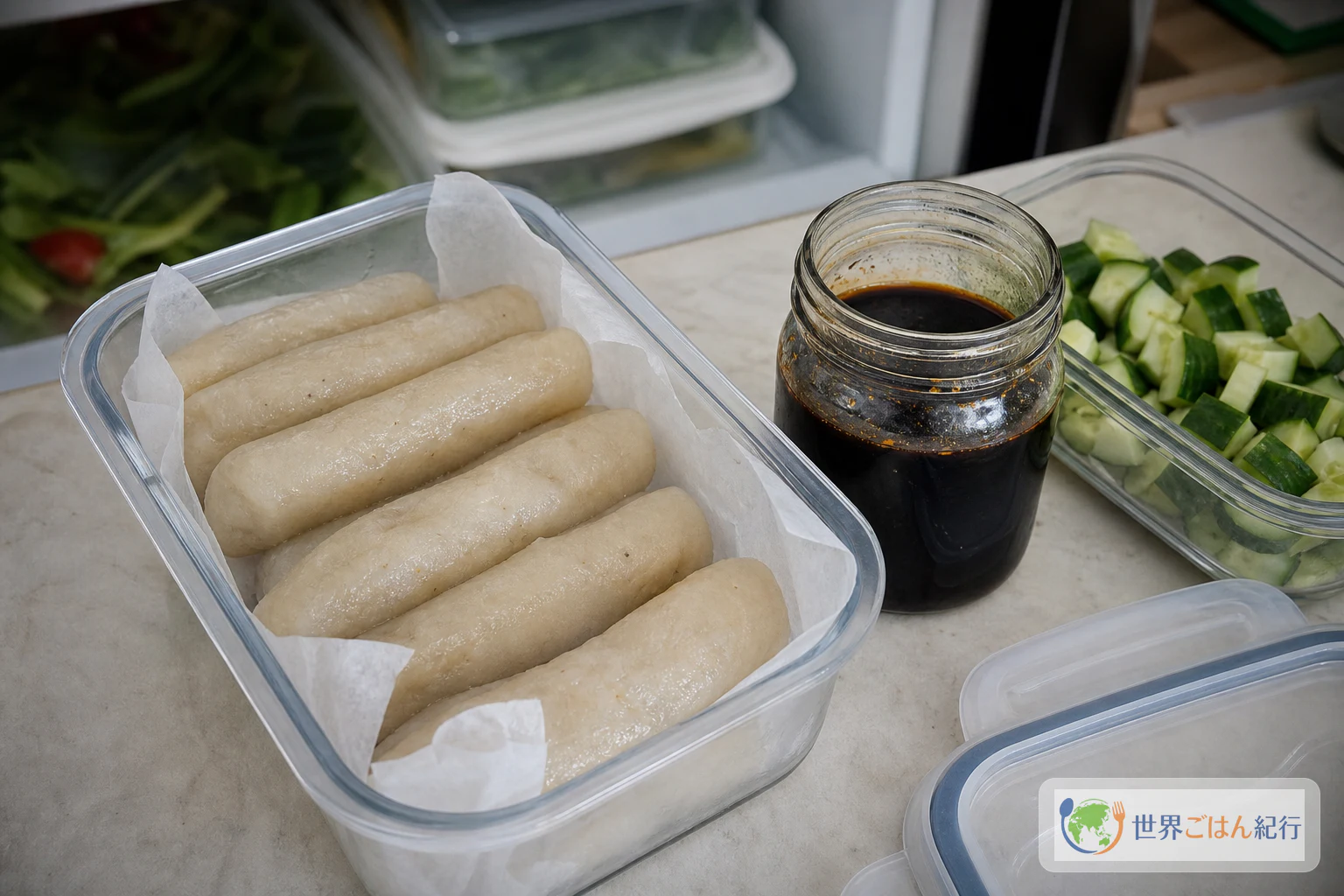
If making ahead, stop after boiling, not after frying. Drain the boiled pempek, let it cool and put it in an airtight container; it keeps in the refrigerator until the next day, or 2 weeks in the freezer. When freezing, wrap each piece in plastic wrap so they don't stick.
For refrigerated pieces, pat the surface dry, warm in 325°F (160°C) oil for 1 minute, then raise to 350°F (170°C) and fry 1 to 2 minutes. Half-thaw frozen ones in the refrigerator and fry the same way while the center is still slightly firm. The microwave alone softens the surface, so if you go that route for a snack, pour cuko over it.
Cuko keeps about 4 days refrigerated. Because it contains garlic and chili, keep it in a clean jar and take out only what you need into a small dish. Its aroma closes up when cold, so warm it in a heatproof container at 600 W for about 20 seconds to bring back the palm sugar and tamarind.
Pairing with other Indonesian dishes
Pempek eats lighter with cucumber, tomato and boiled greens than with a strong fried rice such as nasi goreng. If you want something richer alongside, a brothy soto ayam lightens the table better than a meat-forward rendang.
- Siomay: another dish of fish and tapioca starch, steamed dumplings with peanut sauce.
- Gado-gado: a plate of boiled vegetables that offsets the richness of fried pempek.
- Sambal substitute: a small dish for adding heat at the table.
Frequently Asked Questions
Can I use potato starch instead of tapioca starch?
You can make it set, but the texture changes. Potato starch alone tends to turn gritty as it cools and loses pempek's chewy bite. If you must use it, replace only 1.75 oz (50 g) of the tapioca starch with potato starch.
Can I skip the egg-filled ones and make everything long?
No problem; lenjer alone is the surest first batch. Boil them long and cool, then cut and fry just before eating so the cuko clings to the cut face. Add the egg-filled ones once you are used to it.
Can I make the cuko without heat?
Yes. Leave out the red chili and make it with garlic, palm sugar, tamarind, rice vinegar and salt. Without chili the sweet-sourness comes forward, so just 1 tsp rice vinegar tightens the flavor. Let those who like heat add chili at the table, and the whole family can share it.
Can I eat it boiled, without frying?
Yes, and it is eaten boiled locally too. At home, though, a short fry adds fragrance and suits the acidity of the cuko. On days you want to avoid oil, put 1 tbsp oil in a pan and roll the pieces over medium heat to color them.
Sources: Overseas and Local Information
The Indonesia Travel introduction to pempek was consulted to confirm its Palembang origin, the fish, tapioca starch and cuko ingredients, and the relationship with the fish resources of the Musi River. The Journal of Ethnic Foods paper was used as a basic source for confirming that pempek is tied to Palembang's history, geography and ethnic identity, and for the place of fish, sago, palm sugar and cuko. Tasty Indonesian Food and What To Cook Today were consulted to cross-check the dough, boiling, frying and cuko steps for home cooking.