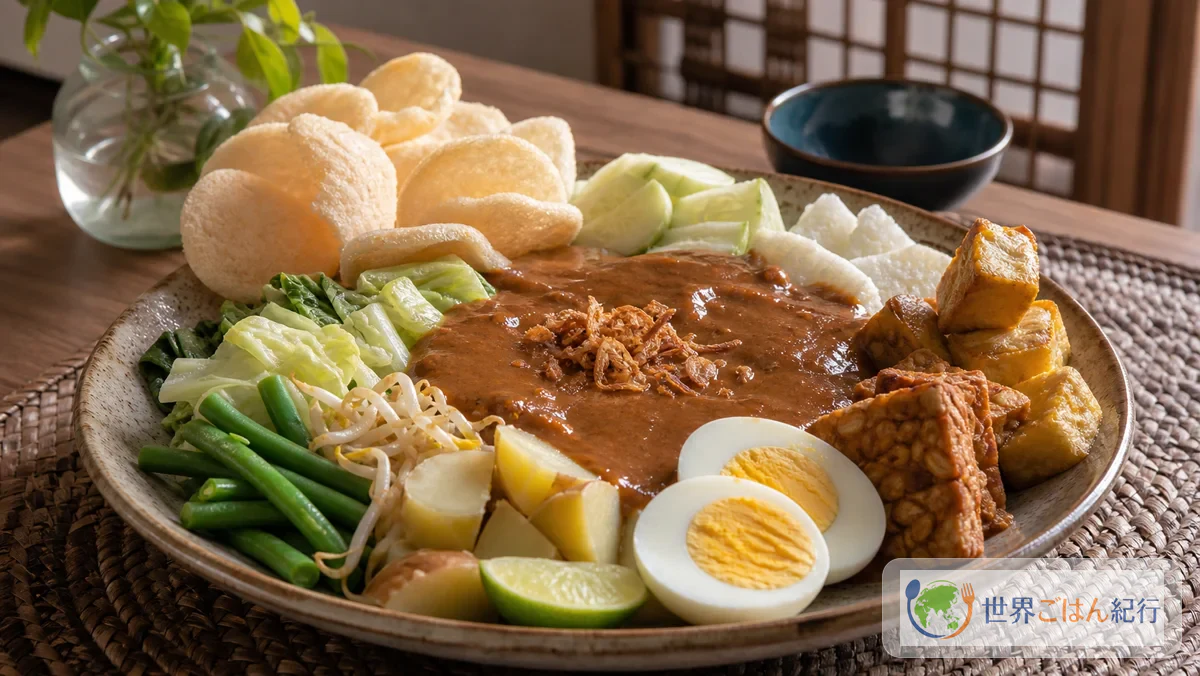
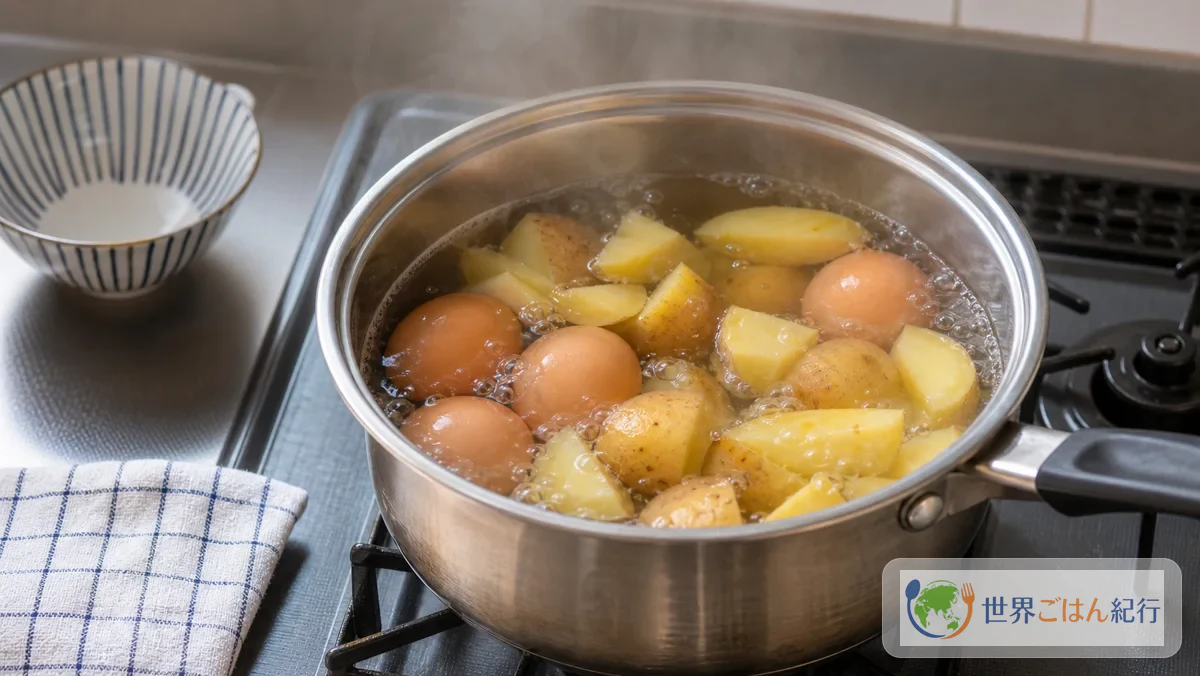
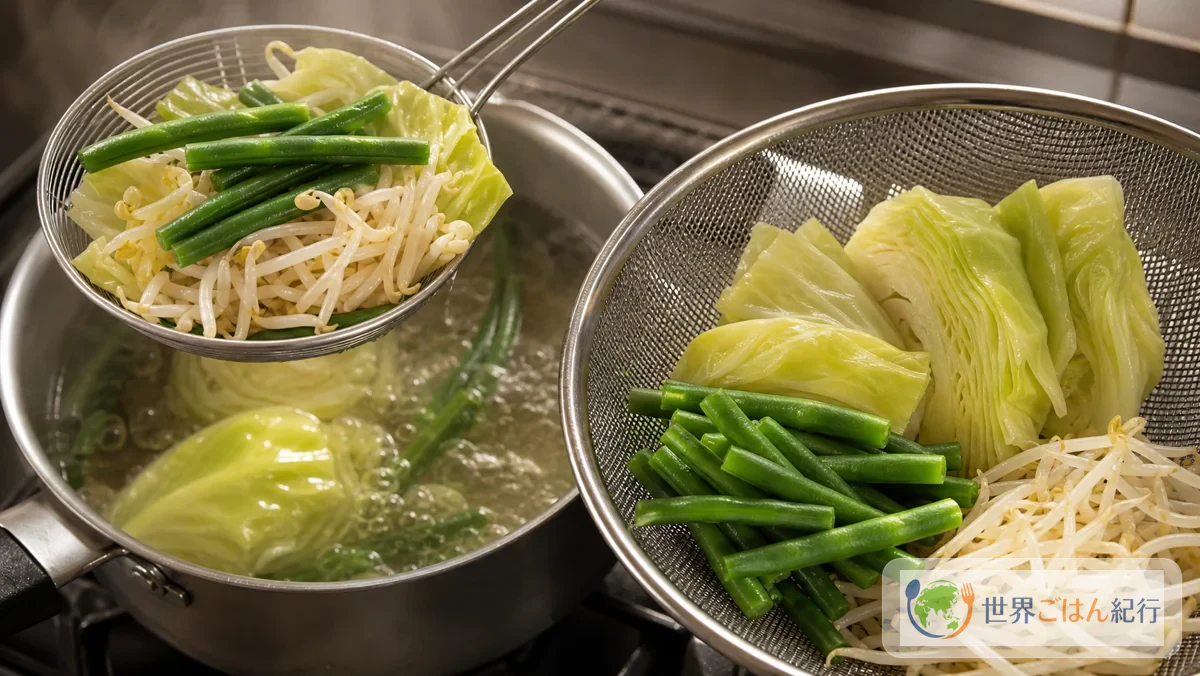
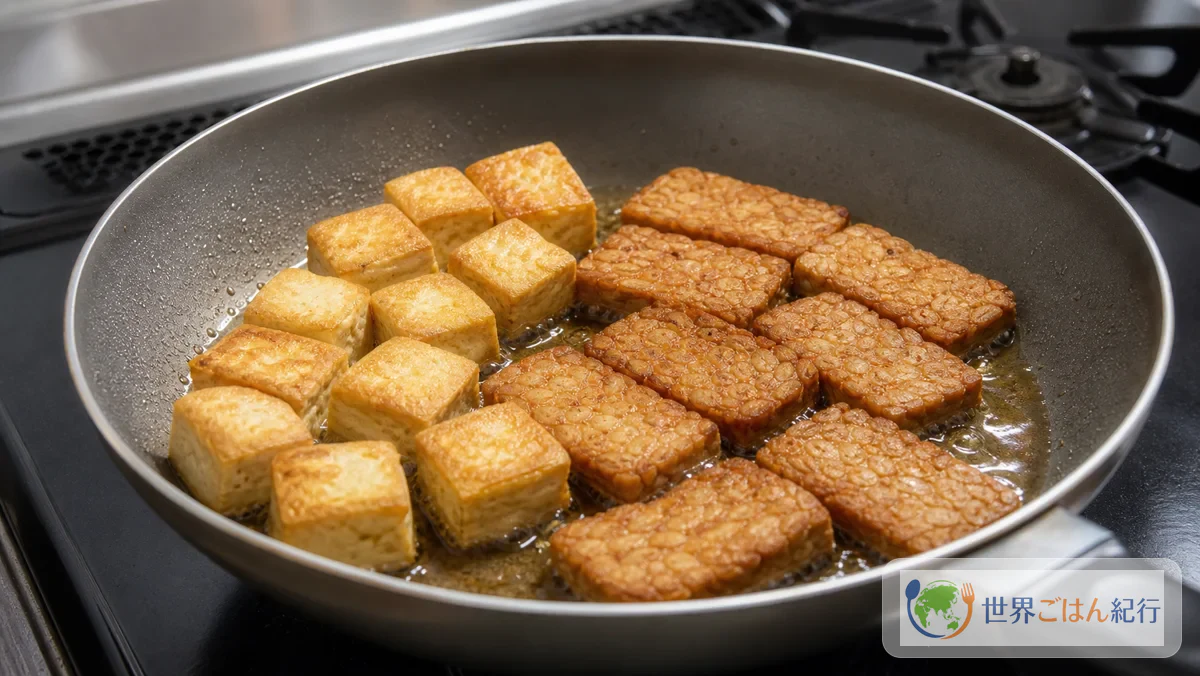
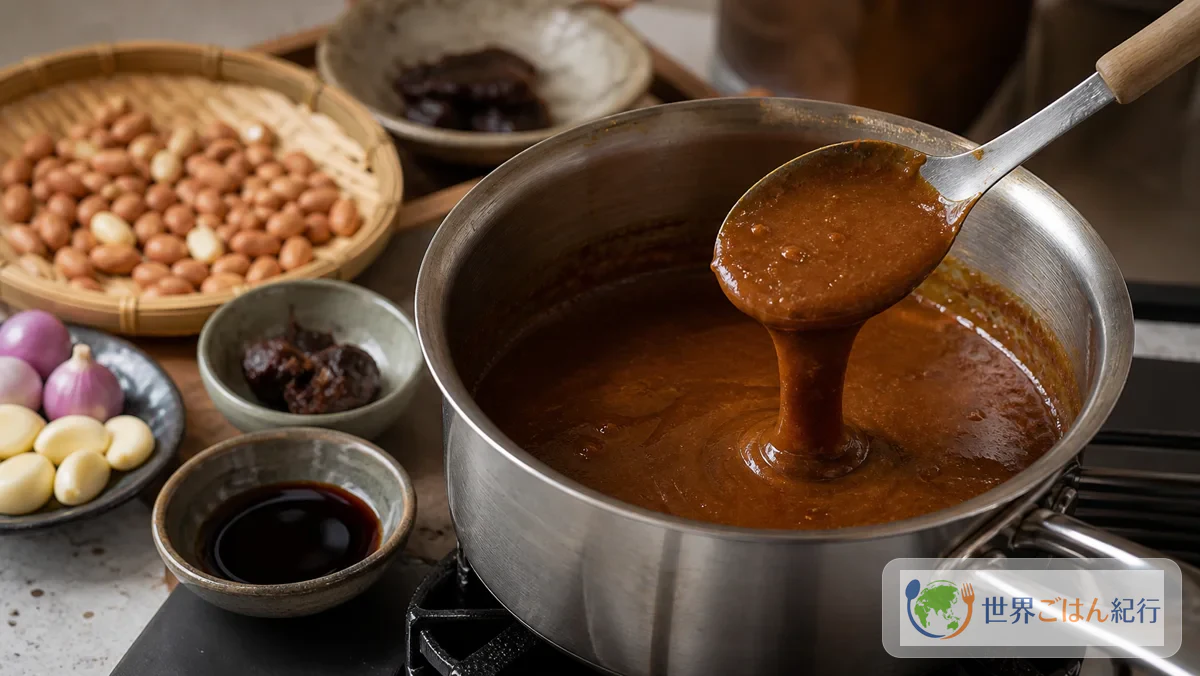
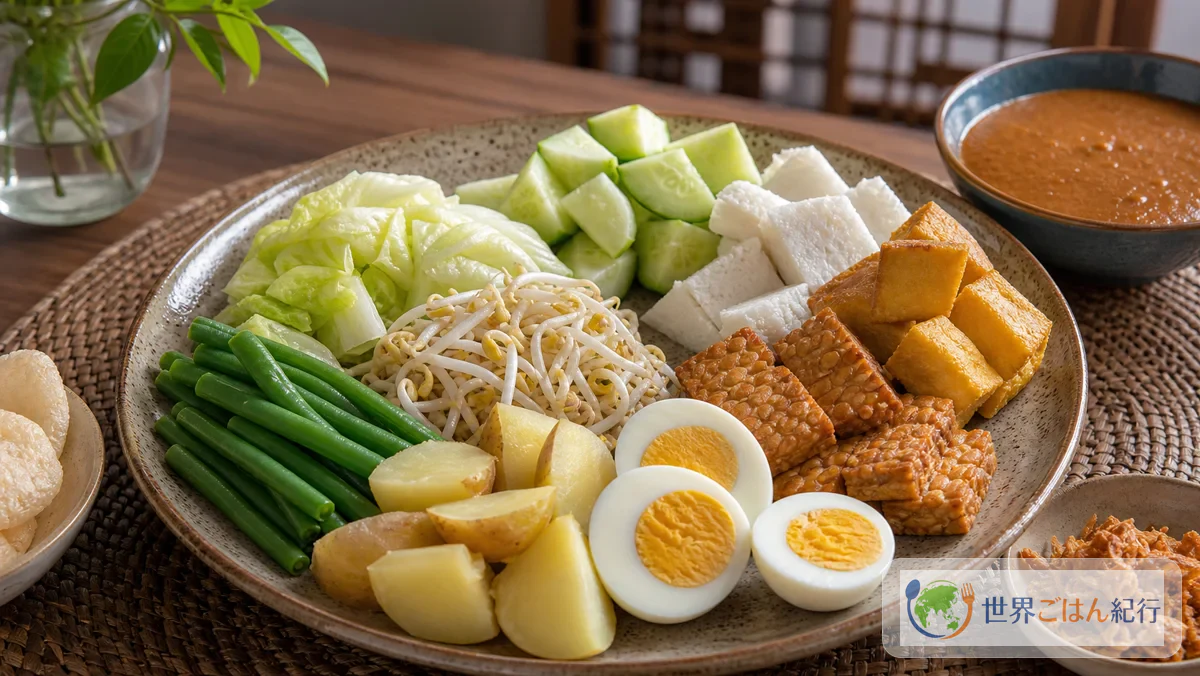
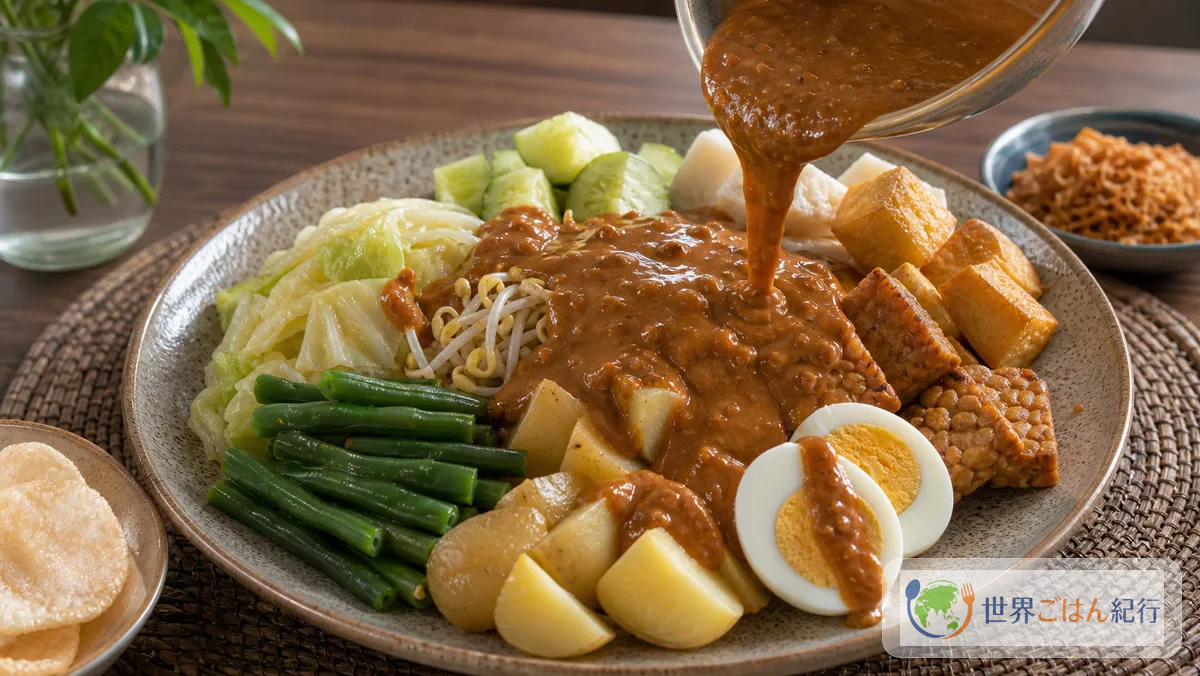
Steam rises off just-boiled cabbage and green beans while potatoes and eggs finish in the same pot. Grilled tofu and tempeh add their own toasty smell. Then you drizzle on peanut sauce warmed in a small pot, and the kitchen suddenly smells like a Southeast Asian street stall. Gado-gado is eaten all over Indonesia: boiled vegetables, potatoes, tofu, tempeh and boiled eggs under a peanut sauce that is sweet, spicy and tangy at once. People often call it an "Indonesian salad," but with warm vegetables, fried soy, eggs, and maybe rice or krupuk, one plate makes a full lunch or dinner.
Gado-Gado in Jakarta and Across Indonesia
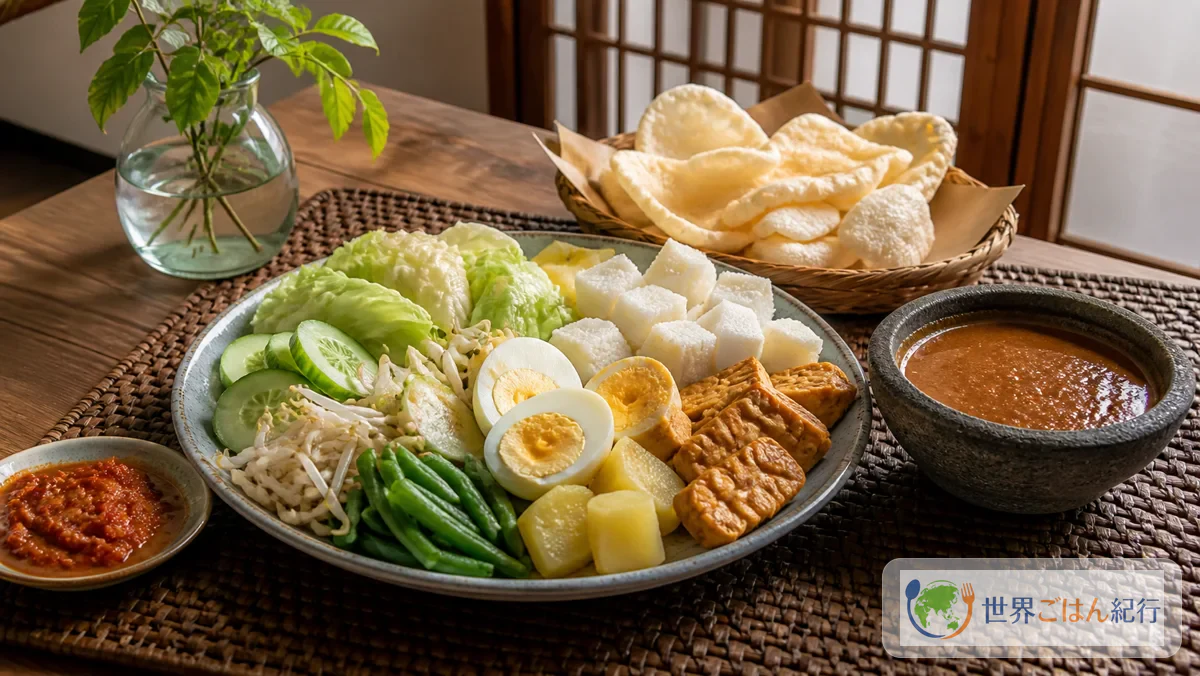
"Gado" means "to mix," and that's how you eat it: you toss the sauce through everything on the plate. So build it to taste good once it's mixed, not just to look pretty. Three things matter most. Don't overboil the vegetables, don't thin the peanut sauce too much, and pour the sauce on just before eating.
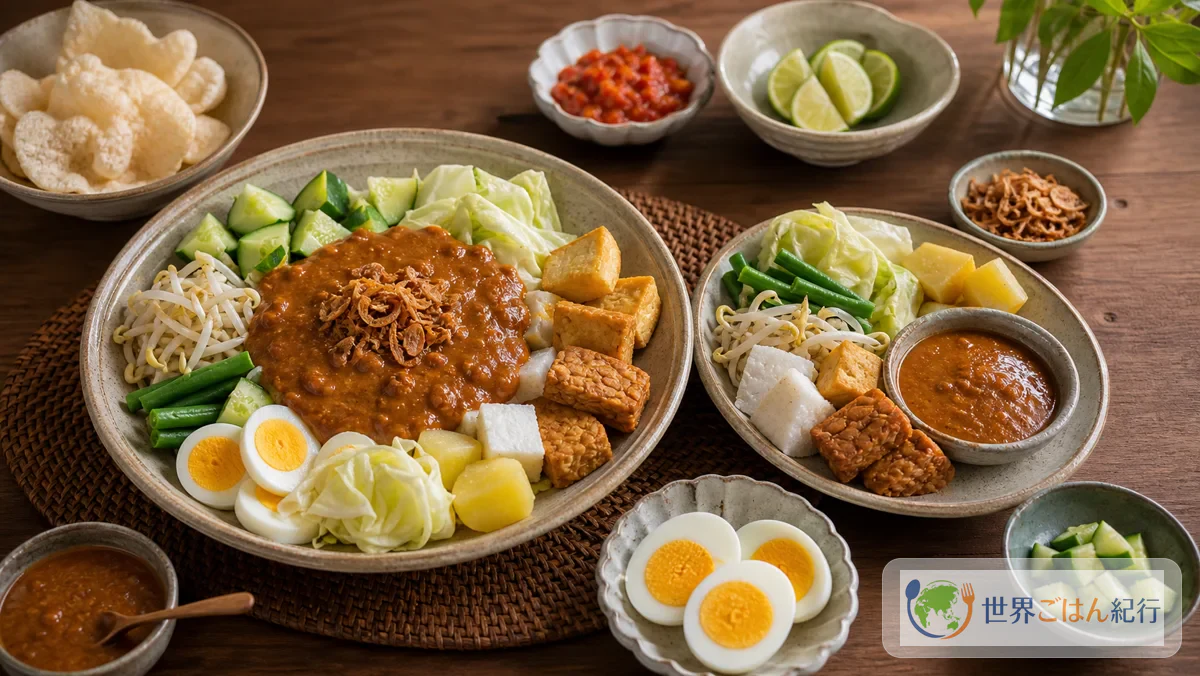
Gado-gado has no single fixed recipe. In Jakarta, many plates add potatoes and lontong to make it a full meal. In East Java, the sauce is poured over the ingredients in the "siram" style, while West Java sometimes leans toward tossing the vegetables in the sauce. Close relatives include pecel, lotek, karedok and ketoprak, which all pair vegetables and tofu with peanut sauce.
| Similar dish | Main difference | Guide for making it elsewhere |
|---|---|---|
| Gado-gado | Boiled vegetables, tofu, tempeh, egg, peanut sauce | Easy to make into a single-plate meal |
| Pecel | Vegetables with a stronger peanut sauce | Pairs easily with rice |
| Lotek | Often the vegetables are tossed with the sauce | Easier with a slightly looser sauce |
| Karedok | Centered on raw vegetables | Fresh cucumber and bean sprouts matter |
| Ketoprak | Rice noodles, ketupat, and tofu | Good as a snack or breakfast |
Quick versions made with peanut butter can taste good. For a more Indonesian flavor, though, think about each element on its own. Kecap manis and palm sugar bring the sweetness and tamarind and lime the sourness, while soy sauce and salt handle the salt and sambal and chili the heat.
In Indonesian it is written gado-gado. The peanut sauce is sometimes called sambal kacang. Recipes add kecap manis, tamarind, chili, garlic, and so on.
Ingredients (serves 4): Decide the Peanut Sauce Before the Vegetables
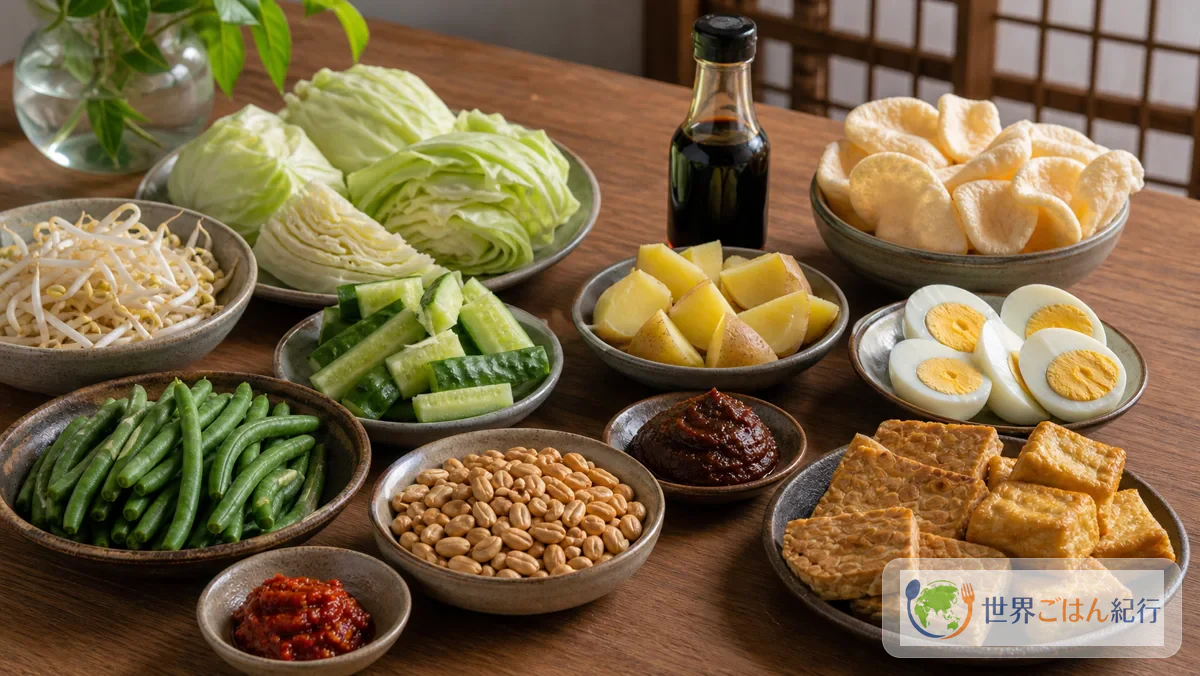
This serves 4 as a main dish, or 6 as a side. Adjust the vegetables to what is in your refrigerator. Mix textures such as potato, cabbage, bean sprouts, and green beans, so the dish stays interesting even after the sauce goes on.
This dish contains peanuts, eggs, and soy. Check seasonings for wheat. If you use krupuk or terasi, check for crustaceans such as shrimp. If you have a peanut allergy, you can switch to a sauce of cashews or almonds, but watch for cross-contact at home.
Substitute for Days Without Kecap Manis
Put 3 tbsp dark soy sauce, 2 tbsp brown sugar or unrefined cane sugar, and 1 tbsp water in a small pot and simmer over low heat for about 3 minutes. Turn off the heat once small bubbles rise and it has a light thickness. It thickens as it cools, so don't reduce it too far. That makes it easier to mix into the gado-gado sauce.
Choosing Ingredients and Substitutes for Gado-Gado
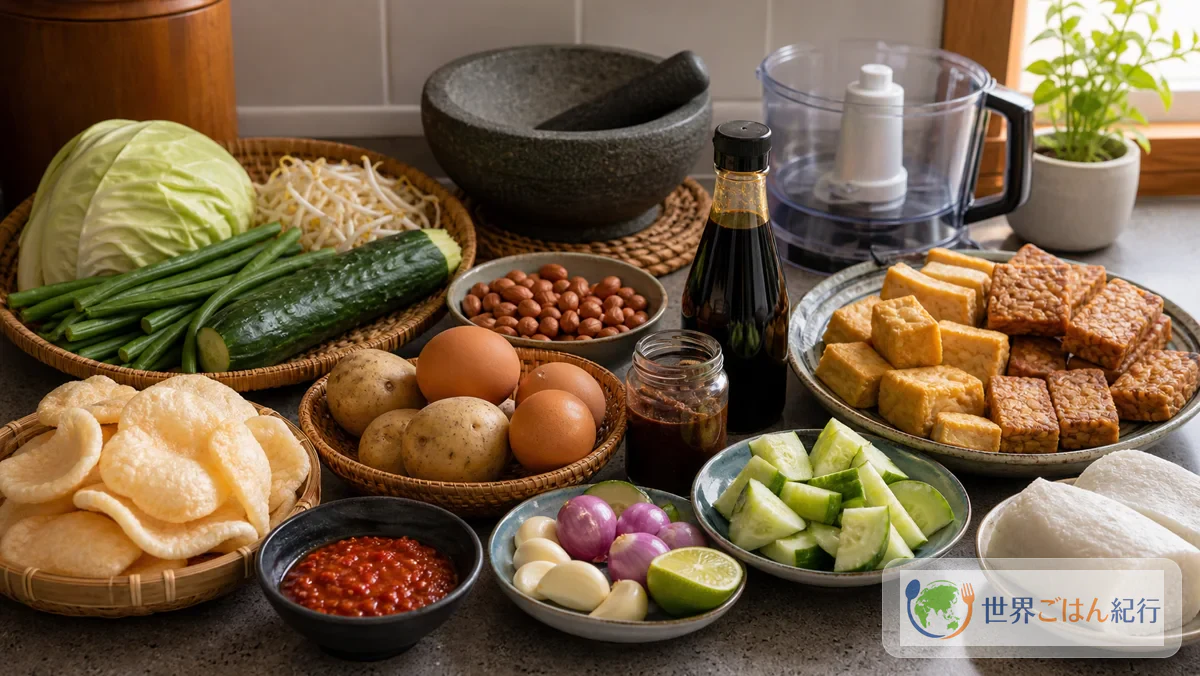
The vegetables and eggs come from any grocery store. The things worth tracking down are kecap manis, which carries the flavor, tamarind for sourness, and krupuk for texture. If you buy only one, make it kecap manis, since you can use it again for sate ayam and mie goreng.
Tamarind's sourness cuts through the sweetness of the peanut sauce. Lime works in its place, but if you cook pad thai and other Southeast Asian dishes, a tube of tamarind paste makes seasoning quicker. Krupuk gives you a light, crunchy bite between mouthfuls of rich sauce. You can leave it out, but with it the table feels much more Indonesian.
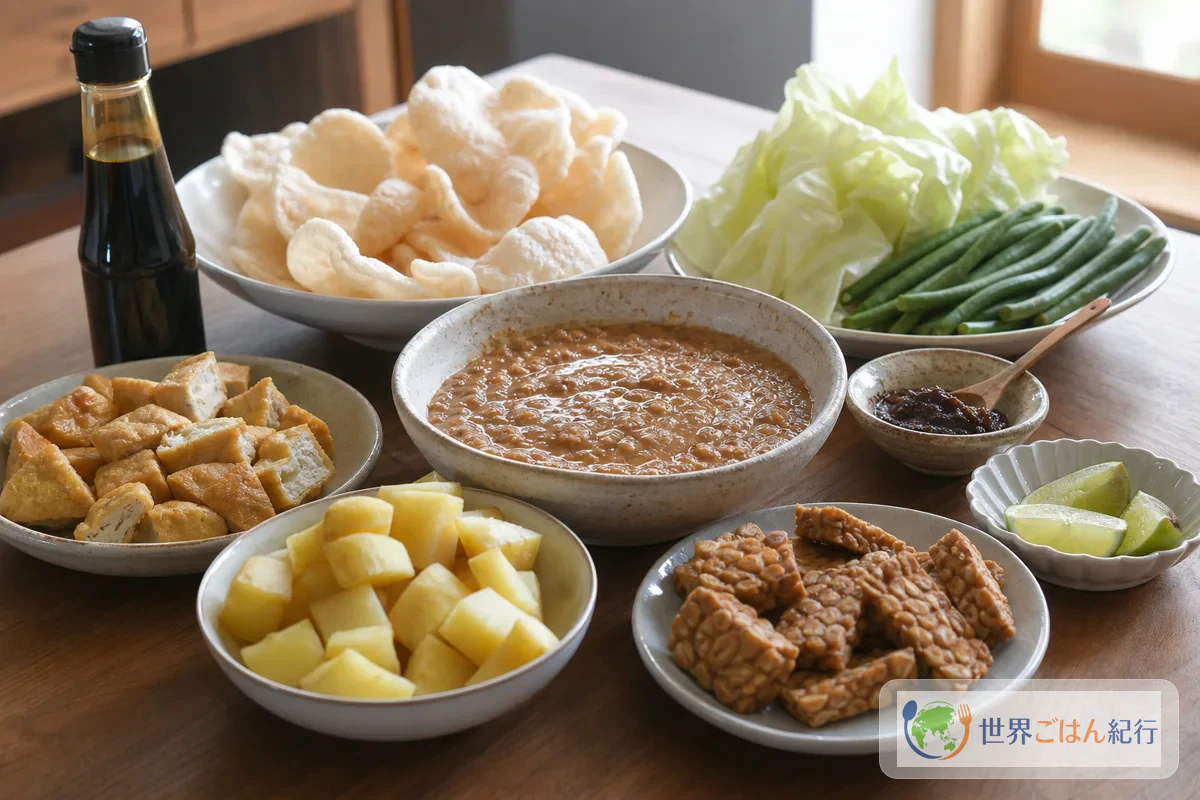
| Ingredient you hesitate over | Closer to Indonesia | Realistic option elsewhere | Judgment |
|---|---|---|---|
| Peanuts | Ground from whole kernels | Unsweetened peanut butter also works | The first time, leaving a few grains gets closer in texture |
| Kecap manis | Bango, ABC, etc. | Simmer soy sauce with brown sugar over low heat | The core of the dish; avoid omitting it entirely |
| Tamarind | Paste or pulp | Lime or lemon juice | The sourness changes, but it works |
| Tempeh | Indonesian fermented soybean food | Fried tofu, grilled tofu | Even a little adds satisfaction |
| Lontong | Compressed rice | Potatoes, firm white rice | Potatoes are easiest at home |
| Krupuk | Shrimp, tapioca, melinjo, etc. | Store-bought prawn crackers | Adds texture. Beware of crustacean allergy |
| Terasi | Fermented shrimp paste | Omit, or a little fish sauce | Strong aroma; fine to omit the first time |
Lontong is hard to keep on hand outside Indonesia, so this version uses potatoes. Cabbage, komatsuna, green beans and bean sprouts stand in for water spinach and long beans. You can swap the vegetables freely, but don't give up on the flavor. Keep the sauce thick, add the sourness last, and finish with krupuk and fried shallots. A thin sauce without sweetness and sourness weakens gado-gado, no matter how Indonesian the vegetables are.
Method: Vegetables Short, Sauce Thick
Gado-gado is not difficult to cook. The difference lies in managing moisture. Boil the vegetables too long and they release water after plating, thinning the peanut sauce. If the sauce is loose from the start, it won't cling to the vegetables or the tofu. Cook the vegetables briefly and aim for a sauce that falls slowly from a spoon.
Mix ¾ cup (200 ml) water gradually into 4 oz (120 g) unsweetened chunky peanut butter, and build the flavor with kecap manis, tamarind, and salt. Putting in all the water from the start tends to make it separate, so knead first and then thin. If using sweetened peanut butter, halve the brown sugar.
Common Gado-Gado Problems and Fixes
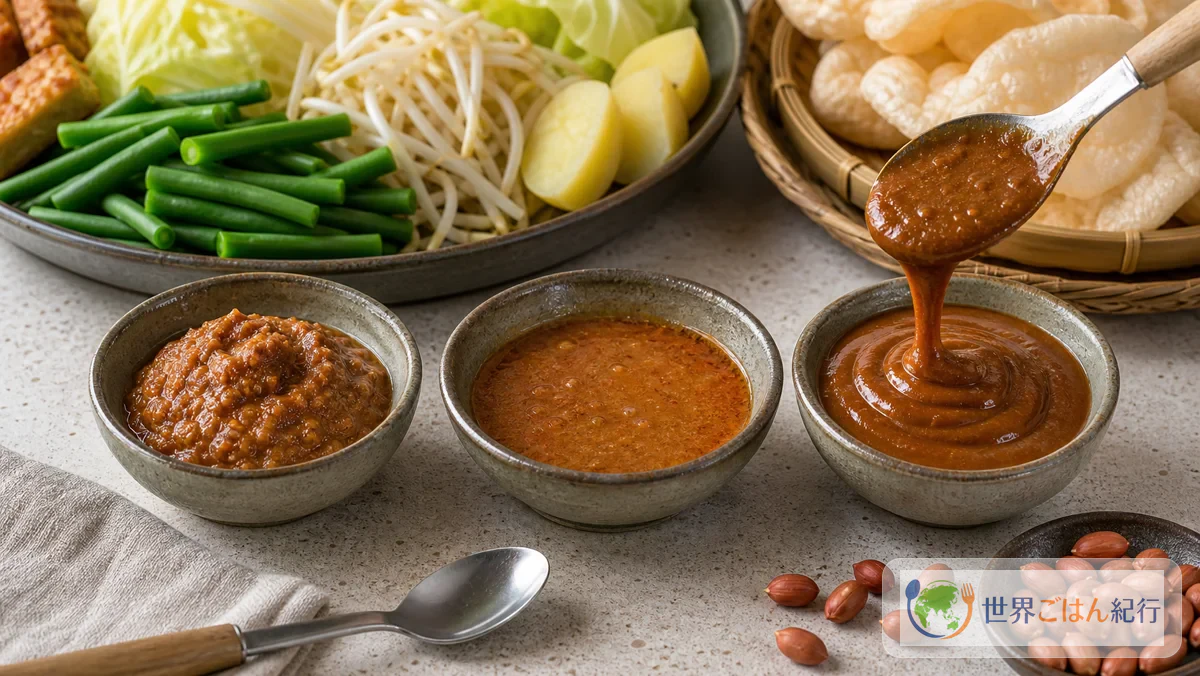
When homemade gado-gado goes wrong, you usually see it before you taste it. Water pools at the bottom of the plate, the sauce turns heavy and clumpy, or the vegetables go limp. The cause is almost always moisture or thickness. The sauce for sate ayam needs richness to stand up to meat, but gado-gado sauce needs body so it clings to vegetables, so drain the vegetables well.
| Failure | Cause | Fix |
|---|---|---|
| Sauce is too thick | Peanuts were reduced too far | Add hot water 1 tbsp at a time and meld for 30 seconds over low heat |
| Sauce is watery | Vegetables weren't drained enough, or too much water | Reduce the sauce alone for 2 minutes over low heat, and press the vegetables with paper |
| Vegetables are limp | Boiled too long | Go back to bean sprouts 30 seconds, cabbage 1 minute 30 seconds |
| Tofu crumbles | Not drained enough, or moved too much while frying | Drain 2 minutes at 600 W, and leave it for 2 minutes per side |
| Tastes only sweet | Lacks sourness and salt | Tighten with 1/2 tsp tamarind, a pinch of salt, and lime |
| Weak Indonesian feel | Missing kecap manis and texture | Add a sweet soy sauce, krupuk, and fried shallots |
Peanut sauce always stiffens as it cools, so a sauce that seems just right when you make it can feel heavy by the time you eat. Stir it once before serving and let some drop from a spoon. If it holds and sets, add hot water. If it runs thin, reduce it briefly over low heat.
Eating and Storing: Sauce Separate, Vegetables the Same Day
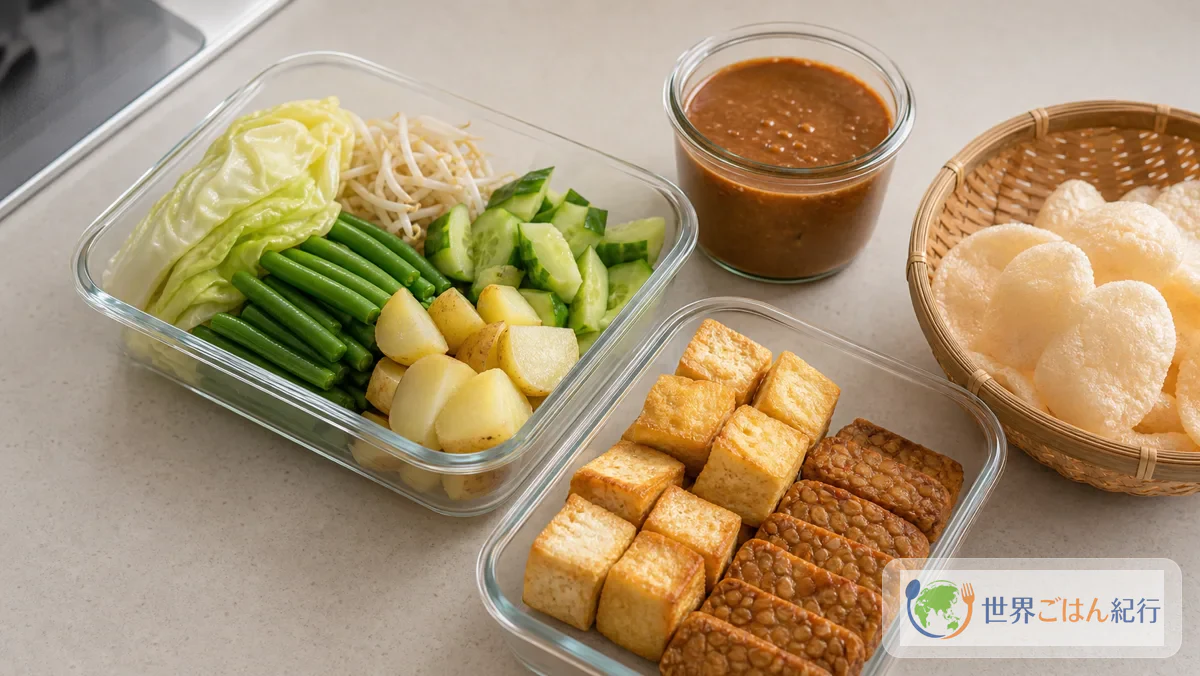
Gado-gado tastes best freshly made and close to room temperature, which is when the aroma comes through. It isn't meant to be piping hot. The vegetables and tofu should be slightly warm and the sauce lukewarm. Let the fried tofu and tempeh cool a little before plating and the dish eats lighter. Sauce straight from the refrigerator smells of very little, so warm it briefly over low heat or loosen it with a splash of hot water. Serve sambal at the edge of the plate rather than mixing it into all the sauce, so everyone can set their own heat.
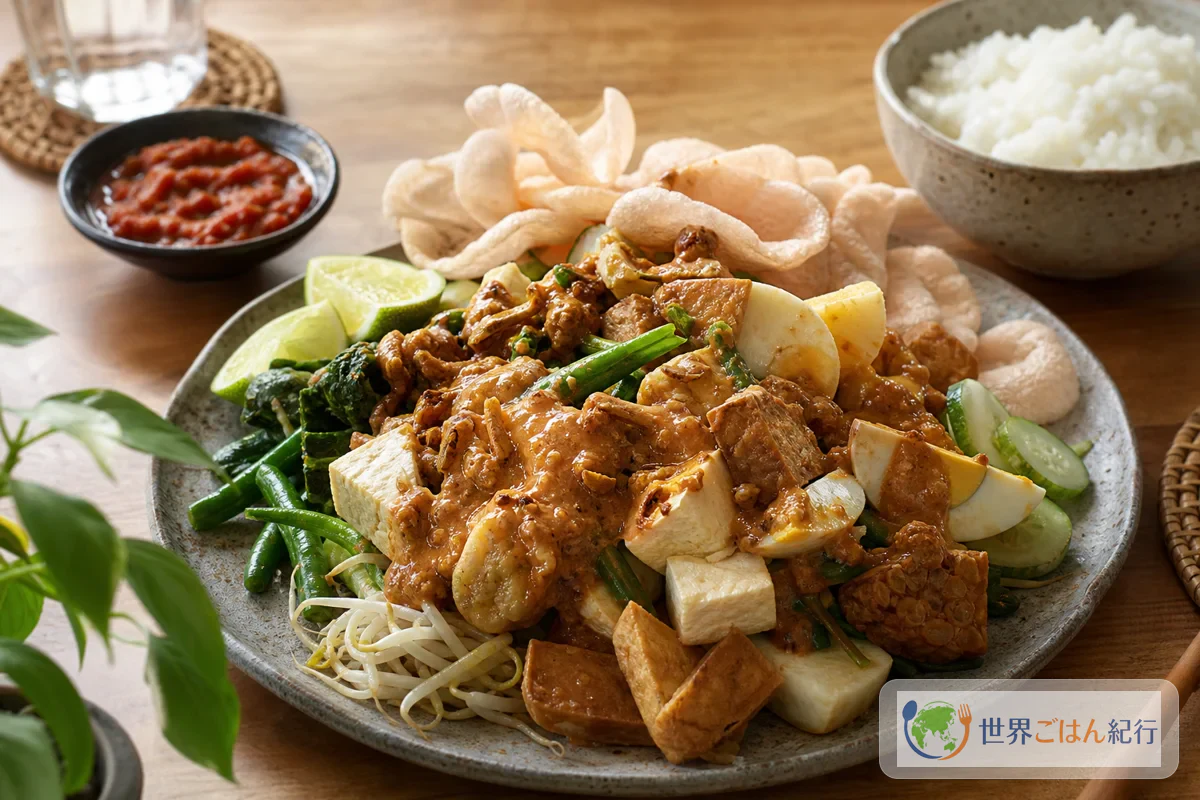
For a fuller Indonesian meal, serve it with nasi goreng, mie goreng, or sate ayam, all of which use the same kecap manis and sambal. If rendang is on the table, load the gado-gado with vegetables and go easy on the sauce so the meal doesn't get too heavy.
For leftovers, store the vegetables, the tofu and tempeh, the peanut sauce and the krupuk separately. The vegetables release water, so eat them the same day. Refrigerate the tofu and tempeh and eat them the next day. Keep the peanut sauce in a clean container in the refrigerator and use it within 2–3 days. Krupuk goes soft, so never store it with the sauce or vegetables.
Can I make it without tempeh?
Yes. Use 5.5 oz (150 g) more fried tofu and fry it over medium heat until the surface is crisp. Still, tempeh's fermented aroma and chew add a lot, so if you can find it, even a small amount helps.
What if I have a peanut allergy?
If you can prepare it safely at home, cashews or almonds make a sauce of similar thickness. Peanuts that share utensils or storage containers with the sauce create a risk of cross-contact, so use separate ones. Think about who will be eating, and put safety first.
What can I pair it with from other Indonesian dishes?
For something light, try soto ayam. For a street-stall spread, nasi goreng or mie goreng are natural partners. When people like different levels of heat, serve a sambal substitute in a separate dish so the whole family can eat comfortably.