
Tofu & soy
39 recipes
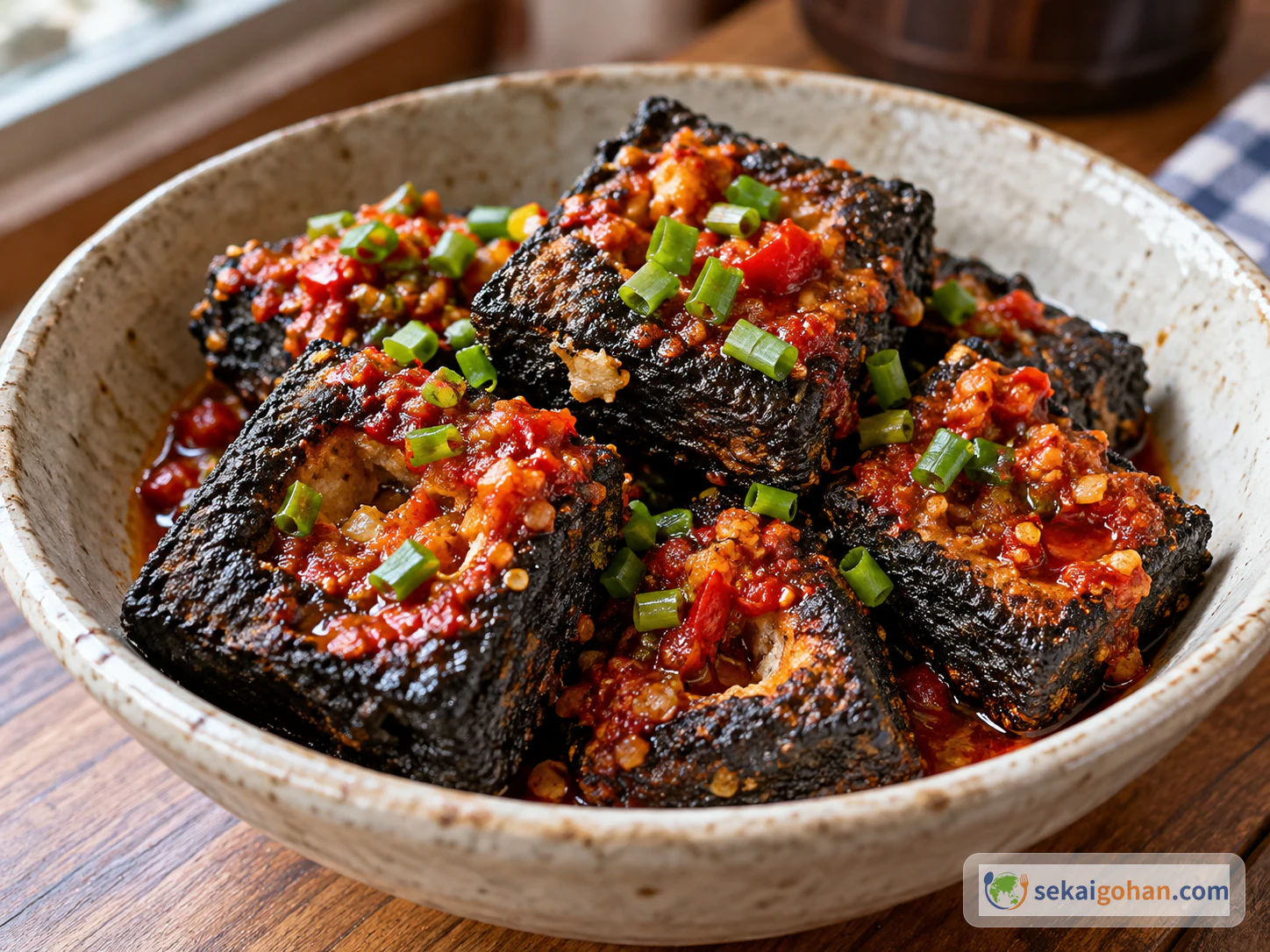
Changsha Stinky Tofu: Black Tofu Fried Twice and Served in a Chili Sauce (长沙臭豆腐)
How to make Changsha stinky tofu at home from 20 prepared black fresh blanks: a gentle rinse, a first fry until the pieces puff and float, a hotter second fry until the surface is firm, then a sauce of small chilies, thin celery, scallion whites and chili-coated fermented tofu, finished with scallion greens and chopped chili paste. Also covers buying sealed, labeled blanks and why plain tofu cannot stand in.
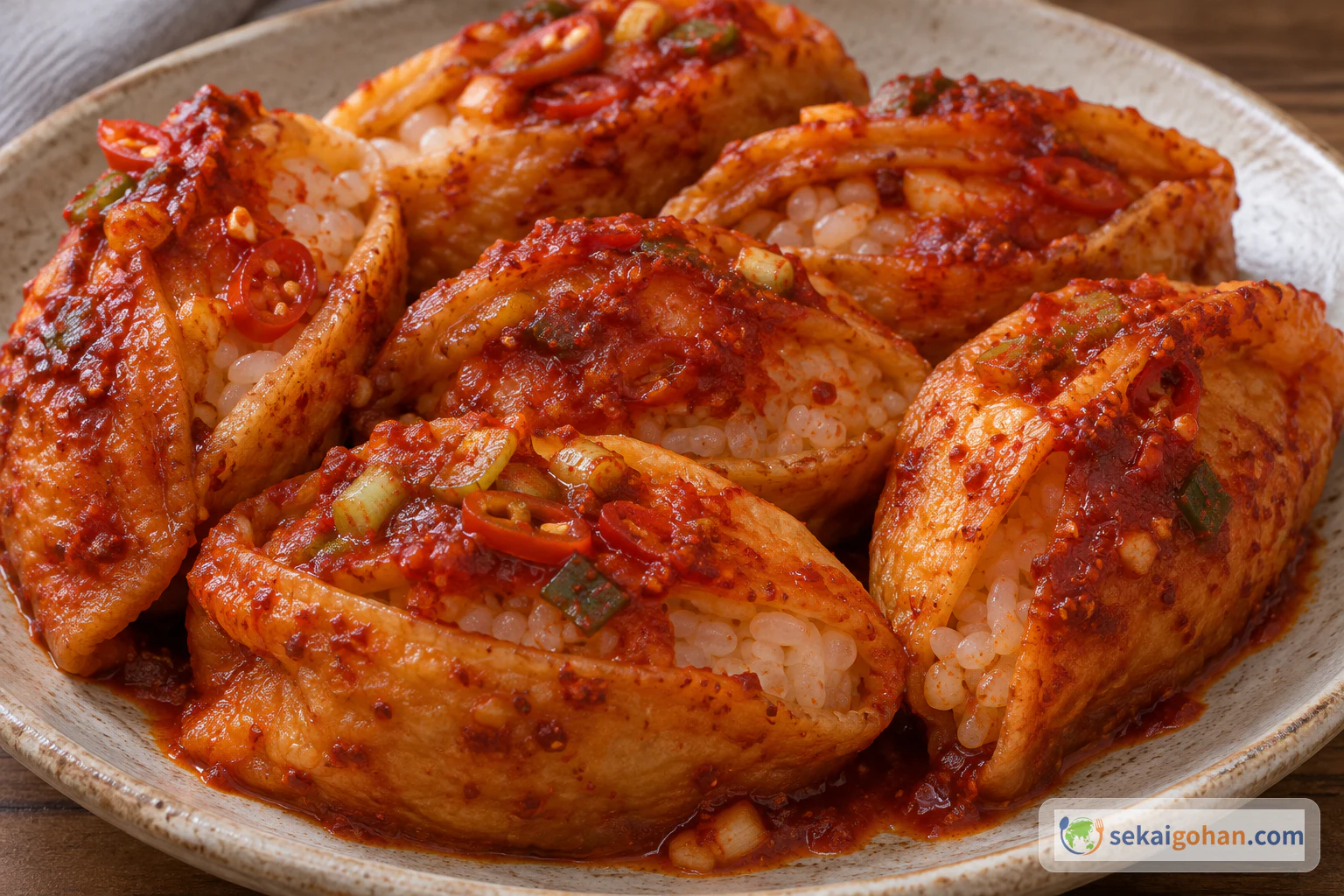
Injo-gogi-bap: North Korean Soy-Wrapped Rice with Chili Paste (인조고기밥)
Injo-gogi-bap is a North Korean street food of short-grain rice packed into a soy-based wrapper and spread with red chili paste. Learn what injogogi is, how the plain yubu version differs, and where each amount comes from.
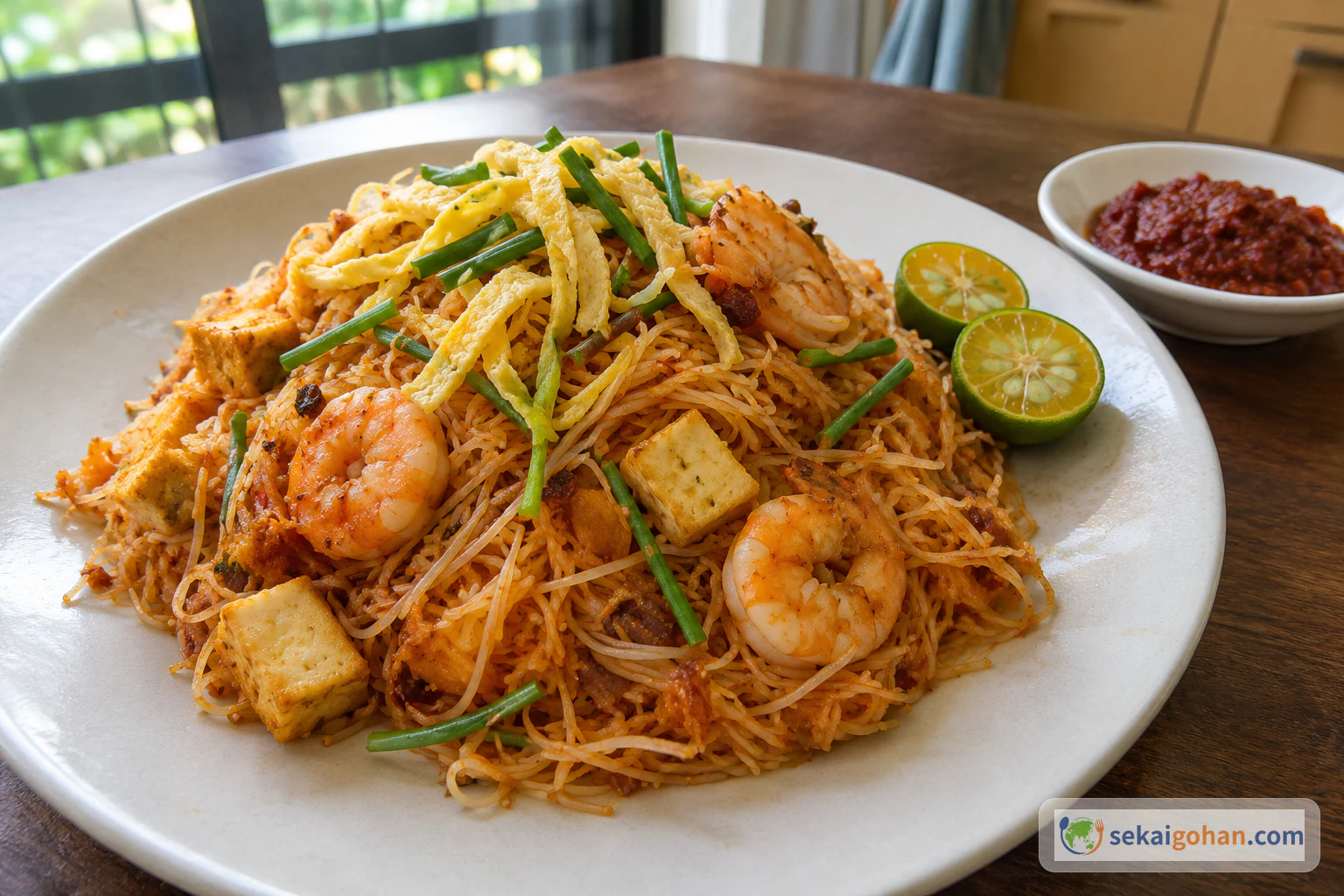
Mee Siam: Malaysian Dry Rice Noodles with Tamarind and Taucheo
Mee siam goreng is Malaysia's dry tamarind and taucheo rice noodle dish. Learn the room-temperature soak, frying the paste until the oil splits, and swaps.
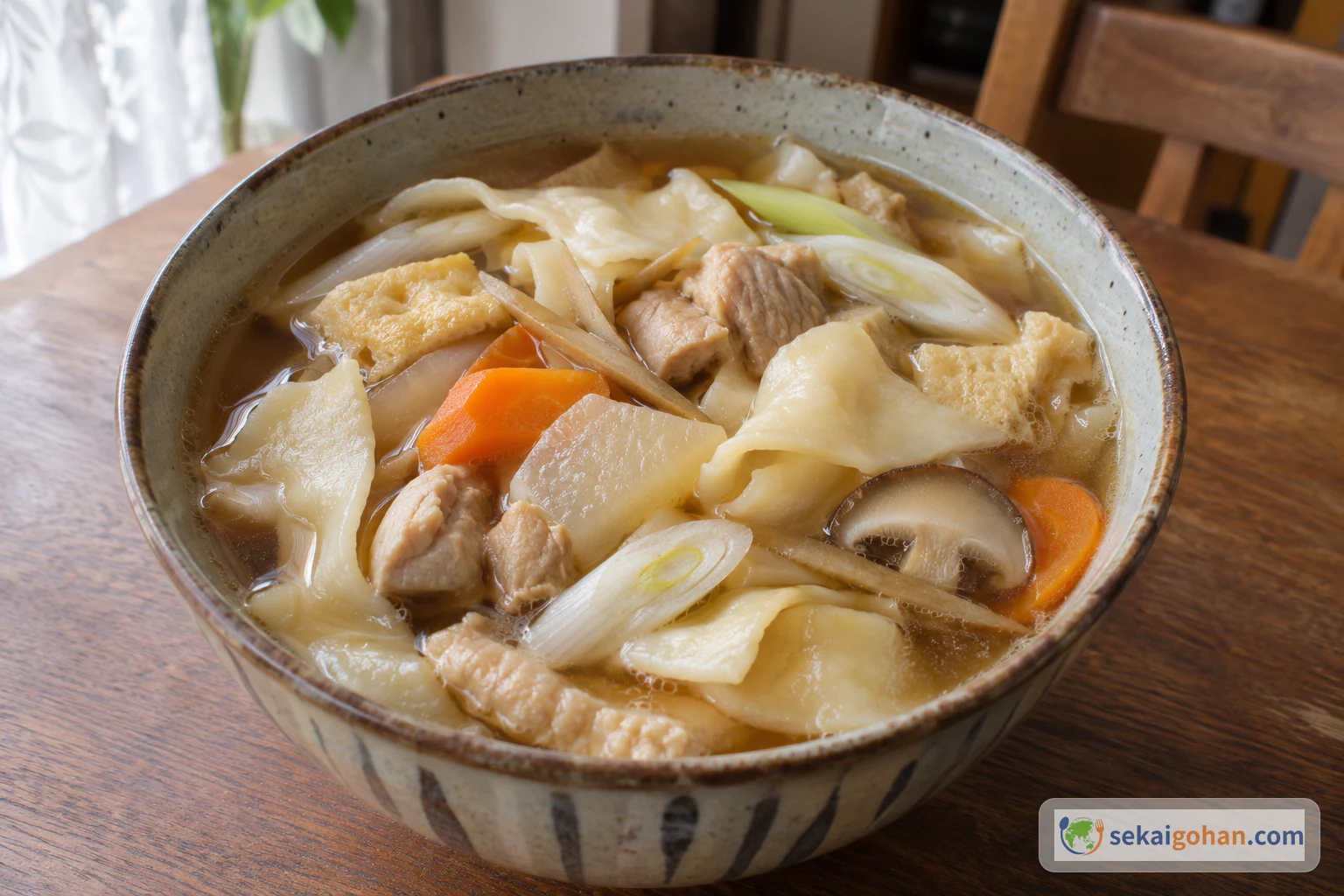
Hatto-jiru: Miyagi Soup with Hand-Torn Wheat Dough (はっと汁)
How to make hatto-jiru, the savory soup form of hatto from Tome in Miyagi Prefecture: a soft wheat dough stretched thin and torn by hand into a broth of chicken thigh, burdock, daikon, carrot, fresh shiitake and aburaage, finished with long onion and soy sauce. Covers the regional background, the told story behind the name, how to judge when the dough is cooked, a separate chicken-safety check, and household variations kept apart from the recipe.

Tahu Gejrot: Cirebon's Fried Tofu with Tamarind-Chili Sauce
Tahu gejrot, the street snack of Cirebon in West Java, made in a home kitchen: hollow fried tofu, coarsely crushed chilies, and a thin sauce of tamarind and kecap manis. Local eating, origins and regional differences, using firm fried tofu as a substitute, adjusting heat, storage and how to shop for the ingredients.
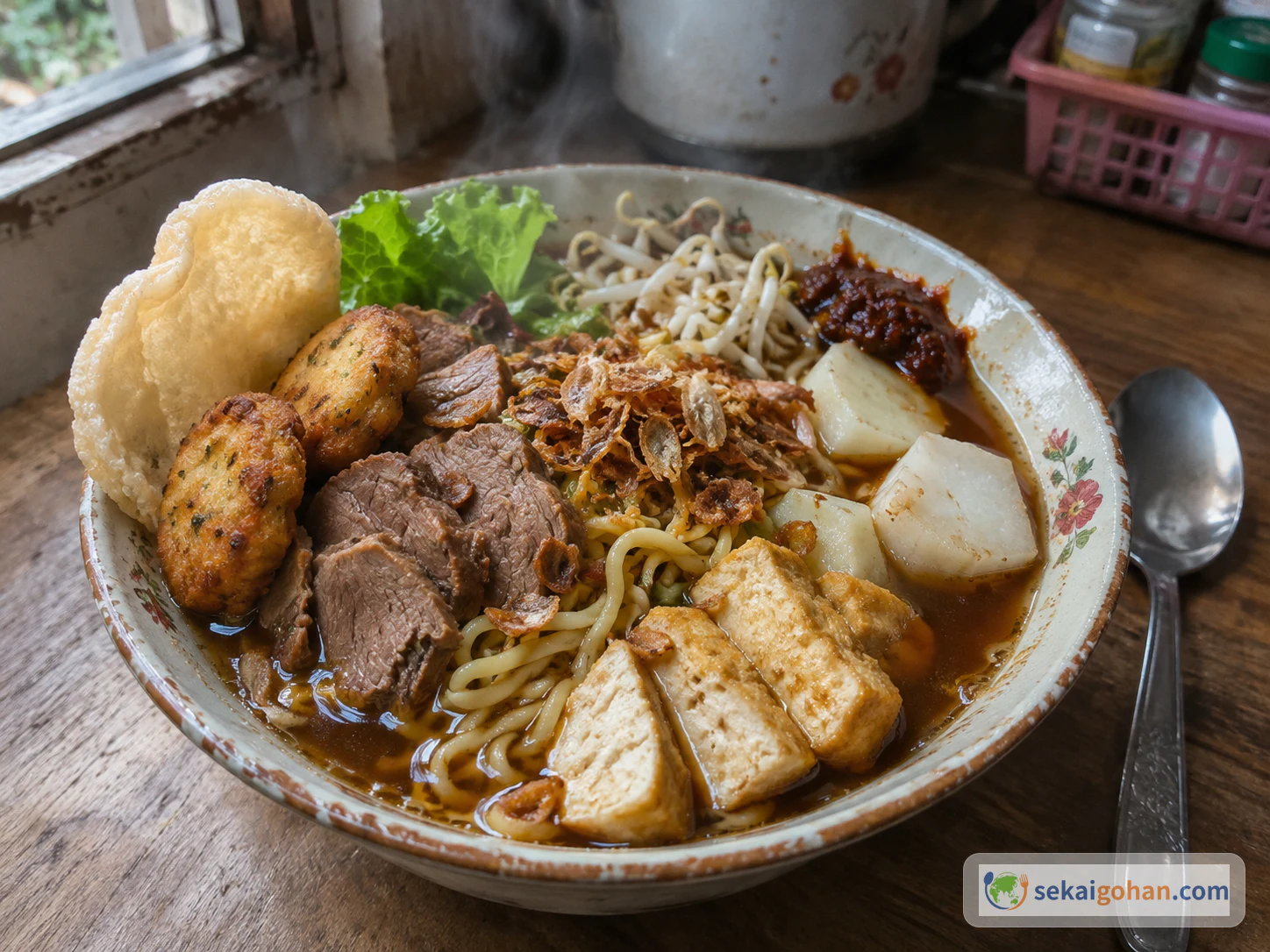
Tahu Campur: Surabaya Fried Tofu and Beef Soup with Shrimp Paste
Tahu campur from Surabaya, East Java: fried tofu, noodles and beef broth tied with petis shrimp paste. Covers half-dry tofu, lento fritters and petis swaps.
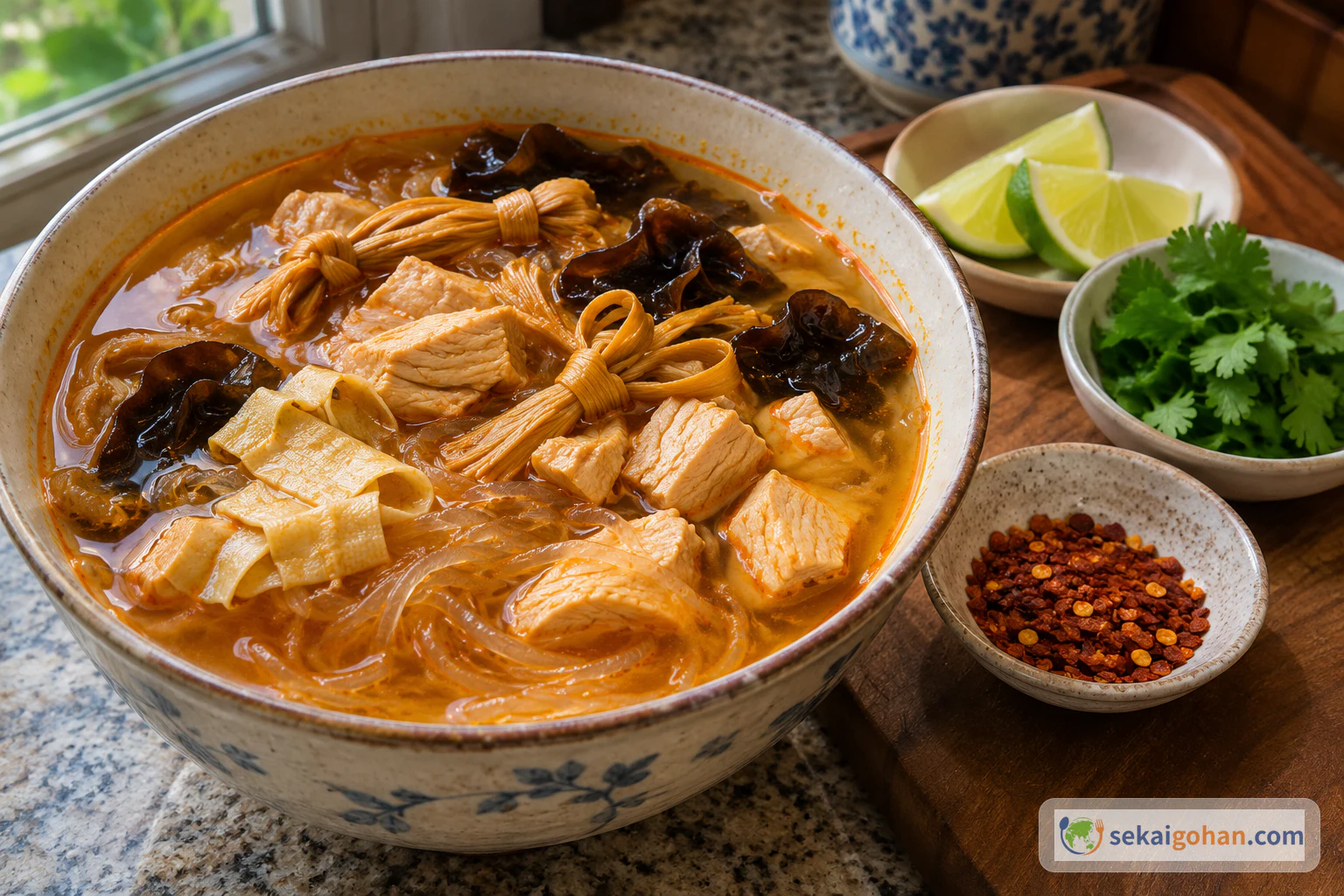
Kyar Zan Hinga (Kyazan Chet): Burmese Chicken and Glass Noodle Soup with Wood Ears, Lily Buds and Yuba
How to make kyar zan hinga, also written kyazan chet: a Burmese chicken soup with dried wood ear mushrooms, knotted dried lily buds, soybean sheets and sweet potato cellophane noodles. This is one home cook's modified version, with every amount kept in its own units, the noodles cooked separately, and clear food-safety notes for chicken and dried goods.
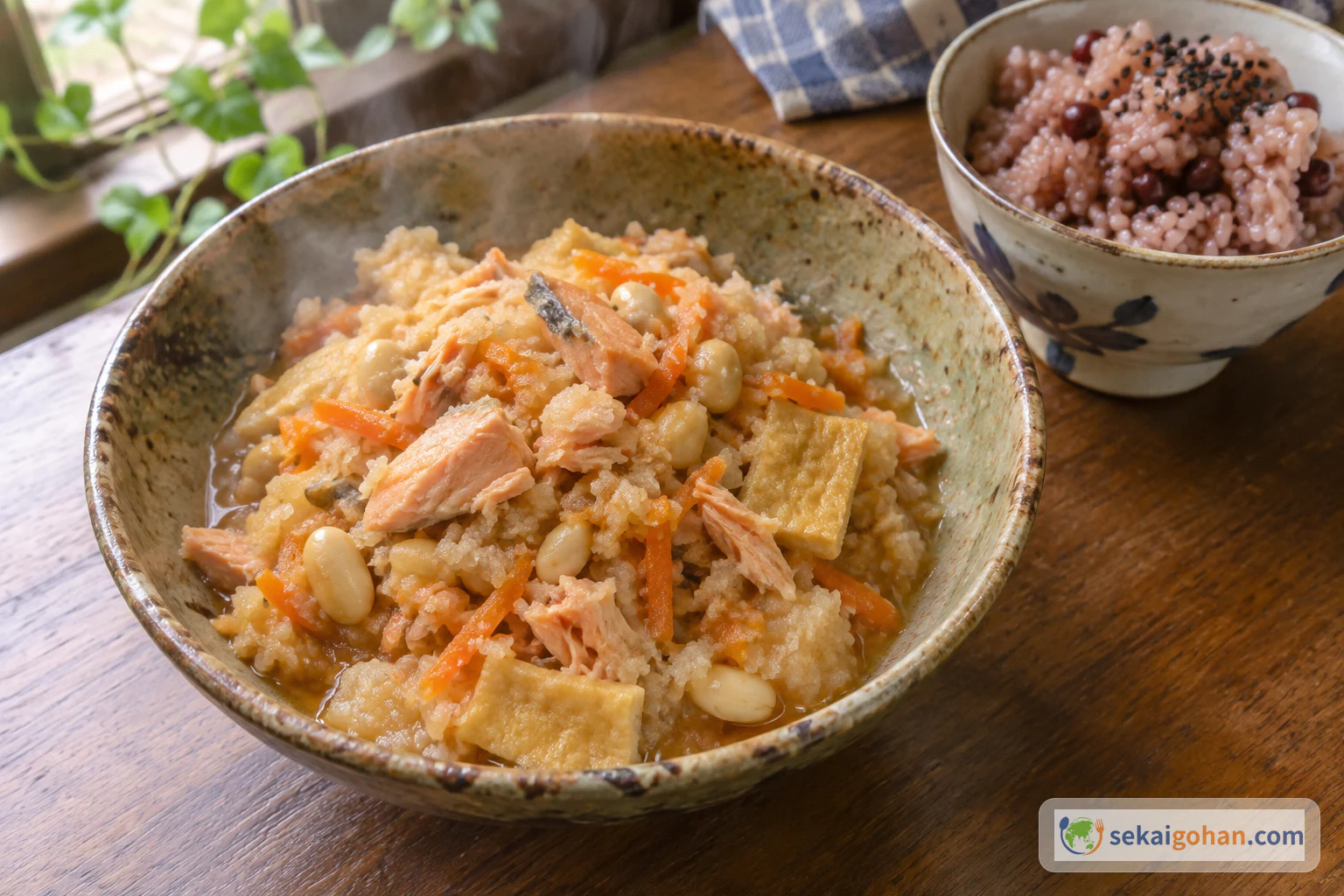
Shimotsukare: Tochigi Salmon Head and Daikon Sake Lees Stew
Shimotsukare, Tochigi's First Horse Day stew of coarse-grated daikon, salmon head, soybeans and sake lees. Learn the coarse grate, when lees go in, and swaps.
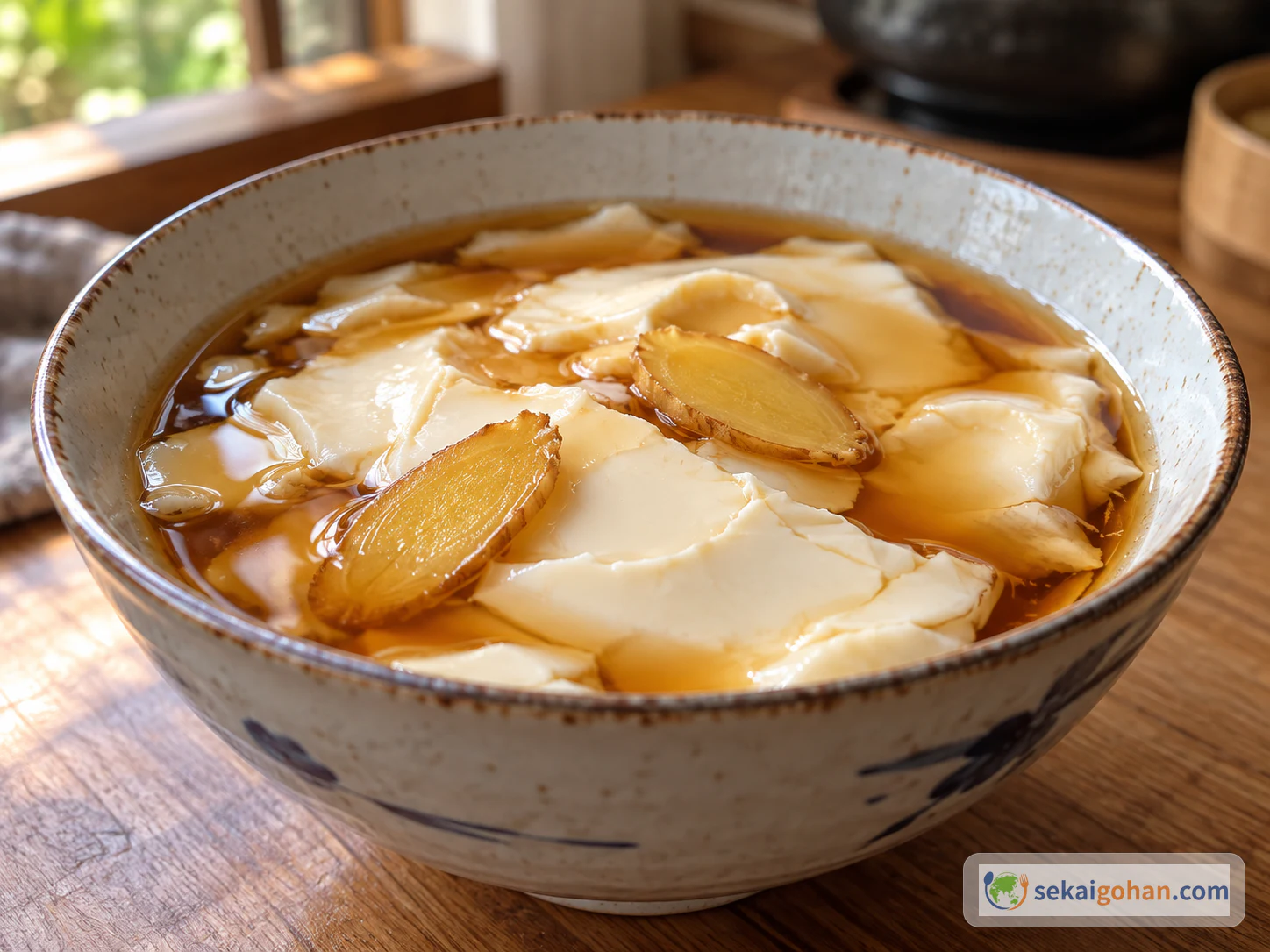
Tào Phớ: Vietnamese Soy Milk Pudding with Ginger Syrup (Đậu Hũ Nước Đường)
How to make tào phớ (đậu hũ nước đường), the Vietnamese soy milk pudding served warm with ginger and brown slab sugar syrup. Follows one complete home recipe built on fresh soy milk, cornstarch and GDL, with the order for adding the coagulant, how to choose soy milk, how to judge the syrup, the thin-edged spoon for serving, regional names and styles across Vietnam, and careful storage.

Buddha's Delight (Luóhàn Zhāi): Chinese Vegetarian Braise at Home
How to make Buddha's Delight, the Chinese vegetarian braise of dried mushrooms, wood ear, tofu skin and napa cabbage. Covers soaking times, substitutes, how to heat the red fermented tofu sauce, keeping the glass noodles loose, safe make-ahead soaking, Lunar New Year customs, storage, fixes and menu ideas.
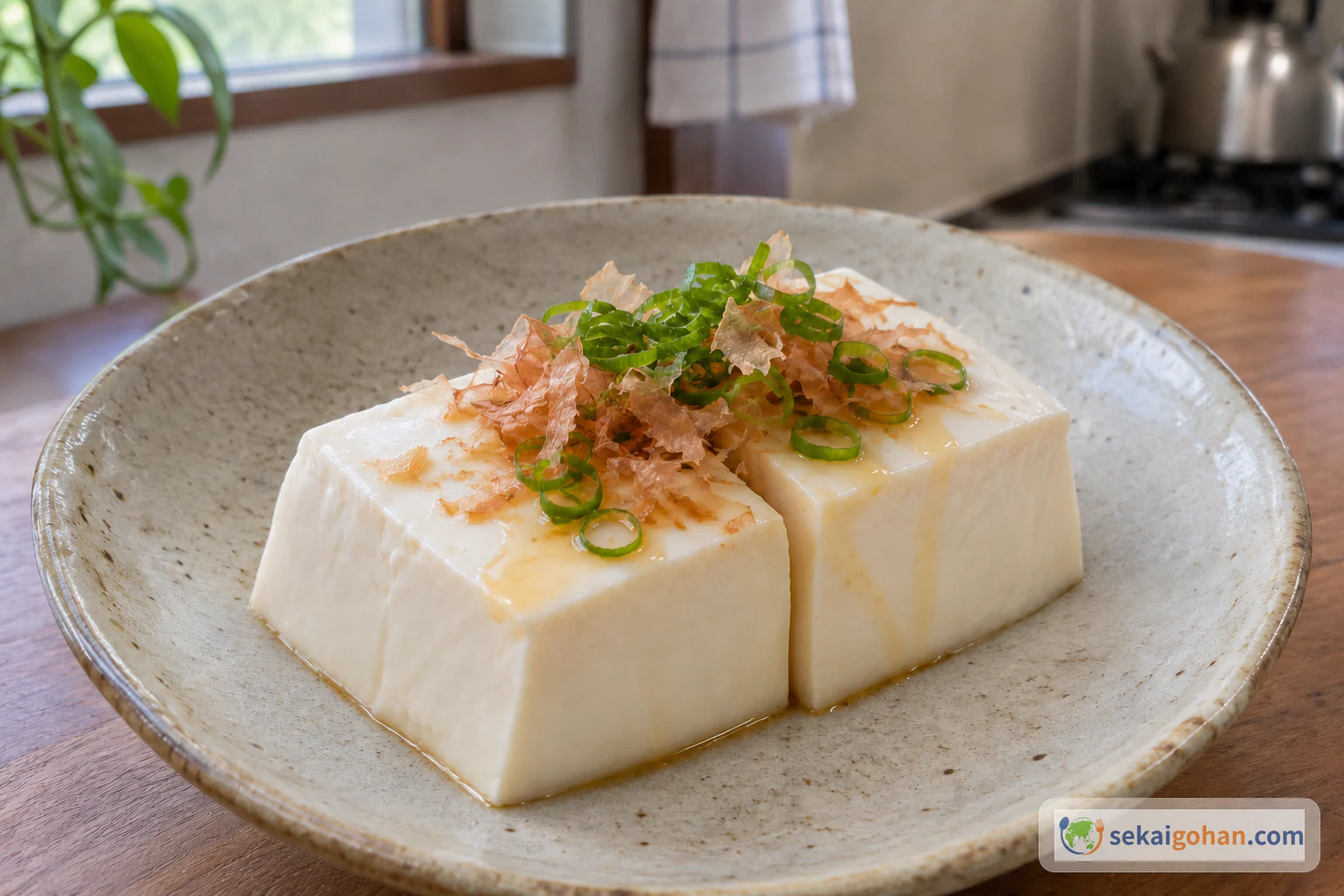
Hiyayakko: Japanese Cold Silken Tofu with Bonito Flakes and Green Onion (冷奴)
How to make hiyayakko (冷奴), a no-cook Japanese plate of chilled silken tofu, in a single-serving version: 100 g silken tofu cut in half, topped with a pinch of shaved bonito flakes and sliced green onion, and finished with 1 teaspoon of Kikkoman Basic Okazu Tsuyu. Covers the ingredients, the one-step method, what this version leaves out, and common questions.
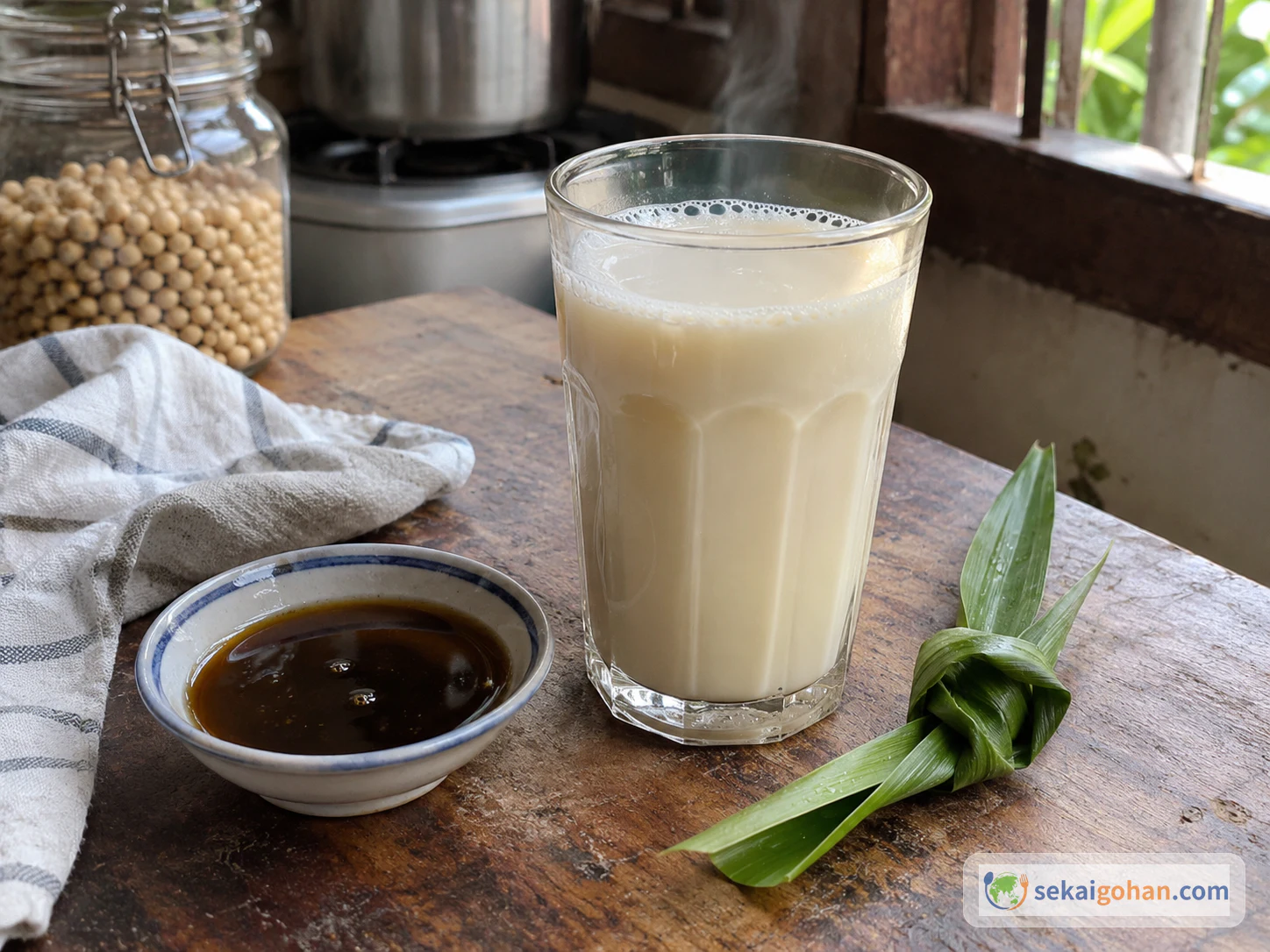
Susu Kacang Soya: Malaysian Pandan Soy Milk with Palm Sugar Syrup
Susu kacang soya, Malaysia's pandan-scented soy milk, pressed from dried soybeans. How to boil it safely past the foam and make ginger and palm sugar syrups.
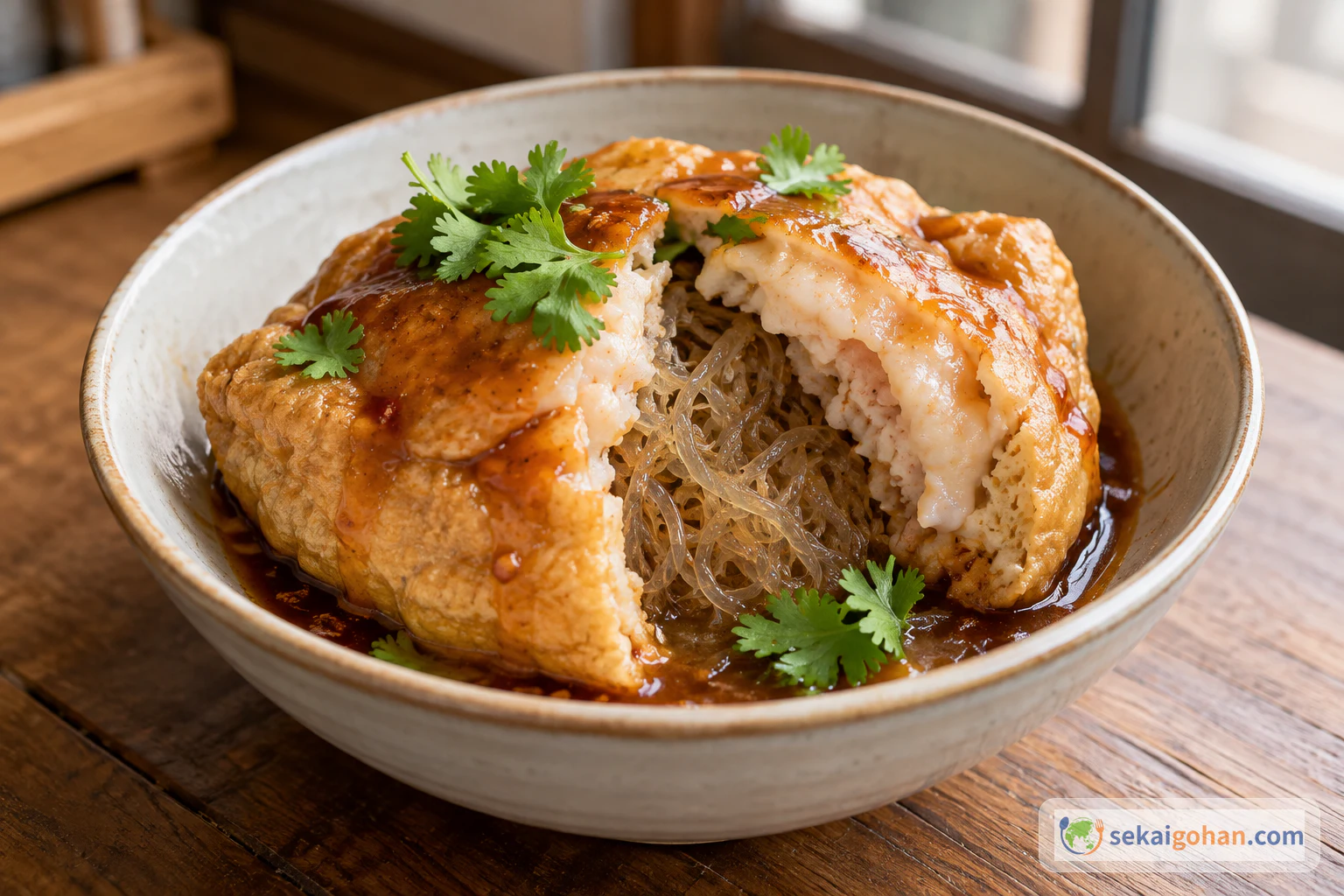
A-gei: Tamsui Fried Tofu Stuffed with Glass Noodles and Sealed with Fish Paste (阿給)
How to make a-gei (阿給), the Tamsui specialty of thick fried tofu filled with seasoned glass noodles, sealed with fish paste and steamed. Follows one Taiwanese home recipe's amounts as written, with guidance on choosing tofu, glass noodles, fish paste and soy paste, steaming with an electric cooker, the sweet-spicy sauce, and how a-gei is eaten in Tamsui.
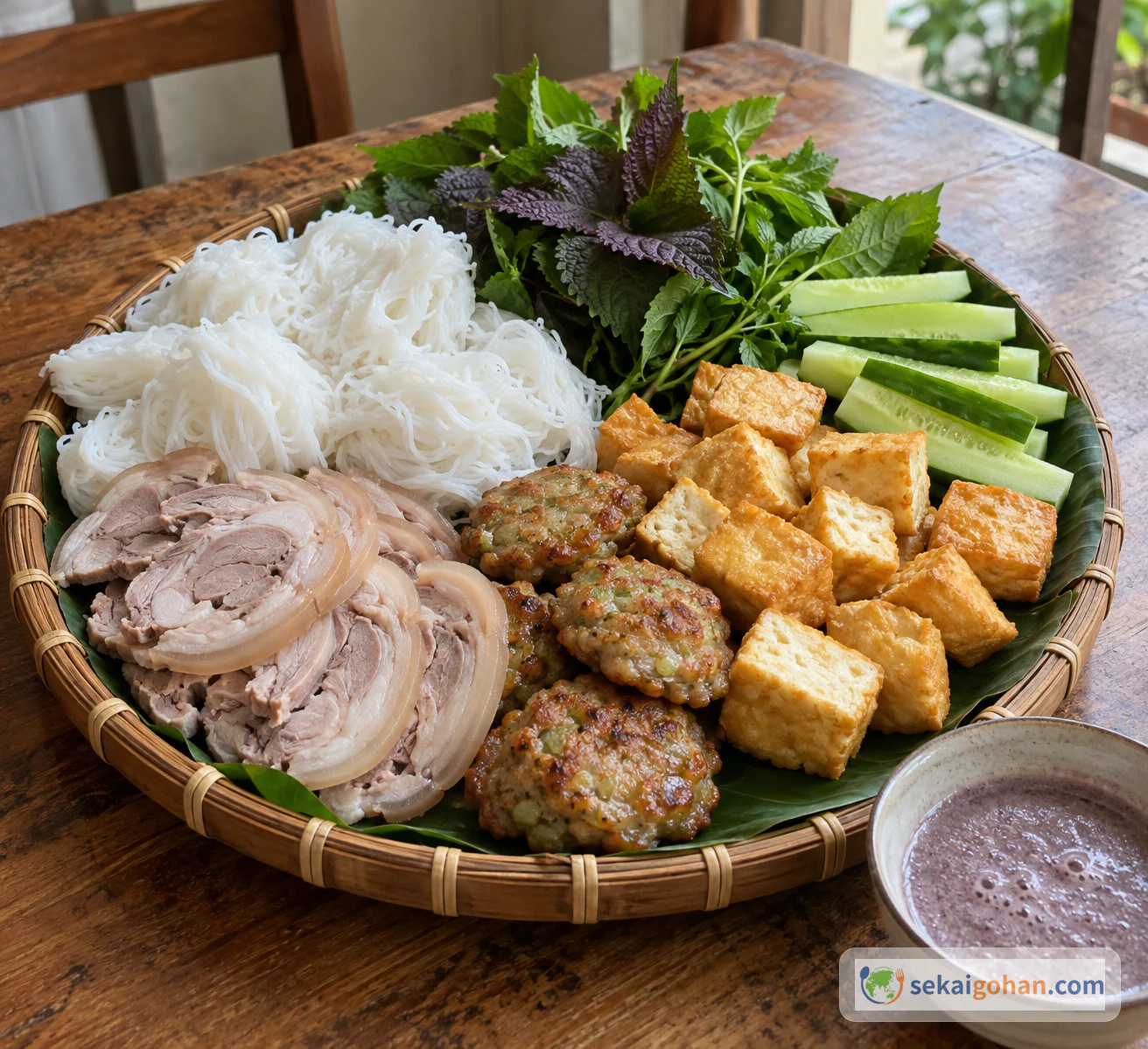
Bún Đậu Mắm Tôm: Hanoi Rice Vermicelli and Fried Tofu Platter with Shrimp-Paste Dip
How to make bún đậu mắm tôm, the Hanoi platter of fresh rice vermicelli, crisp fried tofu, sliced pork hock and chả cốm with a whipped fermented shrimp-paste dip. Covers its street-vendor background, the simpler older form, choosing fresh bún and a ready-to-eat mắm tôm, safe pork doneness by center temperature, fixing common problems, and handling leftovers.
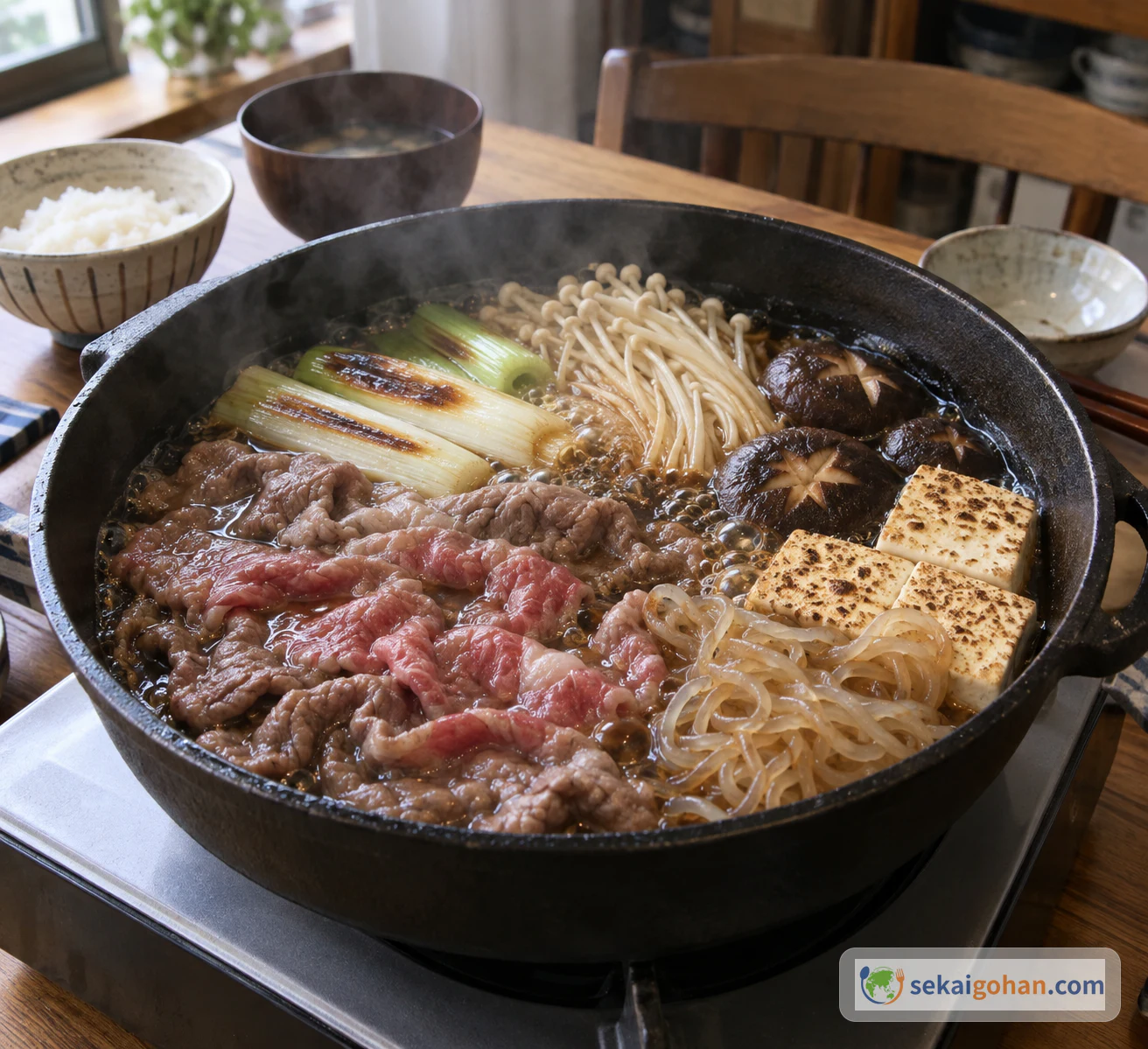
Sukiyaki: Japanese Beef Hot Pot with Warishita and the Order of Simmering
How to make sukiyaki, the Japanese hot pot of thin beef, negi, grilled tofu, shirataki and mushrooms simmered in a sweet-savory warishita of soy sauce, mirin and water at 100ml each, with 4 tbsp sugar. Covers preparing the ingredients, the order of searing and simmering, eating with beaten egg, the difference between Kanto and Kansai styles, and food-safety basics.

Arem-Arem: Javanese Banana-Leaf Rice Rolls with Coconut Rice and Tempeh Filling
A home-kitchen guide to arem-arem, the Javanese rice wrapped in banana leaf: coconut rice, a tempeh and vegetable filling, how to wrap in banana leaf, steaming time, substitutes, common failures, storage and serving with sambal, with quantities and step photos.

Pad Thai: Thai Street-Style Fried Noodles That Aren't Soggy
How to make pad thai from 2–3 mm rice noodles, a tamarind, fish sauce and palm sugar sauce, and home-stove heat control. Covers soaking noodles without making them watery, frying one portion at a time, regional differences in Thailand, substitutes, storage and shopping decisions.
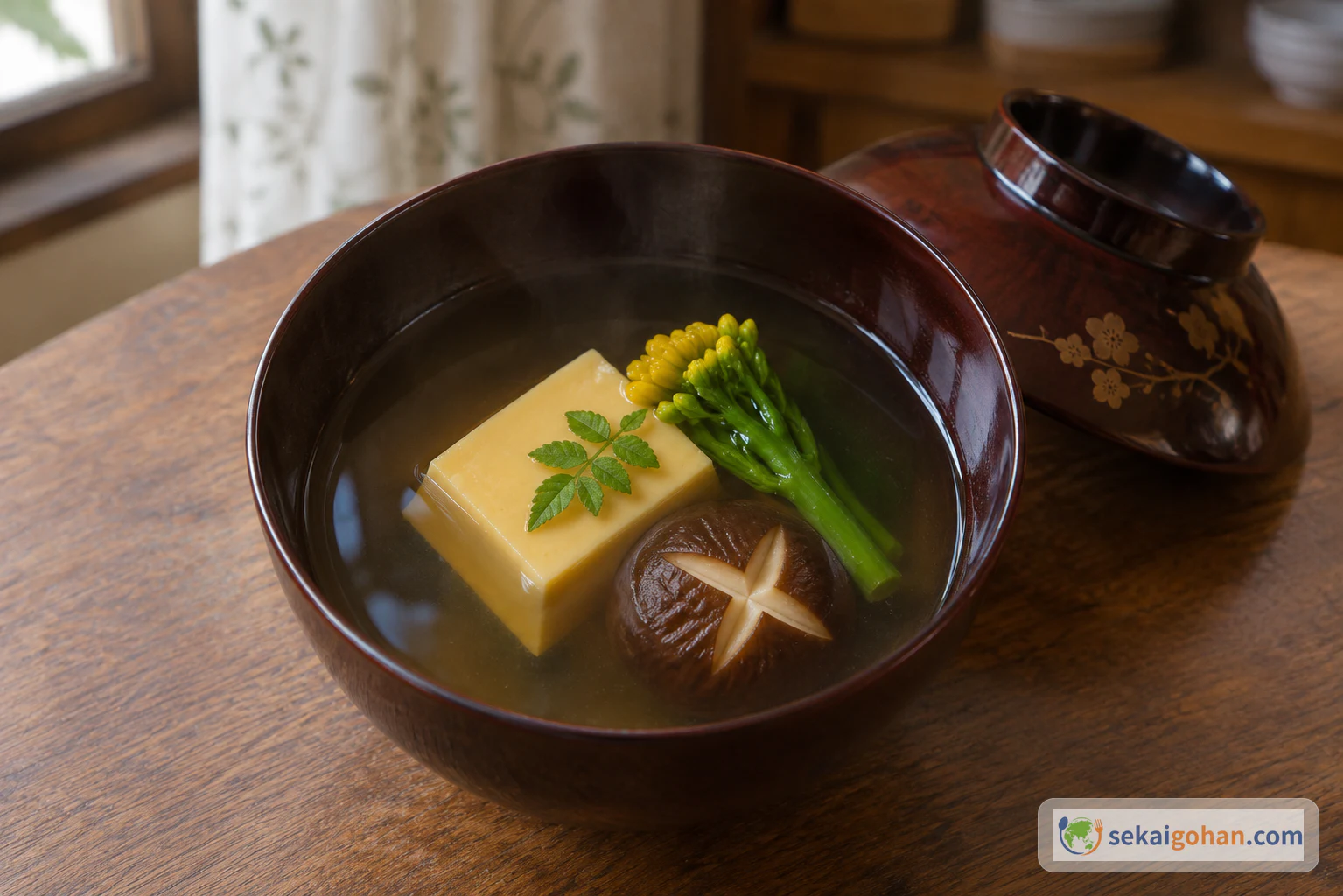
Suimono: Japanese Clear Soup with Kombu and Bonito Dashi
Suimono, Japan's clear soup, built on kombu and bonito dashi. Learn the 150°F (65°C) and 195°F (90°C) kombu cues, straining without squeezing, and seasoning without a boil.
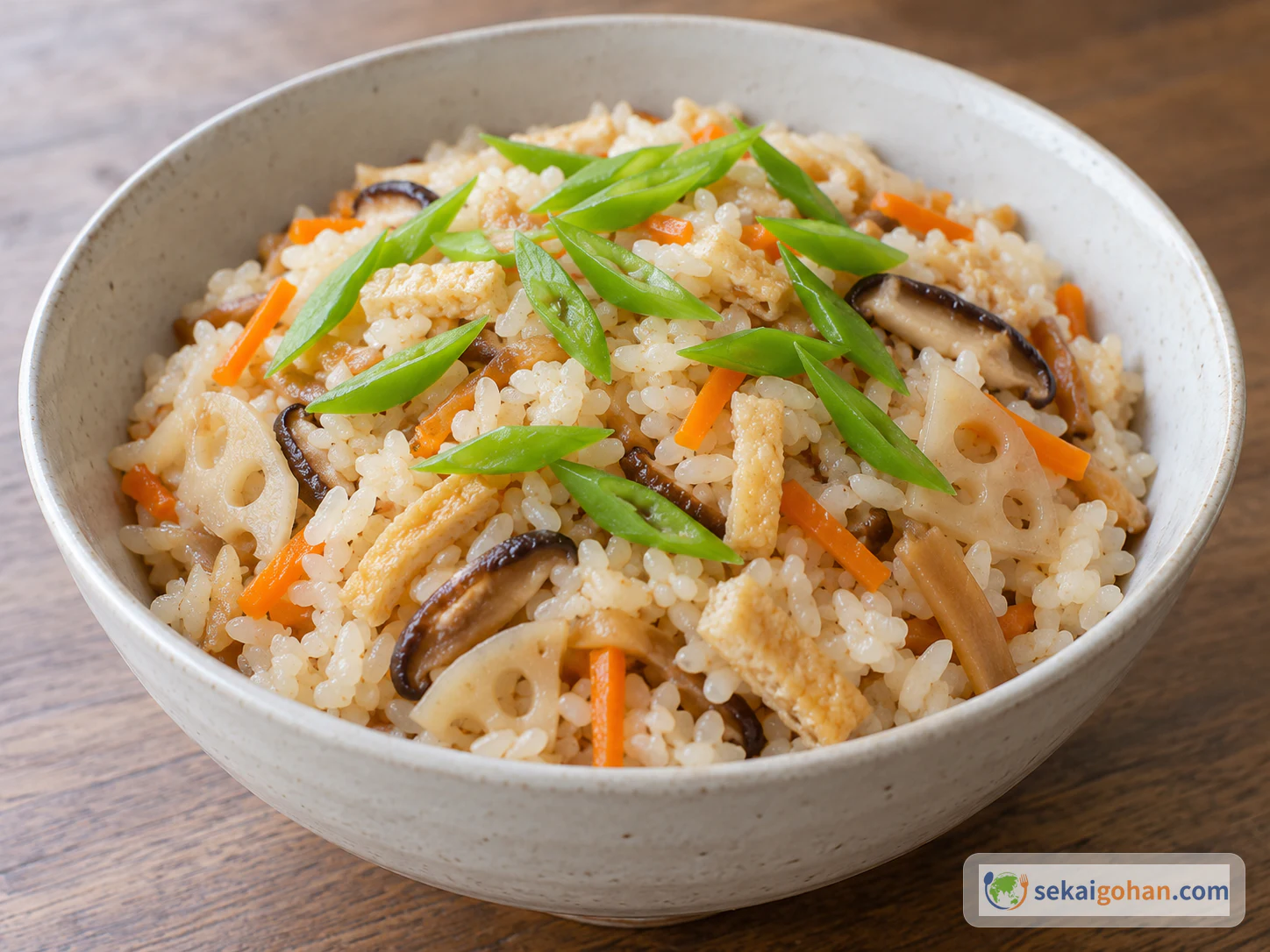
Chirashizushi: Gomoku-zushi with Simmered Root Vegetables and Aburaage (ちらし寿司・五目ずし)
How to make chirashizushi as gomoku-zushi, the style where simmered fillings are folded into vinegared rice. Aburaage, lotus root, carrot, dried shiitake and kanpyo are simmered in shiitake soaking liquid, mixed into fan-cooled sushi rice and finished with diagonally sliced snow peas. Covers the sweet vinegar dressing, how this mixed-in style differs from topped chirashi, fixing common problems and handling leftovers.
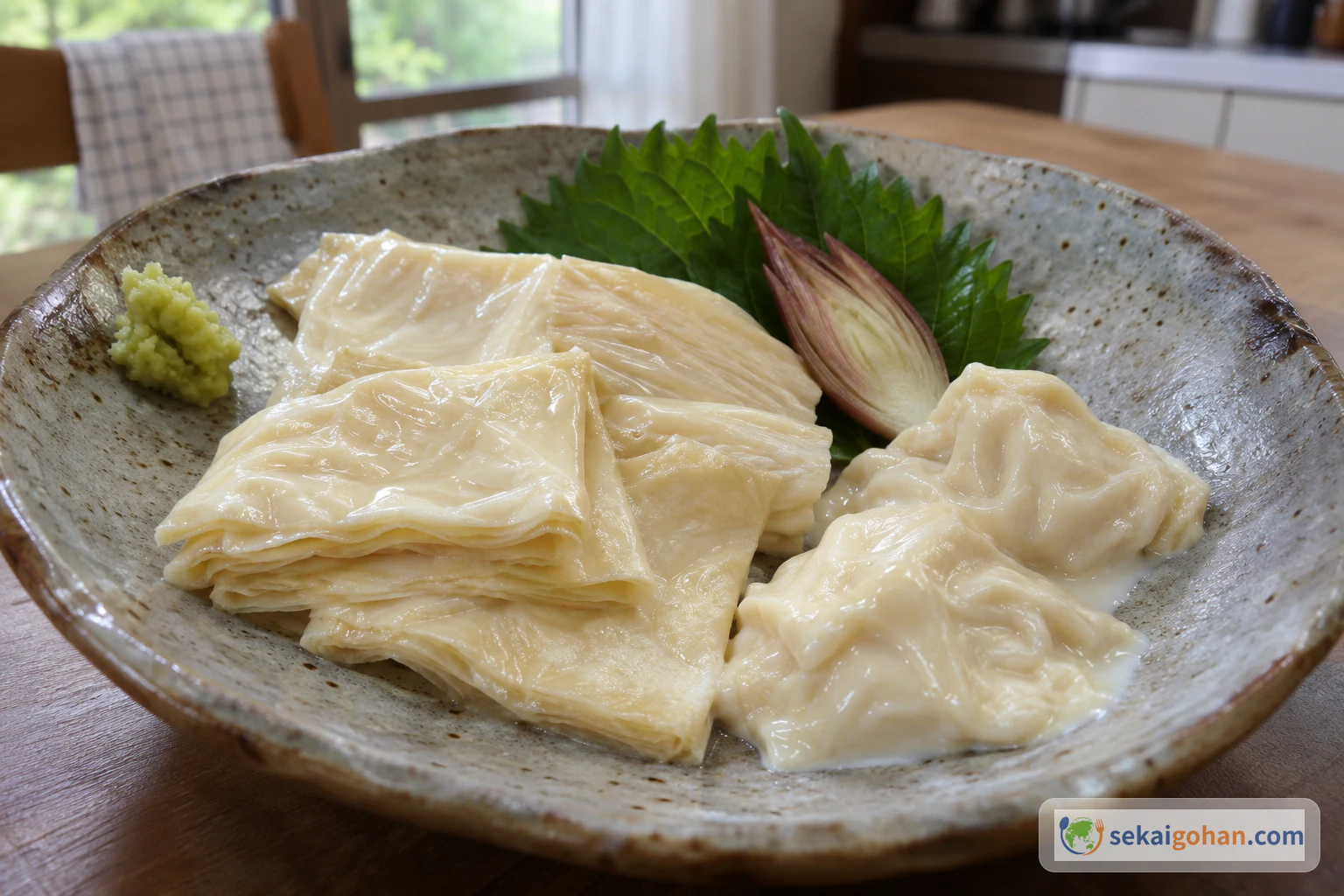
Yuba Sashimi: Chilled Fresh Soy Milk Skin from Kyoto and Minobu
Fresh Japanese yuba served cold, as sashimi. How to drain, unmold and cut sashimi yuba, spoon kumiage yuba, grate wasabi, and keep it at 50°F or below.
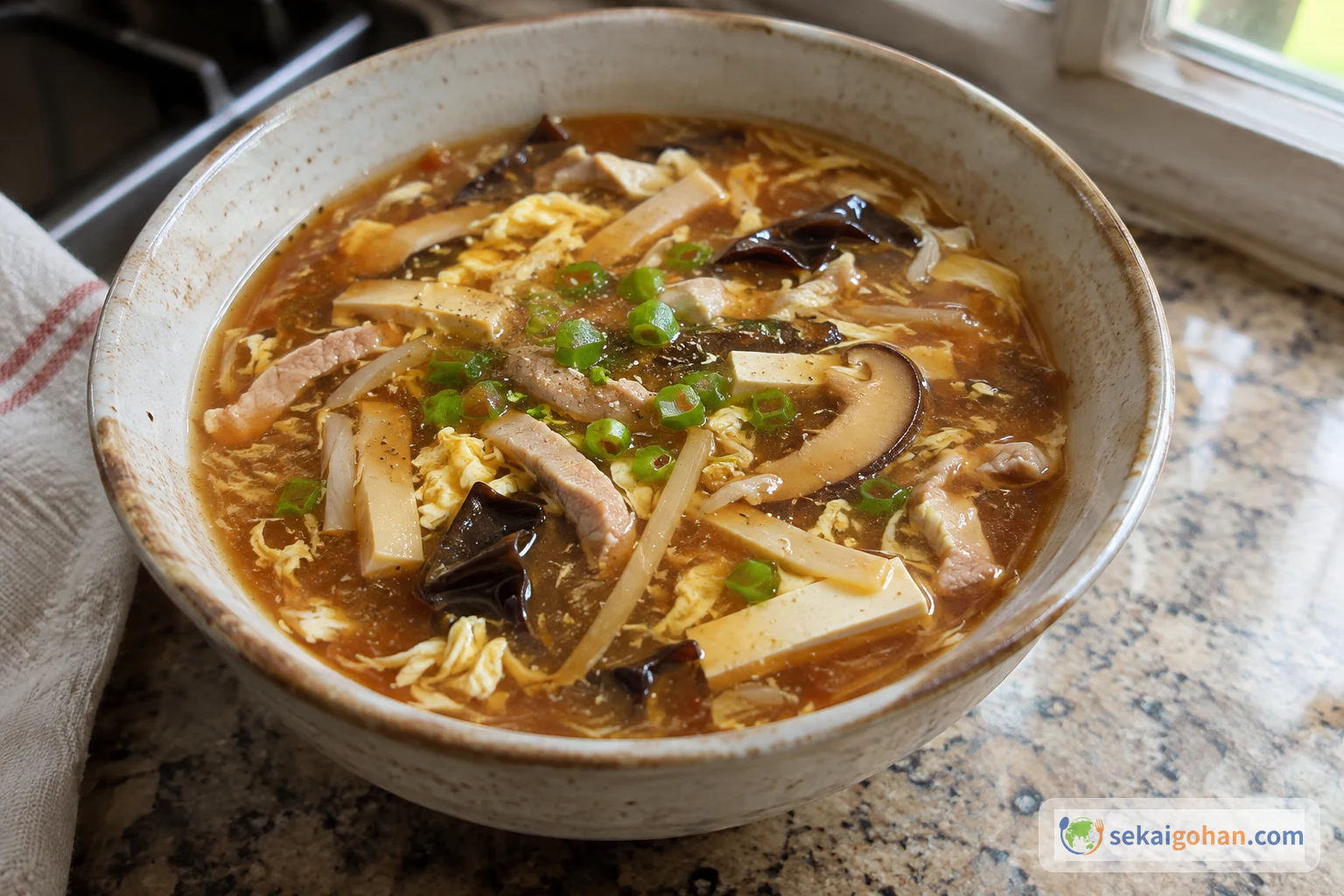
Hot and Sour Soup (Suān Là Tāng): A Chinese American Takeout-Style Family Recipe
How to make hot and sour soup (酸辣湯, suān là tāng) in the Chinese American takeout style, from a family recipe rooted in a US Chinese restaurant. Covers white pepper and distilled white vinegar, soaking lily flowers, wood ear and shiitake, two kinds of tofu, cornstarch thickening and egg ribbons, with safe cooking of the pork and honest notes on substitutions.

Mi Krop: Thai Crispy Rice Noodles in Sweet-Sour Tamarind Sauce
Mi krop (also mee krop) is a Thai dish of fried crispy rice noodles in sweet-sour tamarind sauce. Covers frying and keeping the noodles from going soggy.
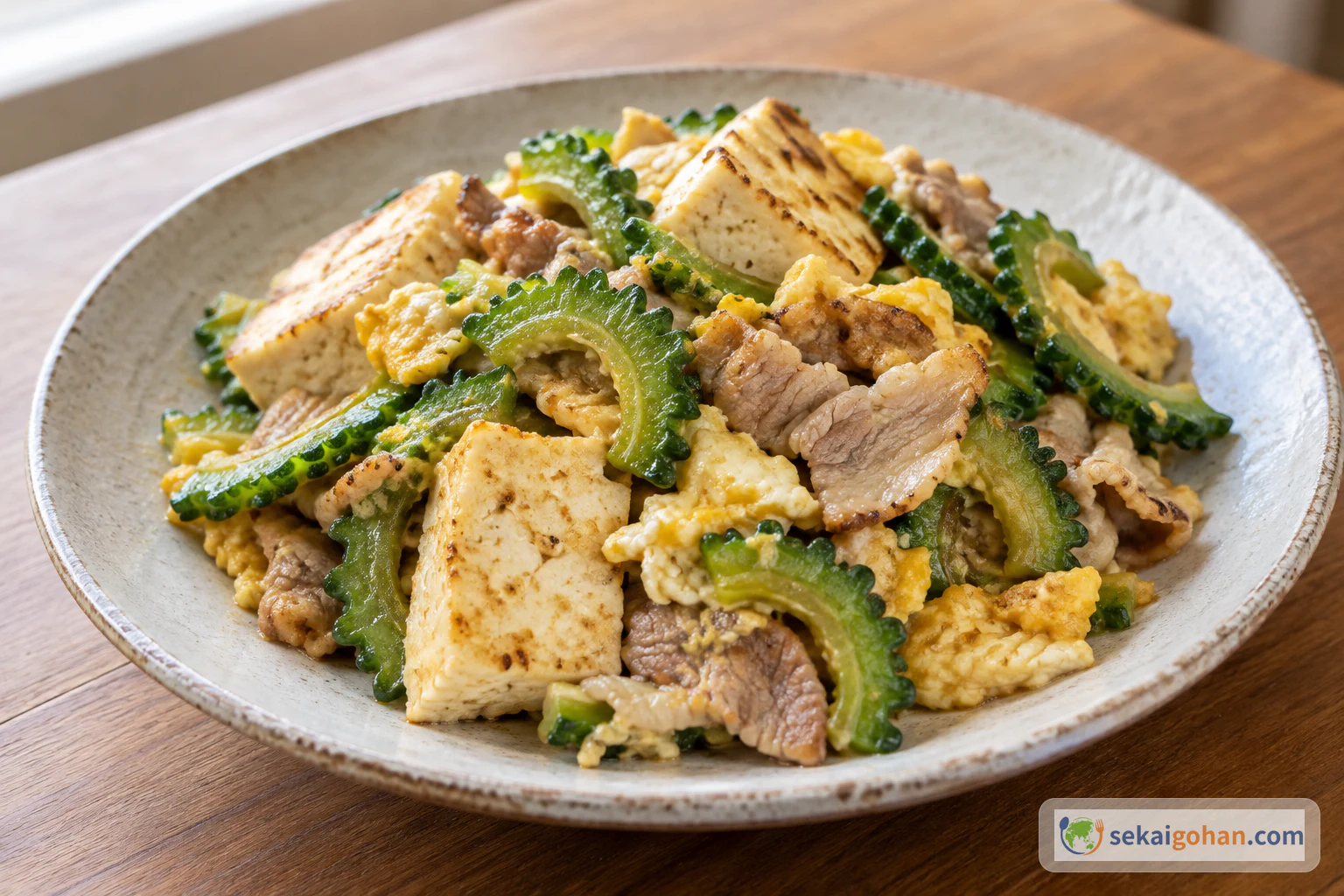
Chanpurū: How to Make Okinawan Goya Champuru with Momen Tofu, Pork Belly and Egg
What Okinawan chanpurū is: a family of stir-fries built on browned island tofu and seasonal vegetables. This article follows one goya champuru recipe for 4 published by Japan's Ministry of Agriculture, Forestry and Fisheries, using the momen-tofu option, and covers the 10-minute weighted drain, simmering the pork first, browning and removing the tofu, and when to add the egg.
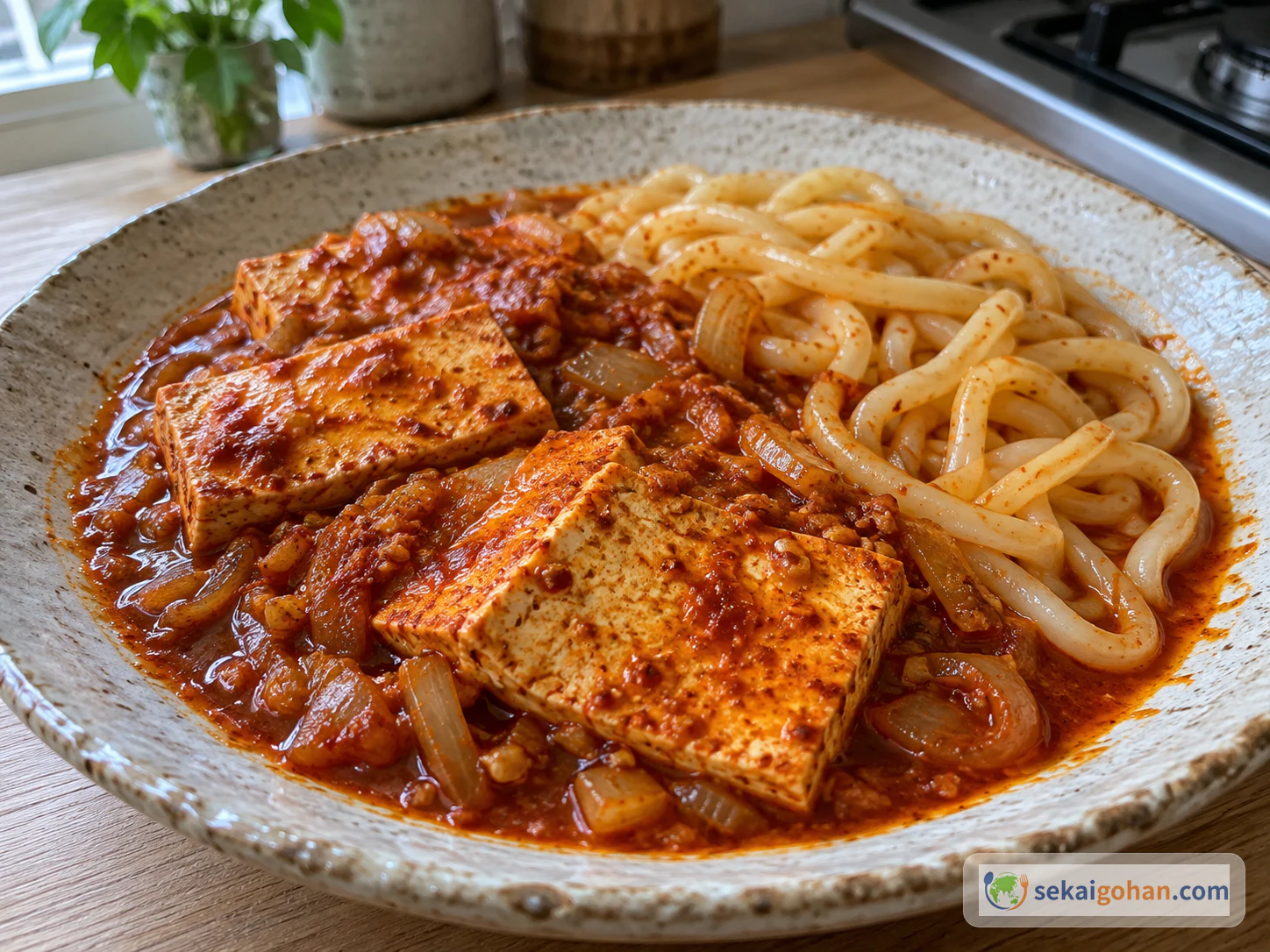
Dubu-duruchigi: Daejeon Spicy Tofu Simmered Without Stirring (두부두루치기)
How to make dubu-duruchigi (두부두루치기), the spicy tofu dish Daejeon named one of its signature tastes in 2026, from Lee Jeong-woong's 2-serving home version. Radish and kelp stock, 500g tofu, 8 tbsp gochugaru and matganjang, why the tofu is not stirred, and which details the recipe leaves open.
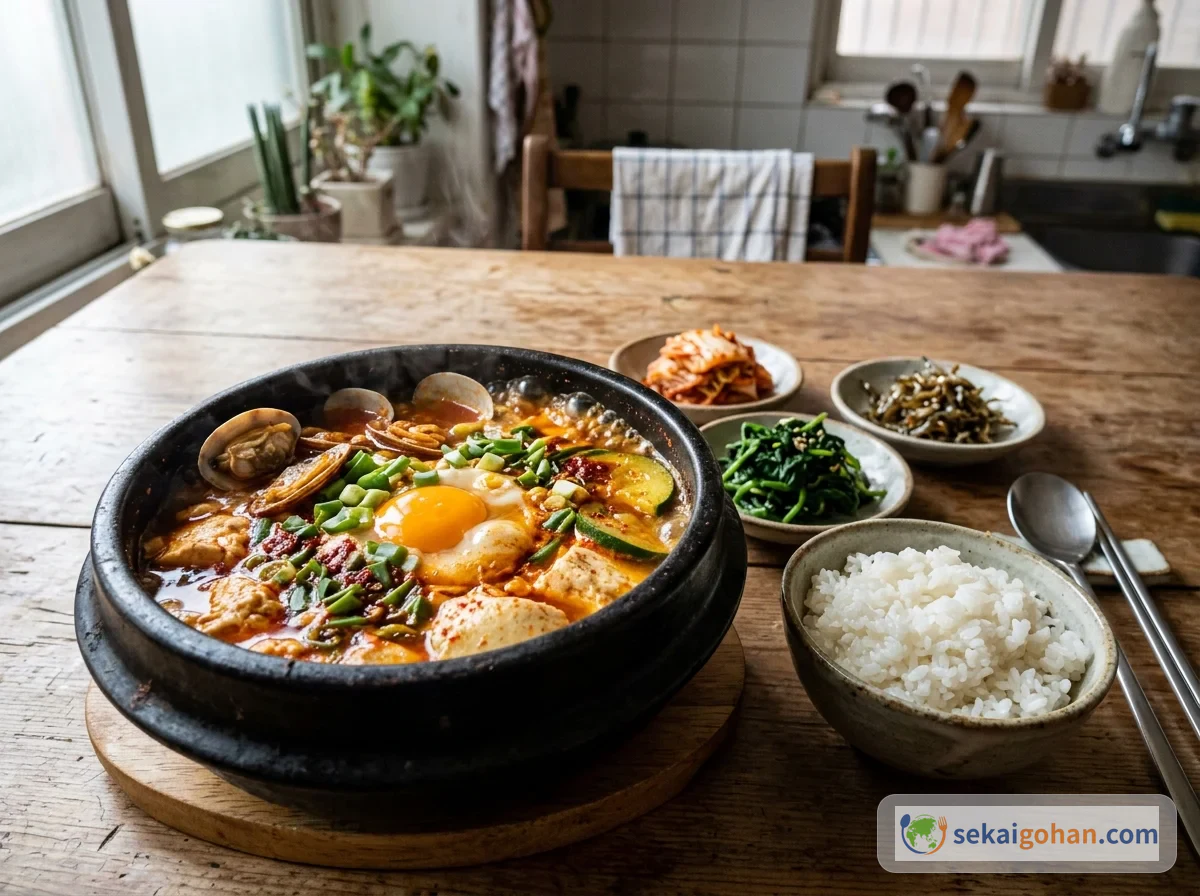
Sundubu-jjigae Recipe: Korea's Red Soft Tofu Stew with Clams
How to make sundubu-jjigae (soft tofu stew), starting from the origins of Gangneung's Chodang Tofu Village. How to choose tofu substitutes, making chili oil without scorching the gochugaru, adding clams and egg, adjusting heat and what to do when it goes wrong.

Mandu: Korean Pork, Tofu and Kimchi Dumplings, Steamed, Pan-Fried or in Soup
How to make mandu (만두), Korean home-style dumplings: squeezing the tofu and kimchi, handling glass noodles, heat for steaming, pan-frying and soup, freezing, and a soy-vinegar dipping sauce.
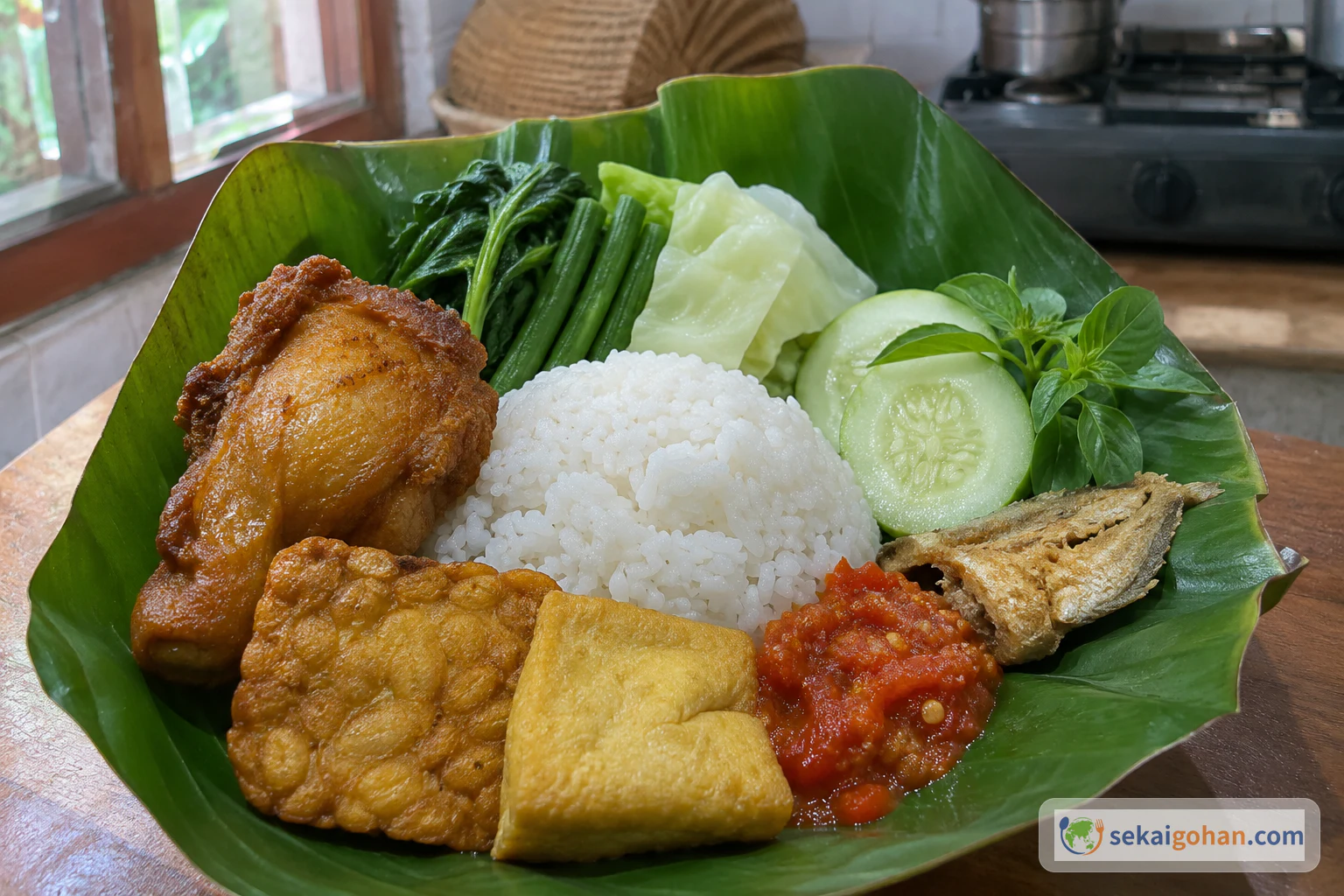
Nasi Tempong: Banyuwangi Rice Plate with Fresh Sambal, Greens and Fried Sides
How to make nasi tempong from Banyuwangi, East Java: warm rice, freshly ground sambal, blanched vegetables, and chicken, tofu and tempeh simmered in coconut milk and then fried. Includes one credited Indonesian recipe, ingredient choices, food-safety checks, and the dish's Osing background.
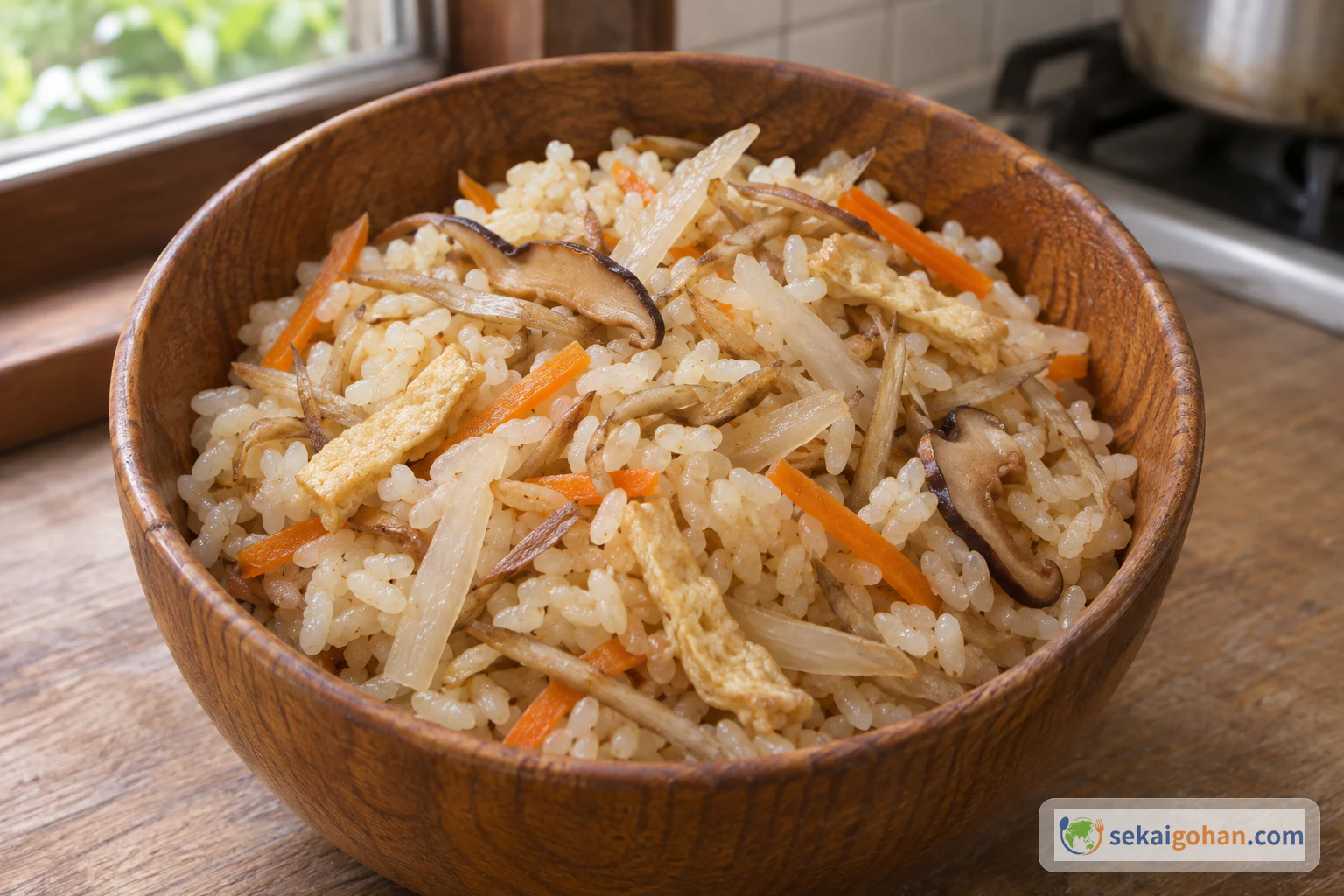
Katemeshi: Saitama Mixed Rice with Simmered Root Vegetables (かてめし)
How to make katemeshi, a home-style mixed rice from Saitama Prefecture, Japan, using a six-serving recipe from a collection of Saitama's traditional dishes. You simmer daikon, burdock, carrot, rehydrated dried shiitake and fried tofu in soy-seasoned liquid, then fold them through freshly cooked rice. Also covers where the dish is made, how regional versions differ, and simple kitchen hygiene for leftovers.
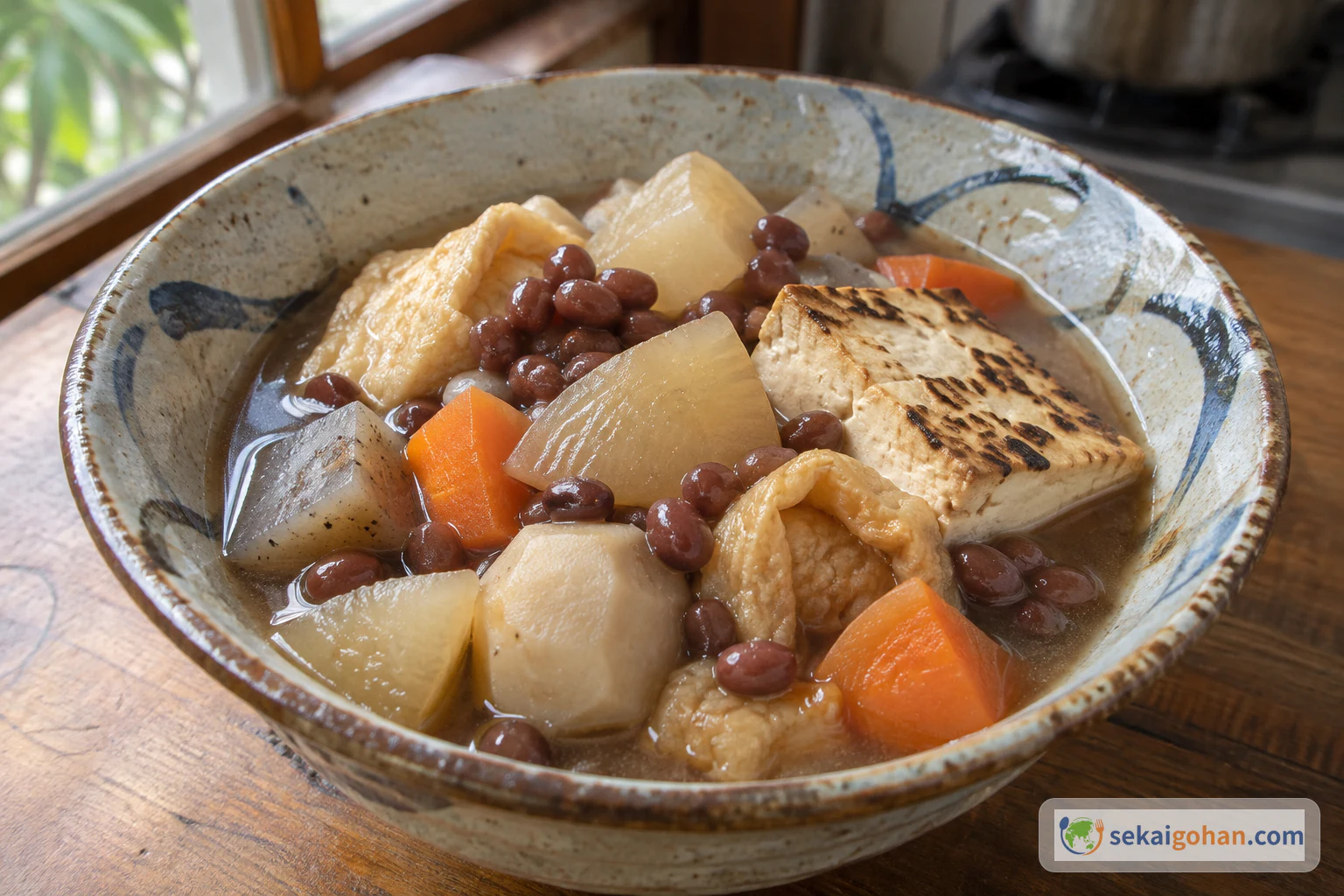
Toyama Itoko-ni (Nizai): Azuki and Root Vegetable Stew for Hōonkō
How to make Toyama-style itoko-ni (nizai), a savory stew of azuki beans, daikon, burdock, taro, konnyaku and two kinds of tofu served at Hōonkō memorial meals. Follows the four-serving recipe published by Japan's Ministry of Agriculture, Forestry and Fisheries, with the azuki pre-boil, the order for adding each ingredient, how it differs from the pumpkin dish of the same name, and other versions from around Toyama.
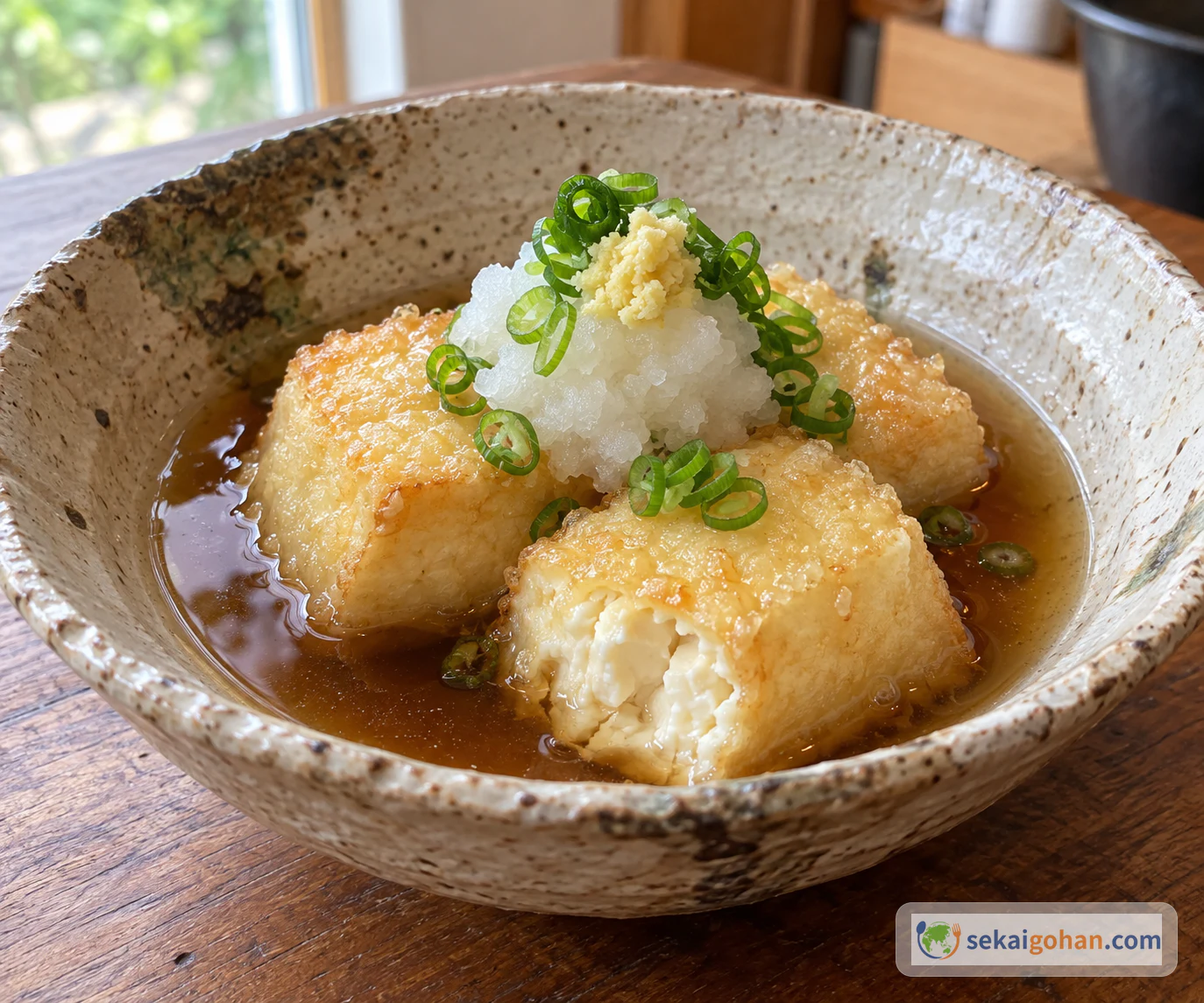
Agedashi Tofu: Lightly Coated Fried Tofu in Hot Dashi Sauce (Agedashi Dōfu)
How to make agedashi tofu (agedashi dōfu) at home: momen tofu cut into six, drained, dusted with potato starch, fried at 175°C and served in hot dashi sauce with grated daikon, ginger and scallion. Covers getting the sauce ready first, keeping the coating from peeling, allergens, variations and the limits of what is known about the dish's history.

Dekomawashi: Tokushima's Five-Ingredient Skewers with Ginger Miso (でこまわし)
How to make dekomawashi, the skewered local dish of Iya in Tokushima prefecture: taro, small potatoes, konnyaku, firm tofu and buckwheat dumplings, brushed with ginger miso and roasted twice, then finished with kinome. Covers each component's preparation, the order for threading the skewers, the two-stage roast, regional ingredients, and how this version differs from other published recipes.

Kimchi Jjigae (김치찌개): Korean Stew with Well-Fermented Kimchi
How to make kimchi jjigae as a Korean home stew: well-fermented kimchi, pork, tofu, anchovy-kelp stock, and how to use gochugaru. How it differs from kimchi hot pot, fixes for kimchi that is not sour enough, heat control, adjusting spiciness, storage, and next-day ideas such as gukbap and noodles.

Doenjang Jjigae: Korean Soybean Paste Stew with Tofu and Zucchini
How to make doenjang jjigae, the Korean soybean paste stew, with anchovy-kelp broth, tofu, zucchini and potatoes. Covers using miso instead of doenjang, heat control, storage, spice levels, fixing a stew that's too bland or too salty, and serving it with bibimbap.
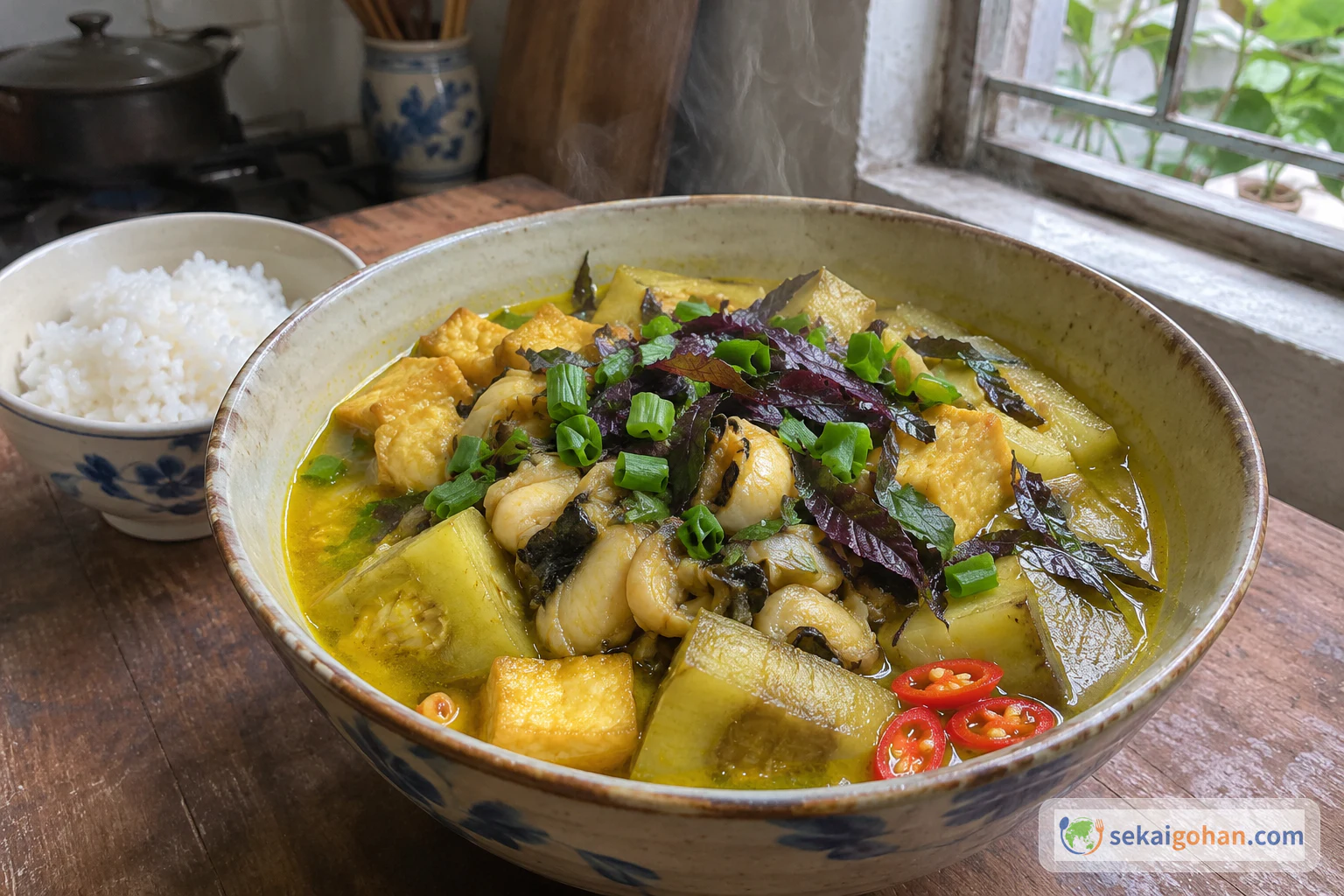
Ốc Nấu Chuối Đậu: Northern Vietnamese Snail Stew with Green Banana and Tofu
Ốc nấu chuối đậu is northern Vietnam's snail, green banana and tofu stew. Learn the two-stage snail cooking, banana prep and swaps for mẻ and mắm tôm.
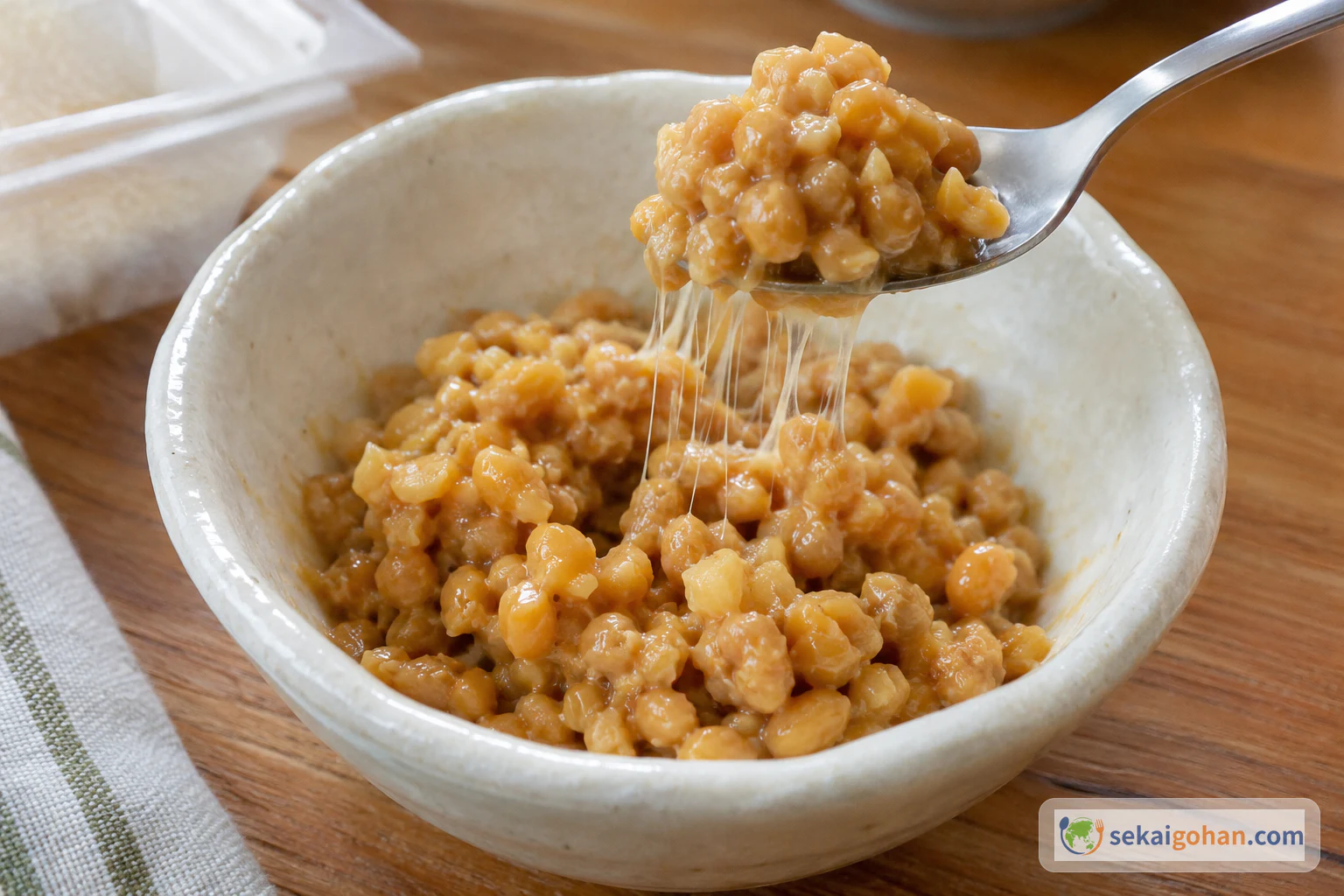
Nattō: Japan's Stringy Fermented Soybeans, and a Miyagi Natto Soup (Nattō-jiru)
What nattō is, how stringy natto differs from temple natto (tera natto), and how to make a Miyagi-style natto miso soup for 5 with store-bought hikiwari natto, tofu, carrot, daikon, aburaage, scallion and Sendai miso. Covers the cuts, the order of additions, when to add the natto and when to turn off the heat.
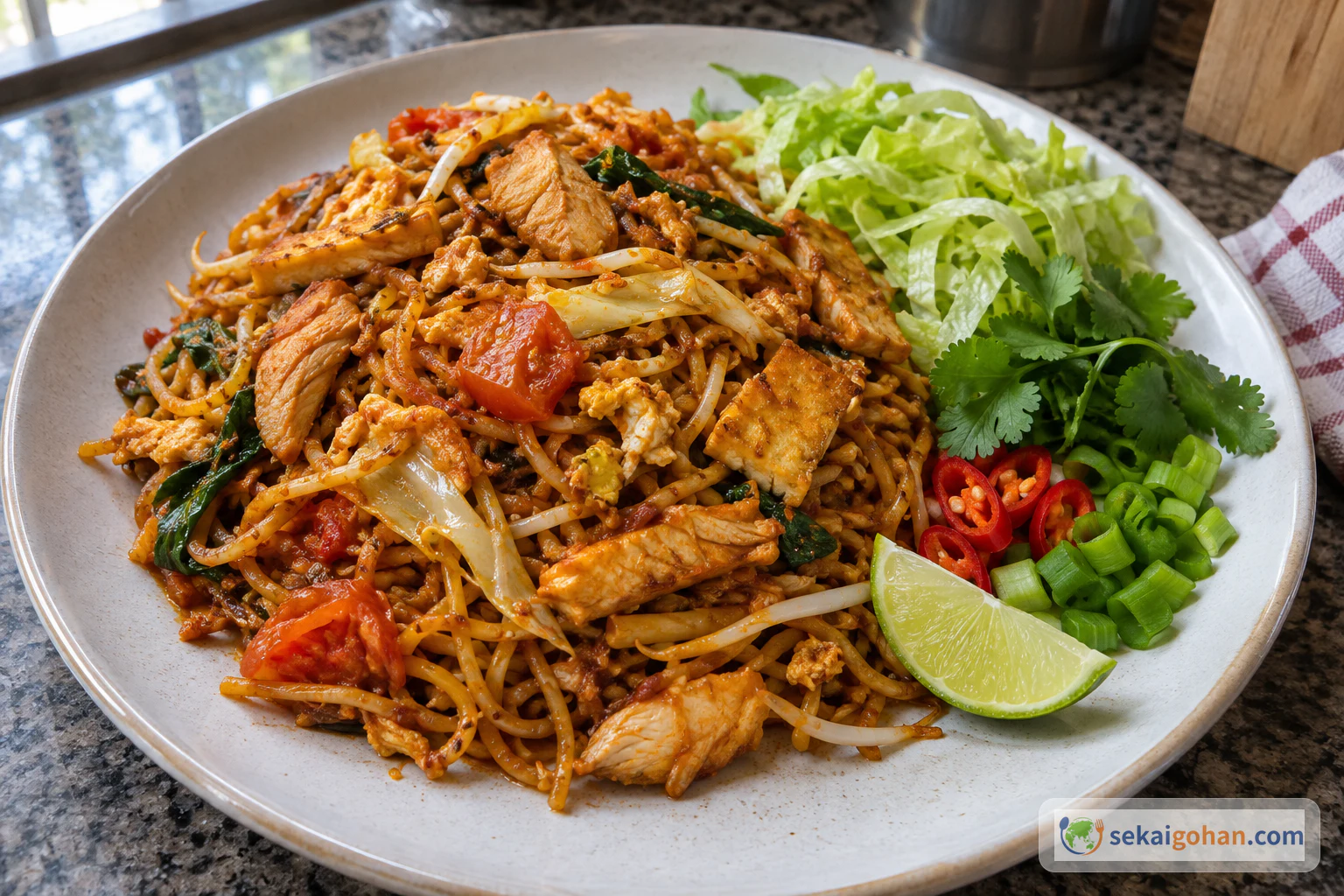
Mee Goreng Mamak: Malaysian Fried Noodles with Chicken, Grilled Tofu and Egg
How to make a Malaysian Mamak-style mee goreng based on a published 2002 Malaysian home recipe, with yellow wheat noodles, chicken breast, grilled firm tofu, egg, mustard greens, cabbage, bean sprouts and tomato cooked into the noodles. Covers choosing noodles and tofu, chicken food safety, fixing common problems, and how this version differs from other mee goreng recipes.
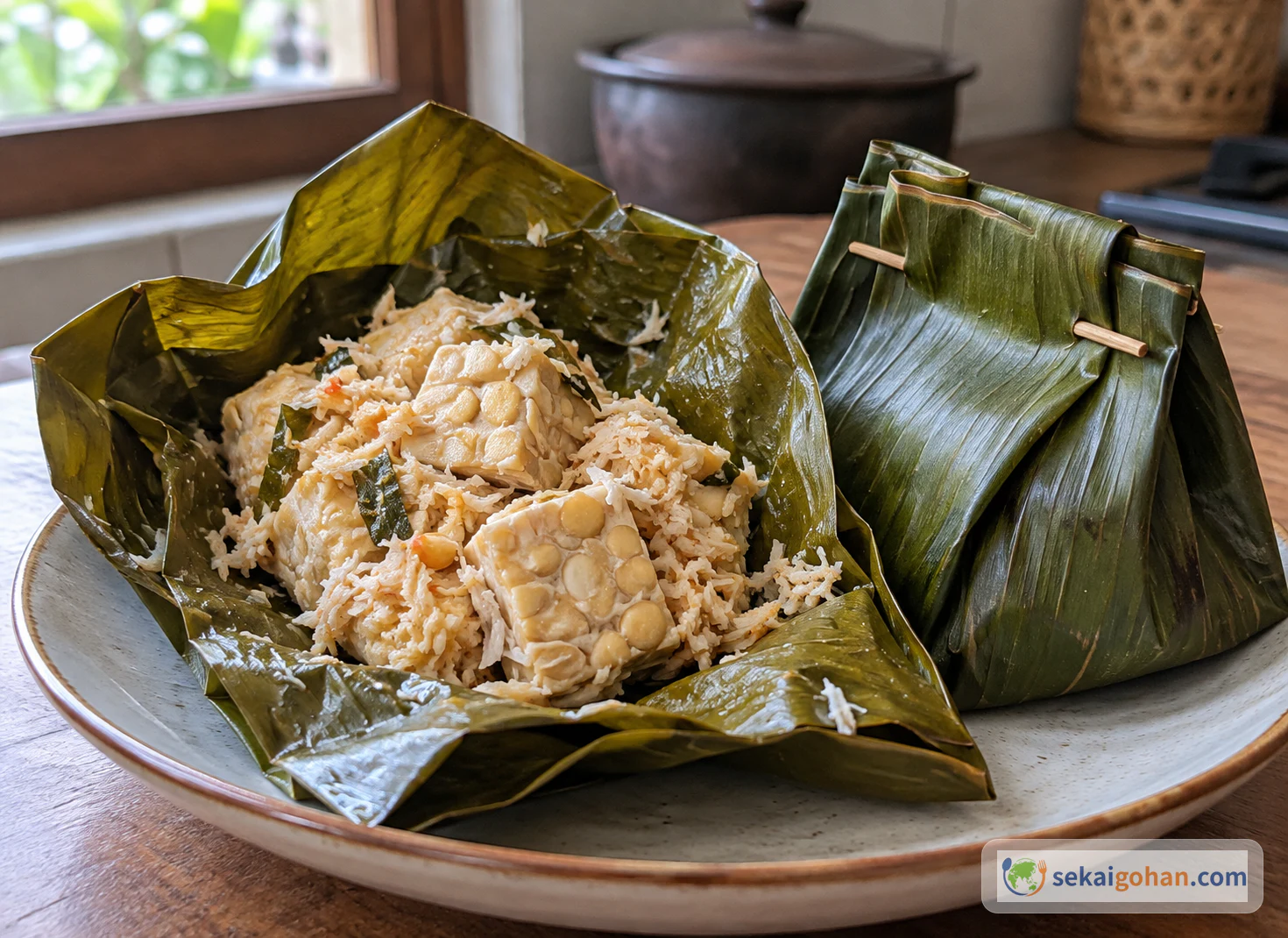
Botok Tempe: Javanese Tempe and Young Coconut Steamed in Banana Leaves
How to make botok tempe, a Javanese parcel of tempe, young coconut, lamtoro seeds, lemon basil and a ground spice paste, wrapped in banana leaves and steamed for 35 minutes. Covers how to find kencur, candlenuts and lamtoro, how to fold and pin the parcels, what to do when they open in the steamer, and how this tempe version differs from the salted-egg and tofu bothok of Demak.

Mapo Tofu: Sichuan-Style Aroma and Heat in a Home Kitchen
A Sichuan-style mapo tofu for the home cook. Covers frying doubanjiang and fermented black beans, using Sichuan peppercorn, warming the tofu in salted water, why the starch goes in twice, adjusting the heat, storage, which pantry items to buy first, and how to keep the tofu intact while the red sauce clings to it.

Gado-Gado: Jakarta's Warm Vegetable Salad with Peanut Sauce
Gado-gado, Jakarta's warm vegetable salad with peanut sauce, set out for a home kitchen. Boiled vegetables, tofu, tempeh, a thick peanut sauce, kecap manis, tamarind, substitutes for krupuk, storage, shopping tips, and how to drain the vegetables so it doesn't turn watery.