Hot and Sour Soup (Suān Là Tāng): A Chinese American Takeout-Style Family Recipe

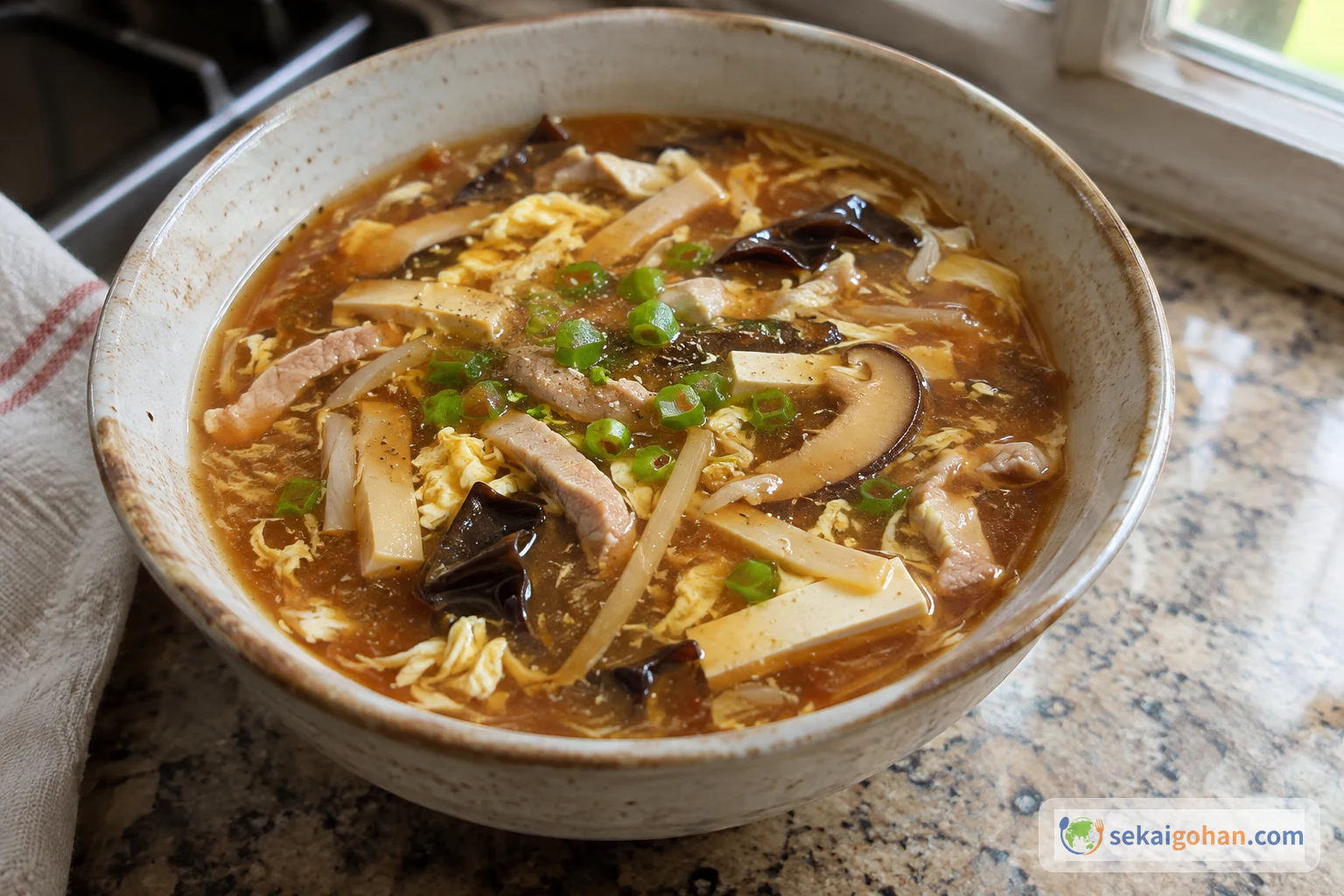
Hot and sour soup seasoned with white pepper and vinegar, with pork, tofu, wood ear, shiitake, bamboo shoots and egg ribbons
Serves
6 servings
Cuisine
Chinese American

How to make hot and sour soup (酸辣湯, suān là tāng) in the Chinese American takeout style, from a family recipe rooted in a US Chinese restaurant. Covers white pepper and distilled white vinegar, soaking lily flowers, wood ear and shiitake, two kinds of tofu, cornstarch thickening and egg ribbons, with safe cooking of the pork and honest notes on substitutions.

Cooking flow

Cooking steps

STEP11 / 11

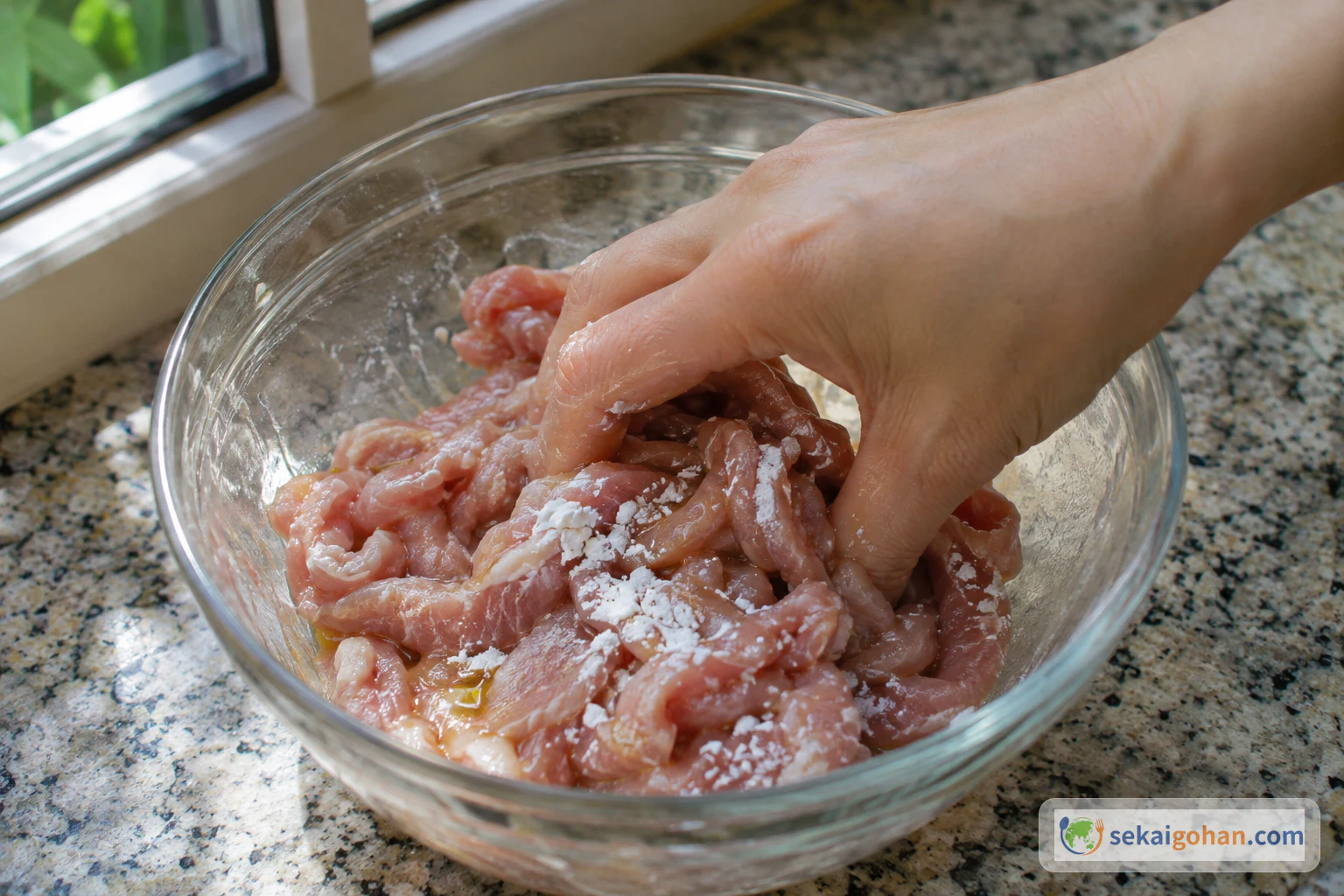
Marinate the pork

Mixing salt, vegetable oil and cornstarch into pork that has absorbed water
The second seasoning goes on after the water is absorbed

Put 4 oz finely julienned pork shoulder in a bowl, add 1 tbsp water and mix until the meat has absorbed it. Add a pinch of salt, 2 tsp vegetable oil and 1 tsp cornstarch, and mix until every strip is coated. Keep the marinated pork in the refrigerator until you cook it; don't leave it out at room temperature. Wash your hands, board and tools after handling the raw pork.

STEP22 / 11

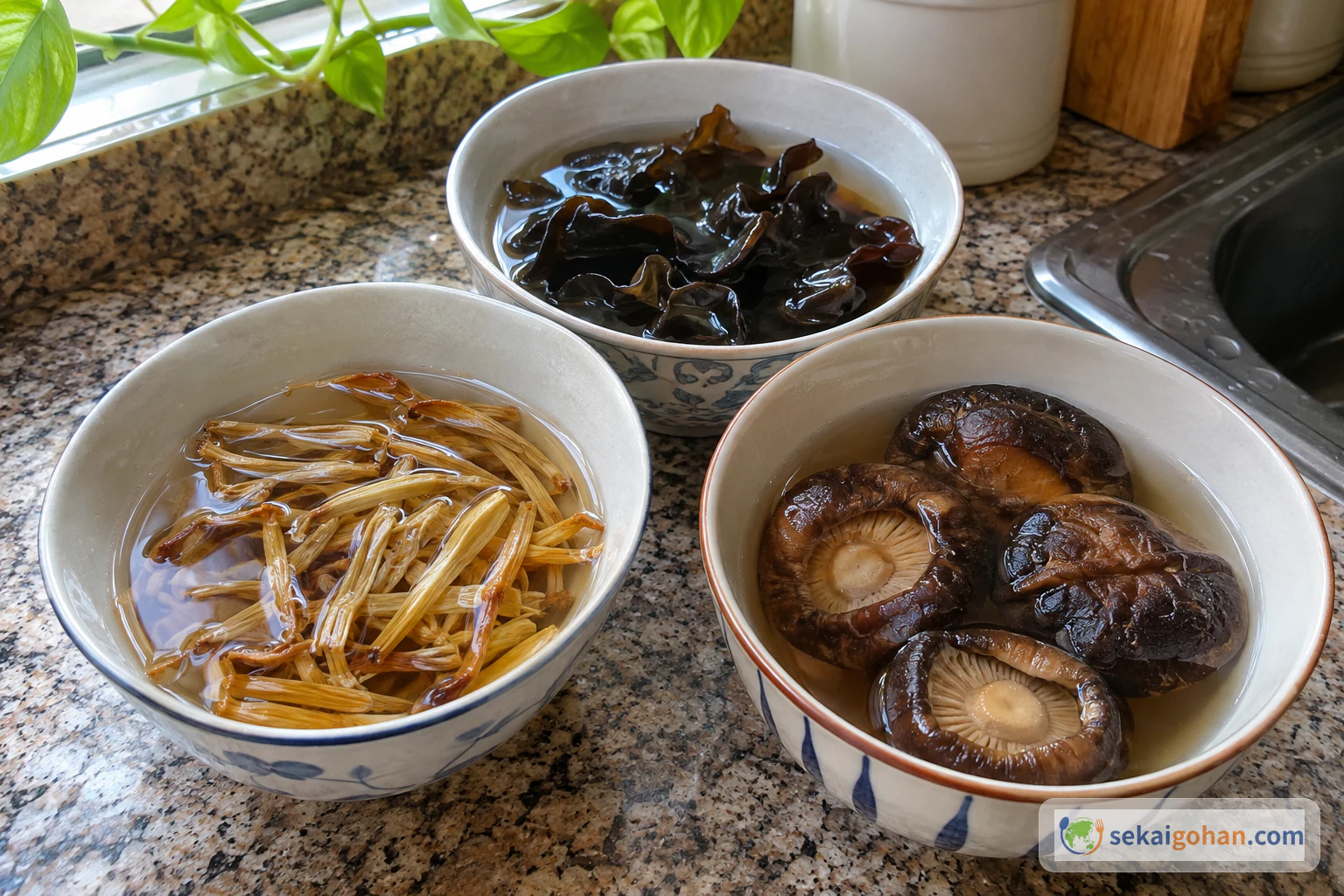
Soak the dried ingredients

Dried lily flowers, wood ear and shiitake soaking in separate bowls of water
Each dried ingredient gets its own bowl and its own cup of water

Put the dried lily flowers, dried wood ear and dried shiitake in three separate bowls and pour 1 US cup water into each. Soak for 1–2 hours; hot water speeds this up. If using dried red chilies, remove the seeds from 1–2 of them and chop them finely while you wait, or skip this if you are leaving them out. When the dried ingredients are soft, drain them and discard the soaking water.

STEP33 / 11

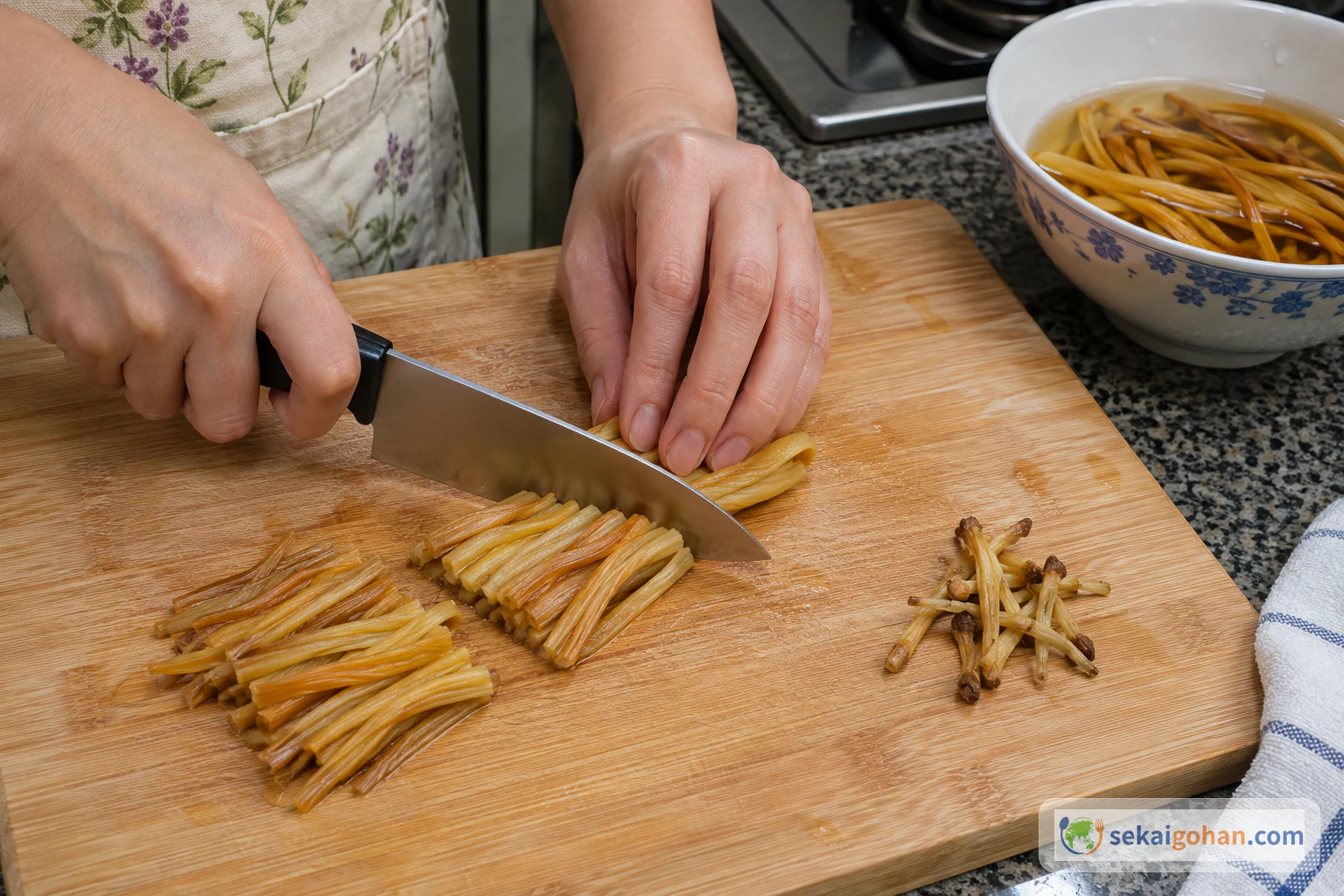
Cut the softened ingredients

Cutting trimmed lily flowers in half
Halve the lily flowers once the ends are off

Thinly slice the softened shiitake and roughly chop the softened wood ear. Cut the tough ends off the softened lily flowers, then cut each trimmed flower in half. Everything should now be in small, bite-size pieces.

STEP44 / 11

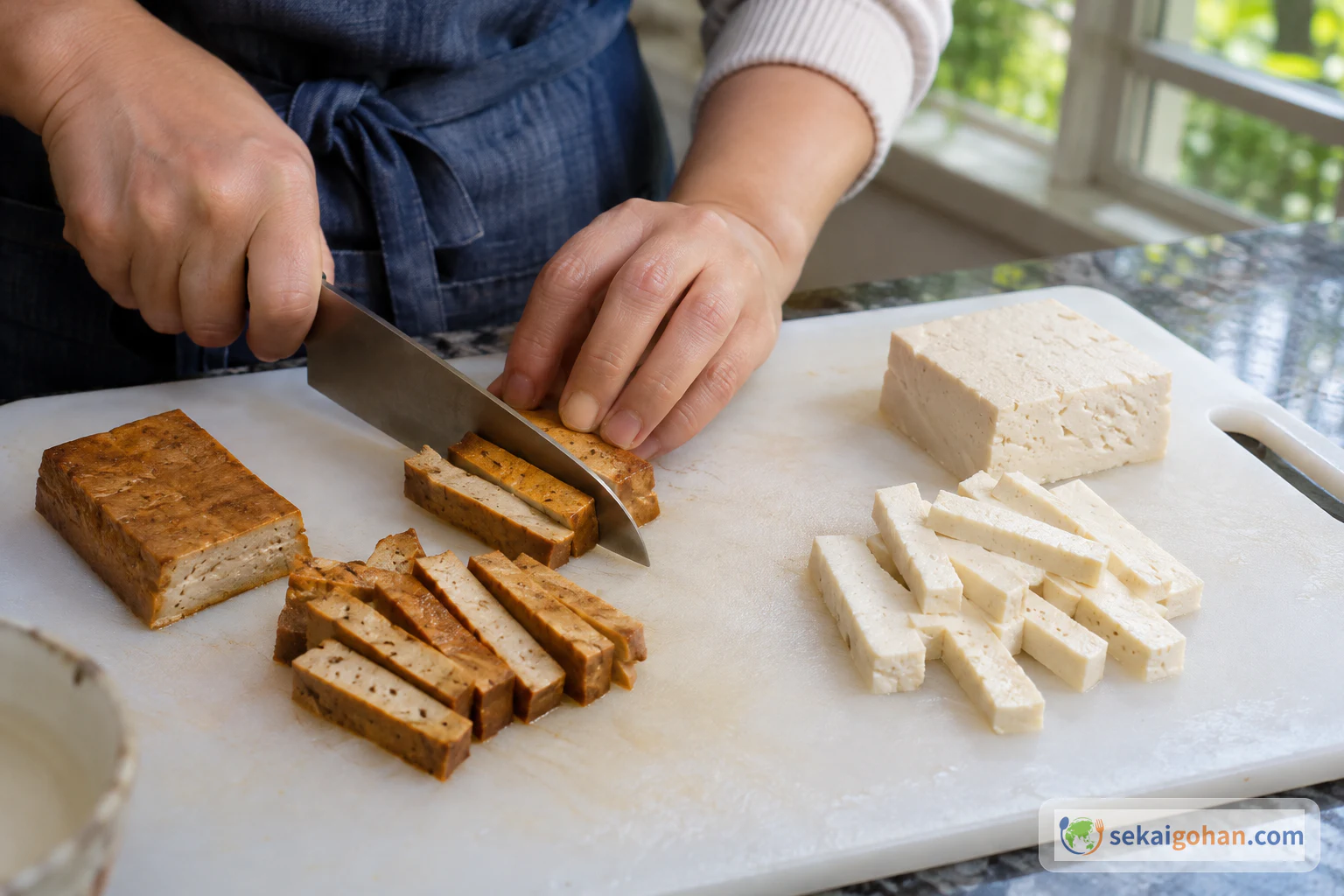
Cut the tofu and bamboo shoots, and prep the egg and scallion

Cutting spiced tofu and firm tofu into 2-inch strips
Keep the two tofus apart on the board

Cut the spiced dry tofu and the firm tofu into strips 2 inches long and 1/4 inch thick, keeping the two tofus apart. Drain 4 oz bamboo shoots and cut them into thin strips. Beat 1 large egg in a small bowl until the yolk and white are evenly combined. Wash the scallion, chop it finely and set it aside for the end.

STEP55 / 11

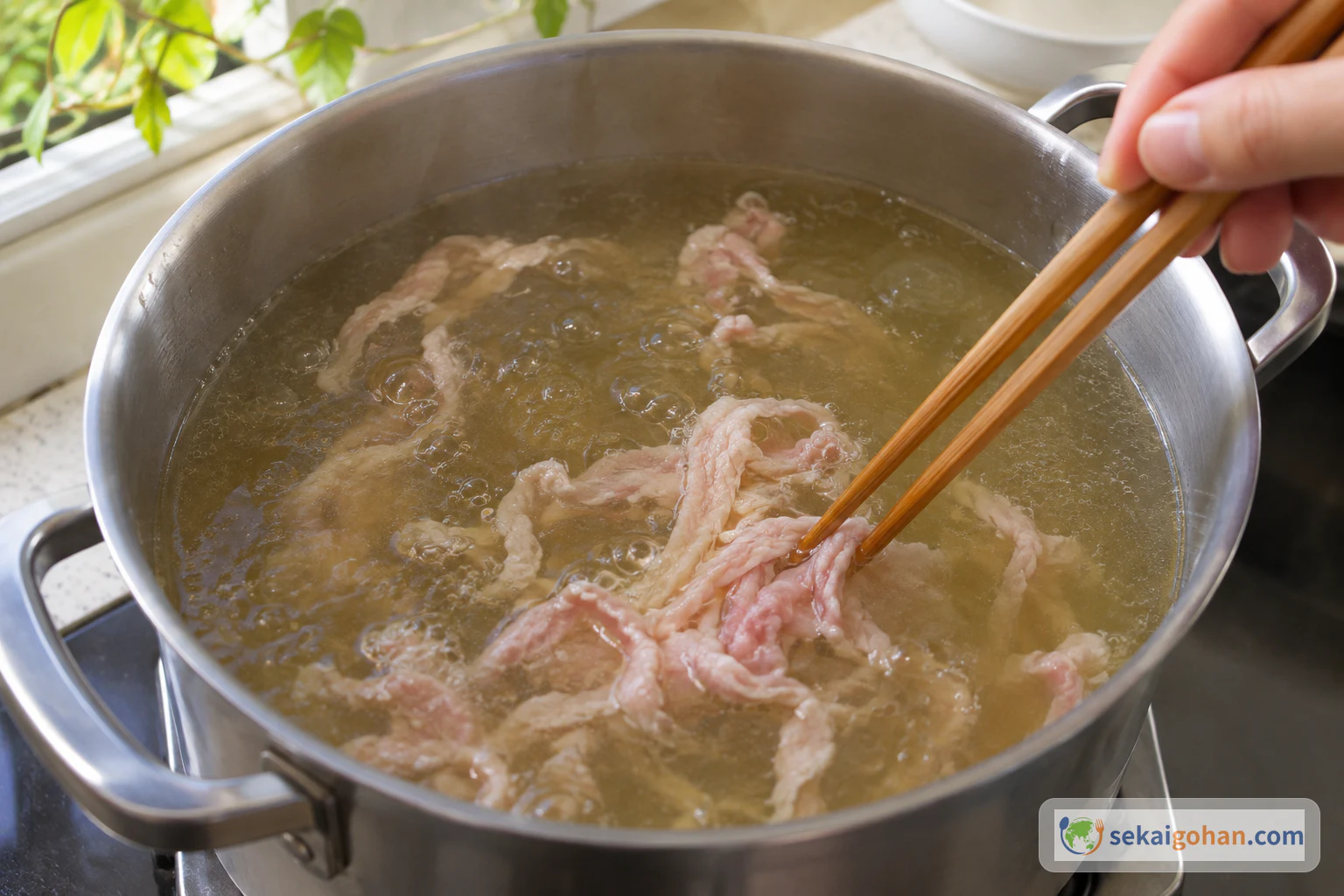
Boil the stock and add the pork

Separating pork strips in the pot with chopsticks
Separate the strips before they set together

In a wok or pot, bring 8 US cups low-sodium chicken stock to a boil. Use ready-made, strained stock; nothing else goes in yet. If the marinated pork has stuck together and is hard to add, mix in about 1 tbsp more water to loosen it; if it hasn't clumped, skip this. Add the pork to the fully boiling stock and use chopsticks to separate any clumps immediately, until the strips move freely.

STEP66 / 11

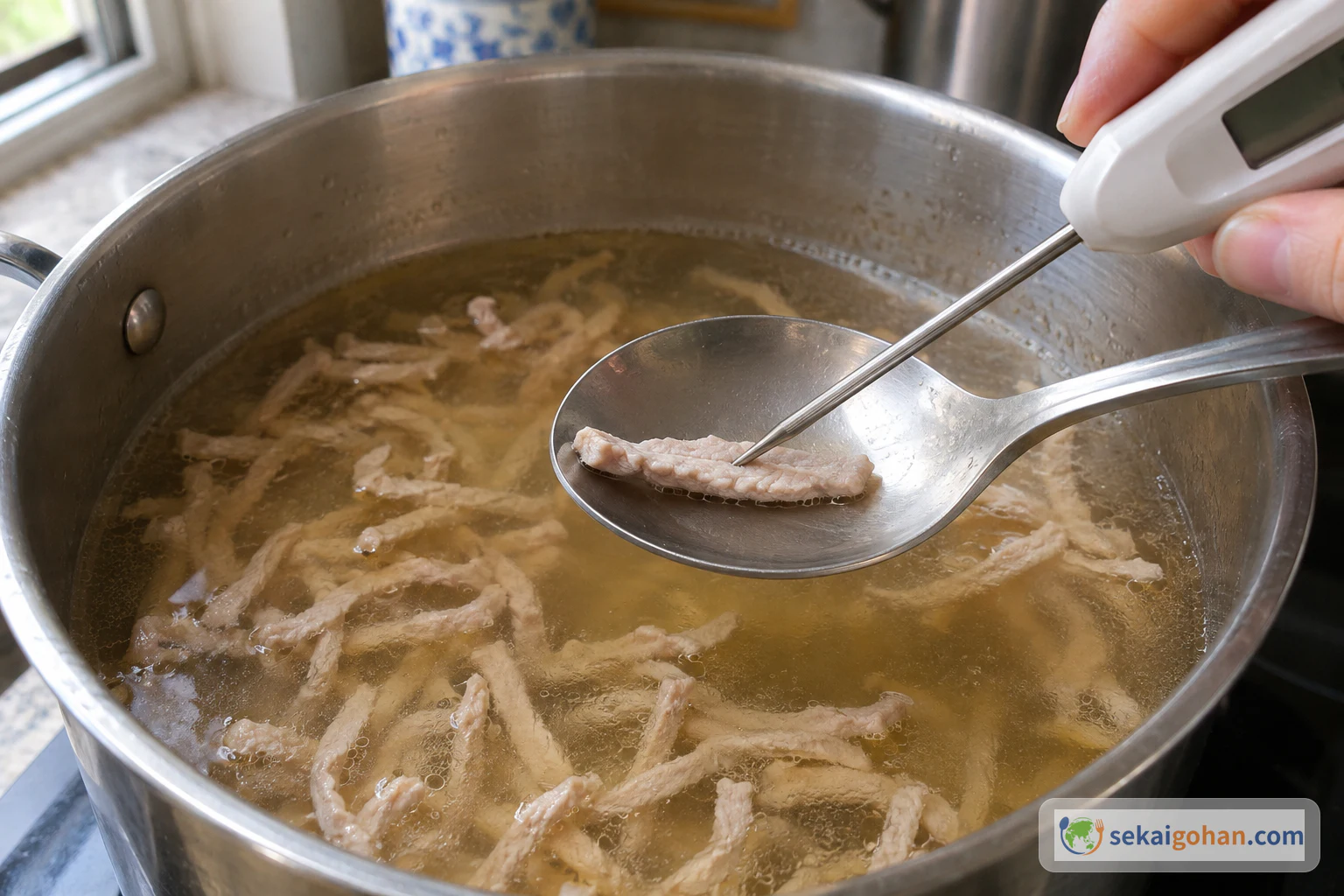
Skim the foam and cook the pork through

Checking the pork against food-safety cooking conditions
Check the thickest piece with a clean thermometer before going further

When the soup returns to a boil, skim off the foam with a fine-mesh skimmer. How long the pork needs depends on how thick the strips are. Use a thermometer to check that the center of the thickest piece reaches 167°F (75°C) and stays there for at least 1 minute. A boiling pot or pork that has turned white on the surface is not enough on its own; if it hasn't reached that point, keep cooking and don't move on.

STEP77 / 11

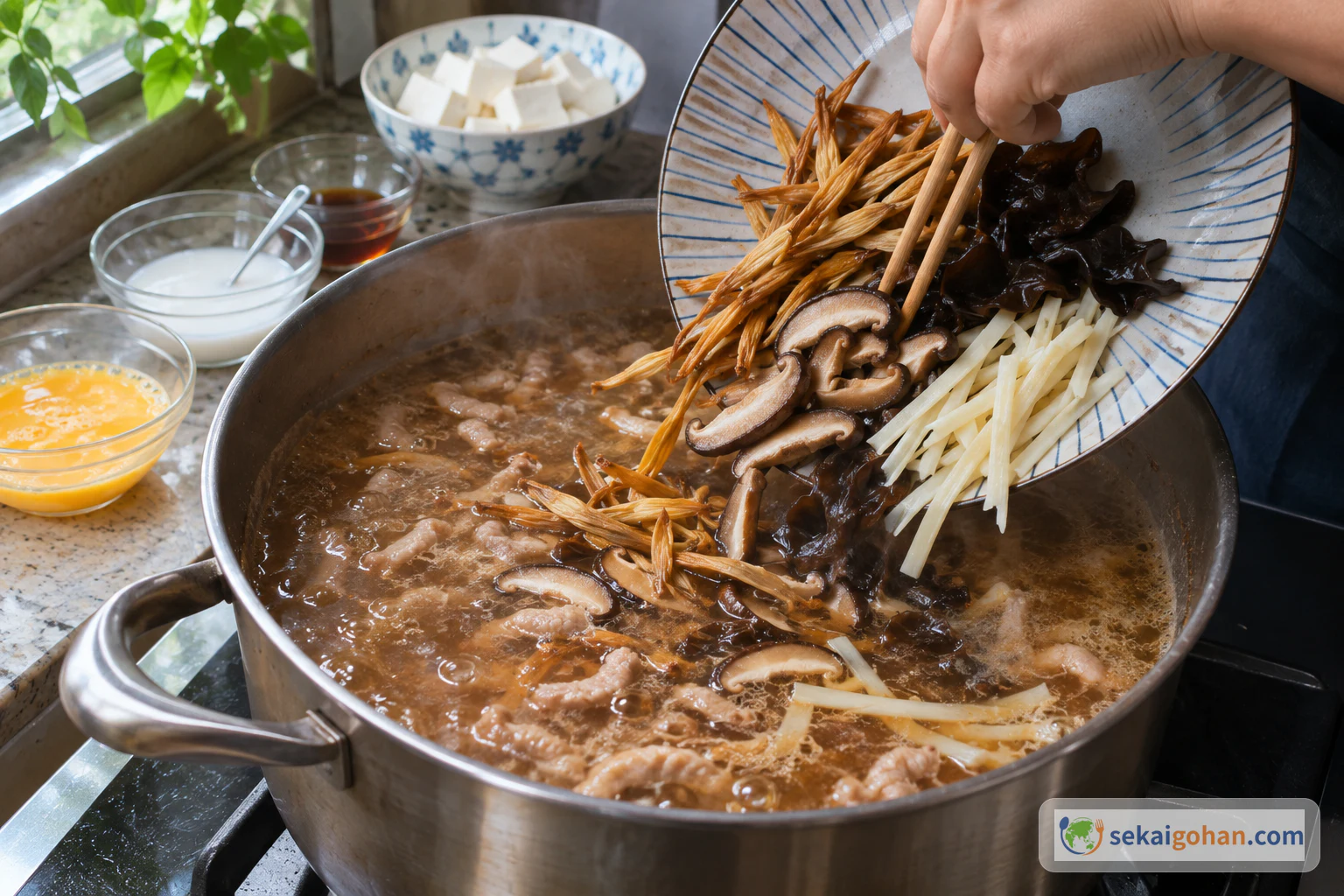
Season the broth and add the vegetables

Adding lily flowers, wood ear, shiitake and bamboo shoots to the seasoned soup
The soaked ingredients and bamboo go in together

Add 1/2 tsp salt, 1/4 tsp sugar, the chopped chili if using, 1–2 tsp white pepper, 2 tsp Chinese dark soy sauce (or mushroom soy sauce), 1 tbsp Chinese light soy sauce (or seasoned soy sauce) and 1 tsp sesame oil, then stir. Add the lily flowers, wood ear, shiitake and bamboo shoots. Bring the pot back to a gentle simmer, with small bubbles around the edge.

STEP88 / 11

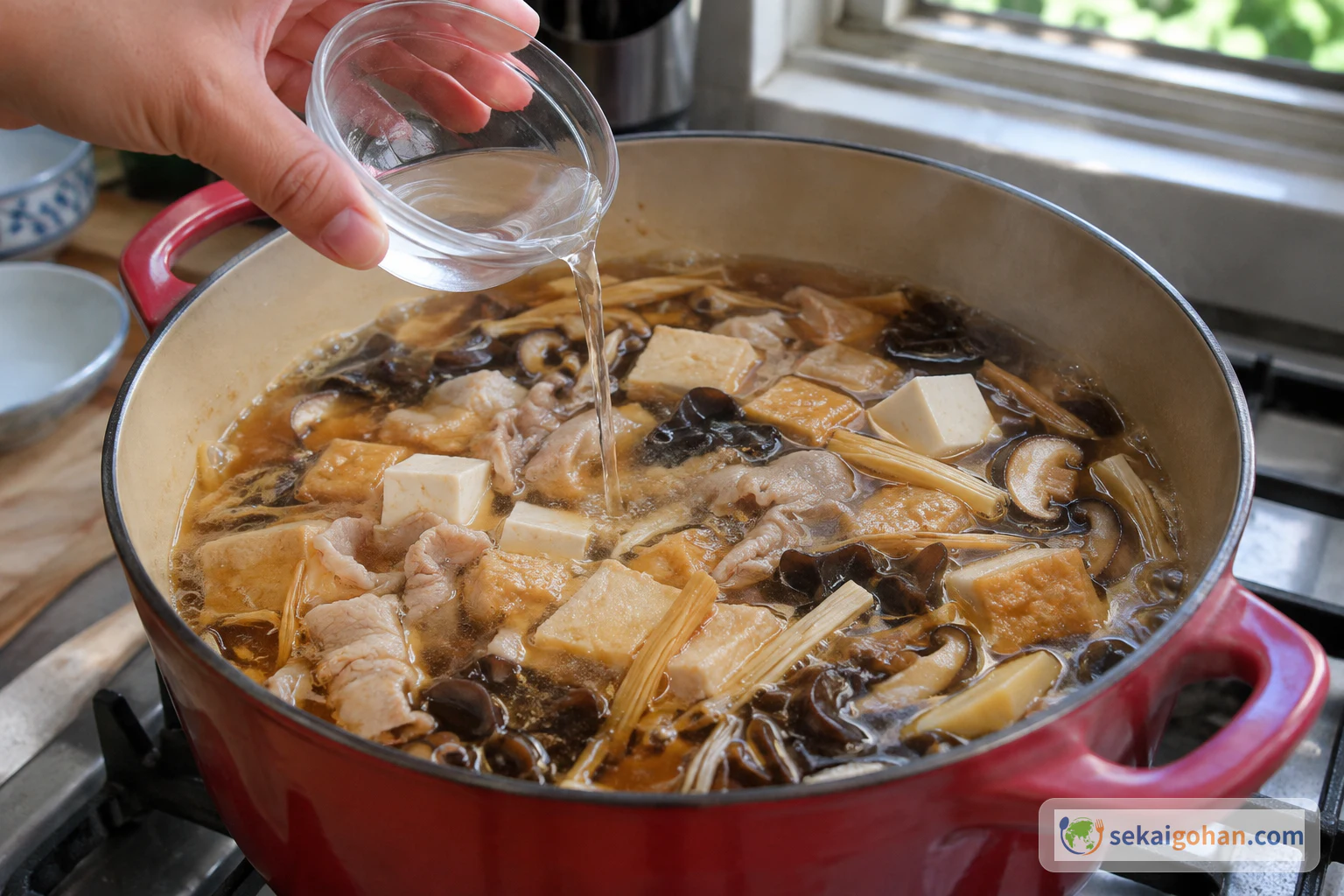
Add the tofu and vinegar

Pouring distilled white vinegar into the soup after the tofu
Start with 1/3 US cup

Slide the spiced dry tofu and firm tofu strips in gently so they hold their shape. Add 1/3 US cup distilled white vinegar and stir. The rest, up to 1/2 US cup, is for adjusting later; don't add it all at once.

STEP99 / 11

Thicken with the cornstarch slurry

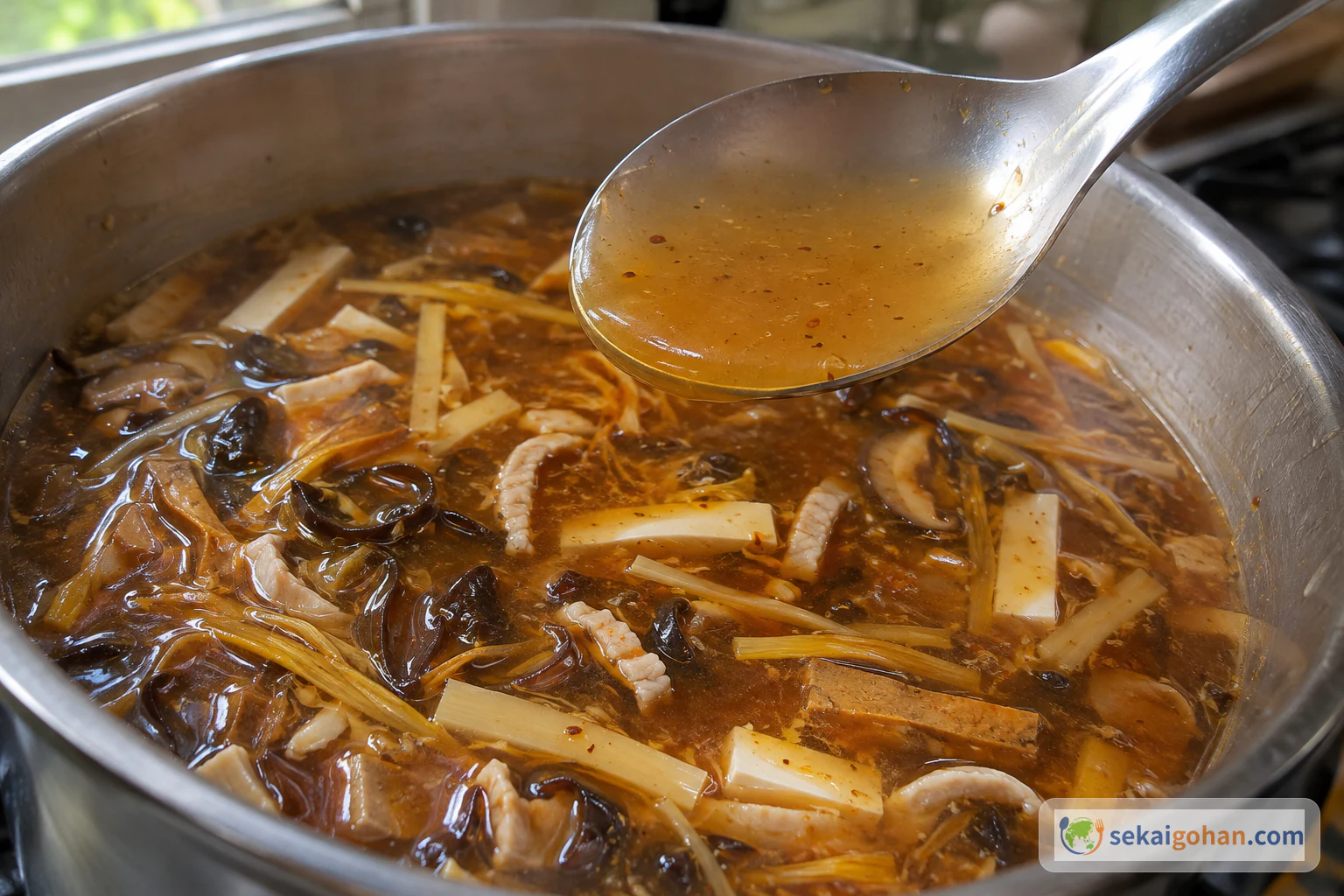
Reboiled hot and sour soup thinly coating the surface of a spoon
A thin, smooth coat on the spoon

In a separate bowl, mix 1/3 US cup cornstarch with 1/4 US cup water until completely smooth, with no dry lumps. Cornstarch settles quickly, so stir it again right before using. Keep the soup boiling, stir with a ladle in one direction to make a whirlpool, and slowly pour in about three-quarters of the slurry. Keep stirring until the soup comes back to a boil, then lift a spoon or ladle out: it's ready when the broth coats the surface in a thin layer. Add the remaining slurry only if needed.

STEP1010 / 11

Taste and adjust

Tasting a small amount with a clean spoon
Taste before adding more of anything

Taste a little with a clean spoon before adding more of anything. For more heat, add white pepper a little at a time. For more sourness, add distilled white vinegar a little at a time, up to the 1/2 US cup total. Check the salt carefully too.

STEP1111 / 11

Add the egg and serve

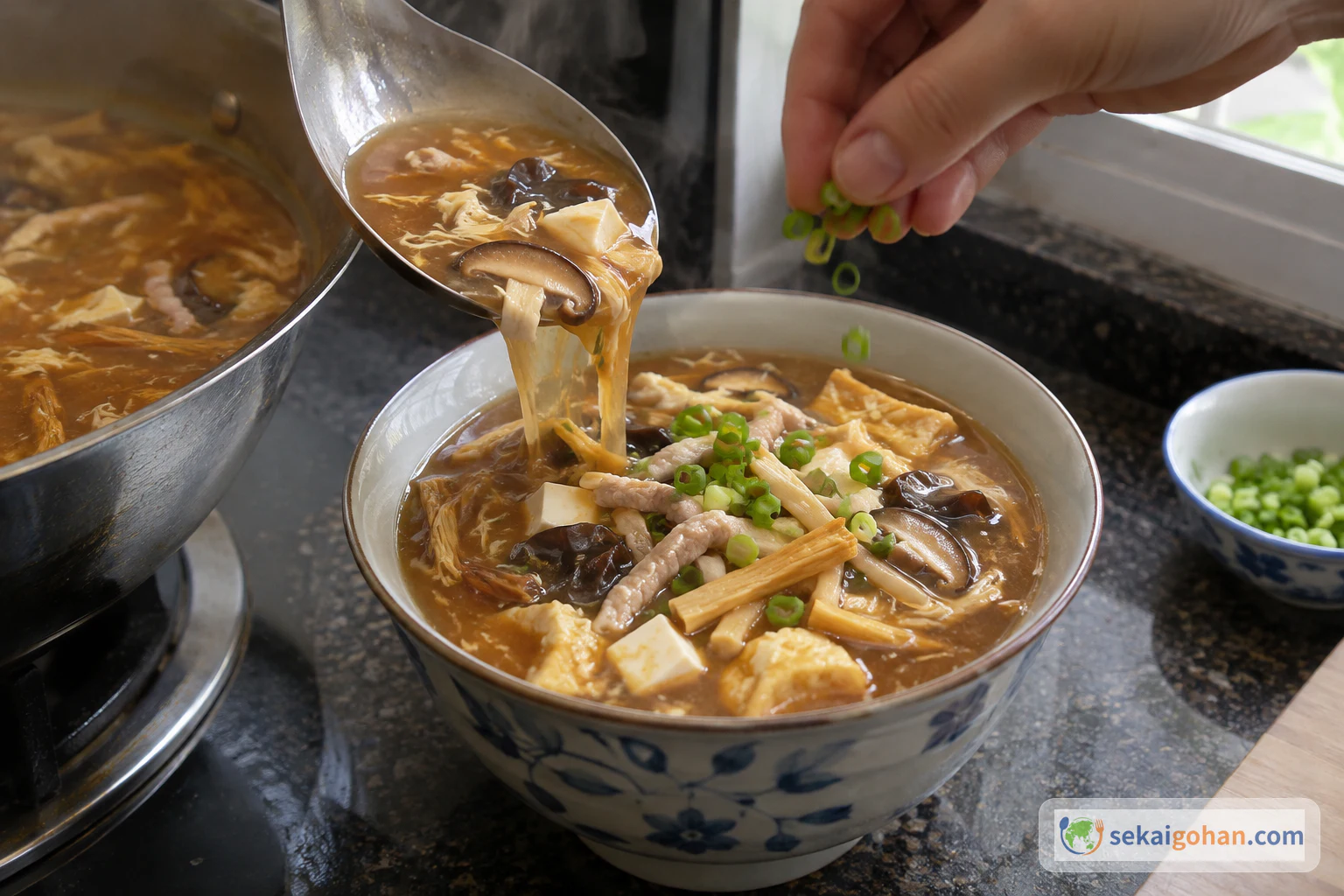
Ladling hot and sour soup with egg ribbons into a bowl and scattering chopped scallion
Scallion goes on at the very end

Just before adding the egg, check that the soup is boiling; if it isn't, the egg will cloud the soup. Stir a gentle whirlpool with the ladle and pour the beaten egg in a thin stream so it spreads into ribbons. Don't stir hard, and cook until no raw streaks of egg remain. Ladle into bowls, scatter the chopped scallion on top and serve hot.

0 / 0
Ingredients

Ingredients

1 / 1

Ingredients

Ingredient Amount Role
Pork shoulder, finely julienned 4 oz Thin strips of meat for the soup
Water (for the pork) 1 tbsp Absorbed into the pork first
Salt (for the pork) a pinch Pork marinade
Vegetable oil 2 tsp Pork marinade; a neutral oil, not sesame oil
Cornstarch (for the pork) 1 tsp Pork marinade
Water (only if the pork clumps) about 1 tbsp, only if needed Loosens marinated pork that has stuck together
Dried red chili peppers 1–2, optional Seeded and finely chopped
Dried lily flowers (金針菜, golden needles) 0.3 oz Dried edible lily flowers only; about 1/2 US cup once soaked; trimmed and halved
Dried wood ear mushrooms 0.3 oz About 1/2 US cup once soaked and roughly chopped
Dried shiitake mushrooms 0.3 oz About 1/2 US cup once soaked and thinly sliced
Water for soaking 1 US cup for each dried ingredient Soaks each dried ingredient in its own bowl; discarded afterward
Spiced dry tofu (五香豆腐) 3 oz Cut into strips 2 inches long and 1/4 inch thick
Firm tofu 4 oz Cut into strips 2 inches long and 1/4 inch thick
Bamboo shoots 4 oz Drained and julienned
Large egg 1 Beaten, for the egg ribbons
Scallion 1 Washed and finely chopped, for garnish
Low-sodium chicken stock, ready-made and strained 8 US cups The soup base
Salt (for the soup) 1/2 tsp, or to taste Seasons the broth
Sugar 1/4 tsp Rounds off the sharp edges
Freshly ground white pepper 1–2 tsp, or to taste The main heat
Chinese dark soy sauce (老抽) or mushroom soy sauce 2 tsp Color and depth
Chinese light soy sauce (生抽) or seasoned soy sauce 1 tbsp Savory seasoning
Sesame oil 1 tsp Aroma
Distilled white vinegar 1/3–1/2 US cup The sourness; start with 1/3 US cup
Cornstarch (for thickening) 1/3 US cup Thickens the soup
Water (for the slurry) 1/4 US cup Dissolves the cornstarch
0 / 0

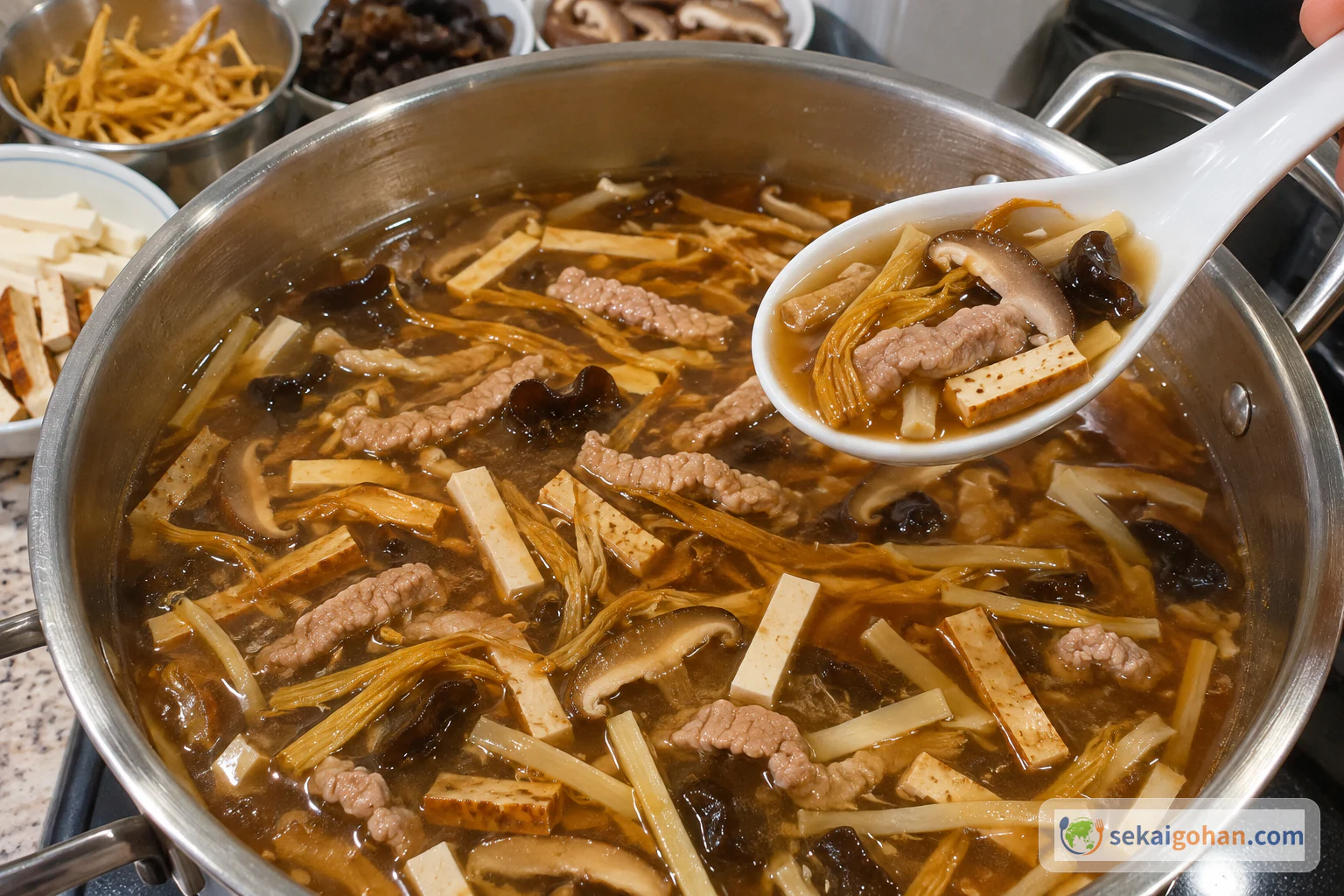
A bowl of hot and sour soup is all contrast. Freshly ground white pepper warms the back of the throat, vinegar sharpens each sip, and the glossy, lightly thickened broth carries thin strips of pork, two kinds of tofu, crinkly wood ear, sliced shiitake, golden lily flowers and bamboo shoots. Delicate egg ribbons drift through it all, and chopped scallion goes on just before serving. This is the Chinese American restaurant-style version, the soup you know from Chinese takeout.

About Hot and Sour Soup

The name 酸辣湯 (simplified 酸辣汤, suān là tāng) simply means a soup that is sour and hot, and there is no single fixed formula behind it. The version here is the one served at Chinese takeout restaurants in the United States, part of how Chinese cooking carried by immigrant families found its way onto American takeout menus. For more dishes from the wider cuisine, see our China page.
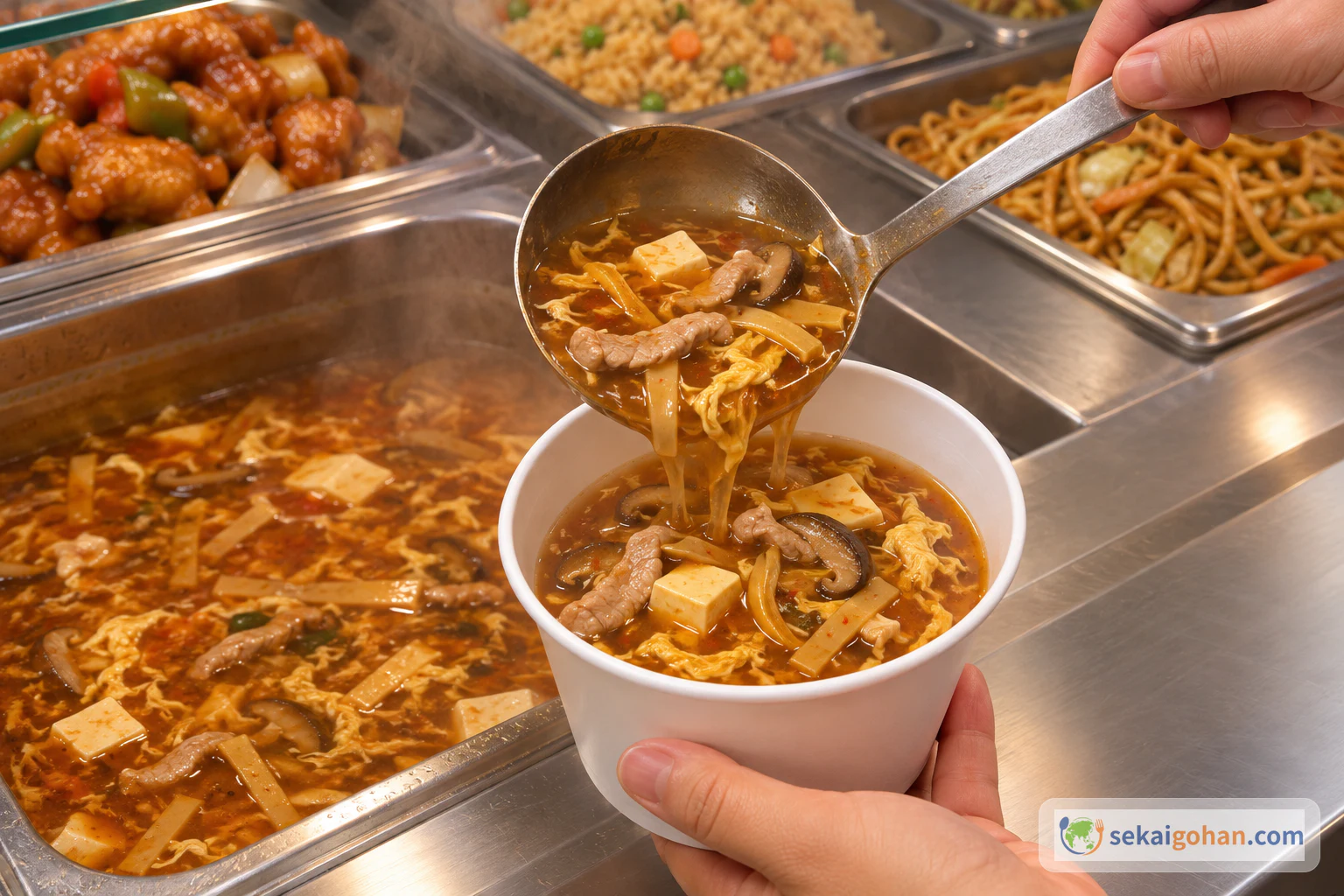
Illustration of soup being ladled into a takeout container at a Chinese takeout counter; not an archival photo of a real family's history
An illustrative takeout scene, not a record of the family's restaurant

The Takeout Style

This style has a clear character. The heat comes mainly from freshly ground white pepper rather than from chilies or the numbing málà of Sichuan cooking, and the sourness comes from distilled white vinegar. A cornstarch-thickened broth holds many thin strips of different textures, and egg ribbons go in at the end.
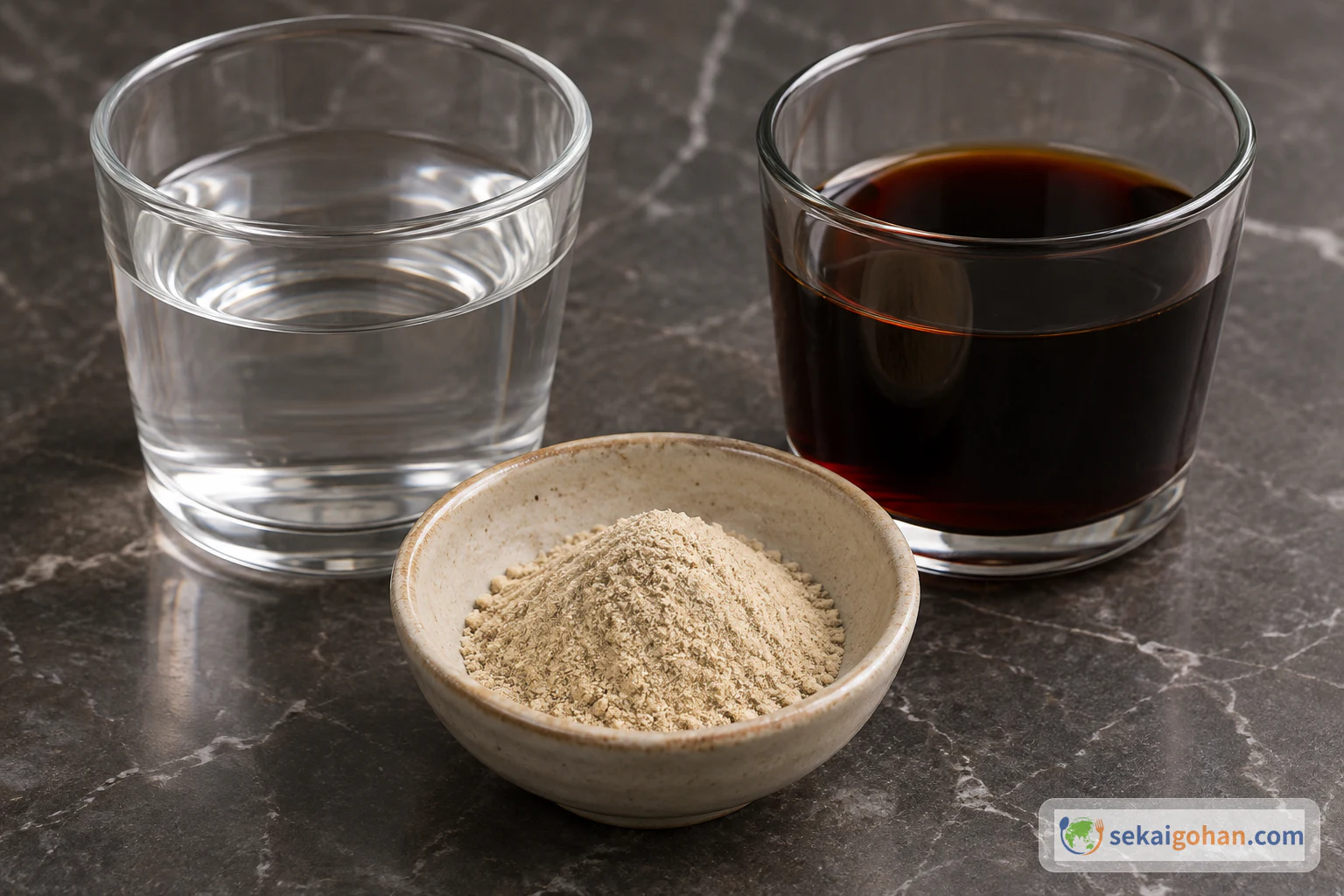
Ground white pepper, clear distilled white vinegar and dark black vinegar side by side; a seasoning comparison, not a finished soup or a regional standard
The pepper and vinegar choices shift the soup's character

Other Soups With the Same Name

Other versions share the name. A Szechwan and Peking style hot and sour soup combines pork, dried mushrooms, cloud ears, golden needles (lily flowers), tofu, starch and egg, with vinegar and black pepper going in near the end and coriander added. There is also an unthickened black-vinegar version. Think of hot and sour soup as a family of soups rather than one recipe.

Before you start

Prep takes 1 hr and cooking takes 20 mins, for a total of 1 hr 20 mins. The dried ingredients soak for 1–2 hours first, so plan for that wait.

Ingredients (6 servings)
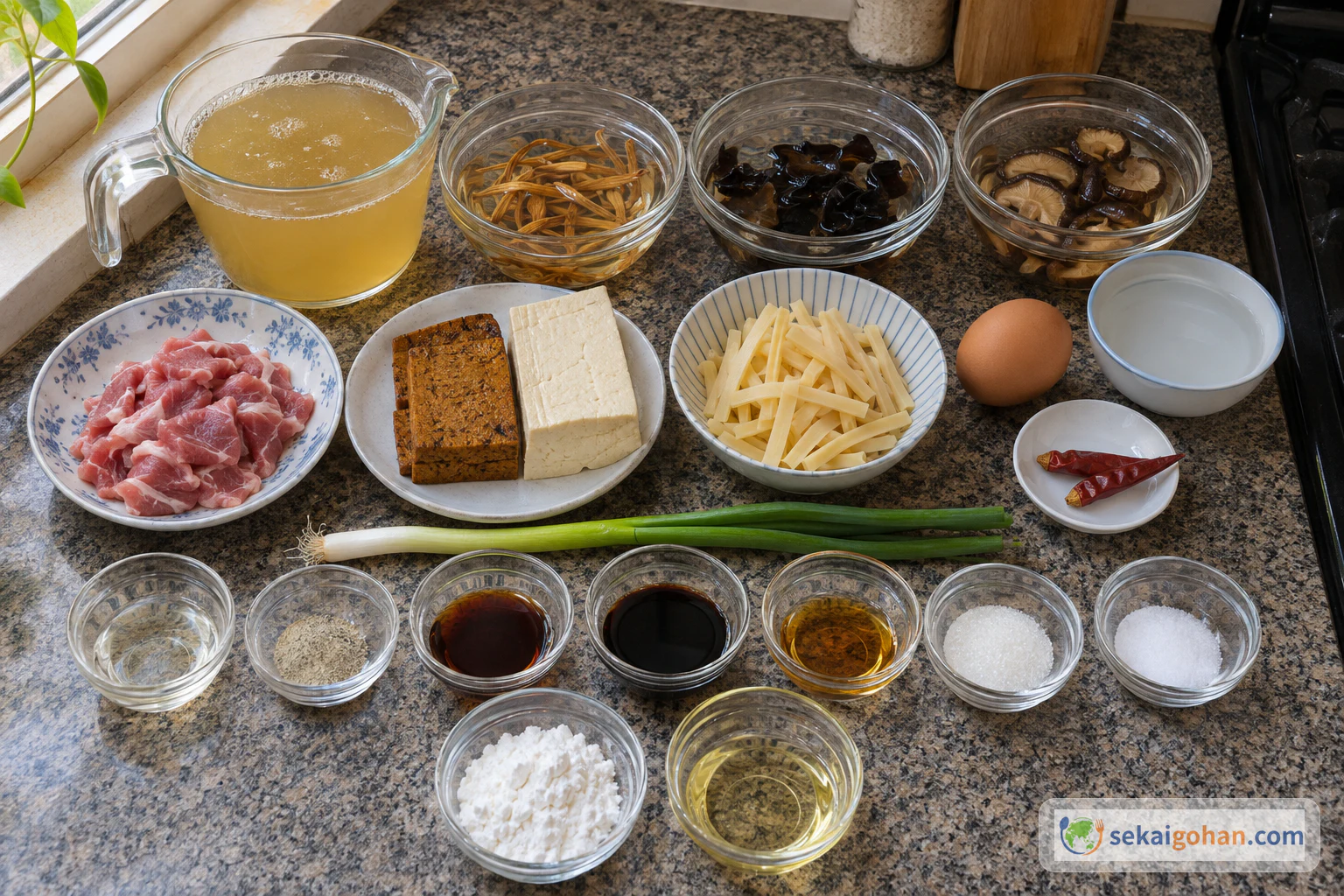
Pork, two kinds of tofu, egg, dried wood ear, dried shiitake, dried lily flowers, bamboo shoots and seasonings for hot and sour soup
Get every ingredient measured and every bowl ready before the stock goes on the stove

Salt appears twice, and water appears four times, each for a different job, so keep them apart.

The soaking water from the dried ingredients does not go into the soup. Grind the white pepper fresh if you can; pre-ground pepper has a weaker aroma.

Allergies and food safety

This soup contains pork, egg, soy (tofu and soy sauces) and sesame (sesame oil). Many soy sauces also contain wheat, so check the labels of the soy sauces you buy. Keep raw pork refrigerated, wash hands, boards and tools after handling it, and keep raw meat juices away from cooked food.

Equipment

  • Wok or pot large enough for 8 US cups of stock plus the solid ingredients
  • Three small bowls for soaking, plus small bowls for the marinated pork, the slurry and the beaten egg
  • Cutting board and knife
  • Ladle
  • Chopsticks
  • Fine-mesh skimmer
  • Instant-read food thermometer
  • Clean spoons for tasting and checking thickness

Hot and Sour Soup Ingredients and Substitutes

Firm tofu, eggs, scallions, chicken stock, white pepper, dried shiitake, dried wood ear, canned or boiled bamboo shoots and cornstarch are easy to find. Dried lily flowers, spiced dry tofu, Chinese dark and light soy sauces, distilled white vinegar and dried red chilies are easier to track down at Chinese or Asian grocers, import shops or online. Buy only dried edible lily flowers; fresh ornamental lilies are not a substitute.

If you can't find You can use What changes
Dried shiitake Fresh shiitake or button mushrooms Weaker flavor; dried shiitake is the first choice
Dried lily flowers Leave them out Less of their distinctive aroma and chew
Dried wood ear Enoki (cut short) or button mushrooms The crunchy bite changes
Bamboo shoots Julienned broccoli stem or kohlrabi Different texture and flavor
Spiced dry tofu More firm tofu The five-spice aroma and dense texture are lost
Chinese dark soy or mushroom soy A little more regular soy sauce The soup comes out paler
Pork shoulder Boneless chicken thigh It becomes a different meat soup

A few swaps need more care, because the amounts here are set for the original ingredients:

  • Potato starch instead of cornstarch: it thickens differently, so the same amount won't give the same body.
  • Chinese black vinegar or rice vinegar instead of distilled white vinegar: both bring a stronger, different aroma, and grain vinegars behave differently too. Start small and taste.
  • Japanese soy sauces: Chinese light soy (生抽) and dark soy (老抽) differ from Japanese usukuchi and koikuchi, so swapping changes saltiness and color.
  • Stock: the recipe is built on low-sodium stock. With a saltier stock or bouillon, hold back on the salt and taste as you go.

Method: Prep Everything, Then Build the Soup in Order

Read before you cook

Steps 1–11 are preparation, including a 1–2 hour soak. Once the stock boils, the ingredients go in quickly and in sequence, so have every bowl ready first.

Hot and Sour Soup Troubleshooting

Problem Likely cause What to do
Starch sinks or forms lumps Slurry settled in the bowl, or poured into still soup Stir the slurry right before pouring, keep the soup boiling, swirl with the ladle and pour slowly
Soup turns thicker than you want All the slurry went in at once Add about three-quarters first, check the spoon, and use the rest only if needed
Too sour or too peppery Too much added at the adjusting stage Start from the listed amounts and add more in small steps; it's easy to add, hard to take back
Egg breaks into tiny grains Stirred too hard or poured too fast Keep a slow, steady swirl and pour the egg in a thin stream
Soup looks cloudy after the egg The soup wasn't boiling when the egg went in Bring the soup to a boil before adding the egg
Textures feel uneven Pieces cut to different sizes Cut tofu to 2 in × 1/4 in strips, julienne the pork and bamboo, slice the shiitake thinly
Pork not yet at temperature Thicker strips need longer Keep cooking and recheck the thickest piece before adding the seasonings

Adjusting the Heat

The dried chilies are optional. Leave them out and the white pepper carries the heat on its own, which is how this style is built anyway. If your table likes it gentler, use the lower end of the white pepper and let each person add more to their own bowl.

Frequently Asked Questions

Are "hot and sour soup" and "suan la tang" the same dish?

Yes. Suān là tāng (酸辣湯 / 酸辣汤) is the Chinese name and hot and sour soup is the English one. The name covers several versions, though: a Chinese American takeout style like this one, a Szechwan and Peking style, and an unthickened black-vinegar version, among others.

Is there a vegetarian version?

Use a separate vegetarian recipe. Leaving the pork out of this one won't give you the same soup.

How do I cook the pork safely?

Heat the pork until the center of the thickest strip reaches 167°F (75°C) and stays there for at least 1 minute, and check with a thermometer rather than by the look of the soup. Keep raw meat refrigerated, and keep hands and utensils from carrying raw meat juices to cooked food.

How do the US cups and ounces convert to metric?

Approximate conversions: 1 US cup ≈ 240 mL, so 8 US cups of stock is about 1.9 L; 1/3 US cup ≈ 80 mL; 1/4 US cup ≈ 60 mL; 1 tbsp ≈ 15 mL; 1 tsp ≈ 5 mL; 1 oz (weight) ≈ 28 g; 4 oz ≈ 114 g. Use the US measures as written, and measure dried ingredients, salt and starch by volume, not by weight.
Sources