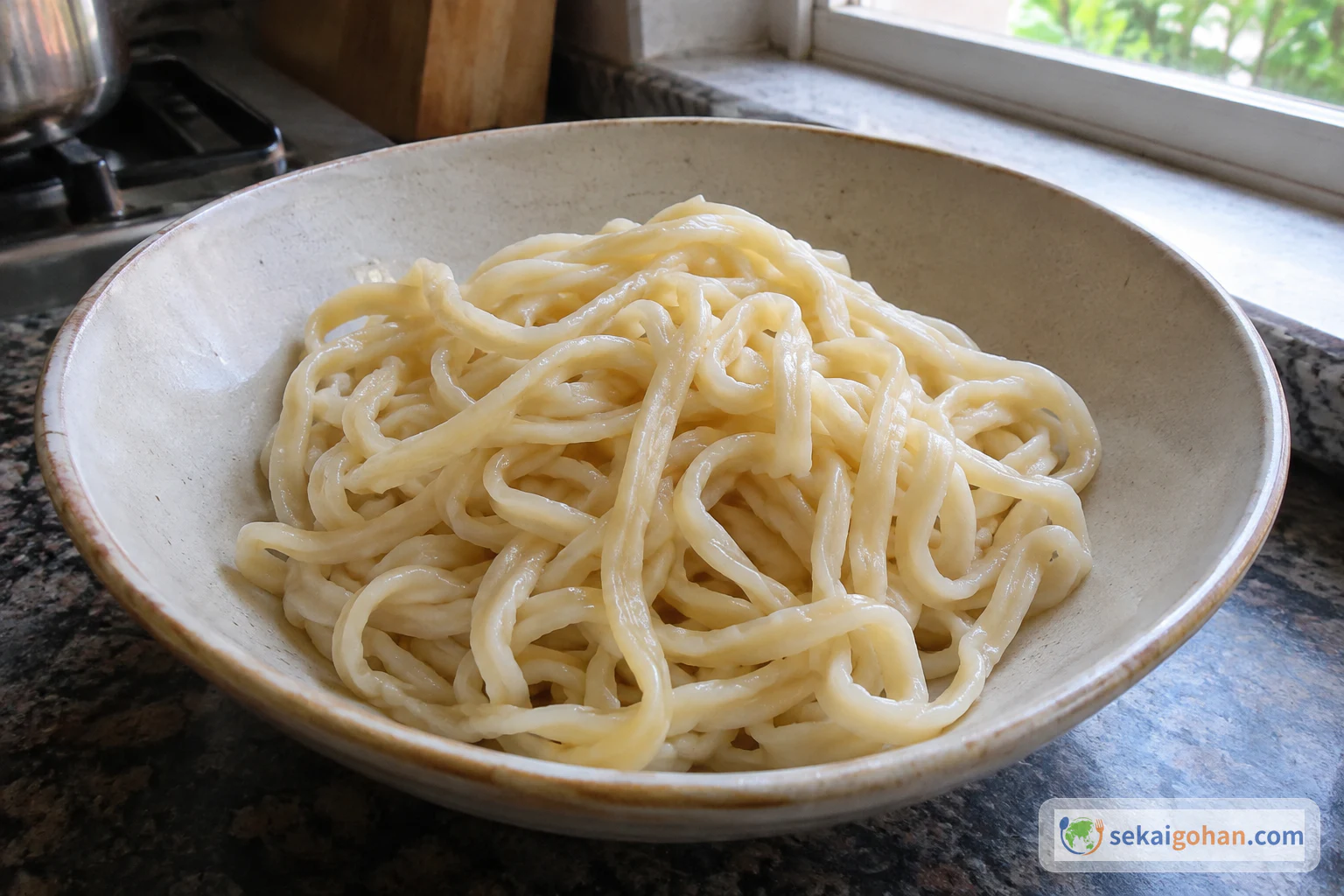
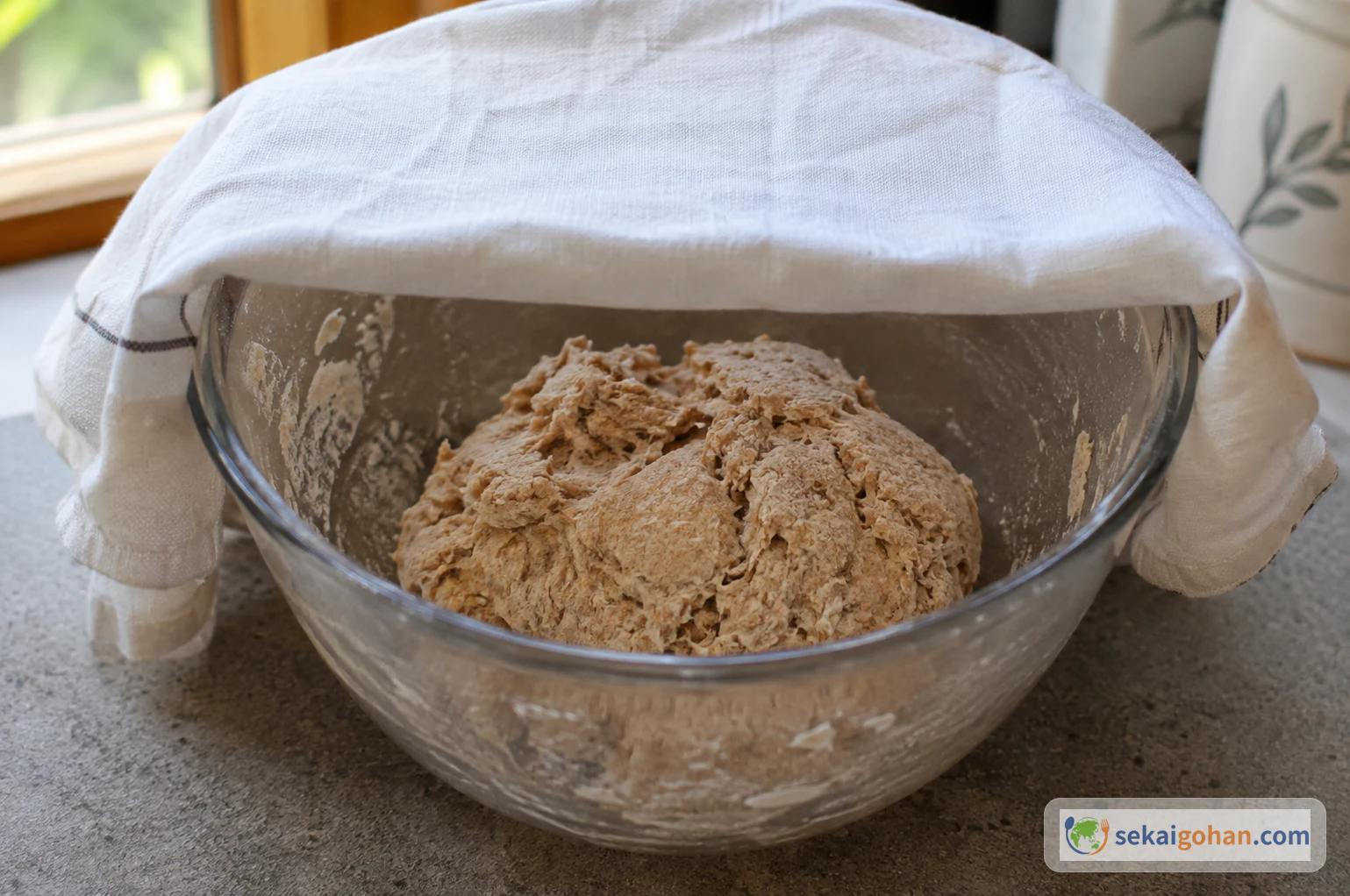
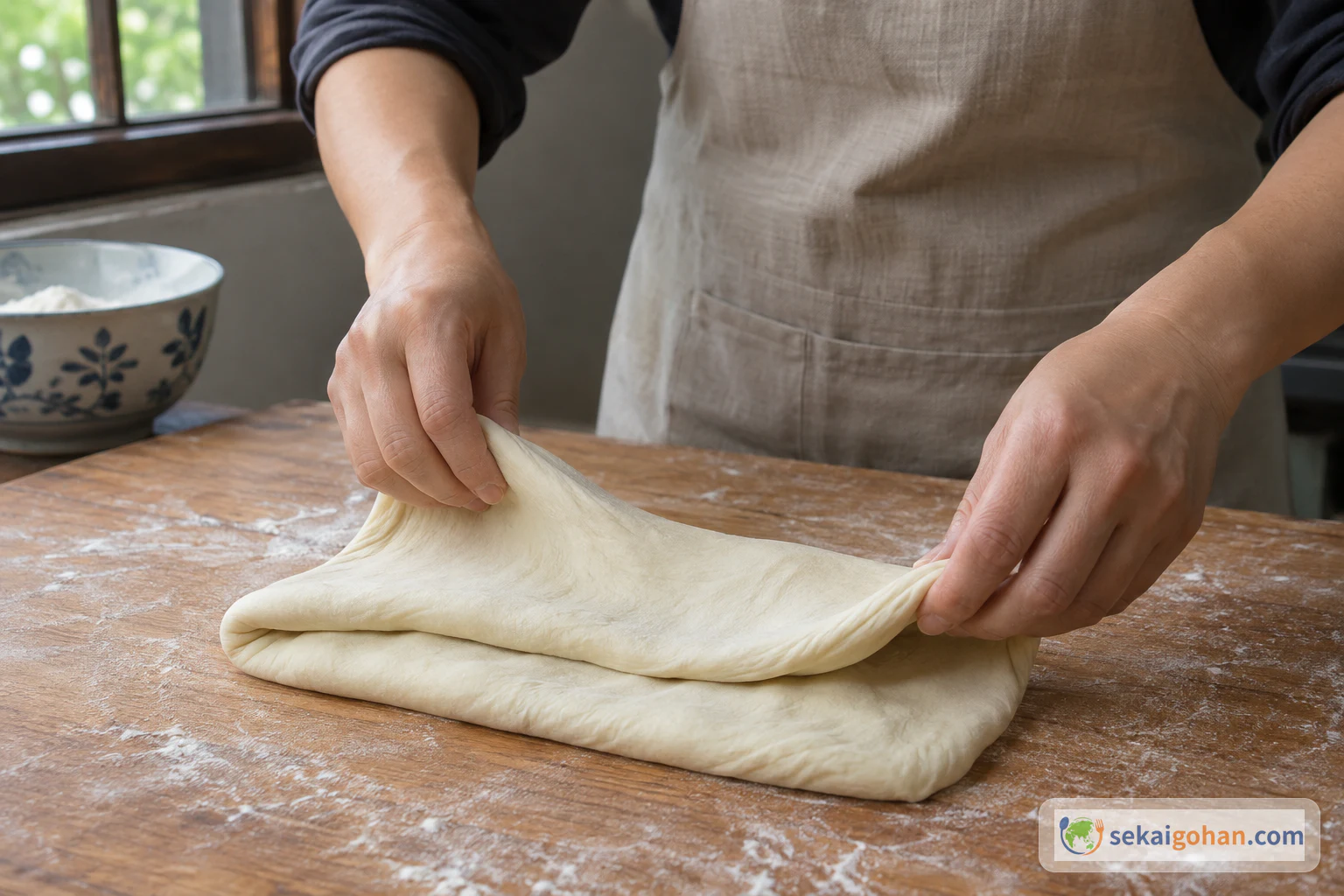
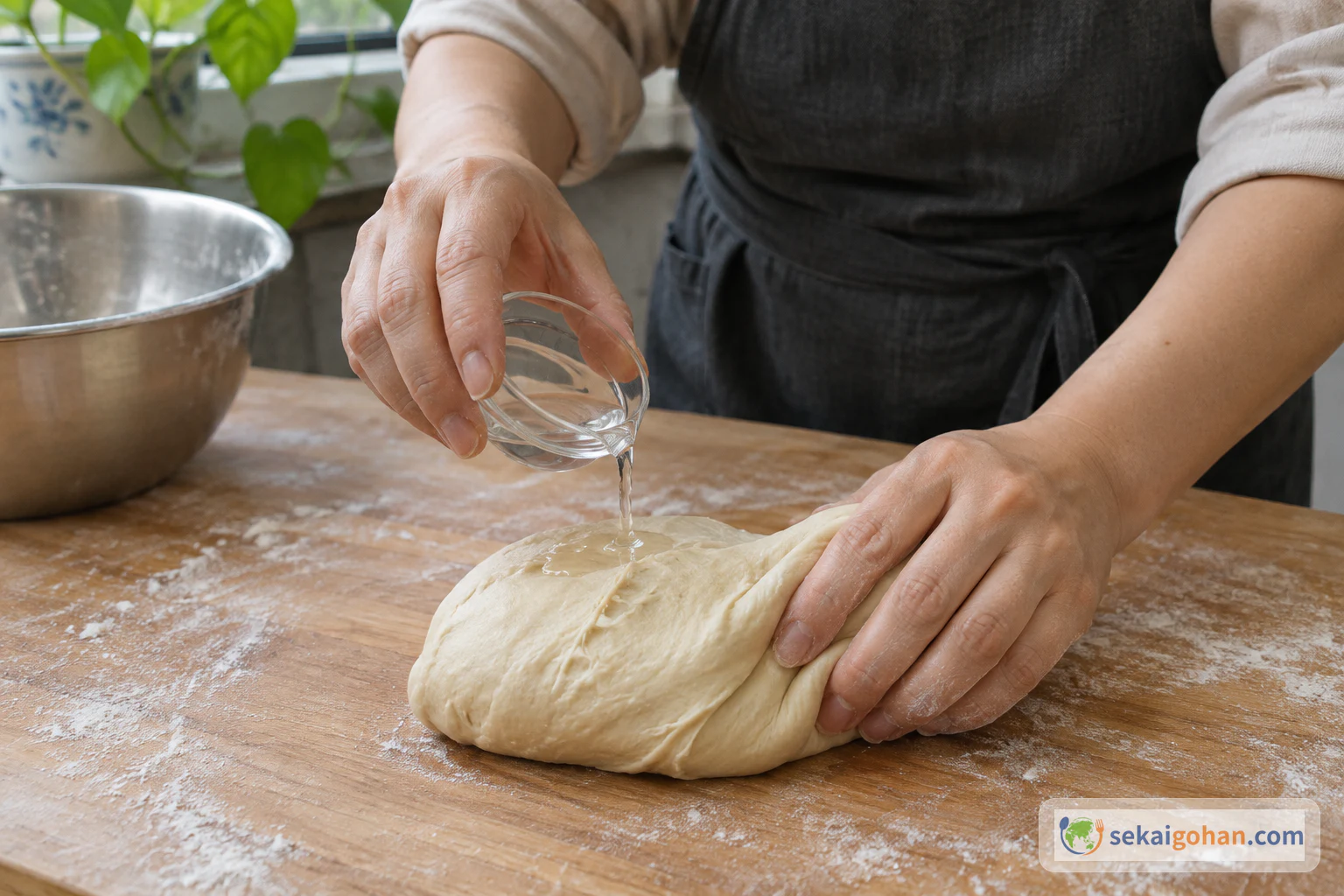
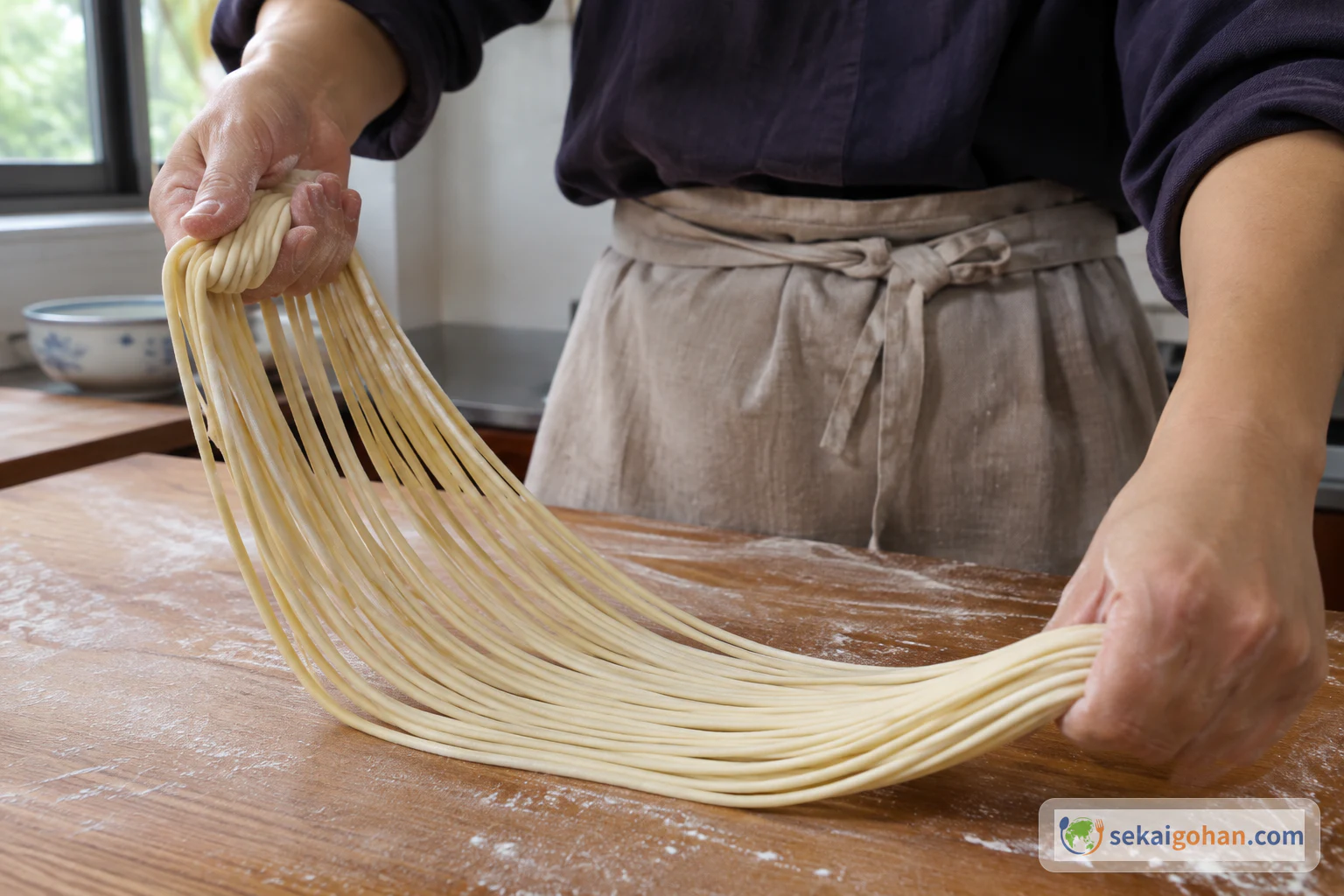
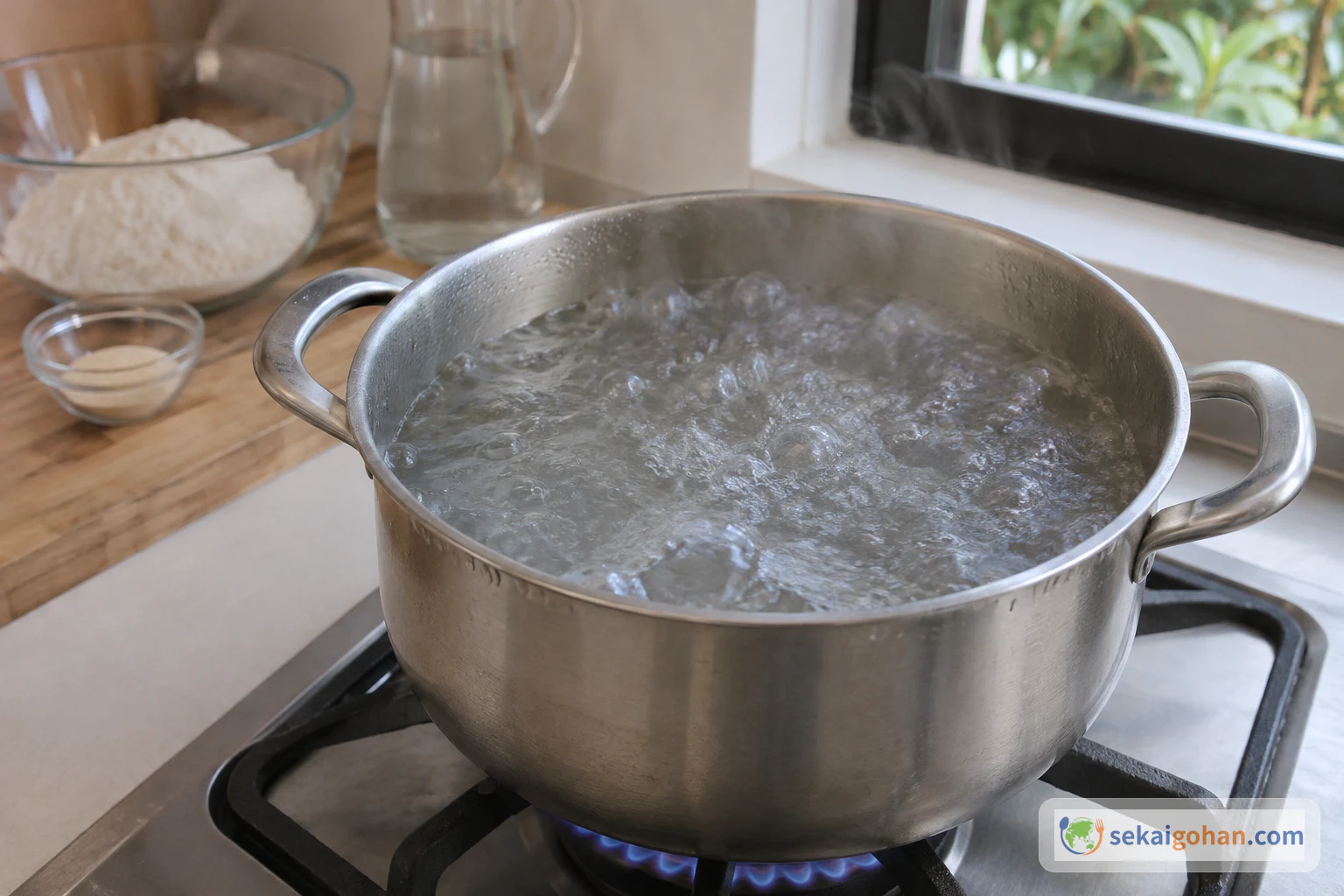
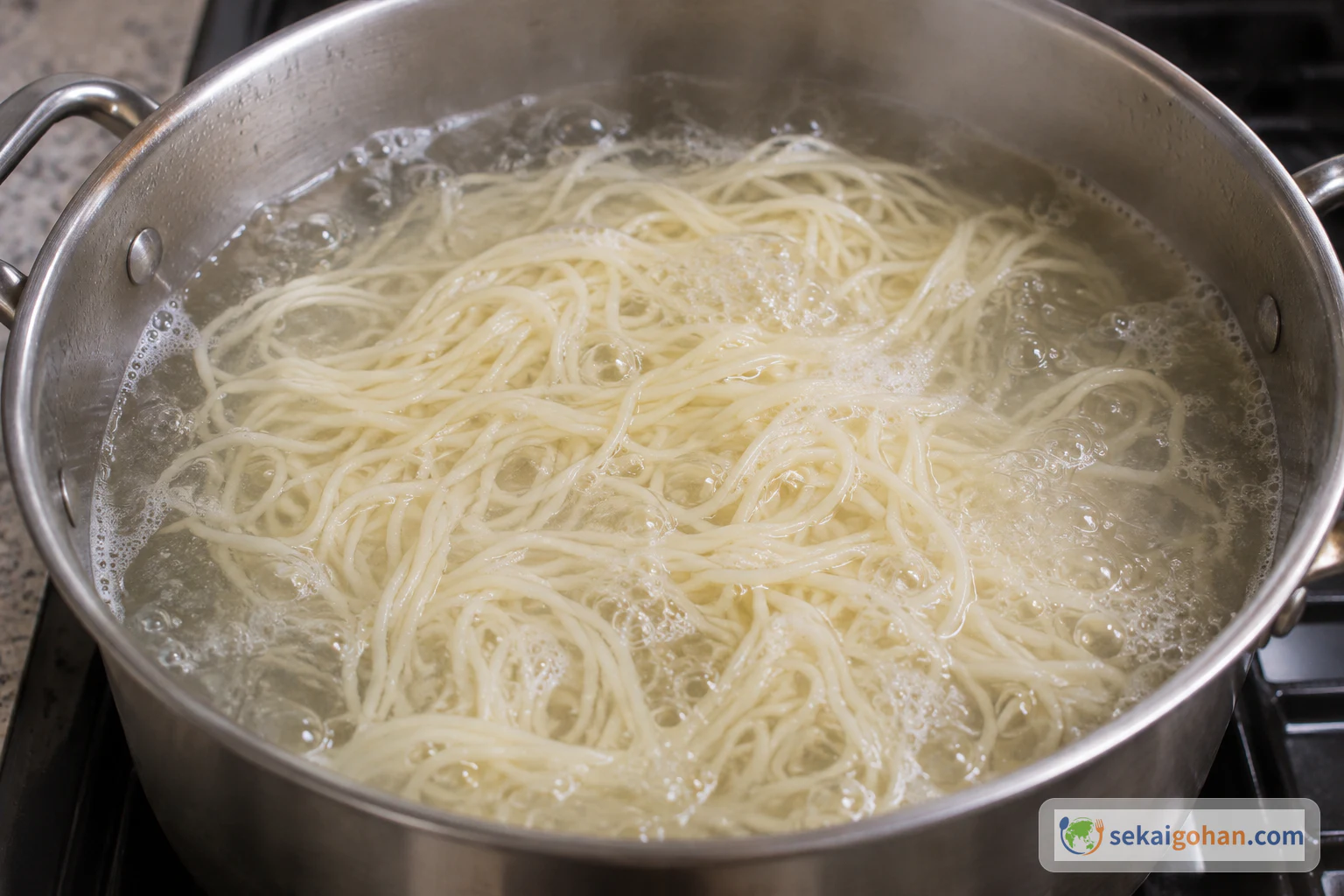
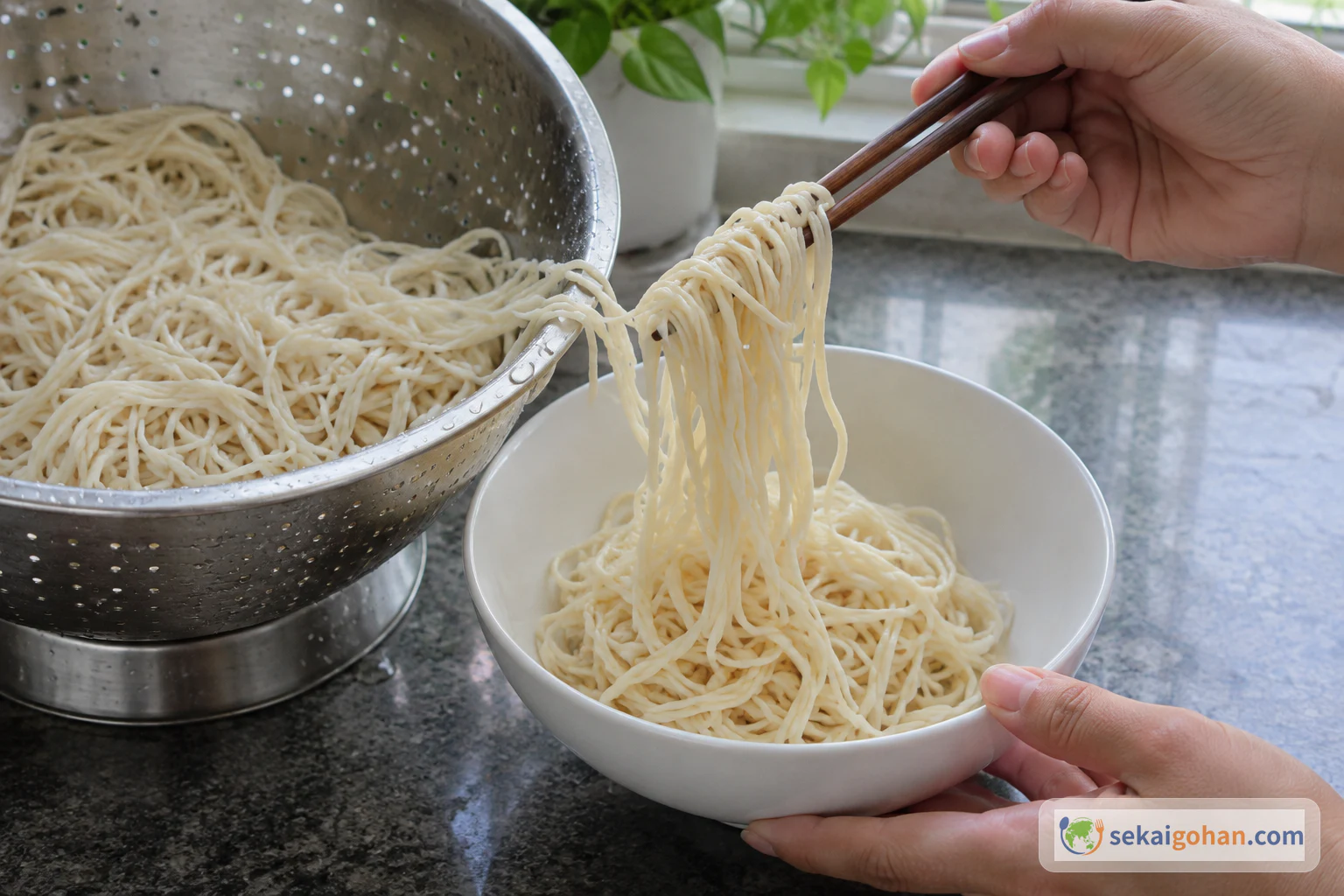
Stretch a rope of floured dough long, then bring both ends together in your left hand to form a loop. Put your right hand into the middle of the loop and draw the dough out into two lengths. You keep pulling and folding like this, and each round doubles the strands, until you have 32 thin noodles hanging from your hands. That's lamian, China's hand-pulled wheat noodle, and once you've got the rhythm you can make it in your own kitchen. Explore more dishes from China.
What Lamian Is
Lamian (拉麺 / 拉面, lāmiàn) means noodles stretched by hand from dough. The name covers many doughs and methods, not one fixed recipe. The word looks a lot like ramen, but Japanese ramen is a different dish.
The best-known dish built on these noodles is Lanzhou beef noodles, a regional soup with a clear broth, radish, chili oil, cilantro and scallion, served over yellow noodles. Making the noodles for it takes several steps: resting and kneading the dough, shaping strips, folding and stretching them again and again, then dusting and boiling. It's one regional style, though. Plenty of lamian never goes near that soup.
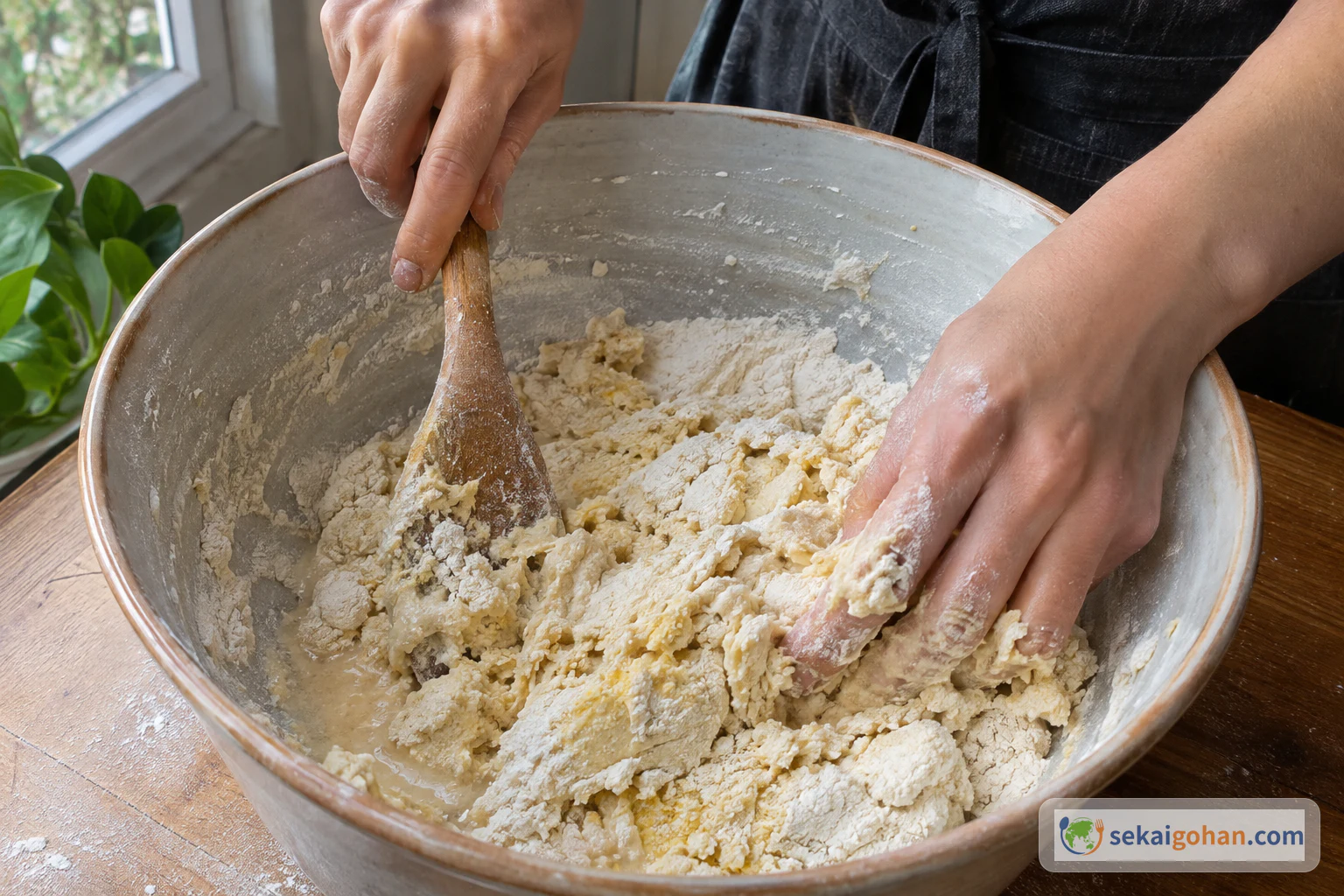
Home versions vary too. One uses 14 oz (400g) bread flour, 7 oz (200g) all-purpose flour, 10.5 oz (300g) water and 4g salt, rests the dough for 20 minutes, and stretches the lightly oiled dough straight into boiling water. That's a separate recipe, so keep its amounts and steps apart from the ones below.
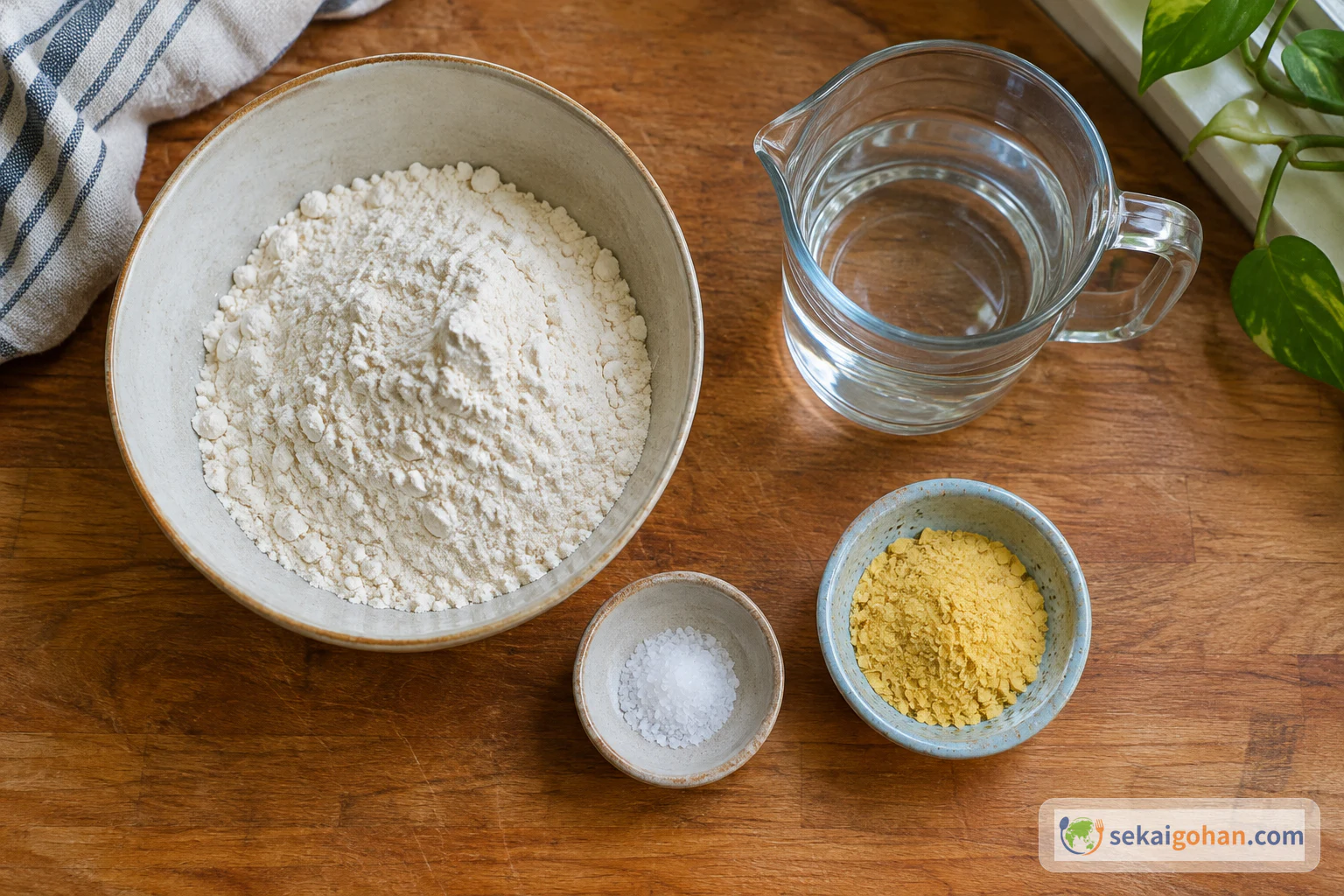
Ingredients for Hand-Pulled Noodles
Equipment
- Kitchen scale
- Timer
- Large mixing bowl
- Clean cloth or other cover
- Wide-mouthed pot
- Noodle strainer, tongs or long chopsticks
- Separate clean bowl for cooling
- Colander
- Clean serving bowl
Choosing Ingredients for Lamian
- Flour: Use all-purpose flour. In Japan, medium-protein flour (chūrikiko) is a close substitute, but its protein content and water absorption differ, so watch the dough as you work. Skip bread flour.
- Nutritional yeast: Buy a product sold as nutritional yeast, the non-leavening kind. Dry baking yeast and brewer's yeast won't work in its place.
- Dusting flour: Use a little, and keep it separate from the 9 oz (250g) in the dough.
- Allergens: These noodles contain wheat. Check the label on your nutritional yeast, and if you have a yeast allergy or another concern, go by the product's own information.
How to Make Lamian
Don't taste raw flour or raw dough, and always cook it first. Keep raw flour and dough away from ready-to-eat food, and wash your hands and utensils after handling them. The 30-second boil belongs to this recipe's fine noodles. It is not a general safety guarantee for noodles of any thickness, and a photo's strand count, color or timing doesn't prove a noodle is safe to eat.
The noodles go into the boiling water as soon as they are pulled, and they go from the pot straight to cold water. Read steps 6, 7 and 8 first, then get the pot boiling and the cold water poured by the time you finish step 5.
Fixing Lamian Dough and Noodles
| Problem | What to do | Limits |
|---|---|---|
| The dough isn't stretchy enough at 5 minutes | Work in 10g water and restart the 15 minutes | Added water isn't guaranteed to fix it |
| It still isn't stretchy enough | Repeat the same adjustment | Stop adding water once the dough stretches |
| The dough sticks while you pull | Make sure the surface has a light coat of flour | Use only a little |
| Your strands came out thicker than planned | Keep boiling until they are cooked through, then cool them | Don't count on 30 seconds being enough |
Serving and Storing Lamian
Lamian is best eaten right after cooling, on the day you make it. No storage or reheating method has been worked out for these noodles. Serve them in a clear Lanzhou-style beef broth, or cold with a dipping sauce or dressing.
This dough should stay simple, so don't knead in egg, oil or aromatics. Bread flour, alkaline water (kansui) and penghui ash belong to a different type of formula and aren't small tweaks to this one.
Frequently Asked Questions
Is lamian the same as lagman?
No. Lagman is a Central Asian dish made a different way, even though the names sound alike.
Can I use dry yeast instead of nutritional yeast?
No. This dough needs non-leavening yeast, so dry yeast won't work. The 2-to-3-hour rest is not a fermentation stage.
Do I always need the extra 10g of water?
No. Add it only if the dough isn't stretchy enough at the 5-minute check. It's always added on top of the starting 5.5 oz (160g).