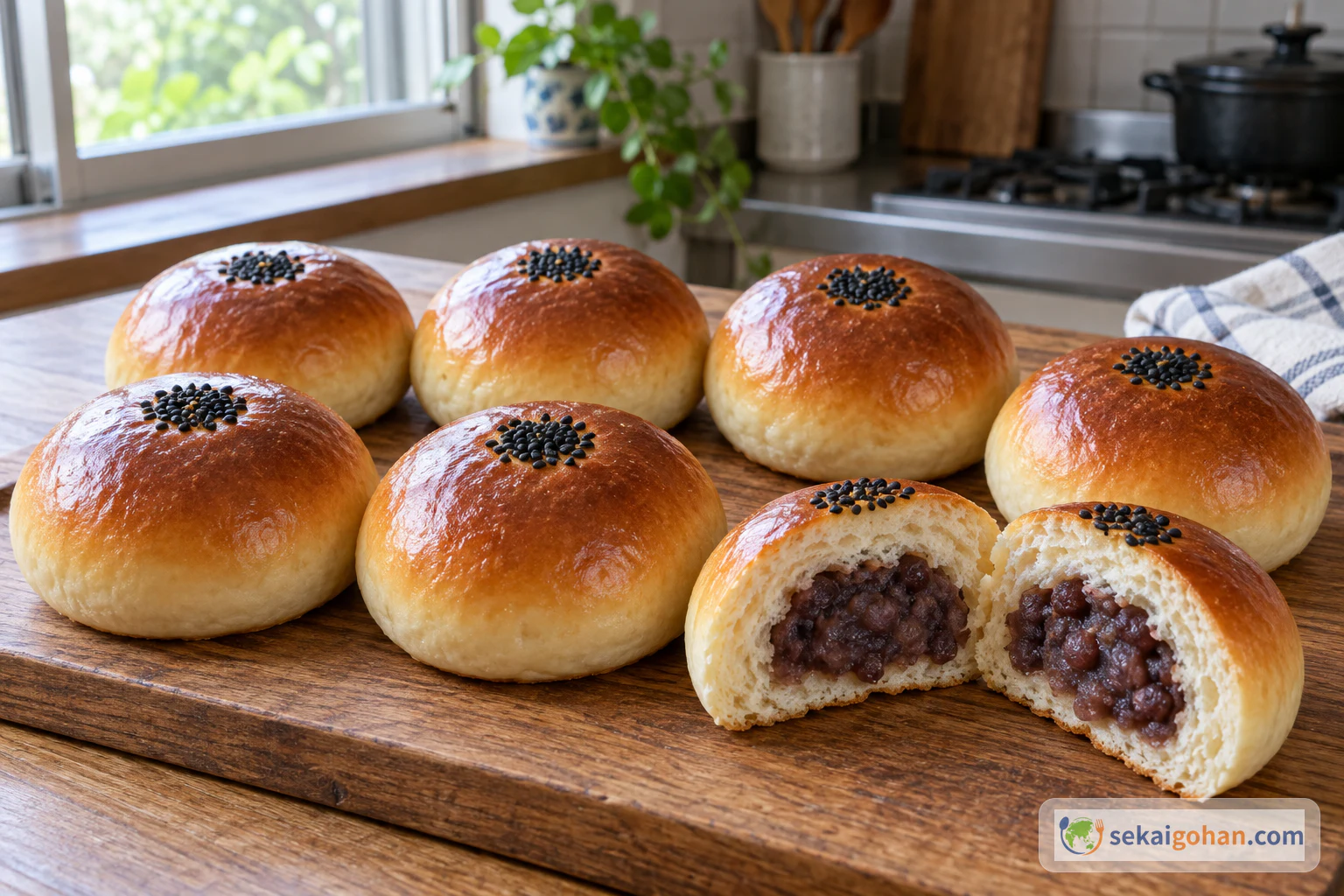
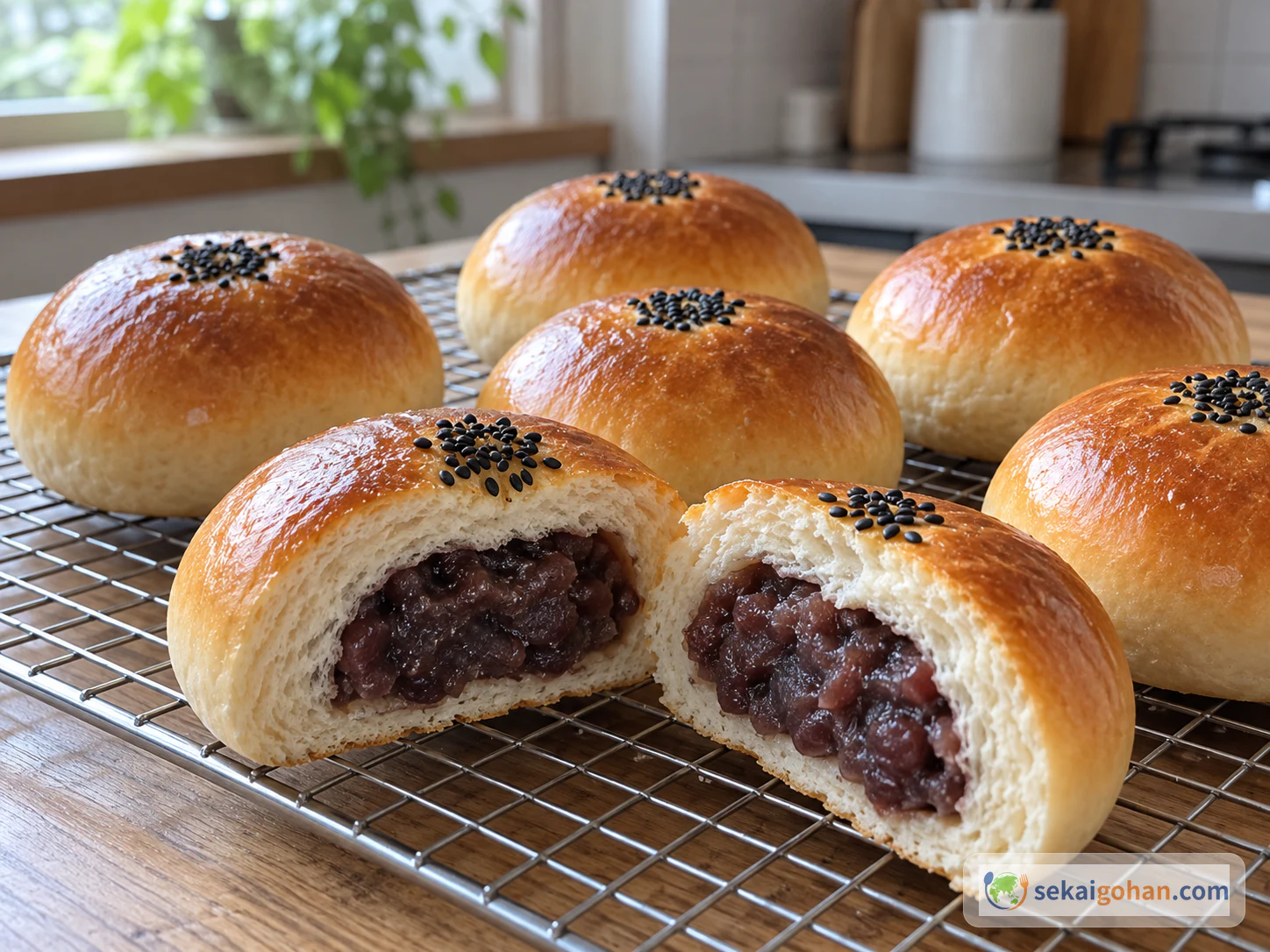
Break a small golden bun in half and a mound of dark, sweet azuki bean paste appears in the middle of soft, pale bread. The top is thin, glossy and golden, with a small dot of black sesame. That is anpan: the name joins an (sweet bean paste) and pan, the Japanese word for bread, and the bun sits somewhere between a Western-style bread and a Japanese confection. The bread is soft and only lightly sweet, so the paste does most of the talking. This recipe makes a batch of 8.
About Anpan
Anpan began in Tokyo in 1874 (Meiji 7). The bakers took a hint from sakamanju, a steamed bun made with a sake-related starter. To suit Japanese tastes, they made a bread dough with sakadane, a starter of rice, koji and water, then filled it with bean paste, putting the sweet filling of a manju inside bread. Anpan was presented to Emperor Meiji in 1875, and the sakura anpan, topped with a salt-pickled double-flowered cherry blossom, is one of its best-known forms.
Every anpan comes down to two choices. The first is the starter: traditional sakadane, or commercial yeast, as in most home recipes. The second is the paste: tsubuan, with the beans left coarse, or koshian, strained smooth. This version takes the home route, with instant yeast and tsubuan, though koshian works just as well. You can find more dishes from the same country on the Japan page.
Ingredients for 8 Anpan
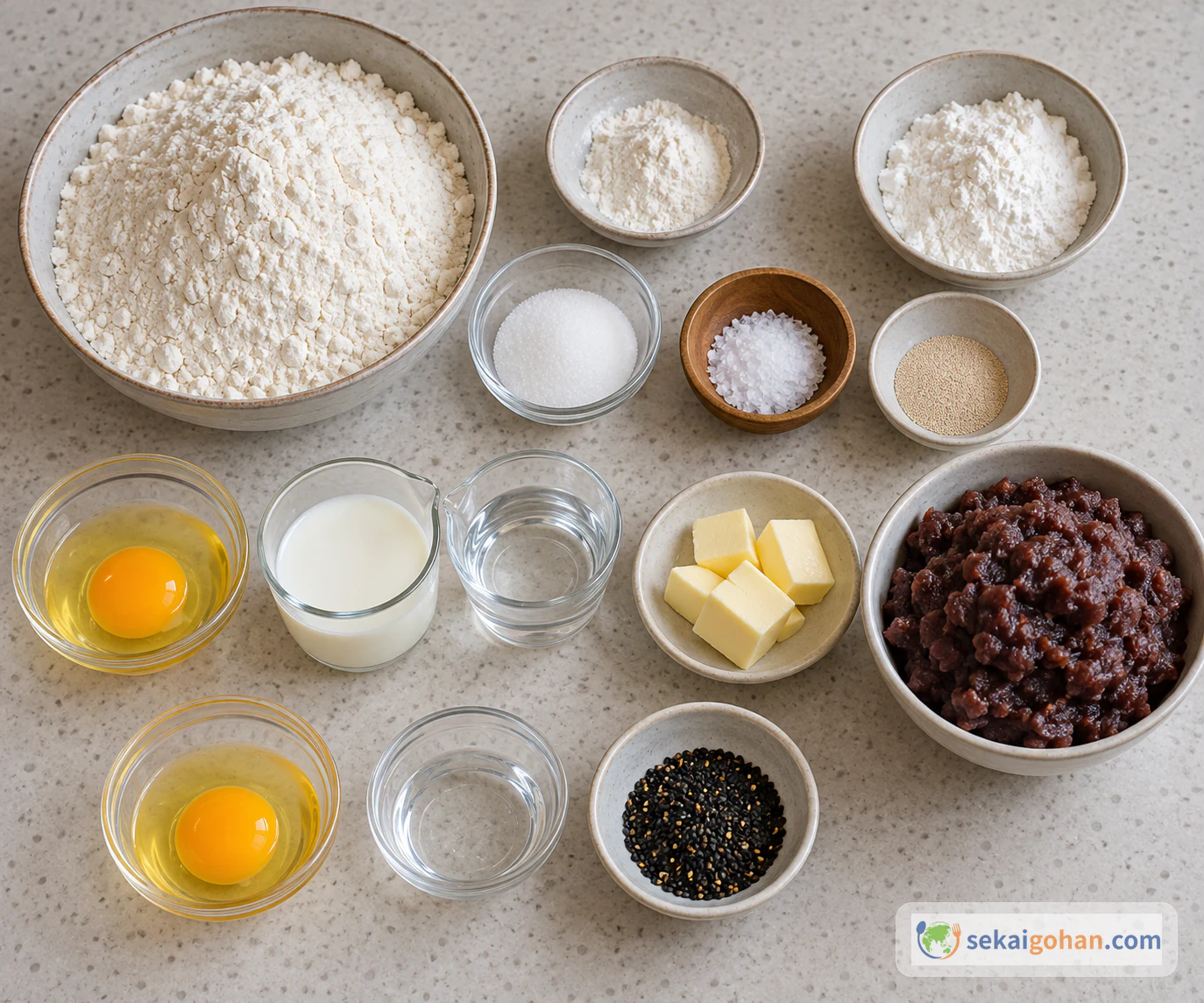
Here, a cup is 240 ml, a tablespoon 15 ml and a teaspoon 5 ml.
There are two eggs in total, but they have separate jobs: one goes into the dough and one into the glaze. The liquids are separate too: milk and water for the dough, and 2 tbsp water for the glaze. The bean paste is listed as 10 oz in total, and 35 g goes in each bun. This version portions 280 g (35 g × 8); the two figures are close but not exactly the same amount, so don't add the difference into the buns.
Equipment
- Mixing bowl
- Digital kitchen scale (helps with weighing the flour, dividing the dough into 8 and portioning the paste)
- Bench scraper
- Plastic wrap or a cover to keep the dough from drying out
- Baking sheet
- Pastry brush
- Wire rack
- Oven
- A small round stick or dowel, for pressing on the sesame (optional)
Choosing Bean Paste, Salt and Yeast for Anpan
Bean paste: Store-bought paste suits this recipe well, labeled tsubuan (coarse) or koshian (smooth). Products differ in sweetness and firmness, and firmness affects how easily the paste wraps. Tsubuan gives you bites of bean, while koshian is smooth throughout. Keep the 1.25 oz (35 g) portion either way, and check the label for allergens. If you'd rather make your own paste, do it ahead, on a different day.
Salt: This uses Diamond Crystal kosher salt. Salts differ in crystal size and in how salty a spoonful is, so a finer table salt can't be swapped in by the same volume.
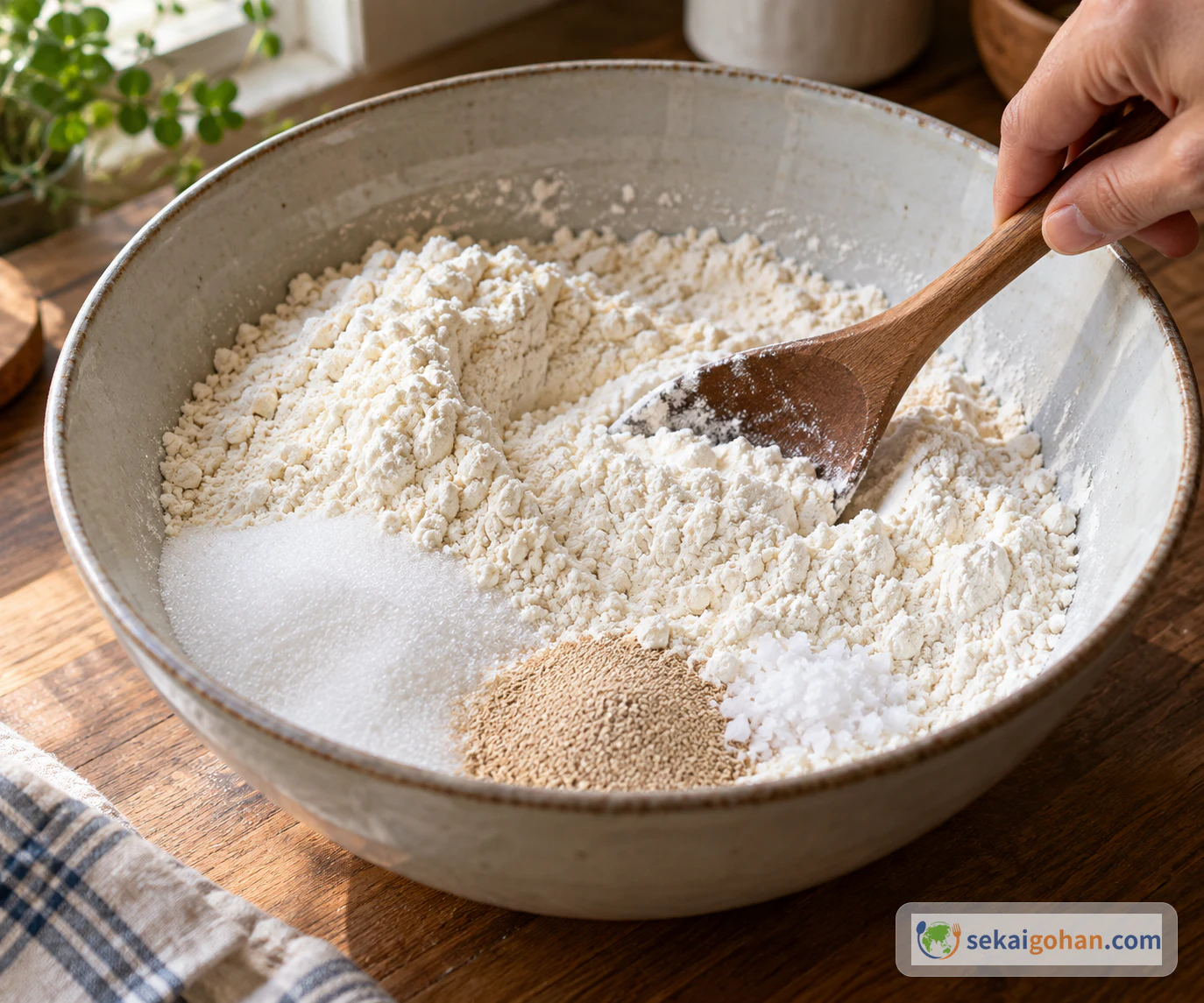
Yeast: This is instant yeast, which goes straight into the dry ingredients without proofing. Active dry yeast is handled differently, so follow your product's packaging.
Milk: Use whole milk; lower-fat milk changes the texture. Everything else, from bread flour and cake flour to sugar, unsalted butter and eggs, is easy to find at a supermarket or baking supply shop.
This recipe contains wheat, egg, milk and sesame. For store-bought bean paste and other packaged ingredients, check each product's label. Cross-contact is possible. Do not taste the raw dough, which contains raw egg and raw flour.
Method: From Mixing to the Wire Rack
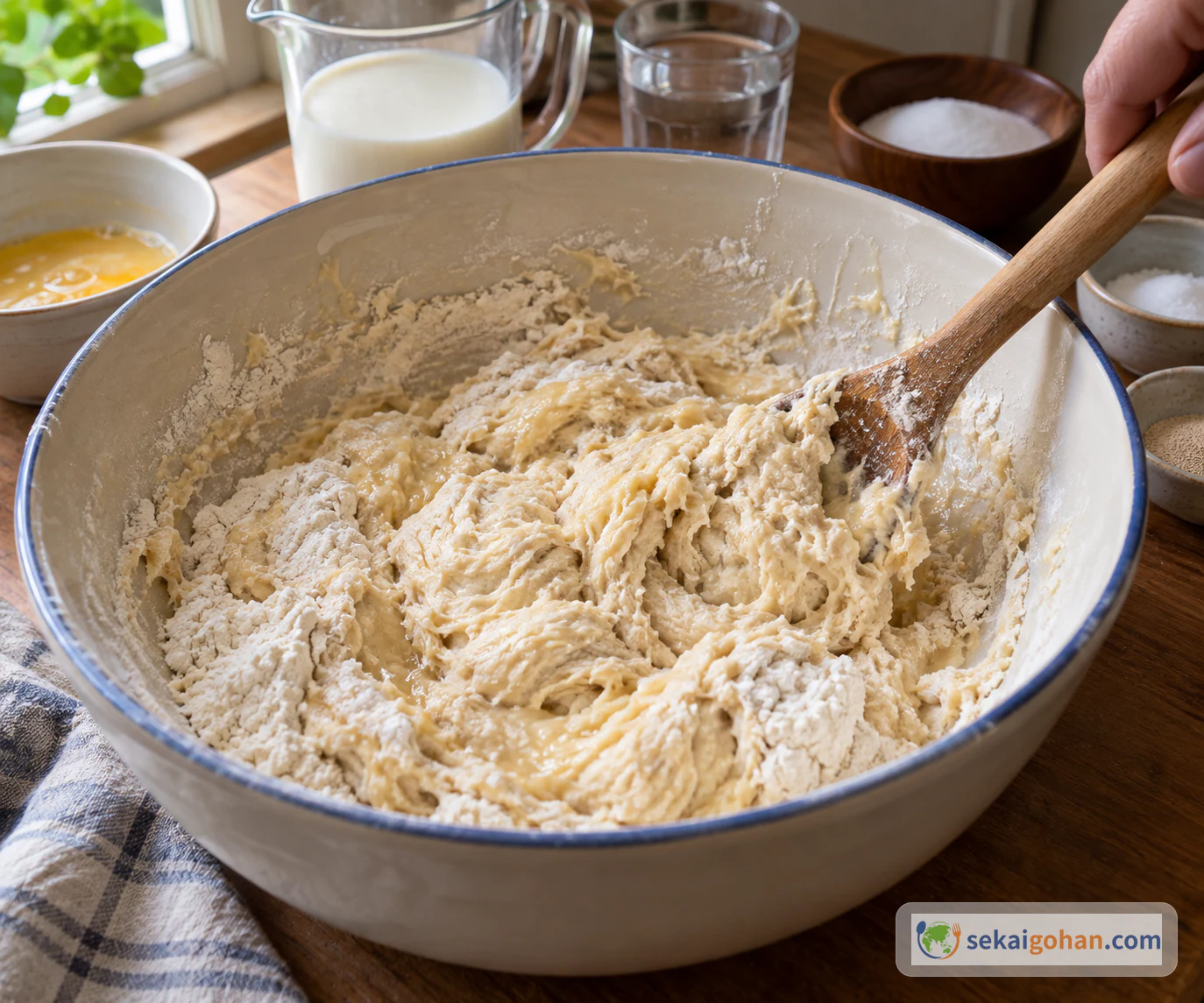
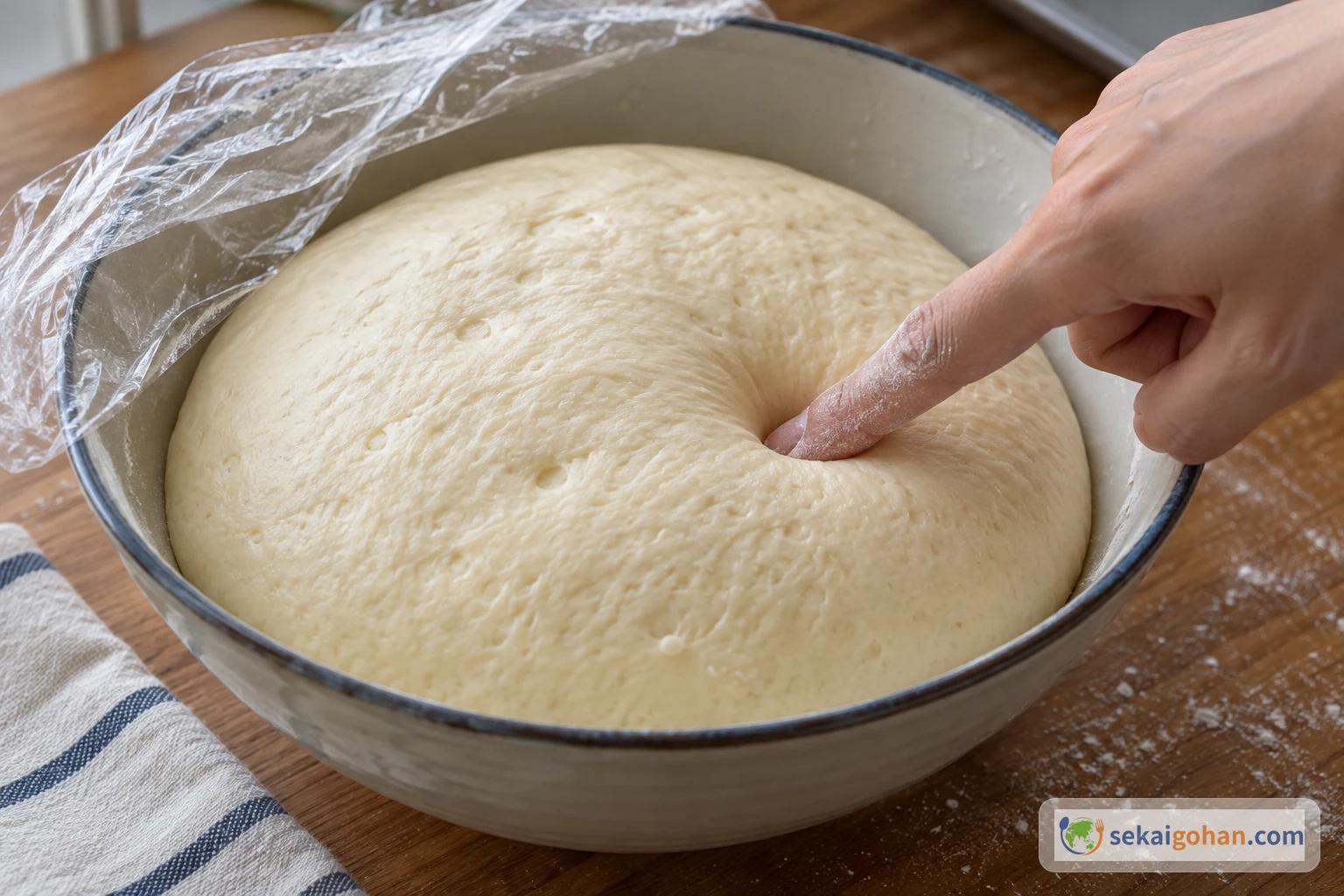
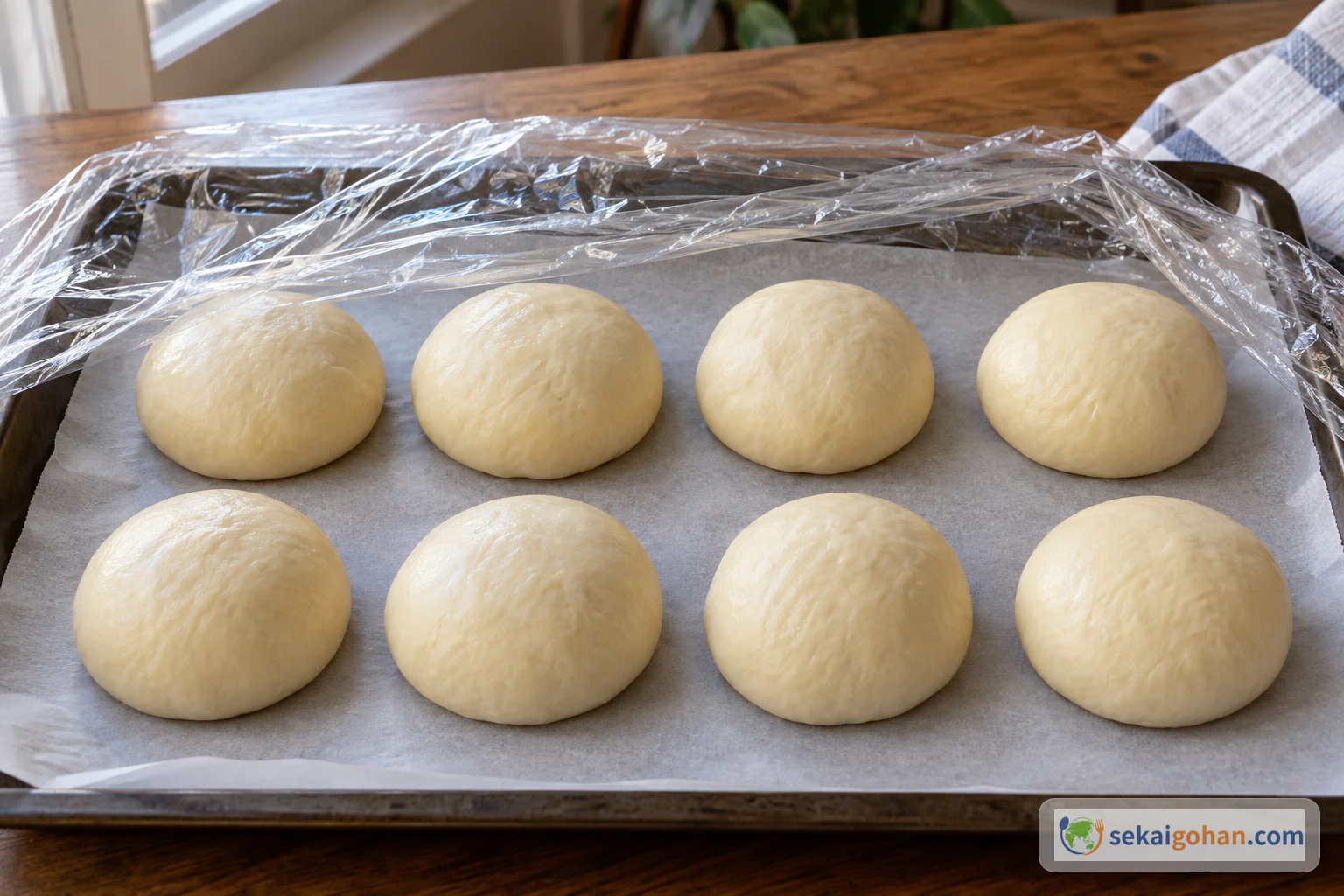
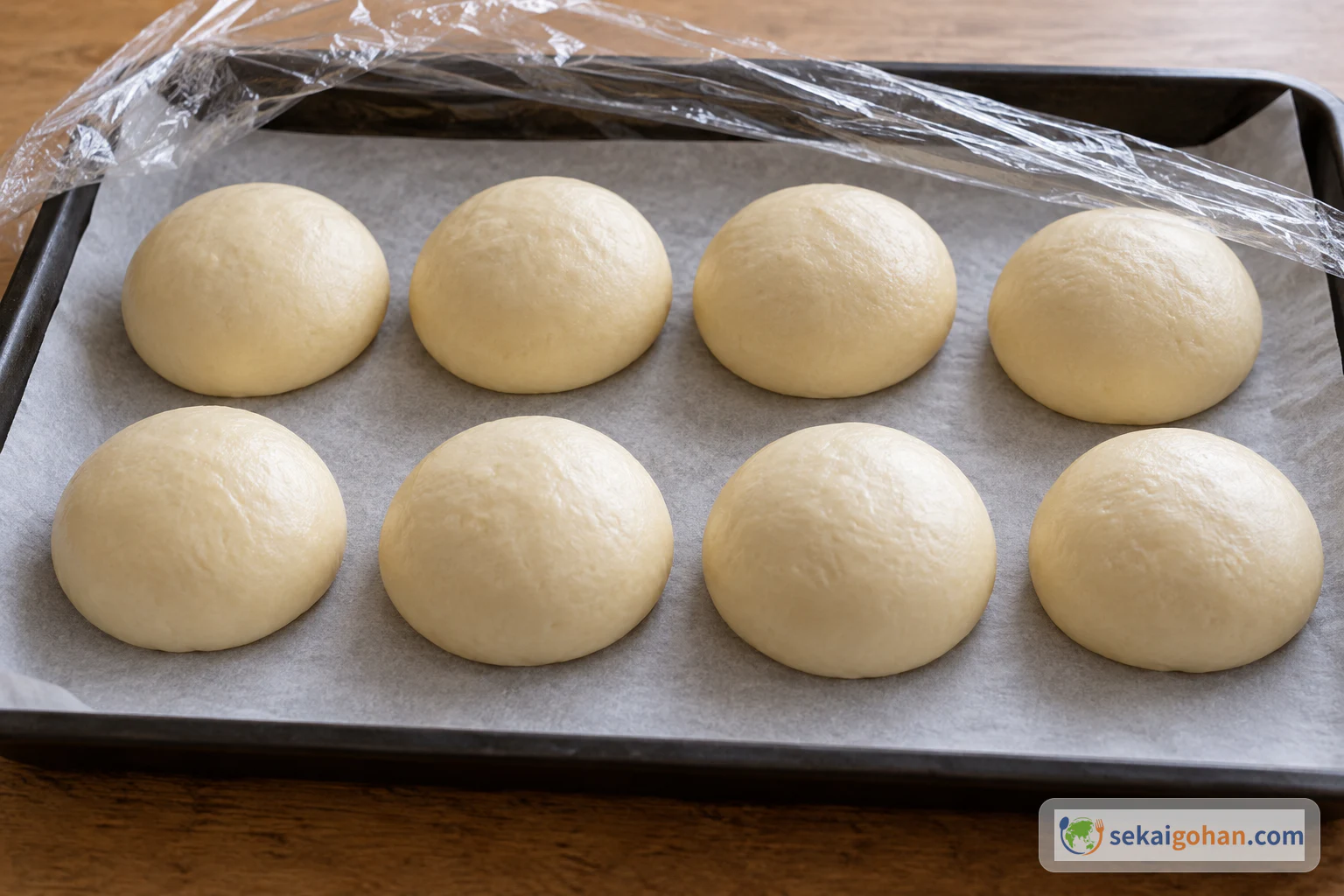
The rising times are guides that change with room and dough temperature. Move on when the dough has roughly doubled and a finger dent doesn't spring right back.
Common Anpan Problems and Fixes
Ovens, room temperatures and ingredients all change results. Use the visual checks in each step to decide when to move on.
| Problem | What to check | What to do |
|---|---|---|
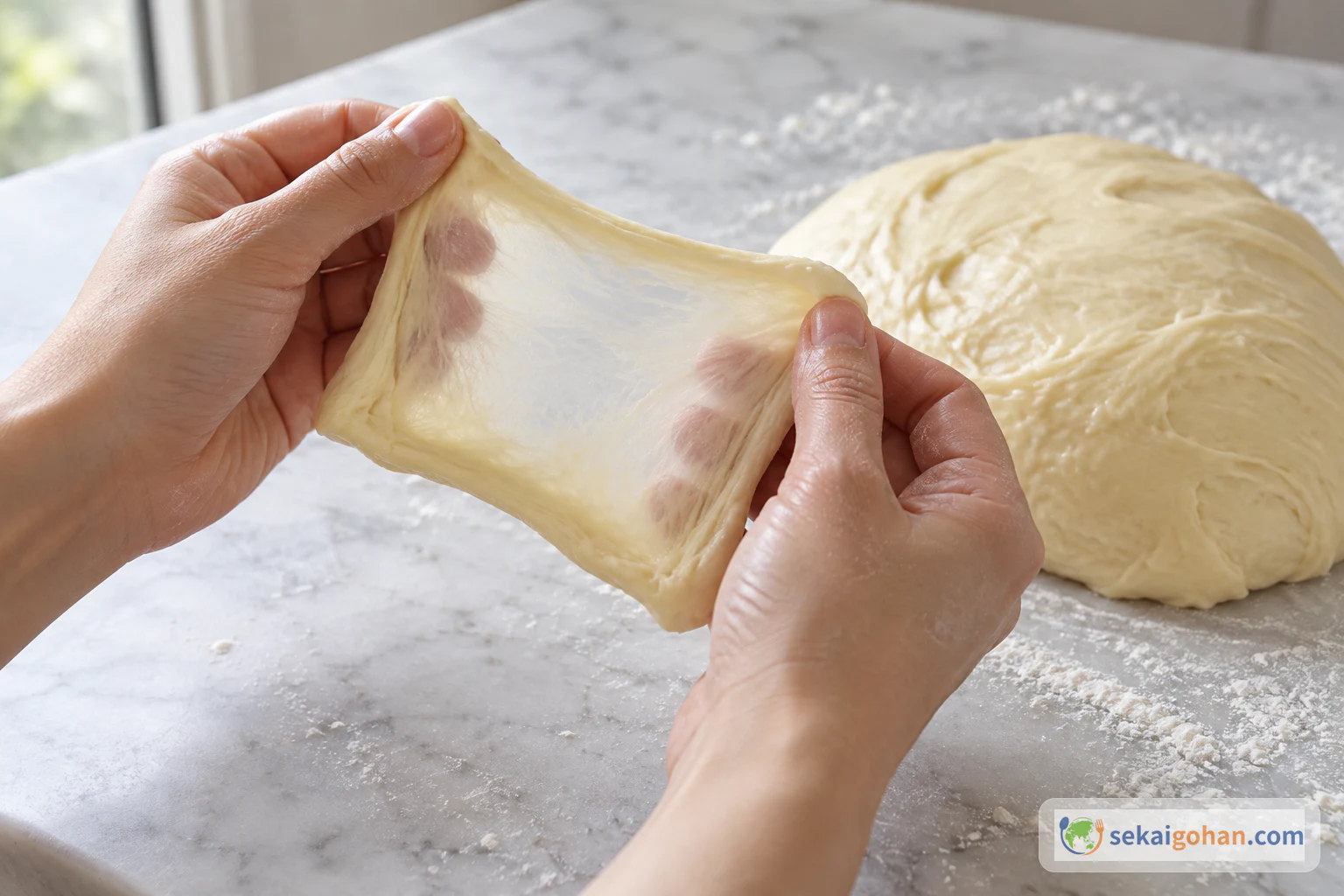
| The dough is very sticky | Whether you are adding a lot of flour | Keep kneading instead of adding much flour. Gather the dough with a bench scraper and handle it lightly, with only a light dusting on the counter. Don't use oil on your hands or the counter |
| The dough hasn't risen enough, or has gone too far | Volume and the finger dent, not just the time | Wait until it is about doubled and the dent doesn't spring right back. Room and dough temperatures change how fast it goes |
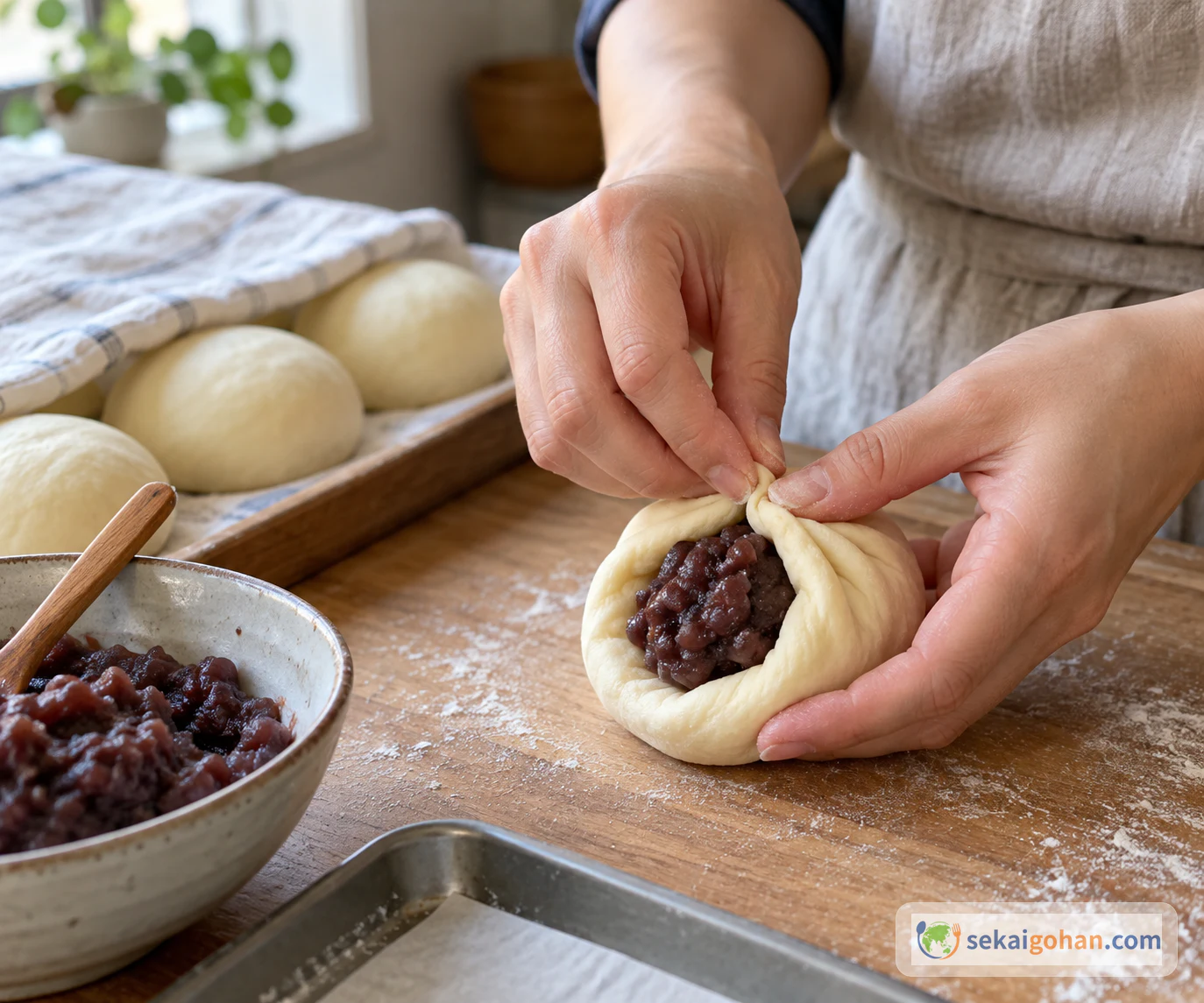
| Bean paste leaks out | The amount of paste and the edges of the dough | Don't put in more than 1.25 oz (35 g), keep paste off the edges, and pinch the seam firmly before setting it seam side down |
| Browning is uneven | Position on the baking sheet | Turn the sheet around once partway through baking |
Serving and Storing Anpan
Freshly baked anpan is soft and warm, and it's hard to wait. Once the buns cool, the bread and paste settle together into something a little different, and just as good.
Let the buns cool completely, seal them in an airtight container and keep them in a cool place for 2–3 days, or freeze them for up to 1 month. In hot, humid weather, check the actual temperature where you keep them, and look for any signs of spoilage before eating.
Frequently Asked Questions
Can I make anpan without sakadane?
Yes. This version uses instant yeast, as most home recipes do. It makes a soft, sweet bun with bean paste, but without the particular aroma of traditional sakadane anpan, whose starter is made from rice, koji and water. Sakadane isn't a simple swap for the yeast here, either: it needs its own specialized formula, fermentation conditions and long, careful management.
How much bean paste goes in each bun?
1.25 oz (35 g). More than that makes the buns harder to seal and more likely to leak.
Can I leave out the black sesame?
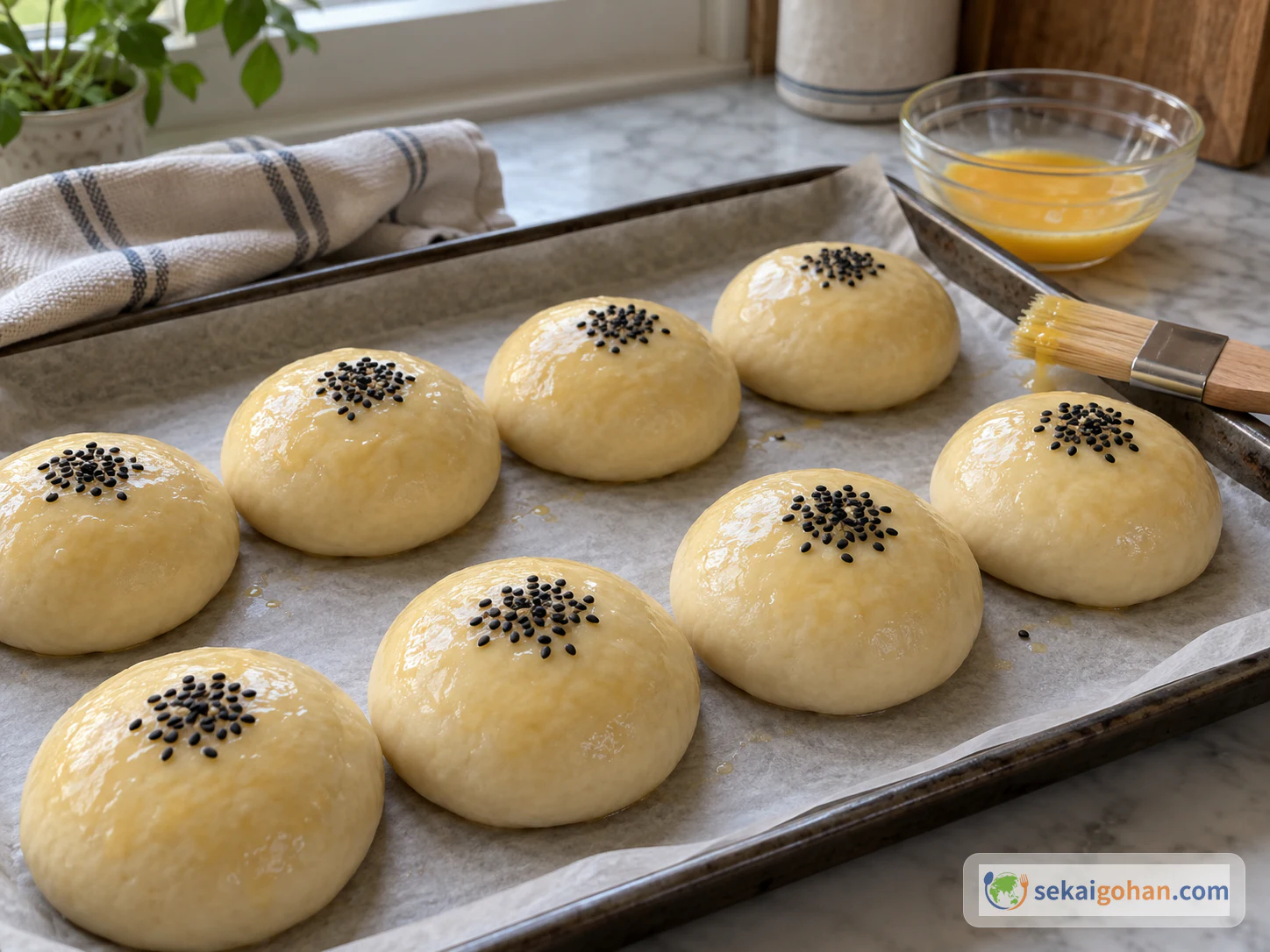
Yes. Wrapping and baking work the same without it; only the flavor and look change. When you do use it, press it on with a small round stick dipped in egg wash and sesame, or simply sprinkle it on.