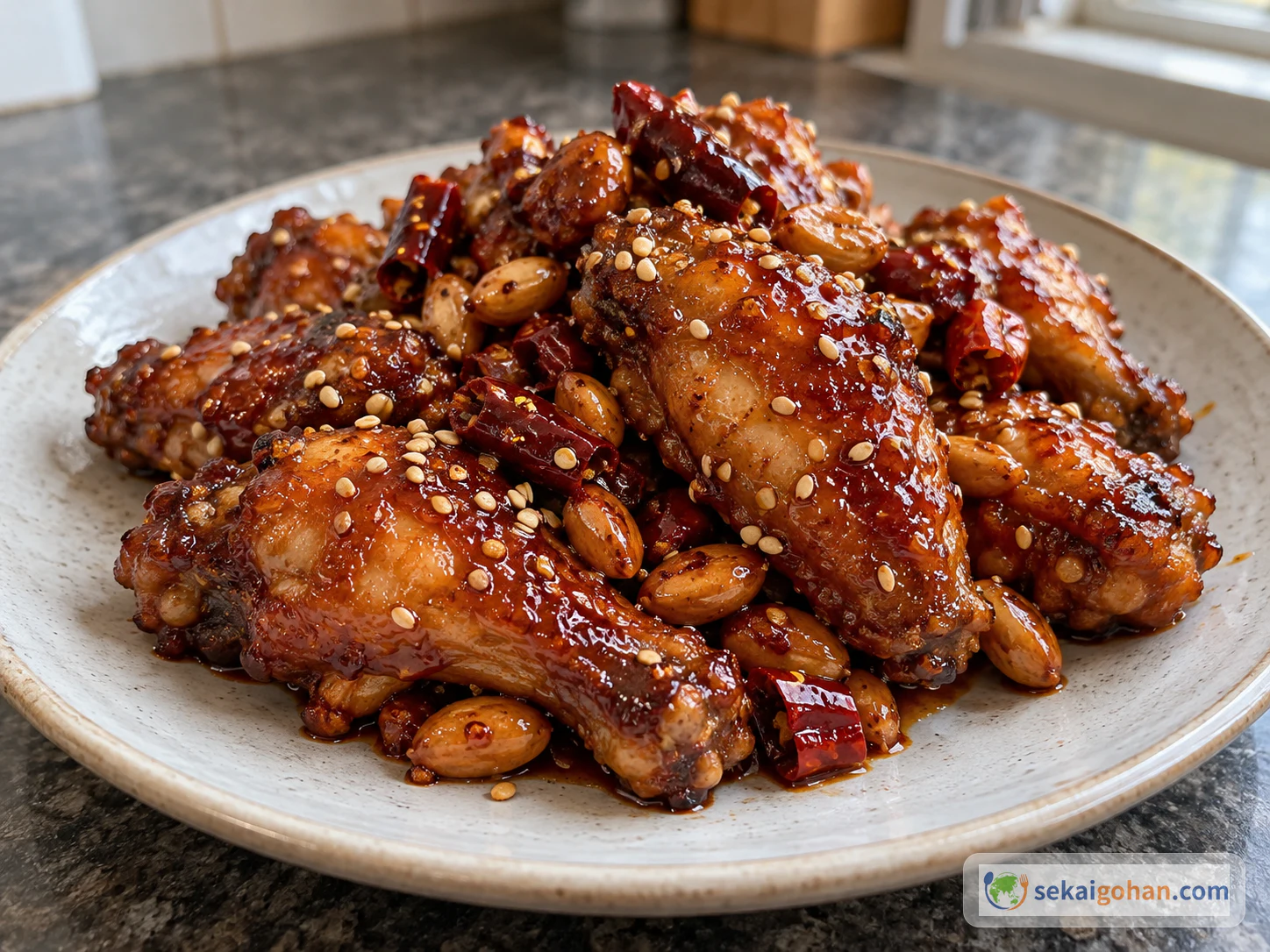
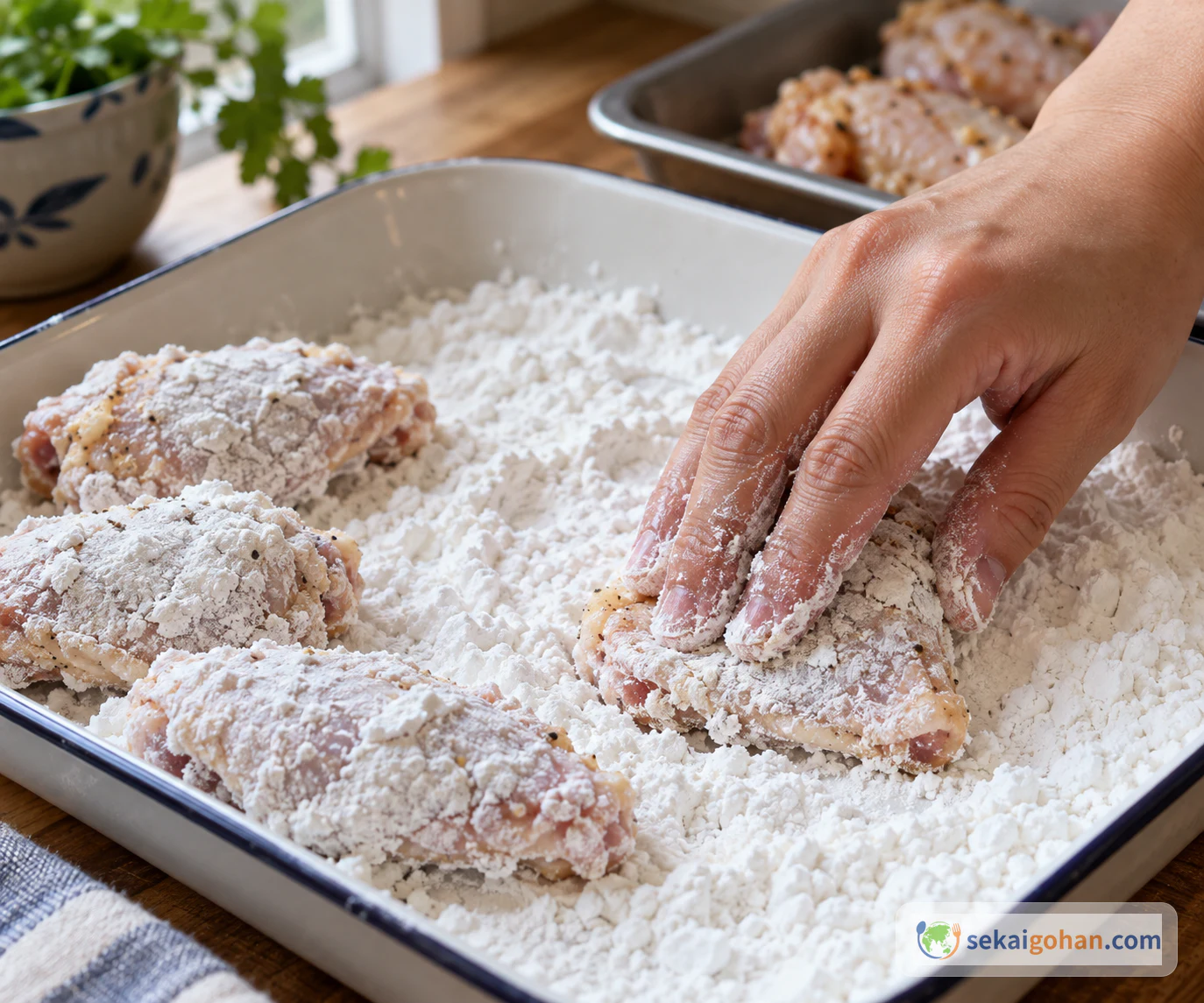
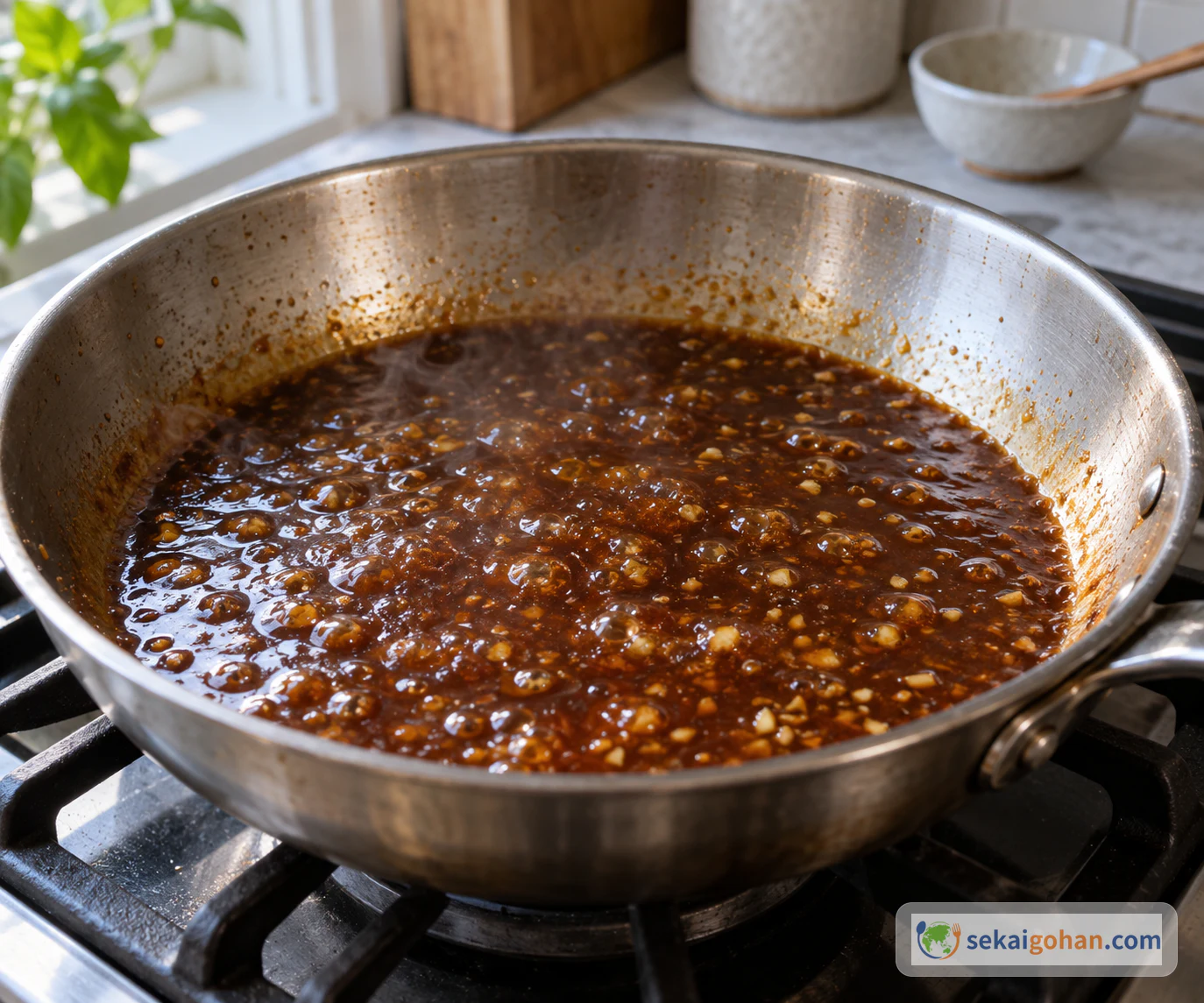
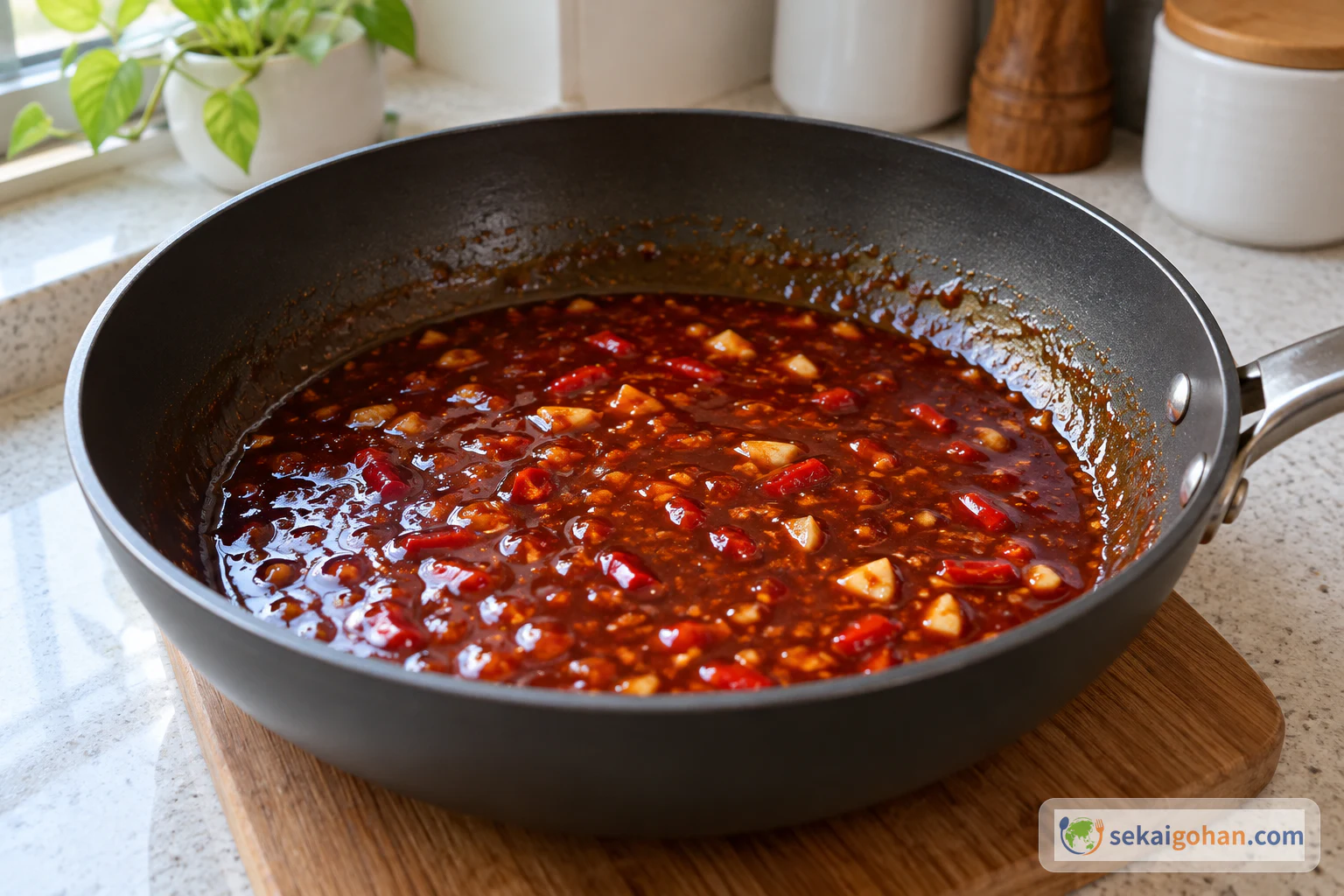
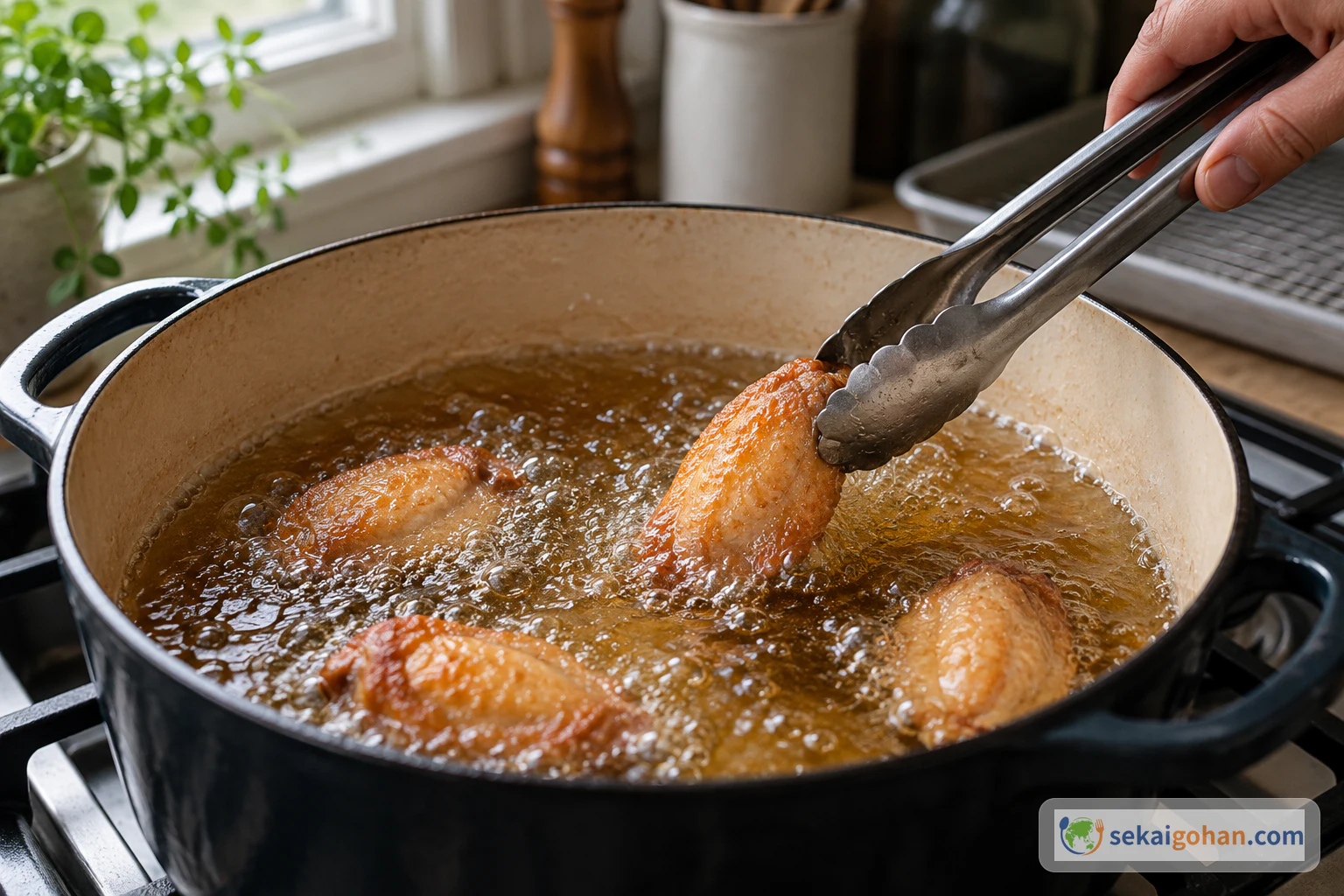
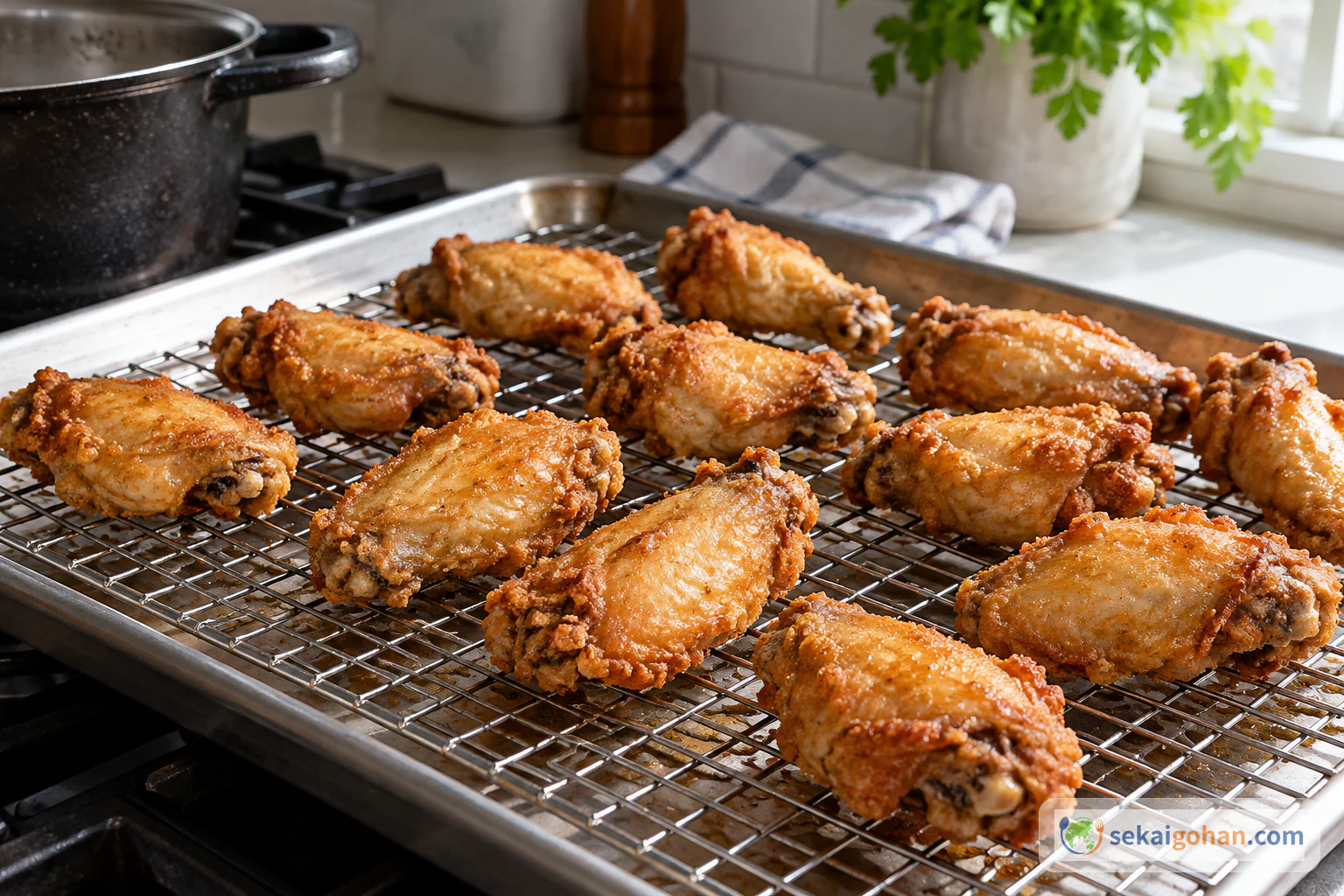
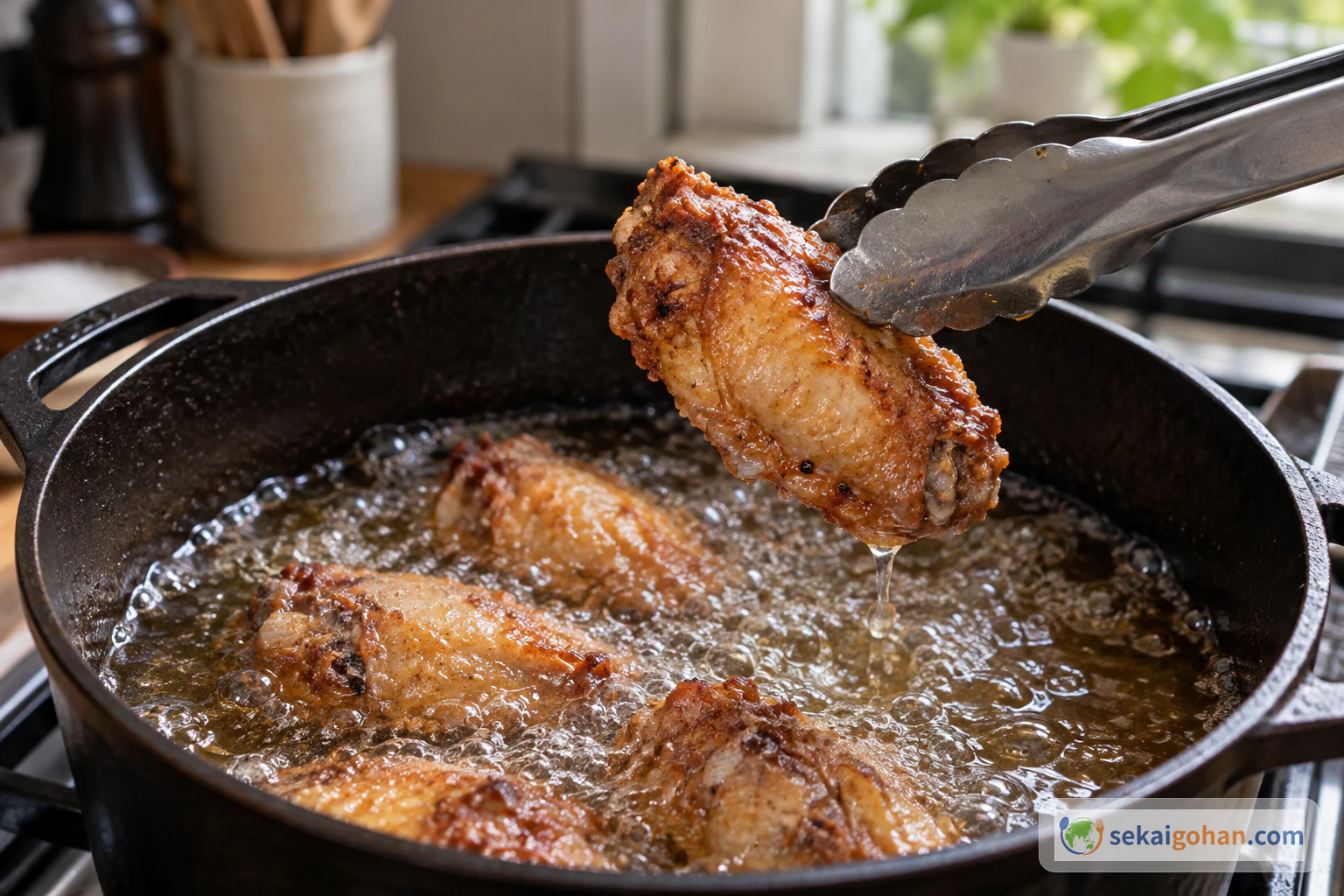
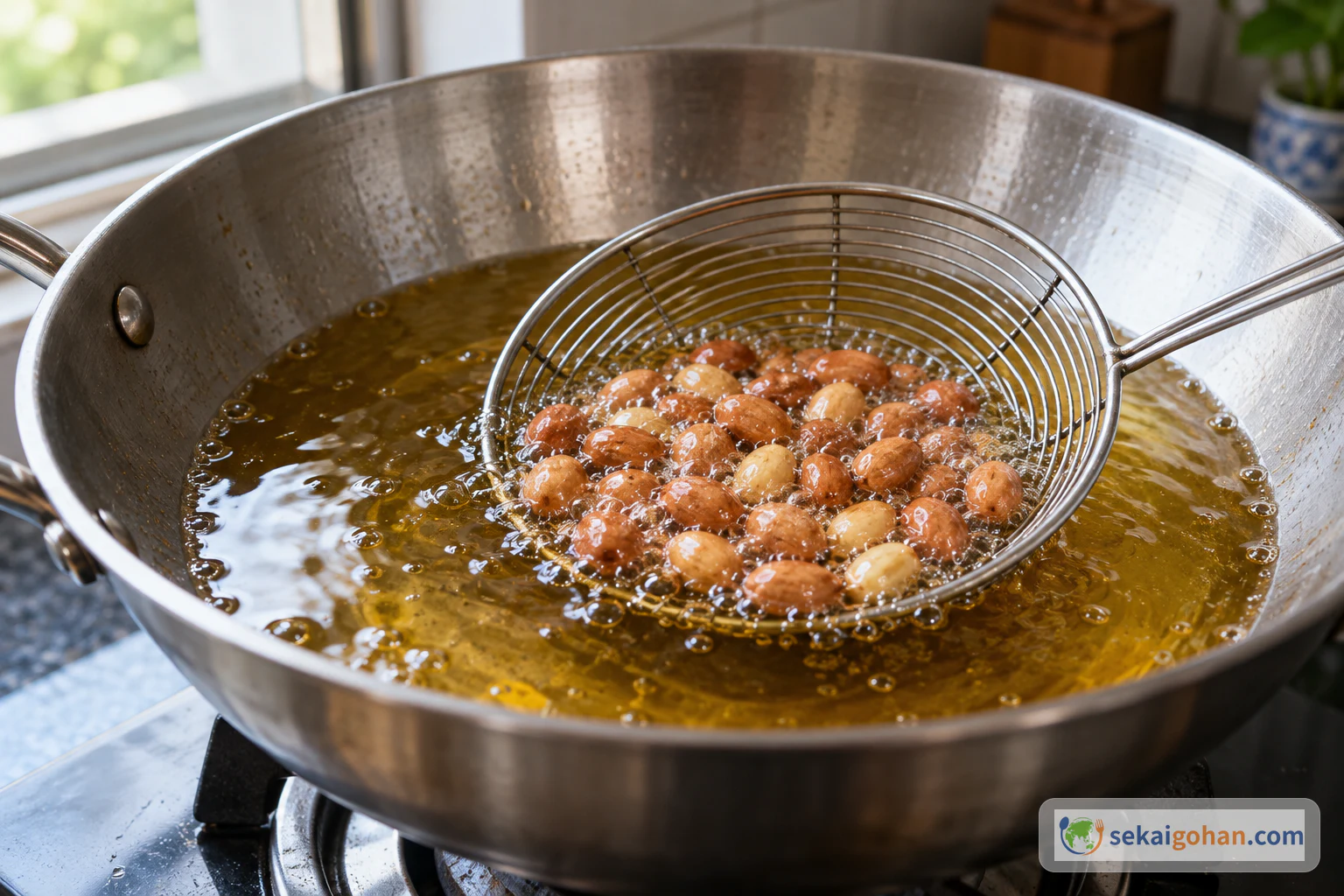
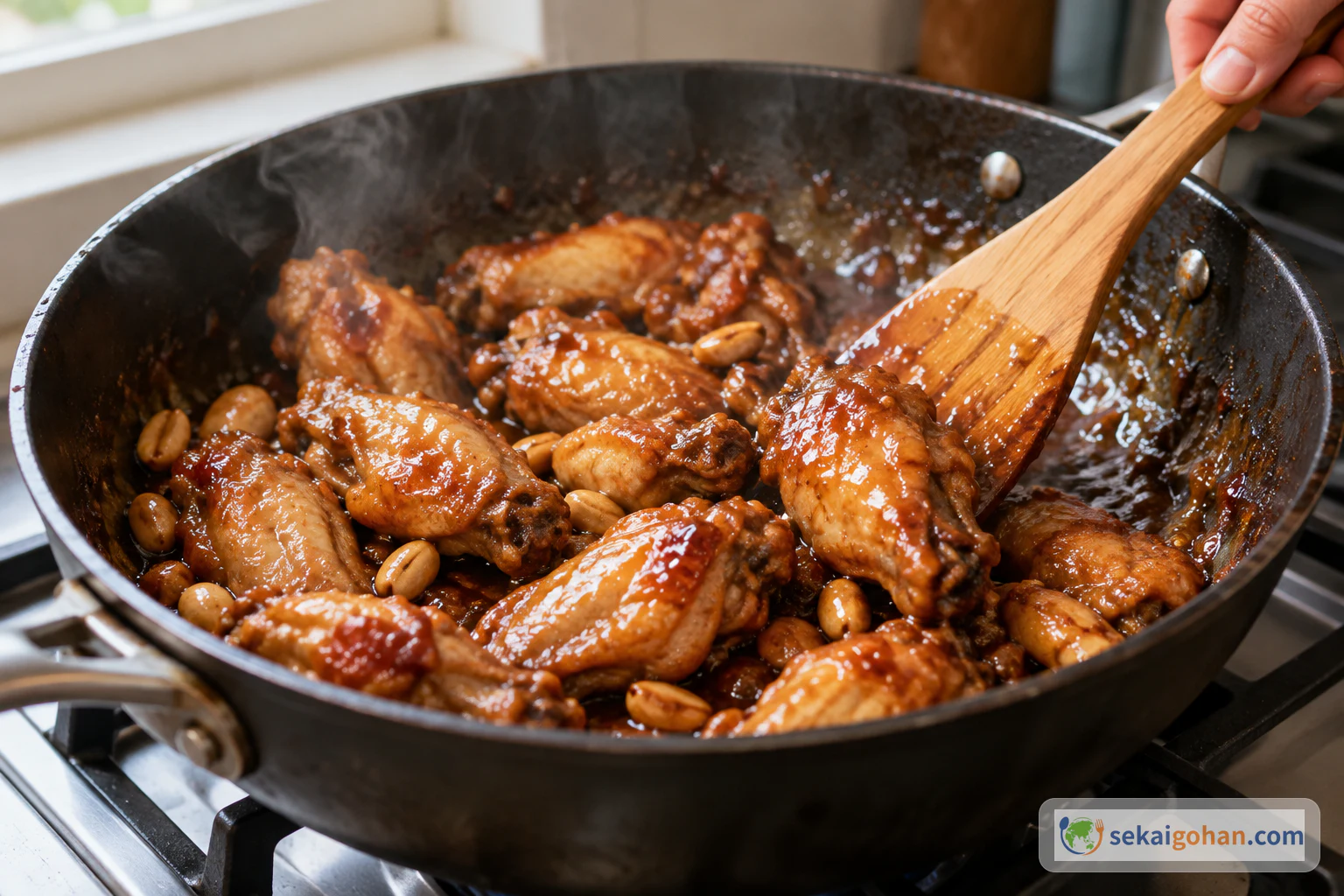
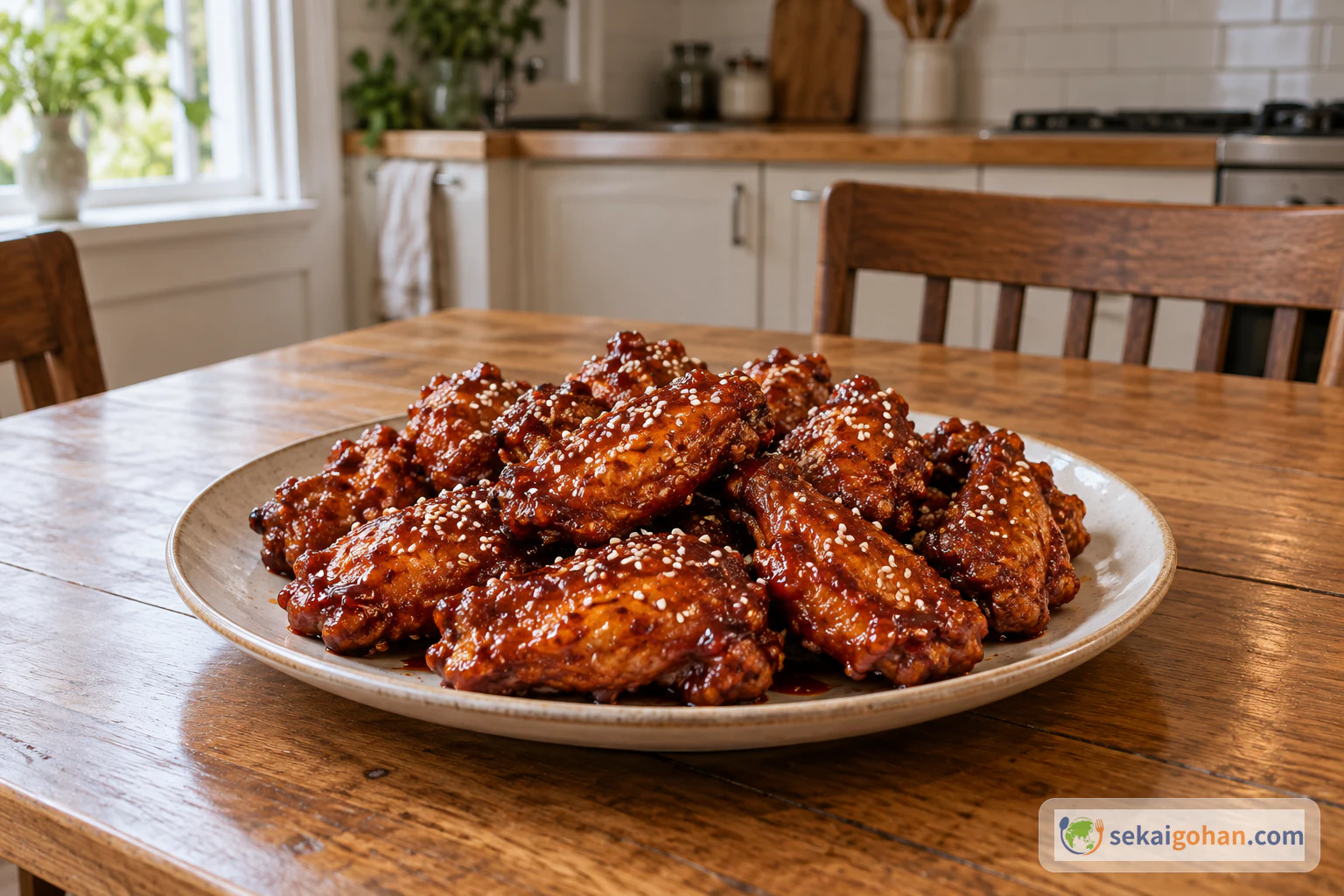
Garlic and dried red chili pieces sizzle in a little oil, then soy sauce, rice syrup, vinegar and mustard bubble up around them in the pan. Later the twice-fried wings, golden brown and crunchy, go straight into that bubbling glaze with a handful of fried peanuts, get turned with a wooden spoon, and land on the table under a scattering of toasted sesame seeds. Dakgangjeong is Korean fried chicken coated in a sweet, glossy soy glaze. The wings are seasoned simply with salt, pepper and ginger and pressed into potato starch, so the crunch holds up under the sauce. You can find more Korean recipes here.
Dakgangjeong and Korean Fried Chicken
In Korea, fried chicken is what people eat while watching sports, on holidays, and at festivals and events. It spread through the country in the 1970s, and in 1981 the brand Pelicana popularized seasoned fried chicken.
Dakgangjeong sits close to yangnyeom chicken, but the two are made differently. Whole-chicken yangnyeom chicken uses a whole bird and a sauce with ketchup, strawberry jelly and Korean chili paste. This dakgangjeong uses wing sections, a starch-only coating, and a soy and rice syrup glaze with no egg, flour, baking soda, milk, ketchup or gochujang.
Ingredients (4 Servings)
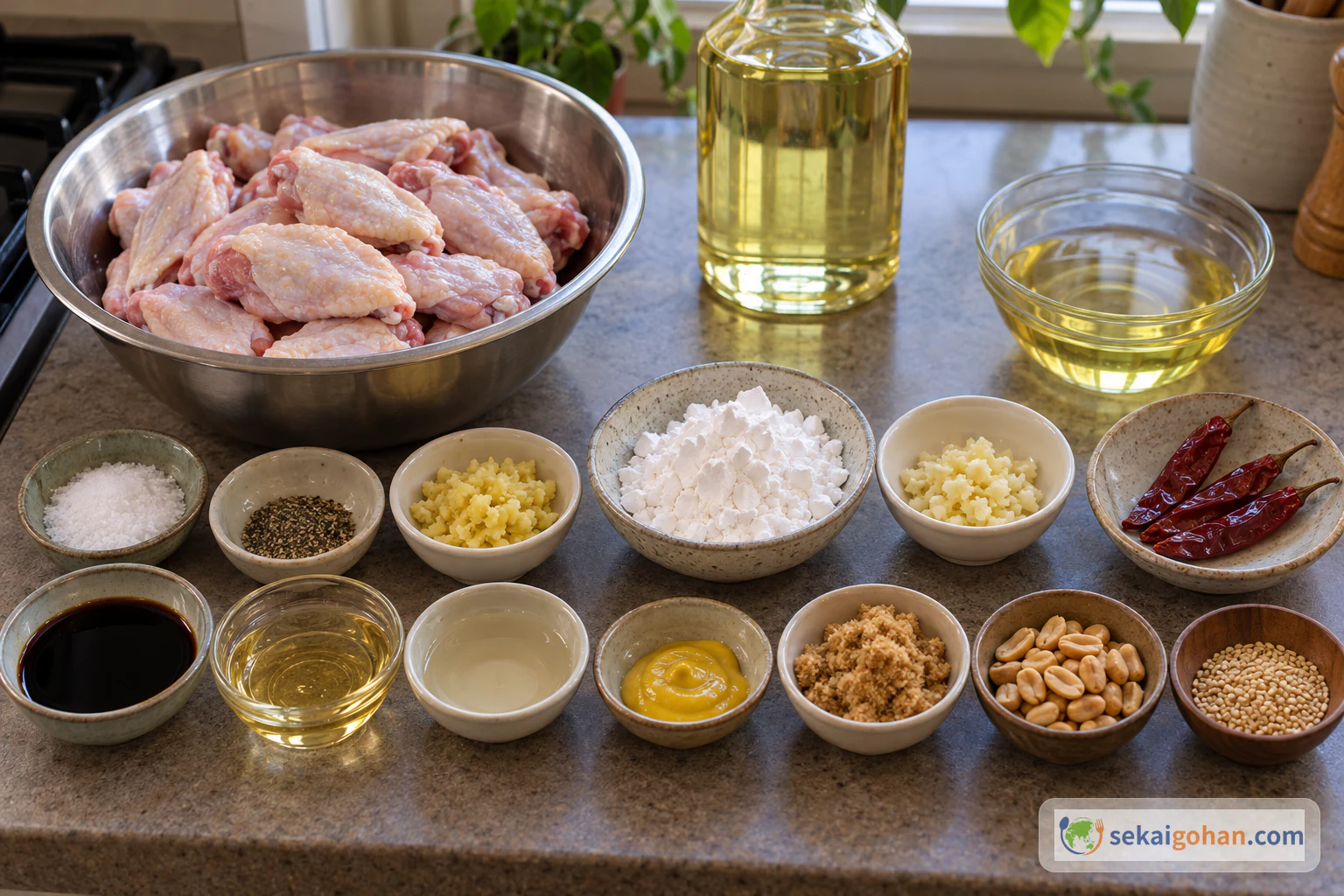
The oil appears twice: a small amount for the sauce and a larger amount for frying. Keep them as two separate measures.
Equipment
- Knife and cutting board
- Large bowl
- Large nonstick pan or wok, for the sauce
- Wooden spoon or spatula
- Deep pot or deep frying pan, for frying
- Kitchen thermometer, helpful for the first fry
- Tongs
- Wire rack or strainer
- Slotted spoon or small strainer, for the peanuts
- Small plate
- Large serving platter
Choosing Ingredients for Dakgangjeong
- Potato starch: Look for "potato starch" on the label. Corn starch is a different product. The coating is starch alone, pressed onto the seasoned chicken.
- Rice syrup: The sauce is built on ½ cup rice syrup, so stick with rice syrup rather than another syrup.
- Oil: Grapeseed oil works well. Vegetable oil or peanut oil are the other options.
- Optional items: The dried chilies (3 to 4), mustard and peanuts can each be left out. See the variations below.
This dish contains soy (soy sauce), sesame and, if you use them, peanuts. Soy sauce and other packaged ingredients can contain other allergens, such as wheat, depending on the product. Check the label of each product you use.
Method
Steps 4–7 make the sauce, and it is finished and set aside before any chicken goes into the oil. The first fry has a set oil temperature. The second fry has a set time and a set finish, but no set temperature.
Frying time, a golden-brown color and a crunchy feel do not prove the chicken is cooked through. Cut into the thickest piece to check that it is cooked all the way through.
Dakgangjeong Checkpoints and Common Slips
Make the sauce first. Fry the wings twice, then toss them straight from the oil into the sauce once it is bubbling again, and serve right away.
Most of what goes wrong here is about timing, so it helps to know where the tricky spots are before you start.
| Where | What to watch | What to do |
|---|---|---|
| Wing amounts | The 3½ pounds is the amount you buy; about 3 pounds and 24–26 pieces is what you have after trimming and halving | Keep the two figures separate |
| Seasoning | Salt, pepper and ginger left in the bottom of the bowl | Mix by hand until all of it is on the chicken |
| Coating | Starch only dusted on loosely | Coat one piece at a time and press the starch on |
| Sauce timing | Starting the sauce while the chicken is frying | Finish the sauce first and set it aside off the heat |
| Brown sugar | Adding it with the liquids | Add it after the liquids have bubbled for a few minutes |
| Batches | Crowding a small pot | Fry in more than one batch. Add the pieces one at a time |
| First and second fry | Mixing up the two | First fry: 330–350°F (165–175°C), about 12–13 minutes. Rest a few minutes with the heat off. Second fry: reheat the oil and fry 10–12 minutes, judging by the golden brown, crunchy finish; there is no set temperature |
| Peanuts | Leaving them in too long | 15 to 30 seconds, until light golden brown |
| Finishing | Letting the plated chicken sit | Toss the hot chicken into the bubbling sauce, take it off the heat, plate, add sesame and serve at once |
Serving Dakgangjeong and Variations
Dakgangjeong carries its own sauce, so it comes to the table without a dipping sauce. Baek-kimchi or chicken-mu make good side dishes; keep them on their own plates so they stay cool and sharp next to the hot, sticky chicken.
If you're leaving out one of the optional ingredients, here's how the method changes:
| Variation | What changes |
|---|---|
| No dried chilies | Cook only the garlic in the oil in step 2 |
| No mustard | Add the soy sauce, rice syrup and vinegar in step 2 without it |
| No peanuts | Skip step 7 and add only the chicken in step 8 |
| With baek-kimchi | Serve baek-kimchi alongside as a side dish |
| With chicken-mu | Serve chicken-mu alongside as a side dish |
Frequently Asked Questions
How do I know the chicken is safely cooked?
Frying time, color and crunch can't tell you that the chicken is cooked through. Cut into the thickest piece and check that it is cooked all the way through.
Can I make it ahead or keep leftovers?
Dakgangjeong is meant to be eaten right after it's tossed in the sauce. There is no tested storage or holding time for the finished chicken, so if you have leftovers, follow your local food-safety authority's advice.
Is this the same as yangnyeom chicken?
No. Yangnyeom chicken is a separate dish, and the whole-chicken version uses a sauce with ketchup, strawberry jelly and Korean chili paste. None of those go into this dakgangjeong.
What about allergens?
The ingredients include soy (soy sauce), sesame and, if used, peanuts. Check the label of every packaged ingredient, especially the soy sauce.