
South Korea recipes
Recipes from South Korea: home cooking with cultural background, ingredient substitutes and step-by-step instructions.

Gukbap Recipe (Dwaeji Gukbap): Busan Pork and Rice Soup at Home
How to make dwaeji gukbap, the Busan pork and rice soup: a milky pork bone broth, sliced pork, garlic chives, salted shrimp and kimchi on the side. Clear-soup option too.
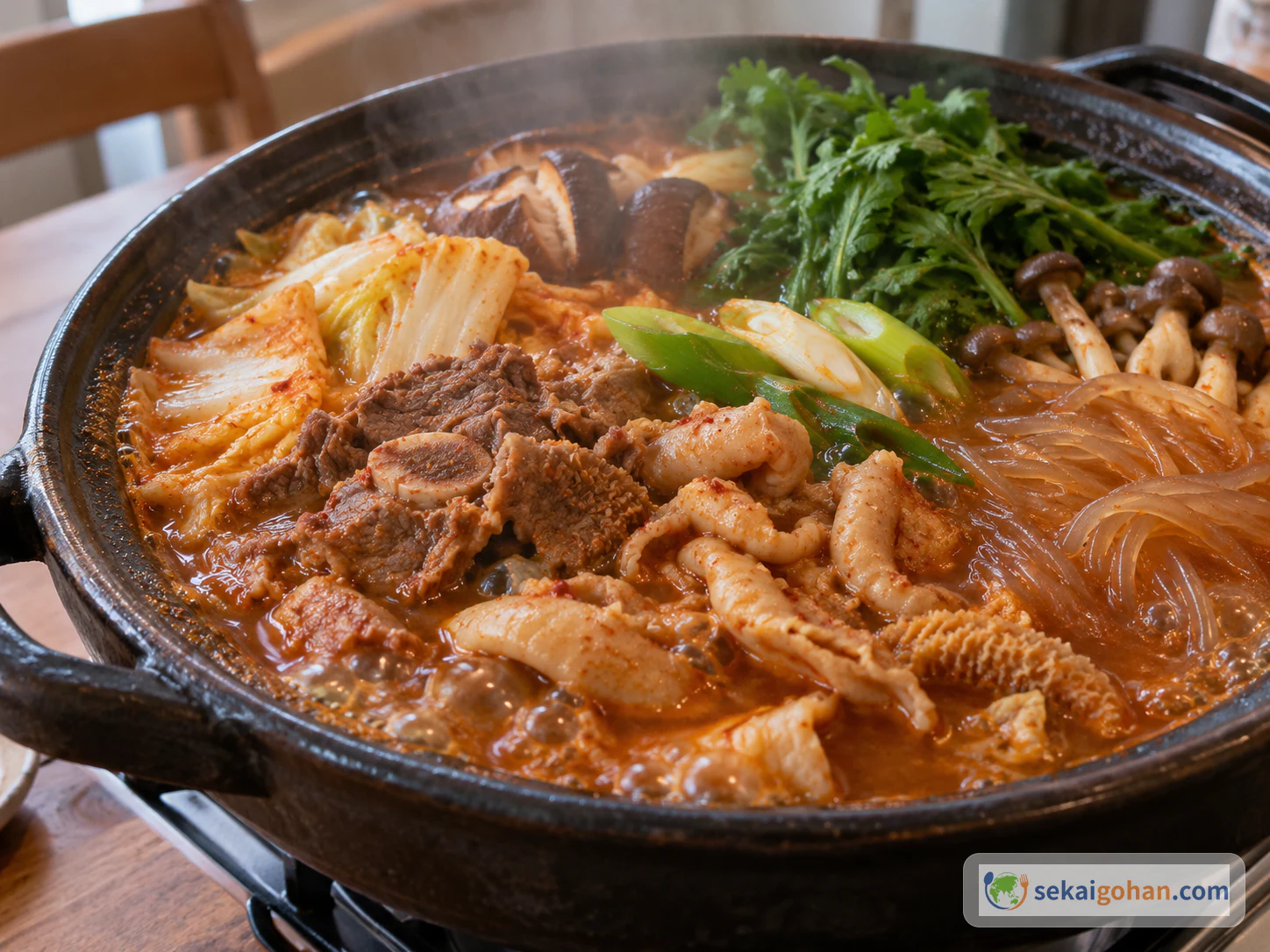
Gopchang Jeongol: Korean Spicy Beef Offal Hot Pot (곱창전골)
How to make gopchang jeongol (곱창전골), a Korean hot pot of parboiled beef tripe or offal, soaked beef shank, vegetables and glass noodles in spiced beef bone soup. Covers choosing the offal, the order of the layers, how it differs from grilled gopchang-gui, and the rice or udon options for the leftover broth.
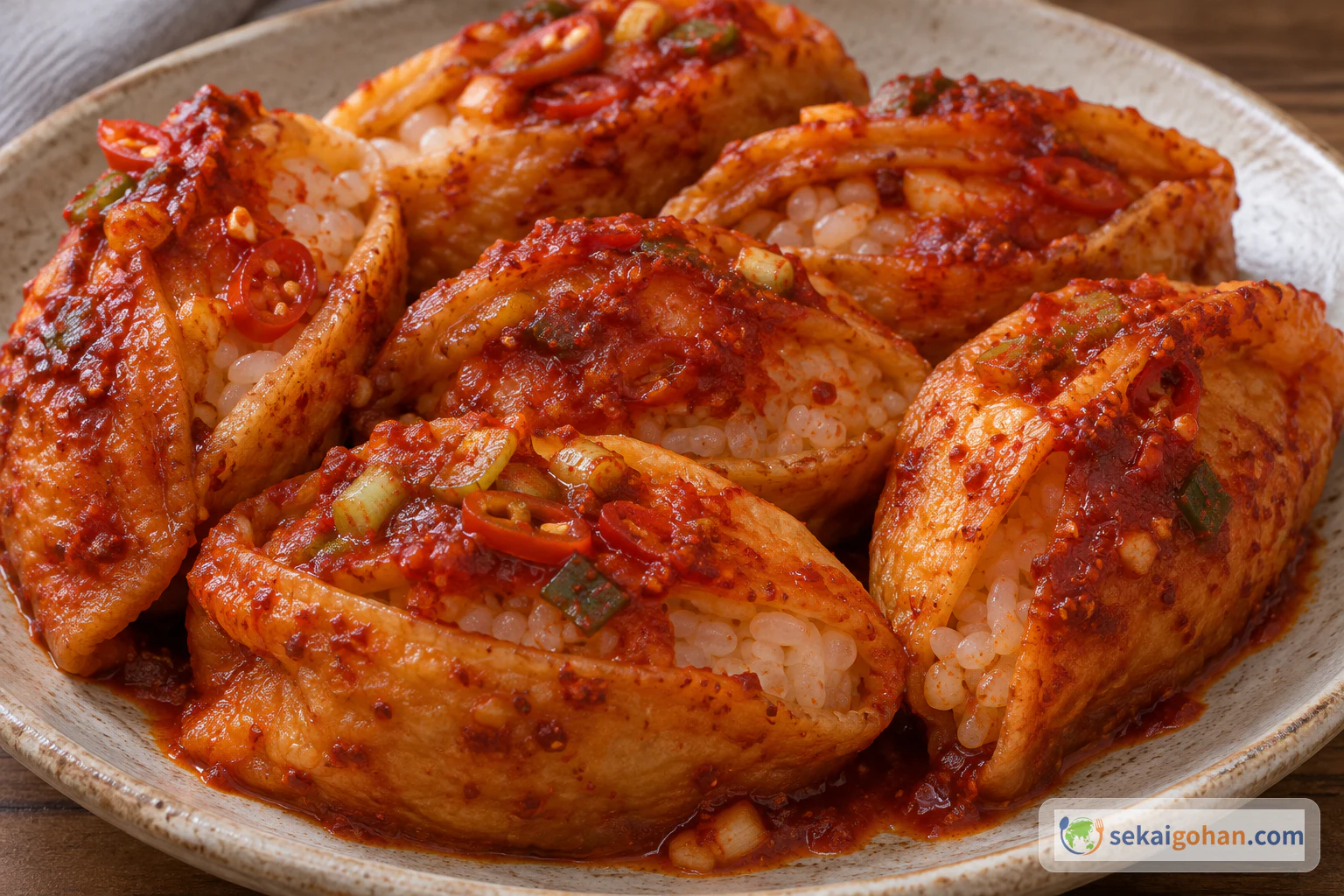
Injo-gogi-bap: North Korean Soy-Wrapped Rice with Chili Paste (인조고기밥)
Injo-gogi-bap is a North Korean street food of short-grain rice packed into a soy-based wrapper and spread with red chili paste. Learn what injogogi is, how the plain yubu version differs, and where each amount comes from.

Samgyetang: Korean Ginseng Chicken Soup with Sweet Rice
Samgyetang is a Korean whole-chicken soup stuffed with glutinous rice, jujubes, garlic and ginseng. Learn how much rice to stuff, simmering and storage.
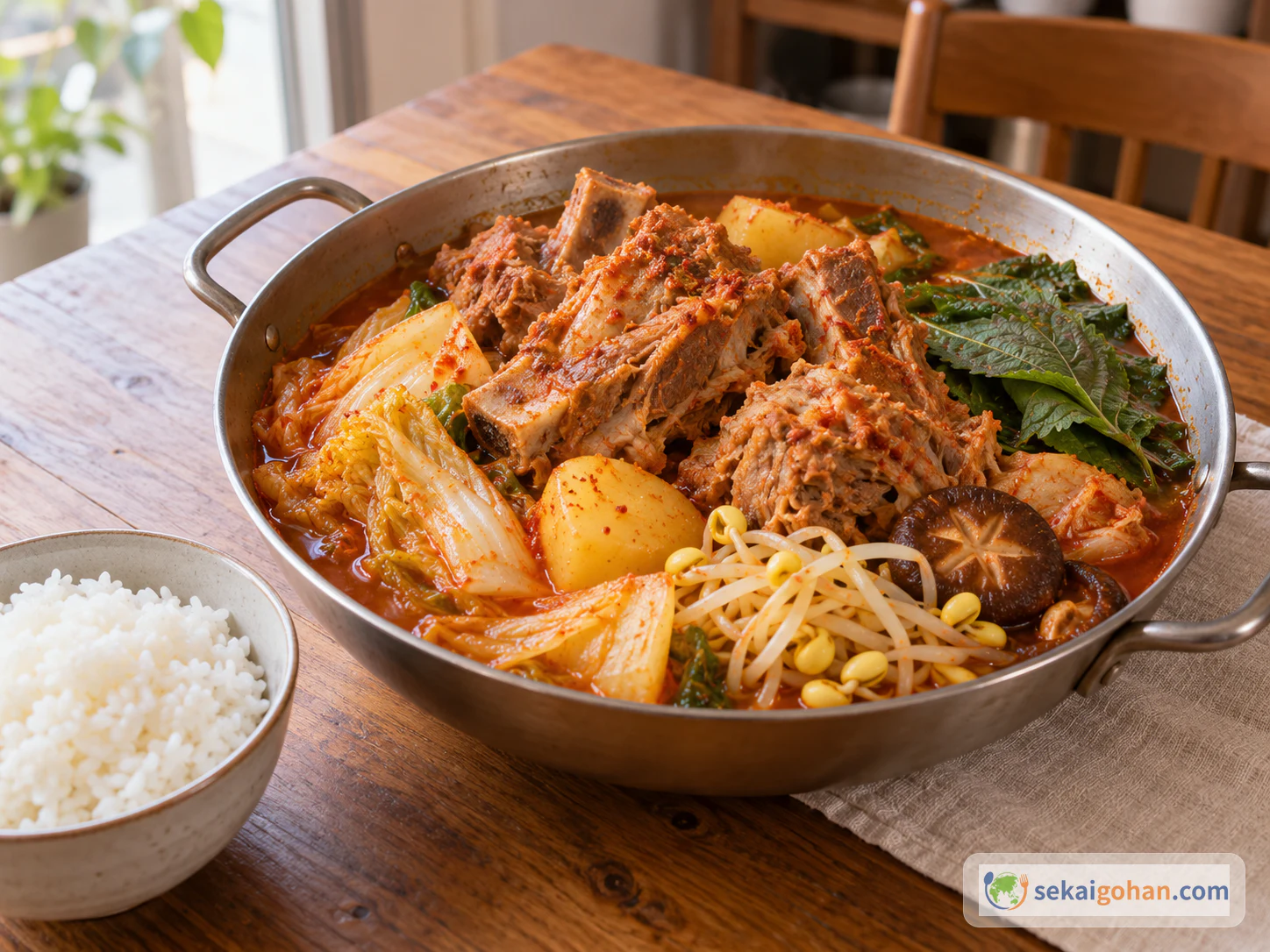
Gamjatang: Korean Pork Bone Soup with Potatoes and Perilla (감자탕)
How to make gamjatang, Korean pork bone soup, following Maangchi's current written recipe for 2 to 3 servings. Covers preparing the bones and napa cabbage, the 90-minute broth, the perilla seasoning paste, the order for adding vegetables, food safety, the recipe's limited substitutions, and its unresolved details.
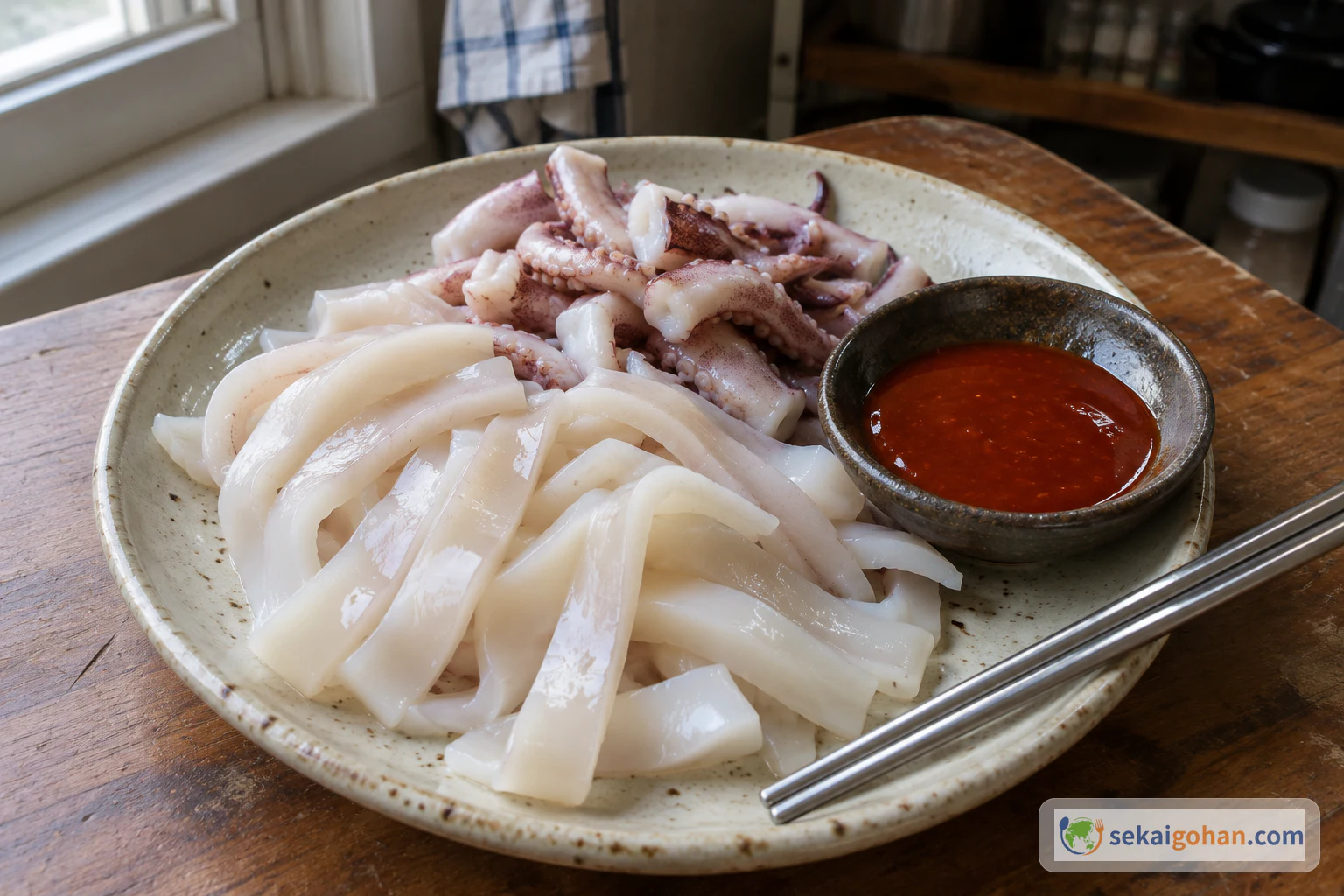
Sukhoe: Korean Blanched Squid with Vinegar Gochujang Sauce
Ojingeo-sukhoe, Korean blanched squid with chojang. How to clean the squid, blanch it until white and firm, chill it fast and mix the gochujang-vinegar sauce.
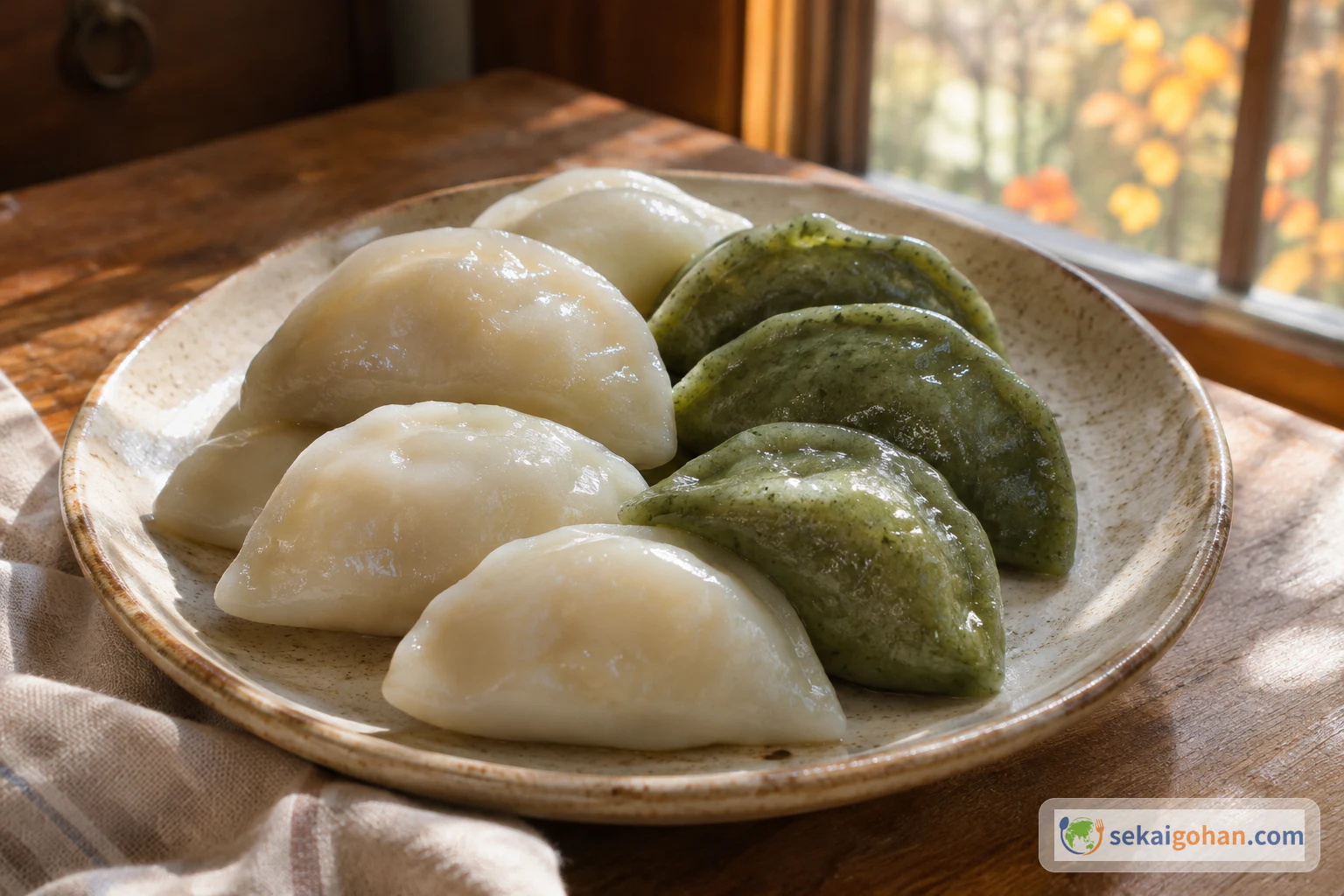
Songpyeon: Korean Half-Moon Rice Cakes Steamed for Chuseok
Songpyeon is Korea's half-moon Chuseok rice cake. Learn hot-water dough, sesame filling, steaming until translucent, and which rice flour works.
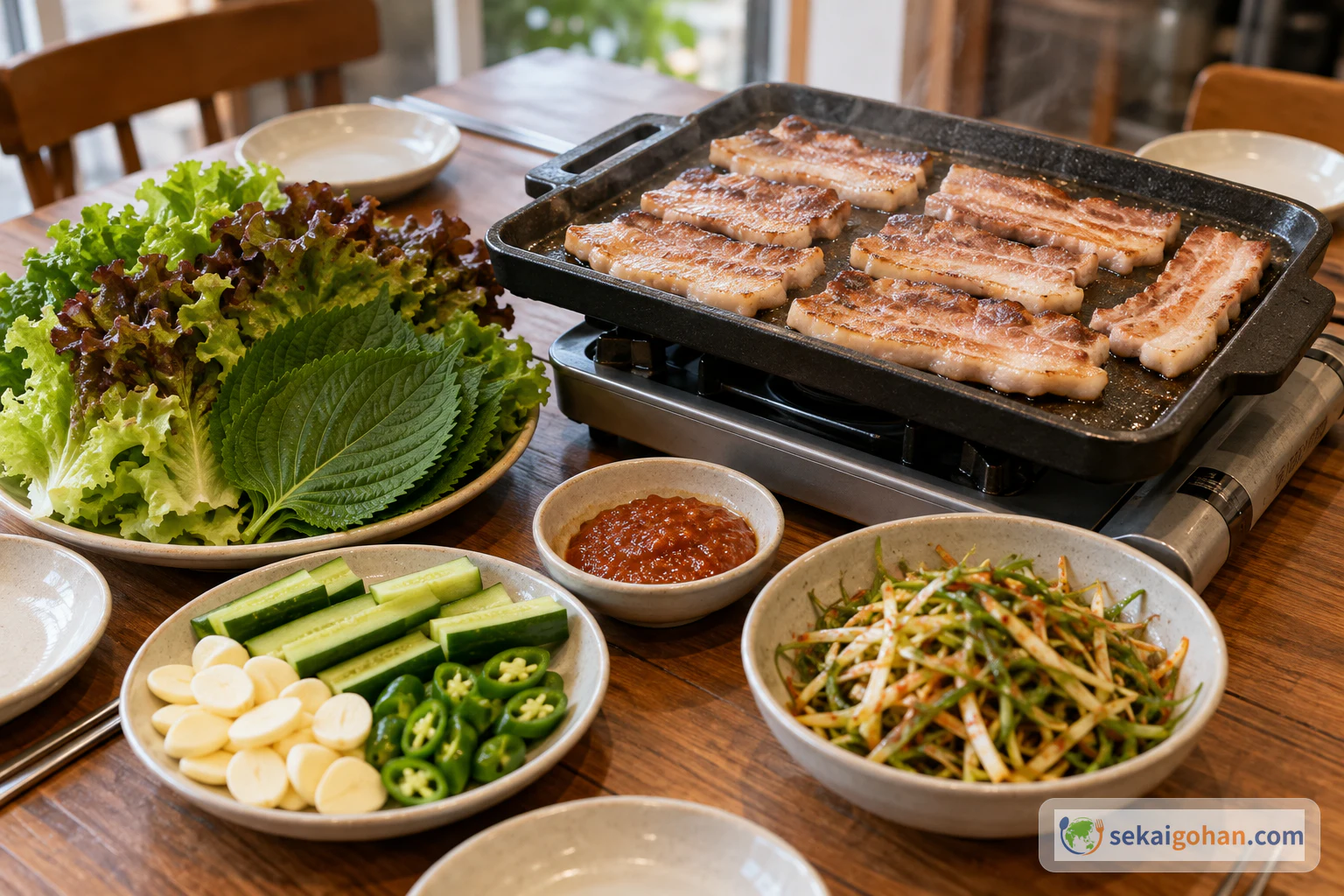
Samgyeopsal: Korean Grilled Pork Belly Wrapped in Lettuce (Samgyeopsal-gui, 삼겹살구이)
How to make samgyeopsal-gui, Korean grilled pork belly, at home: unseasoned pork belly grilled on a tabletop grill or frying pan, a scallion salad (pajeori), a doenjang-gochujang ssamjang, and lettuce and perilla leaves for wrapping. Covers safe grilling, keeping raw meat apart from ready-to-eat vegetables, choosing Korean pantry staples, and how ssam is eaten at the table.
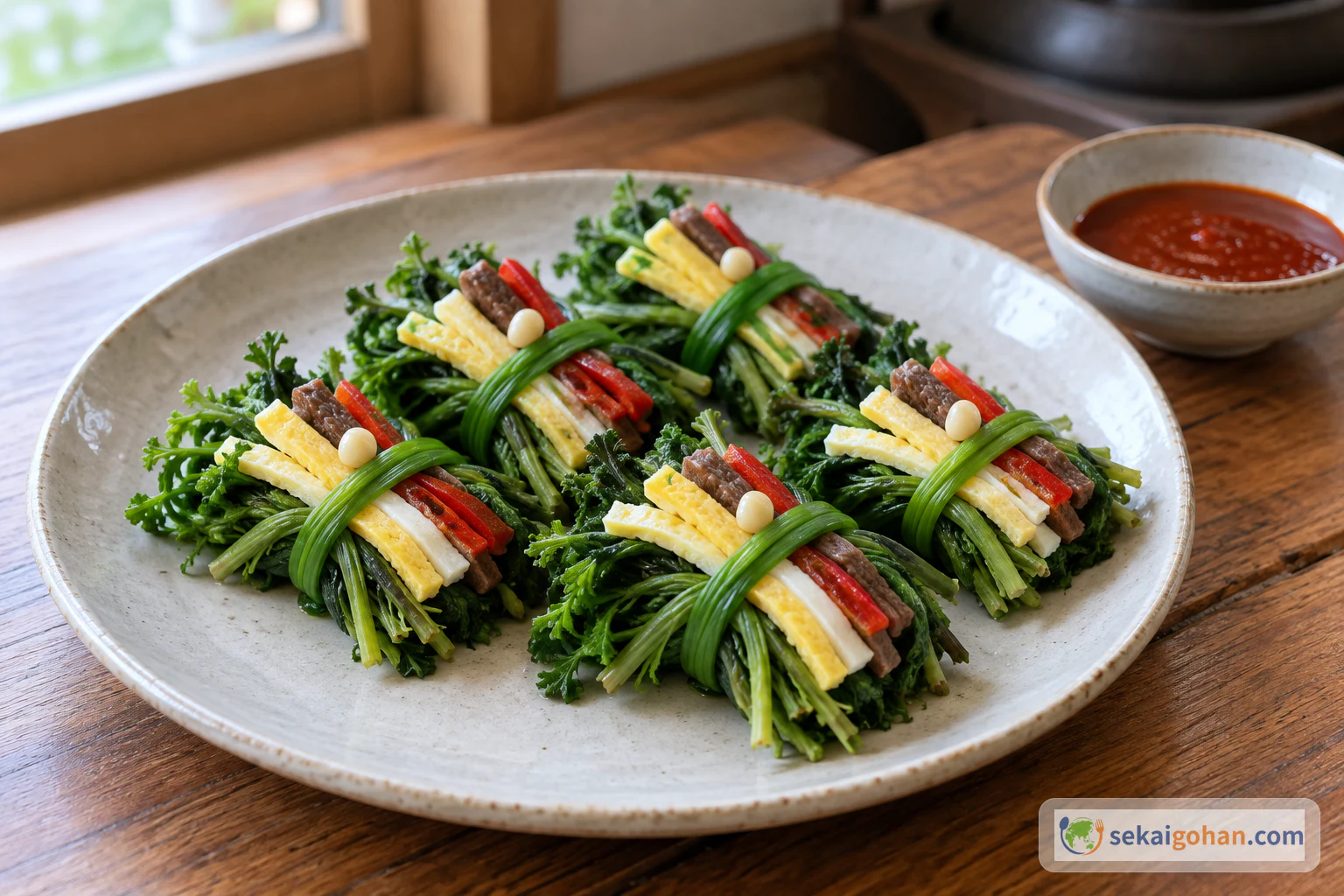
Ganghoe: Korean Scallion-Tied Bundles with Naengi and Beef
Naengi pa ganghoe from Korea: blanched greens and boiled beef, egg and chili strips tied with scallion. Learn the blanch, the even cut and the tie.
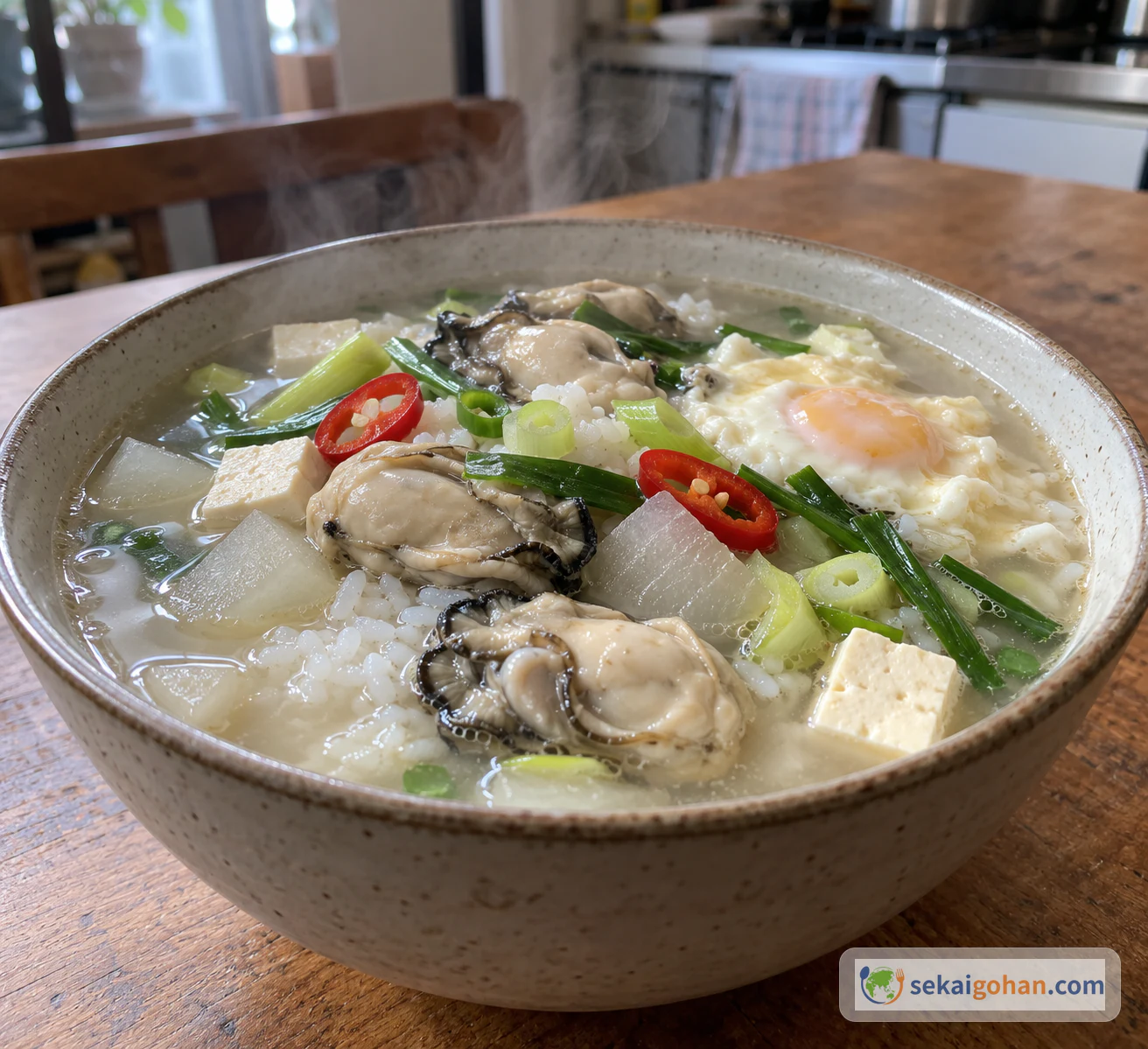
Gul-gukbap: Korean Oyster Rice Soup with Radish, Tofu and Egg (굴국밥)
How to make gul-gukbap (굴국밥), the Korean dish of hot oyster and radish soup eaten with cooked rice, following a recipe hosted on 10000recipe and attributed to CJ 제일제당. Covers the ingredient list for 2 servings, the cooking order, safe oyster cooking from public food-safety guidance, how it differs from the broader winter version described by the Korea Tourism Organization, and what is left to taste.
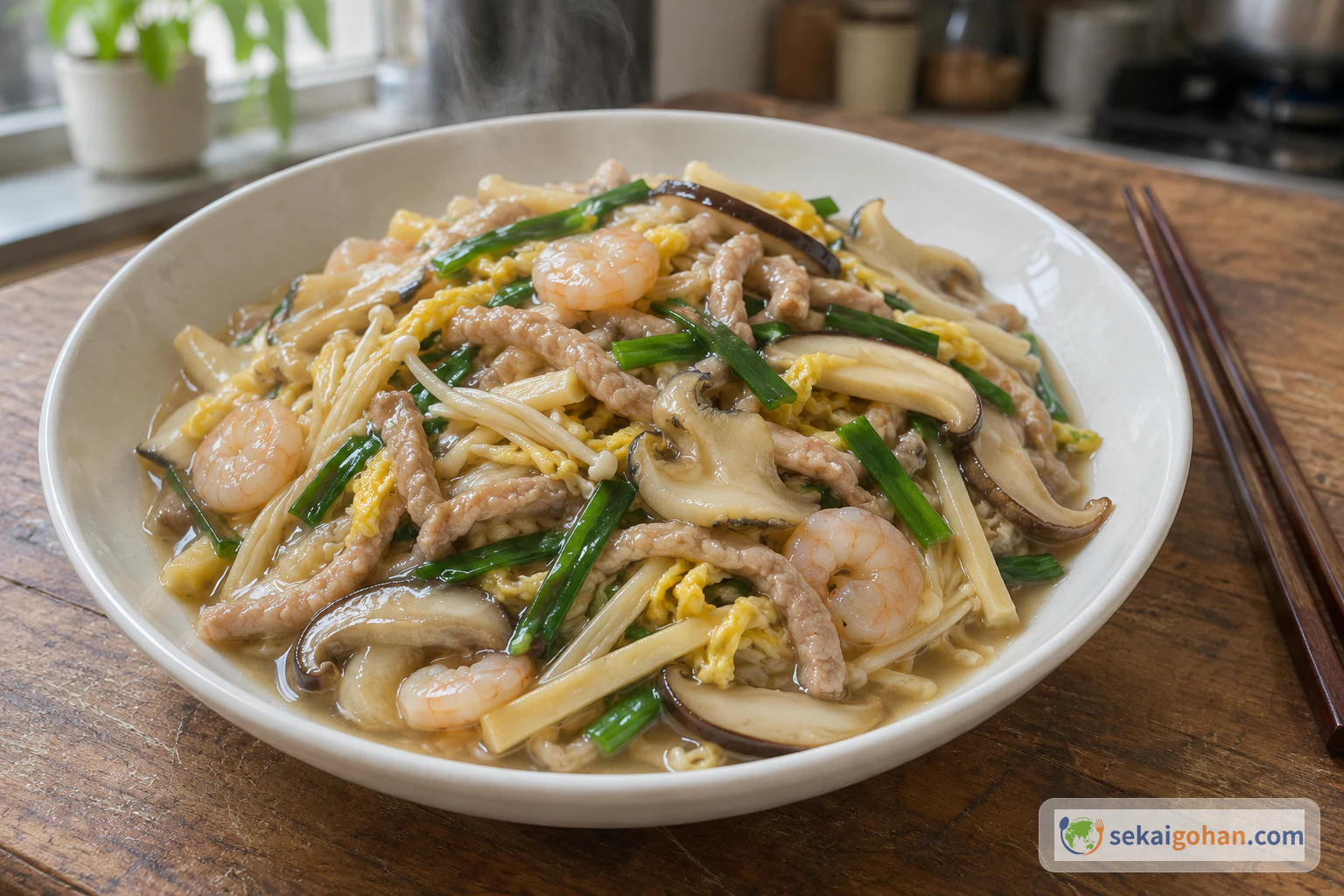
Yusanseul: Korean-Chinese Stir-Fry of Shredded Pork and Seafood
Yusanseul is the glossy, mild Korean-Chinese stir-fry of shredded pork, shrimp and whelk. Learn the thin cuts, two-stage blanch and starch-slurry finish.
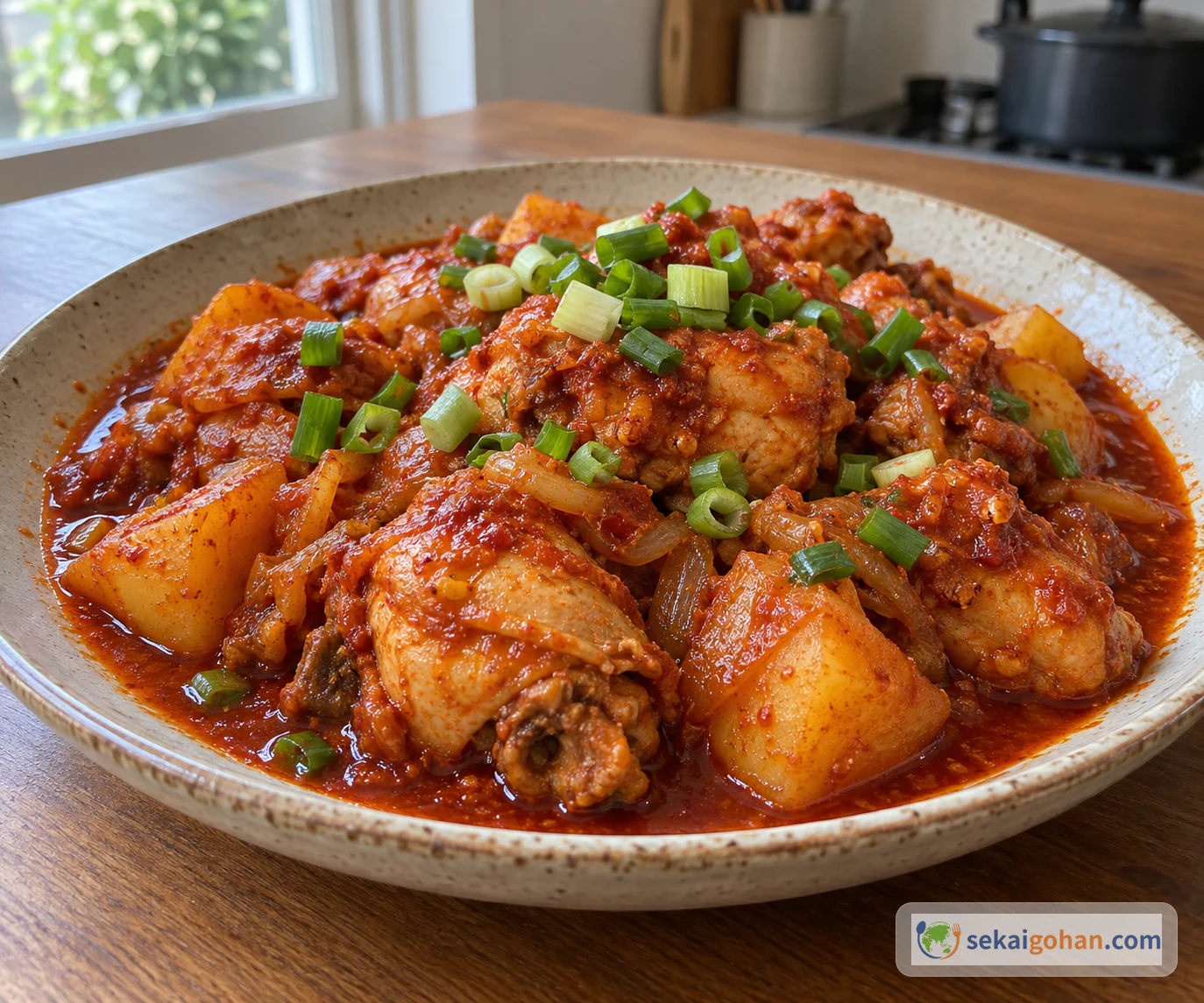
Daktoritang (Dakbokkeumtang): Korean Spicy Braised Chicken with Potatoes
How to make daktoritang, also called dakbokkeumtang (닭도리탕 / 닭볶음탕): chicken thighs, potatoes and onions braised in gochujang and gochugaru. This guide follows Maangchi's traditional-style recipe through all eleven steps and explains the two names, safe handling of raw chicken, and how to choose Korean chili seasonings.
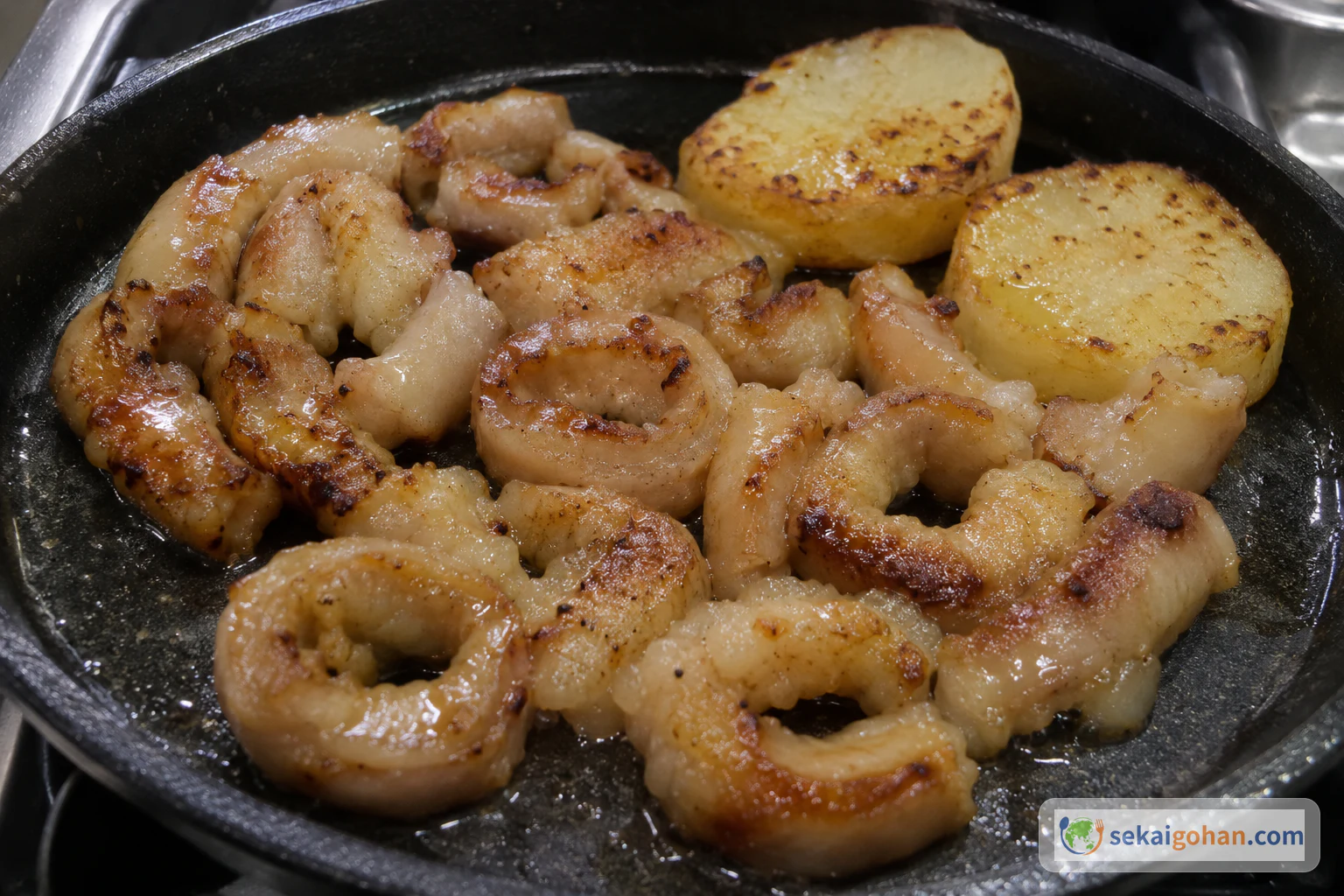
Gobchang Gui: Korean Grilled Beef Small Intestine with Potatoes
Gobchang gui is Korean grilled beef small intestine. Learn to trim it, grill it from raw with potatoes until crisp, and pick the right cut at the butcher.
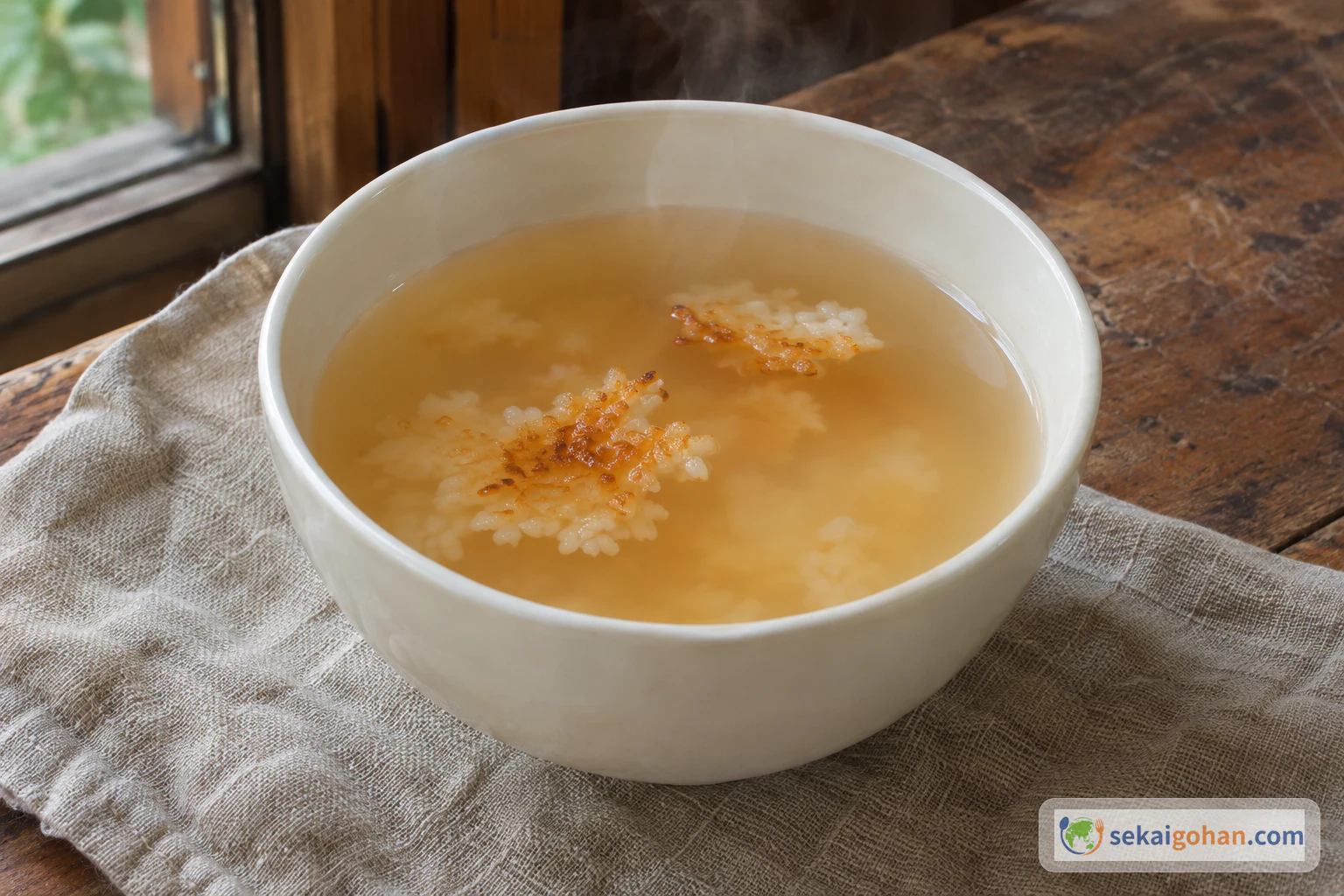
Sungnyung: Korean Scorched Rice Drink Made in a Pan
Sungnyung is Korea's after-meal drink of hot water over toasted rice crust. Learn the pan method, when to flip, and how to handle leftover rice safely.
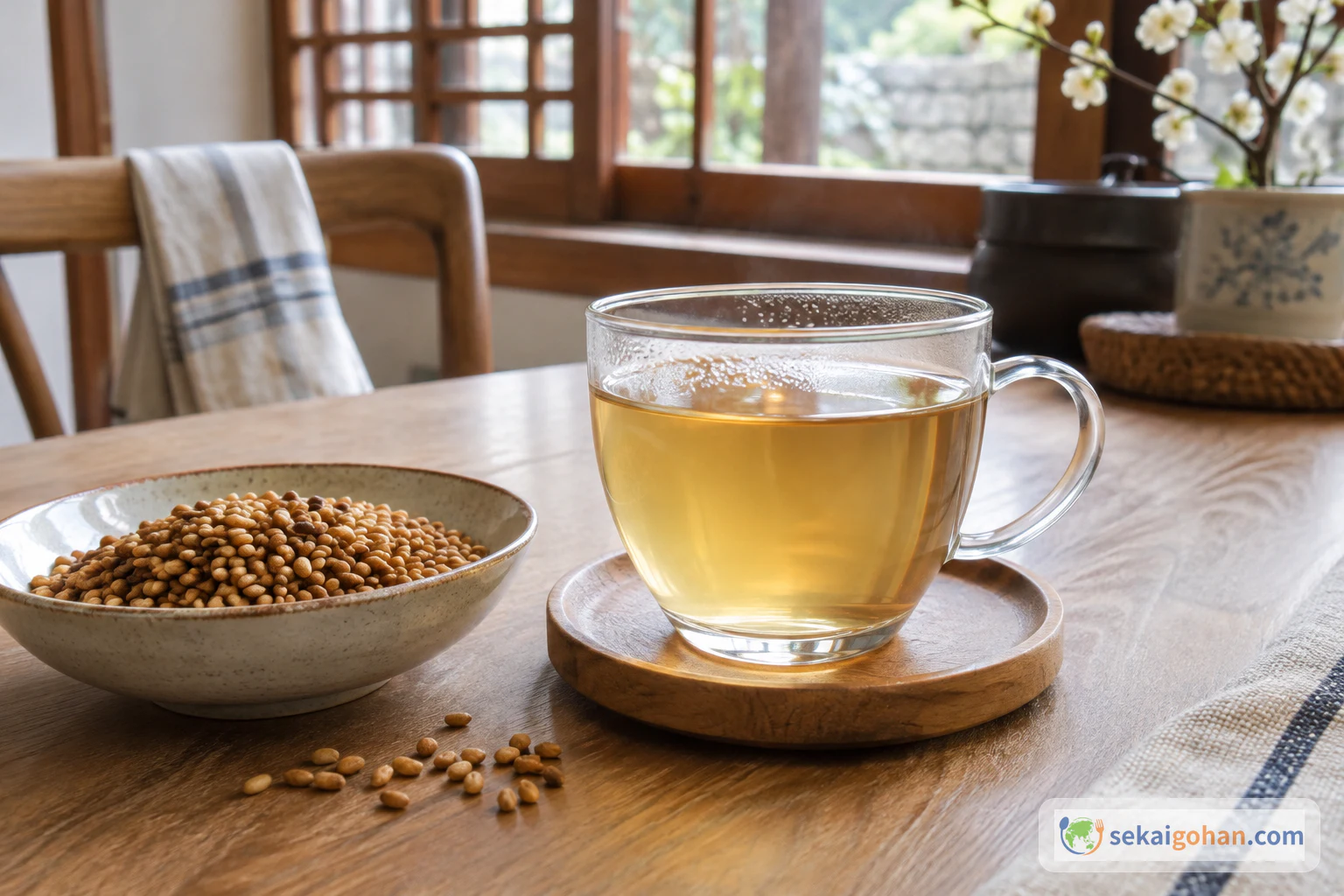
Hyeonmi-cha: Korean Roasted Brown Rice Tea (현미차)
How to make hyeonmi-cha (현미차), a Korean tea of roasted brown rice and water. Wash, drain and dry-roast the rice without oil, then simmer about 2 Tbsp of the roasted grains in 5 cups of boiled water. Also covers the steeping method and how it differs from brown rice green tea and Japanese genmaicha.
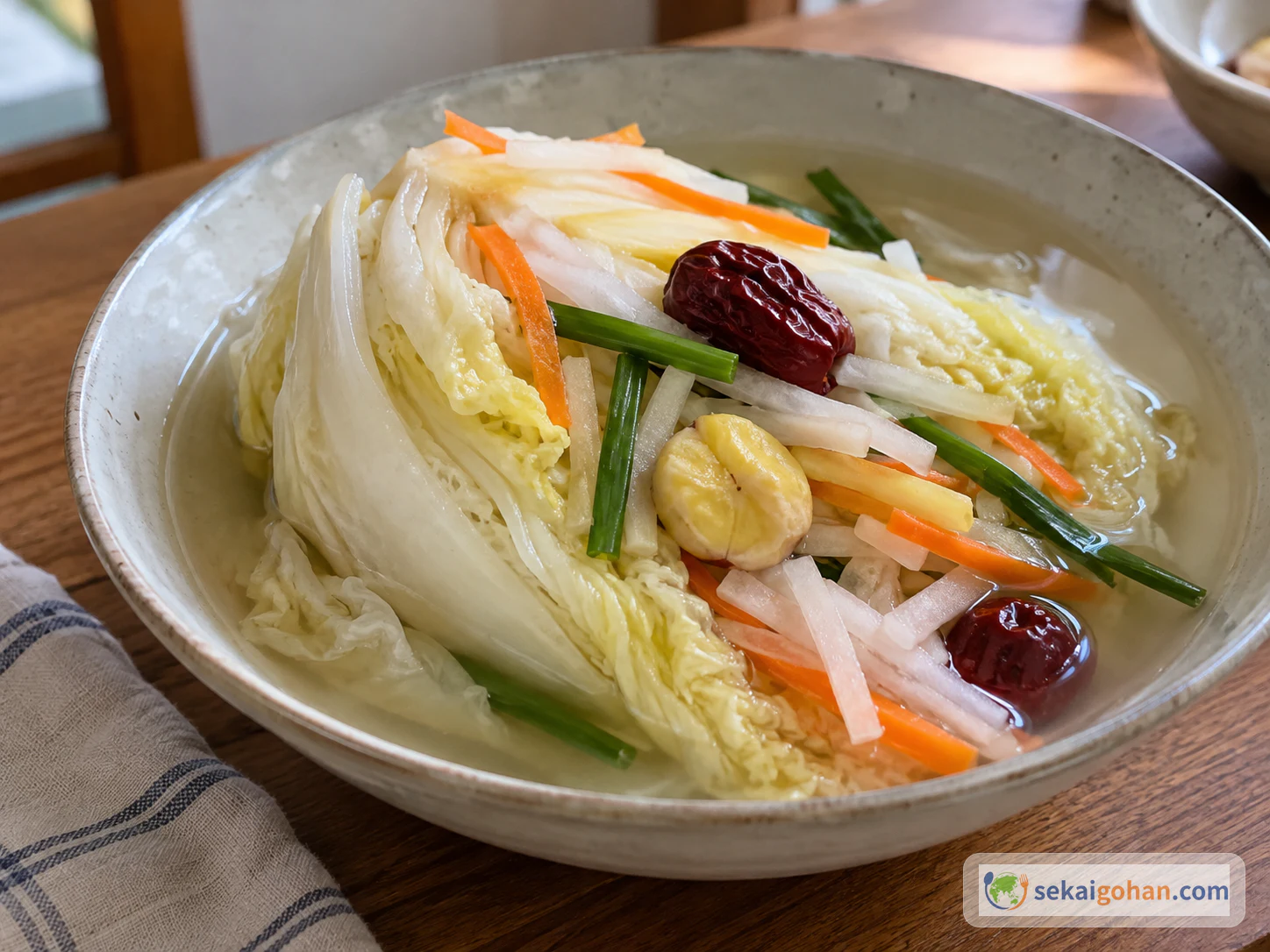
Baek-kimchi: Korean White Kimchi in Pear Brine (백김치)
How to make baek-kimchi (백김치), the Korean napa cabbage kimchi made without chili powder and steeped in a brine flavored with pear, garlic, onion and ginger. Covers salting, filling, room-temperature limits, the required pH check, substitutions and how it differs from red cabbage kimchi.

Tteokbokki Recipe: Korean Street-Style Sweet and Spicy Rice Cakes
Tteokbokki explained as Korea's sweet and spicy street rice cake dish. Covers the meaning of 떡볶이, Korean rice cakes versus other rice cakes, soaking the cakes, anchovy and kelp stock, using gochujang and gochugaru, fish cake substitutes, adjusting heat, why it goes wrong, storage, reheating the next day, and menu ideas for a home kitchen.
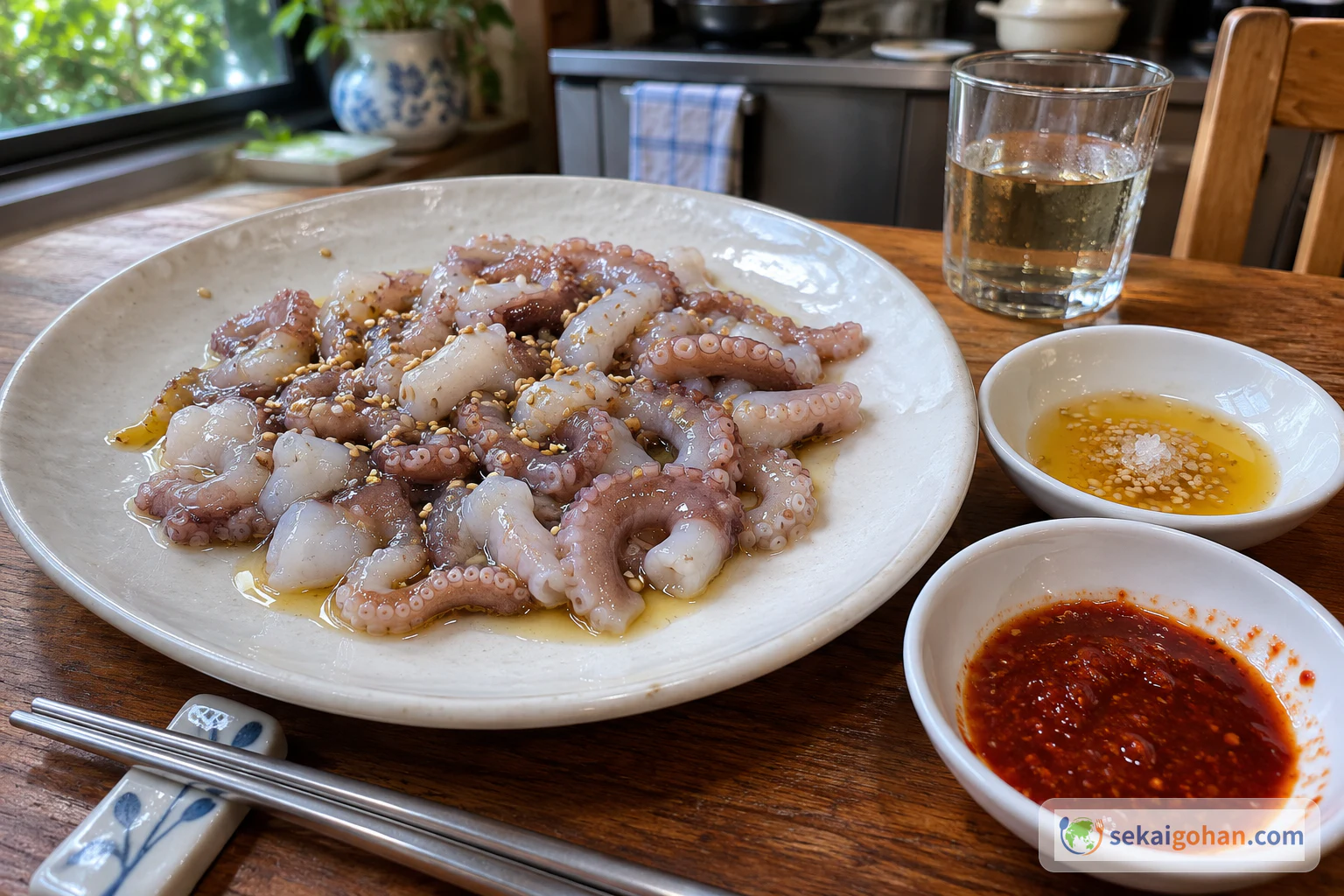
Sannakji: Korean Live Octopus Chopped with Sesame Oil
Sannakji from Korea: live nakji chopped small and dressed in sesame oil and salt. How to clean it with flour, chop it small and mix both dips.
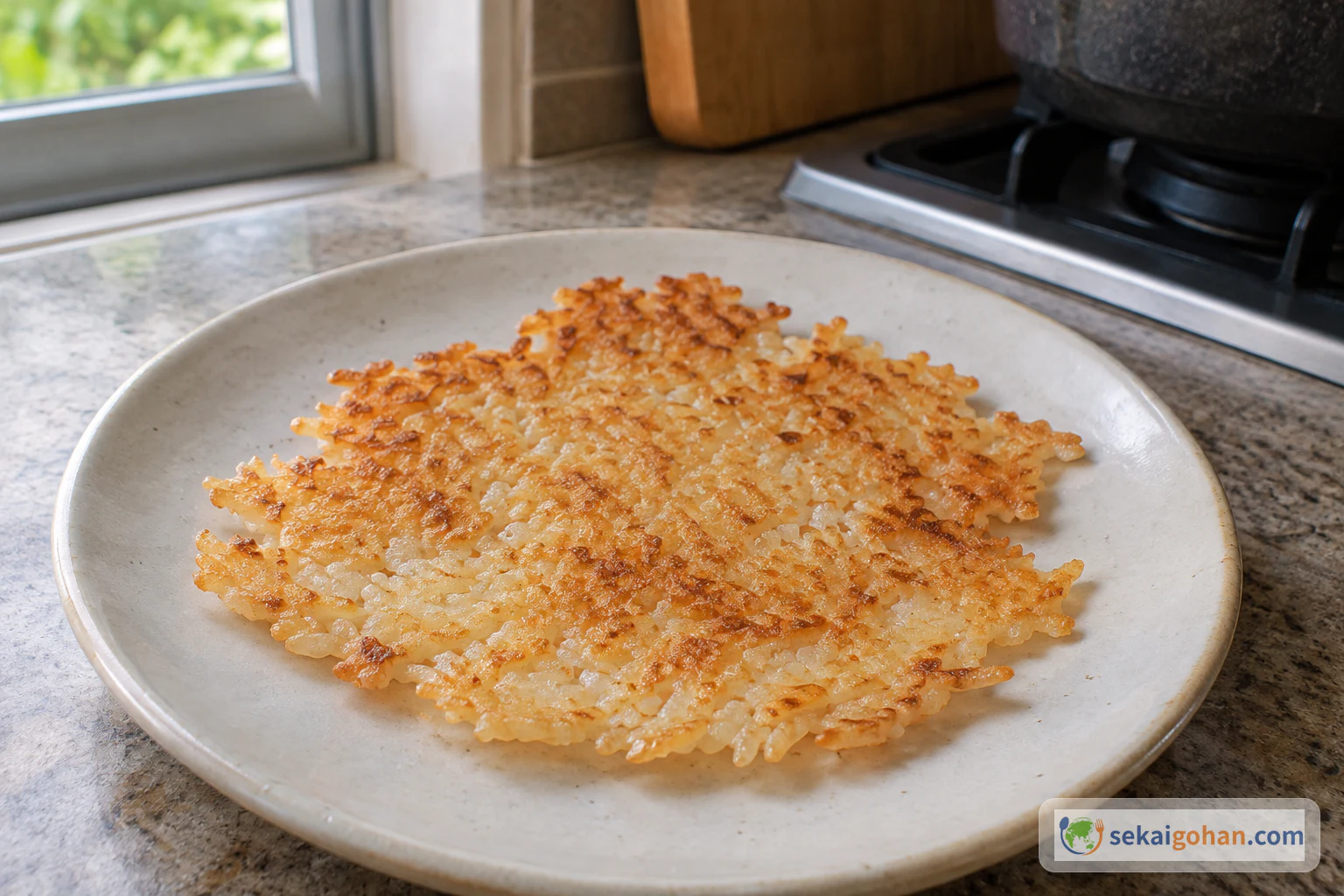
Nurungji: Korean Scorched Rice Crust and Sungnyung (누룽지)
How to make nurungji (누룽지), the thin golden rice crust that forms on the bottom of a pot of Korean rice, starting from raw short-grain rice. Covers rinsing, the 30-minute soak, the extra simmer that builds the crust, loosening it with a covered pot and a few drops of water, and turning the pot into sungnyung, the scorched-rice drink. Also covers rice-handling advice, troubleshooting and the dish's place at the Korean table.
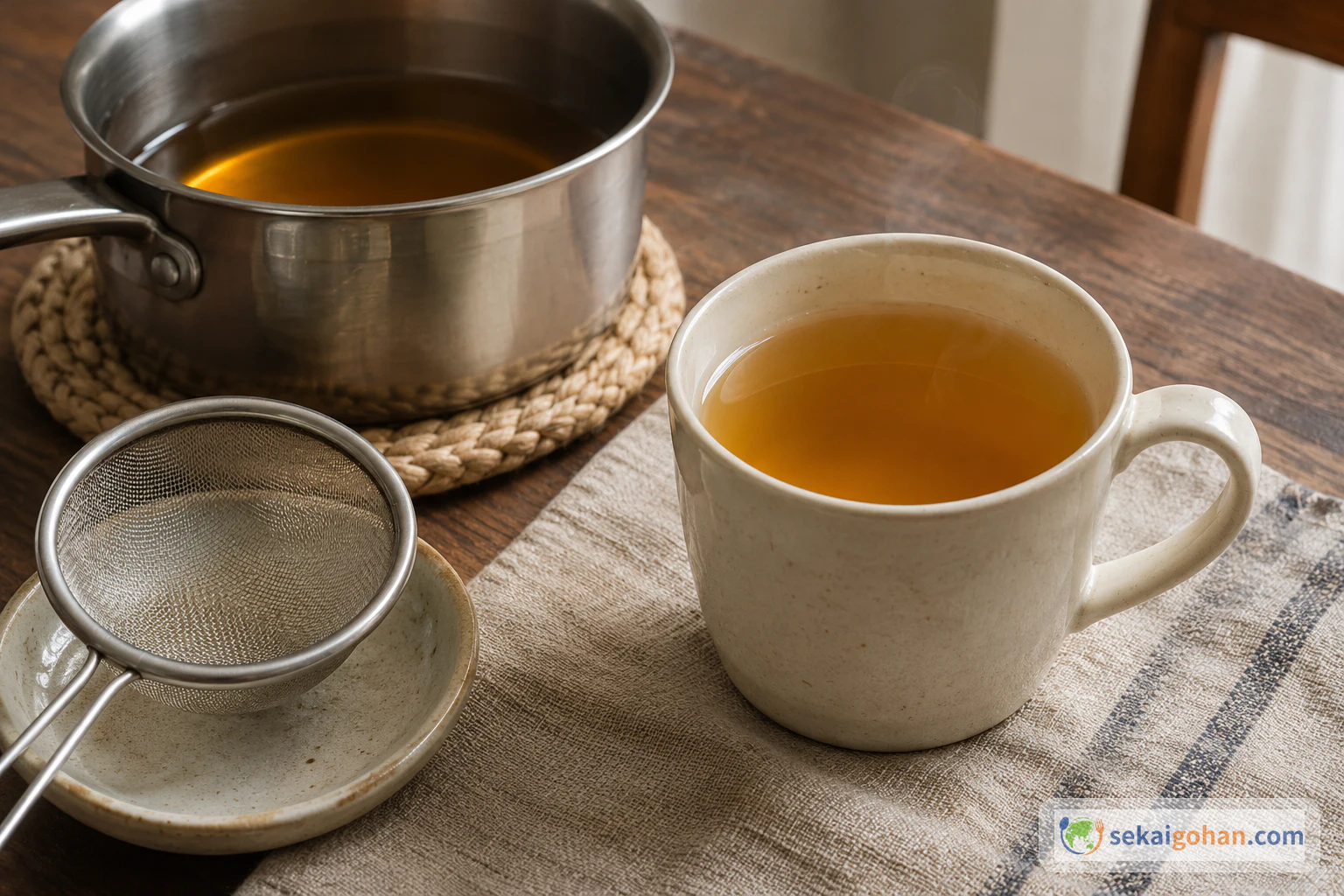
Oksusu-cha: Korean Roasted Corn Tea (옥수수차)
How to make oksusu-cha (옥수수차), the Korean drink made by simmering roasted corn kernels in water. A simple hot version for 4 servings: 3 tablespoons of ready-roasted whole kernels and 4 cups of filtered water, boiled, simmered for 10 minutes, strained and served hot. Includes how to find the right kernels, how it differs from corn silk tea and barley blends, and its place in a Gangwon regional food record.
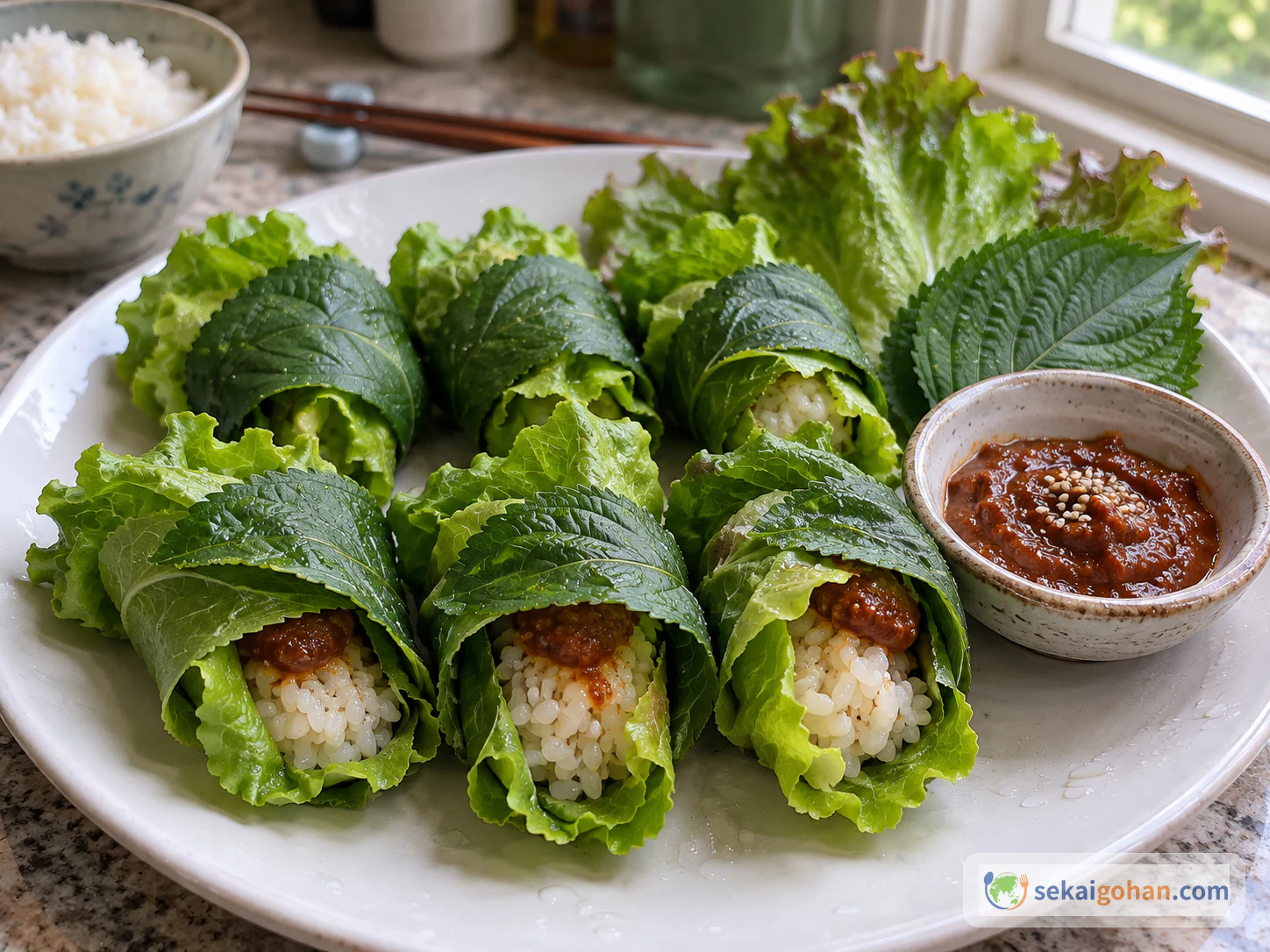
Ssambap: Korean Rice Wrapped in Fresh Lettuce and Perilla
Ssambap is Korean seasoned rice wrapped in lettuce, perilla and steamed cabbage. Learn to wash leaves, steam cabbage to a translucent stem and mix ssamjang.
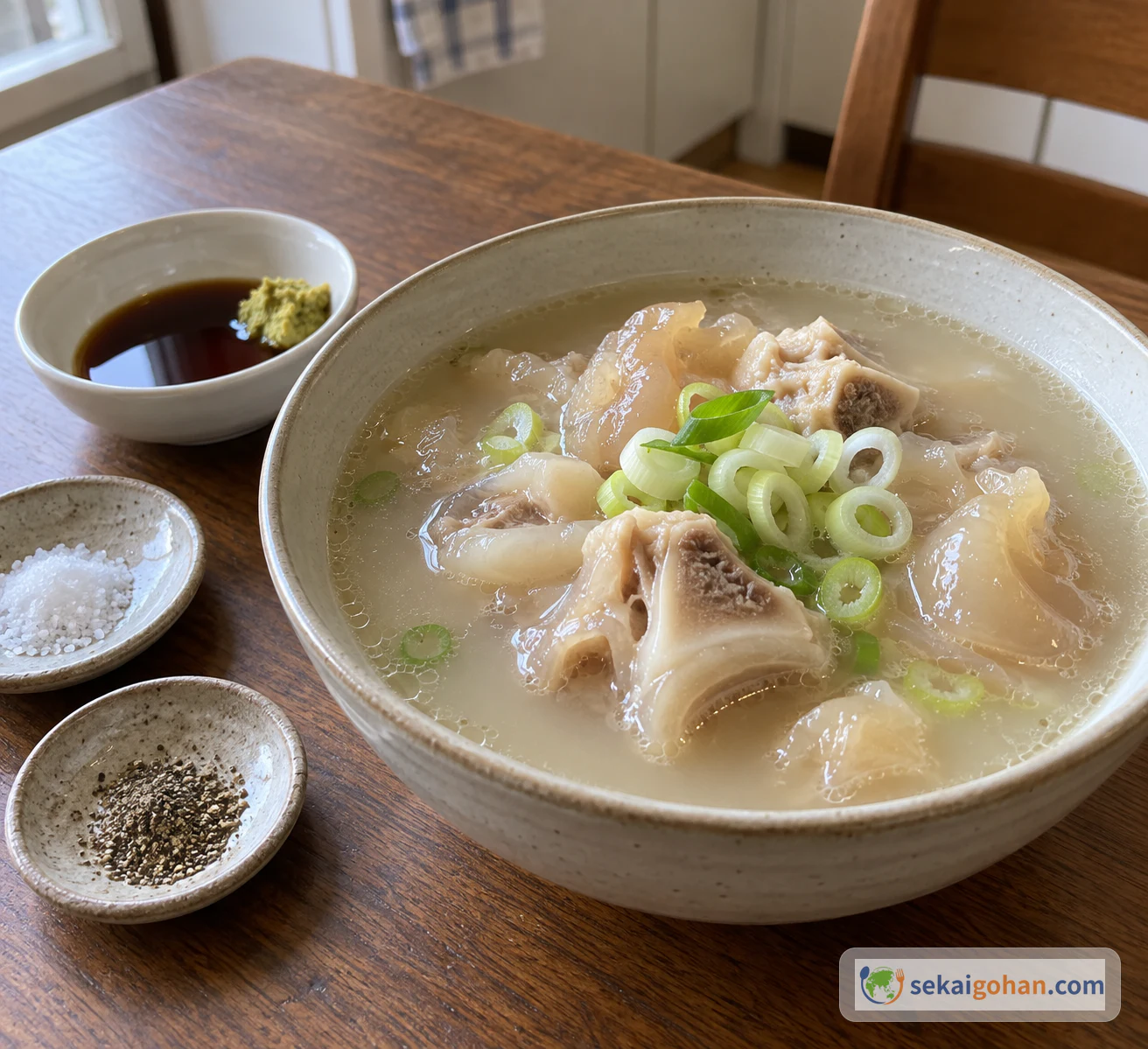
Doganitang: Korean Beef Knee Cartilage Soup (도가니탕)
How to make doganitang (도가니탕), the Korean beef knee cartilage soup, from a posted six-step home recipe: 1kg of Hanwoo knee cartilage and bone, two long extractions, and salt, pepper and wasabi-vinegar-soy sauce at the table. Includes clear notes on holding the broth safely, what the recipe leaves unstated, and how other versions differ.
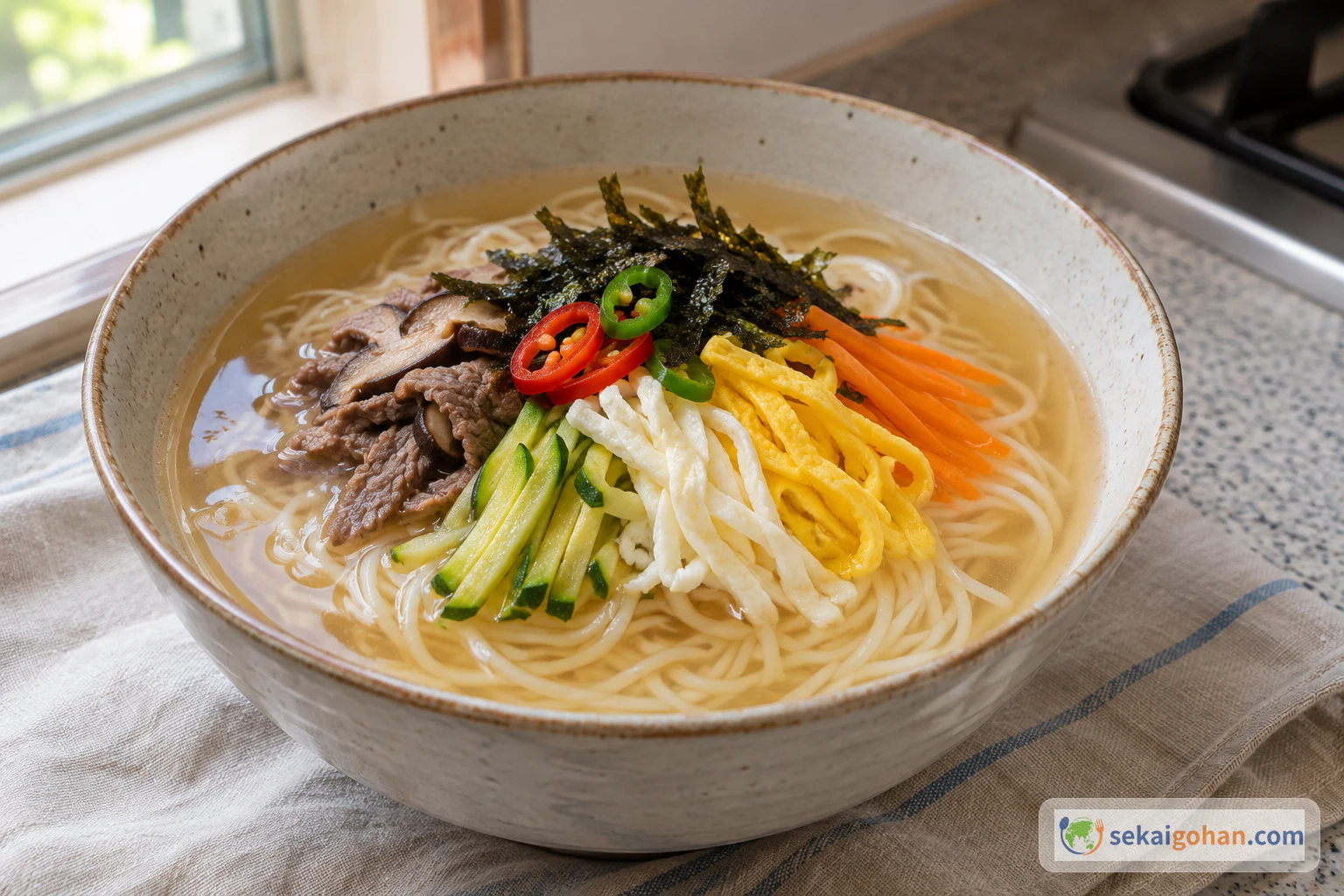
Janchi-guksu (잔치국수): Korean Celebration Noodles in Anchovy Broth
How to make janchi-guksu (잔치국수), the Korean noodle soup tied to weddings and celebrations: thin wheat noodles in a clear anchovy, dried shrimp and kelp broth, topped with beef and shiitake, squash, carrot, white and yellow egg ribbons, laver and chilies. Follows KBS WORLD's two-serving recipe step by step, with clear notes on the kelp amount, the different soy sauces, dried shiitake and cooking minced beef safely.
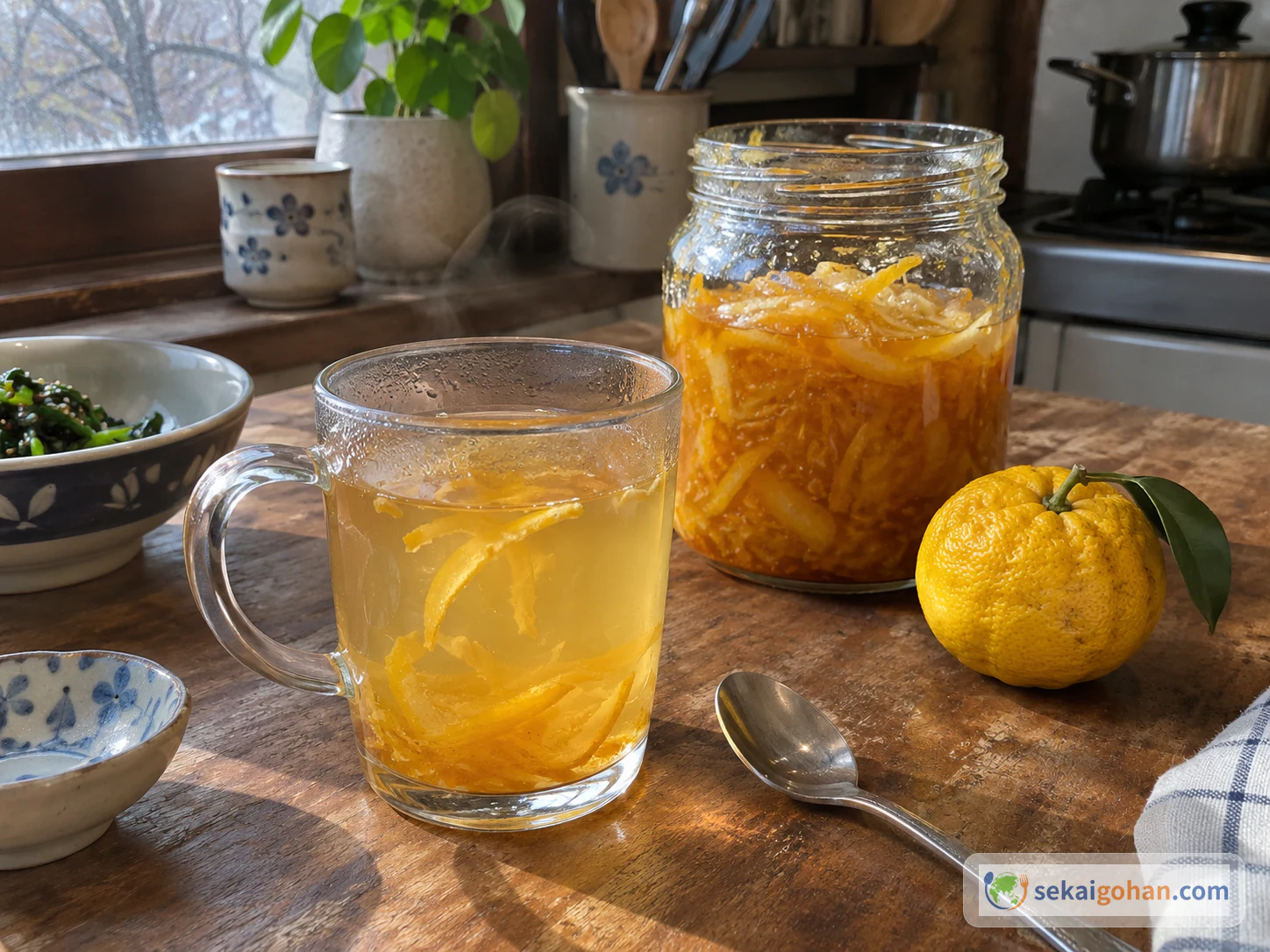
Yuja-cha: Korean Yuzu Tea from Sugar-Steeped Peel
Yuja-cha is Korea's caffeine-free yuzu tea. Learn the equal-weight yuzu and sugar jar, why the seeds come out, and how to mix hot, iced and sparkling cups.

Gilgeori Toast: Korean Street-Stall Cabbage and Egg Sandwich
Gilgeori toast, Korea's street-stall cabbage and egg sandwich. Soften the cabbage, shape a patty bigger than the bread, and finish with sugar and ketchup.
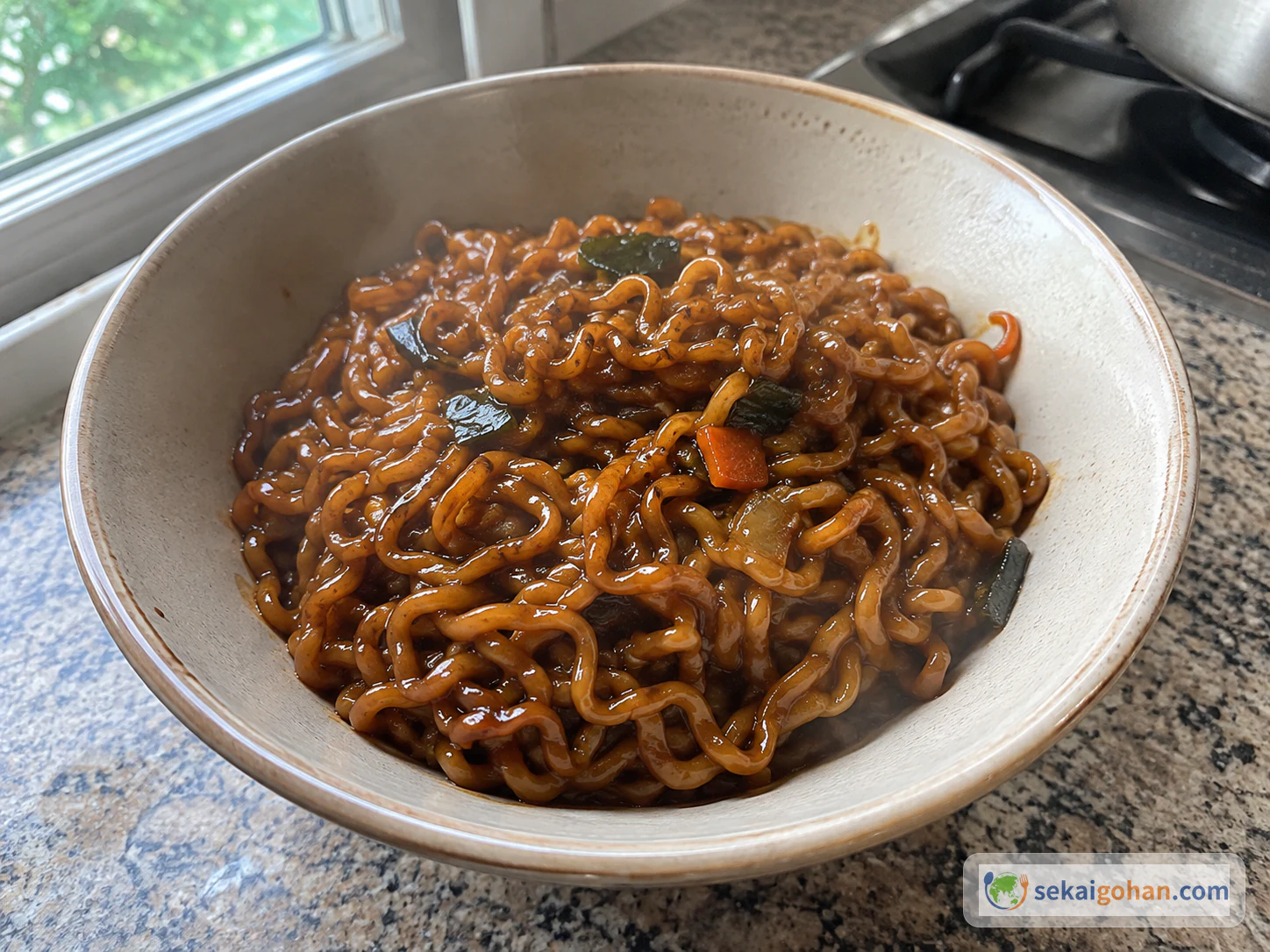
Jjapaguri: Chapagetti and Neoguri Cooked Together in One Pot (짜파구리)
How to make jjapaguri (짜파구리, also written chapaguri), the Korean dish of one package of Chapagetti and one package of Neoguri cooked in the same pot. Covers which sachets to use in full and which only by half, why you keep some of the noodle water, when to add the seasoning oil, how this no-steak version differs from the 'ram-don' of the film Parasite, and where a separate Nongshim method fits in.
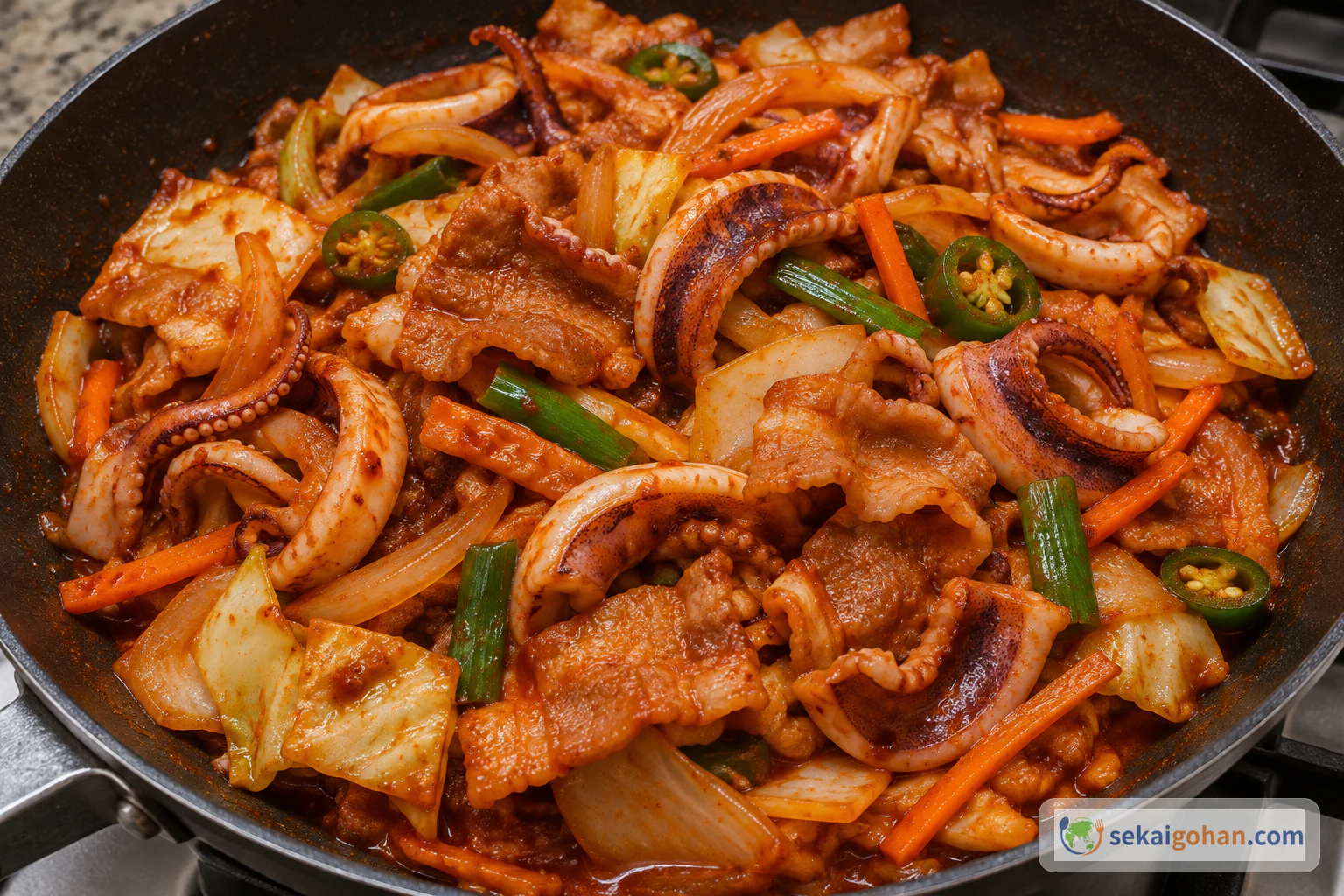
Osambulgogi: Korean Spicy Squid and Pork Belly Stir-Fry (오삼불고기)
How to make osambulgogi, the Korean stir-fry of squid and pork belly in a red gochujang and gochugaru sauce. This four-serving version follows JinJoo Lee's Kimchimari recipe: skin-on squid cut into strips, pork belly cooked first without added oil, and separate marinades for the meat and seafood. Includes safe handling of raw squid and pork, fixes for common problems, other versions of the dish, and the story behind the name.

Kongbap Recipe: Korean Rice Cooked with Beans and Grains
How to make kongbap, Korean rice cooked with beans and mixed grains. Soaking black soybeans, the ratio of rice to grains, water for a rice cooker and for a pot, how to fix hard beans, how to eat it with kimchi and gim, and storage, for a home kitchen.
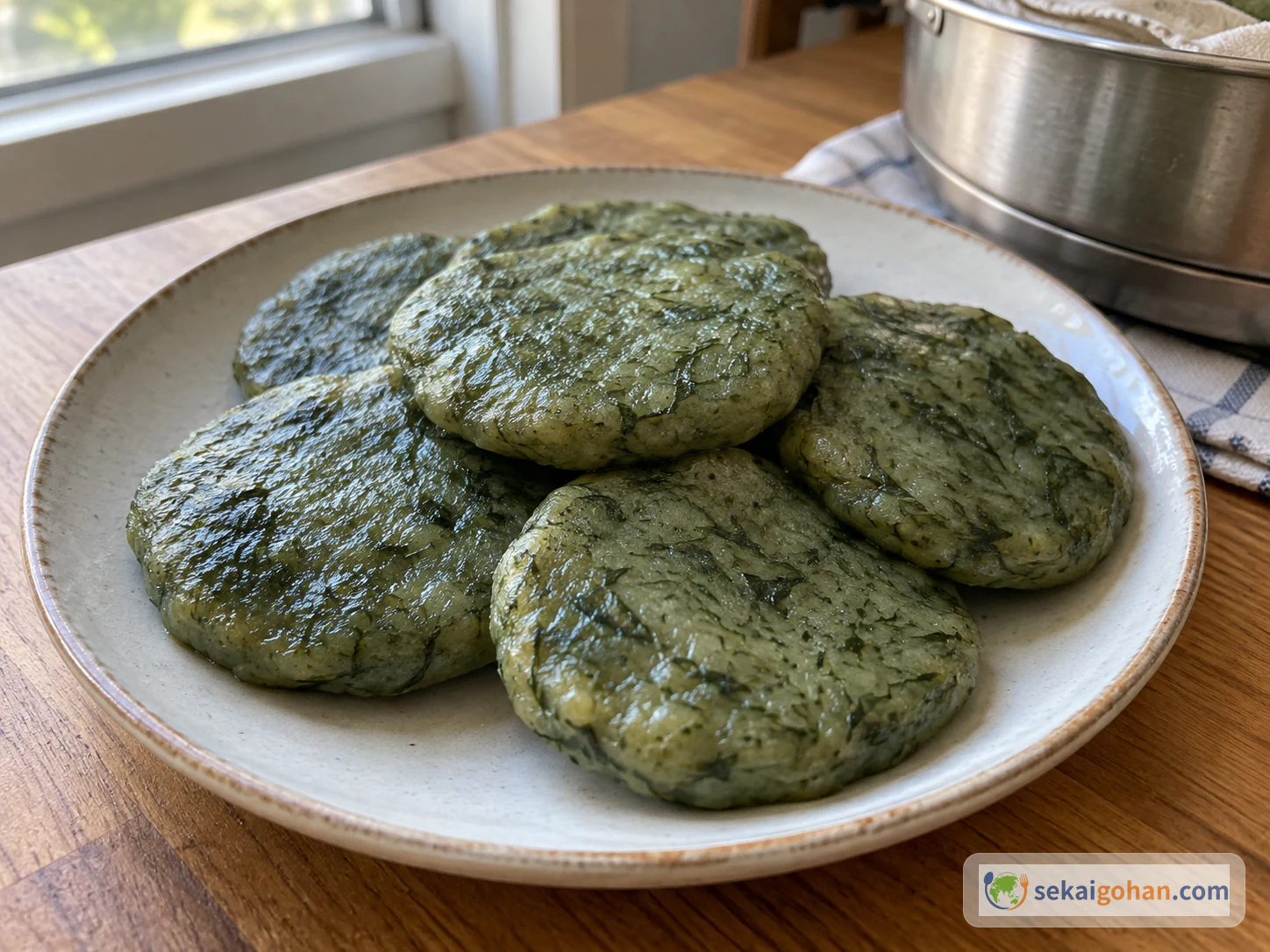
Gaetteok: Korean Steamed Mugwort Rice Cakes (쑥개떡)
How to make ssuk gaetteok (쑥개떡), flat Korean rice cakes of blanched mugwort and dry non-glutinous rice flour, steamed and finished with cold water and sesame oil. Covers how to judge the dough, choose edible mugwort, check the cakes are hot through, and store and reheat them.
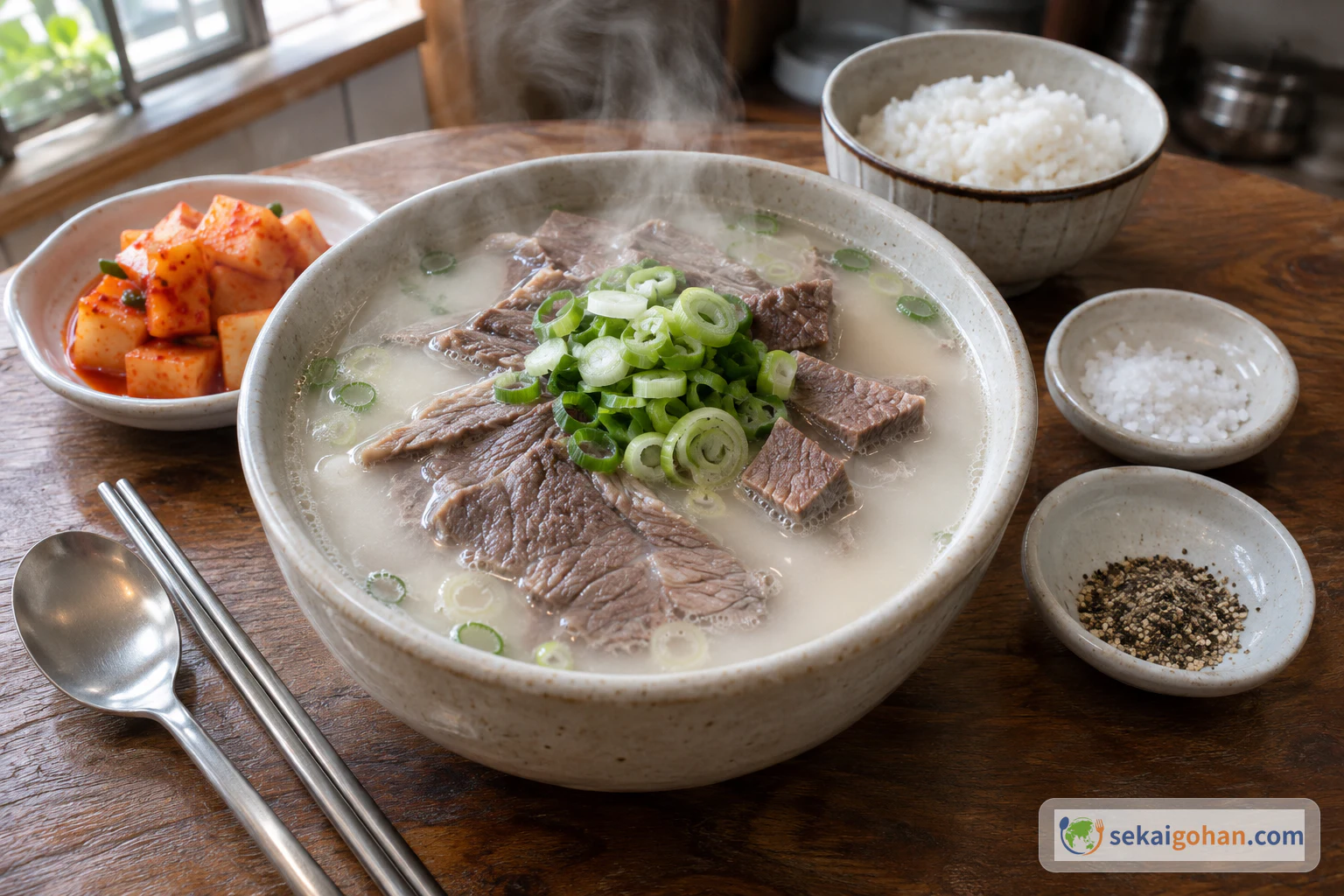
Seolleongtang: Seoul Milky Ox Bone Soup Simmered All Day
Seolleongtang is Seoul's milky ox bone soup. Learn the blood soak and parboil, the steady boil that turns broth white, and salting at the table.
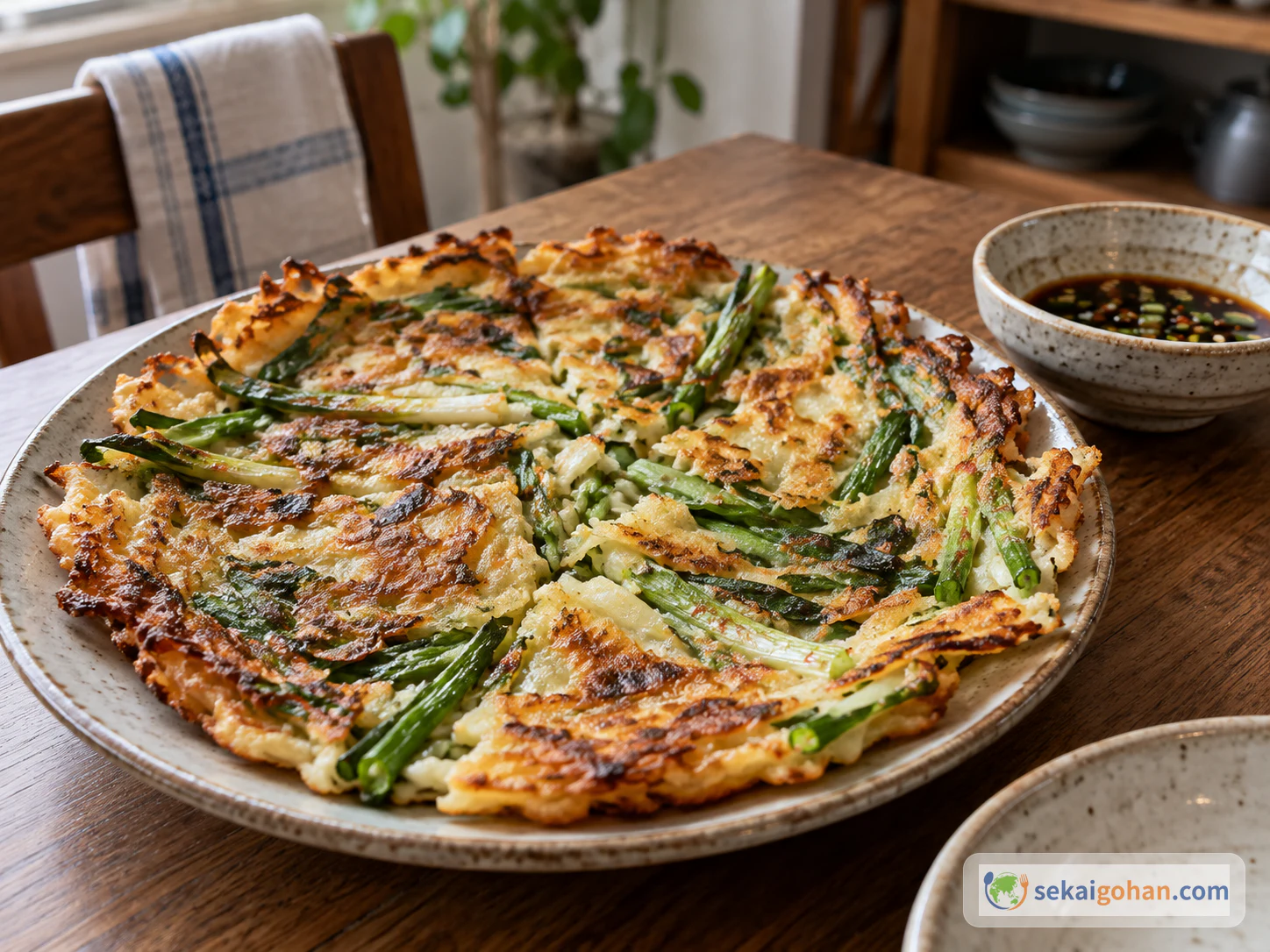
Pajeon (파전): Korean Scallion Pancakes with Thin Batter and Crisp, Golden Sides
A pajeon recipe built on about 350g of scallions and cold sparkling water, making 4 large, thin pancakes with a soy and rice vinegar dipping sauce. Covers when to flip, how to spot common problems, how to store and reheat, and how this version differs from the Dongnae pajeon of Busan.
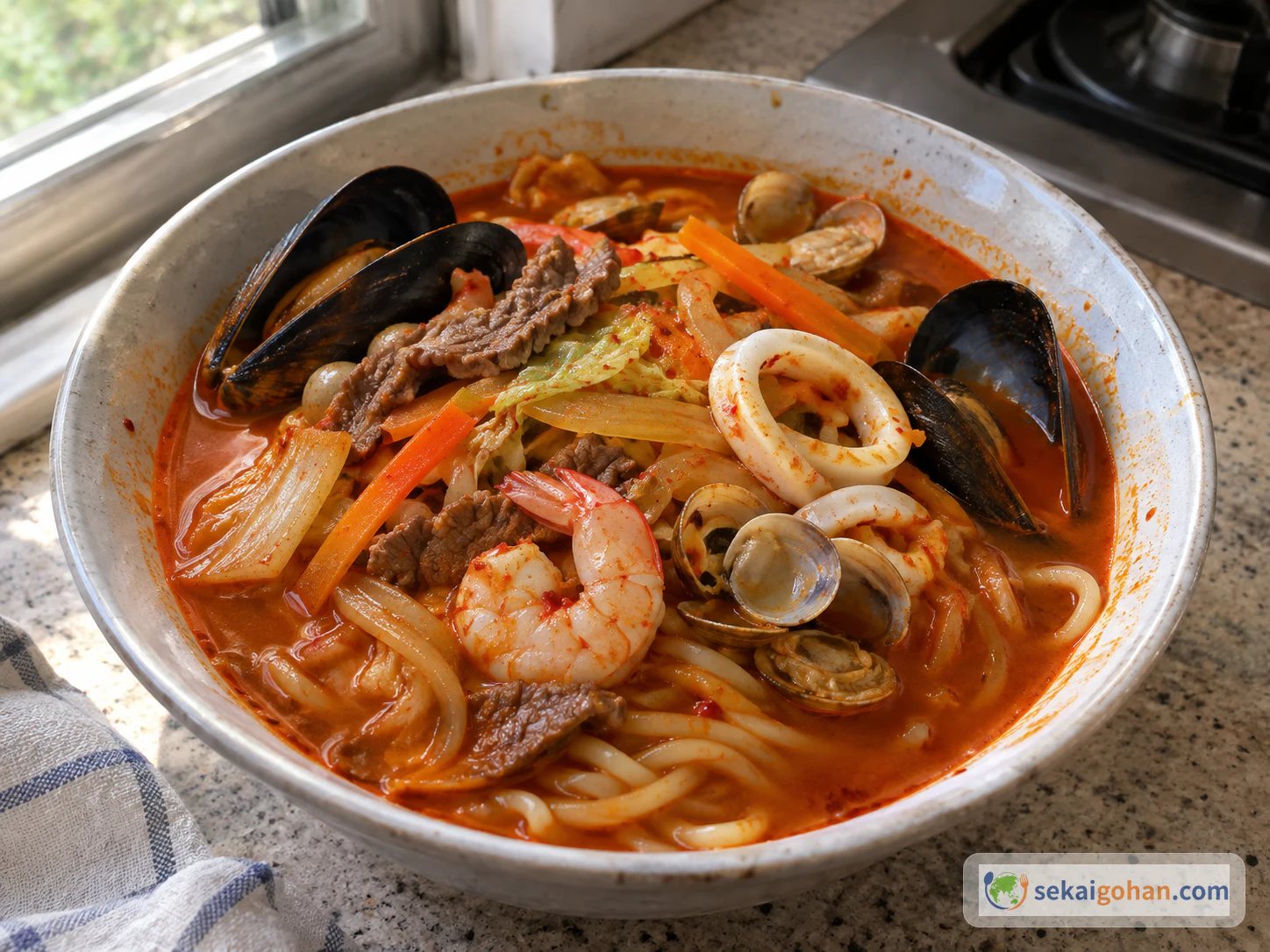
Jjamppong: Korean-Chinese Spicy Seafood Noodle Soup (짬뽕)
How to make jjamppong (짬뽕), the red, spicy Korean-Chinese noodle soup with mussels, clams, shrimp, squid, thin beef and vegetables in an anchovy-kelp stock. A two-serving recipe in US measures, covering how to bloom gochugaru in oil without burning it, how to prepare shellfish, how to cook and rinse the noodles, separate food-safety guidance for shellfish and meat, and how the dish differs from Nagasaki champon.

Kkwabaegi: Korean Twisted Doughnuts with Glutinous Rice Flour (꽈배기)
How to make kkwabaegi (꽈배기), the Korean twisted doughnut sold as a market snack, with a yeasted dough of bread flour and glutinous rice flour. Covers kneading, both rises, rolling and twisting the ropes, frying at 170–175°C, the cinnamon-sugar coating, hot-oil and raw-dough safety, and how this version differs from all-purpose-flour recipes.
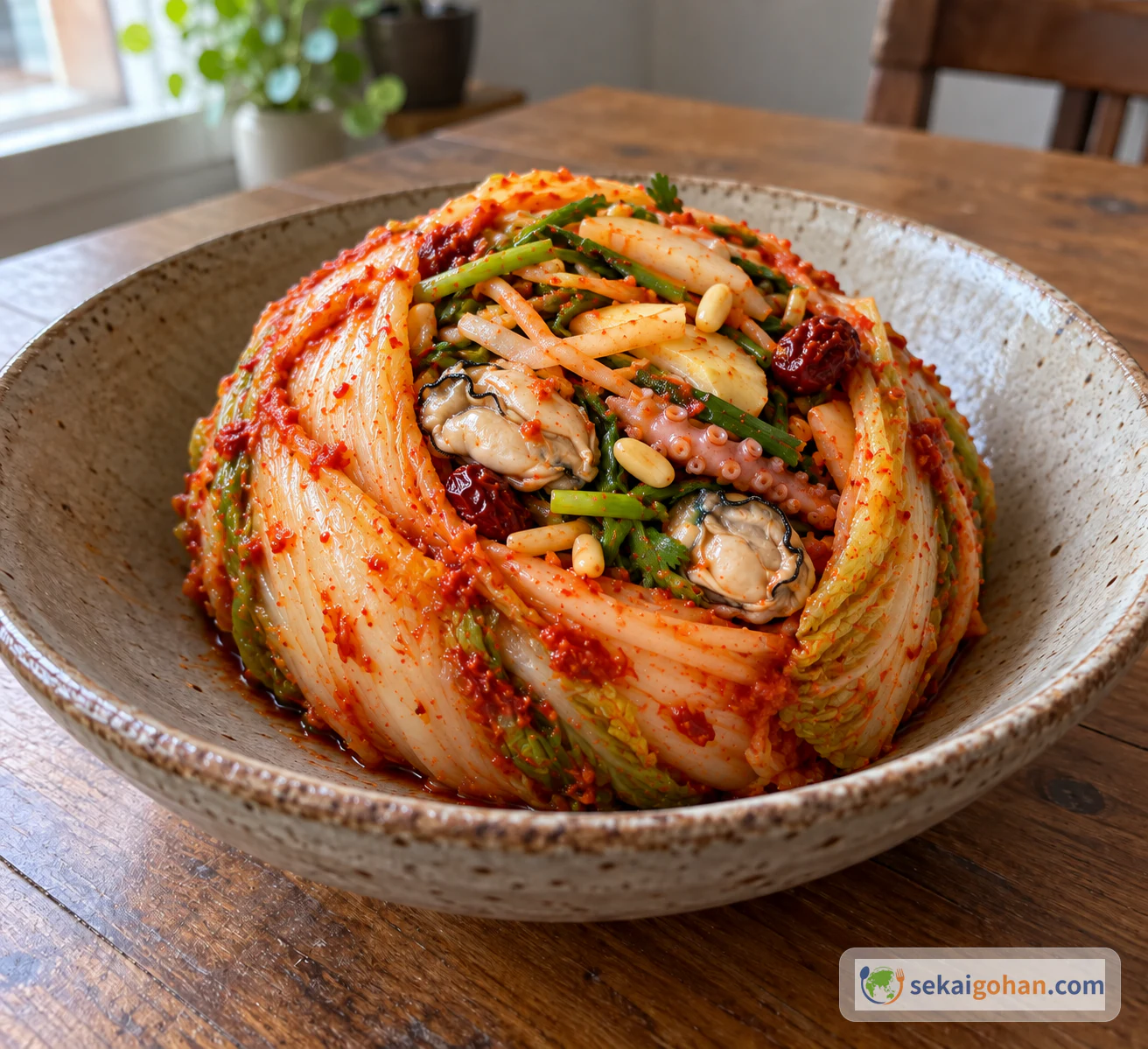
Bossam Kimchi: Gaeseong-Style Wrapped Kimchi (보쌈김치)
Bossam kimchi (보쌈김치) is the Gaeseong kimchi in which salted napa cabbage leaves wrap radish, pear, nuts and seafood. Learn how it differs from pork bossam, then follow a same-day refrigerated version with cooked oysters and octopus, no room-temperature fermentation, and a clear note that it has not been kitchen-tested.
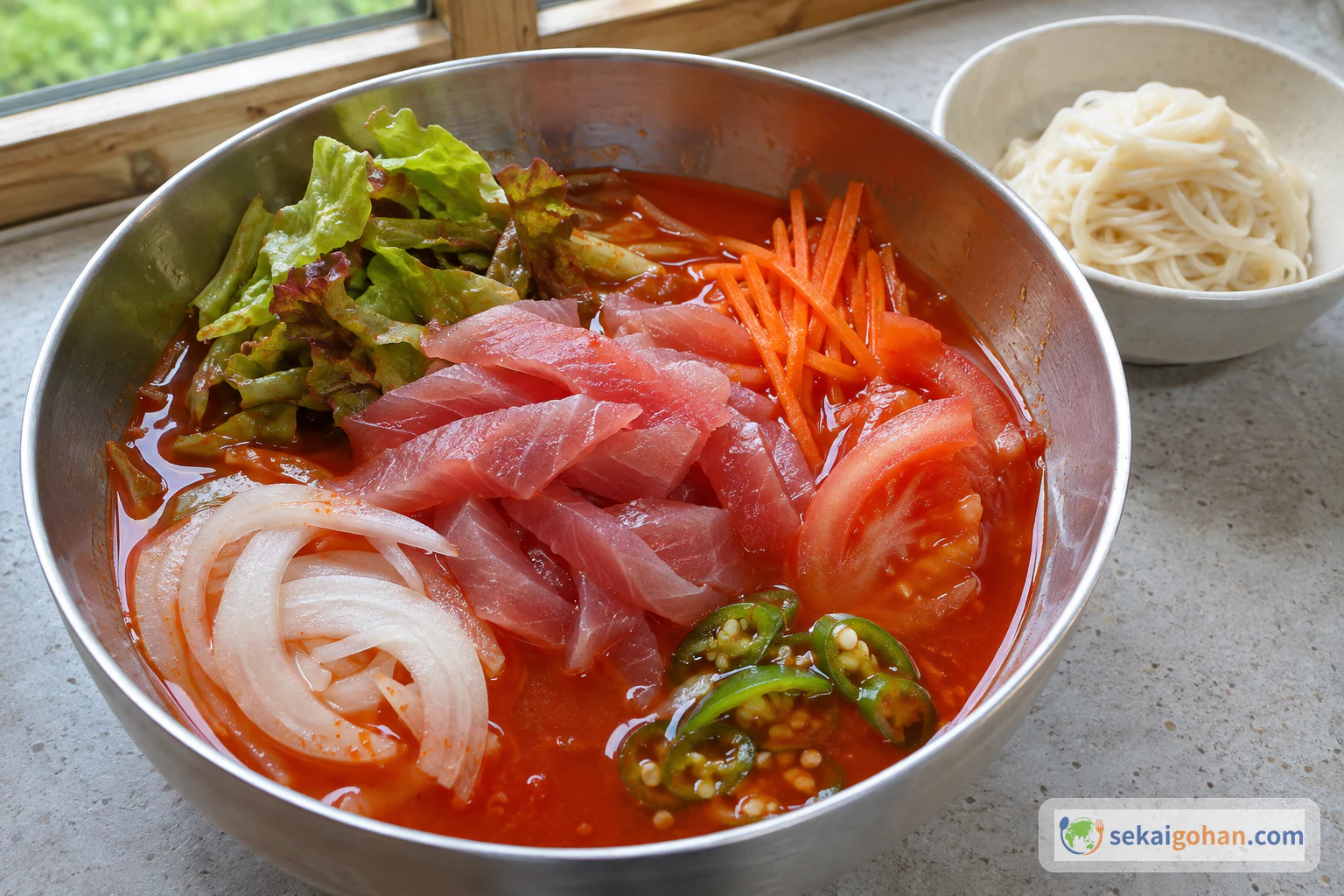
Mulhoe: Korean Cold Raw Fish Soup with Spicy Gochujang Broth (물회)
How to make mulhoe (물회), Korea's cold raw fish soup, for 4 servings with tuna, crisp vegetables, a spicy-sour gochujang broth and chilled somyeon noodles on the side. Covers buying frozen fish sold for raw eating, thawing, kitchen hygiene, who should avoid raw fish, and the dish's background in Pohang.
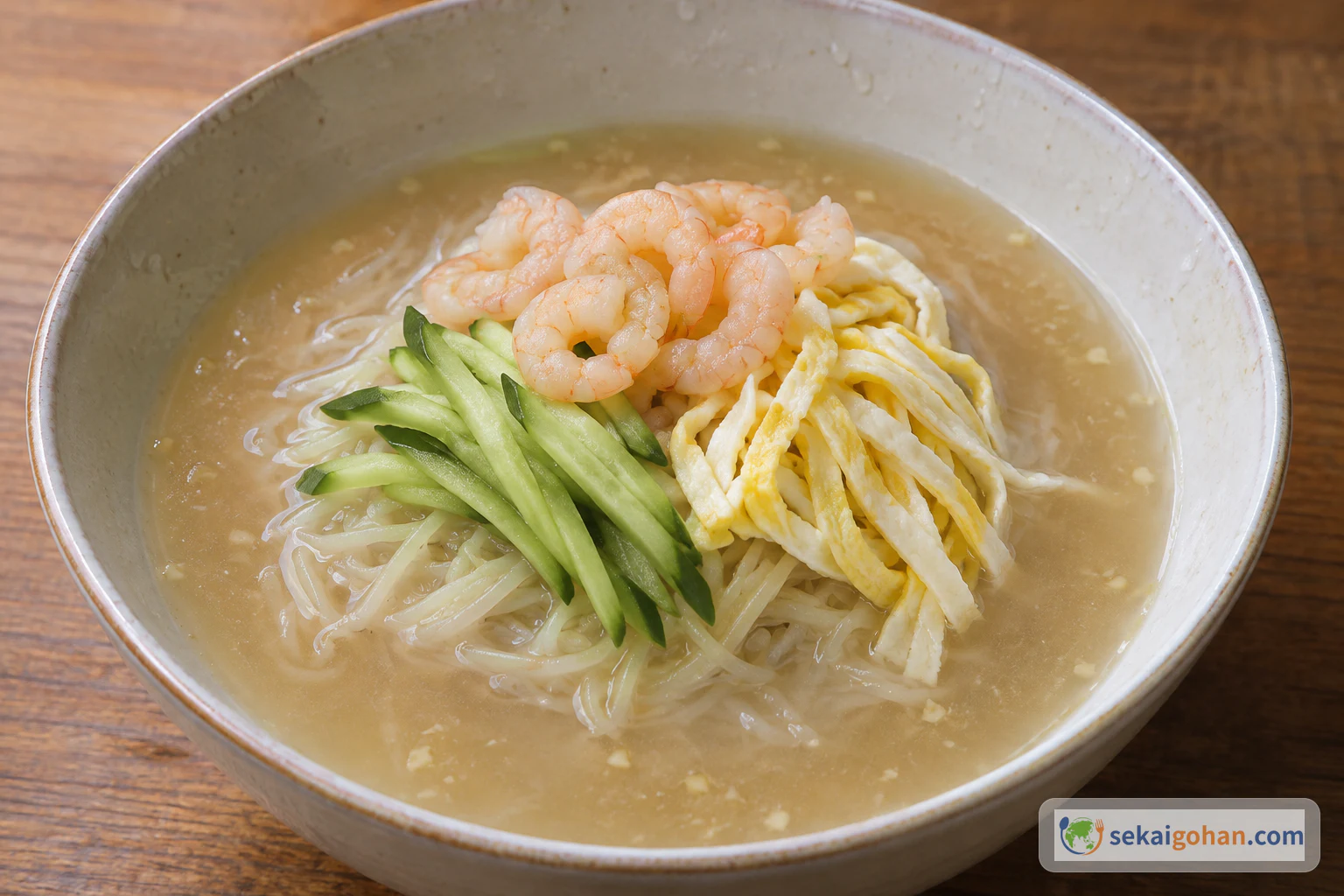
Jungguk-naengmyeon (중국냉면): Cold Kit Noodles with Peanut Butter, Mustard, Shrimp and Egg
A home version of Korean Chinese-style cold noodles, based on a recipe Nongshim published in 2016: a dongchimi naengmyeon kit, a chilled broth with peanut butter, mustard, soy sauce and garlic, and toppings of cucumber, shrimp and egg ribbons. Includes label checks, shrimp safety, and how it differs from everyday naengmyeon.
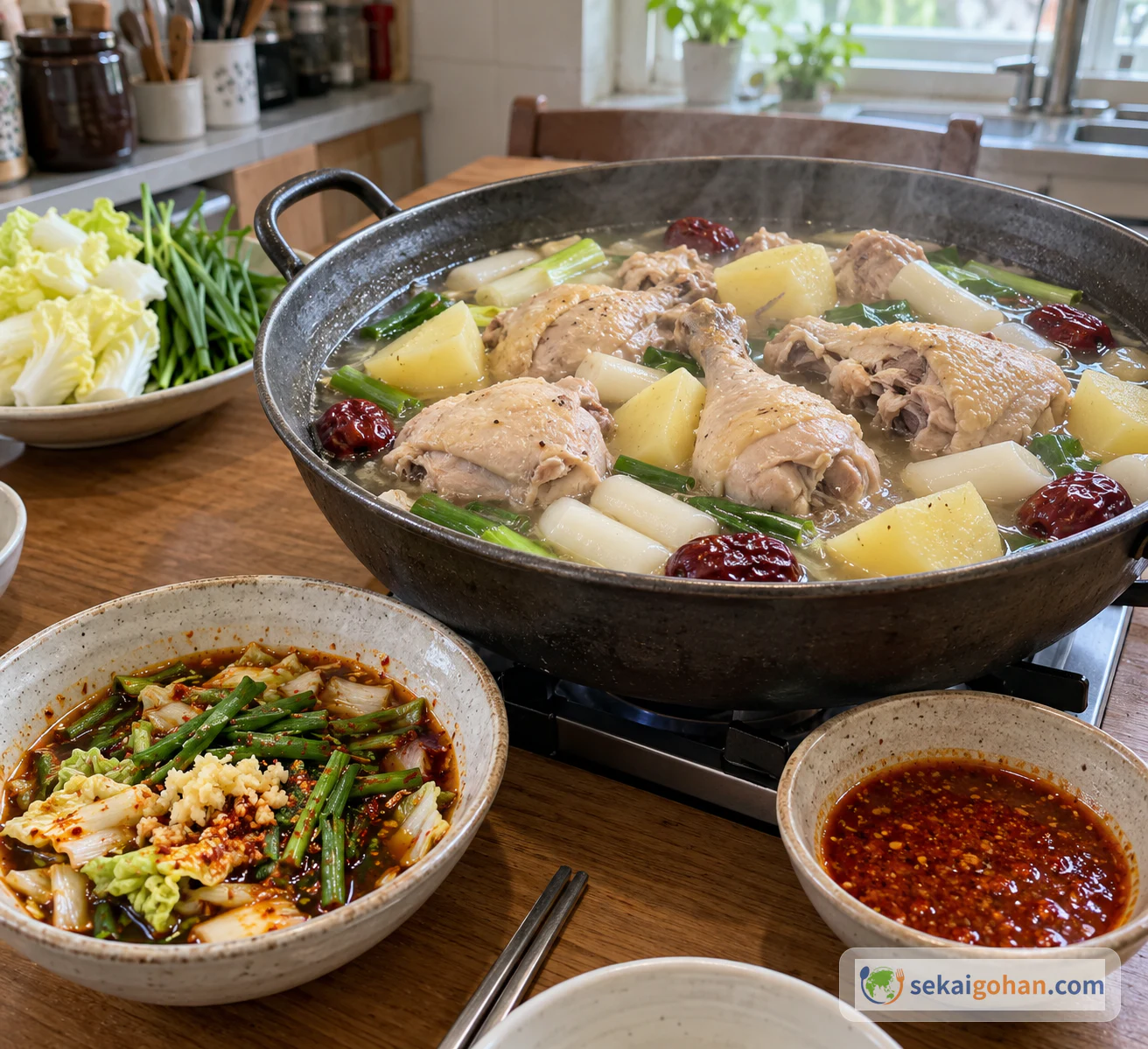
Dak-hanmari: Korean Shared Chicken Hot Pot with Two Dipping Sauces (닭한마리)
How to make dak-hanmari, the Seoul-associated shared chicken hot pot, following Daniel Oh's home version with skin-on drumsticks and thighs. Covers the clear broth, potatoes and tteok, two separately made dipping sauces, individual dipping trays and an optional fresh kalguksu finish, with the water and peppercorn discrepancies in the recipe explained.
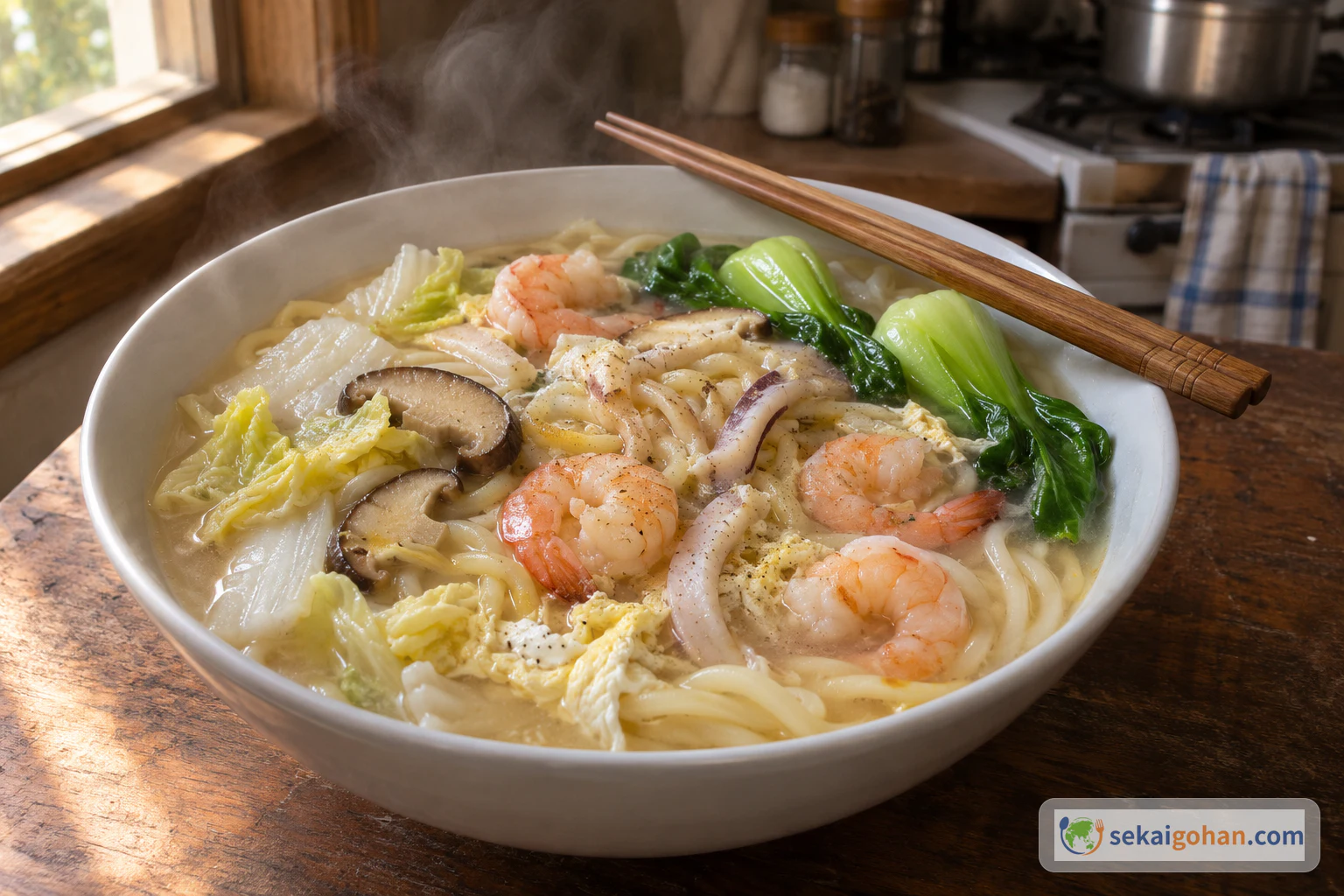
Udong: Korean-Chinese Mussel Broth Noodle Soup with Egg
Udong is the mild white noodle soup of Korean-Chinese restaurants. Build the broth from mussel cooking water, set the egg unstirred and choose swaps that work.
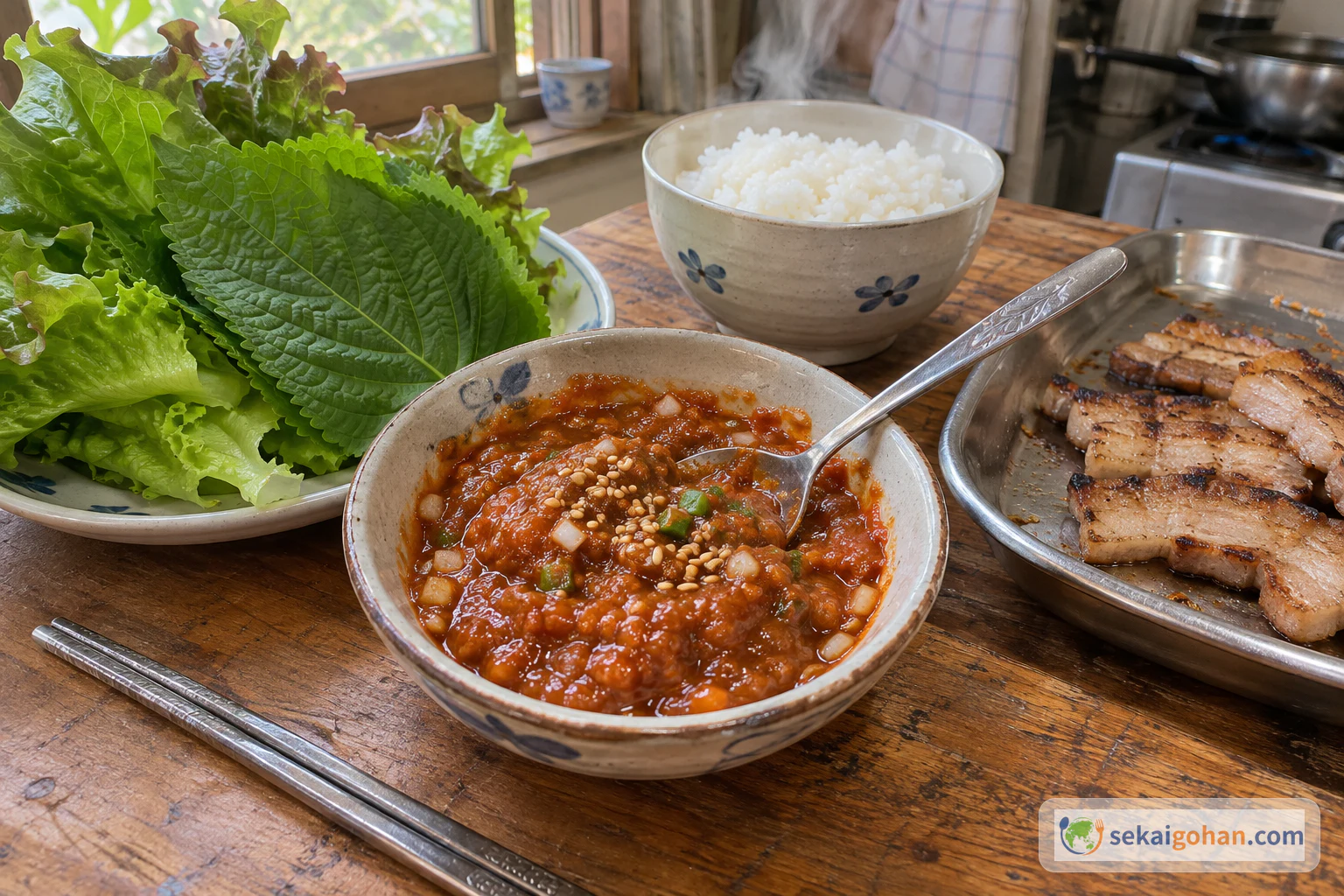
Ssamjang: Korean Soybean and Chili Paste for Lettuce Wraps
Ssamjang is Korea's wrap paste of doenjang and gochujang. Learn the 2:1 mix, the order that keeps it smooth, and how a miso swap changes the taste.
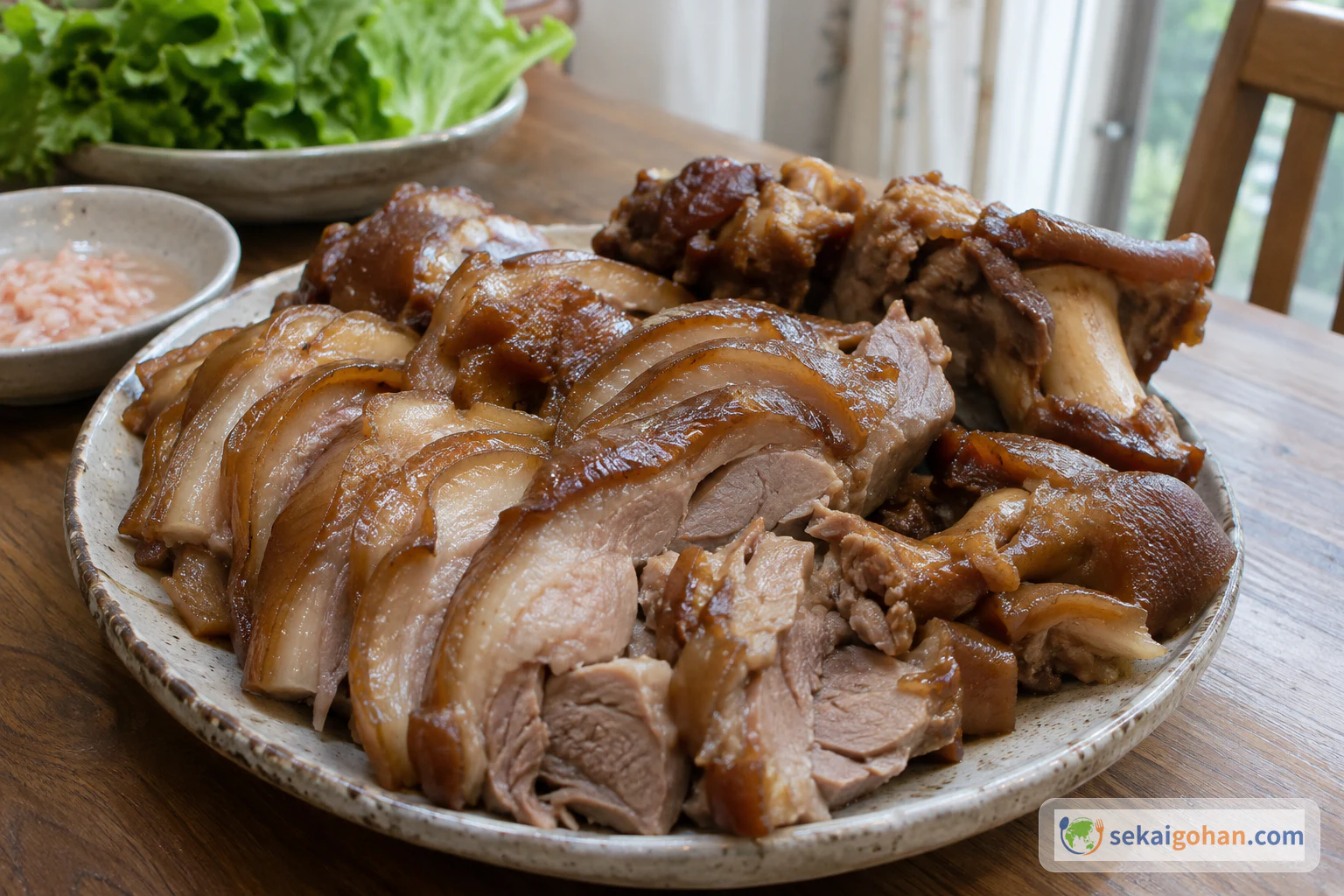
Jokbal: Korean Soy-Braised Pig's Trotters (족발)
Jokbal (족발) recipe: Korean pig's trotters soaked, blanched, braised in soy-based liquid with a spice pouch, glazed, sliced, and eaten in lettuce wraps.
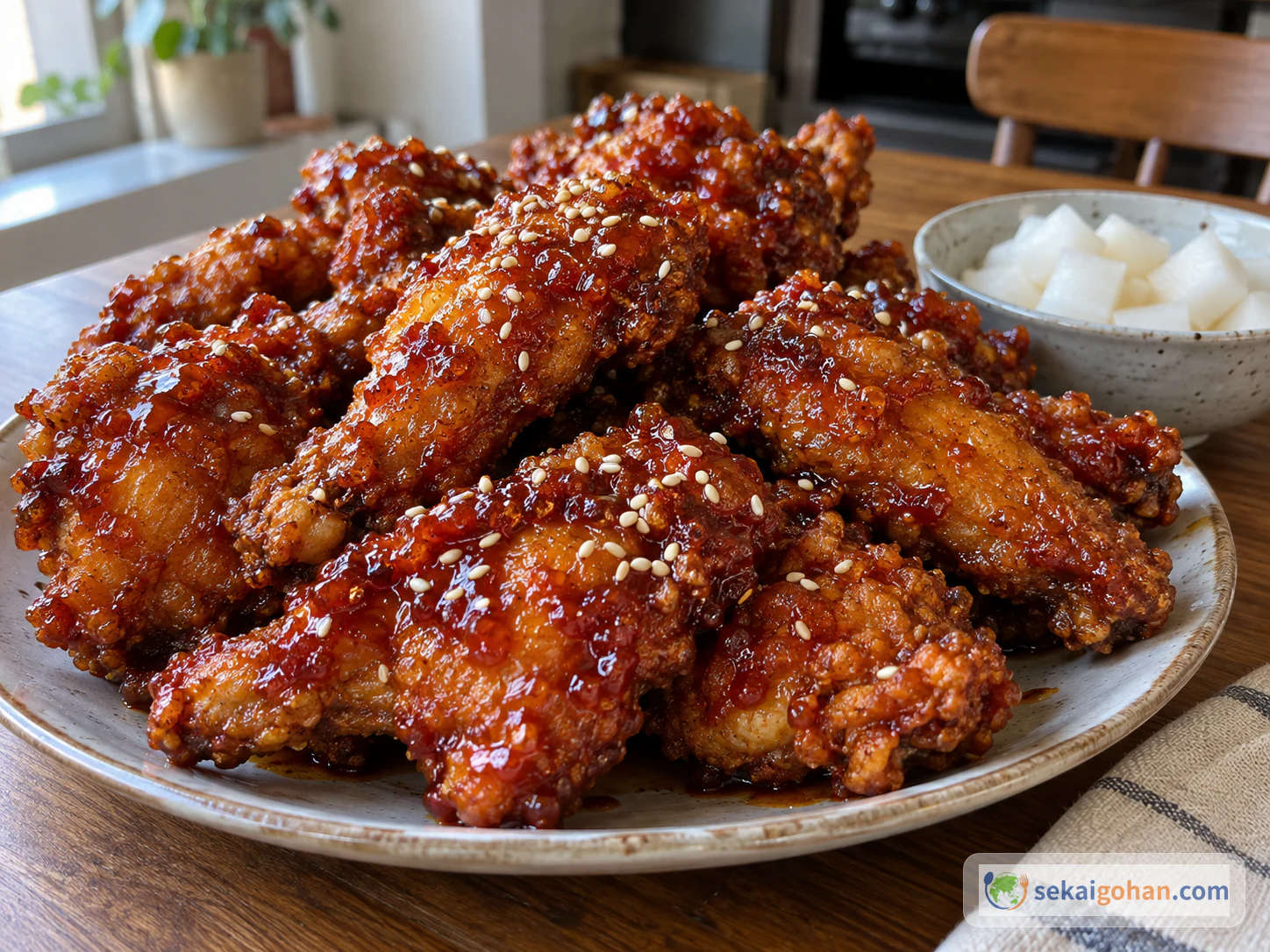
Korean Fried Chicken (Yangnyeom-tongdak): Double-Fried Wings in Sweet-Spicy Sauce
How to make yangnyeom-tongdak (양념통닭), Korean fried chicken wings fried twice and tossed in a sweet, tangy gochujang and rice syrup sauce. Covers the original amounts, the difference between oil temperature and internal temperature, potato starch and rice syrup substitutions, keeping the crust crisp, and how fried chicken is eaten in Korea with chicken-mu.

Bulgogi: Korean Sweet-Savory Grilled Beef with Pear Marinade
How to make bulgogi, Korea's sweet-savory grilled beef: thin-sliced beef, a pear marinade with soy sauce and sesame oil, the heat that builds browning, prep that keeps it from turning watery, lettuce wraps, storage, fixes for common failures, and menu ideas with bibimbap and jjigae.
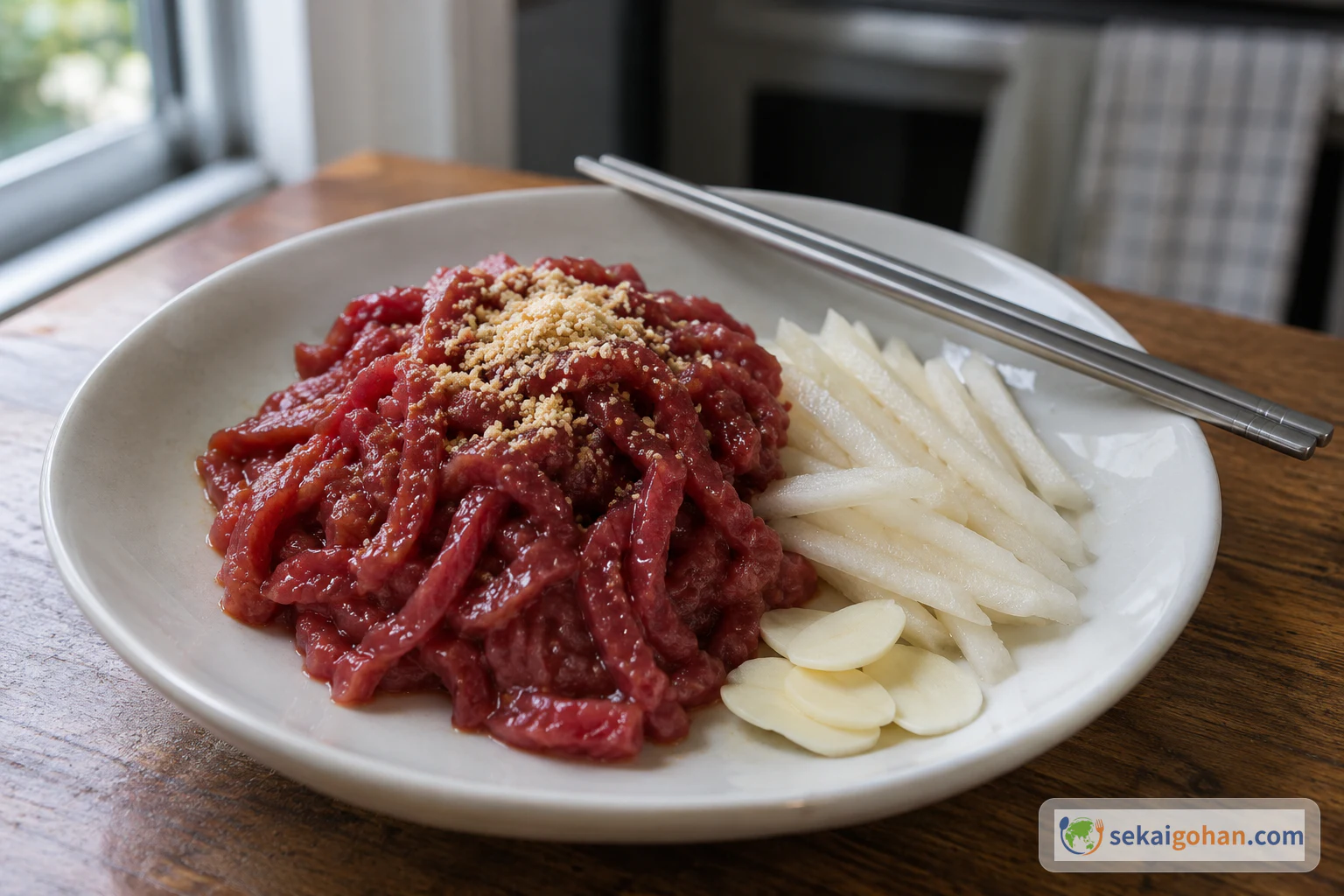
Yukhoe: Korean Raw Beef Dressed with Pear and Sesame
Yukhoe, Korea's raw beef dressed in soy and sesame with pear and pine nuts. The ⅛-inch cut, the sugar-water pear, and when to make it raw or cook it instead.
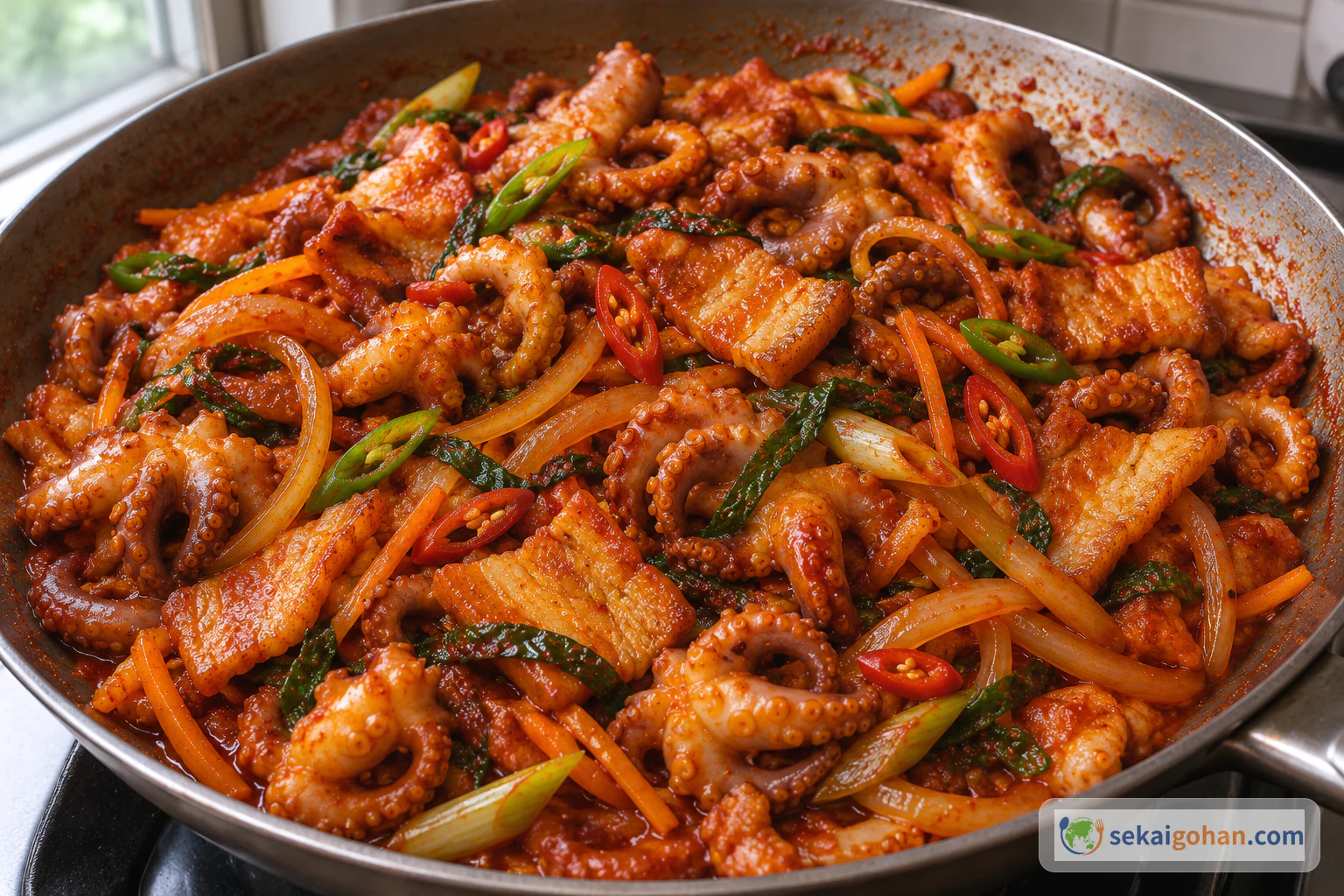
Jukkumisamgyeopsal: Korean Stir-Fried Small Octopus and Pork Belly (쭈꾸미삼겹살볶음)
How to make jukkumisamgyeopsal, the Korean stir-fry of small octopus (주꾸미) and pork belly in a red gochujang sauce. Covers cleaning and briefly blanching the octopus, adding the sauce in stages, choosing ingredients and honest substitutes, and how this dish differs from grilled samgyeopsal and jukkumi shabu-shabu.

Gyeran-ppang: Korean Egg Bread with a Whole Egg Baked on Top (계란빵)
How to make gyeran-ppang (계란빵), the Korean egg bread known as a winter street snack, in a home oven version baked in three mini loaf pans. Covers how the four eggs are split between batter and topping, the separate jobs of butter and oil, the optional mozzarella, the 400°F bake, how this snack differs from gilgeori toast and bungeoppang, and why bake time alone is not a food-safety guarantee.
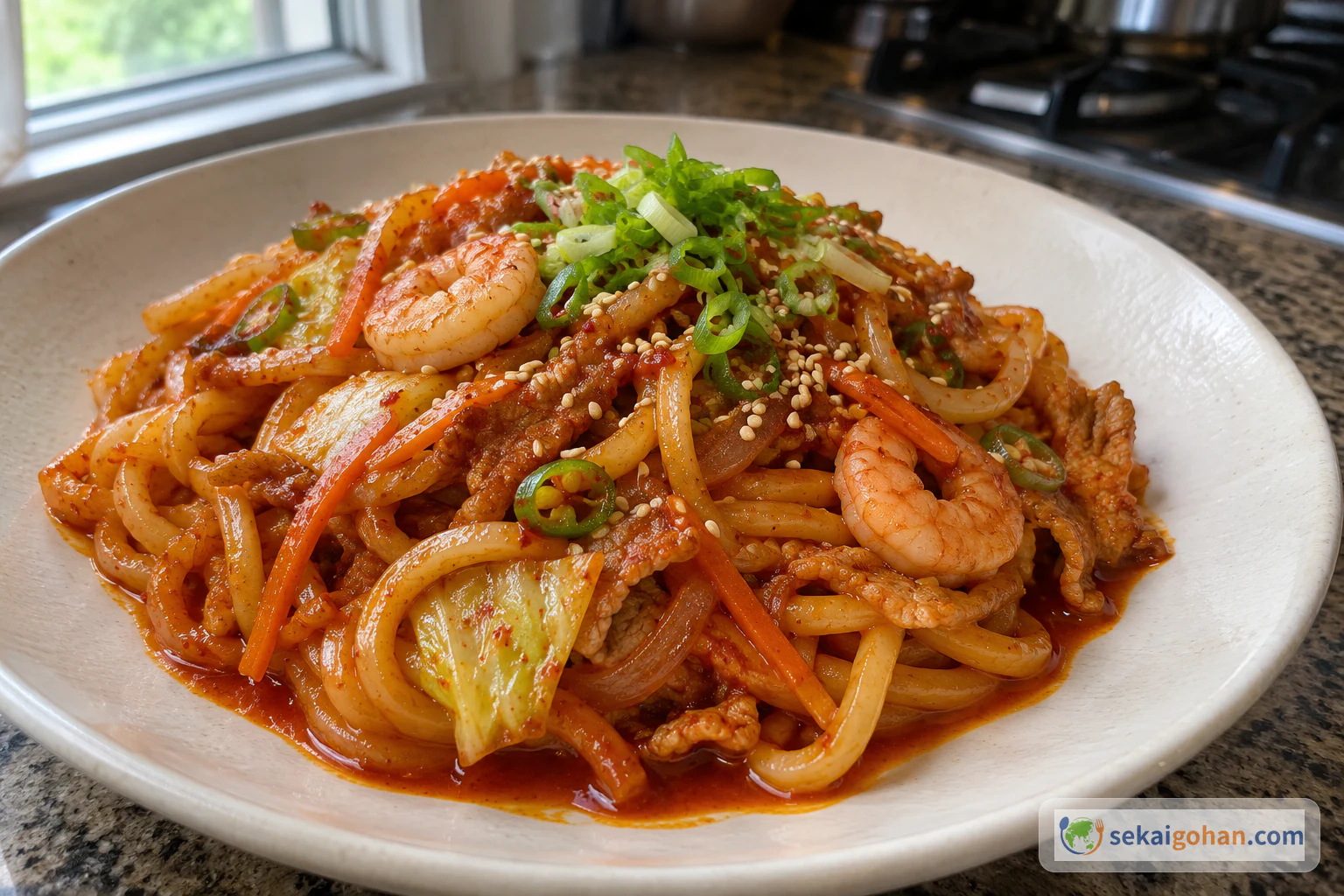
Yakki-udong: Daegu Spicy Stir-Fried Udon with Pork and Shrimp
Yakki-udong is Daegu's spicy Korean-Chinese stir-fried udon. Learn the gochugaru sauce, the two-minute noodle boil and the high-heat toss, and what to swap.

Gimbap: Korean Seaweed Rice Rolls with Sesame Oil Rice
How to make gimbap (김밥), the Korean seaweed roll: rice seasoned with sesame oil and salt, substitutes for danmuji, controlling moisture in the fillings, rolling, slicing, and keeping it for a lunch box. Also covers school-trip lunches, Chungmu gimbap from Tongyeong and other background.
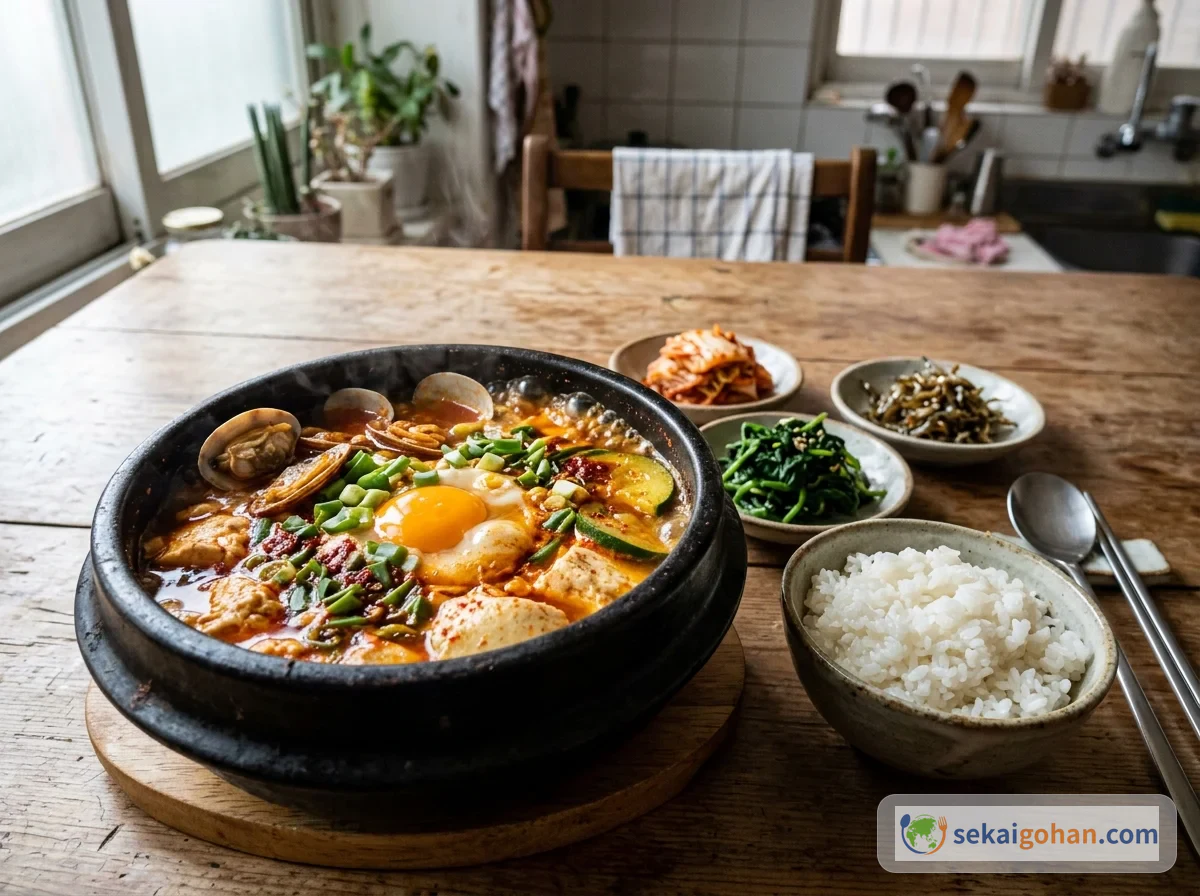
Sundubu-jjigae Recipe: Korea's Red Soft Tofu Stew with Clams
How to make sundubu-jjigae (soft tofu stew), starting from the origins of Gangneung's Chodang Tofu Village. How to choose tofu substitutes, making chili oil without scorching the gochugaru, adding clams and egg, adjusting heat and what to do when it goes wrong.

How to Make Japchae: Korean Glass Noodles Tossed with Vegetables and Beef
Japchae made with Korean sweet potato starch noodles (dangmyeon). The meaning of 잡채, how to cook the noodles, why each ingredient is stir-fried separately, with or without beef, handling vegetable moisture, making ahead without sogginess, storage, and how to revive leftovers.

Hotteok: Korean Street Pancakes with Brown Sugar Syrup Filling
Homemade hotteok, the Korean street-stall pancake, made with a glutinous rice flour dough. Covers judging the rise, sealing the brown sugar–cinnamon filling without tears, heat control for press-frying, Busan-style ssiat hotteok, substitutes, storage, nut allergies, and reheating from frozen.

Mandu: Korean Pork, Tofu and Kimchi Dumplings, Steamed, Pan-Fried or in Soup
How to make mandu (만두), Korean home-style dumplings: squeezing the tofu and kimchi, handling glass noodles, heat for steaming, pan-frying and soup, freezing, and a soy-vinegar dipping sauce.
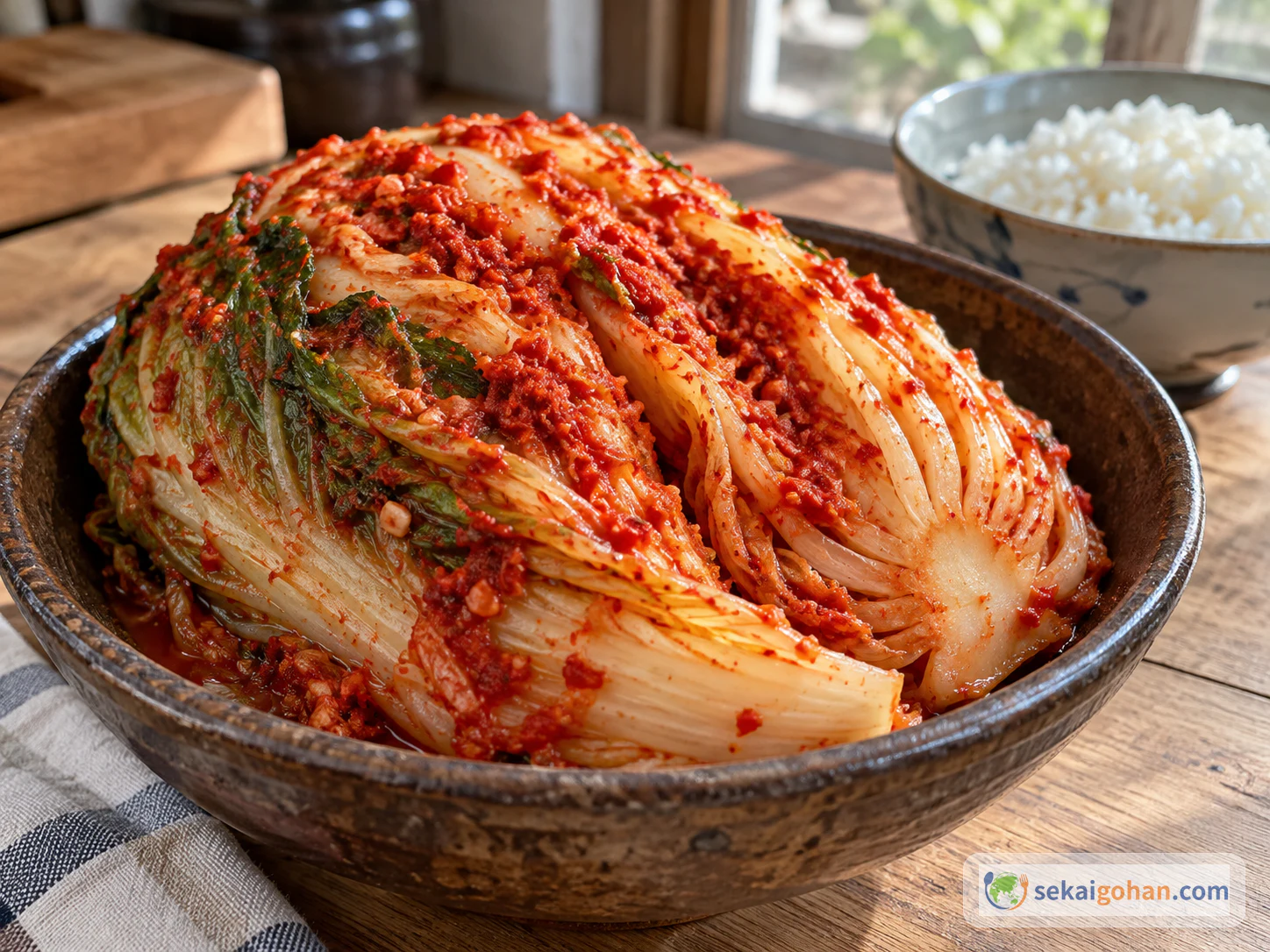
Korean Napa Cabbage Kimchi (Tongbaechu-kimchi): Seasoning Every Leaf of a Whole Cabbage
How to make Korean whole-leaf napa cabbage kimchi (tongbaechu-kimchi, also called baechu-kimchi or pogi-kimchi) from a single recipe built on 6 lb (about 2.7kg) of napa cabbage. Covers splitting and salting the cabbage, cooking and cooling the sweet rice flour porridge, mixing the seasoning paste, spreading it leaf by leaf, choosing between eating it fresh or letting it ferment, finding gochugaru and saeujeot, and the kimjang tradition.

Andong Jjimdak: Korean Soy-Braised Chicken with Glass Noodles
Andong jjimdak (안동찜닭) is a Korean soy-braised chicken from Andong with potatoes, carrots and chewy sweet potato starch noodles. This recipe covers bone-in chicken, how dark and sweet to take the sauce, heat control, substitutes, storage and common mistakes.
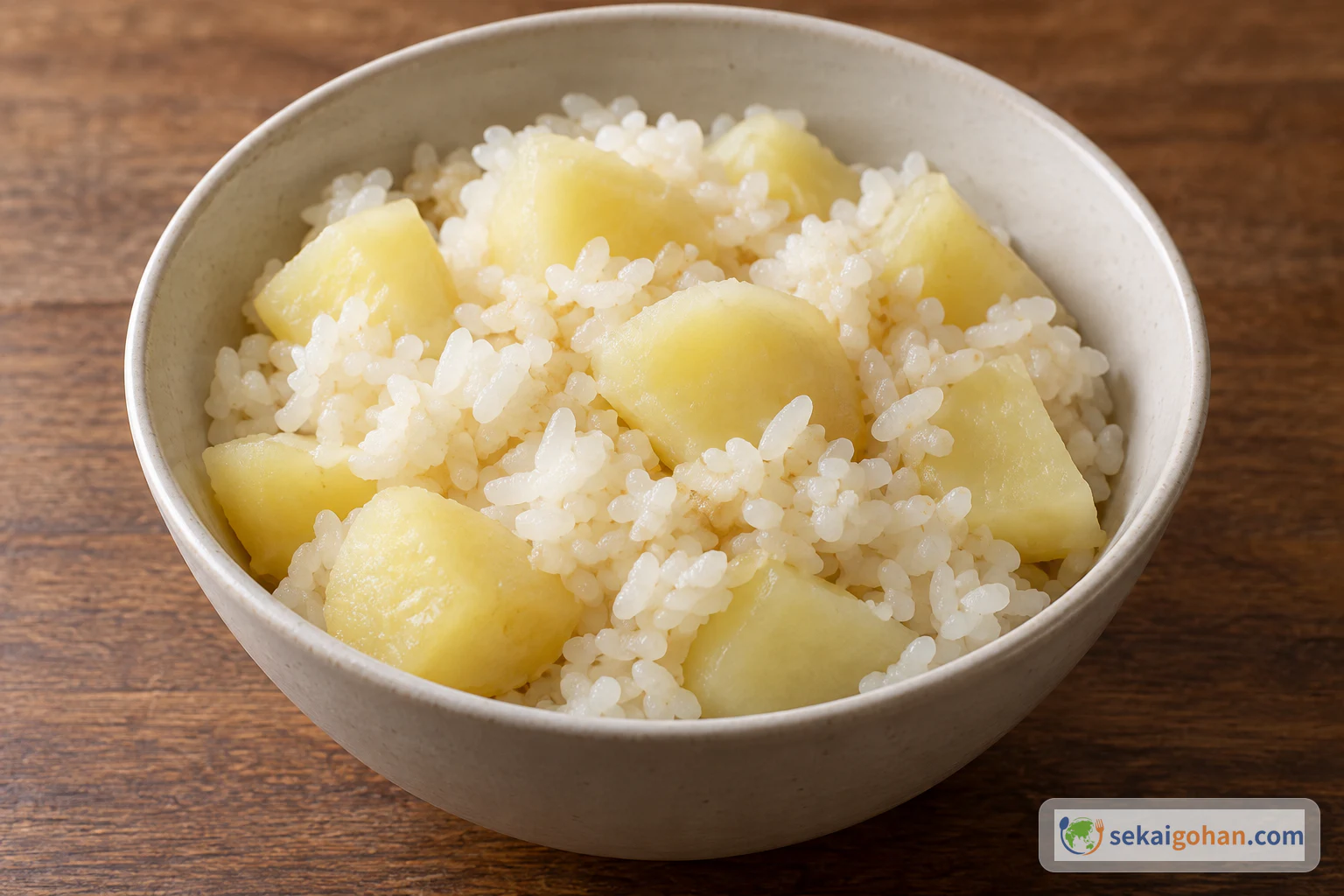
Gamjabap: Korean Potato Rice Cooked in One Pot (감자밥)
How to make gamjabap (감자밥), Korean rice and potato cooked together in one pot, for 2 servings. Covers rinsing and soaking the rice for 30 minutes, cutting the potato, cooking on medium then low heat, an optional separate sesame seasoning, and how other recorded versions differ.
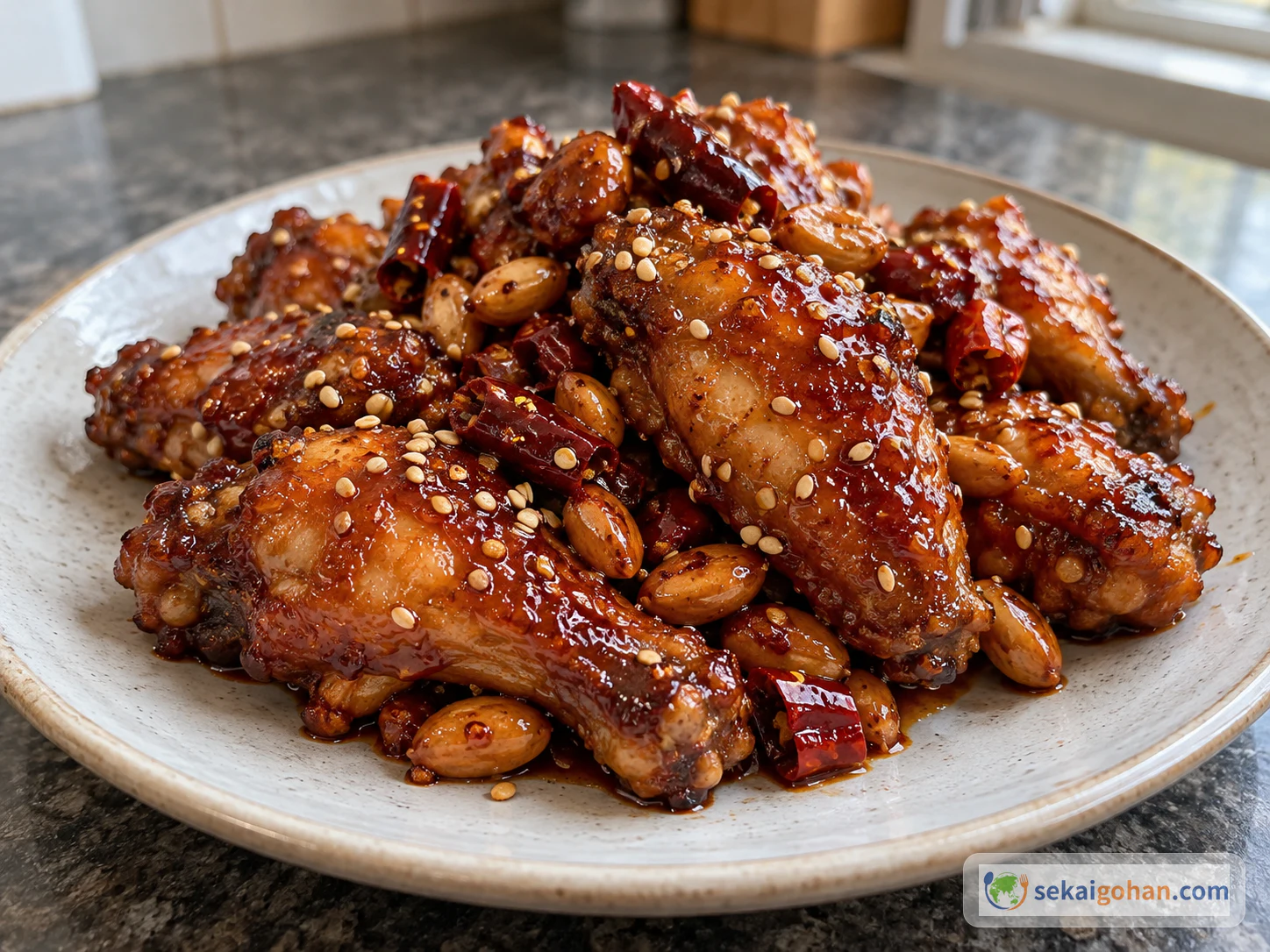
Dakgangjeong: Double-Fried Chicken Wings in a Sweet Soy Glaze (닭강정)
How to make dakgangjeong (닭강정), Korean-style fried chicken wings coated in potato starch, fried twice and tossed in a bubbling soy, rice syrup and garlic sauce. Based on Maangchi's current easy version, with the wing weight before and after trimming, the sauce made first, separate first and second fries, the optional chili, mustard and peanuts, and what the recipe leaves unstated.
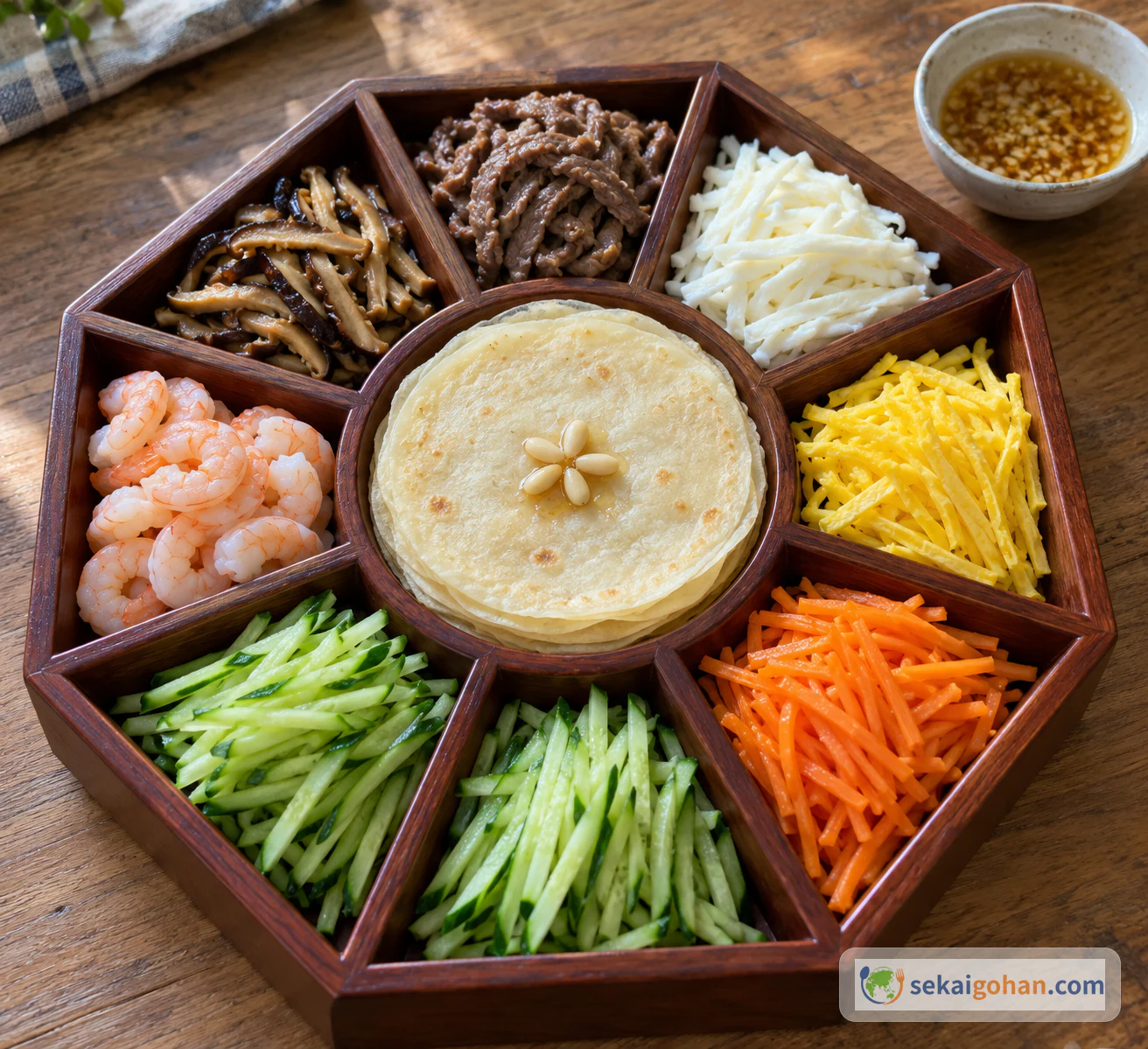
Gujeolpan: Korean Platter of Nine Delicacies (구절판)
How to make gujeolpan (구절판), the Korean platter of eight colorful fillings around a stack of thin wheat crepes, served with a mustard-garlic sauce. Covers the separate seasoning for each filling, white and yolk egg sheets, small strained crepes, how to arrange the nine sections, and how to plate it without a special nine-section dish.
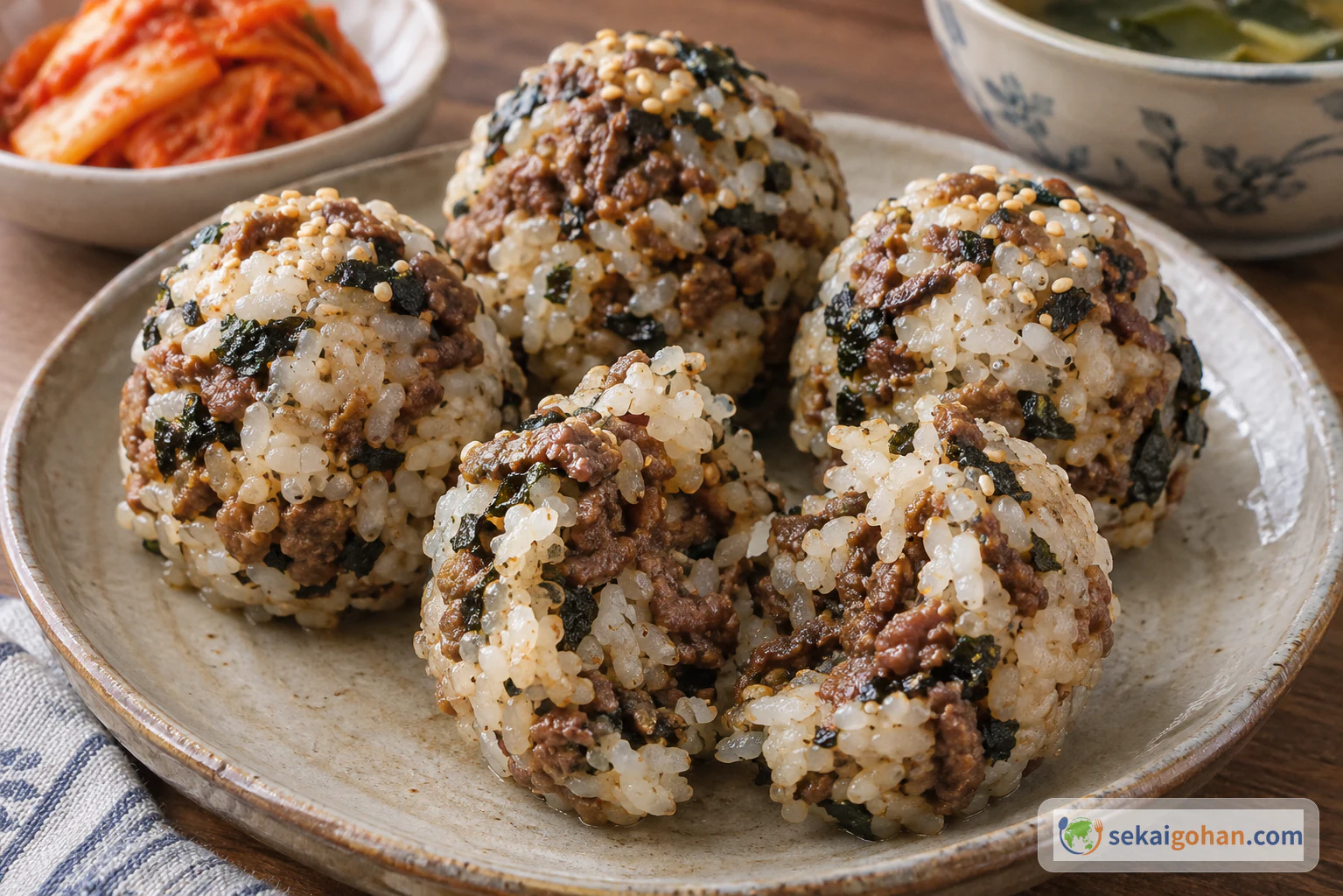
Bulgogi Jumeokbap: Korean Rice Balls with Seasoned Beef Mixed Through (주먹밥)
How to make bulgogi jumeokbap, a Korean hand-shaped rice ball in which soy-and-mirin-marinated minced beef, toasted sesame, sea salt flakes and crumbled seasoned seaweed (gim jaban) are folded through warm short-grain rice and pressed into balls. Covers the marinade, frying the beef, folding without crushing the grains, shaping with wet hands, food-safety basics for minced beef, and how this version differs from other jumeokbap and from gimbap.
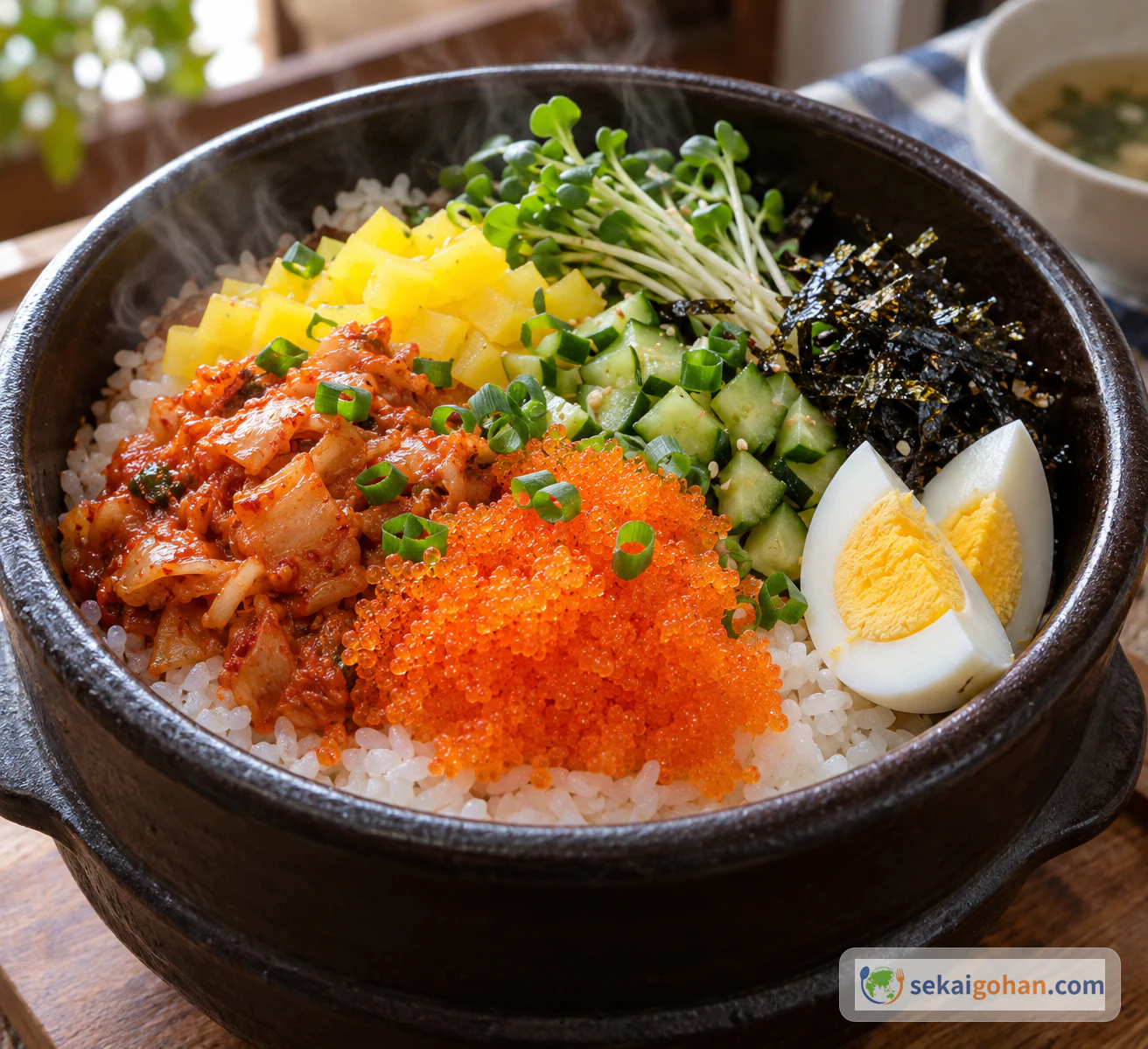
Albap: Korean Fish Roe Rice in a Hot Earthenware Pot (알밥)
How to make albap (알밥), Korean fish roe rice: hot rice crisped in a ttukbaegi with stir-fried kimchi, flying fish roe, cucumber, yellow pickled radish, sprouts and seaweed, mixed at the table. Based on Maangchi's proportions, with a separately hard-boiled egg, how to choose and handle roe, what to do without a stone pot, and honest substitutions.
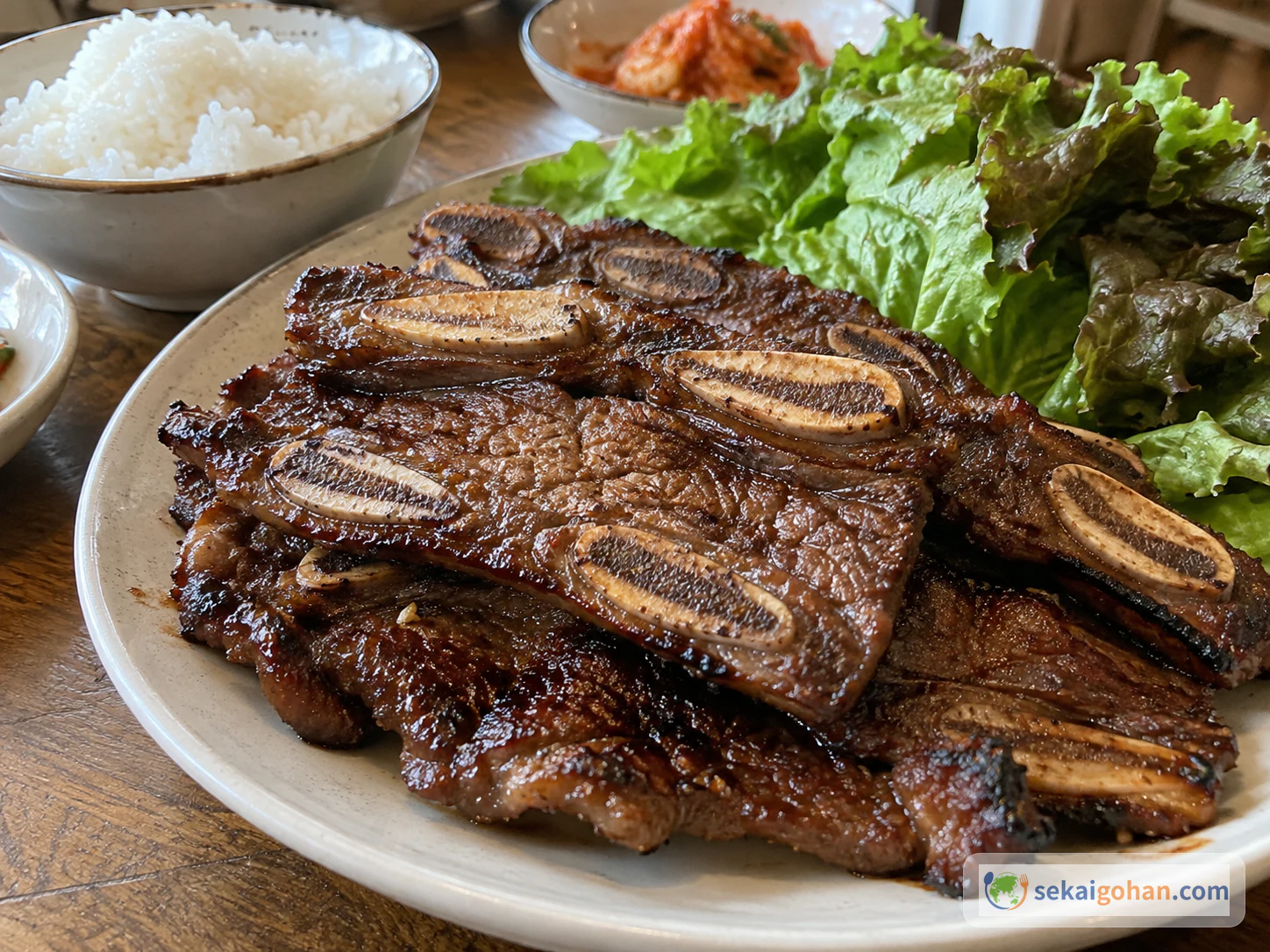
Galbi: Korean LA-Style Short Ribs with Pear Marinade (LA 갈비)
How to make LA galbi (LA갈비), Korean grilled beef short ribs cut thin across the bone, in a home frying pan. Covers how to tell the flanken cut from other 'kalbi' cuts, a pear, ginger and soy marinade, rinsing off bone fragments, overnight refrigeration, searing without burning the sugar, and serving with lettuce or white rice. Also explains how galbi-gui differs from galbi-jjim, how to substitute Japanese pear or apple, and how to keep raw meat, marinade and cooked meat apart.
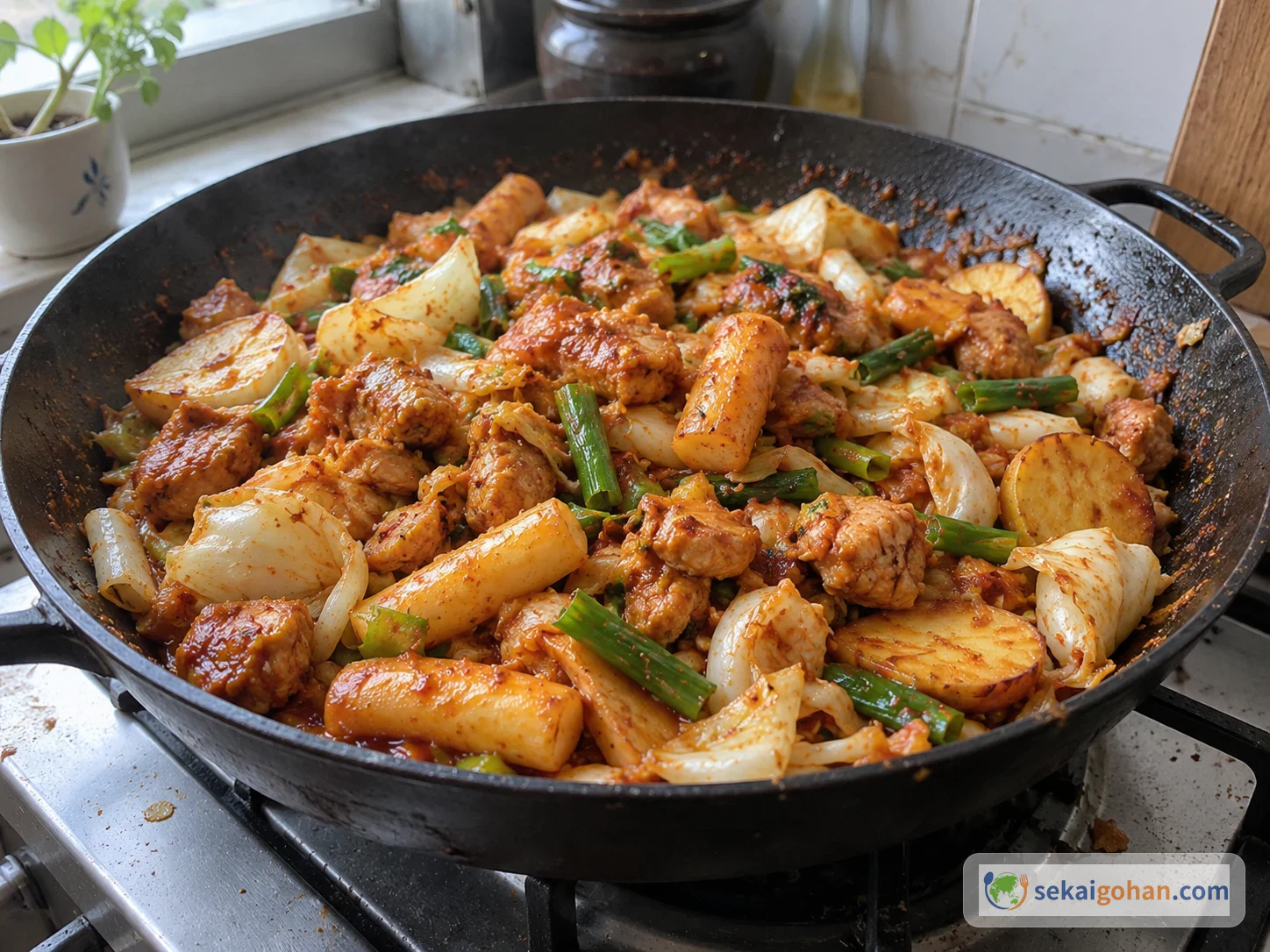
Dakgalbi Recipe: Chuncheon's Sweet and Spicy Chicken and Cabbage Stir-Fry
Make Chuncheon's signature Korean dakgalbi with chicken thighs, gochujang, gochugaru, sweet potato, cabbage, and rice cakes. Covers its history from a 1960s bar that grilled chicken instead of pork to today's griddle dish, marinating time, heat control to avoid scorching, and how to check the chicken is cooked through.

Kimchi Jjigae (김치찌개): Korean Stew with Well-Fermented Kimchi
How to make kimchi jjigae as a Korean home stew: well-fermented kimchi, pork, tofu, anchovy-kelp stock, and how to use gochugaru. How it differs from kimchi hot pot, fixes for kimchi that is not sour enough, heat control, adjusting spiciness, storage, and next-day ideas such as gukbap and noodles.

Doenjang Jjigae: Korean Soybean Paste Stew with Tofu and Zucchini
How to make doenjang jjigae, the Korean soybean paste stew, with anchovy-kelp broth, tofu, zucchini and potatoes. Covers using miso instead of doenjang, heat control, storage, spice levels, fixing a stew that's too bland or too salty, and serving it with bibimbap.
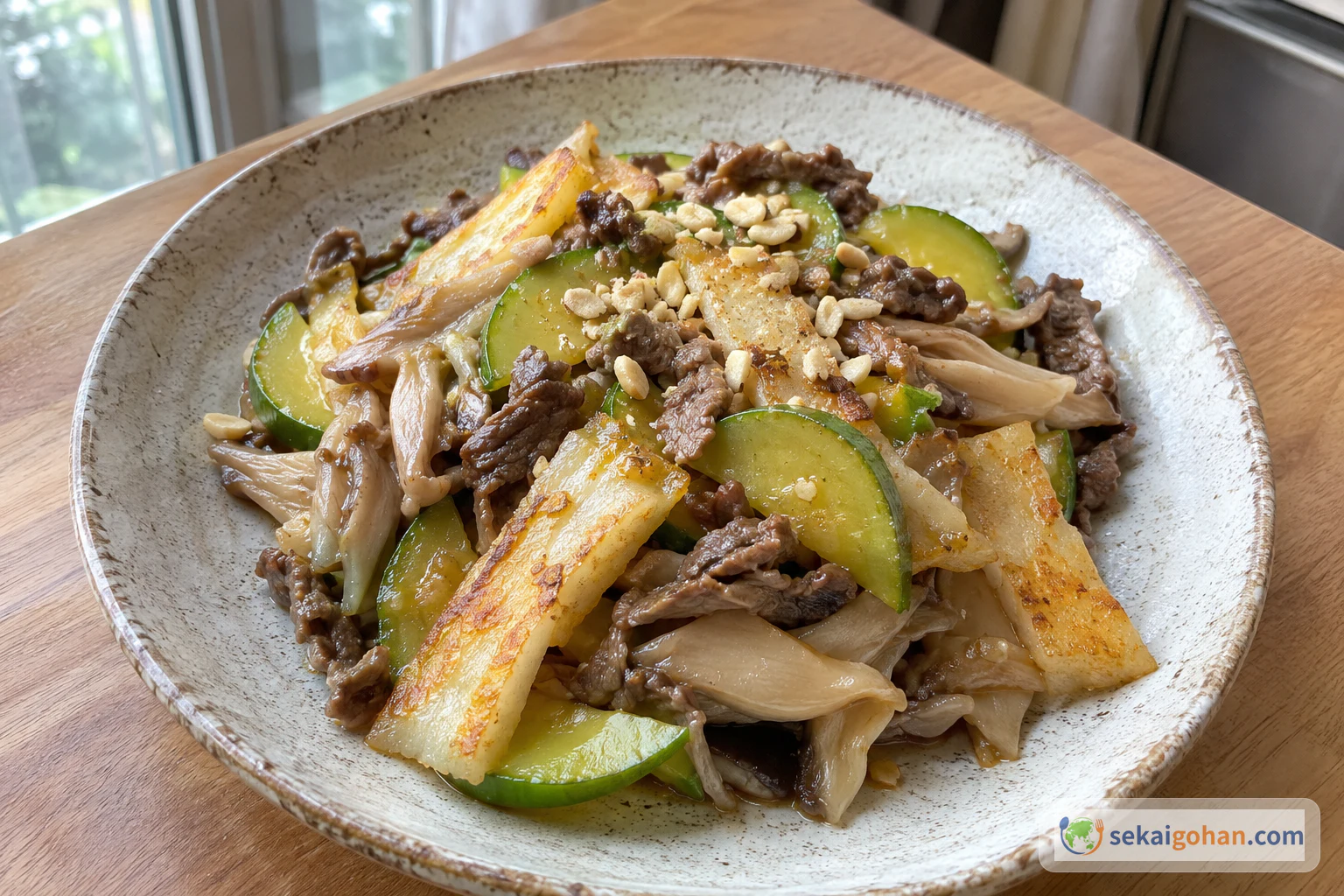
Wolgwa-chae: Korean Court-Style Stir-Fried Squash with Rice Pancake Strips
Wolgwa-chae is a Korean court dish of squash, beef, mushrooms and rice pancake strips. How to salt the squash, fry each part apart and cut the cooled pancake.
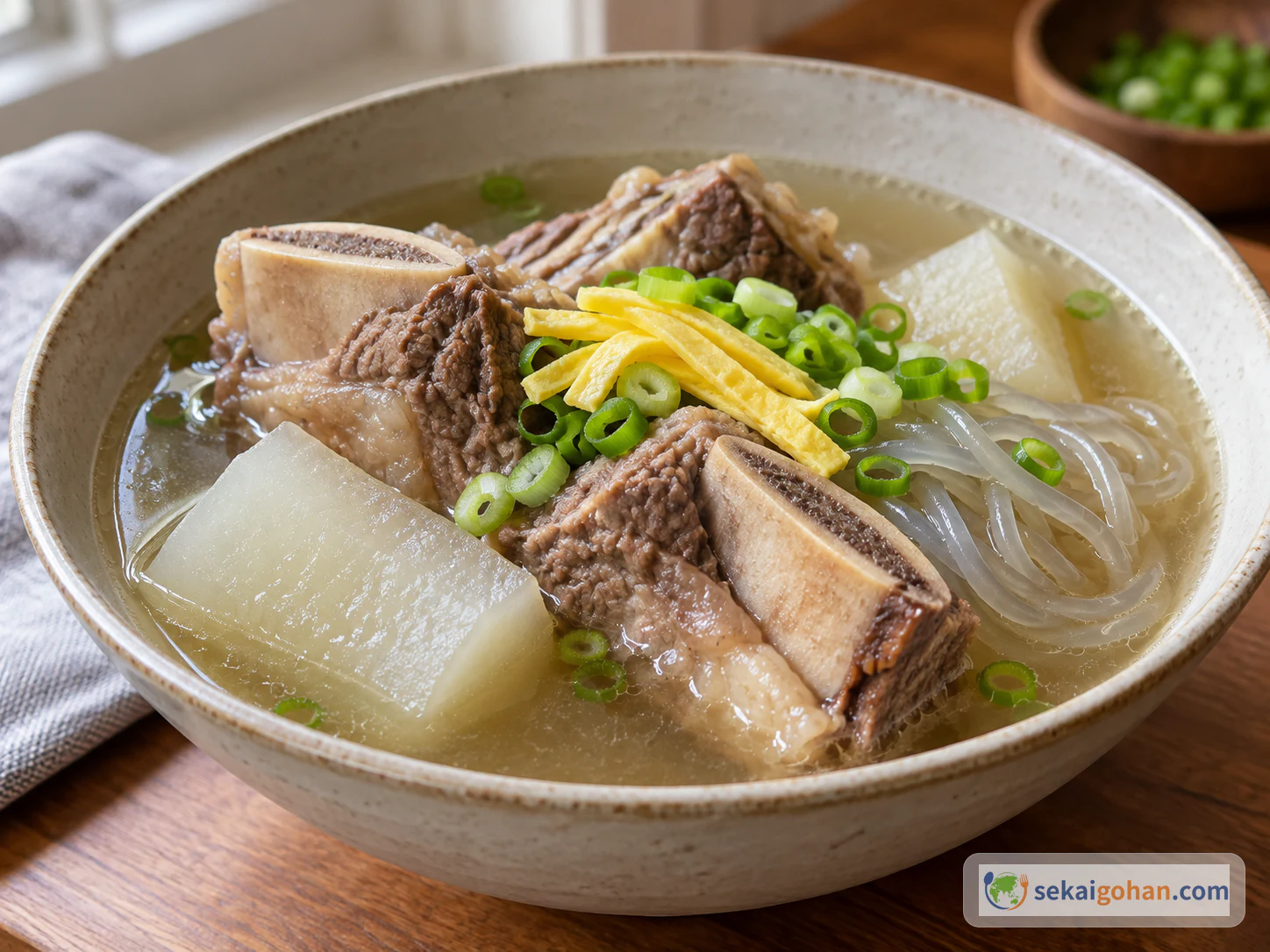
Galbitang: Korean Beef Short Rib Soup with Radish (갈비탕)
How to make galbitang (갈비탕), the Korean soup of bone-in beef short ribs boiled with radish and onion. Based on Maangchi's written recipe for 2 servings, it covers soaking and a 10-minute blanch, two one-hour boils, straining and skimming the broth, and building the bowls, with optional starch noodles, egg-yolk strips and a spicy finish.
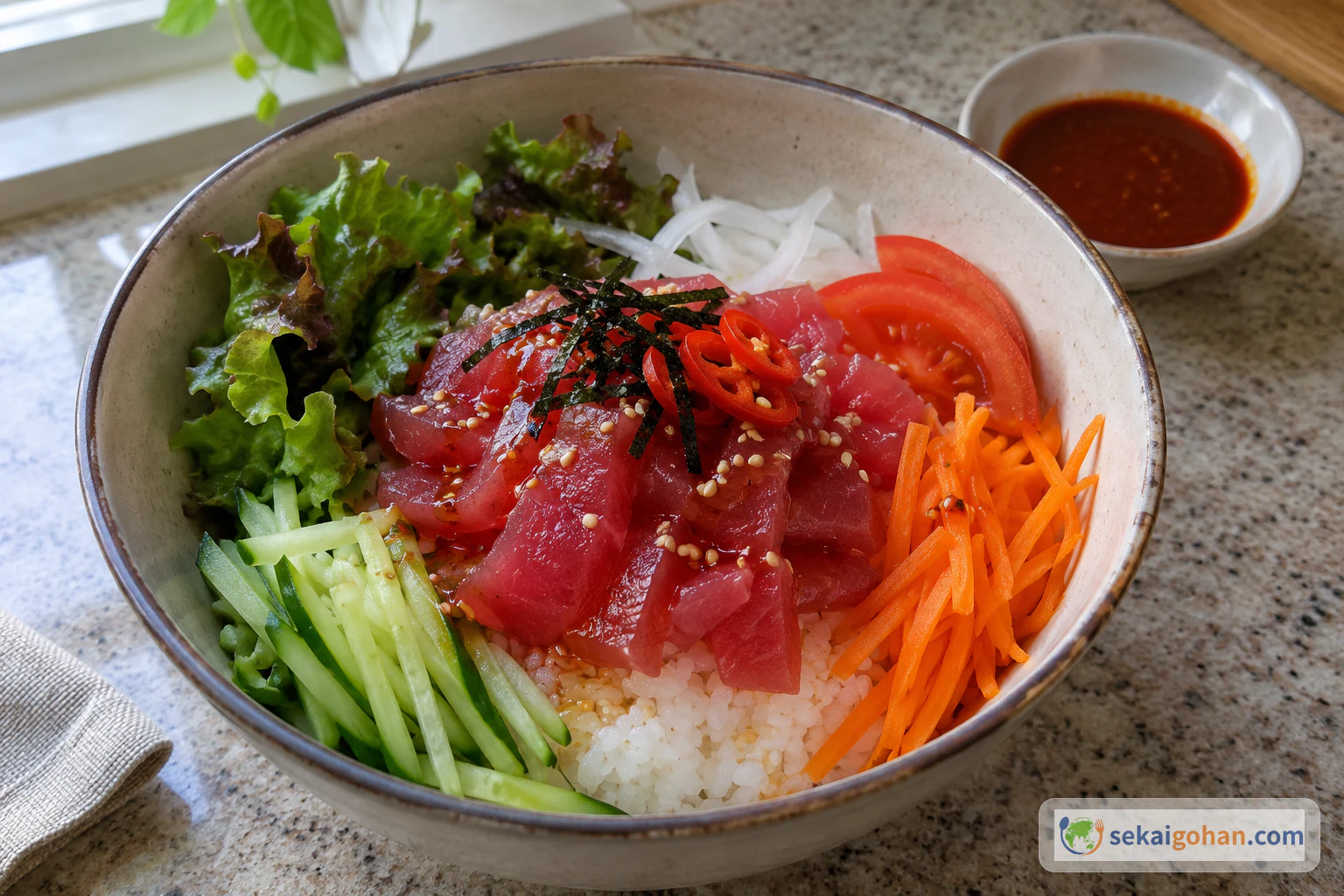
Hoe-deopbap: Korean Raw Fish Rice Bowl with Spicy Sauce (회덮밥)
How to make hoe-deopbap (회덮밥), the Korean bowl of raw fish, rice and raw vegetables mixed with a spicy soy and hot pepper paste sauce. Follows one published recipe for 2–3 people, with public food-safety guidance on choosing, chilling and handling raw fish, the limits of home freezing, and who should avoid it.
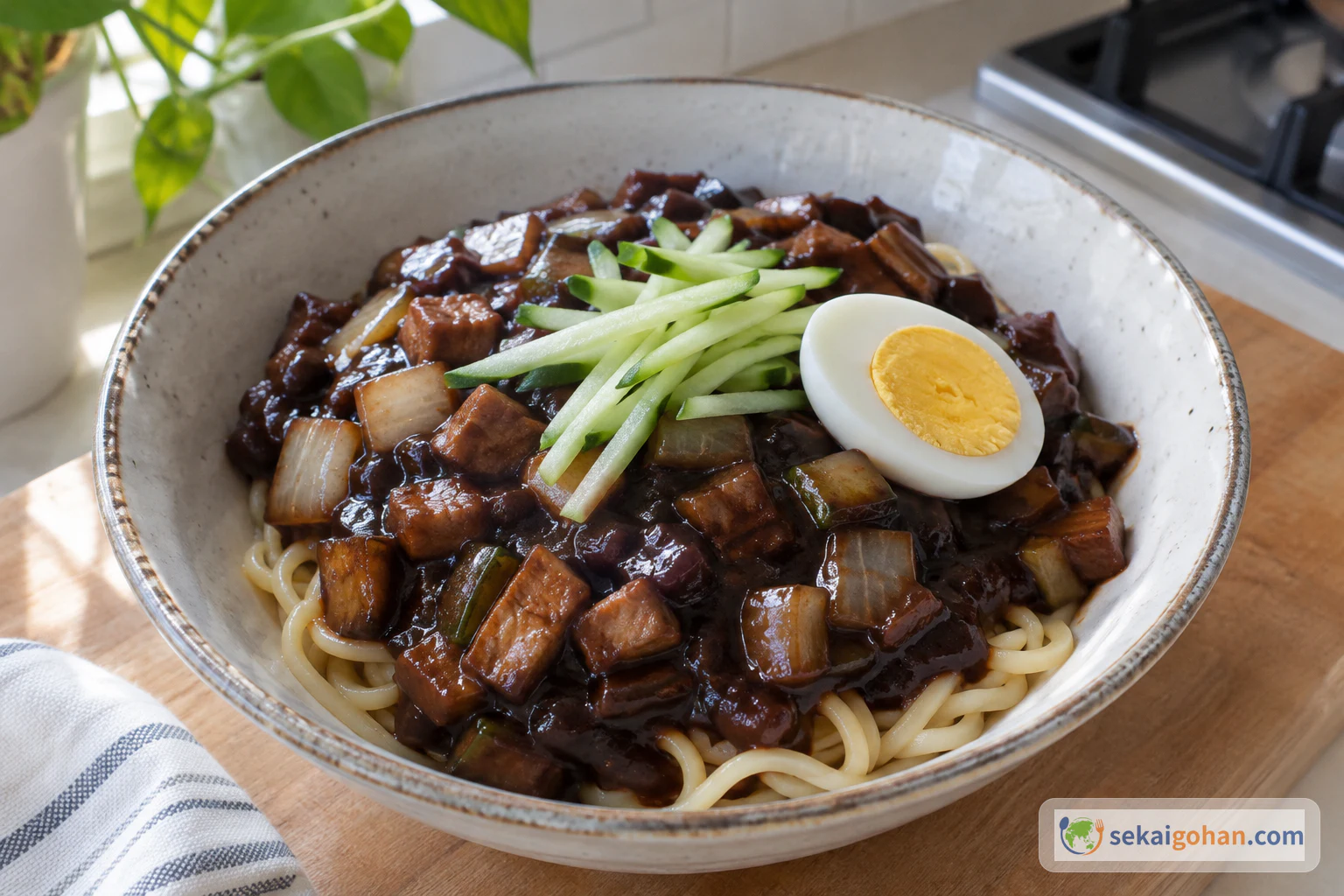
Jajangmyeon: Korean-Chinese Black-Sauce Noodles with Pork and Diced Vegetables (짜장면)
How to make jajangmyeon (짜장면), the Korean-Chinese noodle dish of thick wheat noodles under a glossy black chunjang sauce with pork belly, cabbage, onion, zucchini and potato. Covers choosing chunjang and fresh noodles, the order of removing and returning the pork and cabbage, rinsing the noodles, thickening the sauce with cornstarch, and the dish's background in Incheon.
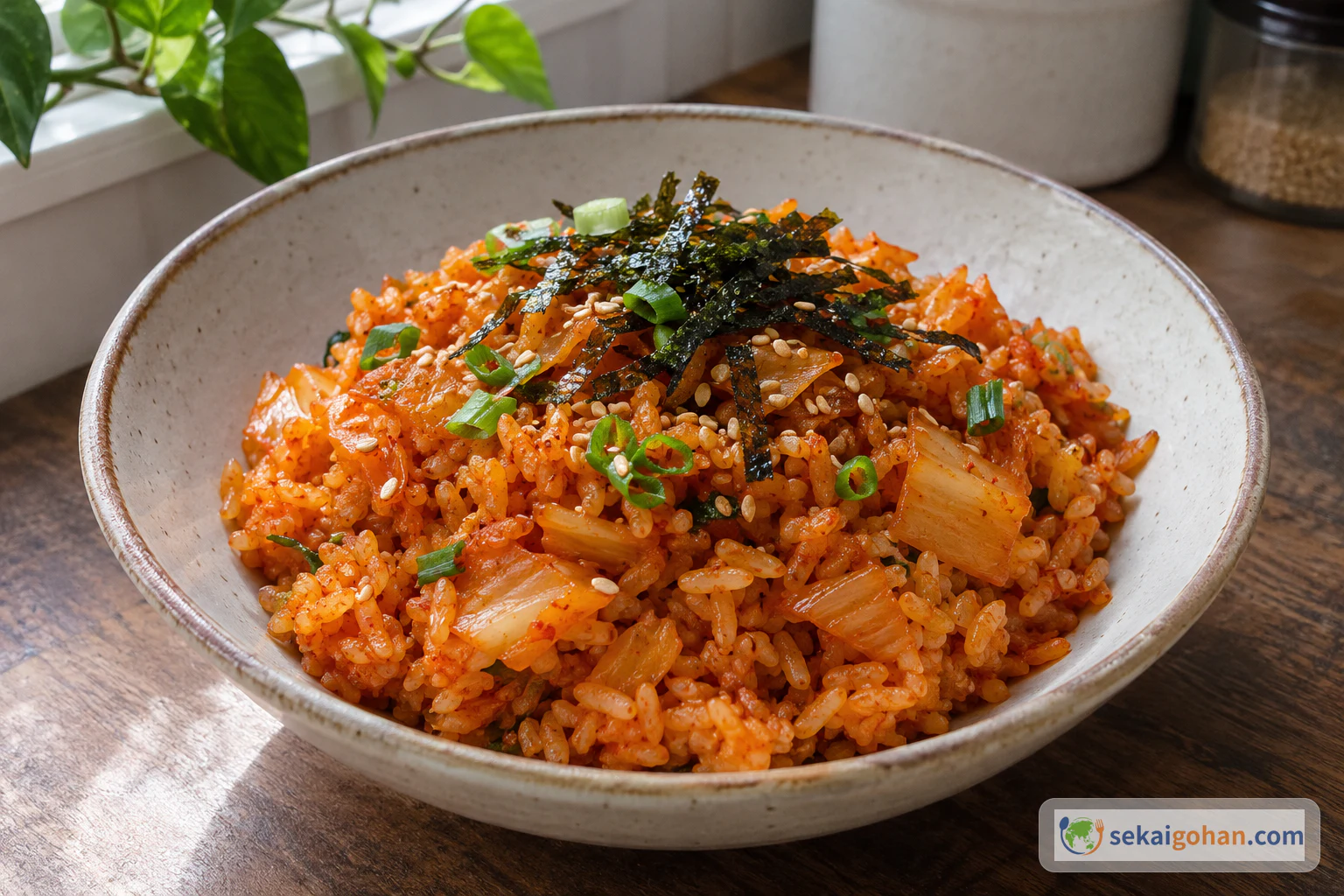
Kimchi Bokkeumbap: Korean Kimchi Fried Rice (김치볶음밥)
How to make kimchi bokkeumbap (김치볶음밥), the Korean fried rice built around well-fermented kimchi and cooked rice, following Maangchi's home recipe for 2–3 servings. Covers the amounts in their original cup and spoon units, the order of kimchi, rice, kimchi juice, water and gochujang in the pan, adding sesame oil before the pan comes off the heat, and how to handle freshly cooked or chilled rice safely.
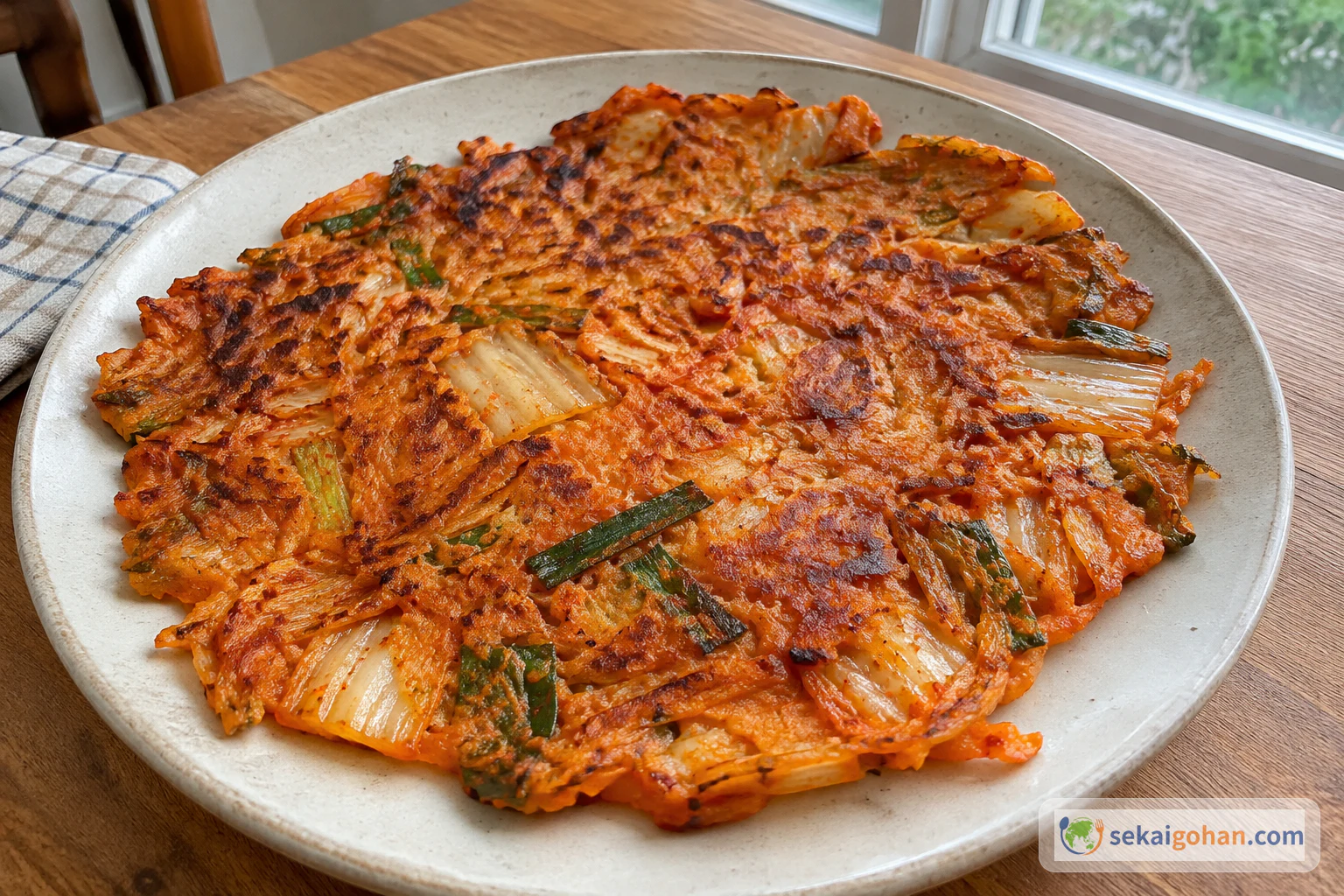
Kimchibuchimgae: Korean Kimchi Pancake (김치부침개 / Kimchijeon)
How to make kimchibuchimgae, also called kimchijeon, the Korean pancake of chopped well-fermented napa cabbage kimchi, its brine, scallions, flour and water, pan-fried as one broad, thin round in a 12-inch skillet. Covers the two-stage oiling, flipping twice, troubleshooting a soft center, choosing kimchi and flour, raw-flour handling, and where this pancake sits among Korean buchimgae and jeon.
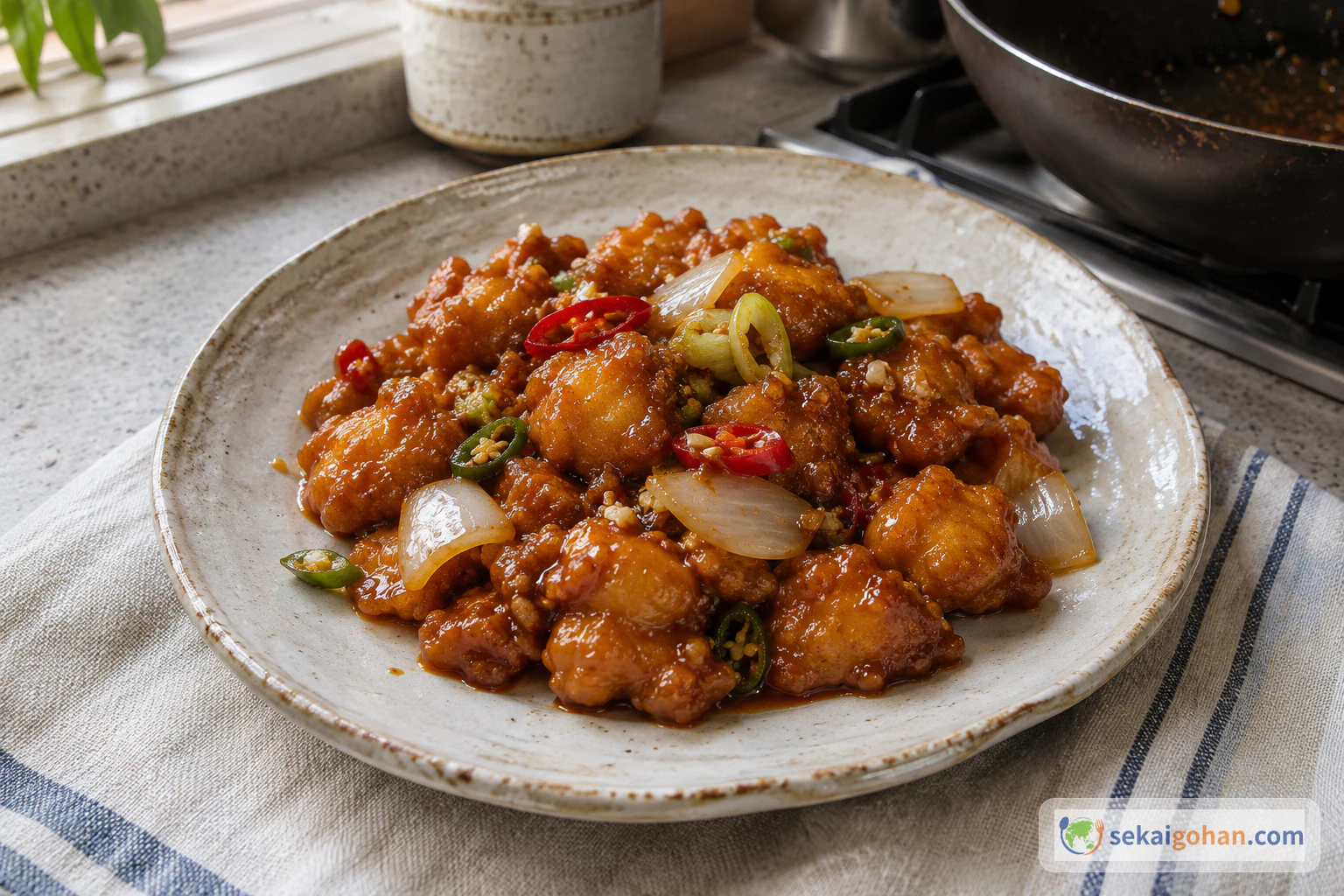
Kkanpunggi: Korean-Chinese Spicy Garlic Fried Chicken (깐풍기)
How to make kkanpunggi (깐풍기), Korean-Chinese twice-fried chicken breast tossed with a garlic-and-leek chili oil and a sweet, sour and spicy rice-syrup sauce. Based on Maangchi's written recipe for 2–3 servings, with a refrigerated marinade, separate raw and cooked tools, and a final thermometer check of the thickest piece before serving.
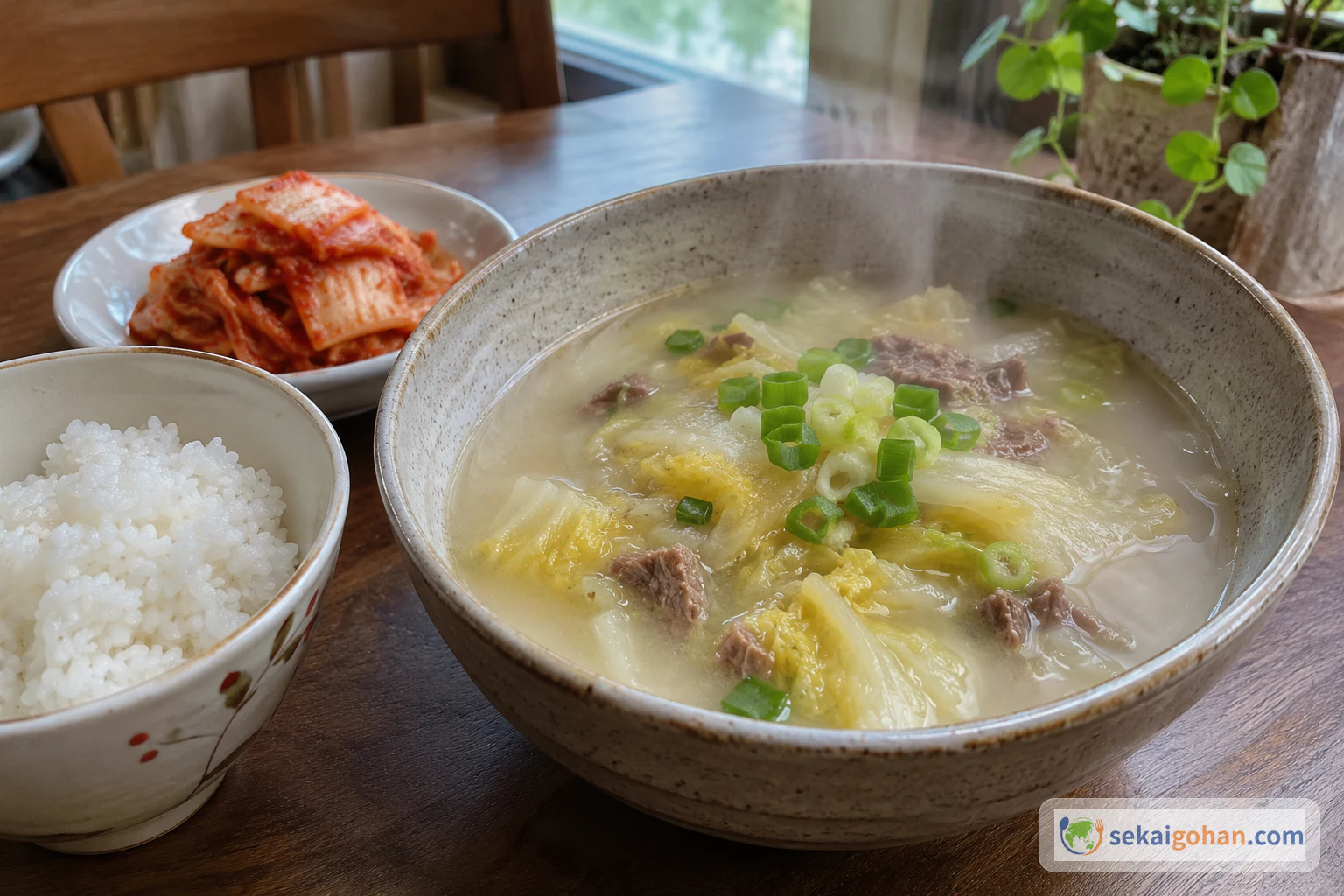
Haejang-guk: Korean Ox Bone and Napa Cabbage Soup with Doenjang (Ppyeo-haejangguk, 뼈해장국)
How to make ppyeo-haejangguk (뼈해장국), a Korean soup of long-simmered ox bone broth and napa cabbage seasoned with doenjang, garlic, green chili and fish sauce. It is one example from the wider haejangguk family of soups. Covers the four-hour bone broth, chilling and skimming, quick refrigeration in shallow containers, serving with rice and kimchi, and how this version differs from bean sprout, blood and pork backbone styles.
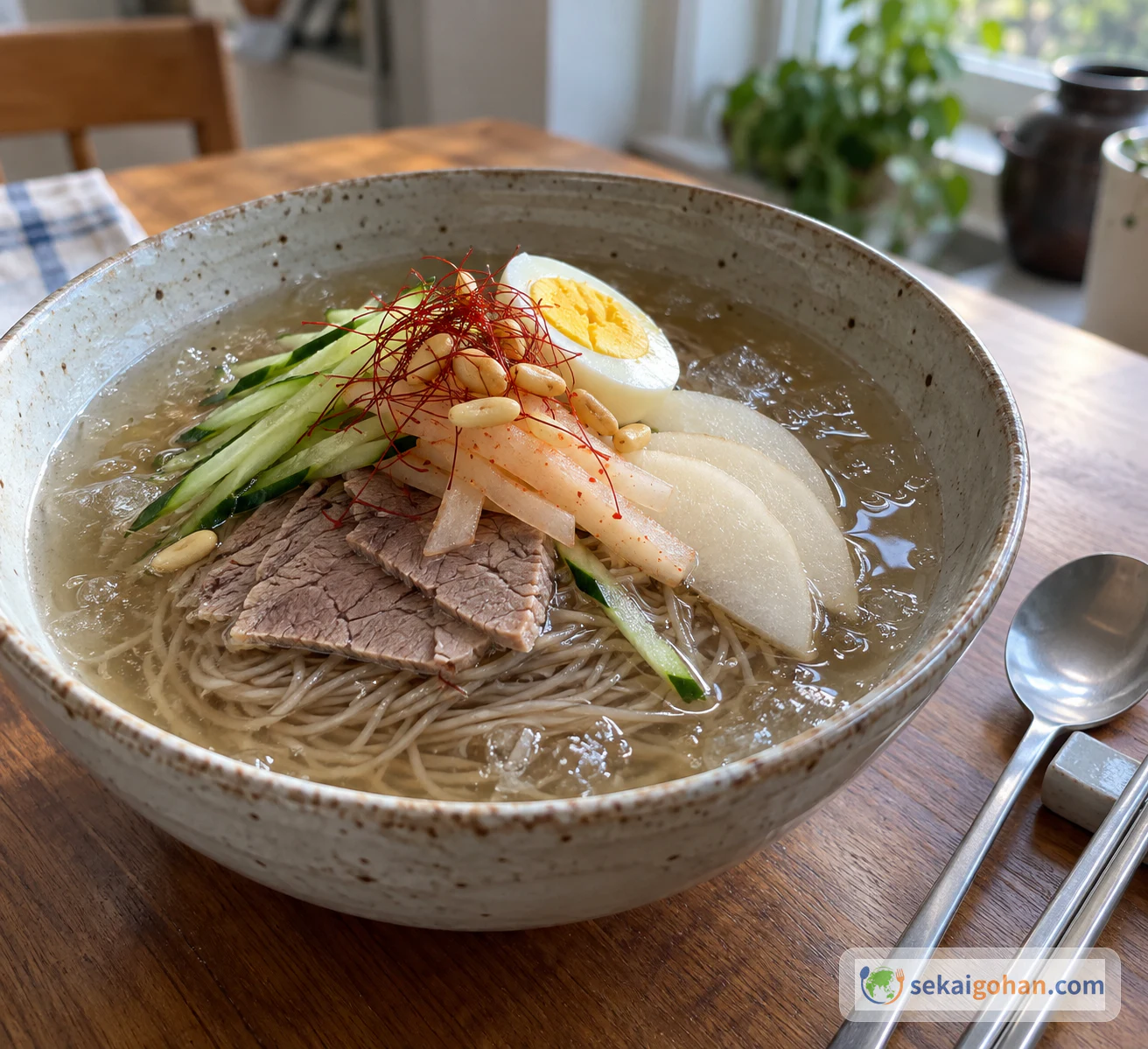
Mul-Naengmyeon: Korean Cold Noodles in Chilled Beef Broth (물냉면)
How to make mul-naengmyeon, the Korean cold noodle soup in chilled beef broth, following a Korea.net recipe: buckwheat noodles, sliced beef, cucumber, lightly seasoned radish, pear and egg. Covers how it differs from bibim-naengmyeon, Pyongyang and Hamhung styles, choosing noodles and seasonings outside Korea, and cooling the broth safely.

Bibimbap: Korean Rice Bowl with Five-Color Namul
How to make bibimbap with Korean-style namul, beef, a fried egg, gochujang sauce and crispy dolsot-style rice. Substitutes for hard-to-find ingredients, make-ahead prep, storage, a mild sauce without chile, how it differs from Jeonju style, and how to use leftover vegetables.