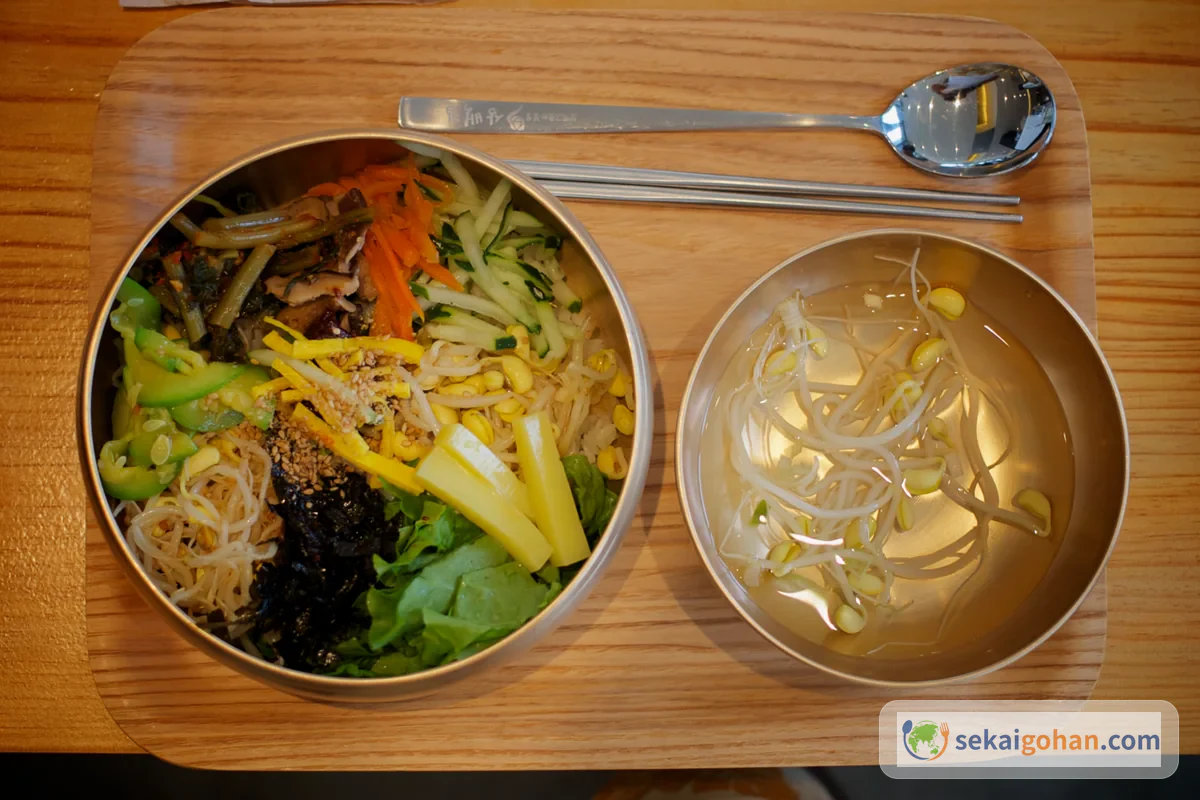
Some evenings you open the refrigerator and find a little of this and a little of that: half a bag of bean sprouts, a bunch of spinach, one carrot, yesterday's sliced beef, a half-used jar of gochujang. None of it looks like much on its own. Arrange it all by color over rice, drop an egg on top, and suddenly you have a dish worth putting in the middle of the table. That is bibimbap, Korea's signature mixed rice. Lightly seasoned namul, meat, egg and a gochujang sauce go into one bowl, and whoever is eating stirs it all together at the very end.

Bibimbap in Korea: Jeonju, Home Cooking and the Toppings
The name says it plainly. 비빔 (bibim) means "mixing" and 밥 (bap) means "rice." In a beef bowl, a single topping sits on the rice. Bibimbap is different: the diner finishes it by mixing namul, meat, egg, aromatics and sauce in the bowl.
Jeonju bibimbap and the everyday bowl
Bibimbap has a festive face and an everyday one. Jeonju bibimbap is the best-known version. Beef, yellow mung bean jelly (hwangpomuk), bracken, soybean sprouts and spinach are arranged in a neat circle on warm rice and mixed with red chile paste. At home, it is just as often leftover namul spooned onto rice and stirred together.


Rather than copying Jeonju's lavishness, take home its skeleton: prepare the toppings separately, mix at the end, and keep the color and texture. It resembles the way tandoori chicken side dishes combine small dishes. Instead of one star ingredient, small toppings with different flavors sit side by side, and the diner completes the dish in the bowl.
Keeping each topping distinct
Outside Korea, the real work is keeping the toppings from all tasting the same. Bean sprouts give crunch, spinach a green aroma, carrots sweetness, shiitake umami, and bracken the earthiness of mountain greens. Season each one lightly and tie them together with gochujang sauce at the end, and the flavor stays clear even after mixing.
Because the heat goes in last, each person can adjust it. That makes bibimbap easy to serve when a family's spice preferences differ, which is not true of a strongly spicy dish such as mapo tofu. This flexibility explains much of its popularity around the world. You get plenty of vegetables, the dish still works without meat, and leftovers have somewhere to go. If you want the rice itself to feel more like a Korean home meal, try kongbap, rice cooked with black soybeans and grains.
Ingredients (serves 4): think of the namul in five colors
Bibimbap looks like it has many components, but as a shopping list it is quite simple: rice, vegetables, meat, eggs, gochujang and sesame oil. The rest is carried by soy sauce, sugar and garlic you probably already have. You can find nearly everything in the produce and meat sections of an ordinary supermarket without visiting a Korean specialty store.

Five colors of namul
| Color | Ingredient | Amount | Substitutes & notes |
|---|---|---|---|
| White | Soybean sprouts | 1 bag, 7 oz (200 g) | Ordinary bean sprouts also work. Soybean sprouts have a stronger aroma |
| Green | Spinach | 1 bunch, 6.5 oz (180 g) | Komatsuna, garland chrysanthemum or bok choy also work |
| Red/orange | Carrot | 1, 5.5 oz (150 g) | Red bell pepper also works |
| Black/brown | Shiitake mushrooms | 6 | Shimeji, maitake or dried shiitake also work |
| Brown | Canned bracken (gosari) | 4 oz (120 g) | If unavailable, double the shiitake, or rehydrate dried daikon strips |
This recipe uses egg, beef, soy (in the soy sauce and gochujang) and sesame. Some gochujang contains wheat. If you avoid wheat or soy, always check the ingredient label.
Cook the rice for bibimbap with a little less water than usual so it doesn't get sticky when mixed. With short-grain rice, reduce the water by about 2 tbsp from the rice cooker's line; it combines well with the moisture of the namul.
Gochujang is what makes bibimbap taste Korean. It has sweet heat, fermented umami and the aroma of chile, so use it not simply as a hot condiment but as "the base of the mixing sauce." If you cannot find it at a regular grocery, start with a small tube or container from an Asian grocery or online, which is easier to use up.
For a dolsot-style version, a dedicated stone bowl gives the atmosphere. It is not essential on the first try, though. A cast-iron skillet makes plenty of crispy rice. It is fine to buy one only after you have decided you will make bibimbap many times.
To lift the aroma, it is worth using sesame oil that has just been opened. It goes into the namul, the beef and the finishing sauce in small amounts each, so old oil leaves the whole dish dull.
The finishing nori gives aroma even in small amounts. If you use Korean seasoned seaweed, it has salt and oil, so use a little less salt at the end and it all comes together.
Choosing Bibimbap Ingredients and Substitutes
Korean ingredients help, but seasonal vegetables turned into namul work well too. Once you learn to make them, clearing out the fridge gets easy. What matters is keeping the roles of color, texture, moisture and aroma. And if you don't own a stone bowl, make the crispy rice in a skillet.

Vegetables
Zucchini, cucumber, daikon, lettuce, kimchi, nori, bell pepper, enoki, even broccoli stems all work, and zucchini stands in well for Korean squash. Traditional spreads can include bracken, bellflower root, soybean sprouts, carrot and zucchini. At home, 3 to 5 types chosen so the colors don't skew are much easier to keep up.
The colors of bibimbap follow the East Asian idea of five colors. At home, don't take it too strictly. Arrange white, green, red/orange, black/brown and yellow so each one is visible, and the bowl looks appetizing.
Bracken
Bracken is common in Jeonju bibimbap and traditional Korean namul, but canned bracken (gosari) is not always easy to find outside Korea. Use more mushrooms instead, such as shiitake or maitake, or try dried daikon strips or thin strips of lotus root. That brown topping anchors the bowl visually and carries the umami.
Meat
Bibimbap is easy to make vegetarian or vegan by leaving out the meat and egg. In place of beef, drain firm tofu and pan-fry it, then glaze it with soy sauce, sugar and sesame oil. Thick fried tofu also works. Browning the tofu to cook off its water keeps it from crumbling when you mix.
Gochujang and a milder sauce
Sweetness and heat differ by gochujang brand, so start with less and thin it with vinegar and water. For almost no heat, make a sauce from miso, sugar, sesame oil and vinegar. It loses some of bibimbap's character, so set gochujang on the side for the adults.
Instructions: prepare each topping separately and mix at the end
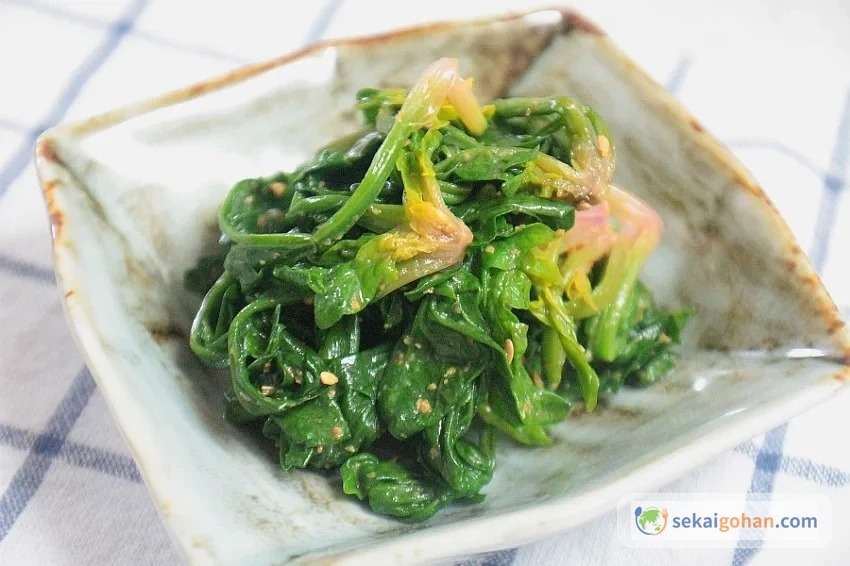
Bibimbap is not a dish where you stir-fry everything together. Get this wrong and it becomes a plain vegetable stir-fry on rice. Cook each namul one at a time, drain its moisture, and season it lightly. Everything gets mixed at the end, so each topping should stay slightly restrained.
Jeonju-style and restaurant bibimbap sometimes use a raw egg yolk or yukhoe (raw beef), but at home, use a soft fried egg and cooked beef. Especially for children, older adults, pregnant people and anyone unwell, a version without raw egg and raw meat is safer.
How to make it dolsot (stone pot) style
The appeal of dolsot bibimbap is the toasty nurungji, crispy rice, that forms at the bottom after you mix. In Korean, the stone pot is called 돌솥 (dolsot). Bibimbap served in a hot stone pot is one of the representative ways to eat it in Jeonju. At home you can get close without a stone pot if you understand how the crust forms.

Using a stone pot
Brush the inside of the stone pot thinly with 1 tsp sesame oil, add the rice, and set over medium heat. When it starts to sizzle, lower to medium-low, arrange the toppings and warm 2–3 minutes. At home, top with a fried egg rather than a raw one; it is safer and less error-prone. Scorching the bottom turns it bitter, so take it off the heat as soon as a toasty smell rises.
Using a skillet
Spread 2 tsp sesame oil in a skillet, press only the rice into a thin layer and cook over medium heat for 3–4 minutes. When the bottom is lightly set, move it to a bowl and top with namul and meat. It is not as dramatic as a stone pot, but it gets quite toasty. If you have a cast-iron skillet, serving it right in the pan has atmosphere too.
If you mix all the toppings first and then cook, the gochujang tends to burn and turn bitter. Make the crust only from the rice at the bottom, and mix the toppings and sauce in afterward. Restaurant dolsot bibimbap is also built so that the bottom rice toasts while the toppings are warmed by residual heat.
Storing and Serving Bibimbap
Make-ahead and storage
Bibimbap keeps better as separate components than as a finished bowl. Once it is mixed, the rice absorbs moisture and the gochujang aroma blurs. If you make it ahead, portion out the namul and meat and arrange them on the rice just before eating.

| Component | Storage guide | Notes |
|---|---|---|
| Soybean sprout namul | 2 days refrigerated | Releases water easily. Squeeze lightly before eating |
| Spinach namul | 2 days refrigerated | The garlic aroma strengthens, so seal it |
| Carrot and shiitake | 3 days refrigerated | Easy to use in a lunch box too |
| Stir-fried beef | 2 days refrigerated | Reheat before topping |
| Gochujang sauce | 1 week refrigerated | Use a clean spoon |
| Mixed bibimbap | Same day | The rice gets heavy. Avoid for lunch boxes |
If you make the namul a little at a time in the morning, dinner comes down to warming the rice, cooking the meat and topping with the egg. For prep a day ahead, keep the sprouts and spinach in separate containers lined with a paper towel, since both release water easily. Gochujang sauce stiffens a little in the fridge, so loosen it with water 1 tsp at a time before using.
Namul is a moist side dish even when cooked. Don't leave it long at room temperature; let it cool slightly after cooking and refrigerate. If you pack it in a lunch box, cook the egg all the way through rather than soft, and put the gochujang sauce in a separate container.
More Korean dishes to cook alongside
- Gimbap - a Korean seaweed roll that also uses thinly cut namul and beef, so leftover fillings move easily into the next day's lunch box.
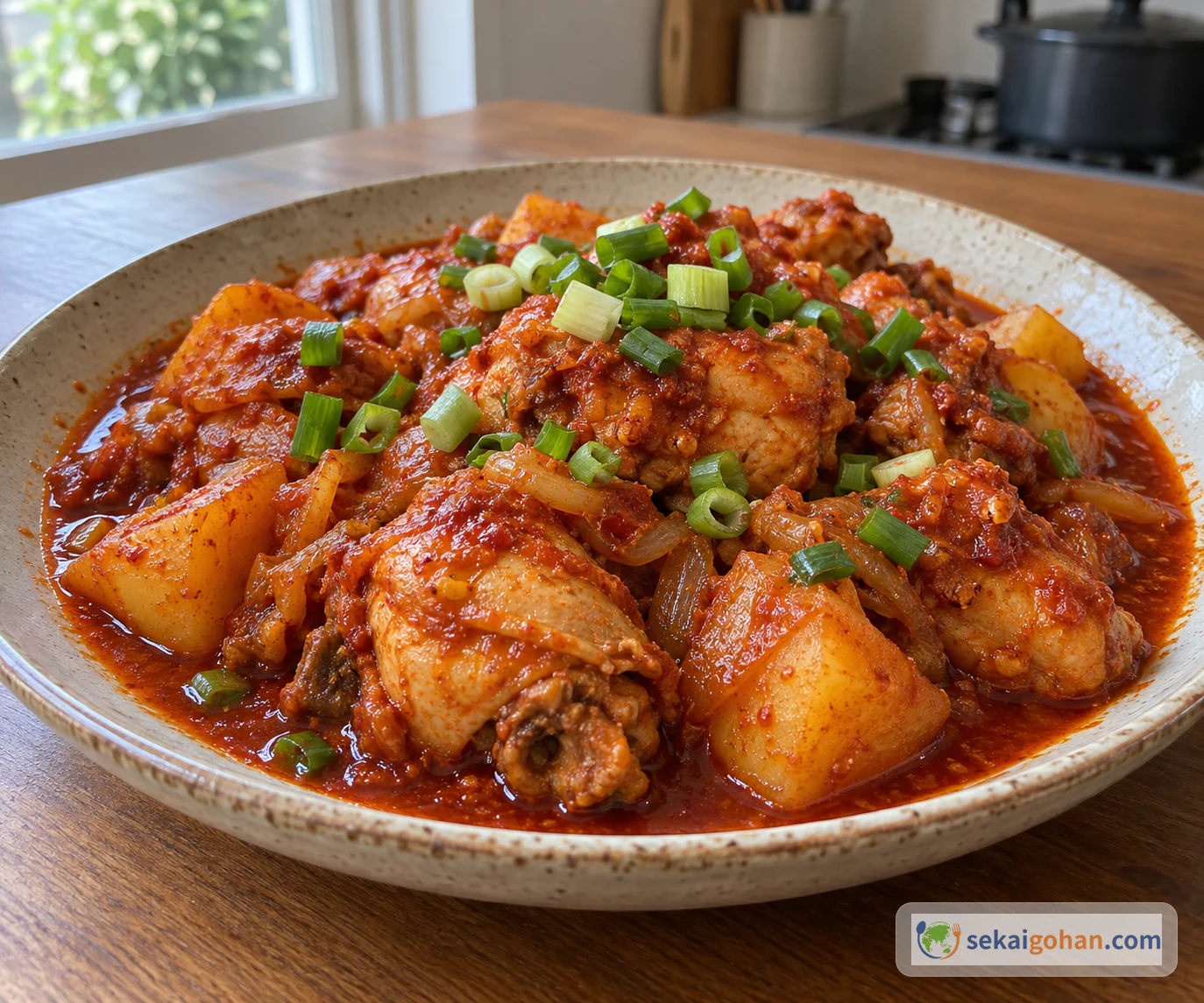
- Andong jjimdak - a Korean home braise led by sweet-savory soy sauce and glass noodles.
- Hotteok - a griddled bread with a syrup filling, for when you want the sweet taste of a Korean street stall after the meal.
Frequently asked questions
Q1. What is the difference between bibimbap and dolsot bibimbap?
The basic toppings are similar, but dolsot bibimbap is cooked in a heated stone pot so the rice turns crispy at the bottom. Ordinary bibimbap is simply put in a bowl and mixed. It spends less time over the heat, so it suits weeknights.
Q2. Do I have to make all the namul?
Three kinds are enough: bean sprouts, spinach and carrot. Put out three toppings with different colors and textures, add meat or egg, and you have plenty for a home bibimbap.
Q3. Can I top it with a raw egg?
Restaurants sometimes use a raw yolk, but at home I recommend a soft or fully cooked fried egg. Put food safety first, and cook the egg thoroughly, especially if children or older adults are eating.
Q4. What can I do with leftover namul?
The next day, use it in cold noodles, ramen, rolled omelet, fried rice or miso soup. The seasoning for bibimbap is light, so it moves easily into other dishes. Bibimbap that has already been mixed with gochujang sauce is easiest to finish as fried rice.
Q5. Can I pack bibimbap in a lunch box?
Yes, but skip the soft egg and very watery namul. Pack the rice, beef, carrot, shiitake and well-drained sprouts separately, and cook the egg hard. Put the gochujang sauce in a small container on the side and mix just before eating. In summer, or on days when it will be carried for a long time, keep the namul for dinner instead.
Q6. What do I add so the flavor isn't flat when I don't make it spicy for children?
Add plenty of white sesame to a mild sauce of miso, sesame oil, sugar and a little vinegar. Ketchup in place of gochujang turns it into a different dish, so build the saltiness and umami with the miso sauce first. Adults can add gochujang to their own bowls, so everyone eats the same toppings.
Sources consulted
- Korea.net, "Eat your way across Korea: stone pot bibimbap mixed rice": used to check the meaning of bibimbap, the five colors, the stone pot and regional differences.
- VISITKOREA, "Jeonju Bibimbap": used to check the toppings of Jeonju bibimbap, the yellow mung bean jelly, the circular arrangement and the approach to texture.
- Korean Bapsang, "Bibimbap": used to check the rice, namul, gochujang sauce and stone-pot substitute for the home version.
- Maangchi, "Bibimbap": used to check classic toppings, bracken, bellflower root, how to mix and the flow of home cooking.
- EatingWell, "What Is Gochujang & How Do I Use It?": used to check gochujang as a fermented seasoning and the approach to substitutes.