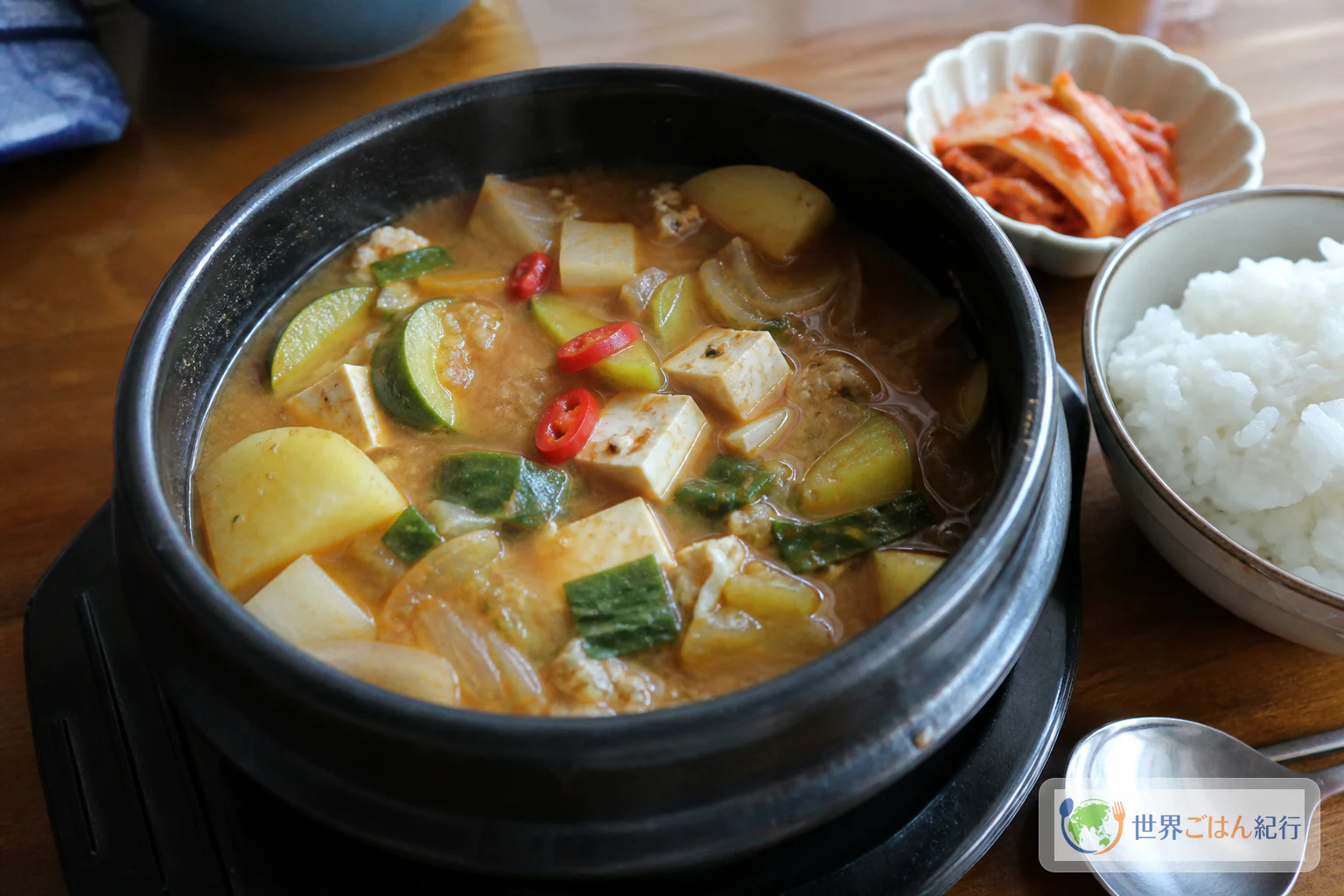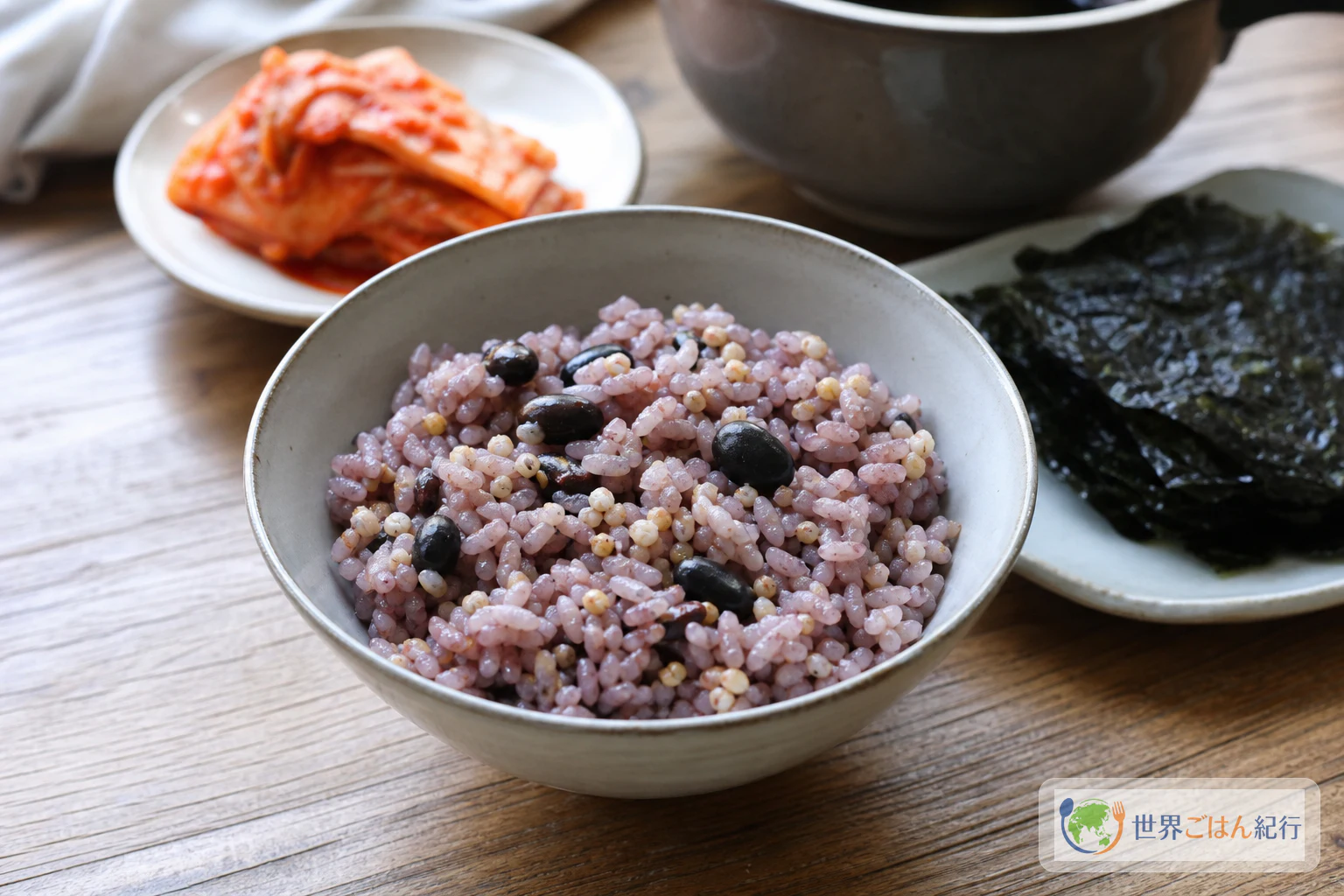
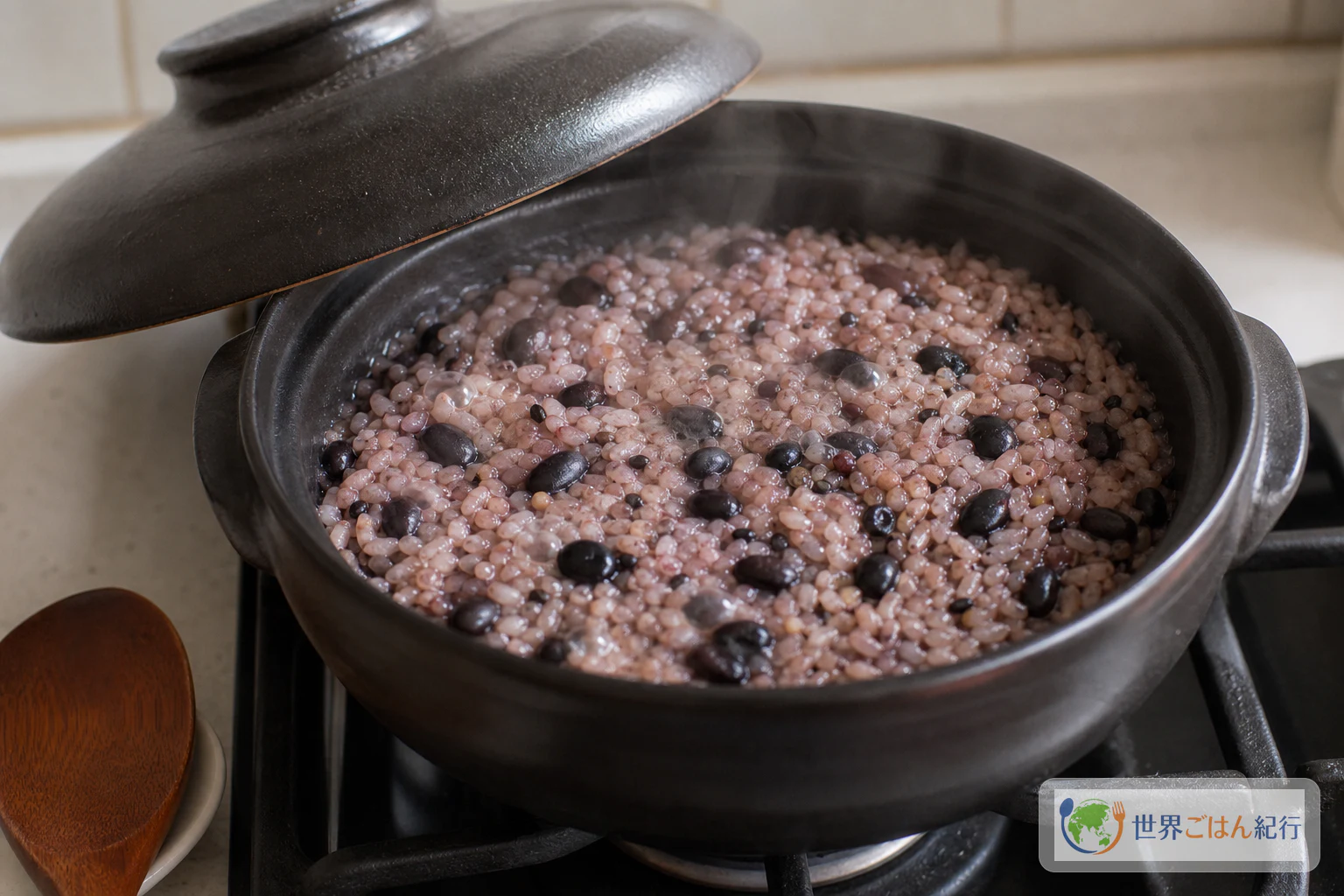
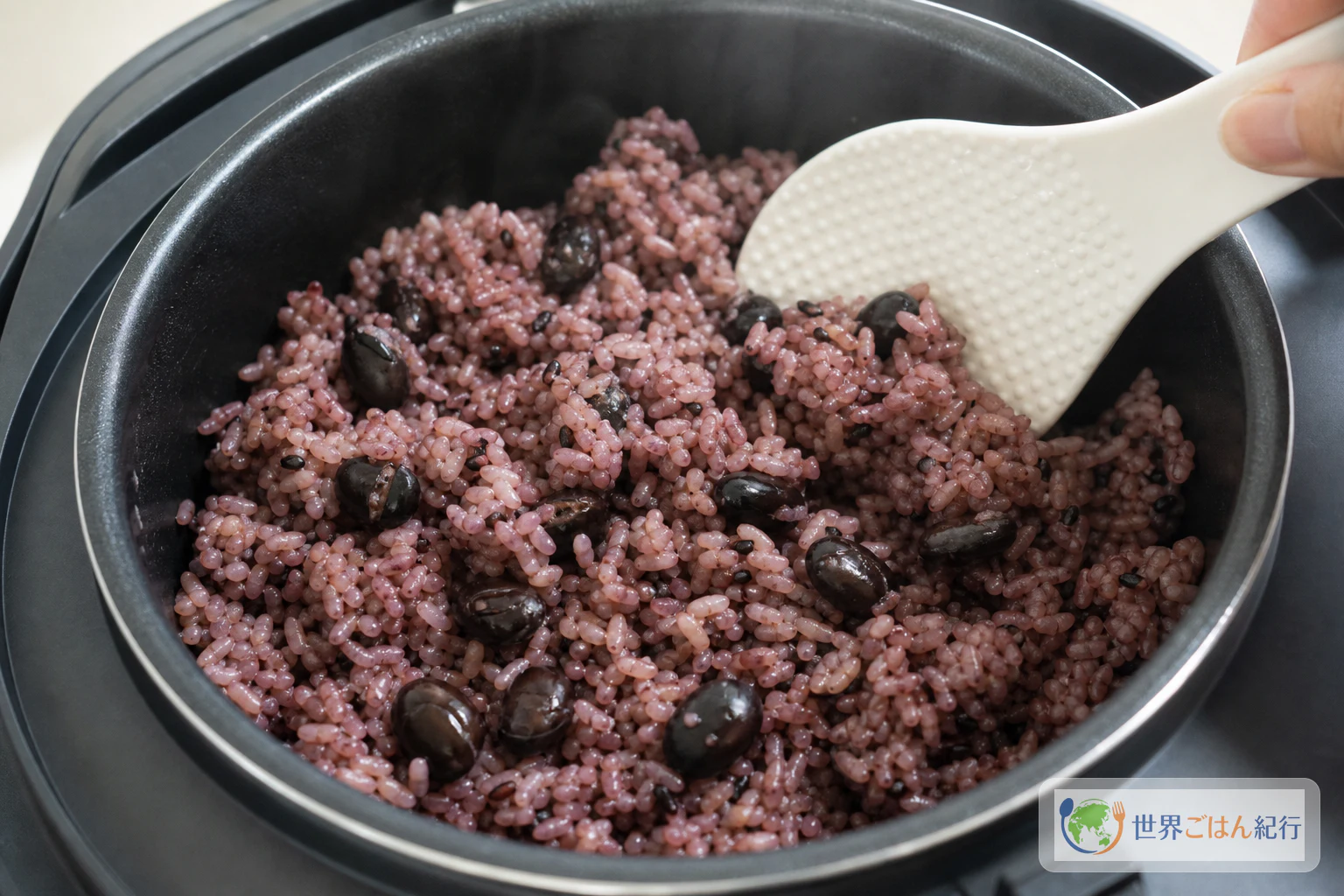
The moment you lift the lid, a different aroma rises than on days of plain white rice: the sweet smell of beans carried on the steam. You see the pale purple that has bled from the black bean skins, the gloss of glutinous rice, the springy outline of barley. Kongbap is Korean rice cooked with black soybeans and grains, and it is a quiet dish. It shifts the focus of the meal a little, away from the main dish and toward the bowl of rice itself.
What Kongbap Is
The name comes from 콩 (beans) and 밥 (rice), and kongbap (콩밥) is just that: black soybeans and grains cooked together with rice. Korean home cooks call multigrain rice in general 잡곡밥 (japgokbap). Kongbap is close to ogokbap (오곡밥), the five-grain rice eaten as a ritual food after the lunar new year, but this is the everyday version, with black beans as the star. The proportions here work in both a rice cooker and a pot.
Ingredients (serves 4): Beans as the Star, Rice Easy to Eat
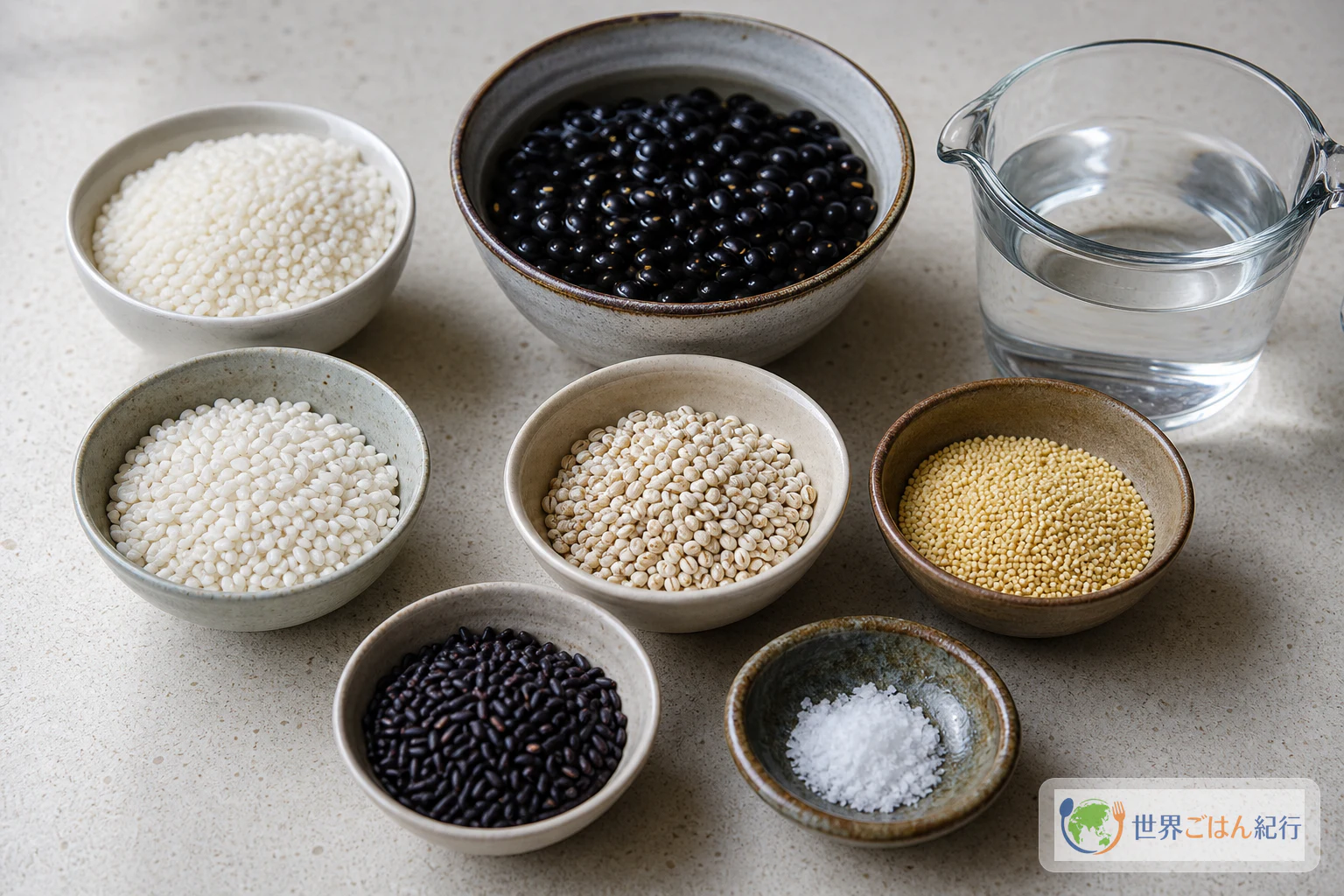
This amount feeds 4 people as a staple. The black beans come through, but the rice stays light enough for everyday meals. It takes more chewing than plain white rice, so serve spicy side dishes and soup alongside.
Things that tighten the table
| Accompaniment | Amount | How to use |
|---|---|---|
| Kimchi | 5.5 oz (160 g) | Well-fermented, sour kimchi suits it |
| Gim (Korean seaweed) | 8 sheets | Tear just before eating |
| White toasted sesame | 2 tsp | Sprinkle to finish |
| Korean sesame oil | 1 tsp | A little only when mixing with gim |
Watch for soy, barley, and sesame. Rolled barley contains gluten. To go gluten-free, leave out the barley and use glutinous millet, black rice, and white rice instead. Check the labels on gim and kimchi for seafood, shrimp, wheat, and soy.
What can be substituted and what to keep
| Ingredient in doubt | How to think about substitutes | The line to keep |
|---|---|---|
| Black soybeans | Kuro-sengoku or Tamba black beans are fine | Sweet simmered beans and canned boiled beans taste and feel different, so do not use them |
| Glutinous rice | Use more ordinary rice instead | A little glutinous rice keeps the beans and rice from separating |
| Rolled barley | Can be left out, adding 1.5 oz (40 g) rice | For a multigrain feel, include at least one large-grained grain |
| Black rice | The flavor holds without it | It is for color, so do not exceed 10 g |
| Salt | It cooks without it | 1/3 tsp brings out the sweetness of the beans. Use less when serving gim |
Two things matter most: soften the black beans first, and use enough water that the grains stand up when cooked. You may be tempted to add more grains, but the first time, keep to about 135 g of total dry goods for 2.5 cups of rice. That amount is easy to eat as an everyday staple for the family.
Choosing Ingredients for Kongbap
This is the Korean home style, made with black soybeans, rice, glutinous rice, rolled barley, glutinous millet, and black rice. If Korean black soybeans are unavailable, use dried black soybeans or kuro-sengoku. It is rice for a meal, not sweet simmered beans, so use just a little salt.
Buy the rice, black beans, and rolled barley at a nearby supermarket or dried goods section, where you can check their condition. Glutinous rice, Korean gim to serve alongside, and Korean sesame oil are easier to find online, and all three earn their place in the pantry for samgyetang, bibimbap, and japchae too.
| What to buy | Priority | Reason |
|---|---|---|
| Glutinous rice | High | Just a little holds beans and rice together, and it is less crumbly even when cold |
| Gim | Medium | Saltiness and oil aroma make a mild kongbap easier to turn into a staple |
| Korean sesame oil | Medium | The aroma stands out when combined with gim, kimchi, and namul |
| Stone bowl | Low | Optional, for crisping leftover rice |
Domestic glutinous rice works well. Thai glutinous rice changes the aroma and the feel of the grains, so the result is less Korean in style, though it is still worth keeping on hand for samgyetang and Southeast Asian dishes.
Gim gives aroma even in a small amount. On days you serve it, set the salt in the cooking at 1/4 tsp and add saltiness at the table so the rice does not turn heavy. Sesame oil works the same way: mix it with gim and kimchi at the table, and the aroma comes alive. Added during cooking, the oil coats the rice and feels heavy once cooled.
Method: Wake the Beans Up First, Then Cook
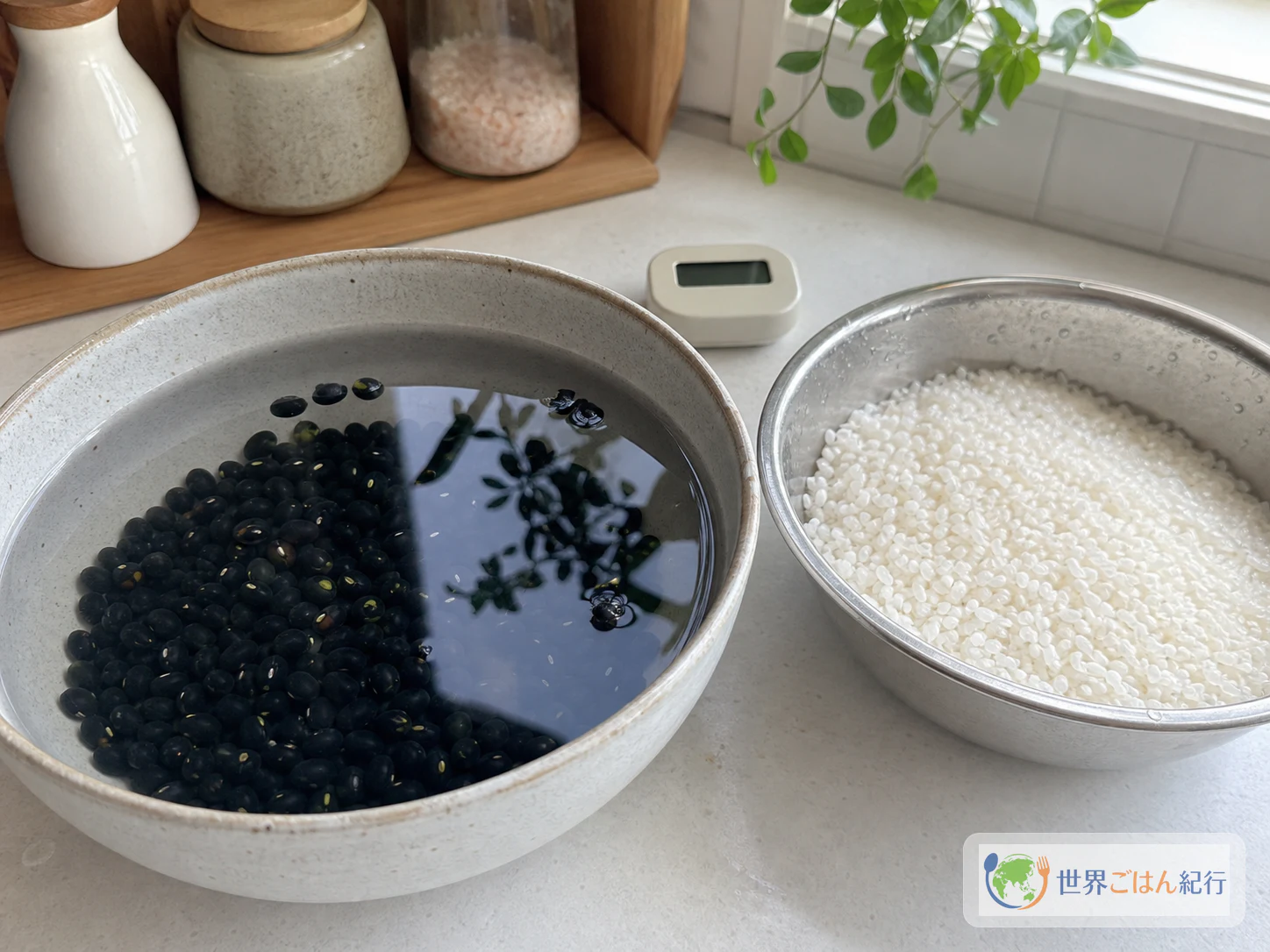
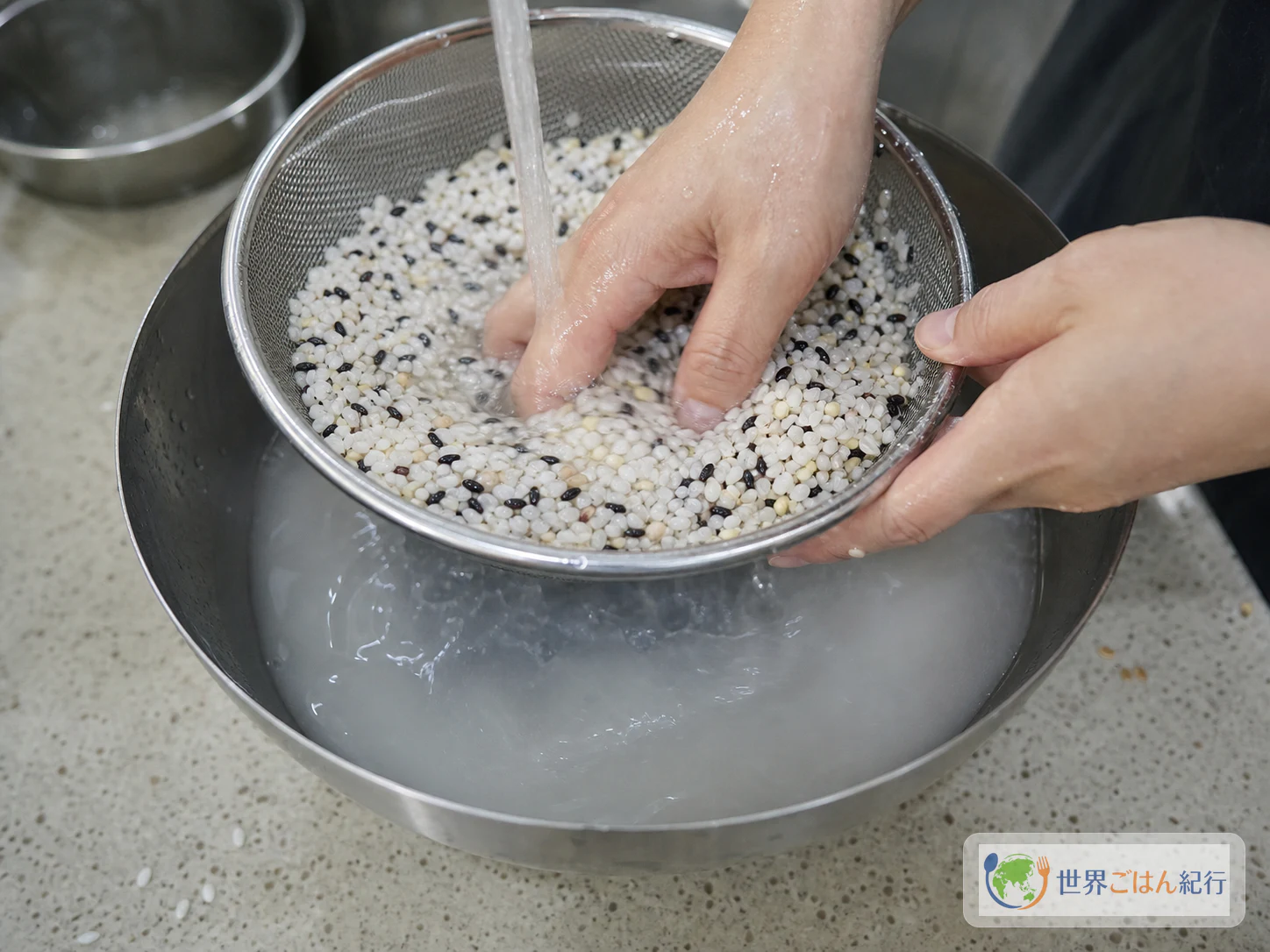
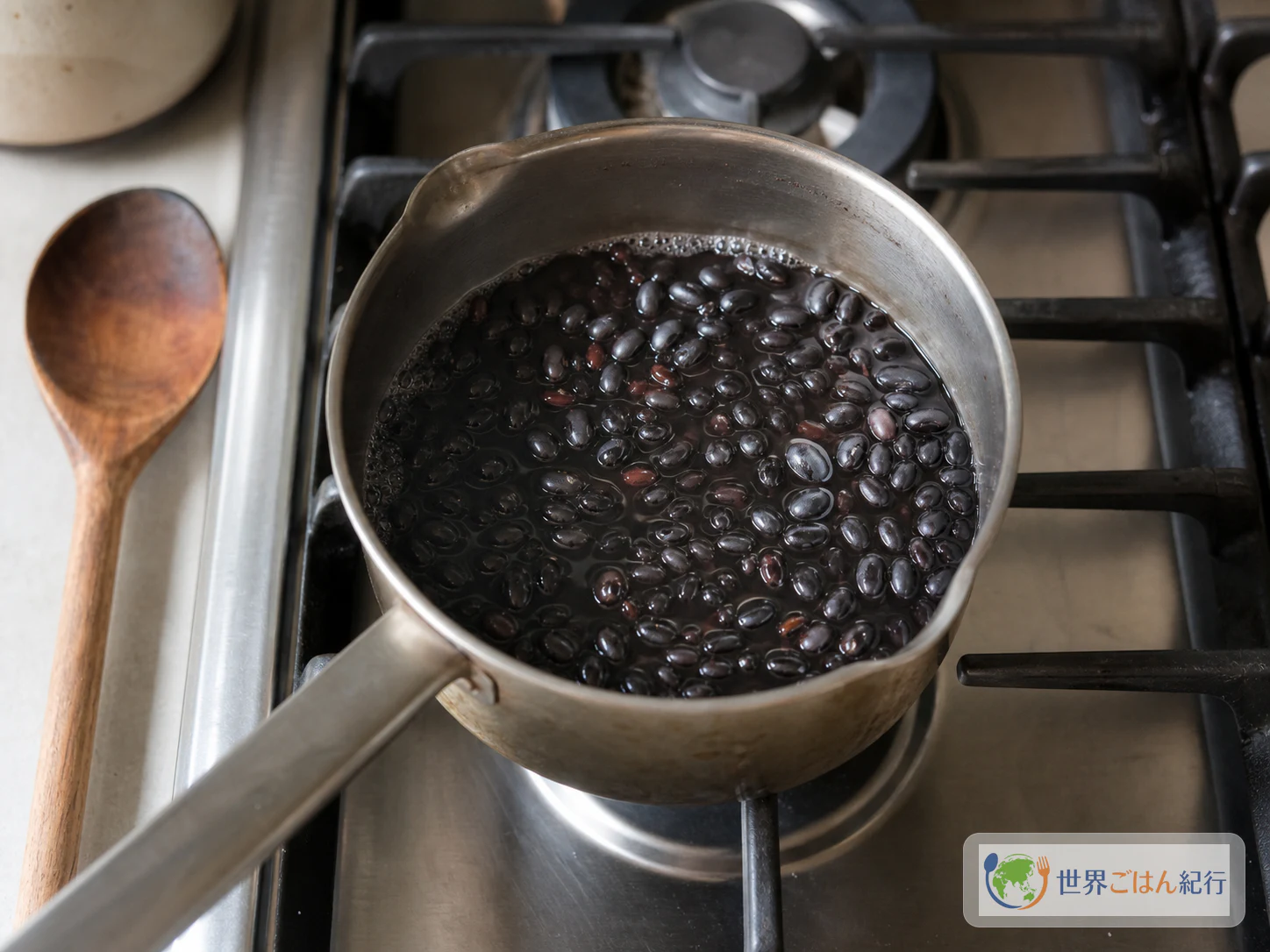
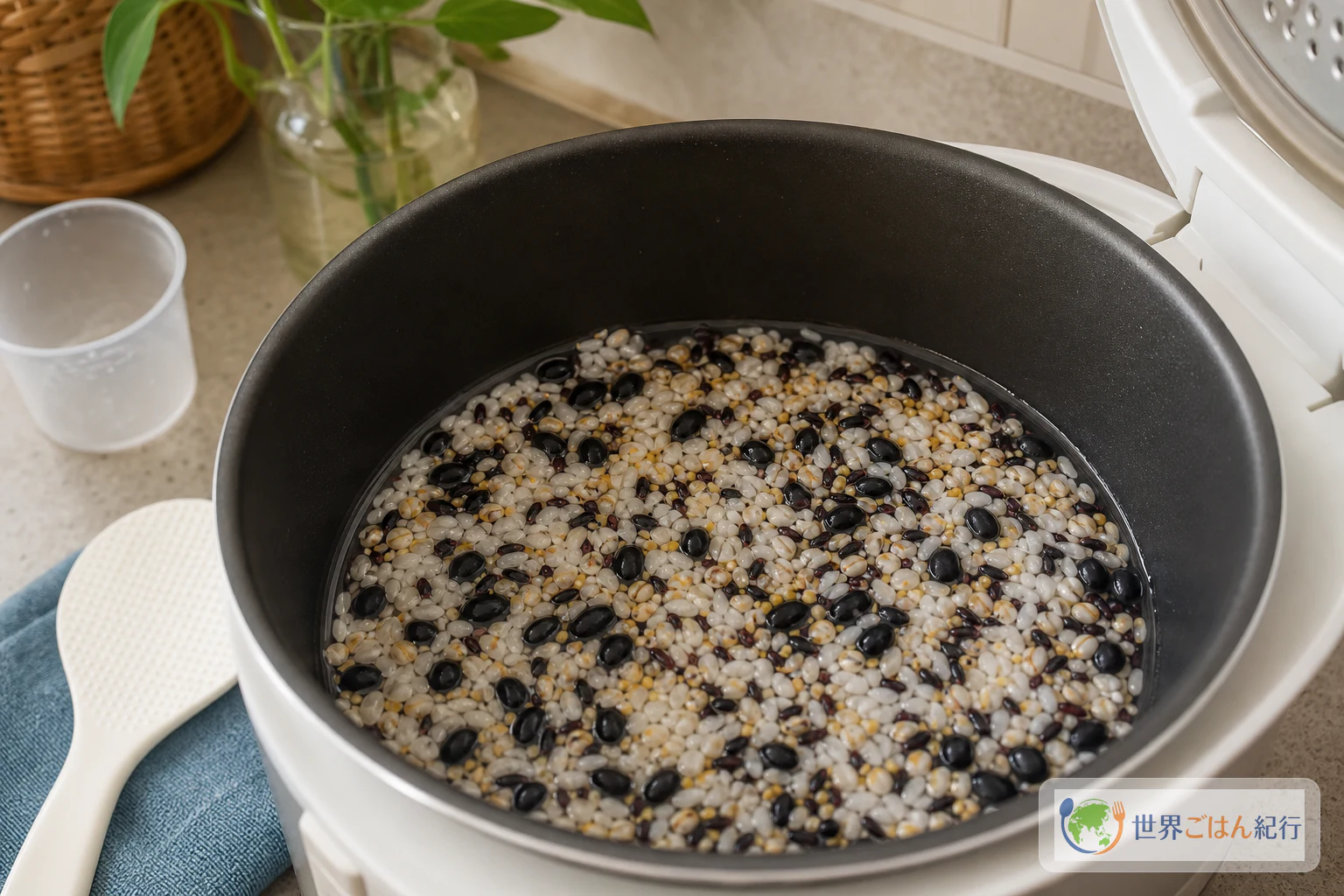
Black beans absorb water more slowly than rice. If you rush, the rice cooker may look finished, but the beans stay hard inside. Soak the beans the night before, wash the rice and grains on the day, parboil the beans briefly, and then cook.
Common Kongbap Failures and Fixes
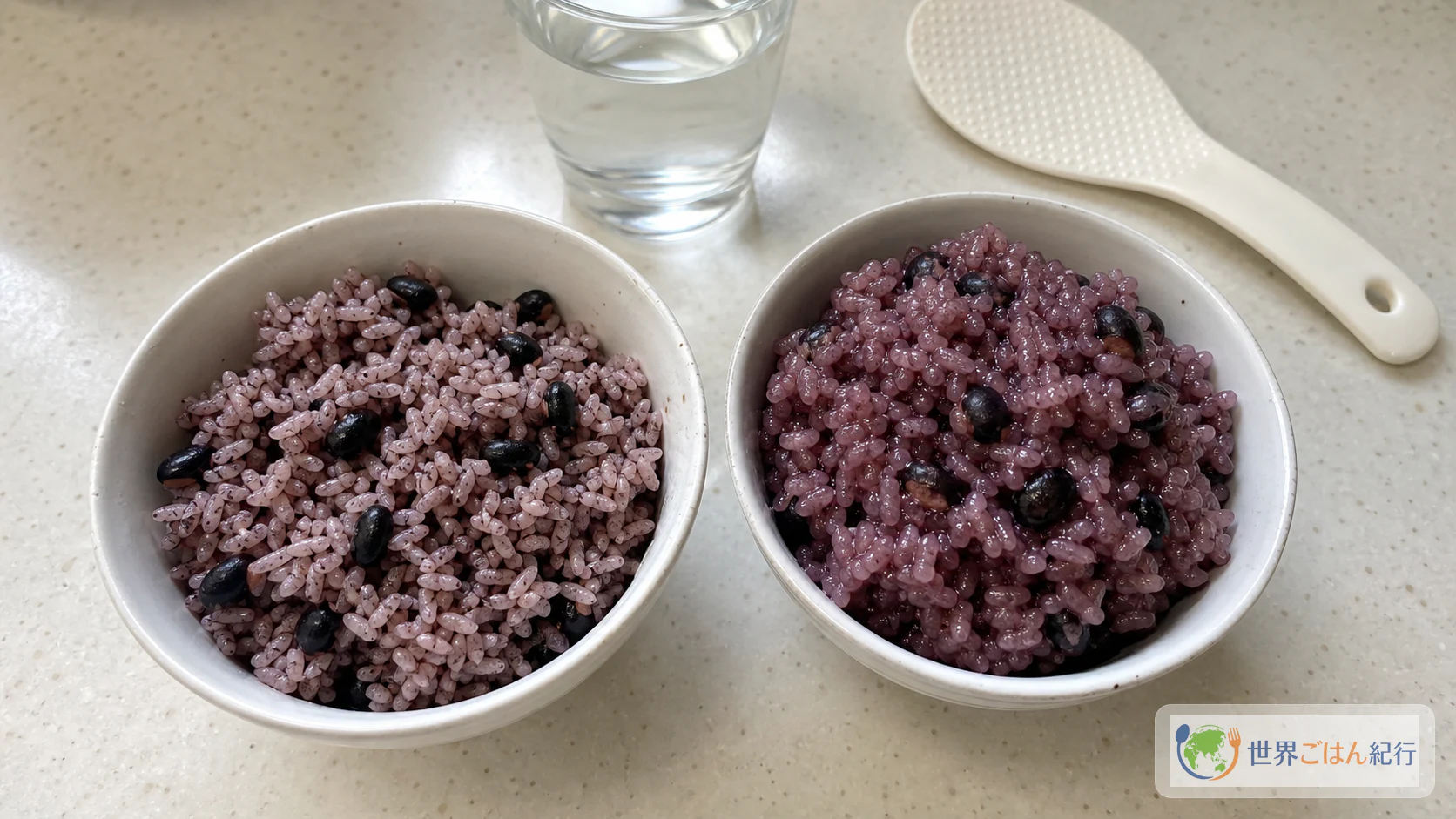
Most problems come down to the beans. Measure the water as you would for white rice, and the rice cooks while the beans keep a hard core; add too much, and the grains lose their outlines and turn into a heavy porridge. Soaking the black beans and then parboiling them briefly makes kongbap hard to get wrong in either a rice cooker or a pot.
| State | Cause | Fix |
|---|---|---|
| Only the beans are hard | Not enough soaking, no parboiling, lid opened partway | Add 2 tbsp water, reheat in the cooker or 5 minutes on low heat plus 10 minutes' steaming |
| Rice is watery | Did not count the full black bean soaking water when measuring | Open the lid for 5 minutes; next time reduce total liquid by 2 tbsp (30 ml) |
| Grains cluster to one side | Surface not leveled before cooking | Stir only twice with chopsticks before cooking and level the surface |
| Color is too purple | Too much black rice, parboiling liquid too concentrated | Reduce black rice to 5 g. The color does not greatly affect the taste |
| Bottom scorches | Pot heat too high, low-heat time too long | Keep the heat low so the flame does not hit the bottom, and stop at 15 minutes |
If the beans are hard, resist cooking on and on, because only the rice breaks down. Extend in short 5-minute steps, always with a little water. Watery rice is better rescued by opening the lid to let the steam out than by cooking it again; the grains keep their shape.
Serving and Storing Kongbap
Side dishes for kongbap
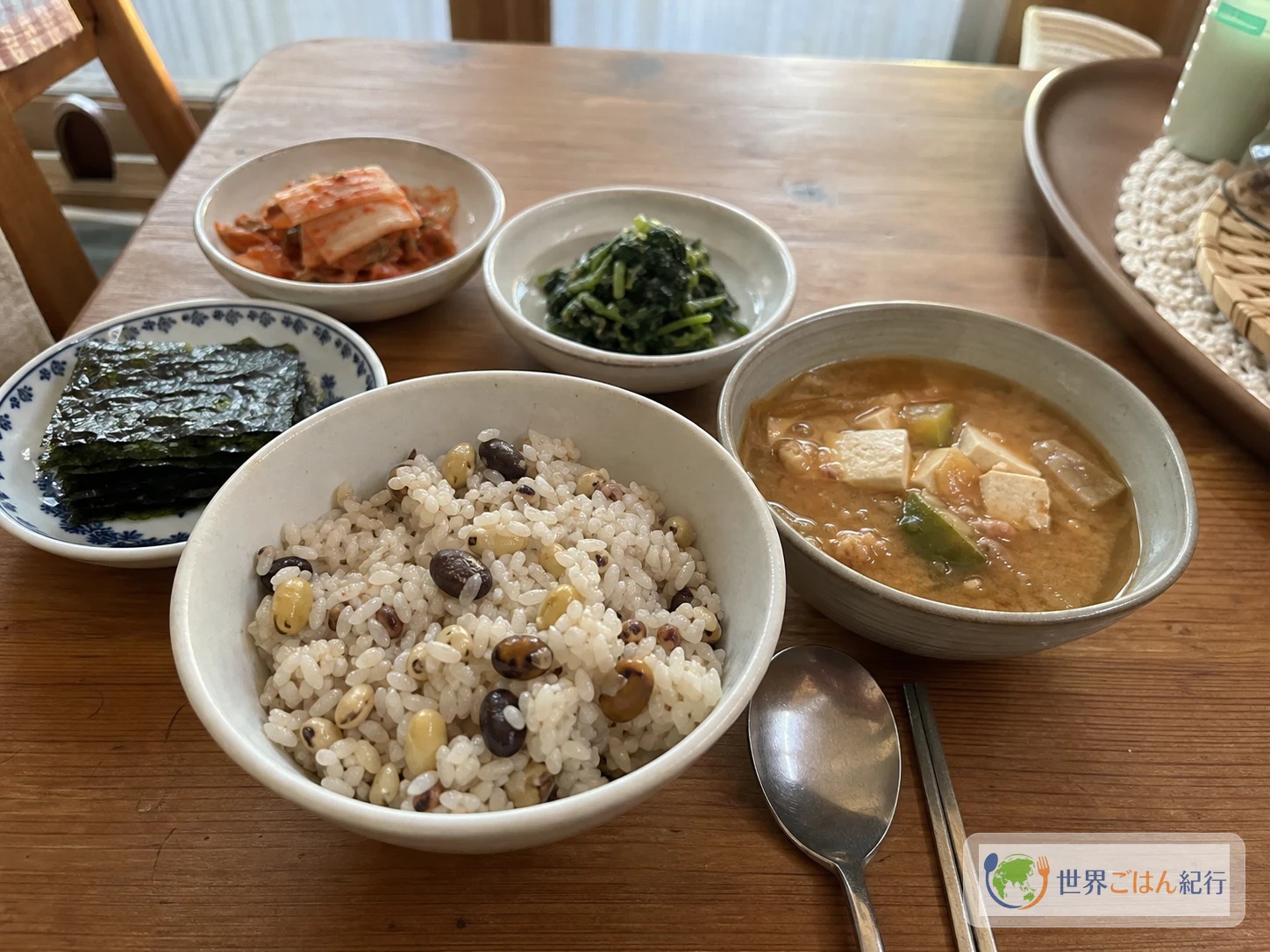
Kongbap has little flavor on its own. The sweetness of the beans and the toasty notes of the grains are a base for kimchi, gim, soup, and namul. It has more chew than white rice, so a little something spicy or oily goes a long way without making the whole table feel heavy.
| Dish to pair | Compatibility | Role at the table |
|---|---|---|
| Doenjang jjigae | High | The saltiness of the soybean paste moves the bean rice along |
| Kimchi jjigae | High | Sourness and heat bring out the sweetness of the grains |
| Bibimbap | Medium | Used in place of white rice, it adds texture |
| Japchae | Medium | Sweet and salty glass noodles and mild rice create contrast in strength of flavor |
| Tteokbokki | Medium | Becomes a staple that takes up the strong sauce of street food |
| Samgyetang | Low | Both are gentle, so add kimchi or gim |
Crisping leftover kongbap
Spread 1 tsp sesame oil thinly in a frying pan, warm it for 2 minutes over medium heat, and spread out the kongbap. Press it down with a wooden spoon and cook 4 minutes over medium-low heat so only the bottom crisps. Take it off the heat once a light browning forms, before the beans dry out, and eat it with torn gim.
Storage and reheating
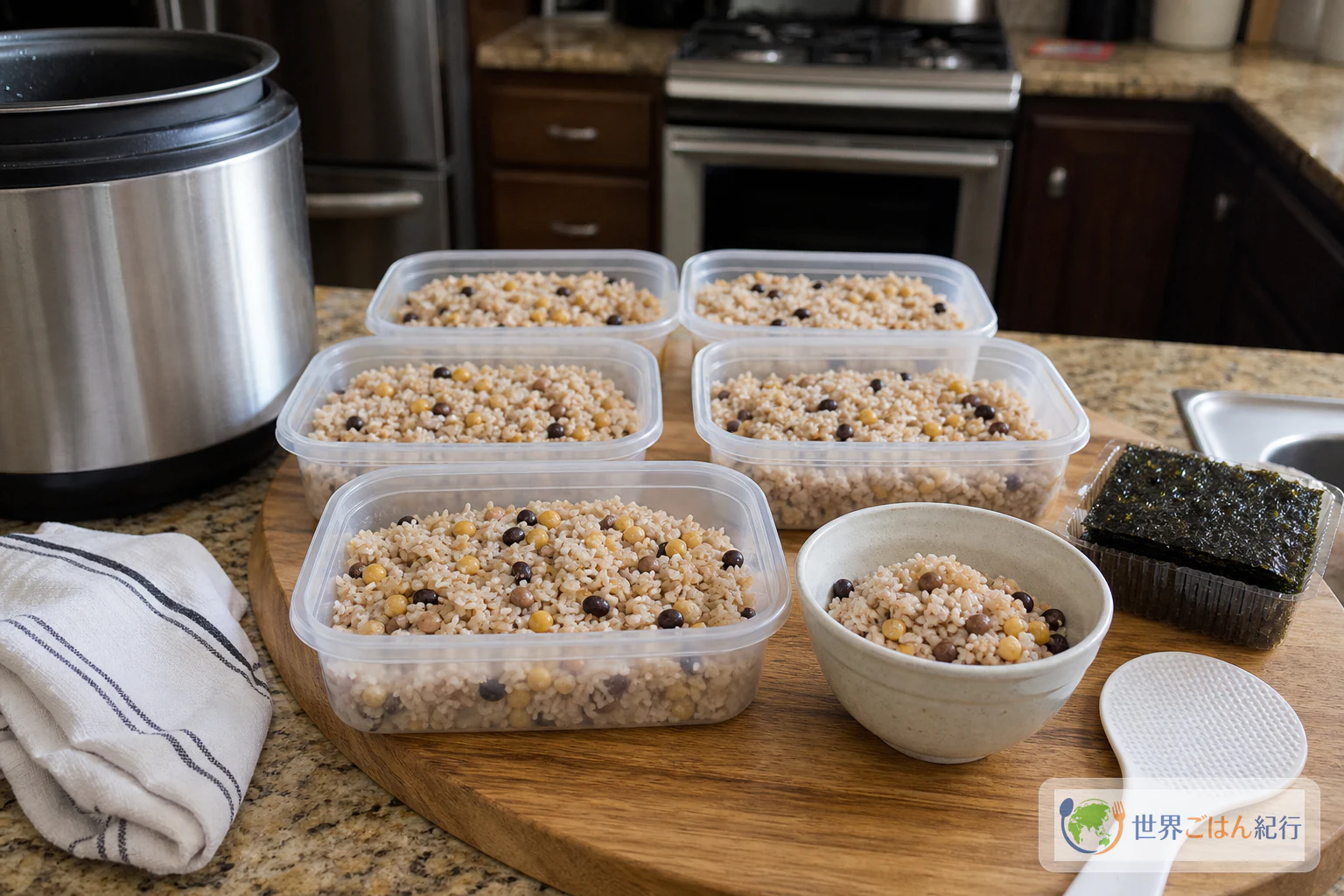
Kongbap is best fresh, but it freezes well. The beans and grains make it harden more than white rice in the refrigerator, so freeze any portion you won't eat the next day.
| Storage | Guideline | Reheating |
|---|---|---|
| Room temperature | Within 2 hours | Do not leave out on a hot day |
| Refrigerator | 2 days | Sprinkle 2 tsp water, 600 W for 2 to 2 minutes 30 seconds |
| Freezer | 3 weeks | Wrap in single portions, 600 W for 3 minutes 30 seconds to 4 minutes |
To freeze, wrap it flat in single portions within 20 minutes of cooking. A thick lump freezes slowly in the center, and the beans dry out when reheated. For a lunchbox, cool the rice completely before packing and keep it in a separate container from kimchi or watery side dishes.
Frequently Asked Questions
Do I always have to parboil the black beans?
The first time, yes. Some rice cookers with a strong multigrain setting can cook the beans after soaking alone, but the type and dryness of the beans make a difference. The 12-minute parboil leaves the beans short of fully soft; it brings them close enough to finish at the same time as the rice.
Can I use canned black beans?
The rice will be fine to eat, but the aroma and firm skin of kongbap are hard to achieve. Canned beans are often already salted and soft, and they tend to break during cooking. If you use them, mix them in during the final steaming and think of it as a different dish.
Can I substitute a multigrain mix?
Yes. For 2.5 cups of rice, use 30–40 g of store-bought mix and 60 g of black beans. If the mix includes black rice, leave out the extra 10 g black rice. Start with 80–90 ml added to the normal 2.5-cup mark of water.
My rice cooker has no multigrain mode.
Use the normal setting rather than quick cook. Quick cook shortens soaking and steaming and tends to leave beans and barley hard. If the beans are still hard after normal cooking, add 2 tbsp water, reheat, and steam for 10 minutes.
Can I make it without glutinous rice?
You can. Increase the rice by 1/2 cup and start with the same 2.5-cup mark plus 80 ml of water. Without glutinous rice it loosens a little more when cold, so for lunchboxes or rice balls, press it lightly while warm.
Can I make it easier for children or older people to eat?
Halve the black beans to 1 oz (30 g) and extend the parboil to 15 minutes on low heat. If chewing strength is a concern, choose a small bean like kuro-sengoku rather than large black soybeans. Check the beans before eating, and if any are still hard, heat it further.