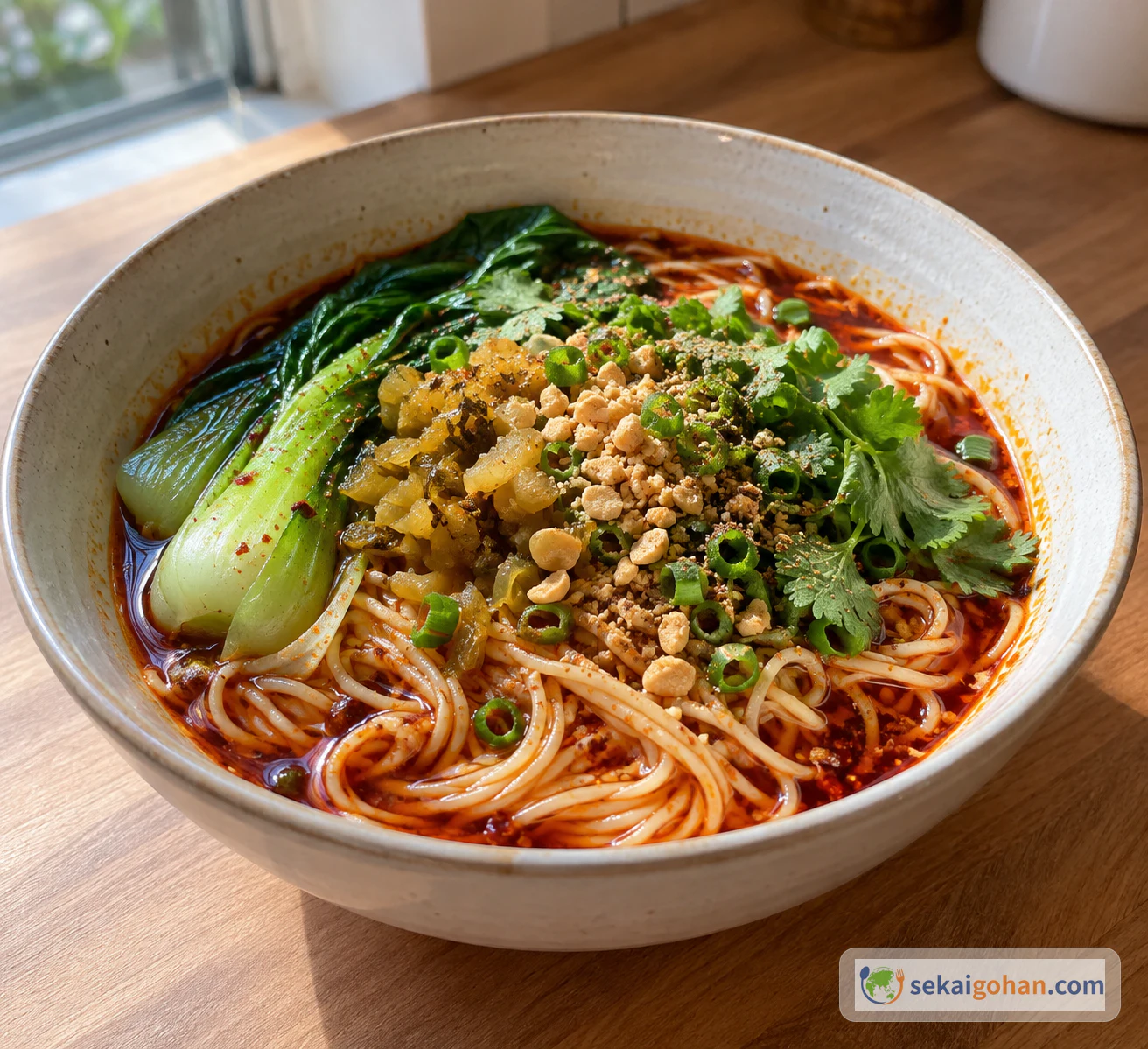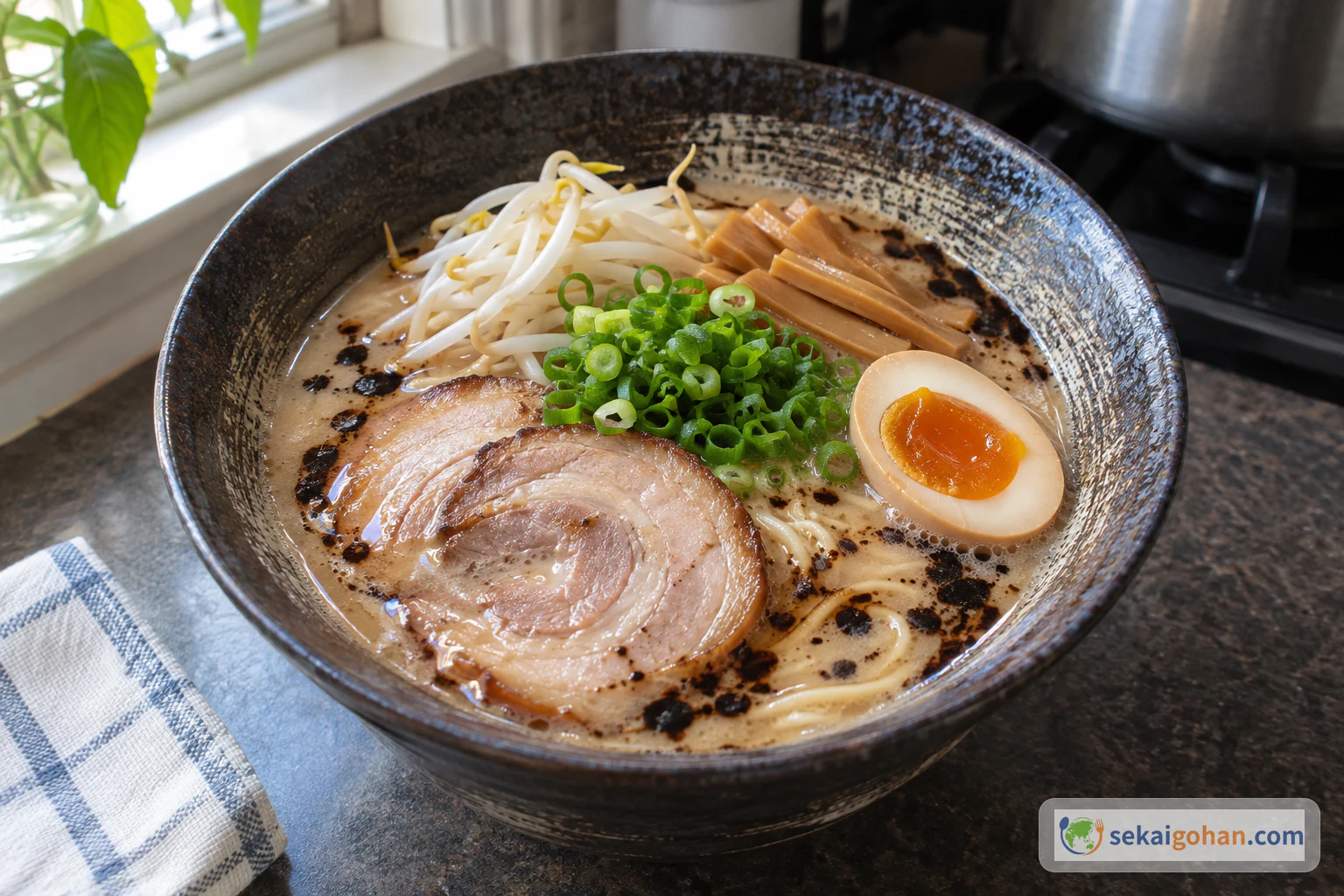
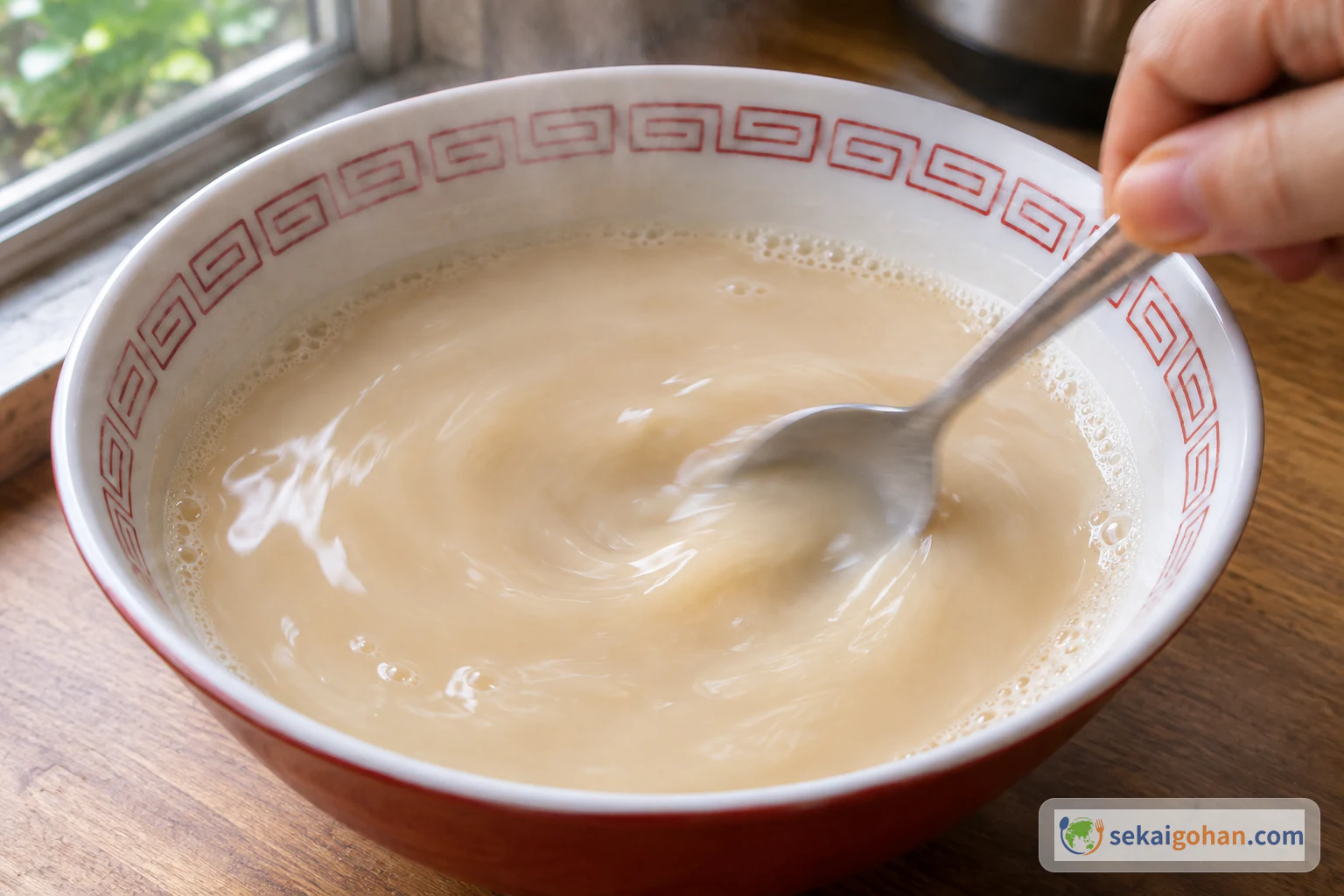
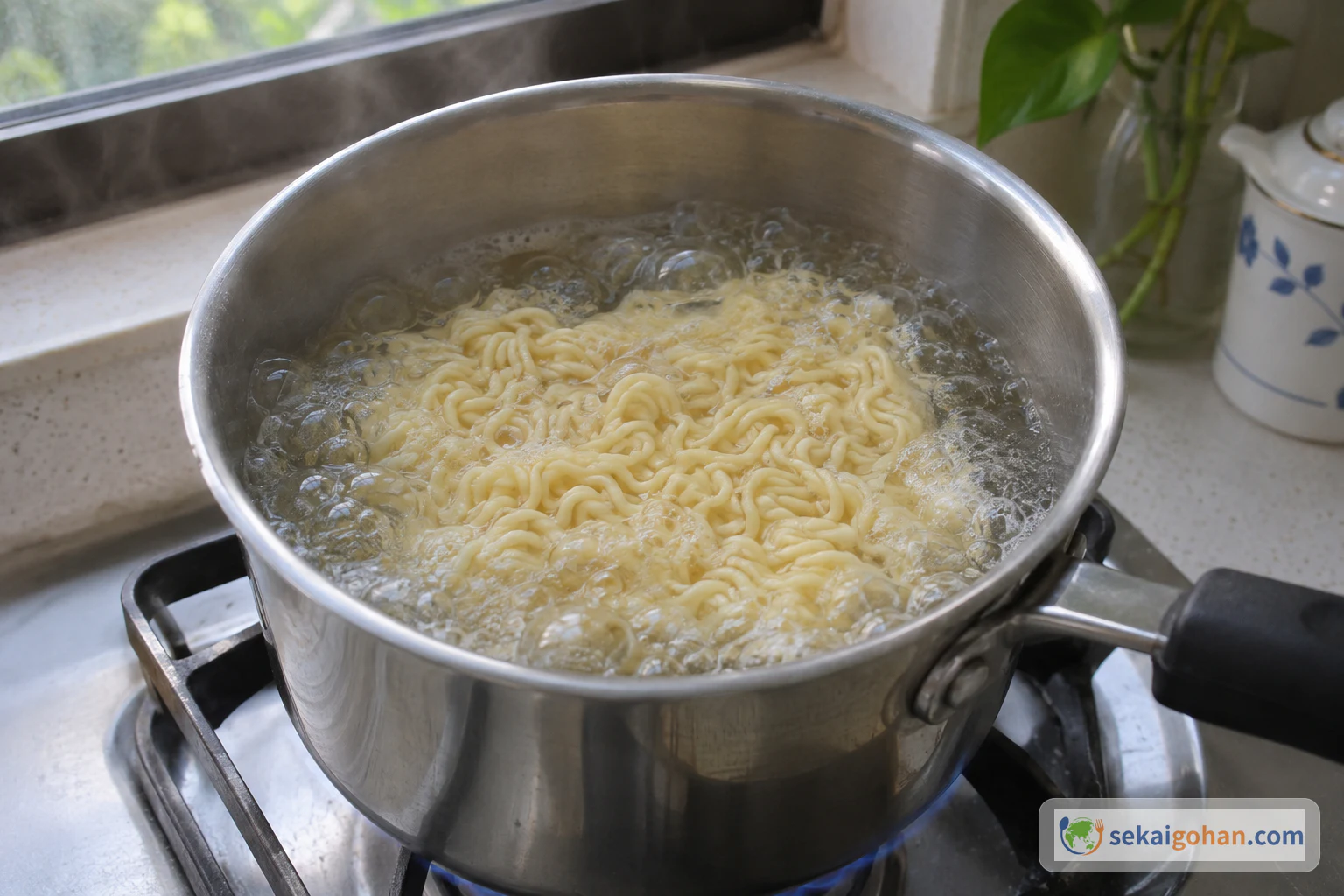
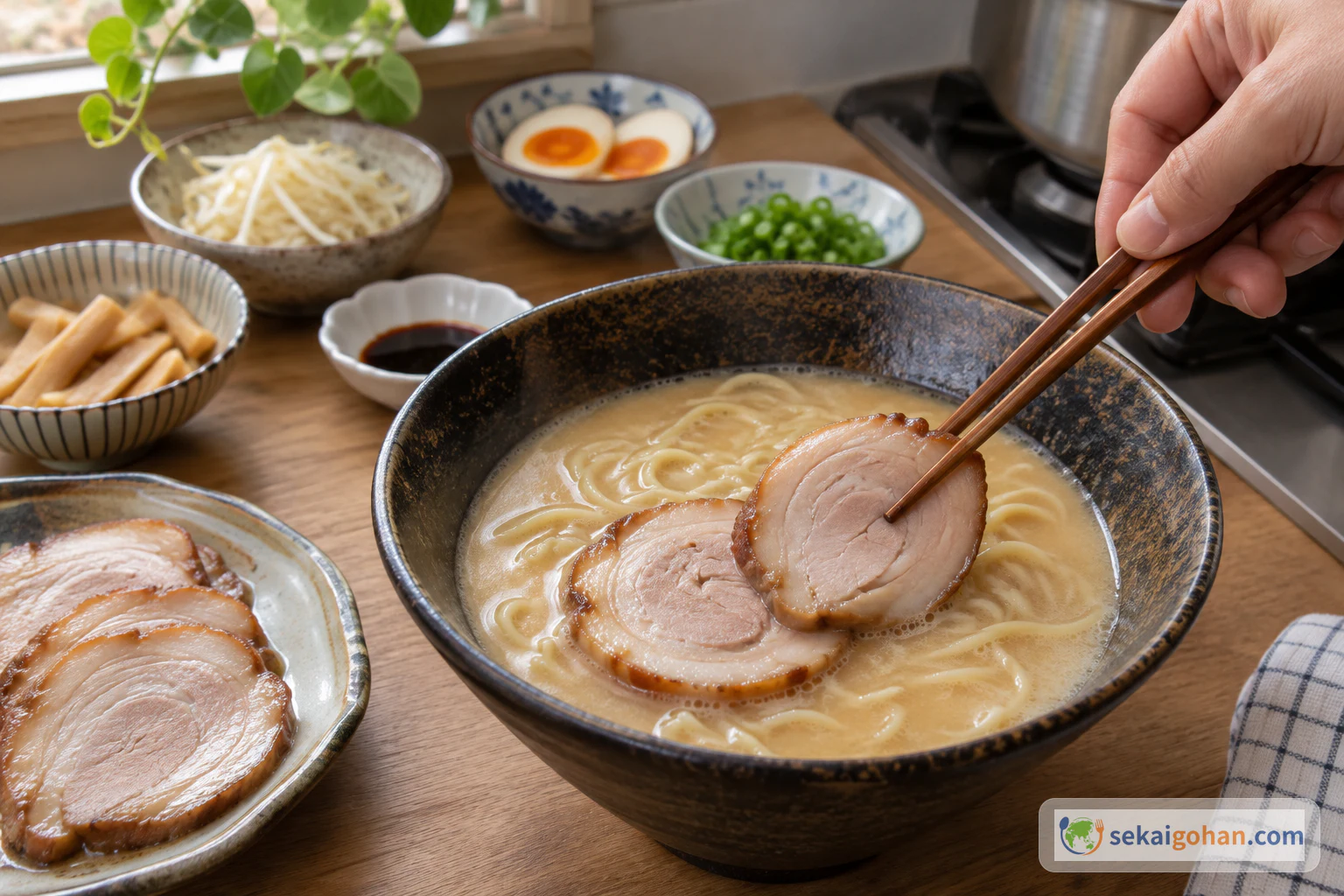
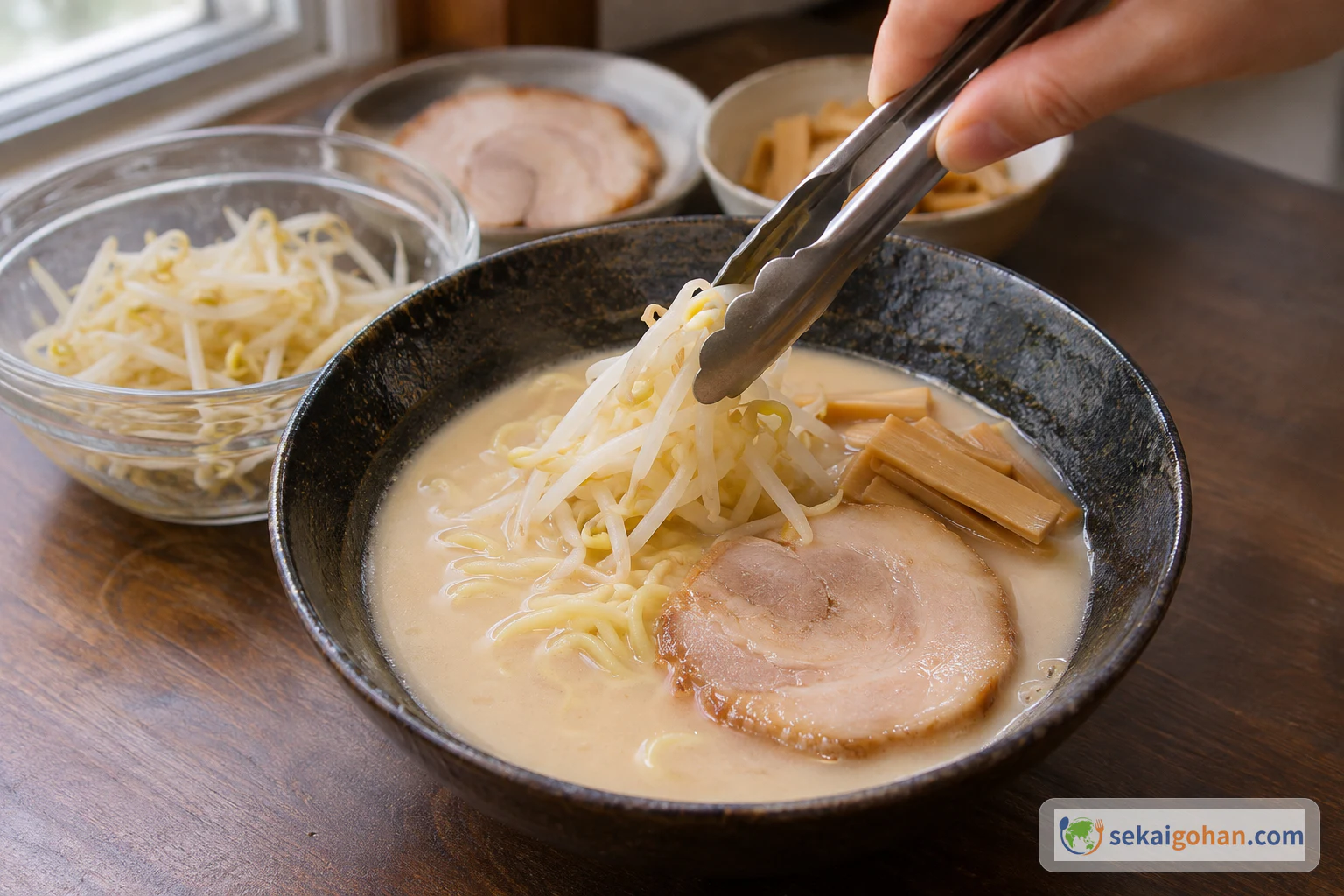
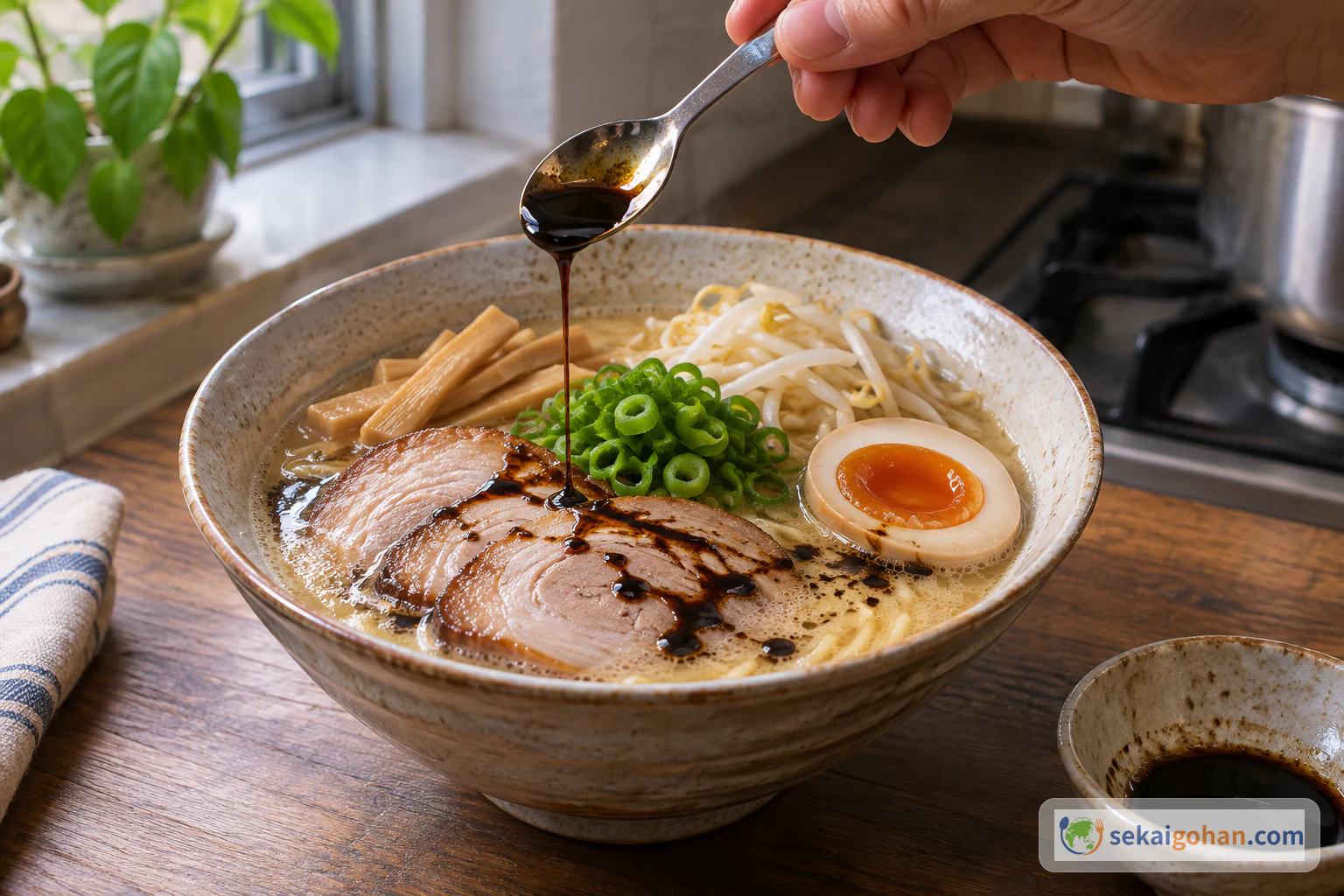
Boiling water hits a spoonful of thick pork concentrate in an empty bowl, and a quick stir turns the two into a cloudy tonkotsu broth. Noodles and toppings follow. The last thing to land is a drizzle of ma-yu, the dark aromatic oil that gives this bowl its character. This is Kumamoto ramen made the practical way at home, with a commercial soup concentrate and flavor oil doing the heavy lifting: a pale, rich pork broth with a smoky, bittersweet finish.
Kumamoto Ramen and Its Regional Style
In Kumamoto, ramen means a mild soup of pork bones combined with chicken bones, served with medium-thick straight noodles, roasted garlic chips and garlic oil. Several Kumamoto shops opened between 1953 and 1968, and together they helped form the regional style.
Individual shops vary widely. Kokutei makes its soup entirely from pork head bones, with medium-thick noodles and house-made burnt garlic oil. Ajisen Ramen adds garlic to a Kurume-style flavor and pairs its pork broth with Senmiyu (千味油) oil and fried garlic.
The bowl here is a simpler home version: cloudy white pork broth and ma-yu, built from store-bought products, without garlic chips or homemade stock, oil, tare, chashu or egg. Browse more of the dishes of Japan to see it alongside other home cooking from the country.
Ingredients: One Serving
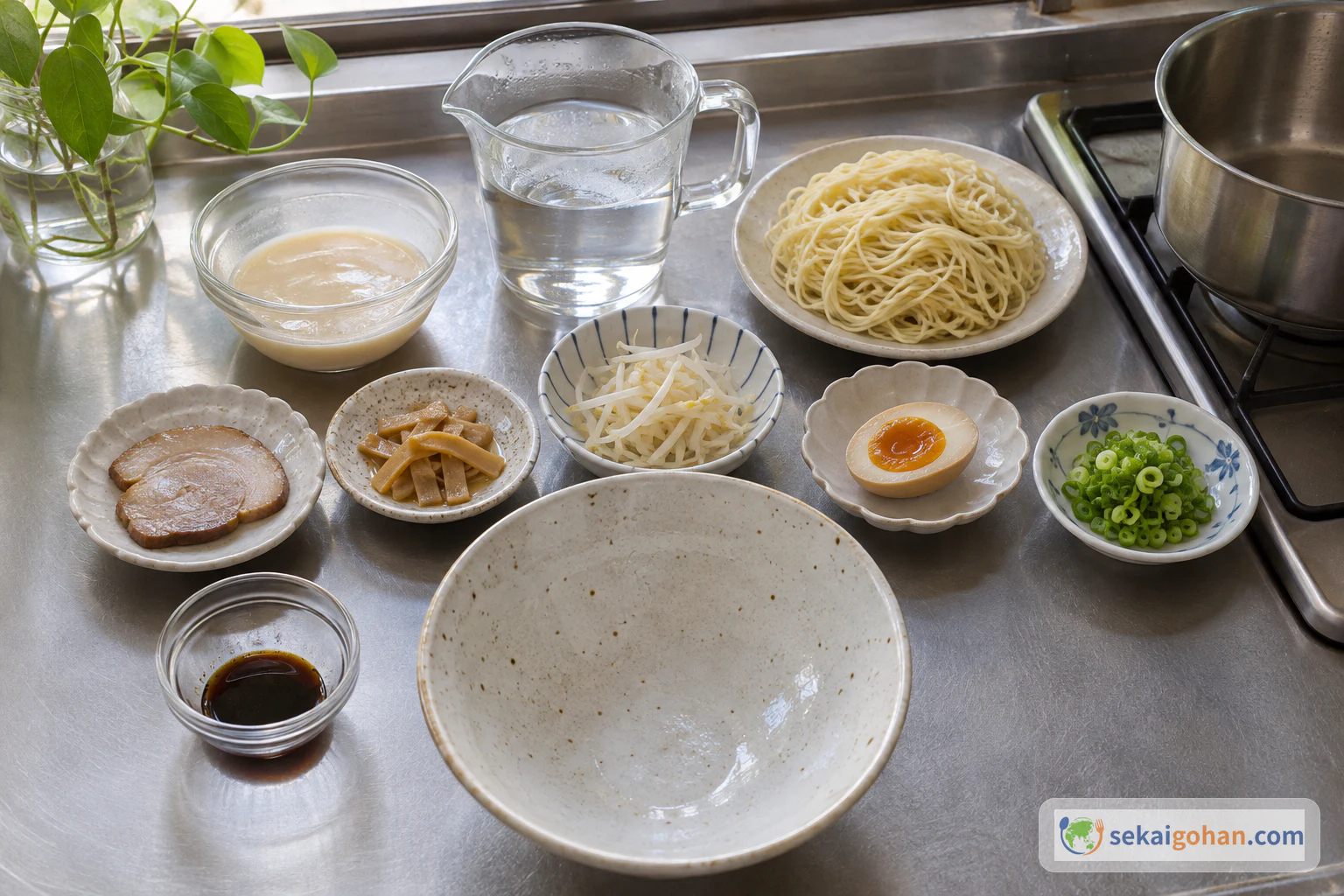
Equipment
- Measuring cup
- Kitchen scale
- Ramen bowl
- Pot for boiling the noodles
- Separate small pot for boiling the bean sprouts
- Colander and wire strainer
- Knife and cutting board
- Spoon
Choosing Products for Kumamoto Ramen
Concentrated soup: The 3.5 tbsp to 1¼ cups (50 ml to 300 ml) ratio is for this product only. If you use a different soup, follow its label.
Ma-yu: This is a prepared flavor oil. Chili oil and sesame oil are different oils and won't stand in for it.
Noodles: Medium-thick straight noodles suit the regional style, so use them if you can find them.
Bean sprouts: Use thin mung bean sprouts. Large-beaned soybean sprouts need longer to cook through, so skip them here.
Toppings: Buy the menma, chashu and egg ready-made, and read each label for storage and heating directions.
Method: From Empty Bowl to Final Drizzle
Bean sprouts are an ingredient to cook, so do not put them in the bowl raw. The boiling time in step 5 is a cooking guide, not a guarantee that bacteria have been killed.
Do not serve the bean sprouts or a soft-boiled egg to anyone who is pregnant, young children, older adults, or people with weakened immunity. For them, leave out the sprouts and either use an egg with a fully set yolk or leave out the egg too.
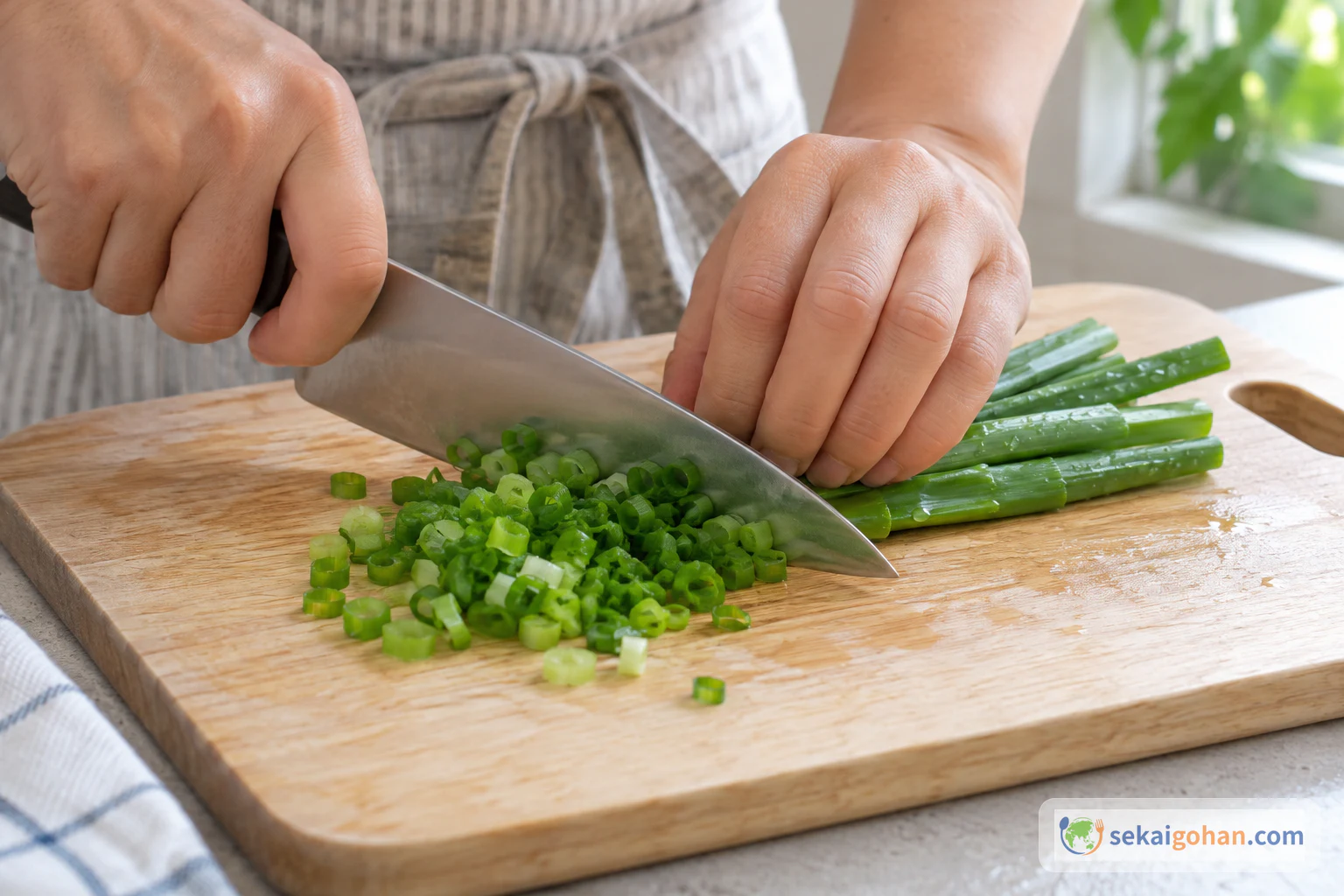
The green onion stays raw. Washing it under running water reduces bacteria but does not remove them.
Kumamoto Ramen Troubleshooting
| Problem | What to check | What to do |
|---|---|---|
| The broth looks uneven | The concentrate may not have fully dissolved | Keep stirring before the noodles go in |
| You are unsure how long to boil the noodles | Times differ between products | Follow the noodle package |
| The sprouts look brown or smell sour | These are signs of spoilage | Do not use them |
| The chashu or egg package has its own directions | Storage and heating vary by product | Follow the label |
Variations on Kumamoto Ramen
Once you have the basic bowl down, there's room to adjust it to your taste.
| Change | How to do it | What stays the same |
|---|---|---|
| Boiling water or bone stock | Use 1¼ cups (300 ml) gara (bone) stock in place of the water, not in addition to it | 3.5 tbsp (50 ml) of the named concentrate |
| Lighter or stronger ma-yu | Use anywhere from 2 tsp to 1.5 tbsp (10 ml to 20 ml) | The oil still goes on last |
| Noodle shape | Use any Chinese noodle you prefer, boiled as its package directs | 1 portion |
Frequently Asked Questions
Why boil the bean sprouts?
Bean sprouts are generally eaten cooked. Raw or lightly cooked sprouts can carry bacteria that cause food poisoning, and thorough cooking greatly lowers that risk.
How long should I boil the sprouts?
About 1 minute is a common boiling time in recipes for other dishes. Treat it as a cooking guide; it is not given as a condition for killing bacteria.
What kind of seasoned egg should I buy?
Buy a store-bought soft-boiled seasoned egg and follow the package for storage. Some products are labeled for refrigeration at 50°F (10°C) or below, with a best-before date 31 days after manufacture, counting the day of manufacture, and some can be eaten straight after opening. A soft-boiled egg may not be pasteurized.
Who should avoid the sprouts and soft-boiled egg?
Leave out the sprouts for children, older adults, pregnant people and people with weakened immune systems. For these diners, use an egg with a fully set yolk, or leave out the egg as well.
Does washing make the raw green onion safe?
No. Washing under running water reduces bacteria but does not remove them. To prevent food poisoning at home, keep bacteria off food, stop them from multiplying, and kill them.