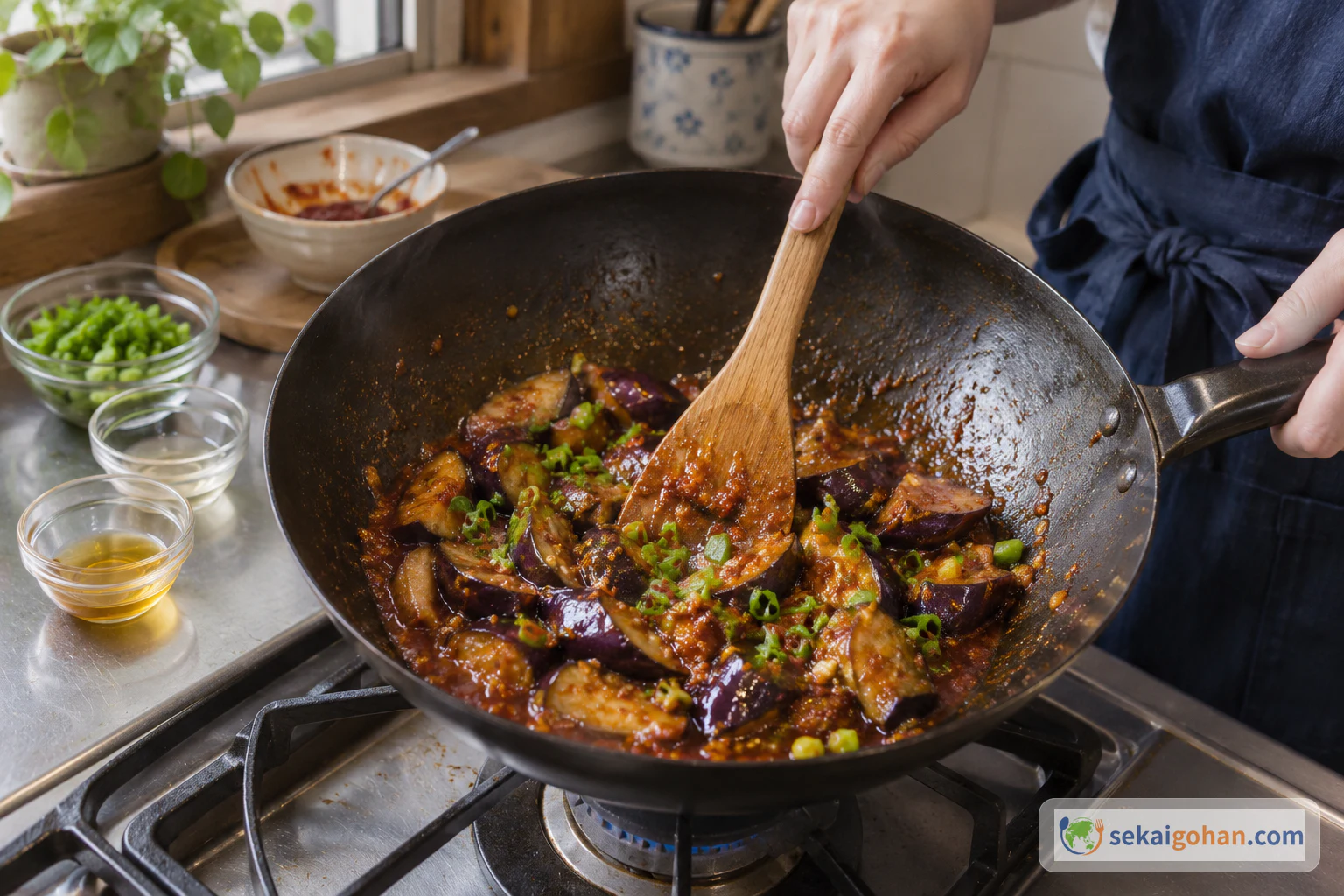
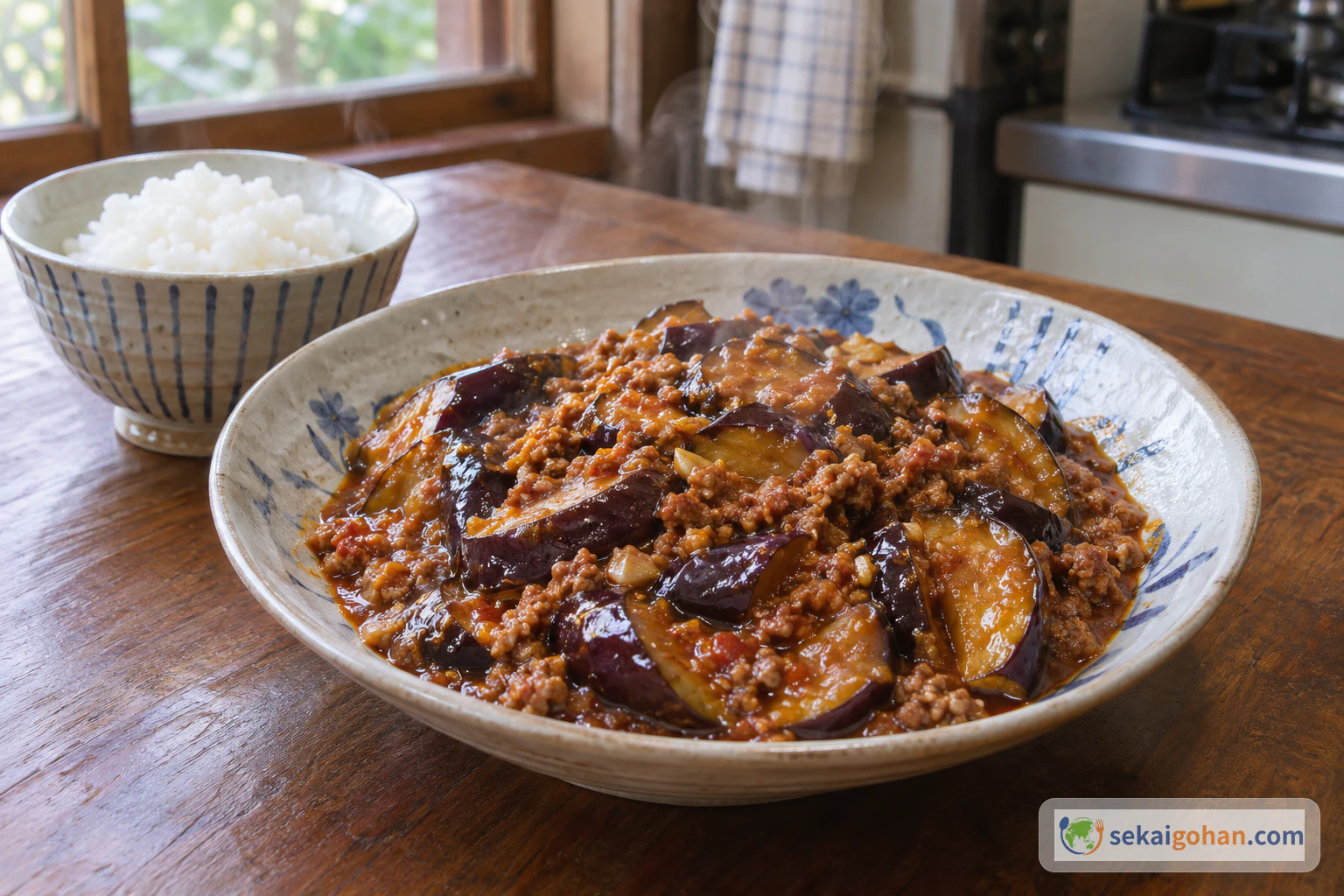
Mabo Nasu: Japanese Home-Style Eggplant with Spicy Ground Pork Sauce (麻婆茄子)

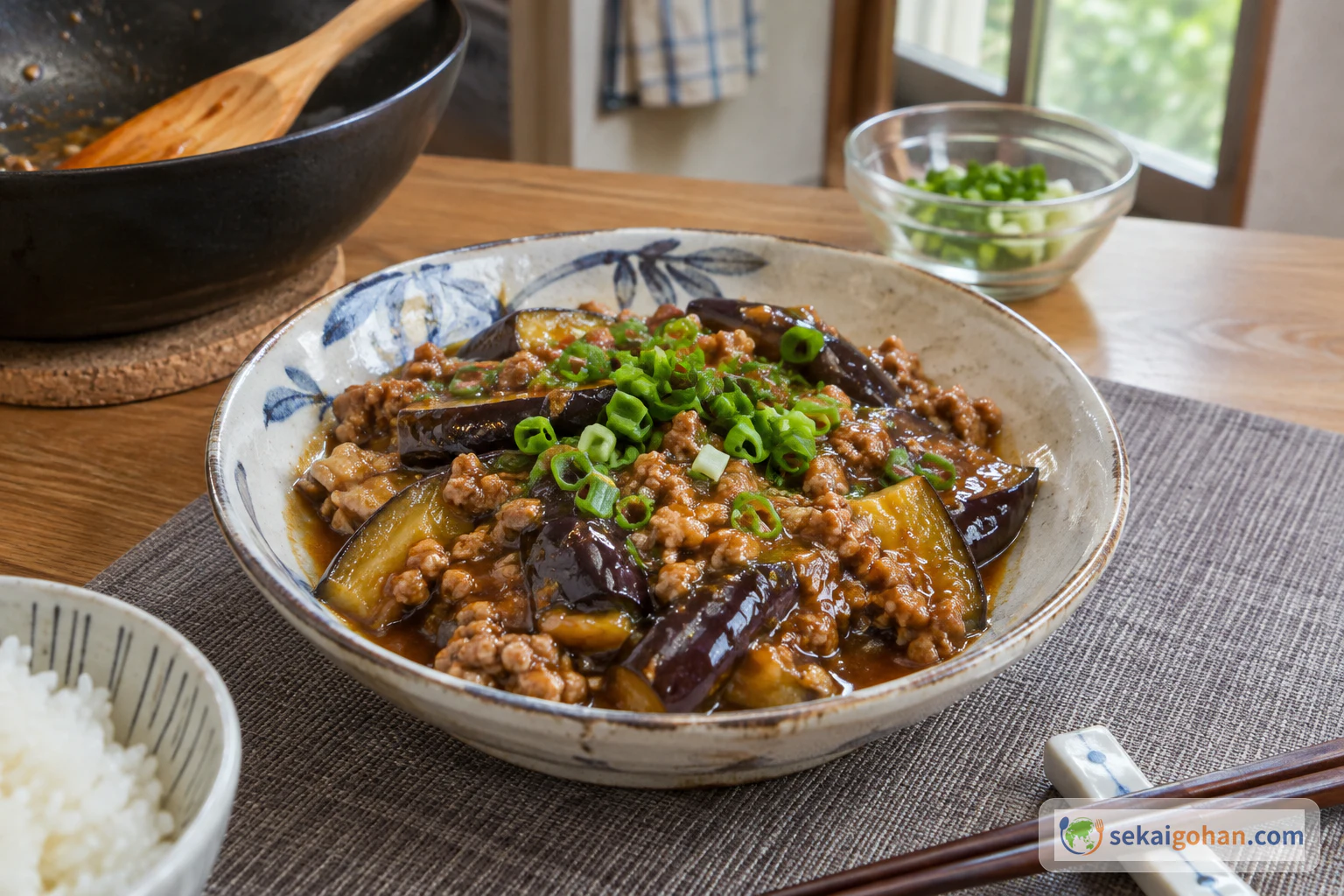
Finished Japanese home-style mabo nasu in a white bowl, the eggplant pieces holding their shape under a spicy ground pork sauce, with green onion visible
Serves
2 servings
Level
Beginner
Cuisine
Japanese

How to make mabo nasu (麻婆茄子), a Japanese home-style dish of eggplant steamed in sesame oil and returned to a ground pork sauce with doubanjiang and tianmianjiang. Serves 2, with step-by-step photos, pork safety guidance, fixes for common problems, and notes on how it differs from yuxiang eggplant.

Cooking flow

Cooking steps

STEP11 / 13

Cut and soak the eggplant

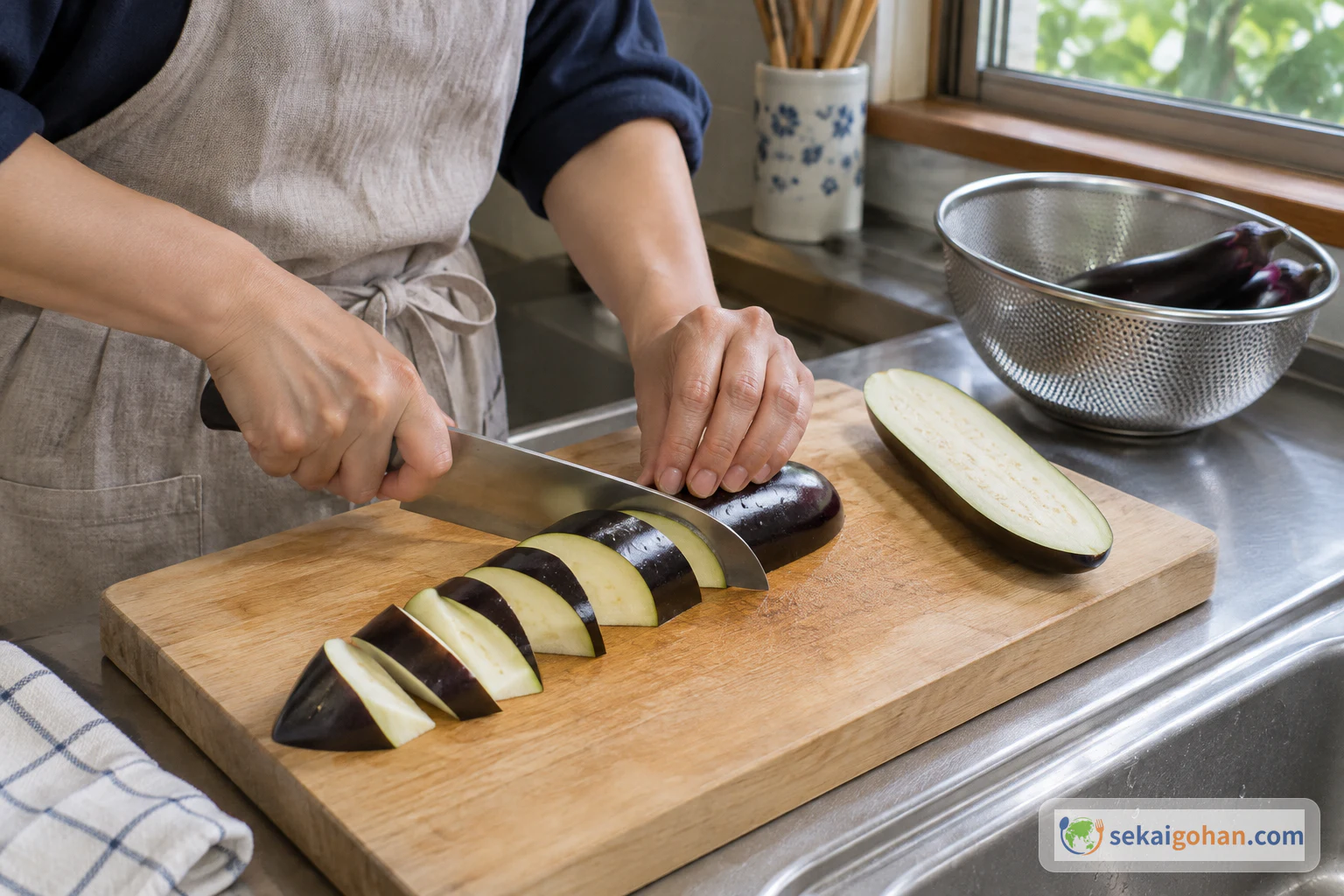
A raw eggplant half being cut into diagonal pieces 1 to 1.5 cm wide
Short diagonal pieces

Cut the calyx off each eggplant, then halve each one lengthwise. Slice the halves diagonally into pieces 0.5 inches (1–1.5 cm) wide and put them in a bowl of water. Lift the eggplant into a colander to drain, then wipe the water off the surface with paper towels. The eggplant is still fresh and raw, just dry on the outside.

STEP22 / 13

Prepare the aromatics and green onions

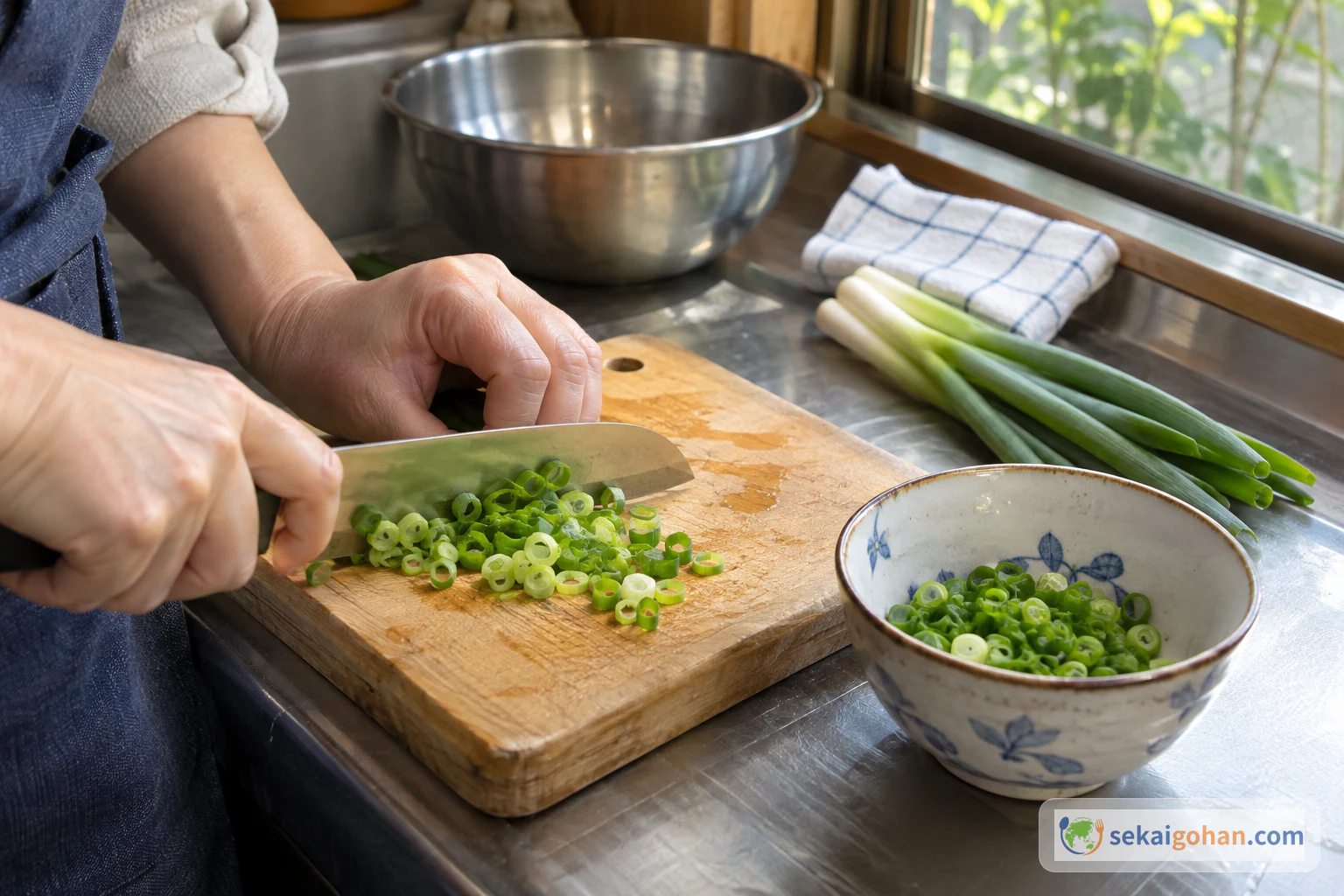
Green onions being cut into small rounds, with the rounds gathered in a separate bowl
Small rounds, kept apart for the finish

Finely mince enough fresh garlic to make 2 tsp, and enough fresh ginger to make 1 tbsp. Wash the 3 green onions well under running water, then slice them into small rounds. Set the green onions aside in a separate bowl for the finish.

STEP33 / 13

Mix the slurry, seasoning liquid and groups

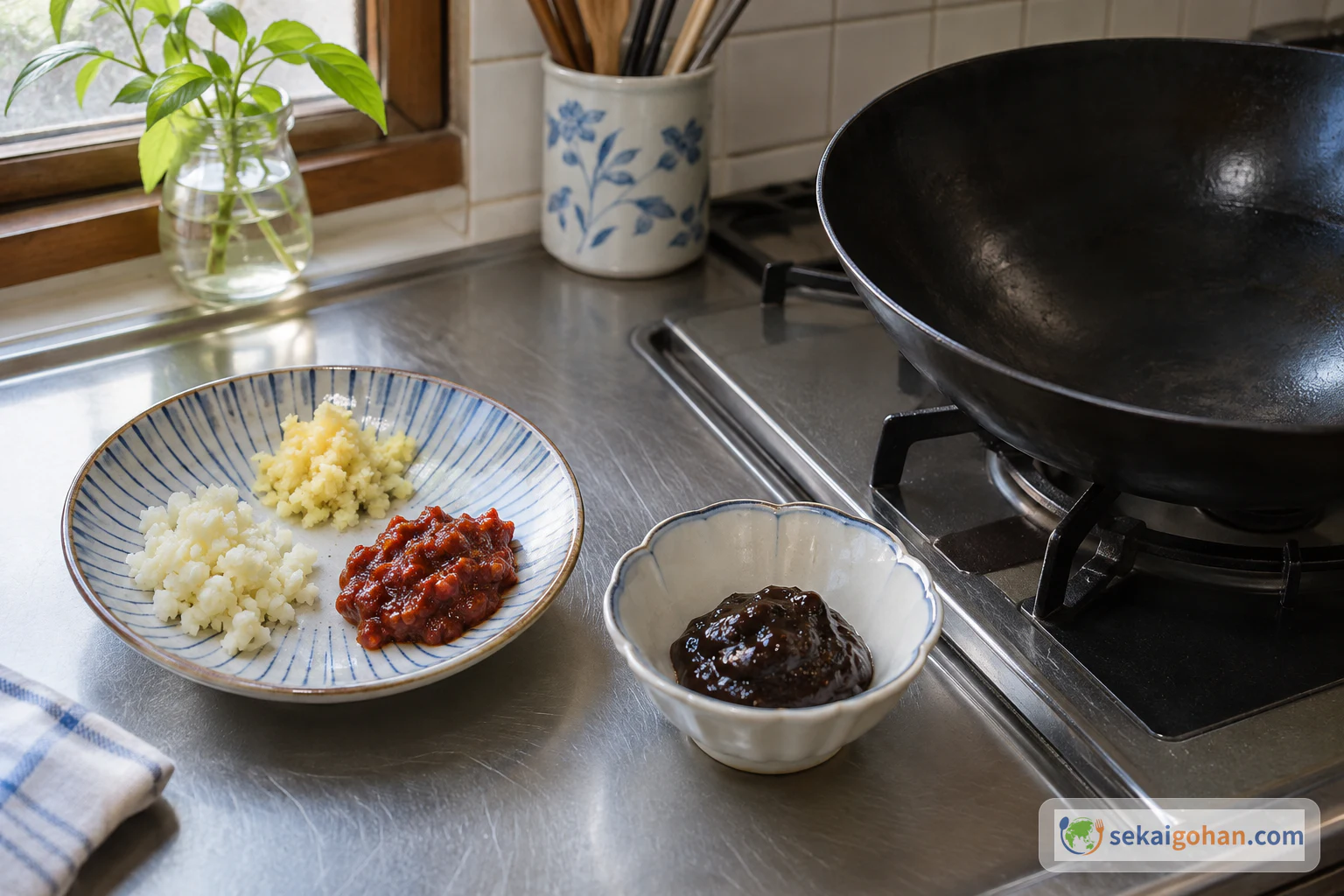
Garlic, ginger and doubanjiang grouped in a small dish, with tianmianjiang in a separate bowl
Group A and the tianmianjiang stay separate

Stir 1 tsp potato starch into 2 tsp water until smooth; this is group C. Combine 1 tbsp soy sauce, 1 tbsp sake, 1/2 tsp chicken stock powder, 1/2–2/3 cup hot water, and a little salt and pepper; this is group B. Put the garlic, ginger and 1 tsp doubanjiang together in a small dish as group A, and keep 2 tsp tianmianjiang in its own small bowl.

STEP44 / 13

Cook the eggplant until soft

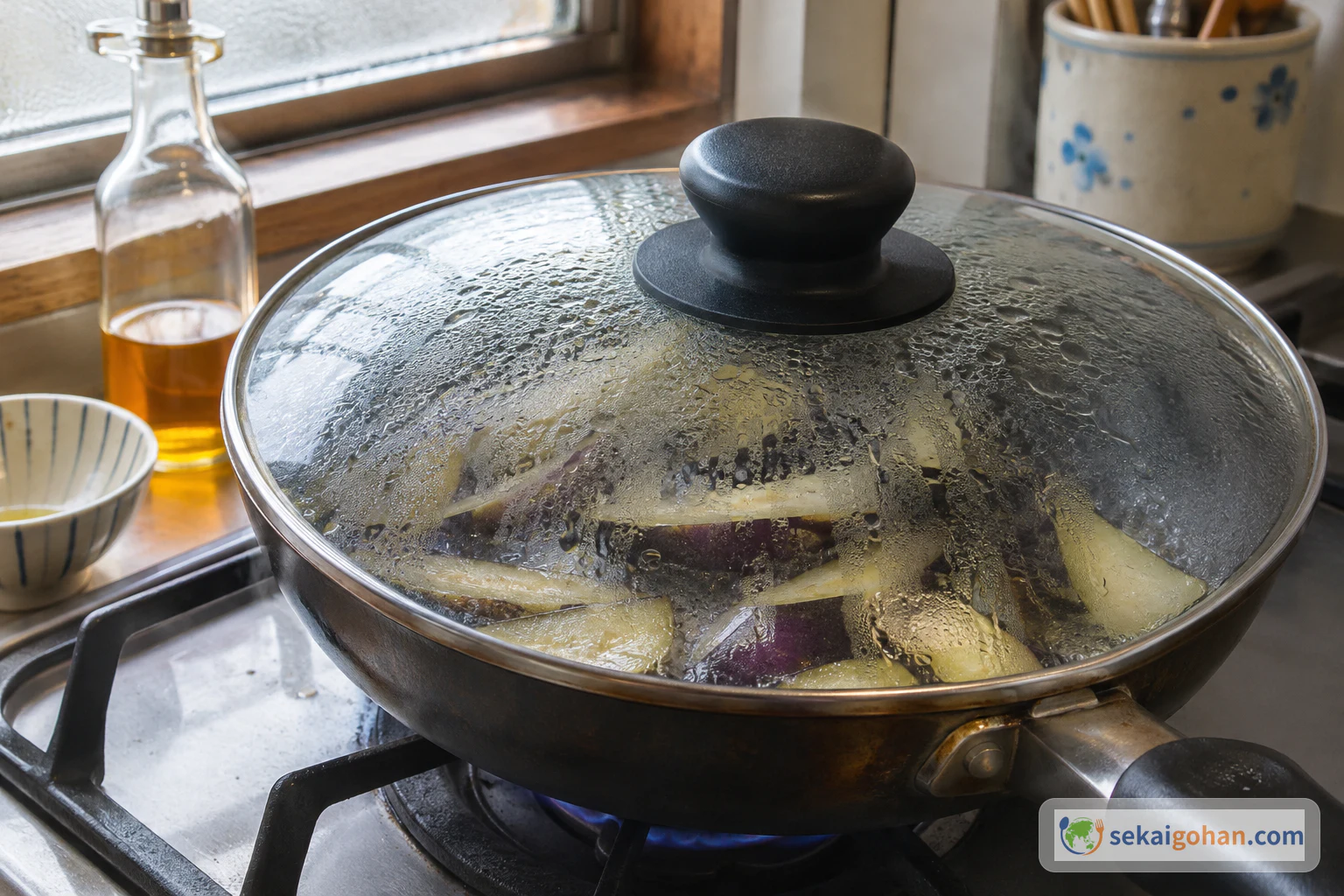
A covered frying pan over low heat with eggplant steaming inside
Lid on, low heat, about 2 minutes

Heat 2 tbsp sesame oil in a frying pan, add the eggplant, and sprinkle a little salt over it. Turn the eggplant so the oil coats the pieces. Put the lid on and cook over low heat for about 2 minutes, then take the lid off and shake the pan so the eggplant turns over. Put the lid back on and cook over low heat for about 1 minute, until the eggplant has softened.

STEP55 / 13

Set the eggplant aside

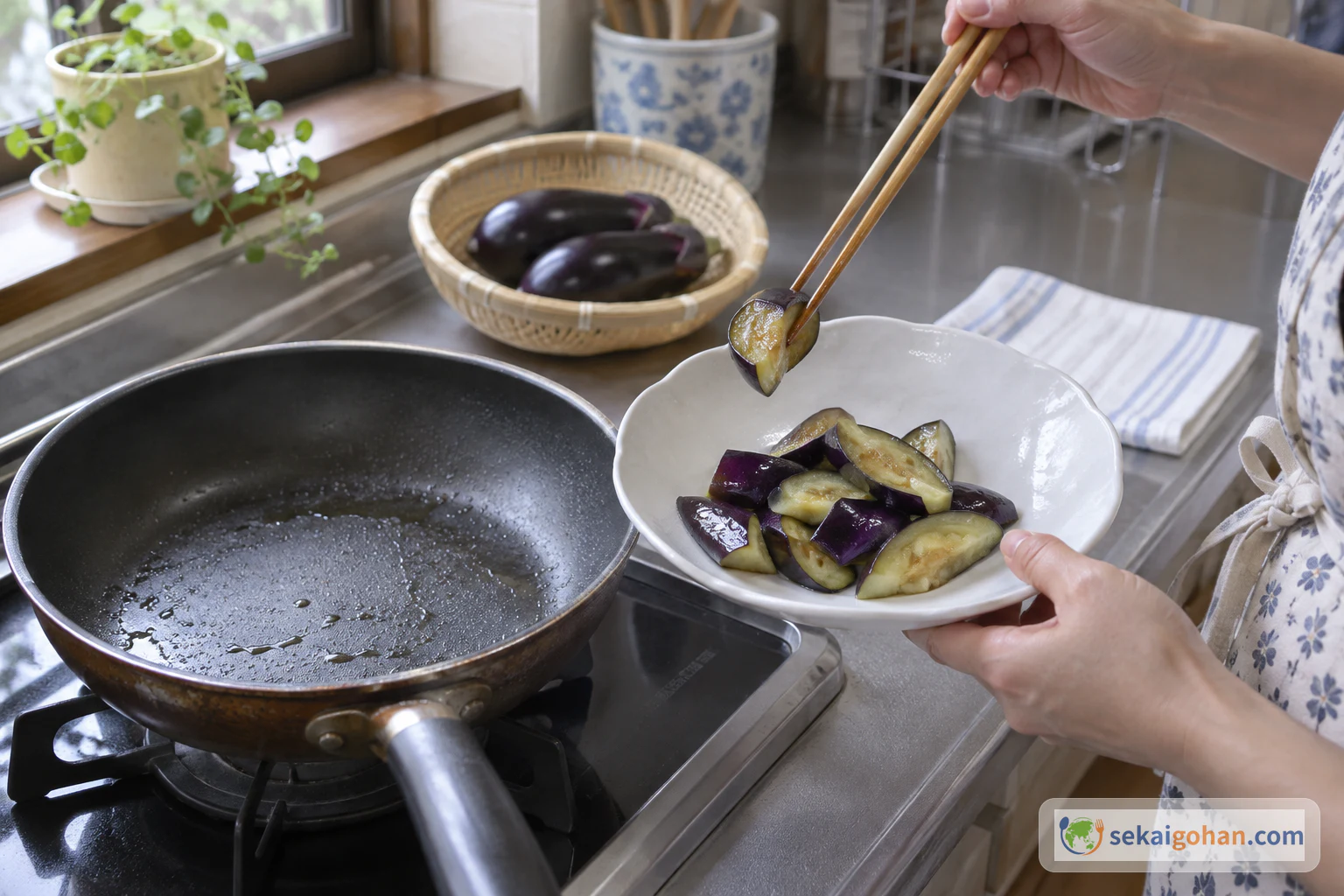
Softened eggplant being lifted from the pan onto a holding plate
Set the softened eggplant aside

Lift the softened eggplant out onto a plate and set it aside.

STEP66 / 13

Fry the aromatics

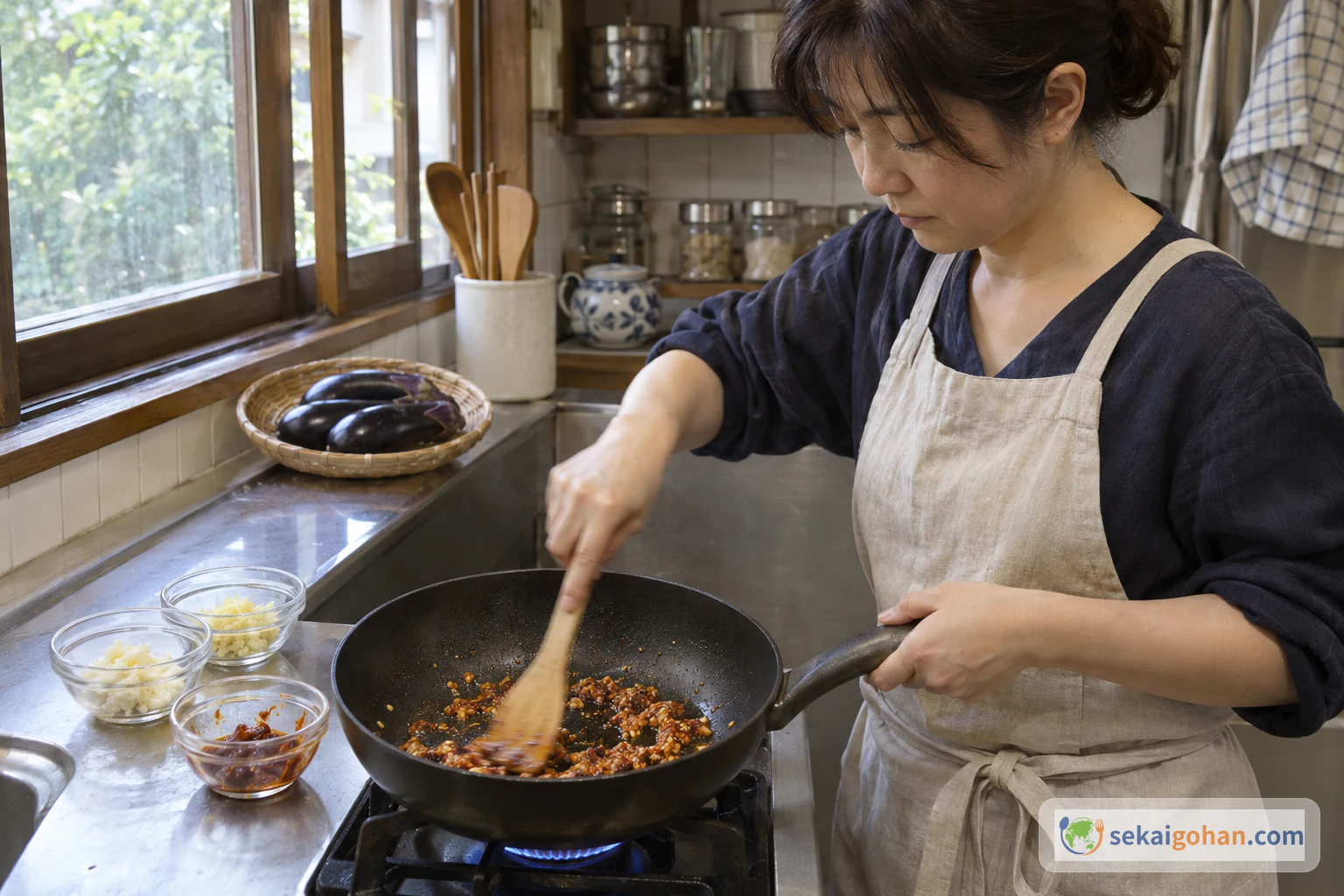
Garlic, ginger and doubanjiang being stirred over low heat
Low heat for the aromatics

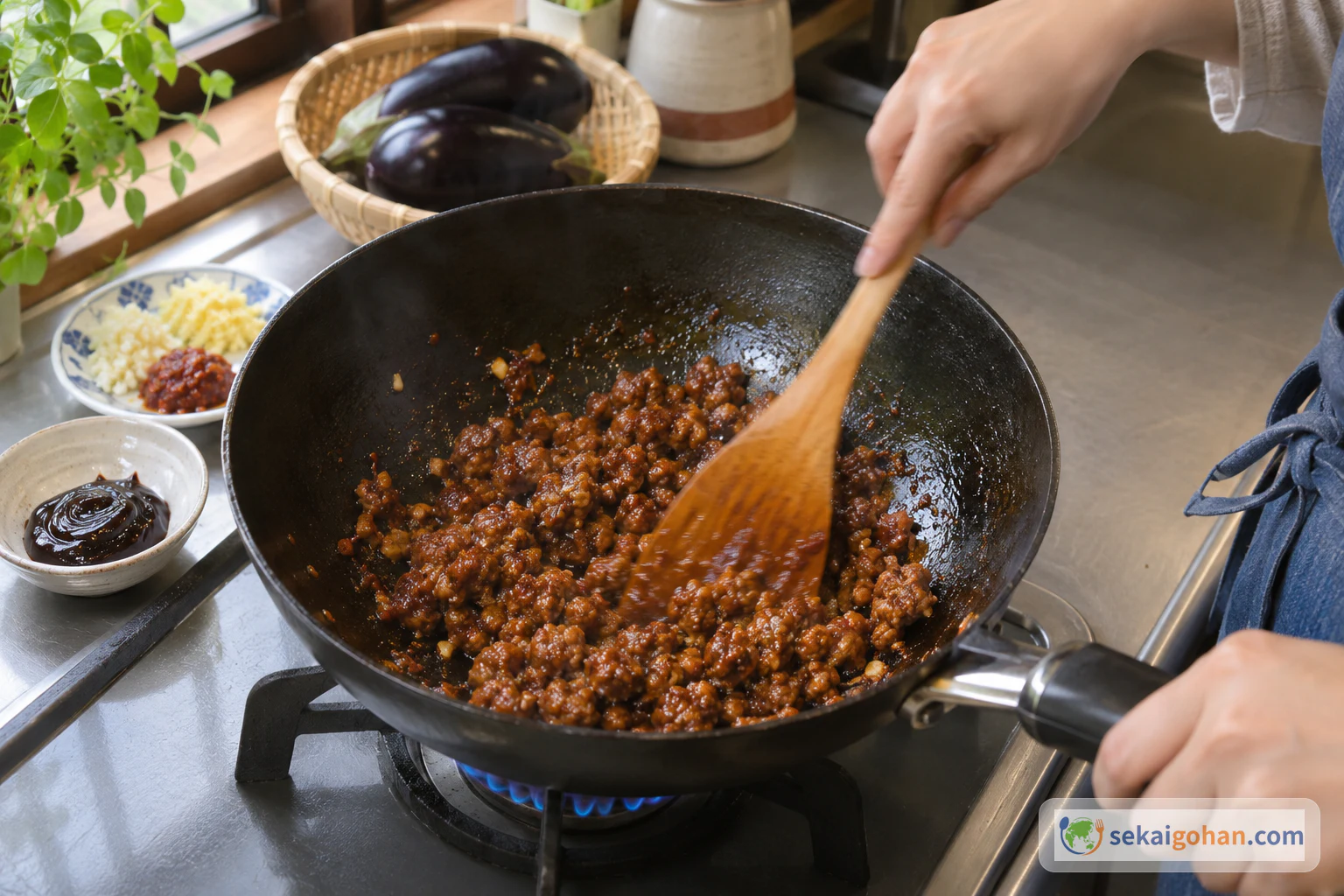
Pour 1/2 tbsp sesame oil into the same frying pan. Add the garlic, ginger and doubanjiang to the oil, and stir-fry group A over low heat until fragrant.

STEP77 / 13

Cook the pork

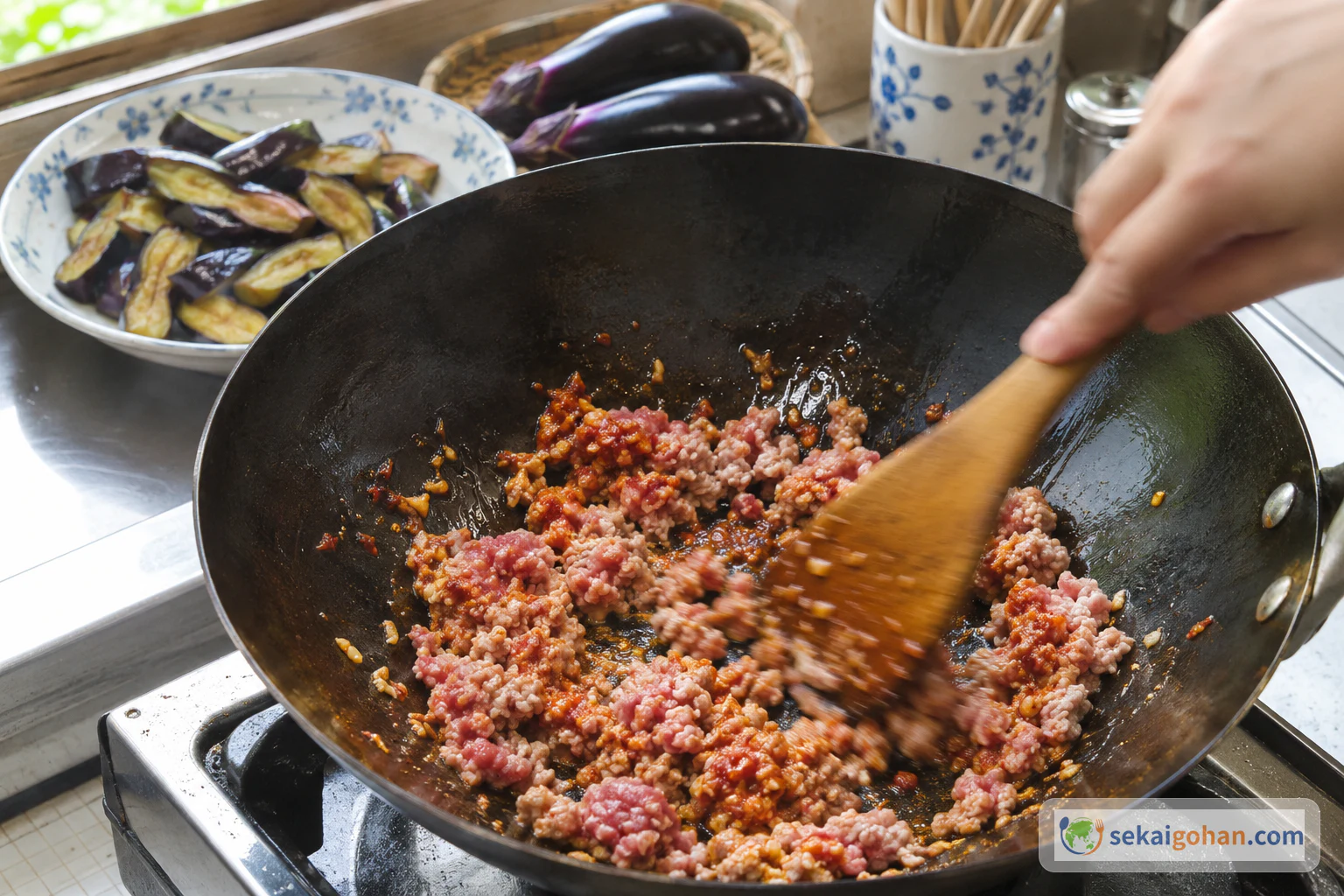
Ground pork being broken up and stirred with the aromatics in the pan
Break up the pork as it cooks

Add 5.5 oz (150g) ground pork to the pan. From here until you add the green onion, keep the tools and hands that touched raw pork away from the finishing garnish unless they have been washed. Break up the pork and stir-fry until its color changes. Heat ground pork to 167°F (75°C) at the center for at least 1 minute, or an equivalent. Without a thermometer, stir well and keep heating until no raw or red meat remains.

STEP88 / 13

Coat the pork with tianmianjiang

Tianmianjiang being stirred through the ground pork until it coats the meat
Coat the meat with the paste

Add 2 tsp tianmianjiang to the pork. Stir-fry until the tianmianjiang coats the meat.

STEP99 / 13

Simmer with the eggplant

Eggplant and pork sauce simmering together in the pan
Simmer until the liquid has cooked away

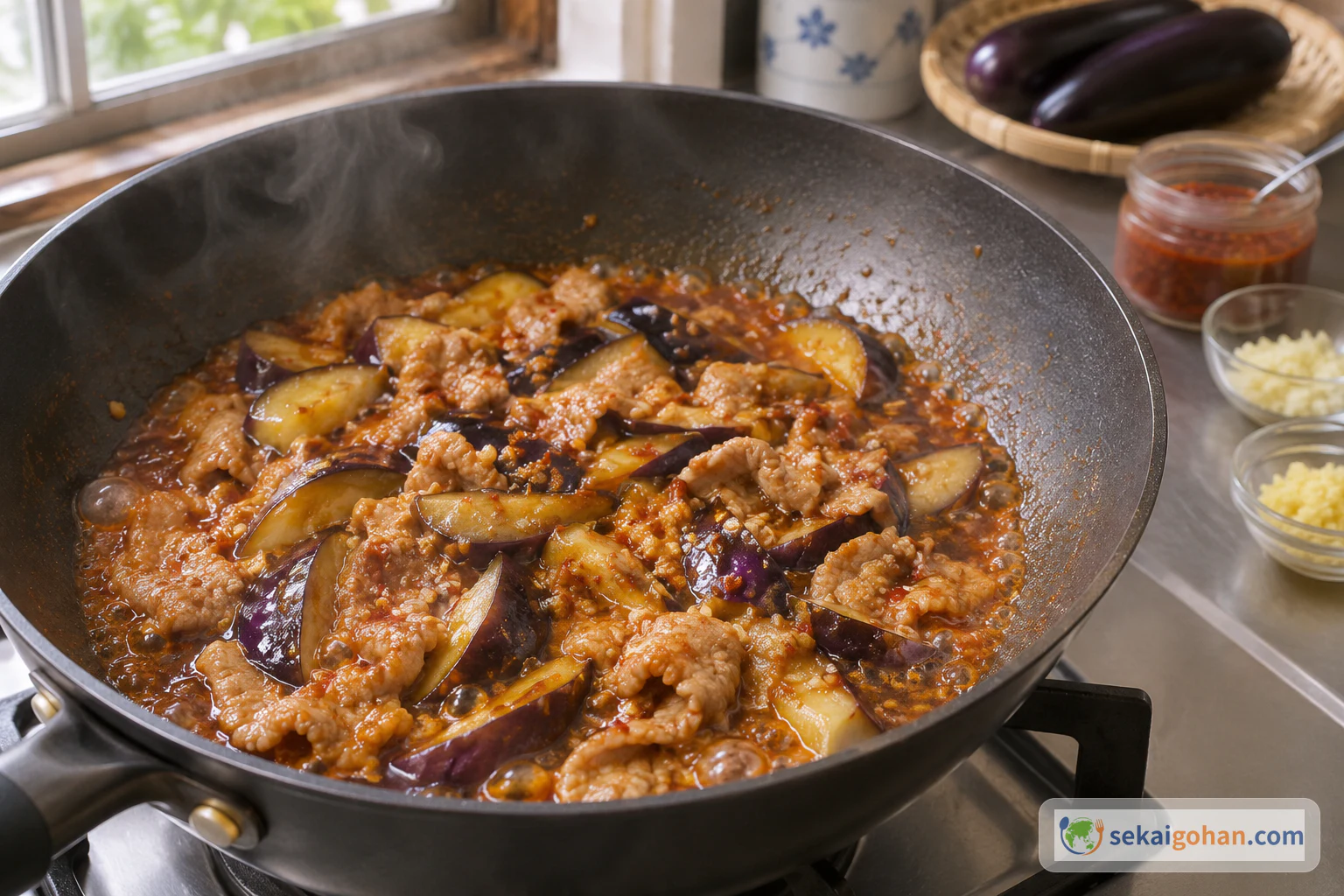
Add the seasoning liquid (group B) to the pan, then put the set-aside eggplant back in. Simmer for 2–3 minutes, mixing the eggplant and sauce thoroughly, until the liquid has cooked away.

STEP1010 / 13

Stir in the slurry

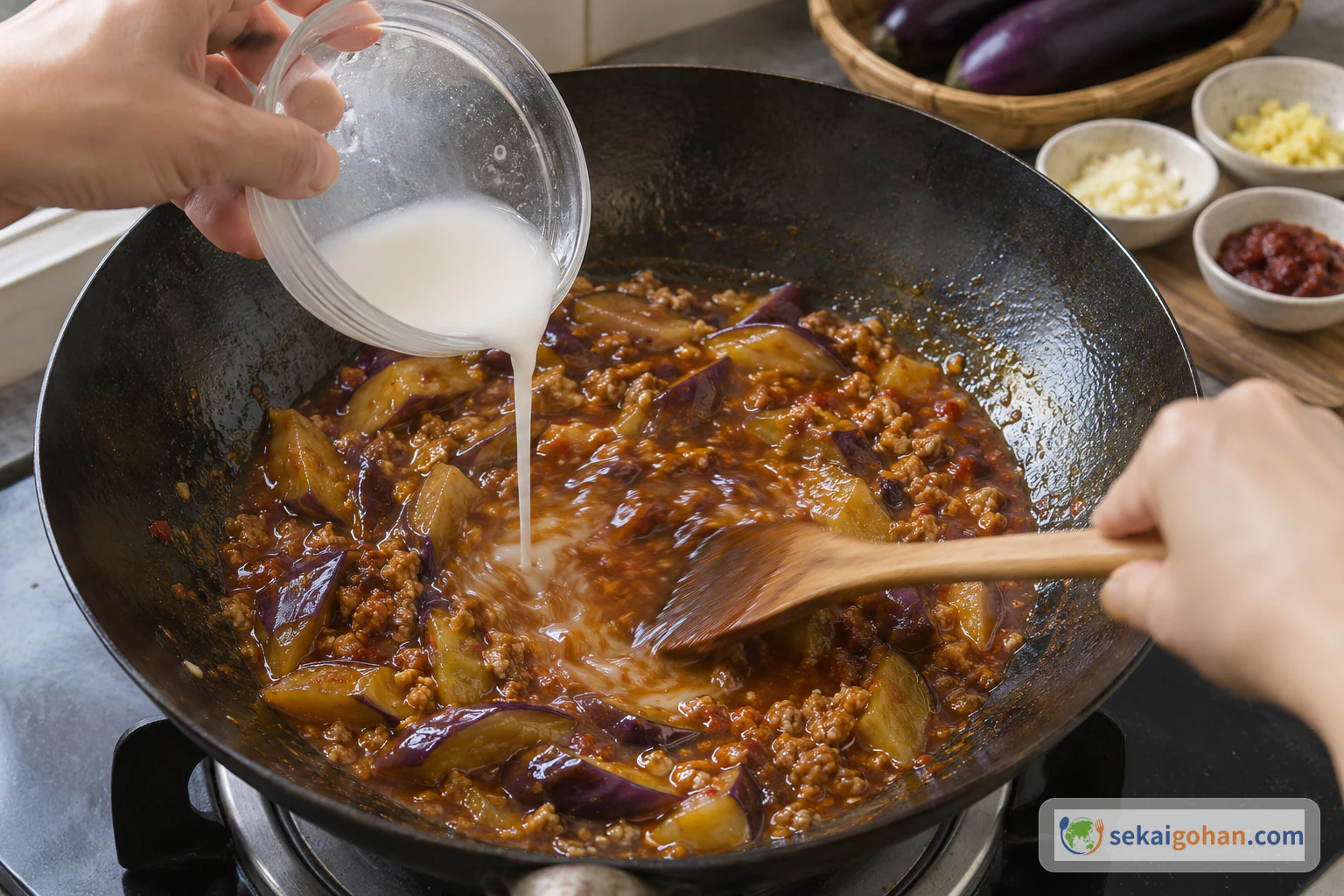
Starch slurry being poured into the pan with one hand while the other stirs the sauce
Pour and stir together

Turn off the burner. With the heat still off, stir the starch and water again until smooth. Pour group C into the pan, stirring the sauce the whole time you pour, and keep stirring until the slurry is evenly mixed through the sauce.

STEP1111 / 13

Thicken the sauce

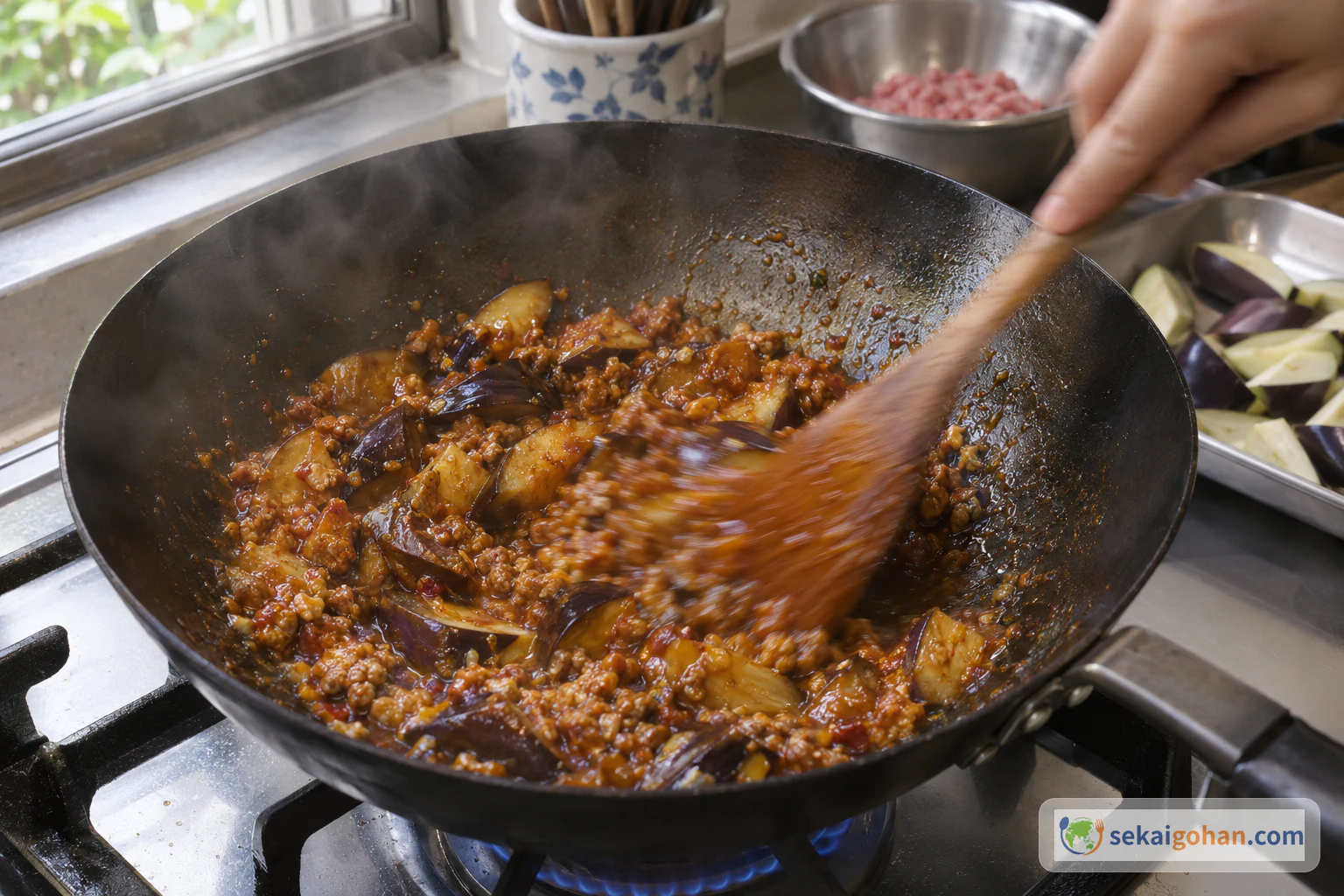
The sauce being stirred over a flame as it thickens
Stir as it thickens

Turn the heat back on and stir until the sauce thickens. Let the thickened sauce simmer a little.

STEP1212 / 13

Finish with green onions, vinegar and sesame oil

The green onion, vinegar and finishing sesame oil being mixed through the mabo nasu
Mix the finish through

Add the sliced green onions, 1 tsp vinegar and 1 tsp sesame oil. Mix everything together.

STEP1313 / 13

Serve

Mabo nasu on a dinner table beside a separate bowl of plain white rice, offered as an optional way to eat it
Plain rice on the side, if you like

Spoon the mabo nasu into serving bowls. It needs no extra toppings or garnish. Serve it with a separate bowl of plain rice if you like; the rice is an optional side.

0 / 0
Ingredients

Ingredients

1 / 1

Ingredients

Ingredient Amount Role
Eggplant (nasu) 3–4 (300g) Main ingredient. Remove the calyx, halve lengthwise, cut diagonally 1–1.5 cm wide
Salt, for the eggplant a little Sprinkled over the eggplant in the pan
Ground pork 150g The body of the sauce
Garlic, minced 2 tsp Group A
Ginger, minced 1 tbsp Group A
Doubanjiang (豆板醤) 1 tsp Group A. Fermented chili-bean paste
Tianmianjiang (甜麺醤) 2 tsp Stir-fried into the pork
Soy sauce 1 tbsp Group B
Sake 1 tbsp Group B
Chicken stock powder (gara soup no moto) 1/2 tsp Group B
Hot water 1/2–2/3 cup Group B
Salt, for the seasoning liquid a little Group B
Pepper a little Group B
Potato starch (katakuriko) 1 tsp Group C, for thickening
Water 2 tsp Group C, for thickening
Sesame oil, for the eggplant 2 tbsp Coats the eggplant before steaming
Sesame oil, for the aromatics 1/2 tbsp Fries group A and the pork
Sesame oil, to finish 1 tsp Added at the end
Vinegar 1 tsp Added at the end
Green onions (banno negi) 3 Sliced into small rounds and added at the end
0 / 0

Cut eggplant goes into hot sesame oil with a little salt. The lid comes down, the heat stays low, and steam gathers underneath. About three minutes later, with one shake of the pan in between, the pieces have gone soft and are ready to set aside. Mabo nasu (麻婆茄子) starts here, in an ordinary home frying pan with no pot of deep-frying oil. The pork sauce is built in the same pan, thickened with the heat off, then finished with green onion, a splash of vinegar and one last spoonful of sesame oil.

Mabo Nasu, a Japanese Home Dish

The name suggests a link to Sichuan's mapo tofu, but mabo nasu is something else: a Chinese dish developed in Japan and adapted from Sichuan's yuxiang eggplant (魚香茄子). Yuxiang eggplant, also eaten in Shanghai, is sweet, sour and spicy. Mabo nasu is seasoned differently.

Japanese home cooks don't all make it the same way. This version relies on tianmianjiang and finishes with vinegar, green onion and sesame oil. Another home recipe serves four, uses red miso, sugar and chili, and fries the eggplant in vegetable oil before returning it to the sauce. Neither one is a national standard.

Sichuan cooking itself spread in Japan partly through a Sichuan restaurant in Tamuracho, Tokyo, which opened in autumn 1958 after its founder came to Japan in 1952. Its cooking school, successors and branches carried the cuisine further. That history doesn't record who created mabo nasu, or when.

For more of the country's food, see the Japan recipes page.

Ingredients (2 Servings)
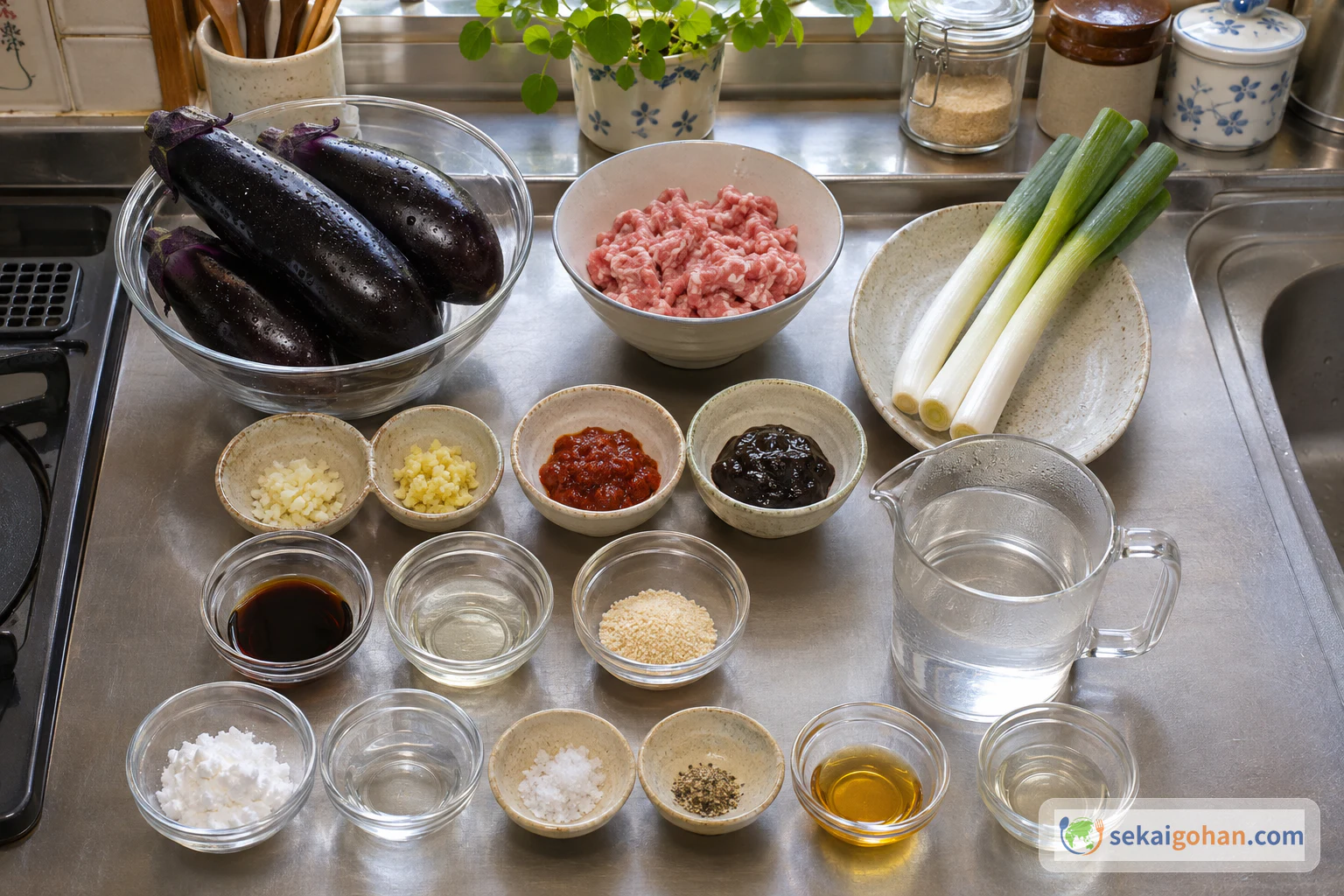
All the ingredients for two servings laid out separately: whole eggplants, raw ground pork, aromatics, seasonings and liquids
Everything for two servings, before any prep

The letters A, B and C mark the three groups you prepare ahead and add together during cooking.

Choosing Ingredients for Mabo Nasu

Doubanjiang and tianmianjiang are different things, so you'll need both. Look for them under those names in the Chinese-ingredients section of a grocery store or online. Brands differ in saltiness and heat, and the same spoonful can taste different from jar to jar. Tianmianjiang is also its own product, separate from red miso and from blended misos that contain it.

  • Eggplant: Ordinary long Japanese eggplant works. Thickness differs by variety, so go by weight rather than count.
  • Garlic and ginger: Use fresh, minced yourself. Tube pastes differ in aroma and moisture, so they won't swap in one for one.
  • Sake: Use Japanese sake for cooking. Shaoxing wine changes the dish.
  • Chicken stock powder: Any common granulated type works, though salt levels differ between makers.
  • Potato starch: Use katakuriko. Cornstarch would be your own change to the recipe.
  • Vinegar: Any common grain vinegar works. Acidity differs from one to the next.

Equipment

  • Wide frying pan with a lid
  • Knife and cutting board
  • Bowl for soaking the eggplant
  • Colander
  • Paper towels
  • Small prep bowls
  • Plate for holding the cooked eggplant
  • Measuring spoons and a measuring cup
  • Spatula or cooking chopsticks
  • Serving bowls
  • Food thermometer, if you have one

Method: Eggplant First, Sauce Second, Thickening Last

Pork and raw green onion

Pork: Heat ground pork to 167°F (75°C) at the center for at least 1 minute, or an equivalent. Color alone does not confirm this, and neither do the cooking times in this recipe. Without a thermometer, stir the whole pan well and keep heating until no raw or red meat remains.

Green onion: It goes in near the end as a raw garnish, so wash it well under running water. Heat from the sauce does not make it safe. Before you handle it, wash your hands and any cutting board, knife or chopsticks that touched raw pork, or use separate tools.

Each step below is a single action, so the list is long but the cooking is simple. Steps 1–12 are prep, 13–21 cook the eggplant, 22–32 build the sauce, 33–39 thicken it, and 40–45 finish and serve.

Mabo Nasu Troubleshooting

Problem What to look at What to do
The eggplant is about to scorch Heat too high during the covered cook Lower the heat. Don't add more oil than the 2 tbsp
The eggplant feels heavy with oil Extra oil beyond the measure Keep to 2 tbsp next time and let the lid and low heat do the softening
The sauce is watery Stoves and pans differ, so 2–3 minutes may not be enough Judge by the pan, not the clock: simmer until the liquid has cooked away before thickening
The thickened sauce has lumps Settled starch, or too little stirring Re-stir the slurry, add it with the heat off while stirring, and keep stirring after you relight the burner
The dish is too salty or too hot Doubanjiang and stock powder differ by maker Note how your brands taste and adjust next time
You can't tell if the pork is done Color alone doesn't settle it Aim for 167°F (75°C) at the center for at least 1 minute, or an equivalent. Without a thermometer, stir well and keep heating until no raw or red meat remains

Serving and Variations

Mabo nasu is best served right after cooking, with plain rice on the side if you like. For a milder dish, use less doubanjiang and adjust by eye and taste. Other meats will change the dish, and the doneness guidance here is written for ground pork, so you'd be on your own there.

Frequently Asked Questions

What can I use if I can't find tianmianjiang?

There's no set substitute. Miso gives a different flavor, so you'll need to work out your own amounts. Red miso recipes use different proportions, so their numbers won't carry over to this one.

Do I have to deep-fry the eggplant?

No. The eggplant softens in sesame oil under a lid over low heat, in a regular frying pan.

How much is "a little" salt or pepper?

There's no set amount. Salt goes in twice, once on the eggplant and once in the seasoning liquid, so keep each addition small.

Is the pork safe once it changes color?

Color alone doesn't tell you. Ground meat has to be heated through to the center: 167°F (75°C) at the center for at least 1 minute covers many pathogens. Without a thermometer, stir well and keep heating until no raw or red meat remains, rather than relying on the recipe's cooking times alone.
Sources

  • Nisshin OilliO Group, "麻婆なす" (Mabo Nasu). The only basis for this article's ingredients, amounts, two-serving yield, order of steps, stated times and the listed 15-minute cooking time. https://www.nisshin-oillio.com/recipe/detail.html?id=7572
  • S&B Foods, "麻婆茄子" (Mabo Nasu). Used only as a comparison showing another published Japanese recipe with different ingredients and four servings. https://www.sbfoods.co.jp/recipe/detail/00504.html
  • Ajinomoto Co., Inc. (Ajinomoto Park), "「Cook Do®」極シリーズ新商品の開発秘話を担当者に聞きました!" Used for the company staff's description of mabo nasu as a Chinese dish developed in Japan, and its difference from yuxiang eggplant. https://park.ajinomoto.co.jp/contents/magazine/card/337551/
  • Ministry of Health, Labour and Welfare (Japan), "お肉はよく焼いて食べよう." Used for the heating guide of 75°C at the center for at least 1 minute, and for heating ground meat through to the center. https://www.mhlw.go.jp/stf/seisakunitsuite/bunya/0000049964.html
  • Sichuan Hanten (四川飯店), "ヒストリー HISTORY." Used for the restaurant's own account of Chen Kenmin's arrival in Japan, its founding and the spread of Sichuan cooking. It says nothing about the origin of mabo nasu. https://www.sisen.jp/history/