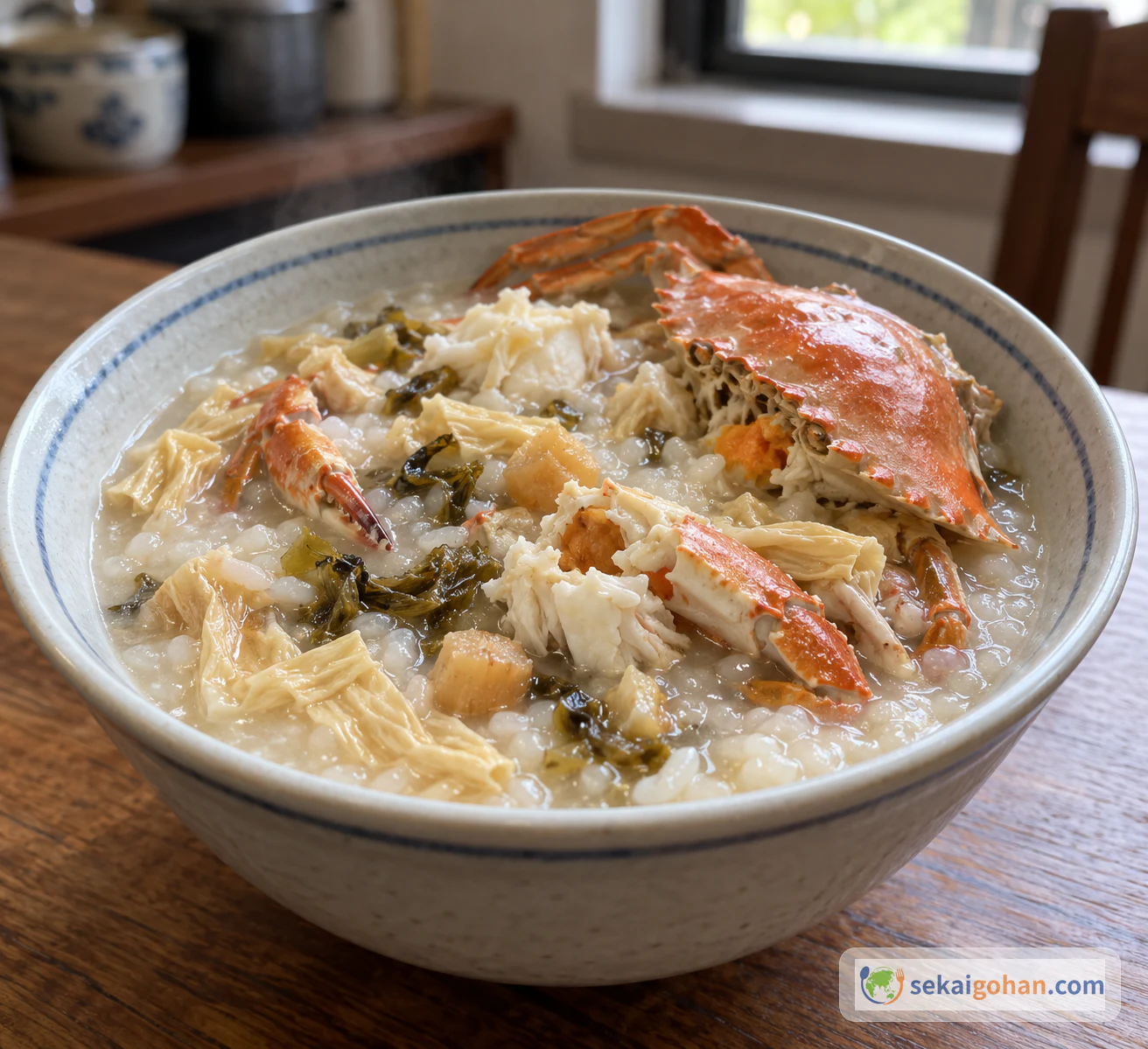
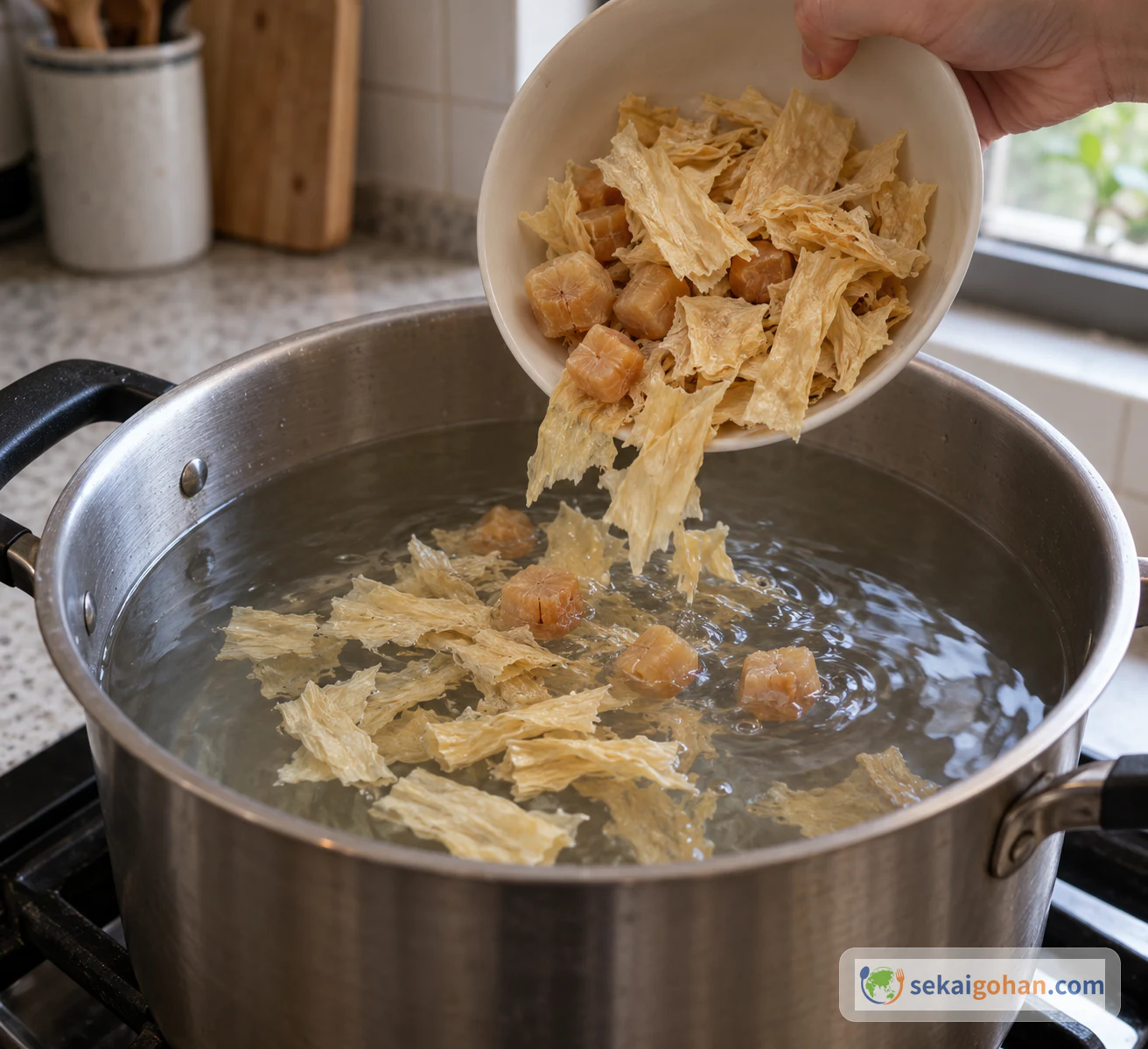
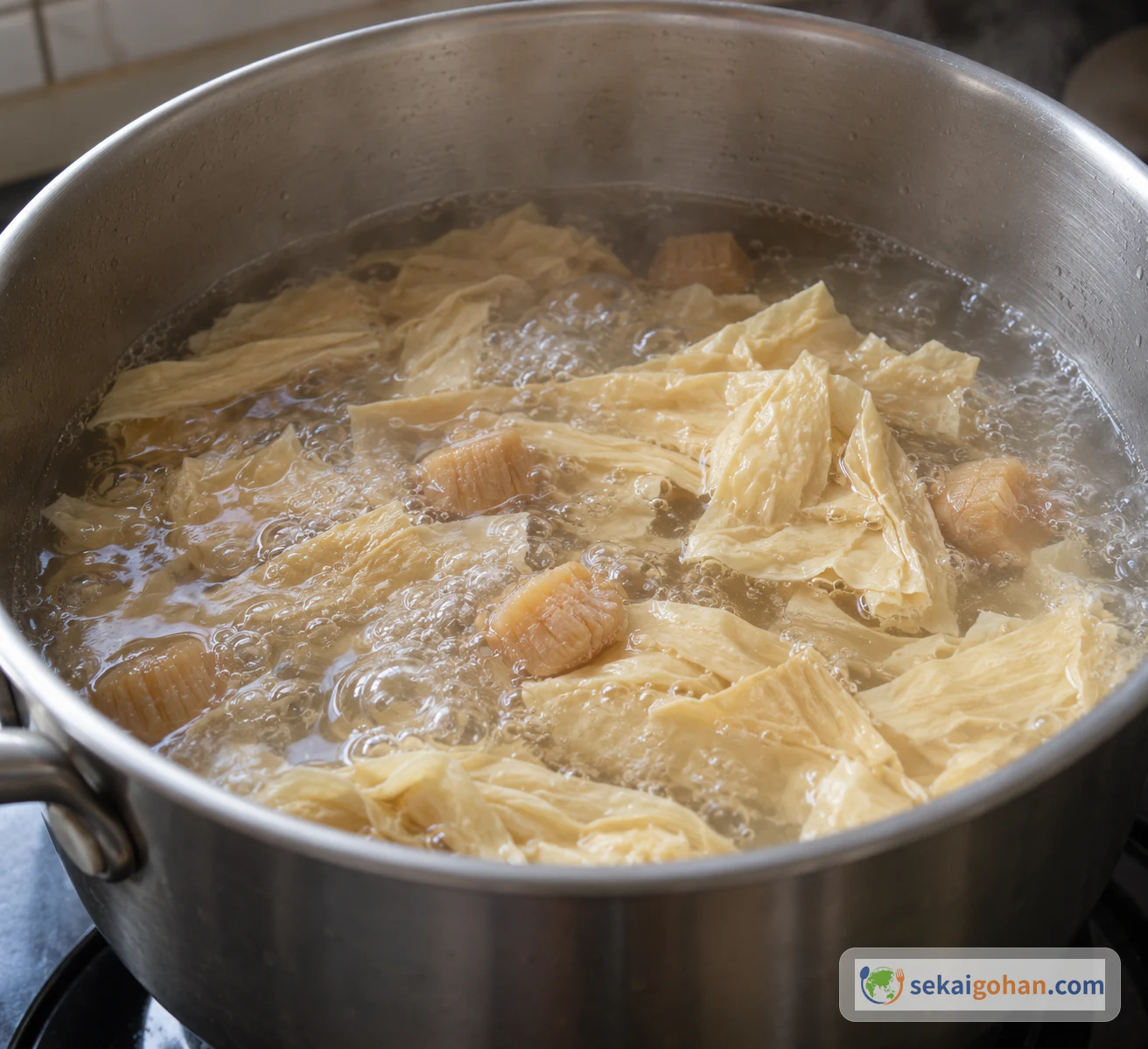
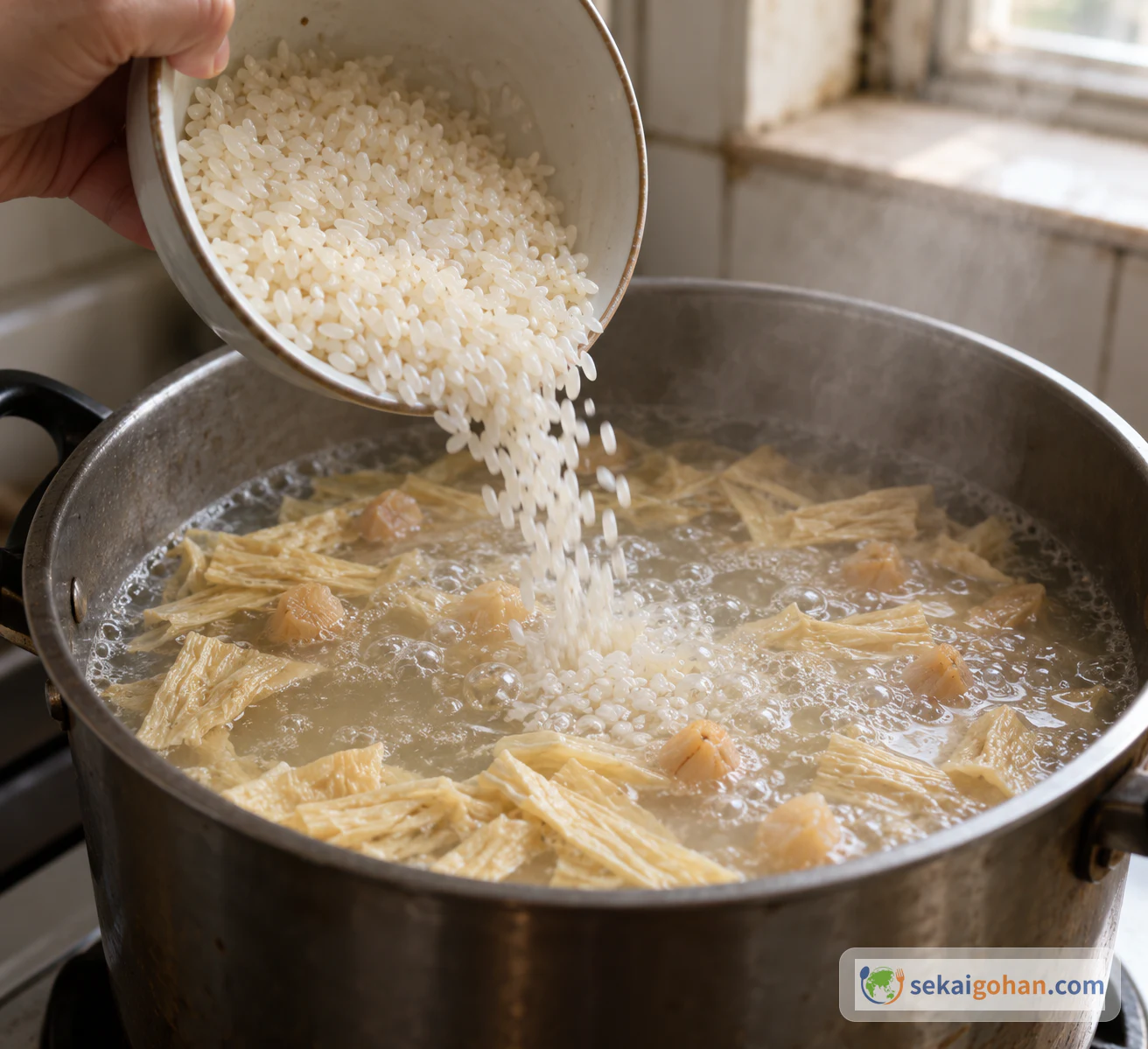
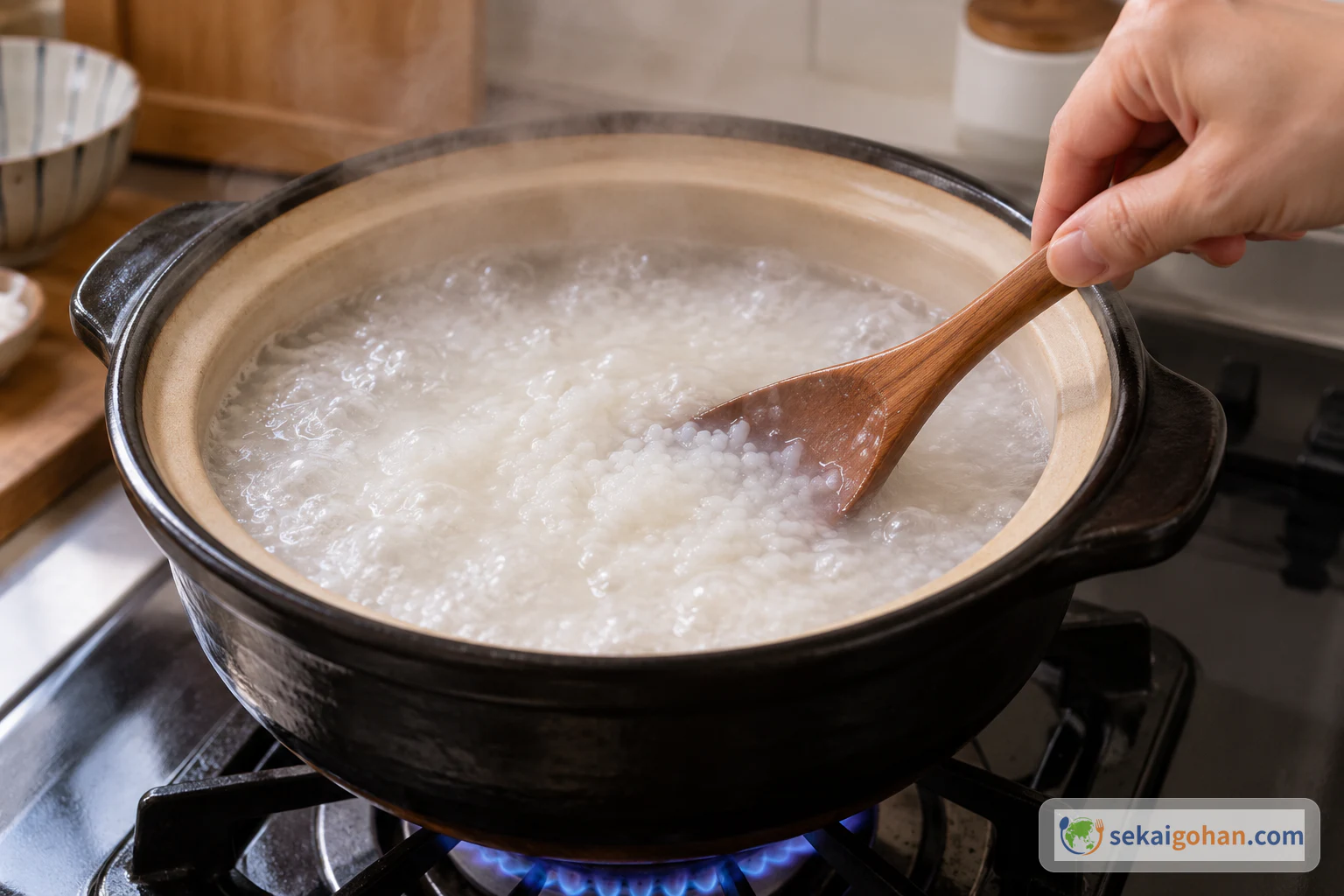
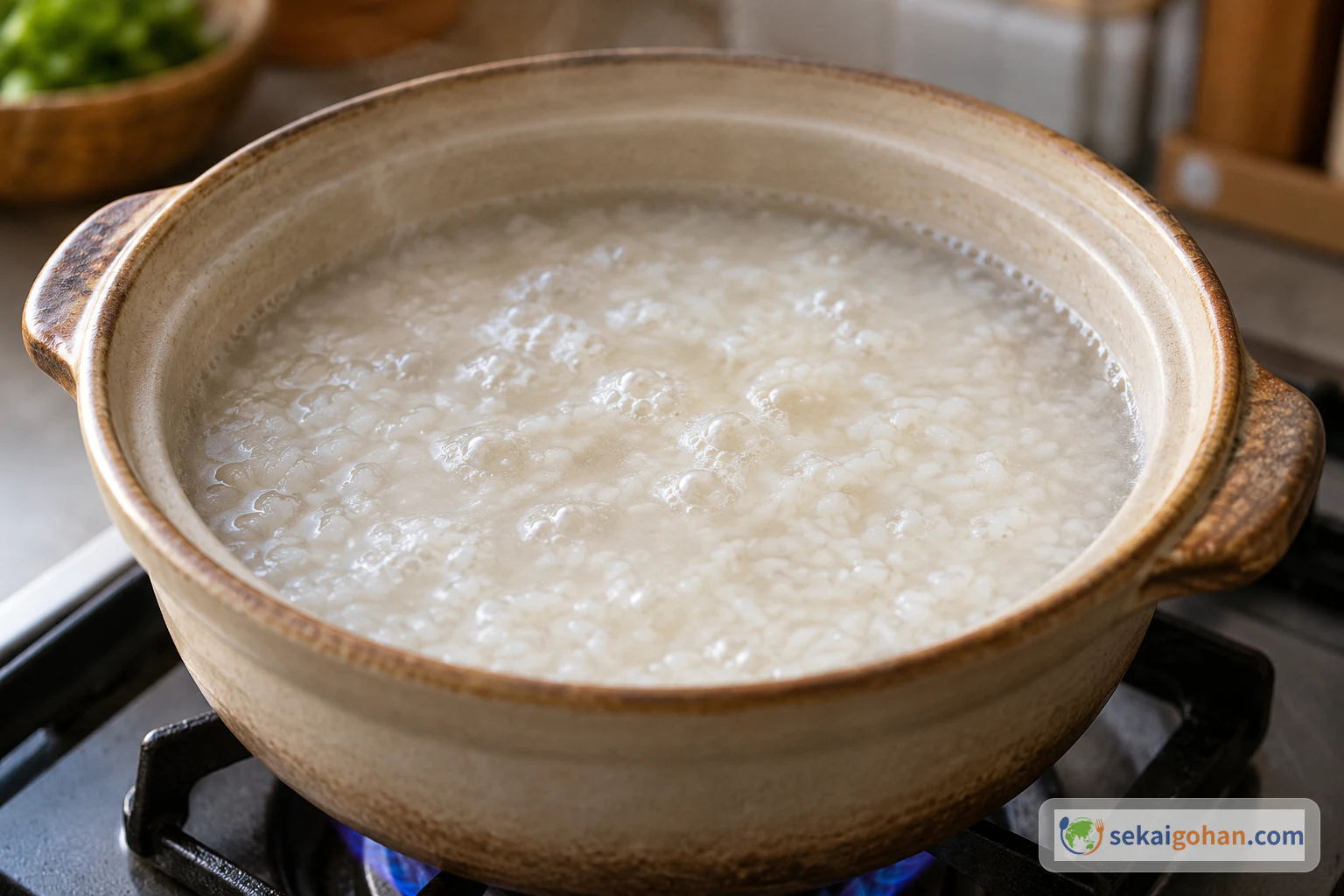
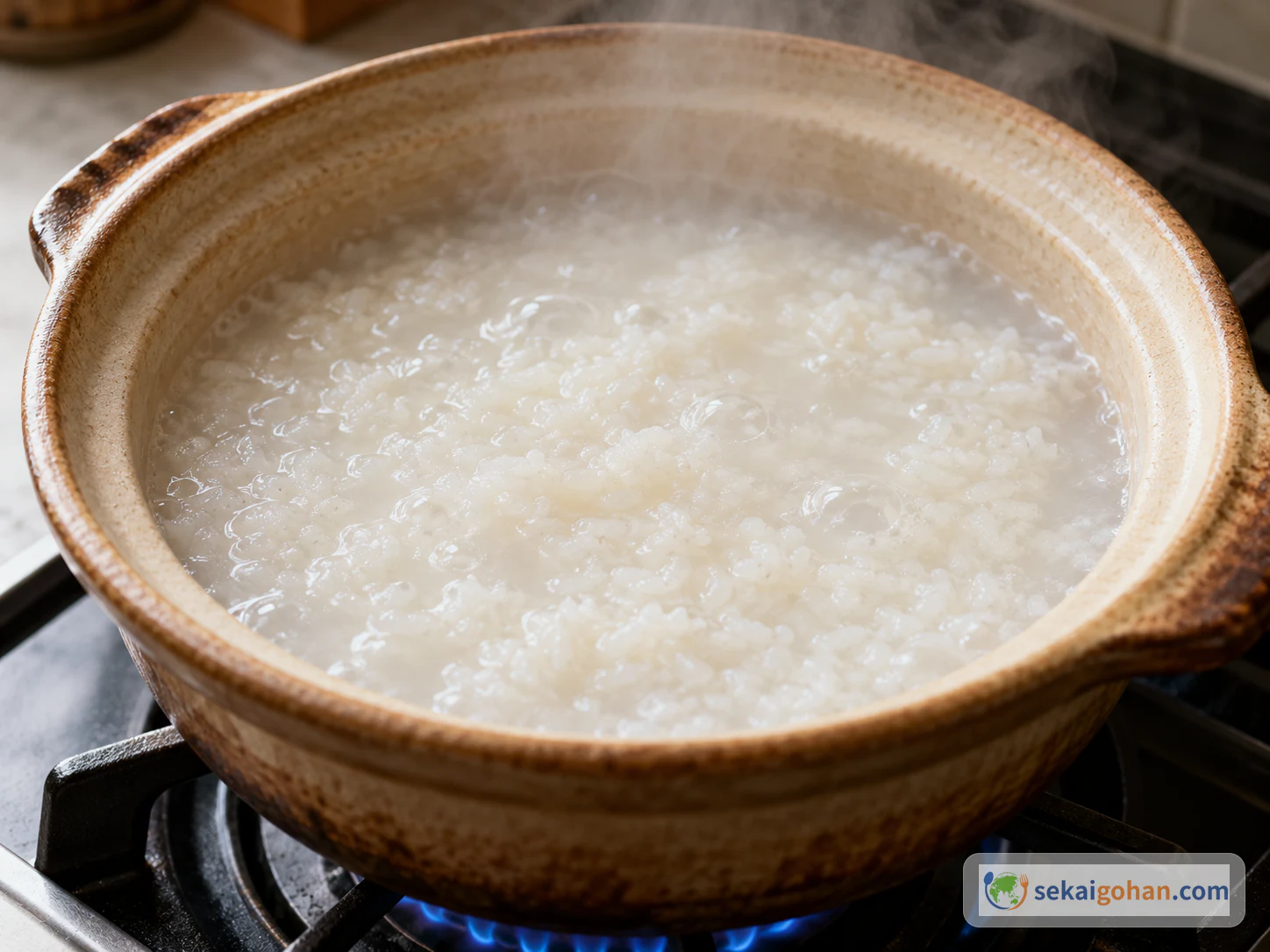
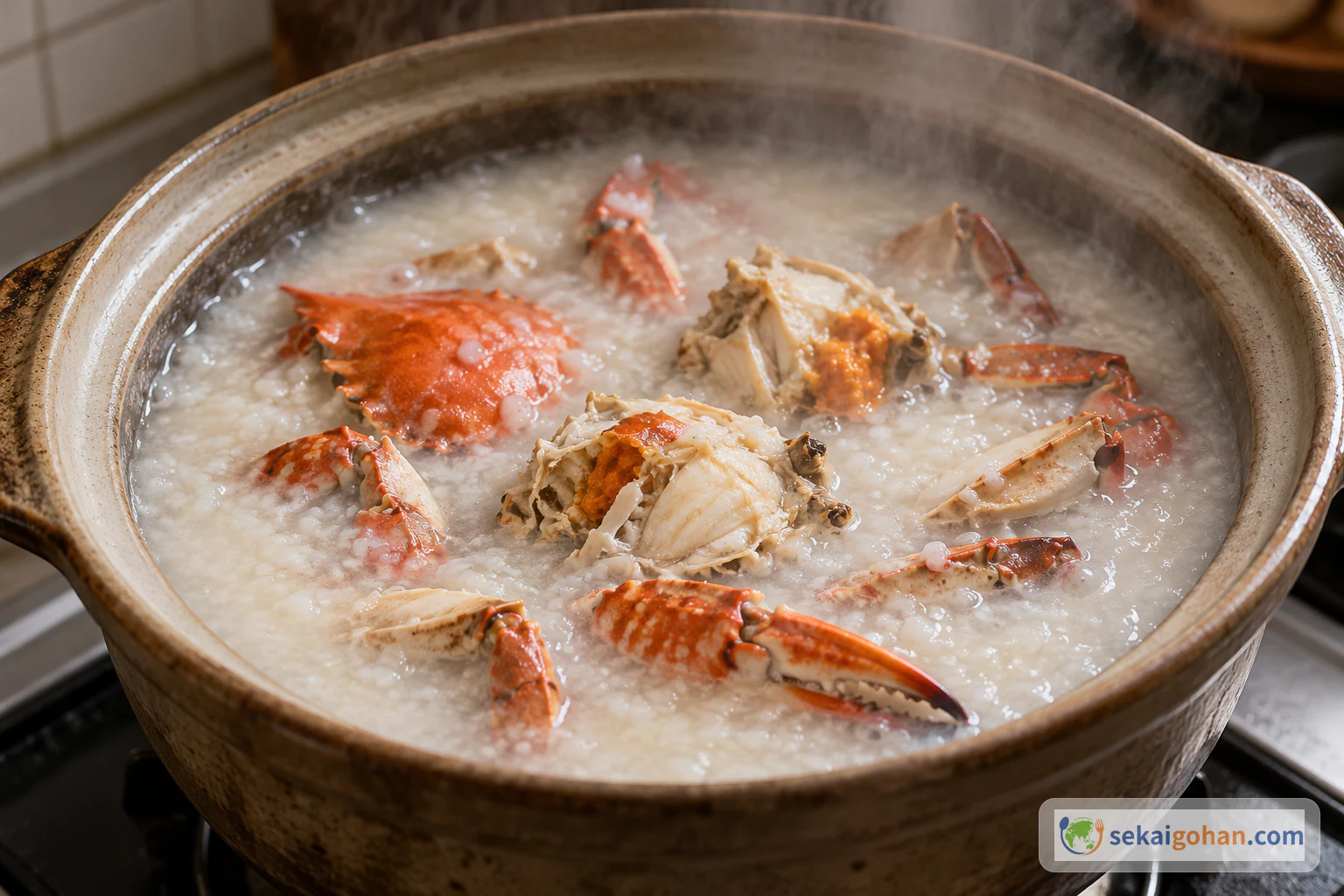
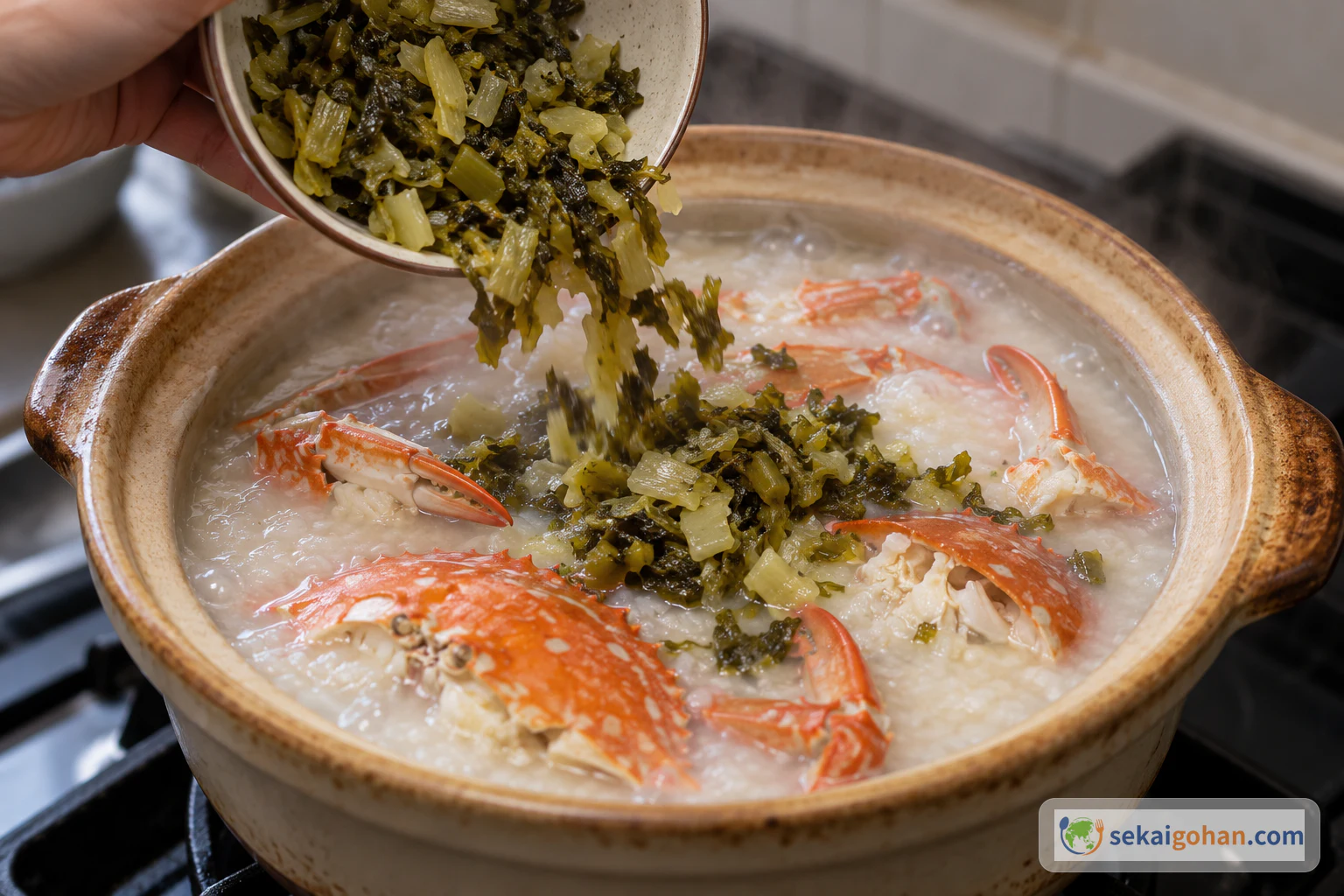
Rice cooked slowly, through high, medium and low heat, until the grains open and the congee turns smooth. Only then does the crab go in, cut into pieces, followed a minute before the end by a little preserved winter vegetable. This is 家常版澳门水蟹粥, "home-style Macau crab congee," a home cook's re-creation of a bowl remembered from Macau. Dried scallop and torn bean-curd skin go into the water before it boils, so the base is already savory by the time the crab arrives.
Congee in Macau
In Macau, congee is a local breakfast dish, and one of the versions people eat there has a whole fresh-water crab in it. This home-style bowl follows that idea with a short list of ingredients and a patient pot of rice. For more dishes from the same place, see the Macau country page.
Ingredients (3 servings)
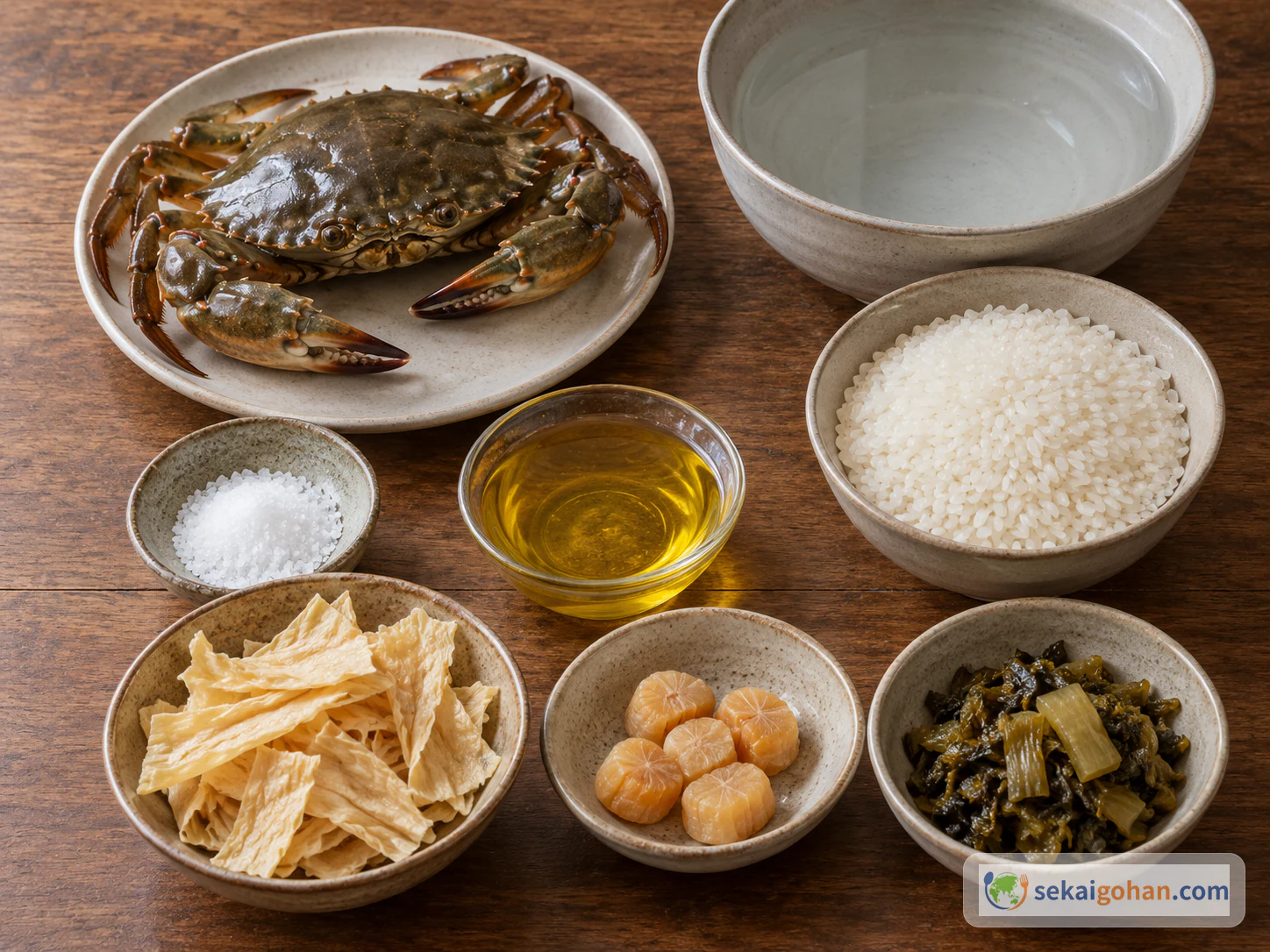
Only the crab, rice and water have fixed amounts. Use the other five as needed.
Equipment
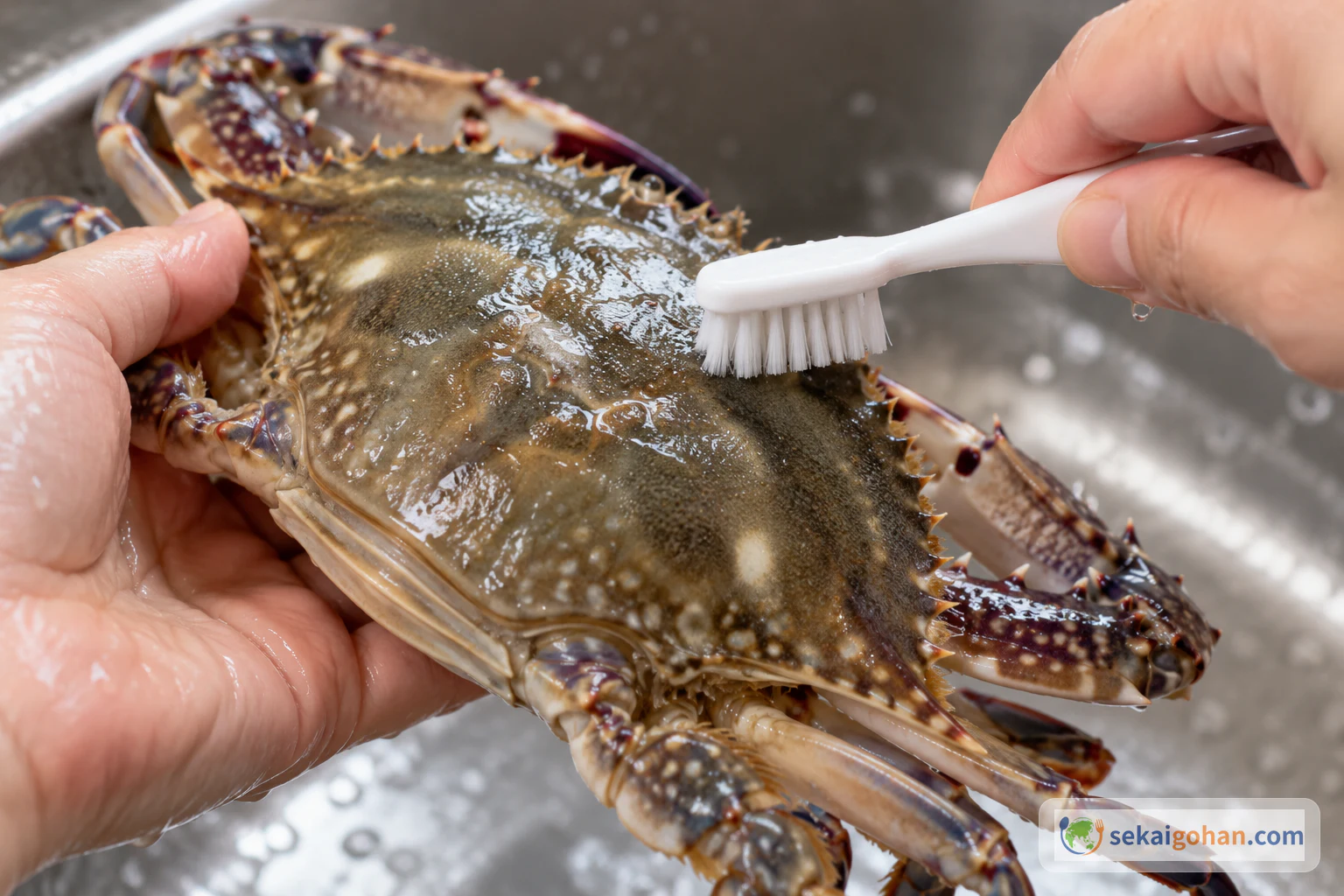
- A small, clean toothbrush, for scrubbing the crab
- A cutting board, plus a knife or kitchen scissors
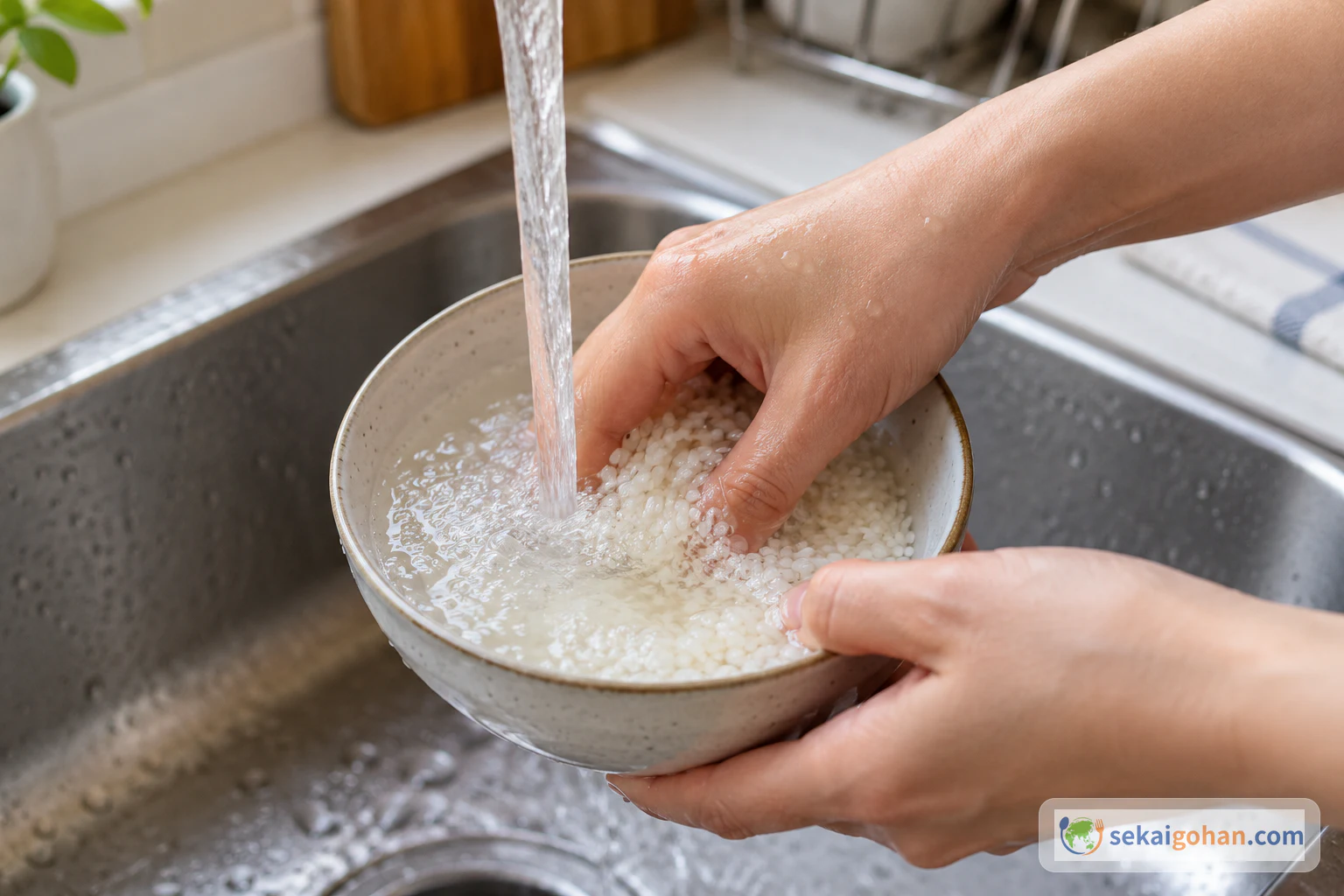
- A bowl for rinsing and resting the rice
- A pot that holds the 3.25 quarts (3L) of water, with something to stir with
Choosing Ingredients for Crab Congee
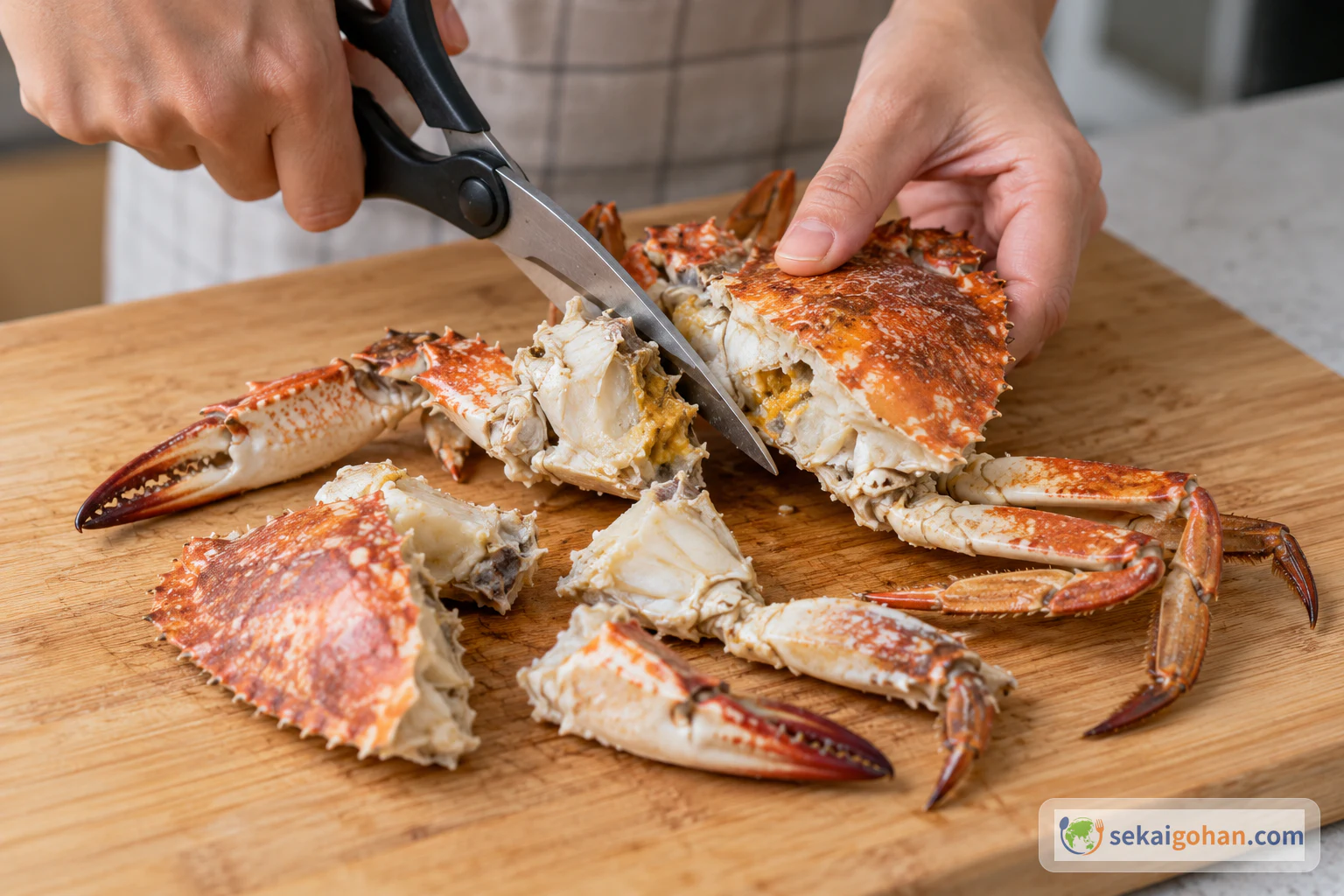
Crab. Use one crab, scrubbed and cut into pieces. It goes into the pot straight from scrubbing and cutting, with no pre-boiling. If there is roe (蟹黄) in the crab, leave it attached and let it cook with the rest. Scissors are one way to cut the crab so the roe doesn't stay behind on the board.
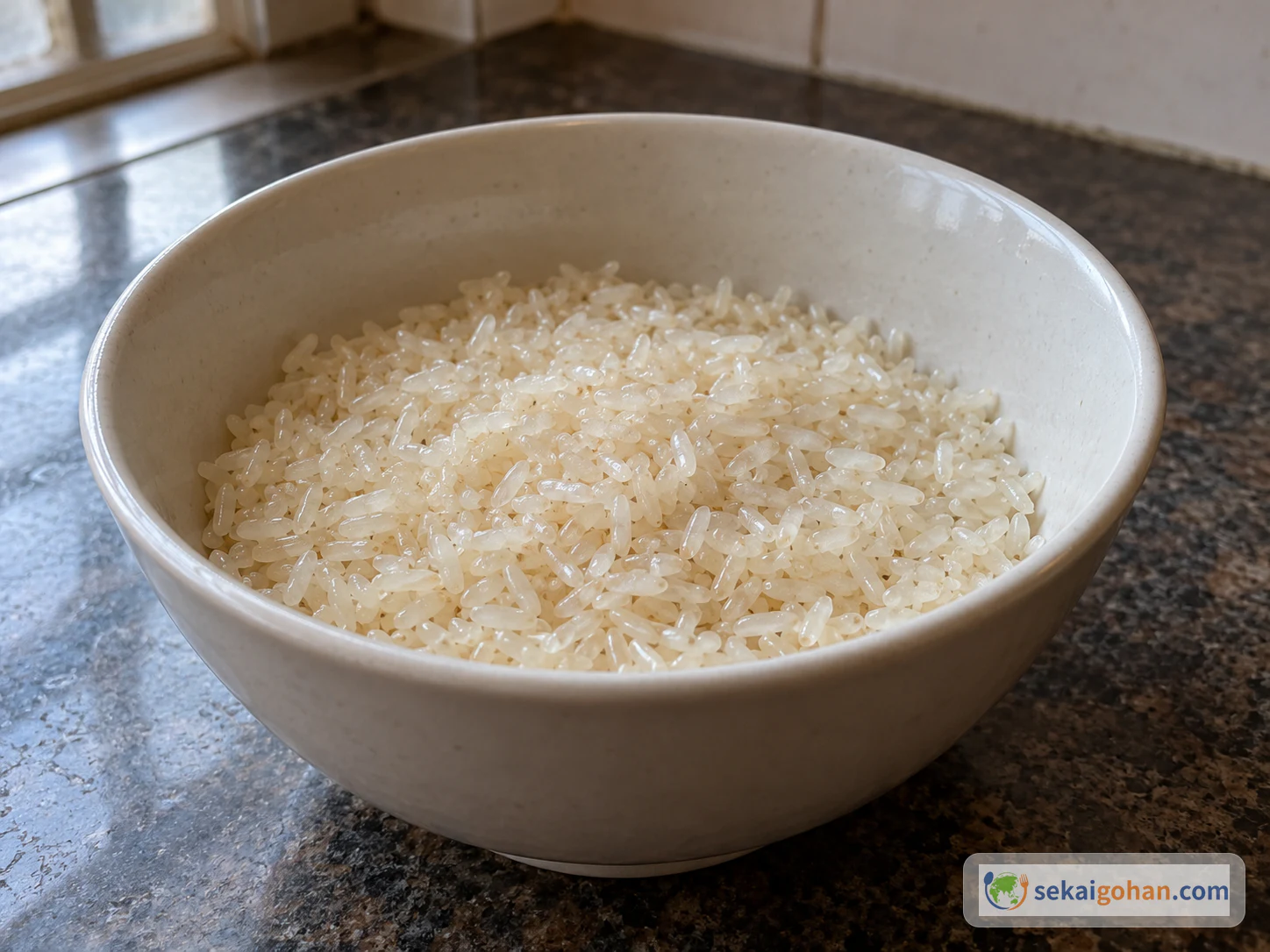
Rice. Wuchang rice is an everyday choice here, though not a requirement. The measure in the ingredient list is 80g; go by the weight.
Water. The 3.25 quarts (3L) is the water you start with, not the finished volume, and it doesn't tell you how thick the congee should end up.
Fupi (腐皮), dried scallop (江瑶柱) and preserved winter vegetable (冬菜). Look for them under these names. Use fupi rather than other bean-curd products, and preserved winter vegetable rather than fresh cabbage.
Salt, peanut oil, fupi, dried scallop and preserved winter vegetable are all "as needed," so the amount of each is your call. Beyond that, stick to the ingredients listed: no ginger, scallion, garlic, wine, extra stock or finishing oil.
Method: Rice First, Crab Last
Keep the stages separate and in order. The times below do not confirm that the crab is safely cooked, so check the crab before serving as described after step 9.
Cook the crab until the flesh is pearly or white and opaque. The times don't account for crab size or whether the crab starts raw or cooked, so the 4 minutes for the crab and the 1 minute for the winter vegetable are not a safety check. Follow the order given. Then, before serving, check that the crab flesh is white and opaque. If it isn't, keep cooking before you serve.
Crab Congee Troubleshooting
Two things matter most: keep the stages in order, and check the crab before serving. The cooking times in the method are not a safety check, so look at the crab itself before the congee goes into bowls.
| What you see | What to do |
|---|---|
| The pot is about to boil over during the high-heat stage | Stir during this stage to keep it from boiling over |
| You're unsure whether the rice is ready for the crab | Add the crab once the rice has opened and the congee has turned smooth |
| The crab flesh isn't white and opaque when you're ready to serve | Keep cooking before you serve |
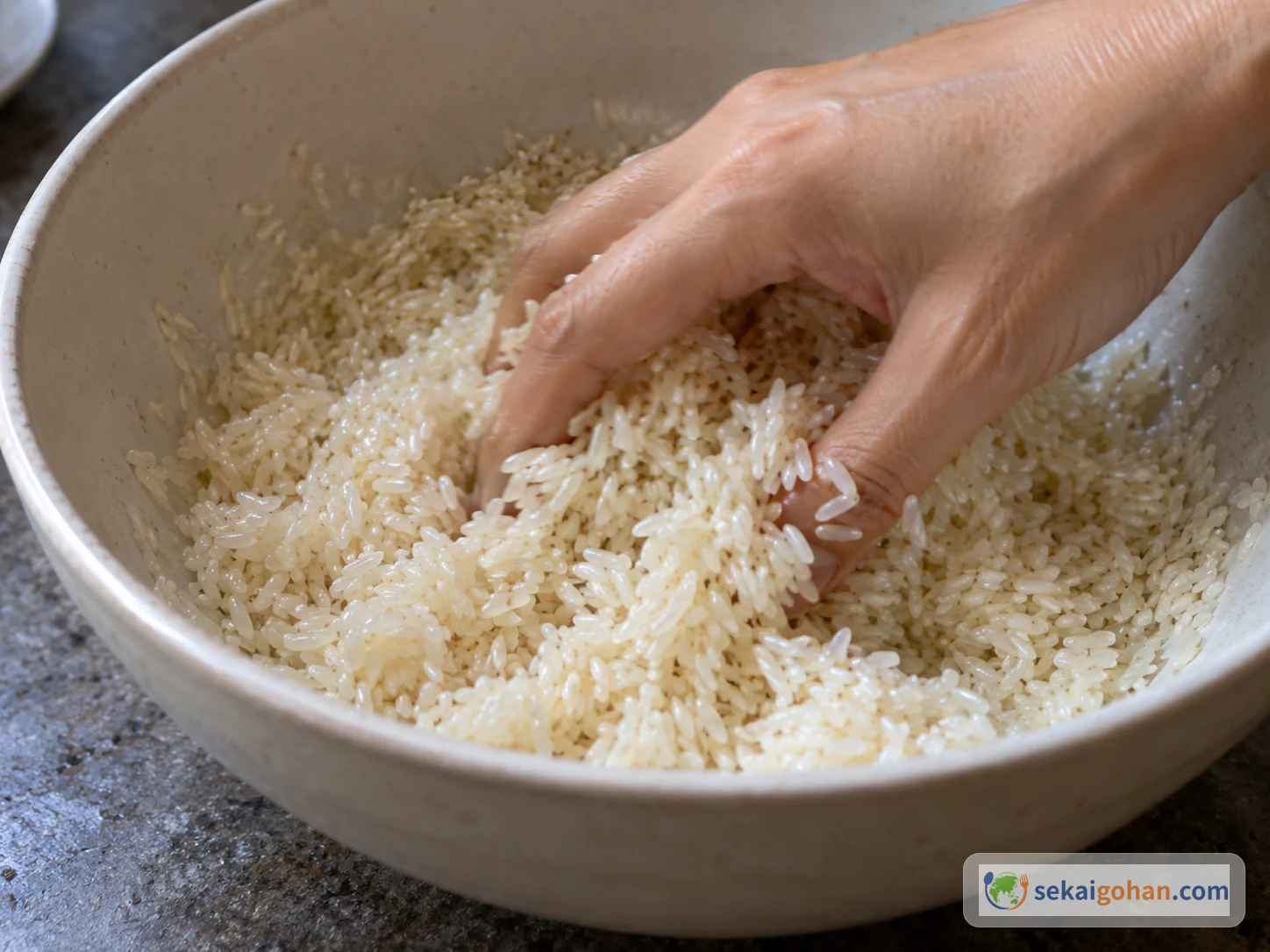
| You're tempted to soak the rice | Rest the rice in salt and peanut oil only, for 15 minutes. Don't soak it |
Frequently Asked Questions
What is "half a cup" of rice?
The measure is 80g / half cup, but no cup size is given. Use the 80g.
Is 4 minutes enough for the crab?
Cook the crab for 4 minutes, then the winter vegetable for 1 minute, but treat neither time as proof the crab is done. Before serving, check that the crab flesh is pearly or white and opaque. If it isn't, keep cooking.
Which crab should I use?
Use one crab. No species, weight, size, or raw or cooked state is given. The method names 羔蟹 (奄仔), but that name doesn't identify a species, and neither does "fresh-water crab."