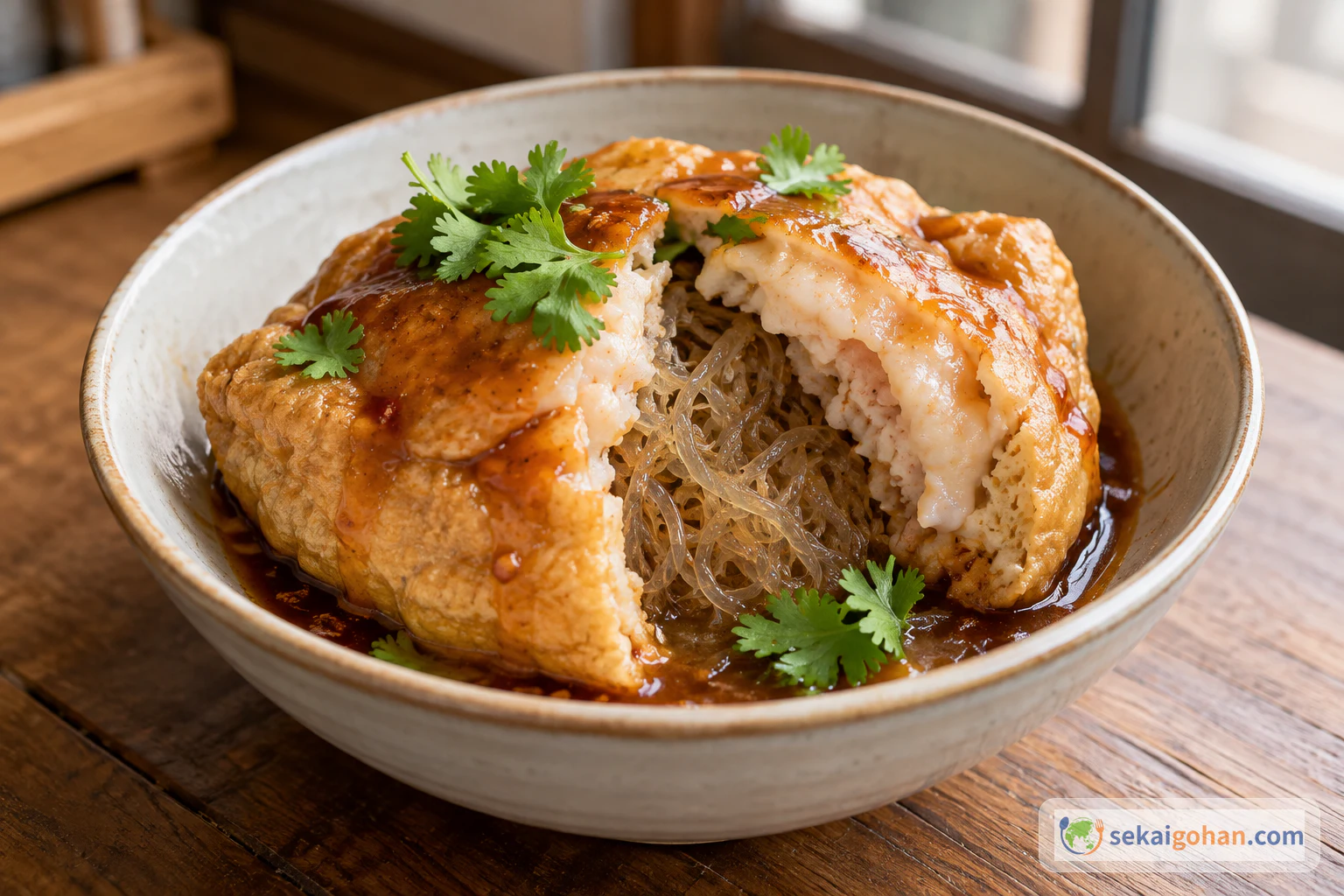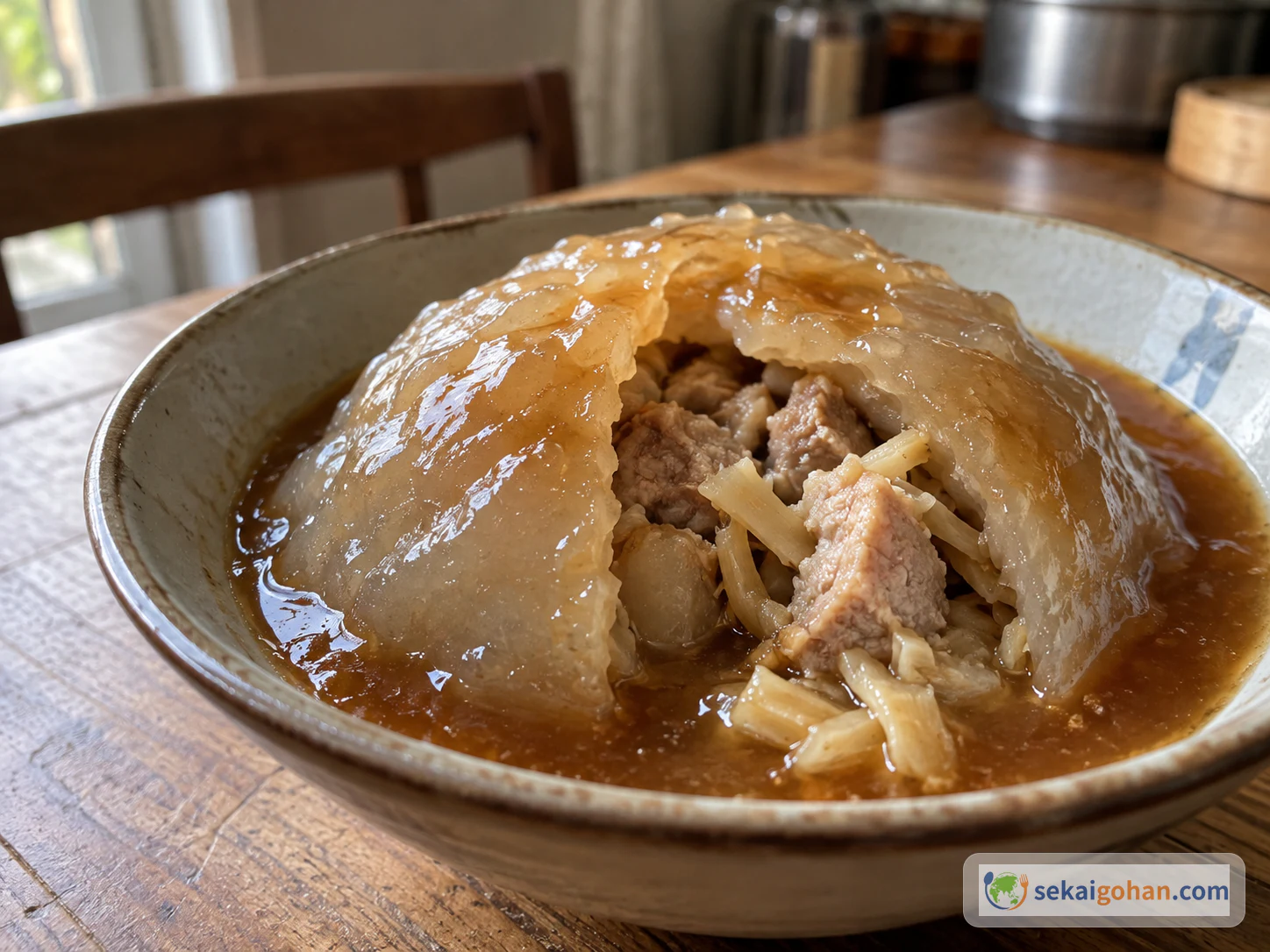
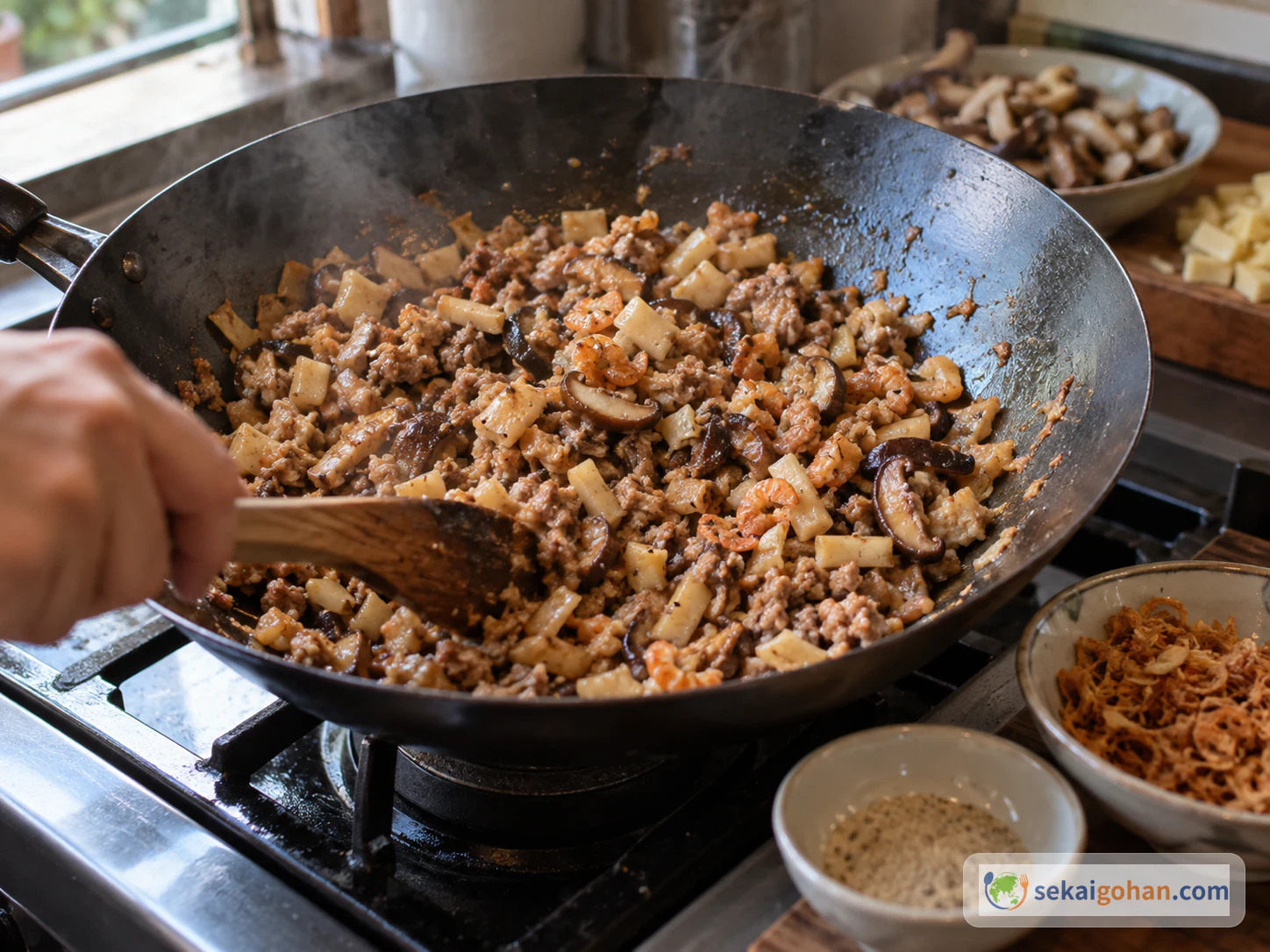
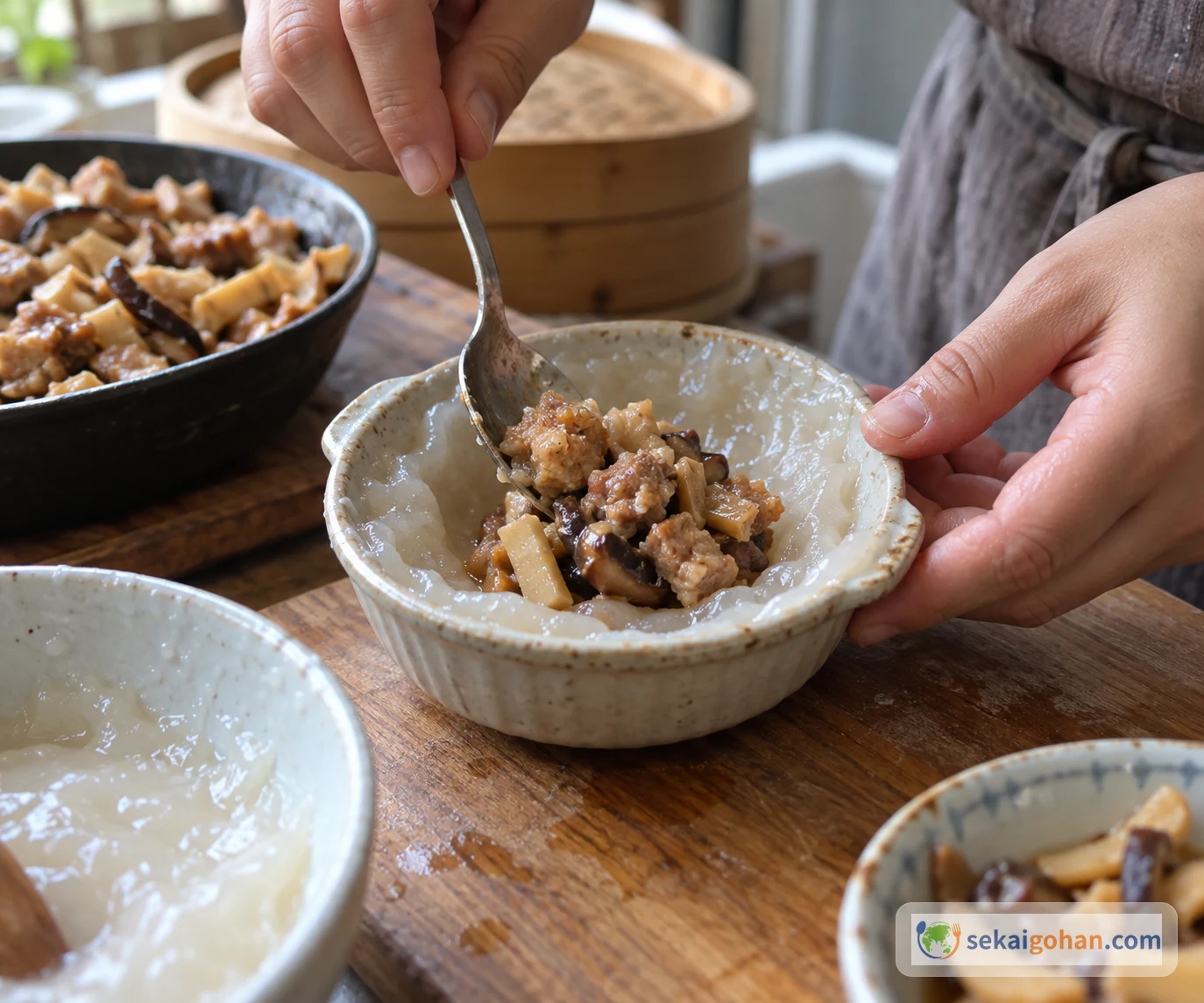
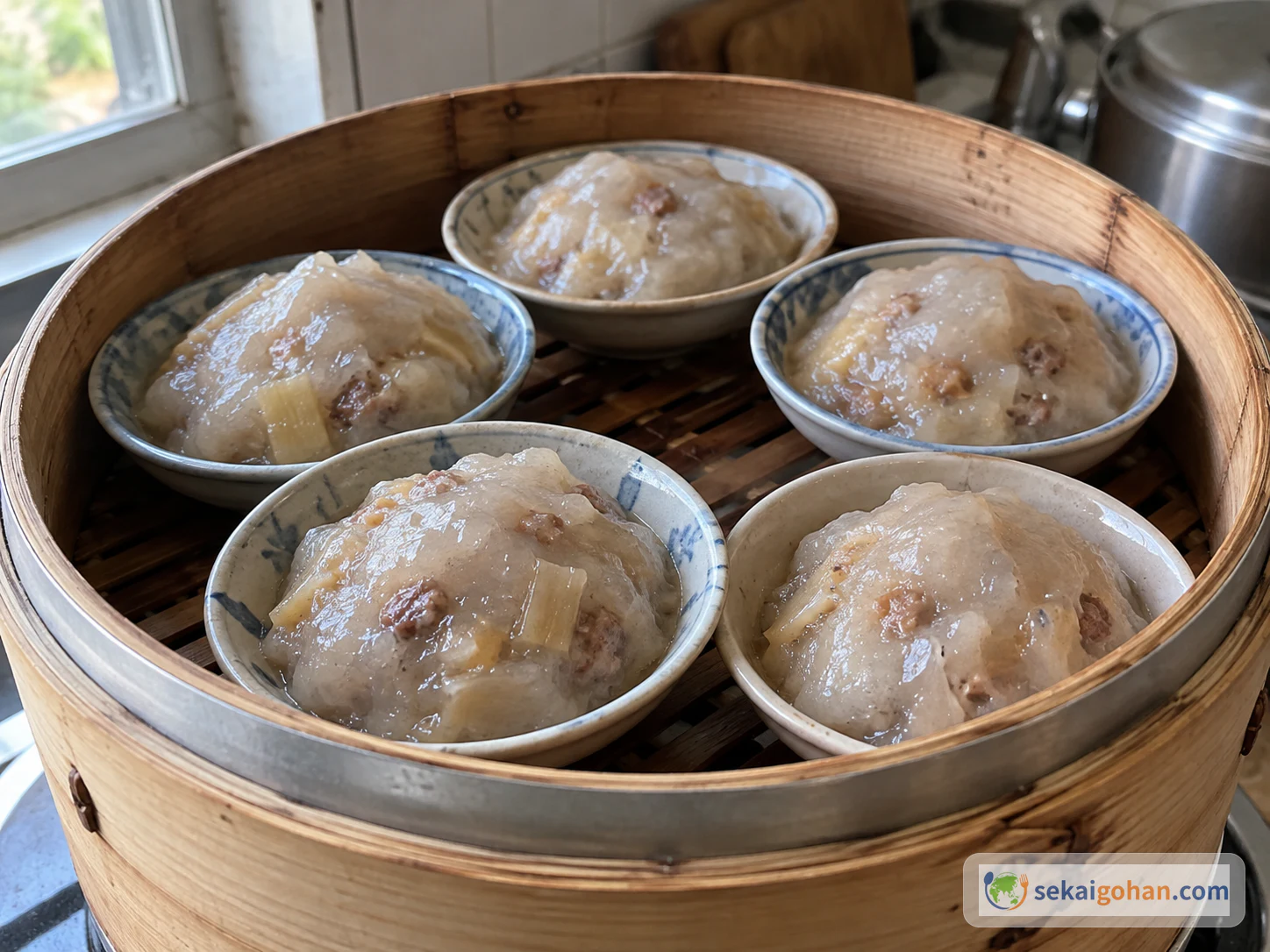
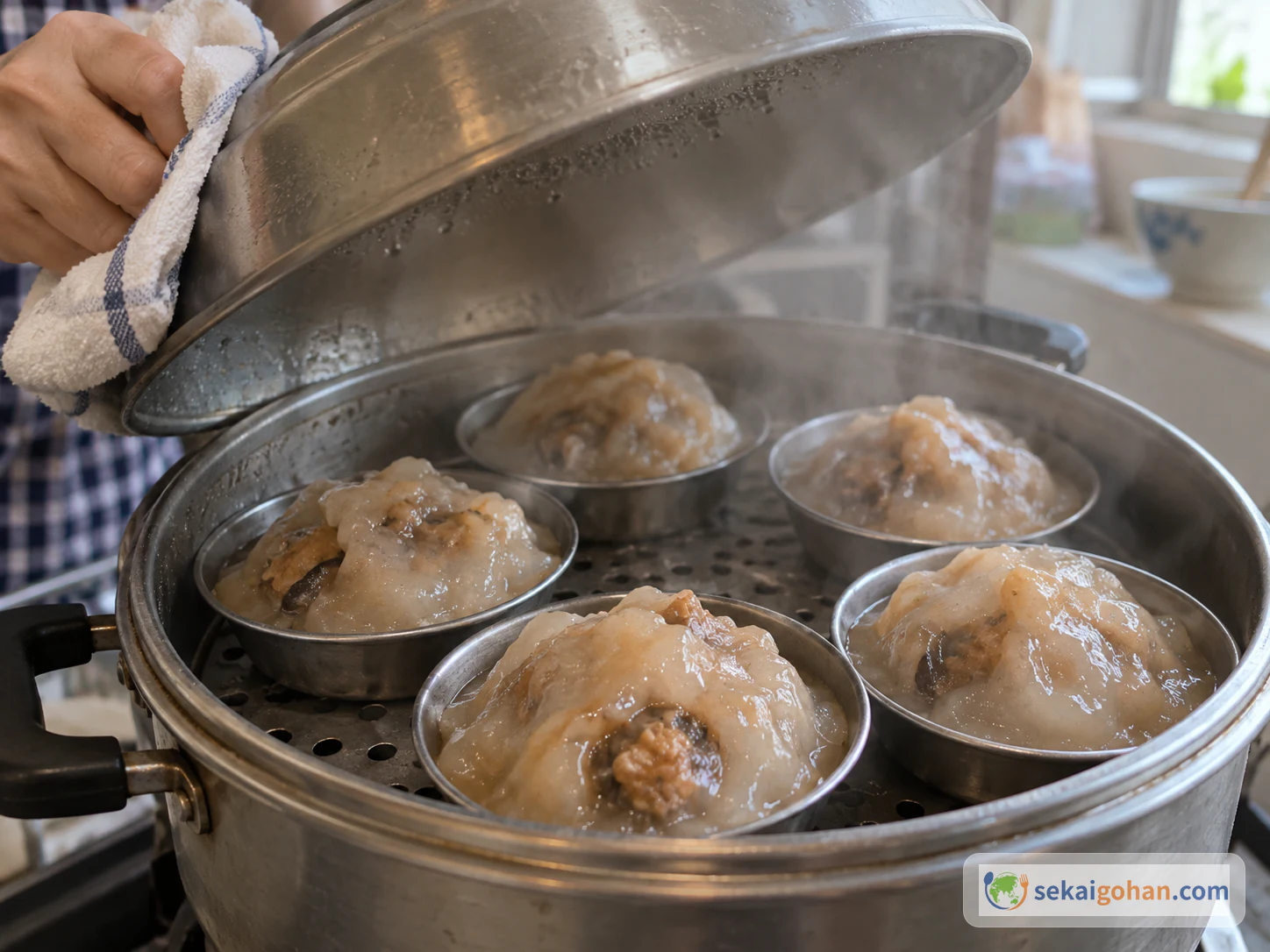
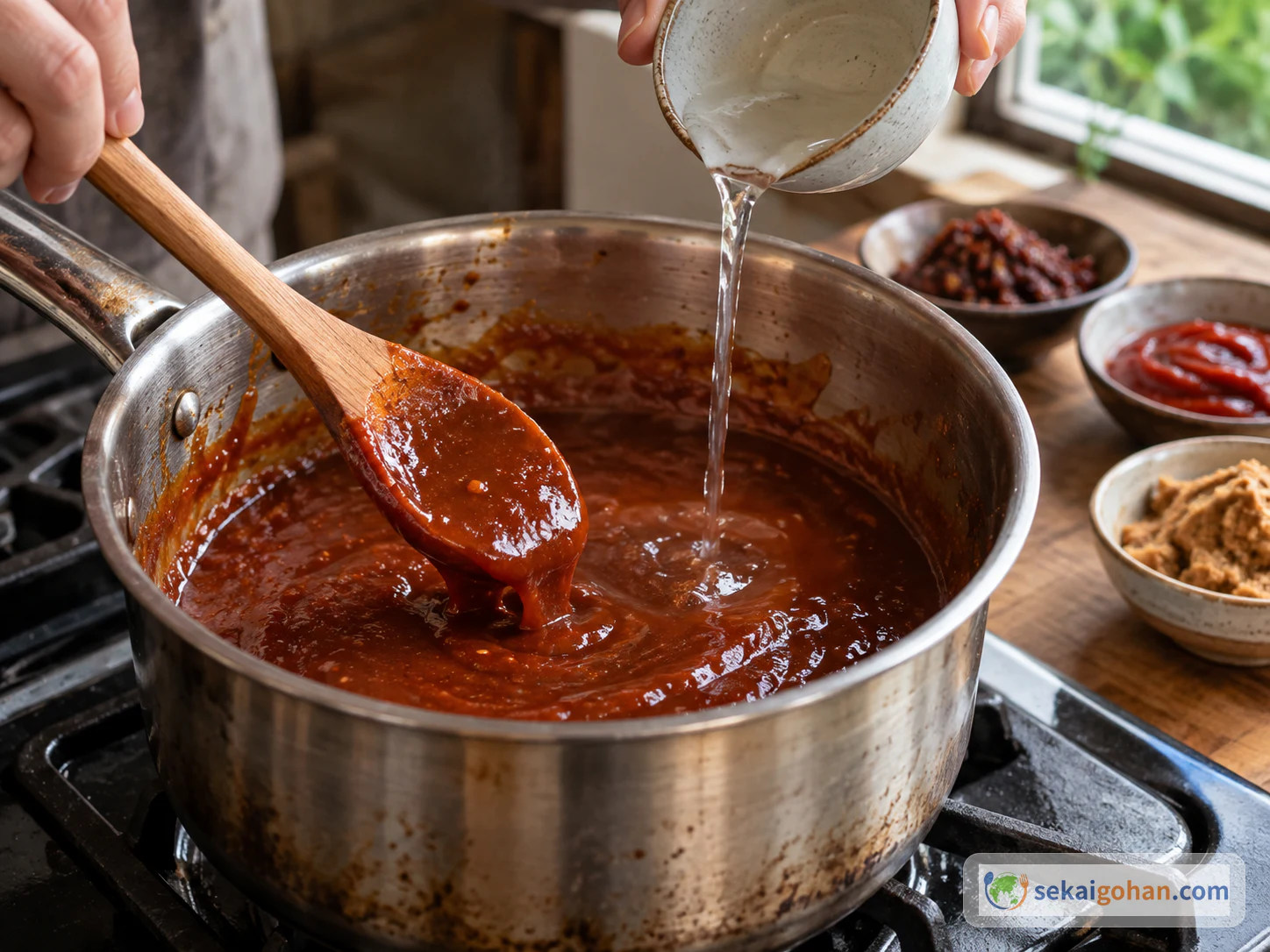
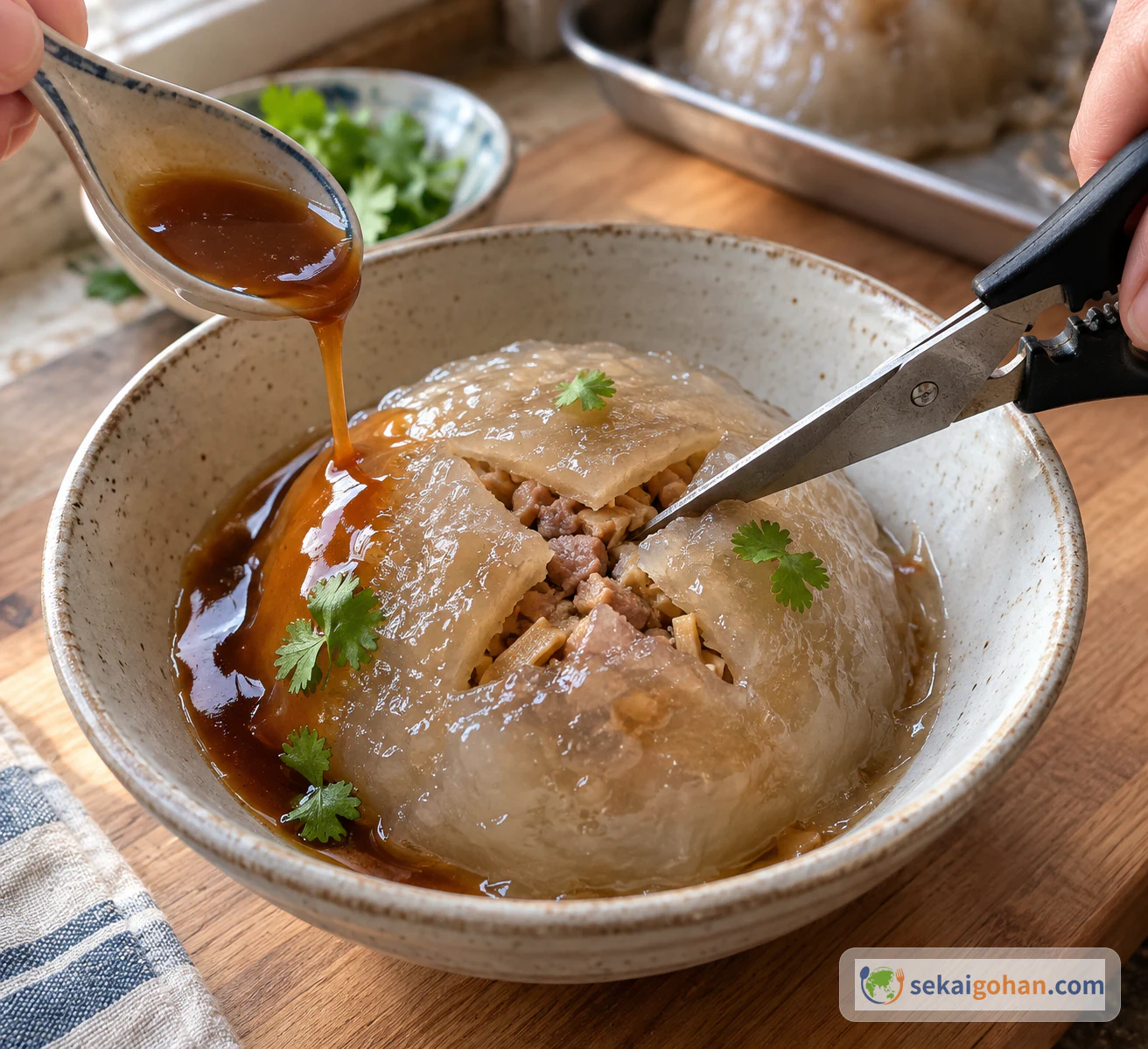
Lift the steamer lid and white steam rolls out. The paste that went into the molds opaque has turned glossy and translucent, and you can see the outline of the pork and bamboo filling through it. There's no batter and no crust, just a wrapper with the soft spring of mochi. Ba-wan (肉圓; ròuyuán in Mandarin, bah-oân in one Taiwanese spelling) is one of Taiwan's best-loved snacks: a bouncy wrapper, a fragrant filling, and a sweet-savory sauce over the top.
Ba-Wan in Taiwan: Towns, Temples and Origins
The name can suggest a meatball, but ba-wan is built differently: a seasoned filling sealed inside a starch wrapper. It's sold as a snack, and it takes many forms across the island. The version here is a home-style one, shaped in small molds and steamed, rather than the hand-wrapped, oil-finished ba-wan of Beidou's shops.
Regional Styles
Ba-wan changes a lot from town to town. Beidou and Changhua City differ in how they shape and fry it, steamed versions appear as you move south, and in Pingtung the wrapper gets more rice milk and a soak in broth.
| Style | What sets it apart | How it relates to this recipe |
|---|---|---|
| Beidou | Hand-wrapped, with finger marks; steamed, then finished in oil | This recipe is molded and steamed only |
| Changhua City | Molded, with examples of stronger frying | Also molded, but not fried here |
| Southern Taiwan | White, soft and steamed without frying | The closest in method, though the formula differs |
| Pingtung | More rice milk in the wrapper; steamed and soaked in a broth | Served here with haishan sauce, not broth |
| Tainan | Examples with shrimp added to the filling | This filling also uses dried shrimp, but isn't a Tainan version |
Beidou and the Temple Tradition
Beidou's three-finger mark is a well-known local signature, though plenty of ba-wan go without it. One Beidou shop, 肉圓瑞 (Rou Yuan Rui), started in front of a Mazu temple and is now in its fourth generation. Its ba-wan holds pork shoulder and bamboo shoots under a translucent, finger-marked wrapper with a house sauce, and it comes with tofu soup or pork ball soup on the side. Ba-wan belongs to the life around stalls and temples, too: a Beidou shop has a tradition of serving it to the Mazu procession.
An Unsettled Origin
Where ba-wan came from is less clear. One theory links it to fenwan from Quanzhou, with cooking methods shifting among migrants and the dish spreading through Qing-era ports and Japanese-era transport hubs, but it remains a hypothesis. A story that ba-wan began as flood-relief food turns up in several introductions as well, though it isn't established. For more of the island's dishes, see Taiwanese recipes.
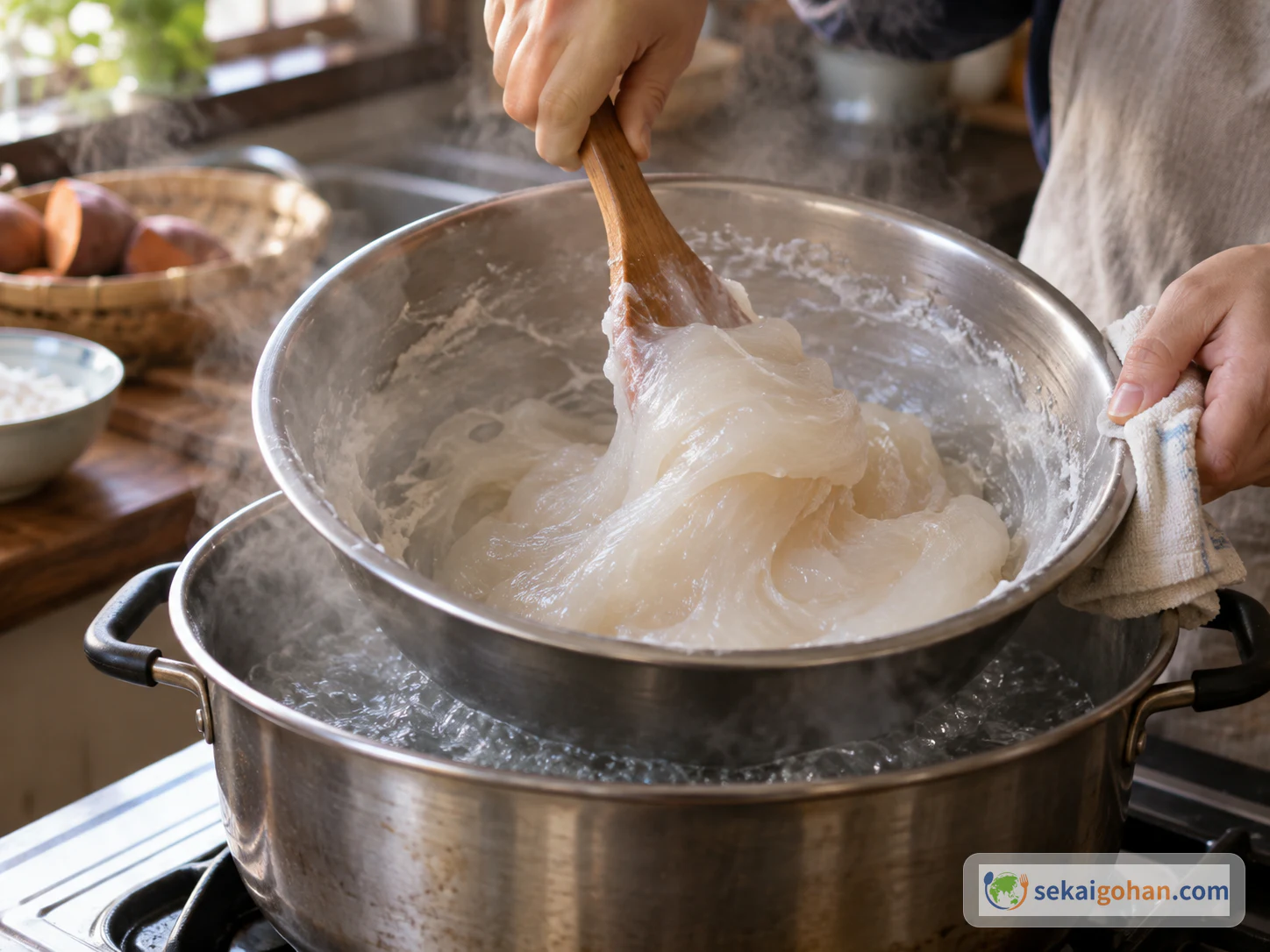
The tricky part at home is the wrapper. A thin slurry of flour, starch and water has to cook into a thick paste you can spread and seal, and it still needs to let go of the mold after steaming.
Ingredients: Wrapper, Filling and Haishan Sauce
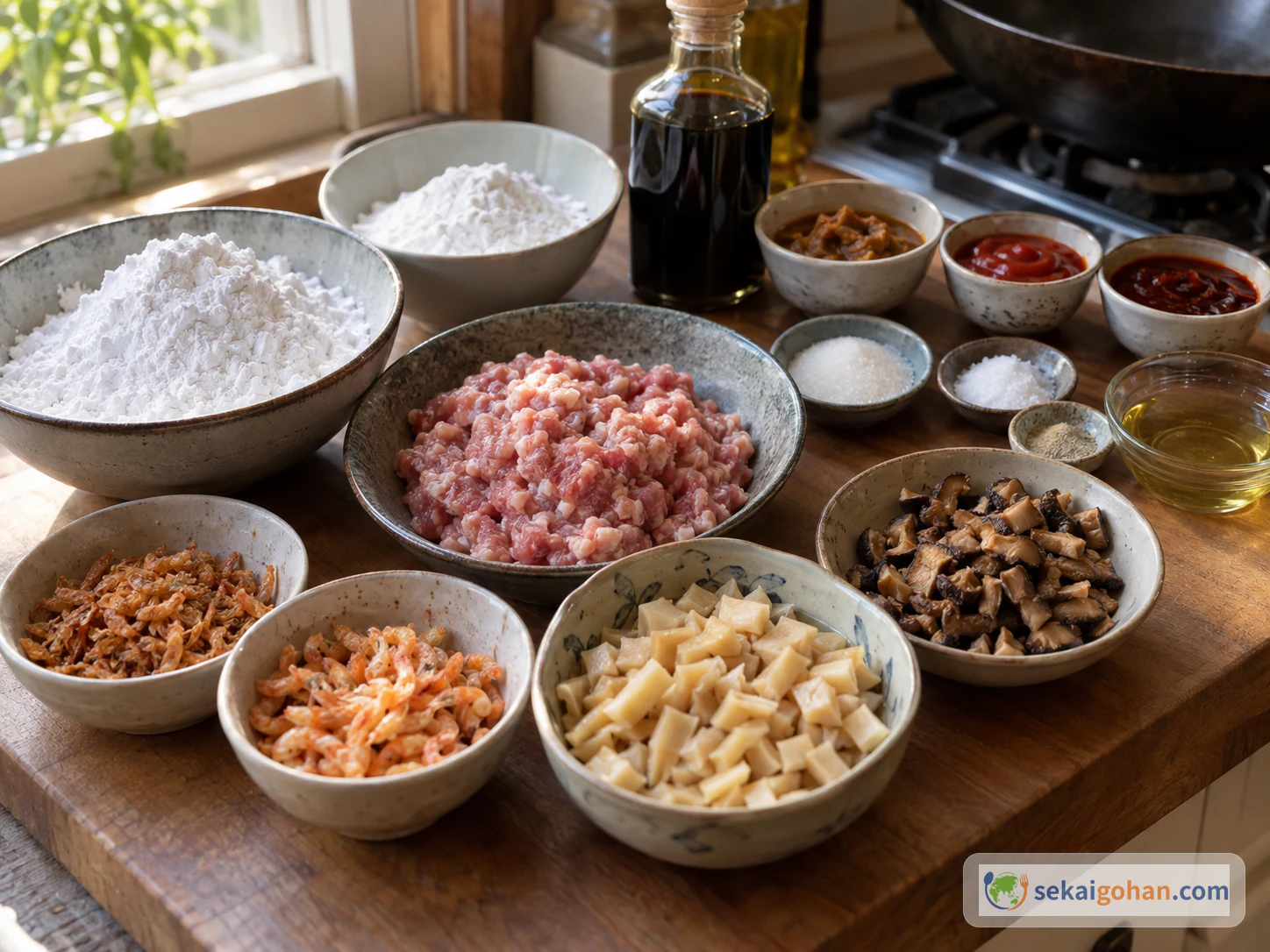
Makes 15-20 pieces, depending on the size of your molds.
This recipe contains pork, soy (soy sauce and miso soy paste), shrimp (dried shrimp) and shiitake. It also contains peanut if you use peanut oil, so choose another cooking oil for anyone with a peanut allergy. Check the labels on all seasonings.
Choosing Ingredients and Substitutes for Ba-Wan
The easiest swap is a neutral oil in place of peanut oil, though you'll lose some aroma. For everything else, here's what changes if you can't find it.
| Item | If you can't find it | What changes |
|---|---|---|
| Sweet potato starch | No reliable substitute. Don't replace it with, or add, cornstarch or potato starch | The texture changes. Products vary in grain size and behave differently, so keep the water as written |
| Long grain rice flour | Other non-glutinous rice flour, such as Japanese joshinko | Expect a slightly different texture |
| Packaged bamboo shoots | Canned or water-packed bamboo shoots, well drained | The flavor differs |
| Dried paper shrimp | Can be left out | The filling loses some aroma and savor |
| Firewood soy sauce | Regular dark soy sauce, such as Japanese koikuchi | Usable, but the flavor is different |
| Fried shallots | Fried onions, store-bought or homemade | A different aroma |
| Miso soy paste | Japanese miso combined with the ketchup and a sweet-spicy sauce | A workaround that won't taste the same |
The exact product behind "miso soy paste" can be hard to track down outside Taiwan. If you can't find it or a workable stand-in, serve a small amount of Taiwanese sweet chili sauce on the side instead. It makes for a different dish than one with haishan sauce, but still a good one.
Equipment
- Small heatproof sauce dishes or bowls, 3-4 inches across, enough for 15-20 pieces (other sizes change the count)
- Steamer, or a pot set up for steaming, or an electric cooker with an outer pot
- Heatproof metal bowl and a pot that can hold it over hot water
- Wok or skillet
- Spatula
- Butter knife
- Kitchen scissors
- Small saucepan
- Food thermometer, if you want to check the center temperature
- Small serving bowls
Troubleshooting Ba-Wan: Wrapper, Mold and Filling
| Problem | Likely cause | What to do |
|---|---|---|
| The wrapper paste is lumpy or stiff | Stirring paused, or the paste was judged by color alone | Stir constantly and judge by thickness, aiming for soft cream cheese |
| The ba-wan won't leave the mold | Too little oil, or still hot | Oil the molds well next time, let the ba-wan cool, and loosen the edge with a butter knife |
| The wrapper won't close | Filling is touching the edge | Keep the filling in the center and wet your hands or spatula |
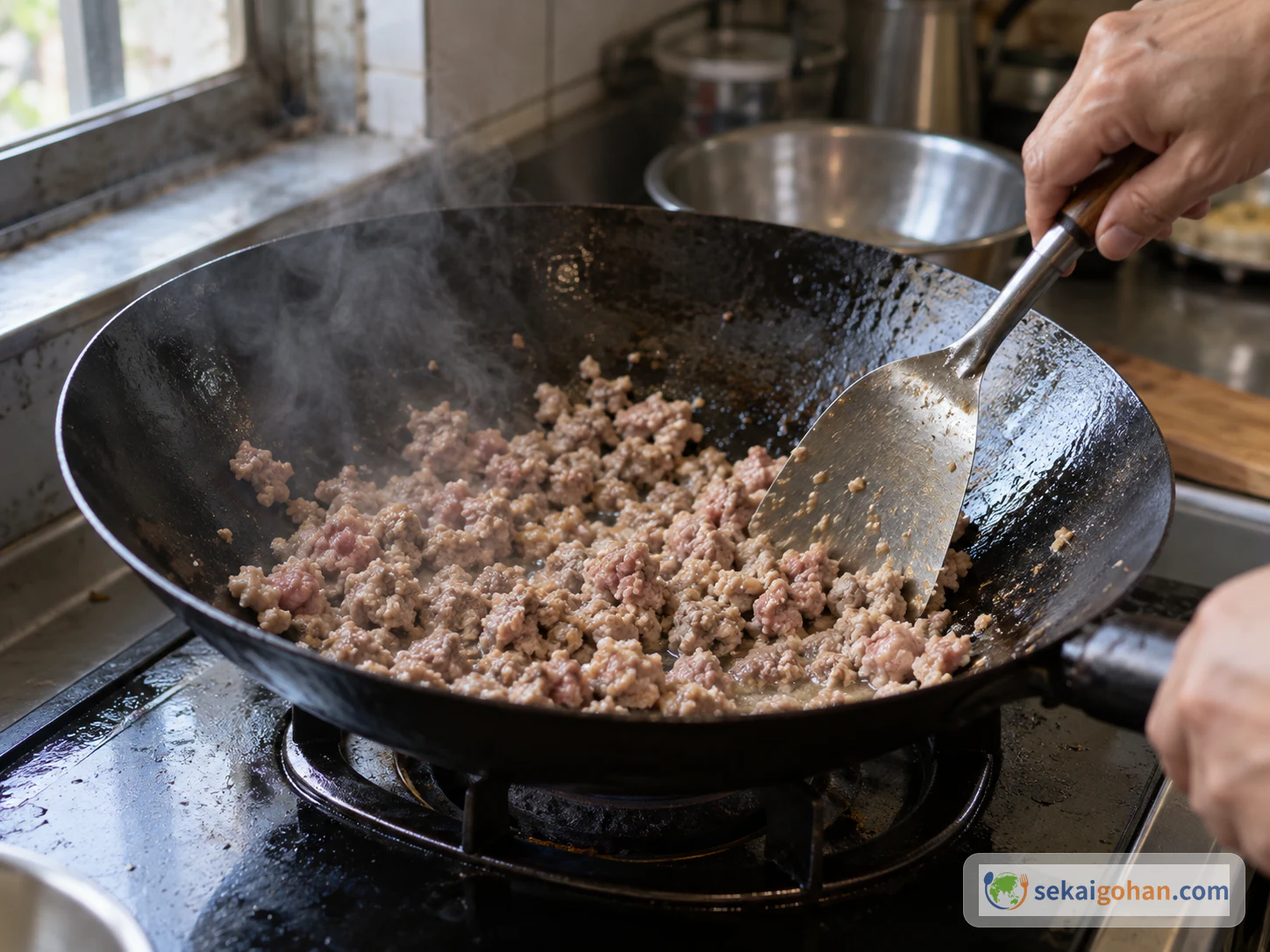
| The filling is watery | The pork wasn't cooked long enough | Stir-fry until the moisture has gone, rather than adding flour or starch |
Storing and Reheating Ba-Wan
Ba-wan freeze well; steam the frozen pieces to warm them through. Follow these food-safety basics:
- Cooling and portioning: Use clean utensils and dishes, and divide cooled ba-wan into shallow containers so they cool quickly.
- Refrigerating and freezing: Keep the refrigerator at 50°F (10°C) or below and the freezer at -15°C or below. Cold doesn't kill bacteria, so eat what you've stored early.
- Thawing: If you thaw before steaming, use the refrigerator or a microwave, or seal the ba-wan in an airtight container and thaw under running water.
- Reheating: Steam until heated thoroughly, to 167°F (75°C) or above.
- Pausing partway: If you stop while working, put the food in the refrigerator.
- Raw pork: Keep raw pork in a container or bag so its juices don't touch other foods.
Frequently Asked Questions
Does it have to be fried to count as ba-wan?
No. Frying belongs to some regional styles, like Beidou's, but southern Taiwan has steamed versions with no frying at all. It isn't a test of authenticity.
Can I use potato starch or cornstarch instead of sweet potato starch?
Not for this recipe, because it changes the texture. Some other ba-wan recipes do use cornstarch, but with their own proportions.