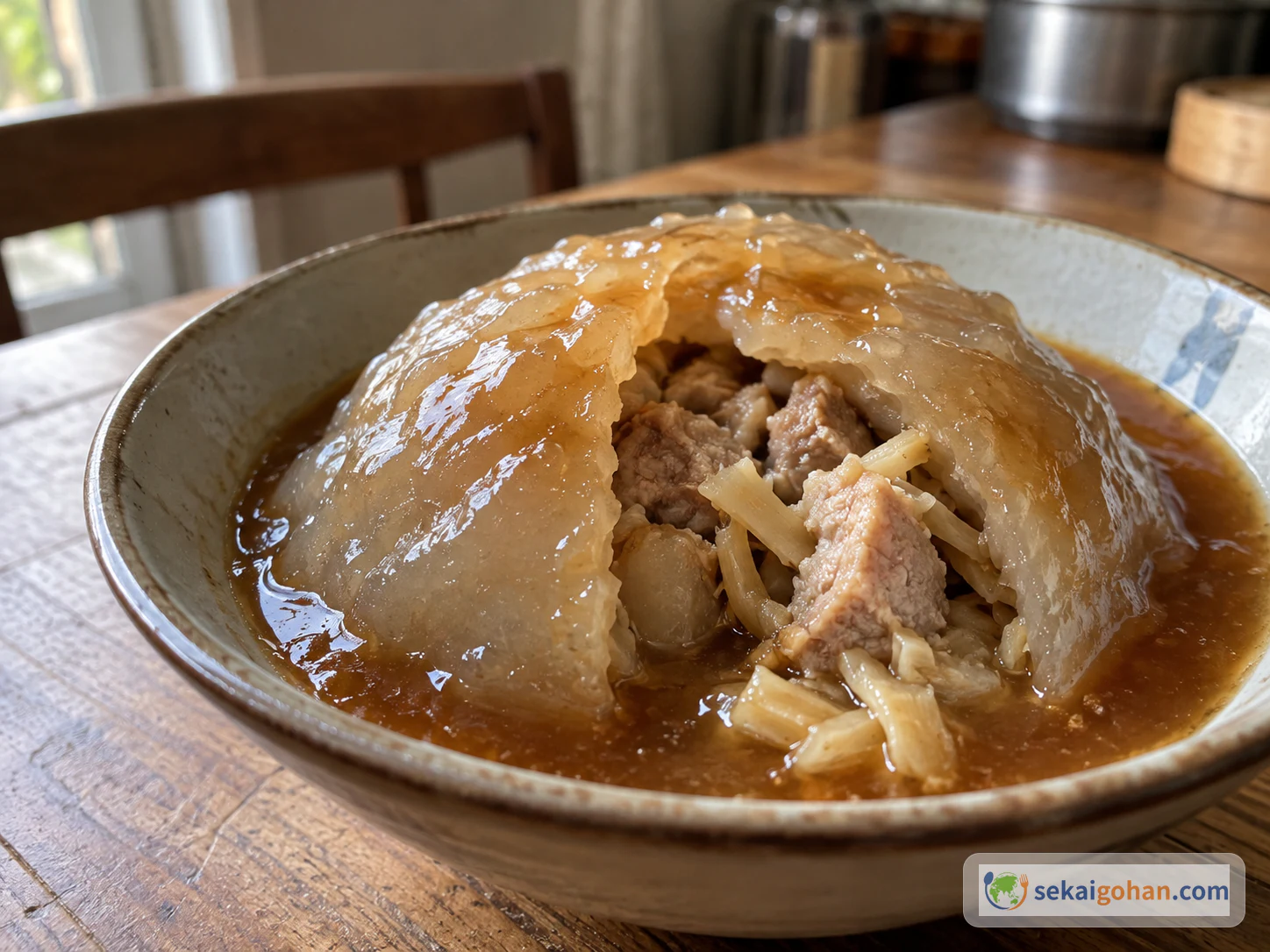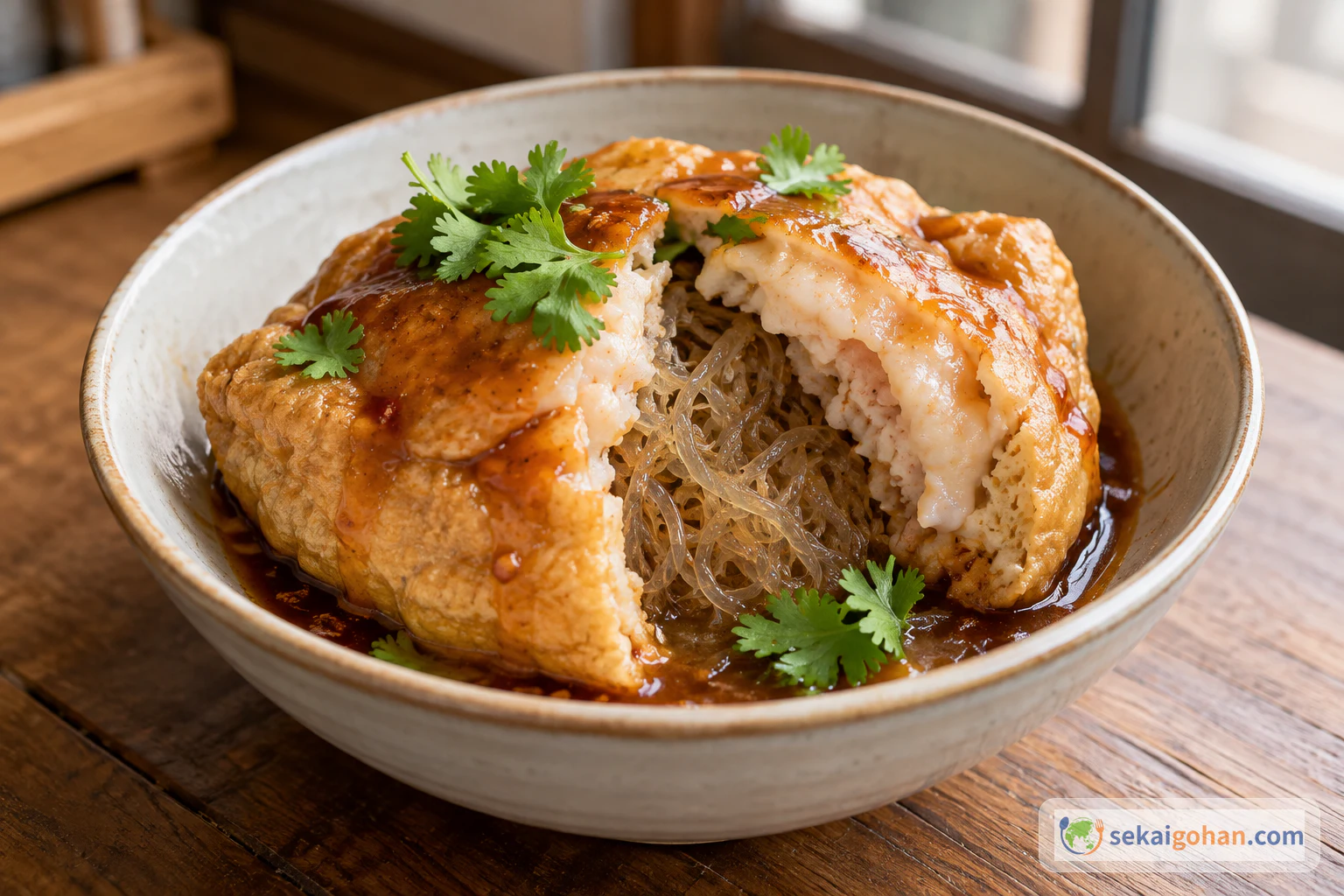
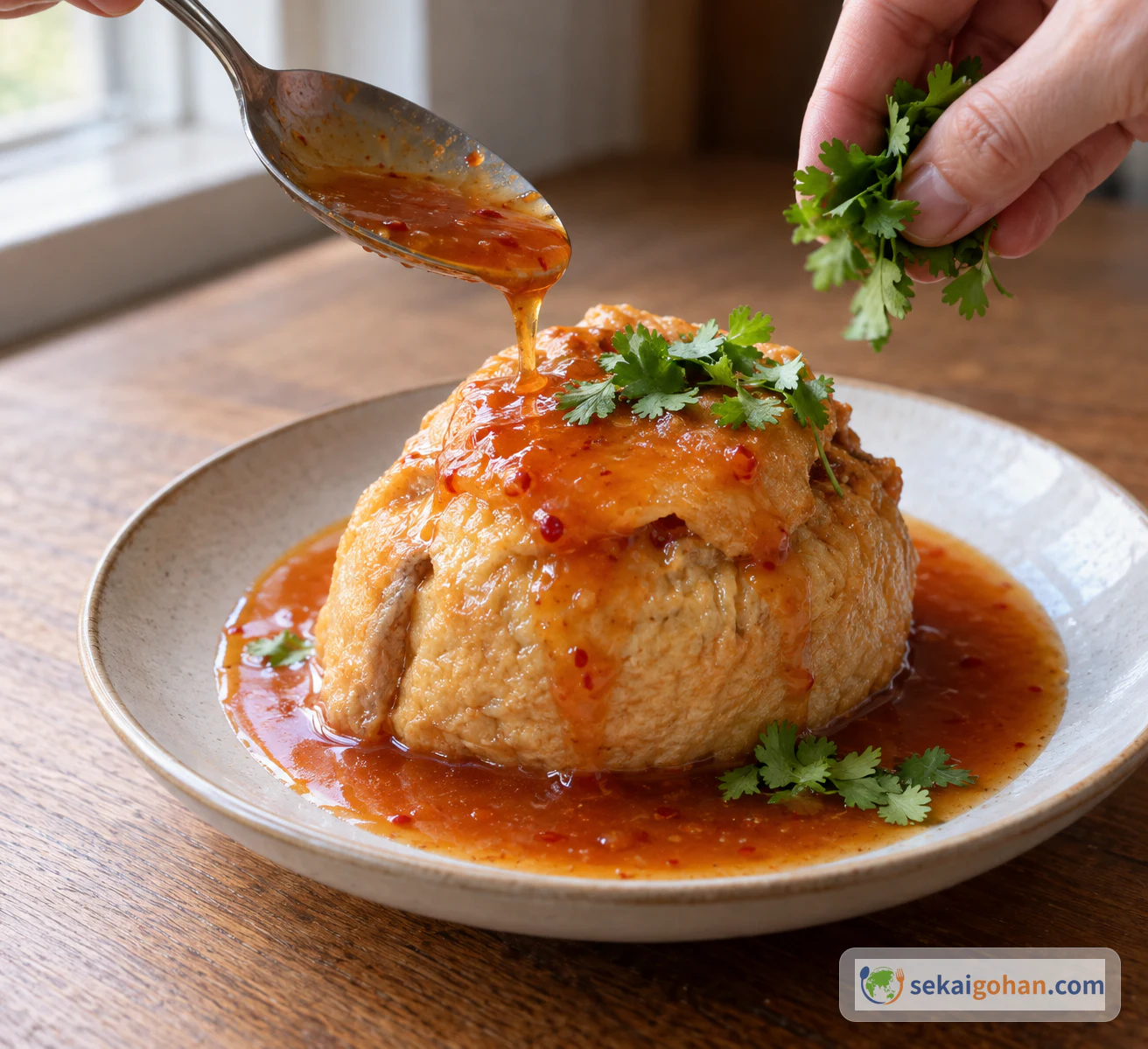
Cut into a piece of a-gei (阿給, a-gei or a-geh) and you find three layers: the soft, oil-rich wall of fried tofu, a tangle of short glass noodles inside, and a pale cap of steamed fish paste closing the top. A sweet-spicy sauce is spooned over just before serving, thin enough to sink into the noodles. This is the signature snack of Tamsui, on Taiwan's northern coast, and it eats like a little savory parcel: rich tofu, noodles seasoned with pork and dried shrimp, and a bouncy fish-paste lid.
A-gei, the Fried Tofu Specialty of Tamsui
A-gei is a local specialty of Tamsui (Danshui), in New Taipei on Taiwan's northern coast. It's one of the foods the town is known for. For other dishes and ingredients from the island, see the Taiwan country page.
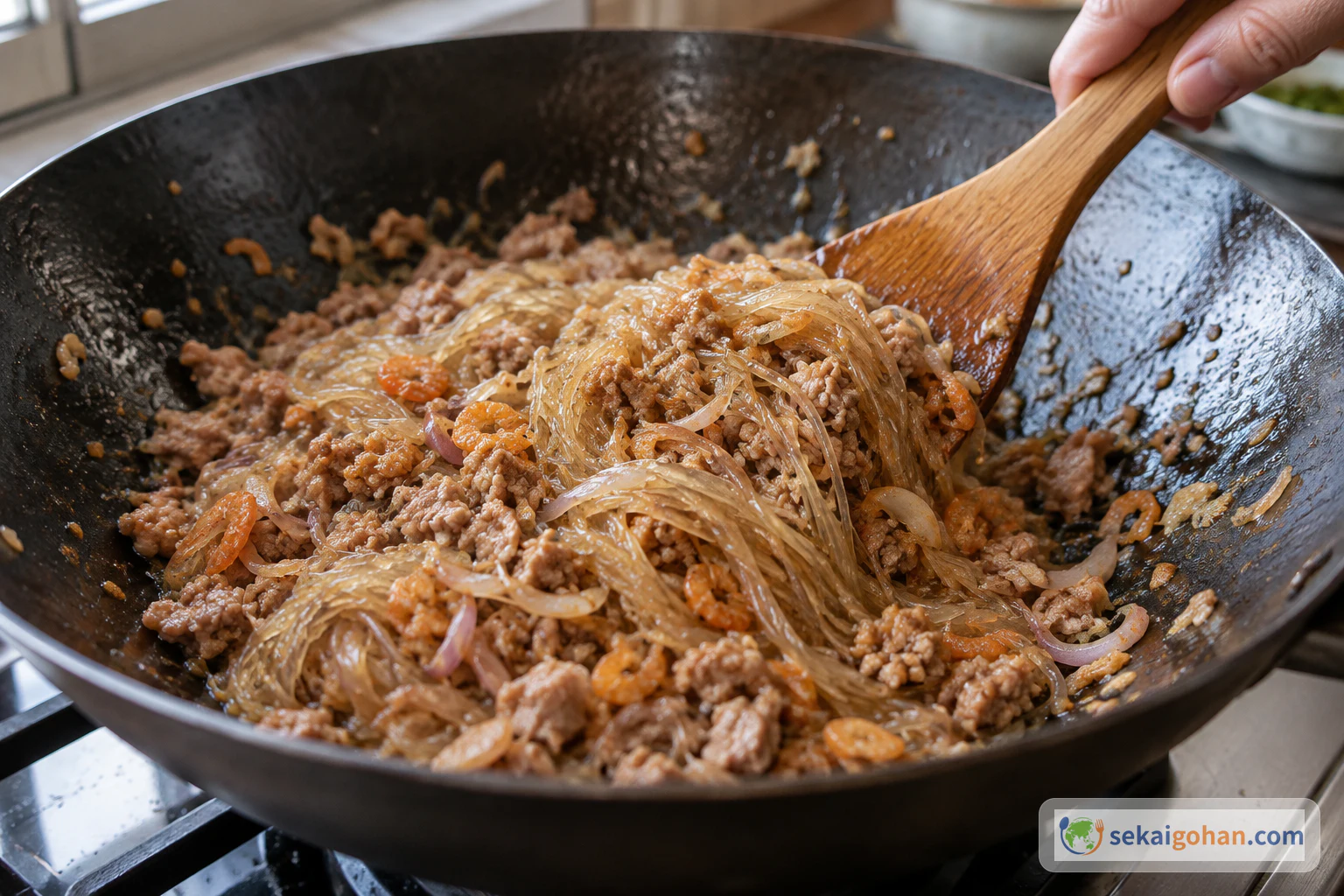
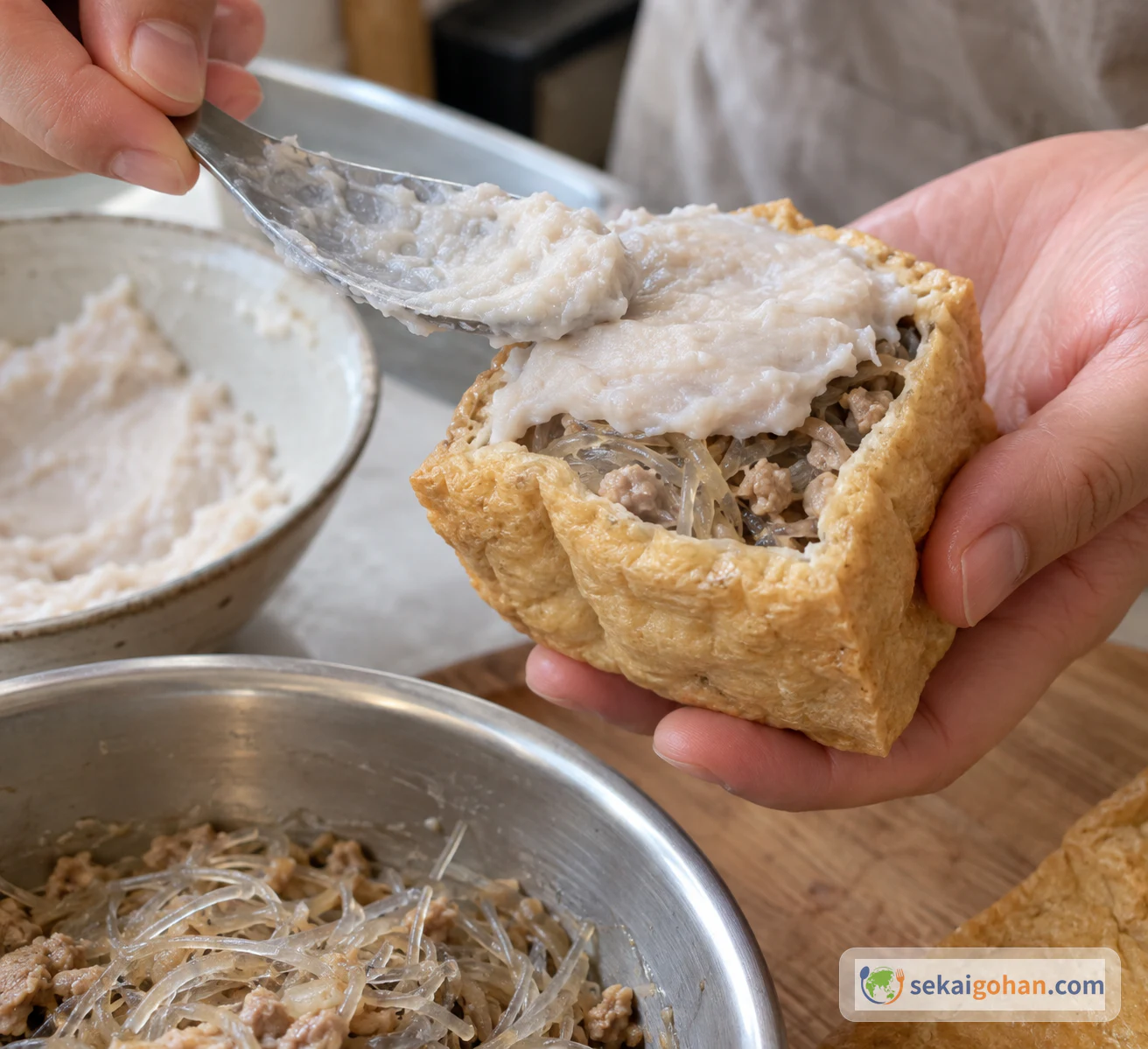
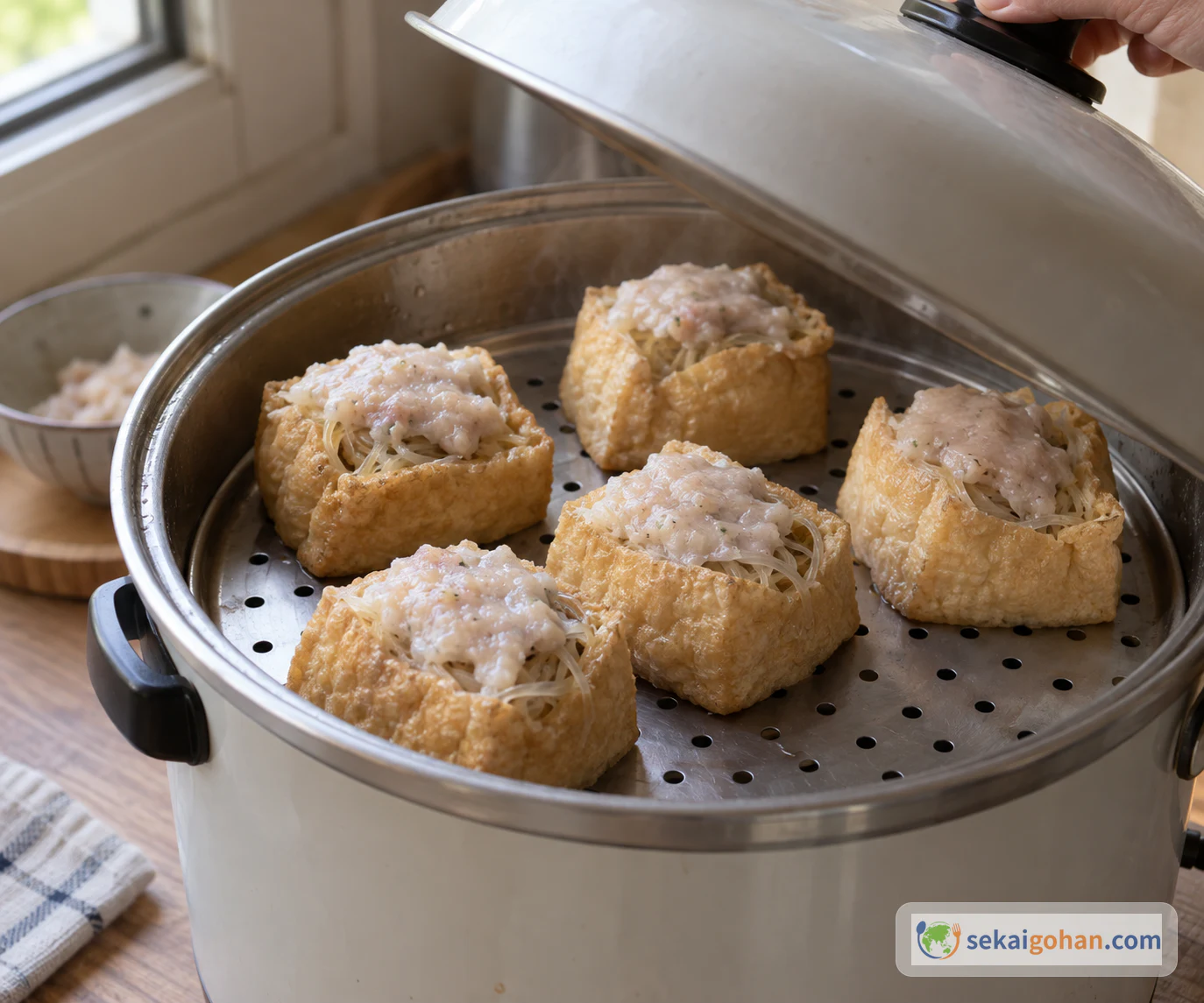
The name comes from the Japanese word for fried tofu, abura-age, shortened to age. The Tamsui dish is much more specific than that, though: fried tofu filled with seasoned glass noodles, sealed with fish paste and steamed. In town, one shop stir-fries its glass noodles with soy sauce, fried shallots and spices, stuffs them into the tofu, closes each opening with fish paste and steams the pieces, all as part of the morning's preparation.
Each part has a job. The tofu is both container and skin, so it has to be thick enough to hollow out. The fish paste is the lid and must grip the tofu edges firmly, and the noodles carry the seasoning of the filling.
Ingredients: Thick Fried Tofu, Glass Noodles and a Fish-Paste Seal
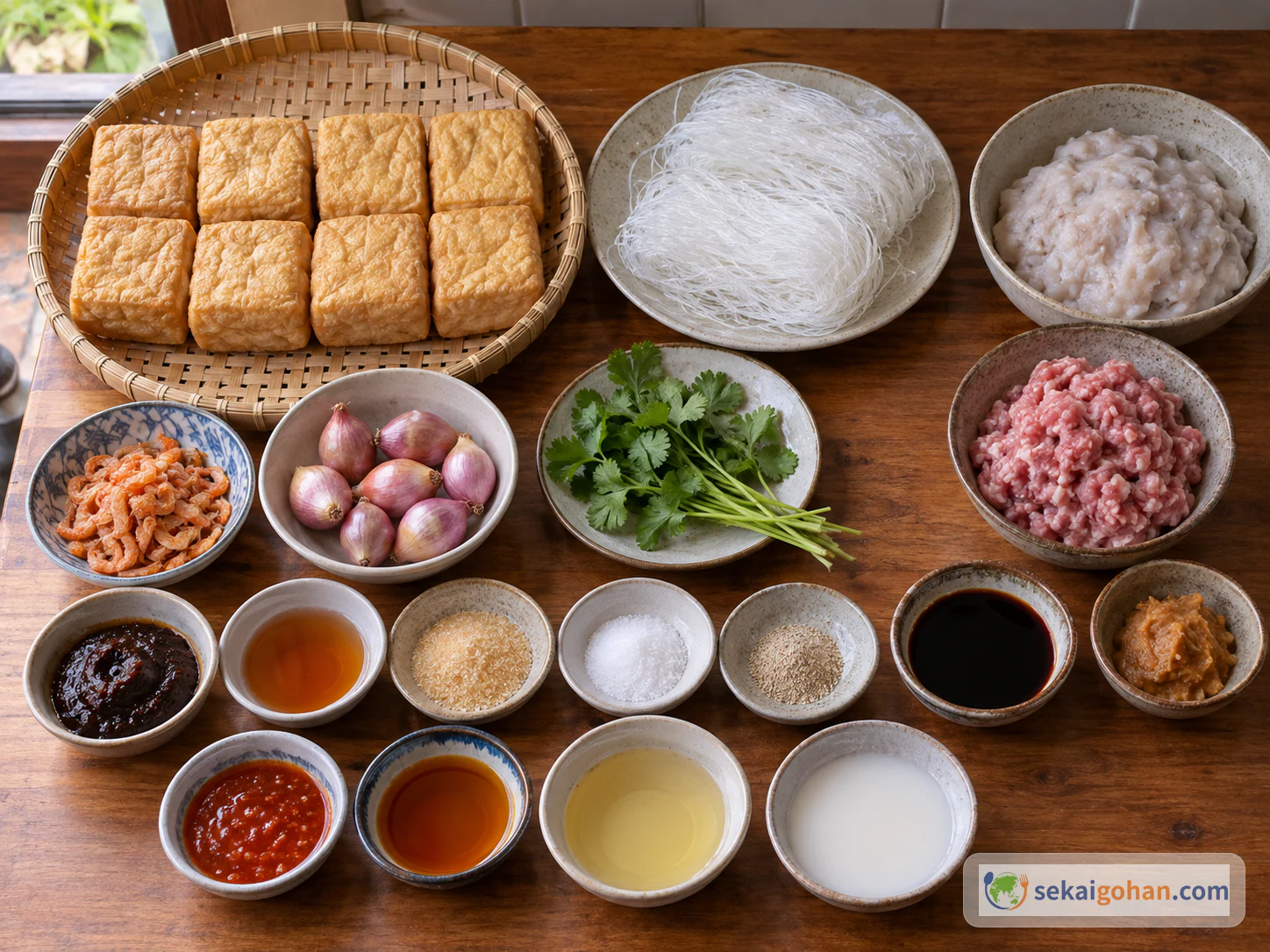
These amounts are for 8 pieces of fried tofu stuffed one by one. That number is the count of pieces, not a number of servings.
Spoon measures here are a 1 tbsp (15 ml) tablespoon and a 1 tsp (5 ml) teaspoon. Measure them as volumes, not weights.
Divided evenly across the 8 pieces, the 7 oz (200g) of fish paste comes to 25g each.
This dish contains soy (fried tofu, miso, soy sauce, soy paste), fish (fish paste), crustaceans (dried shrimp), pork and sesame (sesame oil). Many soy sauces and soy pastes also contain wheat. Check the labels on the chili sauce, rice wine and fish paste before cooking for anyone with allergies, since ingredients differ by brand.
Choosing Ingredients for A-gei
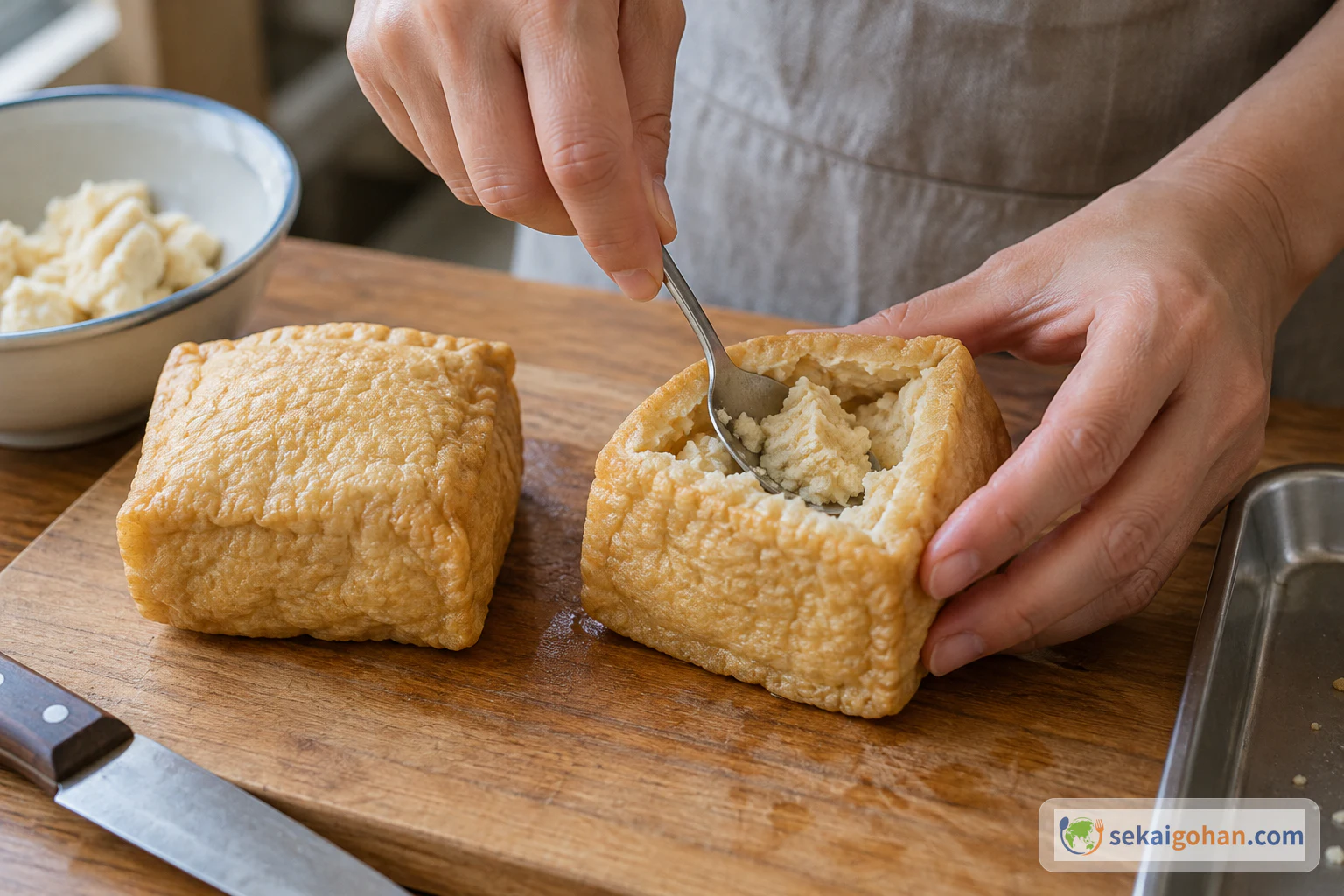
Fried tofu. Look for thick, square deep-fried tofu that you can cut open and hollow. The thin fried tofu sheets used for inari sushi have a different shape and thickness, and they make a very different pocket.
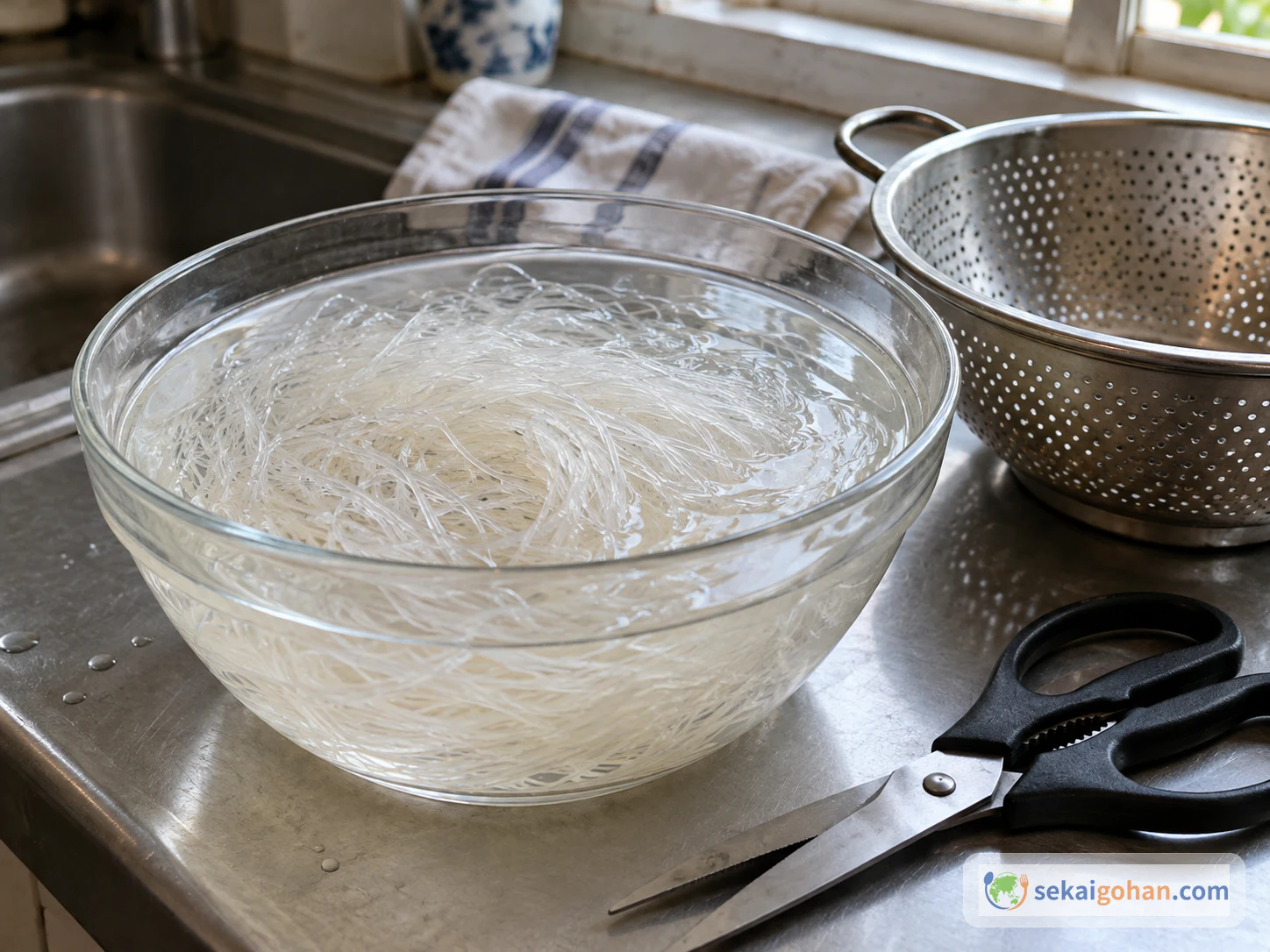
Glass noodles. Use mung bean glass noodles for 冬粉. Bundle sizes differ by brand, so go by the bundle count rather than converting.
Fish paste. Use raw, plain fish paste, the kind sold for making fish balls. Seasoned fish paste will also seal, but it brings its own salt, so go lighter on the salt in the filling. Firmness varies between products too, which affects how easily it spreads over the opening.
Red shallots. 紅蔥頭 are small red shallots. The vegetable sold in Japan as "eshalot" (エシャレット) is young rakkyo, a different plant. If you can't find small shallots, onion works, though the aroma changes.
Soy paste. 醬油膏 is thicker and sweeter than ordinary soy sauce, so swapping in regular soy sauce at the same amount changes both sweetness and body. Check the ingredients and salt level of the one you buy.
Rice wine and starch. Some cooking wines have added salt; read the label and adjust the filling. The slurry here uses Japanese katakuriko (potato starch), and cornstarch may behave differently.
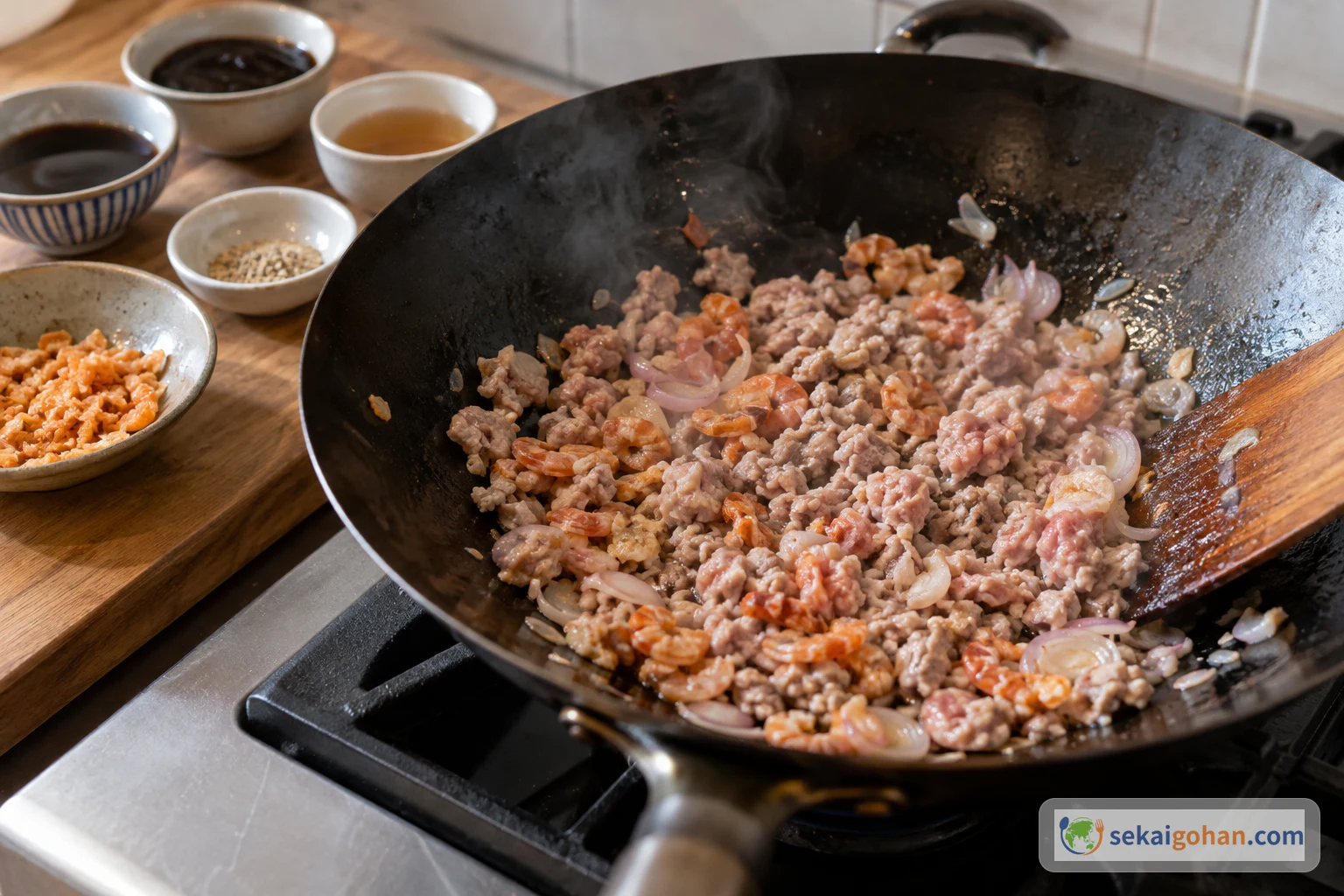
Pork and dried shrimp. Leaving out the pork takes away meaty savoriness and some fat from the filling, and another meat changes the recipe. Without the dried shrimp, the flavor turns gentler.
Equipment
- A pot for blanching the tofu
- A heatproof bowl, a colander and kitchen scissors for the glass noodles
- A small knife and a teaspoon for opening and hollowing the tofu
- A frying pan or wok for the filling
- An electric steaming cooker of the Taiwanese type with its steaming plate (or a steamer you already own), with water added as the manufacturer's instructions say
- A small saucepan for the sauce
- A clean, thin food thermometer
Method: Fill with Glass Noodles, Then Steam the Fish-Paste Lid Firm
The steaming time in particular depends on your equipment, so the finish is judged by temperature at the center, not by minutes alone.
A-gei Troubleshooting
On a first try, keep the ingredients as close to the list as you can. It's easier to see what to adjust next time.
The fish-paste seal is what holds a-gei together, and most problems trace back to a specific step.
| Problem | Likely cause | What to do |
|---|---|---|
| The tofu pocket tears | Tofu too thin, slit cut too deep, or too much scooped out | Choose thick tofu, cut without going through, hollow only a little, and fill moderately |
| The fish-paste lid comes off | Paste not pressed onto the tofu edges | Press it firmly over the opening and onto the rim all the way around |
| The noodles taste flat | Filling liquid cooked off before the noodles went in | Leave some liquid in the pan before adding the noodles. Judge any extra salt or soy paste by the saltiness of your products |
| The filling is too salty | Seasoned fish paste or salty soy paste | Next time, cut back on the salt in the filling first |
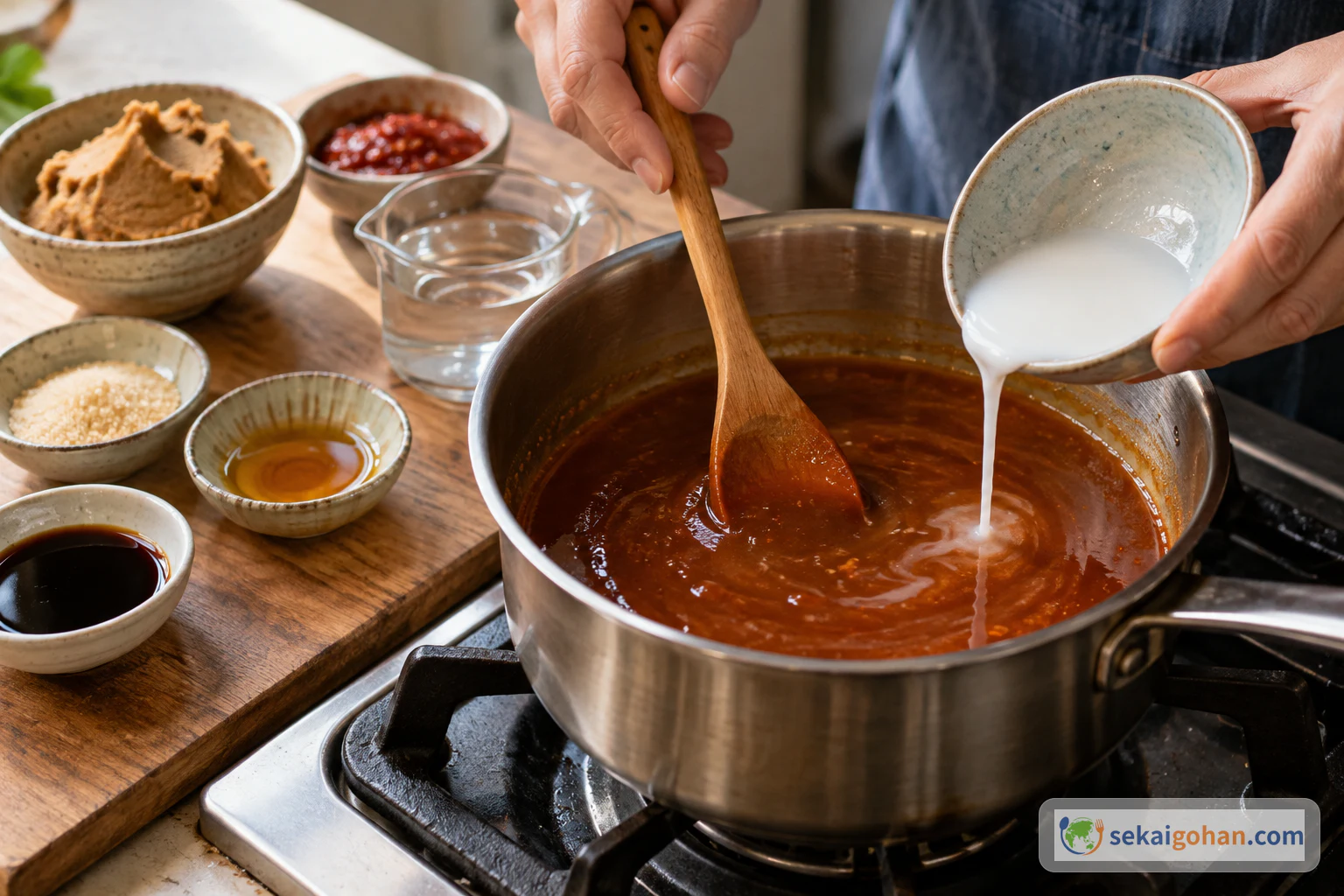
| The sauce is stiff and won't soak in | Too much slurry | Add the slurry little by little, keeping the sauce thin enough to run off a spoon |
| The filling tastes off | Soy paste swapped for ordinary soy sauce | Use soy paste; the two differ in sweetness and thickness |
Serving, Variations and Storing A-gei
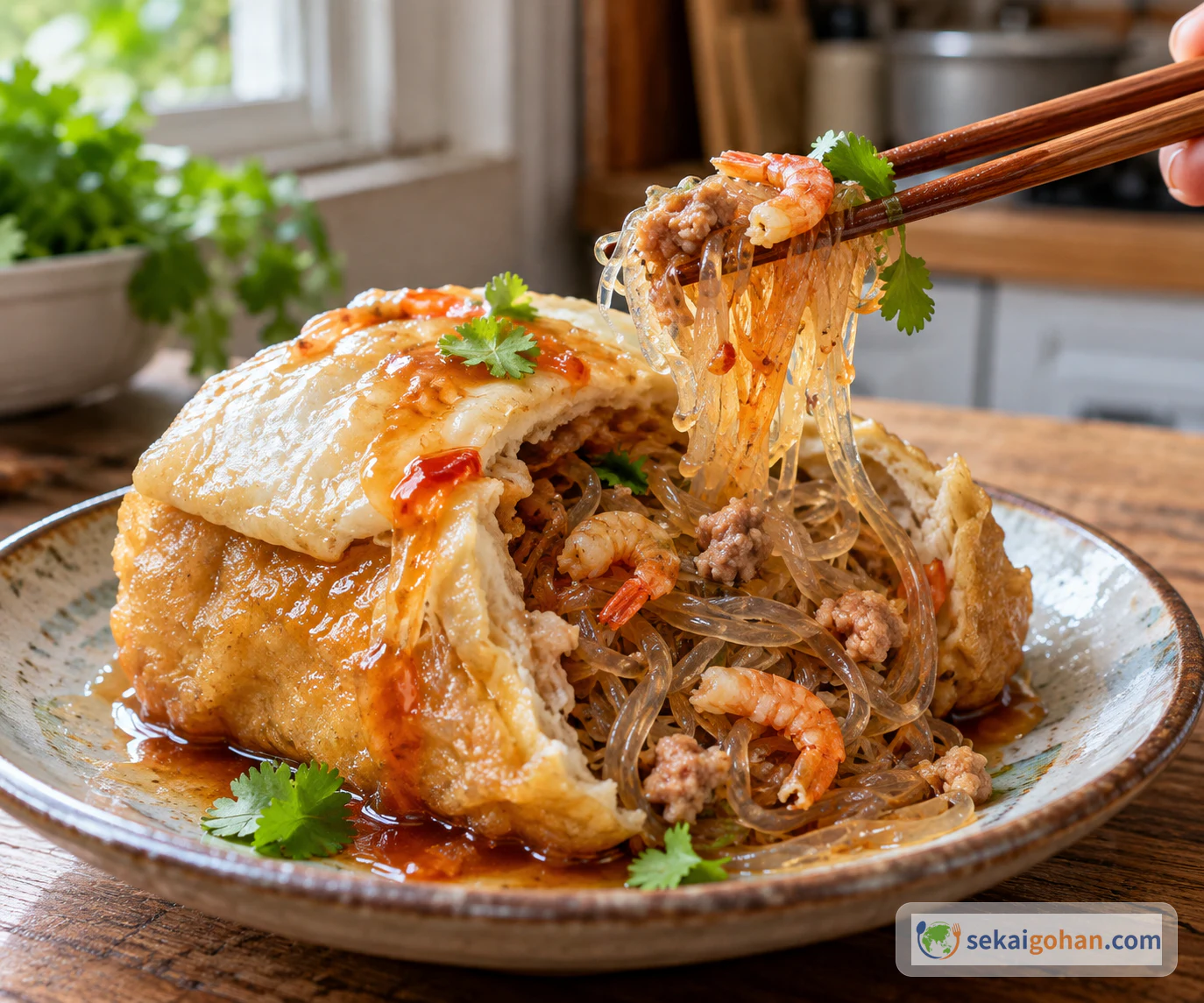
In Tamsui, people break open the pocket and let the glass noodles soak up the sauce as they eat, often with a bowl of fish-ball soup alongside.
At home, a few changes still keep the dish recognizable:
- Sauce on the side. Easier to control how strong each bite is.
- Adjust the chili sauce. Its heat and sweetness differ by product; use less if yours is hot.
- Leave out the cilantro. It's a garnish, and the dish holds up without it.
- A vegetarian version. The dried shrimp and fish paste need replacing along with the pork, which makes it a different dish from a-gei.
- If thick fried tofu isn't available. Thin fried tofu sheets are hard to keep as a standing pocket and give a different texture. Treat it as an experiment.
For leftovers, divide them into small portions in shallow containers, cool quickly and refrigerate. Reheat to 167°F (75°C) or above.
Frequently Asked Questions
How long should I steam it?
Steam for about 10 minutes in an electric cooker. Check that the thickest part of the fish paste and the center of the filling reach 167°F (75°C) for at least 1 minute. If they haven't, keep heating according to your cooker's instructions.
Is the sauce the same as Taiwanese "hai shan jiang"?
The sauce here, made with miso, chili sauce, sugar, sesame oil and soy sauce, leans in that sweet-spicy direction, but it is its own sauce rather than hai shan jiang (海山醬).