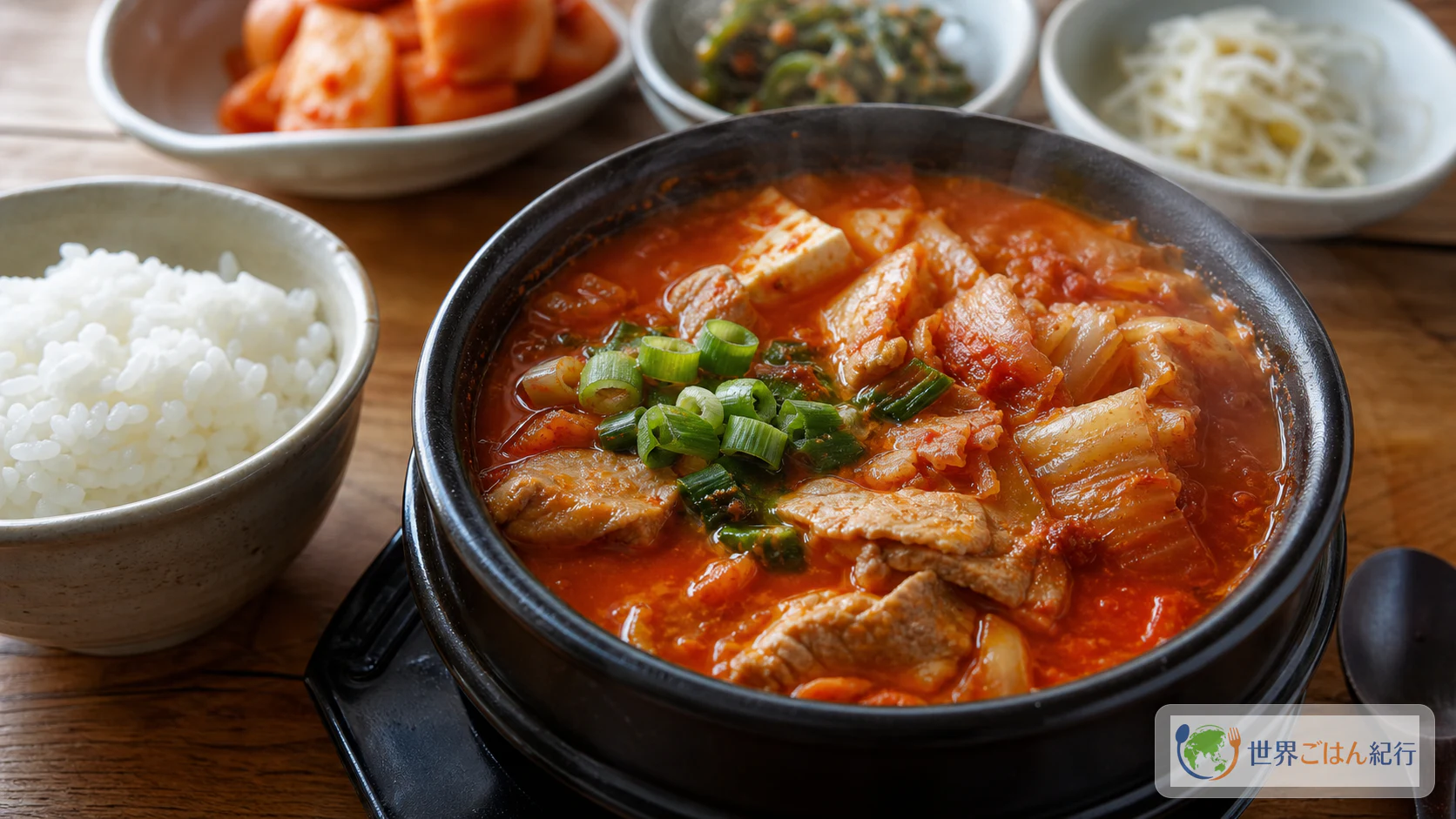
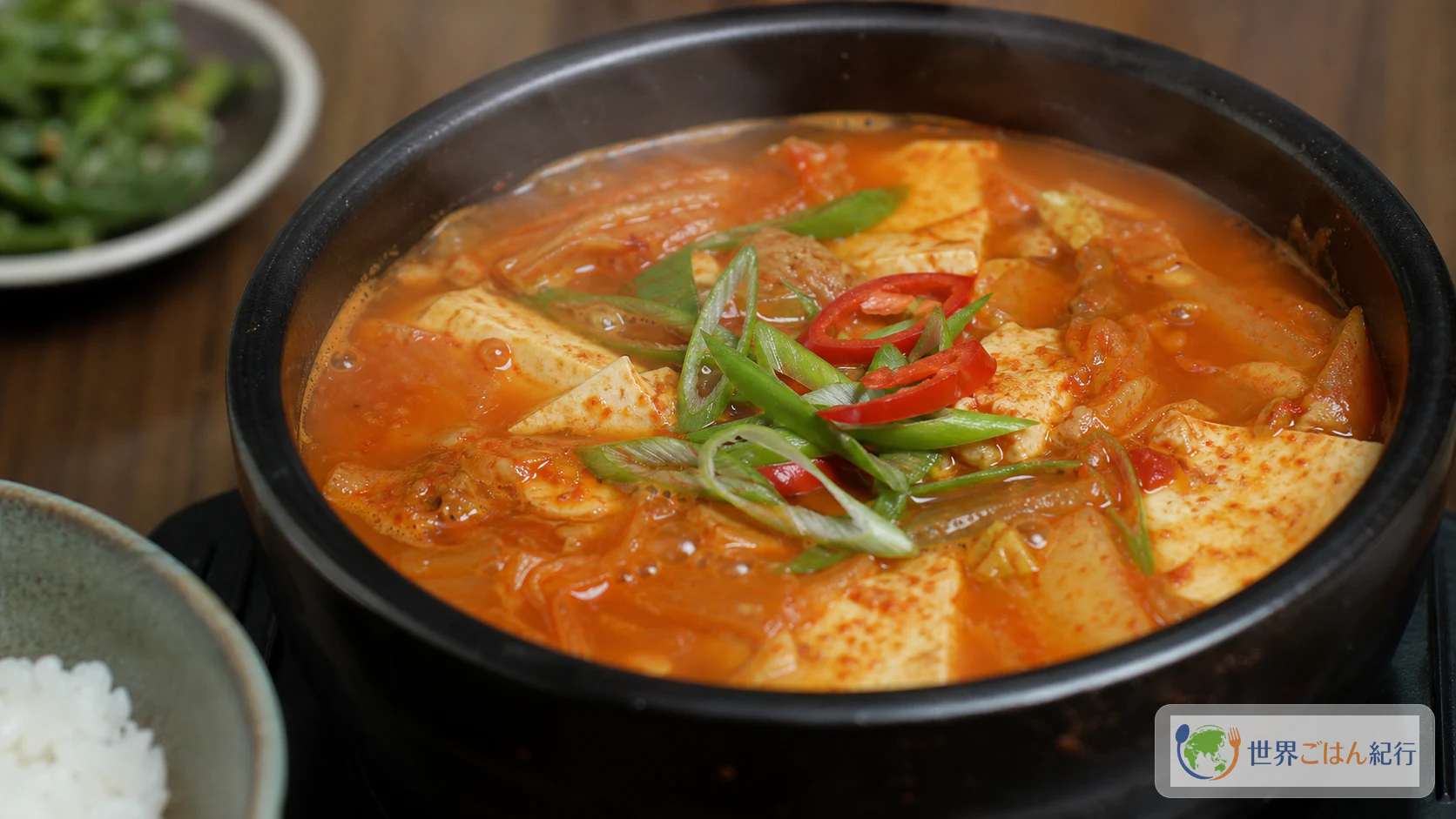
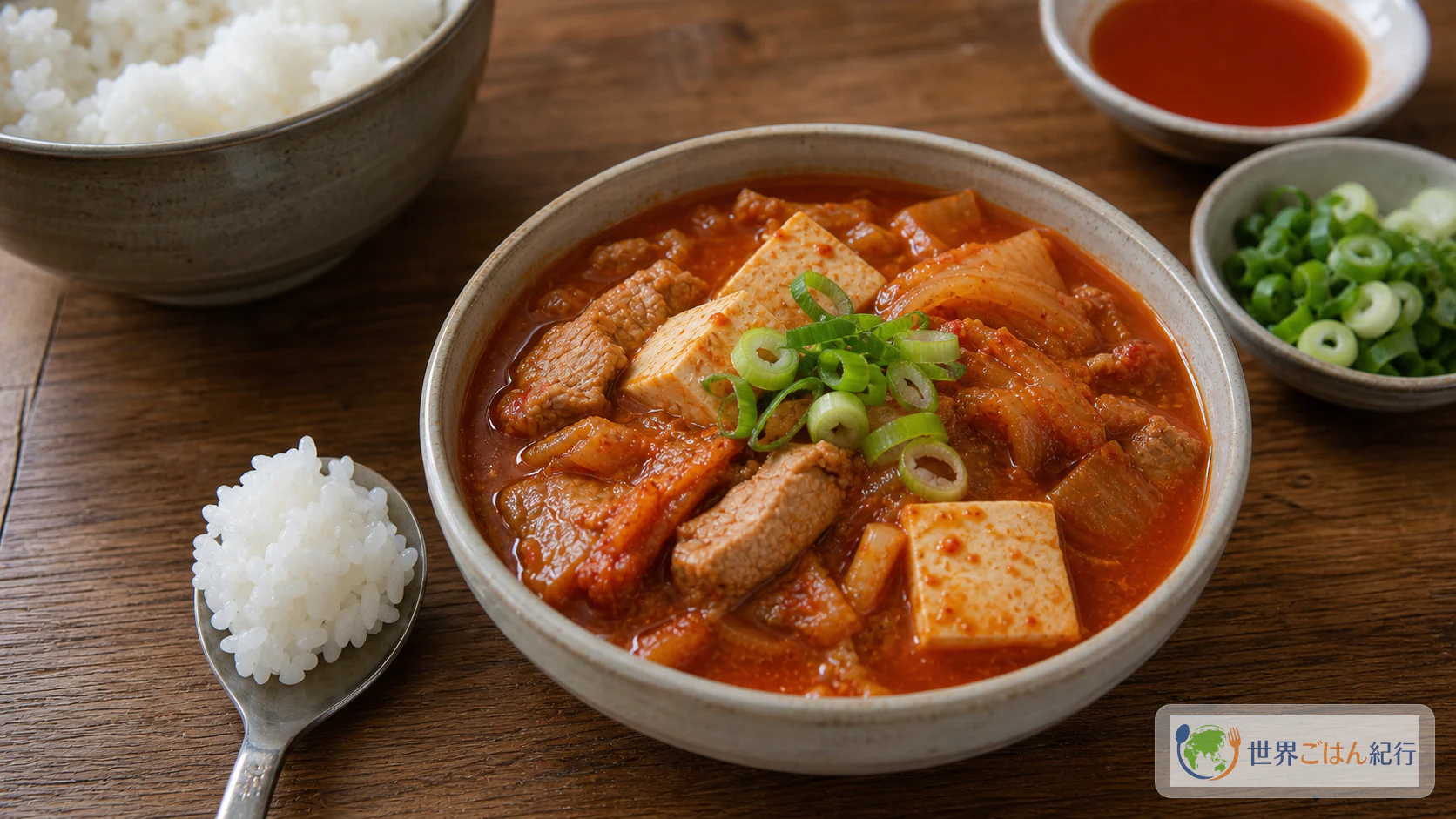
Open a jar of kimchi that has turned a little sour at the back of the refrigerator, and a round, lactic aroma rises, different from the day you bought it. It's too sour to put on white rice as it is. Simmer it in a small pot with pork fat and anchovy-kelp stock, though, and that sourness becomes the core of the dish. Kimchi jjigae (김치찌개) is a Korean home stew that tastes good precisely because the kimchi is fermented: red, sour, and savory, with pork, tofu, and scallions in the broth.
Kimchi jjigae in Korean home cooking
찌개 (jjigae) means a dish thicker than soup, built as a stew and eaten at the table with rice, and kimchi jjigae is the classic one. If doenjang jjigae puts the aroma of fermented soybean paste in the lead, kimchi jjigae leads with the sourness and savoriness of fermented kimchi. The base here is well-fermented kimchi and its brine, pork belly, anchovy-kelp stock, gochugaru, and a little gochujang, and you eat it for sourness and savoriness rather than heat.
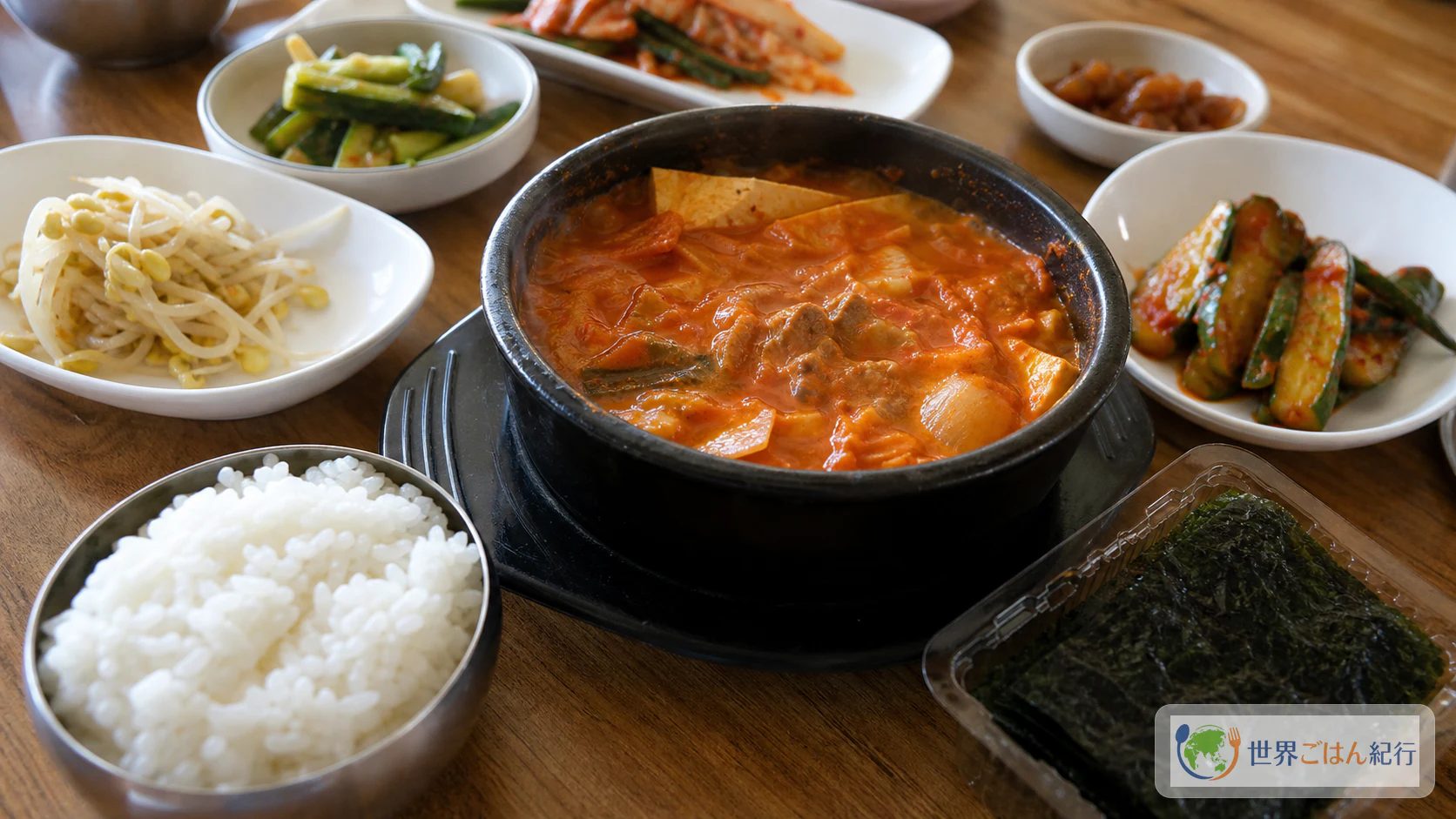
Kimchi jjigae is both a signature restaurant dish and the way a household enjoys leftover kimchi. Korean cooks use fermented kimchi according to its stage of sourness: eaten raw, fried, stewed, steamed, or made into fried rice. Of all these, kimchi jjigae is the dish that carries the sourness into the pot most clearly.
Kimchi jjigae and kimchi hot pot
The kimchi hot pot (kimchi nabe) popular in Japan is a winter hot pot enjoyed for its ingredients, with plenty of napa cabbage, mushrooms, meat, seafood, and a soup base. Kimchi jjigae is smaller, and the center of its flavor is the kimchi. Add too many ingredients and it turns into a home kimchi hot pot, losing the concentration that makes it jjigae.
Where it sits among Korean dishes
Next to bibimbap, it cuts through the sweet-spicy mixed rice, and if you like mapo tofu, it's an easy way in: another take on tofu and fermented seasoning. Korean soups vary a lot in feel. On days you want a white, gentle chicken soup instead of a spicy stew, try samgyetang, simmered with glutinous rice stuffed inside, or go to dwaeji gukbap for the feel of a Busan eatery that ladles pork broth over white rice.
In Korean it is written 김치찌개, and in Latin letters spellings vary: kimchi jjigae, kimchi-jjigae, kimchi chigae. 김치 is kimchi, and 찌개 is a thick, stew-style soup.
Ingredients (serves 4): decide the kimchi, pork, and stock first
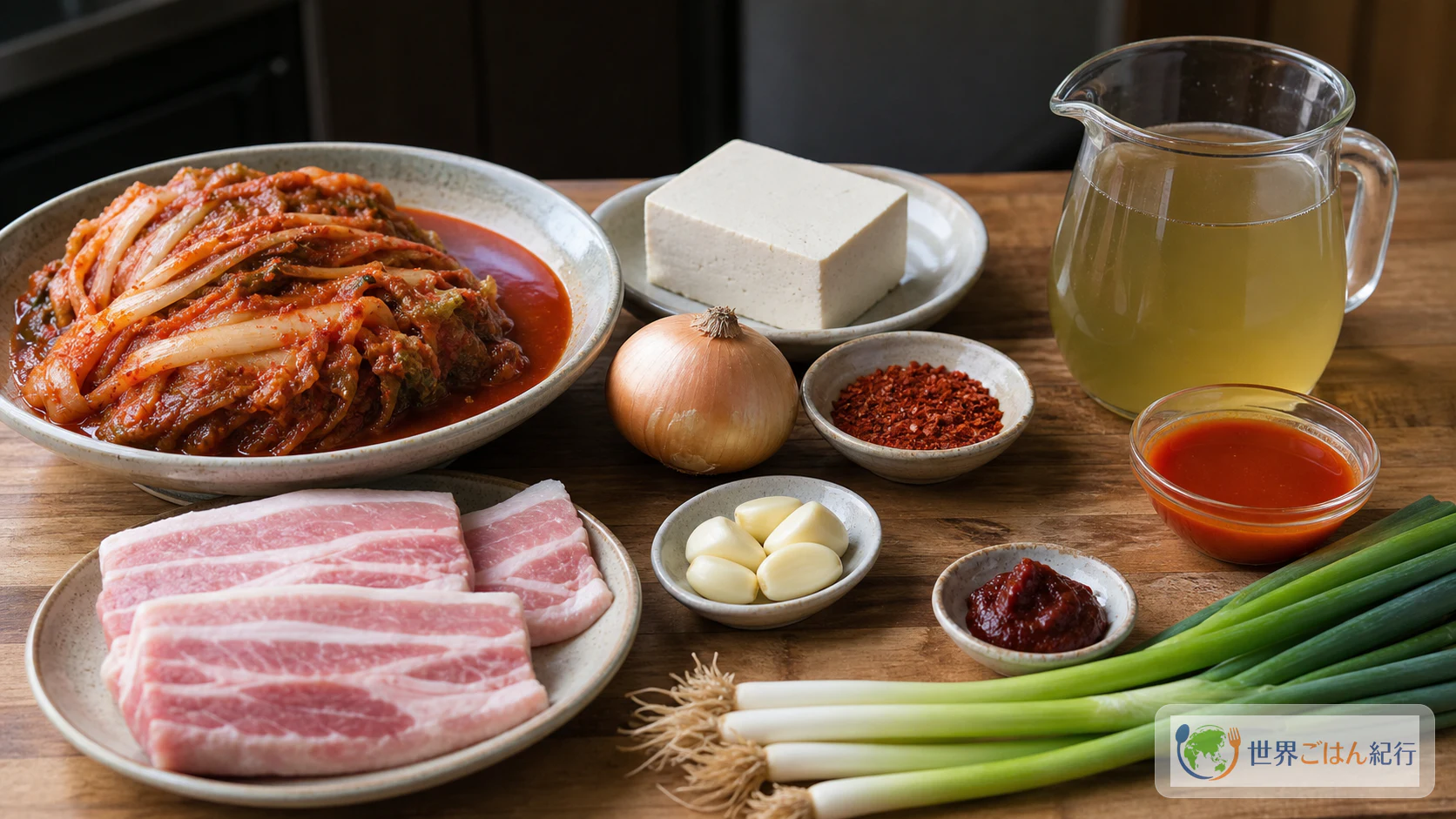
This serves 4. If making 2 servings each in small earthenware pots, halve it and shorten the cooking time a little. Thinly sliced pork belly is easy to work with, but thinly sliced pork shoulder works too. Some households use beef or canned tuna, but for the first time, using pork fat helps the flavor come together.
This dish uses pork, soy (tofu, and sometimes in gochujang), fish (anchovies, fish sauce), and sesame. Store-bought kimchi may contain shrimp, squid, fish sauce, wheat, and soy. If you have a food allergy, always check the ingredient labels of the kimchi and seasonings.
Choosing kimchi and ingredients for kimchi jjigae
Well-fermented kimchi
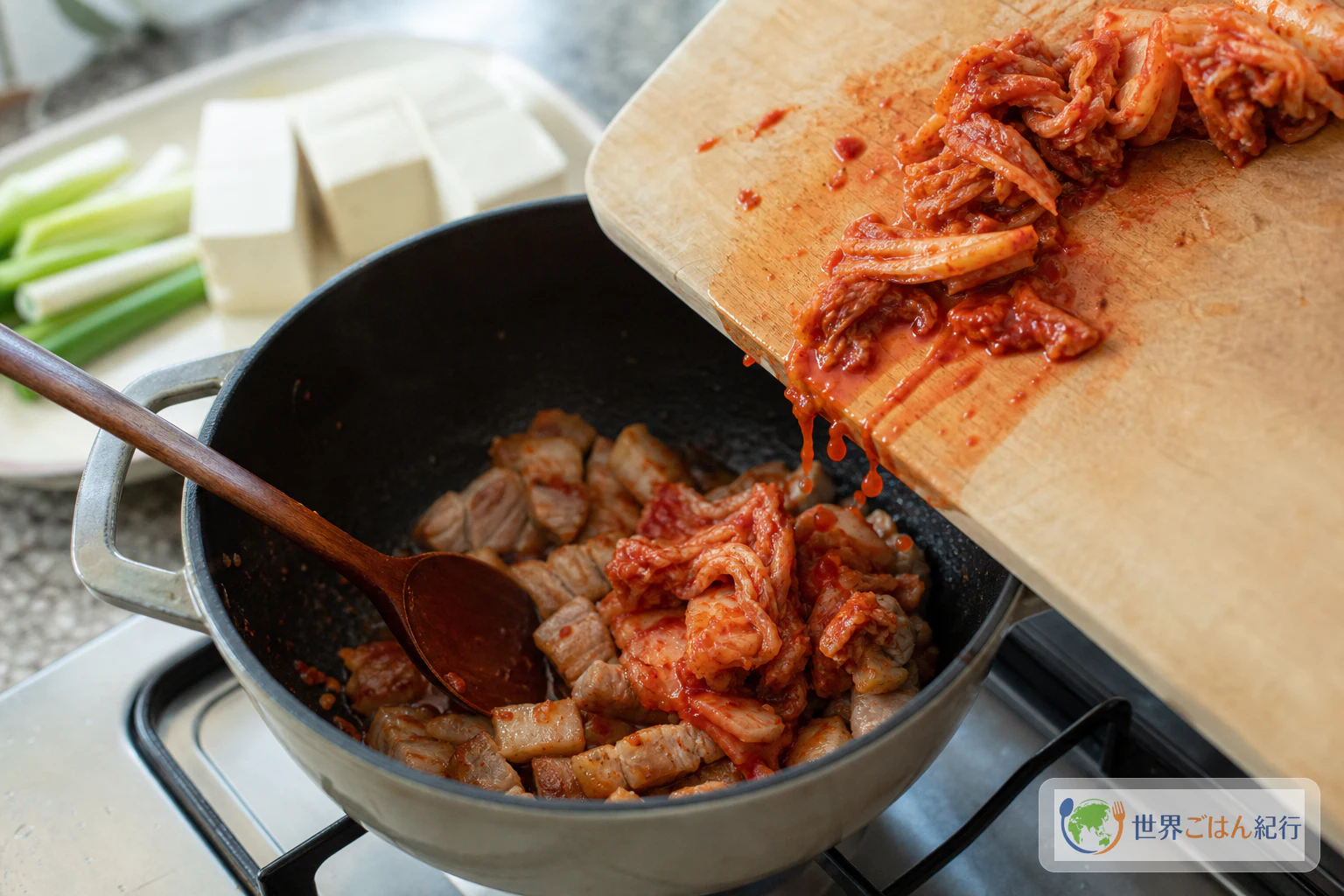
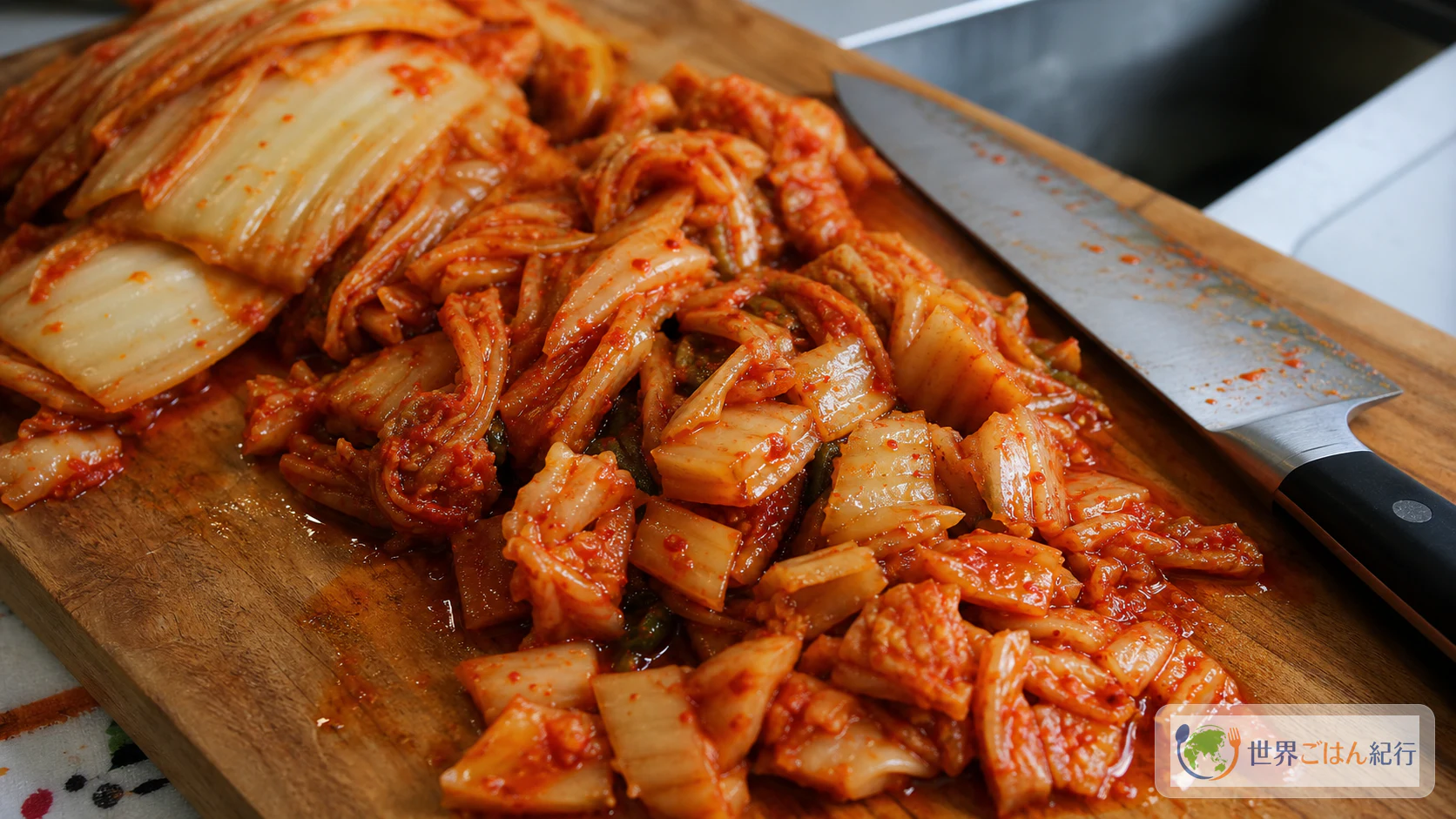
What matters most is kimchi that has gone sour, not kimchi that is spicy. Freshly bought kimchi puts the sweetness of the napa cabbage and the aroma of chili forward, but in a stew it tends to taste shallow. Kimchi kept a few days to a week in the refrigerator, until it turns a little sour, spreads its lactic acidity through the whole broth as it simmers.
Korean recipes often call for "ripe kimchi" or "well-fermented kimchi," because it gives jjigae more depth. At the supermarket, choose a type with red brine and a little sourness over the lightly pickled kind that ferments slowly.
| Condition | Good for jjigae? | How to use in the pot |
|---|---|---|
| Fresh and sweet | Somewhat weak | Add 1 tsp vinegar, 2 tbsp kimchi brine, and gochugaru to give it an outline |
| Kept 3 to 7 days and sour | Best | Use with the brine, fry first, then simmer |
| Very sour | Good | Round off the edges with 1/2 tsp sugar, onion, and pork |
| Watery, lightly pickled style | Weak | Reduce the brine and supplement with a little gochujang |
When your kimchi isn't sour yet On days you make it with freshly bought kimchi, fry the kimchi 1 minute longer and add 2 more tablespoons of kimchi brine. Adding 1/2 teaspoon of vinegar at the end also works, but too much gives a shallow sourness. Try a little at a time in a serving bowl rather than putting vinegar straight into the pot, and failures are less likely.
Shopping for kimchi jjigae
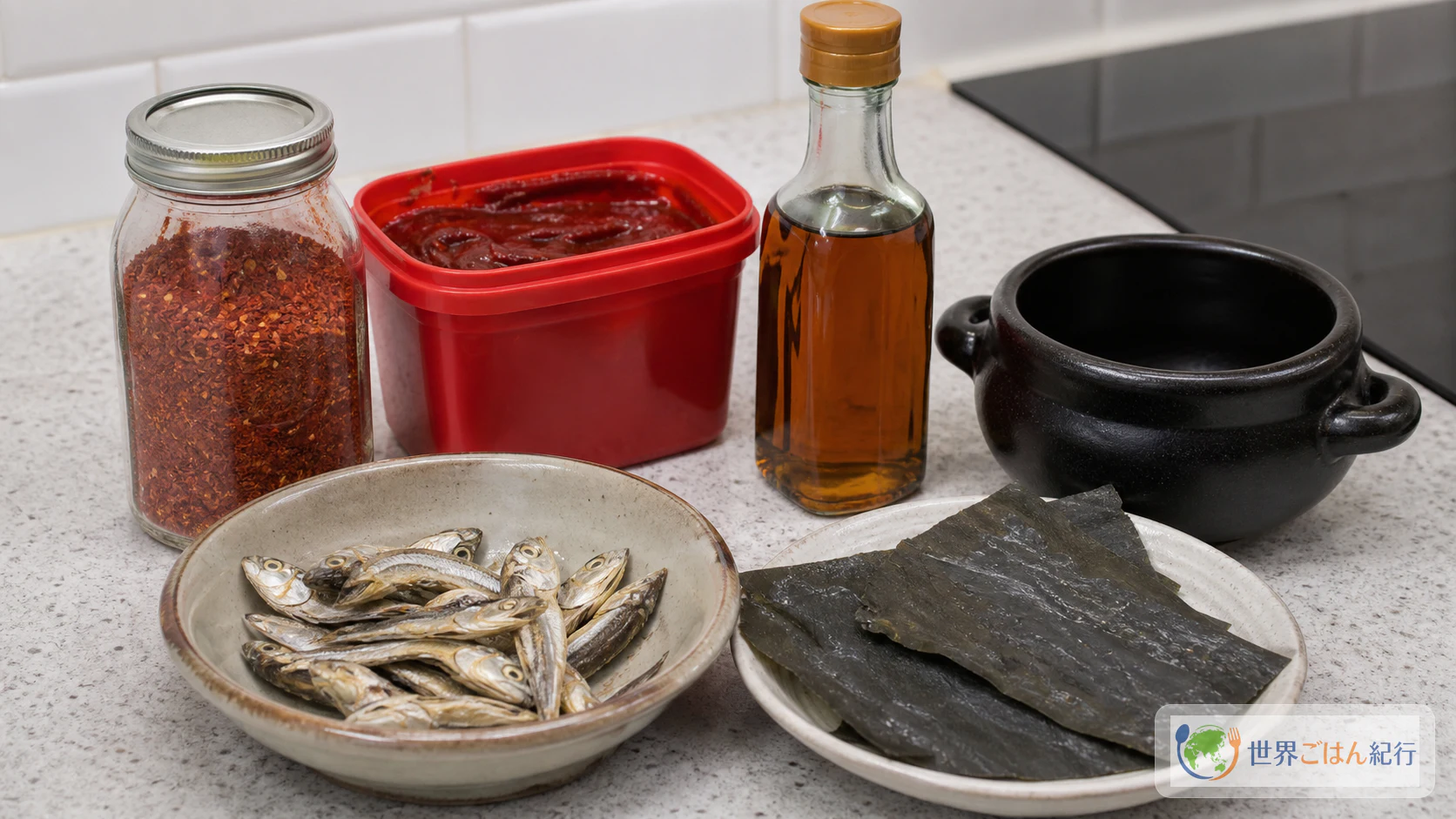
Pork, tofu, onion, and scallions from an ordinary supermarket are enough. The items to look for are well-fermented kimchi, gochugaru, gochujang, Korean sesame oil, and a small flame-safe pot. Buy kimchi from the refrigerated case rather than online, so you can check the best-by date and the amount of brine.
| What to buy | Priority | Reason |
|---|---|---|
| Well-fermented kimchi | High | The center of the flavor. Lightly pickled kimchi makes a thin jjigae |
| Gochugaru | High | The red aroma more than heat. Ordinary crushed red pepper alone becomes too sharp |
| Gochujang | Medium | Backup for when the sourness is weak. Use by the teaspoon |
| Korean sesame oil | Medium | The first aroma rises when frying the pork and kimchi |
| Small flame-safe pot | Medium | For those who want to eat it hot at the table. A heavy pot is fine the first time |
Check the sourness of the kimchi before reaching for more chili seasoning. With well-fermented kimchi, 2 teaspoons of gochujang is enough. If the kimchi is sweet, fry it to cook off its water and add aroma with gochugaru; that makes it more jjigae-like than extra gochujang does.
If you'll make kimchi jjigae often, Korean sesame oil and a small flame-safe pot are worth having. The pot keeps the stew piping hot to the end, and both work for bibimbap and doenjang jjigae too.
How to make it: fry first, then simmer
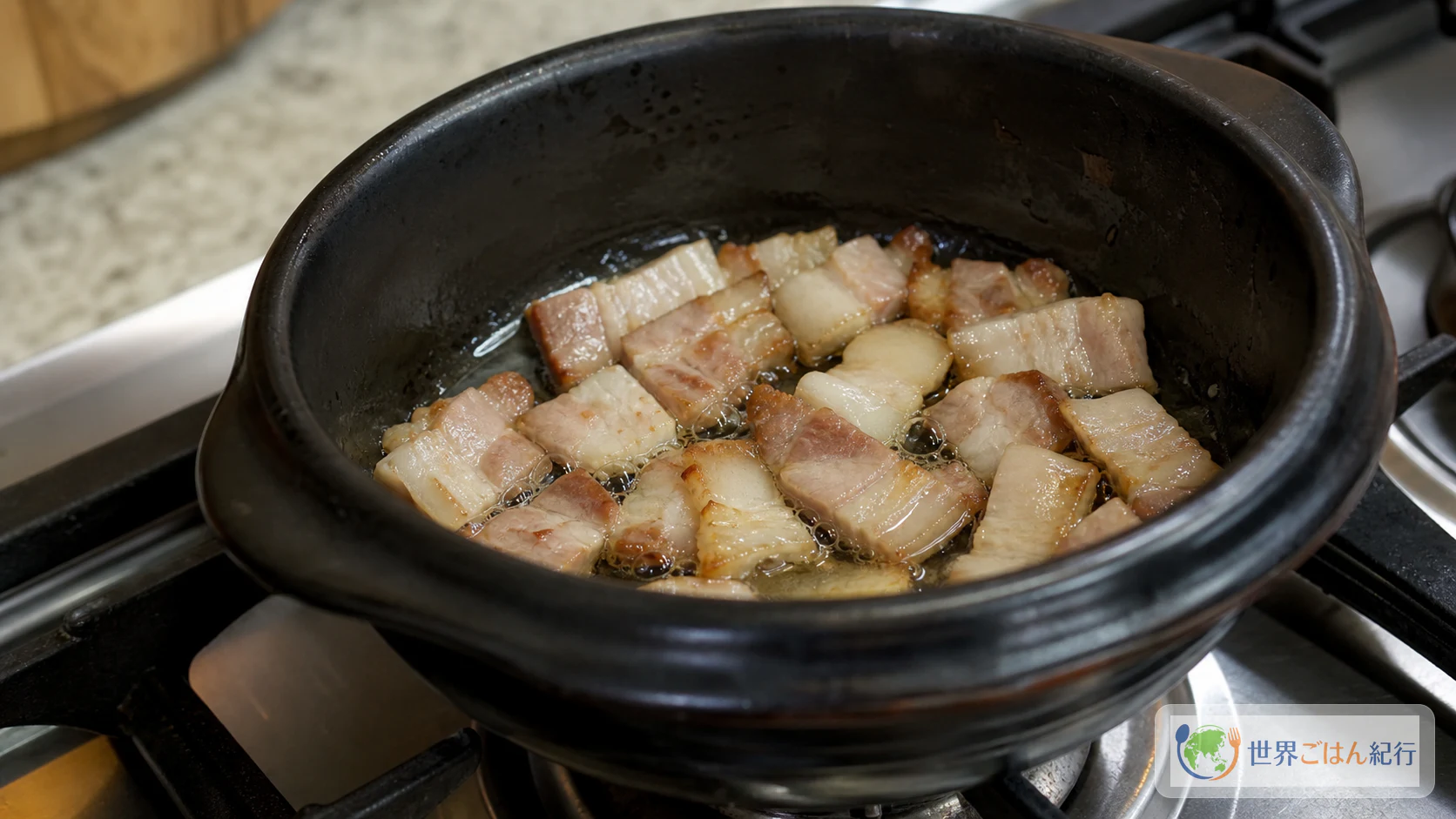
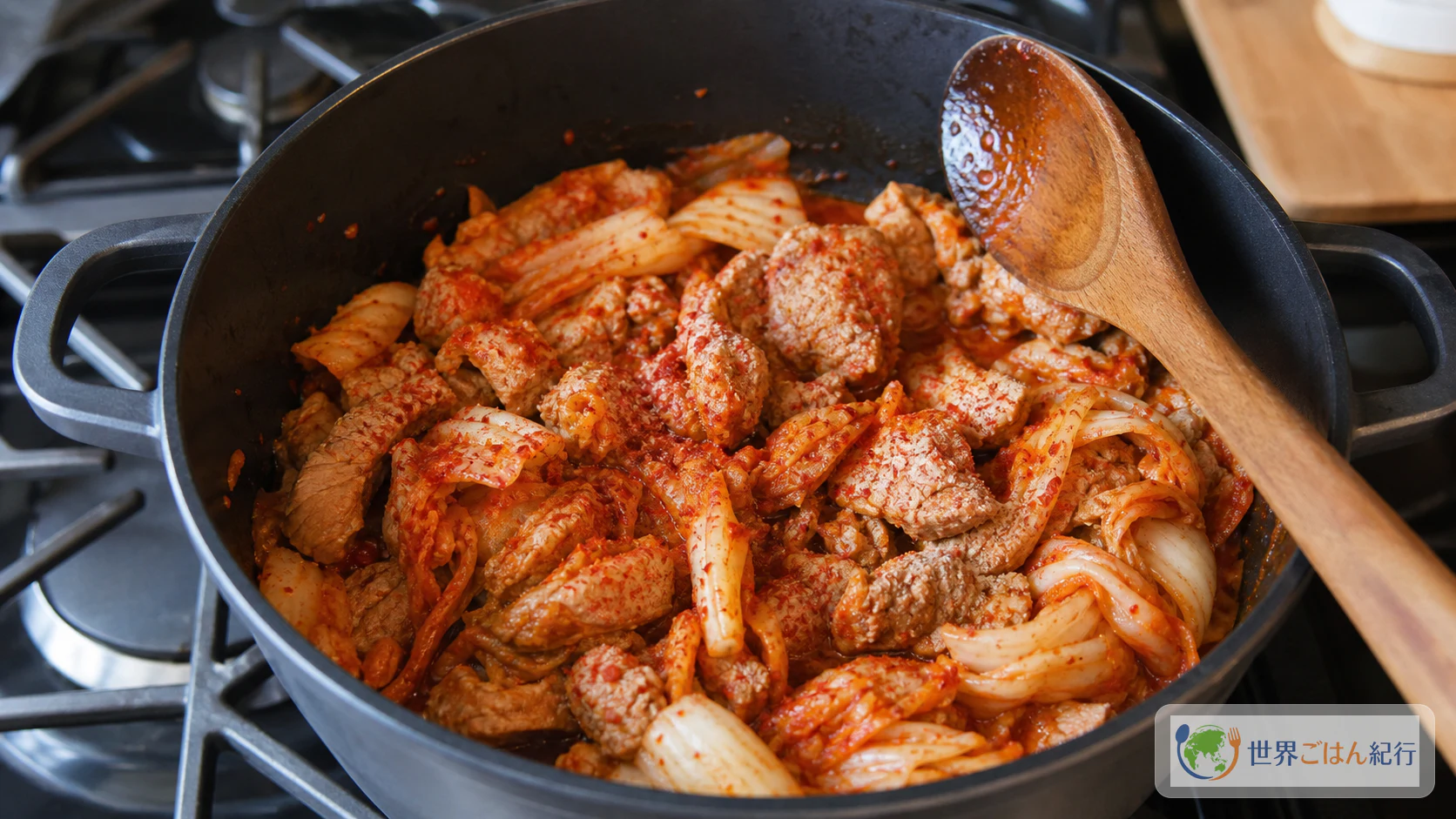
For kimchi jjigae, frying the kimchi and pork before adding the stock gives a deeper flavor. Simmering them in water from the start brings out the kimchi's sourness, but the whole pot tends to turn watery. Fry in oil to round the kimchi's edges a little and make a red aromatic oil, then simmer.
Taste with rice, not from the pot alone Tasted from the pot alone, kimchi jjigae seems too salty. Spoon a little broth over 1 teaspoon of rice and see whether sourness, saltiness, and the savoriness of pork come out in turn after chewing. A little strong when eaten with rice is just right at the table.
Kimchi jjigae problems and fixes
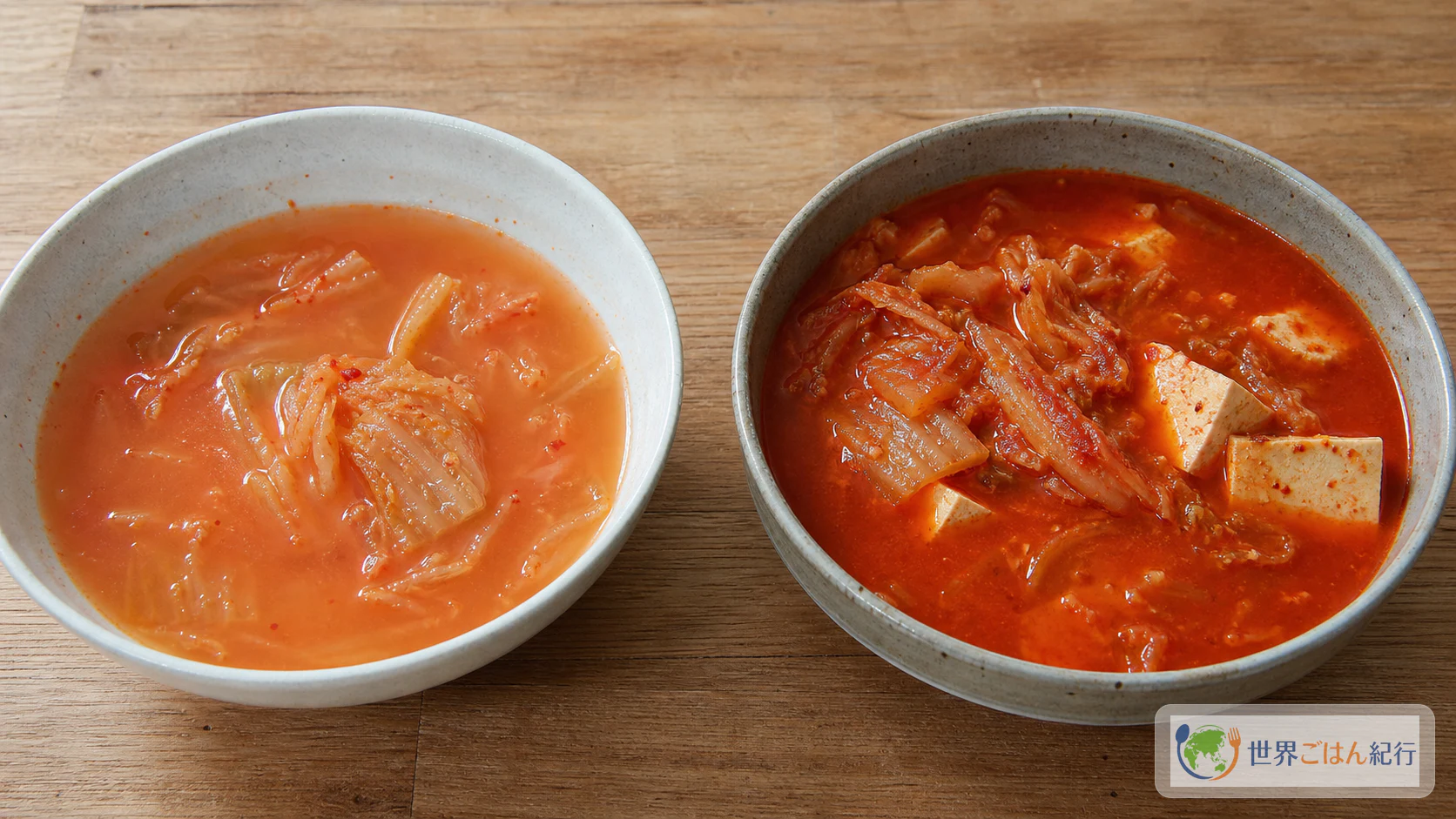
If it seems thin, reduce it before adding seasoning. Take off the lid and simmer 3 to 5 minutes over lower medium heat, then taste once the broth lifted with a wooden spoon is red and clings slightly to the kimchi fibers. Raise the gochujang first and you get a sweet-spicy stew, with the sourness of kimchi jjigae pushed to the back.
If it's too sour, resist adding lots of sugar. Add 1/2 teaspoon light brown sugar, 1.75 oz (50 g) onion, and 3.5 oz (100 g) tofu and warm over low heat for 4 minutes; the pork fat and the water from the tofu round off the sourness. Sourness is part of kimchi jjigae's charm, so it comes out better if you leave some of it.
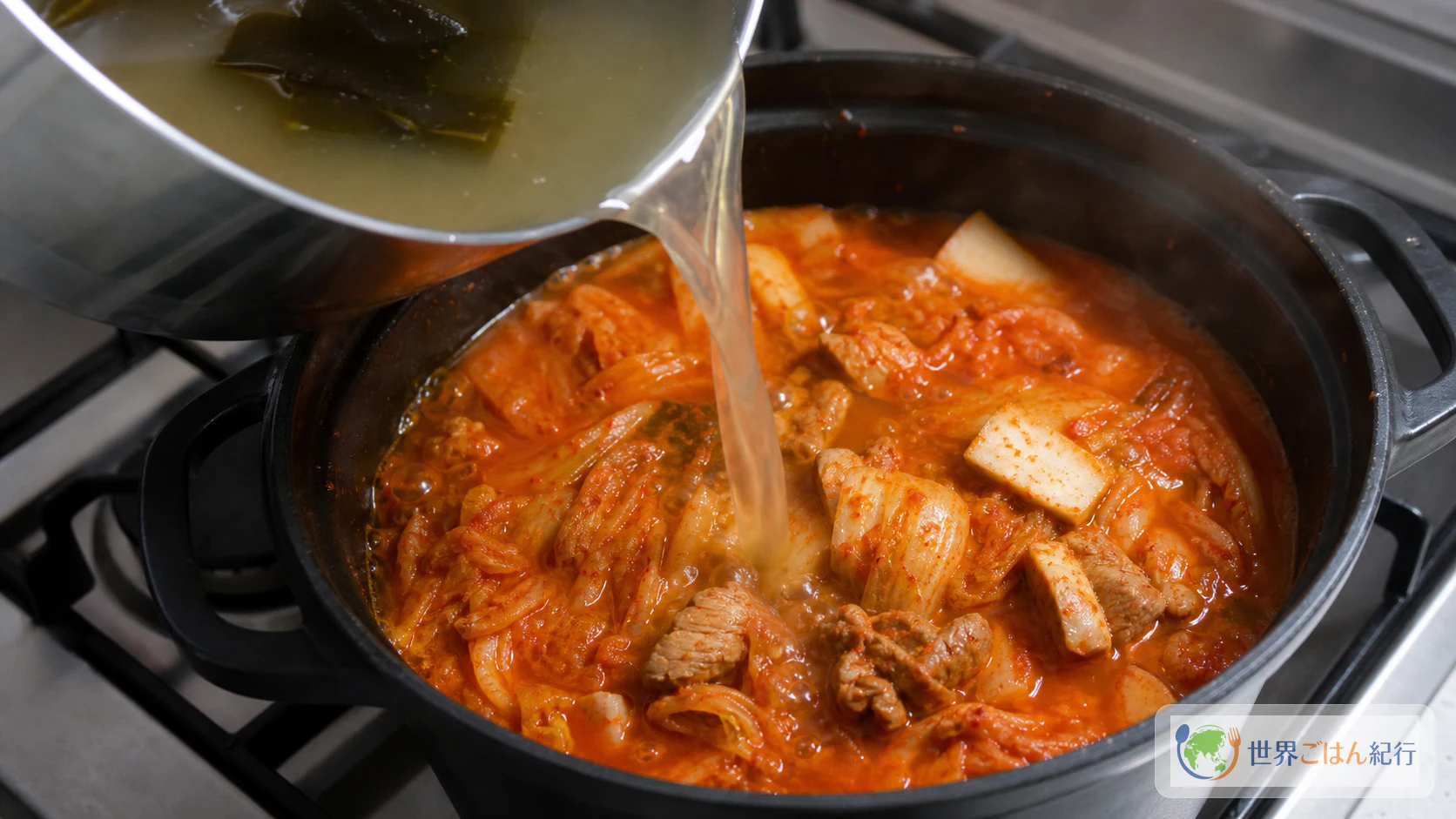
If it's only hot and weak in savoriness, there's too much gochugaru or the stock is weak. Warm ½ cup (100 ml) water, 5 g dried anchovies, and 3 g kelp in a separate pot for 7 minutes to make a concentrated stock and add it. One more teaspoon of fish sauce also brings it back, but too much makes it salty, so supplement the stock first.
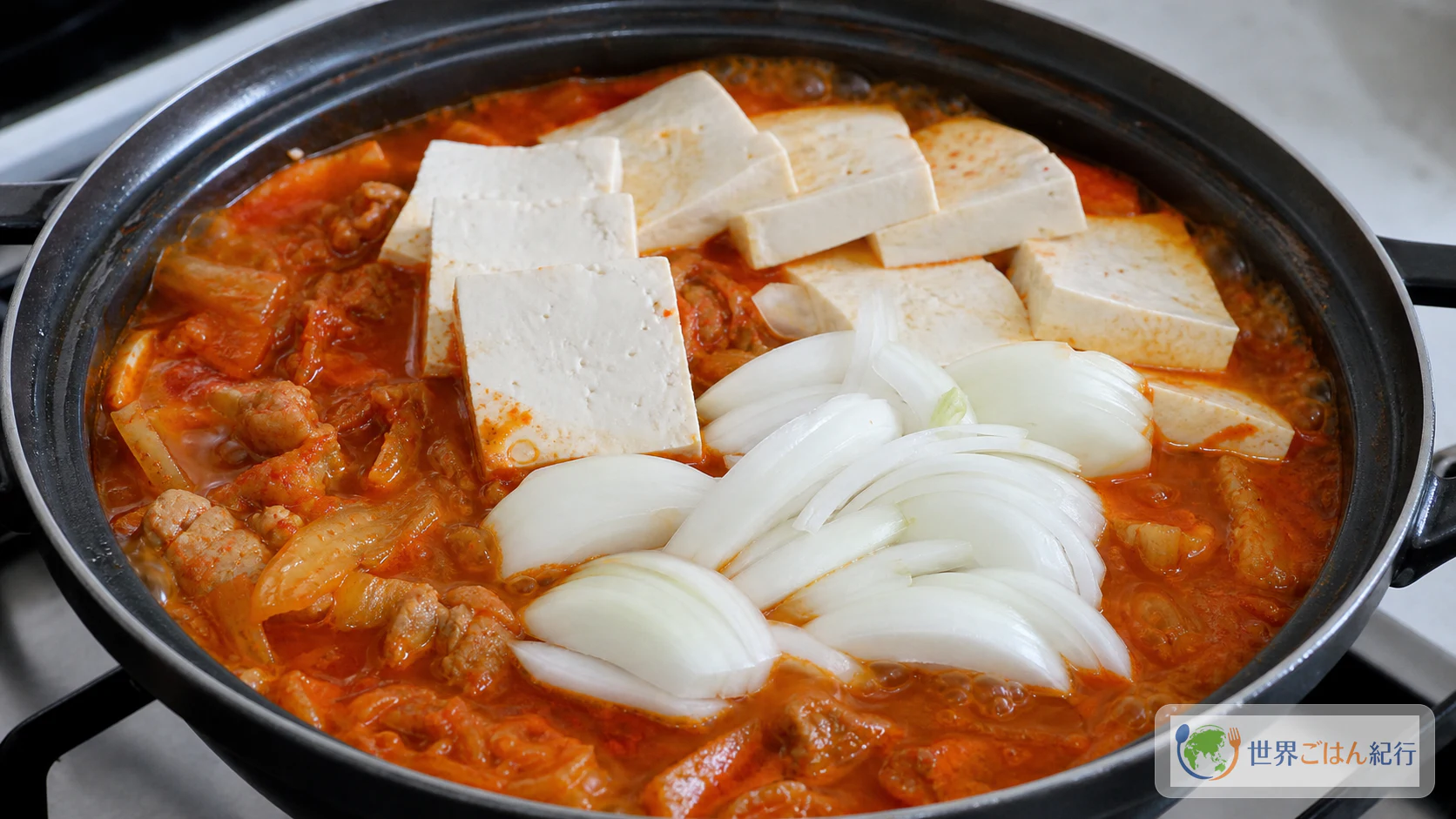
If the tofu breaks, it went in too early or the heat is too high. Boiling the pot hard and stirring with a wooden spoon breaks the corners, so once the tofu is in, keep the heat at lower medium and just shake the pot.
Serving, storing, and varying kimchi jjigae
Serving
A menu of white rice, toasted seaweed, soybean sprout namul, and salted cucumber is enough. On days you want more vegetables, set out namul or salted cucumber beside the stew instead of piling them into the pot; on days you want more starch, serve extra rice separately rather than thinning the soup. That keeps the flavor of the pot from clouding.
Storage and reheating
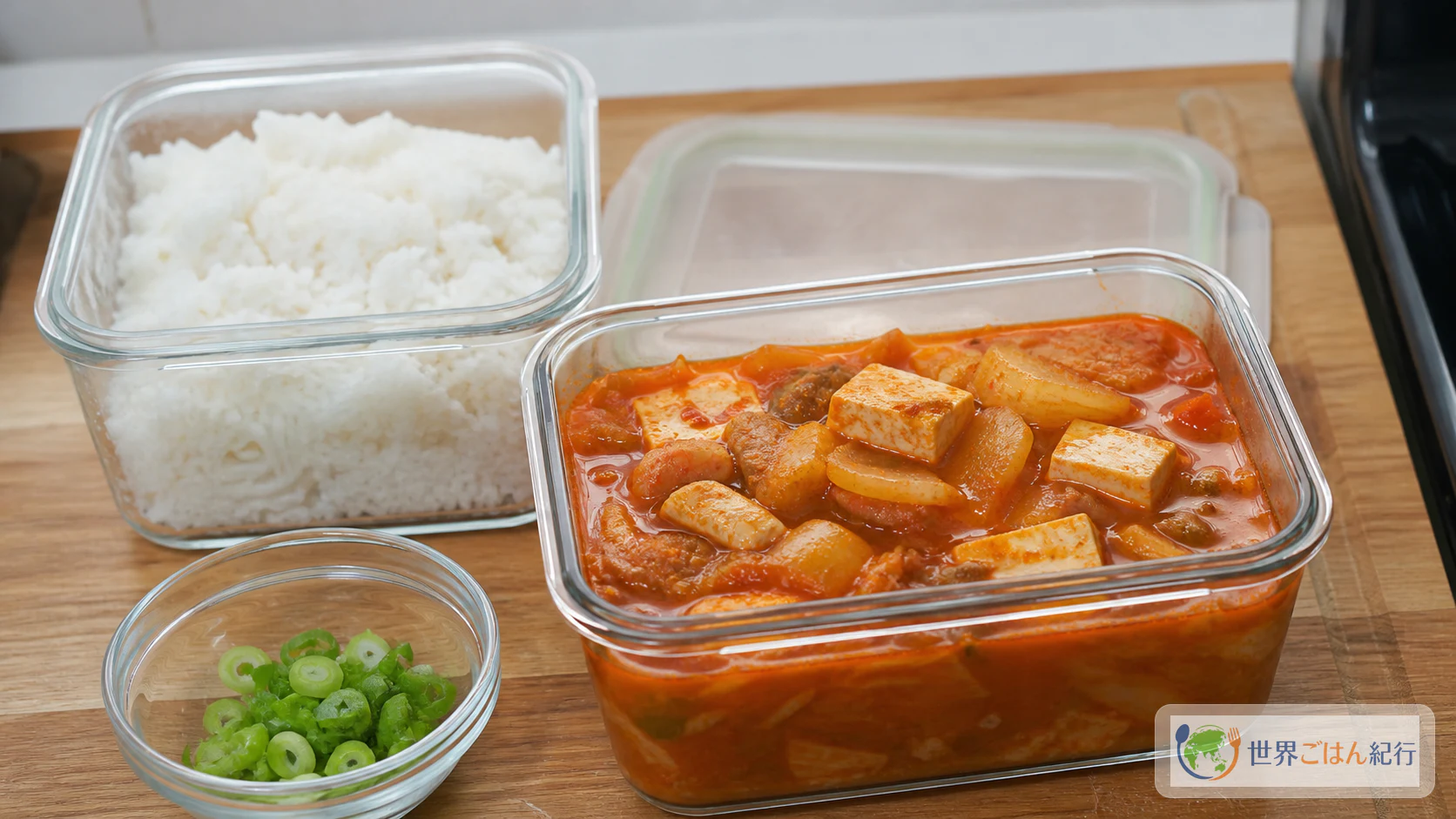
Kimchi jjigae is good the next day too. Cool it a little, move it to an airtight container within 2 hours, and refrigerate; allow 2 days in the refrigerator. Tofu changes texture when frozen, so if you want to freeze it, eat the tofu first and divide just the broth, kimchi, and pork into single portions. Allow 2 to 3 weeks in the freezer.
A pot suits reheating. Add 2 tablespoons of water per serving and warm 5 minutes over lower medium heat; when it bubbles, drop to low and stop when the tofu is hot at the center. In a microwave, use a deep heatproof container and allow 2 minutes at 600 W, stir, then 1 more minute. Add the scallions after reheating so they keep their aroma.
Kimchi is a fermented food, but that does not mean it is safe to leave out for long at room temperature. After opening, take it out with clean chopsticks and refrigerate. When you take out the portion for the jjigae, keep juices from meat or tofu from getting into the remaining container. Do not leave the cooked jjigae at room temperature either; refrigerate it once it has cooled a little.
Next-day ideas and variations
Eating it a different way the next day keeps it from getting boring. In the morning, pour it over rice in a kimchi jjigae gukbap style. At lunch, add half a portion of udon and warm 3 minutes over low heat. At night, crack in an egg, cover, and cook 2 minutes over low heat until the white sets, which rounds off the heat. Rice simmered in the stew for long swells too much, so combine them just before eating.
Some cooks use canned tuna, some canned mackerel, some add Spam, and some rinse very sour kimchi lightly with water. For your first pot, make the basic form with pork, well-fermented kimchi, and tofu. Once you know that flavor, it's easier to taste what changes when you switch to canned tuna or beef.
Frequently asked questions
Can I make it without pork?
Yes. You can use 1 can of tuna, 1 can of mackerel in water, or 7 oz (200 g) of clams. For tuna, leave just 1 teaspoon of the oil and fry it with the kimchi. Canned mackerel breaks down easily, so add it after the stock and warm for just 5 minutes over low heat. Use clams that have already been purged of sand, and turn off the heat as soon as the shells open.
Is gochujang required?
No. With well-fermented kimchi, gochugaru, and good stock, you can make it without gochujang. Use just 1 to 2 teaspoons on days when the sourness is weak or when you want a slightly sweet-spicy roundness.
Can I reduce the heat?
Yes. Reduce the gochugaru from 1 tablespoon to 2 teaspoons and leave out the green chili, and let adults add gochugaru or chili flakes in the bowl. A milder pot is easier for children and family members who dislike spice, and easier to vary the next day. Keep the stock and kimchi brine at their full amounts.
Which is better, silken or firm tofu?
Firm tofu is easier to handle. It holds its shape even after taking on the red broth. If you use silken, cut it larger than 1 inches (3 cm) cubes and warm it for just the last 3 minutes. Rather than pressing with the wooden spoon, give the pot a light shake.