Chāhan: Ramen-Shop-Style Fried Rice with Char Siu and Negi Oil (One Serving)

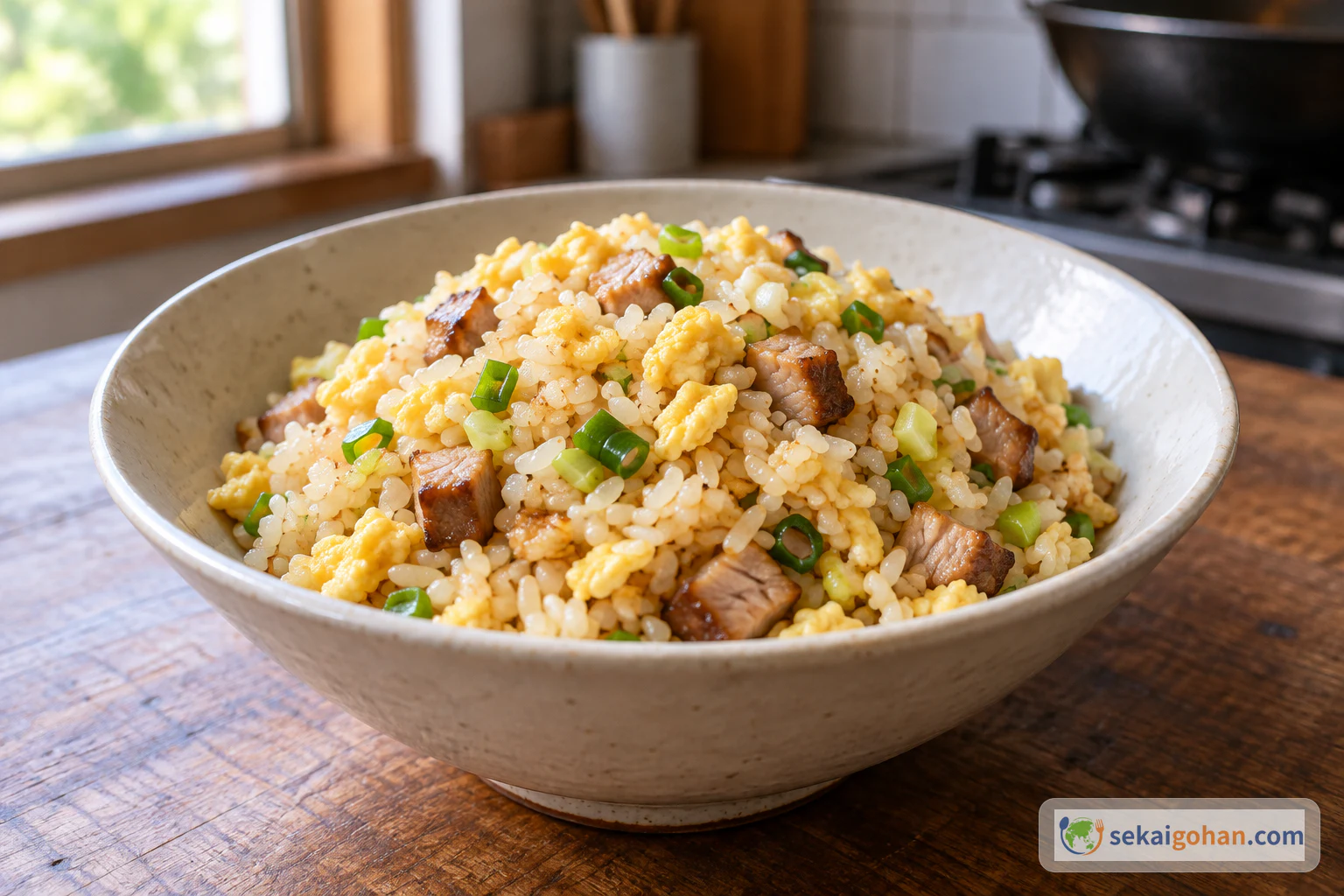
A single serving of chāhan with visible char siu, egg and long green onion
Serves
1 serving
Cuisine
Japanese

A one-serving Japanese chāhan made with 200 g of warm cooked rice, char siu, egg, long green onion and garlic. Half the negi and the garlic are warmed in oil over low heat for 2–3 minutes, then egg, rice, chicken-stock powder, soy sauce, pepper, the remaining negi and the char siu go in, one batch at a time on a home burner.

Cooking flow

Cooking steps

STEP11 / 5

Prepare the negi, garlic, char siu and egg

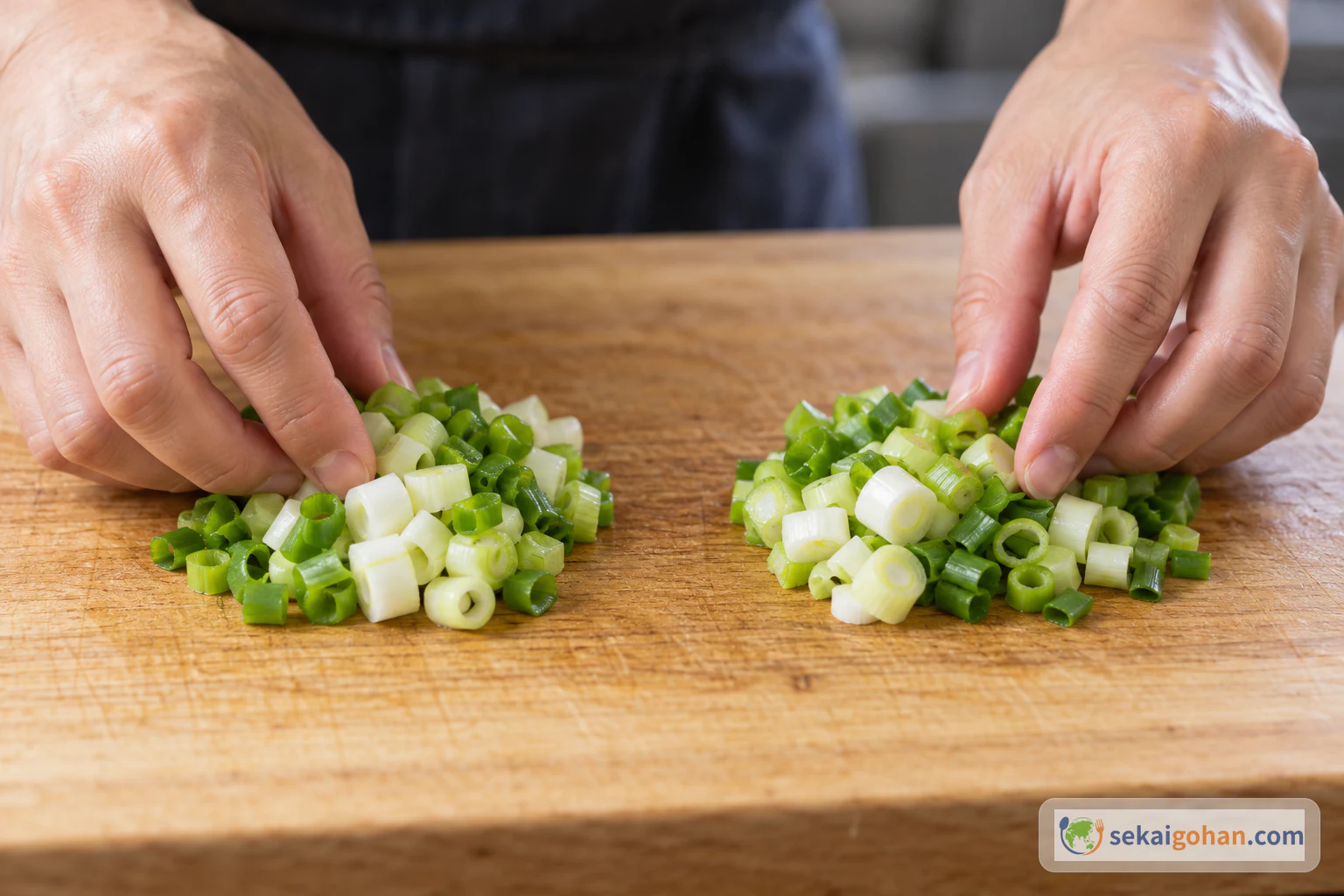
Coarsely chopped long green onion being divided into two portions on a cutting board
One half goes into the oil at the start, the other half goes in at the finish

Coarsely chop the long green onion and divide it into two equal halves. Keep one half for the aromatic oil and the other for the finish.

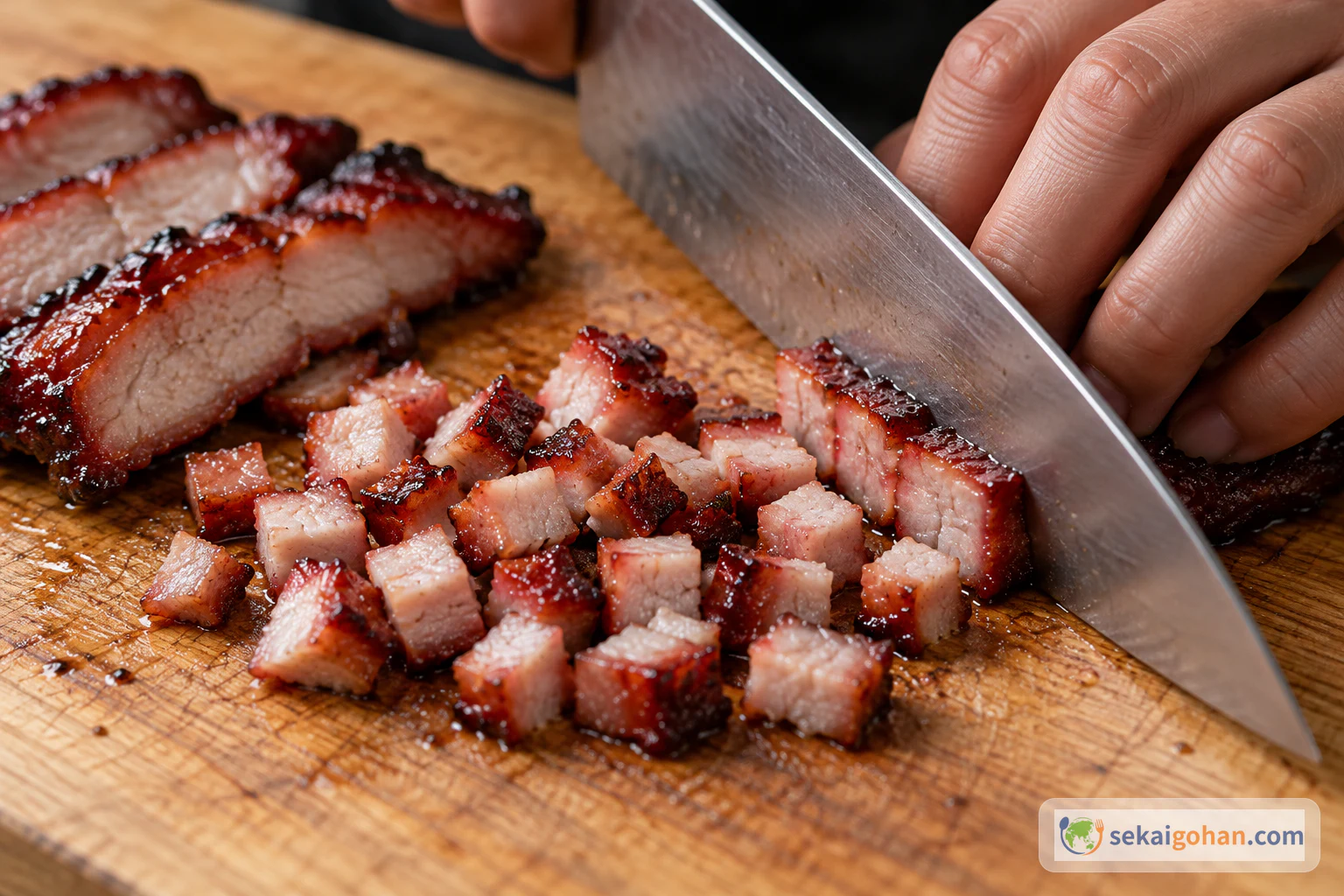
Remove the core from the garlic and chop it coarsely. Cut the three slices of char siu into 0.5-inch (1 cm) cubes. Beat the egg.

Cooked char siu being cut into 1 cm cubes
Cut the ready-cooked char siu into 1 cm cubes
STEP22 / 5

Warm the negi and garlic in oil over low heat

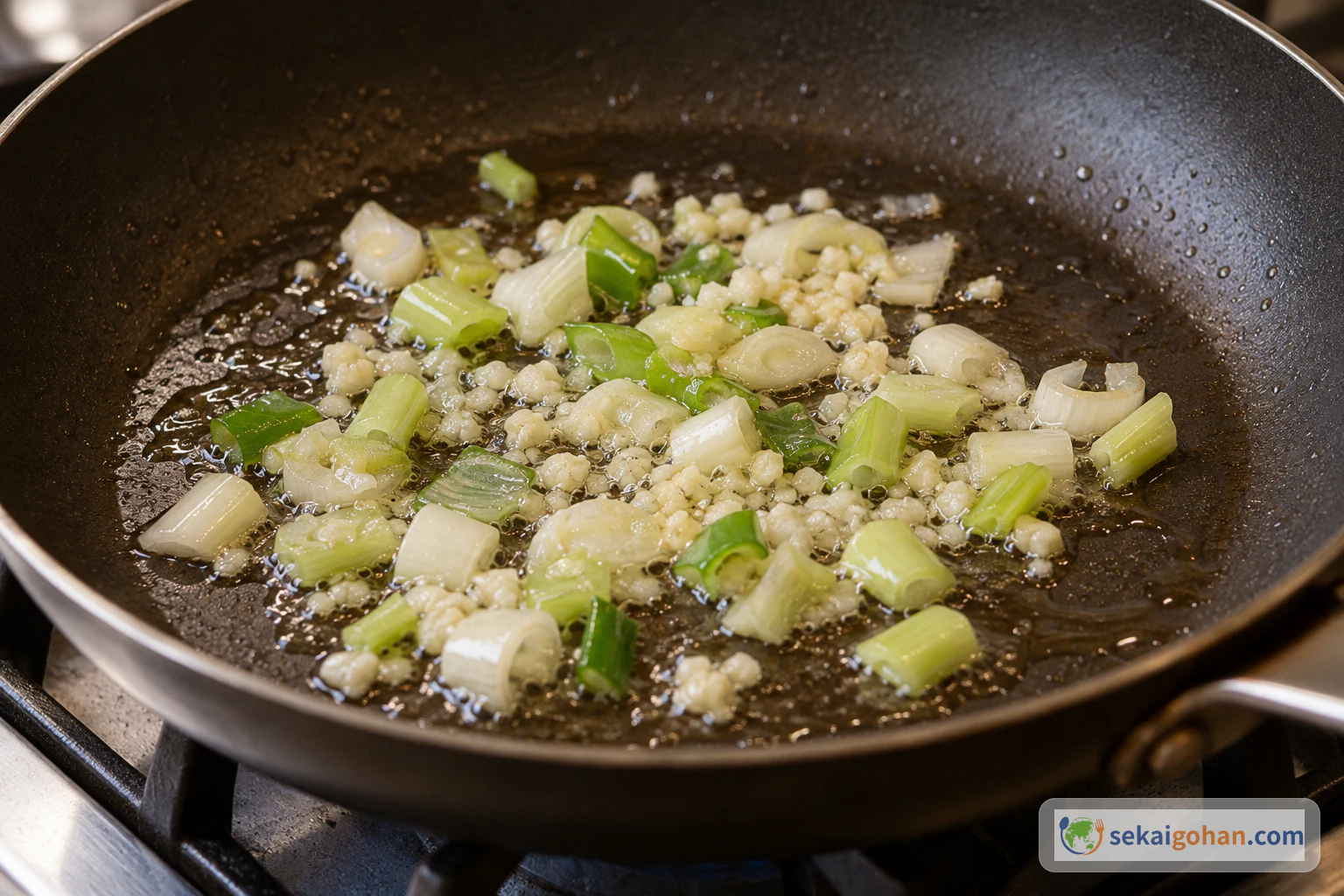
Salad oil with half the long green onion and the garlic warming over low heat
Warm the aromatics gently in the oil without burning them

Put the salad oil, half the negi and the garlic into the pan before you turn on the heat. Then set it over low heat and warm for 2–3 minutes. Take care not to let them burn.

STEP33 / 5

Add the egg over medium heat

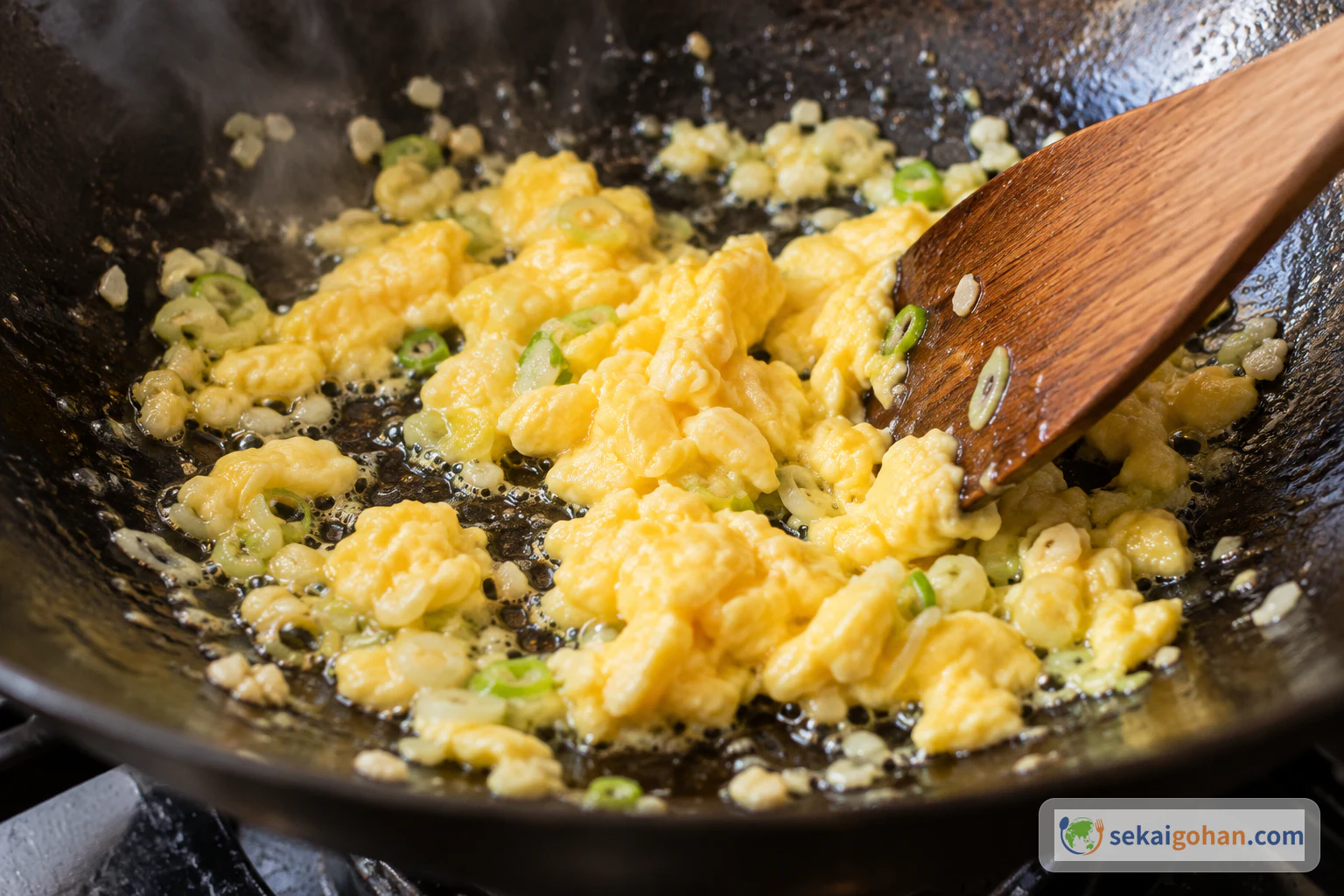
Beaten egg stirred into small pieces in the negi and garlic oil
Stir the egg into small pieces in the aromatic oil

Turn the heat up to medium and add the beaten egg. Stir so the egg breaks into small pieces.

STEP44 / 5

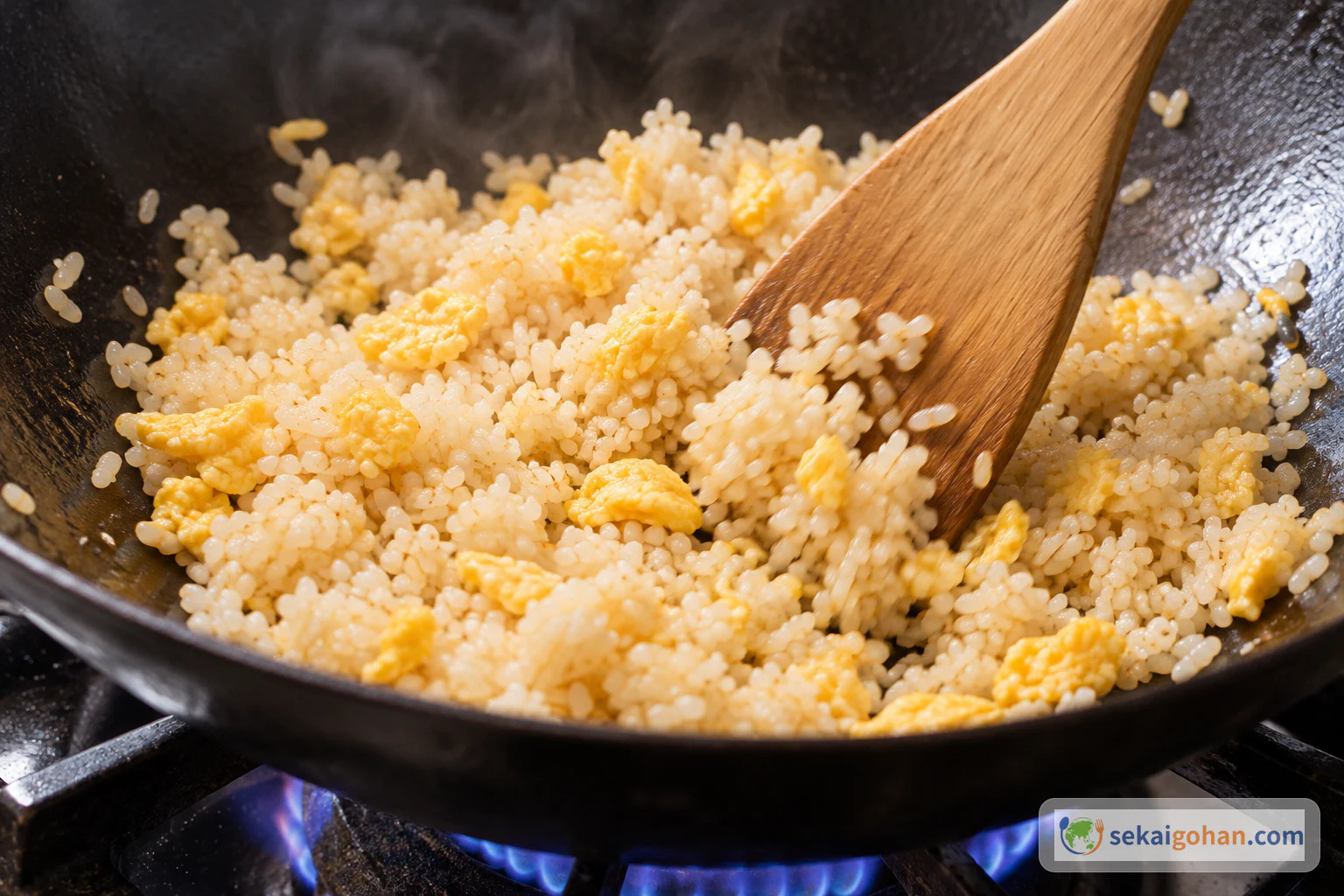
Add the warm rice over strong medium heat

Warm rice cut through and loosened with a wooden spatula in the pan
Cut through the rice with the spatula instead of mashing it

Turn the heat up to a strong medium and add the warm rice. Using a wooden spatula, cut through the rice with slicing motions to break it up, and stir-fry it together with the egg.

STEP55 / 5

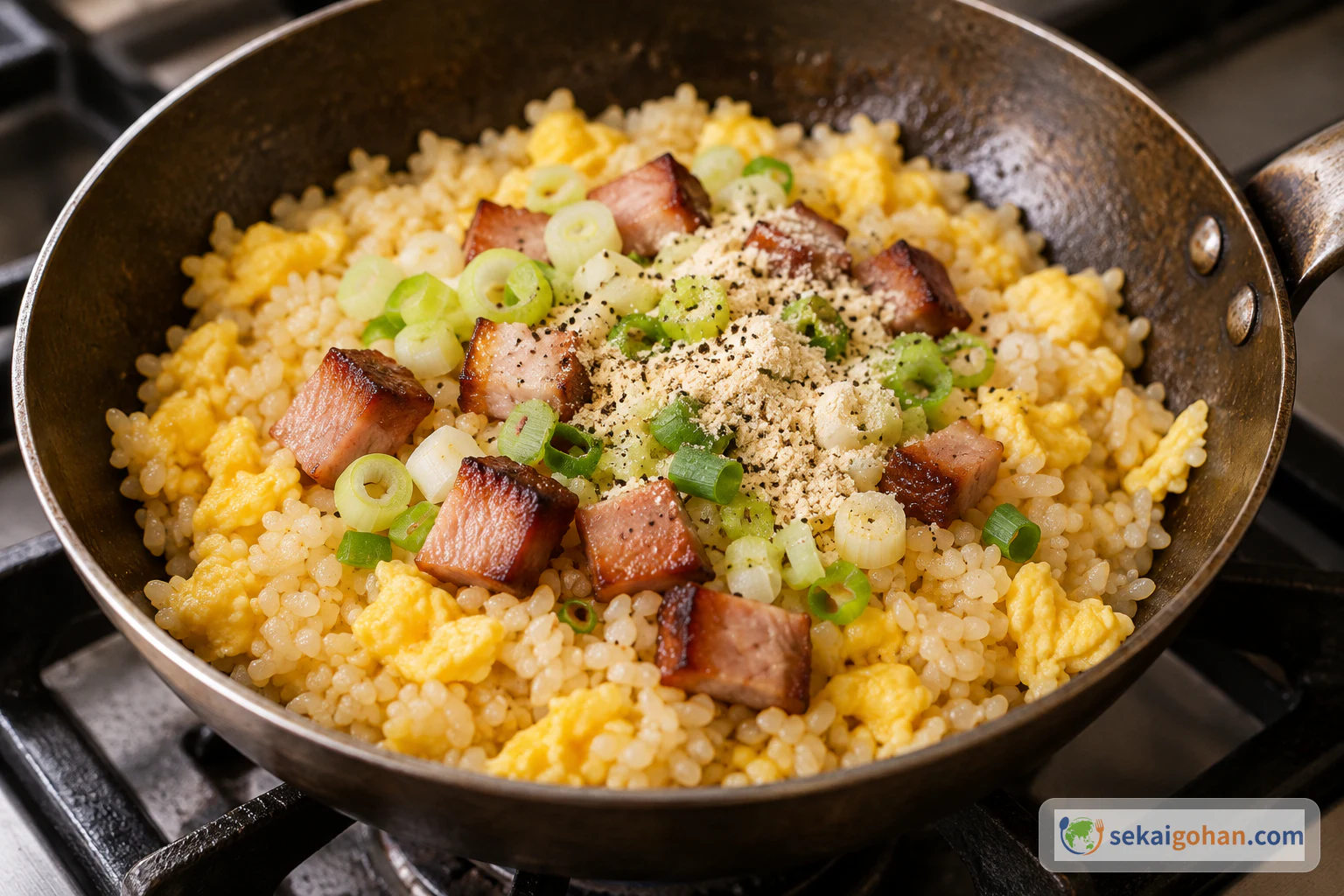
Add the seasonings, remaining negi and char siu, and stir-fry quickly

Rice in the pan with chicken-stock powder, pepper, remaining negi and char siu added
The finishing ingredients go into the pan together with the rice and egg

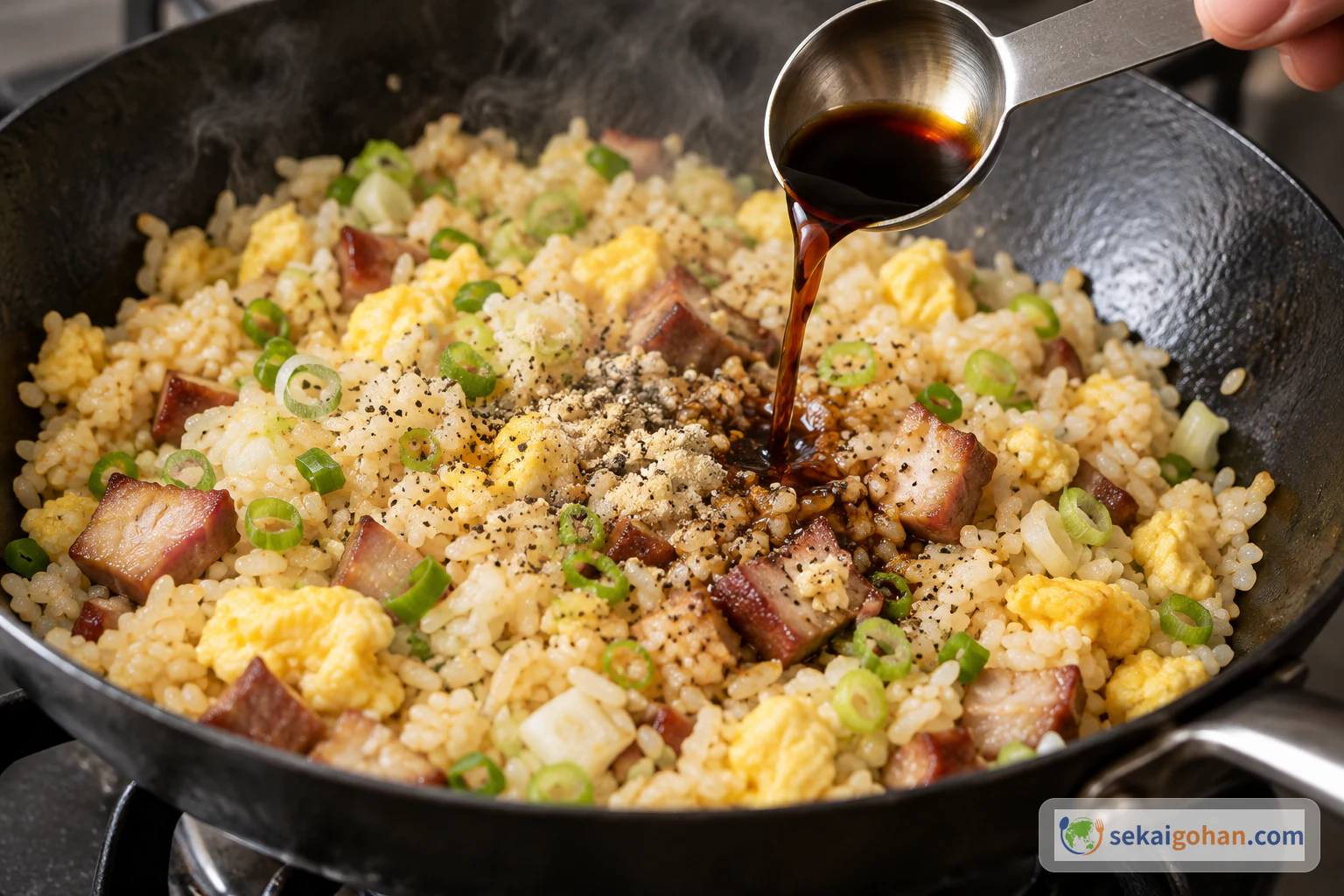
Add the chicken-stock powder, soy sauce, pepper, the remaining negi and the char siu together, in one step. Stir-fry quickly.

Soy sauce being poured into the rice with char siu and negi
The soy sauce is part of the same final addition

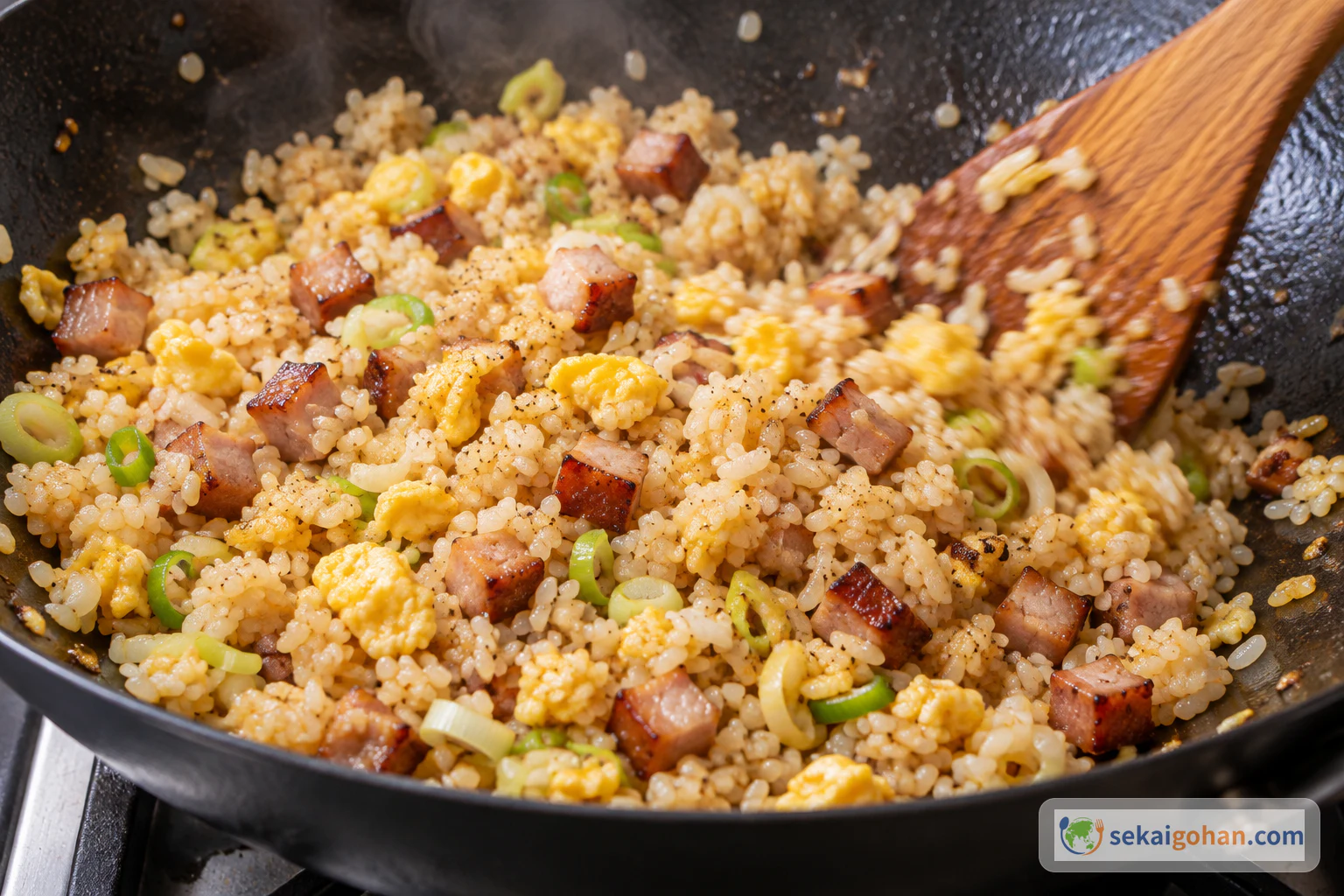
Toss everything together quickly so the seasonings, negi and char siu are spread through the rice, then serve.

Char siu, egg, negi and seasonings stirred quickly through the rice
Stir quickly until everything is spread evenly through the rice
0 / 0
Ingredients

Ingredients

1 / 1

Ingredients

Ingredient Amount Role
Cooked rice (gohan) 1 bowl, 7 oz (200 g) The body of the dish. Use it warm. The 7 oz (200 g) is cooked weight
Char siu (yakibuta) 3 slices Cut into 0.5-inch (1 cm) cubes and added at the end
Beaten egg (tokitamago) 1 egg Stirred into small pieces in the aromatic oil before the rice goes in
Long green onion (naganegi) 4 inches (10 cm), 1 oz (30 g) Coarsely chopped and divided in half: one half for the aromatic oil, one half for the finish
Garlic (ninniku) 1/2 clove Core removed, coarsely chopped. Goes into the aromatic oil
Salad oil (sarada abura) 1 tbsp The cooking oil, warmed with the negi and garlic
Chicken-stock powder (torigara sūpu no moto) 1 tsp Seasoning added at the finish. Any brand
Soy sauce (shōyu) 2 tsp Seasoning added at the finish
Pepper (koshō) A little Seasoning added at the finish
0 / 0

A tablespoon of salad oil goes into the pan with half the chopped long green onion and the garlic, and the pan sits on low heat for two to three minutes, just long enough to wake the aromatics without burning them. That gentle start is where this chāhan begins. From there the heat climbs: medium for the egg, a strong medium for the warm rice, then a quick final stir with the seasonings, the rest of the negi and cubes of char siu. The result is ramen-shop-style fried rice for one, savory with chicken stock, soy sauce and pepper, with soft bits of egg through every bite.

Chāhan in Japanese Home Cooking

Chāhan (チャーハン, also written 炒飯) is fried rice as it's cooked in Japan, at home and in ramen shops alike. There's no single fixed formula. Since the 1980s, Japanese cooking texts have introduced more and more chāhan recipes, many using ingredients and seasonings that had been unfamiliar, so the dish became standard by becoming diverse. This version is the ramen-shop kind: char siu, egg, long green onion and garlic, seasoned with chicken-stock powder, soy sauce and pepper.

Chāhan and yakimeshi (焼き飯) are the same dish; which name you hear depends on whether you're in eastern or western Japan. Chinese home-style fried rice and Korean bokkeumbap, on the other hand, are separate dishes with their own formulas. For more dishes from the same country, see the Japan page.

Ingredients for One Serving
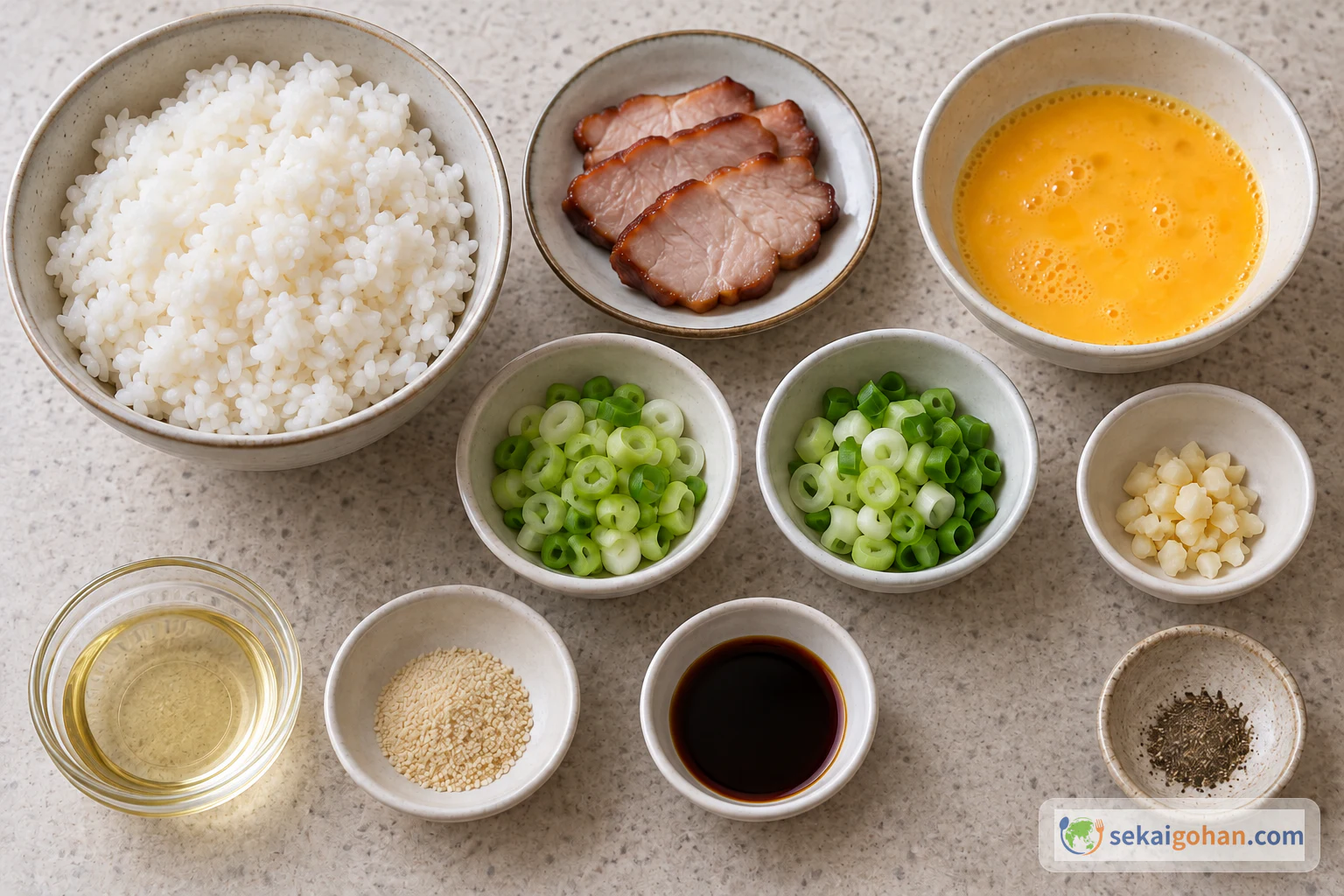
Chāhan ingredients laid out: warm rice, char siu, beaten egg, long green onion, garlic, oil and seasonings
One serving's ingredients, with the chopped negi already split into two portions

These amounts are for one serving. No salt is added.

Equipment

  • Knife and cutting board
  • A pan
  • A wooden spatula

Choosing Ingredients for Chāhan

Rice. Use warm cooked rice. If it's been wrapped, loosen it before it goes into the pan, so it hits the oil in grains rather than clumps.

Char siu. Use ready-cooked char siu, not raw pork. No weight is given, so just take three slices as they come and cut them into 0.5-inch (1 cm) cubes.

Long green onion. Use Japanese naganegi. After chopping, split it into two halves by eye: one for the aromatic oil, one for the end.

Seasonings. Any chicken-stock powder works, along with the soy sauce you normally cook with.

Method: From Gentle Negi Oil to a Quick Final Toss

Heat levels

Low heat for the aromatic oil, medium for the egg, then a strong medium for the rice and finish. The only timing is for the aromatic oil (2–3 minutes). For the egg, rice and final stir, follow the state of the pan rather than a clock.

Chāhan Troubleshooting

What you see Why it matters What to do
The negi and garlic are starting to burn The aromatic oil should cook gently, without burning Start the oil and aromatics in a cold pan, keep the heat low, and watch them throughout this stage
The rice goes into the pan in lumps Warm, loosened rice separates easily Break up the rice before it goes in, then cut through it with the wooden spatula instead of pressing down
The pan seems to lose heat when the rice goes in A home burner can only keep one serving hot Cook each serving separately rather than scaling up the batch
You're tempted to add salt The seasoning comes from elsewhere Leave it out; the chicken-stock powder, soy sauce and pepper season the rice

Frequently Asked Questions

Can I make enough for four people at once?

Make four separate one-serving batches instead of one large one, so the pan stays hot. Each batch takes about 15 minutes.

Why does the soy sauce look like it goes in last in the photos?

The photos split the final step into separate frames. In the recipe, the chicken-stock powder, soy sauce, pepper, remaining negi and char siu all go in together, in one step, with no set order.
Sources

  • DELISH KITCHEN, Minami, 「お店の味!ラーメン屋さんの炒飯」. The one-serving recipe followed here: amounts, preparation, order, heat levels, the 2–3 minute aromatic-oil time, the about-15-minute total estimate, and the advice to cook one serving at a time on a home burner using warm rice. https://delishkitchen.tv/recipes/482598129699390593
  • DELISH KITCHEN, "Minami" creator profile. Identifies the recipe creator as Minami, a registered dietitian and DELISH KITCHEN recipe developer. https://delishkitchen.tv/food-stylists/370
  • Ajinomoto Park, 「卵チャーハンの作り方」. A separate two-serving egg chāhan, used only as a point of comparison; none of its amounts or products are used here. https://park.ajinomoto.co.jp/recipe/card/706045/
  • Yukihiro Kawaguchi, 「料理テキストに見る日本の中華料理の受容と展開―『きょうの料理』を中心に―」, Journal of Food Culture of Japan No. 17 (2021). On different recipes for dishes including fried rice appearing more often in Japanese cooking texts from the 1980s, described as standardization through diversification. https://www.jstage.jst.go.jp/article/jfcj/17/0/17_1/_pdf
  • TBS Television, Kono Sa tte Nan desu ka? (broadcast September 12, 2017). Professor Masakazu Toki's explanation of chāhan and yakimeshi as an East/West naming difference, cited as that program's explanation only. https://www.tbs.co.jp/konosa/old/20170912.html