Curry Shrimp with Okra: Nuno Mendes's Macanese Prawn and Okra Curry (Caril de Camarão com Quiabos)

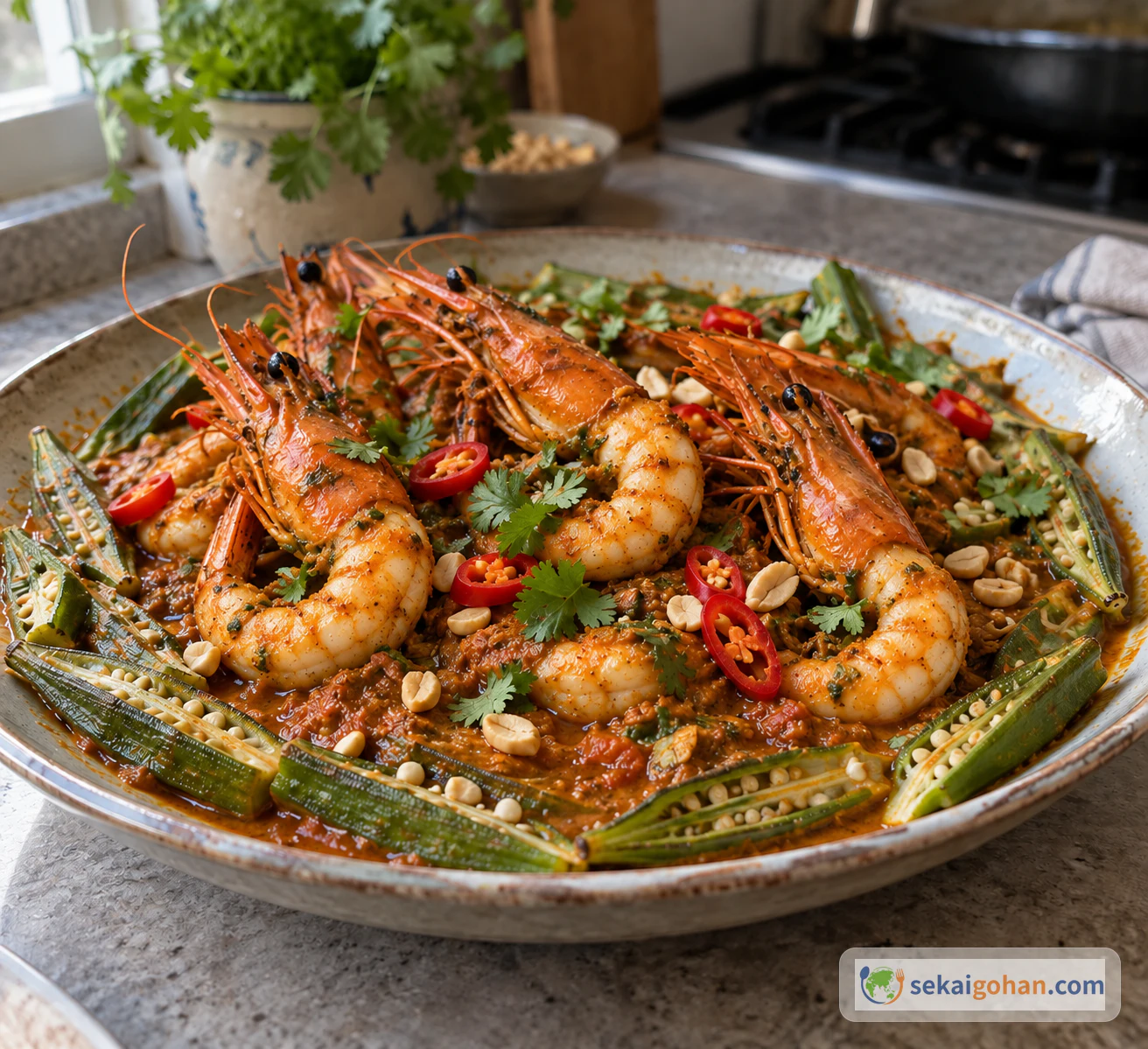
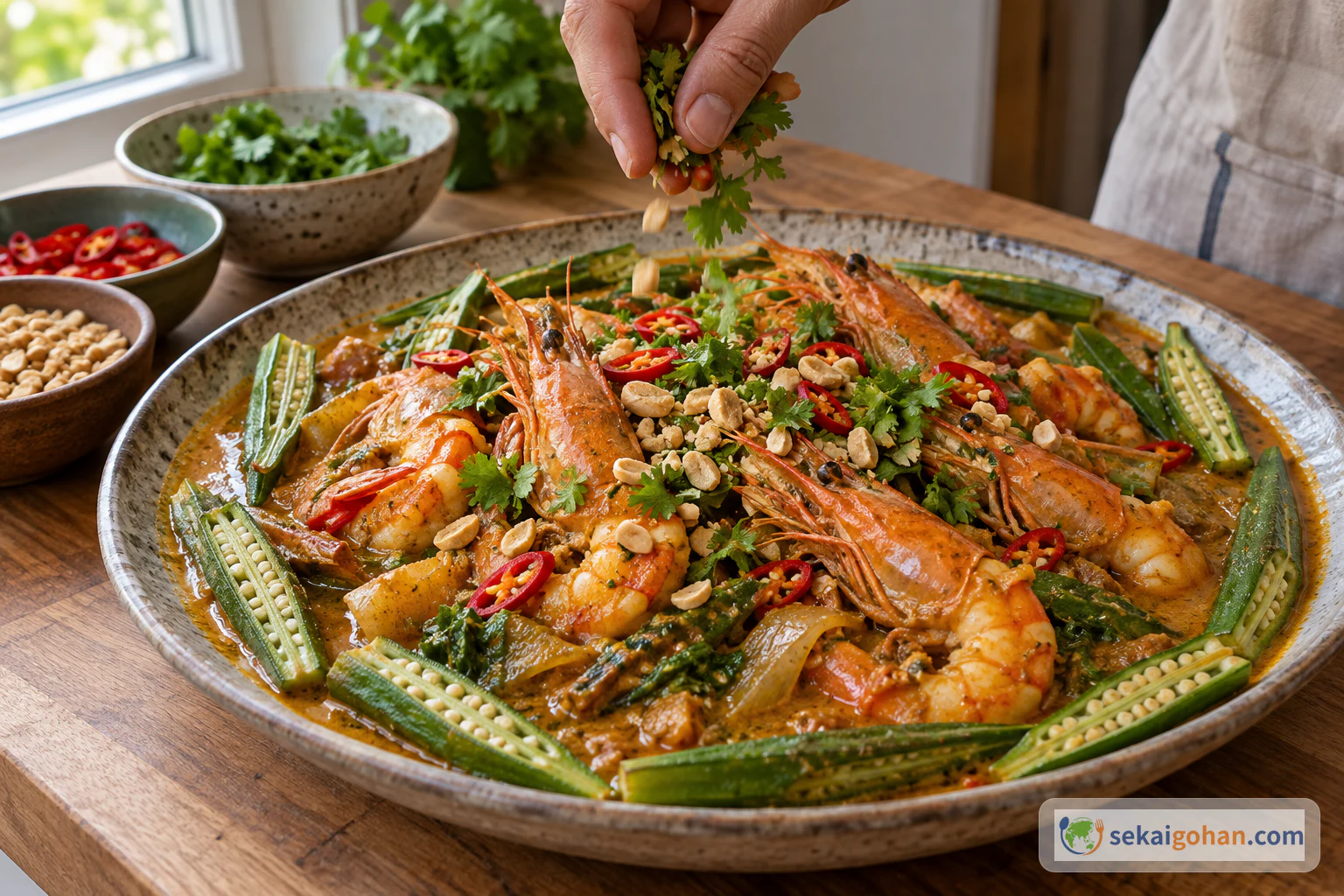
Macanese-style prawn curry with head-on prawns and lengthways-halved okra arranged on a platter
Serves
4 servings
Cuisine
Macanese (Nuno Mendes's published version)

How to make Nuno Mendes's Macanese curried prawns and okra (Caril de camarão com quiabos), following the published recipe. It covers a stock made from the prawn shells, splitting the 4 tbsp of grapeseed oil, okra halved lengthways, keeping the prawn heads on, keeping base and garnish amounts separate, and plating with plain cooked rice.

Cooking flow

Cooking steps

STEP11 / 9

Peel and chill the prawns

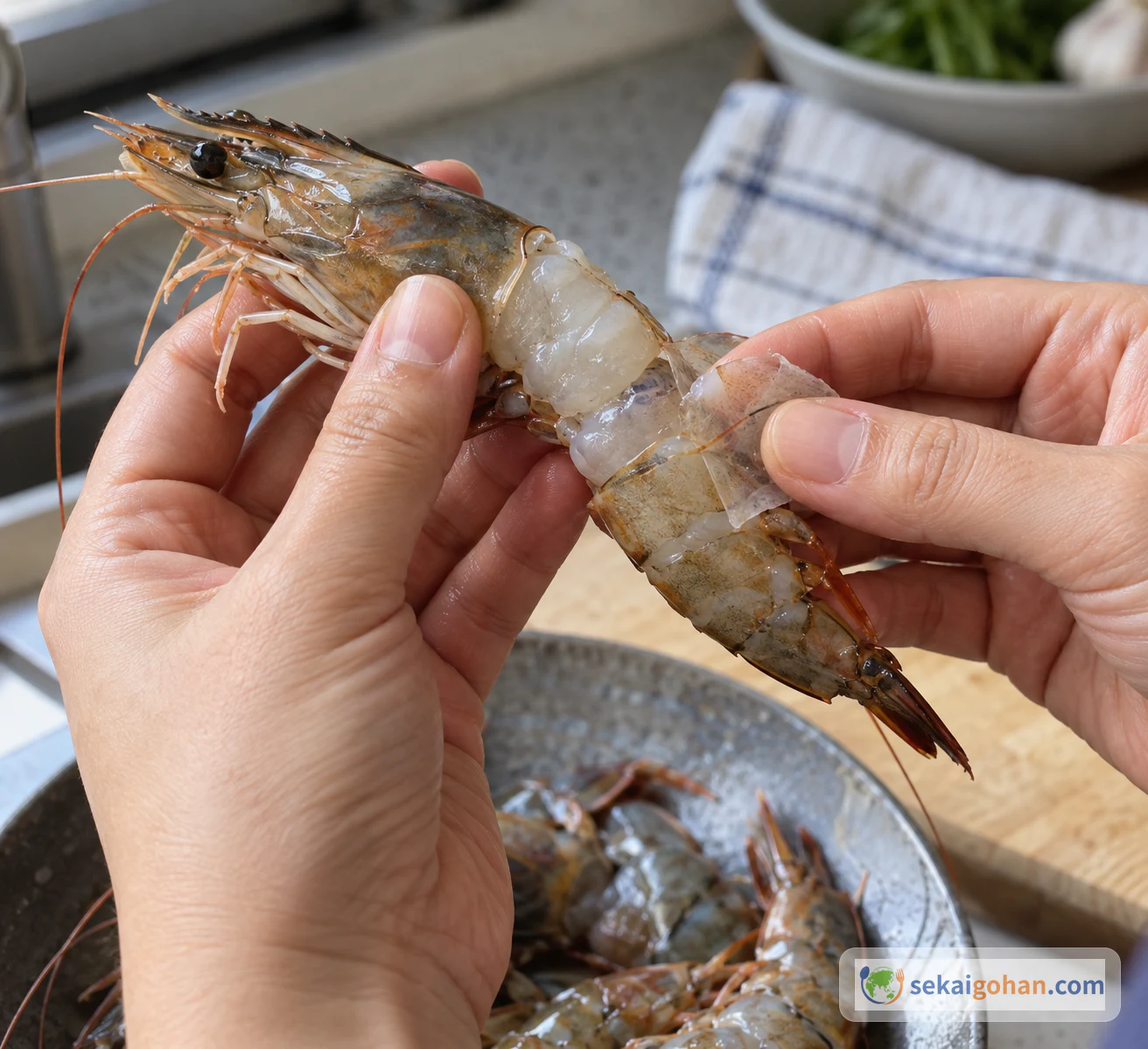
Peeling the body shell from a prawn while leaving the head on
Peel the body but keep the head attached

Peel the shell from the body of each prawn but leave the head attached. Remove the vein, and keep the peeled-off shells. Only these shells go into the stock; the heads stay on the prawns. Put the peeled, deveined, head-on prawns in the refrigerator until you need them near the end.

STEP22 / 9

Make the prawn shell stock

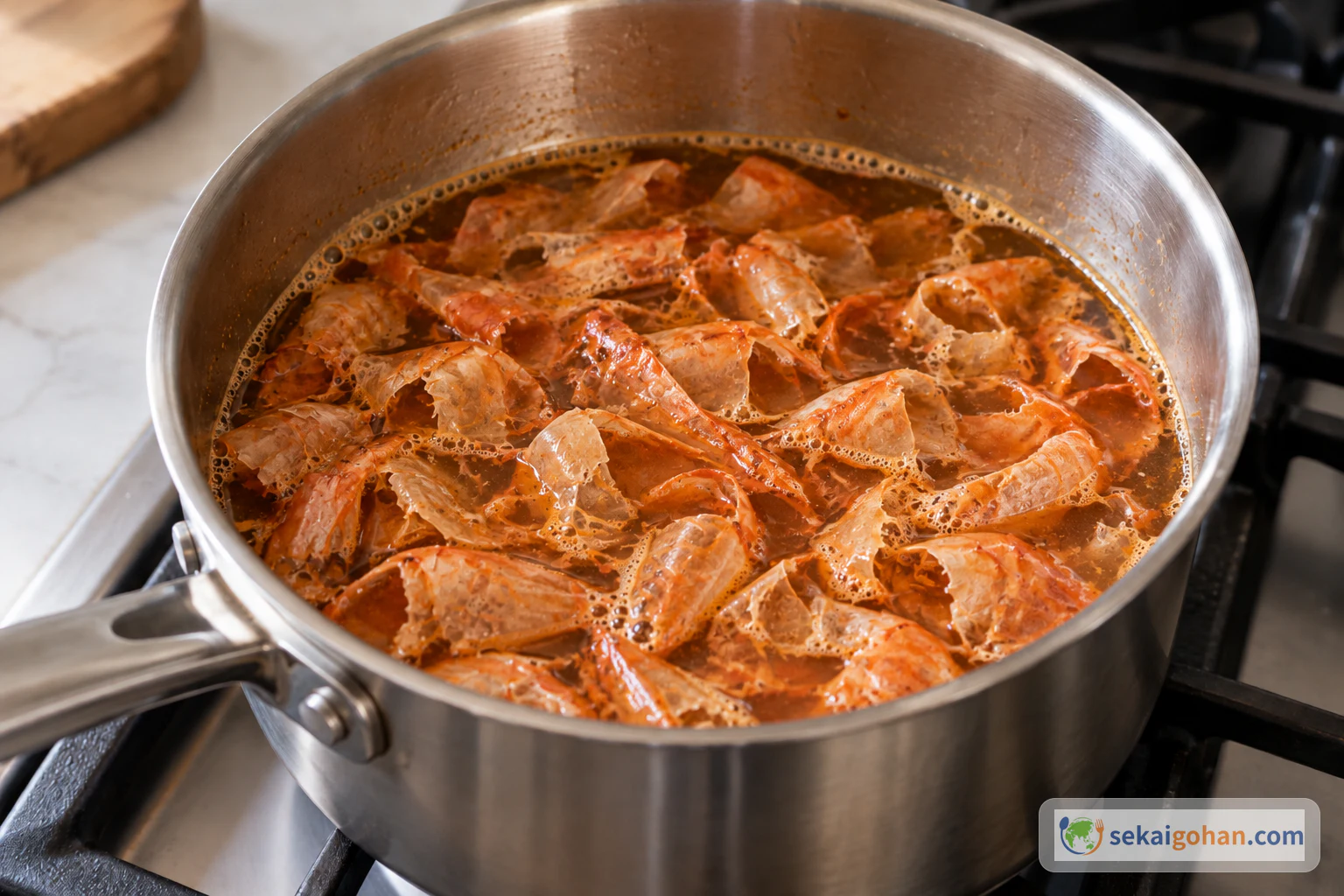
Prawn shell stock simmering gently in the pot
The shells simmer in the water to make the stock

In a saucepan, cook the reserved shells gently with 1 tbsp of the grapeseed oil until they take on color. Pour in 2½ cups (600ml) water, bring it to the boil, and cook for 30 minutes. Strain the shells out through a fine sieve. The curry uses 1¾ cups (400ml) of this stock, so measure out the 1¾ cups (400ml) you need.

STEP33 / 9

Prepare the okra

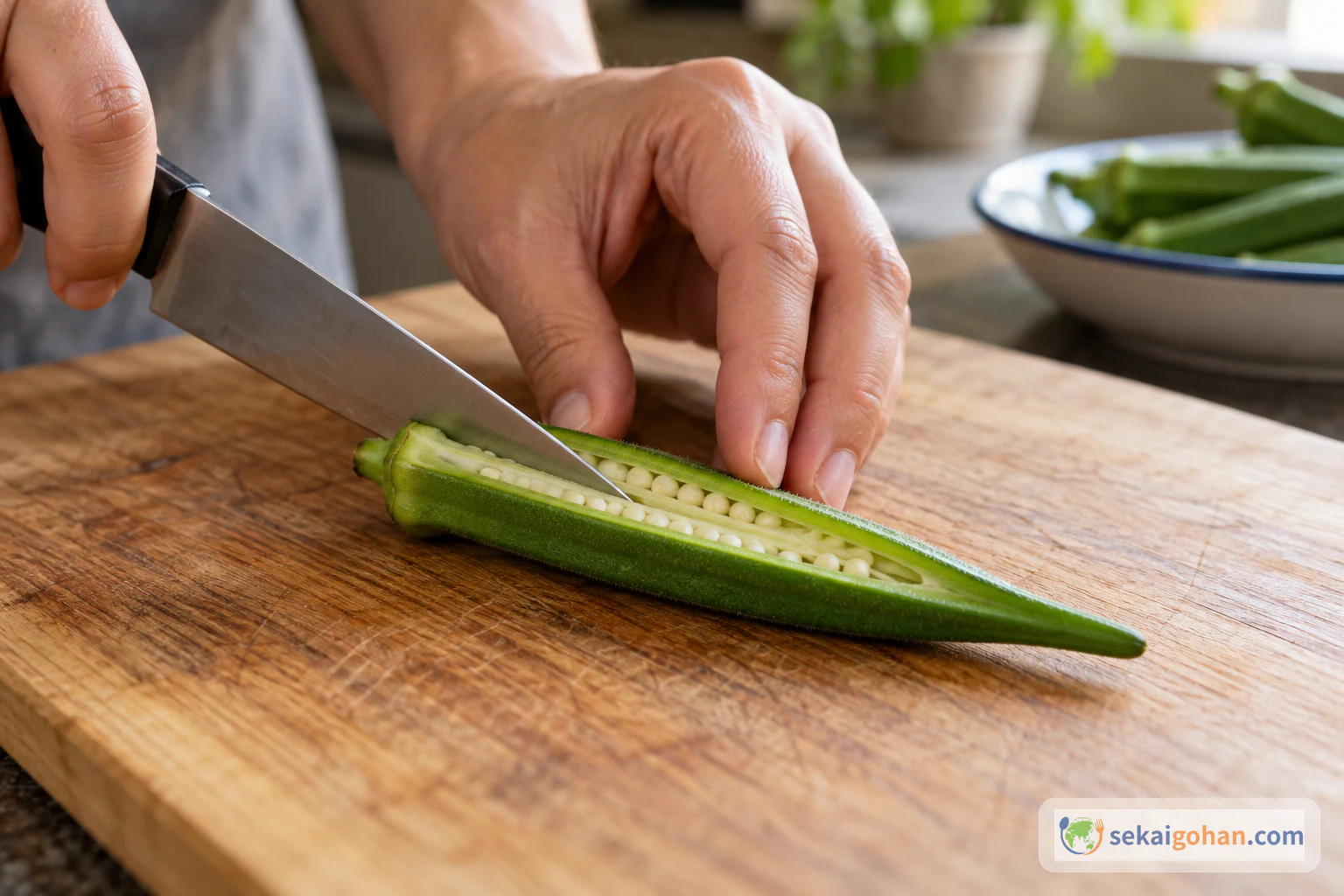
Cutting a trimmed okra pod lengthways
Cut along the length, not into rounds

Wash the 20 okra, trim them, and cut each one in half lengthways, keeping the long shape. Do this now, before the pan work starts.

STEP44 / 9

Soften the alliums in oil and butter

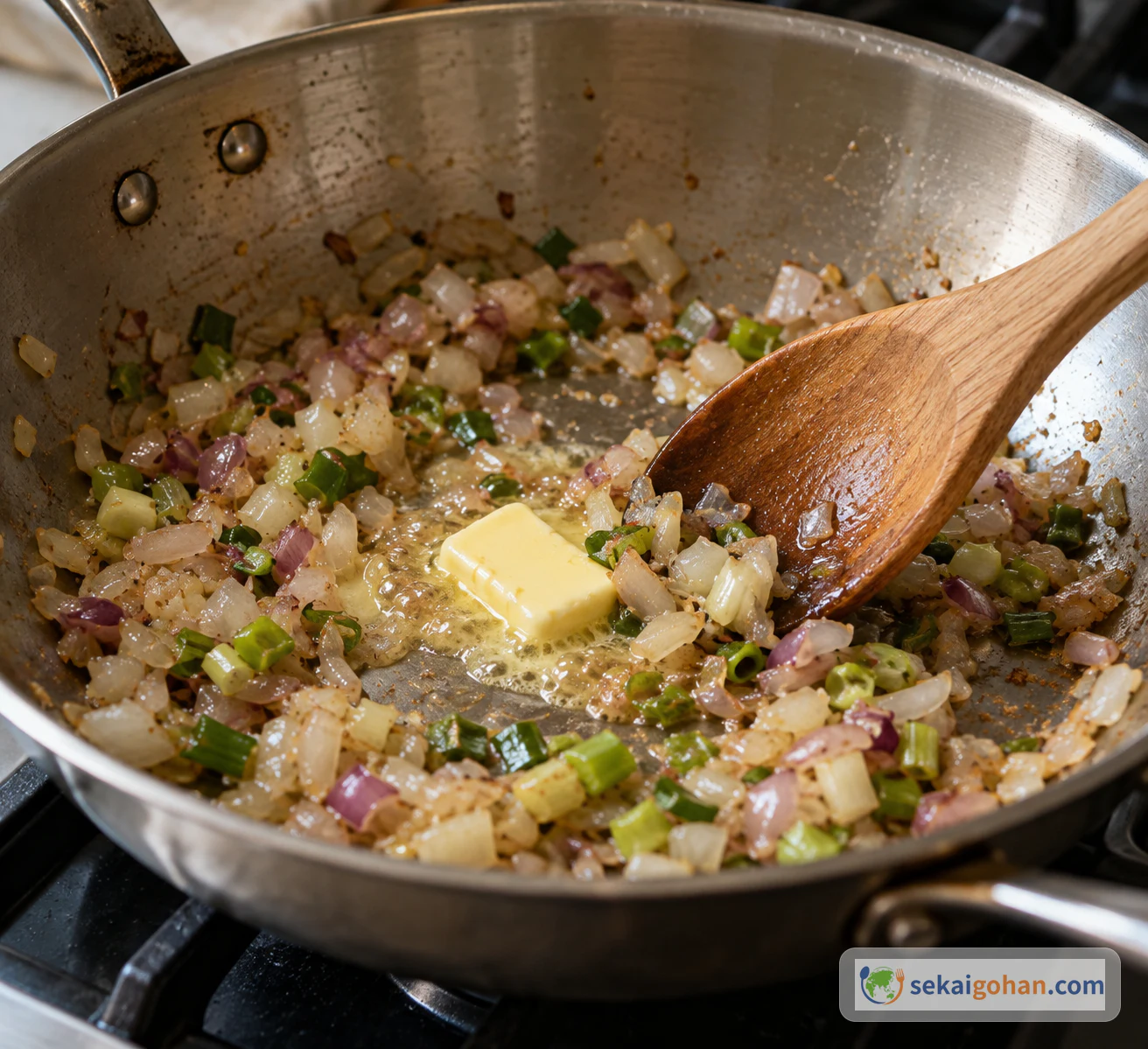
Butter added over lowered heat and lightly browning
Butter joins the alliums after the heat comes down

Heat the remaining 3 tbsp grapeseed oil in a large pan. Add the spring onions (2-inch pieces), the brunoised red onion and the chopped shallots, and cook for 4 minutes, until soft and translucent. Lower the heat and add the 3 tbsp butter to the same pan, with the alliums and oil still in it. No extra oil goes in. Cook until lightly browned.

STEP55 / 9

Build the spiced base

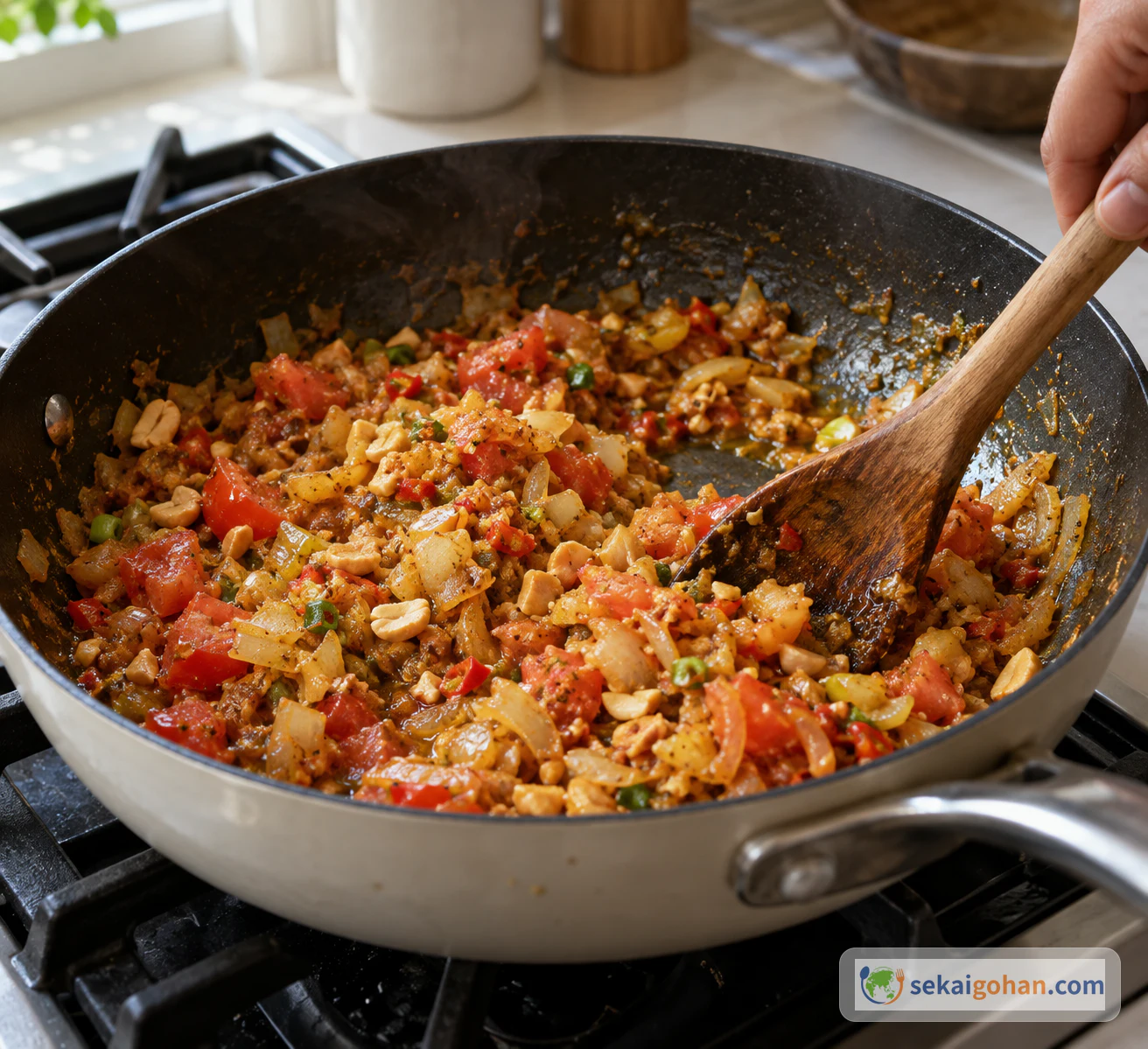
Stirring peanuts and tomatoes into the curry base
Peanuts and tomato join the spiced base

Add the 3 finely chopped small red chilies, the chopped ginger and the 2 tsp Madras curry powder. Stir constantly for 3 minutes, until fragrant. Add the 7 oz (200g) chopped roasted peanuts for the base and the peeled, seeded, diced tomatoes. Fry for a few minutes.

STEP66 / 9

Cook the okra in the base

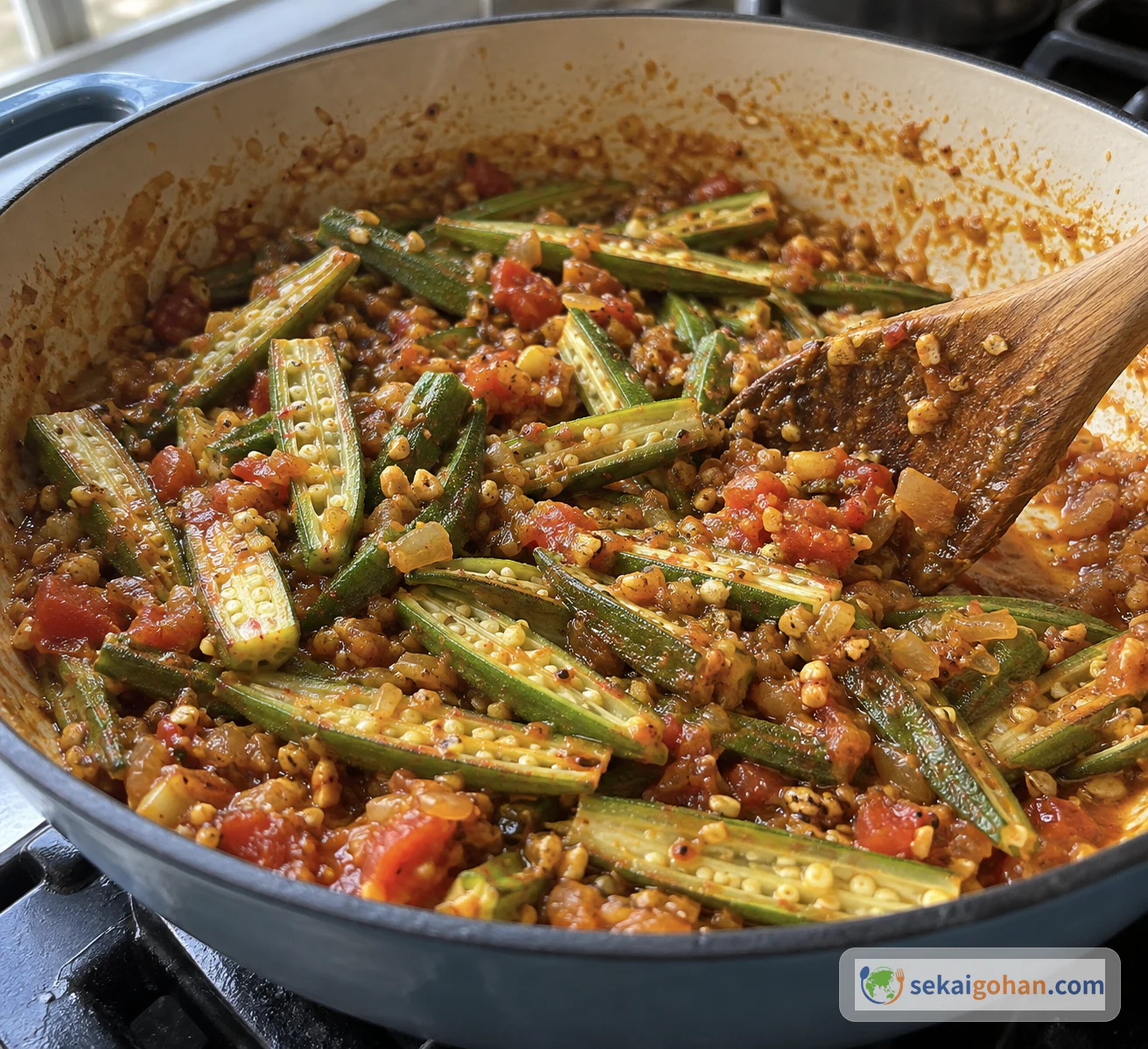
Stirring the lengthways-halved okra already in the sauce
The okra stays in long halves

Add the okra halves, turn the heat up, and cook for 3–4 minutes.

STEP77 / 9

Add the stock and simmer until thick

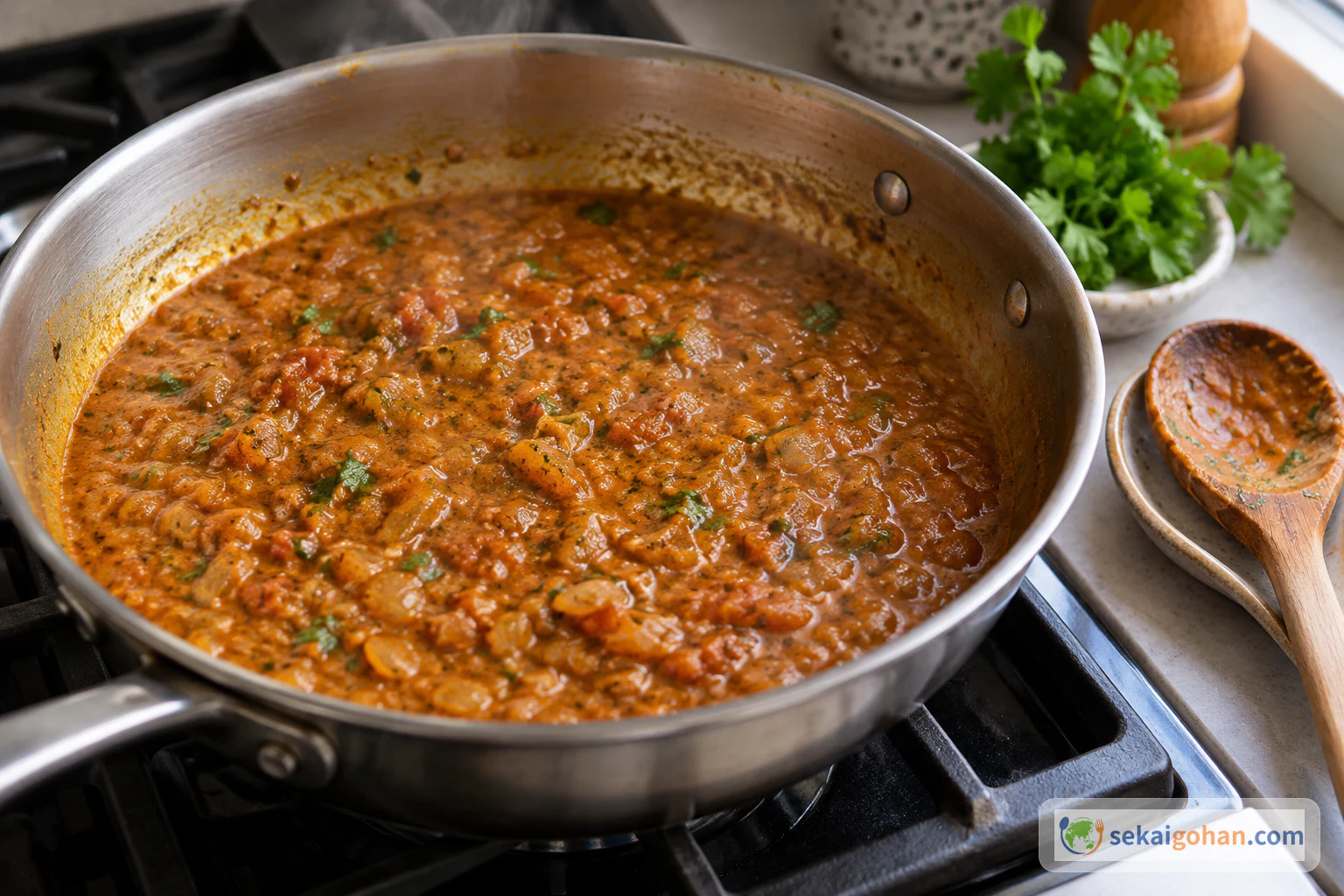
Curry sauce simmered until thickened
Move on once the sauce has thickened

Pour in the 1¾ cups (400ml) shell stock, add a pinch of sea salt, and bring to the boil. Reduce to a simmer and cook, stirring occasionally, until the sauce has thickened. Judge it by the sauce rather than the clock. The prawns are still in the refrigerator at this point.

STEP88 / 9

Cook the prawns in the sauce

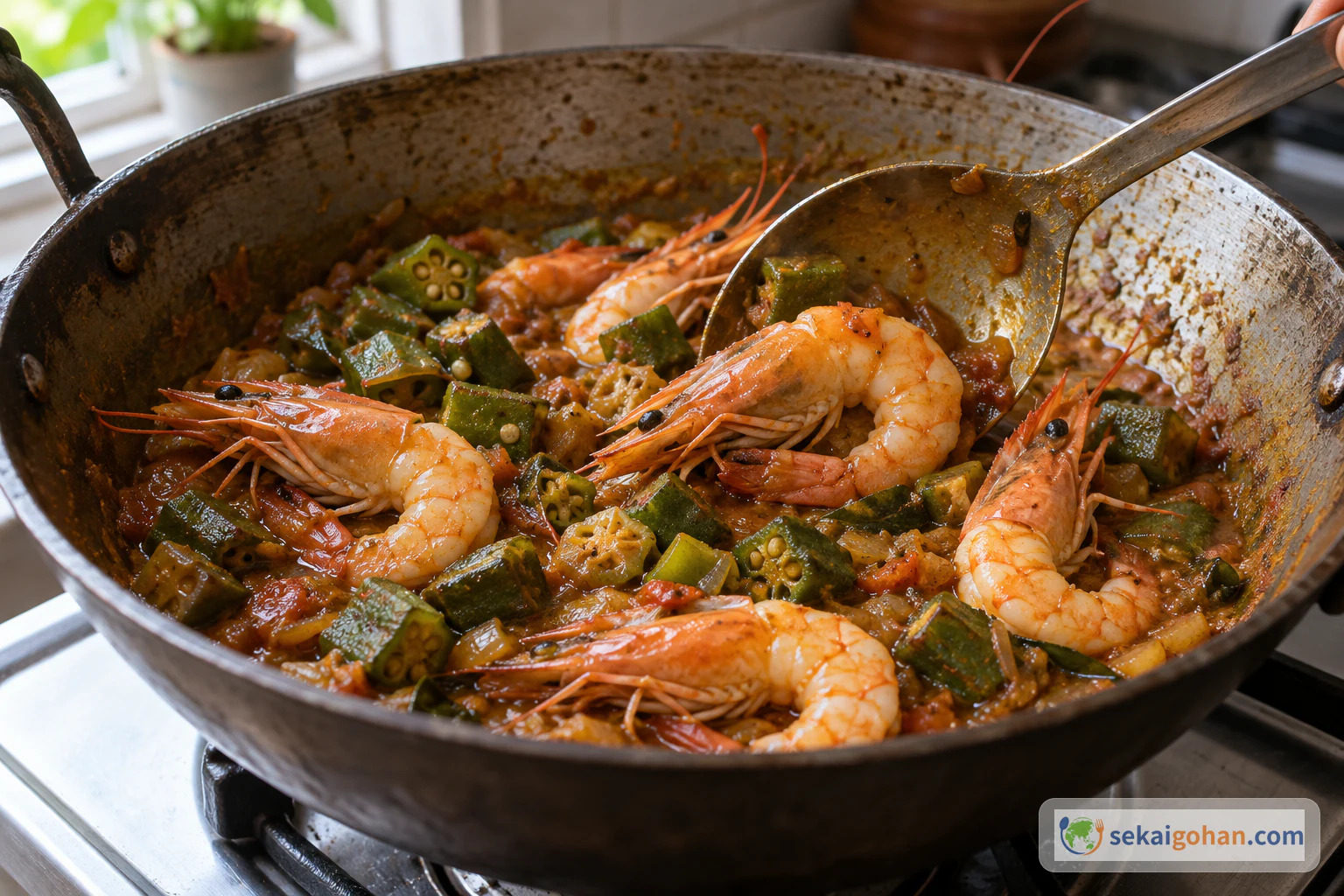
Gently stirring head-on prawns through the sauce
Fold gently so the heads don't come away

Add the prawns, turn the heat up, and cook for 2–3 minutes. Stir them gently through the sauce so the heads stay attached to the bodies.

STEP99 / 9

Plate, garnish and serve

Coriander, sliced chilies and peanuts scattered over the prawn curry
The garnish goes on last

Move the prawns and sauce to a serving platter and arrange the okra around the rim. Scatter over the chopped coriander, the 2 sliced red chilies and the handful of chopped roasted peanuts. These are the garnish portions you set aside, not the base amounts. Serve immediately, with plain cooked rice on the side.

0 / 0
Ingredients

Ingredients

1 / 1

Ingredients

Ingredient Amount Role
Large prawns, shell-on 700g The main ingredient. Heads stay on; bodies are peeled and deveined; the shells are reserved for the stock
Water 600ml For the shell stock. 400ml of the strained stock goes into the curry
Grapeseed oil 4 tbsp 1 tbsp to toast the shells; the remaining 3 tbsp to cook the spring onions, red onion and shallots
Spring onions 8 Sliced into 2-inch pieces
Ginger 1 knob (3cm) Finely chopped
Red onion 1 Cut into brunoise (a fine dice)
Small red chilies (for the base) 3 Finely chopped. Cooked into the curry base
Shallots 2 Finely chopped
Butter 3 tbsp Added later to the same pan as the cooked alliums, after lowering the heat. A separate ingredient, not a replacement for the oil
Madras curry powder 2 tsp The spice base. Curry powder, not paste or roux
Roasted peanuts (for the base) 200g Chopped. Cooked into the sauce
Large tomatoes 2 Peeled, seeded and finely diced
Okra 20 Washed, trimmed and halved lengthways
Sea salt a pinch Added with the stock
Coriander (garnish) 1/2 bunch Chopped. Scattered on at the end
Red chilies (garnish) 2 Sliced. Scattered on at the end
Roasted peanuts (garnish) 1 handful Chopped. Scattered on at the end
Cooked rice to serve Plain, already-cooked rice served alongside
0 / 0

On the platter, long halves of okra ring the rim, and the prawns sit in a thick, spiced sauce with their heads still on. Coriander, sliced red chilies and a scatter of chopped roasted peanuts go over the top just before it comes to the table. This is Caril de camarão com quiabos, a Macanese curry of prawns and okra. It gets its depth from a stock made with the prawns' own toasted shells and its heat from Madras curry powder, chili and ginger.

Macanese Curry Shrimp with Okra

Macanese cooking brings together Portuguese and Chinese cuisines, with ingredients and seasonings from Europe, South America, Africa and Southeast Asia. Shrimp in curry sauce is one of its dishes: spicy, with a thicker sauce. In Taipa, Casa Maquista, a restaurant in a historic house, lists Curry Shrimp with Okra among its highlights. For more on the region's food, see the Macau country page.

Three things set this curry apart: the shell stock, prawns that keep their heads, and okra halved lengthways rather than sliced into rounds. There is no coconut milk in the curry itself. Coconut milk turns up in a separate Macanese crab curry. Other cuisines pair shrimp with okra, or shrimp with curry, too. Brazil has caruru, and Bengal has chingri malai curry, which is made with coconut milk.

The method works in two stages. First, the empty body shells toast in a spoonful of grapeseed oil until they color, then simmer in water to make the stock that becomes the curry's liquid. Meanwhile, the peeled prawns wait in the refrigerator. The curry builds in a large pan: spring onions, red onion and shallots soften in oil, then butter goes in over lowered heat, followed by chili, ginger, curry powder, peanuts, tomatoes and finally the okra. The prawns go in at the very end, for only a couple of minutes.

Ingredients (Serves 4)
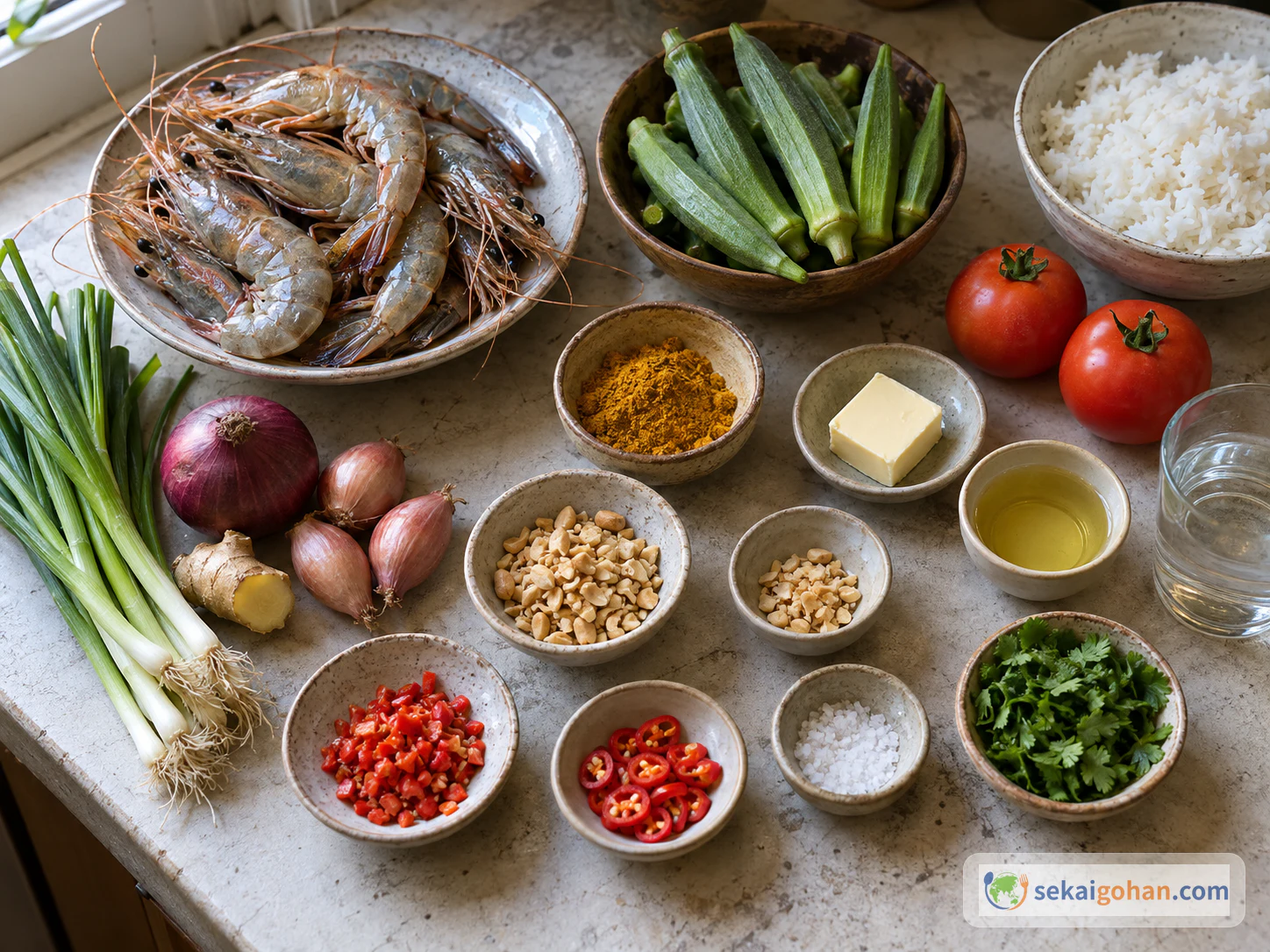
Shell-on prawns, vegetables, aromatics, curry powder and garnishes laid out together
Keep the base chilies and peanuts apart from the garnish portions from the start

Chilies and peanuts each appear twice: once in the curry base and once as a garnish. Keep the two portions separate so they don't all go into the pan at once.

Equipment

  • A saucepan or pot for the shell stock
  • A large pan for the curry
  • A fine sieve for straining the stock
  • A serving platter

Choosing Prawns, Okra and Other Ingredients

Allergens

This dish contains prawns, peanuts and butter. Check with everyone you are cooking for before serving.

Buy prawns with shells and heads. The shells become the stock, and the heads stay on through cooking and serving. Look for large prawns.

Grapeseed oil is split, not added to. The amount in the list covers both uses: a little for the shells and the rest for the alliums. The butter is a separate ingredient that joins the alliums later, and no other oil is used.

Madras curry powder goes in as a dry powder, rather than as a paste or roux. Garlic, sugar, stock cubes and extra spices are left out, so the shell stock does the work.

Keep the garnish portions apart. Slice the garnish chilies, chop the garnish peanuts and set them aside with the coriander before you start cooking. That way they won't go into the base by mistake.

Method: From Shell Stock to Platter

Method at a glance

The method runs in 9 short steps. Steps 1–2 make the prawns and stock. Step 3 prepares the okra. Steps 4–7 build the curry, and steps 8–9 finish and serve it.

Curry Shrimp Troubleshooting

Situation Method What to do
Prawn heads come away while stirring Stir gently for 2–3 minutes, keeping the heads attached Fold them through the sauce rather than stirring hard
The sauce is still loose after adding the stock Simmer, stirring occasionally, until thickened; no time is given Keep simmering before adding the prawns; the curry uses no thickener
The okra was cut into rounds Okra is halved lengthways Keep the long halves; they also go around the platter rim
The strained stock isn't exactly 1¾ cups (400ml) The curry uses 1¾ cups (400ml) Measure 1¾ cups (400ml) for the curry
All the peanuts or chilies went into the base Base (7 oz (200g) peanuts, 3 small chilies) and garnish (1 handful peanuts, 2 sliced chilies) are separate Portion the garnish before cooking and keep it aside until step 9
Not sure how much oil to add with the butter The butter goes into the pan with the 3 tbsp oil already used for the alliums Add only the butter

Serving Curry Shrimp with Okra

Serve the curry immediately, with plain, already-cooked rice. Coconut rice is the ideal alternative, and it's the one place coconut belongs in this meal. Arrange the okra halves around the rim of the platter, then finish with the coriander, sliced chilies and remaining peanuts.

Frequently Asked Questions

Do I remove the prawn heads?

No, the heads stay on. Peel and devein the bodies and put the removed shells into the stock. No instruction is given for the tails.

Is there coconut milk in it?

Not in the curry. Coconut comes in only with the rice, since coconut rice is the ideal side.
Sources