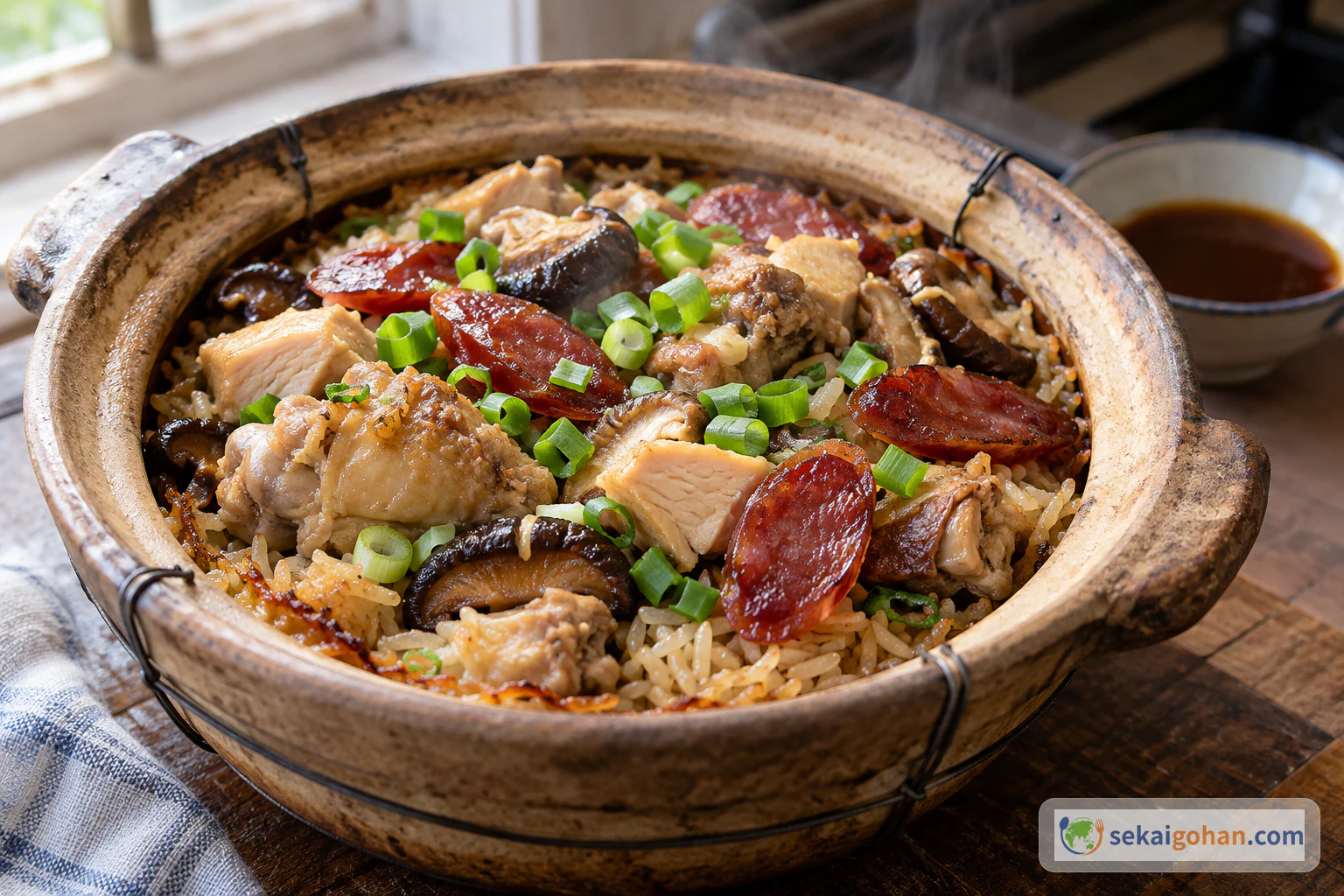
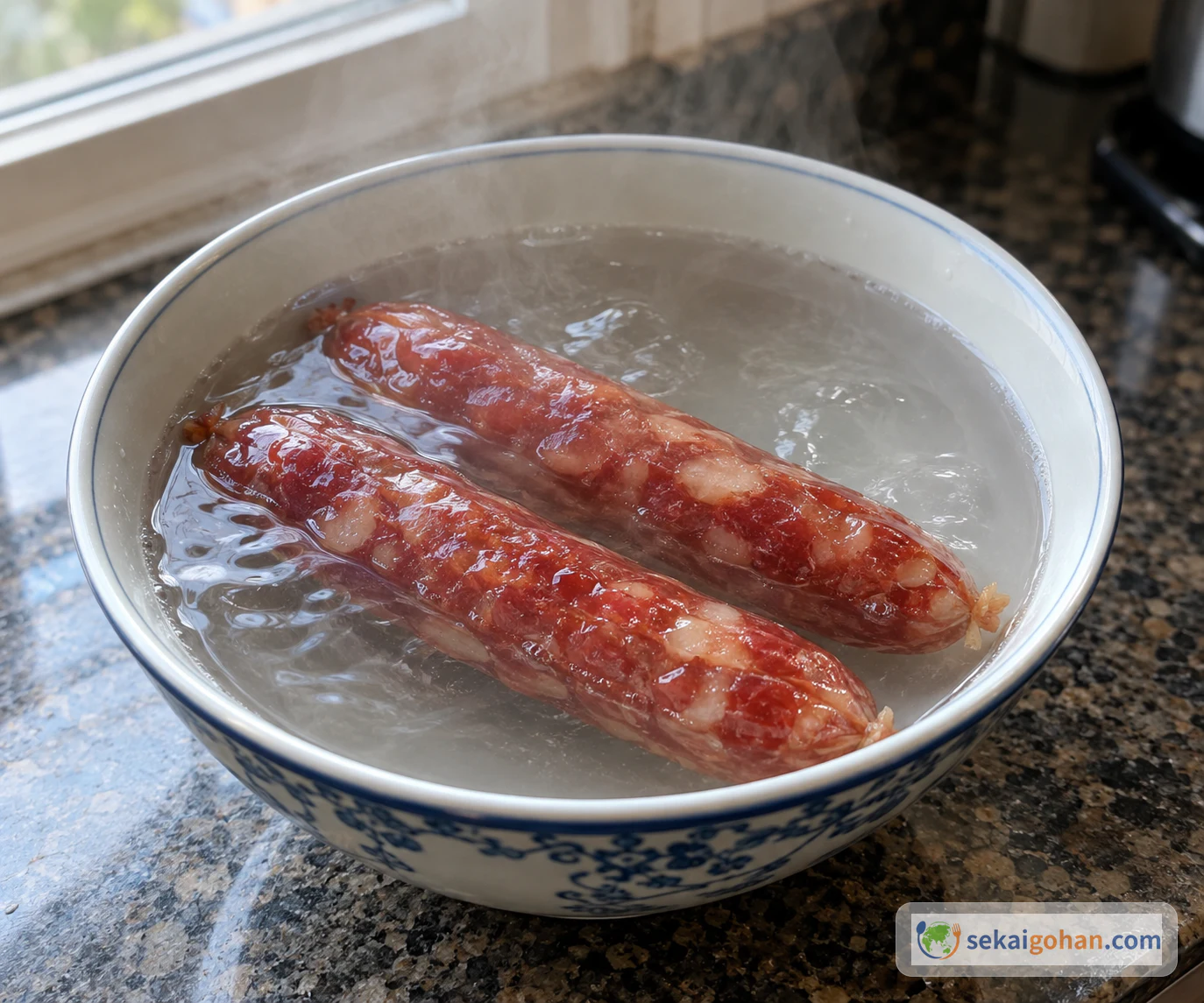
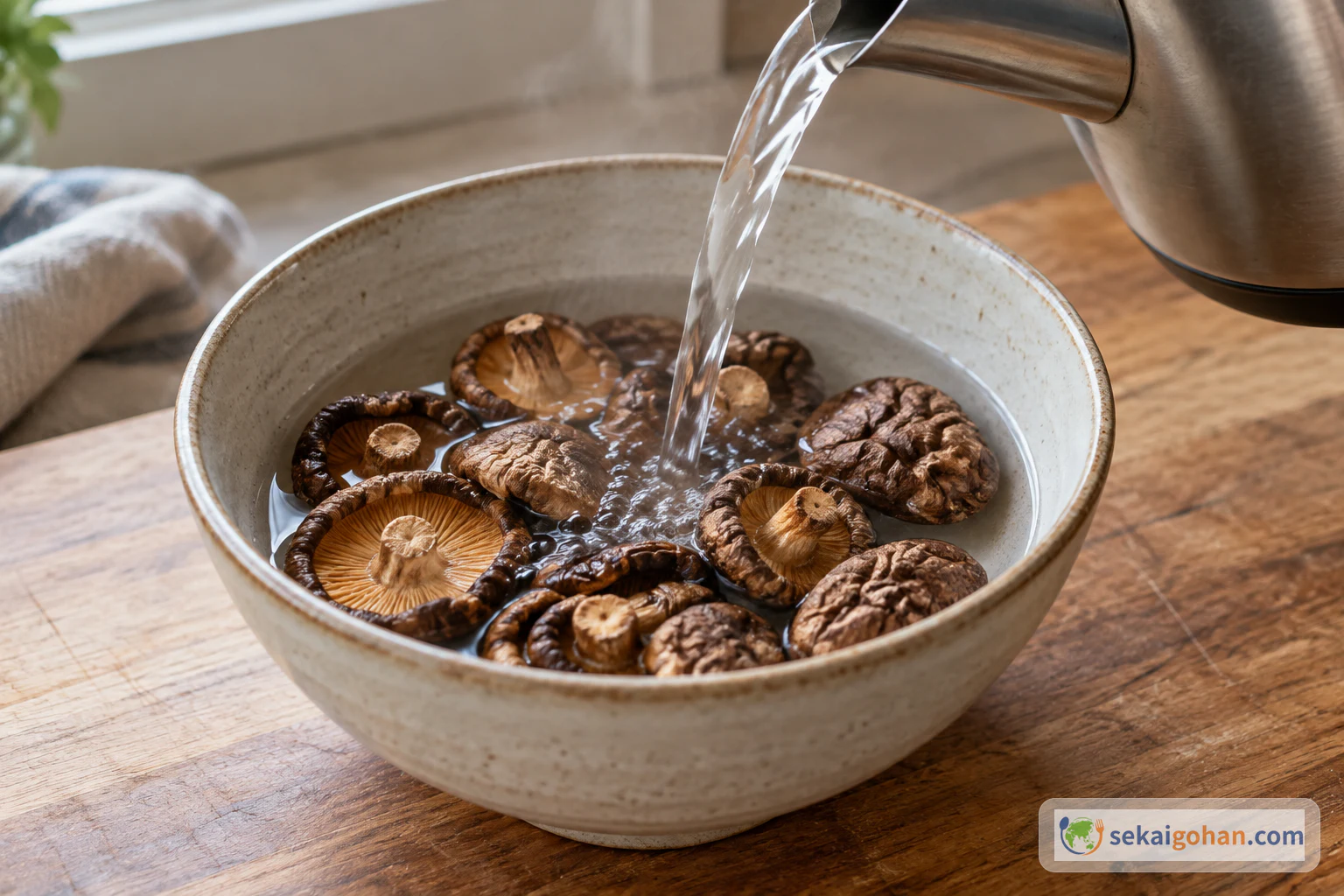
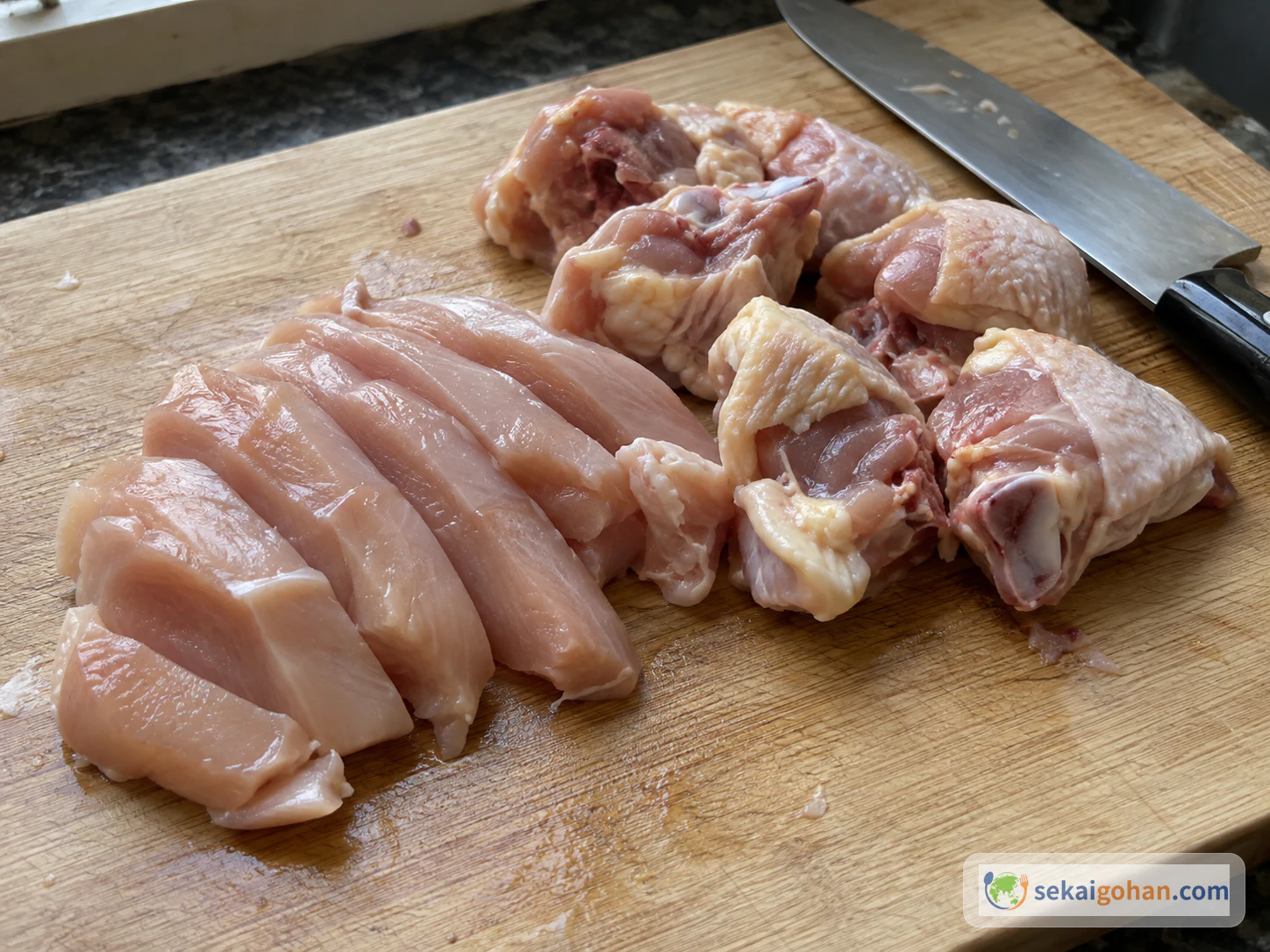
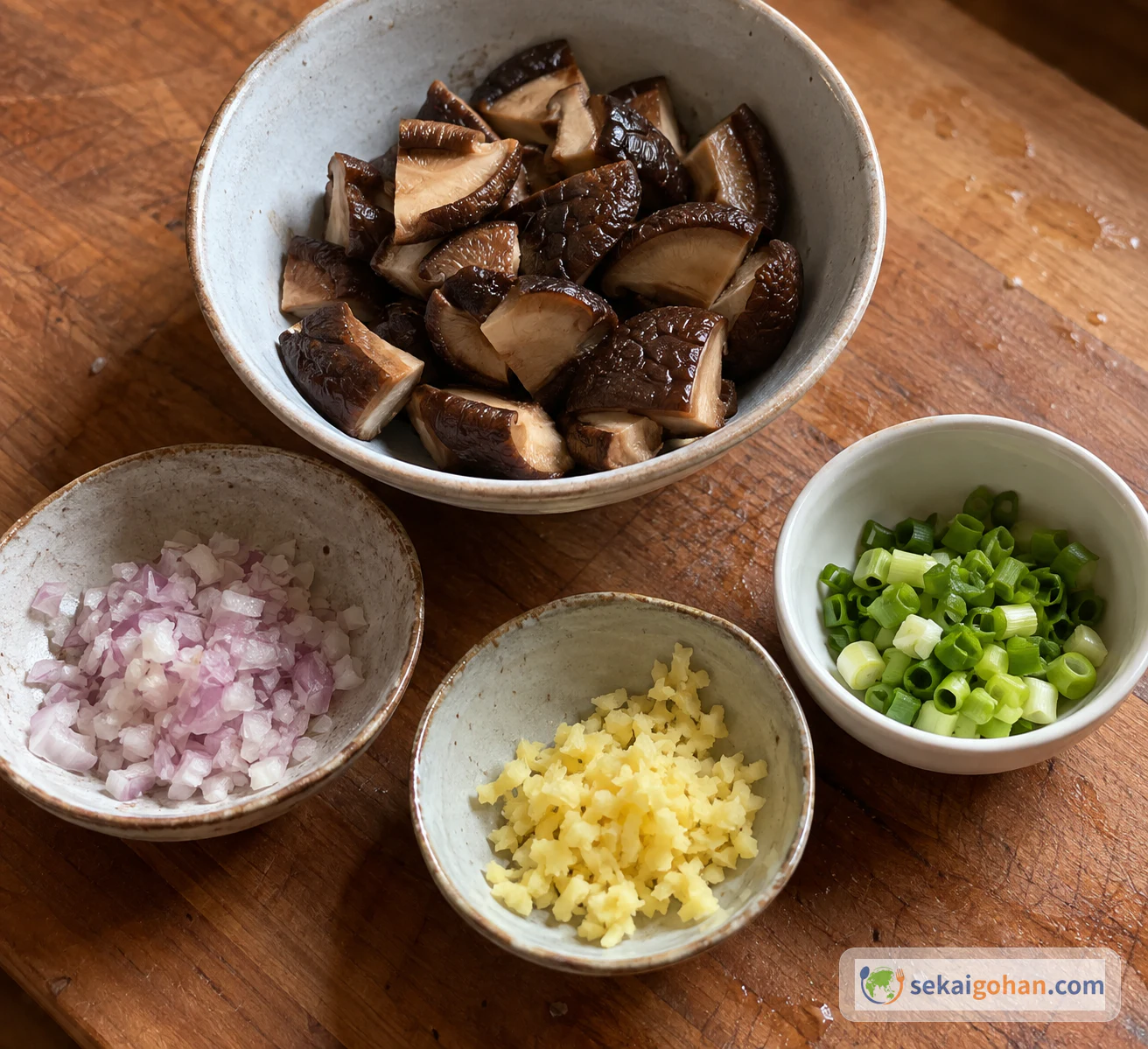
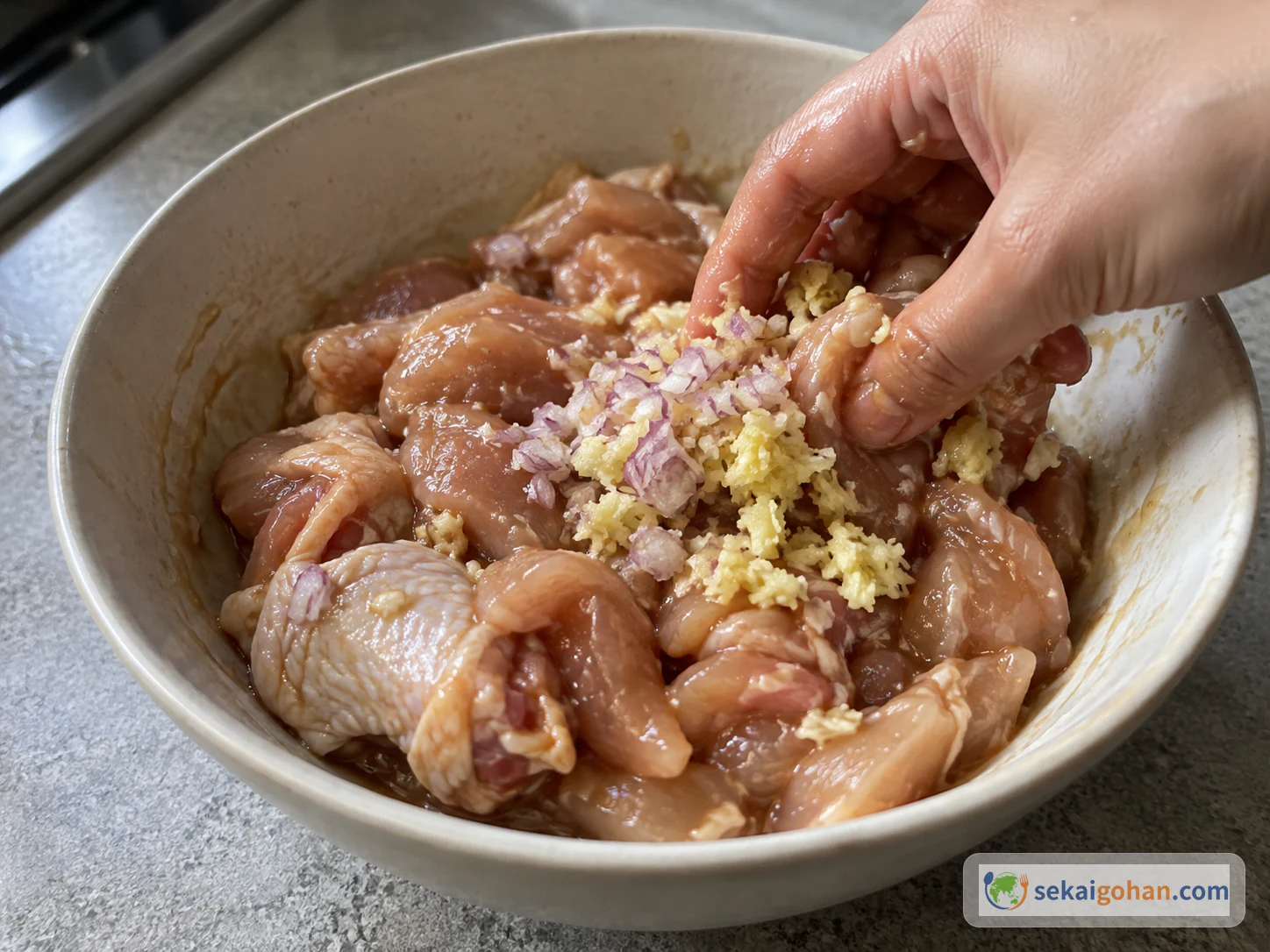
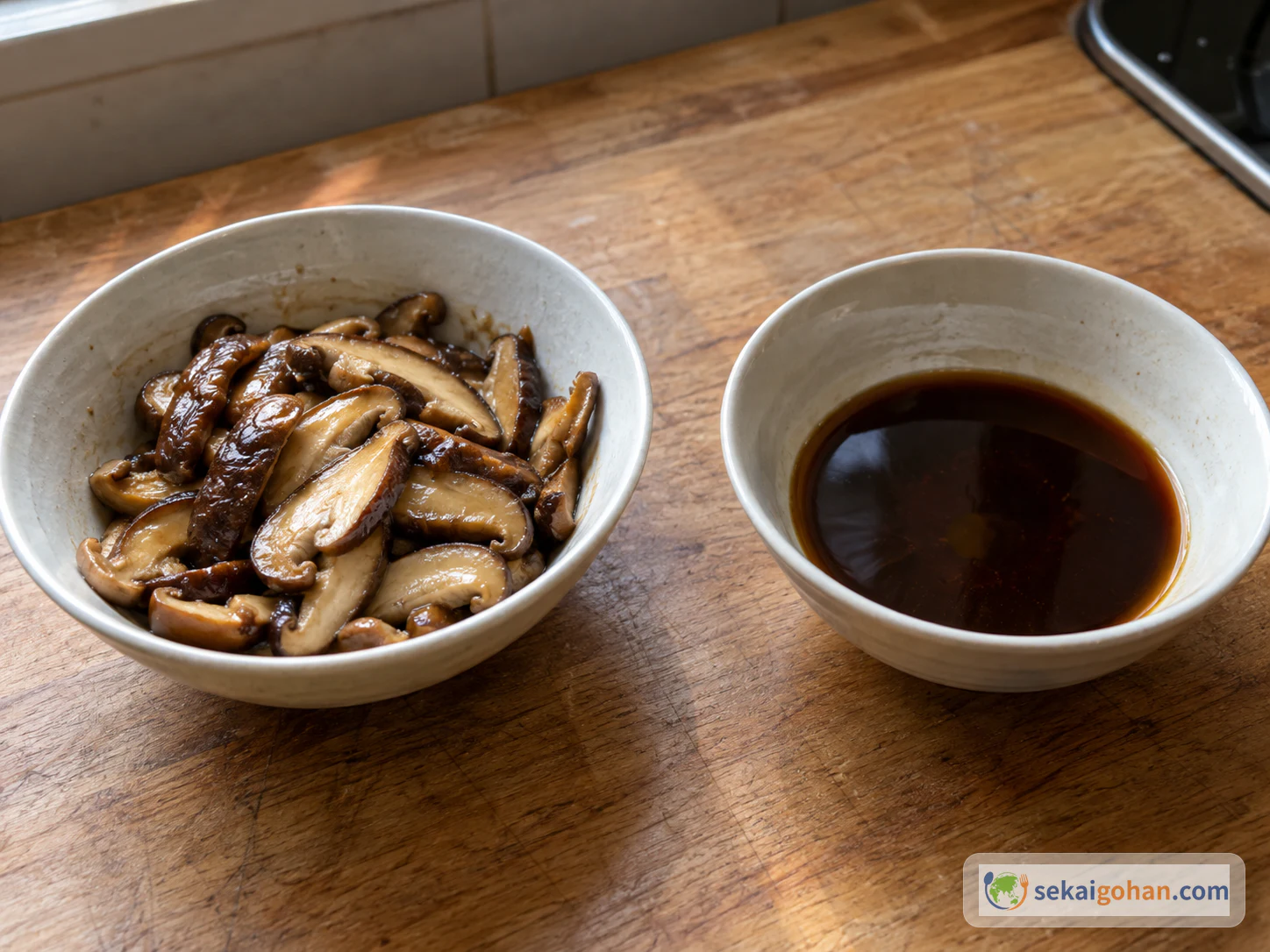
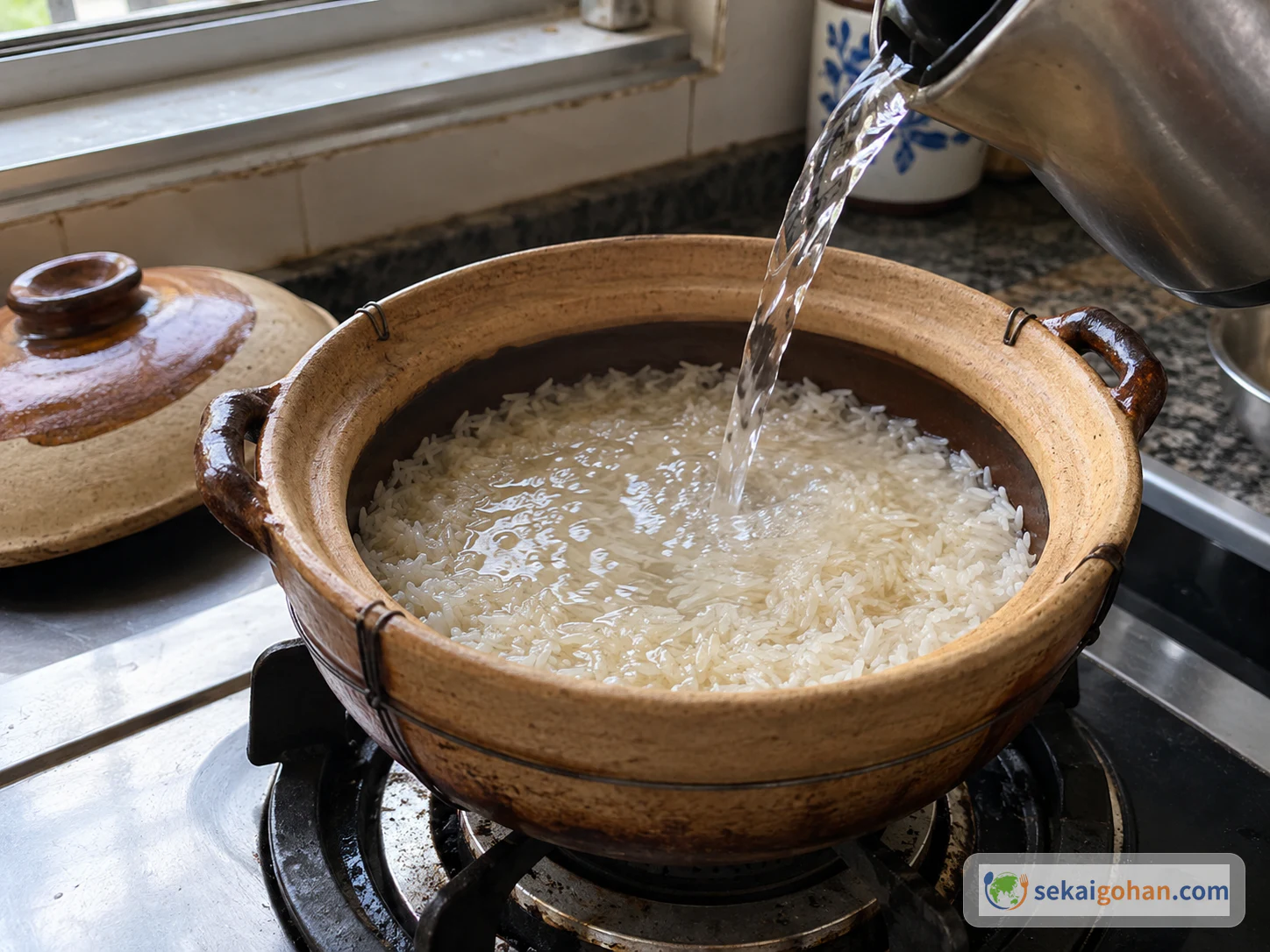
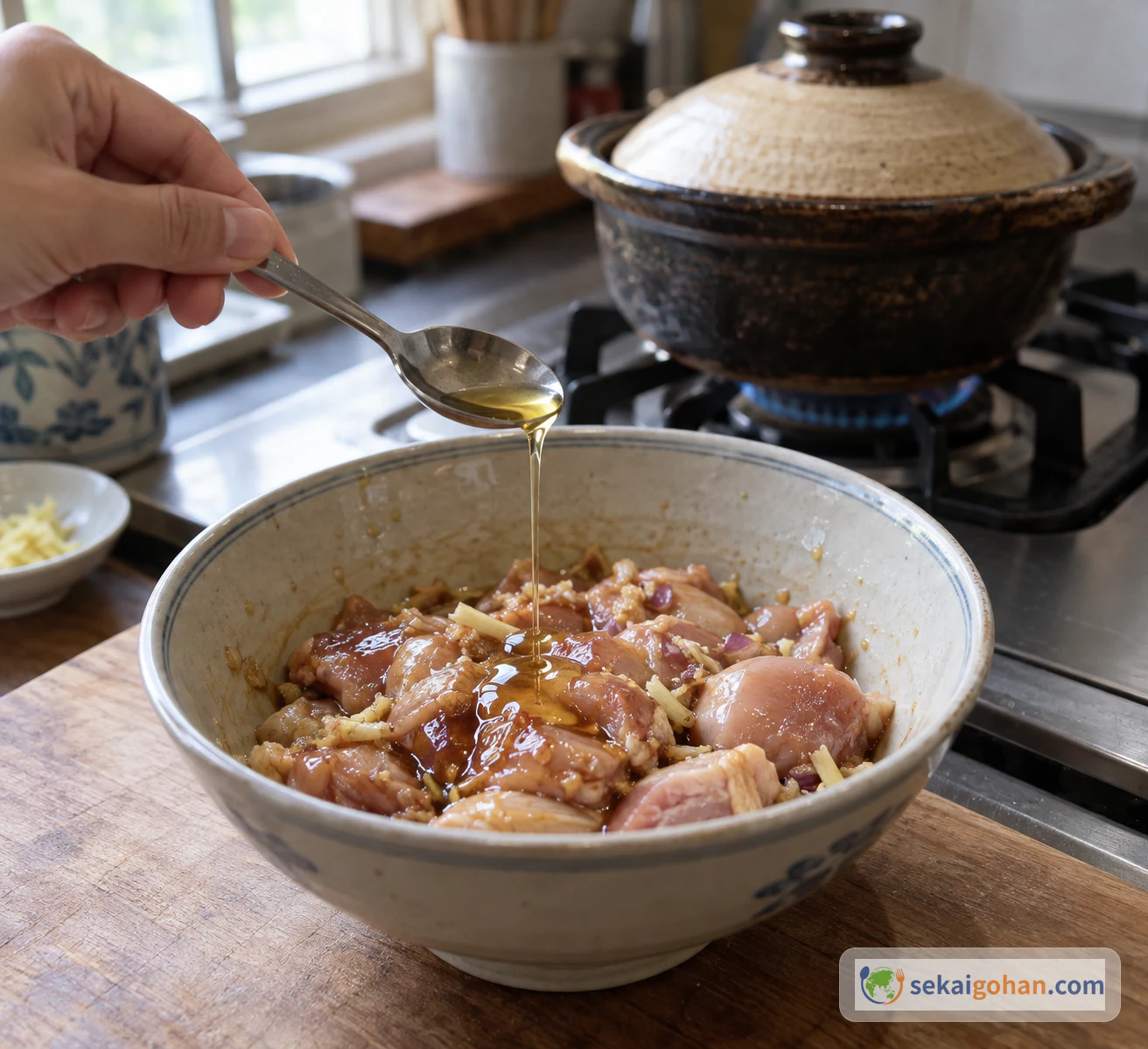
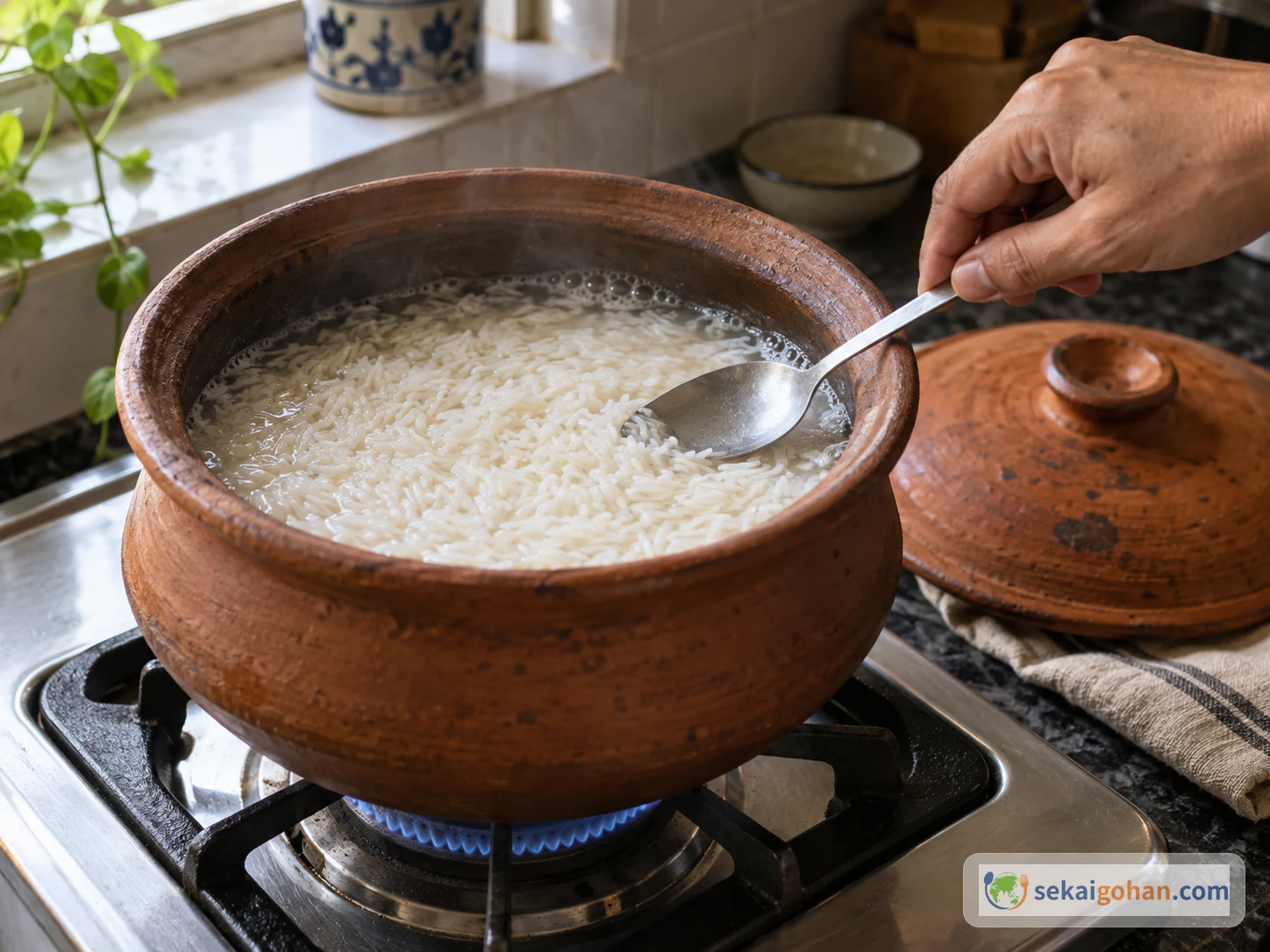
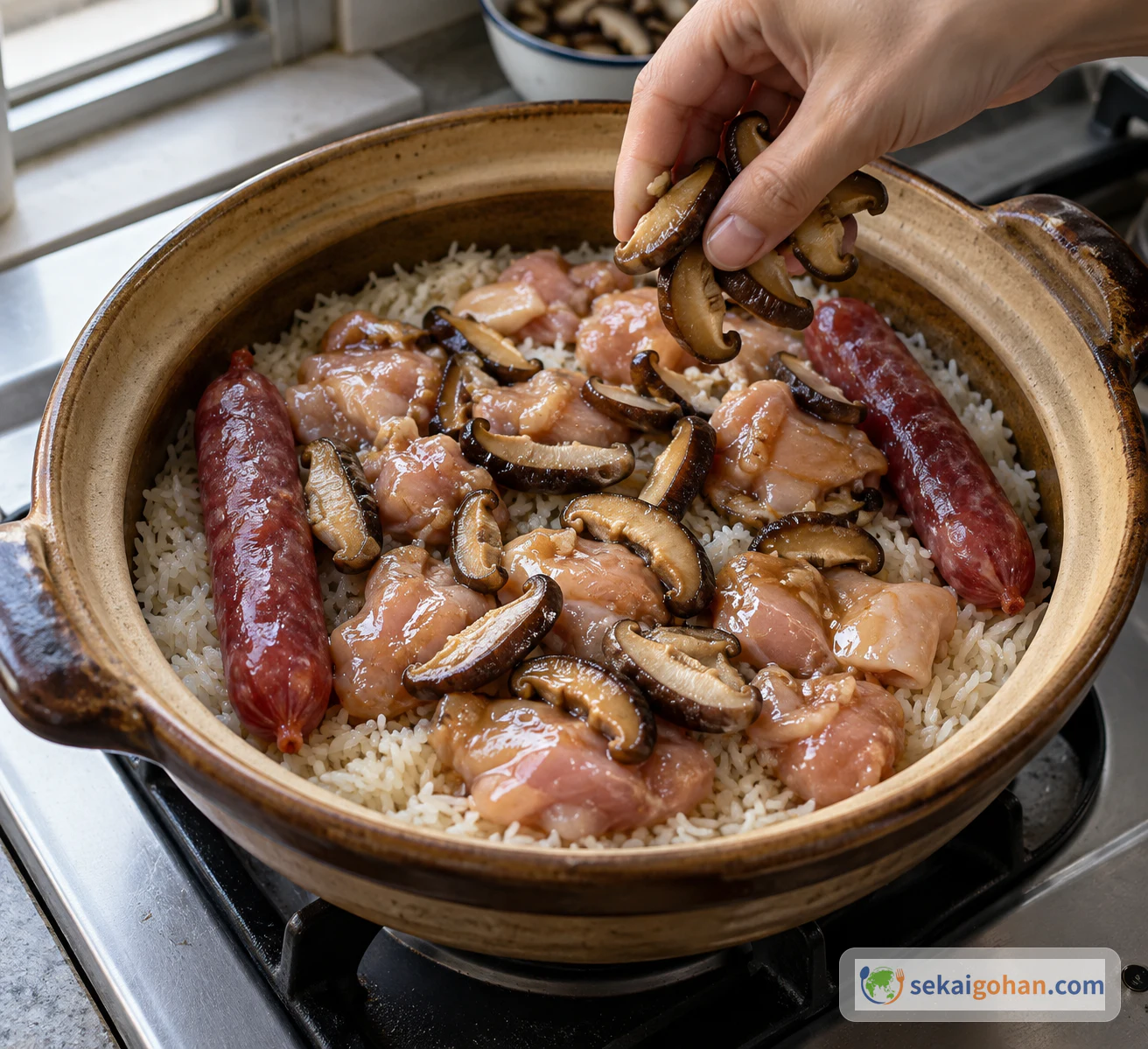
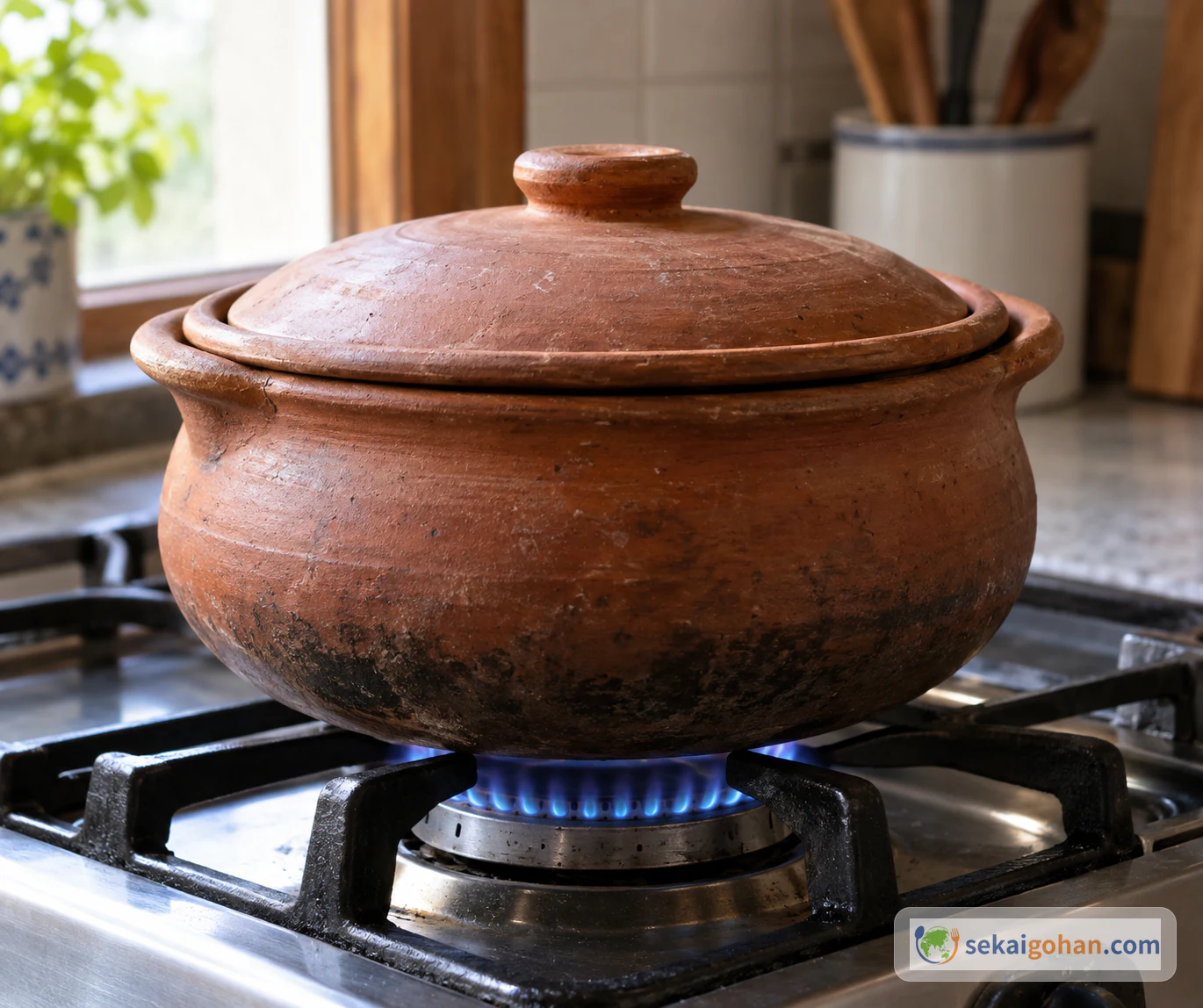
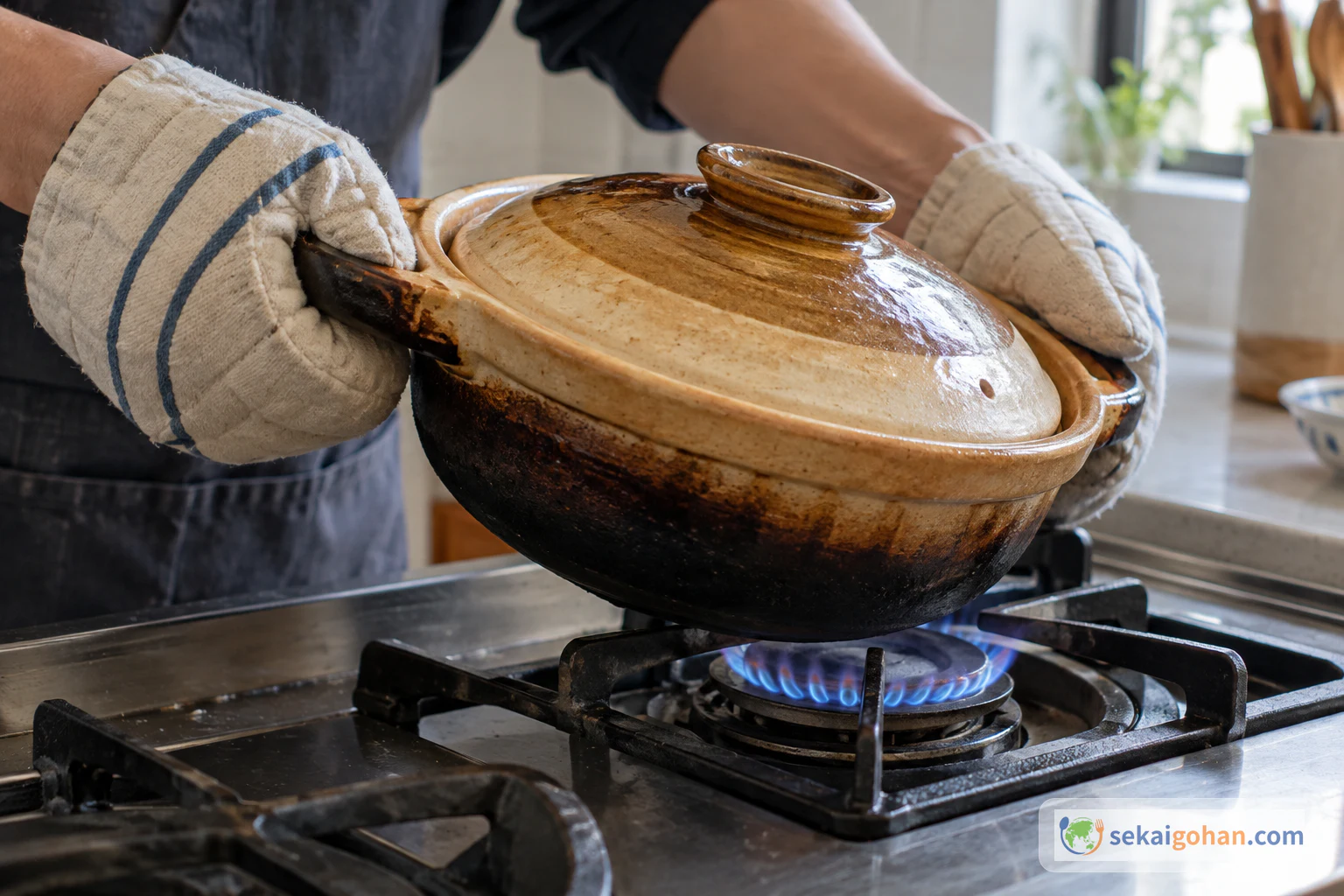
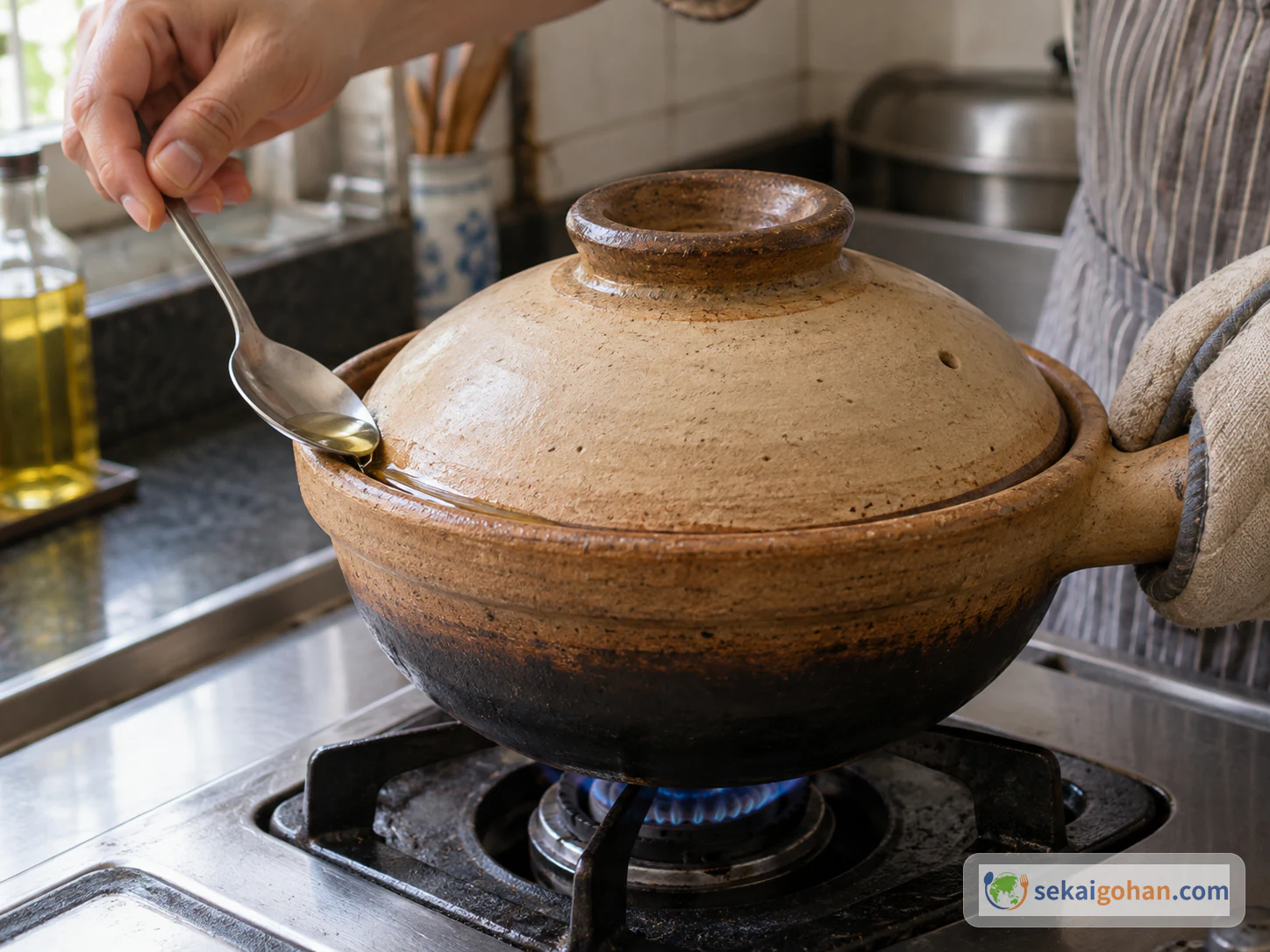
On Temple Street, Hong Kong's hub for late-night dining, sizzling claypot rice is one of the standout dishes. At Hing Kee, more than sixty varieties are cooked on charcoal stoves that give the rice a smoky aroma. The dish is 煲仔飯 (also written bo zai fan): rice cooked and served in its own lidded clay pot, with toppings laid on partway through and a crackling crust, 飯焦 (faan6 ziu1), forming at the bottom. This home-kitchen version is Cantonese, with chicken, Chinese sausage and dried shiitake over long-grain rice, and it cooks on a regular stove rather than over charcoal.
Hong Kong Claypot Rice and Its Many Versions
Claypot rice is cooked and served in the same pot. The rice goes in first, the toppings follow once it has started cooking, and the heat at the bottom of the pot does the rest, turning the lowest layer into a browned crust.
Across Hong Kong, the toppings and the order change from pot to pot. Some cooks add salted fish and fry the toppings before the rice goes in. Others soak the rice in the pot for an hour and cook it in that same water, then top it with cured pork belly and sweet Chinese sausage. Each version is balanced around its own amounts and order, so if one appeals to you, follow it from start to finish rather than swapping pieces into this one.
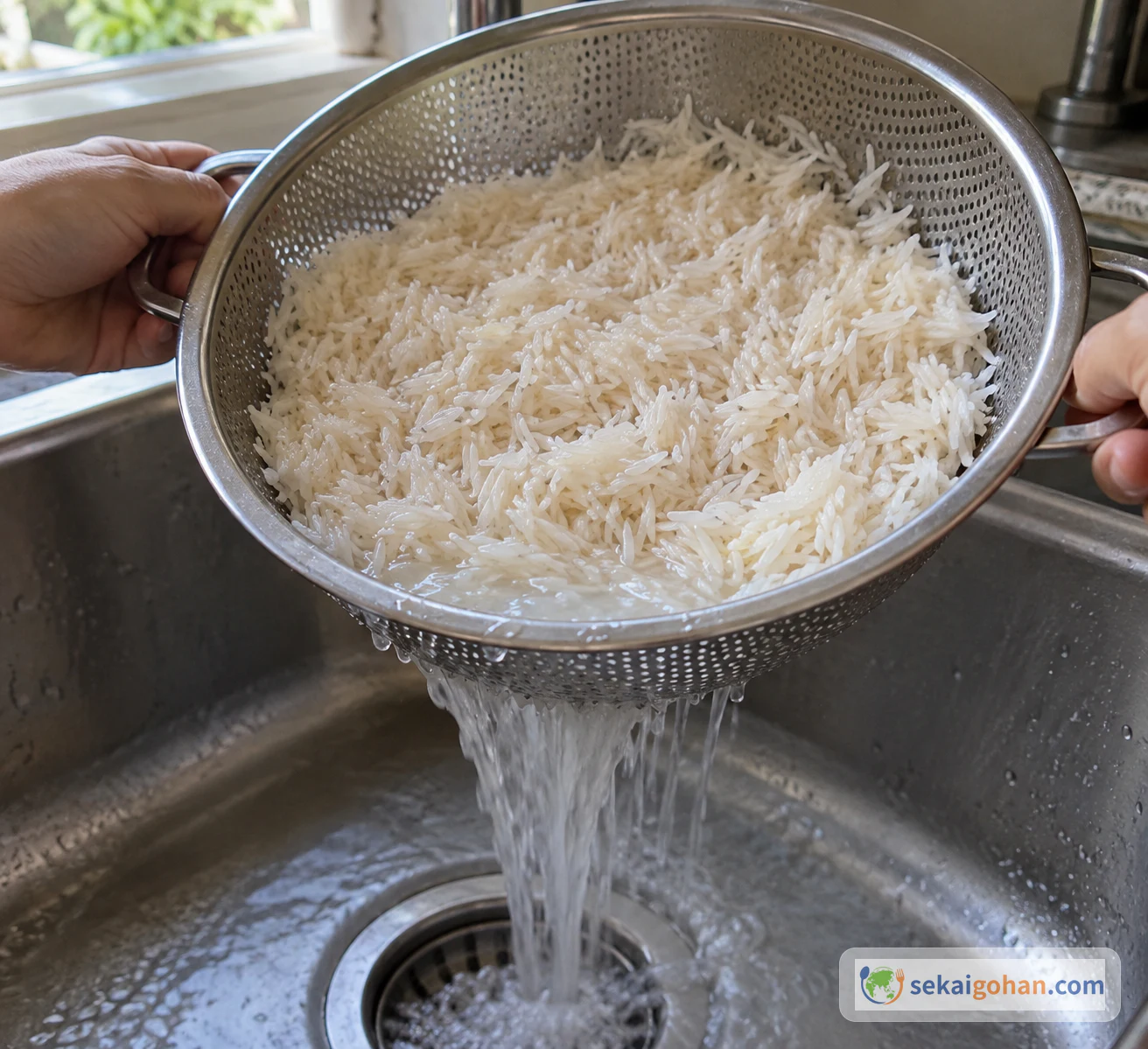
This version has its own logic. The rice is soaked in boiling water and that water is discarded. The chicken is marinated and goes onto the rice raw, and the sausages stay whole until the pot comes off the heat.
Ingredients (4 servings)
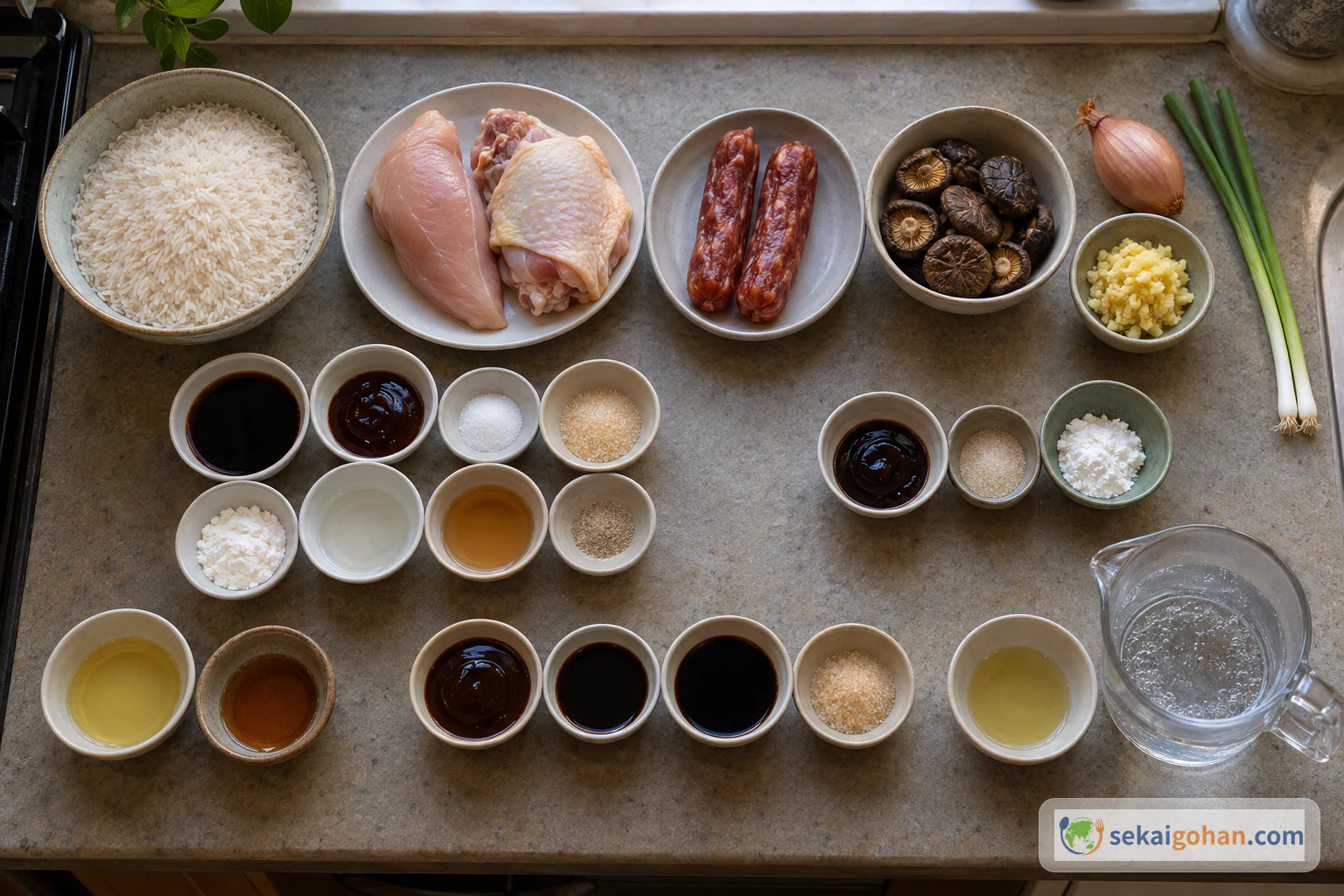
The same ingredient can appear several times, for example oyster sauce, sugar and oil. Each appearance has its own job and its own measure. Measure them separately and do not combine them.
Equipment
- Clay pot with a lid
- Colander
- Heat-safe bowls for soaking the rice, the sausages and the mushrooms
- Several small bowls for the chicken marinade, the shiitake marinade and the serving sauce
- Cutting board and knife, plus a separate clean board and knife (or ones washed well after the raw chicken) for the scallions
- Paper towels
- Dry towel, oven mitts or pot holders sturdy enough to hold and tilt a hot clay pot
- Spoons for mixing and for leveling the rice
Choosing Ingredients for Claypot Rice
- Rice: Use long-grain rice; Thai jasmine is a good choice. The water and timing in the method are set for long-grain rice.
- Cornstarch: It goes into both the chicken and the shiitake marinades. Stick with cornstarch here, since another starch may behave differently.
Method: Soak, Layer, Then Crust the Rice in Two Passes
Several stages are judged by cues rather than exact times: when the pot is about to boil, when the rice has absorbed more water, and when the crackling starts. Use the minute counts where they are given, and watch and listen for the rest.
Use the times and the crackling as cues for the cooking stages, but do not rely on them alone to know the chicken is cooked through.
Claypot Rice Problems and Fixes
Most of what goes wrong with this pot comes from mixing up things that are meant to stay separate: the two waters, the oils and when they go in, the whole sausages, the lid.
Keep the soaking water and the cooking water separate, and keep the oils separate by when they go in. Leave the two sausages whole until the cooking is done, and let the lid stay on through both crusting passes.
Before the pot goes on the heat, and again while it cooks, run through these checks.
| Point to check | What the recipe does | Why it matters |
|---|---|---|
| Which water is in the pot | The soaking water is discarded; 11 oz of fresh boiling water is measured in | The recipe is built on fresh water |
| When the oils went into the chicken | Only after the rice has started cooking, never in the first coating | The first coating is oil-free by design |
| Which oil is which | 1 tsp in the rice, 1 Tbsp neutral and 1 Tbsp sesame in the chicken, 2 Tbsp around the lid | Each oil has its own measure and moment |
| The sausages | Whole on the rice, sliced only after cooking | They stay whole throughout cooking |
| No crackle yet on low | The recipe gives 5–10 minutes, until crackling starts | The sound is your cue for the crust passes |
| Lid during the crust stage | Closed through both tilting passes and the lid-edge oil | Every crust step happens with the lid on |
| How much sauce went in | Only a few splashes; the rest is served on the side | The full batch is not meant for the pot |
Frequently Asked Questions
Why is the soaking water thrown away?
The rice soaks in boiling water for 10 minutes, then that water goes and 11 oz of fresh boiling water is measured into the pot. Some other recipes cook the rice in its soaking water, but this one is built around fresh water.
Why rinse the chicken thigh pieces?
Rinsing is for finding bone fragments left after cutting through the bone, not for cleaning the chicken.
Will the times work on my stove and pot?
Treat the 20/35/55-minute times as a starting point. Your clay pot and heat source will change how the rice cooks, so go by the cues in the method: the pot about to boil, the rice absorbing more water, and the crackling.