Tokyo-Style Shoyu Ramen: Clear Broth, Soy Tare and Chashu at Home

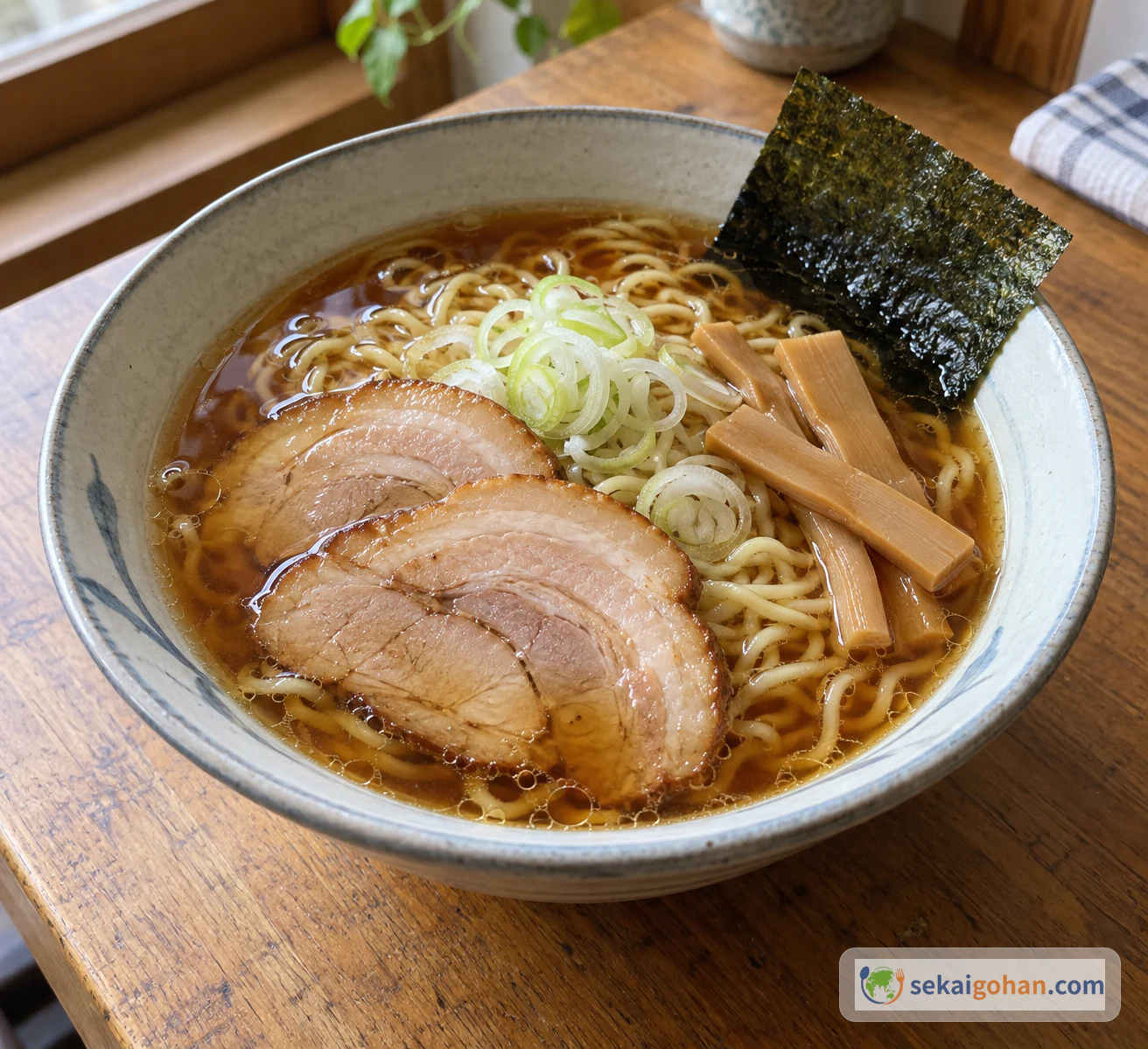
Tokyo-style ramen with clear shoyu broth, medium-thin curly noodles, thin slices of chashu, menma, green onion and nori
Serves
8 servings
Level
Advanced (long preparation)
Cuisine
Japanese (Tokyo-style)

How to make Tokyo-style shoyu ramen at home from a recipe shared by the owner of Bizentei in Tokyo: a clear pork and aromatic broth simmered for six hours, a soy tare that braises the chashu, and bowls seasoned one at a time. Covers the full eight-bowl batch, heat changes, safe pork handling and cooling, noodles, fixes and how this bowl differs from tonkotsu.

Cooking flow

Cooking steps

STEP11 / 7

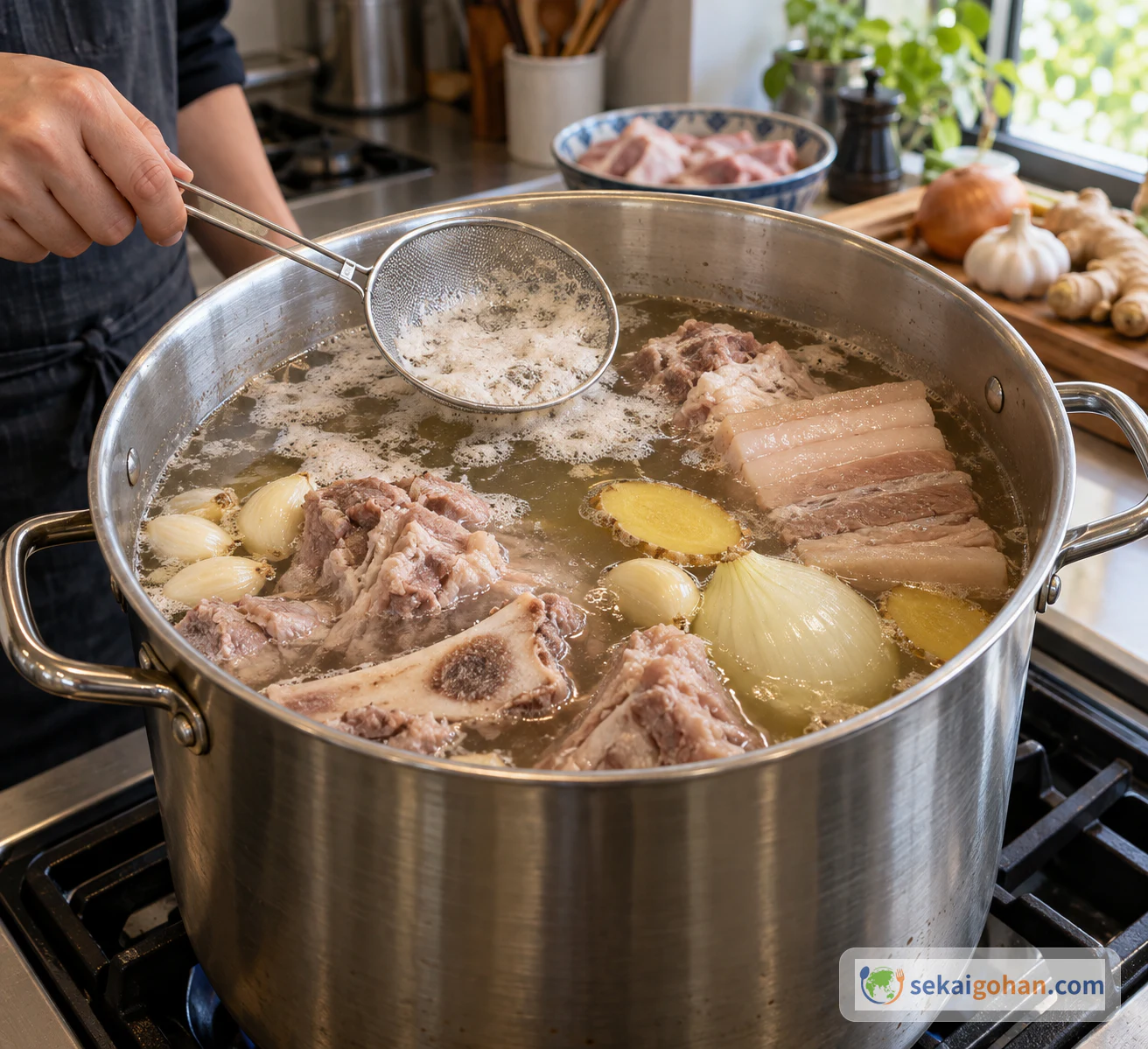
Start the broth and skim the foam

A clear broth of pork bones and aromatics simmering in a stockpot
Keep the pot uncovered for the first phase, skim the foam as it rises, and leave room so it doesn't boil over

Put the pork leg bones, onion (skin on), garlic (skin on) and ginger in the stockpot with 10 qt of the water, and bring it up to a boil. As foam rises to the surface, skim it off with a fine-mesh skimmer, and keep doing so throughout.

When the broth boils, add the tied pork belly. For the first part of the cooking, keep the pot uncovered over high heat. If it threatens to boil over, turn the heat down until it settles. Don't stir the pot. As the level drops and room opens up, add the remaining 2 qt of water in stages.

STEP22 / 7

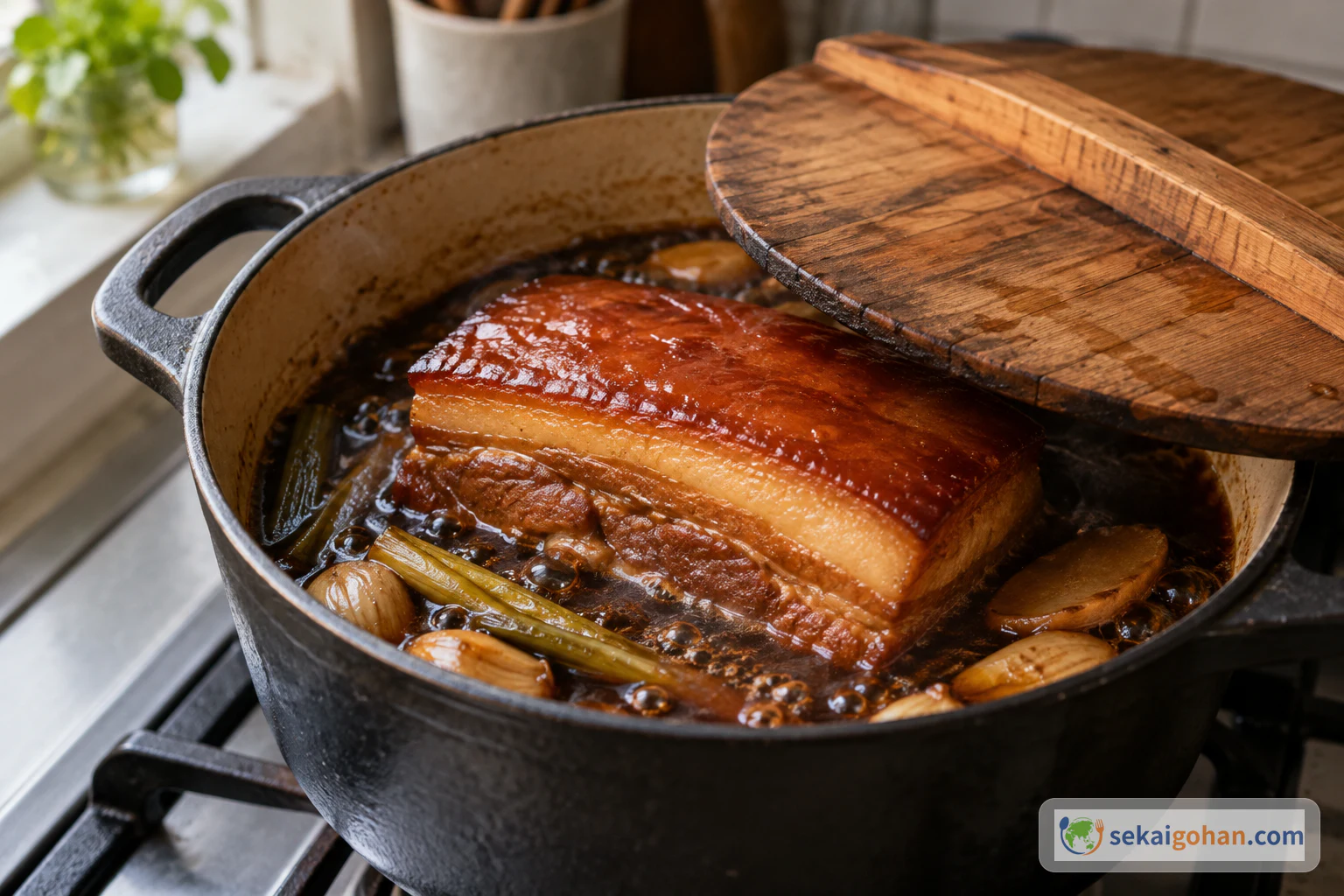
Make the tare and braise the chashu

A cooked pork belly block braising in soy tare under a drop lid
The pork belly braises gently in the tare under a drop lid while the broth continues on low heat

Shortly before the broth reaches the 2-hour mark, ladle out 2 cups (480ml) of it. In the smaller pot, combine that broth with the soy sauce, sake, mirin and salt. This is the tare.

At the 2-hour mark, add the chicken fat and the green parts of the long onions to the broth, and continue cooking for another hour.

At the 3-hour mark, lift the pork belly out of the broth and move it into the tare. Cover it with a drop lid and braise over low heat for 2 hours. At the same time, turn the broth pot down to low.

STEP33 / 7

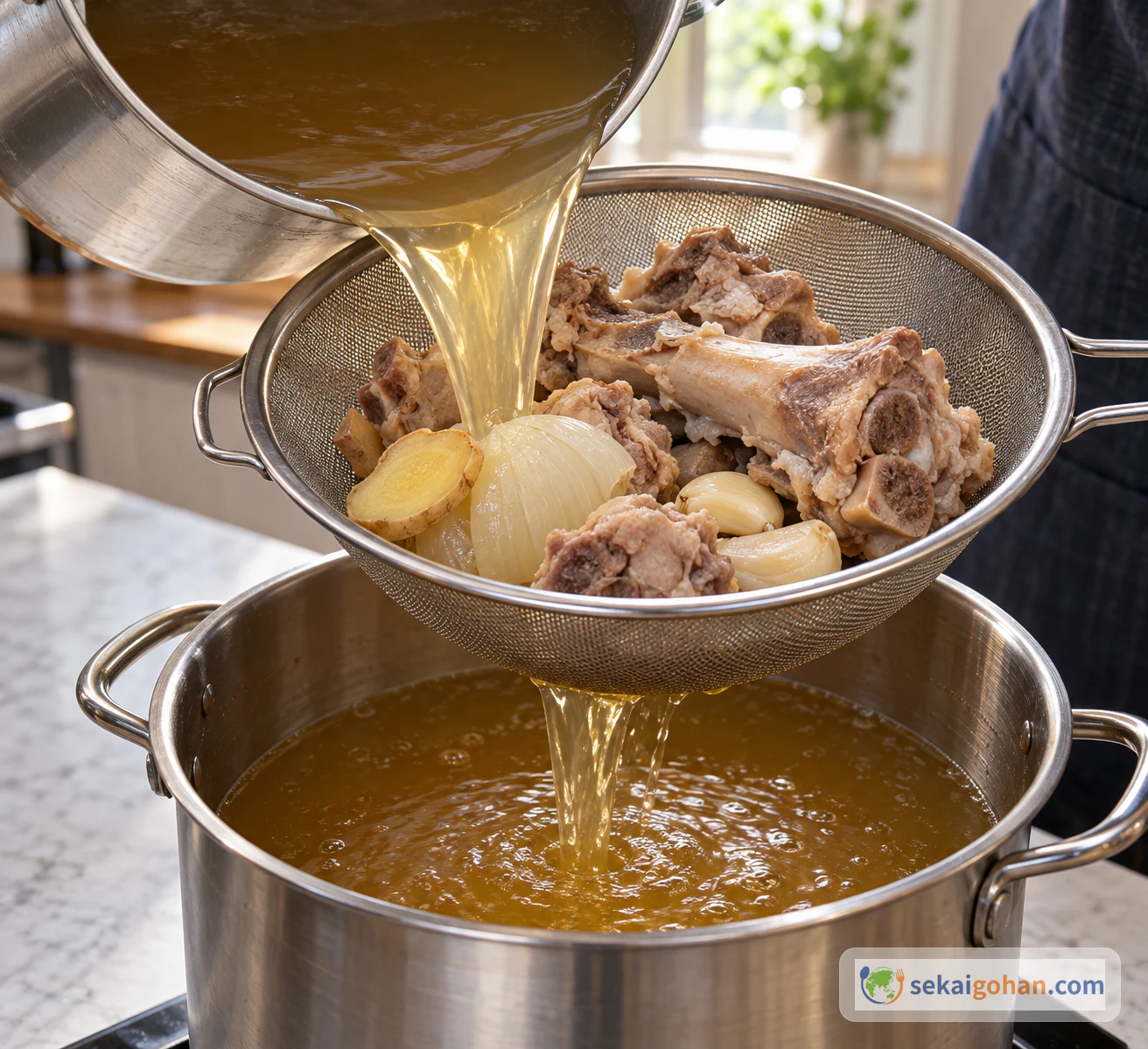
Finish the broth on low heat and strain it

Straining bones and aromatics out of a clear broth through a fine-mesh strainer
Strain out the bones and aromatics so only the clear broth goes into the clean pot

Let the broth simmer on low heat for 3 more hours after the pork belly comes out, for 6 hours in total. Then strain it through a fine-mesh strainer into a clean pot, removing the bones and aromatics.

Make sure the chashu is cooked through to the center. Before slicing it, chill it so it firms up and holds its shape. Use clean utensils and boards for the cooked meat.

If you are making the broth the day before, divide it into shallow containers, cool it quickly and refrigerate it. Do the same with the chashu and tare. Don't leave them standing at room temperature.

STEP44 / 7

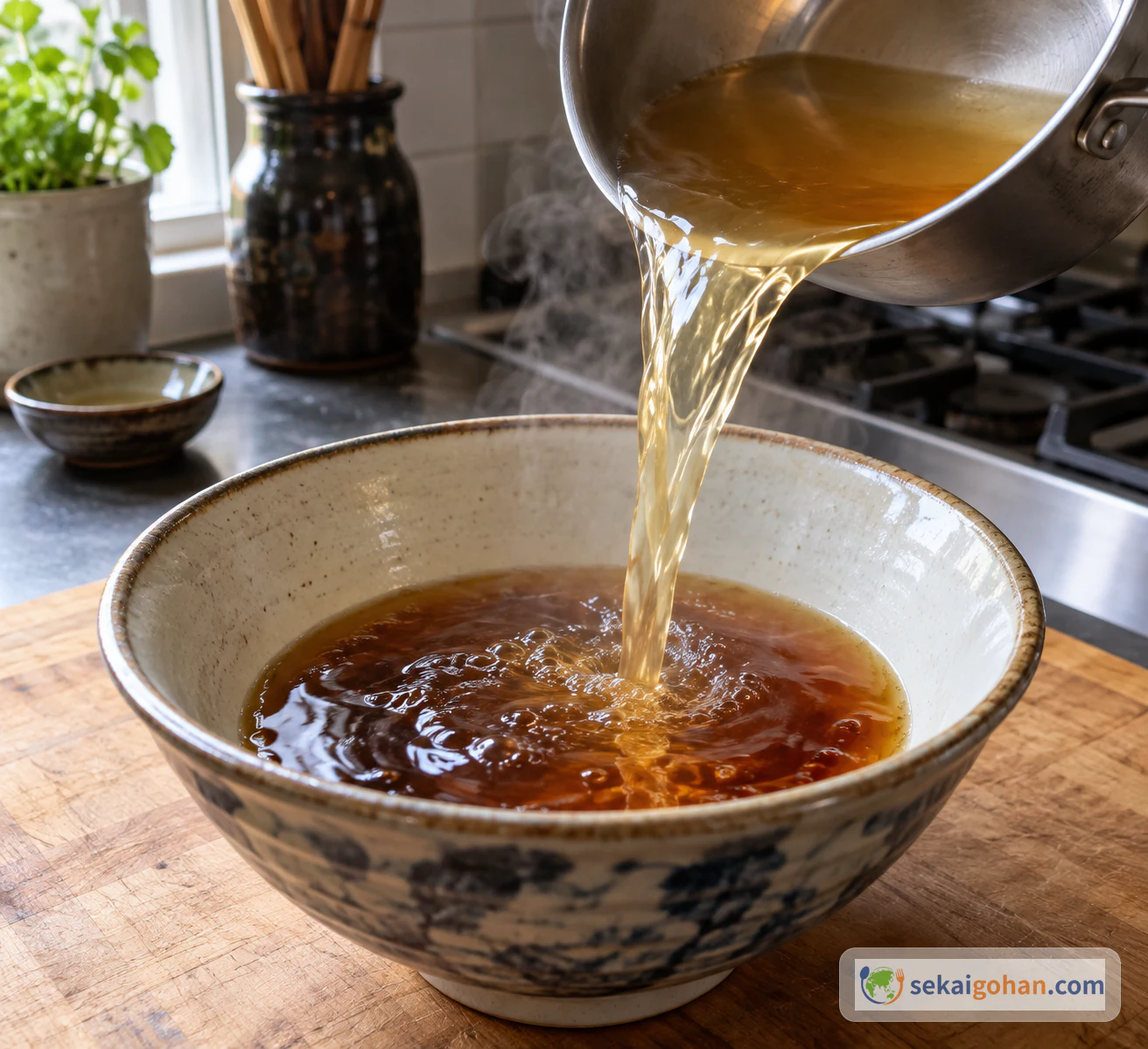
Combine tare and hot broth in the bowl

Hot clear broth poured into a small amount of soy tare in a bowl
Start with a little tare and adjust each bowl with hot broth

Heat the broth until it is hot. Put 1 tbsp of tare in each bowl, then pour in 1½ cups (360ml) of hot broth. Taste, and add more tare little by little if you want it saltier, up to 1–2 tbsp per bowl. Don't add the full amount at once, because the tare is very salty.

STEP55 / 7

Boil the noodles in a separate pot

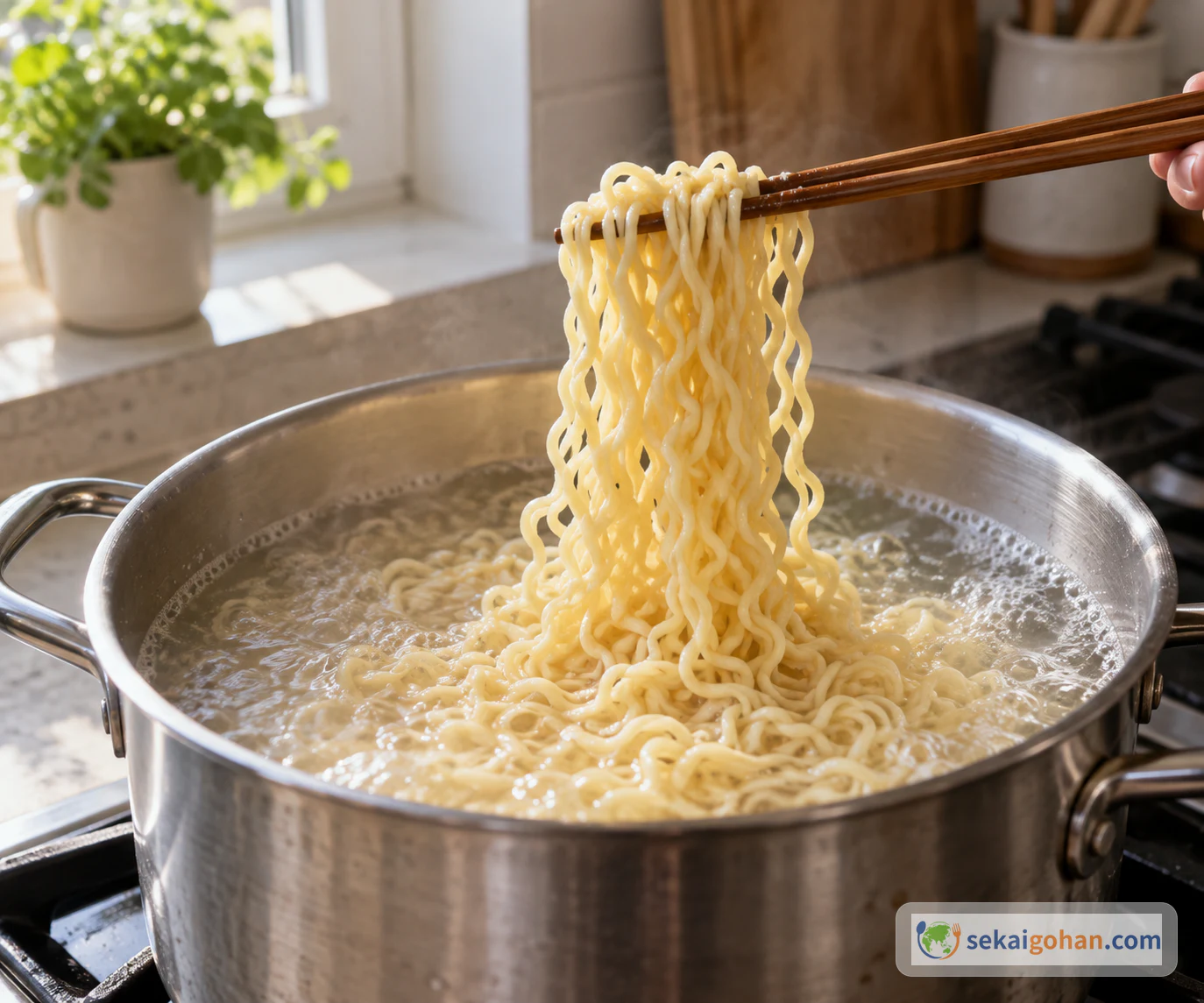
Fresh medium-thin curly noodles boiling in a separate pot of water
Boil the noodles in their own pot of water, following the time on the package

Boil the fresh noodles in a separate pot of boiling water, not in the broth. Follow the time on the package, usually 60–90 seconds. Loosen the strands with chopsticks as they cook. Cook the noodles last, when the bowls are ready.

STEP66 / 7

Drain the noodles and put them straight into the bowl

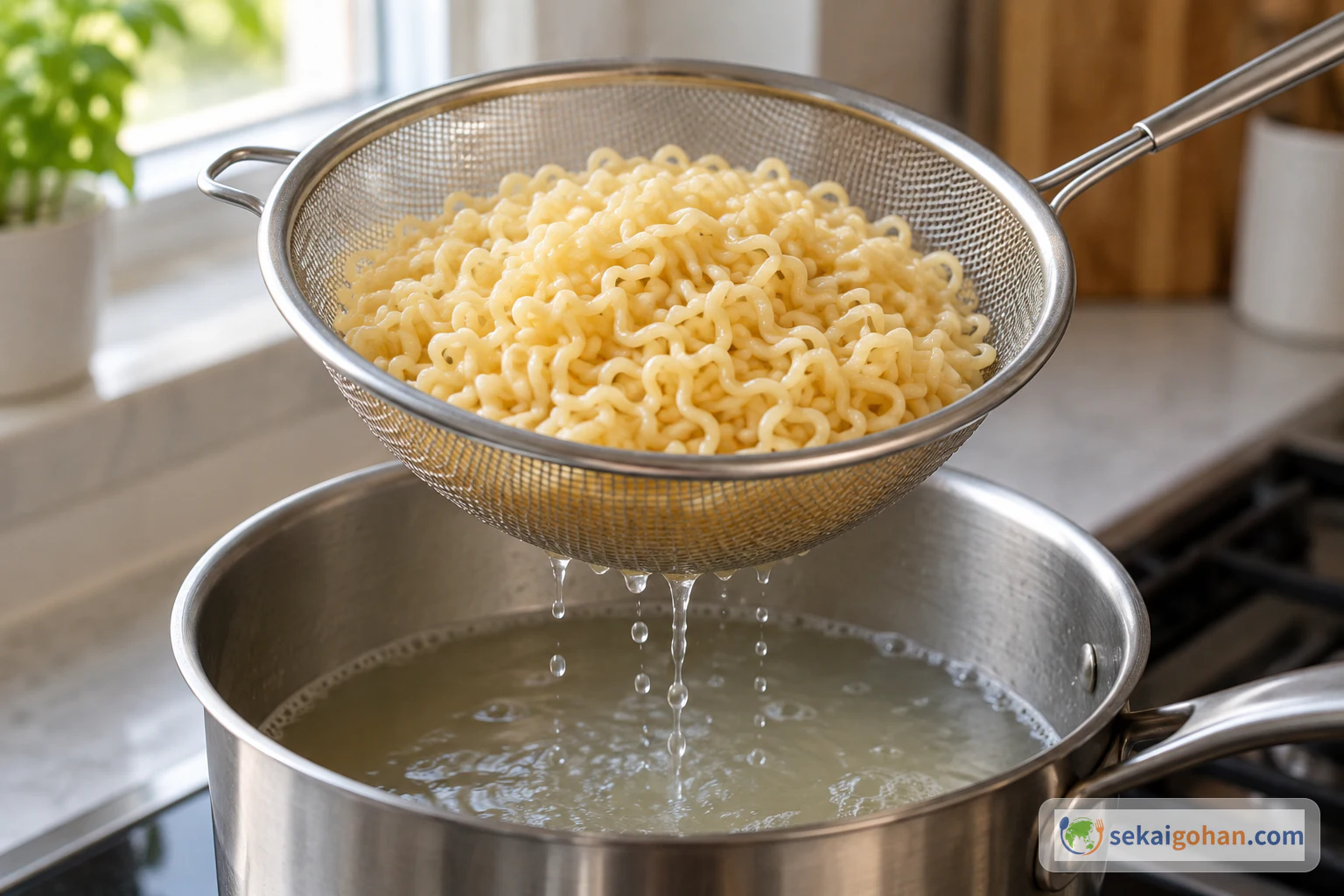
Cooked curly noodles draining in a strainer
Drain the noodles thoroughly and move them straight into the bowl

Drain the noodles well, then put them into the seasoned broth right away. Noodles left waiting soften and lose their texture.

STEP77 / 7

Top and serve

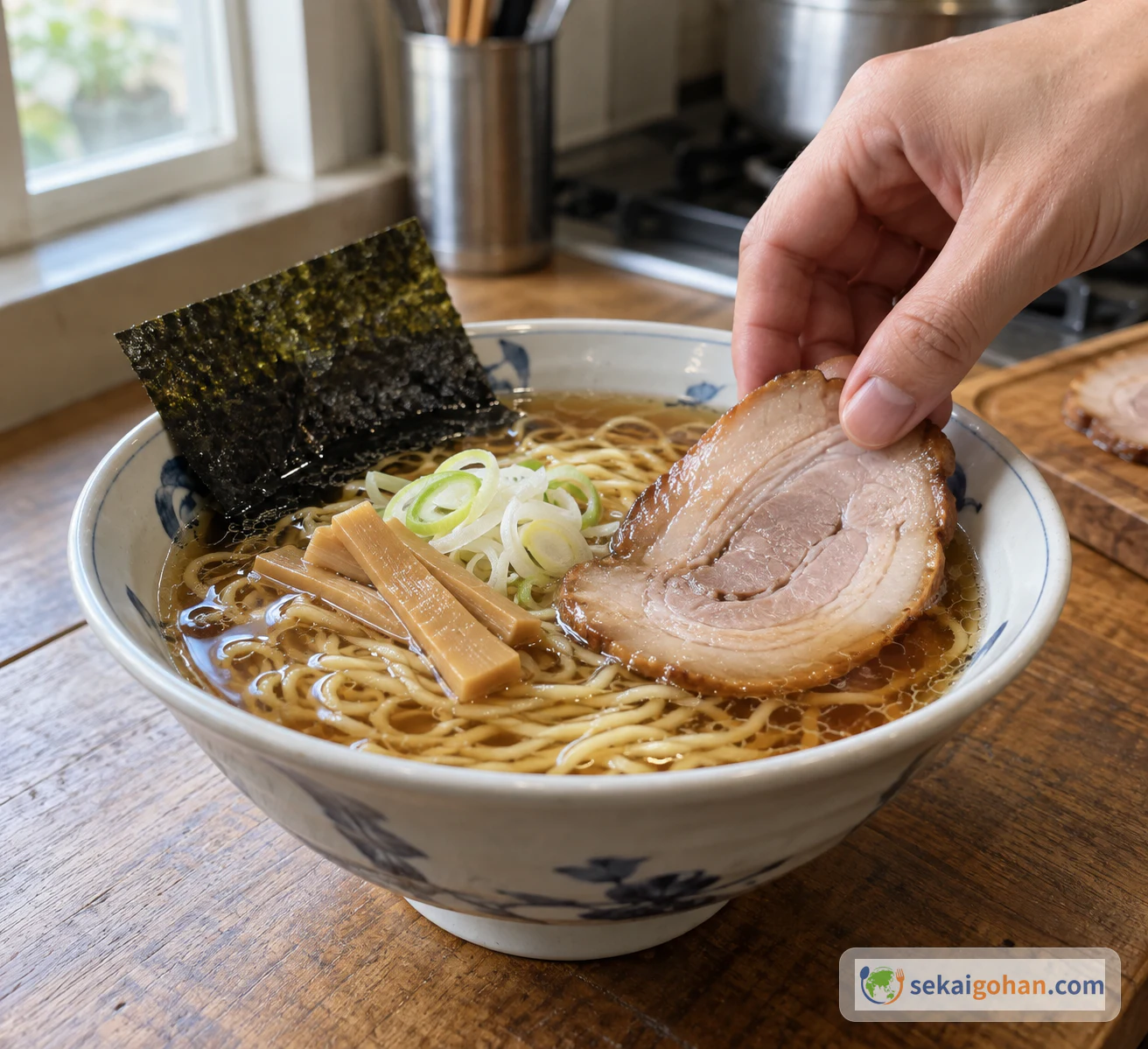
Placing chashu, menma, green onion and nori on a bowl of noodles and broth
Finish with chashu, menma, green onion and nori, and serve while hot

Lay sliced chashu over the noodles, and add menma, the sliced white parts of the long onions, the sliced green onion and a sheet of nori. Serve at once.

0 / 0
Ingredients

Ingredients

1 / 3

Broth and chashu

Ingredient Amount Notes
Pork leg bones about 1.25 lb (604g) The base of the broth
Skinless pork belly about 2 lb (907g) Tie with kitchen twine so it holds its shape. Cooked in the broth, then braised in the tare
Onion 1/2 large Leave the skin on
Garlic 5 cloves Leave the skin on
Ginger 1 knob Aromatic
Chicken fat about 3.5 oz (99g) Added to the broth at the 2-hour mark
Japanese long onion (negi) 2 Green parts go into the broth at the 2-hour mark; white parts are kept for topping
Water 12 US qt in total (about 11.4L) Start with 10 qt and add the rest in stages as room opens up in the pot
2 / 3

Tare (chashu braising liquid)

Ingredient Amount Notes
Broth, taken from the pot 480ml Ladled out shortly before the 2-hour mark
Soy sauce (dark, koikuchi) 2 cups The color and saltiness of the tare
Sake 1/4 cup
Mirin 1/4 cup
Salt 1.5 tbsp table salt or fine sea salt Or 3 tbsp Diamond Crystal kosher salt
3 / 3

For each bowl you serve

Ingredient Amount Notes
Tare 1 tbsp to start 1–2 tbsp per bowl; adjust by taste
Hot broth 1½ cups (360ml) The starting point for one bowl
Fresh ramen noodles For each bowl served Medium-thin and curly. Cook according to the package
Menma For each bowl served
Nori For each bowl served
Chashu Sliced, for each bowl served From the braised pork belly
Green onions (scallions) Green parts of 2 For topping; separate from the long onions used in the broth
0 / 0

A spoonful of dark soy tare sits at the bottom of an empty bowl. Hot, clear amber broth is poured over it, and the two swirl together into one even color. Freshly drained curly noodles go in next, then slices of chashu, menma, green onion and a sheet of nori. Tokyo-style shoyu ramen is built this way, bowl by bowl, from a clear broth, a salty soy tare and noodles kept apart until the last moment. The work is long but not complicated, and the reward is a bowl that tastes clean, savory and deep.

What Makes Tokyo-Style Shoyu Ramen
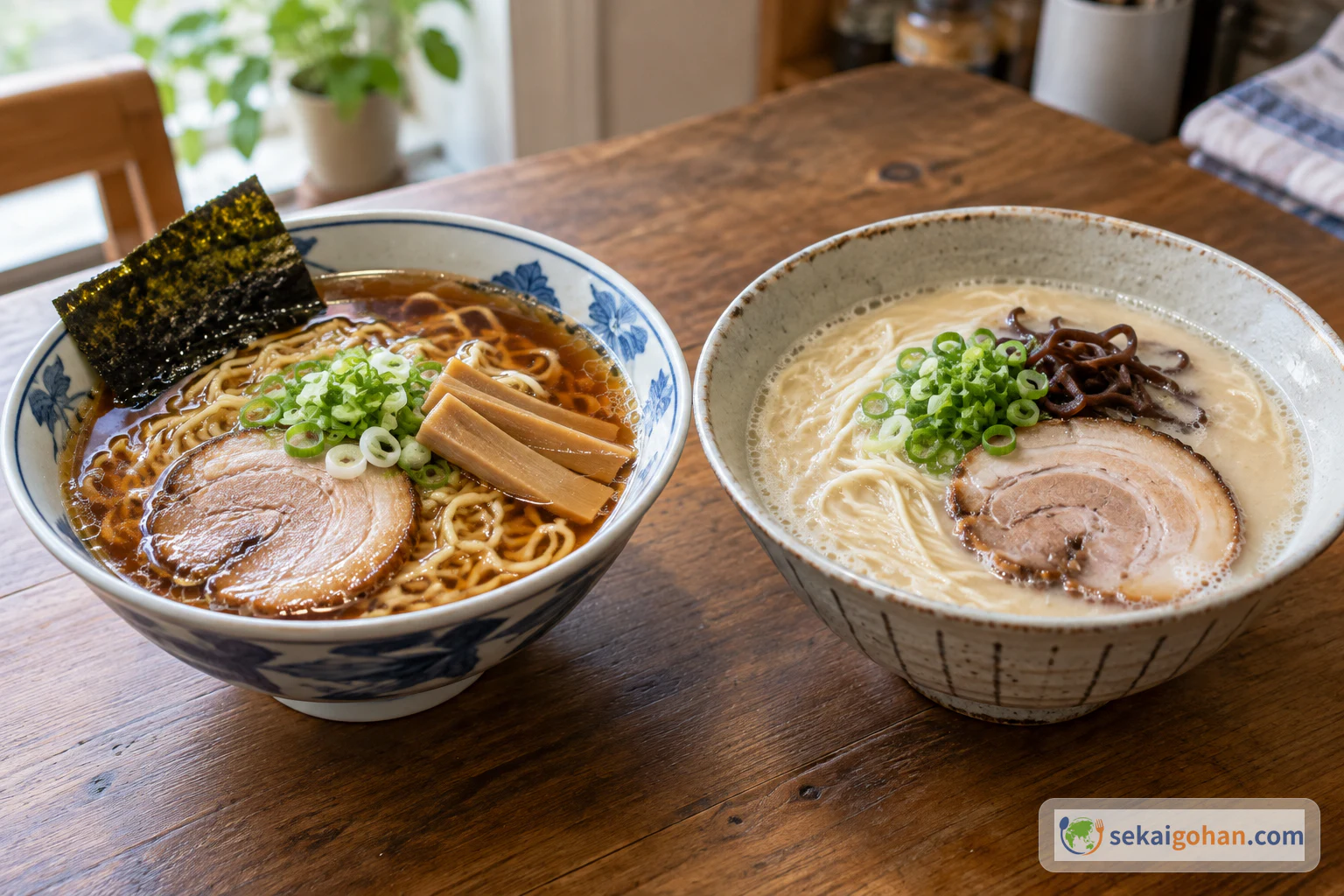
A clear shoyu ramen next to a milky white tonkotsu ramen
A clear shoyu broth and an opaque tonkotsu broth: two different regional types

Broth, tare and toppings

A Tokyo-style shoyu ramen has a clear broth, a soy-based tare, medium-thin curly noodles, chashu, menma, green onion and nori. The broth here starts with pork leg bones, onion, garlic and ginger. Pork belly cooks in it, and later chicken fat and the green parts of Japanese long onion go in.

The tare is where the "shoyu" comes from. Soy sauce, sake, mirin and salt are combined with some of the broth, the pork belly braises in that liquid to become chashu, and the same liquid seasons each bowl. It is concentrated and salty, so it is meant for seasoning, not for drinking on its own. Add it to the bowl a little at a time and adjust with hot broth.

Shoyu among Japan's regional ramen styles

Ramen is a noodle dish of Chinese origin that changed into many forms across Japan. It comes in types such as shoyu, miso and tonkotsu, with regional differences in noodles and toppings, and in Tokyo you can find ramen from many regions side by side. Tonkotsu ramen, for example, is a Kyushu style that originated in Kurume, and it is distinguished from ordinary shoyu ramen.

The three names don't sit on a single scale. Shoyu and miso describe the tare, while tonkotsu describes the broth, so the categories can overlap in one bowl. It helps to think of any bowl as broth, tare, fat and noodles put together; then you can see what each style changes. The milky, opaque pork-bone broth of tonkotsu ramen aims for the opposite of the clear broth here.

Planning the Shoyu Ramen: Two Pots, Two Days

The broth simmers for six hours, and the pork belly cooks in it before braising in a separate pot of tare. Make the broth and chashu the day before. On the day you eat, you only heat the broth, boil the noodles and season each bowl.

Simmering time versus working time

You are not working the whole six hours. From the 3-hour mark, the broth pot and the chashu pot run side by side: the chashu braises for 2 hours while the broth simmers for its last 3.

The schedule follows the broth pot:

  • From the boil: add the pork belly; higher heat, uncovered, skimming foam.
  • Shortly before 2 hours: ladle out 2 cups (480ml) of broth for the tare.
  • At 2 hours: add the chicken fat and the green parts of the long onions.
  • At 3 hours: move the pork belly to the tare to braise for 2 hours. Turn the broth to low for 3 more hours.
  • At 6 hours: strain the broth.

Use a pot large enough for the full amount of water. Topping up a too-small pot over six hours won't give the same finished broth. And stay near the stove during the long simmer.

Handling raw pork and bones

Don't wash raw meat; rinsing spreads bacteria around the sink and kitchen. Keep the cutting board, knife and tongs you use for raw pork separate from those used for cooked chashu and for serving. Heat the center of the meat to 167°F (75°C) for at least 1 minute, which guards against many pathogens. Don't assume the pork is safe simply because it has simmered for a long time; if you have a thermometer, check the temperature at the center. Don't leave cooked broth or chashu at room temperature; divide it into shallow containers and refrigerate it quickly.

Ingredients for an 8-Bowl Batch
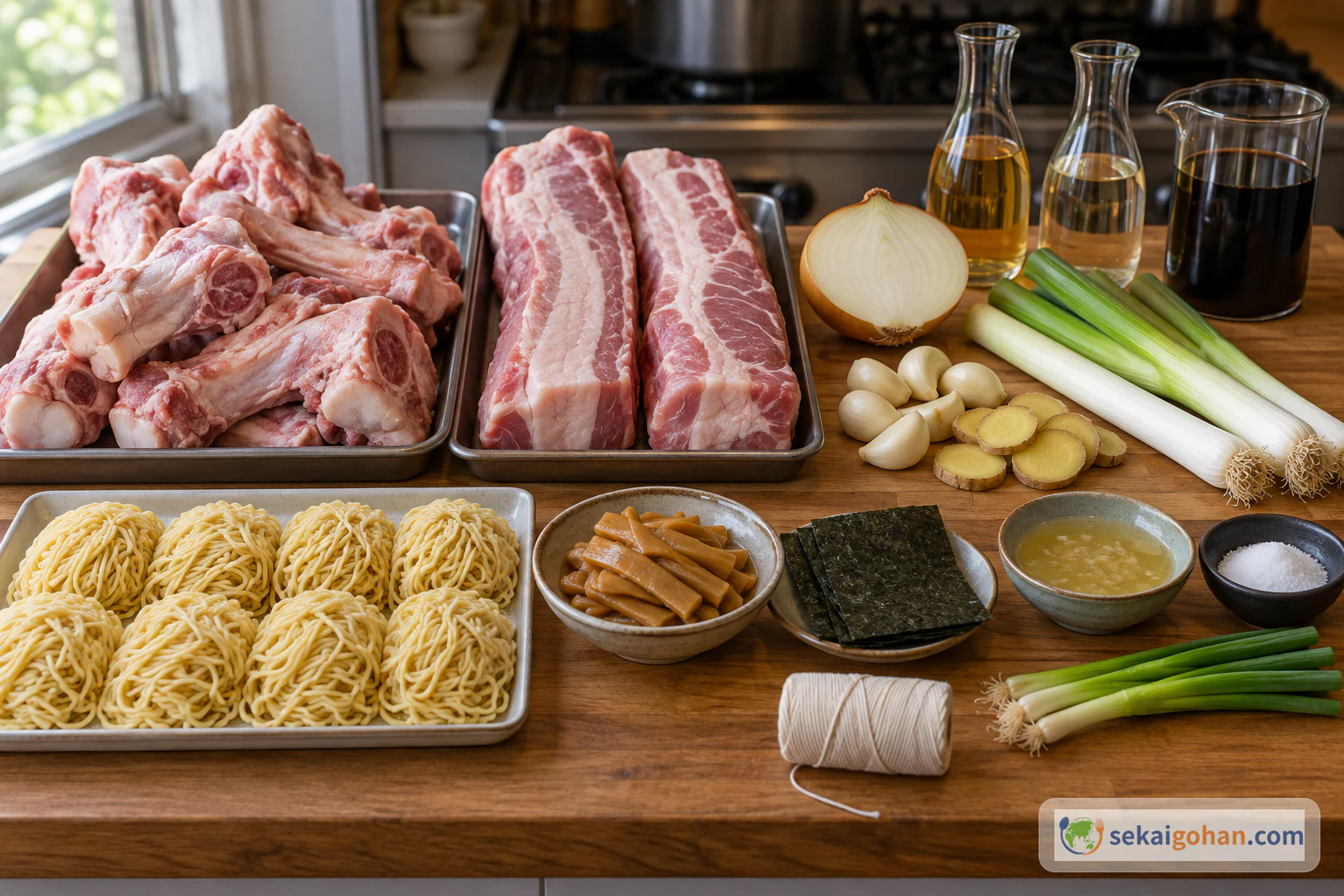
Pork bones, a pork belly block, onion, garlic, ginger, Japanese long onion, soy sauce, sake, mirin, fresh ramen noodles, menma and nori laid out separately
The broth, chashu and tare are prepared as a full batch; noodles and toppings are only for the bowls you serve

Make the broth, chashu and tare as a full batch even if you are cooking for fewer people, because halving it does not give the same concentration. The batch makes 8 bowls' worth of broth and tare. Noodles and toppings are prepared only for the number of bowls you are serving that day.

Equipment

  • A large stockpot with enough room that the water, bones and pork belly do not boil over when it comes to a boil
  • A second, smaller pot for braising the chashu in the tare
  • A drop lid (otoshibuta), or a lid that rests directly on the braising liquid
  • A fine-mesh skimmer for foam
  • A sturdy fine-mesh strainer for straining out bones and aromatics
  • Kitchen twine for tying the pork belly
  • A separate pot of boiling water for the noodles, and a strainer for draining them
  • Separate cutting boards and utensils for raw meat and for cooked food
  • Shallow containers for cooling broth and chashu quickly
  • A probe thermometer, if you have one, for checking the center of the pork

Choosing Ingredients for Shoyu Ramen

Salt. Salt crystals differ in size, so the same tablespoon holds different amounts of salt. Use 3 tbsp Diamond Crystal kosher salt, or half that amount, 1.5 tbsp, for table salt or fine sea salt. Measure by the spoon with the salt you have, and season each bowl gradually.

Soy sauce. Use dark (koikuchi) soy sauce. Light (usukuchi) soy sauce differs in color and saltiness, so it can't stand in at the same amount.

Sake. Some cooking sake contains added salt. Check the label and keep it in mind when you season the bowls.

Bones and chicken fat. If pork bones or chicken fat are hard to find, you can build a broth around a chicken carcass instead, though it will taste different.

Noodles. Store-bought fresh medium-thin curly ramen noodles work well. Follow the cooking time on the package.

Allergens

This recipe contains wheat (noodles, and possibly soy sauce), soy (soy sauce) and pork. Check the labels of the noodles, soy sauce and store-bought menma.

Fixing Common Shoyu Ramen Problems

Problem Likely cause What to do
The broth is cloudy A hard rolling boil or stirring Bring it back to a gentler simmer and stop stirring
The bowl is too salty Too much tare went in at once Add tare a little at a time. If the broth has reduced, add hot water to it before judging the seasoning
The noodles are soft and swollen Cooked too early or left waiting Boil the noodles last, drain and serve at once; don't hold them in the broth
The broth is close to boiling over Pot too full during the higher-heat phase Turn the heat down until it settles, and add the remaining water only when there is room

Shoyu Ramen Variations

A few small changes keep the Tokyo-style shape of the bowl. Leave out the chicken fat for a lighter finish, or use a thinner fresh noodle, cooked to the time on its package. For simpler toppings, center the bowl on green onion and nori.

Other changes make a different dish altogether. Replacing the shoyu tare with miso gives you a miso ramen, which needs its own recipe rather than a swap. For the opaque, creamy pork-bone style, see tonkotsu ramen.

Frequently Asked Questions

Can I make the broth the day before?

Yes. Strain it, divide it into shallow containers, cool it quickly and refrigerate it. Handle the chashu and tare the same way, and boil the noodles just before eating.

Can I shorten the six-hour simmer?

A shorter simmer gives a different broth. A quick version would need to be worked out as a separate recipe.
Sources

  • Japan National Tourism Organization (JNTO), "Ramen 101 | Eat Ramen in Japan." Used for the different types of ramen such as shoyu, miso and tonkotsu, regional noodles and toppings, and tonkotsu as a Kyushu style said to originate in Kurume, distinct from ordinary shoyu ramen. https://www.japan.travel/en/sg/story/ramen/
  • Just One Cookbook, "Shoyu Ramen - Recipe from Bizentei, Tokyo" (recipe shared by Masamoto Ueda of Bizentei). Used for the composition of a Tokyo-style shoyu bowl, the ingredients and amounts, the 6-hour broth, the chashu braised in tare, the salt-type options, noodle cooking and per-bowl seasoning. https://www.justonecookbook.com/shoyu-ramen/
  • GO TOKYO / Tokyo Convention & Visitors Bureau, "Oodles of Noodles—A Guide to Eating Ramen in Tokyo." Used for ramen as a noodle dish of Chinese origin that changed across regions of Japan, and for the many regional styles found in Tokyo. https://www.gotokyo.org/en/story/guide/oodles-of-noodles-a-guide-to-ramen-in-tokyo/index.html
  • Ministry of Agriculture, Forestry and Fisheries of Japan, "安全に食事を楽しむ!肉、魚、野菜の調理法" (Cooking meat, fish and vegetables safely). Used for cooking meat through to the center, not washing meat, keeping raw-meat utensils separate, and cooling cooked food quickly in shallow containers. https://www.maff.go.jp/j/pr/aff/2506/spe1_02.html
  • Ministry of Health, Labour and Welfare of Japan, "お肉はよく焼いて食べよう" (Cook meat thoroughly). Used for the guideline of heating the center of meat to 75°C for at least 1 minute. https://www.mhlw.go.jp/stf/seisakunitsuite/bunya/0000049964.html